Blog

  • Radio still needs to be evangelized: Harrish Bhatia

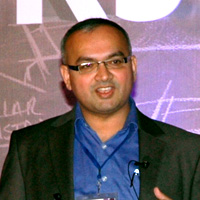
    Harrish M Bhatia, the Chief Executive Officer, MY FM, is said to have several landmark achievements to his name. He is said to have played a key role in making MY FM, the radio business of Dainik Bhaskar Group achieve its break-even position within a short time since its launch. Since the launch in 2007, he is said to have successfully launched the MY FM brand in 17 cities in under two years and led the company to operational break-even in just three years. In conversation with MxMIndia’s Robin Thomas, Mr Bhatia shared his views on MY FM’s Q3 results, the radio business post break-even, his FM phase III plans and much more.


    Q: Let’s start with the Q3 results. The ad revenues grew 22 per cent in Q3 2011- 12 and EBIDTA stood at Rs44 million… The results must have provided MY FM an extra boost for 2012? What would you say are the key factors behind the growth?

    We have always believed in the growth story and economic vibrancy of the 17 non-metro markets that we operate out of. The surge in the demand for consumer goods, services, FMCG products, better education avenues and son on makes the non-metro markets interesting and rewarding for marketers. While global slowdown may have affected the revenue of metro players, retail advertising remained unaffected as the consumers in these cities are not exposed to the daily stock market fluctuation.


    MY FM, with a strong focus on the non-metro markets, unparallel content offering like My Ramayana and Murari Babu in spiritual time band, daily song request shows like Dil Chahta Hai and listener engagement initiatives such as the award winning CSR – Ek Koshish and CJ943- City ka Campus Star with VJ Ranvijay and great HR practices, have all led to this outstanding performance.


    Q: The radio industry is, more or less, completely dependent on advertising revenues. Do you agree? What are the other sources of revenue for MY FM?

    Intelligent and smart advertisers who believe in radio are using radio to its true potential by going beyond FTC through innovations like sponsorships, content integration and activations. There is infinite scope to innovate on radio. Traditional advertisers, however, on account of their own consumption habits, are not taking the medium seriously.


    Radio offers opportunities to create unique ‘Radio properties’ and build ‘sonic triggers’ that are hard to replicate on other mediums. Long term properties like Ramayana, Murari Babu discourses in the spiritual time band, the remix show hosted by DJ NYK and others on MY FM should be seen as a strategic investments by advertisers to build a connect between the consumer and their brand.


    Q: MY FM achieved break-even way back in 2009… Has there been any change in the business since then – more focus on internal communications or infrastructure, getting more talents?

    Break-even was achieved as a result of cost optimisation and resource rationalisation.  The scenario has changed a lot since then with a focus on innovative HR practices and an ‘Employee First’ policy that includes:-

    • Trainings the Talent: Based on the leadership roles, key talent are identified and sent for training and workshops that best suits their development needs – from training by UK Radio, London to workshops at MDI and IIM-A.
    • Variable pay policy: Innovative policy for employees across the board liked to their quarterly performance.


    Q: You have always maintained that the actual growth of radio is coming from the non metros… Has the FM radio listenership in metros reached a saturation point?

    Trends indicate that there is an exponential growth of listenership in non-metros on accounts of factors like more leisure time, low internet penetration, power shortage and so on, while it is growing at a slow pace or almost stagnant in metros.


    FM penetration has already reached decent levels in metros with hardly any scope of growth – 88 per cent inDelhiand 87 per cent in Kolkata. While non-metro cities like Ahmedabad andNagpurhave low penetration levels of 53 per cent and 69 per cent respectively.


    Q: It’s been five years since MY FM came into existence in 2006. You have had several landmark achievements since then. What would you say were the high points and the lows for MY FM since it first started?

    Highs:

    • Fastest launch of stations in a record time of under a year.
    • Achieving operational break-even within 3 years of launch.
    • Appointment of an ombudsmen.
    • Content innovations like MY Ramayana, Murari Babu, DJ NYK, My Vastu, Numerology show with Sanjay Jumani, Kahani ki Kitab Se and others.
    • MY FM joining the league of select stations with the launch of its TVC and song last year.


    Lows:

    • Government policies that have resulted in the industry being unviable for investment.
    • Limited growth on account of content restrictions imposed on a nascent industry.
    • Absence of an acceptable radio measurement tools.
    • Talent crunch during the initial years.


    MY FM is present in 17 cities and 7 states. How is the radio consumption behaviour in these cities different from those of the metros? In Mumbai for instance, a chunk of listenership comes in the morning. Is the trend same with the mini metros?

    Radio consumption is very different in non-metros. InIndore, late morning records the highest listenership, while Jaipur has high listenership throughout the day; whereas Ahmedabad peaks in both morning and night time bands. Moreover, the time spent on radio is much higher in non-metros and set to go up further with increase in FM listenership on mobiles.


    Does the medium still need to be evangalised to advertisers or are advertising willingly flocking to radio?

    Yes, radio still needs to be evangelized. Radio is the medium that many professionals include in their quarterly and yearly plans at the last moment to highlight the probability of their idea being executable.


    Moreover, media spends are not being proportionately allocated to radio even though it has outgrown other media in time spent. As per the recent RAM research conducted in the four markets- Jaipur, Ahmedabad, Nagpur and Indore – average time spent listening to radio is 160 minutes as compared to IRS figures of 107 minutes watching TV, 85 minutes reading newspaper and 30 minutes on internet respectively.


    Smart and intelligent advertisers who believe in radio know that if properly planned and used innovatively, the radio can do wonders for a particular brand. Unlike TV, Radio is the only medium that has the power to address area-specific challenges through a focused communication in their own local language and is value for money. Big radio players should come forward for the growth of the industry and to highlight its mammoth reach and effectiveness.


    Q: We have learnt that AROI is working on content codes for radio stations. Is it high time that radio also follows self regulation?

    We welcome any such move. We are already following a stringent AIR code for content.


    Q: Although news will be sourced from only AIR, nevertheless how prepared is MY FM for news? Does MY FM have the infrastructure ready for news or is it that the present infrastructure is more than sufficient for AIR bulletins?

    Yes, MY FM, being part of a larger news media group, already has the infrastructure to broadcast news. However, we believe that radio players should be allowed to carry their own news-based content, making it relevant for our listeners.


    Q: You seem to be quite active on Facebook and Twitter. What about your website? Can you share with us your digital media plans? How are you using the digital medium to engage listeners?

    Digital media is an integral part of all our campaigns and promotions – both for communication and engagement like content participation, feedback on music preferences and so on. Radio is an aural medium, however, with the launch of the “radio dikhta hai” campaign, listeners became viewers as they are able to see the radio and the RJs hosting the show on YouTube. We recently concluded our microsite contest encouraging listeners to participate in brand evolution by sharing their ‘jiyo dil se’ moment with the best entries winning big ticket prizes.


    Q: Currently what according to you are the key challenges facing the radio industry? And what are the trends to watch out for in the coming years?

    Challenges:

    • Deregulate radio: Content restrictions are a big restraint for the industry and our creative freedom gets affected due to the limitation to provide any kind of news-based content.
    • The most important is the Music Royalty Issue. The royalty issue continues to worry FM stations, especially the smaller FM players or those in small towns.
    • Absence of an acceptable radio measurement tool, due to which media planning and buying is done on the basis of researches like IRS, is another challenge that we face in our industry.
    • The license fee for new stations is a challenge, making the medium unviable for investment by existing and new players.


    Trends:

    • Expansion of radio post Phase III rollout, covering newer towns, increasing radio footprint.
    • The way consumer soaks information is more fragmented and varied like never before. Not only has the mechanisms to reach to the consumers changed, the vehicles option have also multiplied. Radio has evolved and outgrown all other media with consumer spending more time on it. To reach out to such a consumer and influence them by appropriately allocating media spends is going to be a big thing for advertisers in 2012.
    • While metros will remain a staple for marketers, an increased non-metro footprint will be critical for volumes in the long run. There is a growth opportunity that is vastly under-rated by many marketers today, which could emerge as a key growth engine for the next 10 years.


    Q: What are your FM phase III expansion plans?  Would you explore the metros? New genres with multiple frequencies? 

    Yes, we would be exploring metros in Phase III as long as it makes business sense.


    MY FM has major expansion plans for Phase III. However it is too premature to discuss this. Moreover, as mentioned earlier, the license fee for new stations is a challenge that needs to be address before the Phase III rollout to encourage bidding.


    Q: What is the overall workforce or team size of MY FM? Is employee retention a challenge in the radio industry? Or is there a talent crunch that needs to be first dealt with?

    MY FM currently employees 350 full-time employees. Retention is never a challenge for key management / leadership team. It’s the support staff that is a challenge. Moreover, MY FM’s robust HR practices are one of the best in the industry allowing development and growth of talent.


    Q: On a lighter note, what is a typical day like for Mr Harrish Bhatia, CEO, MY FM?

    I believe in pushing myself each day. I am very passionate towards my fitness and wake up at 5am every day to jog and do yoga which is followed by breakfast with family. I reach office around 10am and quickly move to make an agenda for the day that needs to be looked into, pointers to be discussed with the team and any meetings in the course of the day as well as near future. I meet the Business Heads/Programming Heads for programming review followed by lunch.


    After lunch, I catch up with the senior management for strategising and ideating, checking emails and reverting back to any queries. At the end, I review the work according to the daily agenda and makes sure that the work assigned for the day is done.  After winding up work, I head home, spend quality time with my family and friends, watch television, checks emails on my iPad and hit the bed for another challenging day.

     

  • Ditto TV aligns with Percept H

    By Shubhangi Mehta


    Percept H has won the creative mandates for the recently launched Ditto TV, the OTT (over the top) television offering from Zee. The win comes after a multi-agency pitch. The account size is pegged to be at Rs10 crore.


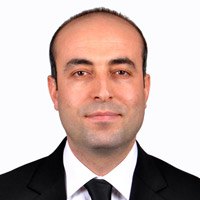
    Commenting on the selection, Manoj Padmanabhan, Head of Marketing, Zee Digital said: “Since this is a new category inIndia, we were looking for an intrinsic understanding of new technologies and media consumption trends. Percept H was a winner in terms of understanding of the business and also in terms of crafting impactful creative.”


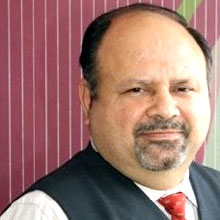
    Ayan Chakraborty, Chief Growth Officer, Percept H said: “The team is excited to be working on this brand, which is surely going to set a new trend in terms of media consumption in this country.”


    While this is the first time any of the media majors have invested in this technology inIndia, OTT TV is a proven and very successful format globally, for on-the-go consumption of media and entertainment. Some of the leading players like Sky generate a significant amount of revenues through this channel format.


  • Percept OOH executes state launch for Muthoot FinCorp in MP

    By a Correspondent


    Percept Out-of-Home (OOH) is executing OOH state launch for Muthoot FinCorp in select cities in Madhya Pradesh. The execution period of the activity commenced from January 26 for a duration of 20 days. The activity was emphasised in tier 2 cities, namely in Bhopal and Indore.


    The primary objective of the campaign was to create consciousness about the launch of the services of Muthoot FinCorp in Bhopal and Indore. Besides increasing awareness for the brand, there was a requirement to attract a wider base of eye balls at local markets, bus stand, railway stations, airports, commercial and high traffic zones. Another target was to gain a foothold in the new markets and consolidate the brand’s presence.


    The launch campaign was executed for a better geographical coverage, garnering brand visibility with finesse. Rajneesh Bahl, Head -Outdoor, Percept Out of Home said, “This is a classic case for outdoor launch. Bhopal and Indore have not seen such a high impact launch since a long time. The operation was well-crafted, on lines of any telecom brand, but at a nominal spend. Creatives was specially adapted for each city and in accordance with every media.


    A spokesperson from Muthoot FinCorp said, “The message in the out-of-home advertising has effectively echoed our state launch in Madhya Pradesh. The strategic locations were specifically selected in accordance with the target audience.”


    Muthoot FinCorp Limited, the flagship company of the Muthoot Pappachan Group, has 1400+ branches and offers products and services like Gold Loans, Money Transfer, Forex Services and other Investment Solutions.


  • Dish TV to push set-top boxes in cable households, distribute & install connections

    By Meenakshi Verma Ambwani


    Stiff challenge from digital cable operators has forced India’s biggest direct to home (DTH) television company, Dish TV, to tie up with neighbourhood cable operators, opening up a new front in the war between the DTH and cable industries.


    India’s top four metros – Delhi, Mumbai, Chennai and Kolkata – will replace all analog television networks with digital transmission from July 1. This has led to a scramble between multi-system operators (companies which create and distribute a bouquet of channels through cable networks) and DTH operators who transmit their own bouquet of channels via satellites.


    Their fight could end up giving a fresh lease of life to the local cable operators who were until now providing the last mile connectivity for the MSOs, but were faced with the threat of extinction with the launch of digital set top boxes.


    Dish TV chief executive RC Venkateish said the company has launched a pilot project in Delhi and he expects to grab 1-1.5 million subscribers across cities in the short term through tie-ups with the cable operators.


    These operators have been given the option to take up distribution and installation of Dish TV connections to customers and push Dish TV set-top boxes in cable households with the first phase of cable digitalisation.


    Currently, the company has agreements with about thirty cable operators, but expects to roll out this scheme in the country and rope in about 3,000 local cable operators in the next two months.


    “This scheme helps us open a new distribution channel and establish a personal contact with our customers. Our last-mile operators will install these boxes, service the connections as well as collect bills,” said Mr Venkateish.


    These last mile operators will be paid commissions on the installation of set top boxes as well as a 15-20 per cent commission every time the customer serviced by them recharges his subscription.


    North-Delhi based cable operator Rajan Sidana, who owns Chaitanya Cable Network, said that aligning with large DTH players like Dish TV would be a profitable deal for last-mile operators. “As it is, we are facing competition from DTH service providers and losing consumers to them. This is a way to retain our customer base and be able to offer them DTH as well as high-definition set-top-boxes on a commission basis,” he said. He services about 700-800 households and can offer feeds of several MSOs to consumers.


    Other DTH companies may also join the fray soon. A senior executive from another DTH company who did not wish to be named, said that this is innovative way to grab more subscribers but warned that this could be an expensive way of grabbing consumers at a time when the DTH industry is making losses.


    Vikram Mehra, chief marketing officer, Tata Sky said: “We have beefed up our service and installation teams and our customer care centres that will help us acquire new subscribers.”


    Cable companies still dominate in the big metros and roping in the last-mile cable operators will help them increase their subscriber base in the metros. Currently several local cable operators have access to television feed from several multi system operators besides being an exclusive last-mile operator for at least one MSO.


    Another South Delhi cable operator RS Bedi, who owns Skywaves, said, “This is an opportunity for existing cable operators who are being squeezed by MSOs to open up an alternative revenue stream. It will also help Dish TV reduce its downtime to cater to consumer’s service requests.”


    He added that the margins being offered by Dish TV is attractive and the cable operator will not have to bother about laying cables and will not have to set control rooms. “This will help us grab new consumers as digitalisation kicks in,” said Mr Venkateish. Dish TV currently has 12.5 million gross subscribers and 9.5 million net subscribers in the country as of December 31, 2011.


    Source: The Economic Times

    Copyright © 2012, Bennett, Coleman & Co. Ltd. All Rights Reserved


  • Marks & Spencer appoints Venu Nair as India Ops head

    By Sarah Jacob


    Apparel and home products retailer Marks and Spencer’s has appointed Venu Nair as head of its India operations, replacing CEO Martin Jones who is moving back to the parent company.


    Nair takes charge as managing director, the London-headquartered company said. Sources said Jones was moving back for personal reasons. Nair was head of sourcing for the £9.7-billion British retailer in South Asia and director of buying operations for India.


    M&S operates in India through Marks & Spencer Reliance India, a joint venture with Mukesh Ambani-led Reliance Industries, selling clothes and home décor but not its food products. It has 24 outlets across the country.


    “Unlike an expatriate, Nair would have stronger understanding of the Indian market and his being involved directly in sourcing will play to his strength,” said a senior executive of a rival firm.


    M&S has been to work towards sourcing 70per cent of its merchandise from India and Jones had been driving this change.


    “While other international companies look at India as an interesting and emerging market, M&S clearly specifies India as a market of importance,” said Devangshu Dutta, chief executive of management consultancy Third Eyesight.


    Source: The Economic Times

    Copyright © 2012, Bennett, Coleman & Co. Ltd. All Rights Reserved

  • @Microsoft seminar: Creative storytelling via rich media


    By Shruti Pushkarna


    At the Rich Media Rocks seminar this year, the focus was on making it easier for brands to launch digital ad campaigns at scale while also giving creatives new and powerful canvases upon which they can tell their stories.


    Neville Taraporewalla

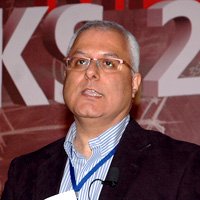
    The seminar, hosted by Microsoft Advertising, was held in the capital on March 1 at The Westin Gurgaon. Mr Neville Taraporewalla, Country Director, Advertising and Online, Microsoft India welcomed the delegates to the seminar.


    Speakers at the event shared examples and case studies of brands to highlight the new experiences that rich media advertising has in store, if applied with the right balance with content. An underlying issue that was pointed out in the sessions was an obvious ‘disconnect’ between advertisers and consumers. Mr Pushkar Sane, Co-Founder & CEO, Converginations Ventures Limited said, “There is a language of convenience that people are communicating in, whether it’s codes or emoticons… there is an obvious disconnect between the way we communicate as people and the way advertising is communicating with us.”


    Pushkar Sane

    Mr Trevor Yeats, Senior Product Marketing Manager, Microsoft Advertising reinforced Mr Sane’s point by stressing on the need for marketers to build an emotional connect with their consumers. Marketers, he said, “…need to fulfil the brand promise by creative storytelling, and rich media advertising can enable them to do so.”


    As was highlighed at the recent ad:tech 2012, the issue here as well seemed to be the need for marketers to accept reality as it is today and try to connect with the consumer in a way that is not completely disruptive. Content, and speaking of rich media, is not just being created by brands; even consumers are becoming curators for brands. Mr Sane said, “Rich media is not only in the hands of the advertisers and marketers, it’s a tool that is available to your consumers, it’s equally a weapon in their hands, probably more lethal in their hands than yours.” So there is a need to strike a balance between content and rich media advertising so that the user feels that he/she has a choice to ‘engage’.”


    In a scenario where the advertisers and marketers think of consumers as numbers that need to be hunted and targeted, thinking from the consumer’s perspective it feels like being in jail where one is trapped with excessive communication. Today consumers don’t want to be treated like targets, so brands need to understand user behaviour.


    To engage their consumers, Mr Sane said that brands indulge in stunts that they believe will get them the numbers. However, Mr Sane added, “Brands need to understand the difference between stunts and magic. Stunts will get you the clicks but magic will get you customers.” Brands, he said, need to ‘play the host’ rather than think ‘it’s my message to you’ when they are engaging customers.


    The Interactive Advertising Bureau (IAB) launched an initiative called ‘Rising Stars’ where they chose six creative ideas as solutions to digital advertising. And as part of Microsoft Advertising’s commitment to rich media, said Mr Trevor Yeats, Senior Product Marketing Manager, Microsoft Advertising, “Microsoft Advertising was one of the first publishers to adopt all six IAB Rising Star Solutions in the U.S., implementing five of them already in Asia.” These six star solutions are Filmstrip, Billboard, Pushdown, Sidekick, Slider and Portrait.


    Filmstrip, said Mr Yeats, “…is a powerful canvas for all industries and across all continents. It enables creative storytelling, guiding consumers through a purchase funnel where they go from awareness to interest, to desire and intent and finally maybe to loyalty.”


    Mr Yeats also shared some tips on building an engaging Filmstrip. He said, “It’s important that the filmstrip tells a story. Image galleries and videos can help tell the story better. And finally make the Filmstrip social, invite the customer to be a voice of your brand.”


    While we talk of engaging and building an emotional connect with users, ROI and performance metrics still hold importance to continue with select digital campaigns. IAB Research shows that Rising Star ads have increased both exposure time and interaction rates by 90 percent. Mr Trevor Yeats, citing IAB research, said, “Users prefer Rising Star ads, they thought they were well designed and more engaging than most ads online. Rising Star ads positively added to the experience boosting performance.”


    But how does one know if these Rising Star solutions will continue to ‘click’ with the consumers? Will they become redundant like the pop-ups? Mr Yeats seemed extremely positive of the Rising Star solutions as he felt that as long as the right balance with content is reached, rich media will only add to the experience of a user.


    Mr Farshad Family, Managing Director, Nielsen Media, shared that online still remains only 4 percent of the total advertising pie in India, but he added that the share is growing rapidly. Adding on, Oded Lida Greiss, Vice President for Emerging Markets, MediaMind said, “India ad spend is low compared to global, but the trend is on an increase in opportunities with rich media.”


    Mr Pushkar Sane, Co-Founder & CEO, Converginations Ventures Limited also said that although there is a lot of ‘noise’ out there, brands still need to create noise for themselves. He said, “The objective is to out-shout the competitor and to do that, interrupting people and breaking their privacy becomes a must. This is a trend that digital is slowly adapting and borrowing from television.”


    But since there is a constant migration that takes place at the consumers’ end, brands need to understand that people are not loyal to a platform, they are only loyal to content. They are even beginning to trust the ‘unknown’. So, as Mr Sane said at the beginning of the seminar, marketers first need to address the ‘disconnect’ between them and the consumers, which probably exists because of excessive pressure on delivering quarterly results. He said, “No one is looking at long-term building, it is almost like as soon as we put on our agency or brand hats, we leave our brains outside. There is no shortcut in this business. Brands need to learn, practice and evolve.”


  • Mindshare & GroupM ESP help Bridgestone secure title sponsorship of WS Hockey

    By A Correspondent


    Bridgestone, the world’s largest tyre company, has come on board as the ‘Title Sponsor’ of World Series Hockey (WSH), the biggest hockey league in the world. Mindshare is Bridgestone’s media agency and brings on board strategic approach to Bridgestone’s brand communication objectives. GroupM ESP (Entertainment, Sports and Partnership) is a specialist unit of GroupM offering consultancy in the business of Entertainment and Sports. Sports team of GroupM ESP worked closely with Mindshare in this initiative that helped Bridgestone secure title sponsorship of the prestigious and one of its kind ‘Bridgestone World Series Hockey’.


    The Bridgestone World Series Hockey tournament will be held from February 29 to April 2 and will involve 200 leading Indian and International players who will showcase their talent in 59 matches and vie for the biggest prize money hockey tournament in the world. The 8 venues for the inaugural edition of the league are Bengaluru, Bhopal, Chandigarh, Chennai, Delhi, Jalandhar, Mumbai and Pune.


    Commenting on this association Vaibhav Saraf – Bridgestone India’s General Manager Marketing & Sales said: “We have a legacy of associating with sports; we have been associating with various sports from Ice-Hockey to Formula 1 to the Moto-GP and Rugby in some nations. We started advertising in India last year and tied up with Mumbai Indians to begin with. Mindshare and GroupM ESP recommended WSH as an opportunity to us and helped us understand the media deliveries and valuation of the league”.


    “The sports genre has been integral to Bridgestone’s target audience and we needed a platform that would help build saliency for the brand”, said Anita Kotwani, Principal Partner – Client leadership Mindshare.


    Very bullish on Hockey as India’s National sport, Vinit Karnik, National Director, Entertainment, Sports & Live Events said: “Mindshare – GroupM ESP strategically approached the sponsorship of World Series Hockey by bringing alive Bridgestone’s brand objectives. We are hoping ‘Bridgestone World Series Hockey’ delivers high impact for the brand by increasing Bridgestone’s visibility and share of voice.


    Ms Kotwani added: “With this sponsorship Mindshare takes another small step in forging a partnership with hockey, but in fact a giant leap in propagating something other than cricket, yet getting entire focus, drive and visibility for our client. We are glad that by this sponsorship Bridgestone is reinforcing its commitment to its growth in India”.


    Bridgestone India Pvt. Ltd started its operations in 1996. In March 1998 with the setup of its manufacturing facility in Kheda, Madhya Pradesh, Bridgestone achieved its objective of running Indian manufactured Bridgestone tyres on Indian Roads.


    Mindshare is a global media and marketing services network with billings in excess of $27.8 billion (source: RECMA). The network consists of 114 offices in 82 countries throughout the North America, Latin America, Europe, Middle East, and Asia Pacific. Mindshare is a member of WPP, the world’s leading communications service group with $84.2bn in billings (source: RECMA), and is part of GroupM, the world’s leading full service media investment management operation, which was created by WPP Group to oversee its assets in this sector.


  • Turkish Airlines looks at India as a booming market

    By A Correspondent


    Turkish Airlines has been doing exceptionally well globally and has witnessed remarkable growth, especially in the last year. With Grey as their creative agency inIndiaand Perfect Relations handling their media relations, they are looking atIndiaas a booming market and have various marketing initiatives lined up.


    Turkish Airlines has played a vital role in increasing the ratio of the aviation industry ofTurkey. One of their key achievements in 2011 was being awarded ‘Best Airline Europe’, ‘Best Premium Economy Seats’ and ‘Best Airline Southern Europe’ by Skytrax. Their load factor has been as high as 75 per cent in 2011, even on the Indian routes.


    They have also acquired brand new aircrafts like B777-300ER equipped with GCS system and A330-300, with the latter being currently operational on the Indian routes. Turkish Airlines flew around 300,000 travellers on the Indian routes in 2011 and are expecting an even higher number in 2012.


    The TAAI Convention, being hosted byTurkeythis year, will be one of the biggest B2B initiatives undertaken by Turkish Airlines as they are among the main partners for the event.


    Apart from that, Turkish Airlines has engaged in several interesting marketing initiatives inIndiato reach out to its customers and familiarize them with both, Turkish Airlines and its multiple international destinations.


    Adnan Aykac, General Manager- Northern & Eastern India, Turkish Airlines, said: “We received great feedback from our previous promotional campaigns and would like to continue with such engagement programs and capitalize on them in the best way possible. This will ensure maximum visibility for Turkish Airlines among its target audience, thereby helping them discover our refined offers and services.”


    “Turkish Airlines believes in providing the best offers and facilities to its passengers and maintaining high standards of service. This has always been our prime focus and we believe that the brand and its services speak for itself. We also believe that competitions are healthy as they give you the zeal to further improve and enhance your quality. Hence, our superior and extraordinary services set us apart and help us maintain our top position,” he added.


    Also Turkish Airlines have now signed a Free Sale Codeshare Agreement with Air India (AI) after their previous blocked space codeshare agreement. The new agreement will allow both the airlines to market each other’s flights by their own code and flight numbers on a free sale basis.


    With effect from March 1, the revised agreement will allow TK passengers a seamless connection to AI-operated flights onHyderabad, Chennai, Ahmedabad, Bangalore, Kolkata and Amritsar routes.


    Turkish Airlines witnessed a 15 per cent growth in revenues last year and with the airlines doing so well in the Indian and international markets, sky is the limit for us.


  • Adland turns green tomorrow with Olive Crowns

    By A Correspondent


    The India Chapter of the International Advertising Association (IAA) will present the Olive Crown awards for excellence in Green advertising on March 3 at a glittering function to be held at the Taj Lands End, Mumbai.


    These are the first and only awards in the country that celebrate excellence in communicating sustainability.


    The event will see a heady mix of creativity, entertainment, a touch of seriousness, a dash of Bollywood and some of the biggest names in the advertising, marketing and media industry walking the “green carpet”.


    The Guests of Honor at the function will be Kajol and Nita Ambani, chairperson Reliance Foundation.

    A special Green Crusader award will be presented to Dr. Rajendra Pachauri who won the Nobel Prize as Chairman IPCC.


    “The response from the industry has really warmed my heart” said Kaushik Roy, President IAA. “Everyone seems to have adopted these awards as their own cause and have been spontaneous in consenting to be with us at the function. In just its second year, the Olive Crowns will be the most happening and meaningful event in our industry.”

    Olive Crowns will be presented to winners in 14 categories who were judged by a panel of judges that included some of the most respected creative names in the business.

    9XM is the title partner of this event.

  • Anil Thakraney: Media ODed on the Gujarat riots

    By Anil Thakraney


    The whole of this week the media has been going ballistic on the 10th anniversary of the Gujarat riots. Almost as if each media brand competed with another on who can paint a gorier picture. As a result, a whole lot of skeletons tumbled out of ‘secular’ India’s cupboard and many unhealed wounds got exposed all over again. We have to wonder if this carpet coverage of the riots was such a good idea after all.


    I suppose the greatest human tragedy of all time must be the one that happened after the nation’s partition. A million people died and many more were displaced. But because there was no media madness at the time, that catastrophe has been pretty much wiped off from our collective memory. In fact, even the Bombay riots of 1992/93 don’t get much attention any more, again because there was no media madness at the time. This has allowed people to get on with their lives. As a generation changes, the Mumbai riots will also be a closed chapter.


    But the Gujarat riots happened in full glare of the media, so there is plenty of pictorial and written matter to fall back on. And this is where I think our media needed to exercise restraint. Because while the intentions may have been noble, nothing good can come from re-exposing deep injuries.


    So we re-lived the rapes, the burnings, the lootings, the killings… we were given a ball-by-ball replay and not just highlights, to use a cricketing metaphor. For the sake of the nation, I sincerely hope that the negative emotions didn’t get re-ignited all over again. All those affected have tried to pick up the pieces, and are attempting to re-build their lives. As far as the process of criminal justice goes, that’s already in the courts. Which is why I failed to understand the media’s desperation to re-live 2002.


    [youtube width=”400″ height=”200″]http://www.youtube.com/watch?v=fDpwoRlPiKk[/youtube]

    Bottom-line: The Indian media, particularly the news channels, learnt some hard lessons post the 26/11 goof ups, on how terror attacks need to be covered. It’s time some amount of introspection is also done on how anniversaries of riots and terror need to be remembered.


    ***


    PS: Yes, not all stars appear on the screen. A touching and extraordinary idea from Diet Coke. This is one international commercial that can so easily be replicated for Bollywood. What are they waiting for?


  • 5 reasons why activation is a must-have extn on radio

    By Ashit Kukian


    #1 360-degree:

    No campaign is complete without engaging with the potential consumer. Radio activations are an efficient way to blend ATL/BTL communications through a common medium and, therefore, a proposition that is must-do.


    #2 Efficiency in cost:

    It is not as much about the investment, but what the investment is getting for you. If the critical differentiator is the cost, there are vendors who can operate at significantly less investment. However, the sheer reach of Radio, when coupled with an exciting on-ground activation, would get massive attention and therefore give an efficient cost per contact.


    #3 Customization:

    Radio offers customized brand solutions that can easily be adapted, scaled and executed. The amount of customization offered is far superior to that of any other medium. The cross-section of touchpoints that a brand can have makes radio activations attractive.


    #4 Whoever, wherever:

    Radio talks to a diverse set of listeners and can communicate to a cross section of demographics of people. This, in turn, enables almost any brand to engage with their target group.


    #5 Better acceptance of brands:

    The passion quotient of interaction of consumer with brands is higher on radio as the medium connects with its listeners at a far more emotional level than other mediums.


    Ashit Kukian is the Chief Operating Officer of Radio City.

  • We are the dashboard for the client’s car: Michael Wolfe


    By Tuhina Anand


    Michael Wolfe, the CEO of Bottom-Line Analytics, has been successfully providing solutions to his clients to measure the impact of their marketing spends and thereby help them increase revenues. The point being that while the marketing budget remains the same, the revenues increase because of the valuable insight that the analytics team comes out with for their clients. Wolfe who is also a Senior Director, Consulting and Analytics at BBDO Atlanta as well as on the advisory board of Bengaluru based Rainman Consulting was in India for the first time recently and met up with MxMIndia to share how he and his team have been working on helping clients gain maximum on their ROIs.


    Q: How does Bottom-Line Analytics help clients in getting the maximum out of a client’s marketing budget?

    We look at any commercial enterprises and a very large part of their expense is on marketing and sales. Traditionally there has not been any means to understand what results that investment generates. What I do is develop mathematical models which directly link each and every marketing activity that a company undertakes – be it TV, radio, outdoor, online, distribution or availability of products. These are what we call drivers of the business. One of the things that my work does is that it challenges the idea that marketing is an expense; it is an income- and revenue-generating activity that companies engage in and we simply derive the means to measure that. In developing that we can also measure a means to recommend how companies can improve the performance of their marketing investments by spending the available funds in a much more effective fashion.


    Q: How do you perceive the Indian market and do you think that with growth also comes the pressure to maximize ROI?

    In India, there is a fairly substantial middle class who obviously have a very significant amount of disposable income. Among the BRIC (Brazil, Russia, India and China) countries, growth is happening as far as businesses are concerned and the truth is that wherever there is growth there is also an interest in generating that growth which usually is achieved by marketing. Without any measurement yardstick for marketing, it’s like an automobile which doesn’t have a dashboard, hence one cannot get any reading of its performance. Simply put, we provide that dashboard to our clients for them to understand how well their marketing is performing.


    Q: In tough times, does the measurement aspect become much more significant? And how easy or difficult it is to convince clients to go for this kind of measurement?

    In the US the demand for talent in marketing analytics and demand for the skill exceeded supply even during the depth of the economic recession. So there has been no lack of opportunity to develop in this profession. We have seen from experience that in the US the demand emerged more during a weaker economic period. It’s when there is pressure on being more accountable with large investment that marketers become more conscious of how each and every penny is being spent and what kind of returns they are getting from it. We are able to quantify the impact of media and marketing and tell the clients what is working and what is not. Moreover, we can help identify aspects that are not working, be it any kind of product, communication, even sales issues or any other external factors, and help clients move their money from non-performing assets to those that will give higher growth. By this we have seen companies seeing an increase of 5-10 percent revenues without increasing their marketing budget. Also from our experience we have seen that companies that are developing at a fast pace is where we somewhat face a challenge to convince them that they need us.


    Q: In a market like India, which is not homogenous, do you think any yardstick of measurement can actually be applied?

    Our task is difficult in India as there is diverse set of people and preferences. Here, I think the measurement yardsticks become all the more important for marketers as it will give direction on how much their spend is actually reflecting on the revenue.


    Q: Does marketing analytics of your kind only help big spenders?

    Not necessarily. We have done this kind of marketing optimization modelling for clients with modest budgets. One of our clients was a zoo and we were able to tell them with the help of our mathematical models what kind of animal exhibits work for them, we even looked at external things like price of fuel and weather conditions that might lead to a fall in revenues. So our conclusions look at different aspects and come out with solutions that will help in growth.

    At the Coca Cola Company, where I worked earlier, we have even introduced new products based on our findings that have seen a rise in sales. We just finished an assignment for Coca Cola in Pakistan where we were able to tell them which, out of the six advertisements that they had come out with, was most effective. We have been able to help clients in driving their business even from the sales point of view. So there are different models that will suit different kinds of client.