Blog

  • @AIMA Congress: ‘Marketing is always a challenge’

    By Shruti Pushkarna


    RK Swamy BBDO’s SK Swamy @ AIMA 2nd World Marketing Congress
    [youtube width=”400″ height=”200″]http://www.youtube.com/watch?v=WQ-UK3vd3v8[/youtube]
     Maruti’s Mayank Pareek @ AIMA 2nd World Marketing Congress
    [youtube width=”400″ height=”200″]http://www.youtube.com/watch?v=xKv0XlDoh8A[/youtube]

    Yashwant Sinha, Former Union Minister for External Affairs and Member of Parliament, summed up the crux of all discussions at the two-day marketing congress appropriately when he said, “Marketing, as a function will always remain a challenge to marketers because it is an art and a science that will continue to grow.” In the several sessions over the two-day congress, the concept of marketing was expanded to include spheres as diverse as politics, corruption, business and spirituality. Leaders from all walks of life converged at the congress to understand the nuances of marketing and how to leverage the power of marketing.


    The AIMA 2nd World Marketing Congress was held in New Delhi on March 2-3. The two day conference saw a panel of eminent speakers from various sectors who exchanged their thoughts on the changing dynamics of marketing. The theme of the conference this year was ‘Exploding Marketing Power. Speaking of the theme, World Marketing Congress Chairman & Chairman and Managing Director, BBDO RK Swamy, Srinivasan K Swamy said, “Marketing is the only thing that can deliver disproportionate results. Finance, manufacturing etc can only reduce cost to some extent, whereas marketing can provide excessive revenue and it has the power to bring on exponential return, that’s why we have this theme of exploding marketing power.” He also said, “The AIMA World Marketing Congress this year has raised the bar from last year to explore various dimensions of marketing not just in India but globally. The basic concepts of marketing have not changed in the last few decades but their implementation has. Marketing strategies start even before the product is launched, through the purchase and by means of post purchase offers.”


    This was also the third year running for the AIMA-RK Swamy High Performance Brand Award. This year the award was won by Wipro Technologies, with Axis Bank as the first runner up and Voltas Ltd as the second runner up.


    Staying relevant to the consumer

    In the session on ‘Extracting Full Value of Marketing Investments’ both Virginia Sharma, Vice President & CMO, IBM India and Aditya Ghosh, President, Indigo Airlines stressed on the need to stay relevant to the consumers. Ms Sharma said, “You have to stay relevant to the consumer and that’s the toughest job as a marketer. Brand visibility and awareness can be bought- you can plug your logo anywhere and everywhere but what you can’t buy is relevance. So what we need to do is to build authentic advocates for the brand because advocacy shapes belief.”


    Mr Ghosh said that all employees at Indigo are brand ambassadors for the airline. He said, “We need to ask ourselves how do we stay relevant to the customer and what is the customer really willing to pay for. Our aim is to concentrate on the product which remains relevant to the customers. Marketing does not define our business strategy but plays an important support role in pushing it further. Our marketing spend is less than 1 percent of our revenues. We create new innovative experiences and find various touch points with our customers that transcends into all our products and offerings.”


    Mr Ghosh also shared three strategic guidelines that Indigo follows.

    • Stay true to the brand value
    • Carefully curate every possible touch point
    • Make a buzz-worthy yet credible impression

    Mr Ghosh also said that a one-way marketing blast is not always necessary. It is important however to keep innovating the techniques of how you push your message across to the consumer.


    Stretching the product life cycle

    Nita Kapoor, EVP Marketing & Corporate Affairs, Godfrey Philips India Ltd chaired the session on ‘Stretching the product life cycle or product extensions’. In her opening remarks, she said, “Product extensions are fundamental to business strategy. Product extensions have a framework and their simple objective is to maximize revenue and create entry barriers.”


    Alok Bharadwaj, Senior Vice President, Canon talked about product life cycle management as something that is more to do with creating values for the brand rather than a marketing gimmick. He said that it is important to create and add value every time there’s a product extension. He said, “There are two compelling business drivers in product life cycle management. One is innovation, which helps provide new propositions for product extensions. The other is marketing, which makes these propositions relevant to the customer.” He also added that since change is happening globally especially due to fast changing technology, management of product life cycle has to be done globally as well.


    Mr Bharadwaj cited examples from technology products’ business cycle. He said, “Technology products have a slow start but they move up to the peak rapidly, staying at the peak only for a short while, they drop down quickly. Life cycle of these products is less than a year. So to make up for the loss in the second half of the product life cycle, a marketer has to capitalize by the time the product is reaching its peak and push for it to peak a bit higher. This is when product extensions come in.”


    Understanding the rural consumer

    The session on ‘Extracting the full power of Rural Marketing’ was chaired by Manisha Lath Gupta, CMO, Axis Bank and the keynote address was by Siva Nagarajan, MD, Mother Dairy. Ms Gupta started the session with a stress on the need to differentiate a rural consumer from an urban consumer. She said, “The needs of a rural consumer are very different from the needs of an urban consumer. As marketers we need to start innovating for the rural market.” She also said that the word ‘extracting’ had negative connotations attached to it, and as marketers one should really look at ‘serving the rural customer’. She said, “We should serve rather than exploit. We have to give back as much as we take. As marketers, we should be looking at developing sustainable livelihoods in rural areas.”


    Mr Nagarajan agreed with Ms Gupta on the need to redefine the rural consumer. He said, “We don’t even have a proper definition for rural. For us, anything that is not urban is rural. Rural consumer is not a poor urban consumer. Speaking of winning strategies for extracting the full power of rural marketing, Mr Nagarajan said, “Rural India holds a big opportunity for marketers. It is extremely important for marketers to understand rural mindset, their income & spending patterns, penetration of various products in the market and most importantly give value back to the producer. For brands to set up a strong base in a rural market it is essential to realize that the rural consumer is not a poor urban consumer. Marketers need to have an interdependent eco-system which involves players like Government, NGO’s, Banks etc. We cannot look at price-led innovation, rather we need to look at product value. Apart from vivid demos, rural marketing and brand building involves educating the trade and the influencers and not just regular above-the-line activities.”


    Making brands more meaningful

    The session on ‘How to make brands meaningful and powerful’ saw Mayank Pareek, Managing Executive Officer, Maruti Suzuki India Ltd. and Vishnu Mohan, CEO-Asia Pacific, Havas Media, debate and deliberate the need to make brands more powerful and the ways to achieve that.


    Mr Pareek said, “For marketers to make brands more powerful and meaningful, the biggest challenge faced by them is the buyers. Brands need to be relevant to what people are and what they want.” Citing examples of brands like Apple and Beetle, Mr Pareek emphasized on the need to create brands which ‘speak’ to prospective customers and go beyond just being ‘physical’ products.


    Mr Mohan cited some findings from a Havas study which pointed out that 70 percent of brands have no life, which means that if they were to disappear today, customers won’t care about them. The study also says that people in the Asia Pacific region are more concerned about environmental, health and social issues, and they are also more attached to brands as compared to the western world. The study also indicated that people’s expectation of companies’ responsible behaviour have risen over the past two years.


    So in a scenario where consumers recognize that environmental/social problems have an impact on their lives and that’s why they are willing to pay more for responsible products, the challenge for the marketer is to see if his/her brands are contributing to improve the lives of consumers.


    Speaking of what makes brands meaningful, Mr Mohan pointed out three key pillars


    • Personal well being- The customer wants to know how the brand impacts him/her, what are the personal outcomes
    • Collective well being- How does the brand impact the collective outcomes of people, society
    • Communications- Brands need to be able to talk to consumers, make them think and trust


    Mr Mohan concluded, “To be ‘valued’, brands need to transform from ‘value’ to ‘values’.”


    Making it ‘interesting’

    In the session on ‘Exploiting the power of Creativity’, R Balakrishnan, Chairman & Chief Creative Officer, Lowe Lintas India was at his creative best. He engaged the audience by playing some of the best TVCs to reinforce his idea that there are several ways of making things ‘interesting’. He said, “Marketing a brand is all about solving a problem as interestingly as possible after carefully understanding the need of the customer. Interesting can come in different ways, it can make people laugh or cry, or just make them say ‘wow’. Creativity today fundamentally revolves around making the boring seem interesting to the target audience. It can be done in various ways; by making a person feel like the hero of his own life, finding interesting insights about the new generation and translating it onto the advertisement or by giving an idea in a commercial which people can employ in real life.” Balki added, “You can’t teach people about creativity in a structured manner. However, structured thinking is required to make anything interesting.”


    Distribution is about managing the mind of the market

    The session on ‘Distribution/Channel Dynamics- Enhancing result’ was chaired by Paritosh Joshi, Chief Executive Officer, Star CJ Network India with an address by Amrit Thomas, CMO, United Spirits. Mr Joshi said, “Most people’s war stories that I have heard are to do with distribution. In a country like ours, availability comes before choice. Even before you get to choice, you have to arrange for availability. Also as distribution channels have evolved, the nature of the choice of marketers and the choice of customers has also become complex.”


    Mr Thomas said that brands are like ideas in our minds. He said, “The role of advertising is to plant that idea. Having planted that idea, you need to convert the idea into acts- sales. The big shift we are seeing in marketing is the new technology- web and mobile. These have made the propagation of ideas easier.”


    Speaking about enhancing results through distribution, Mr Thomas said that it is important to understand the mind of the market. He said, “The mind of the market is shaped by consumer, shopper, sales team and customer. Word of mouth/influence plays an important role in building brands and driving growth. Marketers need to understand and leverage touch points through consumers and shoppers interact with brands. Marketers also need to understand shopper and shopper occasions and make interventions to build competitive advantage at the point of purchase.”


    Conclusions

    The marketing congress ended with a valedictory address by Yashwant Sinha, who drew a parallel between the roles of a marketer and a politician and said that politicians try to market themselves continuously and if they stopped doing so, there would be no hope left for them in politics. He also said that he was surprised that not much technical work is done when it comes to marketing political ideologies.


    Speaking of a sudden upsurge in demand in India, he said, “We are seeing not ‘exploration’ of the market but ‘explosion’ of the market. So capacities will have to be increased in order to meet that demand.” He urged marketers to contribute a lot more towards rural India as he said, “A great deal needs to be done in the area of rural marketing.” He stressed on the need for marketers to ‘innovate’, to craft their messages in a way that will meet their target groups. He concluded, “Marketing, as a function will always remain a challenge to marketers because it is an art and a science that will continue to grow.”


    At the closing, World Marketing Congress Chairman & Chairman and Managing Director, BBDO RK Swamy, Mr Srinivasan K Swamy shared five personal takeaways from the congress.


    • Marketing is all about single-mindedness- He referred to the Indigo strategy cited by Mr Aditya Ghosh, President, Indigo Airlines, where they stress on not just flying planes on time but punctuality is woven into everything that they do at Indigo, even if it’s about starting meetings on time.
    • Value is more important- It is not that customers are looking for cheap products but they are looking for value for money.
    • Consumers are willing to pay- If companies are ethical, if they have CSR initiatives and they provide environmentally sensitive products, then the customers are willing to pay a higher price for their products.
    • It’s all about being interesting- Consumers like interesting things, interesting people and interesting products.
    • Intuition is passé- Today intuitive decision making is passé because there is so much one can do based on response driven marketing.
  • Ad Strat: Uninor’s ‘Baat baat mein recharge’

    Amod Dani, ECD, Leo Burnett


    1. Name of the Campaign: Uninor ‘Baat baat mein recharge’ campaign


    2. The Brief:

    India is a nation dominated by prepaid users. 93 per cent of the mobile services market in India is skewed in favour of the prepaid consumers. Uninor is a pre-paid brand that makes calling more affordable for the common man. The brief to the agency was to create a campaign that can show how Uninor recharges last longer in an entertaining and youthful manner.


    [youtube width=”400″ height=”200″]http://www.youtube.com/watch?v=E5-JwiznxkQ[/youtube]

    3. Research insights

    Through our unique human kind approach we managed to tap into the inherent Indian desire for gossip.  As Indians, we love gossiping and just detest insufficient gossip or half information. This human need to know about the lives of others became a launch pad for our campaign.


    4. The thought process behind the creative:

    Uninor’s platform of ‘Pay less, talk more’ rides on affordable voice products and value-based prepaid plans. Our new campaign is rooted in the human desire for juicy conversations. However, the need for constant recharge can be an obstruction for the same. The coin dropping execution is an expression of the irritation that comes with constantly recharging. We used the coin dropping pneumonic synonymous with PCO phones of earlier days to effectively bring alive the pains of repeated recharge.


    5. Media vehicles chosen:

    The campaign is on air right now as Television is a vital cog in our media cycle. We have scheduled a 360 degree roll-out for this campaign including radio, outdoor, on-ground activation and in-store retail merchandising. We also have a digital plan in place to augment the penetration of the campaign.


    6. Key issues kept in mind while executing the ad:

    The penny literally dropped with the coin device and the freeze frame approach. It was, therefore, necessary to get the timing absolutely right in order to deliver a simple, clear product with a touch of humour.


    7. Does the treatment do justice to the brief?

    The treatment truly does justice to the fact that Uninor provides more value to the pre-paid user by showing how constant recharge keeps inhibiting juicy conversations.


    8. What is the differentiating factor about the ad?

    The insight behind the campaign and the coin-dropping execution technique is uniquely simple and relatable. The juicy gossip keeps everyone interested throughout the film.


    9. Market and client feedback:

    We have received some very positive feedback from the client’s side. The campaign has created a wave of excitement at the client’s end and the numbers are there to show it too. All in all, we see the thumbs are up and some really thrilling times ahead.


  • [PR] There’s nothing wrong in lobbying: Sharif Rangnekar

    Serving his second term as the President of PRCAI (Public Relations Consultants Association of India), Sharif Rangnekar, CEO & Director of Integral PR has over 20 years of experience in the fields of journalism, communication and publishing, having worked with organizations such as Penguin Books India, The Economic Times and The Pioneer. He attributes his knowledge and information gathering instincts to the experience he acquired working under senior journalists in the news business.
     

    In conversation with MxM India’s Shruti Pushkarna, Mr Rangnekar talks about his transition from a journalist to a communications professional, his views on lobbying and crisis management, on the negativity attached to public affairs, on the need for a united PR body and much more. Talking about social media, he felt that social media is just beginning to impact the PR business and there is a lot of unnecessary hype that is created around it. Excerpts:


    Q: Tell us a bit about your journey and work as the Director of Integral PR?

    A: The journey has been a little like the market, it’s had its ups and downs. One thing about PR is that if you stay connected with what’s happening around you, you constantly feel that you are learning something new. There’s always a newness attached to everything you do on a day to day basis because you are always dealing with the publics, you are always dealing with influencers such as the media, and the government.


    Q: Elaborate for us on the 360-degree approach of Integral PR and Focal Point Management.

    A: I think a lot of businesses we are seeing and a lot of change we are seeing is extremely new to India. What you are seeing today may already be old in the next two days, given the speed of technology and the impatience levels of a very young country. So in a scenario like that, your constant engagement with the different touch points that influence your business, makes focal point management – where we put the client in the centre and we look at all the constituencies around him that influence what he does, how he does it and how does he reach out to them ­- extremely important. So it’s a synchronized 360 degree approach where you are looking at government, communities, consumer groups, other pressure groups, chambers of commerce and the media. And we look at our communication outreach along all those parameters.


    Q: You have done extensive work in the area of public affairs management. How difficult you think it is for a communication professional to work in that area, given the systems in the country?

    A: I think there is a lot negativity attached to public affairs because people assume that public affairs is only government affairs but there is another element attached, which is advocacy. There is the other part of it where you are debating and discussing policy, you are discussing issues that are new to a nation. I don’t think public affairs is as difficult or as tedious as it is made out to be. I think there is a government out there, and there have been governments in the past who want to bring a certain amount of change, and in any democratic set-up there has to be a debate and there has to be a hearing of all the relevant voices. So in that sense, governments have made these efforts, things take longer than people would want them to but then that’s the nature of our democracy. I think problem arises when there isn’t transparency attached to the mandate that you are carrying out or if the benefits of a policy are limited to a very small group.


    Q: You started out as a journalist and moved into public relations later. How has the transition been for you?

    A: I have been pretty lucky in terms of the transition. I was part of a news and research firm when I moved out of mainstream journalism. My instinct for journalism hasn’t really changed, in the sense that my instinct for news and information hasn’t changed. I think that has helped me because I didn’t immediately take the first plunge into mainstream operational public relations but I had a period in between where I was consulting with Integral PR, so I got a better understanding of what a PR world does. And the training I had in journalism under some very senior journalists has helped me understand the importance of information and knowledge, which has become key to a lot of advice and counsel that one gives to a client.


    Q: Do you think PR can be more than mere press relations?

    A: It already is, and I think this impression of it being mere press relations comes from the press who only sees the PR agencies dishing out press releases or having press conferences or setting up one on one interviews. It’s the limited view that the media has of PR because that’s all they get to see, the rest of it is quite confidential. There is so much work that takes place in a PR agency, planning a brand, planning an advocacy drive, developing campaigns, doing marketing communications; there is so much of work that goes on behind the scenes including crisis communication. There is a lot more happening out there and I think if people need to know more about it, then the PR industry needs to talk a little bit more about it.


    Q: How critical do you think is crisis management to the communications business?

    A: I think it’s extremely critical. There are two parts of the business, one is building reputation and image, the other is protecting it. Crisis management is about protecting the image, it’s about protecting a business, its people, its operations, its investment. Crisis management is an extremely important part and, more so today, because there is a greater awareness level amongst the people, there are a lot of new issues out there. In a scenario like that, there is a lot of education that needs to take place.

    There are people being deprived of land, or people being moved out from places, there are people who are suddenly realizing that certain corporations may not be giving them what they are looking for, so they are taking to the streets and protesting, or going online and starting campaigns. So there are just so many situations that we are currently dealing with, and a lot of them are crisis related because it’s new to a business, it’s new to the external audience, it’s new to even the internal audience of an organization sometimes.

    So crisis management has become extremely important and if you are not aware, you don’t have that kind of experience, it’s going to be very difficult to give that kind of counsel or manage the situations for a client today.


    Q: How do you think social media is impacting the functioning of PR?

    A: I think social media is starting to impact and it’s not that it’s universally being adopted by the corporate world. I think what we need to understand is that social media at times is being drawn out of proportion in terms of its importance, because there is always an American influence there. That influence is coming from a society which is extremely wired up, a society which doesn’t engage that much with people. But we are dealing with India where there is so much of diversity, people behave differently, you still have very powerful mediums of communication which reach out to people whether it’s newspapers, or TV and more importantly, people still go out, people meet and people talk.

    So the need for the digital space is quite different and unique. Having said that, I think knowing what is happening out there, keeping your eyes on it is extremely important because still a large number of people are getting out there.


    Q: Coming back to Integral PR, what are the key areas of growth set for 2012?

    A: We are looking at advocacy, the digital space and definitely looking at the 360 degree approach, because we feel that there are more and more companies entering the Indian market or are going deep into the hinterland who will face different types of consumer groups, different types of consumption patterns, political environment, so a 360 approach is going to be extremely important for them when they want to do business in markets which they are pretty unfamiliar with.


    Q: What do you think of lobbying? Do you think past controversy has tainted the image of PR as an industry?

    A: There isn’t anything wrong in lobbying. It is used in a very negative sense and that might be because of the history that lobbying has had. Lobbying is influencing policy, today the media does it when they have debates, when they have knowledge platforms, when there are seminars and conferences held by chambers of commerce, that’s all forms of lobbying. Today a lot of corporate advertising that takes place is also part of lobbying.

    So I think there has to be a difference that people need to know and understand between fixing and influencing or creating a voice so that someone else can be heard on a policy. As far as the recent controversy is concerned, that did taint the image of the industry but I think the good thing of a lot of these kind of things that take place where the media is been bringing out issues about corruption and other related matters, is that it helps clean up the system.


    Q: What are your views on PR associations? Do you think a central body is critical in terms of representing the industry as a whole?

    A: It’s extremely important because the industry has to get together and address issues that the industry faces as a whole. This is not about business, it’s about industry at large. I think the association also needs to play a role in educating people, it has to play a role in giving a certain semblance of a structure to the industry, it has to play a role in benchmarking, so in that sense the association has to be there, to take these things out to the public, and also to reach out to the government because government is an active user of PR.


    Q: Advertising has a strong central body so it seems more united in that sense. But with PR where there are 3 to 4 bodies, it is not as united in that sense…what’s your view on that?

    A: I think there is only one PR industry association, it’s the PRCAI. You have another society which has to do with individuals working in the corporate sector, that’s more corporate communications, corporate affairs people, that’s very different from the consultancy business. So in that sense you do have two well-known bodies in this space. It does at times send out mixed messages but I think that’s why it’s important for the two to get together to not necessarily play as one but to have at least singular objectives out there. But I don’t think it’s creating a problem for the industry, just that at times people do get mixed up about who’s doing what but I don’t think that’s coming in the way of our objectives.


    Q: What are the critical areas that need attention in the PR industry today?

    A: I think benchmarking of standards of service, issues of integrity and most importantly it’s talent and the knowledge levels, I think those are two or three very key areas that most of our members are facing.


    Q: Where do you think ‘Brand India’ stands in today’s global scheme of things?

    A: Brand India is overstated. India growth story is not the China story where the government has taken the central role to bring change. Here change has come on through individual enterprises largely. So it’s not always been about public policy, and India the brand has suffered a bit over the last one year and half, assuming that there is a brand out there. There is this feeling that things don’t really move, there is a certain sense that you need a lot of patience and with other economies also crumbling at this point of time, people don’t necessarily have the same kind of patience, don’t have the same kind of funds, so in that sense the brand has suffered. But a fortunate thing that India has always had on its side is the fact that it’s a democracy, and that ultimately depending on how long you are willing to wait, things fall into place. People are beginning to understand that for a democracy like India which is extremely diverse, it requires that much more time for certain things to happen. So people are getting to know that and now they are making more informed decisions, more informed choices about doing business out here. So it’s a mixed situation right now, definitely the brand has taken a bit of a jolt in the last year and a half but that’s also because there have been no significant policy decisions for a long period of time.


    Q: Your word of advice for future PR managers…

    A: I think, just be informed. You have to love the joy of obtaining knowledge, being in the know and you have to be like a really good journalist. You need to have your information, you need to have more sources than one and you should have the ability to comprehend and express and you need to know tactfully how to manage people and work with people. Those are key to becoming a good PR executive, and more importantly, a good PR advisor.


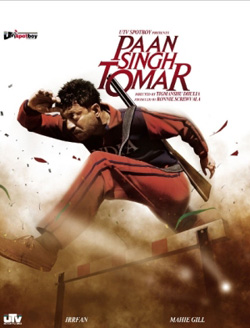
  • Reviewing the Reviews: Paan Singh Tomar

    Paan Singh Tomar

    Key Cast: Irrfan Khan, Mahie Gill, Vipin Sharma

    Written And Directed By: Tigmanshu Dhulia

    Produced By: Ronnie Screwvala


    Tigmanshu Dhulia’s Paan Singh Tomar is one of those films that challenges the collective might of critics – both professional and the word-of-mouth kind.


    The film has been winning raves, and except for skeptical trade journalists, everybody has showered the film with adjectives like “compelling” and “sublime.” The film is also a challenge for those who deride Bollywood cinema; if the so-called lovers of good cinema also don’t support a film like this, then they have no right to crib.


    Times of India’s Avijit Ghosh gives it a well-deserved (for once) 3.5 stars, though “enjoyable” is not the word one would uses to describe a somewhat grim biopic. “Sportsmen and outlaws inhabit two different universes. One shines amidst the bright lights of glory, the other haunts the ravines of notoriety. But in director Tigmanshu Dhulia’s biopic, Paan Singh Tomar, the two worlds collide. And the result is a rather exquisite blend of drama, humour and tragedy; altogether eminently enjoyable good cinema.”


    Anupama Chopra, talking over the reviews of Hindustan Times, gives it 3 stars but doesn’t seem too impressed. “Despite the rich raw material and quality performances, Paan Singh Tomar doesn’t soar. Stretches of the screenplay are sluggish and strangely inert. More critically, I never got a sense of what Tomar’s conversion from an army man to a murderer did to his psyche. Yes, he resorts to violence only because he is provoked but subsequently, he seems oddly at ease with his criminality. Director Tigmanshu Dhulia establishes a loving relationship between Tomar and his wife, Indra, played by Mahie Gill. But Indra and his two children largely disappear from his life when he becomes an outlaw and we never really see him ache for them.”


    Shubhra Gupta of the Indian Express gives it 4. “And what makes this film unforgettable is Irrfan who is, in one word, magnificent. He brings to life both the wordless strivings and joys of an athlete, and the despair of an outlaw, who has nowhere to go, but down. Of a man always, always on the run. Shubha Shetty-Saha of Mid-day liked it too. “Perhaps a tad longer and slower than it should ideally have been, but Paan Singh Tomar is unmissable. In this cricket-obsessed country, many talented men who excelled in other forms of sports have died lonely and penniless. This is Dhulia’s perfect tribute to them and perhaps a wake-up call for all of us. Now that our hockey team is going great guns, this couldn’t have come at a better time.”


    Aseem Chhabria writing on rediff.com is also impressed. “The settings, the language, the costumes, the supporting cast all appear authentic. Dhulia takes us on a journey inside a world that few of us know. My own knowledge of the Chambal ravines is by looking out of fast moving trains on journeys from Delhi to Gwalior, Madhya Pradesh. Seeing PST, we come out of the theater learning so much about the real India that exists far away from the unreal world of contrived plots, garish costumes, item numbers and other nonsense most of Bollywood films feed us week after week. Dhulia has one more agenda in making PST. He reminds us — as the statement at the end of the film makes it amply clear — that India has a sad track record when it comes to the treatment of its former athletes and who were real national heroes.”


    Sudhish Kamath of The Hindu is all praise for Irrfan Khan. “Biopics ride on the actors portraying the main character, and Irrfan Khan as Paan Singh Tomar makes up for what he lacks in muscle and shape required of an athlete, with rustic charm and sincerity. However, he does shine as the ageing runner and the man pushed against the wall.” Karan Bali of Upperstall.com writes, “Tigmanshu Dhulia’s rousing biopic on one of India’s greatest athletes, also an army man, who turned to the gun against an indifferent and callous system, finally settles down as an extremely watchable film let down by a relatively disappointing second half after a riveting enough first one. Yes, the yet another film falls to the interval syndrome again, which makes Paan Singh Tomar a good film that, however, falls a little short of being a great one.”


    Komal Nahata, looking at it from the trade point of view, gives it 1 and writes, “On the whole, Paan Singh Tomar does not have the commercial ingredients to score at the box-office. Had the second half been more weighty, it could have worked reasonably well but with the post-interval portion looking like a routine dacoit drama, that won’t be possible.” Now it’s over to the audience-will they stand by good cinema or let Bollywood potboilers insult their intelligence week after week?


  • Brands focus on toon channels as viewership changes

    By Ameya Chumbhale


    If you thought Cartoon Network, Pogo, Disney, and Hungama TV were kids’ channels, look who’s watching them – nearly a fifth of those watching these channels are between 25 and 44 years. And nearly four out of ten viewers of these channels are more than 14 years.


    Most children, on the other hand, either prefer or are forced to watch what adults are watching on general entertainment channels – soppy serials or reality shows. According to TV viewership data shared by TAM Media Research, only 15 per cent of all children viewing TV, watch kids’ channels. The rest – 85 per cent — watch general entertainment channels (GEC).


    Needless to say, this has become a big opportunity for advertisers, especially those who try and reach out to parents through their children. “Parents are increasingly looking at children as representatives of the new world and latest technology. Consequently, children between 10-14 have a considerable say while buying a car or a gadget,” said Santosh Desai, chief executive officer at Futurebrands.


    In fact, for Turner International India, which runs Cartoon Network and Pogo, nearly 35-40 per cent of their advertisers last year came from what would seem like “non-traditional categories such as auto, consumer electronics, finance and telecom,” said Monica Tata, general manager for entertainment networks at Turner in India.


    Chairman and chief creative officer at ad agency BBDO India Josy Paul, while explaining the rationale behind these channels attracting non-traditonal categories of ads, says that brands don’t want to miss out on any opportunity of talking to the mother who is the anchor of the house. Traditionally, one would expect kids’ channels to air ads by ice creams, chocolates, F&B, and toy companies.


    Insurance major Aviva India is a case in point. Aviva spent 5 per cent of its advertising budget on kids genre in 2011 and had run the ‘Aviva Young Scholar Hunt’ contest between July and October 2011 on Pogo. The impact was telling. “Of all the insurance plans sold by Aviva, the share of child plans went up from 2-3 per cent in 2010 to 11-12 per cent in 2011,” said Gaurav Rajput, director of marketing at Aviva India.


    Sony tablet computers and Hewlett-Packard printers too are advertising across all kids channels these days. In fact HP, which launched its printer campaign across kids channels two weeks ago, is something they have done after several years.


    “My target group for the campaign is parents of school-going children, so the kids channels were a natural fit,” said Ayesha Durante, country manager for marketing HP India. For Anuradha Aggrawal, senior VP for consumer insights at Vodafone India, whose team spends a lot of time researching the dual viewership (kids and adults), says it helps in choosing their icons — the pug and the ZooZoos, which connect with children, actually help to build an early brand association with these young consumers.


    Mr Desai cautions that this could be a long-term strategy which only sectors like telecom can afford as they have “cash to burn”. He further added that in a one-TV system, everybody has his/her time slot to watch TV. Therefore, if a child is watching a kids channel, the parent has no option but to watch it.


    For the genre, this means big business. The Disney channel has more than doubled its ad revenues last year while Hungama TV’s revenues rose by 35 per cent, said Vijay Subramaniam, business head at Disney Kids Network India which runs the Disney channel, Disney XD and Hungama TV in India. Disney enjoying highest share of viewership at 22 per cent among kids aged between 4-14, according to TAM.


    Subramaniam says that the return on investment is not proportional to the viewership as kids genre corners just over 1.6 per cent of total revenue of the television industry against the over 6 per cent share of viewership.


    According to the 2011 FICCI-KPMG report, the TV industry is projected to grow to 33,700 crore by 2015 from the current 14,400 crore (2010) at a CAGR of 17 per cent. And the kids genre gets the maximum in terms of viewership after GECs and movie channels, which lead currently.


    Source: The Economic Times

    Copyright © 2012, Bennett, Coleman & Co. Ltd. All Rights Reserved


  • Mail Today launches in London

    By A Correspondent


    The large population of Indian descent in and around London have reason to cheer. Mail Today, a product of the joint venture of London’s Daily Mail and the India Today group, has announced its entry to London. The paper had launched in New Delhi four-and-a-half-years ago and Chandigarh more recently.


    “Targeting the large south Asian population in London, Mail Today wants to connect with the diaspora by bringing the best of Indian news packaged in a modern avatar,” Aroon Purie, Editor-in-Chief of the paper, wrote in the e-edition of the newspaper.


    British citizens of Indian descent as well as the growing number of Indian nationals studying or working in England have reason to cheer given the India Today group’s pre-eminence and of course Daily Mail’s local leadership.


  • 5 things to keep in mind while starting an online venture

    By Rohit Sharma


    #1 “Be Frugal” should be your mantra

    It is very important to be extremely frugal. Cash is King and start-ups should keep their fixed costs as low as possible. Try multitasking. It is important to conserve cash and be completely stingy before you raise the required capital for the business. Ideally, you should have capital for next 18 months either ready or in the pipeline.


    #2 Team, a critical success factor

    It is all about the team – their motivation levels, dedication and perseverance to make it happen. It is important that the co-founders have a common vision in the game. One of the biggest challenges is to hire the right start-up team (excluding the founders/co-founders). The team needs to be extremely good in terms of skill-sets; one also can’t afford to hire very expensive people. As the promoter of the business, you should clearly articulate your vision so that the start team comes on board completely motivated and with a strong belief in you and the business.


    #3 Business Metrics: Get them right

    It is very important to get the key business metrics of your business right from day one. Have complete clarity in terms of key growth drivers, revenue drivers and cost drivers and continuously monitor track more efficiency in the business. Business plans should not be made for the VCs, but for yourself and for the growth of the business. If you have done that successfully, VCs will anyways buy in.


    #4 Don’t give up too soon

    It is important for the entrepreneur, especially in the digital space to be extremely nimble and flexible. Mainly because the environment is very dynamic, business models are continuously changing, new technologies/innovation keep on coming, so one should be prepared to quickly adapt to newer business models if required. You might not be doing exactly the same thing eventually that you started with. There is nothing wrong with that as long as you have created a sustainable growth model in your business.


    #5 There is no experience like good customer experience

    It is very important to focus on a great customer experience. It is all about the right product that the customer loves and it could be the biggest differentiator for the business. One needs to spend disproportionate time to deliver an outstanding customer experience across all the value-chain components of your business. A great product or customer experience can be your biggest marketing tool.


    Rohit Sharma is the Founder, Wopshop.com.


  • The media planner has become a zombie: Shashi Sinha


    Shashi Sinha has done a lifetime in the business of advertising and media. It’s been an interesting journey for an engineer who went from selling booze to crunching complicated numbers. The CEO of Lodestar UM shares his views on many important issues, including media research, the demise of the full service agency, key challenges facing media buyers in today’s market and how he managed to restore some credibility in the creative awards. The 54-year-old, who’s usually soft-spoken and politically correct, candidly speaks his mind on this occasion. Media buyers and creative directors must pay close attention. He makes some very valid points.


    By Anil Thakraney


    You work for two companies?

    I work for the Draft FCB group where I handle Lodestar. And recently I have taken charge of a creative agency called Interface. But my primary responsibility is Lodestar.


    Whom do you report to?

    I have dual reporting. I report to the Draft FCB Global CEO, Laurence Boschetto. On the Universal McCann side, I report to a gentleman called Jim Hytner who’s based in London.


    Dual reporting is always a tricky thing…

    It is tricky. Since they are sister companies you have to keep both masters happy. One of my strengths is getting along with people and ensuring that their objectives are met. I have been doing this for five years now. As long as the combined operation is successful, things are okay.


    Cut to the past. What attracted you to advertising, when you were a sales manager with the UB group?

    I actually came into advertising for the wrong reasons. I grew reasonably fast in the UB group at a young age and I was in sales there. But I wanted to migrate to marketing and that would have been an effort. Then a friend said to me I should work in advertising as I would get to work on many brands at one shot. And so I joined the ad world in 1986 and stayed on.


    And you started out as an account planner in Ulka. How did media happen?

    In those days planning was an unknown concept. Bal Mundkur used to run the agency at the time, and he thought planning was an airy fairy function, that it had lost steam. He asked me to do some ‘real work’. So I started doing odd jobs like running the financial advertising cell, selling sponsored prorgammes, etc. Later I shifted to client servicing. Along the way my interest in media grew. When the FCB guys decided to make India the regional hub, Anil Kapoor said the time had come for me to fully move to the media function.


    Share an interesting memory of Bal Mundkur.

    He had balls. Today our revenues and profits are huge and yet I would not take a decision which Bal took in the late eighties. The servicing team handling a large multinational client was very unhappy, they said they were being treated like shit. Bal wrote a six-page hand-written letter to the client explaining why the agency would like to part ways with them. When he told me about it, I was horrified. I asked him to instead change the team on the account. But Bal said, “No, it is a matter of pride.” (After some prodding Shashi reveals the name of the client. It was Glaxo.)


    You are involved in many activities, you run the GoaFest awards, now you are heading the Ad Club as well.  You have excess time on hand?

    (Laughs.) I have enjoyed it for the last three years but it’s getting to me now. I believe when you take something on you must give it your best. I took on GoaFest last year because it was in a mess. So one had to get some credibility back, I had a point to prove.


    I guess next year you would not want to do it.

    I will definitely not run the awards next year.


    Why has the Bombay Ad Club gone dead in the last few years? I recall they used to hold many events in the past.

    You are right, it has ended up becoming an awards-only body. The regular interactions have reduced. The agenda for the future is to make it broad-based. The Delhi market has become very big and it’s a starved market. So we can collaborate and do things. As soon as GoaFest is over you will see a lot of action happening in the Ad Club.


    Do you miss the days of the full service ad agency?

    I do. In fact, I’ll let you in on a secret. I want to go back to the integration system with Interface, and the response I have got so far is very good. I genuinely believe that full service is the final solution. The best ideas come when you are sitting around the table.


    Shashi, after all these years of happily running a media buying agency you are suddenly talking of integration.

    One has been playing to a role. One is building the media agency, building one’s clients. But the best quality works happens in a full service agency.


    And the media buying market has become like a sabzi mandi. How much fun can that be for someone who comes from the old school?

    This is the unfortunate downside of globalization, global clients and global processes. Truth is that internationally advertising is not a hot profession any more, it comes way down the totem pole. Though in India it still has a pedigree, there’s some respect left. Ten years later it may not be there.


    One super media innovation you are most proud of having effected.

    It’s always teamwork so it’s embarrassing to say I did it. We have enabled many, but the one I am most proud of was for Nerolac Paints about five years ago. We took up a Mumbai local and deposited the shades onto the train. Nerolac deposited their paint on the outside of the train and made a shade card out of it. It was a wonderful idea.


    How many years do you give the print medium in this country?

    I can’t say about Bombay, Delhi and Bangalore, but as a country, print will be here for a very long time. The smaller towns are under-leveraged. Secondly, even if there’s internet access, there’s no power supply in these places. So how much can one use the computer, how much can one read on the mobile? If the time spent in Bombay on a newspaper is 15 minutes, for a town in UP it would be forty minutes. The entire family reads it.


    Key challenges the buyer faces in a highly fragmented media market.

    Everyone chases the rate game and how to buy it cheap. To me that’s stupid. For most of the organized media there are metrics in place to measure the media efficiencies. So in media terms how many consumers we’ve reached is all bull. The big challenge is to find whether that’s working for my brand or not. That, no one is able to answer.


    That’s the media planner’s job. And the industry has killed the planner.

    Correct. The problem is that the media business has become all about volumes, the business has become transactional. The planner today has become a zombie, a computer programmer.


    How can the industry improve media research in this nation? There are too many question marks on television audience measurement and print readership studies.

    Someone has to put money on the table, it’s as simple as that. The solutions are all known, I know very bright and talented people in research, what needs to be fixed is known. The problem is: No one is wiling to invest. Today, if television measurement costs Rs 20 crores, what if Rs 100 crores was spent on it? Or, for readership surveys, which cost Rs 4 cores today, what will happen if they had Rs 15 crores? So it’s nothing but lack of funds. Neither the newspapers nor the media agencies nor the clients want to put down that kind of money. And that’s the only problem.


    GoaFest will be a sub-continental event this year?

    This being a tough year, we’ll have to see how to bring Pakistan and Bangladesh in. We have to see how many of them will come, it’s early days yet so I don’t know the answers. We are also trying to get the clients in.


    On the awards, how did you lick the problems of self voting and media leaks?

    On the problem of self-voting, it was very simple, it didn’t need a very bright mind. We stopped the practice of raising hands during the judging, and they had to vote on a piece of paper. So if a judge voted for his own agency’s work, we would block that score.


    You must be very disappointed with the creative directors who were indulging in this.

    Yes, 110 percent. In the Effies, the majority of the judges are the clients. And they are not as desperate to win as the creative directors. Which is why the creative directors take short cuts. And as long as you allow short cuts to happen, people will get even more emboldened. As far as the issue of the leaks goes, we solved it from the media end, because it’s very difficult to nab the person who was doing it. I reached out to various people in the media and got a commitment from their senior leadership that they won’t do it. Also, the switch to secret voting format helped.


    And yet, Lowe refuses to take part. Which means you still haven’t been able to crack the core credibility issues.

    Balki has taken a position and his problems are beyond the purview of someone running the awards. I am just a process coordinator. If he says he does not like his peers judging his work, that he doesn’t respect them, I can’t do anything about it. I can only clean up the processes. But forget Balki, there are other people who have their own agendas for not entering the awards, they fire over the awards committee’s shoulders. Privately they’d say to me they don’t have a good enough body of work so they won’t take part. But their public posture would be very different.


    Can’t you change the composition of the jury? Does it have to consist of creative directors?

    I would definitely like to bring the clients on the jury. Perhaps 50 percent of the panel. But I have been told by creative directors that ‘these are our awards’. You must understand that one is running an industry association and there will be many voices. And so it’s like a democracy; I may have a point of view but there are nine other people voting.


    One rival media buying agency head you admire.

    Jasmin Sohrabji (Managing Director, OMD India). She is far younger than I am but I respect her for building something from the start. She’s built the company from scratch in the last five years, and she’s done a terrific job.


    What are the future goals you’ve set for yourself?

    I think there’s a huge opportunity in the content space. And one would like to do something that’s related to advertising. It could be digital or television content. We have taken some baby steps in that direction but haven’t been able to ignite it. In fact, I have told our global parents they should offer quasi-entrepreneurial opportunities to the team members. In the sense that people within the company are given pilot projects to run, in which they have some stake.


    One big life regret.

    It’s not a regret but sometimes I wonder if after completing my IIT I made the right decision to stay on in India. I had the opportunity to get a scholarship to do my MBA abroad, and I could have stayed on there.


    Why? Don’t like working in India?

    Nothing like that. But the scale of operations abroad is dramatically different. The quality of life is good out here, but one is a big fish in a small pond.


    Click here to view all Goafest 2012 stories


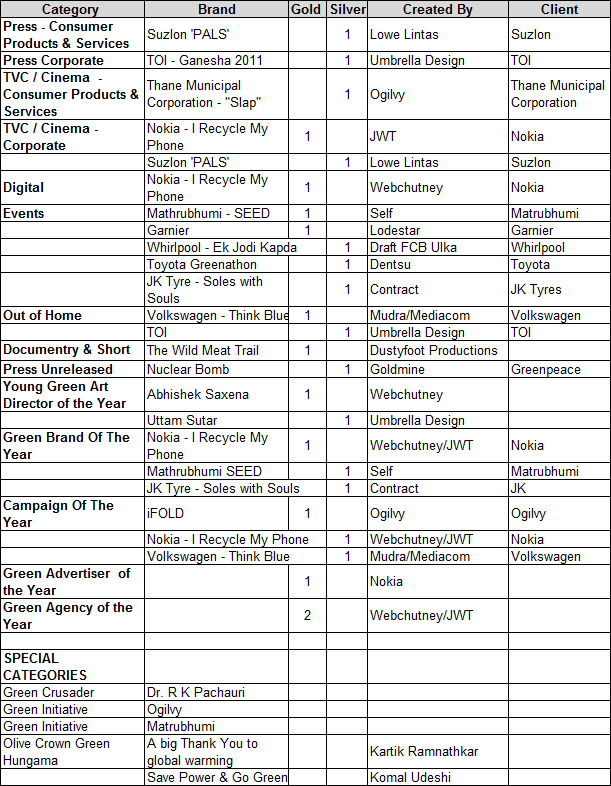
  • Nokia is Green Brand of the Year, JWT & Web Chutney Green Agencies at Olive Crown awards

    By A Correspondent


    The India Chapter of the International Advertising Association (IAA) presented the Olive Crown awards for excellence in Green advertising on March 3 at a glittering function held at the Taj Lands End in Mumbai.


    The Olive Crown Awards are the first and only awards in the country that celebrate excellence in communicating sustainability.


    The event, witnessed a heady mix of creativity, entertainment, a touch of seriousness, a dash of Bollywood and some of the biggest names in the advertising, marketing and media industry walking the “green carpet”.


    Singer Sona Mahapatra entertained guests with BollyJazz – Bollywood songs presented with a touch of Jazz. Funny man Vikram Sathye with his rib-tickling performance ensured that the guest had a great time The Guests of Honour at the function were Ms Nita Ambani, Chairperson Reliance Foundation and Member of ParliamentMs Priya Dutt.


    A special Green Crusader was presented to Dr. Rajendra Pachauri who won the Nobel Prize as Chairman IPCC.


    Olive Crowns were presented to winners in 14 categories and were judged by a panel of judges that included some of the most respected creative names in the business. Music Channel 9XM was the title partner for the event.


    IAA Olive Crown Awards – 3rd March 2012

  • Anil Thakraney: News for sale

    By Anil Thakraney


    Very recently, a publisher friend called to seek advice. And his question threw me off-balance. Because not only was the query alarming, I frankly had no ready answers. So I copped out, and left it all to his judgment. The question: “A few assembly election candidates have approached us, asking for favourable coverage. They are offering large sums of money in return. What should I do?”


    Since I knew that this particular friend was bleeding and needed some funding desperately, I simply replied with: “Man, it’s really up to you. If you are here to uphold the high standards of journalism, ask them to go fly a kite. But if you rationalize the situation in your mind, and conclude that if you refuse the offer and your rivals would lap it up, then you will be the only loser. In which case, go for it!”


    Quite honestly, I have no idea what the publisher eventually did. But speaking from a larger perspective, it’s becoming increasingly clear that paid news is here, and it’s here to stay. There was a time when elections would excite only the political class, as that would mean big moolah gains for the winners. These days, along with them, a section of the media feels ecstatic. For the same reasons.


    Corruption in the media isn’t really new. In the past, some journalists would accept alarm clocks and booze bottles from financial companies, and then write sweet words about their public issues. Now, of course, you can get your private party pics flashed in the Page 3 pages if you are ready to pick up the tab. We’ve learnt to live with these malpractices. But newspapers, magazines and TV channels accepting money to write good things about political candidates changes the goal posts. It’s clearly harmful to the nation’s future.


    So is there a way out of this mess? I am afraid not. During the 2009 general elections, a few cheating media brands got exposed. Maybe we’ll hear of more culprits after the recent assembly elections in some parts ofIndia. But soon everything will be forgotten. And it will be business as usual.


    [youtube width=”400″ height=”200″]http://www.youtube.com/watch?v=jjYxE2VD7VE[/youtube]

    Yes, it pays to be in the media biz in modern times. If you won’t get support from advertisers, you can always tap into alternative revenue sources.


    Jai Hind!


    * * *


    PS: The context of the Fiat 500 Abarth ad is different, but this commercial is the kind of stuff Tata Nano ought to have done. A car you can take inside your home. Super positioning for a little gaadi. So much better than pitching it as the broke bugger’s vehicle.


  • Freaking News: Mamata Banerjee, media’s favourite whipping girl

    By Ranjona Banerji


    This was an unexpected find: I had assumed (and from past experience) that the Hindustan Times would be strongest in local coverage amongst the national dailies in the national capital, given that New Delhi is (or was) its stronghold. But while HT does score on nitty-gritty local happenings, its biggest rival, The Times of India, is still going strong as far as blanket coverage of all news is concerned.


    This should be troubling for Hindustan Times because although it has the advantages of first choice as far as old-timers are concerned and its long history with the capital, its rival appears to be hitting where it hurts the most – with content. TOI and HT have been running neck and neck in Delhi for years, with both claiming ownership of the city at different times but conventional wisdom usually gave HT the edge. Now, I wonder.


    * * *


    James Murdoch has had to step down from the chairmanship of News International UK and is now being called a “shadow man with no role in the empire” (Sydney Morning Herald). This is of course the outcome of the phone-hacking scandal involving not just the defunct News of the World but other titles in the Murdoch stable of newspapers. Whether Junior’s moving aside is going to change company policy is another matter. Just as paid news and Medianet and its variations remain giant ogres for the Indian media to deal with, the dodgy practices of News Corp’s newspapers and journalists are the core problems. Removing James may not therefore be enough. As we have seen over the past year, the connections between the Murdoch empire and subsequent governments in the UK run deep and the favour system appears to have corrupted everyone, even the once highly-admired Scotland Yard.


    * * *


    The Mamata Banerjee government in West Bengal finds itself under greater media scrutiny with every passing day. The tendency of the chief minister to blame every event on the previous Left government and turn every criticism into a conspiracy theory has only made matters worse. Perhaps she needs some better media advisers and spin doctors? Right now, she’s the media’s favourite whipping boy (girl) and unfortunately for her, she, her ministers and her party only make matters worse every time they open their mouths!


  • Everest creates campaign for SAB TV’s Movers and Shakers

    By A Correspondent


    Movers & Shakers, arguably the biggest talk show India has ever seen, is returning on SAB TV, albeit with a whole new contemporary look and feel, but with Shekhar Suman at helm.


    Everest Brand Solutions has created the communication campaign for Movers and Shakers, which is phased out in two parts.


    Phase 1 kicked off the debate of what Shekhar would do the second time around. The teasers had Shekhar attempting, and miserably failing, at things like a hunger strike, boxing and cooking. Shekhar’s skills as an actor were fully exploited in the teasers.


    Next SAB TV’s Facebook fan page took things forward by asking people to suggest what Shekhar could do. Shekhar responded to each suggestion with witty takes.


    The final reveal (phase 2) happened with the launch of the TVC. Print and outdoor media are being used to support the launch exercise.


    Overall, the exercise generated tremendous engagement with responses pouring in.


    The ad films were shot in Mumbai and Chrome Pictures was commissioned to handle the production.


    Team Everest: Pramod Sharma, Bappaditya Shaha, Sandeep Sastikar, Sharif Sheikh, Nikhil Kapoor, Harish Shetty, Pooja Balani, Rahul Jauhari.


    Client Team: Anooj Kapoor, Harjeet Chhabra, Naranayan R.