Blog

  • TIL brings a bigger and better IPL season 5

    By A Correspondent


    Times Internet Limited (TIL), in partnership with YouTube, is back with a slew of new features to woo cricket lovers for the fifth edition of the Indian Premier League (IPL), which starts on Wednesday.


    TIL’s dedicated IPL site, ipl.indiatimes.com, now offers interactive scorecards, high-definition streaming of IPL matches, DVR features (to rewind during a match), online radio commentary in partnership with AIR , video-on-demand facility, and an all new ‘Battleground’ section.


    Making its debut this year is the interactive 10 minute video show ‘Pitch Studio’, where fans can interact with stalwarts from the cricketing world including a former cricket team captain and expert, by posting their comments and questions on Facebook and Twitter. These pre-match shows will give a quick recap of past matches and talk about key events, with guest stars adding an element of surprise.


    “Having attracted a total of 72 million global views last year, we are looking to make IPL 2012 a lot more user-centric, giving user’s total control over their IPL viewing experience,” says Rishi Khiani, CEO, Times Internet Limited.


    In the ‘Battleground’ section, IPL fans can post their comments and also indulge in activities such as throwing tomatoes and eggs at the other side during a live match. The new DVR feature will allow fans to rewind on the time-line and watch any part of the match that they may have missed. Adding to all the fun is the cheerleader application, video scorecard that captures video highlights on the fly during the match stream, and the video-on-demand feature, which offers match highlights such as fours, sixes and face-offs between players.


    Given the phenomenal success of the Indiatimes platform during the previous IPL season, it’s no surprise that this year too, some of its heavy weight sponsors including Maruti, Coca Cola, and Samsung, have put their weight behind TIL as premium sponsors.

  • Sleepwell appoints MPG as its media AOR

    By A Correspondent


    MPG India, a flagship brand of Havas Media, has been appointed as the media AOR for Sleepwell.


    The account, worth upwards of Rs20 Crores, will be handled by MPG Delhi. On MPG’s appointment, Manoj Sharma, Head of Marketing, Sleepwell said: “We are happy to partner with MPG. We found their approach very thorough and insightful. Their strategic thinking is driven by MPG proprietary tools which provide a holistic communication perspective. Most importantly, their extremely passionate and enthusiastic team made us choose them as our media partners.”


    Commenting on the win, Anita Nayyar, CEO of MPG South Asia said: “It is a great privilege to be working with Sleepwell. One of the key factors that helped us win this business was our strategic approach to communication using our proprietary tools. It’s a great win for MPG to kick-start the second quarter.”


    Sleepwell is a flagship brand of Sheela Group, it is ISO 9001 certified as well.


    For the records, Sleepwell was erstwhile with Motivator (Group M).


  • Brand IPL needs to play innings of its life: MSL Group report

    By A Correspondent


    MSL Group’s executive report on the Indian Premier League, its ups and downs and the viability of continuing, concludes that if Brand IPL has to remain a smash hit, it must work its strategy carefully.


    When it began, the league made a splash and wowed India with the razzle-dazzle of intensively commercial cricket. Then came the slide downwards with slackening viewer interest leading to falling ratings, followed by the scandal that surrounded allegations of favouritism and money-laundering.


    “There’s no denying that Brand IPL is on choppy waters. It will have to steer clear of fresh controversies, reflect on mistakes and rectify the damage as much as it can. Most importantly, it needs to win back the confidence of stakeholders. As Season 5 unfolds from April 4, 2012, the BCCI will need a stronger game plan to rejuvenate the brand,” says the report.


    Quoting media sources including reports from MxMIndia, the MSL report mentions instances of prominent sponsors pulling out, questionable ownership patterns, and the big one – runaway costs. “Keeping the wage bill in check and managing revenues will mean the difference between survival and falling by the wayside,” says the report.


    Brand IPL has other problems too, such as controversies galore, falling TRPs, and overly high ad rates. Yet, the report concludes, “There must be something right with a sports property that, despite a fall in valuation, is worth more than $3.5 billion. By its second year, the IPL was thought to be the fifth largest sports brand, just smaller than FIFA and bigger than Wimbledon and F1.”


    An integrated communications approach, the sheer advertising benefit of being on the IPL bandwagon, the fact that sports sponsorships do work well, and the Indian cricket fan’s conveniently short memory are opportunities in the IPL’s favour, the report remarks.


    In fact, while other sports such as hockey and wrestling are trying to emulate cricket’s league success, the fact is that India has been loyal to cricket for far too long, and grabbing those eyeballs will be a “massive challenge”.


    The full report can be read here:

    http://www.slideshare.net/mslgroup/indian-premier-league-still-a-smash-hit-for-advertisers


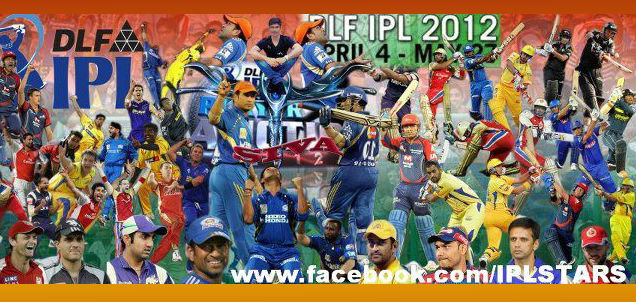
    Image courtesy: http://www.facebook.com/IPLSTARS

  • [MJR] Breakfast with Bollywood and other abominations

    By Ranjona Banerji


    Suppose (warning, blasphemy follows) you’re the kind of person who doesn’t manage to read a newspaper in the morning before you leave for work so you keep the TV on to get the latest through “breakfast news”.


    This is what I found out today: Katy Perry sang and danced and was looking for curry and something in India, said NDTV.  IPL season 5 starts with a match between Mumbai Indians and Chennai Super Kings. Ravi Shastri said Chennai was going to win and Moody said Mumbai was going to win, both on Times Now. Headlines Today said that Akshay Kumar is acting in a new film directed by Prabhu Deva called Rowdy something.


    Given the high drama on TV the night before over the $10 million bounty on Hafiz Saeed’s head placed by the US, I foolishly thought (it’s amazing how foolish I feel when I watch TV) that there would be some more on that. Not on Times Now at any rate.


    NDTV had a thought-provoking report on trafficking of young girls and women from West Bengal, being led into brothels in Pune, Mumbai and Delhi. Anderson Cooper 360 was largely focused on the Republican primaries. The BBC was on Newsday, so that’s bits from here and there, with plenty on China and something on the new James Bond film (I didn’t stop long enough to watch that, had had enough of films thanks to Headlines Today).


    That left CNN-IBN who told me everything I wanted to know about Hafiz Saeed and Pakistan’s reaction to the US bounty.


    My grouse therefore is that I was wrong yesterday for castigating newspaper websites for being too full of cricket and Bollywood and giving TV a clean chit. Or is my grouse that websites are deceptive? Something like that.


  • Monetising big ticket movies isn’t easy: Hemal Jhaveri, Star Gold

    Movies on TV are, no doubt, a hot business now especially for general entertainment channels who often do premiers of big-ticket movies to spur GRPs and in the process move ahead of the competition. Recently Star has acquired the rights of Kahani and Dabangg 2 while Zee has acquired Don 2.


    Last year Star acquired the Viacom library as a strategy to become the largest player as far as the sheer number of movies is concerned. Now the network enjoys a rich library of movies that it showcases across channels.


    MxM India’s Rishi Vora speaks to Hemal Jhaveri, Business Head of Star Gold on acquisition strategies, cost versus profitability issue and much more.


    Q: What is Star India’s strategy as far as acquisition of movies is concerned?

    We have been very aggressive on movie acquisitions. In fact, Star Gold, where we do a lot of premiers, is in the forefront of movie acquisitions. In the recent past we’ve acquired movies like Singham, Ra.One, Zindagi Na Milegi Dobara and Rockstar, to name a few.


    Q: Do you normally sign deals even before the movie goes on ground for the shoot?

    It is Dabangg 2 that we signed before the shooting began. A few acquisitions we’ve done – some of them are under production. While the stars do matter, what we do as a practice is put a strict content lens on it, so we try to minimise the risks in that fashion.


    Once you buy a movie it has to deliver the same amount of returns over seven to 11 years. That’s the length of time we look at while acquiring movies. So it’s clearly beyond the premier game. If a great movie comes our way and we feel that it’s not apt for the television audience, we will not go for it.


    Q: In case of Dabangg 2 – you’ve acquired that at a significant price. So, why make that kind of an investment when you don’t really know if it’ll deliver?

    It’s Dabangg 2. It’s Salman Khan.


    Q: That’s the only factor?

    Yes. See, Dabangg 2 is a great franchise to earn. After acquisition of the Viacom slate where we have Dabangg and now Dabangg 2 – we’ve acquired the whole Viacom library. All of their 500 movies are ours.


    Q: When did this acquisition take place?

    We acquired that in December last year. With this, it just makes us the largest movies library in the country.


    Q: Huge monies are spent on movie acquisitions at times. Dabangg 2 in this case. Is it a risk worth taking?

    It depends on what you’re buying and at what price.


    Q: 3 Idiots got acquired in about Rs 30 crore by the network which owns the rights. They’ve milked it well and the buzz is it has made about Rs 200 crore or even more.

    Yes, 3 Idiots did very well from the standpoint that it made a lot of money.


    Q: The buzz is that Dabangg 2 has been acquired for Rs 50 crore.

    I will not like to make a comment on that. The cost of acquisition is higher than 3 Idiots considering the latter was acquired some three to four years ago. And the fact that inflation plays its part.


    Q: What is your view on ROI for advertisers who buy spots on big-ticket movies that premier on TV?

    Well, I can only talk about Star Gold and the advertiser response we get. Singham rated 8.7 TVR, Bodyguard set the new record at 10 TVR and Ra.One was 6.7. All of these movies have done well on the ratings front.


    From the standpoint of an advertiser, these movies are a fantastic platform. So it’s really a win-win situation.


    Advertisers need to look at it from a portfolio approach and not just a single movie. There are movies which may or may not do well on TV. It’s not easy monetising big-ticket movies. The cost continues to go up. The cost of movies has gone up close to 30 per cent since the last two or three years. Advertisers should look at the portfolio of movies and the duration period till we own the rights. We have movies to which we own the rights for 11 years.


    Q: But if you keep playing the same movie again and again, how much will you be monetising on that anyway?

    We’re in the business of repeats. First and foremost there are not many movies that get made, and out of the movies that are released, there are only a few that do well. So the universe of movies keeps getting smaller and smaller. For example this year there are going to be only two Salman Khan movies and one Aamir Khan movie from what I gather.


    Q: But what I’m saying is that if you’re running a movie say for the 20th time, the revenue in terms of ad sales on that 20th run will not be much.

    Not really. Say a channel which does 140 to 150 GRPs, there are a good set of audiences that come on to the channel. So yes, we may have movies running many times on the channel. What we attempt to do is make enough profits. And the revenue that eventually gets generated is not bad.


    Q: What movies are we going to see from Star this year?

    The movies for 2012-13 which we have acquired are Bol Bachchan, Kahani which will be aired soon, and Housefull 2.


    Q: When was the acquisition done for Kahani?

    Kahani we acquired four months ago. I can’t tell you exactly when it’ll be aired on TV.


  • Brands focussed on men now wooing women customers

    By Amit Bapna


    Aiming iconic beauty brands at men may seem as unimaginable as Philip Morris, of Marlboro Man fame, wooing women consumers. But then Marlboro actually began life as a cigarette for women. By crossing over from one gender to another, marketers today are not looking to do a complete role reversal. Rather they’re just attempting to extend brands to a large untapped market – the other half of the species – without destroying the core proposition.


    Anglo-Dutch consumer products giant Unilever could seemingly be testing one of its most sharply positioned male brands, Axe, amongst women – a limited edition launch for now. Anarchy will be the first fragrance from the Axe brand that will have a female version packaged in a shimmering silver and glossy pink canister with floral and fruity notes – as against the men’s version with fresh and woody strains. With this new avatar, the quintessentially male deo brand that’s built recall largely on the back of its cheeky commercials extends the boldness theme to its brand extension strategy.


    This shift could mark the way forward for marketers in a world in which gender lines are merging.


    Brands across categories – from cars to personal care and from denims to alcohol – are on a gender-flirting mission. For some the affair could turn out to be a one nightstand and for others, it may lead to a happily-ever-after marriage. Michael Maedel, President, JWT Asia Pacific, feels that companies in every sector face a fundamental imperative to grow market share and sales. As lines that have traditionally separated male and female consumers – those of income, attitudes and expenditure – continue to blur, more companies that have created brands targeting one half of the species are starting to address the other half with variants, he adds.


    For instance, Bacardi has launched Bacardi +, a ready-to-drink mixer available in two variants – cola and lemonade – in the United Kingdom, some parts of Europe, China, Thailand, and now India. This marks a clear shift for the brand in reaching out to the male-drinking populace with its 8per cent alcohol content to entice the strong beer drinking segment. In contrast Bacardi’s Breezers that come in a variety of fruit flavors – and are widely consumed by women – have minimal alcohol content.


    Mahesh Madhavan, president and CEO South Asia, Bacardi India explains the logic of the new drink for men: “If you peg anything for men in this market, women will drink it, but the reverse doesn’t happen . Men will not consume a drink positioned for women for sure. It is unfortunate but that is the way it is the world over.”


    According to a JWT global research study, brands across different categories need to do more to reach out to women who are earning more, spending more and marrying later than ever before. Brands that have long focused on men – from banks to cars to property – could do a lot more to leverage this trend.


    Of course when they do, they need to think about how to make their proposition relevant and attractive to women without changing the essence of their core offering.


    Before Axe, there was Allen Solly that had made a sortie into gynic-territory. Allen Solly today is more of a unisex brand although the imagery has been predominantly male. The men’s range was launched in 1993 and the women’s range seven years later. Now, the brand is in the process of a re-branding; the new positioning will also push the gender envelope subtly.


    Says Sooraj Bhat, brand head, Allen Solly. “Our endeavour is to make the Friday Dressing concept, launched in the mid 90s, acceptable and relevant to women as well. After all nearly a fourth of the brand’s share is coming from the women’s market.”


    Conversely, skin care brands globally that were once the domain of women, says Maedel, have been successful in creating mannish lines, from a department store brand like Clarins to a drugstore brand like Nivea. Back home Garnier had been around for over 15 years as a beauty brand for women before it decided to launch a men’s range.


    India is the first market in which the L’Oreal company decided to address the male of the species. Reason: An insight that Indian consumers are less reluctant to use skincare products than in Europe, says Jacques Challes, MD, L’Oreal India. He adds that it was not very risky for Garnier to make the gender-based extension because the values that the brand stands for – efficiency and quality, in a no-nonsense manner – are easily transferable.


    Unilever brand Dove, which is present in categories like body wash, hair care, deos and lotions, has launched a Men+Care range in select markets (excluding India). Says Jennifer Bremner, global brand director, Dove Men+Care: “Our research found that many men were already using women’s skin care products, among them Dove. The range has been specifically created to deliver a range of superior products that give men the care they need without sacrificing effectiveness.” Bremner adds that for now there are no plans to launch in India.


    Over time, the definitions of what are the masculine or feminine dimensions of a society change, depending on the various factors that drive its culture. Explains Sourabh Mishra, chief strategy officer, Saatchi & Saatchi: “In terms of defining a brand’s ‘gender identity’ within that society, what is acceptable at one point in time may not be so at another time.” He cites the example of Levi Strauss that was once all about the tough all-American man exploring the wild spaces in search of his fortune. It is doubtful if it could at that time have stood for the ‘Levi’s Curve ID’ that addresses a range of feminine body shapes. But it is perfectly acceptable today because there has been a shift in culture since then.


    The decision to cross over is not without its dangers. Says Dick Maggiore, President & CEO, Innis Maggiore Group, a leading US-based positioning agency: “The greater the brand’s equity is established with one gender, the greater it should avoid brand androgyny. While a few new customers of the opposite sex could be gained, you would lose many more existing and potential customers while your brand position erodes.” He firmly believes that line extension is almost always a lousy strategy. “The key principle to a positioning strategy is that a brand can only stand for one ‘idea’ in the mind of its prospects and customers.”


    Small wonder then marketers burn plenty of midnight oil before deciding to target a new set of consumers. As Russell Taylor, global brand vice president, Axe, Unilever points out: “Even as a limited edition this is not a decision we took lightly. The one golden rule is: ‘do not break the contract you have with your core target’.”


    Rather than looking at the other sex as a vast untapped market that can set the cash registers ringing, marketers need to figure whether their brands actually meet a need of the new set of consumers. Consider Ranbaxy which recently extended Revital, a daily health supplement, to women. According to Brijesh Kapil, vice president, Ranbaxy Global Consumer Healthcare: “The product was developed to meet the special needs of women, and the product was extensively researched with consumers before launch.”


    In contrast beverage brand Thums Up, whilst claiming to have almost 30 per cent of women consumers, has for some time now been positioned as a ‘macho’ drink in all its imagery and communication. However, a new campaign, in a first of sorts, has a shapely model doing the same stunts as her male counterparts. But we’re still not sure whether that’s a gambit to woo more male drinkers – the model is ‘shapely’, remember – or to invite more women to taste the thunder.


    Source: The Economic Times

    Copyright © 2012, Bennett, Coleman & Co. Ltd. All Rights Reserved
     

  • Can flavoured & frozen yogurt replace the good ol’ dahi?

    By Preethi Chamikutty


    Dahi that went abroad and came back. That’s how Swati Jain chooses to describe the latest flavour of the season: frozen and flavoured yoghurt.


    “Flavoured is just a nomenclature,” said the head of marketing at Danone India, which recently forayed into the frozen category after debuting with the flavoured variety. Danone isn’t the only brand taking this more contemporary form of good old curd, or dahi, pan-India. Go Dahi, a frozen yogurt brand launched by Parag Milk Foods two years back, is now available in Mumbai, Pune and Bengaluru.


    And it has plans to enter North India. So what about east India then?


    “Kolkata already has mishti doi!” says Devendra Shah, chairman, Parag Milk Foods very matter-of-factly. He goes on to say mishti doi is quite entrenched in West Bengal and making consumers there switch to frozen/flavoured yoghurt could be difficult.


    It’s not just Kolkata that has a local variant of curd; Maharashtra has shrikand, Punjab lassi, Kerala taire and Tamilians still swear by curd rice.


    Flavoured and frozen yogurt is a new food category to India, just two years young. The market for yoghurt of all types, including flavoured, frozen and regular curd, is pegged at almost Rs2,500 crore by euromonitor International – and one that grew 35 per cent in 2011.


    Clamouring for a scoop of the action are a clutch of brands, from Parag Milk Foods’ Go and Amul Flaavyo of the Gujarat Cooperative Milk Marketing Federation (GCMMF); to Nestle Real Fruit Yoghurt, Mother Dairy Yoghurt and Danone Cremix Yoghurt. The second set in this space include retails brands like Cocoberry, Red Mango, Kiwi Kiss and Yogurberry which sell flavoured/frozen yoghurt through exclusive outlets that only stock the respective brands.


    Most non-retail brands are using modern trade, institutions, college, school and office canteens, airlines, five-star hotels and independent kiosks to reach out to its potential consumers. Danone is also looking at kirana stores to reach customers and Jain says they provide Danone coolers to shops for stocking products. The target customers are young, urban and health-conscious people. Ms Jain of Danone points out: “Women tend to pick it up more than men, as psychographically they are more health conscious than men.”


    Adds GCMMF managing director, RS Sodhi: “This is a new product category being adopted by middle and upper middle class people who are health-conscious.” Nestle is trying to position its yoghurt as an ‘anytime nourishing snack.’ Kumaran Nowuram, general manager – dairy, Nestle India, says: ” Consumers consider flavoured yoghurt a western concept and, as they do not quite understand it, there really is no specific consumption pattern yet.” Nestle Real Fruit yoghurt has been available in the market for the past few years and the brand will soon add Junior Daheez (for children) and Fruit Daheez to its portfolio.


    These are still early days of trial and error. For instance, Go has withdrawn its banana variant for lack of adoption. Mango, strawberry and pineapple variants, which are common to all brands, are finding takers. Mother Dairy also has yoghurt in raspberry, blueberry and plum flavours.


    Munish Soni, DGM marketing at Mother Dairy’s dairy products division, says blueberry is quite popular among its customers. The retail brands have a larger range of flavours – as many as eight in the case of Cocoberry. Cocoberry also offers the largest pack size of 300 gm and even provides the option of home-delivery. Go, says Shah, will soon launch a 400 gm pack.


    The way forward clearly is to grab share from other snacks and desserts. Ina Dawer, research analyst at euromonitor International, says: “Frozen yogurt has already started to replace ice cream to a certain extent. Consumers have also already started to look at it not only as a healthy snack but also as a healthy replacement for meals.”


    Companies tying up with corporates to target office employees, adds Dawer, will also help in increasing consumption by making it a quick, convenient and healthy substitute for meals. “I will not be surprised if frozen yogurt sees growth of 70-80 per cent each year over the next two years,” predicts Dawer.


    There are a few obstacles to such robust growth. The lack of adequate cold chain infrastructure is the biggest roadblock, which restricts distribution to cities and towns away from the manufacturing facilities. This also makes building loyalty difficult as consumers tend to lap up whichever brand they can get their hands on. Says Suman Srivastava, cofounder of Marketing Unplugged, a brand consultancy: “While there are a number of brands in the space, someday I eat one brand and the next day I pick up another. This may be because not all outlets are stocking all brands.” Srivastava also thinks for the category to become bigger there has to lot of innovation: “When Britannia showed its cheese as equivalent to a glass of milk, it was unique way to position the product. Similarly if brands are able to create some parallels for frozen/flavoured yoghurt that could help increase adoption,” he says.


    Source: The economic Times

    Copyright © 2012, Bennett, Coleman & Co. Ltd. All Rights Reserved


  • Will IPL 5 ratings match those of earlier seasons?


    By Johnson Napier


    The Indian cricket team’s performance over the last year has left much to be desired. Having suffered humiliation at the hands of several opponents and having failed to pep up ratings with their cricketing prowess, it was a telling sign that all was not going well for the men in blue who were crowned World Champions just about a year ago. Had such a downfall in form gripped any other country, it would have attracted the wrath of the fans that would’ve boycotted the sport by staying away from the game even if it meant empty stands (in stadiums) or viewership ratings on television taking a plunge.


    But that is precisely what is different about India, especially the bond that its people share with their favourite sport – cricket. Lose or win, big score or small score, there will always be a legion of fans who will continue to stand by the sport (and their idols), and be there in good times and in bad. This probably even sums up BCCI’s recent move in selling the broadcast rights of Indian cricket to Star Group for a staggering Rs 3,851 crore for a period from 2012-2018. One can only empathise with the broadcaster who now requires to come with a foolproof strategy that would see it recover revenues and also arouse curiosity levels amongst advertisers. But that is for later. For now, all eyes are on the most-anticipated tournament – IPL, that kicks off from April 4, 2012.


    Not wanting to take sides and given the string of ups and downs surrounding cricket in the recent past, experts are opting to play it safe and are predicting viewership ratings to be at par or slightly lower than the past year. In a sense, this augurs well for the wellbeing and popularity of the sport given the uprising it has faced in the recent past particularly with brands many of whom have opted to stay away from the event given the high costs being quoted for a 10-second ad. Also, the fact that a few franchise owners were left in the lurch awaiting divine intervention from the BCCI and with big players not being picked up by stake owners during the bidding process didn’t help solve matters either. And so while an average rating of 3.5 was what IPL managed to throw up in its fourth season, experts predict a somewhat similar rating for the fifth instalment too.


    Avg. Viewership of all IPL Seasons
    Tournament Number of Matches Avg. TVR
    IPL Season 1 59 4.81
    IPL Season 2 59 4.17
    IPL Season 3 60 4.65
    IPL Season 4 74 3.5


    Viewership of first match of all IPL Seasons
    Tournament First Match TVR
    IPL Season 1 L/T DLF IPL T20 KKR/RCB-BG 7.19
    IPL Season 2 L/T DLF IPL2 T20 MI/CSK-CT 5.09
    IPL Season 3 L/T DLF IPL3 T20 KKR/DC-NM 5.86
    IPL Season 4 L/T DLF IPL4 T20 CSK/KKR-CH 7.14

    (Source: TAM Peoplemeter System / Market: All India / TG: CS 4+)

    * In IPL 1 one match was abandoned due to rain

    * In IPL 2 two matches were abandoned due to rain

    * In IPL 4 one match was abandoned due to rain


    According to data from TAM Sports for season 4, the inaugural match between Chennai Super Kings and Kolkata Knight Riders had notched up a 7.14 TVR in the all India market for CS4+ (refer table for data). The number was much higher than what the previous seasons had managed to notch up. But despite the number of matches being increased to 74, the tournament managed an average TVR of 3.5. For season 5, while the tournament average is touted to stay the same the opening day numbers are estimated to be below par than the previous year. Asserts Anita Nayyar, CEO India & South Asia at Havas Media: “There is some commonality in the average ratings that season 5 is expected to throw up from the previous year but where for the opening day numbers are concerned, it could fetch a TVR of 5 or so.” Elaborating on why the numbers would not be as high as the previous years she said, “If you see, there has been an overdose of cricket in the past one year leading it to be a cricket-heavy year for team India. This has resulted in some form of fatigue setting in amongst the masses. The fact that a host of advertisers have opted to stay away from the event this year further signals the plight of the event in the days to come. But one could look forward to the event garnering an average rating of 3-3.5.”


    Echoing a similar sentiment, Nandini Dias, COO – Lodestar UM said that this year could be one of the bad years for the event where ratings are concerned. “The average ratings have been slipping over the years and would hover around the 3-3.5 mark this year. But what is more concerning this year is the way the advertisers have been treated despite trends suggesting an expected downfall in ratings. With such exorbitant rates, most advertisers have preferred to stay away from the event.” On the opening day numbers to be expected from the event, Dias said, “The buzz around the event this year has been surprisingly low and much of this may have to do with India’s dismal performance in the year gone by. I expect lower opening day numbers compared to last year given the low decibels around the event. Even the sale of tickets is low-profile with many preferring to stay away from making a purchase.”


    So while a dip in numbers is what is forecast, it would be interesting to see how the broadcasters play up the viewership numbers game as there is a slight change in the opening day schedule of the event. While in previous years, the opening ceremony was followed by a match on the same day, this year the organizers have split the two for separate days. Explains Jai Lala, Principal Partner – The Exchange, Mindshare: “Last year and in the previous years the opening ceremony was followed by a match being played on the same day and the number as such was high but this year there would be a difference in the numbers as the opening ceremony and the match have been separated from each other. So just the ratings from the opening day of the match per se, I would say it would be marginally low but as suggested that is due to the splitting of events. We’ll have to watch how the broadcaster plays up the numbers.” In fact according to Lala, “Season 5 may have an upper hand where the average ratings are concerned as one, there was no World Cup like last year that resulted in fatigue amongst viewers and also the fact that a lot of teams were in a sense rehashed last year resulting in small drop in ratings. But that shouldn’t be the case this time around; hopefully the ratings could be better than what was last year.”


    Preferring to stay optimistic, Neelkamal Sharma, COO – Buying of Madison Media Group is hopeful of the event managing a good opening in terms of ratings. And his supposition stems from the fact that the “general public’s mood being low due to economic slowdown/ scams/inflation etc hence they may look forward to watch something more entertaining and something that will drive away their attention from regular news.” As for the average numbers per se, he expects the numbers to be somewhat similar to last year +/-5-10 per cent.


    Having faced the heat last year for reporting a drop in viewership numbers that was backed by an unwarranted hike in ad rates, MSM would probably have to come up with some magic formula that would see them gain their way into the hearts of the viewers and naysayers too. It may help that the reach numbers for the tournament are estimated to be 8-10 per cent higher than last year due to rise in C&S households but the question is: will the viewer cling on to see the event complete the journey in its entirety or will he (or she) quit midway resulting in depleting numbers than previous years? The ball, for now, is in MSM’s court.


    Image courtesy http://www.facebook.com/IPLSTARS

  • Rohit Nair is COO of C2W

    By A Correspondent


    Contests2win.com India Pvt. Ltd announced the appointment of Rohit Nair as the COO of the company. Previously, Rohit was the co-founder of ‘QuizWorks’ – one of India’s premier quizzing Companies.


    Alok Kejriwal, Founder of Contests2win said: “c2w has changed rapidly over the past 12 years. From being a Company set up to replace the Indian ‘contest postcard’, to becoming the first Internet Company from India to set up shop in China, we have come a long way. In this age and time, we see a brand new, global opportunity beckoning us. We own a great brand; have over 2 million registered users; possess over 10,000 pieces of original content, and enjoy blue chip, global brand relationships.”


    “Rohit and I have known each other for some time and we both share a common, unique vision for c2w – that will unveil itself in the months to come. I am thrilled to have Rohit on board and believe him to be truly capable of leading c2w into its new chapter of future wins,” he added.


    Rohit Nair said: “As an entrepreneur who has built one of India’s leading quiz companies, I am now ready for my next big career challenge. Contests2win provides the ideal platform to demonstrate how consumers and engrossing content can create an unparalleled dimension in engagement. As COO, I assume responsibility of the complete business and will strive to make c2w an outstanding example of how delightful global brands can be built out of India!”


    Contests2win.com is one of the oldest and most recognized Internet Brands of India. Best remembered as a Company that created a media industry around contests and prizes, c2w (as the brand is better known) also famously survived the gruesome 1999-2001 Internet meltdown and emerged as a winner. c2w is responsible for introducing almost all the Fortune 500 brands to the Internet in India and making millions of Indian Internet users win prizes ranging from Movie tickets to cars.


  • Max ropes in Vibha Paul Rishi for brand building & HR ops

    By Ratna Bhushan & Khomba Singh


    Healthcare and insurance group Max India has roped in Vibha Paul Rishi to take care of its brand building and human resources operation, two people aware of the development said.


    Ms Rishi, who quit retailer Kishore Biyani’s Future Group last month, will join Analjit Singh’s Max India as executive director, brand and human capital, later this month, they said. She will report to Max India MD Rahul Khosla.


    A person close to the development said since the company’s executive represents the image of a firm, the company decided to bring both the verticals under Ms Rishi. “Our people are the best ambassadors of the group,” a top company official said, defending its decision to make Rishi responsible for building the group’s brand as well as managing its talent, career and succession plans.


    Despite repeated attempts, Rishi could not be reached for comments. Max India too declined comment.


    Max India’s existing human capital director P Dwarakanath, who retires shortly, will continue as an advisor to the human capital function, the official said.


    Rishi, who worked with beverages maker PepsiCo for 17 years, returned to India in 2010 after close to seven years overseas and joined the country’s largest retailer Future Group as its executive director for customer strategy. But her stint at the firm lasted barely two years. “She had some issues and her decision to exit was mutual,” a Future Group official said on condition of anonymity.


    A mother of two, the 50-year-old Rishi was heading PepsiCo’s marketing in India before she relocated to New York in 2003. She had led Pepsi’s ‘Nothing official about it’ campaign during the 1996 cricket world cup, which took cola wars to a new high.


    An MBA from Delhi’s FMS, Rishi quit PepsiCo in 2007, after which she was associated with NGO Pratham.


    In the last few months, Max India has elevated Mohit Talwar to the position of deputy MD and appointed Rahul Ahuja as the group financial controller.


    Its hospital subsidiary Max Healthcare also appointed a new chief executive officer, CFO and chief services officer, while elevating two senior doctors to the post of vice chairmen. During this period a few executives including CEO and CFO of Max Healthcare left the group.


    Source: The Economic Times
    Copyright © 2012, Bennett, Coleman & Co. Ltd. All Rights Reserved


  • Mindshare wins media mandate for Jabong

    By A Correspondent


    Mindshare North has won the media consulting and deployment duties of Jabong.com, following a multi-agency pitch, which took place in Delhi.


    “We are aware that we need sustained communication, delivered creatively in order to become the single “go-to” destination in our customer’s mind, when thinking fashion and lifestyle. Therefore the priority was to align with agencies that would be able to deliver that promise. Mindshare was certainly a strong runner right from the start, and we have finally decided to go with them for media deployment advice,” commented Manu Kumar Jain, Managing Director, Jabong.com.


    Says Rahul Thappa – Client Leader for Mindshare North India, on the win, “This win underscores our understanding of the e-tailing market consumer which we as Mindshare have been evolving over the last couple of years. We’re quite excited and proud to have been entrusted with helping to grow Jabong.com’s business model in India using our consumer and media knowledge and we’re looking forward to a long and fruitful association with Jabong.com in the years to follow.”


    The pitch to Jabong.com was led by Saket Sinha, Partner – Client Leadership and his team at Mindshare. The team’s grasp of consumer insights in the space of e-tailing coupled with targeting recommendations based on information from both proprietary studies such as TGI and that from external industry research helped Jabong.com understand the India market a lot better and swung the decision in favour of Mindshare Delhi.


  • Anil Thakraney: Why I shall duck the IPL

    By Anil Thakraney


    Like every year, this year too I shall give that circus called the IPL a quiet miss. As far as I am concerned, this is anything but cricket. It’s actually one huge outdoor party, where the Page 3 types and other minor celebs get to shake a leg in front of cheering masses. Not my idea of a relaxed evening. I’d prefer to watch Crime Patrol and Balika Vadhu. As usual. Though I have to admit I will, very reluctantly, drop by now and then. Only because I am a paid writer and can’t shut myself out of anything. Not even trash.


    Anyways, here are my big problems with this tamasha:

    Because there have been such dubious results in some of the matches in the earlier seasons, you have to wonder if the IPL isn’t a hot-bed for match fixing. Let me put it this way: I would be entirely surprised if the tournament turns out to be all clean. Good story for tabloids in India. A massive expose crying out to happen.


    Because the IPL has become a VRS scheme for retired cricketers. A pension plan for the old, burnt-out boys. Ex-players like Ganguly are an embarrassment to watch. And Dravid, in this format, fits in as nicely as I fit into a Page 3 bash. Not really interested in watching this joke.


    Because the tournament is infested with controversies. Not a single thing about the IPL sounds aboveboard. Right from the dodgy auctioning process to team ownership issues to the TV rights scandal to allegations of money laundering… there are rats lurking everywhere under the glitzy red carpet. Who on earth would want to waste time on such an incredible tournament.


    Because there is an almost zero regional flavour in each team. I still cannot bring myself to support the Mumbai team, most of the players continue to be from other regions. Ditto for other teams. Just to give you one example: Dhoni is as far removed from Chennai as Gorakhpuri flicks are from Amma’s DVD collection. So there is no real passion for the game. It’s time pass at best.


    Because it’s no fun watching Neetaben and her chubby boys jumping and dancing post the match. I suspect their own (now ex) team captain, Sachin Tendulkar, gets pretty scandalized by their shenanigans. Maybe that’s why he opted out of captaincy. So that ben hugs Bhajji instead.


    [youtube width=”400″ height=”200″]http://www.youtube.com/watch?v=fLzsKm7sEG0[/youtube]

    Because the IPL is anything but cricket.


    ***


    PS: Haha. A real cool ad from Axe. On how to keep pace with a totally flirty girlfriend. So much more fun than all those silly ads that feature women chasing the Axe man around. And a super script too!