
Blog

  • MSM hits the ball hard for Six

    By Rishi Vora


    It’s been about two years since it was first heard that Multi Screen Media Pvt Ltd (MSM) will launch a sports channel. The wait is finally over as the channel was launched on April 7. This is MSM’s sixth channel – one of the reasons why the network chose ‘Six’ as its brand name.


    The TG for Six is skewed slightly towards the younger lot of sports fanatics and the first phase of the content plan is to  make most of the Indian Premier League’s five editions and evoke special interest among fans to watch non-cricketing sports such as mixed martial arts, basketball, badminton and football. Its main property, to begin with, is Ultimate Fighting Championship (UFC), a martial arts contest that has more than 30 events globally. The next season of IPL will be aired on Six.


    The channel will reach out to 80 million homes on DTH and analog platforms in India with a reach of 20 million in phase 1.


    Six is being promoted heavily on network channels and the on-air biggest cricketing property, IPL. Quite surprisingly, the channel has not gone for a 360-degree marketing blitzkrieg – the usual strategy adopted to support the launch. It is learnt that outdoor and radio will subsequently follow promotions on TV.


    If one looks at the sports broadcast arena as is currently placed, it makes an interesting read. Neo Sports and Ten Sports are facing a tough time sustaining business. And, of course, the fact that IPL was running on a sticky wicket as far as sponsors are concerned, tells the story – that advertisers feel there’s no point investing big monies where the returns are not very good. Plus, the recent development of Star winning the BCCI rights… something which MSM was eyeing to provide that much required impetus for the new channel, is a sure-shot big miss of opportunity.


    “We have the IPL and as we move along, we hope to acquire more rights,” said NP Singh, Network COO. He confessed that the BCCI rights was an opportunity missed, however, he also said: “It was in our long term interest to launch a sports channel. We had been talking about it, so it wouldn’t have made sense to further delay the launch just because we did not win the rights to broadcast Indian cricket.”


    According to a senior media planner who wished anonymity, the launch of Six has happened at a time where it may not be easy for the channel to make a mark. “Cricket is the only sport India loves. Besides IPL, Six doesn’t have much to offer. Also, there isn’t much left as far as rights are concerned, so the channel will really have to do well on non-cricketing sports, which is a big challenge in a country like India.”


    Ms Basabdatta Chowdhury, CEO, Platinum Media is of the opinion that though the channel might face many roadblocks, in the end it’ll be a sustainable business. “I think there is space for one more sports channel. It depends on what kind of content they bring to the channel. Football is quite popular in some sections of the country and they will look to target them. Similarly, other sports which have their specific audiences in the country. If the channel does well in targeting these niche sections, it’ll sustain. And of course, they have the IPL and the New Zealand board for cricket lovers.”


    Mr Anwesh Bose, Senior Vice President, DDB Mudra Max offers a similar view: “MSM has made very good profits this year and that would give them muscle to gain rights from other cricket boards around the world, they already have the New Zealand Cricket rights. In addition, there is football and a few other sports to look forward to. With the new channel, new vistas would open for Sony and given their past successes, they can surely make a profitable venture out of the sports channel.”


    He further added: “They still have five years of IPL left and they will make good use of it.”


    Overall, there are mixed reactions on the prospects of MSM’s new channel, Six. One major worrying factor is that there aren’t many rights left to be acquired, and those which are, are available at exorbitant prices, making sports broadcast a challenging business.


    As the Network’s COO mentioned, every time they’ll (channel execs) step out to get the much important rights, the attempt will be to go for a six.


    Time will tell how well they hit the ball.


  • Glory Be, Shekhar Gupta dared to criticise the Indian Army!

    By Ranjona Banerji


    The one way to annoy the journalistic community (I’m being generous and including TV-wallahs in this) is to write something uncomplimentary about the armed forces. As Shekhar Gupta, editor-in-chief of Indian Express, has discovered, ever since he wrote a front page story about inexplicable troop movements towards New Delhi on January 16.


    The story suggested that some in the government were worried about the army chief’s intentions especially since that was the day that VK Singh moved the Supreme Court over his age issue. There were questions raised about why the two divisions were abruptly sent back on ministry of defence instructions and why several protocols about moving towards the national capital had not been followed.


    Outrage and condemnation burst out across the media. What, the Indian armed forces, the most glorious institution in the world had been accused of maybe, perhaps attempting a coup or at best acting in a suspicious manner or at the least not following the rules? Impossible. For 7 lakh years (I’m using the BJP’s Saraswati civilisation timeline here because jingoism always reminds me of the right wing) the Indian armed forces have been perfect, never set a foot wrong.


    And now, to be accused of this, blah blah blah. I wonder what today’s media would have done to Emperor Ashoka when he decided to abjure violence after the Kalinga war. Can you imagine Ashoka being raked over the coals by Arnab Goswami, for daring to suggest that there had been too much bloodshed thanks to his soldiers?


    Anyway, Gupta has now become the whipping boy of the media. In Mumbai, there’s a term for this media anger: “khunnas”. Hmmm, that is, a teeny bit of jealousy that no one else had interpreted the facts quite like that. But there’s also all that patriotic anger – when it comes to the armed forces, objectivity flies out the window. Meanwhile gossip is flying around – Gupta is a Congress stooge, he is not in the VK Singh camp, he wanted to make hay out of an old story, he never thought it would boomerang like this and so on.


    Goswami on Times Now told us over and over again that some journalists with an “over-active imagination” had concocted this story. (Something TV can never be accused of possessing, oh no!) Several retired generals with large moustaches bristled with anger (how come we have so many of them, retired generals I mean, not moustaches?).


    Newspapers wrote editorials against the Express story. Some pointed out that half the information had first appeared on rediff.com. Others said that the conclusions were a bit far-fetched. Not a single journalist bothered to investigate the two questions raised: one, if the troop movement was innocent, why did the divisions turn back and two, why were the protocols not followed and tangentially, is VK Singh as angelic as he is being made out to be?


    Whatever it is, Gupta has learned one lesson. You can question God, you can tear down old and revered institutions and you can gossip about anyone you please but you cannot, cannot, cannot ever say anything negative about the Indian armed forces. Be warned, because otherwise, the wrath of Indian TV will fall on your head. Add all the anchors together and that’s quite a heavy burden to bear.


  • 10 Days to Go-Goafest! It’s all about celebrating ideas: Arvind Sharma


    As the countdown begins for Goafest 2012, Arvind Sharma, Chairman Goafest 2012 and Chairman, India Sub-continent, Leo Burnett, speaks to MxMIndia’s Tuhina Anand on the festival this year and why it is truly the celebration of creativity at its best.


    What can one expect from Goafest 2012? How will it different from last year?

    The Festival will stay true to its fundamental vision. It is a platform for celebrating creativity and a source of inspiration. Most importantly for the entire fraternity comprising young and not-so-young, Goafest is the preparatory ground for the industry to gauge where and how to go forward. I feel that the core, sometimes, is forgotten in the bid to do something new.


    I mean, we live in a world which is changing rapidly, so having something new is inevitable. If you look at successful festivals around the world 90 per cent remain the same. Similarly, at Goafest, we have defined categories and 95 per cent remain the same in terms of predictability of entering, judging, Awards Governing Council and Goafest Committee. There is consistency in that format and our effort of providing conversations. All this is same as what one had last year.

    Having said that about the predictability factor, let me also add that moving forward is equally important.


    So, what’s new?

    This year we are looking at ways to involve clients in a meaningful way. The fact is that, there would be no advertising if there were no clients. The business of advertising is about partnering with the marketers. We, at Goafest, believe in evolving vision that doesn’t really mean evolving identically, but in evolving together. We look at bringing in more opportunity for conversations and that’s the reason why we have brought clients this time into the seminar.


    There is a slight change in the format. So far, there have been series of international speakers, while some of these presentations have been received well, some weren’t, and there have been questions on the relevance of those to India. Changing that, we have brought in senior Indian clients to raise questions after the presentation. So there will be 30-35 minutes for the speaker followed by 10-15 minutes of Q&A led by a senior Indian client. He or she will be the voice and mind of the audience and bring in the Indian perspective to the entire presentation by agreeing, challenging, bringing contextual light and interpreting the whole presentation.


    We have also brought the Marketing Wizards to Goafest. This is calling the under-30 staff of the marketing community. We have had a good response and we expect overall 70 to 80 major advertisers to participate, which include team of two people representing to some even registering team of 30 people even though we have a limit to numbers.


    Why this whole idea of bringing in Grand Prix to all verticals?

    Grand Prix, traditionally, has been awarded in Print, TV and Integrated. This year, we have expanded the Grand Prix to cover all the 9 verticals. This was not an easy decision and the step was debated. We believe that the time has come for specialists in area to move to the centrestage. I don’t really know if the jury will find works worthy enough for Grand Prix in each of the vertical, but this would help in finding worthy advertising and celebrating it around India and even around the world.


    For a young designer who is always on the periphery of an agency, winning gold is good but winning the GrandPrix might help in moving the same person to leadership position. We hope that the move will catalyze long term fundament change in the way we create advertising.


    We hear this year there are entries from other South Asian countries?

    Yes, we have entries from Sri Lanka and Pakistan and we will have delegates from Sri Lanka and Bangladesh. In South Asia, we have different cultures but there are more similarities than differences within those cultures and we can learn a lot from each other. Unfortunately, the politics of the subcontinent is more difficult. We had planned a road show in various countries but our passports got stuck and this could not happen.


    Can you throw some light on the conclave and the seminar?

    We have put together an enviable list of names and these are speakers who really are worthy of listening. Jean-Yves Naouri, COO Publicis Group spends almost 150 days in flight. He knows what is happening in the business around the world and will share his valuable insight. Tim Love has been involved with theCannesand he played important role in the shaping of the future of Omnicom Group. Jonathon Mildenhall, VP of Global Advertising Strategy and Creative Excellence, CocaCola promises to be stimulating session. Steven King, CEO, ZenithOptimedia will also be on panel. Anuradha Sengupta, who loves throwing challenge, will be part of the session.


    On the seminar speakers, Amir Kassaei, Chief Creative Officer, DDB Worldwide, Rishad Tobaccowala, Chief Strategy and Innovation Officer, VivaKi and Prof John Philip Jones, Emeritus Professor at the Newhouse School of Public Communications,Syracuse University,New Yorkwill be speakers. While the world is talking video as the future, Lucas Watson, Vice President, Global Sales and Industry Marketing, YouTube will tell us how and Simon Wardle, Chief Strategy Officer, Octagon will be worth listening to for all the planners in the industry. Erik Vervroegen, International Creative Director, Publicis Worldwide will give his take on creativity. We will announce one more name in this list soon. From the Indian marketers side who will be part of Q&A, we have Sanjay Behl from Reliance, Kainaz Gazder from P&G, Viral Oza from Nokia, Gayatri Yadav from Star India and Hemant Bakshi from Unilever.


    Awards have been under the scanner, do the controversies surrounding it mar the event in anyway?

    Awards show will have criticism. What is driving us is the celebration of creativity and look at this Fest as a platform to prepare ourselves for the way industry will go forward.


    Why did the Goafest Committee decide the theme – Magic of Ideas?

    Everything that happens at festivals is ideas. While advances in technology and database is important, but what we celebrate is ideas. If we add everything on an excel sheet, we will see that when a brand gets a lot of traction or if it is ignored, it is all to do with ideas. No client launches a product with the intention of not succeeding, so getting it right is important. For a product to be embraced, it has to connect with people and this cannot be reduced to a formula but has to do with the magic of ideas.


    The awards have been leaked in the past, losing some of its credibility, how do you ensure that this doesn’t happen this year?

    We believe that awards will not be leaked. In this, the media as well as the organizers have a role to play. There is a symbiotic relation. We do our best to avoid any such incident. Some information has to be shared with the media beforehand, but there is an embargo on release information and last year journalistic fraternity showed a sense of responsibility. I will add that the media has equally a big stake in the Fest.


    What will you say to the agencies that have decided to stay away from the fest?

    Whether to participate or not is an agency’s decision. We on our part, including the AGC, have been ensuring that our job that includes category, rules, audit and the jury does their job well. Let creative minds debate as for us touch wood, thing are going as per planned.


    If you have to send a formal invite to the industry for the Fest what would you say as to why must the fraternity attend?

    You will get to see the best of work and see the best creative minds judging what they think is worthy of awards. You get to interact with seniors and bright creative minds which many times is impossible in the busy schedules that we lead. Besides you will get to hear exceptional speakers’ line-up.


    Goafest creates the space for debate with peers and youngsters, which includes large group discussions and one-on-one interaction. We are expecting around 2,500 people to attend Goafest this year. Not to forget that Goafest is not heavy-handed like training sessions but good learning place where you also have loads of fun.


    Personally for you, how has it been plugging all the gaps before the festival?

    We have a very big team working across agencies. There is a sense of joy and shared sense of purpose to make Goafest a success. We are in it together and there still is a fair bit of work to be done. However, it’s been an enjoyable experience.

    Click here to view all Goafest 2012 stories

     

  • The Anchor: Abraham Alapatt on 5 Ways a Brand survives with intense competition

    By Abraham Alapatt


    1. Relevance:

    As a category gets crowded and differentiation gets blurred, the biggest challenge for a brand to survive both with existing customers (survival) and to appeal to prospects (growth) is to become and stay relevant to the customer’s life and lifestyle. Unless a brand can stay relevant enough for customers (existing and prospective) they are in serious danger of losing mind share – and therefore eventually, wallet share.


    Category relevance may be relatively easier in some categories that are frequently used/discussed – cars, mobile phones/providers, FMCG and personal care products, fashion and lifestyle  and so on, because category relevance is a given. The challenge for brands in these categories is to remain constantly relevant to the customer’s evolving needs and aspirations in these categories where competitors are constantly changing the boundaries of relevance either at product/service/technology level or at a brand/imagery/status level.


    On the other hand, brands operating in relatively less “involved” categories like furniture, cement, insurance and others – need to constantly find ways to “create” category relevance and then brand relevance to stay relevant within the category. They usually attempt to do this with innovations, service +1s, etc.


    2. Personalization:

    Again, as categories (and brands within them) grow exponentially, “impersonalization” in product/service/process begins to become the norm – to handle the growing number of customers and resultant demands.


    Successful brands (especially in service categories) use this opportunity (provided by current market leaders being “impersonal”) to target a growing set of customers and prospects who are disgruntled with this and who demand/seek a higher degree of personalization or customization, by tapping into their innate need for recognition and acknowledgement.


    Customers (especially the more educated/affluent) increasingly demand to be “recognized” as individuals/names and not merely by a number/ID. Brands in the service space that manage to balance the need for this personalization with the added economic price that this entails are able to not just retain their existing customers, but actually grow their business because they do this effectively. Banks, especially the private-foreign banks and airlines demonstrate this well, using highly developed HNW programs with exclusive personalization privileges to their most valuable customers.


    3. Relationships:

    In tough times, the power of relationships to sustain and grow business cannot be overstated. The most powerful marketing brands, actually invest more heavily in building customer/prospects relationships during slow/recessionary periods as they see the very tangible benefits of this intangible asset.  So whether it’s an Apple (that grew/grows exponentially even when their peers like RIM/Blackberry are going out of business) or an Indigo Airlines that breaks even and declares record profits while the aviation industry is reeling from its worst years in recent history – there are enough examples to suggest that powerful brand-customer relationships can see brands through the toughest competitive phases.


    4. Transparency & fairness:

    Across the world, one of the most frequently used attributes used by loyal customers of their favourite brand and (alternately, one of the most often heard causes for customers to reject/move away from their existing brand) is transparency/fairness of dealings or their absence.


    Customers expect a fair and transparent relationship with their brands. So from the advertising to the salesperson’s pitch, from the showroom experience to the call centre response, from the application form to the statement/bill, from the welcome letter to the post sales complaint/service handling – brands that want to survive a hostile competitive environment, need to ensure that their processes are simple, easy to understand/use and their technology platform capable and robust enough to ensure error free billing/service and so on.


    Banks like HDFC inIndiahave demonstrated that fair, understated and transparent efficiency work with customers as well (if not better) than some of their peer banks that are a lot bigger, flashier and more aggressive.


    5. Consistency of service quality:

    Seemingly the most obvious, but sadly often the most overlooked. The mobile network that is often down/out of range, the bank ATM that is down often, the mutual fund that delivers consistently below the benchmark index/market, the car that breaks down often – these are often the most likely causes for customers to move away from their existing brands – especially when competition is tough and enticing them with juicy deals.


    Poor or inconsistent service obviously does little to retain customers during these testing times. Brands that want to survive and even grow during tough competitive times, would do well to review their basic product/service delivery quality and consistency to ensure it is on par if not better than peers – or run the risk of losing their customers much faster and easier than they gained them.


    Abraham Alapatt is Senior Vice President & Head – Brand & Corporate Communication at Future Generali India Life Insurance Company & Future Generali India Insurance Company


  • Anil Thakraney: Tehelka: Must drop bombs

    By Anil Thakraney


    Very good sting operation by Tehelka. Totally in public interest, and their findings are pretty frightening. They have carried out a sting on some Delhi cops to find their sensitivity (or the lack of it, as it turns out) to rape victims. And as we all might have suspected, yes, the stung cops’ attitude is medieval. They do believe women often ‘ask for it’. And this in turn leads to lackadaisical investigation process.


    This particular sting operation reminds me of the kickass way Tarun Tejpal started out his Tehelka. It used to a bomb factory, the sensational website carried out many stinging exposes, and each one shook the nation. Subsequently the portal faced the wrath of the then government and went through horrible financial difficulties. All this is well documented and discussed so I shan’t go into the sordid details.


    However, some years down the line Tehelka was relaunched as a rather serious magazine. Tarun seems to have left the edit room, and now the stings are few and far between. I don’t know the mag’s exact readership figures, but am quite certain they aren’t earth shattering. And that’s because the brand has lost its edge, its USP; it shut down the bomb factory.


    The latest expose on the cops is a reminder that Tehelka must do many more sting operations. They can continue to do the intellectual stuff, but what will get them serious readership is if the bombs get dropped on a regular basis. And the team doesn’t need to worry anymore. The Indian media has grown real mighty in the last decade, and if Tehelka were to get persecuted by the government circa 2012, the entire Indian media’s weight will fall on the ruling party like a tonne of bricks. Surely Tehelka needs to forget about the past. It will never repeat itself.


    And most importantly, I do believe that with the sort of mess that goes around in this nation in all walks of life, there is an urgent need for many intelligently done sting operations. Obviously those that serve a larger public purpose, like their sting on cops. And Tehelka is good at this game, no one does it as smartly as they have been known to do.


    [youtube width=”400″ height=”200″]http://www.youtube.com/watch?v=fi8CLGqOAIg[/youtube]

    Yes, Tarun Tejpal must come out of his self-imposed exile. And re-open his ammunition factory.


    * * *


    PS: Good advice from Brit author Martin Amis. On the importance of avoiding dead words and clichés in writing. Valid for both, literary writers and copywriters.


  • Our aspiration is to be the leader: Amar Babu, Lenovo


    One of the biggest worries of being a Chinese company wanting to make inroads into India is gaining trust of the customers who approach brands from that nation with caution. But Chinese-origin company Lenovo has had a smooth sailing on that front as it continues to make steady gains by winning consumer trust and confidence leading to rising sale of their brands. Much of the credit for the stellar showing goes to its Managing Director, Amar Babu, who has carved out niche priorities which he feels would enable the company to become a leader in the space.


    In conversation with MxM India’s Johnson Napier, Mr Amar talks of Lenovo’s dazzling growth story in India, on the parameters that have set Lenovo aside from its peers and how the company plans to replicate the dominance that it shares in China and Japan in India too. Excerpts:


    You’ve managed to throw up impressive growth figures in 2011-12. How would you define the year for Lenovo in India?

    We’ve had an excellent year where we grew in excess of 40 per cent y-o-y in a relatively flat market. We have managed to move to the No. 2 position with a market share of 13.7 per cent. We had our strategy of protect and attack where we protected our strength which is enterprise business and attacked our opportunities in SMB and consumer. So we invested in retail outlets and we invested in the brand; which is where we need to improve our positioning of the brand and our reach with consumer and SMB. The strategy would be similar; we are not going to change the fundamental strategy where we will continue to protect and attack. But the nuance will change as today we have more than 1000 retail outlets, we now need to ensure that all these outlets are productive and profitable. So while we had invested in the brand and created a larger framework now we will work and try and continue that journey and try and relate that brand to a wider range of people. So we believe we have the right strategy; it has worked brilliantly for us till date and we hope it will deliver equally well as we move forward.


    Despite being a relatively new player in the space, you attained the No. 2 spot in a short space of time. What were the factors that helped you achieve that kind of growth?

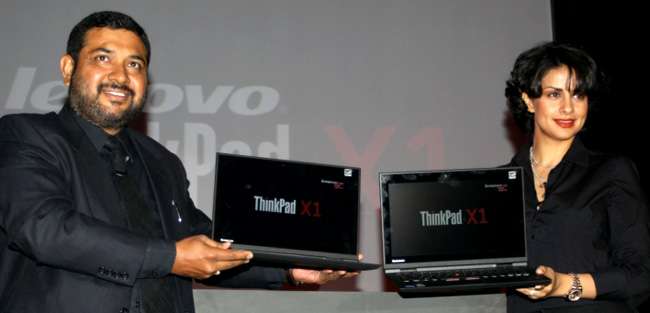
    We took over IBM business over six years ago but as you said, we are a relatively new player in the market. I think what has worked for us in the first place is products – as a technology company we need to have the right products. A technology company is as good or bad as its products. We do have great products – whether it is the ThinkPad range of enterprise business or whether it IdeaPad range of business, we have great products with us. The second most important thing is partners. We’ve really built a nice network of some strong and loyal partners. Those channel partners make a difference to us especially in the consumer and SMB business and also in the enterprise business. And the third is the brand. We have invested in the brand in a big way – Lenovo as a brand has a good awareness level, what we are now trying to do is build the preference so that we may be more in the consideration set and the preferred brand of consumers.


    What was remarkable for Lenovo was that you achieved stardom when the rest of the players were seeing a slump in sales due to the economic turmoil. How would you explain this phenomenon?

    There are two areas that we invested in — one is we invested in the brand during the slowdown and created a communication where we said we are ‘For those who do’. It is for people who use technology as a tool and not as a badge and we wanted to build the association by targeting the youth. So we invested in the brand. The other thing is that we invested in our retail outlets. Two years back we had 150 exclusive retail outlets and today we have more than 1000 retail outlets. So we have worked with our partners and are today the largest retail & IT company in the country. Also, we have invested sufficiently in our sales network. Earlier we had service centres in a little less than 100 cities, today we have service centres in excess of 400 cities. Again, we have invested significantly in our post-sales service so that we can provide great service to the customers.


    Apart from urban and metro cities, have you made a conscious effort to reach out to more markets across India?

    If you see how our 1000 stores have panned out, most of them are beyond the top-15 cities. Clearly our focus has been beyond the metros and that’s where now since we have got the infrastructure on the ground we would also like our brand to be related to that part of the world and not just metro cities.


    How does Lenovo India view the digital medium that’s caught the fancy of many players?

    I look at digital as a medium, just like television or print. But digital is an important medium because in print or television you communicate one way but in digital you have the ability to improve customer engagement and it’s a two-way process. We have done a lot of work on digital including tying up with projects and companies for various assignments. So digital for us is important as one, people research online but purchase offline. So the offline purchases are the retail stores whereas the research online is what we need to do. So we need to ensure that we are present in terms of communication. Second, is to increase brand engagement. Clearly, digital plays an important role in both these areas and we are investing heavily in the medium.


    What would be your focus areas going forward?

    What we now need to do is take our messages beyond the top 15 cities and see how we can be a little more of a mass brand, especially in the upcountry markets or what I call India 1 and India 2. In India 1, Lenovo is well-known and has good preference but in tier 2 we have to do some work and are aggressively pursuing that. But the bottomline is we need to ensure that we are able to send across our message to both these markets and increase our awareness.


    When do you see yourself emerging a dominant No. 1 player in India?

    We are the No. 2 player right now but the aspiration is to be the leader. I am not saying that we will achieve it this year, but clearly that’s the path that we would like to go towards. We are No.1 in China with over 35 per cent market share, we are No. 1 in Japan with over 27 per cent market share so clearly that’s what is the dream in India too – to be a No. 1 player soon. Though I must say that we are not in a hurry to race to the top; the plan is to build the business and stay there. I am not in a hurry to get there but yes, I would want to get there as soon as possible.


    Photograph: Fotocorp

  • MSLGROUP Asia Awarded PR Network of the Year

    By A Correspondent


    MSLGROUP Asia, Publicis Groupe’s flagship strategic communications and engagement company and the largest PR and social media network in Greater China and India, was awarded ‘Asia-Pacific Network of the Year’ at the prestigious Campaign Asia-Pacific 2011 PR Awards on March 30.


    A first-time nominee for the ceremony’s top prize, MSLGROUP fended off stiff competition from a number of well-established global PR agency brands to be crowned ‘Asia-Pacific Network of the Year.’


    The Campaign Asia-Pacific PR Awards is renowned as a benchmark in the communications industry and rewards clients and agencies for the strategies, people and achievements that have transformed businesses and brands. The ‘Asia-Pacific Network of the Year’ award specifically recognises business and client growth, talent retention and development, and PR innovation.


    Commenting on the award win, Glenn Osaki, President, MSLGROUP Asia, said: “I am extremely proud of our colleagues and clients for partnering together to achieve the best performance in the industry and win this recognition as ‘Asia-Pacific Network of the Year.’ 2011 was a year that transformed MSLGROUP into Asia’s leader in PR, social media and engagement. Our client-centric approach, PR and social media innovation, and focus on learning and people development have helped us achieve outstanding growth and reputation in the last year. This award belongs to every one of our 1,700 colleagues across the region who are committed to being our clients’ most trusted advisor, and source of unbound creativity, engagement and value in today’s always-on conversation.”


    Hanmer MSL, part of MSLGROUP India, also notched an Honourable Mention on the night, for its integrated communications campaign for STAR India Pvt Ltd.


    For 23 years, MSLGROUP’s Asia team has counselled global, regional and local clients, helping them establish, protect and expand their businesses and brands across this fast-growing region. Today, MSLGROUP has the largest PR, social media and events teams in Greater China (16 offices and 1,000 colleagues) andIndia(15 offices and 575 colleagues) and is actively working to lead the development of the industry with the regular publication of whitepapers/reports and innovative Learning & People Development programs to nurture talent.


    MSLGROUP is Publicis Groupe’s strategic communications and engagement group, advisors in all aspects of communication strategy: from consumer PR to financial communications, from public affairs to reputation management, and from crisis communications to experiential marketing and events. With more than 3,500 people across close to 100 offices worldwide, MSLGROUP is also the largest PR network in fast-growingChinaandIndia.


    Publicis Groupe [Euronext Paris FR0000130577, part of the CAC 40 index] is the third largest communications group in the world, offering a full range of services and skills: digital and traditional advertising, public affairs and events, media buying and specialized communication. Its major networks are Leo Burnett, MSLGROUP, PHCG (Publicis Healthcare Communications Group), Publicis Worldwide, Rosetta and Saatchi & Saatchi.


  • Bharat Ranga to be Chief Content & Creative officer at Zee, Nittin Keni to be Head-Production

    updated from the news flashed on Saturday, April 7.


    By A  Correspondent


    Zee Entertainment Enterprises Limited (ZEE) has announced significant senior-level changes in its leadership team.


    Mr Bharat Ranga, who headed international operations at the network, will now be head of content and will be designated as Chief Content & Creative Officer. Mr Nittin Keni, National Creative Director will now look after production initiatives responsible for setting up studios and will be re-designated as Head – Production.


    Both moves are significant. Mr Ranga has been an old and loyal Zee hand and has made a success of the international operations. Given the current standings of general entertainment channels, the flagship Zee GEC needs a sound mix of content strategy and business acumen which Mr Ranga can provide. On the other hand, Mr Keni, again a Zee old-timer who returned with some fanfare last year, has some quality experience on the production sphere. While Gadar: Ek Prem Katha which he produced for Zee was a superhit, there are other projects that he was associated with: Fareb (1996), Aisi Bhi Kya Jaldi Hai (1996), Spot Boy (also 1996) and the 1993 telefilm Phir Teri Kahani Yaad Aayee.


    More on Mr Ranga, courtesy the Zee corporate site: Mr Bharat Ranga has been Executive Director – International Operations based out of Mumbai. He has been with Zee since 1998. Prior to this, he was the Business Head for Zee Cinema, Premier, Action, Classic Cinema. And before that he was major media groups including The Times of India. A commerce graduate from the University of Rajasthan, Mr Ranga has done his MBA from the University of Ajmer and an Advanced Management Program from Wharton Business School.


    Photograph courtesy Zee corporate website


  • Good Friday Holiday Notice

    The offices of MxMIndia will be shut on Friday, April 6 on account of Good Friday.

    There will hence be no updates and no edition of the newsletter tomorrow.

    We will be back on Monday, April 9. We will of course be around, so if there’s anything striking that you would want us to know, please mail or call us.


  • The Anchor: Anurag Gupta on 5 things that should change in internet advertising

    By Anurag Gupta


    #1 I would like the internet to be regarded as mainstream media, sooner rather than later. It is inevitable that digital advertising will overtake other media like television in revenues. This has already happened in many other countries and I would like this to happen in India as well. Digital advertising today contributes to as little as 3-4 percent of total media spends; I would like this to zoom to double digits over the next two years.


    #2 Unfortunately since ‘content’ is easily available online and it is free, we are seeing a huge devaluation of the value of content in the online world. I would like online content to get its due from the advertisers. I would like to see the demand for internet media not only driving up pricing, but also create a situation where some internet media companies start selling at premium rates and shed their discount pricing tag.


    #3 Today digital advertising is predominantly sold as ‘performance’ media. I reckon more than 70 percent of all digital advertising happens for performance, and this segment is growing faster than brand advertising spends. While I personally love performance advertising and my company DGM India is at the forefront of delivering ROI to advertisers, I would like to see much more brand budget being allocated to the internet.


    #4 The internet is one of the most measurable advertising media. I would definitely like advertisers to be willing to pay for using cutting edge technology that can monitor and measure their internet spends in a better manner which goes beyond just impressions and clicks. For example, I have routinely seen advertisers who spend large amounts on digital advertising using free tools like Google Analytics when it comes to measurement.


    #5 I would like to see the emergence of global Indian media companies in the digital space operating at the scales of Google, Facebook, Twitter, LinkedIn etc.


    Anurag Gupta is the Managing Director, DGM India Internet Marketing Pvt Ltd.


  • Watch IPL on mobile through Apalya

    Apalya Technologies, specializing in mobile video streaming delivering more than 150 plus million minutes and the leading mobile TV service provider for all telecom service providers will provide exclusive, mobile, video streaming for all the matches of the 5th edition of the IPL. This will be the 4th consecutive year for Apalya for IPL Streaming.


    Apalya Technologies, this year again, through its platform will enable sports fans to catch all the DLF IPL action real-time on their mobiles even when they are ‘on-the-move’. Subscribers will be able to watch it on the mobile through their existing mobile service providers, as Apalya has tied-up with all the leading telecom partners in India to enable the DLF IPL Mobile stream on the existing Mobile TV service. To avail this, subscribers can SMS TV to 58888.


    Speaking about this alliance, Vamshi Krishna Reddy, Co-founder & CEO, Apalya Technologies said, “We are happy to announce that we are yet again the Official Mobile Streaming Partner for IPL 2012.  This year we aim to cross 10 million subscribers with IPL V and expect the viewing minutes to more than double. Thanks to the evolving 3G network, better and stable 2.5G network coupled with advanced smart phone proliferation in the market, mobile TV has been a big success among consumers who are always on the go.”


    With emerging technologies and growing mobile video viewing habits, India records over 200 million video views a month on mobile devices and Apalya is all set to capitalize the opportunity to tap the interest of the youth, allowing them mobile video viewing for various popular events. During the World Cup season in April 2011, Apalya generated 17 TB of streaming and with close to 50 minutes of usage per user for the 6 matches India played. Currently, Apalya powers mobile TV for all the major telecom service providers in India and has also launched its services with leading operators in Sri Lanka & Indonesia.


  • Debrief: Tata AIG Life: A public service ad?

    By Anil Thakraney


    Good values = Great future? Hmm. Not really sure about this. Else every decent bloke would be Mukesh Ambani. However, the Tata AIG Life guys are convinced about this theory.


    Their new TVC tries to say that a strong foundation is essential for a person’s future. And they have equated foundation with values. The ad features a young gal who wants daddy to meet the love of her life. But the dad is a bit of a khadoos, and believes that the new generation lacks values. However, our smart dude arrives and promptly touches khadoos daddy’s feet. Khadoos is much impressed and this sounds like good news for the lovers.


    There is nothing wrong with the TVC per se, it’s the script that plays out on our soaps every prime time evening, and so uncles and aunties will love all this feet-touching business. So that’s cool. The problem lies in its link to the brand. The story takes so long to reach its climax, the Tata AIG Life spiel gets hurried through in the end. A voiceover rattles off something about a good investment start for better returns, but that’s blink and miss stuff. Almost like a statutory warning.


    [youtube width=”400″ height=”200″]http://www.youtube.com/watch?v=enHvyXJ-INU[/youtube]

    Net net: The TVC establishes Tata AIG Life’s own values, that they must be a bunch of nice guys. But what exactly these nice guys can do for your hard earned money gets left almost unanswered. In short, as they say, operation successful but the patient died. Tch, tch, tch.


    Rating: (On a scale of 1 to 5): 2. A pleasing commercial that does little for the brand.