
Blog

  • Red FM invites agencies to handle creative

    By Shubhangi Mehta


    The radio channel 93.5 Red FM has called for a creative pitch. The pitch is at a very initial stage as of now. The agencies participating in the pitch include names like Lowe Lintas, RK Swamy BBDO, Law &Kenneth and others. Though no confirmation from Red FM could be obtained at the time of filing the report, sources close to the development have confirmed the news to MxMIndia.


    The incumbent agency on the account is Ogilvy & Mather, who have been handling their creative mandates for the past five years. Even the marketing spends could not be ascertained at the time of filing the report.


    Red FM is a property of Sun TV Network, India’s largest television network which has 20 TV channels, 45 FM radio stations, two daily newspapers and four magazines in several Indian languages.


  • Anil Thakraney: Bring Rajani back!

    By Anil Thakraney


    Not to be confused with the southern superstar… he hasn’t gone anywhere. Not from the movies and not from the social media jokes and forwards. I mean ‘Rajani’, that lovely television soap from the good old days, the one whose protagonist was the feisty, bubbly, ass-kicking Priya Tendulkar. I recall how, as a family, we would crowd around the B&W TV set on Sundays as Rajani went about exposing assorted social evils.


    For those of you who weren’t around in the mid eighties, this was a hugely popular show where Rajani, a middle class housewife, would get after dhongi babas, dowry seekers, bride burners, food adulterers and other criminals. And kick the hell out of them. But what was most engaging and entertaining about the serial was the treatment; the show was not serious at all (unlike the much hyped Satyamev Jayate). While the issues being discussed were serious, the style was humourous and very lively. This made sure we kids would enjoy the fare along with our parents. In my view, Aamir Khan’s biggest challenge is going to be to attract, and more importantly retain, Young India. But Rajani achieved that effortlessly.


    It’s been many years since. Sadly, Ms Tendulkar is no more. The idiot box has boomed like crazy, and now there are hundreds of channels offering a huge array of programmes. And yet, programmers are forever struggling to find stories that can cater to the whole Indian family. And a lot of trash gets produced in the process.


    Satyamev Jayate brought back memories of Rajani. And a thought: Why not re-create that serial? With a brand new Rajani, operating in contemporary times, and using the latest gadgets as she goes about changing the world. But treated with the same simplicity and charm of the past. I think it will be a huge crowd puller, even amongst those urban kids who are forever glued to their smart phones. And it will give the very serious Satyamev a run for its money.


    The biggest challenge would be to find a girl who can match Priya Tendulkar’s pleasing persona and chutzpah. But it can be done.


    * * *


    PS: Who would have ever thought a day will come when the mighty Sir Martin Sorrell would be compelled to apologise for an ad created by an agency that belongs to his own group. This pertains to the hugely controversial Argentinean propaganda film that features an Olympic hopeful exercising at the Falkland’s war memorial. The promo must have really riled the usually thick skinned ad baron for him to say sorry.


    Link: http://www.telegraph.co.uk/news/worldnews/southamerica/falklandislands/9246301/
    Sir-Martin-Sorrell-appalled-and-embarassed-by-Falklands-propaganda-video-made-by-his-ad-group.html


  • [MJR] The Modi merry-go-round continues

    By Ranjona Banerji


    As expected, the release of the report by lawyer Raju Ramachandran into Gujarat chief minister Narendra Modi’s role in the 2002 riots got TV channels into a frenzy. Having whipped themselves up over the “clean chit” given to Modi by the Special Investigation Team, the indictment of the chief minister by the “friend of the court” provided just the kind of contradiction that Indian TV thrives on.


    However, the arguments for and against Narendra Modi and his “crimes” or his “achievements” have become old and tired. As have the panellists. There on NDTV was Jainarayan Vyas putting up a stout defence of Modi. And, of course, a short while later he was on Times Now. Kumar Ketkar, editor of Divya Marathi provided the objective line – while slamming Modi for his well-documented anti-minorities stance – also appeared on both.


    But at the end of the day, little is achieved with such debates. The BJP and Modi’s fan club spew their spiel. Modi’s detractors have their own. The debate moves along predictable lines. The events have become so far away that the details have been forgotten which leads to even more chaos. Both Nidhi Razdan and Arnab Goswami had a tough time controlling some of their panellists who as usual forget all rules of civilised behaviour once a TV camera is turned on them. Smriti Irani of the BJP, for instance, gave us ample proof of how she can now graduate to the “saas” role in a poisonous soap – if they still have them on TV that is.


    (A disclaimer: I was deputy resident editor of The Times of India, Ahmedabad, from 2001 to 2004 and have a fairly good idea of what happened during the riots. Watching people who were nowhere around in those dark days holding forth can be both a frustrating and amusing experience.)


    * * *


    The big TV event of the week is of course the first episode of actor Aamir Khan’s Satyameva Jayate on the Star channels and DD. He dealt with the contentious and emotional issue of female foeticide and India’s skewed gender ratio. It was a well-researched show, with the subject presented from various angles and certainly struck a chord with the audience. The cyber world went gaga, judging from the number of tweets about the programme. Newspapers the next day were also congratulatory.


    If there was criticism – especially on Twitter, the home of manufactured outrage – it was about whether female foeticide was such an unknown problem after all as well as whether any change would happen as a result of the show.


    It is amazing to hear journalists talking about whether social change can result from media efforts, since we know from our own experience what a slow and pain-staking experience that can be. Your 140-character aphorism may take seconds to go out to the world; change on the ground takes a tiny bit longer than that.


    * * *


    An evening at the Mumbai Press Club was a great opportunity to meet up with former colleagues and old friends. The now annual awards for journalists in categories from crime and cricket to politics and the environment is a very good idea. Giving the lifetime achievement award to Vinod Mehta was a winner – since he promptly said that working in Bombay (as it was then) were the best years of his life!


    Applause all around.


  • Debrief: Limca: Freshness badhao, not pyaas!

    By Anil Thakraney


    Limca has changed its positioning statement this summer. Earlier they used to promise freshness. Now they are selling the drink as a thirst quencher. ‘Pyaas Badhao’ is the new message. And they have punned on the word ‘pyaas’. Thirst for a drink, and thirst for success.


    Kareena Kapoor is the new brand ambassador. In the commercial, Bebo encourages a young, budding cricketer to sweat and toil so that he can become a successful player. Of course, lots of Limca drinking shots happen along the way. Totally unhappening stuff, I say.


    I think makers of Limca have blundered big-time on this one. For one, Bebo is over-used in advertising so she adds little to brand recall. Waste of money. Cricket has been flogged to death in advertising, so that’s a waste of time. But the biggest mistake is giving up ‘freshness’ and opting for a needlessly loaded story. Yes, I am aware ‘freshness’ is a generic concept for cold drinks, but that’s where the challenge for creative people lies. On how to lift a regular thought by creating wow executions. Stunning renditions should have been tried on ‘taazgi’. The new ad tries very hard to establish the ‘pyaas’ of doing well in life. Worse, Bebo demands adequate footage too… what’s the point of using her otherwise? And in all this crowded mess, the brand gets lost.


    Not working, people. Go back to ‘taazgi’ and go back to the drawing board. And hurry, the summer shan’t last forever!


    Rating: (On a scale of 1 to 5): 1. Strategy shift bombs.


  • Satyamev Jayate reports gr8 Chrome numbers

    By A Correspondent


    Aamir Khan’s Satyamev Jayate has reported  “unprecedented” launch episode numbers, reports Chrome Data Analytics and Media.


    Says Chrome founder Pankaj Krishna on why it’s unprecedented, “Conventionally, KBCs have premiered on weekday evening primetime when the overall TV viewership is at peak and so have most other big promotables across channels where one shows rides on the back of another during the three hours of evening peak prime (8-11pm) as against a Satyamev Jayate that’s going solo on a Sunday morning.”


    The Chrome Television Panel Audits indicate the following numbers. Note this is only Star Plus and the Hindi Speaking Market (HSM). Since SMJ was aired across various channels and languages, we could see a healthier story if those are taken into account.


    Satyamev Jayate, Sunday May 6, 2012, 11 AM, Star Plus, HSM:


    Show Distribution Availability

    99%

    Show Reach

    11.8%

    Show Average Stickiness per viewer

    39 Mins

    SHOW TVR –

    5.12


    SOURCE : CHROME TELEVISION PANEL AUDITS, C&S 4 +( DIGITAL + ANALOG) – SAMPLE 2847 Individuals, HSM


  • 54 Days to D-Day | Industry voices concerns on sunset date (Video)

    By Shruti Pushkarna


    With less than 60 days to go for the switch from analog to digital distribution, different stakeholders of the broadcast and cable industry are battling out their respective concerns with the government and the regulatory authority. Following the Tariff Order and Interconnection Regulations for the Digital Addressable Cable TV Systems issued by Telecom Regulatory Authority of India (TRAI), a lot of stakeholders have raised issues that will affect their business in which they deem the order to be unfair.


    While the News Broadcasters Association (NBA) protested against the carriage fee mentioned in the order, local cable operators (LCOs) carried out a black flag protest during the recent Assocham event attended by the Minister for Information and Broadcasting, Ms Ambika Soni. The LCOs have objected to the revenue share prescribed by the regulator and the Multi System Operators (MSOs) have expressed concern over the increased number of ‘must carry’ channels mandated by TRAI.


    MxMIndia spoke to a few representatives of the industry to understand their concerns in the run up to digitization.


    Ashok Mansukhani, President, MSO Alliance

    What’s your first response to the Tariff Order?

    The Tariff order has a mixture of good and bad. Fundamentally, it lays out the path for digitization but there are certain issues which worry us like the mandatory ‘must carry’ channels. We don’t think that’s a fair thing to do, if the broadcasters have the right to decide how many channels to bring to India or create within India, we should have the right to decide what should be the capacity, obviously the capacity is much larger in a big city than a small city. Apart from that, there are some issues on revenue share, which is based on a formula which is pending in the Supreme Court. Our worry is that if the Supreme Court decides otherwise, the whole business model would break down. These are the main two concerns.


    News broadcasters are objecting to the carriage fee mentioned in the order issued by TRAI, what’s your view on it?

    Now everything will be transparent. What is possibly going to happen is that carriage fee, which is creating such a big hoo-ha today, will get replaced by genuine pay channel ecosystem but that is about five years away. In the current process, we have to digitize about a 100 million homes and enormous sums of money are required but no fiscal incentive or tax incentive or infrastructure incentive has been given by the government. I think in the run up to digitization, the broadcaster should not derail the process; rather they should sit down with the cables operators and the MSOs and work packages with attractive content and at compelling rates to attract consumers. I think that’s really what they should be doing instead of writing editorials about carriage fees.


    Do you think the sunset date of June 30 is achievable?

    No, it’s not achievable. There are just 60 days left. The negotiations with broadcasters have not begun. The revenue shares are default revenue shares but no discussions with operators have taken place. No agreements are in place. Out of 10 million boxes, only 2 million boxes have been installed. Many of those boxes don’t have smartcards, in other words, they don’t have the conditional access system, and they are vanilla digital set top boxes. I think it’s high time for the government to carry out a reality check. I am sure this will be discussed in the next task force and I am sure government will fix a new date.


    Jehangir Pocha, CEO, INX News

    What’s your first response to the Tariff Order?

    The TRAI order has been a disappointment to news broadcasters because we were repeatedly told that there would be no carriage fee. We were repeatedly told that there would a mandated EPG or menu system, which has not been delivered. These two things add up to a huge financial burden on broadcasters, especially news broadcasters, an industry that is, contrary to public assumption, not doing at all well, that is facing huge financial burdens and many channels have gone bankrupt.


    Apart from carriage, do you see any other issues in the run up to digitization?

    I think the other issues are really about the willingness and commitment with which the policy can be rolled out because this is going to disrupt some vested interests, it’s going to disrupt a regular way of doing business and therefore, there is going to be a natural push back. But the concept of digitization is superb, it’s wonderful that the government and the regulator have pushed for it, but there have been some imperfections in what they have presented. Another thing that doesn’t make enough economic common sense to me is how the price was set so low for free channels and pay channels because the entire industry’s problems stem from the fact that the consumer is literally being subsidized by paying such low price for content, which in every other country, costs so much more. How this price has been set, by whom and who’s paying for the inherent subsidy in this, there hasn’t been enough transparency on this.


    Both NBA and the IBF have expressed disconcert at the carriage fee in the order issued by TRAI, but the TRAI maintains that there is no cause for dissatisfaction on carriage fee. As a news broadcaster, what will be your next step?

    I think we will have to explain to TRAI and the ministry just what the imperfections in this otherwise very positive bill are, and how they will create a huge financial burden for news broadcasters, how it will push us towards bankruptcy, how it will stop us from being able to create quality content and how it will, in fact, stop us from growing. If the government is interested in inclusive growth, news broadcasters play a very valuable role in this industry and in this nation. And our financial concerns should be addressed in some manner both by TRAI and the government.


    Do you think the sunset date of June 30 is achievable?

    Everything is achievable if the intent is there. There may be some practical concerns but let’s be realistic, while the policy is being presented now, we knew for 6 to 7 months that it was going to happen and I’m not sure if MSOs and LCOs spent adequate amounts of money, time and effort on preparing for this day, which they knew was coming. Now they are saying, this day has come and we need more time. We have seen consistent attempts to delay digitization, and I think we should have very little patience with more delays.


    Pulak Bagchi, VP, Star India

    What’s your first response to the Tariff Order?

    It’s a step towards the right direction and I think it will be path breaking in terms of the reforms it triggers in the cable space.


    What’s your view on the concerns being raised by news broadcasters over carriage fee?

    Carriage is a phenomenon which is certainly not new – it’s been around since the inception of the industry. What TRAI has done is only put a method into the madness, which should be commended. Earlier, there was no transparency in the payments that were being made, now atleast you’ll be having a foothold into the figures. You’ll also be able to determine whether they are reasonable or not. TRAI has also said that they will be intervening in cases of arbitrary levels. So there’s really no cause for concern. I think we should not be pressing the panic button; it has taken so many years for the government and the regulator to come up with these formulations. It’s important that we live up to the mandate and we must also give regard to the expectations of the people of this country. Given that digitization is a reality today, the sooner we embrace it, the better.


    Do you think the sunset date of June 30 is achievable?

    It is, because it’s targeted towards four major cities where it’s not an alien concept. Perhaps there will be some incremental approaches that will be taken in those respective areas and I’m sure that the deadline could be met. There’s no difficulty in abiding by the timelines.


    Are there any marketing initiatives or consumer awareness campaigns that you are undertaking in the run up to digitization?

    Star and IBF have made it mandatory for all members to spread awareness in their respective channels. We are carrying out marketing campaigns, we are also doing citizen focused awareness programmes where people can be brought up to speed with what digitization is all about. And we are also trying to infuse in the public sensibilities as to why it is good for them.


    Roop Sharma, President, Cable Operators Federation of India (COFI)

    What’s your first response to the Tariff Order?

    It’s very bad from LCO’s perspective. Since there is a vertical monopoly and no cross media holding, none of the MSOs will be negotiating with the cable operator and if they don’t negotiate with the cable operator, the latter will end up taking only a Rs45 share, with which the business becomes unviable and the LCO will be unable to give better quality service to the consumer. Even the set top boxes, which are going to be put, are of vanilla quality, they are very primitive boxes. Consumer will not be able to get internet, broadband or other services on the same box. Cable operator has to spend so much money in upgrading and the government has just mandated a technology. We are even ready to upgrade, but we must get a proper share. The regulator wants to be the controller of the business. As a result, lot of cable operators will be forced to sell off their network or the network will die its own death. There will be a lot of unemployment generated in the market.


    Do you think the sunset date of June 30 is achievable?

    No, the timeline is very short. First is the procurement of boxes – in Chennai none of the MSOs have given any orders for boxes. Even in Kolkata, we are hearing that the state government was not consulted.


  • Today’s ad industry is all about business: Sanyal

    By A Correspondent


    Title Waves, the new bookstore at Bandra, Mumbai was teeming with several old-timers who are associated in some way or the other with Sujit Sanyal, a former advertising veteran who worked with Clarion Advertising in old Calcutta. The occasion was the launch of Mr Sanyal’s debut book – Life In A Rectangle, The World Around 55BMirza Ghalib Street.


    The launch was made special by the presence of Madhukar Kamath of DDB Mudra – an ex-Clarionite himself who was among the four individuals with an MBA qualification to have joined the agency when it was at the zenith of its success – who unveiled the book to the gathering.


    Published by Fingerprint, Life In A Rectangle is a candid memoir where adman Sujit Sanyal narrates some revealing, some intriguing and other whacky stories about the advertising world from his Clarion days, his first agency, which he joined as a trainee and whose Kolkata branch he later went on to lead.


    When asked on the factors that led him to script a book on his days at Clarion, Mr Sanyal said: “Life in a Rectangle happened while I was toying with the idea of writing a book on my formative days in advertising. The book is a fun reading piece that chronicles the advertising era of the 70s and 80s in Calcutta.”


    On the choice for the name of the book, Mr Sanyal said that “the name for the book came from my mentor who said that all advertising that you see today are flashed on screens that are rectangle in shape, be it television, computer, mobile, magazine, i-Pad, etc.”


    According to Mr Sanyal, what made him even more convinced to write a book on the agency with a glorious past is because at one point in time, Clarion Advertising was India’s No 2 agency after HTA (now JWT). “That was around mid-70s to early 80s. In the early 80s, it started falling apart due to differences between theUnion, the Management and the Board. In fact, the agency had seen downfall on many occasions and I, myself, was there during a couple of occasions. Once when I was a newbie and the second time when I was heading Clarion’s profit-sharing centre from Calcutta and I saw the fall from a much closer distance. So since I was writing the book, I said to myself why not add these bits of information too.”


    Mr Sanyal added that there are just 2-3 people whom he has slam-banged, but the others have been given due credit for playing an influential role in his life. Highlighting the era of advertising that existed in those days also served as an inspiration for him to pen down his thoughts: “In those days, a man was judged by the way he used to hold his drink. But all that has changed today. I am not at all in favour of the pub-going trends of today where it is about ‘wham bam thank you ma’am’; holding your drink in a particular fashion was an art in those days. Also, we were unofficially trained on how to be a bartender. So if there was a client who came and he was drinking whiskey with water, it was our job to see that he kept getting his refills and not asking him on what else would you have. It was all great fun and at the same time you had to work too. The days of yesteryears were so much more exciting.”


    Admitting the factors that have led the industry to undergo a sea-change, Mr Sanyal stated: “The advent of technology has made things a bit easier for everyone in advertising. The times have really changed today. Anyone who has a mobile and a laptop becomes a filmmaker and can do his own work at his own pace. But this has also led to things becoming more clinical; everything now has got into a box including media plans that are largely TRP-driven.”


    Being direct, Mr Sanyal didn’t hesitate when asked on his views on the state of the advertising industry today: “The advertising industry today is all about business. There are a few legends who still are wowing the industry with their work but they will all go away.  At the end of the day what are you doing in advertising – you are playing with human emotions. Also, what is happening is that I may have a relative who is the boss of a big client company but he cannot give me the business because the diktats are decided by people who sit across the transatlantic ocean. In a nutshell, globalisation is taking its toll on the industry. They are not allowing the Indian agencies to grow.”


    Still basking in the accolades that are coming his way from friends and family over the first book, Mr Sanyal is already tempted into writing a second book that may see the light of the day soon. If he were to go by suggestions thrown up by his friends at the venue, it would well be a book on his first job at Junior Statesman (JS, as it was popularly known), a magazine that was far ahead of its time.


    Life in a Rectangle: The world around 55B, Mirza Ghalib street; published by Fingerprint Publishing; price Rs 395/-


  • Hindi Hinterland: Happenin’ & How!


    By Ritu Midha


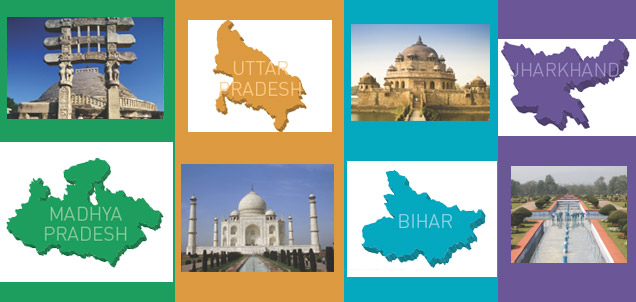
    The four key Hindi Hinterland states – Uttar Pradesh, Madhya Pradesh,Biharand Jharkhand, till less than a decade ago were considered to be sluggish in their outlook. That’s because consumers there were not really top-of-mind for marketers and if at all they became part of a media plan, especially television, it was done so by default, as Hindi television that catered to metros was available in the hinterlands too, and there was not much effort made to engage consumers there. If one looks at a broader picture, a similar tale rang true for most states across India, perhaps a decade-and-a-half ago.


    Cut to the present day, where India is the second-fastest growing market in the world, its middle class is the favoured target group of most marketers (both national and multinational), and in most global consumer surveys Indian consumers emerge to be the most gung-ho among the lot. Of the several states showing signs of speedy growth, the four states that are set for a big leap include:


    • Bihar, which is the second fastest growing economy in the country
    • Uttar Pradesh, which is the second largest contributor to the country’s GDP and also has the second largest urban populace in the country
    • Madhya Pradesh, which is touted as being an upcoming economic power centre and a major tourist destination
    • Jharkhand, which has always been an industrial hub


    One often reads of Indians leaving their cushy jobs overseas and returning to their roots to contribute to, and be a part of, the India growth story. In fact, stories of residents of Hindi Hinterland moving back home from metros too are not uncommon.


    Evolution of the Hindi Hinterland consumer

    Mayank Shah

    Consumers in these states are evolving rapidly and much of the credit for their evolution could be attributed to access to information and awareness boom. Mayank Shah, Group Product Manager, Parle Products reflects on the consumer psyche: “If you look at aspirations, there is no significant difference in Hindi Hinterland and metros. However, the urge to excel is far greater as they come from a modest background and the readiness to put in effort is definitely there. Even in semi-urban and rural areas, aspirations have grown – they are ready to consume CPG (consumer packaged groups), which is similar to their urban counterparts.”


    The increased awareness and steady GSDP enhancement has made the consumer ‘consumerist’, whereby it’s not only low-ticket items that are catching the consumer’s attention, the high-ticket ones are doing it in a big way too.


    Kamal Nandi, VP – Marketing & Sales, Godrej Appliances asserts: “Hindi hinterland is becoming an important market for consumption of durable goods. Consumer affordability has gone up, leading to a shift in lifestyle and consumers becoming more urban in their approach. Also, their top priorities are convenience and comfort.”


    Sushil Bajpai, President, Ghari Detergent, too, is of the view that it is no longer the market to be targeted sometime in future. For Mr Bajpai, the time is now: “There is excellent scope for marketers. Industries too are finding it attractive now. Consumerism is growing at a fast pace, and urban markets in Hindi heartland are no different from metros. The need right now is to understand the consumer mindset.”


    Krishna Mohan

    While the big cities in the region are getting ready to rub shoulders with metros, the semi-urban and rural areas too are getting out of dark areas. States Krishna Mohan, CEO, Sales, Emami Limited: “The great rural-urban divide in household consumption patterns has reduced drastically. Bharat is indeed keeping pace with India when it comes to spending on most fast-moving consumer goods. Rural sales contribute more than 40-50 per cent of total sales in various categories for Emami. We have increased emphasis on engaging rural consumers. The market is huge with a lot of potential.”


    Youth – Change drivers

    The change, as is expected, is being driven by the youth who are more adaptable and are akin to the youth from the metro – at least in urban areas. Having said that, awareness and information in semi-urban and rural areas is also growing and so are the aspirations.


    Somprabh Singh

    States Somprabh Singh, Head Marketing, Titan: “In attitude, they are not very different. They are independent, very ambitious and well informed. The only difference is that their exposure to many international brands is lower but that’s the function of the retail environment, which will change in sometime.” And, true to his vision, a change is currently underway across these cities.


    Harish Bijoor, CEO, Harish Bijoor Consults, believes that the booming Hindi Hinterland is the right place for marketers to be, more so for those catering to the youth. He exhorts: “The robust growth numbers in the education sector is proof enough. Add to it the entertainment market, the market for mobile phones, gadgets of every kind, clothes and accessories, cosmetics, shoes, exercise oriented products, and you have a solid market of the future emerging. There is spurring consumption of not only functional products, but products of cosmetic value as well. Products that relate to health, well-being and proactive health care, rather than just reactive care, are being craved for as well.”

     

    Harish Bijoor

    As per Mr Bijoor, there is a definite opportunity waiting, especially for brands meant for the youth, and the marketers need to make the most of it. He asserts: “The youth in these towns have a far bigger hunger quotient than the privileged youth in the bigger cities. I would segment this territory into urban, rurban and rural. The hunger deepens as you go from urban to rurban to rural. The opportunity for marketers, therefore, deepens as one penetrates down this strata.”


    Interestingly, while the debate between urban and rural might take some time to die down, it is the semi-urban areas that are attracting a lot of attention. Interestingly, the leap is expected to be bigger there, as they are keen to catch up with their urban counterparts, who themselves are always in a moving state.


    States Lloyd Mathias, the marketing honcho with experience around industries: “Youth in the urban areas of these states are quite close to metros in their awareness and aspirations, more so in case of bigger cities likeIndore,Lucknow,Bhopal,PatnaandRanchi. Though the semi-urban youth might be a little behind, they are catching up, what with the inroads being made by social media. Moreover, the influencers are the same, which are rapidly dissolving the differences.”


    Consumption pattern

    While rising aspirations is one part of the story, these regions are seeing an increase in activity by discerning marketers who are becoming more conscious of the finer nuances of the region, and are staying away from the one-size-fits-all approach.


    Explaining the phenomenon, Mr Nandi says: “While we have seen growth in double door refrigerator model in urban markets, in semi-urban markets it is the single door model that works.” However, it has not stopped Godrej from providing the entry-level consumer best value for money. He adds: “Even an entry-level consumer looks for high-end product features. A few years back, toughened glass shelves were there only in high-end model, today they are there in entry-level models as well. Brands have to seek to fulfil aspirations.” The company has also developed a refrigerator with a ‘Stay cool’ feature – powering cooling at the same temperature for 24 hours even after a power-cut.


    Coming back to the India analogy, the Indian consumer is perhaps one of the most price-conscious in the world. For him, value for money seems to be the mantra, but the consumers’ buying capacity is no longer questioned – the global marketers are tailoring India specific strategies, and the same is true of Hindi Heartland as well.


    Affirms Mayank Shah: “Instances and opportunities of buying premium products might still be less but they buy if the right quality is delivered at the right price. For example, premium biscuits like Hide and Seek cookies were rare in Hindi heartland, apart from cities likeLucknow,BhopalandAllahabad. However, now it has changed; we made it available in smaller packs, which has definitely led to sales enhancement.”


    The growth is not being noticed in purchase of a few specific product categories but across the board – a clear indication that the consumer is not seeking to fill just the need gaps, but is also looking for comfort, convenience and a bit of pampering.


    States Lloyd Mathias: “There is dramatic growth in categories like wireless broadband, consumer soft goods, mobiles and more; the consumption pattern is similar to other parts of the country. It is the sheer numbers that make it more lucrative.” He adds: “There is a homogeneity in these markets – the same is not true of any other part of the country, be it South, West or East.”


    Mr Krishna Mohan suggests that marketers look at a closer interaction with the consumer to understand him, and also to make him understand the brand. He asserts: “The way forward is to help consumers, especially in the rural areas, to make the switch from loose to branded or aid new consumption habits, either with novel products or new formats. For us, the categories of cool oil, cool talcs and fairness creams are doing extremely well with double-digit growth.”


    At this juncture, the Ghari Detergent success story can be an inspiration for many. With its origins inKanpur, it is the largest selling detergent brand in the country today. And a major focus on Hindi Hinterland has definitely propelled growth for the brand. Sushil Bajpai states: “Hindi hinterland is the biggest market for us; the brand name on our packs is prominently written in Hindi, and then in regional language. RoI in Hindi Hinterland is not lesser than other parts of the country; the key is to convey the right message accurately.”


    Key challenges

    Having assessed the scope that these markets present, one can safely assert that Hindi Hinterlands have come of age. And the marketers, of course, are in no mood to miss the bus. Thus, as per Somprabh Singh, it is important to “Act fast and act now, else be left behind. This is in terms of creating exciting products and new channels that will help reach them.”


    As per Mr Nandi, it is not just about being there; the key is to be relevant and to belong. He says: “You have a winning story in hand if you are able to provide relevant technology and play a role in them (consumers) fulfilling their aspirations.”


    Mr Bijoor agrees that relevance and market-specific approach is mandatory to be successful in these markets: “Marketers need to tailor-make themselves to the market, rather than take their tailor-made solutions to the market. Bottom-up marketing is the mantra to adopt.”


    Emerging markets indeed

    So while there exists an array of products that are being tailored to these markets, there is keen interest in interacting with the consumer there and understanding him and there definitely is an increase in the consumer spends. Are these markets ready for all the attention they are getting or would it be a case of yet another opportunity going bust?


    Laughing off the suggestion, Mr Bijoor states: “Hindi heartland is the new market that is just about emerging. What was derogatorily called the “cow belt” and the “Bimaru states” in the past, is a market that is coming to roost in the future. These states have become very progressive in their development indices. They boast of a GDP growth rate that is, at times, even more robust than the national numbers. This clearly means that these markets will see faster consumer growth in terms of demand and in terms of volumes, value and innovation.”


    Interestingly, the consumers staying in these markets are a very large demography, accounting for 20 per cent of the country’s population. And there has been a dramatic improvement in the standard of living in these states too. As these markets poise for the next big leap, it’s time the true potential of these markets is understood, and the consumer is serviced to the optimum.


    Click here for larger

    This article is part of ‘High on Hinterland’,  a special volume presented by Big Magic and produced by MxMIndia. If you wish to have  a copy of the volume, please email subscribe@mxmindia.com with your name, company details and address. We’ll courier you a copy within a week. Since we have limited stocks, we will mail a PDF to those who we are unable to send a printed copy.


  • Moneycontrol unveils online investor event

    By A Correspondent


    moneycontrol.com has launched an online investor camp starting at 8am on May 8. The day-long event will include a host of investment experts who will answer queries from investors all over India.


    Master Your Money brings a unique opportunity to investors in India to go online and connect with leading experts, and get answers to their investment queries online. It provides a resource to millions of investors currently confronted by falling stock markets, high rates of inflation, skyrocketing real estate prices and the exploding value of gold.


    Master Your Money is open to all kinds of investors, from buyers of fixed deposits, government bonds and insurance, HNI stock and mutual fund investors, individual traders and corporate finance professionals. The unique online event covers stocks, bonds, insurance, gold and real estate. Master your Money is sponsored by Principal Mutual Funds (sponsor – Mutual Fund section), L&T Insurance (sponsor – Insurance section) and Aditya Trading (sponsor – Stocks section)


    “As a leading national portal dedicated to serving investors in India, we conceptualized Master Your Money to provide knowledge to the entire community of Indian investors,” said Joyson Thomas, COO, Web 18. Mr Thomas added that this is the fourth edition of Master Your Money and the first event which has attracted investors from all over the country.


  • Hindustan Unilever to study how we shop

    By Sagar Malviya


    World’s third-largest consumer goods firm Unilever has set up a Customer Insight and Innovation Centre in Mumbai to study how consumers shop FMCG products – its first such hub in India and seventh in the world.


    The centre at Hindustan Unilever’s headquarter at Andheri will be used by several group companies in developing and emerging markets to understand how people shop in both neighbourhood stores as well as modern trade. This is the first such centre that provides shopper insight for both general stores as well as retail chains.


    “The learning will go typically in developing and emerging markets where traditional trade is big,” said Punit Misra, vice-president, customer development, at Hindustan Unilever. “We have been doing consumer marketing forever where the basic premise is consumers are truly the same,” he added.


    The insight centre will simulate the retail environment of any supermarket or neighbourhood store and then invite consumers to shop the virtual store. A device will scan their retina to track the movement of the eye, and then a map will display the spot that catches the consumers’ attention.


    Simply put, the centre will help the Anglo-Saxon consumer goods maker advice grocers on how category growth, profit per sq ft and availability can be improved using virtual reality tools.


    The company will use the data and insights from the centre to plan packaging design for future products. It will also test new product through virtual reality platform and use the facility for their promotions. So far, the company has engaged grocer outlets with promotions, display materials and margins. The development is seen as a part of Hindustan Unilever’s efforts to increase its sales and widen lead over rivals such as Procter & Gamble, ITC and Godrej Consumer.


    Analysts say the company wants to connect more with the trade at a time when millions of kirana stores it sells products to are being increasingly covered by its rivals too. While Hindustan Unilever still enjoys the country’s largest retail network of over 7.2 million outlets as per Nielsen estimates, its closest rival Procter & Gamble now reaches around 5.6 million outlets.


    “This means the company wants to come as close to the customer as it can get,” said Anand Mour, senior FMCG analyst at brokerage Ambit Capital. “It will not only increase the category but also help in getting more sales of its products since HUL is present in most FMCG categories,” he added.


    But getting millions of kirana stores to sport a look that HUL advises is a challenge. Mr Misra knows that, and feels that the company is ready to overcome that problem. “Modern trade is simpler. General trade is a bit tricky on how do you disseminate a repeatable model to five lakh family grocers,” said Mr Misra. “So we do the creation, the testing, the learning and the models, and then our execution teams on the field convert them into ready-to-use kits which they can take to the retailers,” he added.


    The maker of Lux soaps and Pond’s cream has been taking several initiatives to increase its sales and consumer base in the country. One of the recent such projects was Mission Bushfire – an employee-led market execution and customer interaction exercise initiated in 2010 to get the home and personal care giant to connect with the market place in order to increase product visibility.


    Bush Fire resulted in over 40 per cent spike in sales in store wherever the initiative were implemented, according to internal company estimates. Recently, a company official on condition of anonymity told ET that Hindustan Unilever has set a target to more than double its turnover to Rs50,000 crore by 2015 in a plan christened ’50 by 15′.


    Source: The Economic Times
    Copyright © 2012, Bennett, Coleman & Co. Ltd. All Rights Reserved


  • RAMcheck: Besides Mumbai, no change in #1s

    By A Correspondent


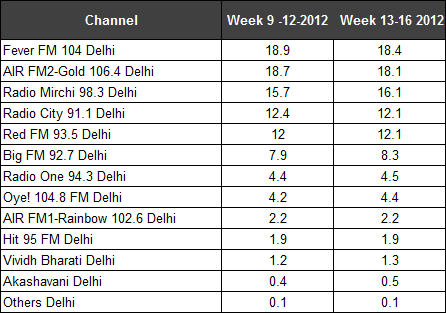
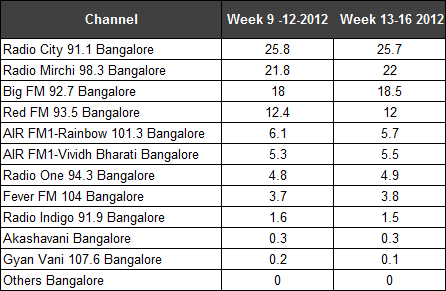
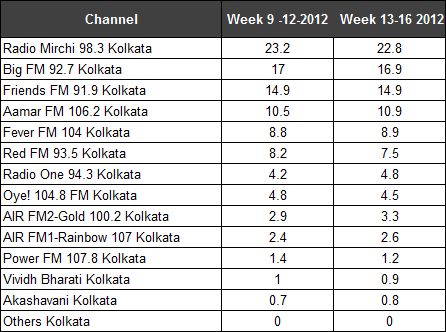
    TAM Media’s Radio Audience Measurement (RAM) – which covers four key metros, Mumbai, Delhi, Kolkata and Bengaluru – released its latest radio listenership figures for wk 13 to wk 16, 2012 (Last week of March to first three weeks of April, 2012). According to the latest RAM data, for listeners of 12 years of age and above, all places of listening, and according to radio channel shares, RadioCity, Radio Mirchi, Fever FM, Big FM, Red FM, Radio One, Oye! FM continue to be the top FM stations in the big four metros.


    Mumbai:


    Radio Mirchi emerges as the number one FM station in Mumbai with a market share of 15.3 per cent, followed closely byRadioCityat 15.2 per cent. The two FM stations are closely competing for the top spot, but what remains to be seen is which of these two FM stations retains the top spot. AIR FM2 Gold, Fever FM and Big FM make the top five FM stations in Mumbai. The other FM stations in the Mumbai market include Red FM, Radio One, Oye! FM, AIR FM1 Rainbow, Vividh Bharati and Akashavani.


    Delhi:


    Fever FM continues to be the most popular FM station in Delhi with a market share of 18.4 per cent, its nearest rival is the AIR FM2 Gold which is comfortably placed at number two with 18.1 per cent market share. Ranked three is Radio Mirchi followed by RadioCity which is ranked four and Red FM as ranked five in theDelhimarket. The rest of the FM stations in Delhi include Big FM, Radio One, Oye! FM, Hit FM, AIR FM1 Rainbow, Akashavani and Vividh Bharati.


    Bengaluru:


    RadioCity continues to maintain its leadership position in the city. RadioCity, Radio Mirchi and Big FM are the top three most popular FM stations in Bengaluru. RadioCity received a market share of 25.7 per cent whereas Radio Mirchi and Big FM received a market share of 22 per cent and 18.5 per cent respectively. Ranked four is Red FM with 12 per cent and the fifth most popular FM station is AIR FM1 Rainbow with 5.7 per cent. The other FM stations in Bengaluru include AIR FM1 Vividh Bharati, Radio One, Fever FM, Radio Indigo, Akashavani and Gyan Vani.


    Kolkata:


    Radio Mirchi is the clear winner in Kolkata with a market share of 22.8 per cent. The top three FM stations in Kolkata haven’t changed as Radio Mirchi continues to be the number one FM station of the city followed by Big FM with a share of 16.9 per cent and at the number three FM station of Kolkata, Friends FM received a share of 14.9 per cent of the share. Ranked four and five are Aamar FM and Fever FM with a share of 10.9 per cent and 8.9 per cent respectively. The other FM stations in the city are Red FM, Radio One, Oye! FM, Power FM, AIR FM1 Rainbow, AIR FM2 Gold, Vividh Bharati and Akashavani.


  • The Anchor: Naresh Gupta lists 10 reasons why one should go independent

    Naresh GuptaBy Naresh Gupta


    One of the biggest misconceptions people have is that if you work for yourself, you will get richer quicker. If money is all that drives you, then going independent can be a bad idea. Here are ten reasons for which you should go independent


    1.  Build something

    Everyone must build something that is your own. This is a true reflection of your ability, skill enterprise and ideas. There is no better way to self-actualization then to say, I built this. Bragging rights don’t come easy in life.


    2. Nurture your baby

    Every new idea needs careful nurturance. The idea is yours, so one else knows the idea better than you. This is like being a father, only you know what your child wants.


    3. Dream big

    Ambition knows no limits in your own set up. This is truly where your dream and your vision alone control the destiny of your enterprise. There are no approvals to be sought, no forms to fill, just you and your enterprise.


    4. Improve quality

    The buck truly stops at you. There are no approvals to be sought; there are no conflicting egos to be settled. You can deliver truly great work to your client, sharper and quicker. It’s amazing how layers of bureaucracy can dull the edge of even the sharpest sword.


    5. Connect better

    Your connections with your clients are stronger than usual. They are your clients because they like you; you are their partner because you like them. There can be no better way than this.


    6. Challenge yourself

    Doing a job tends to make days monotonous. You follow a routine and if follow it well you would be fairly successful. But when you run an enterprise yourself, every new day brings a new challenge to face. If you never want to do same thing twice, go independent.


    7. Follow your passion

    You remember those days in school when you woke up early to go to cricket coaching classes or something like that? You did it because you loved it; it even made school more fun. You wanted to get up early, even on the coldest morning. That’s something true of an independent venture. You do what you love, and you love what you do


    8.  Greater risk to reward ratio

    This is simple, the risk is yours, and the rewards are yours too. This does not mean that going independent is a get rich quickly scheme. It may be years before you see major financial benefits coming your way.


    9. No retirement planning

    Retirement plans can be put on ice. Your enterprise needs you to do the best for it as long as you can. Every day you will gain experience that will make coming days more promising. There is no point of even thinking of hanging your boots


    10.  Give back to society

    This is where as an independent entrepreneur you can make a small contribution. Work with the society, work with yourAlmamatter, and give back in time and effort. This one singular reason can make going independent worthwhile.


    Naresh Gupta is the Managing Partner at Bang in the Middle