Blog

  • 1000 episodes, and counting!


    By Meghna Sharma


    Avika Gaur

    In 2008, when general entertainment channel Colors, was launched by Viacom18 – a joint venture between Viacom Inc and the Network18 Group, there was much promise of  a new spectrum of emotions and entertainment. While there were high profile reality shows on offer, the one serial that caught everyone’s attention was Balika Vadhu, a story of Anandi, married off in a rich family as a child. The show will complete 1,000 episodes today (May 14), a feat not many shows have accomplished in the Indian television industry.



    Ashwini Yardi

    Balika Vadhu show caught everyone’s attention because of its simple story and real emotions. Anandi captured the hearts of millions, making it the No 1 show at that time slot. Talking about Balika Vadhu, former programming head of the channel, Ashwini Yardi recollects: “It is the only show I said yes to in 30 seconds. Balika Vadhu is a cult show that portrays the journey of a child bride into womanhood. Even when the channel was launched, the show wasn’t promoted or marketed as much as the other shows. So, it has achieved everything on its own.”


    Child marriage isn’t something new, many young girls and boys are forced into it even today and the government and activists have tried to curb this social evil. Through the show, the writer and the channel wanted to convey the side-effects a child marriage can have on one’s life.

     

    Purnendu Shekhar

    “The realism in the characters and storyline is what made the show connect with its audience. We have never compromised of the plot and concept of the story to gain TRPs. Balika Vadhu is the first show which raised a social issue as its main plot on a primetime. And we wanted to educate people as well as entertain them,” says Purnendu Shekhar, the writer of the show.


    Agreeing with Mr Shekhar, Prashant Bhatt, fiction head, Colors says: “The story is the hero. The concept of the show decides how the look and treatment of the show will progress. So much so that the cast, the sites, the look, the makeup, even the language is completely tied to the concept. Balika Vadhu brought about authenticity, consistency and meaningfulness and that has worked. Today, Anandi, Sumitra, Dadisa, Bhairon and many others are household names solely because of the way the characters have been portrayed; the actors literally live their roles. The dialogues and its delivery has raised the bar completely. In totality, the show is an honest effort from our end to highlight issues to a mass audience and its acceptance is a great high for us.”

     

    Monaz K Todywalla

    Of the 197 weeks of being on-air, it’s been the No 1 show in the slot for 172 weeks. According to Monaz K Todywalla, general manager, Madison Media, the reason why the show has worked well for so long is: “The simple storyline of Balika Vadhu, in its early days was a refreshing change from the high drama soaps that existed. The show started off a new trend of addressing social problems that exist within the fabric of the country; people empathize with the story of a young girl who was married at a young age – the twists in her life deal with problems that women in India face. More importantly, because Anandi doesn’t play a victim, but fights odds to emerge a winner.”


    Deepak Netram, vice president, Lodestar UM, reasons why Balika Vadhu has been able to cut across masses. “The show was a milestone in the GEC space. It redefined a lot of trends and was a winner for the channel for a long time in many aspects. The show targeted a certain TG and that’s the audience many advertisers want too,” he said.


    OTHERS IN THE 1000+ EPISODES CLUB

    Kyunki Saas Bhi Kabhi Bahu Thi – April 2005
    Kahaani  Ghar Ghar Ki – Aug 2005
    Kasauti Zindagi Ki – May 2006
    Kumkum – April 2007
    Woh Rehne Wali Mehlon Ki – June 2009

    At 1,000 not out, Mr Shekhar shared that it wasn’t easy to keep freshness alive in a daily soap: “When I had written the show for Doordarshan in 1992, the show was supposed to have only 25 episodes. I feel till the time the viewers continue watching and enjoying the show, we’ll continue to write.” For the DD version, the young couple were supposed to grow-up in the fourth episode itself, whereas on Colors the show took a time-leap in the 517th episode.



    Jaahnavi P Paal

    But not everyone believes that the show must be allowed to continue till the ratings become negligible. TV analyst and columnist, Jaahnavi P Paal rues that Indian soap operas tend to lose the plot and drag. I guess the same has happened with Balika Vadhu too. Today, many avid viewers of the show have lost interest in it. Maybe that’s why it has lost its  number 1 spot. I’m a firm believer that a show must end at a proper time instead of being dragged.


    However, there’s no denying the fact that as a serial Balika Vadhu changed the trend with its interesting and unusual concept. Social awareness through primetime benefitted the show as well as the channel.


  • Reviewing the Reviews: Ishaqzaade

    Ishaqzaade


    Directed by: Habib Faisal


    Produced by: Aditya Chopra


    Written by: Aditya Chopra, Habib Faisal


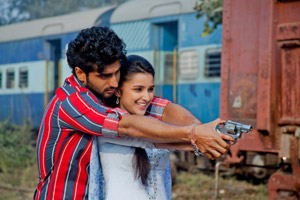
    Starring: Arjun Kapoor, Parineeti Chopra


    A Yashraj film, by the man who wrote Band Baaja Baraat and directed Do Dooni Char; an industry kid being launched and a modern day Romeo & Juliet set in the political badlands of Uttar Pradesh. At least the combination of plusses evokes interest.


    Parineeti Chopra walked away with accolades in Ishaqzaade, which otherwise got mixed reviews, mainly because critics expected more than just a collection of cliches from Habib Faisal.  Another Hindu-Muslim romance against an election backdrop? Oh no! Still, it got between 2-3.5 stars, which is not bad.


    Raja Sen of rediff.com gave it 2 stars and felt that it did a disservice to its heroine. “There is much craft on display, and some lovely moments, but the immense promise shown by the first half turns out as hollow as a politician’s. Soaked in sloppy sexism, the second half has the heroine repeatedly tortured — cheated, slapped, bound, gagged, shot at and abused — and yet the film decrees that she forgive. In the heartlands the film is set in, maafi is an all-absolving concept, an irretractable token of instant forgiveness, like a church confessional. Ishaqzaade, despite its artistry, deserves no pardon.”


    Saibal Chatterjee writing in the NDTV website gave it 2.5 and commented: “ Faisal Habib creates the small town environment with an eye for detail, with many of the interactions between the young foes-turned-lovers taking place in and around a train station, in abandoned coaches and decrepit yards. It is a typical upcountry semi-urban space – dusty, crowded and cacophonous – with genuine and tangible dimensions.   The main characters, too, are by and large believable, especially because the roles are essayed by young actors who look real. The hero isn’t a sculpted hunk; the heroine is, at best, a pretty girl next door. However, the supporting cast, with the exception of Gauhar Khan, make little impression. That leaves too much of a load on the inexperienced leads. If only Arjun Kapoor’s dialogue delivery had greater punch and Parineeti Chopra could pull off the emotional moments without going shrill, Ishaqzaade would have been a markedly better film.”


    Rajeev Masand of IBN gave it 2.5 as well. “Much of the film’s strengths come undone by the use of such tired cliches as the religious differences that stand in the way of true love, and the sacrificial hooker with a heart of gold. Also Faisal resorts to an unforgivably unoriginal climax – for both the resolution of the lovers, and their families – that sticks out in a film with such promise. ‘Ishaqzaade’ benefits considerably from Amit Trivedi’s excellent soundtrack and Hemant Chaturvedi’s sharp cinematography. Faisal creates a believable world with charming characters, and his leads have crackling chemistry. I’m going with two-and-a-half out of five for director Habib Faisal’s ‘Ishaqzaade’. It’s far from perfect, but you won’t be bored.”


    Shubhra Gupta of the Indian Express also went with 2.5. “Small town romance is back again on Bollywood’s radar, and ‘Ishaqzaade’ goes about checking all the boxes. Locations yielding picturesque railway crossings, little bazaars, sprawling ‘kothis’. Determinedly dressed down characters. Lots of local patois, which these days, translate into a shower of ‘gaalis’. And a pair of lovers who wield guns with much more ease than roses. It’s all in there, and yet the result is mixed: some of ‘Ishqzaade’ hits the spot, the rest is a drag.”


    Anupama Chopra of the Hindustan Times was not too impressed, still, gave it 3 stars. “Faisal sets up the story with great precision. Kapoor and Chopra are terrific as the explosive twosome. The music, composed by Amit Trivedi, works well. The casting is bang-on:Parma’s swaggering grandfather and his long-suffering but strong mother are nicely etched characters as is the local dancing girl, played by Gauhar Khan. Which is why it’s so disappointing to see it unravel. Still, Ishaqzaade does provide half a good time. How many films can you say that for?”


    Sudhish Kamath of The Hindu wrote, “How do you take a story that’s been told over a hundred times at least in 100 years of Indian cinema and still make it relevant and reasonably engaging? Writer-Director Habib Faisal succeeds to a great extent in crafting an unpredictable first half full of spunk and spirit, but plays it boringly safe in the second, offering no new solutions or fresh perspectives in a story that has been done to death. You can’t help being disappointed with the limited ambition of this film that succeeds in creating characters who alternate between love and hate for each other.


    Taran Adarsh of bollywoodhungama.com gave it a generous 3.5. “On the whole, Ishaqzaade, a volatile and intense story with ample doses of fanatical romance, should appeal to a pan-India audience. This broadly engaging love story has a winsome pair who deliver dexterous performances, besides popular music and several poignant moments, which should appeal to fans of mainstream films. Go for it!?”


    Surprisingly Madhureeta Mukherjee of The Times of India gave it 3 stars, which is low by the paper’s standards. “Director Habib Faisal takes you into the heart of this small-town story, creating a politically-divided Almore with elan – penning gripping characters (a rigid and arrogant Dadda, a suppressed, dukhiari Amma, two overbearing brothers), but fails to maintain the crescendo in the second half. After highlights like a sensitively shot lovemaking scene on a rusty train berth, a subtly picturized romantic song (Pareshan), and a shocking pre-interval scene, it starts falling apart like a house of cards; ultimately folding into a predictable climax. The flatness of the second half is what takes away from the pace of a launch vehicle that could’ve been memorable.  ‘Ishaqzaade’ starts with a bang-bang, but ends up firing blanks.”


  • The Anchor: 5 Reasons why Brands get it wrong with the Youth

    By Samyak Chakrabarty


    1. Boxing youth into strict definitions

    In a country as diverse asIndia, one cannot define our youth or predict consumption behaviour by merely categorizing them under conventional economic segmentation or geographies. Our youth is continuously evolving, especially those born after 1988 are still caught in a transitional phase from and into very different eras. It can never be obvious what a SEC A+ 20 year old male inNew Delhiwill purchase just by looking at the size of his wallet or the kind of college he studies in !


    2. Youth don’t wake up thinking about brands

    Just because your brand ambassador maybe Ranbir Kapoor or your communication is ‘cool’ (I hate it when brand managers say this!), one can’t take it for granted that youngsters will always have your brand on their top of mind or will purchase your product. Today, we are more conscious and calculative about what we consume, hence substance is equally as important as packaging. Second, to build loyalty with this generation, the brand has to be equally loyal to them!


    3. Digital is the holy grail

    There was a time when brand managers would pull out their hair trying to figure how to engage youth sustainably. Soon enough,Silicon Valleyanswered their prayers and there landed from ‘the cloud’ Facebook, Twitter and YouTube. But unfortunately, brands take it for granted that just because they are on social media or rather have a million likes/views, theirs is a ‘cool youth brand’. This is not true, these days we ‘view’, ‘like’ or ‘tweet’ about anything and everything that comes into our online space – it has become a function of habit. These numbers cannot be used to measure brand engagement/conversions in pure statistical terms. Just because your brand is now digital, it is not young.


    4. Trying to measure word of mouth

    Indiais perhaps the only country in the world where brand managers ask for a ‘measurement matrix’ for world of mouth campaigns conducted in colleges. I guess they like to show off to their bosses how much they know and meticulous they are. How can one ever measure, record or contain conversations that happen offline? And just because therefore there is no direct ‘ROI’, youth brands in India refuse to run simple WOM campaigns, even though in fact, if rightly administered and structured, the investment can be more profitable then all digital spends put together since most purchases/brand decisions happen through peer references that take place in conversations over chai in the canteen or a beer in the pub – NOT on Facebook.


    5. Today’s Youth is an alien species

    To my final point, brands look at ‘youth’ as a totally alien species, which they are trying to figure and due to that very attitude, all the numbers, insights and ideas start not making sense. I, myself, have written above that those born after 1988 are indeed a totally different than their predecessors but that doesn’t mean that we overcomplicate and give too much importance to the way they think, eat, drink and surf! I guess the simplest thing to do is work on an intelligent, creative and smart campaign without reading too much into youth behaviour because reality is that one will never ever be able to understand how these mindsets function since there is no one point where this transition will end.


    Samyak Chakrabarty is Chief Youth Marketer, DDB Mudra Max


  • AdStrat | Tata Salt: Mothers for Mother India

    Kapil Mishra, Executive Creative Director, Leo Burnett

     

    Name of the campaign/ad: Tata Salt – Mothers for Mother India


    The brief:

    The brief was very clear – to communicate the ‘Desh ka namak’ philosophy of Tata Salt.

    ‘Desh ka namak’ symbolizes the value of honesty, and the brief sought to take this forward in a very current context.


    Research insights:

    Tata Salt is built on the core value that is embedded in salt… ‘Honesty’. And it is this value that the brand is espousing at a time when the nation seems to be facing an honesty deficit. So, we examined the task at a dual level. First, a look at what honesty meant in today’s context.

    Second, we looked at all the possible influences/ factors that determined the value of honesty in a person’s life.


    The thought process behind the creative:

    In a time where the relevance of honesty seems to be getting questioned – we felt it was time to once again seed honesty as a value. ‘Desh ka namak’ symbolizes the value of honesty…and children learn the first lessons of honesty from their mothers. Thus, we looked at salt as that symbol of honesty which mothers feed their children.

    The very simple and powerful idea being – that if every mother were to decide that she would teach her child the virtue of being honest, nothing could stop the entire nation from being honest!


    Media vehicles chosen: Televison, POS, on-ground.


    What according to you is the differentiating factor about the ad:

    It’s a very simple, yet powerful tribute to the singular, most powerful force responsible for inculcating the values of honesty – the mother.

    Secondly, it does not try to preach. That, according to us, was an obvious trap for a virtue like honesty. By staying away from it, we felt that the campaign will be well received and resonate better with our consumers.


  • [MJR] Pity the Poor Politician!

    Ranjona Banerji

    By Ranjona Banerji


    This week’s candidate for Noosemaker is our favourite whipping boy – the politician, both in India and abroad.


    This poor soul puts every bit of work he or she can into working for the people, but the people are ungrateful sods and show little appreciation. Take for instance, the politicians’ campaign to save the “father of the Indian Constitution” – Dr BR Ambedkar from a cartoonist. Instead of applauding politicians for this act of bravery – in the pursuit of which they even showed the courage to go against the freedom of expression which Ambedkar enshrined in the Constitution – our politicians had to face ridicule.


    Instead of congratulating them, people started pulling out facts about Ambedkar’s life, sense of humour, the importance of not disrupting Parliament, the Constitution and irrelevant stuff like that. What on earth, said these beleaguered politicians, have facts got to do with anything. We are saving Dr Ambedkar from a cartoon by Shankar which is part of a textbook. We don’t care if Ambedkar himself saw the cartoon when it first appeared in 1949 or not. We don’t care if Shankar was a famous cartoonist. We are only bothered that Ambedkar’s reputation has been damaged and for that, we’re willing to damage anything and anybody. Including, of course, the offices of one of the academics who decided to include the cartoon in the textbook.


    Meanwhile, other politicians got so bothered by the ruckus that the government just banned the textbook. This is probably a wise move as Class XI students will now have no political science textbooks, so if any of those students want to enter politics, they will be suitably ignorant about Ambedkar, the Constitution and so on. This is a necessary prerequisite for politicians.


    I would also advise young people to think carefully about becoming cartoonists. Dead or alive, cartoonists are public enemy number one for politicians, a dangerous breed giving to fostering humour, laughter and other subversive tendencies.


    * * *


    The other politicians in the spotlight are in the UK. They must now be careful when they send text messages to editors of newspaper. Because if those editors get involved in phone-hacking scandals and then get questioned by a media ethics inquiry, they can reveal damaging stuff. Now we know, for instance, that British prime minister David Cameron of the Conservative Party did not know the meaning of the short form “LOL”. He kept sending it to Rebekkah Brookes, former editor of The Sun and News of the World and boss of News Corp and now just a formidable person, thinking it meant “Lots of love”. She had to point out to him that it meant “Laugh Out Loud.”


    This has almost completely destroyed Cameron’s street cred and it is possible that because of his good friend and neighbour Brookes, he may lose his premiership.

    The Labour Party, by the way, cannot send anyone messages saying “ROFL” because they were well known for cosying up to News Corp as well.


  • RAM releases the second Radio Listenership sweeps for 9 cities

    By A Correspondent


    RAM (Radio Audience Measurement) service, launched by TAM Media Research in 2007 for the radio industry, has released the second round of its 9 cities Listenership Sweeps. The first round was released in October 2012, along with the announcement of the news on RAM panel coverage expansion to 9 additional cities – Ahmedabad, Chennai, Hyderabad, Indore, Jaipur, Kanpur, Lucknow, Nagpur and Pune. Prior to that, RAM operated out of the four Indian metros – Bangalore, Delhi, Kolkata and Mumbai only.


    As planned and announced, the second sweeps data is for the period of February-April 2012. This sweeps, released by RAM, will help the radio industry: broadcasters & media planning agencies, to assess the impact that radio medium is having on audiences in towns other than the major metros.


    Commenting on this release, LV Krishnan, CEO said: “The second roll out is as per timelines committed by us. After the first sweeps in October last year, the second one shows interesting changes in radio consumption patterns. While in some markets, radio consumption base itself has seen an increase, in others, granular trends like Out Of Home (OOH) listenership has seen an encouraging increase.”


    RAM’s second sweeps highlights certain interesting changes in radio consumption behaviour, not only across the 9 cities, but also in comparison to the October 2011 sweeps release.


    Some highlights are:

    • Ahmedabad, Chennai & Hyderabad are the growth markets. Southern metros have seen more than 30 per cent growth in listening thresholds while Ahmedabad has witnessed 15 per cent growth
    • Pune,Kanpur,IndoreandNagpur, have remained almost the same levels as the previous round


    Ahmedabad:

    • Average audience has seen a significant increase in morning while other day parts, remained at the same level. The peak at 9am has grown by 70 per cent.
    • The increase in morning day part is due to 10 per cent growth in cume reach levels.
    • Share of Out of Home listening has grown significantly. Particularly during travel/conveyance with share of listening growing from 9 to 16 per cent
    • Cume reach levels have gone up across all the days, while Sunday has seen a significant growth
    • Time spent levels have seen a very marginal drop across the days. Sunday remains the day with highest time spent level
    • While 90 per cent of cume reach build up was achieved by afternoon earlier, now 95 per cent of the audience can be targeted by the morning day part alone at a weekly level


    Chennai:

    • While cume reach levels have dropped across all the day parts, time spent levels have significantly increased. The maximum increase in time spent being in the morning day part.
    • The audience build up has got spread through the day. It takes up to afternoon day part to cover 95 per cent of all audience.
    • Share of SEC C’s listening has grown from 37 per cent to 43 per cent
    • Share of in-home listenership grows from 76 per cent to 87 per cent
    • While Saturday had the highest listenership thresholds the previous round, Sunday has grown beyond Saturday in round 2 – both in terms of cume reach and time spent


    Nagpur:

    • The weekly listenership levels have remained at the same levels as the previous round
    • The daily cume reach has gone up, with Sunday being the maximum, but time spent levels are down across all the days.
    • Share of In-home listening grows from 82-87 per cent


    Jaipur:

    • Drop in listenership thresholds across the day
    • The same reflects in the cume reach levels across the day parts
    • Dominance of SECDE in Jaipur’s listenership contribution is normalized. Proportionate contribution from all SECs to listenership
    • Morning day part continues to be the one where listenership peaks, though at a lower threshold
    • Sunday emerges as the one with highest cume reach and time spent levels
    • The audience build up has got spread through the day. It takes up to afternoon day part to cover 95 per cent of all audience


    Indore:

    • The listenership peaks have interchanged between mid morning and morning, morning peak emerging as the highest. Other day parts are more or less are at the same threshold
    • At a weekly level, morning day part emerges as the highest in cume reach and time spent
    • Mid-morning day part saw a reduction cume reach levels.
    • TSL level growth in night day part
    • Share of In-home listening significantly drops from 94 per cent to 71 per cent. Maximum growth in Car share of listening at 22 per cent
    • Saturday loses audiences as Sunday emerges as the destination of maximum listening
    • Faster cume reach build up across the day as 95 per cent of the audiences are reached by the mid-morning day part


    Hyderabad:

    • Across the day parts TSL has almost doubled
    • Evening and night day parts have grown significantly while morning has witnessed a drop in listenership levels.
    • The drop in morning day part is primarily due to drop in cume reach levels, while TSL has grown.
    • Contribution from SEC A & B increases
    • 6 per cent drop in share of in-home listening, reflected in the growth of listening share from car/travel/conveyance
    • Equal and high threshold of listenership across weekdays and weekends
    • Evening and night day parts add significant amount of audiences to cume reach build up


    Pune:

    • Similar listenership thresholds across the day parts
    • Mid-morning to night, there is a drop in cume reach levels, but across the day parts there is a growth in TSL levels
    • Contribution from different places of listening remains the same
    • Sunday emerges as the destination of highest listenership
    • Audience addition from afternoon grows in the current year


    Lucknow:

    • Listenership thresholds drop across the day parts, while night primetime holds the thresholds
    • While there is cume reach growth in some of the day parts, there has been TSL drop across all of them
    • Share of listening from 35+ age group comes down
    • Contribution from in-home listening grows from 89 per cent to 93 per cent
    • Cumulative audience on Sunday grow from 82% to 94%
    • Weekdays and weekends have similar thresholds of TSL


    Kanpur:

    • Marginal changes in day part wise preferences
    • Growth in consumption share fromSECABand 45+ age group
    • OOH share of listening grows from 23 per cent to 29 per cent, majority of the growth coming from car/travel
    • Sunday emerges as the clear leader in listening thresholds


    TAM is a joint venture between Nielsen Company and Kantar Media Research. Besides measuring TV Viewership, TAM also monitors Advertising Expenditure of Television, Print & Radio through its division AdExIndia. Since 2004, it extended its presence in the PR Measurement & Analysis space for Corporate/Marketing Clients by setting up a separate division – Eikona PR Measurement.


    In 2007, the joint venture introduced RAM (Radio Audience Measurement) service to track Radio Listenership for the Indian Radio Broadcast Industry. In year 2009, TAM launched a division, called TAM Sports that specializes in monitoring Sports Sponsorship ROI.


  • DDB MudraMax bags duties for Ashok Leyland

    By A Correspondent


    DDB MudraMax has bagged the media duties of Ashok Leyland – Heavy Vehicles. The incumbent agency was Mindshare. The size of the business is said to be in the range of Rs25 crores. This will be handled out of DDB MudraMax’s Chennai office.


    On choosing DDB MudraMax, Alok Saraogi, Head, Brand &Marketing Communications said: “DDB Mudra Group did a great job of viewing our business imperatives from a category, business and brand perspective and brought a refreshing view to our challenges. Their strategy is insightful and impactful and we are pleased to assign our media business to DDB MudraMax. It also helps that we consolidate all media business for the overall benefit of the group.”


    Sathyamurthy Namakkal
    Pratap Bose

    On the new win, Sathyamurthy Namakkal, President & Head – DDB MudraMax, Media, said: “This is a prestigious win for us.  With this alignment, DDB Mudra Max consolidates as the sole Media AOR for Ashok Leyland and we are very glad”.


    Pratap Bose, COO, DDB Mudra Group, added: “This win comes on the back of Ashok Leyland awarding us their LCV business last year and it is indeed gratifying that our client has reposed their faith in us again. For me, that is what I am most happy about.”


    Ashok Leyland is the flagship of the Hinduja Group and a leading manufacturer of commercial vehicles inIndiawith a turnover of US $ 2.5 billion. Ashok Leyland has associate companies in the Czech Republic and the UAE and a joint venture in Sri Lanka, besides exports to over 30 countries worldwide.


    DDB MudraMax (Engagement & Experience), provides multi-specialty expertise to help build brands in the age of convergence. DDB MudraMax comprises fourteen strategic business units under four disciplines – Media, OOH, Retail and Experiential. These SBUs provide clients seamless solutions across a wide array of media touch points.


  • Sera Bangali honours 13 progressive Bengalis who said no to negativity


    By A Correspondent


    West Bengal has been a playing field for visionaries who emerged as thought leaders and have shown the way to rest of the countrymen, by just saying no to the negativity. STAR Ananda, Bengal’s leading news channel is celebrating this excellence through Sera Bangali.


    Sera Bangali is a pioneering effort by STAR Ananda since 2006 for Bengal is and people from West Bengal who have made their state proud through their achievement. This biggest, and most credible, award function felicitates eminent personalities who have not only achieved excellence in their respective fields but have also helped to bring Bengal in the national as well as international limelight.


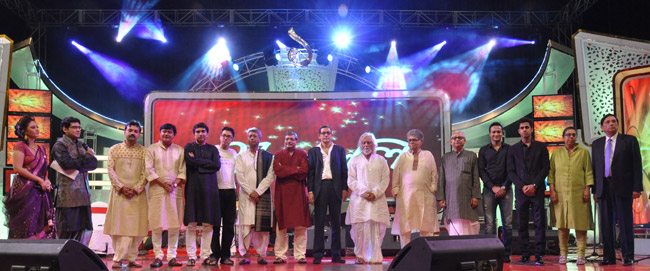
    The awards are presented in a plethora of categories like art, film, music, education, business, science, sports and lifetime achievement. After runaway success of past 6 years, Bengal has now welcomed 2012 Sera Bangalis. The celebration was held on May 11 at Kolkata. It was a star studded event which started with a grand felicitation ceremony followed by a scintillating entertainment show.


    The winners of Sera Bangali 2012 in various categories:


    Category Awardee
    Film (Actor) Saswata Chatterjee
    Film (Direction) Srijit Mukherji
    Music Anupam Roy
    Sports Manoj Tiwari
    Sports Shakib Al Hasan
    Public Life Ruchira Gupta
    Education Sushanta Dattagupta
    Science Sumantra Chatterji
    Business Vinayak Chatterjee
    Art Lalu Prosad Shaw
    Sera Abishkar Aneek Dutta
    Lifetime Achievement Sunil Gangopadhyay
    Serar Sera Abhijit Vinayak Banerjee


    The nominees were selected following an in-depth research made by the MCCS Editorial team.


    Past Sera Bangal is have included luminaries like Pranab Mukherjee- Minister of Finance, Dr Muhammad Yunus- Economist and winner of Nobel Peace Prize, Sourav Ganguly, Mithun Chakraborty, Rahul Bose and Anurag Basu.


    Speaking on the occasion, Ashok Venkatramani, CEO, MCCS said: “We have dedicated ourselves to the recognition and felicitation of those personalities who have made Bengal proud and continue to do so. Sera Bangali is the truest effort in this direction to recognize those successful Bengal is, who not only have excelled in their respective fields, but have also helped in putting Bengal is in the global arena.”


    The entertainment that follows the award function saw performances by distinguished artists like Kunal Ganjawala and Debojyoti Mishra.


    STAR Ananda plays the role of the true leader by connecting these luminaries with the people. This is in accordance with the channel’s aim of reflecting and catalyzing the growth and resurgence of Bengal and also celebrating excellence.


  • Tata Nano partners with MTV India for India’s first Social Road Trip

    By A Correspondent


    To celebrate its over 1 million fan base on Facebook, Tata Nano announced the launch ofIndia’s first Social Road Trip called, Nano Drivewith MTV, where the digital world will meet the real world. Tata Nano has partnered with MTV India to create a unique driving experience and will leverage the online medium to treat travel enthusiasts to a 20-day, over 2000 km drive.


    Commenting on this unique property, Delna Avari, Head – Nano Product Group, Tata Motors said: “Tata Nano is a personal mobility option for everyone. We are increasingly becoming the popular choice of mobility amongst youth – about 42 per cent of Nano owners are in the 18 to 34 age group. TheNano Drivewith MTV will enable our customers to further understand and experience the brand.”


    Tata Motors, MTV and Nano fans will select 4 teams for this drive. Each team will comprise 4 members and these teams will be allocated 4 different routes to be covered in 20 days. The teams will need to overcome obstacles, tasks and move up the ladder. Social media will play a vital role in this unique road trip as viewers will get a chance to vote for their favourite teams online. While the winning team will be awarded with 4 Tata Nanos, the most ardent fan also gets a chance to win a Tata Nano.


    In November 2011, Tata Motors introduced the Nano 2012, with a bouquet of features, further improving on its record asIndia’s most fuel efficient petrol car.


    With the launch of this drive, over 1 million Facebook Nano fans can look forward to a thrilling social road trip.


  • Tuborg now in an exciting new avatar

    By A Correspondent


    As part of a global enhancement program, Tuborg has announced the launch of a new packaging and visual identity, showcasing an entirely new look, tying into Tuborg’s overall ambition of pioneering innovation in the Indian beer market. This innovation is inspired by the needs of Indian consumers and aims at giving them a global experience.


    Tuborg’s new visual identity showcases a refreshing look to entice consumers in a never-before-seen packaging – a bottle that adds a cool new look to its edgy appearance with an easy to hold grip. Tuborg’s tagline: “Open for fun” represents what Tuborg aspires to do – inspire its audience to being open for more and to make most of their lives and have fun.


    Building on the existing equities of the Tuborg name and label shape, new ideas have been added such as Tuborg’s new tilted logo. Tuborg has become the number 4 brand within 3 years of its launch. The power of its innovation, quality refreshing taste and youthful imagery has created this incredible growth story, which is unheard of in the beer industry. It was the first inIndiato introduce innovative packaging in the form of a unique pull-off cap, which lends the consumers the freedom to enjoy their drink without having to look for a bottle opener.


    Currently, Tuborg is the fastest growing brand in the Indian beer market and has witnessed a significant volume growth of 60 per cent (YTD April 2012 vs. YTD April 2011) and with the new visual identity, the expectations are higher.


    “Indiais an increasingly important market in Carlsberg’s global portfolio and we aim to give our consumers a superior quality experience. Tuborg’s new offerings not only reinforce the brand image but also emphasize our commitment to innovate. The new design will be launched acrossIndiaand we are positive that it will be an exciting new experience to our consumers,” said Soren Lauridsen, Managing Director, CarlsbergIndia.


    The new Tuborg packaging will be available in 330 ml and 650 ml acrossIndiaby end of May.


    In 1880, Tuborg Breweries was established as an export brewery in connection with a private port in a small town north of the Danish capital,Copenhagen. From the outset, its green characteristic look has been very popular with the Danes, and is the leading beer brand amongst them.


    Carlsberg India Pvt Ltd (CIPL) commenced operations in 2007, beginning production in Himachal Pradesh. The product portfolio of the company includes its flagship brand Carlsberg and Carlsberg Elephant, Tuborg, Tuborg Strong and Palone 8. Carlsberg India Pvt Ltd (CIPL) focuses on developing and strengthening its brand portfolio through innovation and commitment to superior quality.


  • Mehmet Akay takes over as GM, Southern & Western India, Turkish Airlines

    By A Correspondent


    Turkish Airlines has announced that Mehmet Akay as the new General Manager for Southern & WesternIndia. In his role, Mr Akay will be taking charge of Turkish Airlines’ strategic success in this region and will be responsible for driving growth and expansion of the company’s market share inIndia.


    Mr Akay started his career with Turkish Airlines inIstanbulin 1999 as a reservation agent. He was engaged in various responsibilities within the airline, including revenue management & pricing specialist. He also had a brief stint as Regional Commercial Manager inVietnamwhere he was posted for 2 years. With a proven record of dynamic leadership, winning attitude and the ability to drive goals and initiatives, Mr  Akay will guide the airline’s journey towards achieving new heights in sales and brand building.


    Speaking on the occasion, Mr. Mehmet Akay said: “Turkish Airlines has witnessed outstanding growth in the Indian market in the last few years and is now perfectly poised for a sharp take-off. I am pleased to be in a dynamic and vibrant country likeIndiaand strive to take the company to newer heights in the days to come”.


    Established in 1933 with a fleet of only five airplanes, Star Alliance member, Turkish Airlines is a four star airline with 179 aircrafts flying to 193 destinations around the world. Turkish Airlines has received several “Passengers Choice Awards” from the consumer ranking group, Skytrax.

  • Can a Satyamev-like show be created for radio? Yes, say broadcasters

    By Robin Thomas


    Aamir Khan’s ‘Satyamev Jayate’ is the hope to recreate the Sunday morning appointment viewership that was probably lost with the entry of multiple cable television channels in the late 90s. The Sunday morning programme, which premiered on May 6 with much fanfare, has already received rave reviews from viewers and marketers alike.


    Appointment viewing in television has become a common practice, with examples galore like season one of Kaun Banega Crorepati (KBC) or soap operas suchas ‘Kyun Ki Saas Bhi Kabhi Bahu Thi’ or even earlier epic programmes like the Ramayana and Mahabharata, wherein viewers would often set the time aside for their favourite shows.


    But can the same be said about radio? Does a radio programme have appointment listenership? Can they create shows of the calibre of ‘Satyamev Jayate’?


    One of the reasons why television programming has evolved is said to be only because of multiple channel offerings, similarly radio programming is also said to evolve with more channel offering, different genres and thus big property shows which could draw more loyal listeners.


    According to GG Jayanta, National Marketing Head, Radio Mirchi, a similar kind of experience exists on radio, albeit on a smaller scale, despite the fact that music is the largest chunk of programming on most radio stations. “The breakfast show, from 7am to 11am, usually tackles issues that resonate with local sentiments – be it the case of the battered girl child or petty corruption or question paper leaks or pot-holed roads. There are expert opinions, listener call-ins, diverging points of view et al – but the tone and manner is always upbeat and offers a ray of hope to the listener – entertaining, but not frivolous. It makes for engaging content leaving the listener with a feeling that there is someone listening to their plea. This interactivity is what makes radio powerful.”


    One of the challenges for radio today is the lack of differentiation in content as most radio stations arguably sound the same, especially in the kind of music they play. Gone are the days when radio programmes like ‘Binaca Geet Mala’ and ‘Sangeet Ke Sitaron Ki Mehfil’ were highly popular with listeners who set aside time to listen to these programmes.


    Anil Machado, National Programming Head, Radio One, felt: “Radio has a lot of appointment listeners, mostly during the weekends. Programming in every medium is a challenge today, but it depends on how you create a differentiation in your content. The moment a radio station begins to move away from the herd and create a differentiated content, it will attract more listeners and thus bring appointment listenership.”


    Nonetheless, those were the days when there were not as many FM stations and the television onslaught was yet to take place. Whether or not multiple frequencies in FM Phase III would create differentiated and innovative shows and shows that of a ‘Satyamev Jayate’s’ calibre, only time will tell. But radio broadcasters would like to disagree. “In fact, Aamir Khan was on air with RJ Jeeturaj on Radio Mirchi Mumbai, wanting to interact with the audience and gauge their reaction to the show. Therefore, a similar sort of programming can happen on radio or for that matter any medium but, what is important is the audience should feel enriched,” said Mr Jayanta.


    Radio broadcasters are of the view that such programmes have always been part of radio and that the next step forward for the industry should be attempts to create differentiation in content in order to create more appointment listeners. But there are some who feel that more than shows like Satyamev Jayate, what would work on radio are shows with localised content.


    Sarthak Kaushik, Director, Programming, Hit FM felt: “A radio version of Satyamev Jayate’s calibre will not work because radio is an intensely personal and a local medium, so essentially it is the local issues that work on radio. As far as appointment listenership is concerned, it is mainly depends on the maturity of the audience. Radio is one medium which allows a lot of experimentation, all one needs is courage to experiment with a programme and how confident one is to promote that programme.”