Blog

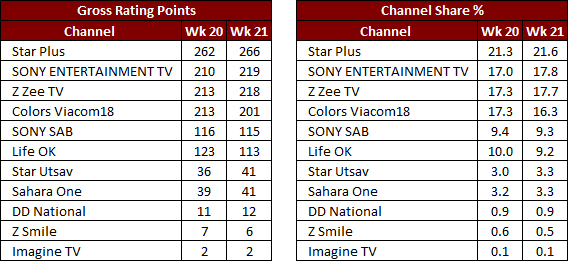
  • TAM Data (GRPs Channel shares of HGECs)- Wk 21 ’12


    Source: TAM Media Research
    TG: CS 4+ yrs
    Market: HSM
    Period: Wk 20: May 13 to May 19, 2012
    Period: Wk 21: May 20 to May 26, 2012


    About TAM Media Research

    TAM is a joint venture between Nielsen Company & Kantar Media Research. Besides measuring TV Viewership, TAM also monitors Advertising Expenditure of Television, Print & Radio through its division AdEx India. Since 2004, it extended its presence in the PR Measurement & Analysis space for Corporate/Marketing Clients by setting up a separate division Eikona PR Measurement.


    In 2007, the joint venture introduced RAM (Radio Audio Measurement) service to track Radio Listenership for the Indian Radio Broadcast Industry. In year 2009, TAM launched a division, called TAM Sports that specializes in monitoring Sports Sponsorship ROI.


    TAM Media Research’s objective is to fuel media insights that will drive the growth of the Indian Media Industry.

  • Bandh a ‘partial success’, no effect on petrol prices

    Ranjona Banerji

    By Ranjona Banerji


    Tracking Thursday’s Bharat Bandh protesting against the petrol price hike on TV led to a bit of confusion – was it a success or not. As it turned out, the Opposition-led bandh was what is known as a “partial success” so if you’re a half-glass pessimist, that’s the same as a “partial failure”. For Mumbai, TV showed us a bus in Mulund being attacked by a man in a BJP T-shirt – who either did not have the good sense or was just to brazen to hide his face from the camera. But social networking sites seemed to suggest that people did go to work. The morning papers said 60 per cent turn out in private offices and slightly more in government offices (really!). The commercial loss, said The Times of India, was Rs1,000 crore while Mid-Day pegged it at a more conservative Rs300 crore. Of course maybe with current rupee-dollar rate, both figures mean the same thing?


    There is also the other question about the loss caused by damage to property by “bandh” enforcers which as every newspaper painstakingly informed us, we the people would have to pay for.


    Across the country, the bandh fared better in some parts than others and apparently had no effect in Kerala at all.


    Petrol prices, by the way, had not come down by Friday morning at least.


    * * *


    As the TV news day progressed however, the bandh was sidelined first by BJP veteran LK Advani who announced in his blog that the BJP had made too many bad decisions recently and used the party’s favourite word “introspection”. This kind of took the wind out of the BJP’s sails as the main “bandh” caller. Immediate speculation began about a rift in the party – something political commentators have long known about. http://blog.lkadvani.in/blog-in-english/bjp-a-hub-of-hope


    Arnab Goswami interviewed Ram Jethamalani who had said similar things in a letter to Nitin Gadkari and Jethamalani was a hoot as always, even as he lost his ear pieces for a while and Goswami watched precious air time and money dribbling away.


    Jethamalani told Goswami he was a clever man who was trying to get Jethmalani round to Goswami’s opinion. Goswami said he had no opinion.


    No comment from me either.


    * * *


    The other big bandh spoiler was the Indian economy and the fall in GDP growth to 5.3 per cent, the lowest in nine years. Our TV newswallahs who usually shy away from the economy – possibly because they know so little about it – were forced to sit up and take notice and so gave us some uninformed guff, interspersed with a lot of dramatic music and stuff.


    Since the economic recession in the West in 2008, international TV newswallahs have become experts at this economy stuff and our TV people could learn from them how to use jargon effectively and impressively. Or, they could hire some journalists with a background in business and the economy. This would be particularly useful for the Sensex channels.


    Amartya Sen on NDTV sort of turned the argument on its head by saying that this obsession with GDP was misplaced. He started talking about inclusive growth and stuff which usually makes business people and economists turn faint from boredom as they cannot understand what that means.


    * * *


    At prime time, Headlines Today was still worried about cricket and Rahul Kanwal was in “hot pursuit” of Gautam Gambhir. Arnab Goswami asked why we need such bandhs at all and then proceeded to have a quarrel with Ravi Shankar Prasad about the NDA’s petrol policies.


    Mohandas Pai formerly of Infosys came up with a novel solution to bandhs – he said all bandh-callers should sit around statues of Mahatma Gandhi and hold hunger strikes. BJP people looked bewildered having never heard of this man nor seen statues of him anywhere in India.


    * * *


    Chief Election Commissioner SY Quraishi in Thursday’s Indian Express said, “Serious thought needs to be given to the ‘paid news’ that is threatening to erode the value and pride of the press and is starting to shake the foundations of democracy. A voluntary code would be the effective answer”.


    He was speaking at the annual convocation of the Express Institute of Media Studies.


  • 9X Music Network now on iPad

    By A Correspondent


    9X Music Television Network’s four channels - 9XM (Bollywood music channel),  9X Jalwa (Bollywood Hits music channel), 9X Tashan (Punjabi Super Hits) and 9X Jhakaas (Marathi music channel) are now available on iPad through 9X Music Network Live Application.


    Commenting on the app, Vibha Gosher VP-Digital 9X Media Group, said: “We are living in a world of convergence where music, movies, gaming, social networking and other forms of entertainment all come together on your personal devices. Tablets have changed the way entertainment is consumed globally. With iPad sales skyrocketing and their ever-increasing popularity, it’s probably one of the best platforms to extend the 9X experience of unadulterated music. The 9X Music Network Live app is targeted at the ever-growing segment of connected users who consume content on-the-move.”


  • Govt announces New Telecom Policy: 2mbps broadband and 100% teledensity by 2020

    From the MxM  Infodesk


    In a move that could have a far-reaching and direct impact on the Indian media and entertainment sector, the Union Cabinet approved the National Telecom Policy -2012 (NTP – 2012) yesterday. The salient features of the National Telecom Policy-2012 are as follows:


    The policy envisions providing secure, reliable, affordable and high quality converged telecommunication services anytime, anywhere for an accelerated inclusive socio-economic development. The main thrust of the Policy is on the multiplier effect and transformational impact of such services on the overall economy. The thrust areas of NTP – 2012 are;


    • Increase rural teledensity from the current level of around 39 to 70 by the year 2017 and 100 by the year 2020
    • Repositioning of Mobile phone- as an instrument of empowerment
    • Broadband – ‘Broadband For All’ at a minimum download speed of 2 Mbps
    • Domestic Manufacturing- Making India a global hub
    • Convergence of Network, Services and Devices
    • Liberalisation of Spectrum- any Service in any Technology
    • Simplification of Licensing regime- Unified Licensing, delinking of Spectrum from License, Online real time submission and processing
    • Consumer Focus – Achieve One Nation – Full Mobile Number Portability and work towards One Nation – Free Roaming
    • Resale of Services
    • Voice over Internet Protocol
    • Cloud Computing, Next Generation Network including IPV6


    The policy seeks to provide a predictable and stable policy regime for a period of about 10 years. The policy will be operationalised by bringing out detailed guidelines, as may be considered appropriate, from time to time. The implementation will enable smooth implementation of the policies for providing an efficient telecommunication infrastructure taking into account the primary objective of maximizing public good by empowering the people of India. The policy will further enable taking suitable facilitatory measures to encourage existing service providers to rapidly migrate to the new regime in a uniformly liberalised environment with a level playing field.


    The Cabinet also approved the introduction of Unified Licence and authorised the Department of Telecommunications to finalise the new Unified Licensing regime with the approval of Minister of Communications & IT.


  • Pepsi and IndiGo’s unique football surprise for air travellers

    By A Correspondent


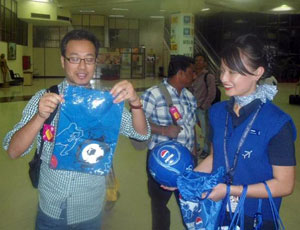
    As part of their ongoing football campaign, Pepsi partnered with IndiGo to Change the Game when they surprised hundreds of IndiGo passengers with a Pepsi Change the Game Football Kit across six airports in the country.


    Over 1,500 passengers who travelled by IndiGo during a certain time on a day received an extra football bag along with their checked-in baggage. This activity was organized at the Bangalore, Mumbai, Hyderabad, Kolkata, Goa and Bhubaneswar airports. Passengers across the airports were delighted with the extra travel kit by Pepsi and IndiGo which included a cool bag, football, t-shirt and a sipper.


    Talking about the initiative, Homi Battiwalla, Category Director – Colas, Hydration & Mango Based Beverages, PepsiCo India said: “Pepsi, as a brand, is known for creating clutter breaking campaigns. Our latest football campaign stands for all this and more. From irreverent TVCs to engaging online activities to an amateur tournament – Pepsi T20 Football, we are changing the game of football. We are delighted to have associated with IndiGo Airlines to create this surprise, which showed that you need not be a fan to indulge in some football fun.”


    Expressing his delight, Aditya Ghosh, President, IndiGo said: “We are happy to collaborate with Pepsi to collectively leverage their Change the Game campaign through this unique initiative. For us, the idea of surprising 6E passengers at six busiest airports with football kits was indeed an experience. Our endeavour is to provide the best-in-class experience to all our customers and execution of this initiative was to make their flying experience memorable. We hope our passengers enjoyed this surprise package.”


    This is Pepsi’s first football campaign in the country that was launched by an irreverent TVC starring actor Ranbir Kapoor, which set the tone for the real action. It was followed by a unique grassroots initiative, Pepsi T20 Football. It’s a revolutionary new format for amateurs, which combines the excitement of T20 cricket with the spirit of football. Organized in a unique metallic cage, the initiative was organized in major Indian cities including Chennai, Bengaluru, Kolkata, Mumbai, Lucknow, Ludhiana and Delhi.


    A total of 8-teams, including 1 winning team from each city and 1 wild card entry will compete to emerge as ‘Game Changers’. They will then get the opportunity to be coached by Didier Drogba before they face the Indian Cricket Stars for a game of Pepsi T20 Football at the Grand Finale.


    The campaign is supported by a 360-degree approach including on-air, outdoor & on-ground initiatives; special edition packaging featuring and digital engagement programmes.


  • Paritosh Joshi: Cable on steroids

    By Paritosh Joshi


    This week, Media Matrix comes to you live from Singapore (ok, so ignore the hyperbole).


    Just last week we were expressing disappointment about the direction in which digitization appears to be headed with cable not being able to hold its own against DTH. This week, we will look at what a topflight cable system can actually bring to the party.


    I give you StarHub.


    Before someone points out that StarHub is Singapore’s monopoly cable operator and reaches over 99 per cent of all Singapore households, let me say it myself. While this certainly bestows advantages, StarHub also has to contend with a natural cap on the number of households it can service – just over 5 lakh by the way, with nothing left to expand to. For comparison, just the Mumbai (suburban) district has over 17 lakh households, lots of room for a good cable service to deliver compelling services and grow.


    Here is what StarHub Interactive’s landing page looks like. Just five icons but with loads of stuff tucked away under each.


    As you drill down, all manner of options become available. You can check the winning ticket numbers for various lotteries. You can also buy them. Under Movie Ticketing, you can find out films/screens/showtimes and also buy tickets. Under Finance, you have access to all securities and currencies traded on a range of regional and global bourses. That isn’t all.  You can set up your own portfolio, complete with buy/sell triggers, reminders and even connect to your trading account to execute orders.


    It doesn’t take a lot of imagination to conceive of the endless range of possibilities such a service could deliver in India. Remember that vastly more consumers are familiar with the TV ‘UI’ – the good old remote – than with the user interfaces offered by browsers and apps.


    Also, each of these services will find participation interest from whole categories of vendors. Financial intermediaries wanting to develop retail interest in a wide range of saving, investment and insurance products will compete to be on the platform. Every personal and domestic service provider will crave for the customer base. Banks will offer payment gateway facilities to encourage use of credit and debit cards in a more secure environment than the open internet. The nascent Indian homeshopping industry would positively lap up the possibility of concluding transactions in real time. Each of these will be an income opportunity for the cable platform operator, providing an additional B2B revenue stream and accelerating amortization of capital investment in high quality digital infrastructure.


    But is the cable community listening?


    Post Script: Regulatory Overreach

    Those who have been involved with the Television industry long enough might recall Mr. Pradeep Baijal, Chairman- TRAI from 2003 to 2006 commenting to the effect that once the last mile to the consumer’s home became competitive, there would be no case left for tariff regulation and the TRAI would switch to forbearance as it was progressively doing in its primary, telecommunication domain.


    What has actually happened is quite the opposite. The Authority has got ever deeper into tariff regulation. Funnily enough, the entire thrust of the regulatory exercise is in the wrong place. We will deal with what is wrong with TRAI’s television tariff regulation strategy in a subsequent piece but does anyone else share this view? Please use that comment box below. I will be waiting to hear from you.


    Paritosh Joshi was until recently CEO, Star CJ. He has been a marketer, a mediaperson and been a key officebearer on industry bodies. He can reached via his Twitter handle @paritoshZero.

    Media Matrix appears every Thursday. Due to an oversight, we didn’t carry it yesterday… sorry!-Ed.


  • The 6.5% GDP growth and the economic mess: What does this mean for the media?

    Ashish Pherwani

    By A Correspondent


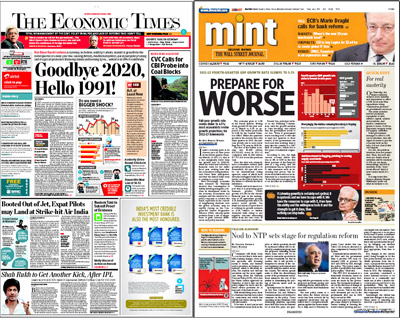
    The front pages of the business papers express shock. With reason. The 5.3 percent GDP growth rate for the fourth quarter of 2011-12 is the lowest since 2003 and the full-year growth of 2011-12 of 6.5% is lower than the 6.7% of 2008-09.


    So what does this mean for the media? Should we press the panic button? When asked whether the GDP growth numbers and the prevailing economic situation in the country will impact the media, Ashish Pherwani, Associate Director, Ernst & Young said: ” I think it’s normally the other way round. The media is at least one quarter ahead in terms of the impact. So it’s been a couple of quarters since media effective rate has been falling or has stayed flat, volume growth has also not been great. So that’s like an early warning signal which comes always a quarter before actual numbers start going down at a national level. To answer the question more specifically, media has already reacted to it so hopefully there won’t be any further reactions.”


    MxMIndia spoke to some mediapersons and economists for hints on the shape of things to come. While many are still hoping that it will not impact them, those who have experienced 2008-09 believe there is no need to panic as the government is now seized of the situation. Big ticket announcements will not get stalled, so if there’s a new show that is going to be announced on a GEC or a rejig expected on a channel or a newspaper, that will continue. And must continue.


    However, there will be caution everywhere. Media entities depending much on real estate and the financial sector need to be alert, but with the government sure to act to improve things, there is a feeling that the crunch (from the realty sector) will not last beyond six months as the government will prop it up.


    Meanwhile, the sentiments will indeed be weak. And marketers known to splurge will take a backseat as stakeholders will be more demanding.


  • Will marketers now woo KKR?


    By Tuhina Anand


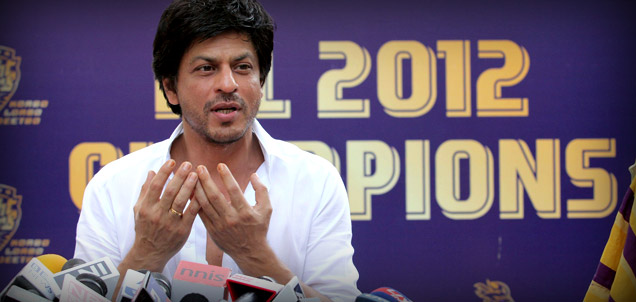
    They have pocketed the trophy, and as celebrations continue, one wonders if Kolkata Knight Riders’ (KKR) win will help them in upping their brand value. There is a direct relation with success in any sport and for a sportsperson, and how suddenly the sportsperson becomes the flavour of the season.


    Mind you, it’s just season, meaning a good series and one might bag few endorsements here and there, but offers from bigger brands don’t come pouring in unless you are the one on whom marketers can bet their monies for long-term. And in KKR’s win, the case gets even more complex as the players are completely overshadowed by the owner who is a super star, Shahrukh Khan. Though one might frown at his shenanigans, the truth is that people still like to know what SRK did when KKR won and not what Gautam Gambhir, Manoj Tiwary, Manvinder Bisla or Yusuf Pathan did as they lifted the trophy. Not to forget that co-owner Juhi Chawla too brings in a bit of star element to the show.
     

    Harish Bijoor

    Harish Bijoor, Brand expert & CEO, Harish Bijoor Consults Inc felt that from the lot, the one darling face that will emerge for endorsements will not be of any cricketer from KKR, not the team KKR, but the owner, Shahrukh Khan. He said: “I think this win and the subsequent hype and hoopla will benefit Shahrukh on the endorsement circuit for sure. It is a great boost at a much needed time for him. In many ways, in a completely diametrically opposite manner, what Satyamev Jayate is doing for Aamir Khan, IPL does for Shahrukh. Odious, but true!”


    Bijoor also pointed out that both SRK and Juhi Chawla will gain in terms of brand value, however the gain will be more for SRK than Juhi.


    However, Indranil Das Blah, Chief Operating Officer, Kwan Entertainment & Marketing Solutions has a different take on SRK and Juhi’s rise in brand value. His opinion is that it’s highly unlikely that both the owners would gain in terms of brand endorsements as he points that the triumph was on the pitch, and if anyone will see a rise in brand value, it will be the players, and not the team owners. Jagdeep Kapoor, MD, Samsika Marketing Consultants too agreed: “I don’t think the owners will gain as they are known for performances on screen and off-field. People who will benefit are those who have performed on field and off-screen.”

     

    Indranil Das Blah

    So who is the KKR player who will gain most after the win? Manish Porwal, Managing Director, Alchemist Talent Solutions rightly pointed that the KKR skipper Gautam Gambhir will be the winner here: “Gambhir has shown that he is consistent, delivers and is a leader. Having played on the national level, he already is a known name and with some murmur on him being seen as potential TeamI ndia captain, his brand value will definitely rise. Brands that have used Sachin Tendulkar and MS Dhoni in the past and want a younger icon, Gambhir fits the bill perfectly.”


    Mr Porwal also pointed that Gambhir does not have a flamboyant personality and has been fairly neutral in his approach which might be an added advantage for brands wanting to hook him.


    A similar view is voiced by Mr Blah: “The one player who will probably get quite a few new offers from marketers would be the KKR captain, Gautam Gambhir. Not only was he amongst the most successful batsman of the IPL and led from the front, but he also stood out as a captain. He is now being talked about as a future Indian captain and that is bound to have a positive impact on his brand value.”


    So while Gambhir emerges as a winner here, especially because of his personality traits like stability and performance, he could be a good catch for young MNCs or for financial and banking clients.


    However, brands will definitely fall for for KKR team members like Bisla who shone in the IPL. As far as other players are concerned, they may get a couple of regional or local endorsements but nothing on a national scale unless they are actively and constantly playing for the Indian team. “You need to be playing international cricket and be constantly in the media eye for a brand to want you as a brand ambassador; just performing in the IPL for two months out of 12 won’t result in endorsements. Examples from past IPLs include players like Swapnil Asnodakar and Paul Valthaty who performed brilliantly in the IPL but couldn’t sustain their forms and hence, didn’t get any endorsements,” added Mr Blah.


    But Mr Kapoor of Samsika has found another ace for marketers. He picks Sunil Narine and thinks that he would benefit from the win and from his excellent bowling performance and get endorsement offers as a thinking, clever, successful sportsman.


    While Mr Bijoor is not too optimistic about KKR future with marketers, he says that the problem with sports fervour and fever is that it is short-lived. Sporting success such as the one achieved by KKR diminishes very fast. With the next cricket tournament round the corner, everything will be forgotten rather swiftly, therefore the potential to leverage is really a mirage.Indiahas a surfeit of cricket as of now.

     

    Rahul Jauhari

    Some see rise in brand value for SRK or Juhi Chawla, others have pointed that Gambhir will gain the most, however, Rahul Jauhari, National Creative Director, Everest Brand Solutions has a slightly different take: “I have largely a pessimistic view on the rise in brand value for KKR team and its owners and its future with marketers. IPL is not the same as the World Cup, so the passions are divided and not national in its strength. Bisla should benefit post IPL, but I think it’s too early to say he can be the next darling for brand endorsements. The fan following post IPL is largely limited and regional. He could be rocking in Kolkata, but not in Chennai.”


    “Somewhere I feel the KKR win has been sadly overshadowed. It’s been played out as SRK win, not a KKR win, be it in terms of media bytes, attention or simply footage consumed. SRK’s brand value is already high. The IPL isn’t going to push it up. In a rather pessimistic view, I’d say the IPL has dented his image. I didn’t like the SRK I saw during this IPL. And a lot of people think the same way,” concluded Jauhari.


    However Mr Blah of Kwan feels that KKR has managed to establish itself as a successful brand.  He said: “Nothing succeeds like success. The team previously had all the trappings of a successful brand (star players, influential and high profile owners, a tremendous and diverse fan base and a plethora of sponsors). The main ingredient they were missing was success. Now they have that and it will have a direct and positive impact on how the team is perceived. As defending champions, they should be able to command a premium when they are out scouting for sponsors for IPL 6.”


    Mr Kapoor concluded: “KKR is a successful brand and would attract more advertisers. They can be a bigger brand if they show great performances on the field, rather than off the field.”


    Photograph: Fotocorp


  • Vehrnon Ibrahim moves on from Oye!

    By A Correspondent


    After a stint of a little more than two years with Oye! FM as the National Programming Head, Vehrnon Ibrahim has decided to call it quits. While his next destination is not known, it is more or less clear that Mr Ibrahim will continue in the radio industry.


    Although it is not known who would replace Mr Ibrahim as the National Programming Head, it is learnt that Mr Virag Mishra, the National Content Head at Oye! FM has taken over the mantle for now.


    Speaking to MxMIndia, Mr Ibrahim said: “I am leaving behind one of the best teams I have ever had. I know that Oye! FM will continue to grow from strength to strength and will one day be the number one FM radio station under the guidance of Virag Mishra, National Content Head. I wish them all the best for the future.”


    “I am looking forward to my new assignments in the radio field which is very exciting and challenging” he added.


    At Oye! FM Mr Ibrahim reported to Mr Joy Chakraborty, CEO, TV Today Network. His last working day at Oye! FM was on May 31. Prior to Oye! FM, Mr Ibrahim was the Vice President at Radio One for two years; before his stint at Radio One, Mr Ibrahim was the National Programming Director at Red FM where he worked for seven long years.


  • Comment: Jehangir Pocha on Media’s new Moguls

    By Invitation


    By Jehangir S Pocha


    Among all the transformations taking place in media, here’s the crucial one – the media baron is being replaced by the media conglomerate.


    Corporations are buying news properties once owned by individual proprietors at a rapid pace. Expectedly, media mavens and professionals are crowding conferences to express their angst: Are these oligarchs becoming media’s new moguls only to protect their empires and project their interests? Will they interfere every time a story is done on their favourite babu, minister or party?


    But this holier-than-thou approach that automatically assumes a media baron is better for journalism than a media conglomerate is as reactionary as it is wrong.


    A corporation owning a news property can be expected to slant or kill a story inimical to its core interests.  But those are few and far between.


    After all, how many core interests can a corporation have? On the other hand, many media barons have been notoriously whimsical, politicized, opinioned and ideological, slanting almost every story almost every day, and killing (or overlooking or underplaying) almost every story out of sync with their ideology, views or interests.


    In all democracies, the most slanted and ideological journalism has always been driven by media barons, from William Randolph Hearst, to Ramnath Goenka, Thaksin Shinawatra, Rupert Murdoch, Silvio Berlusconi, Michael Bloomberg and others.


    Their news properties have openly, sometimes shamelessly, displayed their biases.  Compare Murdoch’s Fox News with its corporate-owned competitors, NBC News (owned by General Electric), CBS (owned by Westinghouse), ABC (owned by Disney) and CNN (owned briefly by AOL). Which is most slanted? Which is most protective of vested interests? Which would any unbiased media professional rather work for?


    Yes, a media corporation might protect its pet politicians and restrain its news properties from covering its other businesses fairly. But many media barons do the same. Some appear to have more pet politicians than any corporation. In fact, often the “other business” of media barons is politics (consider Berlusconi, Thaksin, and Bloomberg).


    When it comes to coverage of oneself, it is India’s media barons who have constructed the self-serving maxim that “media mustn’t cover media”, leaving them free of all public scrutiny. That’s what’s allowed some of these tycoons to injure Indian media and dupe their viewer/reader by introducing poisonous practices like “paid news” and “private treaties”.


    It is highly unlikely that any media conglomerate would allow such practices precisely because of the fear of public scrutiny that publicly-listed and/or publicly known corporations naturally have. Companies run by professionals and overseen by a board of directors that includes independents and representatives from government-owned institutions are generally forced to put in place the systems and standards needed to run a business right.  Media barons exempt from oversight rarely do so.  This is why Murdoch’s newspapers spy on people and others don’t.


    This doesn’t mean concerns over how corporations will manage their new media enterprises can be ignored.


    As Indian media comes of age it must codify its journalistic standards and rigorously implement them through an independent body akin to Britain’s Media Standards Trust. Such a body should give India’s journalists protections, such as the legal right not to disclose a source, and freedom from prior restraint (attempts to prevent publishing/airing of an opinion/idea/story before it is published/aired).


    Every news organization must also be required to have an independent Ombudsman charged with ensuring fair and balanced coverage.  At the same time, this Ombudsman and/or the standards authority should also ensure journalists and news outfits respect the rights and reputations of others (anti-defamation), separate news from views, eschew ‘paid news’ and private treaties, protect national security, public order, and public health, and prevent incitement to hostility, violence or discrimination.


    Stringent regulations that prevent any monopolistic control of news are also essential to any democracy. To some extent, digital technologies and social media already ensure this. A smart line on Twitter or great video on YouTube can become more influential than an op-ed in the Times of India. But the government must still work to ensure there are enough voices in the media and that no one voice dominates the national discourse.


    Corporations enter (and sometimes dominate) the media business because it is highly capital-intensive. So, one effective way to maintain a plurality of views in news is to keep entry barriers and operating costs in the business low. For example, existing distortions in media policy, such as exorbitant “carriage fees” that benefit the well-heeled and hurt small news operations must be ended. Banks must be encouraged to lend to smaller media companies, capital requirements in the industry should be eased and more journalism schools built to develop a larger talent pool. Building stronger news-related services, like more text and video wire services, freelancer organizations, and shared news infrastructure, would also help newer and smaller players. Lastly, the government must pass laws to separate carriage from content, and control media cross-holdings.


    Ultimately, every kind of media owner – the government, individual, the public trust and the corporation – comes with pros and cons. India knows well the short-comings of the first three.  We will now discover the dangers of the fourth.  But as long as all four kinds of news organizations are allowed to exist and flourish – and are subjected to firm and fair regulation and oversight – the news media in India will remain strong and vibrant.


    Jehangir Pocha is CEO, INX News.

    The views expressed here are the writer’s and not necessarily those of MxMIndia.


  • Anil Thakraney: Er, any chance of endorsement deals for Anand?

    By Anil Thakraney


    The man has won the world chess championship title for the fifth time. And in my opinion, he’s now entitled to nothing less than the Bharat Ratna. (Sachin deserved what he got… a hot seat in the Parliament.) Also, Vishwanathan Anand is not just a regular world beater, he also happens to be a very nice, decent human being, who lives his life with great integrity and endearing simplicity. Doesn’t that sound like a good enough qualification for advertisers to be queuing up outside his Chennai house, armed with lucrative contracts?


    Now, I admit it is possible that Anand has done the odd brand deal in a very long and a very illustrious career. But usually he gets ignored, when even second rung cricketers like Kohli, the Pathan brothers and Rohit Sharma have been bagging loaded deals. Marketers would justify this by claiming that cricket is a passion inIndiaand chess is not. And that cricket is a spectator sport and chess is not. And I have no arguments with that per se.


    However, it is equally true that Anand would make for an ideal brand ambassador for certain types of products… brands that promise mental strength and stamina, and brands that target sophisticated audiences, the so-called ‘creamy layer’. And there are plenty of these in the market. Health drinks and foods. High-end watches. Luxury cars. Premium suiting. I could go on. And yet, these brands opt for either movie stars or cricketers, that too at a price far higher than what Anand might possibly charge.


    It gets more curious when you consider that casting Anand would help these brands smash the clutter. If Dhoni stands for 25 brands, he stands for nothing in my mind. I’d rather have Anand endorsing one, because he gives me the differentiation. Simple advertising logic.


    Here’s why I think Anand gets ignored, despite strong marketing rationale working in his favour: Our brand managers tend to be risk averse, and they usually try to play safe. Okay, let me put it impolitely: They want to cover their backsides by opting for the tried and tested Dhonis and SRKs of the world. So if things go wrong, the boss won’t blame the manager. These safe suits consider Anand to be a high risk proposition. Therefore in reality, the problem doesn’t lie with chess or with Anand, it lies in the heads of our brand managers.


    And I am hoping to see this change. At least this time. Fifth time world championship is simply superlative stuff.


    * * *


    PS: Very interesting. Ten ads that got theUKreally angry. Controversial ads that invited the most number of complaints. Methinks time has come to list down the top ten ads that got Indians really pissed off.


    Link: http://www.dailymail.co.uk/news/article-2151927/Ten-ads-mad-Nude-Sophie-Dahl-Pope-hard-hat–brought-complaints-50-years.html?ICO=most_read_module


  • Taproot’s ‘sexy’ humour for Fox Movies

    By A Correspondent


    The new campaign being aired for Fox Movies Premium, an Asian movie channel owned by Fox International Channel, subsidiary of News Corporation has created a lot of buzz. The campaign was created for the Thai market, and the film was shot inBangkokwith some lead actors from their TV industry.


    Santosh Padhi, Chief Creative Officer & Co-Founder TaprootIndiasaid: “The brief was very simple to communicate that Fox Channel now offers subtitle free movies, so the product promise is generic but the challenge was how to say it in a way that Fox Channel is on the top of the audiences’ mind. We thought whatever we say had to be entertaining in the first place, which is why one watches the movies, hence a humorous approach. And since it’s targeted for the Thai audience, the second challenge was a very distinctive humor as they are known for their mad humors. We decided to highlight the problem. The whole idea of the campaign or creative device is based on the behavior of the person who watches movies with subtitles.”


    Razneesh Ghai, film director, Asylum Films said: “The rampant usage of subtitles has taken away the cinematic experience of watching films. It has now become a habit to read the subtitles, taking your eyes off the action. We took this simple problem and highlighted it in a funny manner. The humour in the film is very subtle and not in your face. Also, there had to be a simple thread of communication to convey it to a global audience (since subtitles are everywhere!).”

    Manan Mehta, Managing Partner TaprootIndiasaid: “English language channels had struck a chord with the audience in non-English speaking markets due to subtitling. Of course, the next sphere of offering was the regional feed. This allowed the English channels to be relevant and come closer to their audience. Thus, this campaign was conceptualized with the brief of making the audience aware that Fox Channel is available inSouth East Asiain regional language.


    From January 1, Star Movies was rebranded Fox Movies Premium and was available inHong Kongand selected Southeast Asian countries. InIndia,China,Vietnam,Middle East,Taiwanand thePhilippines, the Star Movies brand will continue to be the same.


    TaprootIndiahas been handling Fox International Channel for theSouth East Asiamarket for last few years.


    CREDITS:
    Agency                                                            TaprootIndia

    Creative Director                                            Santosh Padhi, Agnello Dias
    Writer                                                              Santosh Padhi

    Account Servicing                                           Manan Mehta

    Director                                                           Razneesh Ghai ( Razy )

    Producer                                                          Anju Vaswani

    Associate Producer                                         Bhavna Singh

    Editor                                                              Jay Chandran

    Sound Design                                                  Joseph George


    THAI CREW

    Line ProducerThailand( Picnic Features)     Kornpanote Semros

    Director of Photography                                  Sinthop Sophon

    Art Director                                                    Achira Nokthet