Blog

  • From Cricket to Prime, Neo takes a spin

    By A Correspondent


    It was cricket – in the form of the Indian Premier League – that made the most noise amongst all other sports that were being aired on sports channels in India during April-May. But the tide has now turned and has switched partners in the form of Neo Prime, which may now be leading the viewership race by not airing cricket but three different live action sports in India – Azlan Shah Hockey, French Open and Euro Cup (starting next week). For those unaware, Neo Prime is the rechristened channel from Nimbus which earlier went by the name Neo Cricket.


    While most broadcast networks have been contemplating launching a channel solely for airing cricket, it is surprising to see Neo take a turn on the same. Then of course, there was the ugly episode that saw the channel losing its rights to host India matches. Explaining the rationale, Prasana Krishnan, COO, Neo Sports said, “We were one of the first channels to go in for cricket and are probably the first one to be going away from it. When we had the BCCI rights, it made sense for us to do that as you had a lot of domestic cricket that was available; there were a number of days that were available at our end. So we kept the channel for the volume of the game that was available with us. But then it is also about reacting and responding to the change. Though we have lost the BCCI rights, we will continue to take part in the bidding process for other cricketing properties as and when the opportunity arrives. As of now, we have our hands full with a lot of live actions sports and are the only channel that has so much on its plate currently.”


    In fact the network carried out a vital evaluation exercise months ago before it decided to go in for the change. And it had some interesting facets to throw up apart from just cricket. Explained Mr Krishnan: “The basis for our evaluation was that we have five other sports apart from cricket – tennis, football, golf, badminton and hockey, and what really happens is live sports is played mostly during weekends where you have multiple sports being aired simultaneously. So we were faced with the problem of having more than one event at the same time and therefore airing a certain sport and not being able to relay the others. If you look at the sports being aired right now on our channels, one channel is showing Sultan Azlan Shah Hockey while the other is showing French Open tennis. And next week, we will have French Open and the Euro Cup on at the same time. So the scheduling conflict is a constant problem that arises at our end and our effort has been to maximise and ensure that maximum events are being made available to customers as possible.”


    In fact, according to Mr Krishnan, the same pattern was observed in other networks as well where they had scheduling clashes. “What was happening for us was that we were playing hockey and other sports on the cricket channel, which really didn’t make sense. So in that sense, Neo Prime would be more generic and would be playing different genre sports and not just cricket.”


    In fact there was another motive for the channel to contemplate the move. Explains Mr Krishnan: “What we are also doing is that all the content that is being produced is likely to switch towards HD mode sooner or later. Those are the kind of properties we plan to put on Neo Prime. Over the next few months, once we are comfortable with the working of the content, we will also provide a HD feed of the channel. So it is a HD-ready channel that is focussed and programmed in a manner that it is ready to relay action as it happens.”


    When asked on soft stance taken by the channel to communicate the change, Mr Krishnan said: “It’s not that we are going soft with the new change or anything, it’s just that we got approval from the Ministry for the change only on June 1, 2012. So the action and communication will take place over the next few days. Anyways, it’s not as big a news for us as currently all live sports action is happening on my channel be it French Open, Azlan Shah Hockey or Euro Football starting next week. So the idea was to time it with the best of sports action and combine that with a good campaign.”


    Advertisers have been advised of the change and so far the response has been positive. But the channel is not looking at that and has some big plans up its sleeve for the coming months. And yes, it would do so without banking on popular sport – cricket. Affirmed Mr Krishnan: “The change has been communicated to the advertisers and they have been reacting positively to it. But one must understand that it is the property that the brand gets interested in and if they appeal to them then they will obviously come on board to partner the event. And I am proud to state that in the January to March quarter, our network was ranked second by TAM in terms of viewership and that for the April to June quarter, we would easily be the No 1 network for sports in India going by the amount of live properties that we have on our hand right now.”


    It may just be the perfect start that the network is looking for by making a rousing comeback with its many live events. After all, as the saying goes: the past is well forgotten but the future is what you make of it.


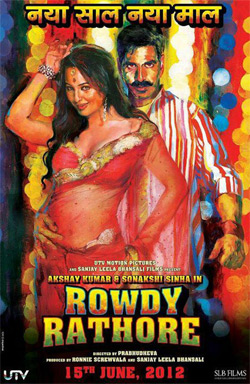
  • Reviewing the Reviews: Rowdy Rathore

    By Deepa Gahlot


    Producer: Ronnie Screwvala, Sanjay Leela Bhansali

    Director: Prabhudheva

    Music: Sajid-Wajid

    Cast: Akshay Kumar, Sonakshi Sinha, others


    These days, most critics have nothing against mainstream cinema. But Rowdy Rathore is the kind of film that has the mildest of then gnashing their teeth in frustration, because the success of such a bad and old-fashioned film is inevitable.


    The masses want mindless entertainment even today, they don’t care how loud, crass or silly the film is; does it give them their money’s worth?  For the non-massy types, such films are a kind of guilty pleasure.  What shocked most is that Sanjay Leela Bhansali is partly responsible for unleashing this on the public.


    Except for Taran Adarsh’s 4 and The Times of India’s now-standard 3 stars, everybody else tossed between 1 and 2. Writes Adarsh, with an eye firmly on the ticket windows of single screen cinemas. “On the whole, Rowdy Rathore, is designed to magnetize the masses in hordes. The accurate blend of action, emotions, drama and humor, besides a superlative performance by Akshay Kumar, makes this motion picture an immensely pleasurable and delightful movie watching experience. If you savour typical masaledaar fares, this one should be on your have-to-watch listing for certain. Dhamaal entertainer!”


    Srijana Mitra Das of the TOI gushes, “Indeed, Rowdy Rathore pays homage to iconic filmi characters – identical heroes, golden-hearted chors, brave Men in Brown beating evil people to pulp. However, it pays most homage to its own star, Akshay Kumar, who pulls off Shiva with style but Vikram less so, possibly because all that violence overwhelms acting itself. Not that the crowd seemed to mind. As Shiva exhorts a woman raped by Baapji’s son to beat him up, the girl next to me cried, “Why doesn’t she?” Her neighbour replied, “She will.” And she did – much to the crowd’s Rowdy delight.”


    Saibal Chatterjee of NDTV gave it 2 stars and commented, “Rowdy Rathore is a shrill action flick designed to help Akshay Kumar return to his hit-making ways. Accept that obvious intent and you might actually end up enjoying certain parts of the film against your own better counsel. Isn’t that the effect that many a Bollywood potboiler of the 1980s would have on us? Yes, Rowdy Rathore employs narrative elements that hark back to a bygone era of Bollywood potboilers: two men who look like each other without any apparent reason, a bunch of baddies that snarl and snap at the slightest provocation and indulge in rape and pillage with abandon, and the good old back-from-the-dead revenge seeker who goes back dispensing rough-and-ready justice.”


    Two stars from Raja Sen of rediff.com.”Inured to the kind of exploding-beedi violence promised by the trailer, the film instead starts stupid and stays silly. This is much more like an early Khiladi movie — where Kumar recklessly got away with anything, goofily stumbled towards the climax and then proceeded to kick bottom without mercy — than any of the recent films which have completely forsaken plot. As a result, it’s far less objectionable. Still moronically stupid and entirely pointless, but nowhere near as horrid as what the genre’s been reduced to in the last couple of years.”


    Shubhra Gupta goes with 2 stars as well, “We don’t have to be told that this is a remake of a Telugu film. It could have been in mainstream Tamil or Kannada. Because whether it is Priydarshan or Prabhudeva (who has directed this one), the film is bound to have South Indian actors trying to pass off as North Indian. Fictional towns which look as if they’ve been created on a set. Blinding colours. Songs at the drop of a hat. Dialogues which don’t go beyond a line. Or two. And a leading lady whose job description is, apart from possessing a swaying ‘kamariya’.. um, let me think about it.”


    Now come the one star rants. Anupama Chopra writes, “Don’t Angry Me! Akshay Kumar bellows this often in Rowdy Rathore. At one point, the command even plays out as background music. I think viewers need to co-opt the line. To all the directors, producers, actors who are inflicting eighties-style, low-IQ, deafeningly loud, unapologetically crass, mind-numbing movies on us, I just want to say: Don’t angry me! Don’t exhaust me! Don’t bludgeon me!”


    Rajeev Masand comments, “Rowdy Rathore is the kind of movie that’s made by people with a cash register in place of their brain. Because no legitimate reason, other than financial gain, can justify why this movie was made – it has no story or plot whatsoever, the characters are entirely forgettable, and it’s so long and loud and silly that the laughs dry up early on. That the film has such impressive pedigree – it’s produced by Sanjay Leela Bhansali, directed by Prabhudeva, and stars Akshay Kumar – is both baffling and shameful.”


  • TAM to cross 10,000 Peoplemeter mark soon

    By Meghna Sharma


    In a country like India with numerous channels on air and where television watching is an obsession, it is vital for broadcasters and advertisers to know how well the channels and the various programmes on them fare. TAM, a joint venture between AC Nielson Research Services (Nielsen Company) & Kantar Market Research, was mandated by the broadcast and advertising industry to do exactly that. Over the last decade-and-a-half, TAM has been optimizing coverage of the growing TV audience across the country by increasing breadth (expanding to cover larger number of new markets) and depth (enable deeper level of analysis in existing data markets).


    By the year end, the TAM Media Research plans to increase its sample size by nearly 2000 households. The present expansion is in alignment with the above thought process and is an attempt to bring insights on audience engagement with TV Content. “The current Indian broadcast landscape is dotted with some very different and complex influencing factors like the need to dive deep into untapped semi-urban/rural markets and the upcoming mandate of digitization,” says LV Krishnan, CEO, TAM Media Research.


    He adds, “With digitization, we are already seeing increase in not only the channels entering the distribution pipe but also audiences trailing more content across newer genre of channels. As the long tail of unique content channels explode in 100% digital markets (Phase I being the Metros), TAM will be enhancing the sample size in these digital markets (Metros) to throw more light into audience consumption of these unique content channels. This enhancement will benefit micro targeting of viewer groups for not only broadcasters with their content but also advertisers interested in specific audience groups for their brand communication.”


    Keeping this in mind, TAM will be taking a few steps. The first initiative being taken is to increase the panel size in Mumbai, Delhi, Kolkata, Chennai, Bengaluru and Hyderabad totalling 650 homes. This will increase the SEC AB sample size in these metros by around 60%. All additional 650 homes will be recruited among C&S SEC AB homes.


    But that’s not all. As part of the initiative, TAM will expand in the less than class I India markets too. In the annual January 2012 establish report, the fastest growth for digital TV platform continued to be from less than Class I towns (with population of less than one lakh) and semi-rural markets in the Hindi belt markets. “This affirmed our hunch of the need to beef up representation in the semi-rural markets. Since 2009, we have been covering Maharashtra in the ‘Less than Class I’ geographic stratum. To this stratum, we are now adding seven more states: Gujarat, Madhya Pradesh, Punjab, Haryana, Himachal Pradesh, Rajasthan and UP. These will be reported as individual states except for Punjab, Haryana, Himachal Pradesh which will, as usual, be reported together as PHCHP,” adds Mr Krishnan. The increasing the sampling across these five new markets will be 1110.


    With this expansion, TAM will practically complete covering the entire urban stratum for the Hindi Speaking Market group. This also means that TAM will now cross the 10,000 Peoplemeter deployment mark and will be add 63 more towns to the existing base number of (162) sample towns with this expansion. Now, it will cover 225 towns.


    However, there are some who feel that an increase of a sample size of 2000 is not enough. “From the current sample size of around 8000, an increase of around 2000 more does brings up the number, but considering the size of the country it’s not an ideal number to know the ‘correct’ pulse of the viewers,” feels Anamika Mehta, COO, Lodestar UM.


    Agreeing with her, Tarun Katial, CEO, Reliance Broadcast Network Ltd., adds, “With the current sample size, it is very difficult to map the evolving choice of consumers. And right now TAM does not represent the digitalized packages. Therefore, until and unless it is done universally it won’t be able to ‘help’ like it should be. I would want TAM to look at their international counterparts to learn from them how they tackle the issues.”


    Even Sunil Lulla, MD and CEO at Times Television Network believes it’s high time that TAM woke up and smelled the coffee. “We are delighted that finally the industry pressure has worked. Many broadcasters, including us, have been telling TAM about various issues which affect our rating process. So, we hope that this increase in sample size, though small but relevant, will benefit and mark a beginning of improvement and swift growth of the system.”


    There are many who feel that the move by the TV audience measuring firm should be welcomed and shouldn’t be criticized. “We should understand what a tedious process it is. And over the years, TAM has been working to help the industry. TAM has been working with the over 8000 sample size for years now, so we should give them credit for increasing it. This move will not only increase the household numbers but also increase the cities which will make the sample more robust,” points out Anilkumar Sathiraju, Mudra Max Media, Head – South. As proposed, TAM has started preparing to implement both the initiatives in the full swing. Both the data cuts are targeted to be made available starting January 2013.


    Mr Sathiraju adds, “However, there is no denying the fact that over 10,000 sample size for a country with over one billion population isn’t correct. And I hope and wish that this will lead to a quicker growth in the next level of the phase. It is a challenge and hopefully won’t take years.”


    Mr Krishnan is of the view that the measures initiated will benefit broadcast. “Over the last three years, in our annual baseline (Establishment) study we conduct and release in Week 1 of January, we are witnessing a tremendous growth of Cable & Satellite TV and Digital TV platform penetration. This growth is fuelled by the growing aspiration to engage in multiple Content – Entertainment & Information, that these platforms are providing on a simple TV screen. In the Jan 2012 report, the fastest growth for Digital TV platform has come from less than Class I towns (with population of less than 100,000) and Semi Rural markets in the Hindi belt markets. Once access and engagement with multiple content happens, it is pertinent to measure the behaviour to help broadcasters, in particular, the regional language broadcasters for aligning content to these audiences. It also satisfies advertisers and nedia agencies needs as their need to target brand communications to consumers in these markets become a reality. Also, these new markets from TAM will give you a closer picture to the Rural India’s TV consumption habits in the Hindi heartland.”


    Meanwhile, with the imminent digitization in the four Metros, Mr Krishnan explains that in a market in Mumbai and  Delhi, with already 25% of the TAM panel and market digitized, his team and he are seeing new patterns of viewing settling in. “More viewers are glued to genres of their choice and landing straight on their favourite stations. Time spent with TV and within specific genres are increasing too. This will mean that there is enough scope for more channels to either get launched within the existing genres or new genres with Unique Content will launched soon in the new 100% digital era (given that creating access to the Content will be easy!). Tier packages will get formed and purchased by the potential viewers, thus sub-segmenting the audiences into more fractions! To capture these new behaviour trends, TAM is increasing the metro samples by almost 60% and in markets like Mumbai and Delhi, TAM is almost doubling the sample!! This will help broadcasters and bdvertisers to not only understand audience content consumption patterns but also target their programming and brand communications very well.”


    So what next? The preparation to implement both the initiatives is in “full swing”. Both data cuts will be made available starting January 2013.Also, with an eye to aid the understanding of the digitization progress, TAM has initiated The TAM DASES (DAS Estimation Study) : A study focused on the Phase 1 markets (as notified by the I&B Ministry for DAS implementation). Wait for it!


  • AIM’s Magazine Engagement Study wins big at FIPP Research Awards

    By A Correspondent


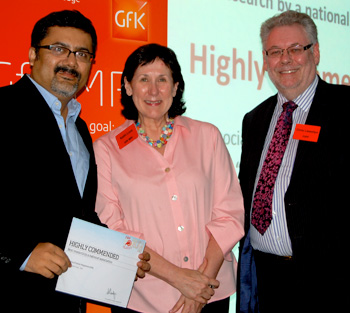
    The Engagement Study by the Association of Indian Magazines (AIM), the apex association of the Indian magazine trade, has won the Highly Commended Award for Best Research By Any National Association at the FIPP Research Awards 2012. In a ceremony that took place in London, on May 29, AIM was presented the citation by Chris Llewellyn, President and CEO of FIPP and Kathi Love, President and CEO of US market research company GfK MRI, the sponsors of the Awards dinner. The overall winner for the category was the entry by the Spanish Association.


    Commenting on why the survey received a Highly Commended Award, Mr Llewellyn said “The Research Award judges were impressed by the insights provided by the survey, and the technical excellence of its methodology. The survey has demonstrated the key underlying strengths of the magazine medium, strengths which explain why magazines are such an effective medium for advertisers. The judges felt that the survey deserved the international recognition it is receiving.”


    Meanwhile, it is learnt that information from the Engagement Study has been included in the forthcoming book ‘Proof of Performance: The Case for Magazine Media’, and an action code in the book will enable readers to play the video on their smartphones. The book is authored by Guy Consterdine, Research Consultant to FIPP.


  • Paresh Chaudhry joins Madison PR as CEO, Veena Gidwani to retire

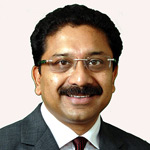
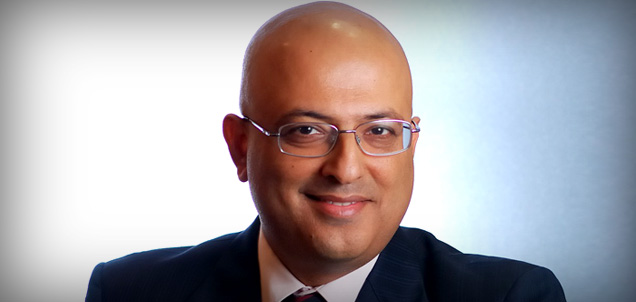
    Paresh Chaudhry

    By A Correspondent


    Madison PR has appointed Paresh Chaudhry as its CEO, who will be based in Mumbai. Veena Gidwani, current CEO of Madison PR will retire on June 30, 2012.


    Mr Chaudhry has over 24 years of Brand Communication and Reputation Management experience across industries and key global markets. He has been a business communication professional with Reliance Industries, Hindustan Unilever, Ranbaxy and Wockhardt. His last assignment was as Group President-Corporate Communications, Reliance Industries, reporting to Mukesh Ambani. Prior to Reliance, he was Head of Communications at HUL and Communications Leader, Unilever South Asia.


    Veena Gidwani

    From building the Corporate Brand of Ranbaxy in N America, Europe and India, to aligning regional communication country teams to bring alive “the transition to one Unilever brand” and driving the Corporate name change from “HLL” to “HUL”, to putting together systems and processes for effective global (internal & external) communications at RIL, Mr Chaudhry has experience and expertise in all areas of Corporate Communications.


    An MBA (Marketing) with a Public affairs diploma from Hong Kong University, he is the founder President of the Indian Forum Of Corporate Communicators (IFCC).


    Sam Balsara, Chairman and Managing Director, Madison World, added, “I am delighted to have Paresh join us. His cross client category and cross country experience should help him add great value to our FMCG clients. Veena has done a wonderful job in building Madison PR into a specialist Brand PR consultancy and meeting the professional needs of our over 40 clients in Mumbai, Delhi, Bangalore and Pune and I wish her a very happy and fulfilling life ahead”.


    On his joining Madison, Mr Chaudhry said, “I am delighted with the opportunity to work with Madison PR, that has carved out a distinct and distinguished niche within the industry and is known for its strong values and relationships with some of the best known companies in Corporate India. I look forward to working with Sam and his team of professionals to take Madison PR to the next level.”


  • Creative agencies have allowed themselves to be dumbed down: Vikram Sakhuja


    By Anil Thakraney


    Vikram Sakhuja heads GroupM, India’s largest media buying conglomerate. In a long and animated discussion, the ace number cruncher shares with us insights from the Indian media industry. As well as his own organization’s approach to the various challenges staring at the media business.


    Fifty-year-old Sakhuja is an IIT/IIM grad, and he did a number of years in marketing before he shifted to the world of media in 2001, when he signed up as Managing Director of Mindshare Fulcrum. During our meet, I could see that the outspoken GroupM boss is extremely passionate about his work, and is someone who could get easily agitated over provocative questions. Thankfully, we had a smooth run. Guess it’s all thanks to Yoga which Sakhuja has recently taken up. 🙂


    You were a hard-core marketing man at one point. What prompted the switch to media?

    I believe in taking the career as it goes, and taking decisions at different points of time. Let me take you through my career graph to explain this. After IIM, Calcutta, I was pretty clear I wanted to get into the marketing side of things. So I joined P&G and did eight years there. When I joined them, Richardson Hindustan Limited (RHL) was becoming Procter & Gamble (P&G). So when I started out, the company had RHL values and very quickly the organization got Procterised.


    And you were not happy with that?

    I was happy with that, but Procter believed in the system of specialization. So the guy who gets into sales, stays in sales. The guy who gets into advertising, sticks to advertising. I was in research and they extended that to marketing services. I learnt a lot there, but later on I wanted to move to brand management and P&G wasn’t allowing me that. And I didn’t want my epitaph to read ‘Marketing Researcher’. So I moved to Coca-Cola which was more flexible in these areas. Out there I managed the entire brand portfolio. That worked very well for 5 years. I was reporting to Sanjeev Gupta in those days, and he was handling both, marketing and bottling. And later he went on to take up a bigger job. So they got Shripad (Nadkarni) to head marketing, and I felt my job would get undermined a little bit. And so I left to join Star TV.


    And you lasted there for just one year.

    It was a mistake. I call it jawaani ki bhool. Peter (Mukerjea) said they wanted to start a strategic marketing function there, and it would include marketing of the creative product as well as on-air marketing, which is where the bulk of the spending goes. But it didn’t pan out like that because the programming department had a territorial interest in the programming piece. So it became very clear to me this was going to be an off-air game, and that didn’t have too many legs. And I left Star without a job. Later, Ranjan Kapur introduced me to Andre Nair (this is year 2001) who was looking for people to start Mindshare in India. We had a drink and one thing led to another. I felt a little trepidation in the beginning because I perceived ad agencies to be a little unprofessional. But later I thought about it rationally and it made sense. And so here I am.


    There are large media shops under the GroupM umbrella. How do you manage to give personal attention to each one?

    I am running GroupM, I am not running Mindshare or Maxus. There are capable people running those. I am a management by objectives kind of a person. One aspect of my deliverable is Profit & Loss, there’s no getting away from it. I have told my guys we should get growth from our existing clients. We should have the source credibility to go to them and manage 100% of their marketing investments. That is the agenda I drive. Then, I have to create an eco system for technology, talent and on how to do things better. The scope of service has actually dumbed down, clients are paying peanuts and they are getting monkeys. So I go and tell my clients if they want the right kind of talent and want to get the value out of it, then this is how it works.


    I suppose you operate more as a coach than as a player.

    Do I meet clients? Yes, I do. Am I directly involved in the day to day plans? No, I am not. Unilever is our biggest client. So every year at least one or two deals I will sit in on. Also for other clients. I love to be there for the sheer passion of it.


    What is Sir Martin Sorrell’s brief to you?

    Martin is pretty hands-on in most of the businesses. I rely on him more for counsel. I whet my new plans with him. For example, I went to him with the idea of celeb endorsements. And he felt it wouldn’t work, but asked us to try it anyway. And it didn’t work. Then there was a time we were offered some sweat equity in the IPL Deccan Chargers team. I took it up to Martin and he didn’t think it was a good idea, because he didn’t know the nature of the animal. But he’s brilliant, he is one of the few guys who understands our business, he wants to get in deeper.


    What is your stand on the shift from the commission system to the fixed fee system for media agencies?

    I definitely support the fee system. Though I would prefer a balance of commission and fee. Because in a growing economy you win with commissions. But when spends are not looking good at all, as is the case this year, fee bails you out. In principle, however, I like the fee system.


    How are the clients reacting to it?

    The people who take their marketing seriously believe in the fee system in letter and spirit. The top notch companies like Unilever, Ford, Pepsi, etc, totally get this. I believe clients should pay us Cost + for service, and a factor of that for the value we are able to demonstrate.


    What qualities do you look for in a media buyer in today’s time?

    You must understand that in our organization we don’t just buy media. I would like to believe that our agencies are actually driving the marketing agenda, probably more than the creative agencies. Most of the creative agencies have allowed themselves to be dumbed down, most of them are only interpreting briefs in a TV commercial format. They are only driven by the tactical creative idea rather than a long term view of the brand. All these wonderful creative minds should spend a little time thinking brand stewardship. Out here, we want people who can think account planning and communications. People who can understand the brand, the consumer, and then have the ability to unlock all the media solutions. So the media person needs to understand content, activation, digital, conventional media, and then he has to see how all this comes together.


    Key challenges ahead for media agencies?

    The clichéd one of course is that the commissions we earn are not allowing us to invest in the best talent. But we have to all individually work ourselves, show value and then ask for stuff. The other challenge is in the digital space. The erstwhile DNA of the media companies excluded digital. I believe integrated media planning is the way to go. This is distinct from multimedia planning, which had the TV plan, print plan, radio plan, etc, all working in silos. But with the increasingly multi media environment, the key is integrated planning. And digital is allowing that seamlessness even more. We have embraced this some time back.


    And yet, the media buying business, after the unbundling, has got totally commoditized. Shashi Sinha said to me the media planner has become a zombie.

    I was the first guy to bring the AOR into the country. So you can blame me for the disintegration of the full service agency. (Laughs) I would say each of our agencies has its own planning way. Maxus has something called ‘Relationship Media’, MEC has got ‘Navigator’, and so on. Each of them talks the consumer journey. They talk much more about the communication challenge. I am actually finding the plans looking more different now than they were earlier. So I disagree with my dear friend Shashi Sinha. Maybe I am not cynical. The planner is alive and kicking. It’s in fact the most exciting time to be in the media because of the large amount of fragmentation and the large amount of media choices.


    You did a stint with television. Do you foresee threats to this medium in the near future?

    Yes. The problem with TV today is that it has become a media game of the value of the inventory. At the end of the day, there are only about four million commercial GRPs being broadcast every year at an all India level. And that’s growing at 2 or 3% per year. This is the market for TV eyeballs. So like it or not, you have to extract value out of this. Today, at last count, we have 500 or 600 channels, and it’s getting fragmented. If an Imagine TV dies, someone else will pick up ratings. And if someone else launches, there’s further fragmentation. So the problem is that the same money is chasing some eyeballs. Until the new ratings system comes up and there’s a tectonic shift, you are talking about a metastable equilibrium. Now if the value has to go up, either you have to deliver more reach, or you have to deliver some associated imagery or sponsorships or incremental value.


    When do you expect the shake-out to happen in television?

    We’ve been expecting a shake-out since 1996. I guess some people seem to be having deeper pockets. I am not a finance guy so I don’t know how it works. But I can’t imagine many of them are making money.


    Think the IPL is losing some of its sheen?

    No. The ratings this year were a tad higher than the last year. But for all practical purposes, have held on to last year’s levels. It has stabilized at about 5 rating points. In fact, this year was the best year primarily because of the games, which went down to the wire.


    And it’s a good investment for team owners?

    For them it’s going to be a slow burn. You have do it sensibly, like the KKR franchise does, and I think they make money. Whereas a large number of other people don’t make money. It’s about how you manage the entire franchise.


    There’s a perception that you guys are not passing on bulk rates you get from the media to your clients.

    We have something called the WPP Compliance. And we take it very, very seriously. So we are making sure that we do everything as per our contract with each client. In letter and spirit. We are definitely not holding back anything which is due to a client. We have a media owner invoice and it’s backed by an agency invoice. If the clients want to audit us, they are most welcome to do so. We are a global leader in this space doing global deals, we won’t mess around with something where there’s a breach of trust involved. We can’t afford that.


    Perhaps this was one of the reasons Reckitt Benckiser came up with the idea of agencies paying to pitch, and compensating them in case of a drop in ratings.

    They invited us to pitch and we asked them if they were being ridiculous. We turned them down. If somebody has an obscene point of view, I cannot subscribe to it.


    And yet, some agencies pitched for that account. Isn’t the industry united in these things?

    I thought we were united on that but obviously we weren’t. What do I say now?


    You’ve done many years in this business. Ever thought of starting out on your own?

    The thought has crossed my mind but I didn’t pursue it. I am not a very entrepreneurial guy. My philosophy is: Don’t fix it unless it’s broken.


    Does the lack of adequate talent in the media industry frustrate you? Is it a constant battle to find the right people?

    Yes, it is. But we have to be able to pay right to get the right talent. And for that we have to work our own internal financial structures. The level at which we work, there’s only so much we can afford to pay people at the entry level.


    Is there corruption in this business? There are allegations of planners taking money and other favours.

    One hears about these things from time to time. There is an opportunity for something like this, and clearly we have to plug it. This is where I believe organization culture is very important. If conversations in an organization involving integrity are strong, then the one or two people who entertain these thoughts will find themselves in a very uncomfortable situation.


    Have you ever fired people from your company because of this?

    Oh yes, I have.


    I saw a Youtube video of yours where you mention something about getting stressed out at work.

    I tend to be very animated and passionate, and I do get worked up. But I have been doing Yoga and stuff like that. And that’s helped. I have also started taking it a bit easier now, we have a good team. And at the end of the day, tension lene ka nahin, dene ka! (Laughs.)



  • AdStrat – Nescafe Cold Coffee

    Haresh Nayak, Managing Director, Posterscope Group India

    1. Name of the Campaign

    Nescafe Cold Coffee Campaign


    2. The Brief

    The Task was to give Nescafe outdoor a new and fresh look for the summers keeping in mind the existing Cold Coffee TVC on air.


    3. The thought process behind the creative

    With Deepika Padukone as brand ambassador of Nescafe the outdoor campaign was an attempt to highlight the COLD aspect of Nescafe. The creative were fresh and bright blue in color connoting Cold. It highlights Deepika Padukone with an appetizing glass of cold coffee with a clear cut message “Enjoy Nescafe Cold Coffee”. The idea was also to link it with our existing Nescafe cold coffee TVC that was on air in which Deepika does a jig and shakes it and makes her cold coffee.


    4. Media vehicles chosen

    Outdoor


    5. Key issues kept in mind while executing the ad

    The messaging had to be very direct. The whole layout should give a cold effect. It should be on the lines of the existing Nescafe TVC.


    6. Does the treatment do justice to the brief?

    Yes, it does


    7. What according to you is the differentiating factor about the ad?

    The messaging was very direct so one glance would make the viewer recall the Nescafe TVC and also it would work in isolation if he has not seen it.


    8. Market and client feedback

    Nestle was quiet happy with the outdoors as they were eyecatchy and the messaging was very direct.


    Compiled by Shubhangi Mehta


  • Mouthshut.com to turn a buyer’sguide

    By Robin Thomas


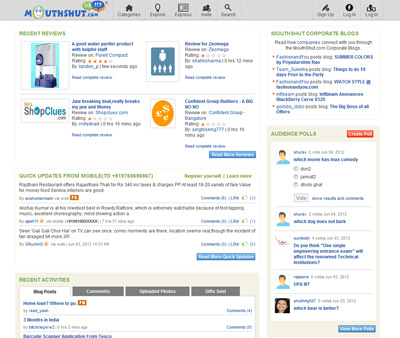
    Popular consumer review website MouthShut.com is set to shift from being a reviews-only site to a buyer’s guide. This transition is scheduled to take place within a fortnight.


    In its new role, MouthShut will position itself as a company that helps consumers decide which product they want to buy from a host of product categories — ranging from cars, bikes, cellphones and so on. Restaurants and hotels will also be part of the buyer’s guide enabling users to know the type of cuisine available, phone numbers and addresses for deliveries and so on. Moreover, MouthShut will constantly add newer categories on its portal after every few weeks.


    Speaking to MxMIndia about the transition to a consumer buying guide, Faisal Farooqui, CEO, Mouthshut.com said, “We realized that a transition from a reviews-only site to buying guide is more important today because the consumer needs are changing fast as they no longer use the internet just for emails and chats but, also for buying. As e-commerce is growing robustly in India, people are getting more comfortable buying products online. Thus we decided that we need to provide consumers not just reviews but also help or guide them buy products.”


    Mouthshut.com will partner car dealers and manufacturers and allow for registering for test drives. In fact it has tied with Maruti and General Motors already.


    The transformation to a users buying guide will also mean revamping the Mouthshut.com website, which will take place along with the roll-out. Also on the anvil is a mobile version of the site.  “The mobile experience will be totally customized for mobile users and while the look-and-feel will be different, the content will of course be the same” said Mr Farooqui.


  • Maatra to be rebranded Gutenberg Networks India

    By Ravi Balakrishnan


    Following close on the heels of shopper marketing specialist TracyLocke and brand consultancy Interbrand, a third specialised offering from the Omnicom group comes to India via DDB Mudra – Gutenberg Networks. Maatra, a company that exists within DDB Mudra will be rebranded Gutenberg Networks India.


    According to Madhukar Kamath, group CEO and managing director, DDB Mudra Group, Maatra is the first attempt by an Indian marketing communications group to hive off the functions usually performed by an in-house studio into a separate successful brand.


    Its offering includes premedia services, translation, website localisation and film adaptation. Maatra’s offerings sync well with those of Gutenberg Networks, which has 1,200 employees globally and counts Philips, Pepsico Tropicana and Volkswagen among its clients.


    Source:The Economic Times

    Copyright © 2012, Bennett, Coleman & Co. Ltd. All Rights Reserved


  • Marketers are targeting women in more and different ways: Lynn de Souza

    By Ritu Midha


    It is an oft-mentioned fact that Indian women have taken a generation’s leap, and are making steady strides towards exploring their full potential. This, indeed holds more true of the urban woman than her rural counterpart – and here too her ambitions and aspirations differ from one social strata to another, Nonetheless, evolved she has.


    In this interview with MxMIndia Diva Upclose, Lynn de Souza, Chairman and CEO, Lintas Media Group, a woman of great substance, reflects on the Indian women of today, her changing role in the society, and also the women power in media industry.


    In your view, how are women defining the new Indian marketplace today?

    Women, today, are playing a much bigger role in consumption of products of all kinds be it services, durables, etc than they were doing maybe twenty years ago. They are involved in purchase decisions which require large investments that may include purchase of a house or even a car. Certainly, when it comes to decision regarding durables in the kitchen, and home furnishings etc, women were always at the forefront of decision making and the same was the approach in case of consumer bill items like food. But when it comes to things like financial investments like higher education of children, these were not under her domain earlier. But research shows that a woman today is an important decision maker, an important influencer – and in many cases actual user in these categories and more. And most marketers are, of course, aware of it.


    Would you say she is evolving at a much faster pace than her counterpart, man?

    The progress that women have made is phenomenal. To give credit to women all over the world, and specifically women in India, they have made progress against all odds. It is not easy in a society where women were not treated on equal footing with men, to come out and perform so well. One expects them to shine in a few sectors, for instance soft ones like nursing, education and services. But in hardnosed professions like politics and finance, it is laudable to see women being there right at the top. It has a lot to do with the education system as well. How much ever we may decry it but women have benefited from it. It also has got a lot to do with the way men have changed in the way they encourage and support women in their career progression. Overall health and growth of economy too has enabled women to come out of the house and still perform.


    However, our sisters in rural areas still have a long way to go. There is a huge dichotomy – I have seen women sarpanches in some village panchayats doing fantastically well but then there are villages where women and the girl child are still ill-treated. Even in some pockets of urban India, one gets to witness ill treatment of women and the girl child. However, if one looks at a larger picture, women today are in a much better situation.


    Have the marketers taken note of the evolution, and, are they able to keep pace with this evolving consumer?

    Marketers are now targeting more and more women and in different ways. About twenty years back, it was the FMCG companies that targeted women by primarily using women’s magazines and the general interest television, largely soaps. However, more and more products are being launched today that target women, including from sectors such as finance, insurance, educational (for children), two-wheelers, consumer durables, etc. One can even see marketers broad-basing not only their targeting, but also the kind of media they use to communicate to these women.


    I recall the way two girls are depicted in the Stayfree commercial – very outgoing and definitely contributing to a progressive society, wanting to see things changed for the better. It is recognition of how marketers are seeing young girls and women where they are not only looking at bringing about a change in their life, but a change in the society as well.


    Talking specifically of the metro woman – is the upmarket metro woman at par with her counterpart in terms of purchasing power parity?

    I don’t know how you want to define purchasing power parity – there are many ways in which one can do it. If your question is whether a woman can buy as much of products that she likes as a man, I would still say no. She may earn, but not necessarily keep whatever she earns for herself or her children. In majority of cases it goes into the overall household pie. A man is more likely to decide what to do with his income. As shown by research, it is still true for a majority of cases. As for salary levels, I believe that there is a slight difference in the kind of salary a woman earns versus what a man earns in some professions.


    Moving on to the media fraternity, it is observed that women professionals are excelling superbly in the way they run a show. What would you attribute this showing to?

    In the media and entertainment sector, women have done well partly because it is a creative sector and partly because they have a greater opportunity to shine on the basis of their own capabilities.


    In the entertainment sector, women have certainly done extremely well. As for media planning, it is a very small industry. There are about ten or twelve agencies – may be employing 2000 people – out of that many women have made it to the top. Some of it is historical – media planning was more of a desk job and girls got into it in early days and stayed there. Having said that, media is a practical profession and women have done well on that front as well.


    You yourself are counted as one among the best in the business. How would you define your journey so far in the industry?

    My journey has been fairly long – about 25 years. It has had its movements in rotation. I have been in media, in integrated marketing…I have done a bit of healthcare, launched our knowledge portals…I have also been involved in training. Interestingly, I have always come back to media. The whole business of media has changed now, and I am happy to have been a part of the change. In many ways, I pioneered the change and am always happy to contribute in whatever way I can. I can see the media environment completely transforming itself and this has a lot to do with the world going more tech-savvy. It is great to be a student of media now, and that is what I am doing right now.


    Among young women from the current lot, which are the ones that have a promising future ahead of them?

    There are a number of promising young women on the creative side of the media owners’ end who are very passionate, very knowledgeable and really wanting to do something for the society. They are not self-centred. As for the media planning industry I would like to mention Nandini (Dias) and Sudha (Natarajan) – both have completely different style of working – but are extremely talented and are doing very well. Another name I would like to mention is Jasmin (Sohrabji) who again is very talented. In fact we have worked together in Trikaya for three years and I still remember the first day she came into the office to work with me. I knew even then that she has a bright future ahead.


    Lastly, a question that’s a slight deviation from the professional front: how would you define a Diva?

    A Diva is a very special woman who may come from any walk of life – she may be from art, culture, politics or business but what characterises a Diva is her ability to stand out. She has the ability to aspire people to be better people because she herself is an achiever through sheer hard work and talent.


  • First on MxM! Deepak Lamba joins BCCL as President

    By A Correspondent


    Deepak Lamba who had moved on from Bloomberg UTV as business head in end-April has joined Bennett, Coleman and Company Limited as President.


    Although Mr Lamba was not available for comment and nor has it officially been announced at BCCL, MxMIndia learns that he has joined BCCL today. He is likely to be heading a few new ventures that the group proposes to enter.


    Mr Lamba was business head of Bloomberg UTV from January 2010 to April 2012 and prior to that was Director – Viacom Brand Solutions and worked with MTV India for five years.


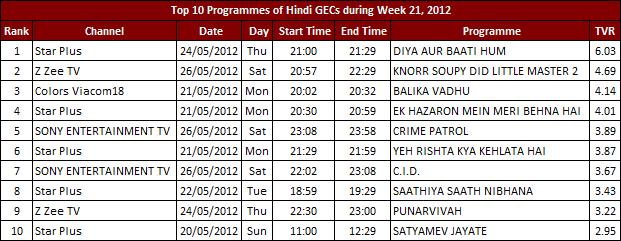
  • TAM data Top 10 programmes on HGEC – Wk 21 ’12


    Source: TAM Media Research
    TG: CS 4+ yrs
    Market: Hindi Speaking Market
    Period: Wk 21: May 20 to May 26, 2012


    About TAM Media Research

    TAM is a joint venture between Nielsen Company & Kantar Media Research. Besides measuring TV Viewership, TAM also monitors Advertising Expenditure of Television, Print & Radio through its division AdEx India. Since 2004, it extended its presence in the PR Measurement & Analysis space for Corporate/Marketing Clients by setting up a separate division Eikona PR Measurement.


    In 2007, the joint venture introduced RAM (Radio Audio Measurement) service to track Radio Listenership for the Indian Radio Broadcast Industry. In year 2009, TAM launched a division, called TAM Sports that specializes in monitoring Sports Sponsorship ROI.


    TAM Media Research’s objective is to fuel media insights that will drive the growth of the Indian Media Industry.