Blog

  • Digital adoption by Asian CEOs limited to device ubiquity: MEC-CNBC study

    By A Correspondent


    Top executives are taking up digital technology, but their extent appears to be tempered by their need to remain in control of their business ecosystem, according to new research by MEC and CNBC. The research surveyed 32 CEOs in multi-national companies across Singapore, Hong Kong, India and China.


    Adoption of digital technology is currently limited to new devices (smartphones, tablets, and so on), being used for information aggregation and synchronization.


    Attitudinally, CEOs in Asia acknowledge the positive benefits of using digital technology in the work place, citing upturns in growth and productivity, a levelling of the playing field and changing business formats. They believe that digital technology will change the way they work in the future. “We’ve only just started but digital technology will significantly change the way we deal with our peers, colleagues, clients and suppliers”, said a CEO from India.


    Behaviourally, Asian CEOs consider themselves “fast followers” and claim to be undaunted by the proliferation of new gadgets – they remain in control over how and when these devices are to be used. A CEO in Singapore said he does not “want to be controlled by anyone or a piece of machinery”. An example of this is how mobile phones are often switched off and handed over to secretaries during meetings, for undivided attention.


    These CEOs believe that digital technologies are not the “be all and end all” of everything. The same expectations in communications from the past applies in today’s digital age too, from “paying full attention when someone is talking” to having control of their time. As a CEO from a HK company said: “When I’m at home, it’s my time. Unless it’s very urgent, everything can wait till the next morning.”


    In essence, CEOs continue to and expect to remain in control of their time and schedules.


    CEOs tend to have well-established working behaviours, so technology and devices perform an efficiency or enhancing role, especially on a personal level. New technology has not intrinsically changed the way they behave; it is merely facilitating existing behaviours. “I want to be thoughtful, not just compelled to reply right away. I use these devices to add meaning,” explained a CEO from Singapore.


    However, it is clear that CEOs recognize the benefits of technology and how it can revolutionise their business, but also recognise that they have a long way to go.


    iPad – the game changer?

    Interestingly, the iPad is possibly the one gadget that has been observed to subtly alter the CEO behaviour. With the trend of consumerisation of technology and more companies embracing the BYOD (bring your own device) policy, the iPad has quickly become a business as well as a personal device.


    The iPad is a perfect fit for the needs of this niche target audience. CEOs have expressed a fondness for it, especially for browsing and presenting. A CEO from Singapore said: “When the opportunity arises, I take out my iPad and make a presentation, rather than use my laptop which makes me look like a salesman.”


    It is slowly replacing the laptop for short trips and they express a certain liberation that comes with doing that.


    “Given that they need to manage complexity, tablets satisfy a specific need from CEOs – simplicity. CEOs are highly selective with their content and only consume what they perceive will add real value to their work and personal lives.  Therefore, brands seeking to communicate with CEOs need to ensure that content is delivered in a concise manner and optimised to be viewed and interacted with on these devices,” said Junji Sumitani, Vice President, Advertising Sales, CNBC, Asia Pacific.


    Selective levels of engagement with social media

    Asian CEOs acknowledge that the social media bandwagon is a wave they have yet to, or are hesitant to ride on, either for themselves or for their companies. Personally, they cite valuing their privacy as the reason they are, at best, passive observers of social networks.


    Due to the inherent social nature of these networks, there seems to be a fear of opening up access to themselves and not having the bandwidth to deal with it. As a CEO from Hong Kong described it: “There are all these requests I need to accept and I just don’t want to get started on dialogues.”


    The innate need to remain in control would clearly be at risk.


    However, they do realise the potential of using it for their businesses. Internally, there is some but limited use of social networks for internal communications, stemming from a need to provide a platform for employees to air their opinions rather than as a way to connect and engage with them. “Clearly young people today feel they have a right to question and understand why something is working the way it is and if you don’t provide a mechanism for them to ask that questions and express themselves, they will go outside.  So it is better for us to provide that space within the organization,” said a CEO from India.


    Externally, CEOs are starting to explore the benefits of what these networks can do. “It becomes a very interesting B2B tool, so that’s something we are experimenting within the office – how to use social networking for marketing and promotion and positioning for the company.”


    “Social networks are not the way to best communicate with CEOs since they are reluctant to lose control of their communication structures. However, they seek recommendations as much as anyone else, often through respected media brands. Hence B2B brands have an opportunity to partner with these media brands to provide valuable, timely content,” commented Jon Wright, Head of Analytics and Insight, MEC Asia Pacific.
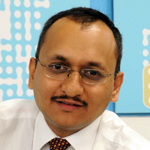


  • Dinesh Singh Rathore is COO, Madison Media Omega

    By A Correspondent


    Madison Media announced that Dinesh Singh Rathore has been appointed as COO of Madison Media Omega, based in Bangalore. Mr Rathore joins Madison from Starcom MediaVest Group, where he was Head,  MediaVest, Mumbai & Delhi offices.


    Mr Rathore has over 17 years of experience in media, working with media agencies like Starcom MediaVest Group and Mudra. He was the head of FutureWorks, the specialist unit of SMG that handled the Future Group business. Across his career, Mr Rathore has worked on interesting brands including Zydus Wellness, Emirates, The Mobile Store, Tata Housing, Novartis, World Gold Council, Wipro, Toyota, SabMiller, Essilor, Hitachi, Rasna, Only Vimal.


    Gautam Kiyawat, Group CEO, Madison Media said: “I am delighted to have Dinesh join our Leadership team and am sure he will add a lot of value to our clients in Bangalore.”


    Mr Rathore, on his joining Madison said: “I am looking forward to this new role and contributing to an enviable list of clients.”


    Madison Media was recently in the news for winning the Crompton Greaves, Enamor and Dixcy Textile’s Media AOR.


  • Havas arm launches mobile msgng platform

    By A Correspondent


    Mobext, the mobile marketing agency brand of Havas Digital, has announced the launch of a proprietary, next generation global mobile messaging platform. The platform allows companies to launch sophisticated, multi-country mobile messaging campaigns.


    Rob Griffin, EVP – Global Director of Product Development of Havas Digital said: “With the exponential growth in mobile and mobile’s growing importance in creating meaningful brands, Havas Digital is proud to be rolling out Mobext’s ‘SAM’ for our clients. SAM, which stands for ‘Simplified Automated Messaging’, is a mobile messaging platform managed by Havas Digital’s Mobext division and was built for global scale that can be deployed very quickly to support our clients’ increasing messaging requirements. Mobile messaging is often overlooked due to mobile rich media, smartphones and tablets but we feel it is a critically efficient element when optimizing a consumer’s experience with a brand by supporting and enhancing CRM, social media, and promotional activities.”


    Among key features of the platform is the ability to send personalized, highly targeted SMS to an opt-in mobile database. It also enables powerful, 2-way SMS marketing campaigns, allowing advertisers to launch a vast array of interactive mobile campaigns such as polling, voting, trivia, contests, data profiling, couponing, on-pack promotions, and many others.


    SAM is managed and hosted in the Philippines.  The platform is already live in the Philippines, India and Argentina, with plans to launch it before end 2012 in all other Mobext markets worldwide.


    Arthur Policarpio, Asia-Pacific Head of Mobext as well as CEO of Mobext Philippines said: “The problem with most SMS marketing platforms is the high-degree of complexity as well as lack of global scale – it is an extremely complicated process to secure short codes as well as SMS push pipelines on a per country basis.  SAM simplifies all this. SAM enables enterprises of all sizes to quickly launch a multi-country, mobile messaging campaign – all from a simplified, easy-to-use web-based platform.”


  • The Anchor: Mitrajit Bhattacharya on 5 areas where print (& mags in particular) need to upgrade their knowledge

    By Mitrajit Bhattacharya


    1. Use of econometric modelling to measure advertising impact on sales

    Econometrics can be used to reveal the effects of diminishing returns, ad memory decay and optimisation of media strategies.


    2. Measurement of magazines’ social media engagement and building overall engagement indices

    How can social media provide competitive advantage in an undifferentiated market? How tone and themes of conversation can help guide social media strategy? How does social media engagement compare with more traditional measures of engagement?


    3. Research into branded content and do’s and don’ts about how to create great advertorials

    Advertorials, whether in print or web, are valued, appealing, well-read if strategised well.


    4. Usage and attitude towards iPads and how users experience advertising and content on the device

    How is the consumer engagement with digital devices? How does an iPad user use the device? How many apps do they download? Free apps vs paid apps and usage and attitude towards them.


    5. How tablet in-app advertising works

    Learnings to increase the marketing efficiency of in-app ads on tablets.


    Mitrajit Bhattacharya is President and Publisher, Chitralekha and Vice-President, Association of Indian Magazines


  • RK Swamy Media wins Khazana Jewellery account

    By A Correspondent


    RK Swamy Media Group has won the media account of Khazana Jewellery, a leading jewellery retail chain from South.


    Sandeep Sharma, President, RK Swamy Media Group said: “We are extremely delighted to partner with Khazana Jewellery. We are confident of adding  disproportionate value to their media investments. We also believe this is a testimony to our passion to deliver the best for our clients. Our team under the able leadership of K Satyanarayana, VP (west & south) will spearhead this partnership.”


    Kishore Jain,MDof Khazana Jewellery said: “We welcome R K SWAMY Media Group as our media partner and look forward to their superior media solutions in helping build our brand value further. We are poised for the next level of growth with major expansion plans and we are confident that R K SWAMY Media Group will add value in achieving our goals”.


    Khazana Jewellery is a Rs2,600 crore jewellery retail chain with 20 stores across South India.


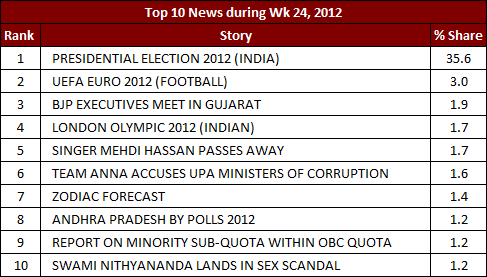
  • TAM NCT Data Wk 20 to 24, 2012


    Source: News Content Track – A service of TAM Media Research Pvt. Ltd
    Channels: Aaj Tak, CNN IBN, Headlines Today, IBN 7, India TV, NDTV 24/7, NDTV India, Star News, Times Now, News 24 & Zee News
    Period : Week 24 – Jun 10 to Jun 16, 2012
    Note : Analysis is based on the Telecast duration


    About TAM Media Research

    TAM is a joint venture between Nielsen Company & Kantar Media Research. Besides measuring TV Viewership, TAM also monitors Advertising Expenditure of Television, Print & Radio through its division AdEx India. Since 2004, it extended its presence in the PR Measurement & Analysis space for Corporate/Marketing Clients by setting up a separate division Eikona PR Measurement.


    In 2007, the joint venture introduced RAM (Radio Audio Measurement) service to track Radio Listenership for the Indian Radio Broadcast Industry. In year 2009, TAM launched a division, called TAM Sports that specializes in monitoring Sports Sponsorship ROI.


    TAM Media Research’s objective is to fuel media insights that will drive the growth of the Indian Media Industry.


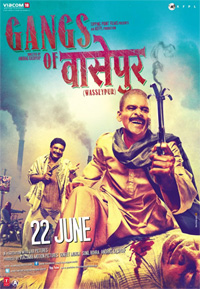
  • Mostly 3.5 *s for Anurag Kashyap’s Gangs of Wasseypur

    Gangs of Wasseypur


     

    Directed by: Anurag Kashyap

    Produced by: Anurag Kashyap, Sunil Bohra

    Written by: Zeishan Quadri, Akhilesh, Sachin Ladia, Anurag Kashyap

    Starring: Jaideep Ahlawat, Manoj Bajpai, Richa Chadda, Nawazuddin Siddiqui, Jameel Khan, Syed Zeeshan Quadri, Aditya Kumar, Reemma Sen


    Anurag Kashyap has annexed the role of rebel against Bollywood and by making dark, violent films, has got himself a following in the indie and festival circuit. But after the excessive Gangs of Wasseypur (Part 2 is coming up), one can only hope he has exorcised the ghost of The Godfather, and can now truly become a chronicler of the times; he has the style, he has the cinematic sensibility, he has to grow beyond a laddish fascination for violence and men who indulge in crude power games.


    Critics feel duty bound to praise his films, because he dares to go against the rules of Bollywood and thrives; he has edged out Ram Gopal Varma from his prince of darkness pedestal. He also drums up a serious amount of hype. But is there more to him than machismo?


    The film got mostly 3.5 star ratings, as if critics were shying to give it that extra half star and bring it to the excellent category- so despite the praise, it’s technically just a little above good in the ratings.


    Raja Sen of rediff.com found it boring, gave it 2.5 and wrote: “It must here be remembered that mob bosses, at least the ones Hindi cinema have accustomed us to over the years, have hardly been an efficient lot. They growl orders, surround themselves by those applauding their every maniacal move, and, intoxicated by their own bluster, proceed to boast about their convoluted plot to the protagonist, resulting in their climactic downfall. It is this look-what-I-did windbaggery that constantly weighs down Wasseypur, a highly competent and occasionally enjoyable product, and keeps it from soaring like it should have.”


    Anupama Chopra gave it 3 and commented: “Kashyap’s material is strong, but there’s just too much of it. There is so much plot squeezed into the two-hour-forty-five-minute running time that your head swims. We hardly ever stay with a character long enough to get emotionally invested, and a voice-over clumsily interrupts the story to connect the dots. At one point, I was so confused that I longed for a master key booklet to the film that outlined the various factions, relationships and rivalries. The narrative also moves constantly between the personal and professional (murder, revenge and thuggery being the main professions). So the film moves from the enmity track to Sardar’s mistress and at one point even segues into Sardar’s son’s Bollywood-inspired romance-over-Ray-Bans fantasy. It’s indulgent and much too long.”


    The 3.5 club included Rajeev Masand of IBN: “Filmed crisply, without any gimmicks by Rajeev Ravi, Gangs is both steeped in cinematic tradition, yet modern in its treatment. You’re especially seduced by the way Kashyap blends the songs into his narrative, often using them against the film’s most visceral, violent scenes. A big thumbs-up for composer Sneha Khanwalkar who goes all guns blazing to deliver a marvellous mixed-bag of a soundtrack that contains such irresistible gems as I am a hunter and Keh ke loonga. Bolstered by its riveting performances and its thrilling plot dynamics, this is a gripping film that seizes your full attention.”


    Karan Anshuman of Mumbai Mirror (3.5) wrote: “Gangs of Wasseypur is the kind of film you will have to watch in a theatre. You absolutely need to be sitting in the dark with no volume control to enjoy what Kashyap throws at you without a care of turning down the noise of gunshots and explosions, without exposing your expressions of guilty pleasures to others as a crude seduction scene plays out. The digressions – though merited – are one too many and this greatly affects length. Its lack of coherence may not work for everybody. Its runtime didn’t even work for me. That’s the only flaw here: it’s just too long.”


    Vinayak Chakravorty, Today (3.5), raved: “Anurag’s new film, first of a two-part saga, repositions The Godfather lore with a hardy Bihari twist. You spot tribute nods to Tarantino, Scorsese and Sergio Leone all along, as the film leaves you dizzy with its wanton celebration of the gory and the immoral. But Anurag isn’t aping the western masters. He wholly turns every inspiration into an original cinematic statement as the reels roll. In that sense, GOW comes across as a crossover film in the truest spirit of the term – juxtaposing global influences onto a desi gangland canvas, and setting off masala basics within a believable premise.”


    Madhureeta Mukherjee of the Times of India (3.5) gushed: “This one’s a gang bang. Sorry, make that a gang bang-bang; because that’s how this story explodes – with bullets, blasts and bust-ups. Throw in gallons of blood, body-counts and ‘boom-boom’, true Bihari ishtyle. It doesn’t need coal to fuel this revenge drama. It fires on Anurag Kashyap’s penchant for the dark, dubious, deadly and daring.”


    Blessy Chettiar of DNA (3.5) commented: “There are times the self-indulgent ghost of That Girl in Yellow Boots wanders around Wasseypur, with seemingly pointless gore and montages eating into precious screen time. Many a time the camera wanders aimlessly, on severed heads and pretty faces. The changing history of Dhanbad at its centre, over a dozen important characters, a web of plots and subplots moving deftly to a to-be-continued finale, can leave you exhausted and confused.”


    Saibal Chatterjee of NDTV (3.5) wrote: “The saga tosses and turns convulsively from one shootout to another as a bunch of amoral human bloodhounds sniff around for their next kill in a volatile, lawless landscape. The unbridled violence and fetid language – the expletives fly as thick and fast as the bullets – are, however, only one facet of this cinematically layered shot at a time-honoured and popular genre. The spirit of no-holds-barred derring-do embedded in the narrative sinews of Gangs of Wasseypur is so pronounced that there is little in the film that goes along expected lines. Gangs of Wasseypur is part Sergio Leone, part Sam Peckinpah on the one hand. On the other, it embraces elements from Quentin Tarantino and Johnnie To. But the manner in which Kashyap stamps his own home-grown style and sensibility on the manic melange makes it an exhilaratingly edgy movie experience.”


    Shubhra Gupta of Indian Express gave it a surprising 4 stars: “‘Gangs Of Wasseypur’ is a sprawling, exuberant, ferociously ambitious piece of film making, which hits most of its marks. It reunites Anurag Kashyap with exactly the kind of style he is most comfortable with: hyper masculine, hyper real, going for the jugular. It’s not so much about gangs, as about men who are pushed into ‘gangstergiri’ as a thing to live by; as you go along, you see that Wasseypur is not just a place, but a state of mind, which roars and strikes after each deceptively quiet patch. I liked most of ‘Gangs’, Part One, enormously.”


  • Ranjona Banerji: Crazy, like a fool; what about Daddy Cool?

    Ranjona Banerji

    By Ranjona Banerji


    If you are an aging tennis star in India, one element vital for your success is a Daddy. Without a Daddy, you can win on the tennis courts. But as we all know, that is not where wars are won, that is where minor skirmishes are fought. The big fight is in the media. You need a Daddy to defend you, speak for you, put forward your point of view – do all the things you are incapable of or couldn’t be bothered to do yourself.


    Which is why in the fight between Leander Paes and Mahesh Bhupathi, it is the Daddies who have taken centre court. Why is Bhupathi behaving like such an ass? Out pops Daddy Bhupathi to explain. What is Leander actually going to do? Only Daddy Paes can attempt to answer that.


    There are plenty of theories put forward about how men and their fathers operate and many experts use the Oedipus tragedy (son kills father to marry mother) to explain the tension between sons and daddies. But not for the old men of Indian tennis, all this psychobabble poppycock. Compete with their Daddies? Whatever for, when their Daddies are their biggest allies, wiping their botties, filling up their juice bottles, putting on their bibs and interpreting their baby babble for the public.


    In women’s tennis, daddies are usually more famous for teaching their daughters some hubble-bubble tennis based on their own crackpot theories and then stealing all their money. Heaven forbid that the Daddies of India’s most famous male tennis players could ever be accused of such reprehensible behaviour. Instead, here they are, speaking up for their adult sons who threaten, bully and sulk their way to the Olympic Games – or not.


    What a fine example of India’s famous familial feeling we have here – and dare we say it, India’s long traditions of patriarchy. Birds you know are quite cruel to their babies and push them out of their nests so they can learn to fly. But these tennis Daddies are not wicked birdies – they love their sons and will do whatever the sons want.


    I know many daddies who would give such sons two put-puts on their large almost 40-year-old botties and make them fight their own battles. Er, maybe if we had such grown-up, speak-for-themselves tennis stars and less protective Daddies, we might not find ourselves in this Olympic mess?


  • Glory eludes India @Cannes Lions 2012


    By A Correspondent


    1992 is not a year on which I shall look back with undiluted pleasure. In the words of one of my more sympathetic correspondents, it has turned out to be an Annus Horribilis. Thus spoke Queen Elizabeth II describing the year that was quite horrible for the British royal family. Now as the world celebrates 60 years of her Accession, the Latin phrase could be used for India’s performance at the Cannes Lions.


    Now that the 7-day grand creative festival has come to a close in the south of France, agencies that have emerged tall and triumphant from across the globe will be heading back to their respective continents to kick off celebrations.


    And that we guess India will miss out on, as the contingent make its way back home. Some have done so already as you read this. The boardrooms, bars and smokers’ areas will be busy as a new week commences with agencies trying to figure out what exactly went wrong. Or perhaps what didn’t go right. Some obvious questions that’ll come up for scrutiny are whether agencies have become too complacent and are taking their creative skills for granted or whether other countries have simply outsmarted India in the game of creative one upmanship.


    Few doubt the creative aptitude India possesses, having given a tough time to most agencies in the past but 2012 could easily be billed as the worst year thus far – just 14 metals in kitty when the number of entries that were sent were the highest at 1,182.


    Even in a dry year like 2008 where India had sent only 982 entries, the total metal count stood at 23. The only bad year was 2007 where India bagged just 12 metals but then one expects performances to see an upward spike year-on-year and not the other way round. It will be interesting to see the kind of reactions that emerge from the entrant companies in the ensuing days.


    Though it was a forgettable year for India , there were some agencies that shone bright and whose entries managed to win a few metals. Those that were hopeful of a win did just that and came back lapping up either Gold, Silver or Bronze in the respective categories. Mentos Sour Marbles by Ogilvy & Mather continued its winning spree across festivals as it bagged a bronze in the Press Lions category.


    Another sureshot that bagged India its metal was an entry by Leo Burnett for its client Bajaj Electricals for their exhaust fans. The team of KV Sridhar and Nitesh Tiwari carried on with their winning spree bagging Silver in the Press Lions category.


    In fact, the team of Leo Burnett carried on with their rich display by picking up a Media Lion Silver for its Doorstep School campaign in the Best Localised Campaign category.  Another entry from India that was sure of a win was Cheil Worldwide’s campaign for Samsung Printers. The work bagged a Media Lion Silver in Best Use of Integrated Media in Media Lions. BBDO India’s You Shave, I shave campaign for Gillette continued with its winning streak as it bagged a Bronze in the Media Lions category.


    While those that were touted to win did just that, it was the Gold winners that were the talk among the delegates at the Cannes Lions festival. The tally was opened by McCann Worldgroup which won an Outdoor Lions Gold for its client Western Union.


    An elated Prasoon collected the coveted prize on the dais. DDB Mudra’s ‘The Hinglish Project’ for Ministry of Tourism, Government of India was another Gold winner as it bagged the metal in the Design Lions category. The same project also won a bronze in the same category.


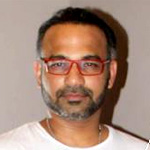
    Abhinay Deo

    The third Gold winner was the entry ‘I am Mumbai’ that was entered by Ramesh Deo Productions and the advertising agency for which was Taproot India . Abhinay Deo, on bagging the award, said: “There is no thumb rule for success. All I can say is that one has to be honest to his craft. Never make a film to win an award be it Cannes or any other, because then you surely won’t.”


    Failures Unlimited

    While that was about the winners, the conversation that dominated the festival during the latter half was the lack of wins by India across categories. The discussion was compounded by India failing to make the shortlist across categories too. India would definitely want to forget its showing in the Mobile Lions & Cyber Lions category where it didn’t manage a single shortlist.


    Even categories like Film Craft, Creative Effectiveness, Branded Content & Entertainment put up a poor show by bagging just a handful of nominations. In comparison, categories like Radio and PR performed better with the shortlisted entries in either of them going on to win metals.


    In fact, the categories where India had the maximum number of shortlisted entries like Press and Outdoor too were failures as the conversion rate averaged about 10 per cent or so for each of them. Titanium & Integrated continued to elude the Indian contingent of bagging any metal.


    KV Sridhar

    The overall grim mood at the festival was highlighted by KV Sridhar, NCD, Leo Burnett India : “We are extremely satisfied with Leo Burnett’s performance at Cannes this year; getting three Lions is not an everyday event. The only disheartening thing being that India’s overall performance this year wasn’t gratifying. I think we need to push ourselves a little more to do well in such awards, because at the end of the day it’s not about how good your work is, but about how much better the world is performing than you.”


    Said Pratap Bose, COO, DDB Mudra Group, whose agency did win some big awards but not as many as they had hoped: “At the end of the day, as DDB Mudra, we were more hopeful as we did get 21 shortlists. Though this is an extended India problem as well. We did bag a Gold and that compensated a little. The standard to which the world has risen surpasses India to a very great extent hence India has got a lot of catching up to do. To sum it all, we are quite disheartened with the overall performance.”


    Pratap Bose

    Mr Bose’s comments on the creative standard of other agencies around the world rising to surpass India may all but be true. Why else would entries that stood a high chance of bagging a metal miss out on winning one? DDB Mudra’s work for Stedfast, Volkswagen and GeeBees Beverages were all assured of a win but sadly missed up winning any.


    Chaplin Chapters & Google Chrome by BBH India , Keeping the Legend Alive by McCann Worldgroup, Parle Agro by Creativeland Asia and A Day in the Life of India by Taproot were other worthy entrants too but were skipped for the sake of others that were found to be more deserving.


    Manish Bhatt

    Manish Bhatt, Founder-Director, Scarecrow and a jury member for Cannes, 2012, said, “I would say that winning at Cannes has a lot to do with probability, so many factors can work for or against a piece of work during the judging process. Also with my interactions with other jury members, I got a feel that many felt that while there is no disputing Indian creativity but the viability of that idea on various medium is restricted. As creativity is being redefined, there is a need to bring on an idea that can work on multiple platform. There is also a need to bring in more interactivity in our entries as thats what the judges are looking for.”


    Perhaps, it’s time for India to stop being looked upon as the ‘favourite’ one and for more creative ideas to spawn if we have to make a rousing comeback in 2013.


    We could then look forward to a wonderful year… Annus Mirabilis may be


    With inputs from Shubhangi Mehta, Tuhina Anand and Meghna Sharma


    Cannes Lions 2012 Winning Entrant

    Gold

    Silver

    Bronze

    Bacardi India

    1

    BBDO India

    2

    Cheil Worldwide

    1

    DDB Mudra

    1

    1

    Leo Burnett

    2

    1

    McCann Worldgroup

    1

    Ogilvy India

    3

    Ramesh Deo Productions

    1

    In alphabetical order of agency names


    Imaging: Rafiq

    Photograph of Abhinay Deo: Fotocorp


  • Mindshare & Google launch ‘Mobile Garage’

    By A Correspondent


    Mindshare and Google have announced the launch of ‘Mobile Garage’, a unique venture designed to use Google’s best in class mobile expertise to supercharge the use of mobile by Mindshare’s global client base.


    Mobile Garage will see the setting up of mobilehubs around the globe – initially New York, London and Singapore – where Mindshare clients will gain access via dedicated teams to mobile strategists and product experts. The hubs will consist of a mix of Mindshare and Google employees and will work across all aspects of the mobile eco-system, from search optimisation and app development, to strategy, planning and creative optimization.

    Nick Emery, CEO Mindshare Worldwide said: ‘We designed Mindshare to be open source and to work with the best partners for the benefit of our clients. It’s about trial, experimentation and speed to re-design our business. Working with Google on mobile will give our clients a competitive advantage in a key battleground both now and for the future.”


    Mobile Garage will give Mindshare clients a unique advantage in the race to harness the growing global trend of mobile device usage. Mobile search traffic has increased 400 per cent over the past 2 years, and its potential goes even further. The GSMA, the industry body for mobile operators, and research company Machina, predict there will be 24 billion connected devices by 2020 creating an industry worth $4.5 trillion and covering innovations such as connected cars, building automation and traffic management. In addition the venture will also give Mindshare clients competitive advantage in emerging markets, with KPCB’s Mary Meeker recently showing that mobile internet usage had surpassed desktop internet usage in India.

    Matt Brittin, VP, Sales and Operations, Northern and Central Europe at Google said: “We have adopted a ‘mobile first’ philosophy at Google to keep pace with the rapid acceleration in consumer mobile usage. We are delighted to team up with Mindshare on a similar strategy for their clients. Mindshare have already shown strong momentum in the mobile marketing space, and have a great opportunity to lead their clients to win on mobile in the future.”


    Mobile Garage will complement Mindshare’s existing relationship with WPP’s mobile agencies Joule and H-Art.


  • Gaana.com launches music streaming app on Win 8 tab

    By A Correspondent


    Gaana.com is the first full-fledged music streaming application for India’s store of Windows 8 Release Preview. It is also the first music serving application for Surface in India. With a vast repertoire of popular Bollywood, Hindi, regional and international music, it is currently available in 38 markets worldwide.


    The Gaana.com application in the Surface store has the slick Windows 8 metro-style tiled interface with intuitive interactions and fluid navigation. The application offers users a smooth browsing with the latest and most popular albums, artists, genres and songs. Users can easily browse through the entire database of music, and choose from curated music charts or filter music based on language preferences. Gaana.com also offers music suggestions, based on the album that a user is listening to, further enhancing the overall experience.


    Gaana.com is one of the most popular music websites with over 10 million songs to choose from. It has a user base of more than 3 million unique visitors. Satyan Gajwani, CEO of Times Internet Ltd said: “We want gaana.com to be as accessible to users as possible. The Windows 8 Surface tablet is an exciting innovation, and a fantastic new way for users to experience music on demand. The Gaana app is now available in the Surface store for users globally to listen, compile, and share the music they love.”


  • Never make a film to win at Cannes, because then you’ll never do: Abhinay Deo

    By Meghna Sharma


    The final day at Cannes Lion 2012 turned out excellent for Taproot’s campaign for Mumbai Mirror – I am Mumbai. The advertisement was shortlisted in Film and Film Craft categories and went on to bag India ‘s first ever Gold in the Film Craft category.


    The campaign was entered in the Film Craft category by Mumbai-based Ramesh Deo Productions. The film was directed by Abhinay Deo whose work has been shortlisted at Cannes Lion before too. MxMIndia spoke to the winning director to know what it takes to make an award-winning campaign.


    It is India’s first ever win in the category, were you expecting a Gold?

    Honestly speaking I wasn’t. It’s my job to make a good film and keep entering them at such prestigious award functions. The rest depends purely on the quality of the work!


    What goes into directing an award-winning film?

    There is no thumb rule for it. All I can say is that one has to be honest to the craft. Never make a film to win an award be it cannes or any other, because then you surely won’t. (Laughs)


    The cast had never faced the camera before, so was it difficult to film it?

    When you have a cast which has never faced the camera before, it can either be extremely difficult or easy. It all depends on how you break the ice with them because they are bound to have apprehensions and fears about the whole thing. Sometimes such a cast can do wonders and have a film which even a seasoned actor couldn’t have been able to do better. I was sure that I wasn’t going to film the campaign with trained actors or celebrities.


    What was the thought process behind shooting the ad in black & white?

    Over the years, the city has lost its character. Today, everything is muddled-up; so, to show consistency, we decided to shoot it in black & white. Also, it was a polarised concept and I believe colour would have softened it. It was meant to be a hard-hitting one and B&W helped us achieve that.


    How important is an idea to direct for a concept like ‘I am Mumbai’?

    Both are important for a concept to work. The idea won’t work without good direction and vice-versa.  Without each other, it will just flop.


    How involved was Taproot in the ad?

    It was Aggi’s idea all along. Only after the idea was conceptualised, did I take over. And while shooting, it was my baby alone. It is great that Aggi and I know, and are able to understand, each other well, which helped both of us. We were able to execute each other’s ideas and thoughts well.


    Some of the reports that are coming out on Cannes Lions attribute the agency for the award. Do you think in advertising, perception-wise, it’s the agency which gets all the credit and not the film company and director?

    The campaign won the award for Film Craft category, so I think the award should be attributed to the craft.


    As a director, do you have any preferred agencies you work with?

    I have worked with most of them and have loved the experience. And I would continue to work with all of them. There are no preferences when it comes to work!


    Meanwhile, how’s the work on ’24’ going? When do we see the first season? Since TV is said to take so much of one’s time, does it allow you time for ad films?

    The series is in the scripting phase and, hopefully, will soon move to the execution stage. And when the shooting begins, I will give it all the time needed. In the past too, when I was making my two feature films, I didn’t make any advertisements. So, if needed I won’t be taking up advertisements till the series is over. Dedication and honesty towards work are important for me.


    Photograph of Abhinay Deo: Fotocorp