Blog

  • Archies changes logo to make brand contemporary

    By Writankar Mukherjee


    Greeting and gifting major, Archies Ltd has unveiled a new logo to make the brand more relevant amongst the target group of consumers from early teens to mid 40s.


    Archies says the logo change is to make the brand relevant to customers to ensure that it is not the same brand with whom their parents grew up with. The logo change will also involve a change in store decor and retail experience. However, the logo change will not involve any change in the brand’s tagline of ‘the most special way to say you care’.


    The new logo has both the colour red and the heart, which the company says will help them communicate better with consumers, who today fall into various categories.


    “The new look Archies will reflect in the stores, which will have a brighter, fresher look. The stores will sport the new logo and exude warmth, with the liberal use of the new house colours, in decor and internal signages. The attempt is to communicate to the customers that the Archies store is the fresh, new, rejuvenated kid in town,” the company said in a press release.


    Till 3 pm on Monday, the Archies stock went up by 3 per cent at Rs25.45 in the Bombay Stock Exchange.


    Source: The Economic Times

    Copyright © 2012, Bennett, Coleman & Co. Ltd. All Rights Reserved


  • Perfetti appoints Ramesh Jayaraman as MD

    By A Correspondent


    Ramesh Jayaraman

    Perfetti Van Melle, the confectionery giant will shortly be appointing Ramesh Jayaraman as the Managing Director of Perfetti Van Melle, India. Prior to this Mr. Jayaraman was the Managing Director of PVM’s businesses in Sri Lanka and Bangladesh. He will take over this responsibility from Sameer Suneja who has been promoted to a global role as Executive Vice President – Innovation and Business Development.


    Mr. Suneja will now be based out of Netherlands, having a larger responsibility in the global operation of the company and will report to the Global CEO of Perfetti Van Melle.


    Mr. Jayaraman is well respected for his extensive skills and knowledge across all functions of the company. His leadership has been a key driver in transforming the company’s operations and sustained growth in Sri Lanka and Bangladesh markets.


    Sameer Suneja

    In India, he worked for Cadbury and Britannia, in the Marketing area. He also had a brief stint with Ogilvy and Mather. From early 1999, he has worked mainly outside India, and his assignments have taken him to China, France, Egypt, Bangladesh and Sri Lanka.


    Prior to joining Perfetti Van Melle in 2006, Mr. Jayaraman was Project Director India for Danone, and the Deputy Managing Director of Yakult Danone India Private Limited, a joint venture between Groupe Danone and Yakult Honsha of Japan.


    Mr. Suneja, who now moves on to this international assignment, has been with Perfetti for more than 15 years in various capacities. During his tenure in India he has played a key role in the company’s distinguished growth and he has been heading the Indian business for the past 4 years.  During his tenure the company forayed into the snacks category in India, thus becoming the first subsidiary in the group to diversify into non-confectionery segment.


    In his new role as Executive Vice President – Innovation and Business Development, Mr. Suneja will identify and eventually develop projects in different markets related to new product ideas and exchanging cross-Group successful experiences in the marketing and commercial fields.


  • 9X Tashan now also available on Tata Sky

    By A Correspondent


    9X Media Group’s Punjabi music channel 9X Tashan is now also available on Tata Sky. Commenting on the initiative,  Sandip Bansal, Managing Director, 9X Tashan, said: “We are delighted to announce that Tata Sky subscribers can now enjoy Punjabi music and humorous short format shows aired on 9X Tashan.”


    Nicola Bamford, Chief Content & Business Development Officer, Tata Sky Ltd. said: “Our endeavour has always been to provide the most relevant content to our growing subscriber base. Today, Tata Sky engages every member of the family with the most comprehensive range of entertainment and music content. The launch of 9X Tashan on our platform underscores our continued commitment to add the very best to Tata Sky’s growing portfolio of channels and further increase the entertainment value of Tata Sky.”


    Launched on August 31 2011, 9X Tashan is available across cable and satellite homes. The Channel is streamed live on the internet on the channel’s website - www.9xtashan.in and on various mobile platforms.


  • Suvarna Launches new weekend comedy show

    By A Correspondent


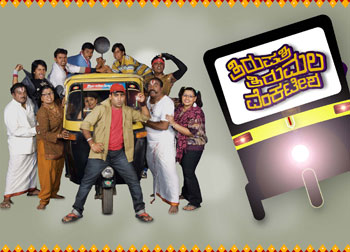
    Star Network’s Kannada General Entertainment Channel Suvarna has announced the launch of their new weekend comedy show Tirupathi Tirumala Venkatesha directed by Master Anand, who has earlier directed the comedy shows Paduvaralli Padegalu and SSLC Nanmakkalu for Suvarna.


    This is an episodic fiction comedy and the story revolves around a family which runs a small business of home-made products.


    The show will go on air from July 7 and will be aired on weekends at 10pm.


    Anup Chandrashekaran, Business Head of Suvarna said: “Suvarna has been setting new benchmarks with every new show and Tirupathi Tirumala Venkatesha is yet another offering from us which will stand out as a high quality product. We, at Suvarna, are bullish about the comedy genre as it appeals to the entire family and resonates across age groups. I hope our viewers like this show.”


    Anil Narang, Head of Marketing & Strategy, Suvarna Channel said: “This show will further strengthen our weekend offering. We have seen in the past that viewers like light hearted comedy shows which act as a stress buster. We are confident that viewers will enjoy this hilarious comedy show.”


    Tirupathi Tirumala Venkatesha is one more addition to the many popular shows of Suvarna such as Krishna Rukmini, Preetiyinda, Amruthavarshini, Pancharangi Pom Pom, Chukki, Cheluvi and Pallavi Anupallavi.


  • Debrief: Hero: Desh Ka Vroom Vroom!

    By Anil Thakraney


    The advertising promise is quite simple: Because Hero’s bikes offer terrific mileage, the entire nation rides out more often. And in the creative interpretation of that, Hero has done one boring thing and one interesting thing, so I have mixed reactions to their new TVC.


    Boring, first. They have gone ahead and done that same old, tired ‘Desh Ka Hero’ number. The commercial features people cutting across social, economic and religious divides. Wonder when Indian advertisers will evolve and avoid this route like the swine flu. It’s no longer interesting, really. However, the one good thing Hero has done is to use the hand technique needed to ride a bike as the central creative idea, and this device unites all the people featured in the ad. I like this touch. Because this particular hand motion is unique to bike riding (unless you are a plumber!), and it can and should become a neat memory hook for Hero. This is smart thinking.


    [youtube width=”400″ height=”225″]http://www.youtube.com/watch?v=0j7BkAOtbFE[/youtube]

    However, what would have been even better is, if they had weaved in entertaining situations around the hand motion, that would have added adrenalin to the TVC. And it would have made it watchable on repeat exposure. But this issue can be dealt with as the campaign moves forward, so that’s fine. Also, must say the jingle is peppy and fun.


    Rating: (On a scale of 1 to 5): 3. Old route. But an interesting creative device.


  • Paritosh Joshi joins Ormax as Strategic Advisor

    By A Correspondent


    Paritosh Joshi, former CEO-Star CJ, will now be associated with media research and consulting firm Ormax Media as a Strategic Advisor. Mr Joshi recently decided to step away from the corporate world after a 27-year career that spanned from FMCG marketing and Commodity Trading to Perfumery and Broadcasting*.


    In his advisory role, Mr Joshi will engage with the research and business teams at Ormax Media across various aspects of their work. Speaking about the association, Shailesh Kapoor, CEO, Ormax Media, said: “I am delighted to announce that Paritosh has accepted our invitation to take up the role of Strategic Advisor. With his experience in the media business, as well as his close involvement in several industry initiatives, he will bring a unique and fresh perspective to the table, that will help us, and by implication, our valuable business partners’ community.”


    Speaking about his new role, Mr Joshi said: “Ormax Media are doing some path-breaking work in developing new metrics altogether for television and film industries. I have a deep interest in audience measurement, and this engagement is another way of delving into this vast landscape, even as I get to work alongside Shailesh and his splendid team.”


    Disclosure: Paritosh Joshi writes Media Matrix on MxMIndia.com every Thursday


  • Mediavest appoints Atul Sharma as GM

    By A Correspondent


    MediaVest Worldwide, a Starcom MediaVest Group agency has appointed Atul Sharma from Madison Media as GM in their Delhi office. Mr Sharma, who joined on June 20, will oversee the Dabur business and report to Sulina Menon, Executive Director, SMG.


    Mr Sharma is a postgraduate in marketing with specialization in research and consumer behaviour. He has more than 11 years experience in Strategy, Procurement and Implementation. He started career with NDTV in research and marketing. He worked extensively on audience segmentation models, business development and marketing plans.


    Mr Sharma had stints at Initiative Media and MPG, working with clients such as LG, Nestle, ITC, Maruti and Reckitt Benkiser.  He spent the last four years at Madison where he worked on Coca Cola amongst other clients.


    Commenting on the appointment, Sulina Menon said: “We are happy to have Atul on board for Dabur. With his extensive FMCG experience and the research background we are looking at him to drive strategy led solutions to the Dabur brands.”


    On his reason for joining SMG, Mr Sharma said: “SMG is a future ready organization and I am excited to work with the new age tools like Tardiis and optimize plans across TV and Web in one go.”


  • Nishad Ramachandran joins Hansa Cequity as VP & Head of Digital Experience

    By A Correspondent


    Nishad Ramachandran

    Nishad Ramachandran has joined Hansa Cequity as Vice President and Head of Digital Experience. Hansa Cequity, part of the RK Swamy Hansa Group, is one of India’s leading integrated customer marketing & technology services company.


    Speaking about this development,S Swaminathan, CEO, Hansa Cequity, said: “We are pleased to have Nishad lead this new and strategic initiative at Cequity. Our integrated customer marketing and analytics services has seen strong growth over the past year. For our growing roster of blue-chip clients, we enhance customer relationships and build customer value by applying data, analytics and insight-driven campaigns to every interaction. Nishad’s unique blend of digital strategy, creative and technology thinking for brands will help us enhance our digital solutions.”


    In a career spanning over 20 years, Mr Ramachandran has been in a senior leadership role, more recently with iContract (part of Contract Advertising(I) Ltd), one of India leading direct and digital marketing agency. He has worked on award winning campaigns with leading brands like HSBC, Shoppers’ Stop, Asian Paints and others and has been part of Cannes Direct Jury in 2008.


    Commenting on his new assignment, Mr Ramachandran said: “Hansa Cequity has invested in building a quality team of data scientists, customer strategists and marketing technologists. With the Digital Experience practice, we will truly leverage our promise of Customer Integrated Marketing (CIM) using digital data, mobile apps and analytics with powerful campaign ideas.”


  • BIG FM among 100 most successful brands in Power Brands 2012

    By A Correspondent


    BIG FM has been named amongst the 100 most successful brands of the nation in Power Brands 2012. It is said to be the only radio network to get on the list this year. The brands were selected through one of the most extensive surveys conducted panIndiaover a research base of 20 centres and 5,000 respondents.


    In addition to BIG FM, the mega launch of the second edition of Power Brands saw brands like Apple, IPL, LUX, Sunsilk, Hero Motocorp, McDonalds, Airtel, HP and SBI Bank being honoured as part of the 100 Power Brands. The Power Brands Hall of Fame ceremony also took place, along with the book launch which salutes icons and leaders who have carved a niche for themselves with their remarkable strategies and vision.


    Rabe T Iyer, Business Head, 92.7 BIG FM said: “This recognition speaks volumes of the efforts put in by our associates across the country over the years in living the promise of ‘Life Banao’. This is the first time that a radio brand got into the power-brands, which highlights the power of the medium and its effectiveness. We are humbled by this honour and would like to thank Power Brands for this credit, as we stay committed to offering value to our stakeholders.”


    The second edition of Power Brands provides a bigger platform for the brands to stamp their authority. The ‘Power 100’ exemplifies the 100 most successful brands of the nation.


  • Aidem wins advertising duties for Jaya TV network

    By A Correspondent


    Aidem Ventures Pvt Ltd has announced its partnership with Jaya TV Network where the company will be handling the advertising sales duties for the Tamil television network for the next 3 years. The Jaya TV Network comprises Jaya TV, Jaya Max, Jaya Plus and J Movies.


    Announcing the partnership, K P Sunil, Vice President, Jaya TV Network said: “Having identified that in order to communicate with their consumers, brands need to speak to them in their language, thus national clients are increasingly adopting the regional mediums to reach their prospective clients. This is the perfect time for us to expand our sales operations in a big way to geographies beyond Tamil Nadu. Most of the major advertisers are based out of advertising and commercial hubs like Bengaluru, Delhi and Mumbai. We are looking at Aidem to complement our growth strategy with its established network and relationship across clients and agencies across India. This partnership promises to broaden our current client base and facilitate a healthy revenue stream for the Jaya TV network’.


    According to the FICCI Frames 2012,India’s regional television industry witnessed a growth of 70 per cent in 2011, as compared to the national growth of the industry which is slated at 12 per cent. The numbers clearly denote that the growth in the industry is coming from the regional markets and the future is there! With the regional channels accounting for approximately 33 per cent of all India CS 4+ television viewership, every advertiser is trying to better their foothold in the regional markets to ensure they enjoy Pan India presence.


    “Aidem is well equipped and geared to bridge the gap between the regional and national advertisers. We are optimistic that regional will be the new national and it is a strategic business decision on our part to make out foray in this market. There’s no denying that exciting times are in store for regional TV channels and we are looking forward to this business assignment,” said Vikas Khanchandani, Director, Aidem Ventures Pvt. Ltd.


    Discussing the Southern Media Market in India, Alok Rakshit, Head-Broadcast Business-Regional & News, Aidem Ventures Pvt Ltd said: ‘This market comprises various uni-lingual sub-markets, which helps the local broadcasters in terms of viewership, subscription profit, advertising revenue and building overall consumer loyalty for their channels. It forms a sizeable portion of the total Television pie after the Hindi General Entertainment Channels’ category. Among the sub-markets, Tamil genre commands the largest share in viewership. What is good news for the players in this market is the fact that the industry is now also backed by the presence of national advertisers who concede that the regional television industry is the best possible platform for them to connect with the local consumers.”


  • The Anchor: Suman Srivastava on 5 Reasons why Marketing is a Creative Business

    By Suman Srivastava


    1. The marketer has to define the category he is in:

    Marketers should define their category by the way their customers see it, rather than the way the industry sees it wrote Theodore Levitt in Marketing Myopia. This is true even today. One can argue that a discount airline and a full service airline operate in different categories, even though they both fly planes.


    2. Pricing has become an art and not an accountancy exercise:

    Cost plus pricing is dead. Today consumers live in a “free” economy. Musicians give away their music for free from their websites and then make money on the concerts and the merchandize. Printers in the USA cost less than a full set of cartridges in them. Go figure.


    3. Marketers increasingly sell augmented products:

    You never just buy the car. You buy the car and the service and the resale value. As products become more commoditized, the pressure is on the marketer to differentiate the product in some other way. Hyundai offered to buy back cars from people who lost their jobs in America. That ensured that it increased its market share in a declining market.


    4. In India, creative distribution ideas can truly disrupt markets:

    Cavin Kare changed the rules of the game by launching shampoos in sachets. They started a revolution that has extended from personal care products to telecom (prepaid cards). Sachets could be placed in the smallest of stores and be within reach of the poorest of customers.


    5. Advertising doesn’t work as well as it did before, so marketers need to think of unique brand experiences:

    Smirnoff is not allowed to advertise, so it created a series of events where consumers were taught to make cocktails. These were fun events where the consumers left after not just having a few drinks, but also learning the right way to make and serve cocktails. Beats a 30 sec TVC any day.


    Suman Srivastava is Founder & Innovation Artist at Marketing Unplugged, a firm that helps firms create marketing innovations


  • The Half-Year That Was


    By A Correspondent


    It’s July 2 today, and the first six months of the year have passed. While the slowdown has impacted spends in a major way, most of the 182 days from Jan to June have been eventful. On the positive side: new television channels, new agencies – media and creative, consolidation, people and account movements, government issues, digitization, awards… the list could go on. And on the negative: a channel being shut, pink slips, pay cuts, appraisals deferred, digitization delayed… the list could go on here too.


    We have already embarked on the second half of the year, but as we do that, here’s a quick look at how industry captains review the half-year. We present you the half-yearly review in two parts… the first today and the second mid-week… on Wednesday.


    As you would gather, there is much gloom in the industry, though no despair. Not yet.


    ADSPENDS:


    Nagesh Alai, President, Advertising Agencies Association of India (AAAI) & Executive Director, India Operations, Draftfcb Ulka Group

    Nagesh Alai

    If I were to summarize the indications of the economy, then one has seen softness beginning last November and December leading to a situation of downturn. The macro-economic indications like rupee falling, impact in production and fall in demands have also reflected in the consumer behaviour in a negative way. The last quarter of 2011-12 (Jan-March) has seen a fall in GDP to 5.3 per cent. All this have impacted the manufactures as well as service providers, with the mood being that of postponing a decision. While some would have thought that the situation would not impact FMCG, but that one has seen a resistance from that sector too.


    So in terms of advertising, the impact being in terms of ad outlays and remuneration; while the latter has been up for constant negotiation and any further would only impact the quality of service being provided, it’s the latter that is being hit now. I think this year one would see a growth of maximum 10-12 per cent as compared to 14-15 per cent in the past. While print and TV still comprise 80 per cent of the spends, but advertisers are looking at newer mediums, where the spends is not high and get better mileage for monies being spent.


    I personally believe that even if government were to take corrective measures, one will only begin to see the recovery by mid-2013. The mood can be aptly summarized as being that of cautious approach.


    PRINT:


    Narendra Kumar Alambara, COO, Thanthi Group

    Narendra Kumar Alambara

    In terms of the regional publications, I would say that the past six months have been good and bad. If one looks at readership and circulation, the regional dailies have seen an increase vis-à-vis the English language publications. However, there is a need to be bold and unconventional when it comes to regional publications, both by those selling this space and advertisers themselves. In today’s time when every paisa has to be accounted for in terms of returns, I think regional publications would have been an excellent answer to have targeted reach because of the value they provides for the money and reach.


    However, we have failed to do that. Today when most media houses are not restricted to being uni-dimensional and have different platforms for advertisers be it television, print, digital and even regional newspapers and channels under their umbrella; I think the solution lies in integrating various offerings, including the regional to get a better value and growth.


    Krishna Prasad, Editor-Outlook

    It’s difficult to put a number as yet on the kind of growth that has been witnessed, but you will always see print being challenged by television and other mediums. As far as the past six months are concerned, I would say the growth of print has been at par. By this I mean that even though most advertisers have huge monies, they are shying away from advertising with this medium. This is somewhat similar to what was observed during 2008, where companies didn’t have any reason to opt for cost-cutting, but were up for it. Many advertisers are seeing this downturn as a reason to go easy with their spending and not be too extravagant.


    Most newspapers today, especially in Delhi like Delhi Times, Hindustan Times and others appear chunky in their appearance, which gives you a sense that all is well but that may not necessarily be the case. Most of them are actually going slow with their spending and are trying to play it safe. I expect things to look better from October onwards – around the festival period. So largely, the growth of media will be dominated by how the economy transforms itself; it’s not operating in a vacuum. That’s the best case scenario.


    But the worst case scenario is that it may take a little bit longer for things to get better; perhaps with the elections coming up soon, with the country seeing a new Finance Minister and the markets going topsy-turvy, the print industry may still take some time to stabilise itself.


    RADIO:

     

    Prashant Panday

    Prashant Panday, CEO, Radio Mirchi

    The radio industry has been hit just as hard as any other segment. Maybe a little less than print and a little more than TV. The economic slow-down and the policy freeze has made advertisers a little wary. They are not exactly cutting spends, but they are demanding more from broadcasters. A broadcaster can either cut prices or offer more for the same. In some sectors, the advertising cut has been more severe like telecom, real estate and so on. But there are other segments that have done better – like core retail, and even auto.


    Given the economic conditions, and the lack of new frequencies, radio has done as well as it possible can.

     

    Rabe T Iyer

    Rabe T Iyer, Business Head, BIG FM

    The last financial year was alright, but the last three months have been pretty flat. The reason for that is because categories like BSFI, Auto and some of the campaigns of the usual summer categories were a bit slow. Nevertheless, we expect the next three to six months to be a good run. This is because people ultimately want to keep their goods moving, and hence the next three to six months are going to be good. The last three months were flat for the industry because the dollar exchange hit the sentiments and some categories which were expected to fire up in the month of May-June have taken some more time, mainly because of the overall economy conditions and the sentiments attached to it, and also because of the fluctuating dollar prices. This has directly impacted the ad spends, not just on radio, but across the portfolio on media brands.

     

    Ashit Kukian

    Ashit Kukian, COO, Radio City

    The last six months has been very good for the radio industry. One of the reasons I would say is because the core advertising categories in radio namely: Telecom, FMCG, and Entertainment channels to name a few, had increased their advertising spends on radio.


    DIGITAL:


    Chhaya Balachandran Aiyer, CEO and MD, BCWebWise

    Chhaya Balachandran Aiyer

    More and more brands are getting ready to seriously look at digital media and those who have been using it already, are increasing their spends. Digital is expected to deliver more cost-effectively. Amazingly, even production charges of films are expected to be cheaper, if they are being produced by digital agencies. It would help if brands which see real value in digital and see it delivering, also realize that results won’t come if they tighten their purse strings so much. Fortunately, there are a few clients who have realized the quality v/s quantity value and are waking up to the real digital age and extending their budgets.



    Rajiv Hiranandani

    Rajiv Hiranandani, Co-founder and Executive Director, Altruist, Mobile2win

    I think the mobile industry has underperformed in last six months, as per the overall outlook was supposed to be, in terms of number of handsets sold and amount of value-added services (VAS) consumed. Mobile industry has seen its slowest growth, and this has been also because of the negative outlook in the economy. Some of the reasons have been people waiting for better handsets models, the overall mood of economy not being good, and mobile VAS seeing a lot of restrictions in terms of TRAI guidelines.


    OOH:


    Noomi Mehta, Chairman and Managing Director, Selvel One Group

    Noomi Mehta

    The last six months have not been good for the out-of-home (OOH) industry. The month of June, however, has seen a significant improvement, which is perhaps because the IPL campaigns in the months of April and May have fructified. Otherwise, I believe, the industry figures have been down. The markets, by and large, seem to be in a depressed state, along with the economy. Going forward, one of the basic steps needed to improve the industry’s performance is the need for a common currency for measurement. OOH is part and parcel of the country’s economy, and hence it will also be subject to the same pressures as the economy.


    Image: Rafiq