
For once, what you are reading is a truly BIG story. Literally, metaphorically and every way you would like to. A lot has been written about the way his empire that has been expanding its tentacles. It’s been a 360-degree approach to media and entertainment with events and activations getting a fair deal of attention as the radio stations and TV channels.
In fact, there is every reason for the CEO to be delighted with the success of his television channels, network of radio stations and slew of other allied entities. Together, both the BIG networks have been churning out good numbers for RBNL encouraging it to spread its activities across regions in India. Having launched BIG Spark Punjabi and BIG Magic, the emphasis of the network is on tapping the potential from regional settings and that is where they have centred their attention around currently. The next 12-18 months will see the network exploit opportunities in the regional space through both, organic and inorganic route.
Tarun Katial, CEO, Reliance Broadcast Network Ltd met with Pradyuman Maheshwari, Johnson Napier & Meghna Sharma of MxMIndia, and walked them through the road traversed by BIG thus far. While the discussion on the regional foray was the mainstay of the discussion, he also spoke about the launch of BIG RTL Thrill (to be a Male, Action channel in Hindi), on grappling with measurement issues for niche channels and why he is hopeful of radio pulling it off big time post the onset of Phase III in India. Excerpts from the interview:
How has RBNL’s growth story been in 2011-12?
| [youtube width=”400″ height=”225″]http://www.youtube.com/watch?v=6PnkBC-d4tQ[/youtube] |
It has been a mixed year for us. I wouldn’t say it was great but there have been some good things that have happened. In an environment like this, you’ve got to make the most of what you can do. To begin with, there were some good things that happened in our radio business. One, we were able to get some advantages out of the Phase 3 regulations. With the policies being announced, we have been able to put together some amount of capital expenditure and operational expenditure rationalisation with that and been able to build a more robust network with that. So, over a period of time, we have been able to build content hubs to build some amount of excellence in the quality of work that was getting done across the country.
Tell us more about the synergies of the radio and TV businesses…
Yes, what has been good for the radio business is that over a period of time we have been able to build more and more 360 degree value using both the radio and television platforms together. It’s actually been equally good for radio and television that we got the regional television business. We’ve been able to draw some serious amount of synergies both in terms of marketing & promotion and content and in terms of the value that we have been able to deliver to clients in the region.
We’ve been able to do some path-breaking work like in UP, MP, Bihar and Punjab we’ve been able to build radio and television content ideas that have done exceedingly well in terms of numbers, revenues and advertiser impact. Also, they go beyond the classic IP that we were creating over a period of time, which comprise numerous regional events, concerts etc to picking up regional insights and building shows and content ideas around it. For example, we created a show in Punjab called the BIG Boli Star which was a huge success and was the number one show on Punjabi Entertainment Television for many weeks. It was an idea that actually played out on radio three months ahead of even television. In Punjab, we have also created the first daily radio and television show live together, where we do the top 20 show from radio live on television.
Are your synergies inclined more towards regional channels and lesser towards the English channels in your network?
Yes, the synergies are far more with the regional space. So radio and television have been working exceedingly well together for us. We believe that regional audiences and advertisers like this bundle exceedingly well – any idea that gets created from a point of view that it cannot get amplified but can take a form and shape of a show or content in itself on both the platforms. We created another good platform for kids and mothers in UP, MP and Bihar called ‘Bal Kalakaar’, which we just wrapped up and have just started another series called ‘BIG Memsaab’ Â in MP, Bihar and Jharkhand. So with these ideas, a lot of these classic FMCG clients who do not have engagement platforms and do not have a 360 degree amplified property are getting exceedingly excited about them. It also helps us to build our brand, build a local connect and build 360 degree engagement for the BIG FM, BIG Magic or BIG Spark Punjabi brands in the region.
You currently have an all-India footprint with BIG FM and with BIG Magic, Spark Punjabi etc in the North. What about the regions where you do not have a presence?
For the other regions we end up working with the leading regional broadcaster of that region like Star Vijay in the South or ETV in Bengal, Maharashtra, Kannada…
Will you be looking at launching regional channels under BIG CBS network?
I cannot comment any thing on that for now. India is not one India today; it is a mini-continent. I was reading this article recently which highlighted how brands are picking flavours or building variants for regions specifically. The same is true for media platforms too. It is just the start of how regional television is developing; we’ve had some standard ones in the South and even in the Hindi speaking belt, we have seen how Marathi and Bengali have done exceedingly well. We have our eyes firmly set on the Punjab and Hindi heartland space. I think there will be opportunities over the next 12-18 months that we would want to exploit…
Organic or inorganic?
Both… we have a firm belief in the regional space. We have seen that very clearly with our radio venture where advertisers now want to boost their noise levels in certain regions but even more so there are consumers who have huge parochial pride who look for local connect and do so very differently with national and regional entertainment mediums.
You tweaked your offering on Spark Punjabi…
 It started out as a completely international content channel dubbed in Punjabi. We had always planned to do more regional content around it. But as we developed, we have seen that the off take of the local content is also as good. So while the international content is doing well we have supplemented it with very good local content. So there have been shows from Punjab in Pakistan which have worked very well here because of the language and cultural similarities. So there have been some changes that we have added on to the channel.
Even Spark which was earlier into general entertainment is now more music.
We do show a lot of youth shows on it but because it is primarily international shows so there is less that you can do on it; there is more music that we play out with it. We are now doing America’s Got Talent that will be simulcast on spark at the end of July. We have done some music shows like the one where we partnered with ArtistAloud called Thank God It’s Rock on Friday, then there is another one called International Music Favourites, then we have just done a show around Justin Beiber…So the essential insight in youth but we have also realised that with youth the biggest insight is music. That’s because their attention spans are very low and they look for snacking/aspirational content. Some of the heavy series content have been restricted to BIG CBS Prime and BIG CBS Love and is slightly focussed towards older audiences.
And what about Love (the channel)…
It’s pretty much the same and is performing well. You must have seen our work around Diva Destination – I think it is first of the block. We’ve done an output deal with Fremantle which will give us access to the latest season of America’s Got Talent and a few other shows which you’ll hear about soon.
Would you be looking at getting more Indian content on these channels?
We do a fair bit of it… we probably do more than a few others. We run a show called I Love Style, we are planning to do the next season of India’s Sexiest Bachelor and India’s Next Top Model…in conjunction with that we plan to do India’s Next Top Model Expo which is a platform for women and luxury brands to come together based on an international format. It is also a platform where casting calls happen for the show. So essentially these channels will stay international, but we’ve cherry-picked some upper SEC luxury ideas on to the channels.
What are your plans for BIG RTL Thrill?
We’ve been doing some good content acquisitions which I believe we have a good winning library. Hopefully, you should see the channel taking off by the end of this quarter. The content will be primarily Hindi but it will have international content as well. It will be a Male Action channel in Hindi.
And how has the advertiser network grown in BIG CBS stable over last year?
Our network is unique as it is not a classic one like the Hindi GEC or movies platform. We have built it around the luxurious brands and have unique brands like Kimaya that does a show with us and we believe that because of the kind of content and positioning we build these channels around it gives us an advantage. There is no woman-centric upper-end channel in the country. I believe Love has that unique positioning and that’s why these luxurious brands end up partnering with the channel.
So is advertiser-funded programming the way to go for you?
It’s not advertiser-funded but advertiser context programming. It’s not funded by anybody but by us but is contextually relevant to a luxury brand. That is the way to go for us as we believe that outside of the English magazines luxury brands have very little room or platform to advertise on without too much wastage. Television works far better than any other platform to be able to give you that audio-visual appeal.
And has that worked for Spark too?
On Spark we have seen a lot of youth off-take like Vodafone 3G, Airtel 3G, Justin Beibers etc. So telcos are the big clients today. When you look at our regional channels, you have the classic FMCG clients who advertise with us in significant volumes. We’ve been able to build 360 degree properties for clients like Reckitt Benckiser, which is known to be a tough advertiser in the marketplace – they did a whole property for us for Big Memsaab in UP, Bihar, Jharkhand etc with Harpic as well as Dettol; HUL has been with us for a long time and so is Tata salt, Godrej, P&G, SC Johnson, Nestle, etc.
Do you see this move receiving impetus with the onset of digitisation?
I think the English channels will tend to benefit very well both in terms of availability and subscription revenue. Channels like these are key to any platforms channels list because if they want to draw in ARPUs and if they want significant premium on the English side of the business they need to have enough such channels on the platform. We believe this is really the time for channels such as these to be in the marketplace.
One of the peeves facing English magazines is that readership studies do not reflect the kind of profile of the audience very well. Do you feel this also applies to niche channels like the ones you have?
If you look at how TAM does its sampling on the digital base they have an issue on how they do their sampling on the digital base. And when you cut SEC A it is essential to cut digital because if you are hoping for somebody to buy an outfit from Kimaya or high-end luxury items you are safely assuming that he or she has a STB or a DTH box at home. If you start to sample audiences like that you end up getting very small sample sizes and the data pretty much reflects nothing. So obviously there is an issue with the way sampling is done and boosters are put in that profile of audiences. Over a period of time, TAM has been assuring us that they will boost the sample size and change their sampling mechanism but that hasn’t happened yet.
They are said to be increasing the sample size by 650 meters soon…
But I do not know how that will help the SEC A profile. Because suppose if I am a sample house and have a DTH connection at my place and I subscribe to a certain pack on it like Platinum, Silver or Gold…now the first thing there is whether my sampling matching the universe of the number of people who are on the Silver pack. So if Dish TV has 100 subscribers and if 60 of them are on the Silver pack then does TAM reflect that 60 or does it reflect nothing? Because as you measure in a digital pay environment it becomes very difficult to sample basis the universe sampling of the DTH box or the STB. What happens in the UK or the US is that measurement does not extend to channels outside of the ones which are on the base line.
That’s because in a sampling mechanism you will never be able to cover the entire luxury or specialised channels viewers…
We’ve been engaging with TAM and discussing how these surveys are ought to be done. There is no point getting into a rating platform that does not actually represent the base level on any of these digital platforms. So if I have seven different DTH platforms and seven MSOs and they have different pacts and different universal samples take different pacts, so how does that reflect into the TAM measurement sample? If you get picked up as a sample home, how do you become a sample home? Nobody knows the universe to pick a sample, right? So what gets picked on the sample is most common between all platforms, which is the base channels.
Guess that’s the way to go for niche channels such as yours?
In fact you could refer to the survey that is done by BARB in the UK you’ll get a sense of what the others are doing.
BARC has taken from the BARB model, though it’s taking too much time
It ought to have been done a while ago. We have far too many diverse interests now.
There is this whole issue of carriage fees that is obviously expected to take a dramatic turn post digitalization. What are your thoughts on the issue?
I think it already has changed to some extent. People understand that content that is required by any MSO who has to fill 500 channels is not easy. Are all 500 channels willing to pay that much carriage fee? They need to understand if they want to compete with DTH, they should be able to offer better or at least similar service, if they want to retain customers. And if they are able to communicate that promise effectively then you have to have content on your side.
You had made your foray in the SAARC region with Sri Lanka this year. How has that been doing?
Our big focus in the international market is through Big Magic which is to take it across Indian audiences. It is still in its early stages but its strength has been the content. And because of the regional programming has allowed the network to connect with audiences. We have already launched in Canada and we plan to take that to the US, UK and Australia as well. So it gives us a fairly good footprint across the globe. Sri Lanka has our CBS channels, but Hindi channels are going everywhere.
How is the arrangement with CBS going?
Good. It’s a JV. They contribute a lot in terms of content, programming. We have four new shows coming up this year including Sherlock Holmes from the US for which we are very excited. It’s the first on Indian television.
And in terms of films, are you looking at acquisitions?
We do a fair amount of that but it’s mostly on weekends because it is a series channel and we don’t want to mix and confuse the viewer. Our focus is on America’s Got Talent, American Idol and X Factor which will keep us ahead as it’s going to be relayed live from the US. One side you’ll have Simon Cowell on X Factor, another side JLO on Idol etc…
So what’s the next big thing from RBNL?
I think on the radio side, we are very excited about the phase III. We want to go to the deepest part of the country and it will be a big play. We also want sports on the radio. We’ll want to buy ICC’s rights on cricket for radio – live commentary. And we are also very excited about this play between regional TV and radio. The combo has been a really good one for us.
What are your plans on the regional channels front? Are we going to see more of them in the next year or so?
There is no given timeline to it. We will now focus on consolidating the two we have. And when RT Thrill is launched it’s going to be 3+3 English channels. Six is a lot. We want to get through that before we decide to launch more.
Is South an area you are looking at?
I don’t think so because even are radio stations don’t extend too much to that area. Our strength lies in the HSM belt. Except for Karnataka, we are not very big down south.
You have various divisions beyond radio and TV channels…
We did a lot of work on Big Live so we do a lot of live events – about 50-60 of live event formats in the country. Today as per sheer value and volume, we are the biggest IP owners in the country but we don’t speak about it too much. And we are slowly and steadily building over these platforms. We have gone beyond building classic entertainment formats to engagement platforms so we are doing more and more things that matter to the consumer.
And awards too?
Yes, we do about 50 awards or more than that across regions. We have also started doing some interesting thing like Big Disha, which is about providing career counselling to tier 3 and 4 college kids. And P&G is actually working with us on it. We do something called Mele Ka Big Star where do big melas and do a kind of talent hunt which eventually comes on to TV and radio. We also do another one which is called Big Aasman which is grooming platform which we created for tier 2 and semi-urban women who plan to move to the metros. We do a lot of this but we don’t talk about it too much. They do well for the brand, for the advertiser and for the consumer.
Since advertisers also get the benefit of radio, does that cannabalise on the revenue of the radio station or is it all factored in?
It’s all factored in; they chip the revenue. We don’t put the money of live event or on radio but it’s really more of the 360 degree market share strategy. It ends up delivering more value to the advertiser, which helps us in building a stronger relationship.
Any big IP events coming up?
We already have 3-4 of them. We have the BIG Star Entertainment awards that happens at the end of the year on Star; we just finished the BIG Young Achievers awards which will appear on Star Plus next month… Then there is BIG Star IMA awards, Television awards…
Fair number of tie-ups with Star?
Yes, three of them are on Star. But we also work a lot with regional guys.
What about Digital? What is your presence there?
We do a lot of digital stuff too. We deploy content on as many devices as we can. We also work very closely with BigFlix. We have launched the BigFlix services in addition to Big Magic service in North America. We are doing a dual-play.
Finally, in terms of revenue ratios, how is the organisation doing?
I think it’s 70 per cent radio and 30 per cent television, but we want to get into 50:50 ratio. It will take about 18 months from now to get to that ratio.
With Big Magic Marathi and Bengali channels coming up?
You can ask me this as many times as you want to… (laughs) But it’s too early to talk.
 (Total work experience: 18 years+)
 (Work Experience: 18 years+)
 By Ranjona Banerji
 Yes, MxMIndia will soon be a year old. We launched on Onam Day 2011, that’s September 9, and in these last 10-odd months, we believe we have gained much with your faith and patronage. And our team and associates putting in a lot of toil.
 By Anil Thakraney
 By Subhash Kamath
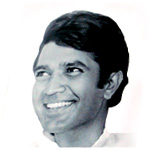
 As for the dialogue, the favourite will always remain the one from Anand… Babumoshai, Zindagi ek rang manch hai aur hum sab is rang manch ki kathputliyan hain…. The role played by Rajesh Khanna was really powerful, one of a dying man who had the ability to still laugh and make others laugh. I remember a scene in the movie where he makes light of his illness and Amitabh Bachchan in total frustration says, “Agar main kahoon ki tumhein lymphosarcoma of the intestine hua hai toh?” and Rajesh Khanna just smiled and says, “waah waah, baabumoshai, bimaari ho to aisi.” I think it was incredible how he delivered his dialogues and performed his role in the movie Anand.
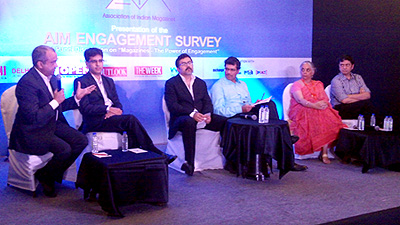 The three city tour organized by Association of Indian Magazines (AIM) to present the AIM Engagement Survey to the industry stakeholders came to end yesterday (July 18). After Mumbai and Bangalore the survey findings were presented in Delhi followed by a panel discussion on ‘Magazines- The Power of Engagement’.