Blog

  • Saatchi & Saatchi adds creative muscle with new hires

    By Amit Bapna


    The ‘Lovemarks’ agency Saatchi & Saatchi is buttressing its creative fortress. It has announced two new creative recruits – Anant Medepalli and Vihar Patkar as Creative Director and Associate Creative Director respectively. Alongside the agency has also moved the Creative Director on the P&G brand Mithun Mirji to Singapore for a newly created role of Regional Creative Director.


    Mr Mirji has been at Saatchi & Saatchi for a few years now and having worked at the agency has helped in forging a partnership with P&G and this has helped the agency get more responsibilities for work across the region. He said: “The experience helped when Saatchi & Saatchi decided to set up a Regional Hub in Singapore to partner with our P&G clients.”


    Mr Medepalli and Mr Patkar have both spent over 10 years in the business and have been associated with Saatchi & Saatchi in the past. Mr Medepalli returns to India after a stint at Leo Burnett, Nairobi while Mr Patkar worked at Saatchi from 2005 to 2008, followed by stints at Rediffusion Y&R and Salt Brand Solutions. The creative team at the agency is front-led by Ashutosh Karkhanis, Executive Creative Director and Ramanuj Shastry, Chief Creative Officer.


    Source: The Economic Times

    Copyright © 2012, Bennett, Coleman & Co. Ltd. All Rights Reserved


  • Hungama to manage digital mandate for Timex & Helix

    By A Correspondent


    Hungama Digital Services Pvt Ltd has bagged the digital media AoR duties for Timex India and its youth brand, Helix. Timex Group, one of the world’s largest watch makers that designs, manufactures and markets innovative timepieces and jewelry globally, named Hungama Digital Services as the exclusive agency working on their digital platforms, both web and mobile. The agency will manage social media for both the brands, media buying as well applications.


    Talking about this, VD Wadhwa, Managing Director & CEO, Timex India, said: “The digital medium is fast evolving and presents tremendous opportunity for brands to mark their presence. Given that the measurability of this domain is quantifiable, we at Timex are extremely focused on strengthening our brand presence on this very dynamic platform. We have strategic plans to increase our presence through the launch of brand Webstores, social media pages and impactful search and display campaigns. We chose to partner with Hungama as it is the leader in providing effective digital campaigns to brands across markets and categories. I am very confident of this partnership, as it will act as a catalyst in our journey to become the most influential brand in the digital space.”


    Speaking on the winning the account, Neeraj Roy, Managing Director & CEO, Hungama Digital Services said: “We are excited with the win and look forward to a relationship with the Timex Group. With an experienced and award winning team here, we aim to leverage this opportunity for Timex, towards a widespread exposure and an increased engagement in the digital space. Today, India is at the cusp of digital revolution with the advent of 500+ million consumers getting online in the next 3-4 years. We hope to offer integrated digital and experiential services to clients and prepare brands to connect, interact and transact with their customers.”


    JWT Singapore recently acquired a 51 per cent stake in Hungama Digital Services Pvt.


  • MxM Mondays: Why do marketers not spend enough on digital media?


    By Ananya Saha and Robin Thomas


    According to the latest IAMAI-IMRB report on Digital Advertising, as of March 2012, the total advertising spends, including classifieds, was valued at Rs2,850 crore. It is expected that by FY2013 the digital advertisement spends will be Rs4,391 crore.


    Search advertising constitutes about 20 per cent of the total online advertising spend or about Rs570 crore. Display advertisement, which has many components, forms a sizeable portion of advertising spends. Advertisements on portals and vortals form 13 per cent of the overall pie (Rs369 Crores). Advertisements on Social Media, Email and Videos over the Internet form 3 per cent (Rs94 Crores), 5 per cent (Rs144 Crores) and 2 per cent (Rs59 Crores) respectively. Mobile ads form nearly 4 per cent (Rs90 Crores). A major proportion – around 53 per cent of the overall digital advertising spends – are classifieds listings (Rs1,496 Crores).


    These numbers seem impressive, but there has been some concern that marketers are not spending enough on Digital Media. The theme for this week’s MxM Mondays is ‘Why do marketers still not spend enough on digital?’ While marketing spends may be shifting to the digital media globally, in India, television and print still rule. Is it because digital still doesn’t reach the masses, and homemakers, in particular? Or is that the bucks (hence commissions) are still big in TVCs? MxM spoke to some players in the industry to find out:

     

    Ambika Sharma

    Ambika Sharma, MD and CEO, Pulp Strategy

    The shift to digital media is not happening as fast as the industry would like it to be. However, we are witnessing an increase in aptitude and attitude with regards to usage of digital media. Marketers are not using the media aggressively as they prefer to wait-and-watch. Even then, they are aggressive on ‘search marketing’, but not other aspects of digital media.


    There is hardly any youth brand which is currently not on digital platform. Education is one prominent category that has been using digital media. The cents for digital, however, remain restricted. But as the impact of digital media grows, the impact of mobile advertising has seen a decrease as most people now do not prefer to click on banner ads on mobile screens. Some studies show that in the past one-and-a-half-year, the user has been ignoring banner ads.


    The digital spends depend on ROI, search and impressions, which needs robust backend engine. E-commerce websites have been the heavy users of digital advertising to create impressions. But there is little or no response mechanism on impressions and the visibility is highly fragmented. The numbers, like there is TAM for television, are not available for digital media. If a marketer advertisers on three digital platforms, every platform gives their own numbers. So, there is no comprehensive measurable strategy.


    Going forward, digital media will grow, but it will be a long while before it catches up with other media vehicles. Lotof factors such as measurability, reach, people not preferring to buy online are affecting the growth.
     

    Gyan Gupta

    Gyan Gupta, CEO, I Media Corp Limited (IMCL), Dainik Bhaskar

    In the US, the online spend is 29 per cent of the total advertising pie; in UK, it is 26 per cent. Now if you see the figures in India, it is not even 5 per cent. The trend shows that there will be 50 per cent increase.


    But I will not say that marketers in India are spending enough yet. The typical spender (who spends on television) is yet not on-board. Till the main spenders come on-board, the growth will be limited. FMCG’s have a deep share of the pocket, and it is necessary that they spend on digital media. Auto companies, e-commerce companies, financial companies have been heavy spenders on this medium.


    What are the marketers spending on, and how they spend also becomes important. What needs to be analysed is if the cost of acquisition is happening, if the leads are getting generated, how much a brand is spending on digital activation vis-a-vis on brand promotion. Trending is happening. This year will actually showcase the brands spending on digital media.
     

    Harneet Singh Rajpal

    Harneet Singh Rajpal, Vice President-Marketing, Domino’s Pizza India

    The use of digital media is picking up in India. For any marketer present in India, the digital media is beginning to become a part of their media plan. It is on radar for everyone, especially in the categories where youth is the target.


    For Domino’s, digital media has been important ever since we began our online ordering platform. Currently, it helps us drive traction. Hence, our media spends for digital medium have increased over the last two years. For us the return-on-investment is visible for every buck we spend on this media, since it results from direct conversion from inventory to revenue generation.


    We now spend close to 4-5 per cent of our total advertising budget on digital marketing, from almost nothing in the last two years. We work with leading publishers in the domain to create applications for Google search, Facebook and social media. I must say that on Facebook, we have the largest number of fans in the food category, and also followers on Twitter.


    Social Media management needs time and investment. It is important that the brand keeps the target in mind when planning the digital activations. Going forward, marketers will have to evaluate the prospects digital media brings. Of course, that depends on category to category. Digital media is still limited because of its reach, whereas traditional media garners higher reach. Also, the confidence about using the media is not too high among the marketers since there are no hard numbers to prove its success. The penetration of internet and the efficacy of the media will be tested over time.


    Jonathan Bill, Senior Vice President and Business Development, Vodafone India

    Digital Advertising is a growing medium in India. It will be everything we are hoping it to be and that too quicker than we think, so I think the business is starting to get in a healthy shape. The advertisers are starting to embrace digital more openly and they should do so, because India has the third largest internet population on the planet.


    On TV and Print bagging bigger ad share, I think that is a legacy issue among advertisers, but I do get a sense that it is fast changing. In the West, however, TV and Print advertising have declined in favour of online advertising. Print, therefore, has very less revenue share from advertisers as compared to online advertising and now online is beginning to even threaten television as a medium.


    I think we just need to continue on the path we are going. The quality of sales and, to a certain extent, the market needs to be made. The West took nearly two or three years to be made as far as the start of digital advertising market is concerned and in India we are only about a year ready. So, I am very bullish on digital advertising in India, particularly on mobile on three to five years timeline.


    Narayanan SP

    Narayanan SP, Senior Vice President, and Head VAS Mobile Commerce and Long Distance, Idea Cellular

    Compared to the global benchmark, certainly advertisers in India are not spending as much money on digital or mobile, but this is something which will change over a period of time. Marketers are experimenting to see if it makes sense for them to connect digitally for certain set of products/features and whether digital is the right medium to communicate or engage their brands. Thus, lot of experiments are happening.


    On the internet front, we are already seeing a significant traction which may not be as big as the international market because of the low internet penetration in India. So if you are looking at a certain type of product wherein the target audience are already digitally connected, then it makes immense sense to go digital. Digital, I believe, will evolve as more and more customer profiling is done and advertisers are able to target their customers precisely. When advertisers are able to measure the ROI (Return on Investment), then we definitely believe that a lot more investment will come into digital.


    The fact that TV and Print still bag more advertising share will definitely change over a period of time in terms of mobile being one of the vibrant channels. This does not mean print and television advertising disappear but, you will see an increase in spends on digital advertising and mobile advertising in particular over a period of time. This is because mobile is able to give the advertiser not only a more precise profile of the customer which makes it a lot easier for the advertiser to reach out to its consumers effectively, but it also allows the advertiser to interact with customers and measure the results of their campaigns effectively.


    Mobile industry, for instance, has a wealth of data in terms of customer usage, but there has not been much mining of the data which can be heavily leveraged by the advertisers. However over a period of time, you will see a lot more advertisers leveraging this data.
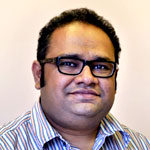
     

    Rakesh Rao

    Rakesh Rao, National Sales Head, Zapak Digital Entertainment

    The digital media has been growing exponentially. The year-on-year growth of this media vehicle is close to Rs2,800 crore, and is supposed to reach close to Rs4,000 crore in a year. So to say that it is not a preferred media would not be the right statement. Of course, it is not a dramatic growth, but given the growth of internet and smart phones, digital media is becoming a part of our daily life. The marketers are also following the trend.


    The ROI, when compared to TV and radio, is much more measurable. Cost per lead and cost per click measure actual conversions. This is the only interactive platform too, while rest of the media only give reach.


    Education, travel, finance are becoming the biggest spenders on digital because of conversion aspect. E-commerce, and categories like travel that look at selling inventory believe in digital media.


    The challenges that this media is encountering is getting TV-centric brands such as FMCG onboard because of reach. It is a given that while TV is cost-effective when it comes to reach, digital media will catch up in some years. About 60 per cent of these brands are on digital, but 40 per cent need coaxing. There is no hindrance apart from the fact that broadband numbers need to grow. Digital media is here to stay and grow.
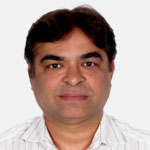
     

    Sandip Tarkas

    Sandip Tarkas, President (Customer Strategy) and CEO, Future Media and T24

    As far as Future Media is concerned, our advertising spends on digital have been increasing year-on-year. Despite a lot of digital activities done by marketers specifically on social media, it does not reflect in spends. The problem with digital is not a lack of a credible or universal measurement system, but the fact that it is too measurable as people try to measure every little thing. Although there are so many metrics which evaluate the digital medium, I don’t think it is a lack of measurability at all, as in digital we are clearly able to measure our CPM’s (Cost per Thousands) and so on. Digital is something we use for more engagement rather than reach because it does not offer reach.


    We look at advertising based on two things – reach and cost efficiency. And then you look at everything else – whether the medium is interactive and so on. So, it is primarily about reach and cost efficiency. Digital media spend in India is a reflective of India’s internet penetration, whereas in a lot of markets digital penetration is very high. In those markets both print and television advertising have declined and digital advertising has been growing.


    In India too, digital is growing much faster than the traditional media, and the growth of the media certainly shows the growing importance of digital. The current size of the digital advertising pie is reflective of the kind of inroads it has made in the country.


    On digital being a 360-degree medium in itself and the role of online video and social media advertising, the biggest gain happening in digital at present is the fact that it is changing quite rapidly. Since the late 90s when we first started using digital advertising until now, the role of the medium has changed quite drastically.


    Digital today not only offers more opportunities for engaging the consumers, but the vehicles used in digital have also been changing with time. For instance, in the early days television ads would continue for quite a lot of time, but today with more options, even the television channels have begun to announce that the programme will be back in say a minute or two. So as consumers have more choices, the way the medium gets utilized also changes. Digital, I believe, be it in any form – video, social, mobile – if it is not going to be interactive, it will not be very successful.


    For anybody targeting the youth, digital is an inescapable medium. I believe the biggest change in digital advertising will take place through mobile, particularly mobile VAS and the data cost. Growth spurt in digital advertising will also come through the increase in smart phone usage and the lowering of data cost will revolutionize digital advertising.


    This is because India has a very high tele-density and today mobile phones have reached the lower-most strata. I believe digital advertising in India will explode once mobile advertising comes of age but, right now it is still in its infancy.


    Eventually digital advertising will impact television and print ads as marketers will have to allocate their budgets for digital advertising, once it comes of age. It may probably hit print advertising first and then television but for that to happen there is still some time.

     

    Sanjay Tripathi

    Sanjay Tripathy, Executive Vice President – Head Marketing and Direct Channels at HDFC Life

    There is still limited spend on digital due to lack of knowledge about the medium and utilizing it effectively as a part of marketing plan; reach/penetration of the medium; and its ability to create impact in the short term. Digital still reaches about 10 per cent of the Indian population and there hasn’t been much of a development in building infrastructure to support the growth of internet. TV continues to be the mass medium which gets the maximum eyeballs and reach.


    While the ROI variables will drive spends to digital, marketing needs a serious mind shift to look at the additional advantages which digital brings along –  a medium which allows two-way dialogue  and measurability to the last mile.


    Thirty per cent of our budgets are dedicated to digital this year – a big move from the fact that we spent a negligible amount last year. As BFSI marketing and advertising becomes more ROI focused, digital media will play an important role. Digital budgets will have a healthy growth each year and will also account for a significant part of the marketing budget.


    While marketing spends may be shifting to the digital media globally, in India, television and print still rule. This is because reach plays an important role. Penetration of Internet in India is still low compared to international markets. The consumption of non-traditional online media is still low and 360 degree integrated communication planning in India has not evolved to have online as an integral part of marketing plans. Also, online medium do not works in sync with other media.


    While there has been a tremendous amount of growth in the usage of internet among SEC A, SEC B audience, internet is yet to gain as big an audience in tier 2 or tier 3 cities. TV continues to be the mass medium due to lack of digital infrastructure. It is the reach and channel affinity which mainly drives the spending and this is where a traditional channel like TV gets one up over digital. There is also a problem of lack of content on digital. Either the content has not been customized to cater to the audience or often the language becomes a hindrance in consuming the content.


    But digital media will make a huge impact. Level of engagement, interactivity and ROI afforded by the medium means it has big role to play. For brands which don’t engage their users online will tend to lose their relevance. As reach increases, the importance and level of competition will also increase –  YouTube already affords a higher reach compared to most of the TV channels and is increasingly becoming an important part of the traditional media mix.


    Digital offers tremendous potential for business – whether it’s about spreading awareness or generating business even in the face of a slowdown. In fact, as people tighten up their purse strings, they will want to do more research before they arrive at a purchase making decision and internet remains the primary medium of product research.


    I see the spends going up because the whole media pie has been asymmetric- if you look at the reach-frequency formula and compare it to TV, print, radio and then digital. There are more people spending time on digital in comparison to other traditional media touchpoints. I see the digital percentage increasing in the overall pie.


    Youtube and pre-roll videos have become a mainstay when it comes to hosting TVCs on digital and these unique ad formats are as effective in reaching out to audience as a TVC. For print QR codes help bridge the gap between offline and online world.

     

    Saugata Bagchi

    Saugata Bagchi, Senior VP, Tribal DDB India

    The primary challenge is the need of cracking an ROI metric, which is acceptable by advertisers across the board.  The media spends are happening, but is it delivering enough clickthrough rate goes unanswered. Digital media cannot ensure high reach like television, but with 12 per cent penetration among various categories it can definitely give high frequency. Currently, only 25-30 per cent of population is online; hence, the spending on this medium will remain lower than other mediums.


    The point of advantage is that there is a big influx of youth, and they are ready to spend. While the marketers would want to catch the youth online, they (marketers) get no justification in form of numbers to spend much on media. Hence, they prefer doing mall activation to spending on digital platform. The agency and publishing community need to be more forthcoming to speak to the marketers, and in their language.


    Digital media is currently registering 15-18 per cent year-on-year growth, but it is important to note the gap between digital and television media.


    Since the offices of MxMIndia are closed on Monday, August 20, there will be no MxM Mondays next week. We will announce the theme for the next edition on Tuesday, August 21.



  • L&K strengthens top deck with Rana Barua as COO

    By A Correspondent


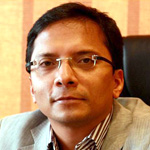
    Rana Barua
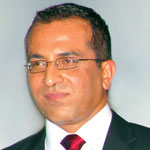
    Samir Datar
    Amardeep Singh

    Law & Kenneth has announced senior-level appointments. While Rana Barua has joined L&K as Chief Operating Officer, Samir Datar and Amardeep Singh have joined as Senior VP Strategic Planning and Chief Creative Officer (North & East) respectively.


    Mr Barua’s last assignment was that of COO of RED 93.5 FM for two years. Prior to that, he was the Head of Marketing & Programming of Radio City for four years. On joining Law & Kenneth as COO -West & South, he said, “Law and Kenneth is the one of the fastest growing agencies which is a true believer of building brands in the country and my mandate is to be a catalyst and a partner in this growth.”


    Other than Red FM and Radio City, Mr Barua has worked with Ogilvy, McCann and Y&R in nearly two decades in the business.


    With a career spanning 20 years and diverse product categories – from tractors to telecom infrastructure and everything in between – Mr Datar has worked at JWT, Cheil & LG Ad. He has built and managed successful brands like Maggi, Samsung, Hyundai & Nature Fresh. On joining L& K, he said, “I believe that Law & Kenneth is the most exciting & challenging place to be right now and I look forward to contributing my bit to the excitement.”


    For Mr Singh it’s a homecoming. While he has worked with agencies such as Mudra, Trikaya Grey, McCann Erickson, Contract, Dentsu Communications and M&C Saatchi, this is his second stint with Law & Kenneth. “It feels great to be back. I’m excited and honoured for the opportunity PK and Anil have given to me,” he said.


  • Plagiarism… a common affliction with senior journalists

    By Ranjona Banerji


    “I apologise unreservedly,” said Fareed Zakaria’s most recent tweet on August 10. And here’s the statement attached:

    “Media reporters have pointed out that paragraphs in my Time column on gun control, which was also a topic of conversation on this blog, bear close similarities to paragraphs in Jill Lepore’s essay in the April 23rd issue of The New Yorker. They are right. I made a terrible mistake. It is a serious lapse and one that is entirely my fault. I apologize unreservedly to her, to my editors at Time and CNN, and to my readers and viewers everywhere.”


    This is how Zakaria describes himself on twitter: “Editor at TIME Magazine. Host of CNN’s GPS: Sunday @ 10am and 1pm ET in the U.S. Blogger at CNN.com/GPS.

    New York, NY”.


    Now he stands suspended from all his jobs, for at least one month pending investigation.


    The odd thing is, Zakaria need not have picked up those bits from Lepore’s article and passed them off as his own. He could have given her due credit, which would have been the right and honourable thing to do. He could have read as much as he could on the subject and drawn his own conclusions. He could have used facts from a variety of sources and made an argument based on that. But why pass off a few paragraphs from someone else’s work as your own?


    Sadly, this is a common affliction with senior journalists. Get someone junior to do the leg work because you’re so busy being a celebrity, obviously you don’t have the time to do it yourself. That obviously means that you don’t have the time to check either. Throw your opinion together, safe in the feeling that your name will carry you through.


    Or, it could be that you did the Google search yourself…


    Either way, there are no excuses which is why Zakaria hasn’t made any.


    Throw your mind back to almost two years ago when huge chunks of Aroon Purie’s publisher’s note in India Today was picked up from a column in Slate magazine. Purie apologised, but obviously, since he owned the magazine, nothing more could be done. Also, it turned out that he didn’t realise that the “research” sent to him by his employees (senior journalists though they may have been) was not written by them but by someone else.


    The funny thing is that these are rookie lapses, which come from arrogance, laziness and carelessness. This is not the work of a scientist trying to get published in some respected journal or a PhD student trying to finish a thesis – not that cheating is justified – who thinks they have just one chance to make it. What are the stakes involved for a columnist who writes regularly? Your whole reputation is built on those daily, weekly, fortnightly or monthly words you come up with. Imagine throwing it away in this sloppy manner?


    Unfortunately for Zakaria, this puts all his work under the scanner. Trust is so ephemeral.


    The odd thing is, one suspects this kind of plagiarism is possibly far more common than this. Stupidity is after all universal. Common sense is not.


    Ranjona Banerji is a senior journalist and commentator based in Mumbai. She is Contributing Editor, MxMIndia. The views expressed here are her own. Twitter: @ranjona


  • It’s Bloomberg TV India from today

    By A Correspondent


    There is much activity and excitement about the rechristening of business news channel Bloomberg UTV.  Since it launched in 2008, this is the channel’s second change in name. It was launched as UTVi and a year later called Bloomberg UTV after an equity alliance with Bloomberg LP.


     

    Other than the name, the channel has also seen significant changes in the editorial and business teams over the last four years. While trading hours at the stock exchanges are a big pull on business channels, Bloomberg UTV has been underscoring its strengths beyond stockmarket coverage.


    Although ‘Bloomberg TV India’ is the full name and that’s what the anchors have been saying on air, the logo on the screen only says ‘Bloomberg TV’. Anchors and the channel’s relaunch ad are been highlighting the fact that the channel is part of the worldwide network of Bloomberg TV.


    Sriram Kilambi

    Said Sriram Kilambi, President, Bloomberg TV India, “The objective is to position the channel as an organic extension of Bloomberg, the world’s largest financial news network and establish Bloomberg TV India as distinctly different from competitive alternatives. Whilst all business channels subscribe to the Bloomberg terminal for information, the terminal for us is our raison d’etre. Bloomberg TV India is therefore about accurate, incisive, quick and actionable knowledge, straight from the source. Hence, ‘The Original Source’.”


    Added Vivek Law, Editor, Bloomberg TV India on the rechristening, “Bloomberg TV India will continue to mirror the highest standards of business journalism which the Bloomberg brand has established globally. We are indeed proud to be a part of the news gathering heritage and will bring to our viewers business news the way the world knows it”


    Vivek Law

    The change will be followed with the launch of a few new shows, including ‘The Outsider’, where celebrated journalist Tim Sebastian will anchor a discussion on key issues concerning the country.


    The name change has been in the works for a few months. Last fortnight, the channel unveiled a campaign crafted by Triton Communications with the ‘U’ in the name greyed. While unveiling the new communication, Mr Kilambi said: “The business news genre is full of the same stuff – which is very stock led basically buy-sell hold. We at Bloomberg are about the larger picture – infrastructure, macro-economics, judiciary, policy, stocks, real-estate etc.”


  • Mediaah! History will also record Zakaria as a plagiarist

    By Pradyuman Maheshwari


    As a term, Indian media loves to define copyright as the right to copy than a protection of the intellectual property of a body of work. Under the garb of inspiration, many of our films are ‘lifted’ from their international counterparts without permission. Television is a nicer place with channels paying fair monies for formats of popular shows like Kaun Banega Crorepati, Indian Idol, Bigg Boss, Jhalak Dikhla Jaa, etc. Radio has had its issue on copyright for payments for airing of songs, but not for filching ideas.


    Fareed Zakaria’s apology (and comments):
    http://globalpublicsquare.blogs.cnn.com /2012/08/  10/a-statement-from-fareed/

    The article with the plagiarised text:
    http://www.time.com/time/magazine/article/ 0,9171,2121660 2,00.html

    The original New Yorker article by Jill Lepore:
    http://www.newyorker.com/reporting/2012/04 /23/ 120423fa_fact_lepore?currentPage=all

    The Economic Times Code of Conduct
    http://articles.economictimes.indiatimes.com/2010-09-18/news/27597028_1_editors-confi dentiality -church-and-state

    The MxMIndia Code of Conduct
    http://www.mxmindia.com/code-of-ethics/

    The Slate controversy
    http://www.slate.com/articles/arts/culturebox /2010/10/great_writers_steal.html

    For many years, a majority of Indian print media editors have condoned plagiarism. In fact, many encourage it, some even indulging in them. News reports – in full or part – are often copied without permissions or attributions and no one really appears to worry about it much.


    When Mediaah! ran as a standalone blog in the early 2000s, it wrote about how a reporter with a business daily had plagiarised from a report on the website of a rival paper. My attention was drawn to the apology that appeared.


    At that point, my contention was while the reporter was to blame, her team leaders were equally responsible as they ought to have been more vigilant and tracked what immediate competition had written.


    The reporter went on to work at various workplaces later, and I haven’t really tracked whether she has repeated the act or not. At another former workplace, I was faced with a situation where a columnist confessed to plagiarising. The column was dropped with immediate effect.


    Many years back, a Hindustan Times editor also disgraced himself (and the paper) by plagiarising. His services were dispensed with after a furore over the issue.


    Plagiarism – in any form is a crime – and it’s critical that organizations adopt strict rules. At the Economic Times and ET Now, for instance, it’s a “firing offence” as per the code of conduct.  At MxMIndia too, we have a no tolerance policy towards plagiarism and it could mean an immediate termination of employment, regardless of the utility or seniority of the journalist. However, as we figure, not all organizations have stringent standards on plagiarism. Some just let it be.


    If it was easy to escape plagiarism a decade back, the wide use of the internet and social media in particular will ensure that those caught in the act will not be forgotten in a hurry.


    For instance, I am sure India Today group chairman and editor-in-chief Aroon Purie had no role to play in his signed editorial picking up generously from a Slate.com article two years back. Sadly, whenever there is a discussion on plagiarism, his name will surface in the list of well-known Indian editors indulging in the act. In fact, a Wikipedia entry on the media baron has a fairly visible mention of the Slate case.


    I guess the same would hold true for Fareed Zakaria. This is what Zakaria’s bio reads on the homepage of his website (fareedzakaria.com):

    Fareed Zakaria hosts CNN’s flagship foreign affairs show, is Editor-at-Large of TIME Magazine, a Washington Post columnist, and a New York Times bestselling author. Esquire Magazine called him “the most influential foreign policy adviser of his generation.”


    The Wikipedia entry on Zakaria already highlights the plagiarism case.


    Books on media history and ethics will now have one more way to describe Fareed Zakaria: great mind, writer, TV host, author and a plagiarist.


    Sad.


    Mediaah! is written by Pradyuman Maheshwari, senior journalist and Editor-in-Chief and CEO, MxMIndia. He can be reached at: pradyumanm[at]mxmindia.com, Gtalk pradyumanm@gmail.com, BBM 29FEA79C. Twitter @pmahesh and of course the mobile: 98338 76278. The views expressed here are his own.


  • AdStrat: Chill Out Surprise

    Kowkab Naim, Director/Chief Development Officer, Social Seety


     

    1. Name of the Campaign: Chill Out Surprise


    2. Brief: To create buzz about the product while keeping the brand proposition in the limelight


    3. Research insights: More than half a million impressions – 1,50,000 people reached,  10 tweets per minute


    [youtube width=”400″ height=”220″]http://www.youtube.com/watch?v=NkBU9nayZqc[/youtube]

    4. The thought process behind the creative: In this hustle bustle of the city, people are often too stressed and thus ruin their day. And not only are they stressed, with social media they actually vent it out on different platforms. This insight tied down with our brand positioning of ‘take a chill pill’ very well. We saw Twitter as the perfect platform as it is real time and people share what they feel, right now! The idea was to surprise them out of nowhere and turn their stress into smiles.


    5. Media vehicles chosen: Twitter


    6. Key issues kept in mind while executing the ad: Quick turn around time, finding out the location of the winners


    7. Does the treatment do justice to the brief?

    With such a phenomenal response and curiosity for the second season of Chill Out Surprise, it definitely did justice to the brief


    8. What according to you is the differentiating factor about the ad?

    The differentiating factor would be the fact of how a brand used the platform and gave an experience to the user rather than just pushing the product information or discounts. An experience which was packaged in the form of a surprise; got us even traction as we managed to give the Twitter followers a reason to smile and of course to remember us the next time they are stressed.


    Compiled by Shubhangi Mehta


  • LifeCell appoints Edelman for PR

    By A Correspondent


    LifeCell International, India’s largest stem cell bank, announced its decision to appoint Edelman as its PR partner to handle LifeCell’s public relations and media mandate.


    Founded in 2004, LifeCell was the first to bring the revolutionary concept of umbilical cord stem cell banking to India and with over 50,000 parents who have chosen to preserve their baby’s umbilical cord stem cells with LifeCell; the company retains its significant market leadership. LifeCell has a pan- India presence, providing its services in over 100 towns and cities in India.


    Edelman’s mandate is to raise public awareness about stem cell banking, improve understanding about the concept of stem cell banking amongst consumers and medical professionals, increase media visibility for LifeCell and highlight the company’s offerings and leadership position in the industry.


    Commenting on this partnership Mr Ravi Shankar, Head – Corporate Communications & Marketing, LifeCell International said: “LifeCell is poised for high growth in the coming months and is in need of a PR partner who will fuel this trajectory by increasing the concept and brand awareness of stem cell banking in the market. We are pleased to join hands with Edelman in our growth phase. We are confident of leveraging Edelman’s expertise and pan- India presence to create awareness about the importance of stem cell banking and to highlight LifeCell’s role, unique offerings and significant leadership in the area of stem cell. Edelman India’s expertise in the healthcare & consumer space and thorough understanding of our business helped us reach this unanimous decision to appoint them as our PR partners.”


    To further enhance awareness, LifeCell partnered Lisa Ray, who had undergone successful stem cell therapy for treatment of blood cancer. LifeCell’s association with Edelman is intended towards further penetrating the market through higher levels of market education and awareness.


    Robert Holdheim, Managing Director, Edelman India said: “LifeCell International is a pioneer in the field of stem cell banking in India and we are delighted to be associated with them. This win has cemented our position as leaders in healthcare communications in India. Stem Cell banking and research has enormous scope in the field of regenerative medicine. We hope to help LifeCell maintain and expand their position as leaders in the field of stem cell banking and research in India and globally”.


  • Dheeraj Sinha to head planning @ Grey

    Dheeraj Sinha

    By A Correspondent


    Dheeraj Sinha has joined Grey India as consultant and will head planning for South and South East Asia. His last stint was with Bates India where he was Regional Planning Director, Asia.


    Commenting on Mr Sinha’s appointment, Jishnu Sen, President & CEO, Grey India said: “I have been looking for a planning partner – someone to lead the strategic thinking of our team for a few months now. I have been a huge fan of Dheeraj’s for a while, his reputation precedes him. His work and awards are a testimony to his prowess. So when Dheeraj started his consultancy, we became his client. I can confirm that Grey has taken him on as a consultant and we look forward to this exciting partnership.”


    Before joining Bates in 2005, Mr Sinha had worked with McCann Erickson and EURO RSCG in India. An alumnus of Delhi University and MICA, Sinha has worked on the brand strategy for several multinational and Indian brands, including Fiat, Virgin Mobile, MasterCard, LG, Reckitt Benckiser, TVS Motorcycles, Max Bupa, Marico, Dabur, and Cavin Kare.


    Talking about his appointment, Mr Sinha said: “I feel a great sense of energy and determination about the people at Grey. In all my interactions with Jishnu, Amit and Malvika, it looked that we can play as a team to create some magical work. The focus on creating sparkling work comes from the regional and global leadership which is critical for success. So when they proposed a longer term role, it felt like the right thing to do.”


    His specialties includes understanding Indian consumer, Youth marketing, Small town India, Technology adoption, Cultural change, Brand journey, Shopper marketing, Brand extensions, New brand launch as well as Business opportunity mapping.


    Last year, Mr Sinha launched his first book, ‘Consumer India: Inside the Indian Mind and Wallet’. He has also authored a chapter – ‘Bridging Gaps – Retail in the Emerging Indian Market’ – in the book, Shopper Marketing. He has spoken on topics related to the Indian consumer at the Esomar Asia Pacific Conference, the Global Youth Marketing Forum, and the Asian Marketing Effectiveness Festival.


  • Want to recreate Ramayan’s magic, but difficult to fit into grandfather’s shoes: Amrit Sagar

    By A Correspondent


    Amrit Sagar

    Twenty years ago, Gods and mythology, not Aamir Khan, ruled the Indian television sets. In the late 1980s, streets would empty out on Sunday mornings as people sat glued to their TV sets to watch Ramayan and Mahabharat.


    Now Zee TV, which is re-entering the slot with a mythological show – Ramayan, hopes to create the same magic. “Ramayan is more than mythology; it is the ultimate story about our culture and family values and relationships. We all grew up on it, and we want the current generation to know about it. We wanted to tell the story, which left an impact on us, all over again…” said Sukesh Motwani, head – fiction programming, Zee TV.


    The channel has chosen the 11am slot because it feels that the story needs to be watched together as a family, and what could be more perfect that a Sunday morning.  It is happy that the slot is being relived again as various networks are launching shows on the same slot. “For the last few years, no one paid attention to the Sunday morning slot, but now things are changing. However, we do believe that the content is the main criteria which will make the show on that slot a hit or not,” said Mr Motwani.


    The channel also believes that times have changed and TV penetration and numbers have increased over decades but the whole Sunday morning experience can be brought back with a story as simple and universal as Ramayan.


    Sukesh Motwani

    Apart from the story, one more thing common between the original and the new Ramayana is the Sagars. Zee TV has taken on-board Sagar Pictures. MxMIndia spoke to Amrit Sagar, who along with Moti Sagar and Meenakshi Sagar, is set to recreate the classic…


    Many networks have showcased new avatars of Ramayan and Mahabharat, but failed to get the same response as the originals. So, how is this going to be any different?

    We must keep in mind that the stories for such epics cannot be changed. One has to tell the same story; however, the way it is told can vary from person to person and how lavishly the show is made. From that aspect, we have tried to make it bigger and better than anything seen before. Having said that, we have made sure that the story isn’t compromises with, so, have followed my grandfather’s and Tulsidas’ original.


    Audiences and mindsets have changed, so how will you make the show relevant for today’s generation?

    We are very much aware of this fact. Therefore, we plan to charm the audiences with the visual effects and sets.


    Will we see any new faces on the show? How did you choose the actors to play the characters, especially that of Ram and Sita?

    There will be new faces on the show and the ones which people have seen on television earlier are the ones who have never played such characters before. So, it is going to be a different experience for everyone. Also, an image of the god is very individualistic. The actors we have chosen to play Ram and Sita are the ones we thought suited the bill from our view point. We are keeping our fingers crossed… rest depends on audiences and how they welcome and perceive the characters.


    There are rumors of clashes because of current failure during the time of the telecast. Do you see that happening today?

    It’s difficult to predict that, but I hope we are also able to create the same passion and effect.


    Do you think Sunday morning slot will interest youngsters?

    Apart from the metros, I think Sunday is like any other day for the rest of the country wherein the day starts early. Also, it is about the family spending some quality time together. Therefore, I don’t think we will face any problem in attracting the audiences – old or young. I’m sure the show will be enjoyed by a whole family together.


    What kind of response are you expecting since the show will be aired simultaneously on Zee and DD?

    Of course, we are hoping to see a great response from the audiences as the reach will massive. We want to create the same magic again. However, I also know that it will be very difficult to fit into my grandfather’s shoes.