
Blog

  • Government regulation for networking sites

    By A Correspondent


    The government has held many discussions with social networking sites and brought to their notice that objectionable content appearing on the sites may lead to law and order problems. The social networking sites were requested to take appropriate steps in line with those outlined in the Information Technology (Intermediaries Guidelines) Rules, 2000.


    Adequate legal provisions are already in place in this regard. Government has notified Information Technology (Intermediaries guidelines) Rules, 2011 under Section 79 of the Information Technology Act, 2000. Further section 69A of the Information Technology Act, 2000 empowers the government to issue directions for blocking for public access of any information through any computer resource in the interest of sovereignty and integrity of India, defence of India, security of the state, friendly relations with foreign states, public order or for preventing incitement to the commission of any cognizable offence relating to these.


    This was stated by Minister of State for Communications and Information Technology, Sachin Pilot in written reply to a question in Lok Sabha on August 8, 2012.


  • New: Life’s Lessons | Anil Kakar: Thank you, Mohammed

    Anil Kakar

    And on this third Thursday of the month, we start a new monthly series with senior professionals and captains from the industry reminiscing about something that was told to them by their bosses, mentors or colleagues that dramatically changed their outlook to work… and life.


    It was the summer of ’96. The time was 11:02 am. There I was with my head propped up on my hands, in the Enterprise office, aged 21 and a half, staring at the blank page on my computer with barely concealed disdain. It was time for Mohammed to walk into the office any moment now. We were already way past the material deadline. Panic sets in. The Production Manager walks straight up to me and yells, “Since you were not done with the copy, I’ve kept the artwork on hold. Is it ready yet?” More panic. My mind was blank, just like the page staring back at me from my computer. After all, this was an ad I had rewritten 216 times, no less.


    In comparison, a resignation letter seemed much easier to write. Looking at my impending fate in the agency, I decided to quickly write one. Just in case.
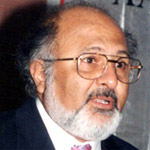
     

    Mohammed Khan

    I quickly added a new page on my computer and I started typing: ‘Dear Mohammed…’


    Gosh, where does one start? In the time I had spent at Enterprise, I had learnt that every piece of communication could be turned into a conversation piece. Yes, even a resignation letter.


    Right. Delete page. Start over again. Change background to black. Change typeface to Goudy Old Style. Change point size to 16. Print.


    There it was. At last. A crisp, black print-out fluttering with the pages of my writing pad. The letter gave me much-needed relief. In a matter of minutes, I felt like a whole new person.


    Unfortunately, the feeling didn’t last long. At least, not until I pulled out and looked at the print-out again.


    White type on black? I must have lost my marbles. The copy was totally illegible. Well, if my aim was to get sacked, this would have worked wonderfully well, but not before I was minced and grilled like meat. Damn.


    Change the background to white. Set the copy again. Wait a minute. Suddenly, the whole layout looks imbalanced. Adjust spaces on top. Still too much imbalanced negative space at the bottom. Increase point size to 17. Nah, let’s make it 16.7. That looks just right. Place a picture in the centre. The picture is too wide for the page size. I crop the picture. Something doesn’t feel right. Mohammed’s words come darting back at me; ‘You have no right to crop a picture, you’re playing around with a photographer’s vision’. Right. Apologies. Control Z. Should I expand the font, instead? There, it’s stretched to 125% and sits comfortably. Wait. This is not the way the typographer envisioned his typeface, either. Control Z. And so it went on. And on. And on. 3 dots in the headline? Blasphemy. An exclamation mark? Instant death. A visual of fish served on a square plate? Annihilation. What about a headline? Damn, I just wrote 216 which didn’t make the cut.


    Yet, after an hour of careful deliberation, I came to the conclusion that anything is better than leaving an agency which had taught me everything at the start of my career. Yes, even the 217th headline.


    At that moment, I disappeared. I hopped across to a seedy bar and grabbed a beer in the middle of the afternoon. Perhaps, my first ‘afternoon’ tipple which started a trend.


    I wrote headlines on paper napkins and headed straight back to the office. I walked in to Mohammed’s room, my hands still trembling with anticipation. He lit a cigarillo and sat on his chair. I showed him a set of headlines which he kept reading over and over again, intently.


    Finally, he looked up at me with a wrinkled forehead and asked me angrily, “What on earth is this?”


    “Headlines”, was my dumb reply. Dumbstruck, I almost reached for my resignation letter.


    He turned around and said, “How clever of you, I can see that. Why couldn’t you write these earlier?”


    Relieved, I slipped the resignation letter back into my pocket and asked him what was wrong with the 216 headlines I had written earlier.


    “Well, on the 217th attempt you wrote for no one else but yourself.”


    Thank you, Mohammed. That was perhaps the most important lesson I’ve learnt in the 20 years that I have been in the business.


    Anil Kakar is founder of Gasoline, an independent brand communications agency based in Mumbai. He has worked for close to 20 years with agencies such as Leo Burnett, Enterprise Nexus, Ambience Publicis, SSC&B Lintas and Percept. Anil worked with Mohammed Khan at Enterprise Nexus for four years between 1996-2000. Has he been in touch with Mr Khan and when was the last time he met him? “Unfortunately, I haven’t been in touch with him in the recent past.  The last I bumped into him was a year ago at Palladium. :)”


    Compiled by Meghna Sharma

     

  • FM Phase III: Pre-qualification bid for e-auctions starts Sept

    By Robin Thomas


    The FM radio industry has moved one step closer to the Phase III expansion as the Ministry of Information and Broadcasting (MIB) has called for tenders starting September 2012. The pre-qualification for the bidders is expected to be complete in another two months, following which the qualified companies will be allowed to participate in the e-auction for FM Phase III. The e-auction for Phase III is expected to begin in January 2013 and may take another two or three years until the entire FM Phase III expansion is completed.


    CS Kaushik, Deputy Secretary (FM), MIB (Ministry of Information and Broadcasting) and Uday Chawla, Secretary General, Association of Radio Operators for India (AROI) have confirmed the development to MxMIndia.


    It may be recalled that the Union Cabinet had given its nod to the e-auction for FM Phase III. In November 2011, an Inter-Ministerial Committee (IMC) was constituted in the MIB with an aim to guide and supervise the process of e-auction and to award the license of FM radio stations to private agencies under the FM radio Phase III expansions.


    FM Phase III policy seeks to extend FM radio services to about 227 new cities. Phase III will cover all cities with a population of one lakh and above, simultaneously, there will be a total of 839 new FM radio channels in 294 cities. In addition, FM radio stations will also be allowed to air news, but sourced from AIR (All India Radio) only.


  • Big FM makes two new appointments

    By a Correspondent


    Rabe T Iyer

    Reliance Broadcast Network Ltd. (RBNL) announced the appointments of two business heads at BIG FM. Pankaj Vassal has been appointed as Vice President (Regional Business Head – West and East) and will report to Rabe T Iyer, Business Head, BIG FM. He will be responsible for business growth and overall P&L for the business vertical. Working closely with him will be Neeti Virmani, Station Head, Mumbai and helping ensure revenue targets are met. The duo as a team are all set to ensure the targets are met and floor is set to usher phase III of the radio revolution.


    Rabe T Iyer, Business Head, BIG FM said: “In our continuing quest to constantly bring more of the “Outside” In, we are happy to have two very talented associates join us in critical positions. Both Vassal and Virmani come with vast experience in driving revenue, operations and execution in different but relevant ecosystems. Their depth and width of business understanding will not only build better ROI, but also build a higher listener affinity for our large network of stations.  I wish them the very best.”


    Mr Vassal’s key focus area will be to grow the radio business – expanding the West and East Zones of the network from the revenue point of view. He is said to bring with him close to 15 years of experience. Mr Vassal has worked across organizations like Amway, Motorola, Asian Paints and Essel Packaging wherein he is said to have been instrumental in growing the business and leading improvements in areas such as gross margins and profitability while growing new markets.


    Pankaj Vassal said: “I feel incredibly proud and excited to have joined a growing and vibrant organization like RBNL at a time when it is transitioning into a media giant. I respect the vision and culture of the organization, and look forward to taking on new challenges and to contributing towards helping RBNL reach greater heights.”


    Working closely with Vassal will be Neeti Virmani, who joins as Station Head for Mumbai, who brings close to 14 years of varied experience across General Management, Marketing and Sales at Mass Consumer focused organizations like Aircel, Pepsi, Airtel, Aptech and STG Ltd. As Station Head, her role will involve – managing overall business and operations of the Mumbai Station while managing the P&L, by driving functions including sales, programming, and marketing. Her key forte is said to include driving growth and share blueprint through market insights and in driving business through large teams.


    Neeti Virmani said: “I am delighted to have joined the dynamic RBNL family. The world of multi-media entertainment has fascinated me and I am eager to the take up this challenging role, and learn and contribute to the best of my ability.”


  • Debrief: Greenlam: Ati sundar!

    By Anil Thakraney


    Greenlam Laminates is a fun account to work on. The client is quite creative savvy, and this is obvious from the sort of offbeat advertising that happens on this brand. I had the good fortune of working with them during my stint with Lintas,New Delhi, and must say I have a lot of respect for these guys.


    Greenlam has released another cool TVC. This one features a gentleman called Shri Saundarya Premi, whose life’s mission is to make this world a more beautiful place. He goes around making sure women get their make-up right, he teaches some rural belles the art of carrying a water pot sensuously, and so on. Finally, when asked what will happen after he’s gone, Shri Premi says the job of beautification will be carried forward by Greenlam Laminates. And that’s when the brand enters the story.


    [youtube width=”400″ height=”220″]http://www.youtube.com/watch?v=6Td9z0g7S2Y[/youtube]

    I like this one. It’s single-minded on beauty. It’s a surprising solution. It’s humorous and entertaining. And the jingle is pretty catchy too. But most importantly, the commercial puts jaan into an entirely boring product category, something that the makers of Greenlam ads have been doing repeatedly.


    One really wishes Shri Saundarya Premi pays a visit to dirty Mumbai. We can do with some beautification.


    Rating: (On a scale of 1 to 5): 4. Single-minded and entertaining.


  • Paritosh Joshi: Independence and Free Media

    By Paritosh Joshi


    Constitutional Law is assumed to be arcane, dense and generally beyond the comprehension of anyone except the most learned of legal minds. And yet, some of the most soaring, inspiring expressions of humanity’s pursuit of a higher ideal, the greater good, a more just world are to be found there. Here are two splendid examples:


    “WE, THE PEOPLE OF INDIA, having solemnly resolved to constitute India into a SOVEREIGN SOCIALIST SECULAR DEMOCRATIC REPUBLIC and to secure to all its citizens:

    JUSTICE, social, economic and political;

    LIBERTY, of thought, expression, belief, faith and worship;

    EQUALITY of status and of opportunity;

    and to promote among them all

    FRATERNITY assuring the dignity of the individual and the unity and integrity of the Nation;

    IN OUR CONSTITUENT ASSEMBLY this twenty-sixth day of November, 1949,DO HEREBY ADOPT, ENACT AND GIVE TO OURSELVES THIS CONSTITUTION”.


    “Congress shall make no law respecting an establishment of religion, or prohibiting the free exercise thereof; or abridging the freedom of speech, or of the press; or the right of the people peaceably to assemble, and to petition the Government for a redress of grievances”.


    84 words in that first quotation, the Preamble to the Constitution of India (and it was only 82 before Indira Gandhi imposed ‘SOVEREIGN SOCIALIST’ upon it vide the Forty Second Constitution Amendment Bill, 1976) and a mere 45 in the second, the Second Amendment to the United States Constitution. Look at how emphatic both are on the matter of Free Speech.


    Why should this be so? Jurists aver that all other fundamental freedoms can be logically derived from Free Speech. Conversely, truncate Free Speech from the rights enjoyed by the citizens of a nation-state and you have an inevitable path to oppression and tyranny. The Scottish essayist, Thomas Carlyle in his book On Heroes and Her Worship cites the British Parliamentarian Edmund Burke as the progenitor of the phrase “Fourth Estate” to describe the Press. The quote that has passed into common usage is: “There were Three Estates in Parliament; but, in the Reporters’ Gallery yonder, there sat a Fourth Estate more important far than they all”. The importance of this Estate grows exponentially as private and state power expands in a rapidly growing Socio-Economy. By ensuring that the reader or viewer is kept abreast with the latest developments in the world around them and, in particular, calling out malfeasance, misdemeanour and mischief in high places, the media keep untrammelled might in check.


    How well are we inIndiadoing on this front?

    Not very, one has to say, with the greatest regret.


    Doordarshan, set up with an ambitious charter of achieving everything from “Catalyst for change”, “Promote National Integration” all the way through to  “Create values of appraisal of art and cultural heritage” has now been reduced to an anamic copy of private Hindi GE channels. So much for our much vaunted “Public Broadcasting System”.


    And have the private broadcasters covered themselves with glory? Let’s look at news in India’s most widely spoken language: Hindi. With a potential audience footprint running into several hundred million people, the genre must surely recognize its indispensable role in protecting the rights of this, often disadvantaged, class of viewers / citizens. What do they actually get? A puerile confection of tabloid sensationalism, GE quasi-reruns and an endless barrage of news pablum.


    Can we be hopeful that things can or will change? Yes. For the strangest reason.


    The promise of BARC to give us a wider and deeper understanding of the needs and interest of the television audience. And its other promise of shifting the inventory valuation from a relative currency (CPRP) to an absolute one (CPT). As broadcasters receive a more fair value for the product they sell, their need to be incessantly strident to get audiences or perish trying, will be replaced by greater sobriety and a renewed focus on creative quality.


    66th Independence Day Greetings to all my readers and their families!


  • APREE 2012 to focus on social media marketing

    By A Correspondent


    Spotlight Event & Entertainment announced the fifth edition of APREE, which is an annual interactive knowledge exchange platform aimed at bringing Advertising, PR, Entertainment & Event Management companies come together for networking and to discuss the way forward.


    “We are pleased to announce the fifth edition of APREE and I am grateful to the industry experts who have contributed in making this a huge platform and trusting the benefits it can bring to the communications industry by way of networking, sharing and evolving through each other’s experience,” said Salama Yamini, Operation Head, APREE Organizing committee.


    The seminar will be packed with powerful speakers, giving the participants an opportunity to interact with the ‘Thought Gurus’ of the industry. It will also provide an insight into relevant data explaining where the communications industry is heading. The event is catalogued to provide one with better networking with competitors, brands and industry professionals from all aspects of communication business.


    Speaking about the event, Gagan Myne, Director, Spotlight Event & Entertainment said: “This year the focus of APREE 2012 is to concentrate on “How to make most out of Social Media Marketing.”


    Some of the prominent speakers this year are: Santosh Desai, MD & CEO Future Brand; Ekalavya Bhattacharya, Head of Digital MTV India; Ryan Valles, CEO Deal & You; Kunal Kishore, Founder & CEO, Value 360 Communications; Moksh Juneja, Founder of Avignyata Inc.; Snigdha Manchanda, Storyteller; Xavier Prabhu, Consultant on branding and Communication


    The event will be held from August 23-26th 2012 in Goa.


  • Shailesh Kapoor: Film Stars on TV – Free For All

    By Shailesh Kapoor


    The entertainment industry comes alive every time a big budget film releases. It’s one such week. Everyone in the industry is talking about Ek Tha Tiger. Everyone has a view on it. Not just on its content but on its box office prospects too. The “everyone” also includes the television fraternity. Ek Tha Tiger’s fate at the box-office may not concern most of them directly, but it’s a favourite topic of discussion anyway, with a certain ‘coolness’ tag attached to it.

     

    I have always wondered why television has this keen professional interest in Bollywood, but not vice versa. Last year, when I mentioned Balika Vadhu as a recommended promotional platform to a top Bollywood star who wanted to target female audiences for his upcoming film, I may as well have spoken Greek. He hadn’t even heard of Balika Vadhu. I had to subtly tell him that it gets more audience every single day, than the lifetime audience of the biggest Hindi film put together.


    The historical argument may be obvious. Because films came before television, they continue to feature higher up in the pecking order. Also understandably, Bollywood has a larger-than-life aura around it, creating aspiration for TV stars. But very few TV executives aspire to work in film studios. Yet many wear their fascination for films on their sleeve.


    Things begin to become interesting (not in the positive way) when this fascination begins to influence business decisions. The most common example of this is the appearance of film stars in reality shows (and now even serials). These unpaid appearances are seen as a win-win situation for both sides. You get to promote your film, while our programme benefits from your star power.


    But here’s the catch. The situation may not be win-win in equal measure. We have conclusive quantitative data to prove that reality show appearances impact the box-office prospects of unreleased films significantly. The Monday-after buzz of a big film always show a sizeable jump, especially if the reality shows are in the top league, a la Dance India Dance. This jump is even more significant when the integration is executed well, than just being reduced to the stars making an appearance that adds little to the content.


    Hence, it should make a lot of sense if producers obsess about which reality shows their stars should appear in, and in which week. Some recent conversations with film studios are in the ballpark: “Let’s see what the tracking looks like on Monday, I have got Indian Idol and Jhalak on the weekend.”


    But is the reverse true? Does the viewership of a reality show (or a serial) witness a sizeable jump when a star appears in an otherwise regular episode of the program? Both quantitative and qualitative data suggest that the answer may be in the negative. Such integrations are no longer novel for the TV viewer, and hence, their ability to influence ratings is becoming increasingly limited.


    Then why should a producer, who pays upto Rs 3 million for a print ad, not pay a rupee for getting a wider, more contextual (audio-video and entertainment) medium to meet the same objectives better? Because TV has never asked for it! Because the pecking order is twisted enough for old-school film producers and stars to still believe that they, and not the channel, are the ones extending a favour by making an “appearance”.


    Bollywood has always being savvy when it comes to dealing with television. They track ratings and come up with the most tangential arguments to hike satellite prices year after year, pricing their films far more than what a “fair market price” should be. When the top stars are signed for reality shows as hosts or jury, their fees constitute a major portion of the reality show budget, often unreasonably so. Yet, when it comes to using the medium for their film’s promotion, they know how to get it done free.


    Someone needs to bell the proverbial cat here. If you can charge a brand millions to put its logo on a reality show, why should a producer, who gets to showcase his promo and his film “in-programme” for almost an hour, not pay? Make them pay, and if they don’t, let them skip reality shows as a medium of promotion. Sooner than later, they will get used to the idea. As they must!


    As our TV industry matures, we need to reflect upon our film star obsession. In MasterChef Australia, there are no film stars. In the second season of the Indian version, we didn’t miss Akshay Kumar. In fact, he arguably spoilt the finale of an otherwise well-executed season. We need to see more such case studies. Dance India Dance is indeed a brilliant one, with three unknown judges becoming popular celebrities today, on the back of the show. But we need more than these rare one-offs.


    There are an estimated 400 million people in India who have never been to a theatre, but watch primetime GEC content across various languages every night. Like our film star didn’t know what Balika Vadhu is, majority of these 400 million don’t know who Ranbir Kapoor is. So, if he appears on Balika Vadhu to promote his next film, he will be David and she will be Goliath. Not the other way round!


    Shailesh Kapoor is founder and CEO of media & entertainment research and consulting firm Ormax Media. He spent nine years in the television industry before turning entrepreneur. He can be reached at his Twitter handle @shaileshkapoor


  • WWIL signs DAS interconnect deals with MediaPro

    By A Correspondent


    Wire and Wireless (India) Ltd. (WWIL), the cable television service provider, has signed DAS Interconnect arrangements with Mediapro Enterprises for about 70 channels, as part of its commitment for timely implementation of digitization.


    WWIL operates under the Siti Digital Cable Television brand name inDelhi, Kolkata and Mumbai.


    The Interconnect arrangement will allow WWIL to carry the encrypted TV channels signal on its digital delivery platform. With this arrangement, WWIL can offer channels of Zee, Star, Turner, NDTV, Fox and NGC bouquets to its customer under DAS regime.


    With about two and half months to go for first phase of digitization of cable TV networks in  metros, the company  is in active negotiation with all other leading content aggregators / broadcaster for DAS Interconnect arrangements.


    By inking all content arrangement the company will roll out channel packages which will be available for consumer, and with this the power will shift in the hands of consumer to choose what they want to watch.


    The company is seeding STB in its markets so that subscriber can continue watching cable TV even after the digitization deadline. The government is continuously monitoring the progress report on digitization of cable TV. TRAI has recently directed all MSO and broadcasters to enter into the interconnect agreements by August 21, 2012.


    As the digitization of cable will provide better viewing experience to the consumer in terms of the more number of TV channels with better quality picture and sound.


  • Exclusivity is an attractive proposition to not only viewers but also sponsors: PIX

    By A Correspondent


    Over the past few years, competition in the English movie channels genre has intensified. However, the genre still enjoys a limited audience. Therefore, each channel has to out-do its competition to stand out in the crowd.

     

    From differentiated marketing to programming strategies, channels try their level best to capture maximum eyeballs. MxMIndia spoke to Amogh Dusad – Programming Head at PIX which showcases various festivals to find out how well has this mantra worked for the channel…


    PIX keeps coming up with ‘festivals’ like the 3 Legends. What is the rationale behind it?

    We at PIX strive to provide popular and interesting content to our viewers. 3 Legends is a new programming block we have created this month which will showcase movies of the three martial art legends – Bruce Lee, Jackie Chan and Jet Li. Similarly, Sunday Breakout, Awesome Saturdays, Hand PIX and Super PIX are blocks created to offer variety and meet the ever-growing appetite for Hollywood films. Also, festivals break the monotony on a channel as they always offer something interesting to look forward to for the viewers.


    Why is it important to have these festivals?

    Blocks and festivals create a sense of excitement and appointment amongst the viewers towards the slot, in specific, and the channel, in general. They also bring uniqueness to the channel, which simply means that at any given point of time you will not see more than one channel programming or treating a particular genre, cast, theme or local festival in the same fashion. This ‘exclusivity’ is an attractive proposition to not only the viewers, but also the sponsors.


    How has been the response on this from viewers?

    Our viewers often write to us about how unique they find PIX – whether it’s our titles, promotions or even hoardings. The response from the market too has been good, since sponsors know they will get a good response by choosing our programming festivals as a media vehicle for their brands. Our viewers between the ages of 15 to 25 years are most vocal about their feedback, which we often get to know through our Facebook community and our youth community called the PIX Movie Club.


    How do you chalk-out the plan for a year? And when?

    At the start of the fiscal, we set out goals for ourselves, but we are not rigid and are always open to making changes as per evolving viewer needs.


    Which has been the most successful festival package, so far? Why?

    Over the past few months, Sunday Breakout and Hot Summer Collection have performed very well in terms of numbers and viewer engagement. Sunday breakout is a slot programmed on Sundays from noon to early evening wherein two tiles with a single break are scheduled, targeting the entire family. Another successful slot has been Hot Summer Collection which was programmed during summer vocations and was directed toward school and college students.


    What else can we expect from the channel?

    We will be showcasing the biggest animation movie of the year next month for which we are all very thrilled! Going forward you will see many big ticket properties of the creme de la creme of Hollywood.


  • Anchor: 6 reasons why networking sites appeal to Indians

    By Adam Sachs


    1. India is a very young country. It has one of the youngest proportioned demographics in the world, even of the BRIC nations.


    2. There are over 500 million young people in India and all are looking at an opportunity to interact and know others.


    3. More Indian women are going to college and are more educated than ever before. The literacy rates have increased from less than 10 per cent to more than 50 per cent today. With education, comes freedom and the desire to make personal choices for themselves, one of these being who they are going to spend their time with.


    4. The Indian population is one of the fastest growing Internet populations in the world. According to Mckinsey, youngsters in aspiring countries drives the adoption of online services, and the level of their engagement with online activities such as social networking. In fact their online activities often exceed that of their developed country counterparts.


    5. The socio-cultural dynamics around relationships and marriage in India are changing very rapidly. This change is resulting in Indians seeking out solutions which can help them meet like-minded individuals, have fun experiences, and form real-life relationships. They are ready to experiment and meet prospective people outside their community and family circles


    6. Indians are getting married later. There are fewer arranged marriages and far more love marriages. Young adults in India are now interested in having relationships with multiple people before getting married. According to our survey, on average, Indian young adults have 5-6 relationships BEFORE getting married.


    Adam Sachs is CEO, Step Out


  • Anil Thakraney: Fareed ‘Chindi-chor’ Zakaria

    By Anil Thakraney


    Fareed Zakaria isn’t the first journalist/columnist caught with his hand in the cookie jar. And he isn’t going to be the last one either. Across the world of journalism, at all levels, folks have been caught ‘cut-pasting’ stuff. It’s either because they believe no one will notice, or they are too lazy/busy to do their own research work. Some offenders lose their jobs, others get away with it. I suspect Zakaria’s career is finished, given his exalted status in international journalism. The mightier you are, the heavier the fall. The man should seriously consider joining Indian politics. Chaps like him are more than welcome.


    I actually have a poor opinion of Zakaria as a columnist. I read a few of his articles in Newsweek, in the aftermath of the ‘War on Terror’. And I felt he was regurgitating obvious truths and belting out trite arguments. While that’s not a crime, he did lose at least one reader. Zakaria’s act of stealing content (either himself or through his rookies) from another writer perhaps explains the regurgitation of thought.


    Anyway, Fareed Zakaria is history, and he totally deserves it. However, let me add here that slyly stealing text from a fellow journalist is much like picking a lower middle class pocket, or chindi chori, as it’s called in Mumbai. It’s petty theft when you compare it with the nefarious deeds of some of our much awarded and respected journos during Radiagate. That was no petty theft. That was about selling your soul, and being dishonest with your profession and your country. And yet, nothing happened, no one was punished. Most of these journos continue with their routine work, convinced they did no wrong. Even the smugness is intact!


    Zakaria will pay for his cut-paste chori. But it’s ‘loose change’ crime compared to all the malpractices that go on here. Must say journalists in India are truly free!


    Hope you had a peaceful Independence Day. Jai Hind!


    * * *


    [youtube width=”400″ height=”220″]http://www.youtube.com/watch?v=vK10B0Jgb8o[/youtube]

    PS: Kellogg’s isn’t really renowned for brilliant advertising. Much of their work is safe and formulaic. But this commercial created for Team USA, during the recently concluded Olympic Games, is powerful. It’s a super idea and Kellogg’s can make it their core strategy, for use across the world. Can work for any field of activity.