Blog

  • Vikram Sakhuja is Global CEO of Maxus. Maxus HQ to shift to India. Sakhuja replacement not named yet

     By A Correspondent


    As India celebrated her 66th Independence Day, there was renewed reason for cheer as the news that the headquarters of the fastest growing media agency is to be shifted to the country filtered in. The shift was necessitated by the appointment of Vikram Sakhuja as Global CEO of Maxus.


    Mr Sakhuja’s appointment was part of a series of senior-level changes announced by Group M on Wednesday by Dominic Proctor, President of GroupM Global. “There is no reason why agencies need to be run out of London or New York,” Mr Proctor told Campaign Asia-Pacific. “The world is now a small town, and the fact that our management team are spread around the globe is very fitting.”


    In the first move, GroupM North American CEO Rob Norman becomes Chief Digital Officer for GroupM Global, a new position at the company.


    “Our activity in digital will define our future success and we are truly fortunate that Rob will step into this crucial role full time,” Mr Proctor said.  “There is nobody better suited or more experienced than Rob to lead our teams into the future.”


    Mr Norman has extensive experience in the digital arena having served as CEO of GroupM Interaction since 2006.  Mr Proctor said his responsibilities will be significantly expanded in his new role.


    At the same time, Mr Proctor said Kelly Clark, currently Global CEO of the GroupM agency Maxus, will succeed Norman as CEO of GroupM North America.


    “Kelly has had wonderful success with our companies in Asia, the UK, and Europe and most recently at Maxus globally,” Mr Proctor said.  “His broad experience and track record will bring a great boost to our business in North America.”  Prior to taking over Maxus in 2008, Mr Clark served as CEO of GroupM Europe, Middle East and Africa.


    Maxus was named the 2011 “Media Agency of the Year” by Adweek magazine and last month the agency was named the fastest-growing global media services agency in the world for the third consecutive year by RECMA, the independent organization that measures media agency sector operations.


    Taking Mr Clark’s role at Maxus will be Mr Vikram Sakhuja, currently CEO of GroupM India and South Asia.


    “Vikram is the perfect candidate to take on the Maxus role from Kelly,” Mr Proctor said.  “Maxus has a great management team and a lot of momentum.  I have no doubt that Vikram will continue to build a great agency.”  He added that Mr Sakhuja will remain in his current role until his successor is announced.


    All three will report to Mr Proctor and the new roles begin later this year.


  • Women are involved in a lot more stronger way in decision-making processes: Shubha George

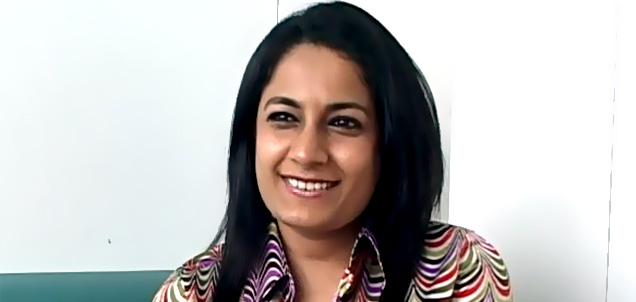
    As the Managing Director, South Asia of one of the fastest growing agencies in India, Shubha George has been responsible for steering MEC to great heights over the past few years. Her passion and decision-making skills have earned her laurels from clients and colleagues alike. In fact she has been giving a tough run for Group M India’s other big agencies who are compelled to perform better and stay ahead in the race to the top. It is her dedication to her work and family that makes her a diva in a true sense.


    In conversation with MxM India’s Ritu Midha, Shubha George takes time out to explain her dedication to her profession, how women professionals of today stack up against their male contemporaries and what is it that makes the women TG a hit with the marketers.


    Do you agree that men are from Mars and women from Venus?

    [youtube width=”400″ height=”225″]http://www.youtube.com/watch?v=IiOxZsa0CQU[/youtube]
    If you are having trouble in viewing this video, see link

    It is true in some cases – not always. If I look at the way in which men and women approach certain things or in their areas of interest, in some cases it is true. But not the way it is made out to be.


    To what extent do the preferences and priorities of the two genders differ?

    In India in advertising, as that is the sector I am familiar with – there is not too much difference in the way men and women approach corporate world or deal with business etc. I am told that it is more of an exception than the rule, and other industries are somewhat different.


    From a consumer and purchase behavior point of view, yes, there are some differences intrinsically in how men and women shop and that does make a difference in how you would communicate to them. Men are easier shoppers than women – who are far more involved and inquisitive. You would rarely find a woman who walks into a store, heads to the isle from where she wants to buy things and heads out. She definitely explores more, and shows interest in things that she did not necessarily plan to buy. Men generally tend to be point A to point B shoppers – so they know what they want, and pick up what they want, and are out of there.


    The woman of today, especially from metros and big cities has evolved rapidly and is seen as a key decision maker. What would you attribute this change to?
    Women are involved in a lot more stronger way in decision-making processes. But what I find increasingly surprising – and I was also of the view that more and more women are involved in decision making but research that we have done for brands shows that men – even if you look at household products, which are your regular household shopping baskets, in 50% of the households decision is made by the head of the household, which is typically a man. He even makes decisions on things like what soap, paste and oil to buy. So, if you look at a larger set of households, and not only very upmarket and affluent households, role of man is very high. Difference perhaps is that influence of women in purchase decision making is definitely increasing. Reasons for same are greater exposure, more availability of communication tools, higher education levels – even if you go towards the lower end of pop strata of society. They have a point of view and that is communicated even if they are not the people in the last mile – actually going out and closing shopping, but they do influence what goes into that basket. However, there is some distance to go – even as compared to other Asian countries, when it comes to what role women should play.


    What, in your view, is the key to reaching the upmarket women in the most effective way?

    One of the mistakes we make in the media business is that we assume that women are watching a lot of TV – which is true when it comes to majority of India – but when you get into more SEC A1++ women, the amount of television they watch is relatively lower as compared to the mass based women. The difference is that when we look at planning for premium audiences among men we are very very conscious that they do not watch too much television, and how else and what else should we communicate. But same degree of attention to amount of television they watch is probably not there. So I would say that yes they watch television, but they watch very less of it and they are very selective about what they watch. There are some typical programmes that they follow but it is not that they would have some free time and they would be surfing television. Role of digital media is definitely increasing. Most of them have access to Internet, whether it is on their cellphone, or at home – and they are rather avid consumers of digital media.


    Newspapers, especially supplements continue to be read. I am a bit of doubter on the role of magazines – data too shows that it is declining. Apart from that, in consumer groups that we do, and people we meet, instances of reading magazines is very very low.


    As for women professionals in media, would you say they have some inherent characteristics that make them excel in the business?

    A couple of them, yes. Women have a greater degree of attention to detail – which I think is very important in media business because all said and done, we still deal with a lot of numbers and spreadsheets – and it requires attention to detail. But that is at an operational and executional level. In general, and it is not only true of media, women multitask a lot more. So even when their working world is a little chaotic, they manage with multiple elements of pressure points which are there within that. Women, by and large, tend to be a little more patient – that also helps in an environment like media where there are a lot of pressures. Maybe because, as we know Roda Mehta for example, was one of the earliest successes in the industry, and also from the time the media industry was evolving, a number of women leaders were there. Probably it was very aspirational for other women who were coming in – and also comforting that you already had women leadership.


    Finally, how would you define your journey in the media industry so far?

    Well I am still here – so I guess it has been good. I really enjoyed whatever I have done till date. I primarily worked with one organization. And yet within that I have been fortunate to have very varied set of experiences. And it is really the strength of Group M that it does offer you opportunities to grow and evolve. I have taken advantage of opportunities that came my way – and it has been fantastic. I would recommend that this industry and particularly the company I work for is a great place for women.


  • Ranjona Banerji: The news that did not happen on TV

    By Ranjona Banerji


    All day on Monday all that happened in India was that yoga teacher Baba Ramdev and a few thousand followers continued their protest against corruption and black money in New Delhi. That is, if you watched television. As the day progressed, political leaders attended the protest and gave speeches. That was it. The rest of the news day was in Shavasana – the dead body pose.


    Not however, if you read the newspapers on Tuesday. Grains rotting in Gujarat, Haryana minister Gopal Kanda on the run after an employee’s suicide writes a letter saying that a suicide note is not admissible, the latest on the Mumbai violence, especially the provocative doctored videos on the attacks on Muslims in Myanmar, Sharad Pawar given the number 3 slot in the Cabinet behind AK Anthony, a woman researcher allegedly molested on the IIT Mumbai campus by a staff member and the end of the Olympics.


    This is just a smattering of the news that did not happen on TV. There is more, though undoubtedly a lot of it is city specific. However, it would have been interesting to know how Delhi reacted to the traffic snarls created by Ramdev’s protests, whether people suffered or not, how many were affected and so on. TV sadly did not oblige.


    ***


    Press Council of India chairman Markandey Katju has been mainly silent after his dramatic ascension to the throne. But now he’s popped up again. Strangely, it is not the media which is his focus. Rather it is West Bengal chief minister Mamata Banerjee, who he had once lauded for her honesty and determination. Now he is appalled at her authoritarian ways after a farmer was arrested after he questioned the CM at a rally. Banerjee accused the farmer of being a Maoist.


    Katju has also stated that Anna Hazare and Baba Ramdev’s anti-corruption movements are “empty gas”.


    He said: “Nothing is going to happen by Anna or Ramdev’s crusade against corruption”. The former judge said he was not justifying corruption but instead was pointing out that India was going through a “transitional period where there is no moral code”. His prophecy: corruption will continue for 15 years.


    Presumably, we will all become moral after that.


    * * *


    What does one make of anti-corruption activist Kiran Bedi’s statement that the media spends too much time on “small rapes” (she then said she meant rapes by “small” people) instead of corruption? In Bedi lies a lesson for the media. She was pumped up for being India’s first female IPL officers and qualities were attributed to her which she never had. Once she was made into a heroine in the people’s eyes, it became very difficult to dethrone her. As a result of all that hype, she is now in textbooks and has won numerous awards.


    Prolonged exposure to her during the Anna Hazare-led movement has however exposed her many short-comings. Now we know that amongst her other faults, she is also dismissive of rape. Some female role model.


  • Are we really ‘free’ at work in Indian media?


    By Tuhina Anand and Meghna Sharma


    As India gets ready to celebrate her 66th Independence Day, one wonders how much freedom one really has to express oneself – specifically those who are in the creative business. While one has to be responsible when communicating with the masses – be it journalists, or planners for content that is shown on the various channels or the creative agencies that work on various communication strategies for different brands – but there are deterrents to this key element of freedom that the fraternity craves for to express freely.


    Keeping these factors in mind, MxMIndia spoke to cross-section of people from the industry to get an understanding on their Freedom Fundas.

     

    Bobby Pawar

    Bobby Pawar, Chief Creative Officer and Managing Partner at JWT India is clear that there is no unfettered creativity that exists and that is probably best for a creative agency. He explained: “Our job is to come up with brilliant communication solutions for our clients, hence there is a purpose to achieve. So what we follow is creativity within a box where it is harnessed to achieve maximum result. We partner with various people to come up with this solution and hence we have to listen to various opinions. I do not profess complete freedom for the creative industry.”


    However, Mr Pawar would like to have more control over the shape that an idea finally takes and how it gets executed. Also he definitely would like to have more control over the research that is handed to them and definitely over the way an allocated budget on a brand is being invested.


    Research seems to be the bane of the creative frat. Rahul Sengupta, NCD at TBWA India too would want freedom from research. He feels that if one wants to do anything that’s trendsetting, often research acts as an impediment to take it forward. As for clients’ demands, Mr Sengupta said: “The client is the one sponsoring the idea, so definitely one would not want freedom from them! I have met clients who are hazards to creativity as well as those who are best guardians of an idea.”


    He added pragmatically: “Of course, there are frustrations and there is lack of freedom but if I would rather have freedom from research than clients as latter can be worked amicably to enhance the client-agency relationship.”


    We also spoke to people at mid level like Auro Chattopadhyay, who quit Ogilvy recently, who also wanted freedom from research. He said: “Often research might not help in the brand story, but insistence to stick to it hinders creativity.”


    A creative hand at JWT pointed that conflict happen when there is no match with one’s creativity and that of one’s higher up. Fortunately, this has never happened with him. He feels that the creative industry gives him much freedom to use his ideas as opposed to many other professions.


    However, another stated that hierarchy means towing the line of ideas that the higher in authority believe in. Freedom of creativity in such cases often refers to agreeing to somebody else’s vision.


    The case, however, is different in the new medium such as digital where there is largely freedom to execute an idea. Carlton D’Silva, CCO, Hungama Digital, said: “Right now, digital is like the last three slide of a presentation- very much an afterthought. Hence, spend on the medium is miniscule. There is a fair amount of freedom to explore creativity. However, one would like freedom from data as often clients demand for it but in digital especially, when suggesting some new technology and a unique idea to take shape, there is no data available.”
     

    Prosenjit Datta
    Courtesy BusinessWorld

    We also spoke to people from the print and broadcast industry to give us an understanding of freedom they enjoy at work. Cyrus Oshidar, Creative Director at Bawa Broadcasting is credited with creating some unique content at MTV and even pushing the boundaries. His view: “If one only wants creative freedom then one should be an artist. If you are producing or making a show for which a client is paying, then there will definitely be some constraints. Ratings do matter in our business and sometimes might even alter one’s choice rather than giving the freedom to do something which one really wants to. Also, one needs to be politically correct in this country. Even the government which is supposed to protect people’s freedom sometimes backtracks from its duties. One needs to be careful about how they approach an issue without offending or hurting feeling of any section of the society. Honestly speaking, we have too many restrictions which are created by us. There is no true democracy in this country.” Mr Oshidar clearly pointed that freedom in creative business is a myth.


    Sucheta Dalal

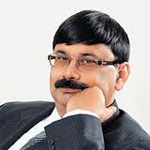
    Prosenjit Datta, Editor, Businessworld, giving his take on the print industry, said: “Every magazine or a newspaper has a certain set of audience and purpose. For instance, a business magazine like ours won’t focus so much on political stories as political or general magazine would do. So, what stories they choose and how they analyse will be different from genre to genre. Hence, it would be unfair to say that there isn’t creative freedom or if media is ‘restricted’. We don’t have any management policy which will hamper or obstruct our editorial approach. A lot depends on the editors too as they enjoy full freedom to how to go about an issue.”


    Pointing out the restriction that comes with the economics of business, Sucheta Dalal, senior journalist, commentator and consulting editor, Moneylife said: “With so many newspapers, magazines and news channels making losses, it is hard to say or believe that they are not dictated by marketers. Today, we can even see head of various companies writing with their bylines which wasn’t the case earlier. I don’t know how things are right now as I’m not working with any newspaper at the moment, but when I was with Times and Express, the pressure from the advertisers was quite evident.”

     

    Sunil Lulla

    And how is it in television? Said Sunil Lulla, CEO and MD, Times Global Broadcasting: “Over the past decade or so, the television industry has evolved. There is greater sense of self-regulation and discipline as well as maturity on entertainment and news channels. Though there are guides and policies set by regulatory bodies like IBF, industry enjoys the freedom to operate freely. Besides, there is greater acceptance of TV now which enjoys sense of confidence and responsibility. So, there is culture of freedom in media.”



    Sudhir Sharma

    Said Sudhir Sharma, Producer, Sunshine Productions: “TV as a medium is for the masses and targets everyone from kids to adults to old folks. We make TV shows to entertain. We do follow certain guidelines and censorship which is surely a necessity. By and large we surely have the freedom to make the content we want to show. Creative freedom parameters may vary from producer to producer. Compared to films, TV censorship guidelines are surely stricter keeping in mind that television is accessible on the press of a remote button. In my opinion, we have enough creative freedom and we as makers are progressing and so are the maturity level of audiences.”


    Freedom, limited freedom, no freedom… we received no clear answers to our question. However, the fact remains that despite the current slowdown, the fraternity is still managing to survive and thrive in the prevailing system.


    Image: Rafiq



  • Happy Independence Day. No edition of MxMIndia today

    It’s India’s 66th Independence Day today and we wish you a very Happy Independence Day. MxMIndia’s editorial and business offices will be closed today.


    If there’s a communique, please mail it to us at editor@mxmindia.com and whoever you are in touch with from the Team.


  • Debrief: Birla Sun Life: What’s different??

    By Anil Thakraney


    The good thing Birla Sun Life has done for their new ad to promote ‘Recurring Savings Plan’ is to stay away from celebrities. Usually they use excessively wealthy cricketers, but for a middle class (and lower) product like a recurring savings plan, that would have been a huge stretch. However, the creative route they have chosen doesn’t work for me.


    The TVC features a combo of live action and animation. A father tells his little son the classic tale of the thirsty crow, who thought differently to fish out water from a pitcher. And by extension, the message is that Birla Sun Life also thinks differently for their customers.


    There are two problems with this one. One, most of us have heard of the thirsty crow fable, and therefore there’s zero novelty. And this directly hits the entertainment value of the ad. There are enough fascinating tales in the Jataka series, and many are not known by the masses. Would be a better idea to release a series of animation commercials featuring these little known stories. That would keep the viewers engaged. In any case, this is a low cost approach, therefore production budget should not be an issue.


    [youtube width=”400″ height=”220″]http://www.youtube.com/watch?v=YrG9oF1yUaY[/youtube]

    Second, exactly what makes Birla Sun Life’s scheme different isn’t told to us at all. The correct thing would be to construct fairy tales around specific features of Birla Sun Life’s plan. Right now, I am left tearing my hair out, like in those ketchup commercials: ‘Isme different kya hai, bhaiyya?’ And, er, there is a huge difference between tomato sauce and investment schemes.


    Rating: (On a scale of 1 to 5): 2. Too broad based and unengaging


  • Big Bazaar’s new Mahabachat campaign

    By A Correspondent


    [youtube width=”400″ height=”220″]http://www.youtube.com/watch?v=O-bo9pTou5I[/youtube]

    Big Bazaar is the pioneer of organized retailing in India and has been successful in creating many new consumption occasions, which offer unbeatable value to the Indian middle class. One of such landmark properties is Mahabachat, which has been designed to spur consumption around the Independence Day holiday.


    This year the challenge was to instill confidence into the property promise of big savings at a time when persistent inflation was dampening consumer spending.


    The consumer reality revealed that they harbored a sense of helplessness towards inflation, with no solution in sight. Over the years, the effect of inflation had moved beyond the kitchen to oil prices, fashion, education and entertainment, leading to an increase in the cost of living. At the same time consumer aspirations were also on the rise, resulting in an overall state of dissatisfaction.


    As a solution to the current consumer angst, they empowered their consumers with a concrete solution of Mahabachat. The resolve of victory on inflation by participating in Mahabachat was brought alive through the optimistic call to action- mehengai par halla bol. The TVC worked to build an atmosphere of collective hope and confidence. The campaign was supported by TV, print, radio, outdoor and digital medium.


    Chief Creative Officer: Sonal Dabral

    Office Head: Rajiv Sabnis

    Creative Head: Vinayak Nayak, Anand Karir

    Creative Copy: Neh Rathi, Anand Karir and Fazal Syed

    Creative Art: Binal Parikh Gharat, Sunil Petkar

    Account Planning: Amit Kekre, Gitanjali Saxena

    Account Management: Sanjay Panday, Rajiv Wadhwa, Makarand Gholba, Abhay Bhonsle

    Films: Mahen Solanki

    Production House: Whodunit Films

    Director: Sujay Shetty


  • Mid-Day launches Fully Filmi

    By A Correspondent


    It is the 33rd anniversary of Mid-Day, and the publication is celebrating it in style. As the brand extension, the group has launched a Bollywood portal – Fully Filmi. The portal aims to address the need gap that the Bollywood-news websites have yet not been able to cater.


    Manajit Ghoshal,MDand CEO, Mid-Day, said: “When we thought of launching the website on Bollywood, we saw that there were hardly any websites that were doing breaking news. It was surprising, given that it is one of the biggest film industries in the world. The current crop of Bollywood websites does not dish out anything fresh; they do not have a dedicated team of journalists. They are more of news aggregators. We are going to focus more on coverage of authentic industry news.”


    The website has been getting positive reviews from the film fraternity, according to Mr Ghoshal. However, the website is due to get the responses from advertisers. Mr Ghoshal said: “We wanted to approach the advertisers only after the launch. Now that the web property has been launched, we will approach them in due time.”


    Among the target group of the website is the NRI community, and the audiences in interior India. The property will be promoted through Dainik Jagran’s Hindi dailies, and cross-referenced with Mid-Day to drive traffic. Other than this, the property is looking at film theatres and tie-ups for promotion.


    The group is trying also hard to regain its past numbers in Mumbai. Mr Ghoshal said: “We have been adding numbers to readership since last three years. However, we will be focusing more aggressively on that front. We wish to keep the trend up for the next couple of years. The group would experiment with newer formats, new innovations in our 33rd year.”


  • Neo Prime bags Nehru Cup Football

    By A Correspondent


    Neo Sports has been announced as the exclusive broadcast partner for the Nehru Cup football tournament. The biennial international invitational tournament, which has been organized by the AIFF since 1982, will kick off on August 22 and run till September 2.


    Defending champions and two-time winners India will be gunning for a hat-trick of titles and will be up against Maldives, Syria, Nepal and African power houses Cameroon in a 10-match round robin league followed by the final between the top 2 teams.


    Prasana Krishnan, COO-Neo Sports Broadcast Pvt Ltd said: “Neo Sports has added yet another key event to our extensive football line up with Nehru Cup. TV ratings for football in India are growing exponentially, evident with the success of UEFA EURO 2012 on Neo Prime. With Nehru Cup being India’s only international football tournament, it is sure to garner high viewership. We look forward to serving Indian football fans with top class coverage of this celebrated event.”


    Ashu Jindal, COO-IMG Reliance said: “With 2012 being the Platinum Jubilee of the AIFF (All India Football Federation) and India returning as defending champions, we are extremely pleased to partner with Neo Sports for the broadcast of this historic edition of the Nehru Cup. This is a key tournament in our vision to radically restructure and popularize football in India. With double the prize money and an extensive production plan, the event will be bigger and grander.”


  • Nitin Pradhan to join JWT Delhi as ECD

    By Tuhina Anand


    Nitin Pradhan is slated to join as the Executive Creative Director (ECD) at JWT in Delhi. He will be handling the Airtel account nationally as the ECD and also partner Bobby Pawar on Special Projects. Mr Pradhan moves from McCann Erickson where he was an ECD. He will be assuming his new position on August 27.


    The development was confirmed by Bobby Pawar, Chief Creative Officer and Managing Partner, JWT India: “Nitin coming on board is part of our beefing up our creative team. He is known for his creative prowess and will work with me closely on many special projects besides handling the Airtel business.”


    Mr Pradhan has earlier worked with Leo Burnett, Ogilvy Mumbai and Mudra.


  • The Anchor: 6 reasons why comics are useful, essential and appeal to various age groups

    By Jatin Varma


    1. Everyone loves comics

    Everyone has read comics as they grew up and many continue to read them. From reading Chacha Choudhary to the Spider-man, they bring alive amazing characters and worlds. You can be of any age and you’ll have comics that will cater to your taste.


    2. Prolific, powerful & great literary works

    The world of comics has given us writers, editors and artists such as Neil Gaiman, Stan Lee, Warren Ellis, Harvey Pekar, Alan Moore, Art Spiegelman, Robert Crumb, Jack Kirby…the list goes on and on. So many of their creations are considered literary masterpieces, and some of the most prolific sequential art in the world. In India, we have people such as Anant Pai, Pran, Ram Wareekar, RK Laxman, to name a few, whose work has touched many people and continues to inspire so many readers and creators in the medium.


    3. Socially and politically relevant

    Comics are a very powerful visual medium. They put faces and images to various issues and topics facing our society, I can cite Joe Sacco’s Palestine & Amir-Khalil’s Zahra’s Paradise as examples of two really powerful graphic novels that highlight conflicts and injustices in different parts of the world, helping us understand them in much more personal way.


    4. Great tool for inculcating reading habits at an early age

    Comics are a great way of introducing children to the world of books. It’s the perfect tool for engaging children.


    5. Fun & Educational

    Some of the most popular comic books in India are based around our History and Mythology. Both Amar Chitra Katha and Tinkle are proof of that. Lastly, I feel everyone who reads comics develops a strong personal and emotional bond with them. Comics are an essential part of growing up and for millions they continue to be an essential part of their lives.


    Jatin Varma is the founder, Twenty Onwards Media and Comic Con India


  • Reliance M’Works to shift part of its ops, top execs to US

    By Nandini Raghavendra


    Reliance MediaWorks, a film and entertainment firm owned by Anil Ambani, is shifting part of its operations to the US, where it will move half a dozen top executives including its chief executive officer for film and media services, Venkatesh Roddam, and chief operating officer of media and creative services, Naresh Malik.


    The move, aimed at enabling RMW to get business from Hollywood in Los Angeles as well as broadcast companies in New York, comes in the backdrop of fresh funding by RMW in its JV with Steven Spielberg’s Dreamworks Studios and an impending PE investment in the Indian company by L Capital, a fund created by the world’s biggest luxury group LVMH.


    Mr Roddam said that Bollywood production houses are emulating business models of Indian IT firms of the 1990s. A presence in the US will provide RMW the keys to big markets like China and Canada.


    Currently 25-30 per cent of the company’s top line for the services business is generated overseas, and with the strengthening of the front-end operations in the US, “we expect a significant upswing over the next years,” said Mr Roddam, who is relocating to New York. “The film and media services business is treading the part that technology companies took a decade ago, where India will get recognition as a market that can provide the right mix of scale, quality and creative abilities in a cost optimized model,” he added.


    RMW has a multi-locational grid of facilities, front offices and strategic alliances across the globe, which it hopes will position itself to both offer high quality services within its own facility in Burbank and London, as well as tapping into the quality and scale of services available through its operations in India.


    A presence in the US would also help RMW leverage the group’s deal with Steven Spielberg’s Dream-Works Studios where it had infused a much-needed funding of $825 million in 2009, followed by another round this year. RMW’s tUS presence will also help it grab a bigger piece of the global film studios and broadcasters pie in the US.


    Similar facilities in Canada could help it reduce costs. Canada offers tax rebate on payroll, which can lead to almost 40 per cent savings.


    It also has the language and time zone affinity with the US, where RMW has facilities and so exploring further opportunities for its VFX, stereoscopic 3D conversion and digital restoration services in Vancouver and Montreal would make business sense for the company, Mr Roddam said.


    Last week, CEO Anil Arjun, resigned from the company, though he will continue as a strategic advisor.


    A few weeks ago, ET reported that L Capital, the private equity arm of the world’s biggest luxury company LVMH, will invest Rs605 crore in RMW, for which L Capital will acquire a substantial minority stake in the company according to a person close to the deal who did not want to be named.


    Meanwhile, Reliance MediaWorks has reported that its consolidated loss for the quarter ended June 30, 2012 has increased to Rs131.3 crore, compared to Rs120.14 crore a year ago.


    Source: The Economic Times

    Copyright © 2012, Bennett, Coleman & Co. Ltd. All Rights Reserved