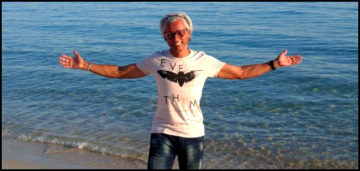
 One more question to coincide with World Press Freedom Day. Here’s Dr Bhaskar Das in the May 4 edition of Das ka Dum. Read on…
If you wish to access the archives, please go to the Das Ka Dum tab on the website’s top navigation bar or click here: https://www.mxmindia.com/category/columns/das-ka-dum/
Q. What do you think is the biggest misconception that people have about the news media? And what can the media do to correct it?
A. I fundamentally believe that today’s consumers are more aware than what they used to be. The reason is simple: more options across formats and hence more choices and consequently more discerning audience/ consumers. Of course, they also become a victim of misinformation, quite often.
Even amongst options amongst news sources, newspapers still enjoy highest credibility. Reuters research has confirmed that, apart from other research reports. This is expected as a plethora of options have created in its trail a pandering of sensationalisation of news and polarised logic for manufactured consent. In a ubiquitous social media, everyone has an opinion and for every news item there is a fractured societal response. It is difficult to arrive at a generalised verdict about misconception of any news source.
The route to its correction lies with the news source who have to introspect what is good for citizens at large, instead of participating in agendised versions of news. Citizens need to be also vigilant about the source of news and cross-verify the source, before forming an opinion and forwarding to their known circle.
The current times remind me of Charles Dickens’ memorable line in The Tale of Two Cities: “It was the best of times, it was the worst of times, it was the age of wisdom, it was the age of foolishness, it was the epoch of belief, it was the epoch of incredulity, it was the season of light, it was the season of darkness, it was the spring of hope, it was the winter of despair, we had everything before us, we had nothing before us, we were all going direct to heaven, we were all going direct the other way–in short, the period was so far like the present period that some of its noisiest authorities insisted on its being received, for good or for evil, in the superlative degree of comparison only.”