Category: Uncategorized

  • Maxus elevates Sanchayeeta Verma to Managing Partner


    Sanchayeeta Verma
    Sanchayeeta Verma

    By A Correspondent 

    Media services major Maxus announced the elevation of Sanchayeeta Verma as Managing Partner, Maxus South India & South Asia.

    Ms Verma, who was has been with GroupM for over 10 years, moved from Mindshare to Maxus in 2009  as head of the Bangalore office. Over the years she has managed the agency’s Bangalore operations and also established the Kerala set-up.

    Speaking on her appointment, Kartik Sharma, Managing Director, Maxus South Asia said, “Sanchayeeta is one of our star Maxusites.  A team player to the core, her sharp strategic thinking and keen sense of innovation keeps her and her team at the cutting edge of media investments and planning. We wish her all the best for her future endeavors at Maxus.”

    Upon her appointment, Ms Verma said, “The future of media is about choreographing convergence between traditional, digital and experiential media, content & data being the epicenter of it all. Maxus is best poised to lean into change towards this exciting new future and I look forward to it!”


  • NewsX kicks off show where guests will grill host MJ Akbar

    By A Correspondent

    He would anchor news-based shows on Doordarshan in the ’80s when he was with the Ananda Bazar Patrika group and later his appearances were at best sporadic. Until he joined the India Today group as editorial director when he was on nightly news more often.

    You can expect veteran editor M J Akbar to always come up (and carry off) concepts with a twist. On Sunday, news channel NewsX launched ‘Decode India with MJ Akbar’ where the guest leads the questions and discussions. The guest will question, argue, give his opinion and probe MJ Akbar on a topic of national significance. The inaugural episode of the 30-minute show featured controversial lawyer and politician Ram Jethmalani who discussed if there should be a referendum in Kashmir on the Indian Army.

    Mr Akbar is currently Editorial Director of The Sunday Guardian, which is part of the same media group that owns NewsX and a slew of other media titles.


  • Senior alumni discuss empowerment, digital marketing at MICA’s Grand Alumni Meet

    By A Correspondent


    A business conclave was the highlight of the annual Grand Alumni Meet of the Mudra Institute of Communications, Ahmedabad, held on January 25 and 26. Senior alumni were on the panel of two discussions held on the occasion. Abdul Mujeeb Khan, Managing Director at Tamkeen Solutions, Shreya Jha, Vice-President, Marketing and CSR, Fullerton India Credit Company, Mansi Joshee, Consultant, WHO [India] and Pawan Sarda, Founder, Seventh Sense, were the panel of speakers on ‘Empowerment Marketing: CSR as a Potential Branding Tool”. For “Marketing in the Disruptive Digital Age”, MICA had Siddharth Sethi, Lead of Digital, Mindshare, Kumar Deb Sinha, Digital Content Lead, Group M and Manisha Rana, Senior Online Marketing Manager, Kindle, Amazon, as its panel of speakers.


    Welcoming alumni and the panellists, Dr Nagesh Rao, President and Director at MICA said: “MICA has evolved tremendously in the past decade, across all its varied platforms, but I’m proud that we are still rooted in our essence- which is what keeps our alumni coming back for more!”


    In the session on Emplower Marketing and CSR, observing the natural social behaviour of humans, Pawan Sarda noted, “The trend of monetization really makes it difficult for one to discern if we are really doing good deeds, or deeds that are perceived as good- charity seems to be feeding on guilt, when it should actually be built on a capital of strong character.” Echoing his observation, Shreya Jha quipped, “Of course there is a business agenda to CSR activities, but when you do them with genuine sincerity, people usually return the kindness!” Adding to her statement, Mansi Joshee said, “Activating CSR the way it has traditionally been done by Indian giants such as the Tatas and the Birlas makes perfect sense. Though ROIs cannot be measured in exactness, brands that stick to what they fundamentally believe in will surely be successful, since it would be the driving force behind all their CSR and other endeavours.” On an agreeable note, Abdul Mujeeb Khan commented, “Listening, positive communication and being connected are the core basic values of all human relationships. It is high time that these should be applied to businesses to serve the ultimate purpose- being well-connected to the consumer.”


    While many see the digital world as a boon, there are those who equally believe it to be otherwise. Moving from a generation that demanded ‘drive awareness’ and ‘creating buzz’ as its most sought after marketing strategy, the focus now lies on a new digital age where crafting an entire customer experience that  keeps customers engaged on several  digital platforms, is quite in demand.  Nonetheless, people still do respond to TV ads, in-store promotions, manned counters in stores, brochures et al. In addition to all of these marketers need to find new means to break into apps, mobile devices, social platforms – the digital world. Echoing the same, Siddharth Sethi observed, “Enabling the consumer with engagement plus advocacy is the new mantra, as opposed to the age-old tradition of creating awareness. Six years ago, clients needed to be convinced repeatedly about digital marketing. Now, though the budget is still limited, it enjoys relevant, yet wavering importance across almost all industries.”


    To this Kumar Deb Sinha added, “Despite the low-budget allotted to digital marketing, the client is always asking for an encore of a digitally successful campaign.” Manisha Rana noted, “While Indian marketers do understand the digital media and its nuances, they are still playing it safe- they are yet to make digital media a more personal experience for the consumer. It is an ideal mix of the traditional and the digital media that would enable the consumer to enjoy a holistic experience.”


    Senior journalist and MxMIndia editor-in-chief and CEO Pradyuman Maheshwari was moderator of both the discussions. “Given that the panellists were fairly senior in experience within their respective industries and that the topics were of relevance to current times, the students and the recent alumni must have surely found the discussions quite interesting. The generous amount of time allotted for both the topics also gave room for meaty and honest discussions to come forth,” he said.


    Preceded by a karaoke, bonfire and a movie screening, the conclave gave an energetic start to the Grand Alumni Meet, followed by lunch, a cricket match and a few games of football and basketball. The Grand Alumni Meet ended with a lively Alumni get-together.


  • Sacrificing 5 GRPs is fine, carriage fees to DTH isn’t: Anuj Gandhi & Gaurav Gandhi


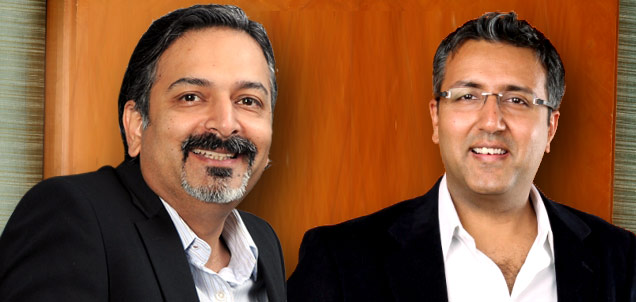
    A few weeks after Diwali 2013, Dish TV burst what was decidedly a firecracker of sorts announcing carriage fees. The announcement was followed by a major spat with leading distribution platform IndiaCast that finally went to the TDSAT. The TV18 and Viacom18 venture which also has a partnership with Disney UTV drives all domestic and international channel distribution, placement services and content syndication for TV18, Viacom18, A+E Networks, TV18 and ETV channels as well as those of the Disney UTV stable. Following the reference to TDSAT, an agreement was hammered out on providing IndiaCast channels to Dish TV on Reference Interconnect Offer (RIO) terms and with no carriage fee charged. But while the dust may have settled, there is still much anger and angst at the IndiaCast headquarters. MxMIndia met CEO Anuj Gandhi and COO Gaurav Gandhi, both veterans of the business. Excerpts from an interview.


    So is all well on the Dish TV front?

    Anuj Gandhi: All well for sure. We don’t have a deal with Dish TV. They are carrying our channels a la carte, which are being offered on Reference Interconnect Offer (RIO) terms.


    Are your channel’s business heads happy with it?

    AG: We’ve now seen a few weeks of data post this development. There has been little or no impact of Dish TV on the ratings. We are very clear that we are not going to pay any carriage, come what may.  If there’s a marginal drop in the ratings because of Dish, we will live with it. We believe we can live without them. I sincerely doubt whether they can live without us, keep growing and compete with cable and other DTH players. So to answer your question: we are very happy and we can live without them.


    But won’t there be an impact in the hinterland and key LC1 markets where Dish is strong?

    Gaurav Gandhi (GG): At the overall level, while they claim the number to be 12 million, our estimate is that Dish has some 7 million homes. Now Zee was there in every single pack. We were almost there in every single pack sometime back, so we know the numbers right? At the overall level, you are talking about 130 million cable TV homes within the country and within DTH homes combined. If you not available in 2-3 million homes theoretically, first of all, it is a marginal impact. Secondly, Dish’s contributions towards the current TAM rating amounts to not more than two-and-a-half percent. And it is a tested number. We obviously have a sense that Dish has a very high skew of rural homes compared to urban homes. Realistically speaking, at the worst case, the impact can’t be more than 2%. And that is if everything is off and if the channels are off Dish. That’s not the case right now.  Also that is a universe number, each channel is viewed differently. So for example, the kind of customers who’re there on a platform like Tata Sky or on Seven Star, Hathway or Den in Mumbai; they would have consumed niche channels far more compared to somebody sitting in LC1 market. Therefore, niche channels anyway have a very low impact in terms of ratings from Dish. If you see data for two weeks, there’s no impact…


    Is there a worry that right now its Dish, the other DTH operators could also do the same?

    AG: I look at the other way round. If we had panicked, gone ahead and paid the carriage which is what the demand is, it would have opened a Pandora’s Box and we would have taken the industry back by a decade-and-a-half. Everybody would have paid and every platform would have asked. Unlike in an analogue environment where carriage is a necessity and there was a demand-supply gap, carriage had to be paid to be carried.


    We looked at it not only from our perspective but also from the industry perspective that we cannot start something which is regressive and not good for the industry.


    Have you had discussions with the IBF on this?

    Not formally, but informally we have been in touch.


    Is the IBF doing something about it?

    We have gone and met TRAI and other regulatory ministry, told them this is what is happening. Obviously, they are watching what is happening.


    But you do pay carriage fees to cable companies, right?

    AG: Two years back, we started reducing carriage to cable too. Every one has started reducing it and it will see a further decline over the next two years. We couldn’t cut the chord immediately.


    If you are not averse to cable, so why not pay Dish?

    AG: Because I am not going to start something which has been happening historically on analogue cable. It was a mistake then. Digital platforms have to grow. They have to look at ARPU growth. They have to work with content to increase customer service, quality of service, value added services. They have to go in that direction rather than going in another.


    GG: Are they selling capacity or boxes or content? The day DTH companies address this question, you will get the answer on whether carriage should be paid or not paid. If somebody is selling content, his or her job is to maximize ARPU and create more customers and make sure the content is monetized. The reality was that in the analogue world, you were short of bandwidth; you were paying for scarce capacity. The moment the billing comes to him, the money comes to him, he doesn’t need the carriage money and all the top MSOs are very clear about it. We meet them day in and day out. It is a phenomenon which will disappear. Should I start another monster who doesn’t need it, just because his business plan has gone awry? Just because you are not able to sort out your life, why should I pay carriage fee to you? Earn it.


    AG: Like you said, it’s a question of precedents. If I pay one, I will have to pay everybody.


    GG: Informally, we have got calls saying don’t do this else we’ve all had it.


    So what led to it?

    Well, our deal was up for renewal but they didn’t realize that our resilience will be so strong that we will go the other way round.


    What next now? You said IBF is not doing anything about it?

    GG: It is not an IBF issue.


    AG: It is a deal between two parties -Platform and Content Provider.  Clearly, I’ll not pay carriage. Yet, I am willing to do a deal which is reasonable. We will come across as mature adults and discuss it. But I will not pay carriage.


    And even though ratings haven’t been affected, at some point they could?

    GG: They can’t at 2% weightage


    Voice 1: Why does everyone keep threatening that channels can’t survive without platforms and ratings will fall?


    GG: 2% is 5 GRP. We will live without 5 GRPs.  Let me see whether Dish lives without Colors. I challenge.


    AG: It is simple. I will live without and I cannot budge under every threat as a content aggregator. Everyone will get on and say you do this or I will switch off. I will not buckle under and pay.


    As a network, Dish has a very large presence in the Hindi-speaking market

    GG: In the cable dark areas which are not measured.


    The a la carte data will of course come to you

    Yes, by February sometime, hopefully it is transparent and clear. We will see.


  • D&AD enters India with Kyoorius Ad Awards


    By A Correspondent


    Ridden by charges of plagiarism, scam ads and boycotts, the Creative Abby conducted by the Advertising Club now has another force to contend with: the D&AD-backed Kyoorius Advertising Awards.


    The awards gain respectability even as they are announced as they are backed by none other than D&AD. Kyoorius, a not-for-profit initiative by Transasia Fine Papers, has been organizing the Designyatra, a design conclave since 2006. Last year, it revived the design awards with a D&AD-supervised jury process (*See Disclosure).


    The alliance between Kyoorius and D&AD continues with the Advertising Awards that are scheduled to be held in late May 2014. The Call for Entry will start on March 20.


    “Ethically and with the highest standards – the Kyoorius Advertising Awards recognise, honour and award the most outstanding creative work in the Indian visual communications sphere,” notes a communiqué, adding: “The foremost creative awards for advertising and marketing communication in India have been conceptualized by Kyoorius in Association with D&AD. “Together Kyoorius and D&AD have created a truly principled and neutral platform by setting the highest standard in judging criteria. The Kyoorius Advertising Awards will be unlike any other advertising awards in India – and will have no winning tier structure of golds or silvers – only the best is awarded. The jury too will be a mix of Indian and international icons that have been selected by D&AD and Kyoorius together. And as the only format of its kind in India – all jury members will gather in India for the jury session – to review, discuss and elect the best of the best over three intensive days. All voting is private, never by a show of hands.”


    Rajesh Kejriwal

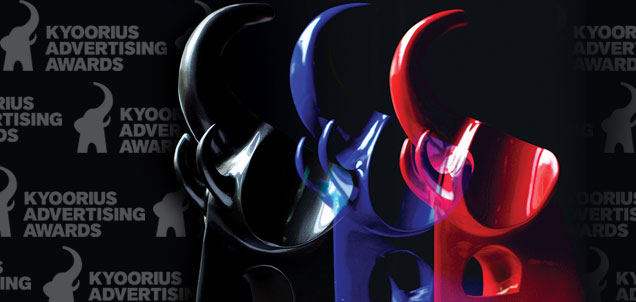
    Said Rajesh Kejriwal, Founder-CEO, Kyoorius: “The Blue Elephant aims to be the most aspired trophy to be won nationally and will enhance the winners credentials globally and the Black Elephant will be the epitome of achievement for any creative person. Kyoorius’ mission, vision and most critically – our passion has been to provide a platform for the communicators. Everything we do is fuelled by this passion.”


    Tim Lindsay, CEO of D&AD added, “D&AD are proud to be partnering with Kyooriuis in India. We share a lot of aims and values – the main one being to stimulate, enable and award creative excellence in advertising and design and to inspire and support the creative community particular in the area of creative education. D&AD is famous for the integrity and quality of its judging process and its jurors – qualities we will bring the same to the Kyoorius Advertising Awards as we advise and collaborate on categories, jury composition, judging and event management. Both organisations are neutral, and the awards will be decided entirely on merit against the three D&AD criteria; is it a great idea? Is it beautifully executed? Is it relevant to its context?”


    Tim Lindsay

    Meanwhile, although a meeting was held with various stakeholders last fortnight, no date has been announced for either the Goafest or the Abby awards at the time of writing this report. There are unconfirmed rumours that some leading creative agencies may stay away if some conditions are not addressed.


    *Disclosure: MxMIndia is a Media Partner of Kyoorius


    We will go the critic route rather than the popular route: Kejriwal


    By Ravi Balakrishnan


    R Balakrishnan

    For D&AD, it’s a chance to raise its profile in India. In an interview in December 2012, Tim Lindsay, its CEO was aware that the award had lost traction particularly with the younger lot. Indian entries have been on a decline. And so, this is the first time the D&AD is backing an award in a different country. Given Lindsay’s agenda for revival, it’s not likely to be the last. What nobody intends changing though is the notoriously tough - some would say almost frustrating - standards that the work is measured against. The D&AD is globally reckoned to be among the stingiest award bodies. It’s gunning for a similar exclusivity in India. “We will go the critic route rather than the popular route,” Mr Kejriwal admits. “I’d rather not have an award in a category than reward something that’s not up to scratch.” The awards will be run by the D&AD using its judging formats and backend. For the first time, Indian work will face an 18-member jury with a 60:40 split in favour of international judges. While subject to tweaking, the main categories include print/print craft, outdoor, film/film craft, radio, direct marketing and activation, integrated and art direction.


    More importantly for an industry where scam has become the filthiest four letter word in some circles, it will include D&AD’s stringent policies to whet entries. As well as additional ruses to throw off persistent scammers. Kyoorius is toying with the idea of showcasing the shortlisted work in galleries across Mumbai, Delhi or Bengaluru, which could help weed out scams. It’s also considering an online gallery. Elephants are standing in for the pencils, D&AD’s much sought after trophy. The best of show gets a black elephant, the rest of the winners get blue and students stand to bag a red. Such an enterprise doesn’t come cheap. Entries are to be priced between Rs 7,000 and Rs 10,000. As long as all the criteria are fulfilled with approvals in place, anyone from individuals to marketers and agencies can submit work.


    Rajesh Kejriwal is certain the entries won’t touch the numbers seen by the Abby, but believes more is not necessarily good. He says, “If quality means a lesser number, so be it. I’d be happy to get around 1,500 to 2,000.” In keeping with the mission of the D&AD which is involved in industry training and coaching sessions in the UK, Mr Kejriwal says money from the awards will be ploughed back into talent development programmes, seminars and workshops.


    The Kyoorius advertising awards are timed to grab an industry that’s at least for the moment, severely disillusioned with its longest running show, the Abby, as well as its festival Goafest. Mr Kejriwal believes, “There’s space for a popular award and a critic award. Every country needs a festival and if it has an award, so much the better. But what is the purpose? How do you make it relevant and content rich? How can it go beyond beaches and beer?”


    Josy Paul
    Sajan Raj Kurup

    Most creatives we spoke to are optimistic about the Kyoorius advertising awards. Josy Paul, chairman and creative chief BBDO India says, “Whether we will participate in Abby is still up for discussion. But I would like to enter an award from D&AD. They have evolved into a show that’s looking at substantial market changing work.” Adds Sajjan Raj Kurup, founder, Creativeland Asia, “I haven’t taken an anti awards stand but an anti not-so-reputed awards stand. As long as jury members are credible, it doesn’t matter where they are from. It’s better than mandatory judges from every agency even if they are not qualified.”


    Mr Balki whose disdain for awards is well known remains contrarian. Asked if he will participate, he says, “I am not enthusiastic about D&AD in London why would I be about it in India? It’s not the name or the institution. What are the judging criteria? If D&AD cracks this, it will be successful. But I’d first want to know what they’ve cracked. It could be the Tibetan advertising festival; if they figure this out first, we’d sign up.”


    Source:The Economic Times

    Copyright © 2014, Bennett, Coleman & Co. Ltd. All Rights Reserved

    Licensed to republish


  • Preeti Vyas, Paresh Chaudhry on Dubai Lynx jury

    By A Correspondent


    The Dubai Lynx International Festival of Creativity, the leading festival and awards for the creative communications industry in the Middle East and North Africa, has released the first 28 names that will make up this year’s juries.  Organised by Lions Festivals, the same people who organize Cannes Lions and Spikes Asia, the Design Jury has named Preeti Vyas, Chairwoman, Vyas Gianetti Creative and the PR jury has Madison PR CEO Paresh Chaudhry as a member. The juries for Direct, Promo & Activation, Interactive and Mobile as well as Branded Content & Entertainment were also announced, but they did not have any representatives from India.


    Commenting on the jury, Philip Thomas, CEO of Lions Festivals said, “We’re delighted to have this global collection of specialists joining us and we are excited to see the creative benchmarks that are ultimately set as a result of their judging. We look forward to welcoming them all to Dubai in March.”


    Entries for Dubai Lynx (to be held from March 9 to 11) are open and submissions can be made through the website until 6 February. Further information on rates along with category information and rules can all be found at http://www.dubailynx.com/awards/how_to_enter.cfm.


  • Reviewing the Reviews: Half to 3.5 stars for Gunday

    By Deepa Gahlot

    Gunday

    Directed by: Ali Abbas Zafar

    Starring: Ranveer Singh, Arjun Kapoor, Priyanka Chopra, etc 


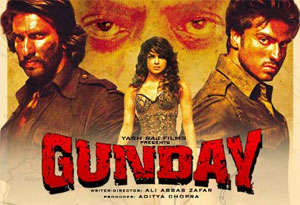
    Ali Abbas Zafar’s Gunday, a throwback to the style and storylines of the seventies, is a crowd-pleaser of a film that has got wildly mixed reviews, with ratings ranging from half to 3.5.


    Those who grew up in the Bachchan era hated it others were kinder, but the consensus seemed to be that the film was dated and its young cast could not quite pull off the bromance.


    Raja Sen of rediff.com practically gnashed his teeth and called it hideous. “.. with a plot thinner than sliced cheese, hacky characters and actors who don’t know what to do with themselves. Ranveer and Arjun essentially play a couple of gangsters — and very repressed men in love with each other who get off seeing each other do Baywatch runs — who find everything going for a toss when a heroine walks in on them with their dhutis up. Neither is in love with the girl, but both overcompensate, playing a game of chicken as they clinch each other tighter. That, in a nutshell, is all there is to it.”


    Shubhra Gupta of the Indian Express frowned, “Gunday’ is as generic as its name suggests: even that old phrase ‘luchchhe- lafangey’ had more character. In the name of plot, we get a mash-up of many popular blockbusters, several of them belonging to Yashraj, the producers of this one. In the name of acting, we get pumped up beefcake and one number plumped-lip eye candy. There are a few solid supporting acts, and they are the ones that keep you watching, but they get buried in the sludge. What you get is what you’ve been getting. Over and over again.”


    Aniruddha Guha of Time Out wrote, “The last time a hero complained about the system, it was the 1990s and Sunny Deol films were in vogue. Gunday is set in such a time, you may say, but must a period film also resemble the cinema of its time? And if it has to, should it end up looking as stale and outdated? The train sequence in Sholay, for example, was more thrilling and better shot than in this 2014 film, where the two heroes fling men and break chairs while you notice the chroma screen in the background.”


    Saibal Chatterjee of Ndtv.com sneered, “The plot of Gunday kicks off from the violence that surrounded the creation of Bangladesh. But nobody expected the film be an illuminating history lesson about the subcontinent.  The snazzy pre-release teasers did however raise visions of a fast-paced, entertaining buddy flick set in the tumult of early 1970s Calcutta. Sadly, Gunday delivers only on bits and pieces of that promise.  A large part of the story actually unfolds in the mid 1980s but the film makes a complete hash of the period details.”


    Anupama Chopra seemed to like it a bit more. “Gunday, directed and written by Ali Abbas Zafar, is an unabashed love letter to the 1970s, the height of our romance with Amitabh Bachchan’s Angry Young Man. A time when heroes, even if they were criminals, were honourable men. When friendship was bigger than love. When the system was always the biggest criminal. Though the story is set in the 1980s, Zafar recreates a classic ’70s vibe with punchy dialogue-baazi, scenes designed to make you applaud and a relentless background score by Julius Packiam that underlines every beat just in case you missed a high note. Gunday is all slow-motion and swagger…”


    Nandini Ramnath of Mint commented: “…retro tribute that has most of the elements of the Amitabh Bachchan-Shashi Kapoor-Vinod Khanna cinema down pat: good-hearted heroes pushed by circumstance to the wrong side of the tracks, an ultra-glamourous heroine who might lose her nerve but never her poise, a hot-on-the-trail policeman, games of loyalty and betrayal, anachronistic period details, proper introductions for key characters, spectacularly staged action, a pre-climax loo break song sequence, and a pantomime of social commentary.”


    Shubha Shetty Saha of Mid-Day wrote, “Looking at the positive side, the detailing to match the setting of the ’70s is commendable. Arjun Kapoor has an endearing smile, Ranveer Singh is earnest but then that is obviously not enough. In a world where the two main actors are grimacing and grunting, in the name of acting, and the lead actress is just busy purring and pouting, Irrfan stands tall with his obvious talent. Add to that, he looks so charming and fit in this film that it is difficult to take your eyes off him when he’s in the frame.”


    Rahul Desai of Mumbai Mirror grumbled, “Most landmarks of Hindi cinema have invariably been buddy flicks. Though not always blessed with technical bravado, their hearts have been in the right place. Gunday fails to fulfill that basic aspect- leaving you mildly enraged with the hope of what could have been, especially given the inexhaustible resources at hand.”


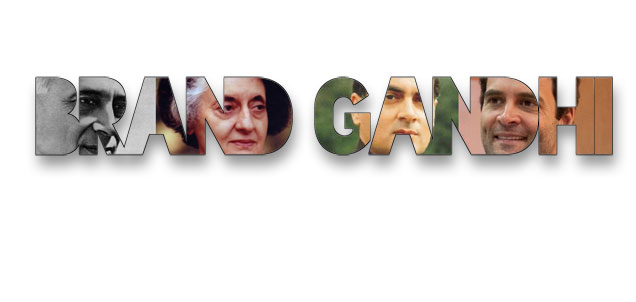
  • Why Brand Gandhi needs an overhaul…


    By Delshad Irani


    Contrary to popular belief, Mohandas Karamchand Gandhi was not related to this (Nehru-Gandhi) family. The Gandhi surname came from Feroze Gandhi, whom Indira Priyadarshini Nehru (the daughter of Jawaharlal Nehru) married, and later chose to change her name to Indira Gandhi after marriage.”


    So says the Nehru-Gandhi Family’s Wikipedia page, not the most authoritative source but, at the very least, the world’s most comprehensive. However, even those who care to discriminate between brand Gandhi (Mahatma) and brand Gandhi (the Nehru-branch), can’t help but sense some rub-off.


    “They came through the line of Congressman Feroze Gandhi, but even got the benefits of the legacy of the father of our nation,” says marketing consultant Nabankur Gupta. And the day Indira Nehru chose to take her husband’s name marked the birth of India’s most dominant political brand.


    It’s given the nation two Prime Ministers, political icons and a riveting family narrative. The Bard of Avon was way off the mark, because as we’ve discovered through human history, there’s a lot in a name. Especially famous ones, like Kennedy, Churchill or Gandhi.


    In the corporate world, names like Tata have a resonance that lives on long after their founders. Many generations of Nehru-Gandhi family established themselves as brands. This is true of even the socialist minded Nehru, though in his case it was probably less design and more default.


    He had signifiers like the Gandhi cap and the red rose, his fondness for children (which led to his birthday being branded Children’s Day) and the reputation for being an intellectual and philosopher as well as a leader. When his daughter Indira came to the fore, says KV Sridhar, chief creative officer, Leo Burnett, “people thought it was an extension since at the time Nehru was called the modern face of Gandhism.”


    Indira Gandhi brought her own trademarks from catchy slogans like “Garibi Hatao”, a distinctive appearance, and in a relatively short span, undisputed leadership. It was during her tenure that the Brand Gandhi -Nehru first began to lose some of its sheen with the emergency and its excesses, many of which were laid at the door of Sanjay Gandhi. Rajiv Gandhi represented a renewal with his Mr Clean image and youthful optimism.


    Communication specialist Alyque Padamsee observes, “With the Bofors scandal attached to Rajiv, the name got a bit sullied. But it survived all that.” Even when not in power, the brand stayed alive through schemes under the names of Indira and Rajiv and the rechristening of prominent landmarks and airports after them. However, the brand may require a lot more than just the halo effect. Mr Gupta observes, “Trust, Brand Gandhi’s biggest strength has become its greatest weakness.


    Today, it is associated with politics that’s difficult to define. You would need the personality of Indira Gandhi to salvage the brand, but that is wishful thinking.” Which brings us to Rahul Gandhi who has been willy-nilly tasked with not just reviving the brand but leading it to an election victory. When he first entered politics, a lot was expected of him. Mr Sridhar recalls, “In 2009, he reminded me of Mahatma Gandhi returning from South Africa.” Full of conviction, he could have given the party a lease of life.


    But he didn’t says Mr Sridhar: “If you don’t have the power and can’t do anything; that’s forgivable. But not if you have the power and still don’t do anything.” Many wonder what would have happened if Rahul Gandhi distanced himself from the Congress, just as Narendra Modi did with the BJP, to some extent. That the newest custodian of brand Gandhi gets strapped with the label of ‘reluctant politician’ doesn’t help. “He seems to possess a great ambivalence about leadership. That’s muddied the brand,” says Santosh Desai, founder, Future Brands.


    “Indira Gandhi ruled as if she was born to rule. While the heir apparent shuffles about uncomfortably.” Mr Sridhar believes that in branding parlance, a flanking strategy would have helped: “He could have stepped aside and allowed a young leader to be the face of the party. Used the brand strength to launch a variant and migrate loyalty to the variant if the brand was weakening.”


    Gandhi may have raked up an impressive number of miles as he travelled to places both popular and obscure. But there is still a degree of remoteness to him. Says Mr Desai, “The new breed of politicians has come from the people. Whether you are from Modi’s or Kejriwal’s school of democracy, royalty is the easiest thing to mobilise against.” This is when a legacy, which still swings some people, becomes a load. Yet the name outweighs the burdens of heritage.


    Pre-colonial India was a puzzle of princely pieces, each with its own king. “A very large part of the population still believes that the country needs to be ruled by a king and they’ve always come through descendants. That’s the only advantage the Gandhi name has today; its legacy,” says Mr Gupta. “But that population is getting more exposed to other names who also can be kingmakers and kings.”


    Nevertheless, to discount the power of emotional equity, which wins a lot of brands many battles, would be foolish. “Brand Gandhi’s time, considering its current course, seems to be up,” says Mr Desai. “But as a political formulation they could coax some more years out of it.


    Unless there’s some kind of dramatic reinvention with a coherent, tangible and inspiring narrative. Rahul would have been a better asset if he had spent the last five years choosing the right one,” he observes. It’s perhaps inevitable that Rahul Gandhi be defined by the brand narrative of his family. Whether he can change the plot or be subsumed by it will be his ultimate challenge.


  • Why machines (& the good old Optimiser) will never get the media planner out of a job

    By Shephali Bhatt


    It’s the year 2020 and the machines have taken over. What we are talking about is a possibility a lot more realistic than paranoiac visions of The Matrix, Terminator or Blade Runner. Optimiser has completely replaced the at-ease-with digits management graduate known as the media planner.


    For the uninitiated, Optimiser is a tool media agencies use to formulate plans that reap their brands maximum reach at the lowest cost. With a young legion of planners admitting that the software sometimes ends up doing 80%- 90% of their work, a machine taking over the entire role of a media planner may not be too far-fetched . But does this qualify as crystal ball gazing or stoking an unnecessary panic?


    Ravi Rao

    Flashback to the late 80s and 90s, where intense print plans were created by plotting 100 publications on Yaxis and data from readership surveys like NRS and IRS on the X-axis. “It would take us more than five hours to manually calculate the reach of a print plan using the least cost solution based on Kwerel’s Formula ,” Ravi Rao, leader – South Asia at Mindshare recounts. Now, the planner feeds in the desired GRPs and the client’s budget.


    And then sits by as the optimiser dishes out a media plan with numbers on reach and frequency, in one-tenth the time Mr Rao and his compatriots would take. It calls to mind Arthur C Clarke’s observation about how any sufficiently advanced technology is indistinguishable from magic. And it’d be true to a large extent.


    But it only ends up giving a planner more room to concentrate on strategising for the brand instead of being saddled with a mechanical chore. It really is just a tool that throws numbers at you when you give it some yourself, remarks Anagha Ingle, a two-year-young media planner on Unilever brands at Fulcrum, Mindshare.


    Mostly, these numbers are used to support the decisions a planner takes, keeping in mind a dozen other factors. For instance, does the brand need to sustain a campaign or wind up with short bursts over a few weeks? Will there be repeated messaging? How heavily will the insertions be placed across channels? Which genre of channels/print titles and in which language? All questions that only a media planner has answers to, not the machine.


    These are just some of the basic questions that every media planner ought to get out of the way before approving or ignoring the plan presented by the holy Optimiser. However strong a backbone it might have, the tool has limitations that continue to give the human planner an advantage . Even if the numbers desired are the same, an Optimiser won’t make complete sense for two different campaigns, meant to target different audiences.


    A large part of the decision making is influenced by the marketing environment, brand requirements and the competitor’s actions. Our poor Optimiser is incapable of factoring all of this in. Deepak Ahuja, vice president at ZenithOptimedia cites an example to strengthen this point: “If I were to launch a brand like Micromax, my objective will be to spread quick awareness of the brand to its target audience. So, I’ll target channels specialising in movies, music and sport.”


    The hiccup is that this tool will never show English movie channels as a viable option because to the machine, the GRP numbers aren’t satisfactory. If only an Optimiser could weigh in on the qualitative aspect of numbers. Similarly, if one was to follow the software’s advice to the tee, no one would’ve invested in spots around reality shows like Kaun Banega Crorepati because of high cost, Shekhar Banerjee, SVP and head, Madison Pinnacle points out. (If you’ve been keeping score, the humans appear to be winning.)


    If it were up to the Optimiser, cricket would never have been advertisers’ favourite sport, given its high incremental cost. Humans, on the other hand, are capable of taking decisions that may not always be efficient but prove effective in meeting a brand’s objective.


    That explains the BMW and Rado ads on English channels in spite of marginal ratings, and the absence of ads for deodorants from religious channels despite high viewership ratings. With TAM and IRS coming in for more than their fair share of critiques, data has been reduced to a mere stick for a blind man, says Karthi Marshan, head – marketing at Kotak Mahindra Group.


    It can’t tell you with certainty what’s coming up. Hence, a client needs his media planner’s gut, instinct and experience, Mr Marshan adds. The human contribution to the media planning role is only going to increase with umpteen media vehicles available for a brand to ride on.


    Anupriya Acharya

    In such a scenario, superior understanding of content would be required to ensure contextual landing of brand in a particular medium, says Anupriya Acharya, group CEO of ZenithOptimedia. Another trick of the trade that one can’t expect an Optimiser to pull off.


    Which is why the likes of Mr Rao and Ms Acharya are hell-bent on hiring more planners, from backgrounds as diverse as engineering and economics. For a tool can only answer the ‘where’ of a media plan. The ‘what’ , ‘why’ and ‘how’ will always require human intervention. Or at least until someone builds a machine that answers these questions better.


    Source:The Economic Times

    Copyright © 2014, Bennett, Coleman & Co. Ltd. All Rights Reserved

    Licensed to republish


  • HT, TOI, others ink deal to start ‘One India Medianett’?

    By A Special Conespondent


    New Delhi, April 1, 2014: In a move that has been welcomed by several brands and party organisers, it is learnt from reliable sources that newspapers like Bennett, Coleman and Co Ltd and HT Media Ltd are getting together on a special project.


    It may be recalled that since 2005, the year when DNA was launched as were Mumbai Mirror and HT’s Mumbai edition, the two New Delhi-headquartered news media groups have got together on various projects. The HT’s print facility has been used by TOI. Then there’s a no poaching agreement between the two organisations so if an HT journalist had to join TOI, there would have to be interim employer in between. HT ads have appeared in TOI and vice versa. So while there is intense competition on the ad sales and editiorial front, there’s friendship too.


    Last week, HT Media and a few other top newspaper brands like Hindu and ABP got together to launch One India (not to be confused with the website company run by BG Mahesh and majority-owned by Rajesh Jain, now affiliated to the BJP). Many media planners, buyers thought it was a brilliant idea with pedigreed B-school graduates several thousand crores of adspend budgets appreciating the innovation of these media managers to create a pull for print.


    Buoyed by the success of this initiative, the high priests at a leading newspaper group had a whirlpool of an idea. Why not look at a combined deal for paid-for, promotional content.  Feelers were sent to competition, and after some reservations, a deal was struck so as to attract advertisers and individuals who appear on the party pages without paying. A formula has been hammered out, and the feature is likely to be announced soon.  This will be done at a tony nightspot in Mumbai and Delhi and will be held at no cost to the media organisations in question as the costs will be offset against free content space in the papers.

    For details, click here.


  • Last Year, This Year


    By Shobhana Nair


    The financial Year 2013-14 may have ended with some optimism given the forthcoming elections, but was the year good for the advertising and marketing services sector? We spoke to a few industry leaders to get their views about the same and also asked them to look ahead.


    Ashish Bhasin, Chairman India & CEO South East Asia, Aegis Group plc:

    Last year was a brilliant year for us, because it was the first year that we managed to bring Dentsu and Aegis together to form the DAN Network. We saw a lot of growth in digital, out-of-home, retail and so on. We were happy that our growth rate was two-and-a-half times more than the market growth rate and we managed to gain a lot of market share, etc. For us, it was a good year and it has set the pace for the following year. We are looking forward to more growth as we’ve gathered momentum on the basis of the growth that we had in the past few months. As a model, we have one P&L across the country so nobody is driving to sell just TV or Print to the client. We do whatever is required for the brand as nobody has an agenda. That’s giving us a huge competitive edge in the market. The idea is to give to benefit of specialization to the client.”


    Nagesh Alai, Chairman, Draftfcb Group India:

    “I would say advertising is inextricably linked to the macro and micro economic environment. Considering that India’s GDP growth for FY 2013-14 is expected to be sub-5 percent, the advertising industry’s growth would be in the range of 5 to 6 percent at best. FCB Ulka Group’s growth would be about 6-7%. Overall, it has been a challenging year for the industry. Given the general elections and a sort of policy and execution vacuum till the new government gets in place and that the macro-economic indicators are still in the caution mode, my personal view is FY 2014-15 is going to be no different than the previous year. There is an air of exuberance and over expectation, which may not materialise in the current year.  Note that even a country goes through economic cycles and the worst is not over yet for the Indian economy. Q 4 of the 2014-15 may show some pick-up trends.”


    Ashok Venkatramani, Chief Executive Officer, MCCS

    It’s a mixed bag as the first half was not good at all due to recession, slowing down of economy, the fear of ad cap getting implemented. The first half was not very good but the second half was marginally better than the first half because of the elections. Overall it has been an average year.


    FY 14-15 will augur well if there’s a stable or a strong government. With a Fractured mandate comes uncertainty and then I expect it to be bad.


    Suresh Srinivasan, Vice President (Advt), The Hindu Group:

    It was a good year for the print industry which fared better than television on an overall basis with reference to revenues. Despite subdued economic conditions coupled with low growth, high inflation and with Forex volatility the industry performed well. The growth was more or less in line with the growth projected, largely contributed by significant growths from Realty, FMCG, Retail and Consumer Durables.  Auto, Education and BFSI verticals fared lower than expectations. Rising incomes and infrastructure development in tier2/3 towns saw several retail brands expand their store presence coupled with ad expenditures.


    It will be one of the best years for print. AdEx on elections alone will be significant with the rupee getting stronger, stock markets hitting an all time high and with the hope of a stable and better government the economic growth will be higher leading to optimism and higher spends in print advertising.


    Auto and BFSI are looking poised for a revival. We are already seeing good volumes in our Tamil daily indicating there is room for good language publications and the trend should continue.”


    Asheesh Chatterjee, Chief Financial Officer, RBNL

    For the TV market, the growth has not been strong. The 12-minute ad cap & LC1 ratings added a lot of pressure on the TV broadcasting company. But the good news was on the digitization front as there was rapid progress. Hence, clearly it was a mixed year. With respect to our channel, Big Magic has grown steadily and there are a lot of good things that we are expecting from this year like the ad cap which will help a large number of channels as the advertising money will be spread across them including the smaller ones who otherwise were not getting inventory.”


    Alok Jalan, Managing Director, Laqshya Media Group:


    “It was generally a mixed year. While the year started on a good note and the first quarter was very good, things slowed down in the next two quarters and then bounced back again in the last quarter. Overall the industry growth was about 8-10%. For Laqshya Media Group, revenue- wise it was a mixed year where some verticals and markets showed very high growth while some fared below expectations. That aside, we have looked at new areas to expand our footprint in terms of media ownership.


    I feel 2014-15 will be a turnaround year for advertising and marketing industry. I believe that we will see early signs of revival from the first quarter itself and second half of the year is likely to be substantially better. Also industries like BFSI, Auto and Real Estate who were less active in the current financial year will become more active in the coming year by putting more media investments on the table. What I am also looking forward to seeing is the growth of digital OOH advertising in India… it is quickly becoming crucial to the transitioning media ecosystem.”


    Roshan Abbas, Managing Director, Encompass Events:

    2013 has been a good year for us! We focussed on new business development and got on board brands as diverse as Datsun, Fortis, GVK, Eicher, Samsung etc. Encompass has remained a leader in the business. I asked about 20 agency members of the Event and Entertainment Management Association (EEMA) and most have said the year saw a lot more competition and no growth. Those who focussed on internal cost management or capability building have improved margins while the ones who have invested in IPs over the long term are hoping for a profitable return soon. There were multiple new arena-based events and detonation festivals from EDM to Wellness, etc. but the jury is out on spend versus return.”


    Neeraj Roy, MD and CEO, Hungama Digital Media Entertainment Pvt. Ltd:

    “FY 14 has been one of the most challenging years for the VAS economy in India because of the implementation of the TRAI directive which was initiated back in     FY 13 and had a subsequent implementation in July 13. Therefore in the back of that, across the board there would have been very vast erosion. Around the same time, telecom companies were grappling with challenges of cancelling licenses to overall costs going up in this way. It’s really been one of the difficult challenging years. As a company which has been the leader in the industry, we had to experience it the same way. Fortunately for us, there are other areas where we focussed like the gaming industry & the international markets. It’s been a tough year but has only made us more determined & gritty. I don’t see the market turning in an extremely positive territory immediately in the coming financial year. I believe the first 6 months will be extremely crucial as the new government comes into power. It is important to know what will be their outlook towards the telecom economy as it needs a lot of policy driven direction. If that is done then I think it will set the pace for the growth phase in the next couple of years. In FY 15, I would say I am cautiously optimistic about FY 15.”


    Jaideep Shergill, CEO, HANMER MSL

    We follow a calendar year for global reporting so that’s January to December, 2013. The year was good for us and we grew. In fact the first two months of 2014 have also started on a good note. In my assessment, the industry grew at about 10 percent overall.


    Sabyasachi Mitter, Managing Director, Interface Business Solutions (I) Pvt. Ltd:

    “I think overall 2013-14 was a tough year for the industry. The rising dollar, political paralysis and an overall depressed sentiment led to a lot of cautious approach by marketers. A lot of independent digital agencies got acquired in the last financial year continuing the trend of consolidation. On an average my estimation of growth for the digital industry would be in the range of 20%. For ibs, the last year has been good with a turnover growing 90% YOY. We have been aggressively investing in talent, research and development hence profit growths have been more modest.


    The initial trends point towards a great year ahead. The dollar has dropped below the psychological Rs 60 mark. There is a belief that if the elections result in a decisive and stable government at the centre, overall economic outlook would be extremely positive. On the back of the last two years of caution, this could lead to a 30-40% growth in the digital industry. We at ibs are also extremely bullish about 2014-15.”


  • IAA discussion on whether opinion polls and media reports influence voters?

    By A Correspondent


    The International Advertising Association (IAA) India Chapter conducted a panel discussion on the topic ‘Do Opinion Polls and Media Reports Influence Voters?’  last Thursday (April 10) at the Nehru Centre, Mumbai.


    Former petroleum minister and senior BJP leader Ram Naik, veteran editor and political analyst Kumar Ketkar, Congress spokesperson Sanjay Jha and Shiv Sena spokesperson Prem Shukla participated in the discussion that was moderated by Anand Rathi, Chairman, Anand Rathi Securities.


    Prem Shukla started the discussion by saying, “Media has ably helped in foreseeing the future in this democratic country and now it is in the position to tear any political parties’ manifesto into pieces unlike earlier times where they would just comment and move on.” He further added that the media does help people in forming an opinion about any party but the party gets accepted only after it proves its capabilities. Media, being the Fourth Estate, has a very important role to play in a democracy and especially at these times when the Lok Sabha Elections are being held, Mr Shukla said.


    However, Sanjay Jha, was very disappointed with the Indian electronic media and said: “I want to say that the media has failed India as every day people feel that they are heading towards darkness after watching all the 9 pm news shows. This is because of the fact that nobody talks about the development in the country. Of course, there’s corruption, inequality but you can’t overlook the growth and the change in the country.”


    Said Ram Naik: “There are different types of media and various information being hammered on the voters. Media can only provide information but it can’t direct thoughts. Earlier it used to happen through newspapers, but now it doesn’t.”


    According to Kumar Ketkar, the role of media is “to inform, entertain, educate, lead and to mislead”. “While entertaining, they create issues which are absolutely not relevant. What Raj Thackeray says about Uddhav Thackeray has no national relevance in the Lok Sabha elections.” However, Mr Ketkar asserted that the media cannot be ignored. “Even if they are misleading, they should be allowed to mislead in the democracy and you should challenge them.”


    Raising a question mark on opinion polls, Mr Jha said: “I had raised a question when the sting operations were carried on these agencies who conduct opinion polls. Why don’t channels take responsibility? I think they should as at the end, a commoner trusts a channel.”


    Earlier, Srinivasan Swamy, President IAA India Chapter & Vice President, Development Asia Pacific region of IAA welcomed the panellists and the moderator and explained how events like these are keeping in line with the IAA’s objective of discussing and deliberating on issues currently being debated by the industry and the public at large.


    According to Dr Bhaskar Das, Group CEO, Zee Media Corp Limited and Chair of the event: “A panel discussion can only serve its objectives if you invite the right people and we took care to get an excellent mix of voices.”