Category: SPECIALS

  • Digital, Growth mantras to drive agenda at 3-day Event

    By Shruti Pushkarna


    Asia’s largest convention in the business of entertainment is here. FICCI Frames 2012 will be held at The Renaissance, Powai in Mumbai from March 14 to 16. In its 13th year, Frames is a three-day global convention covering the entire gamut of media and entertainment ranging from films to broadcast, which includes television and radio, to digital entertainment, animation, gaming and visual effects.


    The Summit will be inaugurated by Government of India’s Information & Broadcasting Secretary, Mr Uday Kumar Varma while Senator Chris  Dodd, Chairman, Motion Picture Association of America will deliver the keynote address at the inaugural session.


    Japan is the partner country at FICCI Frames 2012 and will be present with a high-powered delegation comprising key stakeholders from the  Japanese media and entertainment industry.


    Frames 2012 will present opportunities for business networking, lobbying, and creative and financial collaboration and partnerships. There will also  be a series of workshops and master-classes that will be conducted by venerated global gurus who will be busy highlighting the way forward to the assembled delegates. Nearly 2000 Indian and 800 foreign delegates are expected to attend the event.


    The who’s who of the Indian media and entertainment industry will join hands with the global industry leaders and experts to discuss and debate  and to announce new initiatives at FICCI Frames 2012. Mark Hollinger, CEO, Discovery, Carolyn Everson, VP Global Marketing Solutions, Facebook, Cameron Bailey, Co-Director Toronto International Film Festival, Bruce Beresford, Director of Oscar-winning movie Driving Miss Daisy, Silas Hickey, Regional Creative Director for Animation at Cartoon Network, Max Howard, Global Animation Consultant and Lecturer on Producing Independent Animated Feature Films for the International Markets, Oscar-winner Harvey Lowry, Hollywood’s Special Effects Guru, and John Bashford, Vice Principal, LAMDA (The London Academy of Music & Dramatic Arts) are some of the globally well-known names who will be delivering keynote addresses, conducting workshops and master classes, and joining the panel discussions in various sessions at Frames.


    Other eminent speakers from the world of television, radio and print that would be present include television czar Ekta Kapoor, Barkha Dutt and Vikram Chandra of NDTV, Sunil Lulla of Times TV, and Puneet Goenka of ZEEL. Print will be represented by Shekhar Gupta, Editor-in-Chief of the Indian Express Group and T.N. Ninan, Editor of Business Standard.


    Bollywood too would be adequately represented through eminent faces such as Yash Chopra, Karan Johar, Vidya Balan, Kamal Haasan, Imtiaz Ali, Anurag Kashyap, Farah Khan and Zoya Akhtar.


    The theme of this year’s event is ‘Embracing the Digital World’. Dr J S Sarma, Chairman, Telecom Regulatory Authority of India (TRAI) and Mr. Uday K Varma, Secretary, Ministry of Information & Broadcasting, will identify and address immediate asks for successful implementation of the digital switchover and also on what’s next in the regulatory and market framework to enable and sustain the transition.


    The move to embrace digitization in Cable and Satellite TV services has become imperative as such services have grown exponentially in India in the last 17 years. A separate session at FICCI Frames 2012 will deliberate on ways to maximize the power of digital distribution. Industry leaders will share their experiences with Frames delegates, their perspectives on how funding challenges have been overcome in other jurisdictions and the takeaways for India. The panelists include Vivek Couto, Founder, Media Partners Asia; Anshuman Mishra, MD, Turner International India; Vikram Chandra, CEO, NDTV; Jagi Mangat Panda, CEO, Ortel; Prof Jonathan Askin, Professor of Law, Brooklyn School of Law, Former Senior Legal Advisor, FCC; Anita Wallgren, US Department of Commerce.


    The FICCI-KPMG study on Indian Media & Entertainment for 2012 will also be released on the occasion. Strong growth in tier 2 cities, the continued march of regional media and the rapidly expanding new media business helped the media and entertainment industry log a 12 percent increase in revenues to Rs.729 billion in a troublesome 2011, according to the report. Overall, the industry is expected to grow at a compounded annual growth rate (CAGR) of 15 percent to a size of Rs.1,457 billion by 2015.


  • Indian M&E Industry set for good times ahead

    BY A CORRESPONDENT


    WHILE the effects of the economic downturn were felt across sectors and industries last year, it was a steady year for the Indian Media &  Entertainment (M&E) industry that registered a growth of 12 percent over 2010, to reach INR 728 billon. According to the FICCI-KPMG report, the growth trajectory was backed by strong consumption in tier 2 and 3 cities, continued growth of regional media, and fast increasing new media business. Overall, the study predicts the industry to register a CAGR of 15 percent to touch INR 1,457 billion by 2016.


    But despite the positive numbers recorded, the report agrees that 2011 has indeed been a challenging year not just for the Indian M&E industry, or even the Indian economy, but for the larger world economy. While India is still expected to grow at a healthy pace, growth is projected to be lower than expectations.


    The report notes that television continues to be the dominant medium while sectors such as animation & VFX, digital advertising, and gaming are fast increasing their share in the overall pie. Radio is expected to display a healthy growth rate after the advent of Phase 3. Print, while witnessing a decline in growth rate, will continue to be the second largest medium in the Indian M&E industry. Also, the film industry had reason to cheer, with multiple movies crossing the INR 100 crore mark in domestic theatrical collections, and INR 30 crore mark in C&S rights.


    Advertising spends across all media accounted for INR 300 billion in 2011, contributing to 41 percent of the overall M&E industry’s revenues. Advertising revenues witnessed a growth of 13 percent in 2011, as against 17 per cent observed in 2010.


    In terms of performance, 2011 proved to be a year with mixed results in terms of growth across different sub sectors. The traditional media businesses experienced a slowdown compared to last year, especially in the second half of the year. However, the new media segments like Animation and VFX, Online and Gaming businesses witnessed phenomenal growth rates.


    Highlighting some visible trends spotted in the report, Dr. Rajiv Kumar, Secretary General, FICCI said, “The key highlights are rise in digital content consumption, launch of diverse content delivery platforms, strong consumption in tier 2 and 3 cities, rising footprint of the players in the regional media, rapidly increasing new media business and regulatory shifts.”


    Putting forth a more pragmatic outlook, Jehil Thakkar, Head of Media and Entertainment, KPMG said, “The Media & Entertainment industry  landscape is undergoing a significant shift. Cable digitization, the promise of wireless broadband, increasing DTH penetration, digitization of film distribution, growing internet use are all prompting strategic shifts in the way companies work. Traditional business models are evolving for the better as a host of new opportunities emerge.”


    Key trends and industry drivers:

    – Growth in digital content consumption across media

    Digital technology continues to revolutionize media distribution – be it the rapid growth of DTH and the promise of digital cable, or increased digitization of film exhibition – and has enabled wider and cost-effective reach across diverse and regional markets, and the development of
    targeted media content.


    There has been increased proliferation and consumption of digital media content – be it newspapers and magazines, digital film prints, and online video and music or entirely new categories such as social media. Accordingly, online advertising spends have seen a spurt in growth vis-a-vis spends on traditional media.


    Key Highlights –

    Print: The print industry grew by 8.3 percent from INR 193 billion in 2010 to INR 209 billion in 2011. The growth was slightly lower than our expectation of 9.5 percent last year due to the challenging macroeconomic environment and reduced advertising spends.

    Television: The over-all television industry is estimated to be INR 329 billion in 2011, and is expected to grow at a CAGR of 17 percent over 2011-16, to reach INR 735 billion in 2016. The share of subscription to the total industry revenue is expected to increase from 65 percent in 2011 to 69 percent in 2016. The TV industry continues to have headroom for further growth as television penetration in India is still at approximately 60 percent of total households.

    Films: With several high budget Hindi releases lined up across the year, 2012 is expected to sustain the growth momentum witnessed in 2011. The Indian film industry is projected to grow at a CAGR of 10.1 percent to touch INR 150 billion in 2016. The industry is estimated to be INR 93 billion in 2011 indicating a growth of 11.5 percent vis-à-vis 2010.

    Music: While 2010 was the year of structural shift from physical formats to digital ones, 2011 provided users viable options of music consumption through different digital platforms. The Indian music industry achieved revenues of INR 9 billion in 2011, registering a growth of 5 percent over 2010.

    Radio: Overall, the industry grew 15 per cent in CY 2011 to reach INR 11.5 billion, compared to INR 10 billion in CY 2010. Volume increases in certain markets and rate increases for the leaders in metros drove growth.

    New Media: Digital advertising is expected to grow at a CAGR of 30 per cent from 2011-16; digital adspend reached approximately 5 per cent of total M&E industry advertising revenue in 2011. Growth is largely driven by increase in internet penetration and proliferation of new devices.

    Animation & VFX: Animation, VFX and Post Production industry achieved estimated revenues of INR 31 billion in 2011, a robust growth of 31 percent over 2010. Growth was achieved on the back of increased contract work, higher VFX content in movies, 2D/3D conversion projects.

    Out of Home: The OOH sector was hit relatively harder by the global economic slowdown than other sectors of the Advertising industry. The sector registered a Y-o-Y growth of 7.6 percent.

    – Rise of new age user devices

    Smart phones, tablets, PCs, gaming devices, etc. all form the foundation of a new wave in media usage. This is gradually impacting the way content is being created and distributed as well. Multiple media including TV, films, news, radio, music etc are being impacted with this change.


    – New age consumers adapting themselves to the newer technologies

    As Indian consumers evolve, there is a heightened need to engage them across platforms and experiences. There is a greater need for integration and innovation across traditional and new media, with changing media consumption habits and preferences for niche content. Media companies today have no choice but to provide more touch points to engage with audiences.


    – Regionalisation

    Regional television and print continued its strong growth trajectory owing to growth in incomes and consumption in the regional markets. National advertisers are looking at these markets as the next consumption hubs and the local advertisers are learning the benefits of marketing their products aggressively.


    – An advertising revenue dependant industry

    The ARPU (Average Revenue Per User) for television, average newspaper cost for print and average ticket price for films continue to be low on account of hyper competition in these industries. Segments like Radio and a significant portion of online content are available free of cost to consumers. Owing to this, the Indian consumer is still not used to paying for content and hence the industry players are sensitive to the impact of  the slowdown which affects the budgets of advertisers.


    – Awaited regulatory shifts

    Lastly, apart from the shifts in consumer preferences, company strategies and business models, one big change awaited for the next growth wave is the implementation of recently enacted and regulations on digitisation for cable, implementation of Phase 3 and copyright for Radio and the roll out of 4G. These shifts are expected to be game changers in terms of how business is being done currently and what could be the path going forward.


  • Pathetic radio ads

    By Anil Thakraney


    OKAY, so I have ‘upgraded’ to 94.3 Radio One and have chucked all my CDs into the Arabian Sea. Spending time in the car, despite Mumbai’s
    horrendous traffic conditions, has become fun once again. And I must say the RJs don’t ramble much, and the music collection is superb. A good mix
    of new stuff and retro. So far so good.


    The only problem is the bloody ads. Most of them are sick, boring and nerve wrecking to hear. And each ad enjoys high frequency because radio is
    an inexpensive medium. Imagine what a downer it is to listen to rubbish in the middle of Cold Play and U2. This is like a tapori waiter on duty at the
    Zodiac Grille. Doesn’t work. So who’s at fault here, can we blame the radio station? Ideally, 94.3 should be picky about the sort of ads they
    broadcast, so that the overall ambience of the station doesn’t get screwed. They cannot disown the ads completely. But private FM radio stations
    are bleeding in India, so we really can’t blame them for lapping up whatever ads they can get their hands on. They have to survive, no? So I guess
    the station can be forgiven.


    What cannot be forgiven is the sad quality of the radio ads. I cannot understand why, after all these years, agency creative directors don’t get this
    fantastic medium. At a very low cost, one can produce award winning work in this space. With no dependence on visuals, the listeners’ imagination
    can be fired, they can be left to fit in their own images. And how very tantalizing that can be! I suspect the key reason radio advertising continues
    to languish is that the entire attention of the ad agencies is focused on TV commercials. And perhaps radio spots are still being written by bored
    copy trainees, who must be treating it as a chore rather than as a creative challenge.


    Come on, dear Creative Directors. It’s a fab medium and a huge opportunity. Don’t waste it. And I would also appeal to the clients not to accept
    garbage scripts. They must put pressure on their agencies to come up with sparkling radio spots. Even if the spots cost less, money is being spent
    on them, so they better be paisa vasool. If the brand managers quietly accept mediocrity, then that’s what will be dished
    out to them.


  • DEAR MR. FM…

    Rakesh Jariwala, partner and tax expert, Ernst & Young and one of the finest minds in determining the taxing truths for the Indian media and entertainment sector, presents his budget wishlist to MxMIndia


    – High entertainment tax burden on industry that showcases Indian art and culture to the world is totally unjustified. Hence, the entertainment tax structure across the country should be rationalized by bringing down rates of entertainment taxes in important states like Maharashtra, Delhi, UP, West Bengal, Gujarat, Haryana and others.


    – Film producer generates revenues from theatrical and non-theatrical rights both of which are liable to service tax. Separately, various State Governments classify ‘copyright’ as goods thereby levying Value Added Tax on transfer/ licensing of copyright on non theatrical streams. To prevent multiple taxation, the government should exempt ‘copyright in theatrical distribution of cinematograph films’ from service tax levy and continue this exemption in the negative list.


    – The Government should take a cue from steps taken by federal/ state governments across the world such as Singapore, UK, Germany, South Africa, US and incentivise the film industry through a well defined plan, for both, content creation and infrastructure. This will help the industry parallel its western counterpart.


    – The concessional rate of 10% on gross basis, as prevalent for non-resident sportsperson for participation in any sport in India should be extended for taxation of foreign artists, performers and entertainers.


    – An alternate mechanism for obtaining Income-tax Clearance Certificate (‘TCC’) for clearance or a monetary threshold for triggering TCC provisions is provided as the current set up provisions and administrative burden discourages foreign talent to shoot in India.


    – A clarification from the government that the payment for grant of distribution rights to foreign telecasting companies is not for the ‘copyright’ in the content and hence, is not in the nature of royalty thereby preventing protracted litigation.


    – Entry into premises such as films, theaters, amusement parks could be liable to service tax under the negative list based service tax legislation. Since these activities are already liable to high entertainment taxes by states, entry into premise where entertainment is held should be excluded from service tax levy.


    – The Government should grant relief from levy and collection of service tax on subscription charges received by cable operators and DTH operators since these charges are already subject to entertainment tax.


    – Rakesh Jariwala is Partner and Tax Expert, Ernst & Young. Please log on to mxmindia.com on Saturday, March 17 for our budget special.


  • Success mantras from media captains


    INDEX
    Success mantras from media captains
    All work and some play
    Riding the creative crest
    Holding up the managerial sky
    Celebrating the difference
    Managing Middle India’s Golden Lady
    Wooing vibrant India’s Wonder Woman
    Rural women – how strong is their ‘spending say’?
    Is the serial woman tellying it like it is?
  • All work and some play


    INDEX
    Success mantras from media captains
    All work and some play
    Riding the creative crest
    Holding up the managerial sky
    Celebrating the difference
    Managing Middle India’s Golden Lady
    Wooing vibrant India’s Wonder Woman
    Rural women – how strong is their ‘spending say’?
    Is the serial woman tellying it like it is?


  • Riding the creative crest

    By A Correspondent


    An advertisement’s KPI is to lure people, not only to watch the ad, but also to buy the brand advertised. One-third of the battle is won if audiences do not move away from a channel when a specific ad comes up, or in case of newspaper, it does not become a blind spot – the ad is appreciated and enjoyed. However, an advertisement’s role is fulfilled in completion only if the marketing objective of the ad is achieved – which in most cases is sampling the product. From there on other Ps of Marketing take over.


    Today, it is not only FMCGs that target the woman, but also the traditional male dominated categories. This coming of age of Indian woman is reflected in the advertisements as well – she has changed, and in style.


    – The home-maker in Cadbury Dairy Milk commercial is vocal about her husband not expressing his love to her

    – Moov ad is about a playful encounter between husband and wife — she no longer is in pain doing household chores

    – ICICI Lombard commercial is about a young girl’s aspirations – and not about future security

    – Gadget Guru commercial, in fact, has a young lady checking out the zoom feature of a camera that she plans to buy online!


    Madhu Noorani, Executive Creative Director, Lowe India aptly reflects, “Yes, she has changed dramatically. She is bolder, more independent thinking and has ambitions for herself, while earlier her ambitions were for her husband or kids. Now, she also knows the power she has.”


    One cannot help but zero in on Lalitaji as the predecessor of woman seen in today’s ads. Perhaps she was the first real person in advertising – with a lot of common sense. States Simmi Sabhaney, President, Ogilvy & Mather, Bangalore, “Lalitaji came at a time when the primary role of the housewife was defined as catering to the varying needs of her family. Family came first and the housewife relentlessly steered her way through the day to day pressures that were inflicted upon her. Brands targeted towards her were pitched as an aid for her to undertake her tasks efficiently. They helped her excel in her role at the home front.”


    She adds, “Lalitaji was a bold attempt for those times. She was shown stripped off her softness, in an aggressive avatar. She questioned in an era, when questioning sat squarely in men’s territory. But women have come a long way. Today’s woman in advertising is shown as confident, well informed, liberal, indulgent, playful and experimentative.”


    Women, no longer, are only seen in the ads of categories traditionally targeted at her, or as the carrot in the male focused categories. ‘Use this product – I come free with it’ is passé. Women are more than mothers, and objects of desire, and it comes across in the ads of today. Noorani comments, “While today’s woman in ads may be all these things, she is interested in carving a niche for herself, and she, also very important for advertisers, believes she has the right to indulge herself”.


    She is still the caring wife and doting mother – however, the brand’s role has changed from easing her burden to delighting her and in helping her delight her family. Sabhaney expresses, “The new age woman is indulgent when it comes to her kids to the point of advocating that ‘playing with dirt is good for your kids’. She is playful at the table and is constantly exploring newer options to delight them. She is rightfully the ‘cheerleader’ for her family.”


    But naturally, it is the younger woman, brought up in the age of information, who is leading the change in the Indian society, and advertisements, to a large extent, are reflecting that – the new ‘ad’ woman has evolved too. States Sabhaney, “While her fundamental values may not have changed, the expressions of these values certainly have. Shades of playful manipulation and free-spiritedness are being associated with younger women. They are willing to explore and take on life as it comes.” She adds, “The concept of ‘equality’ has truly come of age. The younger woman is seen questioning gender biases. Pre-marital sex is now not uncommon and there are brands helping them deal with an eventuality, just in case”.


    While the change in the ‘ad’ woman is a reflection of changes in the society, she is also leading the change in smaller cities and towns. Media explosion has made the woman living in smaller towns come face to face with the new woman – and with it sets in the aspiration to be like her – at least to the extent she can, without turning her world upside down.


    INDEX
    Success mantras from media captains
    All work and some play
    Riding the creative crest
    Holding up the managerial sky
    Celebrating the difference
    Managing Middle India’s Golden Lady
    Wooing vibrant India’s Wonder Woman
    Rural women – how strong is their ‘spending say’?
    Is the serial woman tellying it like it is?


  • Celebrating the difference

    By Shalini Rawla


    Standing in a queue, waiting for your turn can be quite an enervating experience. But not if you keep yourself occupied with a weird kind of game – guess the gender of the baby who is staring back at you while the unsuspecting mother ahead of you holds the baby in her arms, haplessly waiting for her turn. Notice if the baby engages with you and makes eye contact. Is your smile returned? Or does the baby have your face last on the priority list – everything else that you carry – your mobile phone, spectacle frame, jewelry, bag etc. hold the baby’s attention more than your face? Chances are the former is a baby girl and the latter a boy.


    Dr Louann Brizendine, MD, author of the brilliant book The Female Brain explains how we are hard wired to behave differently as two genders right from the time when a foetus turns eight weeks in the womb. We are different as men and women. And shall remain so. A fact we must celebrate. And as marketers thoroughly understand. But have we been able to display that depth of understanding in our marketing strategies? While marketers routinely differentiate between men and women as target audience, brand strategies don’t often make this distinction. Does that mean a woman’s floor in a retail store should be all pink and men’s all blue? No. That is typecasting. Trouble is that most brand managers do not know the difference between typecasting and original casting. Who do you consider as more gender neutral – Hamleys who consciously removed “sexist” signs dividing its toys into boys and girls departments after being accused of gender stereotyping or Harley-Davidson who has been marketing to women for many years in several of the iconic motorcycle brand’s digital initiatives and promotional events?


    As a responsible marketer, we all know we must steer clear of all gender stereotypes. But today responsible marketing is mere posturing as a lot of what most marketers do is done in a vacuum. They do not know how to go beyond the gender demographics and celebrate the differences. To them male and female segments are like two boxes and each can be unboxed with the same strategy. They would rather be seen as politically correct than leverage those differences for a better engagement with their customers. Knowing the differences mean you know intimate details about your customers. Marketing to them differently does not mean you are being sexist. A bolder step for Hamleys would have been to continue with the two departments but tailor make the same remote controlled car for a girl child and that for a boy child.


    In a study titled, “Men Buy, Women Shop,” researchers at Wharton’s Jay H. Baker Retail Initiative and the Verde Group, a Toronto consulting firm state that women think of shopping in an inter-personal, human fashion and men treat it as more instrumental. It’s a job to get done. In their book Why Men Don’t Listen and Women Can’t Read Maps, Barbara and Allan Pease explain why women are different from men in much the same way as Brizendine does, going back to how our brains are wired and how hormones dictate our behaviors.


    All this is good information to arm yourself with. But how can one apply these learnings in the context of our culture, our society and mores? The answer is in keen observation, intent questioning and a dogged determination to convert the information into intelligence.


    High involvement and reasonably unisex categories like apparel, fashion and personal care in a retail and shopping context bring out sharper gender differences. We all know that women while dressing up choose the top wear first and then the bottom wear. Men on the other hand usually choose the bottom wear first. There is a Freudian dimension of celebrating one’s sexuality hidden in what you choose to dress up first with. Hence a woman is likely to choose a top wear as her most fashionable outfit and men are most likely to consider their bottom wear as more fashionable. Top wear for men is ‘cool and comfortable’ which has a different and lower fashion quotient from the ‘sexy and snug’ bottom wear. The reverse is true for women. Armed with this knowledge a marketer can position his brands accordingly. And it is not just about communicating to them differently. It is about how you display the stuff for them as well.


    Women have never been able to figure out why men have so many blue coloured shirts. But men consider each of their blue hues a different colour! Voila! There lies the answer to the age-old conundrum a fashion retail head asks constantly – should it be a colour block display or should it be theme based display? Well just go ahead and display differently for the two genders. The nuances and differences continue further. Ask both genders to buy an outfit for a date they are going for. The woman knows clearly which stores to go to but is confused on what to buy. The man on the other hand knows exactly what he wants and sets out to get that from where he thinks it will be available. Men dress up to go on a date (the occasion) and their dressing is not likely to change on the basis of whom they are meeting. Women dress up for the date (the individual) and their choice of outfits may be different for different dates. Imagine the possibilities in merchandise, display and service that a fashion brand can offer.From a market research standpoint, the academic community has done most of the work on psychographic and behavioristic segmentation – leading to a point where we have ready-made, validated, agreed and fully published papers. Gender is one of the easier customer attributes to address in a strategic fashion. Truly sophisticated marketers could get into attempting to differentiate services by gender. True engagement is all about celebrating the difference.


    -The author is Managing Consultant at The Key Consumer Diagnostics.


    INDEX
    Success mantras from media captains
    All work and some play
    Riding the creative crest
    Holding up the managerial sky
    Celebrating the difference
    Managing Middle India’s Golden Lady
    Wooing vibrant India’s Wonder Woman
    Rural women – how strong is their ‘spending say’?
    Is the serial woman tellying it like it is?


  • Managing Middle India’s Golden Lady

    By Geetanjali Bhattacharji


    What do women want? It’s increasingly the question that millions of dollars ride on. After all, they directly purchase or influence buying behaviour of over 80% of the categories that we as marketers pitch every day.


    > Cellular service providers have introduced special fares and marketing schemes for women.

    > Consumer durables company Electrolux has ‘womanned’ stores-outlets that are owned, manned and operated by women.

    > Banks, such as Standard Chartered with its Diva credit card and Citibank with its Woman’s Account, are trying to lure women with special products that have value-adds-like free financial advice or discounts at grocery stores-thrown in.

    > Hero Honda Motor & TVS announced scooters in India-aimed specifically at women.


    Where are marketers moving to? The gold rush today is evidently towards the 400 smaller towns with a population of 0.1-1million – middle India. Where the market for fast-moving consumer goods will surge from $5.7 billion now to $20 billion in 2018 and $80 billion by 2026.


    Why Middle India? Because these towns-Bathinda in Punjab, Anantapur in Andhra Pradesh, Nanded in Maharashtra, Jhansi in Uttar Pradesh-form a bridge between the big metropolitan centres and rural India. The 400 small towns are currently home to about 100 million people with a strong woman population. Let’s look at the potential in terms of value & growth in this region.   Strong value growth: recently Middle India is growing at 20% (up 3+ points from 2010) The woman in these regions is defining her own space. From a silent observer, to a silent influencer, the women in middle India today have come into their own.   Let’s examine the evolution & characteristics of middle India’s golden lady…


    Non-vocal about the independence she desires

    One prominent manifestation of this segment is seen in the daily soap operas on Indian television. While the characters may seem regressive at first glance, increasing viewership in middle India has proved that they have struck a chord – whether the woman is a homemaker or a professional. The serials depict a number of scenarios that a woman cannot openly communicate about within her family and in-laws and therefore the television becomes the messenger. This is a large opportunity for marketers to address this audience.


    Conformist, yet individualist

    There is another unique characteristic of this segment. She wants to break out from her traditional, sacrificing image, but does not want to go all the way. She wants to conform to the values she believes in and yet wants to do her own thing.   And in the midst of this soul-searching process, the marketer is bewildered. It is a challenge to identify the boundaries correctly and to touch the right chord with this new consumer.


    Indulgent A measure of her growing independence is the changing profile of this woman’s out-of-home activities. Today women go out with each other, a trend that was not seen previously. They are also much more into indulgence and satisfying their emotional self. So, whether it is pampering herself at the salon, experimenting with cosmetic surgery or enrolling at the fitness centre, the need to look good has now become a priority. More in middle India with increasing income levels.


    Secure There are two things happening – one is behavioural change in terms of the consumer and the second is structural change in terms of the retail outlets themselves. Therefore, women are feeling more and more secure that they can go into a store and actually get the product.


    Challenges as marketers

    Are marketers guilty of speaking to the gender divide and perpetuating stereotypical portrayal of half the population, in guise of reflecting society?

    Or is there evidence of ‘brave marketing’ that has liberated itself from more of the same and made a meaningful connection with the woman consumer in middle India differently from the one in Urban & Rural India?   Brands still tend to box her into a simplistic classification of the bahu, beti, biwi, ma, seductress and recently the time challenged working woman.


    It is always in one of her ‘doer’ avatars, seldom understanding or reflecting her dilemmas and emotions as an individual.


    While the brand may offer a family relevant solution, the relationship can be far more powerful if its conversation is deeply personal. After all there is no Male Maslow or Woman’s Halyen’s   It’s interesting that when we investigate kids, tweens, teens or boomers, we tend to be more gender neutral and focus on understanding their underlying motivations as individuals or cohorts. However we tend to go back to the safety of a ‘role box’ when it comes to women. Yet spanning time, it is Mother India, Manthan, Lalitaji, Cadbury girl on the pitch, Diamond Bride, Dove, Rakhi ka Swayamvar, Gang of Girls and the gender equalising ability of reality shows like Bigg Boss and Roadies to name a few that are memorable and brave for their time. And they have touched a chord with women as individuals.


    We are still a while away from shedding the seven second product window that serves as an elaborate ‘purchase justification’ especially for products that target women.


    Can we make them cornerstones of brand-building?

    By moving from one-way brand monologues to dialogues…..

    Do we value her views, provide her a platform to express, showcase her creativity, and celebrate her talent? Different channels could be explored depending on her profile – digital, packaging for snacking recipes, television content for her suggestions on parenting, radio for volunteering time to teach. It’s time to recreate strategies to manage the Golden Lady in Middle India…here’s an illustration from a marketer’s page –


    How Marketers are managing the gold rush in middle-India

    Suparna Mitra, head of marketing for the watches division of Titan Industries, sheds light on her company’s Middle India experience: “Titan has been aware of and has been addressing this market for some time now. It was one of the first companies to set up exclusive stores in these towns and has an early-mover advantage. For Titan, 50% of watch sales come from the top 10 towns [including metros] and the 11th to 100th towns account for another 35%.


    “At this point there are some differences in the products being sold in the metros and in the smaller towns. For instance, the average price in the top 10 towns is 10% higher than the products sold in Middle India. There are also different levels of acceptability in terms of styles and modernity, etc. But, given the exposure, increasing disposal incomes, and similar levels of aspirations, it is just a matter of time before this changes.


    We are already seeing it happen. For instance, last year Titan had a high-priced collection called Raga Crystals as part of its sub-brand Raga, which is aimed at women. This collection, which was studded with Swarovski crystals, was priced at around $200 at the top end of the range.


    We estimated a certain amount of sales, most of it from the metros. But when we actually introduced the product, we found that it was selling right down to smaller towns. While the realities of the Middle India consumer may be different from the urban or metro consumer, his expectations and aspirations are the same,” Mitra says. “A marketer has to aim at the aspirations and not at the realities.”


    The writer is CEO, Spatial Access Solutions, India


    INDEX
    Success mantras from media captains
    All work and some play
    Riding the creative crest
    Holding up the managerial sky
    Celebrating the difference
    Managing Middle India’s Golden Lady
    Wooing vibrant India’s Wonder Woman
    Rural women – how strong is their ‘spending say’?
    Is the serial woman tellying it like it is?


  • Wooing vibrant India’s Wonder Woman


    By Ritu Midha


    Indian women can by no stretch of the imagination be defined as a homogeneous market – it is heterogeneous. And the distinction cannot be made merely on the basis of their socio-economic status or the town class they belong to.


    TNS – GEMS February 2012 issue has a very interesting observation about a BoP (Bottom of Pyramid) 19-year-old girl, who saves from her small lunch allowance so that she can buy a tube of Neutrogena moisturiser. Surprised? The Indian woman consumer indeed is changing behaviourally, and the marketers are trying their best to understand her.


    Affirming the new shift being observed, Praveen Malhotra, EVP – Sales & Revenue, Reliance Broadcast Network Limited states, “There is a paradigm over here – women are making decisions and yet they are being dismissed. The evolution is significant not just because women are waking up to discover their identities, it is also because of the way the social order is changing in our country – the place of women is enlarging in our families. However it’s a dichotomous situation; it is happening and yet women are trapped in difficult life situations of being dominated.”


    Truly, the Indian woman has evolved, and the traditional boundaries are breaking – she is taking charge of family shopping and expenditure across the board. However the pace of change is much faster in India A than India B.


    Segmenting women by town class

    Even today, the pace of life is quite different in a metro like Delhi and a smaller city like Agra. Does this mean that consumers in Delhi and Agra are very different as far as consumer patterns are concerned?


    Punitha Arumugam, Group CEO, Madison Media disagrees. She says, “More than segmenting women basis geography, it is important to segment them by mindset or aspiration or representative clusters. For example, a homemaker in a small town in Karnataka and a homemaker in Mahim – Mumbai may be very similar. However, despite being based in Mumbai as a geographical unit, a homemaker in Nariman Point may be vastly different from the said homemaker in Mahim. This dilution of geographies and convergence of aspirations across borders has, to a large extent, been driven by mediums like television and mobiles.”


    Women in smaller towns aspire to be like their metro counterparts – however, the traditions are still stronger in smaller towns, and the lifestyles differ as metros have more working women than smaller towns. Divya Gupta, CEO, Dentsu Media elaborates, “A distinction born out of the fact that a typical metro woman is more likely to work out of home, leading to greater confidence, empowerment and equality coupled with greater time pressures! These factors have a direct influence on her purchase decisions and behaviour. However, the aspiration to succeed is universal. And media is a great equaliser; today product and brand awareness is ubiquitous across towns big and small. The needs and style might vary.”


    It is, nevertheless, important to understand, how different actually is the middle India woman (marketers’ new muse) from the metro woman.


    Women in middle India

    While the traditional role of male has not really changed much, that of the woman has seen a change of several generations in one decade – very similar to India’s economic growth story.


    Anita Kotwani, Principal Partner – Client Leadership, Mindshare defines the middle India woman succinctly stating, “She is the loving wife, the doting mother, if working she balances her home and personal life. She is committed to the institution of marriage and family. She is conscious of the changing environment, is aware of brands and is social online and off-line as well. She realises the importance that technology is playing today and wants to ensure that her kids today are internet savvy and ready for the future.”


    Very similar to the metro woman in many aspects, yet very different in many others. Anita Nayyar, CEO – India & South Asia, Havas Media, makes an attempt to demystify her. Says she, “Yes, the psychographics of a metro woman and a middle India woman are different. You will observe a lot of differences emerging, interestingly portrayed in the GEC channel soaps. Metro woman is modern and forward-looking, while middle India woman is not so modern but is becoming forward-looking.”


    As for what lies beneath the change, and how it has impacted the women in middle India, Shubha George, Chief Operating Officer, South Asia, MEC reflects, “The woman living in middle India is certainly more evolved today as she has more access to information. They have greater access to telecommunication, retail, media including the Internet and this has begun to narrow the gap with metropolitan India, even if it is early stages yet. Apart from the more obvious consumption pattern changes, this information explosion has intrinsically made middle India women aspire for more – especially when it comes to their children and what opportunities they make available for their children.”


    Marketing to women in middle India

    Middle India woman, then has different sensitivities, though she might be very similar to metro women on several fronts. Do the marketers need a different marketing strategy to reach them or don’t they? States Anita Kotwani, “One does need to have differentiated marketing strategy for women in middle India. They are different in their values – what makes them tick might vary from the metro women. Their realities may be different however, their aspirations and expectations might be similar.”


    So while the marketing strategy may need an element of differentiation, does the communication strategy too need to be different? Ambika Srivastava, Chairperson, ZenithOptimedia India and Chairperson, VivaKi Exchange believes that it would be foolhardy to formulate a rule here and apply it across brands and product categories. She says, “It depends on the positioning of the brand, and Insights the communication is based on. If the communication is about the universal truth – or a specific emotional need like safety, love, and need to nurture – it might work across the board.” However, she cautions, “Context may need to change, dependent on what the product or brand is. You have to be extremely relevant.”


    A brand’s need to reach out to middle India women might vary in intensity based on the product category it belongs to. While an upmarket automobile brand might be happy targeting the metro women, in case of a new detergent variant, it might not be the case. Says Basabdutta Chaudhary, CEO, Platinum Media, “Especially for FMCG, we by and large target the middle India woman. Especially in television, GECs, celebrities, Bollywood are the major contributors to overall media spends.”


    Sudha Natrajan, CEO, Lintas Media, believes that television, by far, is the best medium to reach the middle Indian woman. However, she makes an interesting and accurate observation about men being involved in the purchase decisions as well. She avers, “Out of home entertainment avenues being restricted, they can be reached almost completely through television. Also, where the evening primetime is concerned, soaps have dual viewership of the husband as well as the wife. It is important to reach the man of the house too, as he definitely has a say, or even ends up purchasing items of daily or frequent consumption in the house.”


    Having said that, while the woman might not be the real buyer, she does influence the purchase decisions and is the most important influencer. Marketers would thus ignore her in their marketing plans at their own peril.


    As per a study, about 85 per cent of the purchase decisions are taken by women in the United States of America. Our experts, however, are unanimous that the percentage of women taking purchase decisions in India is much lower. However, the numbers sure are increasing and across the categories. States Arumugam, “The era of looking at women as decision makers only for low-cost FMCG products is long over. Marketers across categories, be it finance, automobiles, telecom, durables etc have been targeting women as key influencers, if not the actual decision-maker on their brand, for quite some time.”


    In semi-urban and rural areas the story is a wee bit different – as the male is still the actual buyer of products in most categories. Affirms Sudha Natrajan, “Percentage of women taking purchase decisions is definitely lower in India. In semi-urban and rural areas, even FMCGs and groceries are bought by the man of the house. But having said that there has definitely been a rise in the power and control that the woman – who used to be the housewife – is now having, as she is evolving into being a homemaker.”


    Increase in the average income of working woman is indeed an important factor. In addition to it, there are several other socio-cultural factors that come into play, as explained by Nandini Dias, COO, Lodestar Universal. “With the change in household patterns, the decision making process is changing too. Now we have far more nuclear families with no senior citizens; smaller family sizes – DINKs and single child trend. Also, what is observed os that women are staying away from home for education and career and there has also been an increase in the divorce rate and number of singles over the years. With smaller size families, the decision process is also becoming more inclusive. Hence the traditional demarcation or the edges are no longer sharp.”


    What does this augur for marketers? Do they need to opt for gender specific marketing and advertising, or does it not really matter?


    Gender-specific advertising

    One can continue to put forward assumptions or theories on gender specific advertising but there will always be varied outcomes that will evolve. Divya Radhakrishnan, MD, Helios Media, for one stresses on the need for gender specific marketing, “Men are from Mars and women are from Venus. The comprehension, rationalisation and attention getting capabilities for women are very different from men. Across age groups, there is a stark differentiation in behaviour and therefore it is critical to have gender specific marketing strategies. The differentiation begins right from Pink vs Blue to Barbie vs. Nerf guns.”


    And she has an emphatic endorser in Madhuri Sapru, W-I-C, Encyclomedia Networks. States Sapru, “There are numerous products being used by women that need to have a women centric marketing strategy. Whether it should be women sales ladies handling footwear sales to women (I have never seen a female shoe saleswoman) – do men even know what women are looking for in footwear other than to say the size is right, or even more strangely “aap pehen ke chaloge toh loose ho jayega, phir fit theek rahega!” – or even a script for a telemarketer: they seem to have standard scripts which always address a customer as “sir” – whatever happened to the purchasing power of women?”


    Divya Gupta meanwhile opines that gender specific marketing strategy is a given for product categories specifically meant for ‘her’ – like makeup or skincare products, however, her involvement in purchase decisions now goes much beyond that. She elaborates, “Responsibilities and role-play between genders overlap; increasingly so today. Gender specific marketing and strategy is restricted today to only those categories meant exclusively for either gender. Our society is changing, more so in the metros/ larger towns, where increasing number of women work out of home. Given multiple responsibilities, pressure and paucity of time, decision-making, be it purchase decisions or related to the children’s education is now mutual and shared.”


    The belief is that it needs to be a strategy of inclusion rather than exclusion of either gender for most product categories – and it holds true especially in the case of metros and larger towns. States Nandini Dias, “We have moved away from demographic targeting to segmentation and relevance. In smaller towns there will be certain instruments within the finance category, or computer peripherals or cements etc where the focus on women will be almost negligible. But in larger towns, right from durables to finance to education…women are expected to participate and hence are addressed.”


    Internet on their radar

    Since the last year-and-a-half, brands targeting women have acknowledged the power of the internet. From Whisper sanitary napkins and Johnson’s baby care to high-profile fashion designers, internet is becoming an unavoidable tool to each and every marketer today.


    There is a dogged optimism that in the times to come, Internet consumption by Indian women would increase manifold, and there indeed is a need for marketers to gear up. Anamika Mehta opines, “The ratio of women:men users in 2001 was 10:90. From there on, today the ratio has risen to 35:65. Even in terms of time spent on internet, an average female user spends more time and consumes more pages than the male counterparts. With higher penetration of home PCs, their numbers are set to increase.”


    Women are indeed the growth drivers of internet usage today. Though the user base is small at the moment, the percentage growth is quite substantial. States Shubha George, “The YoY growth among women is over 30 per cent whereas it is just 3 per cent among men. Working and non-working women between age group 15-34 years across metros and tier 2 cities are the primary reason for increase in internet consumption in India. Of course, students constitute a critical chunk as well.”


    However, the efficiency of the internet in reaching a wide target female group is still questionable. Asserts Sudha Natarajan, “The penetration of the digital medium amongst women users still stands at about 30 per cent, that too in urban India. There are other mediums that give better ROI. This medium only reaches about 2-3 per cent of the total female Indian population as of now.”


    Women and brands

    Coming to the most important questions of them all, what the brands need to do for women to purchase their brands or influence their husband to do so? Explains Alpana Parida, President, DY Works, Mumbai “The first thing to keep in mind is to stop talking down to them. Brands see women as caricatures of themselves as the woman who waits for her husband’s smile or for children to say she is the best. No doubt these are important payoffs in a woman’s life – but brands tend to make simplistic associations. To truly earn their loyalty and advocacy – brands need to understand the women more deeply. Understand their layered dreams and unfulfilled desires, help her achieve than become her savior. For instance, Maggi allows her to add her own creativity and thus, nutrition to the basic noodles rather than wait for the beaming smiles of her kids.”


    Adds Madhuri Sapru, “Other than for women’s personal products, marketers have barely started “marketing” (and I don’t mean just a media plan skewed towards day time audiences) to women. We do not have any media isolation opportunities created as yet, and hence it is difficult for marketers to communicate to them in isolation.”


    Brands indeed acknowledge the value of engaging female consumers – increase in their purchasing and decision-making powers has not gone unnoticed. Last five years have seen a huge increase in product categories and brands (beyond FMCG) specifically targeting women – including computers, mobile phones and financial products.


    INDEX
    Success mantras from media captains
    All work and some play
    Riding the creative crest
    Holding up the managerial sky
    Celebrating the difference
    Managing Middle India’s Golden Lady
    Wooing vibrant India’s Wonder Woman
    Rural women – how strong is their ‘spending say’?
    Is the serial woman tellying it like it is?


  • Rural women – how strong is their ‘spending say’?

    By Ritu Midha


    The rural marketplace has long been touted as Destination Next for marketers. FMCG and mobile marketers along with a few evolved consumer durable ones have made inroads there. Considering that seven out of every 10 consumers reside in rural India, it comes as no surprise.


    As per the Nielsen estimates the fast-moving consumer goods (FMCG) market in rural India will hit $100 billion by 2025. As per Nielsen Consumer 360 India 2011, premiumization, commoditization, indulgence and brand acceptance levels would be the most important components of sales growth.


    Another study undertaken by ASSOCHAM on “Rise of Consumer Durables in Rural India states that the consumer durable market in rural India will witness an annual growth of 40 per cent in 2011 -12 due to higher disposable income of the rural India that has brought in lifestyle changes.


    But unlike urban India, where women are involved in purchase decisions in most of the product categories – women’s involvement in most purchase decisions was missing till lately. Divya Radhakrishnan, Managing Director, Helios Media, explains, “The rural woman unfortunately does not get involved in the purchase decision of even FMCGs. In the first place, rural India is a lesser consumer of branded products – loose/unbranded products work even in essential segments like salt, tea etc. The incidence of the woman going out to the mandi is limited, and hence it’s generally the male who takes purchase decisions.


    However, as per the Nielsen study, “Reaching rural Indian consumers today is becoming easier. Increasingly, rural consumers are upgrading technology – 84 percent have a television and 80 percent own a mobile phone.” With a television and mobile phone at their disposal their exposure to Urban India is increasing, and so is women’s involvement in purchase decisions.


    Anita Kotwani, Principal Partner, Client Leadership, Mindshare opines, “Women in these markets do make purchase decisions specially for FMCG brands. The strength of rural marketing lies in the 4A approach: of Affordability, Acceptability, availability and awareness and there is effort by marketers to ensure that they have the pricing strategies in place for such markets.”


    Opinion leaders have a huge impact on rural women’s purchase decisions, and smart marketers are taking note of it, and using them as influencers. States Shubha George, COO, MEC, South Asia, “Key influencers play an important role in connecting with the rural woman. By key influencers I mean trustworthy people from their environment such as a lady teacher or a social activist. These influencers are catalysts in permanent change in attitudes and behaviour. Touchpoints such as the local NGO or the health centre are significant in reaching out to rural women. Local activation is an important supplement, especially in the pockets where mass media is still limited.”


    Activation is key to reach rural women. And it has been noticed that activation by women’s groups is more effective. Microfinance and children’s education/ opportunities are two other major concerns and brands might gain by associating with these.


    No discussion on rural women can be complete without a mention of Shakti, HUL’s rural women empowerment project. States Anita Kotwani, “HUL’s Project Shakti is unleashing the potential of rural India. It is ushering in prosperity and more importantly self-respect. It is an Entrepreneurial Programmer that helps women in rural India set up small businesses as direct to consumer retailers. There is a definite need for such projects as they are all in the space of empowerment and making individuals self-dependent and confident of taking care of themselves.”


    In another direction, Nielsen Consumer 360 India presents a very interesting insight based on the spending habits of two rural Indian families for a three-week duration in which income increased each week. The study indicated that as spending increased three-fold, the housewife took on a greater role in the process.


    Going by the study, as the per capita income grows in rural areas, there is a fair chance of rural woman’s involvement increasing in purchase decisions. Perhaps it would pay off if marketers increasingly include women’s engagement in their rural marketing strategies.


    INDEX
    Success mantras from media captains
    All work and some play
    Riding the creative crest
    Holding up the managerial sky
    Celebrating the difference
    Managing Middle India’s Golden Lady
    Wooing vibrant India’s Wonder Woman
    Rural women – how strong is their ‘spending say’?
    Is the serial woman tellying it like it is?


  • Is the serial woman tellying it like it is?


    By Ritu Midha


    About a decade ago, we saw the emergence of Tulsi, Parvati and Kussum. Strong protagonists – but all of them set in more or less the same socio-cultural setting, grounded in traditions but fighting against the evil (another woman in most cases) trying to tear their families apart.


    Cut to the present-day GEC. The protagonist is stronger, and differentiated. She is no longer just about pacifying the mother-in-law, and mothering her growing-up children. She is aware, educated, has a mind of her own, and she speaks it too. She has the spunk, and many a time, she takes the lead in decision-making. To put it simply, she does not wait for someone to save her, she is fully capable of doing the saving. And in between all this, she has a heart too, and dotes on her family.


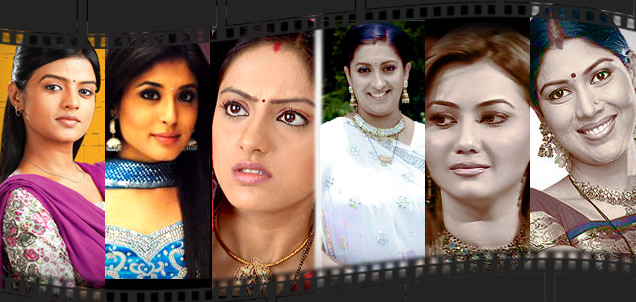
    There is a Pratigya fighting against the issues in her own house – a decision maker in Allahabad; there are working or aspiring-to-work women in quite a few soaps – among them Kuch Toh Log Kahenge set in Lucknow and Afsar Bitiya with a Bihar backdrop. There also is a Hitler Didi, where the protagonist, living in Delhi, is the master of the house, and of course Balika Vadhu and Diya Aur Baati Hum (both set in Rajasthan), which propagate women’s empowerment in the rural and semi-urban areas.


    Is it an accurate reflection of the real Indian woman, or are these shows akin to the funhouse mirrors that exaggerate certain parts of our collective reality? Even if it does exaggerate the social consciousness, it definitely provides an example for those women whose staple diet of entertainment is still the Hindi GEC.


    States Anamika Mehta, COO, Lodestar Universal: “Undoubtedly media, at an overall level, influences society and television has a huge role to play in that sense. While at some level, some shows and protagonists do play a role in sounding a wake-up call or instilling confidence, courage, and independence of thought, they thereby create followers or loyalists. However it’s more of media mirroring society on television essentially – witnessed for instance in the shift from ‘saas bahu’ soaps to the current lot.”


    While the woman protagonists are bolder and more intelligent now, the socio-cultural cauldron from which they emerge varies from show to show. The reason, of course, is increase in purchasing power of women across middle India – Madhya Pradesh, not a favourite setting for television serials till some time ago, suddenly finds itself as the backdrop for a number of soaps. Is the appeal of these shows universal or does it appeal to audiences in a particular geography? States Nandini Dias: “The traditional shows like Uttaran and Balika Vadhu do find better resonance in smaller towns while the talk shows like Oprah Winfrey or Barkha Dutt show a skew towards metros. The shows which do well across all towns are usually love stories like Kuch Toh Log Kahenge.”


    However, Shubha George, COO, MEC, South Asia, believes that in case the objective is to target a specific audience profile, a lot more needs to be done in this direction. She states: “Indian TV shows are fairly homogeneous and cater to a pan-India audience in most instances. I cannot think of any particular example that is more popular in metros because of a bolder woman character. Rather, this is a concept which is yet to be experimented on by Indian TV shows for mass audiences.”


    Many of these shows depict subjects like second marriages, domestic violence and other women-centric issues, but do they manage to send a message across to society? As per Anamika Mehta: “Frankly it’s little to do with evoking social consciousness and more to do with experimentation with new audiences, new generation, different content and eventually eyeballs. While many of these shows initially kicked off with a social idea and an attempt to rouse audiences, eventually, given the eyeball battle, they turn more into trials and tribulations of a woman with plot twists and turns.”


    There is a conscious attempt at creating a protagonist who wants to change the world, who would capture the attention and imagination of young women. Are these shows with the new realistic woman favoured by certain brands – or it is only TRPs that matter in the end? States Ms Dias: “Media planning is called a science and an art for exactly these reasons. Media planners do look at data , quantitative parameters. But finally when they take decisions they need to predict the future of how a show will do in the future. So the qualitative factors need to be considered too. In fact with the number of brand integrations that are done, it is detrimental to a brand if they do these brand integrations without understanding the content and relevance of the show.”


    Ms Mehta too states that brands do look at the content of the show, however, many times the storyline changes in chase of TRPs. She says, “Only if the brand’s personality is in sync with the show do they look at doing show exclusive deals. Very often the shows digress/change/derail chasing eye balls which often could defeat the rationale for association.”


    On India’s wide-ranging social canvas, there are many Indias, and the psychographics change not only from New Delhi to Basti, but also from Defence Colony to Rohini. It is not easy to depict the myriad colours of the Indian woman. However, the effort is being made towards being progressive, covering a broader spectrum, and bringing to the fore social issues that women in particular face. Does it matter that it is for the sake of eyeballs, or to get more advertisers on board, if the issues are addressed in the end?


    INDEX
    Success mantras from media captains
    All work and some play
    Riding the creative crest
    Holding up the managerial sky
    Celebrating the difference
    Managing Middle India’s Golden Lady
    Wooing vibrant India’s Wonder Woman
    Rural women – how strong is their ‘spending say’?
    Is the serial woman tellying it like it is?