Category: SPECIALS

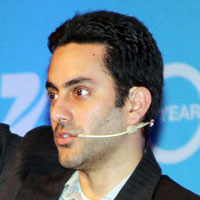
  • We are not competitive, we’re lazy: Abhishek Kapoor

    Abhishek Kapoor

    By A Correspondent


    Speaking on the theme of “Do what your heart says” at Goafest 2013, Bollywood director Abhishek Kapoor, who received a rousing welcome with whistles and cheers from the audience, shared how his early years had been a time of struggle and a lot of self-doubt. Still, he said, he had persevered because he believed in what he wanted to do. It is all the more difficult to carry on when everyone around you is casting doubts on your goal, he remarked.


    He said he grew up surrounded by films but didn’t really want to become an actor. He considered different careers including a dotcom business, but it took 4-5 years and a slump to make him start writing.


    After his ground-breaking Rock On, it took four years to make Kai Po Che, he said. “It is difficult to do something you believe in. it was a difficult film to make, but when it came out it was immensely satisfying.” He said it was the many failures and setbacks he had encountered which had driven and sharpened him to do better work. “Success is all very well but it is the failures which are important in my life,” he remarked.


    Mr Kapoor was scathing about the state of the film industry in India. “People are not competing, they are lazy. We are congratulating ourselves on making something but it is not standing out, there is nothing new.”


    Compensation played a significant role in this, he said. “We don’t pay writers. But when the film reaches the stars level, that is when payment starts, because the stars are there.”


    The audience responded enthusiastically to Mr Kapoor’s talk with questions, in a session moderated by Madhukar Kamath.


  • Leave marketing behind: Pepsi’s Shiv Singh


    Shiv Singh

    By A Correspondent


    On the second day of knowledge seminar sessions at Goafest 2013, Shiv Singh, Global Head (Digital) of Pepsi, spoke about “Why no one cares about marketing” and outlined five ideas which he said were important in the current climate.


    1 Leave marketing behind

    Expanding on this, he gave the example of Beyonce’s unmarketing campaign, #beyherenow. “It was not just an ad but a new lens into Beyonce,” he said. The ad also launched a new song, Grown Woman, and the visuals and lyrics were anchored in the culture of her past and her future. It was the start of a deep creative collaboration.


    2 Think about experiences, not more ads

    In an age when every brand can have a tangible relationship with customers, original programming, owned or shared distribution, and sustained engagement and loyalty are replacing traditional marketing, Mr Singh said. He said digital data should be used to drive new business insights. “The insights you get from social impact how you understand cultures, consumers, brands and products, and how you can predict sales and measure engagement.”


    3 Bet on Facebook.

    He said that though Facebook was here to stay, the mere number of likes a brand has on Facebook is meaningless. “Having a lot of likes is like having a large hall with empty chairs. It’s meaningless unless you have people sitting in these chairs,” he said, adding that it is more useful to have a smaller audience that engages.


    4 Develop a 365-day culture. When the customer is listening 365 days, the brand should be there too, Mr Singh said. Realtime marketing is the answer, with realtime insights, and response, content studio, co-creation and distribution happening in real time too.


    5 Capitalise on the India opportunity. He said advertising needs to look at new forms of creativity. “Commercials are videos. Embrace that notion now,” he said, recommending that agencies should hire as many journalists as they have creative directors.


    The Q&A with the audience at the end of Mr Singh’s presentation was moderated by Viral Oza.


  • Metals proved that young team needs to be empowered: K V ‘Pops’ Shridhar

    In the past few weeks, the advertising industry saw a lot of ups and downs. But as the biggest award function – Goafest – of the industry ended, the best was applauded and appreciated. Leo Burnett triumphed at the event with 9 Gold, 34 Silver and 28 Bronze.

     

    MxMIndia’s MEGHNA SHARMA spoke to the agency’s chief creative office for the India subcontinent, KV Shridhar, who donned the angry young man look in a promo for the Goafest asking God to give him the metals, this year..


    So, the God has answered your prays?

    (Laughs) Yes. He has and how!


    Obviously it’s an amazing feeling, but do share with us a little more about the win?

    There are couple of things which I would like to mention. Firstly, all of our big campaigns like KBC, McDonald’s, Coke Studio etc won, which is very gratifying. Secondly, we won at every vertical which again showcases the vastness of our work. And lastly, there was a lot of criticism when we empowered our young talent. But this has been a testing ground where we have proved out that what can the young brigade do. Nitesh Tiwari and his team has made us very proud.


    Were you expecting so many metals?

    Never expecting anything. Ad when you win, the feeling is out of this world. However, it’s always good to be appreciated for your work.


    Of all the metals this year, which is the most special for you and why?

    The KBC girl child one. It is very dear to us as it was beyond advertising. I have been fighting for gender equality for years now and I hope this campaign and our win would make others sensitive towards women too.


    Last year, the tally was three and this year, it’s nine golds… who would would you attribute this jump to?

    The level of craft has improved and increased a lot. The technology, design and the new-age media has upped the game.


    Apart from the controversies and win, what has been the high point of the event, this year?

    If we take a look at the winner’s list, in the top 15 we’ll find a production house, design house which only means that now Goafest is not about Abby alone, but about ‘communication’. All the verticals have come together and are getting encouraged and recognized. This will help the industry in a long way and is a huge step as well as positive thing for the industry.


    What is your aim for next year?

    To keep up the good work.


    And lastly, how do you think these win will impact you and the agency?

    We are going to put this behind us and relax for a few days. And come back with new energy to bring out good work for our clients.


  • 5 things we’ll want to forget about Goafest

    The controversies didn't seem to dampen spirits at the raindance at Goafest 2013. Photograph by Shailesh Mule/Fotocorp


    By Pradyuman Maheshwari


    Every Goafest has its share of controversies, and this year’s was no better. Or worser, pardon the use of the word. Now that the event has concluded, here’s a list of the five controversies about the Creative Abby that we’ll want to forget soonest. However, it may make sense for the Awards Governing Council to take measures to avoid an encore.


    #1 Big O Missing

    At first it was Ogilvy not participating. The folks have been maxing all these years, and have been producing outstanding work. A Creative Abby without Ogilvy is, as Anil Thakraney writes in Hard Knocks, like the World Cup Cricket without Australia and England.


    Well, we didn’t see Ogilvy get back and all the pleading from the Goafest folks couldn’t get them to reverse their decision.


    The result: a Creative Abby minus Ogilvy. That didn’t see Lowe get back as it stuck to its stand of boycotting the adfest.


    Leo Burnett has been winning a fair bit over the years, and it wasn’t much of a surprise that it won the maximum metals, even though none of them were a Grand Prix.


    #2 Scams – JWT withdraws Ford Figo

    Ford’s controversial, gender-inappropriate advertising cost CCO and Managing Partner Bobby Pawar his job a few weeks back. At first it appeared that the ad was just uploaded on ad showcase site adsoftheworld.com.


    But, as it emerged, that the creatives were also entered at Goafest and as is the requirement of the Abby, the ads should have been carried in media and must be entered with the clearance of the client. The Ford Motor Company took this very seriously and an as-yet-unnamed marketing department employee who cleared the ad lost his/her job.


    #3 Inner Circle member quits

    Much celebrated independent ad agency honcho Sajan Raj Kurup publicy quit the Goafest Awards Governing Council (AGC) and had CreativeLand Asia opt out of the awards. His rationale: “Personally, to me it just doesn’t feel right deep inside my heart to be associated with awards in any way in our country.” His letter to the AGC is reported to have said: “I have decided, with the support of my organisation, not to return to awards in this country till we take up the issues on scams seriously and take stringent steps against these.”


    Ahem. Kurup’s resignation was accepted, but his agency’s pullout wasn’t. CreativeLand Asia had 3 silvers and 4 bronzes to its credit.


    #4 Radio ga-ga

    Should similar entries of a campaign in a certain category be clubbed together for a metal or should these be put in separately. At the Creative Abby, many juries decide to club them together – esp if there are different renderings of a certain creative idea or theme. But in the collective wisdom of the radio jury, the various entries were retained as separate ones… ensuring the numbers of entries received by certain agencies leapfrogged. Not everyone was amused by this on awards night, but we’ve been told that we shouldn’t read too much into it.


    #5 When the client said it didn’t pay for the award

    Although the Creative Abby is a celebration of creativity, the awards are meant only for ads that have been published/aired/put up somewhere. After the shortlists are done, the auditor contacts each and every client to ascertain whether the ad shortlisted was indeed entered by it. Pretty sound procedure this.


    Now in the process this year, a certain company from one of the most trusted business conglomerates in the country told the auditor that it hadn’t paid for the entries and the agency did it for the sake of awards. This was enough reason for the authorities to say ta ta to the entries, but soon enough a communication was received from the client saying that it had indeed released the award.


    Evidently someone from amongst the ‘authorities’ went to the client asking him/her to send in the clarification. Since we don’t have anyone on record, we wouldn’t name names, but suffice to say that there was some sound-and-fury and lobbying over these developments.


    The episode doubtless left some aftertaste, making a wag remark: Namak mein kuch kaala hai! Or should it be dal mein…

  • Mediaah!: 6 answers the industry wants to get


    By Pradyuman Maheshwari


    (as you read this, imagine it’s Arnab Goswami addressing us on Newshour… the same tone, the same aggression and the same energy!)


    Ladies and Gentlemen, we are facing with a situation which almost sullied the image of the grand and trusted empire that Ratan Tata and his ancestors have built. You’ve read elsewhere on MxMIndia on what really happened, here then are some questions that I would like to ask this second Tuesday of April. It’s important the questions are asked because the advertising and marketing fraternity wants the answers. Not just in India, the world over. From New York to Shanghai to Australia!


    My questions. Just 6. Simple questions, need simple answers.

    1. The Goafest Awards Governing Council (AGC) agreed to give away the award on Friday only – and I repeat only – after receiving a written letter from Tata Chemicals saying the ad was indeed commercially released by the company. Who wrote it? And why did he or she write after initially clearly stating in the letter to the organizers that the radio spots weren’t paid for? What really happened that fateful Friday?

    2. How did it occur to Tata Chemicals to send the (revised) letter? Did someone from the 10-odd-member AGC call them? Specifically, did someone from Leo Burnett (LB) speak to anyone at Tata Chemicals? This is no police case or CBI enquiry, but in the spirit of fairness and to allow for investigation and transparency, can we check the cellphone call records of some of the key LB officials present?

    3. That the Tata Salt Lite radio spots were scam ads has been exposed. And the spots withdrawn. Do we now have a declaration from Leo Burnett that all the other 67 metals it has won are for ads that are legitimate and paid for by clients and are not scam ads?

    4. Leo Burnett is an internationally reputed advertising network. Its Worldwide CEO Tom Bernardin is in fact in the country and was part of Goafest. While sacking people is not the answer, is there some kind of a disciplinary action happening so that other clients of the mighty ad network get the comfort that their brands are in safe hands?

    5. Will Bombay House now issue clear and explicit instructions to all its marketing and brand managers as well as its advertising agencies that they must not indulge in scam ads?

    6. Should Goafest authorities write to all advertisers and agencies winning metals that in case their awardwinning metals are indeed scam ads, they should return these honourably or stand the chance of getting exposed?


    Ladies and Gentlemen. MxMIndia hereby says that it will NOT name agencies and clients who take advantage of such an amnesty. However, those who don’t and have indeed ‘scammed’ and are not giving up their award stand the chance of getting exposed. Because your site will not just report the news, but will also interpret it for you. And your site does not shy away from asking the tough questions.

    Mr Sharma has referred to MxMIndia in his mail to the AGC chairman Shashi Sinha saying “a website alluded to this debate with unnecessary insinuations”. He was obviously referring to the Big Story on MxMIndia yesterday. Ladies and Gentlemen, we did not name anyone because we did not have any one on record. But now we do. And now, we are going to ask the questions.

    Ladies and Gentlemen, you deserve the answers. And we’ll come back with more questions, if they are unanswered.

    Until then, goodbye… ta ta!


    (Did we stretch our arguments a bit much? Put yourself in the shoes of Arnab Goswami on Newshour, and we are sure you’ll do the same 🙂 )


  • Leo Burnett withdraws awardwinning Tata Salt Lite radio spots [from Mon eve]


    By Pradyuman Maheshwari


    In what could spark a longdrawn controversy in the scam ads-afflicted Creative Abby awards, Leo Burnett has withdrawn two Tata Salt Lite radio spots that won it four coveted metals in the radio and radio craft categories.


    Arvind Sharma, Chairman and CEO, India Subcontinent of Leo Burnett, has mailed the Awards Governing Council (AGC) chairman, Shashi Sinha, with a request to treat these two spots as withdrawn from the agency’s side.


    Arvind Sharma

    The Tata Salt Lite ads won a silver and a gold each in the radio and radio craft categories, and their exit reduces the final tally of Leo Burnett to 67 (7 golds, 32 silver and 28 bronze). McCann Worldgroup has lesser number of metals, but with 1 grand prix, 7 golds, 15 silvers and 33 bronze, it becomes the numero uno agency this year.


    In his mail to Mr Sinha, a copy of which is with MxMIndia, Mr Sharma has written that he was aware that there was a debate at the AGC about two Tata Salt Lite radio spots submitted by Leo Burnett. While he “recused himself from this debate and the AGC decided to award the spots… a website alluded to this debate with unnecessary insinuations”. The dispute is over the ads being created only for awards and not as commercially released work.


    Although he hasn’t named MxMIndia, we believe that Mr Sharma was referring to the story at MxMIndia at: http://www.mxmindia.com/2013/04/5-things-well-want-to-forget-about-goafest-2013/. Much as we would like to be given the credit for having corrected a wrong,  sources tell MxMIndia that the word had indeed reached Tata Chemicals/Bombay House including the ethics committee ahead of our post.


    Updated: It is learnt that when KPMG, the auditors for the Creative Abby jury, pointed out that the the client (Tata Chemicals) had intimated that the ads were created for awards, it was decided to debar the entry. However, later, the AGC decided to go ahead with the awarding of the metals after it received a revised communication from the client that the ads were indeed released commercially.


    Meanwhile, Mr Sinha confirmed receipt of Mr Sharma’s letter of withdrawal. The AGC’s decision on the letter is awaited, though according to sources, the demand will be accepted.  Also, while it depends entirely on the decision of the AGC, there is a likelihood that in the Radio Craft category, a gold that Lingo India has won may also be considered withdrawn.


    Clarifying its standpoint on the controversy, Tata Chemicals has also issued a statement: “The entire award submission process is one initiated and entirely managed by the agency; our role as a client was limited to approval of the creative. As a client, we were not aware of all the other technical requirements and subsequent process of submission criteria etc.  As soon as the inconsistencies were brought to our attention, and upon further enquiry, we conclude that it would be appropriate for the agency to return the award to the organizers.  We regret this incident which only strengthens our resolve for and commitment to strict adherence to standards.”


  • Scamadgate-2 | Anil Thakraney: Penalize the scamsters

    By Anil Thakraney


    There has been a rather muted reaction to Leo Burnett’s Tata Salt scam radio adverts. In contrast with all the sound and fury over the JWT Ford Figo ads. Surely Burnett’s ‘crime’ isn’t any lesser. I can only think of one reason: The ad junta is tiring of news on scams, a few senior industry folks I spoke with only shrugged with helplessness and resignation: ‘So what’s new, man?’


    Enough has been discussed on the subject of scam ads (including by myself), so there’s nothing more to add. However, I am now convinced all this talk has been pointless, that scams will always rule in the desi ad world. Not just because these ads land people new jobs and increments (and are therefore created), but because India is a country of scamsters. There’s a ghotala happening in all walks of life, so why must the ad frat be any different, they haven’t arrived from Pluto. I guess the time has come to accept that they will happen again and again. And therefore, the debate must shift from ‘How to cure this disease’ to ‘How to control it’.


    The social media buzz suggests creating a separate category for scam ads, thus legalizing them. This idea is as old as the hills, I recall proposing it fifteen years ago in the ad mag I was editing at the time. This will never work because once they are called ‘Unreleased Work’, such ads will not land people any real recognition, and therefore no new jobs. Agency heads will treat it as ‘jerk-off’ stuff, and dismiss it. So then what to do?


    I think the solution lies in financial punishment. For the next year, the GoaFest organizers should announce that scam ads entered slyly as official work will invite a hefty fine for the ad agency. Let’s say, a penalty of Rs 25 lakhs per scam ad. The world’s second oldest profession isn’t generally respected by the masses. And that can be corrected a bit by passing on the amount collected as fines to charity organizations. The ad world gets a positive name, and the threat of monetary loss will deter many potential scamsters.


    The GoaFest team must give this suggestion a serious thought if they want their trophies to get some respectability. They need to play the role of cops, and not just festival organizers. Because frankly, I can’t think of any other way out of this rotten mess. Time for debates and angry tweets/FB updates is over. It’s time for hard action.


    ***


    PS: On a recent visit to Delhi, I noticed that this product finds pride of place in the medical store shop windows. Not surprising, given the rising rate of crimes against women in India’s capital city. At this rate, ‘Pepper Spray’ will replace India Gate as Delhi’s glowing symbol.


  • ‘Superjury’ to decide on Creative Abby complaints

    By A Correspondent


    The Goafest 2013 Awards Governing Council (AGC) has decided that all the complaints received against some Creative Abby award-winners will now be taken up by a ‘superjury’ comprising the chairpersons of the Creative Abby award categories.


    It is learnt that not everyone among certain agencies was happy with the way complaints filed against their award-winning creatives were being handled. They were upset that some junior members of the fraternity were ruling against their work for close resemblance to some other internationally produced creatives (read: plagiarism).


    According to Shashi Sinha, chairperson of the AGC, the meeting will be held within three to four days… as soon as it is possible to get all the ‘superjury’ members.at for its Grand Prix winning ad. The decision to have chairpersons of the various creative juries will, it is hoped, ensure that erase all charges of favouritism and juniors taking critical decisions.

    It may be noted that the superjury will not take up complaints or issues of the procedural kind (like the one impacting Leo Burnett), but those which concern the creative process, specifically the charges of plagiarism.


  • Abby superjury meets, AGC to announce verdict tomorrow

    By A Correspondent

    The Creative Abby superjury,  comprising the chairpersons of the 12 categories that are part of the Creative Abby, were scheduled to meet today (Tuesday, April 23) in Mumbai to decide on the fate of the seven-odd complaints of plagiarism that came.

    They did meet… the 10 or 11 of the brightest and most creative minds in the business. Note they are not just the most creative minds, but also the most responsible amongst them as they are leaders of their individual agencies or firms.

    The task was not easy. Some of the work belonged to the members of the superjury. The decision would have a huge impact on not just the agency, but also the client and the international network. And, mind you, internationally the networks are listed and hence answerable to shareholders.

    But there is a fear that along with the creativity, some craftiness may also be at play and some or all members of the superjury may well have decided to vote not to vote. The fear is also that a section of the superjurors may get influenced by hectic lobbying to save the face of the fraternity.

    However, even as there were naysayers who said the meeting would be a sham, thousands of those watching the developments believe that the superjury will in fact vote without any biases and any personal stake.

    The official word we have received is that the superjury has voted and their decision is now with the 10-member Awards Governing Council who will now announce their verdict.

    Even though rumours of the superjury voting not to vote will be counted as mere speculation until the official word is out, the ball now lies with the AGC. There is also a view that in case the superjury has decided not to vote, the AGC is well within its rights to scrap the entire Creative Abby awards in order to ensure that the international ad and marketing fraternity does not believe that plagiarism (and plagiarists) rule in India.

    Tough times require tough measures.

  • Men have evolved from an economic provider to also an emotional one: Anisha Motwani

    The fact that many companies have begun allowing men to take paternity leaves is a telling sign of men’s involvement in the household. And their evolution. Anisha Motwani, Director & Chief Marketing Officer, Max Life Insurance, feels that while there are men who would be thrilled today to have a daughter, as much they would be with a son; but at the same time issues of rape and honour killing perplex her and force her to question the evolution of the Indian male. In an interview with MxMIndia, Ms Motwani talks about the changing Indian male and how marketers are viewing this change. Excerpts: 


    One often deliberates about the evolution of Indian woman in the last one decade – have the men too not evolved

    If you look at India with all its disparities and regional differences, it’s very difficult to make a sweeping generalisation that men have evolved.


    Rape, dowry, honour killing and preference for a male child – we have enough and more evidence to suggest that men haven’t moved an inch as far in the past many decades. But when you look at urban cities in parts, both small town and metros, you see a different picture. Evolution by definition means, a better way to survive and adapt to the changing environment. When this changing environment involves more women working, financially independent, aspiring for all kinds of careers, I’d say that certain men have adapted faster to this than others. And those who have, are better; the rest, just bitter.


    Today, more and more fathers are as thrilled to have a daughter, as they would be with a son. There is no difference in treatment, when it comes to giving the girl child the best education, securing her future or providing her all the material comforts.


    On a different note, men have made notable strides on the personal grooming front.


    Are marketers ignoring men due to easy accessibility to women as buyers and influencers?

    On the contrary, marketers are looking at men as the hot new potential segment to go after.


    Emami, which claims to have a 58 per cent share of men’s fairness cream market, is gunning for a 30 per cent increase in sales of its Fair & Handsome brand,


    Most personal care brands targeting men are innovating and spicing up products with extra features like sweat control, sun prevention, oil control and dark spot reduction. Even five years ago, who would have thought that men cared for these features.


    One fitness brand alone, Talwalkars is present in 70 cities, with over 132,000 members. Madura Fashion and Lifestyle depends primarily on men to keep its apparel brands going.


    Given that men are more on the move, are as social as women, and are digitally connected, there are enough opportunities to reach and engage them, that marketers are leveraging.


    Segmenting men based on SEC, and town class – how do they differ in their aspirations, values and social needs

    There are certain characteristics that are SEC-agnostic,  such as aspiring to climb up the social and material ladder.


    In our own category, life insurance, we have seen differences in men’s appetite for taking risks when it comes to their money, but not necessarily SEC/town-wise differences.


    How has the man’s role in the family changed/evolved?

    While a stay-at-home dad is not a reality yet, men have evolved from being only an economic provider to also an emotional one. They have begun to be more sensitive to the needs of their spouses and families, more so in nuclear families.


    While every man hasn’t turned a proud cook yet, it is heartening to see rising male interest in cooking being promoted through shows like Masterchef India. Even with the latest Junior Masterchef season, to see young boys actively engaged and bragging about foods and kitchen tools, is a sign of an evolving society.


    Lux used Shah Rukh Khan in an ad – would you say even for small ticket items men are a target audience – though secondary?

    Long before men-specific fairness lotions were out, men were already a secondary target audience.


    Today, if you were to visit any hypermarket /supermarket on a weekend, you’d discover a lot of men accompanying their spouses, kids for household shopping.


    So for categories like personal care or packaged food, they obviously are worth looking at.


    Can men across the geographies be reached through same/similar marketing strategies?

    It totally depends on the category in question. An insurance brand can adopt a common strategy across geographies, as it talks to the responsible, family man. However, a soft drink brand that appeals to the raw masculinity and action, could use regional celebrities to strengthen brand preference.


    Would you say men are getting more individualistic – thus making targeting them via mass media difficult?

    I think most marketers talking to men have managed to focus on core needs that appeal to men of different geographies, castes and economic profile, (such as the need for power, one-upmanship, success, need to be entertained). Focus on these, has ensured that mass media continues to be relevant.


    Is platform-agnostic content facilitation the solution for media owners?

    Not necessarily. While a gym brand can be platform agnostic, and focus on fitness and health-related content everywhere, a technology brand may not. Lenovo, for instance, may choose to focus on features and competitive pricing in one medium, while sharing cases of inspiring people who do in another.


    The key is to look at the men’s relationship with the category and see if different platforms can be differently to appeal to the rational and emotional sides of men.