Category: REVIEWING THE REVIEWS

  • Reviewing the Reviews: Barfi!

    Barfi!

    Key Cast: Ranbir Kapoor, Priyanka Chopra, Ileana D’Cruz

    Written and Directed By: Anurag Basu

    Produced By: Ronnie Screwvala, Siddharth Roy Kapoor


    Anurag Basu’s last film was the disastrous Kites, so he really needed to prove his credentials again. The charming, though often oversweet story of a deaf-mute man and the two loves of his life is so far ahead of the regular Bollywood mainstream tripe, that hardly any critic had the heart to give it less than 3 stars, and gently point some of its flaws. Everyone agreed, however, that Ranbir Kapoor is brilliant and his two leading ladies, Priyanka Chopra and Ileana D’Cruz, were excellent too.


    Rajeev Masand of Ibnlive wrote, “That rare film that puts a smile on your face even before a single frame of the story is revealed, Anurag Basu’s Barfi envelopes you like a warm blanket from the moment you settle into your seat. Even as routine acknowledgements appear on a black screen, you’re charmed by the accompanying ditty, Picture shuru, whose chorus instructs you to switch off your phones and submit yourself to the experience that follows.” Still he stuck with 3 stars.


    Anupama Chopra of Hindustan Times offered reluctant praise and 3 stars. “In Barfi, writer-director Anurag Basu creates a gossamer, fairy-tale world. Sometime in the 1970s, somewhere in the misty hills of Darjeeling, a penniless but irresistibly charming deaf-mute boy named Barfi gets the prettiest girl in town to kiss him. But their sweetly awkward love affair comes undone, after which Barfi embarks on an adventure with an autistic girl. Somehow these two, on their own, manage to survive the city of Kolkata – Barfi gets a job and even a ramshackle house with a spectacular view of Howrah Bridge. To point out that this is unlikely seems churlish. Because Barfi is designed to be a bittersweet, tender fable.”


    Shubra Gupta of the Indian Express also gave it three and commented. “Just the fact that this film’s chief focus is on two people who cannot communicate the way you and I do, makes it automatically different. Barfi!’ comes out of mainstream Bollywood, whose standard idea of creating difference is to shuffle one step forward, two steps back : given that context, and its subject, Barfi! does take several brave strides. It’s good in many ways; what stops it from being a great film is a degree of fuzziness, and an insistence on prettiness.”


    Raja Sen called it flawed but still had good things to say. “Romance is never easy. Neither is bringing it to the big screen, though Anurag Basu – a filmmaker inherently gifted when it comes to visual imagery and metaphor – is a fine man for the job. He can roll up his sleeves and whip out one peachy moment after another, keeping things wonderfully endearing while poking the audience ever so forcefully in the gut with a monkey-wrench. He is then to be commended for his latest, Barfi!, a film that admirably refuses to yank the sympathy cord. Instead, it creates genuine characters and a truly charming relationship before, alas, one of his lead characters chooses not to follow the director’s example and instead mistakes sympathy for love, making for a lesser film than it deserved to be.”


    Madhureeta Mukherjee of the Times of India, expectedly went with 4.5 stars – the highest it received. “He was born to a song playing on a Murphy radio, but this ‘Murphy’ baby (Ranbir) aka Barfi has a different law. Everything that has to go wrong will go wrong, but not if you brave it with a broad smiley. So ‘mute’ the high-decibel chaos and deafening melodrama around and tune into Barfi ki duniya; which is simple, sweet and SILENT! Yet, extreme emotions of love, joy and pain resound – at different ‘frequencies’.”


    The always-enthusiastic Taran Adarsh of bollywoodhungama.com gave it a relatively mingy 4 stars, going by the rave. “On the whole, Barfi! is unusual for Bollywood. You don’t formulate movies like Barfii! targeting its box-office potential or its commercial prospects. You create such films for the passion of cinema. Barfi! is akin to a whiff of fresh air. Its foremost triumph is that it leaves you with a powerful emotion: Happiness! I sincerely believe no Hindi movie buff should deprive himself/herself of watching this brilliant motion picture. Also, the viewer needs to savour Ranbir, Priyanka and Ileana’s paramount performances, one of the strengths of this movie. Strongly recommended!”


    Aniruddha Guha of DNA gushed, “A movie like Barfi! comes along rarely. It’s a film that engages you at a personal level, playfully nudging you to experience various emotions without really resorting to overt manipulation, one that makes you laugh and cry at the same time, and reminds you of what Roberto Benigni told us some time ago: Life is beautiful.”


    Kunal Guha of yahoo.com who is usually acerbic softened enough to write, “When a movie begins by revealing the grim end, no matter how cheerful the following flashback journey may be, you’re left dreading the inevitable. But Barfi! manages to make you forget just that by narrating a lighthearted tragedy that wins particularly for what it doesn’t do: It doesn’t draw a pitiful picture of the deaf-mute lead. It doesn’t attempt to do anything that would suggest that it has been made to attract foreign festival ferns on the DVD cover. It doesn’t make the lead character overcome his disability to do something no man, woman or dog (without that disability) would ever think of attempting.”


    So the one rant by Karan Bali from upperstall.com went, “No doubt, it’s commendable that Barfi! tries to treat its plot and characters in an endearing Chaplinesque sort of way by mixing light and slapstick humour with a tug or two at the heart-strings – and I’ll even say that you so want it to work, and not just box-office wise, for more better, sensible films to be made in Bollywood – but sadly, the film is unable to quite pull it off. Yes, it has its charming moments, it boasts of some great visual quality in places, even has good performances but still ends up finally as being curiously uninvolving and, dare I say it, boring, its length really telling in the second half.”

     

  • Reviewing the Reviews: Heroine

    Heroine

    Key Cast: Kareena Kapoor, Arjun Rampal

    Written & Directed By: Madhur Bhandarkar

    Produced By: Ronnie Screwvala


    People finally caught on – that Madhur Bhandarkar tells the same story again and again and that he is also very misogynistic. Films about films seldom do well. Either star-struck people don’t want to see their idols toppled from their pedestals, or that filmmakers are hardly ever able to tell the truth about a complex world and resort to cliches and banalities.


    His latest, Heroine, bored almost all critics, annoyed quite a few and got written off by all but Taran Adarsh as fake and superficial. It got a 2 to 2.5 star rating, with just the Times of India and Bollywoodhungama going over the standard. The word the cyberworld coined for this film –Zeroine.


    Shubhra Gupta of the Indian Express wrote, “The only reason to watch Madhur Bhandarkar’s films is for the way they go behind the headlines and show us the dirt and the hurt that’s usually brushed under frayed rags and burnished carpets. In his better moments, Bhandarkar has let us see the stuff that’s crawled out from underneath clearly, and we’ve overlooked the tackiness because it has added to the understanding of the subject. Heroine, Bhandarkar’s pass at Bollywood, does none of this. It remains a string of drab cliches, despite a strong performance from leading lady Kareena Kapoor.”


    Anupama Chopra of The Hindustan Times sneered, “It’s supposed to be our window into the muck, the Machiavellian politics and the Faustian bargains that a life in the limelight necessarily entails. This seemed, to me at least, like a perfect fit of maker and material. After all, what better subject for steamy scandal than the life of an actress? But sadly, Heroine never rises to the occasion. Bhandarkar and his team of co-writers – Anuradha Tiwari, Manoj Tyagi and Niranjan Iyengar – bung in every possible element of masala. There’s alcohol, affairs, a sex tape and even – gasp – a lesbian one-night stand. But Heroine doesn’t even deliver the frisson of a good Stardust story. It’s limp and, more incredibly, boring.”


    Baradwaj Rangan of The Hindu commented, “Madhur Bhandarkar’s latest thesis mounted on the points that fame is a terrible thing that slowly eats up your soul, journalists are unprincipled scum, privileged people smoke non-stop and drink non-stop and have casual sex non-stop, city people are generally evil, and gay men have the limpest wrists. Acknowledging the positive dimensions of fame would leave Bhandarkar with nothing to expend his moral outrage on. (And I have to wonder if that well isn’t running dry. After all these films, all these fulminations against the seedier side-streets of our society, how much more moral outrage can one man still possibly have?) ”


    Rajeev Masand of IBNLive wrote, “Heroine, directed by Madhur Bhandarkar opens with genuine promise, but very quickly collapses into a heap of lazy stereotypes. Sadly, the film offers no original insight into the minds of movie stars or the inner workings of the Mumbai film industry – this is a movie that might well have been made by an avid reader of gossip rags; it hardly feels like the work of an experienced filmmaker. At least with Page 3, Corporate and Fashion, Bhandarkar cast an outsider’s eye on different worlds. What’s his excuse for doing such a sloppy job on an industry he belongs to?”


    Sukanya Verma writing in rediff.com quipped, “As always Bhandarkar intersperses the frames with backbiting industry types holding a drink in hand and fake smile on lips, philandering actors, haughty star wives, catty co-stars, snooping journalists, shrewd politicians and ruthless agents. Same old jibes, insecurities, conflicts, threats and scandals. Not to forget his constant obsession with homosexuals as objects of ridicule, be it in Heroine’s visibly effeminate fashion designer, gossip-hunting reporter or a multi-purpose sex toy. The latter even remarks, ‘Is industry mein zip aur zubaan dono sambhal ke kholni chahiye (One should open their mouth and zips with equal care).’ I am not sure if this is Bhandakar’s idea of comic relief but the hall roared with laughter.”


    Aniruddha Guha of DNA ranted, “Heroine, though, is not just like Fashion, but resembles every film Bhandarkar has ever made before, and in the most terrible way. In other words, if you take every bad moment in every Bhandarkar film ever made, put them together in a two-and-a-half-hour long loop, the result will be a lot less distressing and a lot more entertaining than Heroine. All stock Bhandarkar characters return: overtly feminine male hairstylists / fashion designers, loud cops, bitchy rumour-mongers, vengeful mediapersons. Many of these are played by actors who make up the background crowd for one scene, only to be re-arranged and repeated again in others.”


    Saibal Chatterjee of NDTV wrote, “This is a glossy picture postcard that has seen better days – still good to look at but frayed at the edges and utterly lifeless. The foremost problem with Madhur Bhandarkar’s Heroine is that behind its gossamer exterior, it is weighed down by banalities that don’t quite add up. In conveying the ebbs and tides of the life of a self-obsessed, impulsive and troubled Bollywood diva, the film taps into the tropes that constitute the Bhandarkar formula. The novelty has worn off. So, all that the audience is left with is an overwhelming sense of deja vu.”


    Meena Iyer, writing in the Times of India was kinder than most. “Heroine would have been crisper had it not digressed to cover every Bollywood insider account. When the maker attempts to show mainstream cinema’s condescending attitude towards art-house films, precious screen time is lost. Mahi’s attempt to play a prostitute and say scandalous lines are clearly attempted to woo the front-benchers but the gig lacks conviction. The music is a complete letdown and even the item song Halkat Jaawani fails to give the required ‘rise’ to proceedings. Of course the saving grace of the film is Kareena who not only looks drop-dead gorgeous but is also adept as the girl interrupted.”


    Taran Adarsh of Bollywoodhungama.com was the only rave. “On the whole, Heroine is yet another hard-hitting motion picture from Madhur Bhandarkar. For persistently choosing women-centric themes, for consistently winning national acclaim and most significantly, magnetizing moviegoers in large numbers to view his cinema, the efforts of the maverick film-maker deserve to be lauded. Watch Heroine for Madhur’s imposing direction, for Kareena’s superlative performance, watch it also for its fearless, inspiring and enlightening storyline divulging the scandalous realities of the movie industry. Try not to miss it! ”


  • Reviewing the Reviews: English Vinglish

    English Vinglish

    Key Cast: Sridevi

    Written & Directed By: Gauri Shinde

    Produced By: Rakesh Jhunjhunwala, RK Damani, Sunil Lulla, R Balki


    Even after 15 years, Sridevi’s star power shone bright and dazzled most critics.  Gauri Shinde’s debut feature, English Vinglish, got a universal thumbs up with 3 to 4 stars.


    Everyone agreed that it was simple – cliched even – story well told, with loads of charm and great performances. It steered clear of melodrama, created a lovely heroine in Shashi Godbole and, everyone flipped for French star Mehdi Nebbou, even if the film’s leading lady did not.


    Anupama Chopra of The Hindustan Times wrote, “English Vinglish is that rare thing – a Hindi film that creates a heroine out of a homemaker… But even when the film feels shaky and stretched, Sridevi doesn’t miss a beat. Her performance is a triumph. She’s vulnerable and sad, yet selfless and strong, in the way we all know our mothers to be. She imbues Shashi’s quest for respect with genuine emotion. It’s hard to imagine that this is an actor who hasn’t worked in fifteen years.”


    Rajeev Masand of IBNLive commented, “There’s little that’s blazingly original here; much of it feels formulaic and predictable, in fact. Yet Shinde knows there’s comfort to be found in the familiar, and she mines feel-good moments in been-there-seen-that territory.”


    Shubhra Gupta of the Indian Express was zapped too, “English Vinglish, Gauri Shinde’s first feature, is a likeable film, which gives us a silky-smooth first half, a slowed-down second, broad-brushstroke-y characters, and an actress who makes it all work. Despite the saucer-large eyes and too-squeaky delivery, Sridevi makes Shashi a living, breathing woman, who channels pain and joy and the subtle shades in-between with a look and smile and a tear.”


    Raja Sen of rediff.com was bowled over and it’s not all that easy to get him to gush thus. “Go watch English Vinglish, and take your mothers along. As shown by one great scene which has Shashi speaking furiously in Hindi to her chef friend Laurent, who replies back in thoughtful-sounding French, it isn’t about language. It’s about one of the biggest stars of her era transformed into the plainest Jane, a delightful heroine who saves all her grace for hoisting her son onto her pillow. It’s about how vital the smallest-seeming dreams can prove to be. Ah, spell it English Win-glish, I say.”


    Saibal Chatterjee of NDTV seemed slightly underwhelmed. “This film hinges on an idea that only reinforces the phony notion that a woman, no matter how gifted, must speak fluent English in order to truly assert herself.  Tame superficiality is indeed the biggest bane of English Vinglish, which, for the most part, is otherwise reasonably watchable, especially owing to a charming performance by Sridevi, back on the big screen after a 15-year hiatus. A star is reborn and one wants to fall in love with her all over again. But despite the temptation, it is eventually too docile an affair to send the heart pounding and the pulse racing.  English Vinglish, for all its surface gloss and clean family entertainer aspirations, doesn’t possess that little something needed to turn a one-dimensional account of the makeover of an unassuming homemaker into a convincing, universal drama about a woman’s empowerment.”


    Meena Iyer of The Times of India raved, “Easily one of the best films of 2012; is a tale of women empowerment (actually it is bound to empower every viewer) because it strikes a chord, right from the start to the end titles. Debutant Gauri Shinde, who made advertising films before she ventured into the feature area; proves she’s an ace cinema writer-director. The result is a sweet, sensitive and superlative film that makes you laugh, cry and smile. Every emotion is identifiable, every nuance is balanced. The characters are real, the performances effortless.”


    Aniruddha Guha of DNA commented, “English Vinglish, the directorial debut of Gauri Shinde – Balki’s collaborator and wife – does something similar. It tells a story that revels in its simplicity, with aid from some witty writing and honest moments that elicit a smile here, a laugh there, and which leave you touched. Here too, at the centre of it all, is an actor who earned the tag of superstar years ago, but who appears to have reinvented herself to fit into Shinde’s world with remarkable ease. In Sridevi, Shinde finds her Bachchan.”


    The inernational press, exposed to the film at the Toronto film festival, was impressed too.


    Peter Bradshaw of The Guardian wrote, “It’s very amiable, feel-good entertainment, featuring some broad comedy and stereotypes, yet with a notably bold repudiation of homophobia. An undemanding picture that goes down as well as the heroine’s tasty ladoos.”


    Kate Taylor of the Globe And Mail commented, “It’s hard to believe that anyone would take for granted the glittering presence of Sridevi, the Indian movie star now making a professional comeback after a 14-year-absence during which she raised her two daughters. At 49, she can still convincingly play fresh sweetness on screen; off-screen she emits a don’t-mess-with-me maturity. But in Bollywood, as in Hollywood, your downtrodden heroine can’t look too downtrodden.”


    Joe Leydon of Variety wrote, “Far more often, though, English Vinglish is traditional Bollywood escapism, a lightly enjoyable trifle featuring exuberant musical interludes, an extremely chaste approach to conjugal relations and extramarital temptation, and a crowd-pleasing wrap-up that allows the lead character to be all she can be while still respecting family values.”


  • Reviewing the Reviews: Student Of The Year

    Student Of The Year
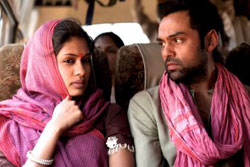
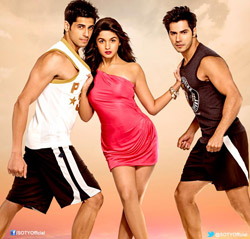
    Key Cast: Alia Bhatt, Sidharth Malhotra, Varun Dhawan

    Written By: Rensil D’Silva

    Directed By: Karan Johar

    Produced By: Hiroo Yash Johar and Gauri Khan


    By the time Student Of The Year released with its high-powered promotion, everybody knew a Karan Johar film was on the way.


    There is a way of viewing a typical and unabashedly escapist Bollywood film – you have to suspend all sense of reality. But, as so many critics have noted, even Bollywood aimed-for-NRI fantasies can get to be too much. The film got mostly condescending reviews with 2 or 3 stars.


    Anupama Chopra of Hindustan Times commented, “Karan Johar’s forte is excess. He creates fantastical worlds brimming with beautiful people and expensive things and yet anchors them in high emotion. His films work as both designer porn and soap opera. The pleasure you derive from his films is directly connected to your tolerance of candy floss. I’ve always been seduced. But the danger of candy floss is that it can quickly become vacuous and over-designed.”


    Rajeev Masand of ibnlive was sarcastic: “The hardest job on a Karan Johar film set must belong to the cleaners, who I imagine spend most of the day on their knees scrubbing floors, dusting furniture, and basically making sure everything is spotless. The director’s new film, Student of the Year, is set on an impossibly chic campus where good-looking teenagers are invariably breaking into song or breaking into fights. Yet you’ll never spot a carelessly strewn cola can or even a stray sheet of paper lying around in the corridors or in the canteen. Oh those poor cleaners!”


    Sukanya Verma of rediff.com wrote, “Treatment is Karan Johar’s forte and it is what makes his first film with rank newcomers, despite the absence of a logical plot, so fresh and zany. Unlike KKHH, which had the advantage of two superstars and one dazzling aspirant, neither of SOTY’s three key players are seasoned actors. Incisive as he is, the filmmaker is well aware of the strengths and limitations of his inexperienced cast, concealing their inadequacies to imply that strange allure of rawness while drawing on their eager energy to convey a refreshing charm.”


    Shubhra Gupta of Indian Express was left cold. “I have a bone to pick with Karan Johar, who invites us, once again, to witness a bunch of young students do their thing. Not because this is yet another impossibly swish ‘school’ which bears little resemblance to the posh-est educational institutions we have in the country: after the seismic shock of that first Riverdale-high-school-clone in ‘Kuch Kuch Hota Hai’, anything was possible. Not because we are asked to believe that these beautifully-toned, manicured, polished, perfectly-attired creatures are ‘students’ in their final year of school: a KJo film will faint at the thought of scruffiness, where even a muddy dab on a sweatshirt after a strenuous game of football appears artfully daubed. And so what if they don’t look as youthful as they ought, as long as they are good-looking, right?”


    In contrast, Madhureeta Mukherjee of TOI gushed, “It’s KJo-Wala Love! Served fresh and piping hot from the Dharma college canteen of romance. And it’s a high (class) school that you’d never want to miss a lecture of, ever. Except that it has its own set of Karan rules. Read the prospectus: 1. Leave your text-books at home but ensure you’re carrying your designer bags and heels. 2. Drive a Ferrari to school, or if you’re poorer, take a bike. 3. Dating, mating, separating and love lessons shall be part of the syllabus. 4. Girls, don your shortest minis, and guys, rip off the shirts. Welcome to St. Teresa’s. Rest assured, it’ll be a well-rounded entertainment experience.”


    Janhavi Samant of Mid-day hissed, “The students of the prestigious St Teresa school in Dehradun all exist in some strange North Indian bubble – male students show off their super-toned bodies and finely-honed muscles while swimming, running or dancing to wedding sangeet with their kurta buttons open. The heroine and her rival’s skirts are smaller than their bags and they continually hover around the said muscular heroes vying for their attention.”


    Karan Anshuman of Mumbai Mirror quipped, “Ah Bollywood. A genre so escapist, so unshackled to reality that it’d give JRR Tolkien a complex. And if the genre may be compared to The Lord of the Rings, then Karan Johar is its Gandalf. He waves a staff and sets the bar.  Make no mistake, I say this with utmost reverence because this is what the world (and I mean an audience that includes and goes beyond Indians and NRIs) expects and wants when they pay ticket money for a ‘Bollywood film’. And nobody does it better than Mr Johar. So here we go. Rich kids in designer labels? Check. Establishing characters through song and dance? Check. Superbly filmed wedding sequence? Check. Manipulative writing and background score designed to trigger your tear ducts? Check. A polished product in all technical departments? Check. Aim to make the film as unreal as possible? Check.”


  • Reviewing The Reviews: Chakravyuh

    Chakravyuh

    Key Cast: Abhay Deol, Arjun Rampal, Manoj Bajpayee, Esha Gupta, Anjali Patil, Om Puri

    Written By: Prakash Jha, Anjum Rajabali, Sagar Pandya

    Directed By: Prakash Jha

    Produced By: Prakash Jha


    Prakash Jha films cannot be dismissed outright. For the better part of his career, Jha has tried, not always with success, to capture the bleak reality of small-town India. Because he is not a typical Bollywood all-business-no-brain type, his films are viewed, at least by critics, with some respect. Still, for the informed viewer, it is hard not to be sceptical of Jha’s Maoists-for-Dummies film Chakravyuh, especially since the plot comes from Jean Anouilh’s Becket which is also the base for Hrishikesh Mukherjee’s Namak Haram. Jha’s film may have a point of view, but lacks both finesse and a strong emotional core. The ratings from the wise ranged from 2.5 to 3. And poor Arjun Rampal comes in for major flak!


    Shubhra Gupta of the Indian Express rightly analyses, “Jha makes it easy for us to hate these black villains, and stay safely ambivalent about the others: the Naxals have a valid point of view, but killing cops, or anyone else, is not good; the cops need to prevent the innocent villagers from becoming victims, but it’s a war, and there will be casualties. You can see the director’s job is cut out because he is on a tightrope: too much overt justification or sympathy for either side would receive flak from the other. But this makes Chakravyuh, with entirely predictable character-arcs and outcome, a lesser film than it could have been.”


    Suprateek Chatterjee in the Hindustan Times writes, “Some performances, such as those by (Manoj) Bajpayee and (Anjali) Patil, are restrained and manage to add some authenticity and dignity to the proceedings. Alas, all of this is undone by the film’s frenetic pacing, raucous background score (nary a silent moment, with many cues sounding suspiciously similar to Hans Zimmer’s The Dark Knight score) and puerile writing. There’s no intelligent layering here; characters arrive on screen, announce who they are and what they do – and then proceed to do exactly that. Also, this might seem like a minor quibble, but in 2012, can we expect at least half-decent visual effects? Shots of explosions in this movie look like they were created by first-year animation students.”


    Priyanka Roy of The Telegraph writes, “This is a film that doesn’t really know what it wants to be. Director Prakash Jha ventures bravely into the dark and under-exposed world of Naxalism, but Chakravyuh is a victim of Bollywood excess, reeking of jingoism, larger-than-life characters and the inevitable song-and-dance, all of which tend to drown out the message that the film strives to put across.”


    Meena Iyer of The Times of India is kind: “Chakravyuh is a hard film to make and marks must be given to Jha for sticking his neck out. Staying true to the subject, he gives us an insight into uncomfortable truths unfolding in our backyard. He is one of the few filmmakers with such audacious work to his credit. Jha must also be complimented for the scale and performances he has extracted from his lead cast. The men – Manoj, Arjun and Abhay – are compelling; of the girls, Esha starts on a shrill note but improves later. Newbie Anjali Patil shines. You may not like this movie if socio-political entertainers are not your cup of tea.”


    Shabana Ansari of DNA fence-sits: “A socio-political thriller set in the country’s red corridor where Maoist insurgents oppose industrialisation because it leads to the displacement of the tribal population, Chakravyuh has its heart in the right place. Jha has once again woven fictional elements and characters with real incidents and people to present a film that touches the right chords. But somewhere along the way, he succumbs to what can only be described as the Bollywood’isation’ of a socially relevant subject – there’s male bonding, dialogue-baazi, non-stop action, blazing guns, and also an irreverent item number thrown in! No, really!”


    Sukanya Verma of rediff.com is unimpressed: “Jha steers clear of innovation and opts for the soft-corner-for-the-girl cliche and not some radical shift of ideals to convey Kabir’s sudden craving to switch sides. Chakravyuh, despite a decent premise, is a victim of clumsy plot and inordinate length. Apart from ambiguous purpose and the topsy-turvy dynamics of Adil and Kabir’s friendship, dialogues fail to dazzle and songs appear out of place. It’s almost hilarious when Om Puri’s waxing eloquent about ‘Aam aadmi ke liye kuch bhi nahi hai’ (There’s nothing for the common man) is immediately followed by Sameera Reddy’s furiously shaking belly in a needless item song targeted at frontbenchers. The irony is unmistakable. In the end, Chakravyuh is nothing more than an average action flick in the garb of relevant cinema where socio-political turmoil is nothing more than a prop and gun-toting militants in uniforms and bandanas hollering ‘Lal Salaam’ fill up the frames.”


    Karan Anshuman of The Mumbai Mirror was one of the positives: “The film is massive. Hundreds of coordinated extras fill up scenes. Yet, one feels Jha’s method is getting somewhat repetitive. The technical formula that served him well so far is beginning to look dated with an overall neatness missing. Do such films need item numbers any more? Must the effectiveness of the message come at the cost of style? But then again if a Bhansali can produce a Rowdy Rathore, give me a Chakravyuh over it any day. Watch this film for its lucid, dramatic presentation of a nation’s problems. The commercial aspects notwithstanding, at the heart of it, Chakravyuh is the first effective film on the Naxal-Maoist question.”


  • Reviewing the Reviews: Talaash

    Talaash

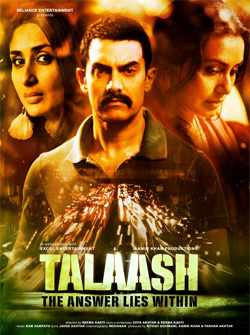
    Key Cast: Aamir Khan, Rani Mukherji, Kareena Kapoor

    Written By: Zoya Akhtar and Reema Kagti

    Directed By: Reema Kagti

    Produced By: Ritesh Sidhwani, Aamir Khan and Farhan Akhtar


    Some clever myth building and some delivery of promise has ensured that Aamir Khan is now a larger than life star who can never go wrong. That he agreed to star in and co-produce a film by Reema Kagti, relative newcomer was enough to build expectations sky high.


    Getting an average of three-star ratings, and as many raves as rants, the unanimous opinion was that the film built atmosphere well, but crashed in the second half. Almost everybody found the ending a cop-out. More disturbing, however, was the filmmaker’s, and by association Aamir Khan’s endorsement of what rationalists would call mumbo-jumbo.


    Shubhra Gupta of The Indian Express wrote, “In its better bits, Talaash lets us ignore its studiedness–the squalor of the red light area, the determined low-life lingo, the hard-worked cop-station back chat, the high-class homes of the rich and famous– and gives us a Hindi movie genuinely trying for a whodunit-cum-whydunnit. Talaash starts out as a smart, well-written noir-ish thriller, and then slips between the tracks. Pity about the second half.”


    Anupama Chopra of Hindustan Times felt cheated too. “To watch Talaash is to embark on a passionate love affair that ends in frustration because the object of your desire reveals itself to be shallow and depressingly ordinary. In short, a profound anti-climax.”


    Rajeev Masand of IBN Live wrote, “Director Reema Kagti employs a solid technical team to deliver a film that is rich in atmospherics and mood. KU Mohanan’s striking photography and Ram Sampat’s haunting score lend a distinct texture to this film, as do the real Mumbai locations the film is shot on. But Talaash doesn’t feel nearly as tense or urgent as it ought to, and its plot simply isn’t as deliciously complex as it could’ve been. As a result, it’s a very watchable film, but not an unforgettable one.”


    Karan Anshuman of Mumbai Mirror liked it but with some reservations. “The ‘suspense’ bits do have their shortcomings. The lack of multiple red herrings, little reward for long stretches and relatively slow pacing (the last two points are especially valid in the first half) might have you squirming. Over-explaining the big twist in the climax seems unnecessary too, especially when this is hardly what the film is about… So it doesn’t matter if you can guess what the end is going to be at interval point (like I did); if you’re going to watch Talaash solely to understand “what’s the suspense about” you’re going to be disappointed. Try and empathize, instead with the characters. Reward then, will look for and find you.”


    Saibal Chatterjee of NDTV was mostly appreciative. “By no means is Talaash the end of your search for the perfect whodunit. But there is so much going for this compelling, slow-burning, well-acted tale set in the dark, grimy underbelly of Mumbai that you can barely take your eye off the screen. As a suspense thriller with a paranormal edge, it certainly isn’t action-packed. Yet Talaash, which relies far more on the intricacies of psychological drama than on the disquieting impact of visceral shocks, is riveting all the way through to its surprising, if a tad dissonant, end.”


    Meena Iyer of The Times of India commented, “Talaash belongs to the genre of cinema noir of which there are few examples in recent times. This film is a good attempt at revisiting suspense flicks that were a huge craze in the 50-60s. To bring Gen-Now up to speed, back then movies like CID, Mera Saya, Woh Kaun Thi weaved magic on celluloid for patrons back then. But, make no mistake here. Though,Talaash has the mystique of the cinema Raj Khosla; it is modern in its approach and the setting is contemporary.”


    Raja Sen of rediff.com wrote that it was a Vikram Bhatt film better dressed. “It’s a somber, well-assembled film in contrast to the quick and flashy schlock that would have been doled out by the aforementioned merchants of middlebrow masala, and while the film’s craft — and the acting chops shared by its considerable cast — can’t at all be denied, it must also be said that perhaps the trashier approach may have worked better for this material. Or, at the very least, made for more fun.”


    Aniruddha Guha of DNA was cautious in his praise. “There are times when you feel Talaash might fall apart, but it thankfully comes together neatly in the last 30 minutes or so. As much as the story hinges on the final revelation – one that’s supposed to jolt you – the journey itself isn’t too bad either. It demands an investment of time and patience, surely, but the pay-off is rewarding. How much you like or dislike the film will largely depend on whether the final twist works for you. It did for me.”


    Baradwaj Rangan of the Hindu seemed a bit underwhelmed too, but not dismissive. “The talaash of the title, at first, suggests the search for answers. Why did the car end up in the water? Was it suicide? If not, who was behind the accident? In short, we seem to be in for a nail-biting police procedural based on a “high-profile case.” But gradually, that search takes a backseat to others – a father’s search for peace, a wife’s search for a husband who’s vanished into a void of self-flagellation, and a forgotten victim’s search for closure. Kagti brings this all together with a sure touch that her first film, the fitfully entertaining Honeymoon Travels Pvt. Ltd., never hinted at. Even if the resolution leaves you underwhelmed – and despite the artfully placed pointers to seediness, with ragpickers, porn DVDs displayed proudly in stores, derelicts and druggies, some may feel Talaash is just classily dressed up crap – the film is so beautifully made and so atmospheric that several scenes stick in mind.”


  • Reviewing the Reviews: Khiladi 786

    Khiladi 786

    Key Cast: Akshay Kumar, Asin

    Written By: Himesh Reshammiya

    Directed By: Ashish Mohan

    Produced By: Twinkle Khanna, Sunil Lulla, Himesh Reshammiya


    The common belief is that a certain kind of Bollywood commercial film is critic-proof, or a Housefull 2 or Rowdy Rathore would not have succeeded. But once in a while critics must feel vindicated, when a film like Khiladi 786 comes out, thumbs its nose at anything that spells sense, and is confident of its power over the masses.


    Critics pan it – with a couple of exceptions – and the ratings hover between 1 and 2. This film is not likely to hit the 100-crore mark, and it’s not because of the reviews; the audience got sick of having garbage thrown at it.


    Shubhra Gupta of The Indian Express rants, “There is, of course, no plot. The attempt is to piggyback on the Khiladi brand that belongs to Akshay, marrying it to the currency of Chulbul from Dabangg. But when Akshay turns to us at the start of the film, having finished with a fight sequence, and declares – ‘The Khiladi Is Back’, I didn’t hear any clapping, though I did hear a few obligatory titters at the most distasteful parts (Akshay doing blackface is one). Lower the denominator as much as you want, you will always get some laughs. In the end, I was left looking at a straw to clutch. Any little thing. I found, dear viewer, none. Not. A. One.”


    Anupama Chopra of The Hindustan Times was unimpressed too, “All through, the funny bits were rare and mostly unintentional. Akshay swaggers above this messy material, which includes African-American characters and dancers in blackface. If I wasn’t so exhausted, I would have been offended. Box office figures suggest that many people enjoy this school of cheerfully moronic cinema, but Khiladi 786 really isn’t my idea of a good time.”


    Rajeev Masand of IBNLive commented, “Directed by first-timer Ashish Mohan, an erstwhile assistant of Rohit Shetty, Khiladi 786 is funny, but only in spurts. For the most part, it’s as enjoyable as watching a kitten struggle to shake off the firecracker that some mean kid tied to its tail. If you laugh, they’re probably guilty laughs – how can you be amused by such cruelty? At the receiving end of writer Himesh Reshammiya and director Ashish Mohan’s tasteless sense of humor are dwarves, handicapped people, and particularly foreigners who’re reduced to embarrassing racial stereotypes.”


    Saibal Chatterjee of NDTV was left cold. “Khiladi 786 has nothing new to offer. It is cut from the same cloth that has yielded many of Akshay Kumar’s recent vehicles. These films have sought to cash in on his rough and rowdy screen persona. Khiladi 786 does more of the same. In short, it is another outright assault on the senses. The comedy is crass, the acting borders on the slapstick, and the general air that hangs over the film is one of utter lunacy. The loudness is accentuated manifold by a ear-splitting background score.”


    Shubir Rishi of rediff.com gave it a low half star and wrote, “Debutant director Ashish R Mohan does try, but everything becomes dim and dull because of a really weak script, with unacceptable dialogues which are constantly in bad taste, and a single-finger synthesizer which is utilized for filling in as background score. This is no Rowdy Rathore, folks, this is just a gimmick. True, they did infuse it with a lot of other delightful innuendos, and some reference to comic books, but at the same time, ruined with unclever lines and expectant looks. This is a wannabe funny movie, an assault on our collective intellect.”


    Nandini Ramnath on Livemint commented, “The anything-goes movie is packed with so many random characters and even more random jokes that moments of inspired humour emerge out of the hodgepodge. Bahattar Singh, his father (Raj Babbar) and uncle (Mukesh Rishi) pretend to be policemen to impress the other side, as do Indu’s brother TTT (Mithun Chakraborty) and his hoods. A police inspector who is locked away for threatening to spill the beans loudly protests his treatment, saying he will “complain to Kejriwal”. The rest of the time, much of Bunty Rathore’s dialogue depends on rhyming words for laughs (bayko, the Marathi word for wife, is matched with psycho; Sikh with seekh kebab). It’s hardly enough to sustain the running length of 2 hours and 20 minutes, but you might just find yourself occasionally sniggering without meaning to.”


    Shabana Ansari of DNA observed, “Khiladi 786 is the kind of movie that critics pan and audiences lap up. Bahattar (72) Singh (yes, that is really Akshay’s name in the film) beats villains black and blue and makes walls crumble with just a single punch! What he can’t do is find himself a bride because of his reputation. When an out-of-work matrimonial agent (Himesh) offers to get him hitched to Indu (Asin), the spoilt sister of an underworld don Tatya Tendulkar (Mithun), both families pretend to come from respectable backgrounds. What ensues is as unbelievable as Akshay lip-syncing to Himesh’s songs.”


    Did anyone find any merit in the film? TOI’s Madhureeta Mukherjee did. “Debutant director Ashish R Mohan’s masala potboiler style is unmistakably reminiscent of his guru, Rohit Shetty’s films. There are flying cars, flying bodies, flying fists and a flying Singh too. He shows flair for comedy, but for a film titled Khiladi, it lacks hard-core action, heat and the adrenalin rush that is synonymous with Akshay’s Khiladi series (maybe intentionally). With a feel of hip-hop, rap, rock and our good ‘ol Burmanda, Himesh’s music pumps life and energy into the story. For those looking for some logic-less laughtime, groovy tunes topped with some todh-phodh – this one could bring some action to your weekend.”


  • Reviewing the Reviews: Dabangg 2

    Dabangg 2

    Key Cast: Salman Khan, Sonakshi Sinha

    Written By: Dileep Shukla, Abhinav Kashyap

    Directed By: Abhinav Kashyap

    Produced By: Arbaaz Khan, Malaika Arora Khan, Dhillin Mehta


    A certain weariness crept into the reviews of Dabangg 2. The first film was crassly commercial but entertaining. Since it wasn’t highly original to begin with, the sequel that faithfully follows the template seems like a repeat and not half as enjoyable. Still, Salman Khan is on a roll, and the film was expected to get a huge opening. But even by the lowering of standards that critics do for Bollywood masala films, this one just about made the cut. Mostly 2 or 2.5 stars, some 3, but the tone, mostly disappointed.


    Karan Anshuman of Mumbai Mirror spoke for a lot of moviegoers: “Dabangg 2 is nothing but an amalgamation of its predecessor and its offspring, and only more of the same: slow-mo foot stomp splintering the earth, an opening scene warehouse fight, and the belt now dancing on its own. Still, it is slightly less jarring than the original but that’s mostly because there’s absolutely no attempt at a story this time….On a more serious note, I have to ask – aren’t we tired of watching the same film in its various avatars over and over again? It’s the same gimmicky action sequences, same item numbers, with the same actors telling us the same unoriginal story. When will we realize that somewhere along the way it became about stars and filmmakers having a blast at our expense rather than them being responsible for entertaining us?”


    Srijana Mitra Das of the Times of India tried to be upbeat. “Arbaaz Khan’s direction is commendable – he maximises his main star, maintains balance and keeps the movie tight. There are some loose strands – an SP eating ‘pisa’ becomes annoyingly heavy, Sonakshi’s acting stays lean, some jokes are saccharine-like – but at the end, Salman’s shirt comes off, so it’s all cool. Taking this franchise forward, Dabangg 2 presents a sewaiyyan Western where hot-cop Chulbul is cowboy and stud. If you’re up for fun that’s purely tongue-in-cheek, this will give you bangs for your buck.”


    Saibal Chatterjee of NDTV gave it a reluctant thumbs up.”The obvious question: is Dabangg 2 really twice as nice as the original action flick that made giant waves in 2010? Well, for one, the follow-up has been mounted on a far more lavish scale: its budget is nearly double that of the precursor. This film might also end up raking in a much larger box office booty than Dabangg did. But assessed strictly as a pure entertainer designed for instant mass gratification, it isn’t half as successful. But make no mistake. Dabangg 2 is every inch of the way the critic-proof film that it is meant to be. No matter how many holes you might spot in its uncomplicated, wafer-thin narrative edifice, Bollywood’s most bankable megastar’s onscreen deeds, at a bit of a stretch, would serve to paper over all of them.”


    Anupama Chopra of the Hindustan Times was just a little disappointed. “There wasn’t one line that stayed with me after the film. But what remains consistent is the sheer fun of watching Robin Hood Pandey solve the many problems of the world by breaking necks. I think complicated times call for uncomplicated heroes and Chulbul Pandey fits the bill perfectly. My review of Dabangg ended with a plea for a better story for Chulbul. Like so much else in Dabangg 2, that too remains the same. Can someone please write a terrific plot for this terrific character?”


    Rajeev Masand of IBNLive commented, “Expectedly Dabangg 2’s only strength is Salman Khan himself, who is the glue that holds together this slipshod film. He’s charming in his romantic, cheeky scenes with Sonakshi Sinha, he’s mischievous and endearing while teasing his father, and plain hilarious in his interactions with his sidekick cops. Sadly, Chulbul Pandey is an extraordinary man trapped in an ordinary, unexciting world in Dabangg 2.”


    Sukanya Verma of rediff.com was nostalgic for the original. “Dabangg 2 serves primarily as a reminder of what this Rs 100 crore addiction is doing to the art of entertainment. Entertainment, not filmmaking, mind you. Even escapism deserves to be treated with boundless imagination. And so I’ll take Salman Khan stopping a moving tram with nothing but a blazer over the same old Matrix-era maneuvers. Now THAT was quite a kamaal, Pandeyji.”


    Shubhra Gupta of The Indian Express ranted, “The whole film revolves around Chulbul. What else can it do, poor thing? His chulbuli, played by Sinha through the film in the same curvaceous-cum-coquettish manner, the same sideways come-hither glances, stays in the kitchen, occasionally straying to the bedroom, and getting to leave the house only a couple of times. Clearly, if you want to be a 100 crore club mascot, that’s all you can aspire to.”


  • Reviewing the Reviews: Inkaar

    Inkaar

    Key Cast: Arjun Rampal, Chitrangada Singh

    Written By: Sudhir Mishra

    Directed By: Sudhir Mishra

    Produced By: Viacom 18 Motion Pictures


    Some said yay, some said nay, some said maybe. But all critics were in agreement over one thing – that Sudhir Mishra took a topical and sensitive issue like sexual harassment and botched it. Several female critics used the term ‘trivialise’ and most were disappointed with the bizarre, dithering climax.


    The film got between two- and three-star ratings, nonetheless, maybe because it is a Sudhir Mishra film and he has made good films in the past.


    Anupama Chopra of the Hindustan Times felt let down. “There are too many cheesy parties where everyone gets drunk, and the climax is a staggeringly disappointing cop-out. It undermines everything that has gone before. What, you wonder, was the whole war about? Arjun and Chitrangada work hard to give Inkaar heft. Both struggle to bring conviction to their characters. But ultimately the film remains a dish half-baked.”


    Rajeev Masand of IBNLive commented, “The performances are of the skim-on-the-surface variety. Arjun and Chitrangada look like a dream and valiantly tackle difficult roles, but you get the idea that they’ve bitten off more than they can chew. Despite the bold, controversial theme, Inkaar fizzles out once the fireworks fade, not least because of its awkward climax – in the office restroom, of all places!”


    Sukanya Verma’s review in rediff.com was understandably angry. “In a sexual context, to judge sociable from suggestive and vice versa in a part-liberal, part-conservative society is highly precarious. One person’s idea of harmless flirtation could be another’s criteria for inappropriate conduct. But under NO circumstances is exploitation okay. No matter what line of work one is in, at some point, every individual has to decide on his/her own as to where they want to draw a line and when they need to object. Instead of expounding on the opaqueness of this matter with sensitivity and substance, Inkaar trivialises something so serious and rampant as sexual harassment into a terrible joke. I wouldn’t have so many issues with Sudhir Mishra’s new film if it wasn’t so irresponsibly promoting Inkaar as something it’s not. Especially now.”


    Shubhra Gupta of the Indian Express was left unimpressed too. “The tough questions that the film had started to lay out for us, about what constitutes sexual harassment, the pressures to succeed in a demanding workplace, the moral and ethical dilemmas that have to be faced to reach the pinnacle, all get buried under a hurried, compromised end. Inkaar could have been truly radical. But it becomes a film that prefers to cop out, rather than deliver on the promise it held out so bravely in its initial passages.”


    Aniruddha Guha of DNA was dismissive. “Sudhir Mishra seems to be in a weird space as a filmmaker right now. His penchant for simple storytelling and real, complex characters have resulted in some great films, and he tries to juggle his strengths with more mainstream elements in Inkaar. Nothing wrong with that, except that the result is an unfortunately botched attempt at portraying a relevant issue, even as Mishra struggles to strike a balance between style and substance. The film starts out with promise, but a jarringly loud background score, hammy actors and a cliched ending ruin whatever chance Inkaar had at being considered watchable.”


    Srijana Mitra Das of the Times of India wrote, “You know those cakes that look gorgeous in pictures but collapse when they bake? Inkaar is like that. Polished-looking, its edges – the tension of feeling harassed at work, office politics, ego flashes – hold rather well. But its centre collapses in a soft mess.”


    According to Saibal Chatterjee of NDTV, “Much of the film’s strength, for whatever it is worth, stems from its unbending and ambitious career woman-protagonist who stands up to the tyranny of Alpha males in a high-profile corporate set-up where the glass ceiling is an everyday, if only subliminal, reality. It is in the motivational detailing of this character that Inkaar goes off-track. For a film that is remarkable in many significant ways, it ultimately disappoints because, despite showing the nerve to deal squarely with a demanding subject, it eventually chickens out of the prospect of going the whole distance to a coherent and radical conclusion.”


    Janhavi Samant of Mid-day ranted, “The biggest problem area with Inkaar, and most films revolving around workplace issues, is the portrayal of the female protagonist. For such an ambitious woman, Maya is shown to be a clueless trainee, remarkably insecure about her own rise, a paranoid leader, and prone to frequent emotional outbursts in work situations. Another problem area is the many brazen generalizations about scorned women, how flirting is natural when beautiful men and women work together all hours of the day, the fine line between camaraderie, flirting and harassment. Maybe a little more time in an actual office observing day-to-day dynamics between colleagues of the opposite sex or interacting with mature women professionals would have added a little insight to the plot. One expected more maturity from a Sudhir Mishra film.”


    Anuj Kumar of The Hindu wrote, “Mishra has a knack for hitting where it hurts, but here, after a point, he strikes more on the surface than at the soul. When he delves into the motivations and impulses of his characters, the drama is not consistently satisfying and the climax is a disappointment because in an attempt to leave with a ray of hope, Mishra tones down the denouement. After going almost all the way, he takes the ‘escapist’ route.”


    Pratim D Gupta of The Telegraph liked the film but pointed its flaws. “Inkaar has an excellent first half, which really puts you in the middle of the flashy, fierce world of advertising and in the ring with these two drop-dead-gorgeous individuals looking for more than love in their lives. Or so we are made to think. And while the tempo is kept up in the second half, the rest-room resolution is a disappointing and cliched copout that kind of subverts the whole serious issue of sexual harassment at the workplace.”


    Karan Anshuman of Mumbai Mirror stood out with a four-star rave, “Inkaar is not about office politics as you might imagine, even though many moments shape an accurate portrayal. It is not about sexual harassment in the workplace as it is being marketed though that is the searing crucible in which complex, often unnatural dollops of human emotion are left to sputter and interact, never coalescing. Everything else is an elaborate backdrop. And finally when the truth unravels – when motives come to light – I had a great urge to watch the film again. And with movies, this urge supersedes all flaws.”


  • Reviewing the Reviews: Race2

    Race2

    Key Cast: Saif Ali Khan, Deepika Padukone, John Abraham, Jacqueline Fernandez, Anil Kapoor, Ameesha Patel

    Written By: Shiraz Ahmed

    Directed By: Abbas-Mustan

    Produced By: Ramesh Taurani, Ronnie Screwvala, Siddharth Roy Kapur


    It’s not often that a big budget, star cast film, made by the successful ‘director duo’ Abbas Mustan gets the critics to collectively sneer at it. Their films have always been high on style and low on substance, but with Race 2 this imbalance is even more pronounced, because the content is practically non-existent.


    So early in the year, a film already listed as one the worst of 2013… and there’s 11 months still to go.


    Race 2 got mostly 2 or 2.5 star ratings, except for TOI’s standard 3.


    Shubhra Gupta of The Indian Express commented, “There are often good reasons why retreads do not reach the same level as the original. In 2008, Race gave us bad guys and very bad girls who used bronzers and booze as lethal weapons, and Abbas Mustan managed to make of that mix a slick thriller. Five years later, we have a sequel, and it’s all so been there-seen that-so-what, that Race 2 just passes in front of our eyes without registering.


    Anupama Chopra of Hindustan Times quipped, “Race 2 is essentially a big-budget cartoon in which coolness is all. The director duo Abbas-Mustan (this is how they credit themselves) have no pretensions about what they are making – full-on masala with a dash of revenge, a slice of heist and characters who are either strutting their chiselled bodies in slow motion or betraying each other. The frame is crowded with good-looking people, mouth-watering cars, casinos, gargantuan hotels, planes and yachts. The money being tossed around is, and I hope you’re sitting down for this, 15 billion Euros. It’s the good life, and because this is a comic book, there are no consequences.”


    Vinayak Chakravorty of India Today wrote, “Look hot, act cool, fight tough. When it comes to action thrillers, Abbas-Mustan obviously stick to that brief while instructing their cast. The idea has clicked for the director duo for years though they fell flat with Players last year.


    Abbas-Mustan never believed in giving much of a brief to their writers, though. In most cases the script has indulgent winks at a foreign hit or two, suitably altered for desi tastes. Smart packaging and an engaging narrative style do the rest of the trick. Race 2 sticks to these basics, except the part about engaging storytelling.”


    Saibal Chatterjee of ndtv.com was scathing, “Race 2 proves how difficult it can be for a producer to let go of an idea that yielded a box-office bonanza the first time around. The makers of this film obviously haven’t heard of, or do not believe in, the law of diminishing returns. Race 2 isn’t so much a sequel as an ill-advised rehash. Revenge, one character says, is a dish best served cold. Ideas, for sure, aren’t best served stale. This is the second year in succession after 2012’s Players that Abbas-Mustan have the honour of unleashing the first Bollywood biggie of the year. Race 2, like Players, is big only on nausea-inducing clatter.”


    Madhureeta Mukherjee of the Times of India was relatively kind. “Get ready for jobs that ‘blow’, bare bods, chains, fists, fruits (of passion) et al. Kinky, huh? Not really. This is what goes into a high-flying, testosterone ride called Race 2, where everything blows up – from beastly cars to bronzed beautism. Macho men dive into mid-air and cars casually fly. The men are smart, but their gizmos are smarter. The women are ‘haute’, but mean machines give them a run for their curves. Such is this race of brawn and biceps (with limited brain power).”


    Janhavi Samant of Mid-day lists the defects thus, “Performances, phew, the film has more close-ups of cars than faces, so the less said the better. Fancy cars whiz past at high speed, alpha men charge and swagger ahead of exploding cars in slow-motion, men and women show off their sculpted bodies while coming out of the sea, or women in bold, bright red lipstick and nailpaint dressed for the ramp, even in a bedroom romp, and everyone talks about some billion-trillion-gazillion Euros worth of deals in vain – Race 2 is a bimbo film, all horsepower, no brainpower.”


    Karan Anshuman of Mumbai Mirror wrote tongue-in-cheek, “Here’s the plot: A is rich, B is rich, C is very rich. There are girls attached to all: secretary, sister, girlfriend: D, E, F (no, they’re not one person). These are all Indians in Turkey giving you the impression that they run the country. There’s also some action in Italy and since Abbas-Mustan shot that bit in front of Istanbul’s world-famous landmark Ayasofya, you get a good picture of how smart the filmmakers think you are.”


  • Reviewing the Reviews: 2-2.5 stars for David

    David

    Key Cast: Vikram, Neil Nitin Mukesh, Vinay Virmani,Tabu, Lara Dutta, Isha Sharvani & others

    Directed: by Bejoy Nambiar

    Produced: by Bejoy Nambiar & Sharada Trilok


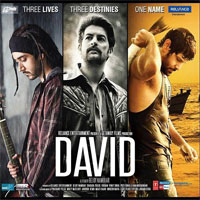
    Bejoy Nambiar’s David is the kind of film that exasperates critics. It has a lot to commend it for, but like the runner who trips before the finishing line, it just doesn’t make the grade. Visually masterful, with an inventive idea and structure, the film goes wrong with it script and pacing. Which is why most critics settled for a 2 or 2.5 rating, instead of 3. But they all read like it hurt to pan this one.


    Rajeev Masand of ibnlive.com commented, “Oozing style and technical finesse reminiscent of his earlier film Shaitan, Nambiar’s latest has some genuinely tense moments, but suffers gravely on account of flabby writing. Each track feels unnecessarily stretched, and there are bizarre moments in each story that’ll have you scratching your head in bafflement.”


    Sukanya Verma of rediff.com wrote, “Bejoy Nambiar’s gorgeously packaged, well-acted but underwhelming David is like a split personality, racing on three different tracks exhibiting the skills and shortcomings of both these fellas. On one hand, it is incredibly grand in its ideas and challenges the traditional structure of storytelling. On the other, it’s uneven, often dragging pace and frantically shifting moods, unable to hold fort.”


    Shubhra Gupta of the Indian Express was disappointed too. “My problem with David is not that it didn’t suck me in, on and off. There were a few passages which are well executed, and there’s no lack of drama in those: Nambiar knows how to lift scenes and inject tension. What the film doesn’t do is to pull together. Within each strand itself there are loose parts, which even smart editors like Sreekar Prasad can’t do much about. The film is also hobbled by inconsistent acting : some of it is credible, some is strictly passable.”


    Karan Anshuman of Mumbai Mirror was relatively mild. “Director Bejoy Nambiar shuns convention like a Shaitan shuns his morals. With David, he brings us three short stories of diverse genres and delights with his now characteristic visual flair but perhaps is a tad ambitious in attempting to thrust together multiple yarns in 150 minutes that could’ve been entire films in their own right.Still, David is infused with energy and where it lacks in substance, it makes up in style and original thought. It is essential to treat the three segments as individual plots by disregarding the muted manner in which they connect at the end. You may get the feeling that you’re watching one film considering the tales intercut with each other, but your ticket cost will essentially be three shorts for the price of one feature.”


    Sanjukta Sharma of The Mint had a style-over-substance complaint, like most others. “With his first film Shaitan (2011), Bejoy Nambiar burst onto the narrow Indian indie scene as a director for whom a story on screen is as good as its post-production, machine-fed visual acrobatics. Call it the Guy Ritchie school. His new film David, a narrative involving three separate lives that share the same name, firmly establishes him in that school. We need some of those directors—optimizing a visual in every sense, and the medium’s technological possibilities. Style does not exclude substance.”


    Madhureeta Mukherjee of The Times of India raps it lightly on the knuckles. “The film swiftly transitions between eras, dramatically changing in colour, content, emotion and drama. Even the music – rock, remix, retro – blends beautifully across time zones. It suffers at story-level – the first half builds intrigue and enthusiasm, but turns blase soon after. The plot with D1 grips, D2 goes so deep to find purpose it loses us, and D3, even with interesting mix of characters leaves us in stupor…Yes, the Devil’s in the detail. But maybe David needed more ‘D’ of ‘Depth’ in the story to make this more ‘Delightful’.”


    Saibal Chatterjee of NDTV.com wrote with some admiration, “It is apparent from the outset that the unusual narrative triptych that constitutes David has inherent potential. It is another matter that it is, at best, only partially realised. Yet, in the end, writer-director Bejoy Nambiar delivers a film that he can be proud of, even more so than of Shaitan. Soaring, stylized, scruffy, scrappy and sharp by turns, David is never low on energy.  It plays around with a wide range of emotions, from the extremely intense to the oddly comical, from the flightily romantic to the strictly familial. It is about retribution, love and forgiveness – that is what each of its father-son stories respectively deals with. As the film repeatedly moves from the sublime to the absurd, it courts the risk of careening out of control. Mercifully, it doesn’t.”


  • Reviewing the Reviews: Special 26

    Special 26

    Key Cast: Akshay Kumar, Kajal Aggarwal, Manoj Bajapyee, Anupam Kher, Jimmy Shergill

    Directed By: Neeraj Pandey

    Produced By: Viacom18 Motion Pictures


    This second film by Neeraj Pandey of A Wednesday fame got surprisingly rave reviews – mostly raves, some rants too, but a general 3 to 3.5 star rating.


    It didn’t seem to bother any critic that the film glamourises criminals, but perhaps the climate of the country is such, that audiences want to see the powers that be humbled.


    So, in spite of plot holes, what-the-hell moments and an insipid romantic track, Special 26 has pleased quite a number of reviewers and public alike.


    Anupama Chopra of Hindustan Times gushed, “Special 26 is the best Hindi film I’ve seen this year. Inspired by a real-life heist in 1987, writer-director Neeraj Pandey constructs an elaborate cat-and-mouse chase between cops and robbers. Except, here, you’re rooting for the bad guys.”


    Rajeev Masand of ibnlive was positive too but also picked flaws, “If the film falters occasionally, blame it on the pacing; the first half feels particularly stretched out because of the needless songs that act as speed-bumps in the way of a smooth narrative.”


    Sukanya Verma of rediff.com wrote, “Pandey’s filmmaking has always prioritised matter over cosmetics. Like A Wednesday, Special Chabbis isn’t exceptional in technique — no fancy camera work or hip background score — but practical enough to assemble a robust, taut film that gets over sooner than you think. His focus is on movement to imply a breathless pace. All his characters are constantly on the move with long-shots of their energetic march towards the camera. But that doesn’t undermine his ambition or how effectively it achieves the same. Filming on New Delhi’s bustling Rajiv Chowk and transforming it into 1987’s Connaught Place is no easy task. Barring a fleeting shot of a Peter England showroom, Pandey recreates an earlier time with old Only Vimal advertisement logs and outdated car models like Ambassadors, Premiere Padminis and early Maruti 800s forming the sparse traffic.”


    Shubhra Gupta of Indian Express liked it, but with reservations. “There’s something greatly impudent about smart thieves impersonating a crack CBI team and making off with valuables from the homes of the rich and the corrupt. They do their research and execute the heists with precision, and keep getting away with it, till one day they come up against a smarter officer who smells a rat. A cat-and-mouse game begins, and the film keeps up the momentum, and keeps a nice surprise up its sleeve for the wrap.”


    Sanjukta Sharma of Live Mint was not terribly impressed. “The story and screenplay have the promise of a simple and linear heist. But Pandey digresses. He opens up a love story for Ajay. There are songs. There is a bhangra number set in Chandigarh. There are way too many scenes of either the four con men or the CBI team just walking towards the camera in slow motion. Past events are shown repeatedly in flashback. The background score, which imitates a bad disco track from the 1980s, hammers the film throughout. Every small action is set to music. Above all, a banal justification of why Ajay decided to pose as a CBI officer, giving him a fake moral aura, spoils just about everything about the character.”


    Madhureeta Mukherjee of The Times of India raved,”Inspired by a real incident, Neeraj Pandey cuts to the chor-police chase and weaves an intelligent, mind-racing thriller, keeping you tightly strapped to your seats. It captures the 80’s era beautifully; and the cinematography (Bobby Singh) is a cut above (special mention: scenes in Connaught Place, Delhi, and Kolkata streets). The powerful background score enthuses the pace. The only place he loses momentum is the romantic track and dance number, kinda unwarranted, we must say. Interestingly, this con-job story is not superbly-stylish or stealthily serious. It doesn’t stun you with a social message like Pandey’s A Wednesday, but it grips, excites and ahh…climaxes too! And no … you can’t fake this one! Catch it for pure cinematic orgasm.” (Huh?)


    Saibal Chatterjee of NDTV.com raved even more. “One absolutely failsafe way of figuring out the efficacy of a movie is to measure how heavy its runtime weighs on the audience. Special 26 is actually quite a long film – it is a shade under two and a half hours. But it feels much shorter than it really is. It glides by with such effortlessness that it leaves behind no unsightly footmarks. Special 26 is an intelligently scripted, superbly acted, enthralling and believable heist film that is more than just that. Writer-director Neeraj Pandey’s maiden film, A Wednesday, was a taut thriller that delivered a sharp comment on the nation’s frequent and bloody brushes with the spectre of terrorism. This one turns the spotlight, if only tangentially, on India’s collective and seemingly never-ending struggle to rid itself of the scourge of rampant corruption.”


    Janhavi Samant of Mid-day commented, “There is no doubt that Neeraj Pandey’s second film is a winner. Pandey and his production crew also stay strictly loyal to the era of the story, India of the 1980s. Only Maruti 800s and Fiats on the roads, no skylines visible anywhere, briefcases, watches, the look is authentic and enhances the sober mood of the film. The story is fast-paced and thoroughly gripping, so much so that the protagonist’s minor romantic track actually seems like a drag. Much of the film’s success can be credited to an absorbing and audacious plot and its gentle sarcasm and quiet humour.”


    Pratim D Gupta of The Telegraph wrote, “About 26 minutes less and Special 26 could have been a great film. That’s roughly the length of the two songs and the irritatingly redundant romantic track, which serves the star in the lead but does extreme disservice to what is otherwise a fun, sharp and thoroughly entertaining movie experience. Like he had done in his much-loved directorial debut A Wednesday!, Neeraj Pandey again scores with a one-line concept. Latching on to the 1987 fake CBI raid – and robbery – of the Opera House branch of Tribhovandas Bhimji Zaveri in Mumbai, the writer-director spins an engaging – maybe a tad loopy – con heist, a genre curiously ignored in Bollywood. Asli power idea mein hai!”


    Sudhish Kamath of The Hindu got it right. “You got to love this Neeraj Pandey. For, he has his heart in the right place. Special 26 is in many ways similar to his fantastic debut thriller A Wednesday. It packs in the collective angst of society towards a certain group and provides catharsis through the actions of the protagonist. But there are departures as well, if the first was about vigilante justice, this isn’t half as righteous. It’s no Robin Hood.”