Category: REVIEWING THE REVIEWS

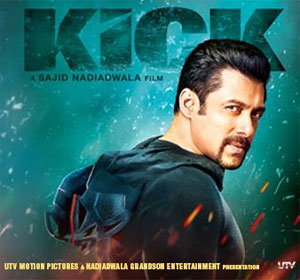
  • Reviewing the Reviews: Critics mustered up 2-2.5 stars for ‘unjheleble’ Kick

    By Deepa Gahlot


    Kick

    Directed by: Sajid Nadiadwala

    Starring: Salman Khan, Jacqueline Fernandez, Nawazuddin Siddiqui, others


    The Americans say, why fix something that ain’t broke. So, why should the producer/director of a Salman Khan film try to fix the formula when it still works. Brainless actioners imported from the South and presented with some Bollywood flourishes and Salman Khan, whose name delivers hits.


    Critics just had to lower their standards and acknowledge that Salman Khan is beyond analysis. They mustered up 2 or 2.5 stars and lumped it.


    Shubhra Gupta used a word coined in Kick to describe it, unjheleble. “What this lovely word means is ‘unbearable’, though it can’t come remotely close to the tedium that the original describes. Salman’s leading lady says it to him. About him. Yes, gasp, addressing the one and the only Sallu Bhai, who appears in his latest In and As avatar in ‘Kick’. We duly crack a smile. Look, look, Bhai is sending himself up. He’s letting his heroine crack a good one at his expense. Because he knows that he is anything but. And that he’s just waiting for her to finish the scene and leave, to get into his `Dabangg’ mode, for the hall will burst into hoots and claps and whistles.”


    Anupama Chopra of Hindustan Times called it outrageously silly. “Because a Salman Khan film isn’t about the plot. It’s about Salman, who once again plays his signature persona – a charming, playful, slightly crooked superman with a heart of gold. What’s fun is that Salman is in on the joke. He’s aware that he’s on the screen not to deliver a performance but to give us a good time. But even if you’re willing to ignore the logic-free story and buy heavily into the cult of Bhai, Kick is bumpy, and far too convoluted to deliver the joyride of a Dabangg.”


    Saibal Chatterjee of NDTV.com wrote, “To give the Devil his due, Kick isn’t half as bad as some of the Bollywood flicks that moviegoers have been subjected to in recent months. Kick is the Sajid Nadiadwala’s debut as a director. Sajid is a seasoned producer of money-spinning potboilers. It is no different from the films that his banner usually bankrolls. Kick revels in excess, which, for a film of its kind, is not necessarily a drawback. It dishes out everything in abundance. Eye-catching foreign locations, elaborately mounted action sequences, flashy pyrotechnics and stunts straight out of Hollywood superhero movies, song and dance routines bunged in randomly for occasional relief and loads of Dabangg-style dialoguebaazi are all par for the course here.”


    Sukanya Verma of Rediff.com commented, “Merely shooting a film in a fancy European locale or smashing a few cars and CGI choppers doesn’t amount to action, there has to be a certain amount of finesse, audacity, cunning and strategy to it all. As glimpses, it may stand out but as an action set piece, I found the execution absolutely flat. Nadiadwala may have the monies to sponsor the action but not the acumen to generate it. To think he employs four screenplay writers (Rajat Aroraa Chetan Bhagat, Keith Gomes) including him to concoct this senseless mess where scenes just cut off and begin randomly never bothering to explain what happened.”


    Aniruddha Guha of Time Out wrote, “Like all Eid releases featuring Khan, Kick too will probably notch-up record numbers due to its haphazard concoction of romance, comedy, action and drama, and the overwhelming domination of the 48-year-old actor, but the film is only marginally better than other awful Khan films in recent times –Jai Ho, Bodyguard, Dabangg 2. The setting seemed ripe for an entertaining no-brainer, but Kick will remain as forgettable as most money-spinners lately. What’s worst: The villain deserved a much better film.”


    Mihir Fadnavis of Firstpost ranted, “Nadiadwala may have parted ways with Sajid Khan. But in Kick, his debut film, he proves something historic: he is a much worse filmmaker than Khan. For years Khan has been well regarded as someone who doesn’t try very hard while acting in a film. With Kick, Nadiadwala shows what it really means to not make an effort. To say that he phones it in would mean he actually made the effort to make a call on sets. From the look of things, Nadiadwala couldn’t be bothered.”


    Rajeev Masand of CNN-IBN grumbled: “The actor, fully aware of his strengths and of what his fans expect from him, is in goofball mode. He dials up the charm, and delivers flashes of amazing spontaneity, making you wish someone wrote a better film for him. Kick will no doubt break box-office records and earn many many crores for its makers and for its leading man, but it’s a shame he must settle for just this.”

     

  • Ranjona Banerji: No checks, no balance on News TV

    By Ranjona Banerji


    Sometimes you have to give thanks that you did not ever and will not either work in news television. The way 24-hour TV works, there is nowhere to run nowhere to hide. In India at least, it appears to operate minus news editors, subeditors, any kind of check or balance at all. Instead, you have the sense of a bizarre newsroom populated by reporters and anchors lost in an endless spiral of now what.


    Oddly, the few (admittedly few) times that I have been a guest on TV or radio, I have had a producer in my ear communicating with me. Obviously that is not possible with all reporters. But is there not some way in which someone can speak to them off air to prevent them from blabbing the same thing again and again and then have the anchor paraphrasing what they have just said?


    This morning I heard a young reporter mention the phrase “of course” about six times per sentence on a particularly boring report. If the reporter is not droning on and the anchor is not paraphrasing then both are editorialising.


    Meanwhile, it takes a viewer who has just switched on the TV ages to find out just what everyone is editorialising about: the kernel of the news is forgotten as the cycle moves on to reaction. Times Now is particularly good at this: the hysteria about the news is far more important than the news itself. The various running scrolls and stationary text matter on the screen reveal nothing either.


    It is true that none of what I am saying here is new but it is also true that nothing changes. For instance, something happened this morning (Thursday) with an aeroplane flying over Turkey. The scrolls were outraged about a) a pilot sleeping b) a plane losing altitude c) a co-pilot on a tablet d) a DGCA inquiry. However after 10 minutes of watching I cannot tell you which airline the plane belonged to, what exactly happened, what is the situation with the plane now and whether there was any damage or anyone suffered.


    I can tell you that outrage about looking for blame was beginning – as far as the running scrolls were concerned. The pictures on the screen however were about something else completely. I have to concede that my age and my experience in print journalism are of no possible use here at all. I still cannot fathom how the whole shebang functions and why a small dose of self-preservation if not professionalism cannot be introduced into news television.


    It’s a mug’s life as all TV journalists will tell you – even those who spend their free time signing autographs!


    **


    Primetime TV meanwhile continues with its nightly debates and it is truly a wondrous aspect of the human condition that we are able to manage so much anger over so little. We need to congratulate ourselves.


    **


    The death of actor Robin Williams – by his own hand, from reports – led someone on Fox News to call him a “coward”. Williams suffered from severe depression and Fox News has demonstrated once again why it is a pathetic excuse for a news channel. Imagine what we have in store for us if it actually arrives on Indian shores, as has long been speculated.


    **


    I watched 10 minutes of a programme on Zee Cafe called “Look who’s talking to Niranjan”. The problem was, I knew who was talking to Niranjan – first Karan Johar and then Kajol. But I had no clue who Niranjan was! Surely there was some way of letting me know before I inflicted this show on myself?


  • Ranjona Banerji: Foreign policy dictated by news anchors?

    By Ranjona Banerji


    The journalist as patriot was in full flow this week on Indian TV as a sometime journalist and sometime who knows what, Ved Prakash Vaidik revealed that he had met the dreaded Hafiz Saeed in Pakistan a few months ago. Saeed is suspected of being involved in the 2008 terror attacks on Mumbai, amongst other attacks on India, and his free movement in Pakistan has long been a bone of contention between India and Pakistan.


    But the high level of outrage on Indian television was extraordinary. Vaidik himself revealed that he had met Saeed and certainly, it is curious that he never wrote about it since it would have been something of a journalistic coup. There were also allegations that he was part of some “Track 2” diplomacy process, as a delegation that went to Pakistan. Connections between the ISI and Saeed are constantly talked about in India, so Vaidik’s meeting could well have had an ISI hand.


    The question is, should the Indian media have tried to prise out of Vaidik what he and Saeed had talked about – thus looking for a “story” and insights into a feared India-baiter and suspected controller of anti-India terrorists? Journalists meet all kinds of people, often those seen as unacceptable by society. Instead, the TV media jumped into jingoistic mode and decided that any contact with Saeed was equal to treason.


    The worst in this aspect was undoubtedly Arnab Goswami of Times Now. India was on red alert because Vaidik met Saeed months ago and the nation’s integrity and future was at stake. It is true that Pakistan is a sore point with Goswami and the cynic might suggest that since the terror attack of 2008 put his channel on the media map, he feels strongly about that too. But bashing Vaidik and then bashing anyone who has ever attended a seminar on India-Pakistan matters was taking a very serious matter into the realm of the ridiculous.


    One would suggest that if Times Now felt so strongly about any interaction with Pakistan at all, it should have picketed our neighbour’s prime minister Nawaz Sharif when he attended the new prime minister’s coronation ceremony. Because more than Vaidik and seminar-goers, it is the Pakistani establishment which has the closest ties to the ISI and to various anti-India terrorist organisations.


    Does this kind of enforced hysteria make for good television? How far is it sustainable before turns into farce? Has it reached there already? The point of journalism is not to hold a patriotism competition – journalists have to be able to rise above or below that level to search for the story. Even given that TV news is not always strictly journalism, do we want our foreign policy dictated by news anchors who foam at the mouth at just about anything?


    The funny thing is, in a week this great insult to India has been forgotten and we are now worried about the great insult to Tamil culture and the dhoti/veshti by some club in Chennai.


    **


    The crash of Malaysian Airlines flight MH17 over Ukraine has divided the world and the world’s media. Was the plane shot down by Ukraine’s forces or by Russian separatist rebels? This question has now consumed the world’s media, with different sides making different claims. The western media believes the plane was hit by Russian rebels, the Russian media blames Ukraine. It is no longer possible to wait for the news before making allegations and jumping to conclusions.


    The most ridiculous coverage came from CNN where the anchor asked an American freelance journalist who happened to be at the crash site whether he had seen anyone find the black box. Stunned silence from the journalist who then said he had not. Meanwhile, other channels were assuring us that the black box had been found.


    **


    For the first time in many years, Israel has been getting very bad press the world over about its behaviour in Gaza. However if you are interested in some disingenuous defence of Israel, here’s CNN again, for a confused interpretation of the US policy on Israel and plenty of blame for Hamas.


    **


    Having slammed the weather bureau of the BCC World Service for years over its ignorance of the Indian monsoon and what it means for India, am happy to report that in the past week, we are hearing a lot about the monsoon all over the country. No breathless assurances of fine dry sunny weather in drought affected areas.


  • Ranjona Banerji | Times@175: The Good, The Bad & The Ugly

    By Ranjona Banerji


    The word “sesquicentennial” was not familiar to most in Bombay when The Times of India splashed it all over the city in 1988. But since my school in Calcutta, La Martiniere for Girls, had celebrated its 150th birthday a few years before, everyone in that city knew what it meant. Those 150th celebrations of the Old Lady of Boribunder were a massive announcement in a sense of a new Times of India. Not so much an old lady but of a group that would transform the Indian media scene – in both good and bad ways.


    Although I did a story on the 150 year celebrations for the now defunct Bombay magazine, I must confess I remember very little about what happened. Except for the takeover of Victoria Terminus with massive artworks carefully placed between its ornate columns. Situated across each other, India’s most famous railway station and India’s most famous newspaper have long dominated Bombay’s skyline with their Indo-Saracenic architecture, control of commuter and long-distance travels and of course, people’s minds.


    But the sesquicentennial celebrations were actually a message to the world that The Times of India had transformed itself. Samir Jain, elder son of Ashok Jain, would now run the paper as his own – unlike his father who had left it to editors and journalists. In the early 1980s, I worked for a while with an advertising agency which handled Bennett Coleman accounts. There were no Jains in sight when you visited the Old Lady in those days. And of course there was Girilal Jain, the editor who was synonymous with The Times of India and ultimately the apparent cause of Samir Jain’s distrust of editors and journalists.


    Girilal Jain (no relation) was sacked in 1988, ostensibly for his pro-Hindutva leanings. But some of those stories about his disdainful treatment of Ashok Jain and Samir Jain’s anger at that must have played a part. After Girilal, no editor would be allowed to reach such dominating heights. The subtle hand of the young owner would be felt everywhere. Soon, his younger brother Vineet would make his own mark on the group.


    The Times of India has done a lot of damage to the media in general with its subsequent treatment of journalists, with putting marketing above newsgathering and by introducing money-gathering practices like Medianet which is essentially legitimising bribery. However, it also took media in India into the contemporary world and set the standard for all other newspapers. Over the last 25 years, as it now celebrates its 175th anniversary, The Times of India remains the country’s most-read newspaper and continues to mean all things to all people.


    I worked for The Times of India’s Ahmedabad edition from 2001 to 2004. In that time, I saw the best and worst of it. The support given to us in the editorial office during our coverage of the Gujarat riots of 2002 was remarkable and commendable. And it was also most welcome as the local government and civil society turned against us for the newspaper’s decision to be fair in its coverage of the riots and our refusal to give in to the sentiments of the Hindu majority. The newspaper’s management in Delhi dealt with most of the anger and the threats to the group.


    However, it was also during my time in Ahmedabad that Medianet was introduced and that led partly to my decision to leave the group. Sadly today most other media houses have followed the Medianet example, where people and corporates can get positive or useful news about themselves printed in the glamour sections of newspapers. Journalists either have to give in or find some other place to work. What happens there is not really journalism anyway.


    Yet in these 25 years there has been a lot of hard work and massive growth. The Times of India has complete control over Mumbai, its flagship edition, plays a neck and neck race with the Hindustan Times in Delhi and has editions which are either ahead of the others or serious contenders in major cities in India. Times Now is one of India’s most popular news channels. Radio Mirchi rules the FM waves. Indiatimes hogs internet space, especially for NRIs.


    Given the newspaper’s oddly distrustful relationship with culture and cultural activities since 1988, I doubt that Mumbai’s Chhatrapati Shivaji Terminus will be festooned with major artworks by Indian greats again. Perhaps Katrina Kaif and Hrithik Roshan dancing all over the building would be more appropriate? They can pay the newspaper to do it too.