Category: REVIEWING THE REVIEWS

  • Reviewing the Reviews: Ladies vs Ricky Bahl

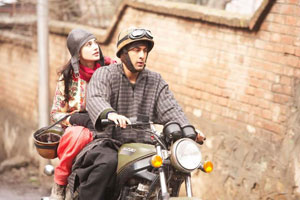
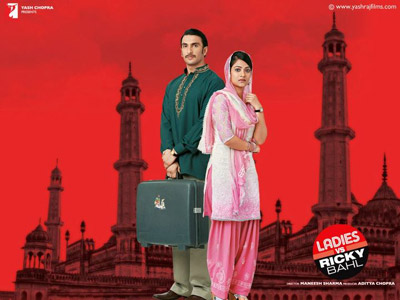
    Ladies vs Ricky Bahl

    Key Cast: Ranveer Singh, Anushka Sharma

    Directed By: Maneesh Sharma

    Written By: Devika Bhagat, Habib Faisal, Aditya Chopra

    Produced By: Aditya Chopra


    Coming out with the notable YRF stamp, Ladies vs Ricky Bahl got mixed reviews, mostly on the negative side. The director Maneesh Sharma’s first film Band Baaja Baraat had been such a delight, that the second one had trouble matching up.


    The one who came out a clear winner is Parineeti Chopra who played a loud, chatty Delhi brat, and is likely to bag all supporting actress awards next year.


    Gaurav Malani, in the Times of India online, feels, “The major hiccup in this otherwise engaging film is that it falls prey to the typical trappings of Bollywood. As romance takes over the con-games, the smart-n-saucy film is substituted by a tepid tale where the conman wants to come clean and change his ways for that one girl in life. That makes for a lame climax and a conventional end. The graph of the narrative drops somewhere in the second half and plunges even further as one realizes mixing con with cupid might not be the best of ideas. Thankfully the pacing is perfect and the film never seems stretched.”


    Sanjukta Sharma of Livemint is left cold. She writes, “The screenplay … gets tiringly predictable from this point. Forget being similar to Frank Abagnale, the smug, glorious con man in Steven Spielberg’s Catch Me If You Can. Sunny starts showing signs of a weepy lover boy. The film falls right into the Yash Raj formula of hinging all stories on soppy romance. This guy is not even a patch on the smiling assassin he is in the first hour.”


    Bollywoodhungama’s Taran Adarsh is uncharacteristically tepid. “On the whole, Ladies vs Ricky Bahl is, at best, decent fare, which appeals in parts. The film starts well, even ends well. It’s the in between that’s plain ordinary. One definitely expected more from the director of the immensely likeable Band Baaja Baaraat. Ideally, the film merits a two-and-a-half star rating, but that extra half star is for Ranveer and Anushka, who steal your heart with truly striking performances.”


    Rajeev Masand found the film watchable and went with2-1/2 stars, but also pointed out flaws. “Ladies vs Ricky Bahl nosedives further post-intermission because of script holes the size of craters. The trio of women track down our hero way too conveniently, and you can’t help but question how a seasoned conman could so easily be charmed into parting with his cash. Doesn’t help either that the narrative is interrupted far too often with unnecessary songs.”


    Raja Sen found it sluggish and predictable and gave it 1-1/2 stars. “It’s always tragic to see those who defy the cookie-cutter mould try and sanitise themselves in an attempt to fit in. Ranveer Singh, who was fantastic in last year’s Band Baaja Baaraat, here has his rough edges blunted by the generic sheen of wannabe stardom, and the result is most unfortunate. ”


    Shubha Shetty Saha of Mid-day settles for 2-1/2 stars too. “The script should have been as clever as it is trying to portray its lead man to be. For Ricky, cheating comes naturally, but disappointingly, it seems like he doesn’t even have to exercise his brain cells to cheat any of them. Ricky gets so lucky every time that things easily fall into place or his victims are so foolishly gullible that they are more than willing to fall into his trap, again and again. Also, the track where he becomes an art dealer, Deven Shah and cheats Raina (Dipannita Sharma) seems highly improbable.”


    Mayank Shekhar is kinder than usual with 3 stars. “The young Ranveer Singh plays Ricky Bahl, his character’s real name, which we don’t know yet. Given almost all Bollywood leading men now are forced to play proper characters (something they used to do back in the 1950s), as against portray merely themselves: a back-story might become slightly necessary. We know nothing about the motivations of this conman, besides what we see: he is single, looks like a loner, is pretty much sexually uninterested in the women he takes for a ride, and is interested in money for money’s sake. Placement of this kind of guy was handled much better in Yashraj’s previous, similar flick, Badmaash Company (2010), which had suffered for completely other reasons.”


    Soumyadipta Banerjee of DNA didn’t dislike the film at all. “Right from the first shot to the last shot, the film has stayed real without the usual loopholes that draw it away from reality. And yet, the film has stayed on top when it came to the entertainment quotient. It has been edited well which doesn’t let the pace slacken and engages you till the last moment. It seems that the film has been developed after consulting a lot of DVDs of Hollywood rom-coms, but who cares? Everybody does that and yet comes up with a shoddy film. This time, all the home-work seems to have paid off.”


    Sudhish Kamath of The Hindu nails it. “How good is a con if the stakes aren’t high? This is the safe, family-entertaining Bollywood film where the hero is virtuous even if he’s a con man (he wouldn’t even let the girl he’s conning kiss him) and turns out to be smarter than four women put together. The makers aren’t even in the mood to play Bluff. The film unfolds in a linear fashion and we are privy to all that’s happening and the only twist coming our way is that there is no twist.”


    And just by the way, none of the mainstream critics found similarities with Mohan Sehgal’s 1974 film, Woh Main Nahin.
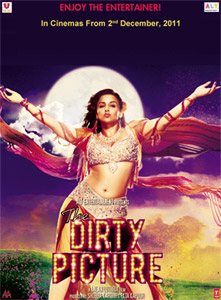
  • Reviewing the Reviews: The Dirty Picture


    By Deepa Gahlot


    The Dirty Picture


    Key Cast: Vidya Balan, Naseeruddin Shah, Emraan Hashmi


    Directed By: Milan Luthria


    Written By: Rajat Arora


    Produced By: Ekta Kapoor, Shobha Kapoor


    The promotions of Milan Luthria’s The Dirty Picture were such that nobody had any doubts about its content-for once the audiences get what they expect-an uninhibited Vidya Balan in a sex-on-toast film loosely based on the life of Silk Smitha, who blazed a trail as a voluptuous siren and then, shockingly, committed suicide.


    The film got 2 ½ to 4 star ratings and from all accounts a smashing opening. Which proves once again that sex sells and Ekta Kapoor knows that. If sleaze comes with a big banner attached, it ceases to be ‘dirty’. Everyone is unanimous in praise of Vidya Balan, however, and all awards next year will go to her-she has left the competition far behind.


    Shubhra Gupta of the Indian Express was one of those who was left underwhelmed by the film and gave it 2 ½ stars. “What ‘The Dirty Picture’ does is to place Vidya Balan and her heaving bosom, complete with the dirtier, orgiastic ‘ha-aaa’ sound, so much a fixture of so many oomphy ’80s tracks, at the centre of the narrative. Which is fine, and we are quite taken in by the sight for a while. But then we start looking for something more, and find it, only towards the end, only very fleetingly.”


    Mumbai Mirror’s Karan Anshuman is equally unimpressed: More Dirty Less Picture is the title and a 2 ½ star rating. “It just doesn’t quite come together. What gets plated is an entre overdone on the outside, and not entirely cooked from the inside. Director Milan Luthria falters. He is just in such a tearing hurry to tell us the dizzying story of the rise and fall of Silk and the hot-and-cold behaviour of her fans, detractors, and co-stars – inconsistent one-liner upon one-liner, the flashback in negative image (why?), just the lack of any buildup or lingering – that he doesn’t take a breath for the audience to appreciate and unravel Silk’s mind until much later. Because the film focuses so much on dressed-up cliches of sleaze in tinseltown and Balan’s carefully constructed look, there is precious little else to take in. Fewer incidents focusing to get the viewer involved would work better than too many repetitive ones packed in for the sake of impact.”


    Sukanya Varma of rediff.com gives it 3 stars, but writes, “The Dirty Picture, despite the comprehensive objectivity implied through its title, is not a full-fledged biopic. Instead of painting a layered portrait of Silk, it draws an outline of an unapologetic resident of a flesh-obsessed film industry responsible for her rise and ruin. But Vidya lends her so much transparency, aplomb and sauciness, the outcome is far more awe-inspiring than it deserves to be.”


    Commenting on the actors, the usually acerbic Kunal Guha of yahoo.com, gives it 3 and writes, “Vidya is scrumptious as the imperfect and unrestrained Silk, while Naseer is convincing as a superstar out to play shepherd to every newcomer. Tusshar may have dropped his surname for the credits but that hardly undermines the fact that he’s been cast in his home production, again. Emraan’s character gives itself more importance than you or anyone else does. Luckily, his presence is limited and tolerable.”


    From Chennai, Silk Smitha’s playground, Sudhish Kamath of The Hindu writes, “The makers (Milan Luthria and writer Rajat Arora) seem a little too afraid to get into the darker aspects of the tragic life of a star like Silk and most of the sadness is limited to showing the dark circles under her eyes. Even when her life is spiralling down, the film wants to go away from the tragedy and show you a love song. Clearly, they don’t want to depress you because depressing films don’t do well at the box office. However, The Dirty Picture makes up for lack of depth with spirit and attitude.”


    Rajeev Masand also gives it 3 for Vidya. “What it suffers most from, unfortunately, is lazy writing. With a plot straight out of a Madhur Bhandarkar film, and a screenplay that follows a familiar graph, The Dirty Picture offers a superficial, simplistic view of the seamy, exploitative side of the 80s film business. There is little attempt to treat this material with sensitivity and depth. No sir, this film unfolds as a series of provocative scenes strung together on the strength of their sexually loaded dialogues.”


    Mayank Shekhar also comes up with a reluctant 3. “The film however, even when not mimicking its subject, somewhat retains its ’80s feel: excessive dialoguebaazi, often loaded with double entendres, some loud scenes with actors always in a state of emergency, and the ‘serial kisser’ (Emraan Hashmi) who must land a Sufi song, and a girl’s lips to satisfy his core audiences. Sometimes we remain suspended too much in disbelief. It starts to match the film within the film! This irony is oddly intriguing. It won’t be lost on anyone.”

  • Reviewing the Reviews: RA.One

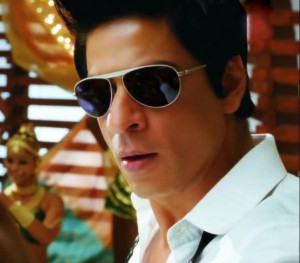
    RA.One

    Key Cast: Shahrukh Khan, Kareena Kapoor, Arjun Rampal

    Written and Directed By: Anubhav Sinha

    Produced By: Gauri Khan, Shahrukh Khan


    Of course, with a hefty budget and relentless marketing, RA.One was expected to be something of a breakthrough movie. That it turned out to be akin to an idol with feet of clay, caused disappointment across serious reviewing platforms — not the box-office counting ones, who are still arguing about just how much money the film made on opening day.

    Interestingly the film, which was released with thousands of prints worldwide and god knows how many red carpet premieres, was reviewed by several foreign critics—most of them ignorant of, or insufficiently exposed to, Bollywood cinema. So the tone was either cruel or condescending.

    Simon Abrams of Slant Magazine was brutal. “The film champions an incoherently hackneyed kind of morality where filial piety matters more than treating your fellow man well. Virtually every character in the film, save for Shekhar and his character’s nuclear family, are made fun of, and even they aren’t safe from ludicrously loaded assumptions of how both children and adults should behave. RA.One is consequently a flashy, gratingly broad action-comedy hybrid whose family values are meaningless.”

    In contrast James Luxford of The National fawned, “Khan demonstrates what a versatile actor he is, with his performances as both Shekhar and G. One feeling like completely different people. Elsewhere, the critically acclaimed actress Kareena Kapoor provides excellent support and has great chemistry with Khan, while the model-turned-actor Rampal oozes menace as the titular villain, in a role akin to the Terminator movies.” That he is a bit clueless is revealed in his line, “Not the best work of the director nor the star, but certainly their most spectacular.” Err, what was he counting as Anubhav Sinha’s best work?

    Kirk Honeycutt of The Hollwood Reporter seemed mildly amused by the hoopla. “The film, directed by Anubhav Sinha, is gloriously silly, with stunts, CG animation and music numbers bursting out all over yet its beating heart lies in a commonplace story of a family and most especially a father and son who don’t understand one another. Oscar Hammerstein II once said something to the effect that you have to believe in whiskers on kittens and warm woollen mittens to get away with writing about such corny banalities in a lyric and so Shah — SRK as he is known to billions of fans — really does believe in family values and the power of cinema.” Indeed.

    The rival trade magazine Variety, has John Anderson write, “Featuring superstar Shah Rukh Khan and festooned with enough CGI ornamentation to qualify as a subcontinental Christmas tree, RA.One is a frenetic, tuneful, full-throttle action-comedy that has reportedly crushed Indian presales records. Still, this videogame-themed outing seems unlikely to become a crossover hit: While South Asian auds will likely flock to a film that does what Bollywood does with a major techno bump, the aesthetics of overkill will make the result inaccessible to Westernized Americans, the campiness, as usual, muddying the translation.”

    Tamara Baluja of The Globe and Mail gives it one star and rants, “The film is as cheesy as it sounds. It falls into the very traps that Khan himself complained about: weak plotline, random song-and-dance routines and a plethora of tacky crotch-related jokes, which left me grimacing. And for audiences who don’t understand Hindi, the subtitles were frustratingly lagging – on occasion, almost a whole dialogue behind. RA.One is Khan’s baby and boy, are you not allowed to forget that. The actor almost never leaves the screen. It’s a pity, because he’s not really the one who shines in the film…”

    Rachel Saltz of The New York Times tries to be balanced. “You can see the money on screen, if not in the screenwriting. The exposition is longwinded and confusing, as are the rules of the game, in the virtual and the real worlds. The bumbling Shekhar is too clownish; RA.One is a dud demon (Raavan is invoked to little effect) who disappears for chunks of time; and you probably won’t hold your breath as good fights evil. But if the storytelling disappoints (shocking!), the film mostly doesn’t. It relies on action and effects and Bollywood’s trump card, star power, to carry the day. This is Mr Khan’s movie, and once he sheds Shekhar’s droopy locks, he shines as the deadpan, action-hero robot with digital snot and smooth moves on the dance floor.”

    Andrew O’Hehir of Salon.com nails it with, “I make no claims for RA. One as great cinema, and director Anubhav Sinha displays no particular vision, beyond that of a general who’s kept his enormous army moving in roughly the right direction. (Sinha and five co-writers, Shahrukh Khan among them, get credit for the story and screenplay.) What makes this movie worth seeing is its blend of aesthetic and technical approaches — some of the crew and special-effects team was Western — its immense scale and abundant confidence, and its utter shamelessness in trying to entertain nearly all imaginable viewers, from Abu Dhabi to New Jersey to Zanzibar. If you’re bored by the action scenes or the love story or the dopey domestic comedy, just wait three minutes for something else to come along — and whoever you are, you won’t be bored by the musical numbers!”

    Back home, most critics are underwhelmed. Mayank Shekhar in the Hindustan Times writes, “For most parts, this doesn’t seem a super-hero movie at all. It’s more of a weirdly boiled, Bollywood please-all: vaguely soppy romance, Salman-type sasta comedy, narcissistic SRK set piece. Die-hard fans of all three genres are likely to be disappointed,”

    Aniruddha Guha, writing in Daily News & Analysis: “But blame it on Anubhav Sinha, the director with slick-but-hollow films Dus and Cash on his CV (one worked at the box office, the other bombed). RaOne is no different; it is beautiful in appearance, but empty within. Which is a pity. Anubhav could have really made a mark with this one.”

    Going Going G.One is the title of Shubhra Gupta’s review in the Indian Express. “It’s not just Shekhar-the-appa, who is lame. The whole film seems to be dipped in the stop-start-go stutter of an overlong video game. As the bumbling Tamilian techie, Shekhar is single-tone; G.One seems to be a confused creature, ‘made-of-metal but-with-emotions’. And curiosity. He demonstrates this by asking Kapoor: what is Karvachauth? Got it, this is a Bollywood robot. The sfx is wonderful in parts but mostly derivative, with Shah Rukh mouthing such iconic lines like ‘I will be back’ (oh Arnie, my Arnie), and clutching a pole on top of a high building, like..? Spidey. That’s right. Go to the top of the class.”

    Sanjukta Sharma of Livemint writes, “Why ape Hollywood’s extravagance and technical virtuosity with limited resources? Despite the largely thrilling ride, Khan’s ambition for RA.One is misplaced. It is without real commitment to the art of storytelling or genre. The producer-actor is its only relentless, narcissistic showpiece. Anubhav Sinha’s RA.One is a spectacular disappointment.”

    Kunal Guha’s review in Yahoo Movies was one of the first to slam the film. “Shahrukh’s robotic expressions will remind you of his ‘My Name is Khan’ role, as he confuses machines with differently-abled humans. Kareena’s character covers the entire gamut of expressions but isn’t memorable or mentionable enough to be regarded. Arjun Rampal has bagged his dream role: an android with mechanical expressions who allows his body to do the talking. Good job, Arjun Rampal’s body!”

  • Reviewing the Reviews: Rockstar

    Rockstar

    Key Cast: Ranbir Kapoor, Nargis Fakhri

    Written and Directed By: Imtiaz Ali

    Produced By: Ronnie Screwvala, Dhillin Mehta


    Imtiaz Ali whose Jab We Met got him a great fan following, had Love Aaj Kal in between and now Rockstar, which has united critics and the general public in their adoration for Ranbir Kapoor, who is a star actor and superstar material; poor Nargis Fakhri came in for an equal amount of battering.

    The film itself got madly mixed reviews with rating from one to four stars that must have confused the reading public.

    Aniruddha Guha of DNA loved it. “For about 15 minutes in Rockstar, the narrative tends to resort to ‘Bollywoodism’; true love having the power to cure a terminal illness (almost), for example, doesn’t exactly fit with what the rest of the film has to say. Yet, Imtiaz makes it work somehow, interweaving the fantastical romantic part of the film with the more gritty, dark bits deftly.”

    Taran Adarsh of Bollywood Hungama, is left cold, “Alas! Rockstar is a sumptuously shot movie that is disjointed on script level. The problem with Rockstar is that it starts off most impressively, has some terrific moments in between, but the writing gets so erratic and incoherent as it heads towards the conclusion that you wonder, am I really watching an Imtiaz Ali film?” Strange coming from one who is otherwise generous with praise.

    Saibal Chatterjee, NDTV.com observes, “The film, nearly three hours long, traverses long physical distances – from Delhi to Kashmir and from there to Prague and then back again to Delhi as JJ follows his lady love (who gets married quickly enough and settles down to drab matrimony in faraway Czech Republic to make matters difficult) halfway around the world, singing and dancing his woes away. But despite all the frenetic movement in space that Rockstar offers, the film really goes nowehere. It feels strangely static.” Which is one of its major problems.

    Shubha Shetty Saha of Mid-day pins down another problem area, “The film that is supposed to be following the journey of a nobody later turning into an insanely famous musician, leaves you uninvolved as many milestones in that journey have been left out. One day, Jordan is in Pitampura trying to regale a few bystanders on the street, a few months later, he is this huge phenomenon running away from the paparazzi.”

    Sumit Bhattacharya of rediff.com found it in the Devdas mould. “Don’t let the title fool you. This movie is more an old-school Bollywood love story than the advent of heavy metal in Hindi cinema. Jordan is more like Devdas than his idol Jim Morrison….On the surface, the film is about a guitar-toting dimwit transforming into an angry ‘rock star’, an expression that can perhaps give ‘awesome’ a run for being the most misused term in the English language …But this film is devoid of any insight into an artiste’s anguish, try as it might by quoting Jalaluddin Rumi.”

    Mayank Shekhar gives it three stars but a tepid review. “From its start, to the way it progresses, you can tell, the film’s been through various stages of editing and several second thoughts. Sometimes the patchiness shows. It’s a stretch. Anything that’s 18 reels long (close to three hours) in a flickering world of low attention spans would be. Something fizzles out towards the end. You still don’t begrudge a movie that’s been this engaging, entertaining thus far.”

    Komal Nahata is critical of the extra-marital affair of the heroine which is without justification, and says, “The extra-marital affair may have been overlooked by some of the orthodox audience if that affair would’ve had a magical effect on Heer’s illness in the end but when that doesn’t happen, the audience is unable to stop itself from seeking reasons for the affair – and not finding any. The narrative style is also a bit confusing for the audience as overlapping scenes have been used to further the drama.

    On the plus side, the making is fresh and the canvas, big and wonderful. Dialogues, penned by Imtiaz Ali, are very natural. The film is extremely colourful and youthful and for that section of the youth, which won’t question the morals of Janardhan and Heer, the film becomes a veritably enjoyable fare. Again, a minus point of the drama is that comic and light moments are few and far between. The second half, especially, becomes dark and even depressing. Emotions don’t draw tears.”

    Anuj Kumar of The Hindu is also unimpressed. “A film works when the pain experienced by the characters on screen permeates into the darkness of the theatre. No such luck here. After an explosive opening, you become restless for lack of ingenuity on the part of the writer-director even when he has got the ingredients to turn it into a never-before experience. A. R. Rahman’s soulful tunes, Anil Mehta’s breathtaking camerawork and a malleable lead actor, but still it remains a glazed canvas. It has a lot to do with inappropriate casting and an overtly indulgent director, who seem to have started with the idea of making a global blockbuster with Ranbir Kapoor and then started work on the content.”

    Rajeev Masand of IBNlive also slams the script. “The film’s chief lapses are its meandering script and its less than impressive leading lady both of which cost the film dearly… “

    Sanjukta Sharma of Livemint notes, “The second half is a mess, as it travels picturesquely but cluelessly from Kashmir to Prague in search of ideas. And it goes on for much too long, as we wait for something better to happen. Nothing of the sort does. Whatever happened to Imtiaz’s sure-footedness which made ‘Jab We Met’ such a breeze ? Shakiness was evident in his next ‘Love Aaj Kal’. Here, he seems to have very little idea of how to get his lovers to smoulder despite the liplocks : most of the romance feels constructed, and contrived.

    Kunal Guha one of the first to review it on Yahoo with a brutal one star, writes, “Watching ‘Rockstar’ once is like watching it many times over, thanks to the repeated montages that sporadically recap the film. If you thought being stabbed once was bad, here’s what a knife set can do. The film drives home an unscientific hypothesis that people who’ve endured sufferings/ heart break/ loose motions etc will reach their creative best. By this logic, each person in the audience will be blessed with superhuman creativity as they step out after watching ‘Rockstar’.”

    Nikhat Kazmi, of the Times of India is predictably soft. “The fact that this romance unfolds on screen in the form of an explosive musical, capturing JJ’s transmutation into Jordan, the edgy artist, makes the film an absolutely engaging affair.”

  • Reviewing the Reviews: Desi Boyz

    By Deepa Gahlot


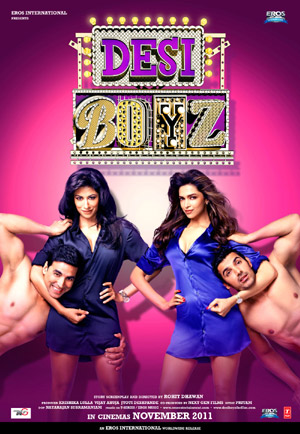
    David Dhawan’s son Rohit Dhawan makes his debut with a film about two London-based, recession-hit dudes who become male escorts with a peculiar (for that profession) no sex policy.  Yet, bevies of semi-dressed writhing babes pay good money just to see them… dance and in one instance, play cards.  Really!


    The film with its mild dose of amusement and full on hokey-ness got between one-and-a-half to four stars-and as it usually happens, the audiences don’t know what to make of it.


    DNA’s Soumyadipta Banerjee gives if two-and-a-half stars and writes, quite aptly, “This film is a nightmare for the thinking audience. People who are used to world cinema, parallel cinema or intellectual cinema will squirm in their seats as some of the critics did when we were watching a press show of the film. But they are not the audience this film is looking for.”


    Rajeev Masand of IBNLive calls it a generic, indifferent comedy. “‘Desi Boyz’ borrows scenes from ‘The Full Monty’, ‘Back To School’, and ‘Fight Club’ even, but at its heart it’s not very different from Sajid Khan’s similarly unremarkable ‘Heyy Babyy’. Akshay Kumar and John Abraham perform earnestly and get a few moments to shine, but the gorgeous Deepika Padukone gets none. The greatest disservice, however, is done to Chitrangada Singh. Clothed in fancy designer togs, buried under pancake, and saddled with a thankless part, the actress is robbed of her smoldering presence, and homogenized into the mould of a typical Bollywood starlet.”


    Surprisingly, Komal Nahta gives it a generous four stars and writes, “The best part of the screenplay is that it treats the subject of recession, break-up of friendship, heartbreak, and family drama in a light-hearted manner and keeps the audience entertained throughout.”


    His trade mag counterpart Taran Adarsh is uncharacteristicly harsh with two stars. “Desi Boyz is a lot of fun as the male protagonists take to pleasing their female clientele. The first hour, frankly, is akin to a roller coaster ride with lots of fascinating developments unfolding at a feverish pace. The best part is that a tinge of realism [economic crisis] has been injected to the plot, which makes the motives appear convincing on screen. In fact, it’s pretty evident that this is not a no-brainer rom-com. But it’s the second half that does a complete somersault.”


    Of course, three-and-a-half stars are expected from The Times Of India’s Nikhat Kazmi. She writes, “Desi Boyz goes beyond the fair sex. It makes everyone smile most of the while. The editing (Nitin Rokade) is seamless, bringing together the four principal actors’ individual charms into a collective space without crowding the canvas. To their credit every principal actor, and that includes Anupam Kher (playing Deepika Padukone’s zany dad) and Omi Vaidya (as her wimpy fiance) seems to get into the film’s vivacious frothy mood without letting the dark underbelly of the film be squandered in frivolity.”


    In Hindustan Times, Mayank Shekhar is unimpressed. “One unrelated song follows another. You wonder why producers don’t just release albums with starry music videos instead. Why bother with a willfully moronic movie attempting to string a soundtrack together. Songs survive. Films rarely do. Filmmakers themselves don’t care enough about the characters. Why should the audience, so what’s the point?”


    The Hindu’s Anuj Kumar writes, “The son of David Dhawan, who gave us some mindless comedies in the last decade before missing the trick, lives up to expectations. He has given us a sleek, upmarket version of what his father has been dishing out all these years. A cute orphan, a staple patriotic moment, a court-room climax and that at the end of the day, heroes can’t go morally wrong – it has all the chapters from Bollywood’s book of clichés but is packaged in the proverbial new bottle.”


    India Today’s Kaveree Bamzai’ gives it a zero rating and rants, “Two men become male escorts but because they’re good Indian boys they don’t do sex. Every supposed female fantasy of men dressed as Dhoni and Yuvraj, firefighters, Tom Cruise from Top Gun and police officers is addressed in a series of songs which see Akshay Kumar and John Abraham jiggle their pelvis and shake their butts. These are Bollywood superstars? Watch them behaving like porn stars, flaunting their chests and their lack of acting talent in an assault on sense and sensibility.”


    Shubhra Gupta goes with one star and sneers, “Dhawan Jr hasn’t learnt a lesson from Papa Dhawan on how to make you laugh in spite of you. He unleashes a Desi Boyz holding everything in spite. So a middle-aged star and another more than halfway there strip down and gyrate among equally underclothed women in song after song. The aforesaid Jerry (Kumar) and Nick (Abraham) are working as “male escorts”, you see, after recession took care of their jobs. Recession is a word that occurs most often in this film, followed closely by sex one way or the other. One of their rules, not surprisingly, is that they won’t sleep with these women. But then again, Jerry leaves a woman in the morning as she lovingly hands him a card saying “thanks for last night”.  Presumably he danced all night, around a bed?”

  • Reviewing the Reviews: Ishaqzaade

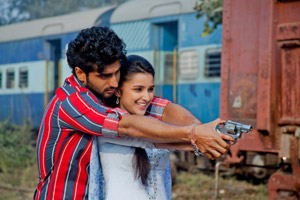
    Ishaqzaade


    Directed by: Habib Faisal


    Produced by: Aditya Chopra


    Written by: Aditya Chopra, Habib Faisal


    Starring: Arjun Kapoor, Parineeti Chopra


    A Yashraj film, by the man who wrote Band Baaja Baraat and directed Do Dooni Char; an industry kid being launched and a modern day Romeo & Juliet set in the political badlands of Uttar Pradesh. At least the combination of plusses evokes interest.


    Parineeti Chopra walked away with accolades in Ishaqzaade, which otherwise got mixed reviews, mainly because critics expected more than just a collection of cliches from Habib Faisal.  Another Hindu-Muslim romance against an election backdrop? Oh no! Still, it got between 2-3.5 stars, which is not bad.


    Raja Sen of rediff.com gave it 2 stars and felt that it did a disservice to its heroine. “There is much craft on display, and some lovely moments, but the immense promise shown by the first half turns out as hollow as a politician’s. Soaked in sloppy sexism, the second half has the heroine repeatedly tortured — cheated, slapped, bound, gagged, shot at and abused — and yet the film decrees that she forgive. In the heartlands the film is set in, maafi is an all-absolving concept, an irretractable token of instant forgiveness, like a church confessional. Ishaqzaade, despite its artistry, deserves no pardon.”


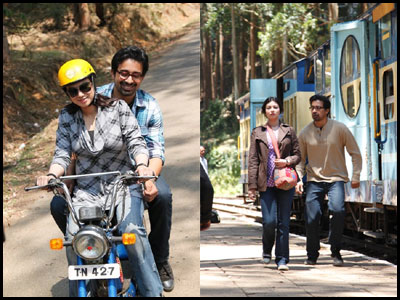
    Saibal Chatterjee writing in the NDTV website gave it 2.5 and commented: “ Faisal Habib creates the small town environment with an eye for detail, with many of the interactions between the young foes-turned-lovers taking place in and around a train station, in abandoned coaches and decrepit yards. It is a typical upcountry semi-urban space – dusty, crowded and cacophonous – with genuine and tangible dimensions.   The main characters, too, are by and large believable, especially because the roles are essayed by young actors who look real. The hero isn’t a sculpted hunk; the heroine is, at best, a pretty girl next door. However, the supporting cast, with the exception of Gauhar Khan, make little impression. That leaves too much of a load on the inexperienced leads. If only Arjun Kapoor’s dialogue delivery had greater punch and Parineeti Chopra could pull off the emotional moments without going shrill, Ishaqzaade would have been a markedly better film.”


    Rajeev Masand of IBN gave it 2.5 as well. “Much of the film’s strengths come undone by the use of such tired cliches as the religious differences that stand in the way of true love, and the sacrificial hooker with a heart of gold. Also Faisal resorts to an unforgivably unoriginal climax – for both the resolution of the lovers, and their families – that sticks out in a film with such promise. ‘Ishaqzaade’ benefits considerably from Amit Trivedi’s excellent soundtrack and Hemant Chaturvedi’s sharp cinematography. Faisal creates a believable world with charming characters, and his leads have crackling chemistry. I’m going with two-and-a-half out of five for director Habib Faisal’s ‘Ishaqzaade’. It’s far from perfect, but you won’t be bored.”


    Shubhra Gupta of the Indian Express also went with 2.5. “Small town romance is back again on Bollywood’s radar, and ‘Ishaqzaade’ goes about checking all the boxes. Locations yielding picturesque railway crossings, little bazaars, sprawling ‘kothis’. Determinedly dressed down characters. Lots of local patois, which these days, translate into a shower of ‘gaalis’. And a pair of lovers who wield guns with much more ease than roses. It’s all in there, and yet the result is mixed: some of ‘Ishqzaade’ hits the spot, the rest is a drag.”


    Anupama Chopra of the Hindustan Times was not too impressed, still, gave it 3 stars. “Faisal sets up the story with great precision. Kapoor and Chopra are terrific as the explosive twosome. The music, composed by Amit Trivedi, works well. The casting is bang-on:Parma’s swaggering grandfather and his long-suffering but strong mother are nicely etched characters as is the local dancing girl, played by Gauhar Khan. Which is why it’s so disappointing to see it unravel. Still, Ishaqzaade does provide half a good time. How many films can you say that for?”


    Sudhish Kamath of The Hindu wrote, “How do you take a story that’s been told over a hundred times at least in 100 years of Indian cinema and still make it relevant and reasonably engaging? Writer-Director Habib Faisal succeeds to a great extent in crafting an unpredictable first half full of spunk and spirit, but plays it boringly safe in the second, offering no new solutions or fresh perspectives in a story that has been done to death. You can’t help being disappointed with the limited ambition of this film that succeeds in creating characters who alternate between love and hate for each other.


    Taran Adarsh of bollywoodhungama.com gave it a generous 3.5. “On the whole, Ishaqzaade, a volatile and intense story with ample doses of fanatical romance, should appeal to a pan-India audience. This broadly engaging love story has a winsome pair who deliver dexterous performances, besides popular music and several poignant moments, which should appeal to fans of mainstream films. Go for it!?”


    Surprisingly Madhureeta Mukherjee of The Times of India gave it 3 stars, which is low by the paper’s standards. “Director Habib Faisal takes you into the heart of this small-town story, creating a politically-divided Almore with elan – penning gripping characters (a rigid and arrogant Dadda, a suppressed, dukhiari Amma, two overbearing brothers), but fails to maintain the crescendo in the second half. After highlights like a sensitively shot lovemaking scene on a rusty train berth, a subtly picturized romantic song (Pareshan), and a shocking pre-interval scene, it starts falling apart like a house of cards; ultimately folding into a predictable climax. The flatness of the second half is what takes away from the pace of a launch vehicle that could’ve been memorable.  ‘Ishaqzaade’ starts with a bang-bang, but ends up firing blanks.”


  • Reviewing the Reviews: Mod

    Mod

    Key Cast: Ayesha Takia Azmi, Rannvijay Singh Singha, Raghubir Yadav, Tanve Azmi, Ananth Mahadevan

    Written and Directed By: Nagesh Kukunoor

    Produced By: Sujit Kumar Singh, Elahe Hiptoola


    In the glut of releases this week, Mod is the pick, simply because Nagesh Kukunoor is the director, and even though his last few films have been heart-breakingly bad, there are still hopes from the man who made Hyderabed Blues and Dor.

    The title is confusing, most read it as the abbreviation of modern, when it is intended to mean turn. Most critics, perhaps relieved that it wasn’t as awful as Kukunoor’s Bombay to Bangkok, found good things to say about it. Readers would be confused, however, when ratings range from one to three and a half. What is slightly off-putting that Kukunoor has given up on originality. This one too, is taken from Korean film, Keeping Time.

    Mayank Shekhar of the Hindustan Times gives it one and a half stars, but perhaps nails it when he writes, “Most still recall Kukunoor for Hyderabad Blues (1998), a game-changer in low-budget Indian films, which could instruct and delight at the same time. He has since become a pure genre filmmaker. Which is truly what separates the so-called “indie” from the supposed hard-core mainstream. Traditional Bollywood directors pack in every genre into one movie, alternating action with romance, comedy, drama etc. “Cutting edge”, “independent”, “Hindie”, potentially global “crossovers” would be too flatulent an epithet for those who don’t do that. But they don’t produce anything extraordinarily personal, astonishingly moving or real, either.”

    Trade journalist Komal Nahata on koimoi.com gives it one star and writes, “On the whole, Mod may win critical acclaim but it will remain a dull fare at the box-office, its poor initial and the dull pre-Diwali days only adding to its problems.”

    Another trade man, Taran Adarsh, writing in bollywoodhungama.com gives it two stars and states, “Mod is an emotional love story of two completely mismatched people – a genre Kukunoor has never tackled earlier. In fact, in his earlier movies, love was a part of the main plot, but it’s the central theme this time. Mod boasts of an interesting idea and even Kukunoor’s mature handling of the material needs to be lauded, but the film suffers for two reasons – it unfolds at a sluggish/lethargic pace and is prolonged.”

    Rajeev Masand on IBNLive goes with two stars but is brutal. “Mod is a test of your patience because the screenplay is a complete drag. The film unfolds lazily well after the twist has been revealed; and the central conceit isn’t even true to its own logic. There are plot holes the size of craters here. Ayesha Takia has a calming presence, but Ranvijay Singha, despite his earnest efforts, simply doesn’t have the chops to carry off such a complex part… Let down by sloppy writing, this is one hard slog.”

    Aakanksha Naval-Shetye and Soumyadipta Banerjee of DNA, however, give it three stars and say, “The film feels straight out of a book of short stories and has a certain old-world charm. The downside is that everything is too picture perfect here, and things just fall into place rather conveniently towards the end. The music doesn’t help much. The slow pace especially in the first half drags on forever, even though thankfully Ayesha’s cutesy act won’t let you complain too much.”

    Surprisingly, Nikhat Kazmi of the Times Of India gives it a low (by her standard) two and a half stars. “It’s a sweet, small and simple film spilling over with charming locales and charming people too. It’s the pace of the film that takes its toll on you. Understandably, life follows a languid rhythm on the hills and cannot move at lightning speed. But hey, a film’s got to have sufficient movement and pace to keep the drama flowing. Here, the events unfold with extenuating lethargy and test your patience time and again.”

    Ganesh Nadar writing in rediff.com gives it two stars. “Out of 12 reels, 10 are focused on Ayesha (Takia). The rest of the cast have to make do with the remaining two. All one can say of the hero is that many a time one is left wondering why he does what he does, and many a time he looks like he doesn’t know why he does what he does. It’s a lovely story with great actors, and great scenery. What screws it up is the slow movement. You really have to have patience to watch the movie or be happy just to watch Ayesha. Wish director Nagesh Kukunoor had someone to tell him that slow and steady doesn’t win races any more. You have to be fast and racy. A must-see for Ayesha fans; the rest can give it a miss.”

    The level-headed Shubhra Gupta of The Indian Express says, “It’s so obvious that Andy is not who he says he is that you wonder why Kukunoor takes so long to get to the point. But then, he needs to pause to show off all the nice waterfalls and the rocks and the winding roads. The scenery is fine only for a bit, but then gets overtaken by situations which you can see a mile off. You know that that Andy is disturbed much before the doctor (Mahadevan) pronounces his diagnosis. The reason for his being the way he is unspools with no surprises. Takia is her familiar wholesome-girl-next-door but has to shoulder too much of the film, and Rannvijay is one-tone.”

    The unsigned NDTV.com review goes off on a tangent: “Mod is like a gentle sonnet played on a cosy winter morning. It is the tenderest love story in ages with a central performance by Ayesha Takia that strikes a chord deep in your heart. It’s a film you want to adopt, embrace and hold close to your heart.”

    No wonder audiences go by friends’ tweets or word of mouth to decide on which movie to watch!

  • Reviewing the Reviews: Sahib Biwi Aur Gangster

    By Deepa Gahlot

    Sahib Biwi Aur Gangster

    Key cast: Randeep Hooda, Jimmy Shergill, Mahie Gill

    Written and directed by: Tigmanshu Dhulia

    Produced by: Rahul Mittra and Tigmanshu Dhulia


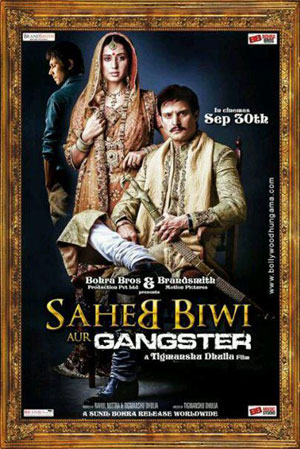
    Force may have been the bigger Bollywood release this week, but the community of critics has been almost unanimous in its praise for Tigmanshu Dhulia’s Saheb Biwi Aur Gangster. This does not happen too often, that a dark horse races ahead. The film might actually end up doing well because of the mostly positive reviews and word of mouth. And when awards times come round, Randeep Hooda and Jimmy Shergill can have a bash at the trophies. The film got three stars and above—with just a couple of exceptions—and what can be justifiably defined as a rave.

    Shubha Shetty Saha gave it 3 and a half stars, but the review is worth 5. She writes, “Even before the movie begins, you get a good feeling about it. Fortunately, it lives up to that intuition. A crackling script, fantastic direction and amazing performances, this movie almost deserves to be called a classic.”

    Mayank Shekhar of The Hindustan Times gives it 3 and half stars, too, and writes, “It’s the page-turner script that steals the show. It’s packed with enough turns, intrigues and twists to hold your attention, keep you guessing. All of it bound by some sort of logic still. At least as much logic as you’d expect from a drama or thriller that doesn’t embarrass your basic intelligence. This doesn’t.”

    On rediff.com, Sheikh Ayaz also gives it 3 and a half stars and writes, “It’s fascinating to see how Dhulia doesn’t succumb to the idea of doing this as an expose film on the hypocrisy that breeds within royal mansions; neither does he develop the crime angle, a move that partially subverts this film’s obvious direction towards the crime genre. Instead, he plays it straight with single-minded focus on the development of his characters and the impact they would have on the plot.”

    Aniruddha Guha of DNA goes with 4 stars and says, “While his script is clearly the film’s USP, Dhulia as director does full justice to the written matter, extracting some superb performances, and making a technically polished film. Little embellishments, like the orchestra sound in a raunchy item number, add to the film’s charm.”

    Not surprisingly 4 stars also from Nikhat Kazmi of the Times of India, and this time the generous rating may even be justified. “The film may be a finely crafted drama, yet it unfolds with thriller pace, keeping you on the edge of the seat till the very end. Enjoy the experience of a revised and re-mixed story, well told. Tip Off: Don’t like run-of-the-mill stuff? Will surely like this… it’s different.”

    Anuj Kumar of The Hindu is a little less effusive. “A master at creating moments, Dhulia’s writing is dipped in wit and the repartees are laced with subtle comments on the changing times and human behaviour… A royal treat where the desserts are a bit disappointing.”

    Going against the tide is IBNLive’s Rajeev Masand with his 2 and a half stars and faint criticism. “The film opens intriguingly and maintains an even pace, but it’s betrayed ultimately by a confused script that hobbles around in all directions, never quite finding its rhythm. Dhulia knows the milieu, so the film has an earthiness that is attractive, and much of the dialogue is clever. Yet, key dramatic scenarios are handled amateurishly… Sahib Biwi Aur Gangster is ambitious in its idea, and the dynamics of the relationships between its central characters are nicely handled. But Dhulia slips up in the tiny details.”

    Shubhra Gupta of The Indian Express gives it 2 stars and slams it. “But for all its frills, some of them nicely executed and attention-grabbing, Sahib Biwi Aur Gangster never quite rises above its familiar plot points, and ultimately stodgy storytelling. I’ve lost count of the times I’ve seen greedy politicians handing out contracts to greedy contractors bypassing worthy candidates, and the obscenity-laden skirmishes between the warring parties: even the smirks and the gaalis are now standard procedure. The decrepit palace, the decadent ex-royal (Shergill), the dissatisfied wife (Gill), the needy mistress (Narayan) and the faithful retainer, all have had variants before: the actors are skilled only to the level of filling in their characters, but not creating any truly memorable moments.”

  • Reviewing the Reviews: Rascals

    Rascals

    Key cast: Sanjay Dutt, Ajay Devgan, Kangana Ranaut, Lisa Haydon

    Written by: Yunus Sajawal

    Directed by: David Dhawan

    Produced by: Sanjay Dutt, Sanjay Ahluwalia, Vinay Choksey


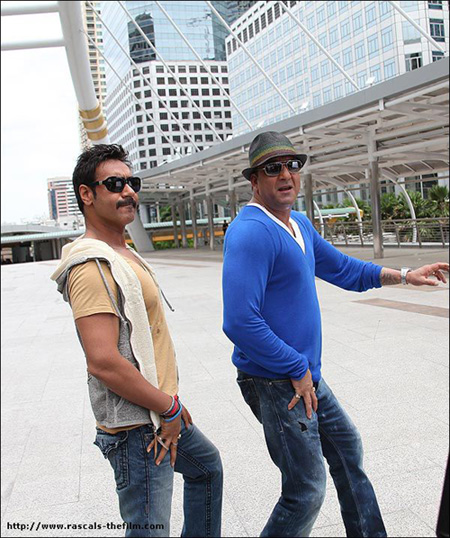
    Nobody expects masterpieces of comedy from David Dhawan, but now, more often than not his films are what would be called in Mumbai slang thakela (tired). The idea of Rascals is overused and in the hands of the two lead actors who have done better comedy before—Sanjay Dutt in the Munnabhai films, Ajay Devgan in the Golmaal series, it is quite disconcerting– more so when a large part of their comic antics involve pawing the much younger and very under-dressed leading ladies Kangana Ranaut and Lisa Haydon.

    Most critics panned the film with one or one and a half stars. Only Taran Adarsh of bollywoodhungama.com found it worthy of three and a half. He writes, “Be forewarned. Rascals is strictly for the hoi polloi, those who relish masala entertainers with glee, those with an appetite for movies that transport them to a different world in those hours spent in the dark auditorium, those who swear by movies that defy logic, motive and intellect. Do you think you fit into this description of a moviegoer? If you do, Rascals is just for you.” A backhanded rave, sounds like.

    Sukanya Verma of rediff.com finds it “lame” but still gives it a generous two and a half. “Recycling paper is nice. Recycling movies? Now that’s plain lame. But director David Dhawan has never been the discerning sort. He painstakingly built his brand around cheesy, slapstick wit, resolutely steering clear of logic, relying on spontaneity and a cast skilled in comedy to accomplish the shtick to which his coterie of writers like Rumi Jaffrey, Anees Bazmee, Sanjay Chhel, Kader Khan and Yunus Sajawal have contributed immensely.…Rascals, with no structure or motive, cannot (rather does not even try to) conceal its desperation to make itself funny. And this insecurity shows in each and every gag.” Then why the higher rating?

    Anyway, Mayank Shekhar of the Hindustan Times goes with one star and cribs, “No one minds mindless movies. They come with known caveats: leave your brains behind, as they say. It may be hard to tell what your brains would do, alone at home. Replacing the hollow space between your ears with some hilarious stuff may not be a bad idea still. The unconnected, unfunny skits here offer you none of that relief. You just feel brain-dead instead.”

    Rajeev Masand of IBNlive is understandably caustic. “David Dhawan, who’s no purveyor of good taste, plumbs new depths of crassness with this expectedly insensitive film that’s so short on real jokes that it makes light of everything from starving orphans in Somalia to the physically handicapped….The laughter, if it was ever intended in the film, is strictly incidental. The gags in the movie are so stale and tasteless and the situational comedy so devoid of any kind of originality or freshness, you wonder if David Dhawan just made this unfunny comedy to please his friends who play the major roles in the film.”

    Manisha Lakhe, writing in DNA sounds anguished, “Surely smashing your toes by a hammer would be more entertaining. Invest in that hammer instead of buying a movie ticket. And please sign an online petition that will prevent David Dhawan from remaking Chupke Chupke.”

    Gaurav Malani of TOI online writes, “Rascals is what one can call a ‘vacation’ filmmaking stint where everyone works on the film as if they were on a ‘holiday’ and the audience is expected to ‘leave’ their senses behind. The actors make least efforts to add conviction to their performances and the patchy writing just allows them to play as they please. Invariably the director tries to camouflage the shallowness in the story by adding depth only in the decibel levels of the dialogue delivery.”

    In Outlook, Namrata Joshi commenting on the actors, writes, “Kangna makes a grand entry in a white bikini, goes on to wear assorted minis, shrieks, displays her shapely legs and cleavage and shows off her inability to pronounce difficult words like ‘congratulations’. Ajay goes loud, Sanjay sports multi-coloured shirts and Arjun looks perpetually flustered. The climax whimpers, is utterly clumsy and needlessly protracted, as though Dhawan forgot he needed to wrap up what he’d wrought. Let alone laugh, I could barely manage a smile through ‘Trashcals’ (oops!)”

    There’s more of the same across publications. Clearly David Dhawan needs a sabbatical.

  • New Column: Reviewing the Reviews by Deepa Gahlot

    Mere Brother Ki Dulhan

    Key Cast: Imran Khan, Katrina Kaif and Ali Zafar

    Written and Directed By: Ali Abbas Zafar

    Produced by: Aditya Chopra


    This Yash Raj Films production by first-time director Ali Abbas Zafar,got mixed reviews ranging from 1 to 4 stars,leaving readers foxed as usual.This is a common enough occurrence these days when reviewers are so afraid of a slamming when films they pan like Bodyguard go on to become blockbusters, that in trying to please popular tastes along with trying to express their own critical opinions, they often tip over to the side, that is, what the masses might like. The public, as always, is quite unpredictable.


    There were certain common points across reviews:

    a)The plot was stale

    b) Katrina Kaif saved the film with her  bindaas act

    c) Imran Khan is getting typecast as a wimp

    d) Ali Zafar (the Brother of the title) can’t act


    Hardly anyone noted the similarity to Hollywood film Dan In Real Life.


    Our take:

    Romcoms everywhere are pretty clich’d anyway,so this one’s not a complete dud. You get what you expect,which is not much.


    Irritatingly, Katrina Kaif plays a half-way rebel,who is done with her smoking-drinking (no sex) ways and now wants to settle for an arranged marriage. Imran Khan and Ali Zafar play hopeless Mamma’s boys, who can’t stand up for themselves.


    The Reviews:

    Mayank Shekhar of Hindustan Times gave it 1-1/2 stars, with a headline stating Mere Brother Ki Dull One. He wasn’t too impressed with the Katrina Kaif character, writing, Katrina Kaif plays the said rock chick. It’s hard to tell if her character’s restlessly rebellious, or plainly retarded.


    The Dull word appears in Sudhish Kamath’s review in The Hindu, with a headline: Katrina puts the dull in Dulhan. While pointing out, And for a romance film, it makes you fall out of love with Katrina. Ouch!


    Shubhra Gupta of The Indian Express quite rightly says in her headline: We’ve seen this Shaadi before.This is a Yashraj rom com where funny-smart lines are a substitute for good old passion. Don’t go looking for any. Don’t go looking for any subtle notes, either. There aren’t any. Quite true Shubhra nails it there; plus she finds Katrina exhausting.


    Just 3 stars from the usually generous Nikhat Kazmi of The Times of India.It is the verve factor which works admirably for the film which doesn’t have much to boast about in the story department. The film tries to remain high spirited throughout, both in terms of the narrative and the performances and mostly succeeds in keeping the smiles coming, she writes, and concludes that it is pleasant weekend viewing.


    Pratim D Gupta of The Telegraph was one of the kinder ones, noting the freshness of the Katrina-Imran pairing.Imran and Katrina make sure you sit in that plex chair, eyes wide open with a smile fixated on your face, and just let them happen to you. A bit treacly, that, but then that’s probably the response of teens flocking to the cinemas to giggle at Katrina’s antics.


    Rediff.com’s Sukanya Varma recommended the film to Katrina fans and gave it 2-1/2 stars. All three look younger than they are and bear an incredibly fresh, genuine and genteel disposition. First-time filmmaker Ali Abbas Zafar avails of these qualities to fashion a feel-good, melodrama-free, candy floss rom-com about two brothers and a mutual love interest.


    Aniruddha Guha of DNA is probably the only one who likes Ali Zafar, but gives YRF a drubbing. Every year, YRF launches a director or two, who then make the same films other directors were already making for the banner. There’s not a shred of originality, not even an attempt to rise over the mindlessness; just a set pattern that is replicated to the T, even though it’s met with little success time and again. His one star is the lowest the film gets.


    And finally, the four-star extreme from Taran Adarsh of Bollywoodhungama.com. According to him, there’s nothing wrong with the film. It is a delectably wholesome, heartening, feel-good entertainer. Not just a comedy, but also a tender, bittersweet saga, this rom-com is sure to melt your heart, then restore it anew all over again. Yet another winner from Yash Raj! It seems he was watching a different film from the rest of the world.


    Deepa Gahlot is a National Award-winning film reviewer and a veteran writer and commentator on the arts. She currently heads programming for Theatre and Film at the National Centre for the Performing Arts, Mumbai

  • Reviewing the Reviews: Vanity Unfair

    Jaana Pehchana

    Key Cast: Sachin, Ranjeeta, Birbal, Vikram Sahu, Mehmood Junior

    Written and Directed By: Sachin

    Produced by: Ajit Kumar Barjatya, Kamal Kumar Barjatya


    One of the essentials of a movie sequel is that the original should have been a great hit, or at least a film that audiences remember with affection. And there really is no point for a sequel coming out 33 years later—by which time the original is not even a distant memory. So Jaana Pehchana, the very belated sequel to Hiren Nag’s Ankhiyon Ke Jharokon Se (1978), is just a vanity exercise for director Sachin Pilgaonkar, who was the toothy, curly-mopped, cutesy protagonist of the original, opposite Ranjeeta (who retired years ago after a fairly successful but also unremarkable career).

    The Rajshris, producers of AKJS and several small-budget, non-star-cast films in that period, have refused to change with the times. Their last monster hit was Hum Aapke Hain Koun in 1994, and for Jaana Pehchana, they have used the same strategy of releasing it in one moviehall – the delightfully retro Liberty. HAHK had picked up, thanks to its stars (Salman Khan-Madhuri Dixit) and popular music.  Jaana Pehchana mostly retreads the old movie in the form of lengthy flashbacks and reuses Ravindra Jain’s score that now sounds too high-pitched and annoying.

    Very few bothered to review Jaana Pehchana, and obviously it comes out rather poorly in comparison with the old film, which was hardly a classic to begin with—plucked as it was from 1970 Hollywood weepie Love Story. It’s not very likely that many of the current crop of reviewers would have seen the original—though they will get more than a glimpse in Jaana Pehchana.  And seeing Mehmood Junior, Birbal and the once ubiquitous Rama Kaka provides unintentional giggles.

    Our take: The stars have arrived in 2011 in decent shape, but did anyone miss Sachin and Ranjeeta so much as to want to see them romance again? The Rajshri style of filmmaking looks almost primitive by  today’s sophisticated standards, but it is also equally true that filmmakers of that period knew how to tell a story without relying on styling and digital tools.

    A generous two stars by DNA’s Akanksha Naval Shetye and Soumyadipta Banerjee (two to write on this film?) and a title that states: Jaana Pehchana is the cake rather than the icing.  “While many in their upper 40s will find it entertaining and won’t mind a nostalgic trip down memory lane, the younger cine-goers may find it hard to bear. Sachin clad in white shorts running around with Ranjeeta in pretty frocks on Juhu beach; Birbal and Jr Mehmood providing comic relief, in a way that – like the bell bottoms – only suited that decade, might evoke laughter, instead of get them to relate to the romance.”

    Mayank Shekhar gives the film one star and refers to the 50ish protagonists as “geriatric”—which is terribly ageist. Odd that only he remembers the Mallika Sherawat vehicle Khwahish.  He writes, “Calming allure of the earlier film comes through. The last time Bollywood remade Love Story, they’d turned the Ali MacGraw classic into a slut-fest on the rocks called Khwahish (2003), heavy publicised for its 17 kisses that the makers had kept count of. Sachin asks his girl out instead in more charming ways, “How about a date? Din mein dono saath saath rahenge, ghoomenge (We’ll spend a day together, travel around?) Any objections?” Not at all. Heroine’s floored. Hero drives her around in a two-seater convertible. This is ultimate comfort cinema in deliciously crummy Eastmancolor for those of a certain vintage that grew up appreciating film for its appealing simplicities.”

    Gaurav Malani writing in the online version of the Times of India notes, “So it doesn’t matter whether you have watched the original film since you get to see most of it in the sequel. But that’s precisely why the sequel doesn’t work for you either, because with the repeat telecast of the original, it sets a direct contrast and thereby highlights the mediocrity of the sequel.”

    Preeti Arora of rediff.com gives it two stars, but her headline says it all, ‘Jaana Pehchana is outdated.’  Not one to mince her words, she writes, “The characters live in a perfect world, a second opportunity for love is being handed to them but romance is something which happens once in a lifetime. Reaching out for it a second time around isn’t something selfless people indulge in. But in today’s times these perfect worlds do not exist. People do not give up on romance or life merely because one relationship ends abruptly.  It is these good-as-gold characters with outdated values in their simplistic uncomplicated world which make the film unbelievable.”

    Trade journalist Komal Nahata, whose reviews appear on koimoi.com, gives the film one star but is also rather kind, praising the script and the performances. But adds, “Today’s audience may not be enthusiastic to watch yesteryear actors Sachin and Ranjeeta play the central roles in what basically remains a love story albeit with a difference. Moreover, there is an entire generation of under-30s, which may never have seen Ankhiyon Ke Jharokon Se. Of course, the film can be fully understood even if one hasn’t seen the first part (AKJS) but again, the question arises: without having seen and loved AKJS, how many among the youth (which comprises a sizeable chunk of our audience today) would be keen to watch Jaana Pehchana?”


    Deepa Gahlot is a National Award-winning film reviewer and a veteran writer and commentator on the arts. She currently heads programming for Theatre and Film at the National Centre for the Performing Arts, Mumbai

  • Reviewing the Reviews: Mausam

    By Deepa Gahlot

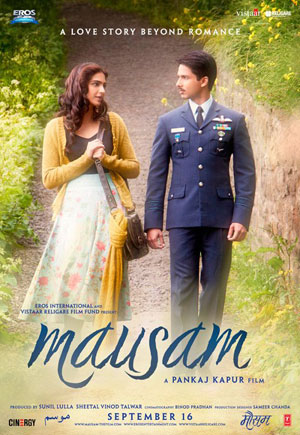
    Mausam

    Key cast: Shahid Kapoor, Sonam Kapoor

    Written and directed by: Pankaj Kapur

    Produced by: Sunil Lulla and Sheetal Vinod Talwar


    Pankaj Kapur’s debut film as director seems to have done the near-impossible—united critics across the board, with harsh-to-gentle panning and ratings from one and a half to two stars. All except the Times of India, of course, that rarely drops below three, and NDTV. Everyone agreed that the film fell fall short of its epic pretensions, and went on and on till the audiences were bored to tears.


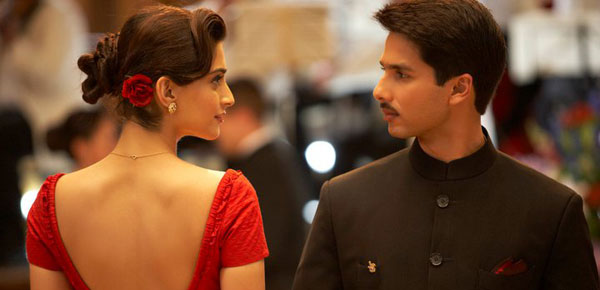
    The film, with the pompous tagline: A Love Story Beyond Romance (means what?), has its Punjabi hero and Kashmiri heroine meet and separate over several countries and calamities, till the pathos is wrung inside out to become farcical. All that fuss about the Air Force was needless, the bloke need not even need to be a pilot. Shahid gets to wear a uniform, a moustache, a still expression and pretend for a few minutes that he is Tom Cruise in Top Gun. Sonam Kapoor looks pretty, giggles, screams, weeps and dances in Scotland!


    Sudhish Kamath of The Hindu titled it “Epic Disaster”. “Think of all the possible clichés that have kept star-crossed lovers away in Hindi cinema over the years and put them all in one movie — jilted lover, jealous rival, death of father, change of address, call of duty, misunderstandings, unread letters and those riots every few years,” he writes.


    Mayank Shekhar of Hindustan Times gives it one and a half stars and writes, “There’s an old, popular Shailendra ditty in this movie that goes, of course, Ajeeb Dastan Hai Yeh, Kahaan Shuru, Kahan Khatam (It’s a weird legend. Not sure where it begins. Not sure where it ends). The second time they play that Shankar Jaikishen song on this screen, you’re convinced this is some kind of an inside joke between the film’s director and his drooping audience. He’s ushered you into the theatre all right, seated you comfortably with popcorn, Coke and other supplies for the day, it’s been over three hours (has felt like multiple mausams, seasons, of a television series), you’re still not certain when this epic tragedy will end, or if it will at all.”


    According to India Today’s Kaveree Bamzai, “Every scene is beautifully shot, the romance is meant to grow on you with its artful glances and coy exchanges. But instead of a slow burn, it’s just plain exhaustion.”


    Raja Sen on rediff.com echoed the sentiments of many, “This is a love story gone awry purely because of under-communication, and while that seems fine enough on paper, it’s rather hard to swallow two lovers cleaved for well over a decade simply because they don’t have each other’s forwarding address.”


    IBN Live’s Rajeev Masand calls it an unfortunate mess and says, “Plodding along for close to three hours, Mausam loses steam early on. By the time the film hobbles to its end at a riot-stricken Ahmedabad fair, all you can do is gasp. Gasp in complete shock at the inconceivably embarrassing climax that involves a Ferris wheel, a crying child, and a horse. This one scene alone hints at just how desperately this script was begging for a rewrite!”


    Aniruddha Guha of DNA quips that the only thing epic about Mausam is its length. “Two lovers separated by circumstances repeatedly would be acceptable if the situations were at least believable. But the story demands you to suspend belief repeatedly, and gets convoluted beyond repair eventually.”


    The Reuter’s Review headline says “Mausam is several seasons too long,” and then, “If director Pankaj Kapur hadn’t gone to pains to establish that Mausam plays out between the mid-’90s and the early years of this century, you’d be forgiven for thinking this film takes place in the ’20s — when there was no internet, no phones and no technology. Why else would two, reasonably well-off, intelligent people who obviously have access to technology be unable to trace each other? It makes no sense, and instead of feeling sad for them, you feel frustrated.


    The usually kind Taran Adarsh of bollywoodhungama.com surprisingly dubs it a “colossal disappointment,” and comments, “The screenplay, to put it bluntly, is unengaging and what makes it worse is the fact that it seems like a never-ending saga. The film just goes on and on and on, moving from one city/country to another, till the viewer gets jetlagged and exhausted by watching this saga unfold on screen. With a running time of close to 3 hours, Mausam has a few sequences that do stand out, but the weak script blows the efforts away.”


    And the usually sensible Shubhra Gupta of The Indian Express gives it an uncharacteristic two and a half stars, saying, however, that “Mausam starts like a dewy-fresh spring morning, where everything is familiar yet new. It then wilts, autumnal overtones taking over. And then never quite recovers, falling into a dreary never-ending winter.


    One of the few who recommends the film is NDTV.com’s Saibal Chatterjee. “To conclude, Mausam could quite easily have ended up being a stodgy, strenuous and self-conscious drama. Writer-director Kapur, the accomplished actor that he is, orchestrates the emotional ups and downs of his tale with a commendable degree of moderation for the most part. Mausam is certainly worth a viewing.”