Category: RESEARCH

  • RAM Ratings for Week 36 Aug 30-Sept 5, 2015

    Ram, Ram Sirjis and Madames. It’s a Monday and here we are again with Radio Audience Measurement (RAM) Ratings for Week 36 of 2015… that’s August 30 to September 5, 2015. Sourced directly from RAM. It may be noted that this is topline data and is insufficient for taking business decisions on buying inventory on radio stations. In fact many even damn us for carrying it because it gives insufficient data. We urge advertisers to buy the research findings or ask radio stations and/or media agencies for detailed numbers​.


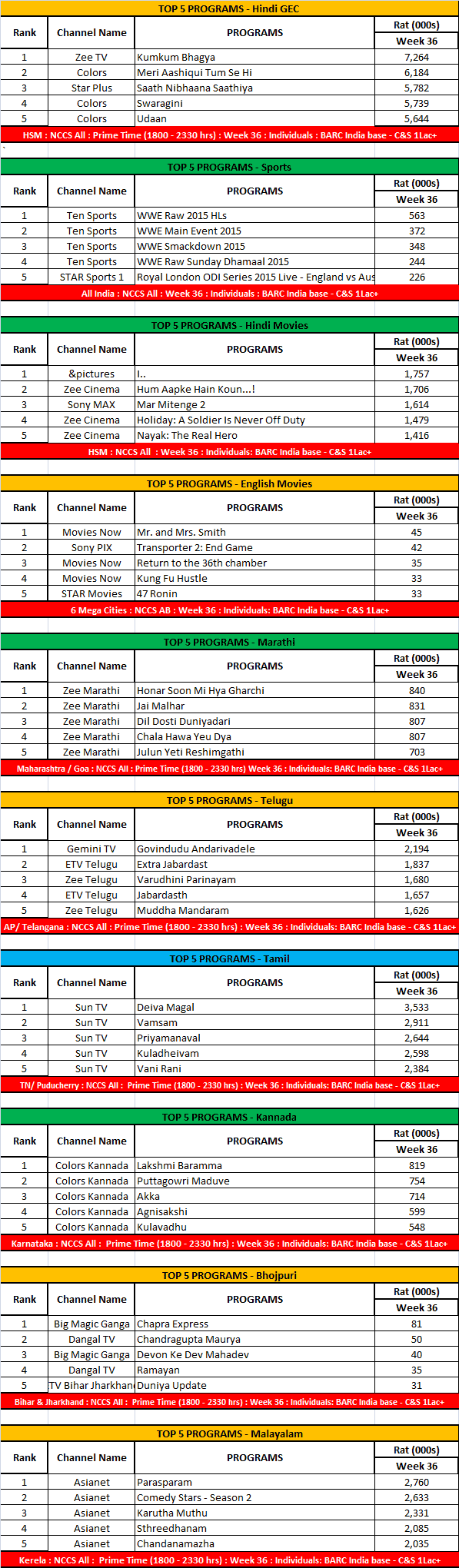
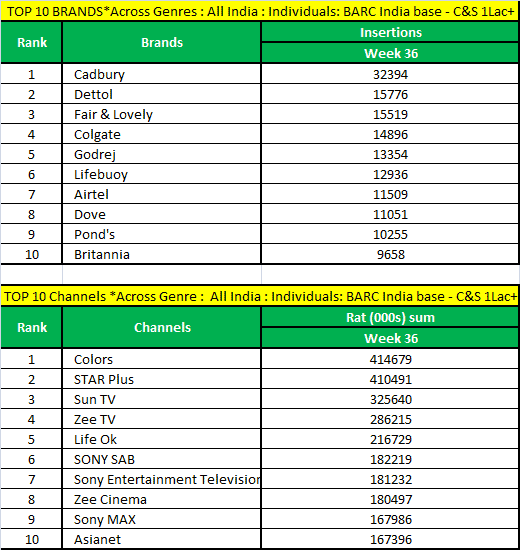
  • BARC Data for Week 36 (Sept 5-11, 2015)​

    Here’s BARC data for Week 36 (Sept 5-11, 2015)… for the general entertainment channels and and more!


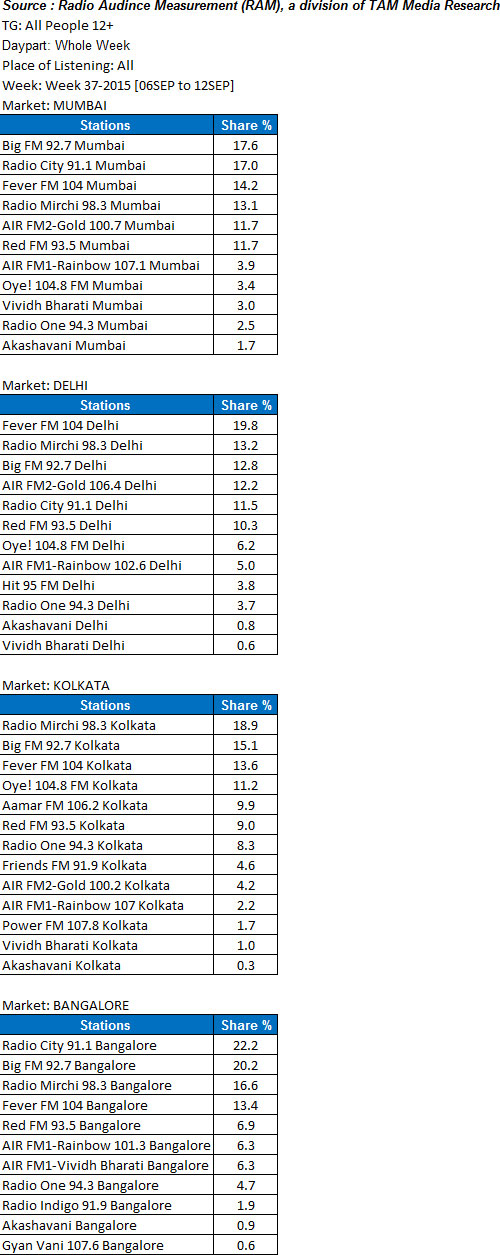
  • RAM Ratings for Week 37 Sept 6-12, 2015

    Hello. This should’ve appeared yesterday, but we were full up with stories so couldn’t accomodate it. So here we are again with Radio Audience Measurement (RAM) Ratings for Week 37 of 2015… that’s September 6 to 12, 2015. Sourced directly from RAM. It may be noted that this is topline data and is insufficient for taking business decisions on buying inventory on radio stations. In fact many even damn us for carrying it because it gives insufficient data. We urge advertisers to buy the research findings or ask radio stations and/or media agencies for detailed numbers​.


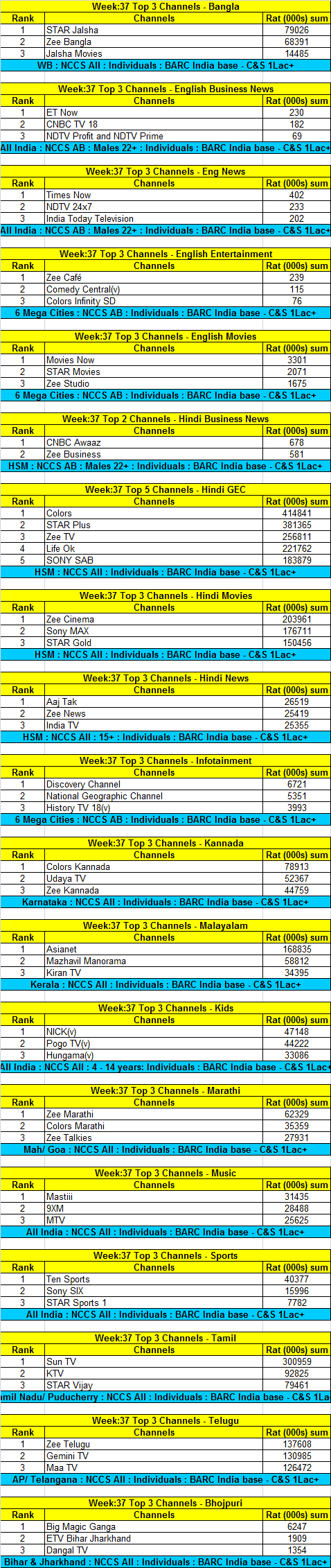
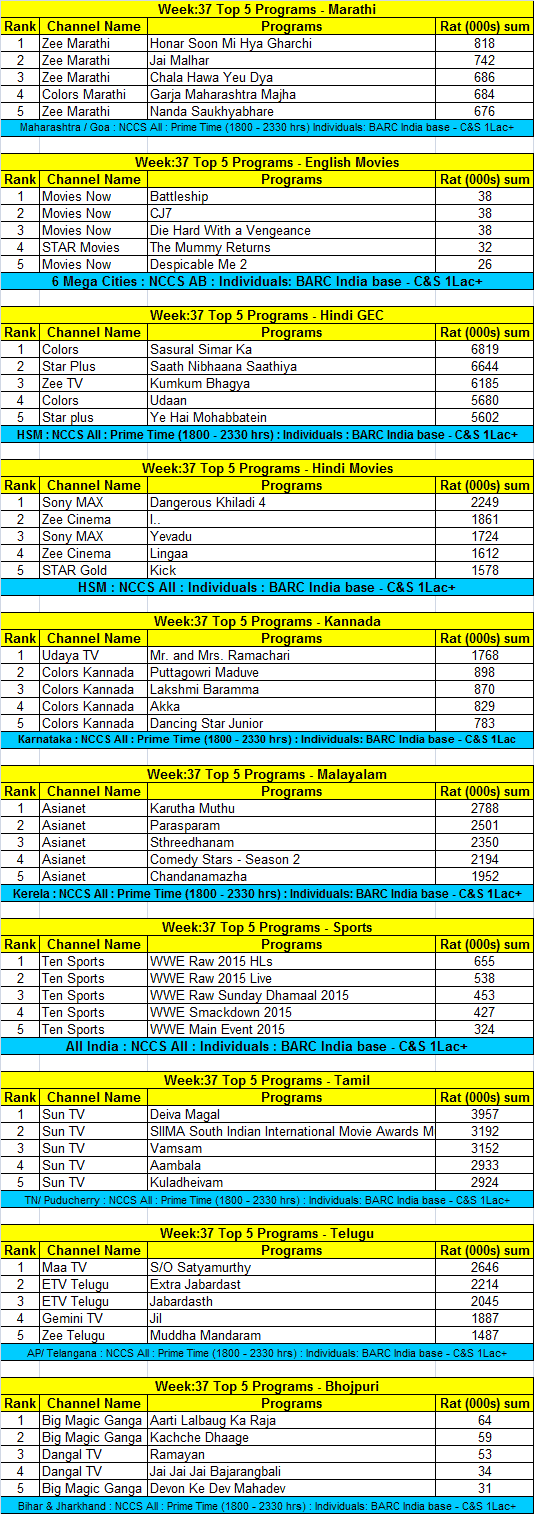
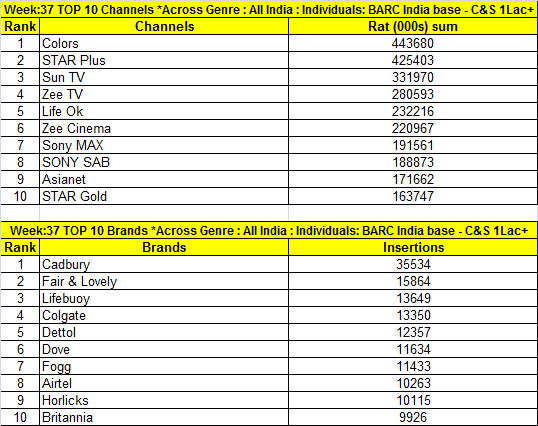
  • BARC Data for Week 37 (Sept 12-18, 2015)​

    Sorry for the delay in bringing you BARC data for Week 37 (Sept 12-18, 2015). Here’s it again… for general entertainment channels and and more!​
  • Rural ratings delayed, but are broadcasters rural-ready?


    Rural Ratings Delayed, But Are Broadcasters Rural-Ready?By Shailesh Kapoor


    The delay in the release of the rural ratings has been a topic of chatter in the broadcasting corridors over the last fortnight. Since a definitive date was announced, the delay has led to speculations, even rumors, including some that are imaginative and absurd in equal measure.


    Over the last year, since it became evident that rural ratings will be a part of their lives sooner than later, broadcasters have spent considerable resources in becoming “rural-ready”. The main area of focus has understandably been distribution. The other emphasis has been on consumer research. Having studied LC1 consumers extensively over the last few years, rural research is not entirely alien territory for broadcasters.


    But is that all that’s there to being rural-ready? Distribution is an enabler and consumer research is an input into programming and marketing. Hence, unless the rural-readiness reflects in content and brand strategies, it is not in place in real terms.


    That raises the pertinent question: Has anything changed on-air? Besides some of the GECs extending their primetime to ensure an early start (5pm/ 6pm), no other visible change reflects rural-readiness on-air. If anything, some changes have been a bit “anti-rural” in nature. A sizeable proportion of new launches over the last year are urban-skewed in their theme and treatment. It is evident they will lack rural traction.


    Stereotyping problems have continued, such as assumption that non-fiction viewers would rather read English than Hindi. Presentation language, as a result, continue to be inconsistent on-air, not just for GECs but even for movie channels. Liberal usage of English mars comprehension of several shows, including some fiction ones, even in the urban centers, and this has not changed either.


    The approach seems to be that of ‘be ready and then wait-and-watch’. The first ratings, whenever they are out, will mean a shift of gears. With channel and programme level data available to act upon, and the weekly clock ticking by, it would be time to act on high priority. All the rural research reports, from studies conducted in late 2014 and early 2015, will then come in handy.


    The genres that are likely to be least impacted from a content perspective are news and kids. Though both of them may lose overall TV viewing share in rural, like most other non-GEC genres, their rural content profile is likely to be similar to the bigger urban centers. A few other genres, especially infotainment and music, will have to take decisionson whether they want to invest resources in the rural markets at all.


    All this shall unfold when the rural ratings are released. Till then, the question of why they did not release on schedule, and what the new date is, will continue to keep us busy.


    So what’s delaying BARC’s rural ratings?By A Correspondent


    The much-awaited release of rural ratings data from Broadcast Audience Research Council (BARC), the joint industry body mandated by broadcasters, advertisers and advertising agencies to measure television audiences looks likely to be delayed.


    According to sources, broadcasters body Indian Broadcasting Foundation of which Star India CEO Uday Shankar is President, has written to the BARC board asking for the rural data to be delayed.  The reason:  there is need to let the current the data stabilise given some complaints of volatility. BARC started releasing its data from end-April 2015.


    BARC was scheduled to release the rural data by end-September and conducted road shows across major centres (Disclosure: MxMIndia had partnered the promotion of these roadshows).


    However, according to industry grapevine, there is more to the delay than the reason to stabilise. Sources have told MxMIndia that certain members of the ecosystem are dismayed with the delay and have questioned whether a leading channel whose ratings have been put to test by competition is behind the effort to delay the rural release.


    According to information we have received, Doordarshan officials are unhappy with the delay, and it is felt that if BARC pushes the release of rural data indefinitely, the I&B ministry may also step in.


    The BARC Board is scheduled to meet next week and will possibly deliberate on the issue.


  • Naysayers silenced. BARC to go rural from next week

    By A Correspondent


    Stability is a bad word to use in the Broadcast Audience Research Council (BARC) office. You may well get barked at. As one top media agency honcho discovered at an event when s/he tried to raise it with a BARC official.


    The decision to publish rural ratings didn’t happen with ease, we are told. There was at least one influential player who aggressively opposed it. There were some others who simply wondered: Shouldn’t we wait for the ratings to settle down?


    The Board members were convinced on Tuesday evening that all will be well. The #1 channel will not tumble and turn #5. Yes, some free-to-air re-run channels will gain a bit, but, heck, if that’s what India watches, what can BARC do about it. A presentation was made in a Board meeting, and the decision was taken.


    With this, BARC India, which currently reports about 55 million households representing C&S universe of 1 Lac+, will expand its reach to 153.5 million TV households, representing All India and all modes of signal. Of this 77.5 million are urban TV households and 76 million are rural TV households.


    BARC India, which had recently announced a joint venture with TAM Media to form a meter management company, is working on the dynamics of it and will soon announce its integration plan.


    “With the board giving us the go ahead to release the rural data, one will see ‘What India Watches’” said BARC India CEO Partho Dasgupta.


    According to an analyst, the big beneficiaries of this would be broadcasters who have worked on their reach to the hinterland, and have traditionally been strong. The dynamics are dramatically different for urban and rural India. Among these channels, Zee TV will be a big gainer, we are told as will be the free-to-air re-run channels of the key networks. Doordarshan officials are also reported to be jubilant about the rural numbers coming in, as that, they feel, will help highlight their popularity vis-à-vis others.


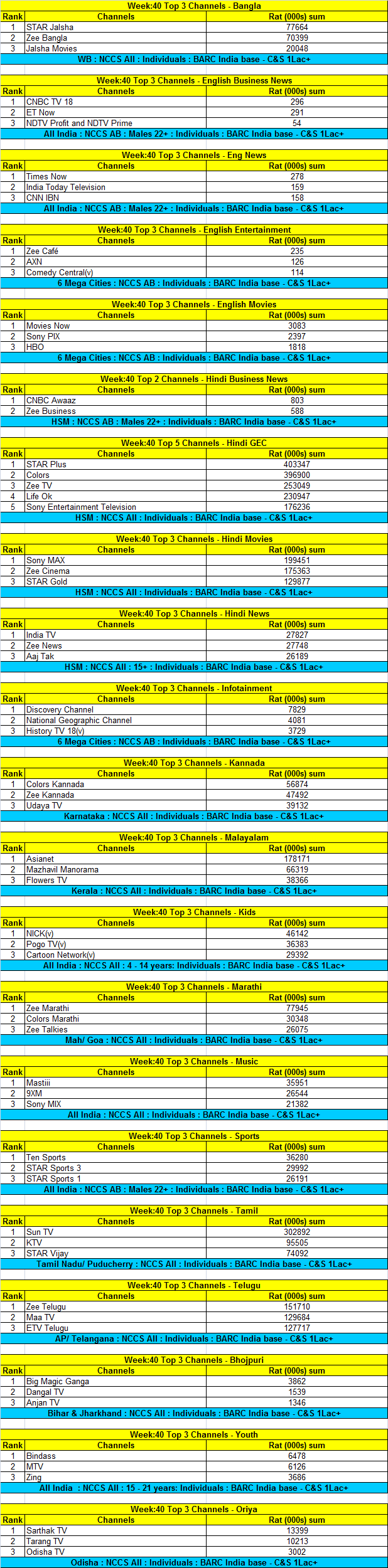
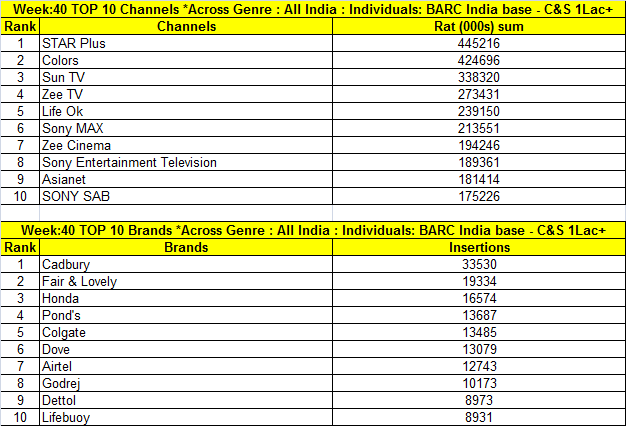
  • BARC Data for Week 40 (Oct 3-9, 2015)

    Here’s BARC data for Week 40 (Oct 3 to 9, 2015) for general entertainment channels and and more!​


  • Can these three save the MRUC (& print)?


    By A Correspondent


    The deed was done in an AGM last month, but on Thursday, it was made official.


    The all-important Media Research Users Council announced the formation of a new top deck. It elected I Venkat, Director, Ushodaya Enterprises as Chairman for the next two years. It has also appointed Radhesh Uchil, formerly with Madison’s Platinum Media, as CEO.


    Venkat takes over from GroupM South Asia CEO CVL Srinivas, and Uchil comes in with the exit of Shaswati Saradar.


    To be fair to Srinivas, he took charge only in May 2015, taking over from Ravi Rao of Mindshare who had moved out. Rao helmed the MRUC from early 2014.


    The all-important position of Chairman of the Technical Committee, held by top media consultant Paritosh Joshi, will now be taken up by NP Sathyamurthy, Executive Director, DDB MUdra Group. Sathyamurthy, it may be remembered, successfully led the MRUC secretariat as Director General from March 2003 to September 2005. Nikhil Rangnekar, CEO, Spatial Access is the new Chairman of the Marketing Committee. Sanjay Tripathy, Senior EVP at HDFC Life is the new Vice Chairman of MRUC, taking over from Rohit Gupta of Multi Screen Media.


    Both Srinivas and Joshi will continue to mentor the Council, a statement added.


    Venkat and Uchil are seasoned players, but the MRUC job possibly requires the two to have the skills of a police commissioner and a High Court judge. Be just and tough.


    Given the rapid rise of the digital media and steady growth of all other media, print will surely not die, but advertisers could well lose faith in the reach. So even if you think this bit of ‘print is dying’ is bunkum given the large number of ads in The Times of India these days and the reliance of even big digital players on print, the growth of digital is decidedly going to impact print, especially in the all-important urban centres.


    But, as many professionals tell us, the enemy for the print sector, lies within. If print players do not invest in audience research and work towards growing the sector, these three men (and the various others) could be the last officebearers of the MRUC. Finito!


    Earlier this year, we saw The Times of India and Hindustan Times leaving no stone unturned in putting each other down. If better sense had not prevailed, they could well have been talking ill of their stakeholders. MxMIndia had taken a conscious decision then not to solicit any of these advertising as it wasn’t even worthy of cooler conversation.


    But if BCCL and HT Media got out in the open, there were others too who were flexing their muscles, if not in the open, at least in the trade.


    What now? There are only two ways the MRUC can go? Up or down. No status quo. In fact, may we advise the powers that be who have taken charge that if they do not wish to employ missionary zeal to cleanse the sytem, they should opt out.


    Yes, yes, we said that. You read it right.


    Since we are in Mumbai, let’s use a line inspired from Bollywood: agar dar gaya, toh print mar gaya!


    We are told that there are some big and bit players who have been playing bully. There is also this confusion about who is accountable for the readership study: the MRUC or the RSCI (the Readership Studies Council of India, which is formation of a group and not a legal entity).


    Thankfully, some of the officebearers at other key organisations like the Audit Bureau of Circulation (ABC) are progressive in their outlook. Venkat himself is associated with the ABC, and has done his bit for almost every industry association.


    It’s time for all print players to bury their differences and save their own future. These three men have it in them to make the difference.  While the ball lies in their court, it’s also lies in each of ours too.


    Some lessons may be learnt from the Broadcast Audience Research Council (BARC) which had equally killers sharks amongst its stakeholders. It need a strong secretariat and a committed Board to effect the changes.  Print is lucky that the I&B ministry is too scared to take on the biggies. Had the same happened in news television, all hell would’ve broken loose.


    Can the printwallahs do it? Yes, they can. The question is: do they want to do it.


    In all of this, they shouldn’t forget the not-so-poor advertiser.  For, the stick is finally in her/his hands.


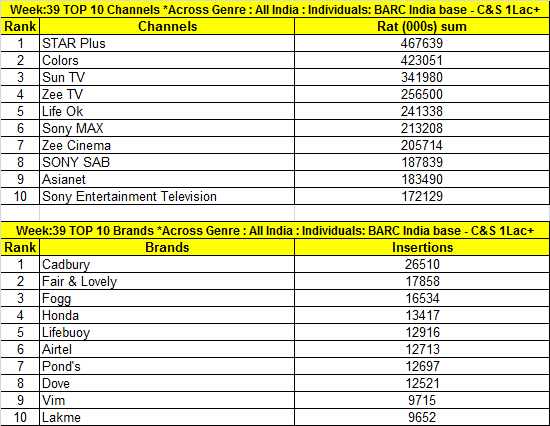
  • BARC Data for Week 39 (Sept 26-Oct 2, 2015)​

    Here’s BARC data for Week 39 (Sept 26-Oct 2, 2015)for general entertainment channels and and more!


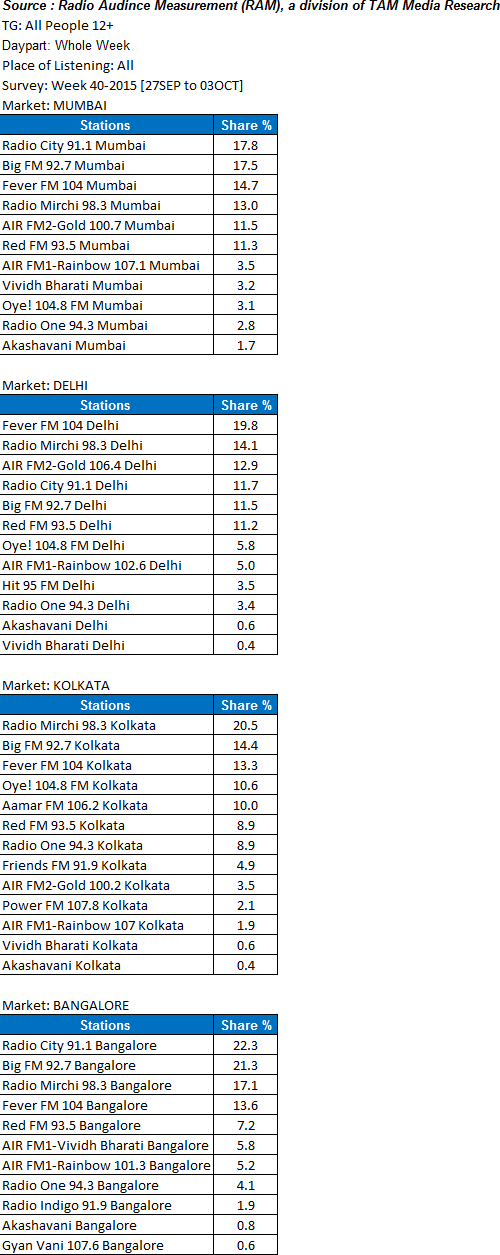
  • RAM Ratings for Week 40 Sept 27-October 3, 2015


    Hello. This should’ve appeared yesterday, but we were full up with stories so couldn’t accomodate it. So here we are again with Radio Audience Measurement (RAM) Ratings for Week 40 of 2015… that’s September 27 to October 3, 2015. Sourced directly from RAM. It may be noted that this is topline data which may be insufficient for taking business decisions on booking ads on radio stations. We urge advertisers to buy the research findings or ask radio stations and/or media agencies for detailed numbers​.​


  • Zee Anmol is the new #3 Hindi GEC as BARC goes rural

    On Friday, the Broadcast Audience Research Council (BARC) India released the much awaited rural India. Data for Week 41 was released today for October 10 to 16, 2015 and the combined numbers for rural and urban were presented among the toplines.  BARC India, a joint industry body comprising the broadcasters, media agencies and advertisers, started rolling out ratings from April, 2015, and the release of rural numbers has been hailed as a significant achievement, even as there was a section of influential broadcasters who were trying to get it delayed.


    With the release of the All India data, BARC India has expanded its reach to 153.5 million TV households, representing All India and all modes of signal. Of this 77.5 million are urban TV households and 76 million are rural TV households. BARC India will now be reporting Megacities, 10-75 lakh towns, less than 10 lakh urban areas and rural.


    The BARC India survey shows that lesser time is spent on TV in rural areas. Two in five rural audiences fall in the NCCS AB category, rural India gives younger audiences in the age group of 15-40 years. Last but not the least, with rural India’s ‘Early to bed and Early to rise’ philosophy, the conventional definition of prime time for channels may change.


    Highlights of BARC India Week 41 (October 10-16) ratings:

    • Star Plus maintains its leadership with 804214 Rat (000s) followed by Colors at 708747 Rat (000s).
    • Zee Anmol jumps to number 3 with 609189 Rat (000s).
    • DD National registered an Average Time Spent (ATS) of 53 Min 39 Sec highest among Hindi GECs.
    • Rishtey is amongst top 10 Hindi GECs with 270072 Rat (000s).
    • In the news genre, Times Now maintains its leadership with 560 Rat (000s) followed by CNN IBN at 233 Rat (000s).
    • Sports sees major spike in ratings. Star Sports 1 holds number 1 position with 162592 Rat (000s) on the back of Paytm ODI Trophy 2015- India vs South Africa.
    • Star Gold becomes No 1 Hindi Movie channel with 486374 Rat (000s) with the premier of Bajrangi Bhaijaan.
    • Aaj Tak is number one in Hindi News genre with 72067 Rat (000s).
    • Sun TV with 1092231 Rat (000s) topped the Tamil GEC genre. It also becomes the No 1 channel on All India basis ahead of Star Plus and Colors.
    • ETV Telugu maintains No 1 position in Telugu GEC market with 424252 Rat (000s).
    • Colors Kannada maintains its ranking order in the Kannada GEC space with 211268 Rat (000s).
    • Zee Marathi with 116598 Rat (000s) leads the Marathi GEC genre.
    • In the Malayalam GEC genre, Asianet topped the chart with 413385 Rat (000s).
    •  Star Jalsha tops Bengali GEC space with 241463 Rat (000s).
    • Discovery Channel stays ahead of competition with 6433 Rat (000s).
    • Kids genre sees spike in ratings, Nick is the number one kids channel with 97227 Rat (000s).
    •  MTV is the No 1 Youth channel with 14219 Rat (000s).
    • ET Now tops the English Business news genre with 484 Rat (000s).
    • Movies Now maintains its leadership in English Movies genre with 3200 Rat (000s) followed by Sony Pix at 1893 Rat (000s).
    • Zee Café maintains its leadership in English Entertainment genre with 103 Rat (000s).


    “I am delighted to present to the Broadcast and Advertising industry the All India Ratings. We have been able to give to the country a view of “What India Watches” as promised,” said BARC India CEO Partho Dasgupta.


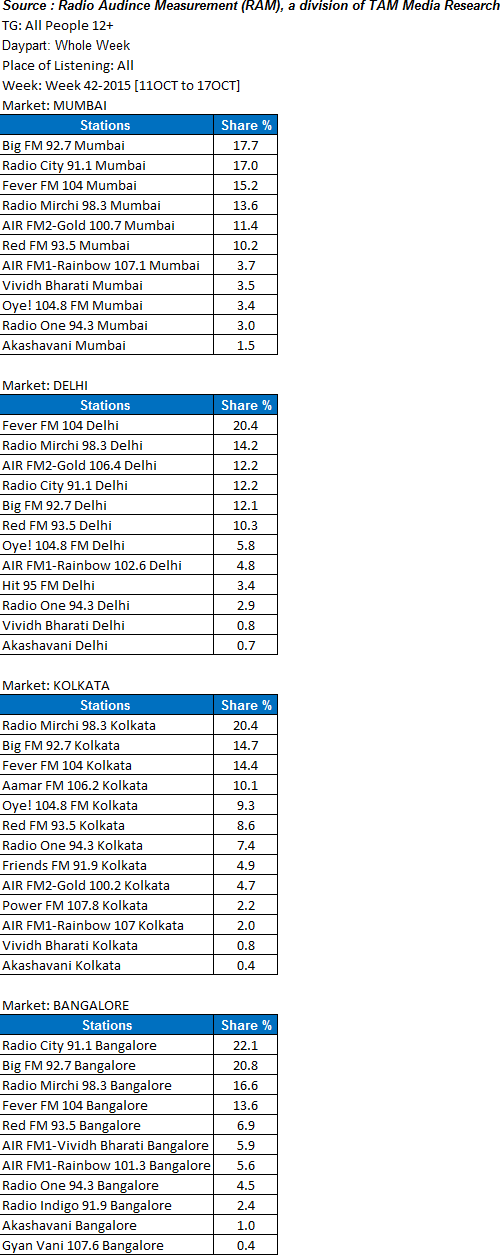
  • RAM Ratings for Week 42 Oct 11-17, 2015

    Greetings on Sharad or Kojagiri Purnima and the start of an all-new week.Here are the Radio Audience Measurement (RAM) Ratings for Week 42 of 2015… that’s October 11 to 17, 2015. Sourced directly from RAM. It may be noted that this is topline data which may be insufficient for taking business decisions on booking (or not booking) ads on radio stations. We urge advertisers to buy the research findings or ask radio stations and/or media agencies for detailed numbers​.​​​