Category: RESEARCH

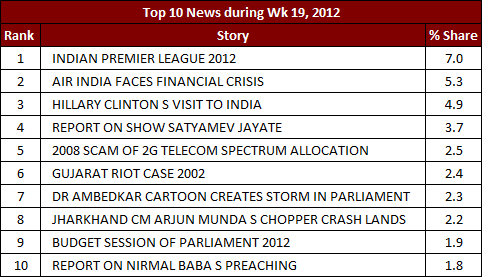
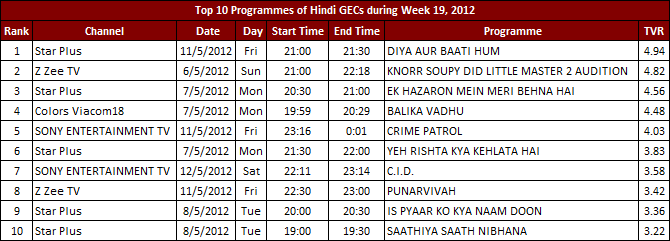
  • TAM data Top 10 programmes on HGEC – Wk 19’12


    Source: TAM Media Research
    TG: CS 4+ yrs
    Market: Hindi Speaking Market
    Period: Wk 19: May 6 to May 12, 2012


    About TAM Media Research

    TAM is a joint venture between Nielsen Company & Kantar Media Research. Besides measuring TV Viewership, TAM also monitors Advertising Expenditure of Television, Print & Radio through its division AdEx India. Since 2004, it extended its presence in the PR Measurement & Analysis space for Corporate/Marketing Clients by setting up a separate division Eikona PR Measurement.


    In 2007, the joint venture introduced RAM (Radio Audio Measurement) service to track Radio Listenership for the Indian Radio Broadcast Industry. In year 2009, TAM launched a division, called TAM Sports that specializes in monitoring Sports Sponsorship ROI.


    TAM Media Research’s objective is to fuel media insights that will drive the growth of the Indian Media Industry.

  • TAM NCT Data Wk 19 ’12


    Source: News Content Track – A service of TAM Media Research Pvt. Ltd
    Channels: Aaj Tak, CNN IBN, Headlines Today, IBN 7, India TV, NDTV 24/7, NDTV India, Star News, Times Now, News 24 & Zee News
    Period : Week 19 – May 6 to May 12, 2012
    Note : Analysis is based on the Telecast duration


    About TAM Media Research

    TAM is a joint venture between Nielsen Company & Kantar Media Research. Besides measuring TV Viewership, TAM also monitors Advertising Expenditure of Television, Print & Radio through its division AdEx India. Since 2004, it extended its presence in the PR Measurement & Analysis space for Corporate/Marketing Clients by setting up a separate division Eikona PR Measurement.


    In 2007, the joint venture introduced RAM (Radio Audio Measurement) service to track Radio Listenership for the Indian Radio Broadcast Industry. In year 2009, TAM launched a division, called TAM Sports that specializes in monitoring Sports Sponsorship ROI.


    TAM Media Research’s objective is to fuel media insights that will drive the growth of the Indian Media Industry.


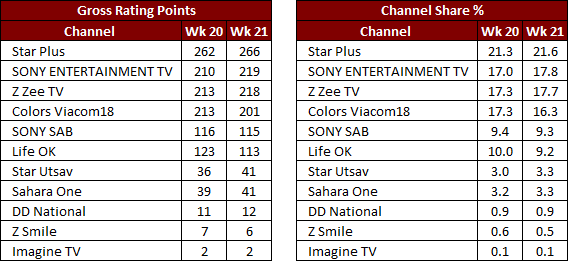
  • TAM Data (GRPs Channel shares of HGECs)- Wk 20 ’12


    Source: TAM Media Research
    TG: CS 4+ yrs
    Market: HSM
    Period: Wk 19: May 6 to May 12, 2012
    Period: Wk 20: May 13 to May 19, 2012


    About TAM Media Research

    TAM is a joint venture between Nielsen Company & Kantar Media Research. Besides measuring TV Viewership, TAM also monitors Advertising Expenditure of Television, Print & Radio through its division AdEx India. Since 2004, it extended its presence in the PR Measurement & Analysis space for Corporate/Marketing Clients by setting up a separate division Eikona PR Measurement.


    In 2007, the joint venture introduced RAM (Radio Audio Measurement) service to track Radio Listenership for the Indian Radio Broadcast Industry. In year 2009, TAM launched a division, called TAM Sports that specializes in monitoring Sports Sponsorship ROI.


    TAM Media Research’s objective is to fuel media insights that will drive the growth of the Indian Media Industry.


  • TAM data Top 10 programmes on HGEC – Wk 20 ’12


    Source: TAM Media Research
    TG: CS 4+ yrs
    Market: Hindi Speaking Market
    Period: Wk 20: May 13 to May 19, 2012


    About TAM Media Research

    TAM is a joint venture between Nielsen Company & Kantar Media Research. Besides measuring TV Viewership, TAM also monitors Advertising Expenditure of Television, Print & Radio through its division AdEx India. Since 2004, it extended its presence in the PR Measurement & Analysis space for Corporate/Marketing Clients by setting up a separate division Eikona PR Measurement.


    In 2007, the joint venture introduced RAM (Radio Audio Measurement) service to track Radio Listenership for the Indian Radio Broadcast Industry. In year 2009, TAM launched a division, called TAM Sports that specializes in monitoring Sports Sponsorship ROI.


    TAM Media Research’s objective is to fuel media insights that will drive the growth of the Indian Media Industry.


  • TAM Data (GRPs Channel shares of HGECs)- Wk 21 ’12


    Source: TAM Media Research
    TG: CS 4+ yrs
    Market: HSM
    Period: Wk 20: May 13 to May 19, 2012
    Period: Wk 21: May 20 to May 26, 2012


    About TAM Media Research

    TAM is a joint venture between Nielsen Company & Kantar Media Research. Besides measuring TV Viewership, TAM also monitors Advertising Expenditure of Television, Print & Radio through its division AdEx India. Since 2004, it extended its presence in the PR Measurement & Analysis space for Corporate/Marketing Clients by setting up a separate division Eikona PR Measurement.


    In 2007, the joint venture introduced RAM (Radio Audio Measurement) service to track Radio Listenership for the Indian Radio Broadcast Industry. In year 2009, TAM launched a division, called TAM Sports that specializes in monitoring Sports Sponsorship ROI.


    TAM Media Research’s objective is to fuel media insights that will drive the growth of the Indian Media Industry.

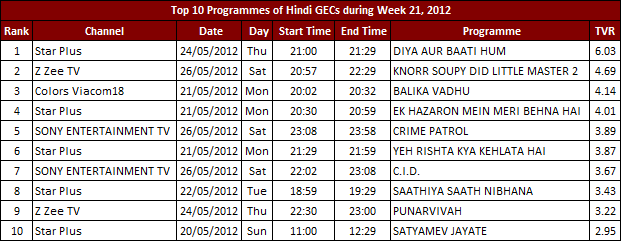
  • TAM data Top 10 programmes on HGEC – Wk 21 ’12


    Source: TAM Media Research
    TG: CS 4+ yrs
    Market: Hindi Speaking Market
    Period: Wk 21: May 20 to May 26, 2012


    About TAM Media Research

    TAM is a joint venture between Nielsen Company & Kantar Media Research. Besides measuring TV Viewership, TAM also monitors Advertising Expenditure of Television, Print & Radio through its division AdEx India. Since 2004, it extended its presence in the PR Measurement & Analysis space for Corporate/Marketing Clients by setting up a separate division Eikona PR Measurement.


    In 2007, the joint venture introduced RAM (Radio Audio Measurement) service to track Radio Listenership for the Indian Radio Broadcast Industry. In year 2009, TAM launched a division, called TAM Sports that specializes in monitoring Sports Sponsorship ROI.


    TAM Media Research’s objective is to fuel media insights that will drive the growth of the Indian Media Industry.

  • TAM to cross 10,000 Peoplemeter mark soon

    By Meghna Sharma


    In a country like India with numerous channels on air and where television watching is an obsession, it is vital for broadcasters and advertisers to know how well the channels and the various programmes on them fare. TAM, a joint venture between AC Nielson Research Services (Nielsen Company) & Kantar Market Research, was mandated by the broadcast and advertising industry to do exactly that. Over the last decade-and-a-half, TAM has been optimizing coverage of the growing TV audience across the country by increasing breadth (expanding to cover larger number of new markets) and depth (enable deeper level of analysis in existing data markets).


    By the year end, the TAM Media Research plans to increase its sample size by nearly 2000 households. The present expansion is in alignment with the above thought process and is an attempt to bring insights on audience engagement with TV Content. “The current Indian broadcast landscape is dotted with some very different and complex influencing factors like the need to dive deep into untapped semi-urban/rural markets and the upcoming mandate of digitization,” says LV Krishnan, CEO, TAM Media Research.


    He adds, “With digitization, we are already seeing increase in not only the channels entering the distribution pipe but also audiences trailing more content across newer genre of channels. As the long tail of unique content channels explode in 100% digital markets (Phase I being the Metros), TAM will be enhancing the sample size in these digital markets (Metros) to throw more light into audience consumption of these unique content channels. This enhancement will benefit micro targeting of viewer groups for not only broadcasters with their content but also advertisers interested in specific audience groups for their brand communication.”


    Keeping this in mind, TAM will be taking a few steps. The first initiative being taken is to increase the panel size in Mumbai, Delhi, Kolkata, Chennai, Bengaluru and Hyderabad totalling 650 homes. This will increase the SEC AB sample size in these metros by around 60%. All additional 650 homes will be recruited among C&S SEC AB homes.


    But that’s not all. As part of the initiative, TAM will expand in the less than class I India markets too. In the annual January 2012 establish report, the fastest growth for digital TV platform continued to be from less than Class I towns (with population of less than one lakh) and semi-rural markets in the Hindi belt markets. “This affirmed our hunch of the need to beef up representation in the semi-rural markets. Since 2009, we have been covering Maharashtra in the ‘Less than Class I’ geographic stratum. To this stratum, we are now adding seven more states: Gujarat, Madhya Pradesh, Punjab, Haryana, Himachal Pradesh, Rajasthan and UP. These will be reported as individual states except for Punjab, Haryana, Himachal Pradesh which will, as usual, be reported together as PHCHP,” adds Mr Krishnan. The increasing the sampling across these five new markets will be 1110.


    With this expansion, TAM will practically complete covering the entire urban stratum for the Hindi Speaking Market group. This also means that TAM will now cross the 10,000 Peoplemeter deployment mark and will be add 63 more towns to the existing base number of (162) sample towns with this expansion. Now, it will cover 225 towns.


    However, there are some who feel that an increase of a sample size of 2000 is not enough. “From the current sample size of around 8000, an increase of around 2000 more does brings up the number, but considering the size of the country it’s not an ideal number to know the ‘correct’ pulse of the viewers,” feels Anamika Mehta, COO, Lodestar UM.


    Agreeing with her, Tarun Katial, CEO, Reliance Broadcast Network Ltd., adds, “With the current sample size, it is very difficult to map the evolving choice of consumers. And right now TAM does not represent the digitalized packages. Therefore, until and unless it is done universally it won’t be able to ‘help’ like it should be. I would want TAM to look at their international counterparts to learn from them how they tackle the issues.”


    Even Sunil Lulla, MD and CEO at Times Television Network believes it’s high time that TAM woke up and smelled the coffee. “We are delighted that finally the industry pressure has worked. Many broadcasters, including us, have been telling TAM about various issues which affect our rating process. So, we hope that this increase in sample size, though small but relevant, will benefit and mark a beginning of improvement and swift growth of the system.”


    There are many who feel that the move by the TV audience measuring firm should be welcomed and shouldn’t be criticized. “We should understand what a tedious process it is. And over the years, TAM has been working to help the industry. TAM has been working with the over 8000 sample size for years now, so we should give them credit for increasing it. This move will not only increase the household numbers but also increase the cities which will make the sample more robust,” points out Anilkumar Sathiraju, Mudra Max Media, Head – South. As proposed, TAM has started preparing to implement both the initiatives in the full swing. Both the data cuts are targeted to be made available starting January 2013.


    Mr Sathiraju adds, “However, there is no denying the fact that over 10,000 sample size for a country with over one billion population isn’t correct. And I hope and wish that this will lead to a quicker growth in the next level of the phase. It is a challenge and hopefully won’t take years.”


    Mr Krishnan is of the view that the measures initiated will benefit broadcast. “Over the last three years, in our annual baseline (Establishment) study we conduct and release in Week 1 of January, we are witnessing a tremendous growth of Cable & Satellite TV and Digital TV platform penetration. This growth is fuelled by the growing aspiration to engage in multiple Content – Entertainment & Information, that these platforms are providing on a simple TV screen. In the Jan 2012 report, the fastest growth for Digital TV platform has come from less than Class I towns (with population of less than 100,000) and Semi Rural markets in the Hindi belt markets. Once access and engagement with multiple content happens, it is pertinent to measure the behaviour to help broadcasters, in particular, the regional language broadcasters for aligning content to these audiences. It also satisfies advertisers and nedia agencies needs as their need to target brand communications to consumers in these markets become a reality. Also, these new markets from TAM will give you a closer picture to the Rural India’s TV consumption habits in the Hindi heartland.”


    Meanwhile, with the imminent digitization in the four Metros, Mr Krishnan explains that in a market in Mumbai and  Delhi, with already 25% of the TAM panel and market digitized, his team and he are seeing new patterns of viewing settling in. “More viewers are glued to genres of their choice and landing straight on their favourite stations. Time spent with TV and within specific genres are increasing too. This will mean that there is enough scope for more channels to either get launched within the existing genres or new genres with Unique Content will launched soon in the new 100% digital era (given that creating access to the Content will be easy!). Tier packages will get formed and purchased by the potential viewers, thus sub-segmenting the audiences into more fractions! To capture these new behaviour trends, TAM is increasing the metro samples by almost 60% and in markets like Mumbai and Delhi, TAM is almost doubling the sample!! This will help broadcasters and bdvertisers to not only understand audience content consumption patterns but also target their programming and brand communications very well.”


    So what next? The preparation to implement both the initiatives is in “full swing”. Both data cuts will be made available starting January 2013.Also, with an eye to aid the understanding of the digitization progress, TAM has initiated The TAM DASES (DAS Estimation Study) : A study focused on the Phase 1 markets (as notified by the I&B Ministry for DAS implementation). Wait for it!

     

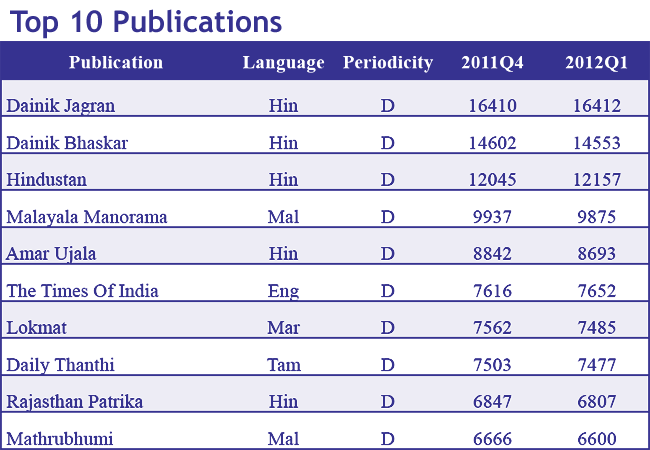
  • IRS2012Q1 findings out: No change in Top 10 Publications and Dailies

    By A Correspondent


    The numbers from the latest round of the Indian Readership Survey (IRS) are out as the Media Research Users Council (MRUC) and Hansa Research Group (HRG) announced the findings of the first quarter of 2012.


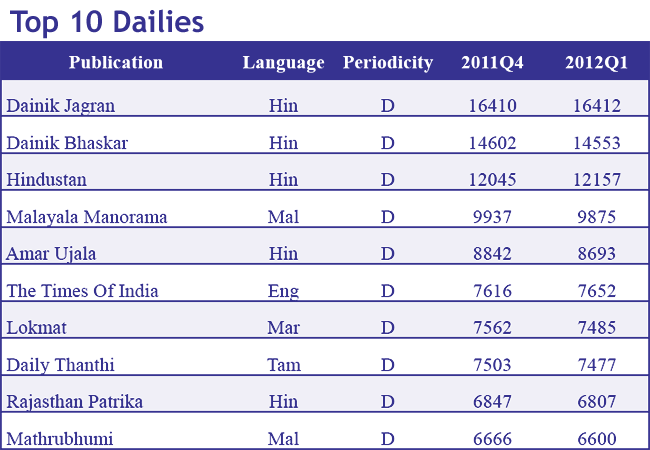
    According the AIR (Average Issue Readership) figures, Dainik Jagran continues to lead as the most read publication across the country. While Times of India is the only English daily to make it to the top 10 most read publications, Lokmat is the only Marathi daily in the top 10 most read publications.


    (AIR numbers; All figures in ‘000)


    The rankings of the top 10 dailies are the same as the top 10 publications.


    (AIR numbers; All figures in ‘000)


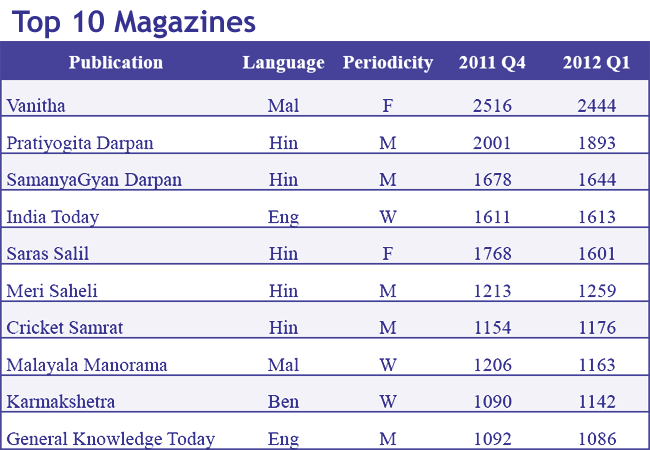
    The top 10 magazines of the country are mainly dominated by Hindi languages followed by English and Malayalam language magazines. There are a few changes in the rankings of the Top 10 Magazines.


    (AIR numbers; All figures in ‘000)


    Note AIR  or Average Issue Readership is defined as the readers of an average issue of a publication i.e. the estimated number of those who have read or looked at any issue of the publication within a specified time interval, which is equal to the periodicity of the publication (excluding the day of the interview).


  • TAM NCT Data Wk 20 to 24, 2012


    Source: News Content Track – A service of TAM Media Research Pvt. Ltd
    Channels: Aaj Tak, CNN IBN, Headlines Today, IBN 7, India TV, NDTV 24/7, NDTV India, Star News, Times Now, News 24 & Zee News
    Period : Week 24 – Jun 10 to Jun 16, 2012
    Note : Analysis is based on the Telecast duration


    About TAM Media Research

    TAM is a joint venture between Nielsen Company & Kantar Media Research. Besides measuring TV Viewership, TAM also monitors Advertising Expenditure of Television, Print & Radio through its division AdEx India. Since 2004, it extended its presence in the PR Measurement & Analysis space for Corporate/Marketing Clients by setting up a separate division Eikona PR Measurement.


    In 2007, the joint venture introduced RAM (Radio Audio Measurement) service to track Radio Listenership for the Indian Radio Broadcast Industry. In year 2009, TAM launched a division, called TAM Sports that specializes in monitoring Sports Sponsorship ROI.


    TAM Media Research’s objective is to fuel media insights that will drive the growth of the Indian Media Industry.


  • IRS 2012 Q2: Magazines perform a tad better than dailies

    By A Correspondent


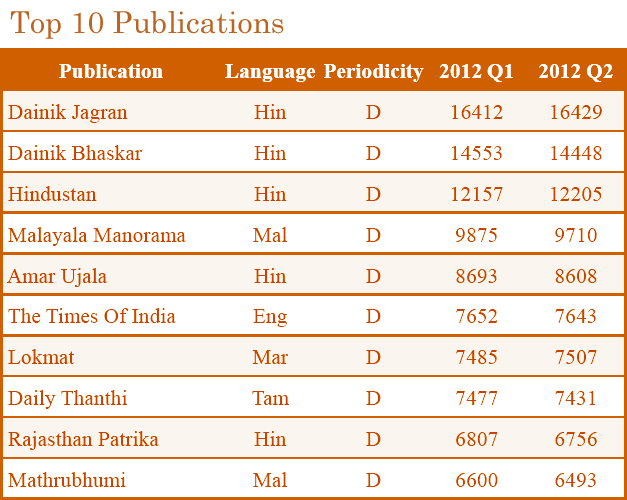
    Dwindling readership numbers for print players now seems to be a given as the just-released IRS 2012 Q2 numbers would suggest. If the Q1 readership numbers was about publications struggling to stay afloat, the trend hasn’t gotten any better for the second quarter with 7 of the top 10 publications reporting a marginal decline. But for Dainik Jagran, Hindustan and Lokmat that have shown a hike in readership, the other seven players that constitute the top 10 including Dainik Bhaskar, Malayala Manorama, Amar Ujala, The Times of India, Daily Thanthi, Rajasthan Patrika and Mathrubhumi have reported a downfall in their IRS numbers.


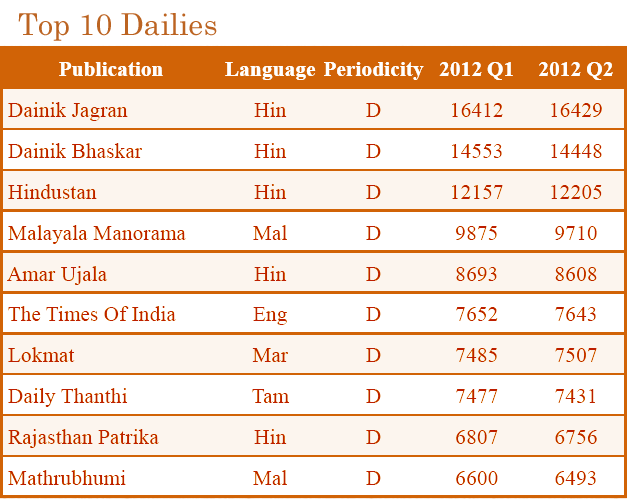
    In the list of top 10 publications, that also constitutes the top 10 dailies, Hindi daily Dainik Jagran emerges the clear leader yet again with an IRS 2012 Q2 AIR of 16429. This is slightly better than what it had registered in the previous quarter with an AIR of 16412. Emerging runner-up yet again is Dainik Bhaskar that has reported an AIR of 14448 a slight fall over last quarter’s number of 14553. Hindi daily Hindustan is third on the list with an AIR of 12205 compared to last quarter’s 12157. Malayala Manorama is fourth with an AIR of 9710 followed by Amar Ujala with an AIR of 8608. English daily Times of India too failed to elicit a keen interest amongst readers as it reported an AIR of 7643 as against an AIR of 7652 last quarter. Marathi daily Lokmat emerged a winner with an AIR of 7507 as against an AIR of 7485. Tamil daily Daily Thanthi recorded an AIR of 7431 followed by Rajasthan Patrika at the ninth spot with an AIR of 6756. Mathrubhumi concluded the top 10 list by recording a downward AIR of 6493.


    (AIR numbers; All figures in '000)


    (AIR numbers; All figures in '000)


    (AIR numbers; All figures in '000)


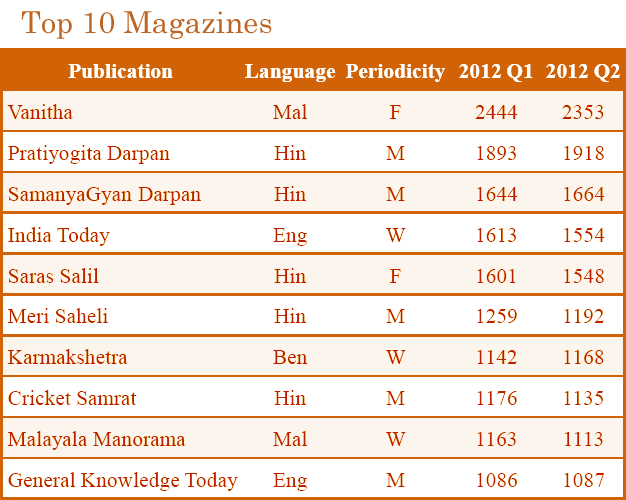
    The magazines seem to be better placed compared to their newspaper counterparts with 4 out of ten magazines showing an upward growth. These include Pratiyogita Darpan, SamanyaGyan Darpan, Karmakshetra and General Knowledge Today. With an AIR of 2353 Malayalam magazine Vanitha leads the pack ahead of second-placed Pratiyogita Darpan that has recorded an AIR of 1918. At the third spot is SamanyaGyan Darpan with an AIR of 1664 followed by India Today with an AIR of 1554. Hindi mag Saras Salil is next with an AIR of 1548 followed by Meri Saheli with an AIR of 1192. Bengali mag Karmakshetra is next with an upward AIR of 1168. Cricket Samrat at 1135, Malayala Manorama at 1113 and General Knowledge Today with an AIR of 1087 wrap up the top-10 list for magazines.


    Where the language dailies are concerned, the trend is somewhat similar to that of the top 10 dailies with 7 out of 10 dailies reporting a decline. Malayala Manorama is at the top spot with an AIR of 9710 followed by Marathi daily Lokmat at 7507. Daily Thanthi is next with an AIR of 7431 followed by Mathrubhumi with an AIR of 6493. Telegu daily Eenadu is next with an AIR of 5925 followed by Ananda Bazar Patrika with an AIR of 5859. Another Telegu daily Sakshi occupies the seventh spot with an AIR of 5306 followed by Gujarat Samachar at the eighth spot with an AIR of 5205. Tamil daily Dinakaran is ninth with an AIR of 4999 followed by Daily Sakal at tenth with an AIR of 4437.


  • Paritosh Joshi: Can we do without TV ratings from time to time?

    By Paritosh Joshi


    By now the trade is probably abuzz with concerns about how the suspension of TAM reporting is going to play havoc with the lives of broadcasters, agencies and advertisers. Must this be so?


    Broadcasters and agencies have got accustomed to trading in television inventory using the ratings as currency. However, here’s the simple truth: what the trading system prices is not what the advertiser buys.


    Peoplemeter markets represent not just a minority of the overall population, they represent a minority of the television household population too. Indeed, thanks to the rapid growth of DTH in rural India, they represent a minority of digital households.


    Here’s the truth hiding in plain sight. There is a study that covers 30 times as many households as TAM does which also picks up who watches what. And this study is possibly far better suited to picking up the ever lengthening ‘long tail’ of television channels better than the ~9000 TAM Peoplemeter homes. It is called Indian Readership Survey.


    The IRS, which everyone sees as a readership measure- and it does this role with commendable certitude- is actually a comprehensive study of all media, new and old. In addition, it picks up the household’s consumption of a very wide range of goods and services that enable strategists to develop a sharper understanding of how media consumption and product /category usage correlate with one another.


    While TAM takes a monadic view of television channel consumption and deals with nothing else, the IRS sees both sides of the picture: input (as represented by media consumed) and output (goods and services). IRS picks up demographic information in much more detail and actually takes a dynamic view of how different segments are changing in size and composition while TAM ratings have a population grid that stays unchanged for long periods of time- running into years. This, in a country that is experiencing change at unprecedented pace. Finally, IRS is based on a simple random sample, each home showing up in the study only once and not on a panel where familiarity may breed contempt.


    Today, instead of worrying about the absence of TAM in the weeks to come, use the opportunity to understand TV in IRS.


    Paritosh Joshi has been a marketer, a mediaperson and a key officebearer on industry bodies. He is developing an independent media advisory practice. He can reached via his Twitter handle @paritoshZero


  • Jagran, Vanitha lead in Indian Readership Survey 2012 Q3. TOI & India Today are top Eng paper & mag

    By A Correspondent


    There are no major surprises in the numbers for the Indian Readership Survey’s findings for the third quarter of 2012 have just been released by the Media Research Users Council (MRUC).


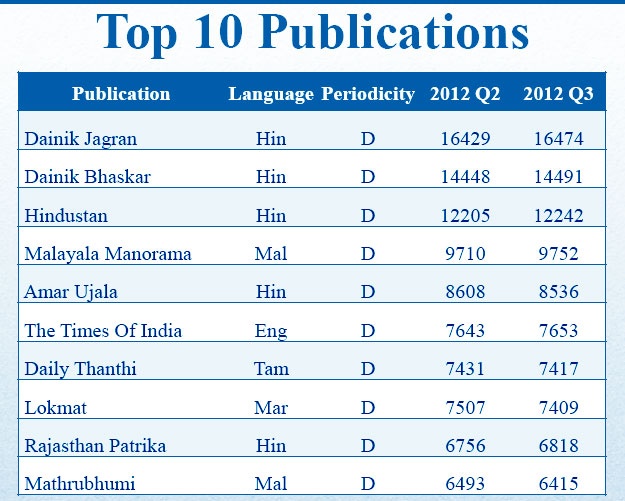
    Jagran leads amongst all publications and dailies. Vanitha leads amongst magazines. The Times of India leads in English dailies and Malayala Manorama amongst regional-language dailies. Pratiyogita Darpan and India Today are the largest read Hindi and English magazines respectively.


    (AIR numbers; All figures in '000)


    There’s been a 0.7 growth in the  print media between the second and third quarters of 2012. However, the growth in television has been 6.1& and specifically in cable and satellite homes it’s 10.5%. The growth in consumption of radio is 6.4% and cinema is at 17.2%. The growth in internet is on expected lines at 27.5%.