Category: PR

  • Allwyn Fernandes, RIP


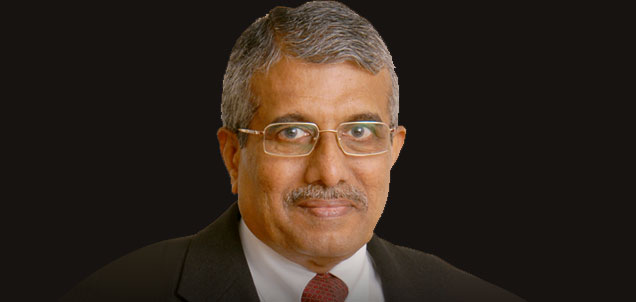
    Veteran journalist, educator and Public Relations practitioner Allwyn Fernandes passed away in Mumbai on Tuesday (December 2). He was 66.


    A former Chief Reporter and later Senior Assistant Editor with The Times of India in the 1980s, he gave it all up to work with veteran Roger Pereira’s PR agency in 1994.


    Mr Fernandes joined The Times of India in January 1970 after studying journalism at Bhavan’s College in 1969-70. He rose up the ranks at TOI to be a very successful Chief Reporter. Many of his reports were front-paged and had the administration looking for cover.


    Several senior journalists of today have worked under him or have been taught by him at the many schools of journalism he was associated with. Reacting to the news, TV Today consulting editor Rajdeep Sardesai tweeted that Allwyn was his first editor. “My first chief reporter and a standout name in Mumbai city reporting passes away. Allwyn Fernandes, RIP,” the tweet noted.


    Tweeted former journalist and senior communications consultant Vivek Sengupta: “RIP, @Allwyn Fernandes. A noble man and a first-rate professional. He touched my life with the warmth of his friendship.”


    MxMIndia Editor-in-Chief Pradyuman Maheshwari noted in his tweet: “Mentor to many,journalism teacher,media trainer to corporates,remember Allwyn Fernandes as affable Chief Rep of Times of India in 1980s. RIP” And added: “Always had huge regard for him. Even tho’ we had our disagreements.Like on the Tata Steel-Charu Deshpande issue.”


    MxMIndia Consulting Editor and columnist Ranjona Banerji tweeted: “Sad to hear about the death of friend, former journalist and PR person Allywn Fernandes”


    Amith Prabhu, who writes the ‘PR, etc’ column on MxMIndia on Mondays tweeted: “Another fine human being succumbs to cancer. @Allwyn was a gentleman & one of the early adopters of PR in India. Was a gem at @Edelman_India” and added to a conversation on Twitter: “We should institute an award in his memory for journalists who moved to PR and left a lasting impression”. Perhaps we should.


    To many in the industry, he would be remembered as a senior journalist who made the perfect transition to public relations, but there are still others who vouch for his integrity and no-holds-barred approach with his team members and clients. Even as the one leading media relations, he appreciated the journalist’s point of view and did not attempt to get pesky and push his client’s agenda, a senior journalist told us.


    Allwyn Fernandes, RIP.

     

  • Amith Prabhu: How about a dedicated school for Reputation Management?

    By Amith Prabhu


    There is a school for every subject, almost but for a subject that can be helpful for every sector there is none. We have a school for fisheries, for petroleum, for design, for architecture, for journalism, for ‘you name it’ and you will find it. But there is no school for reputation management – one of the few subjects that is both a science and an art.


    We keep hearing about the talent problem in every profession. Public Relations and Reputation Management – both inhouse and in consultancies do not have a talent problem but a problem of attracting and retaining good talent. If PR companies advise clients on employee engagement tactics and potential employee outreach programme why is it that PR companies are always struggling to find good people?


    I have said this in the past and the problem is about a vicious cycle. The only solution is to have a no=frills dedicated school that is affordable and teaches a small group of students the art and science of reputation management in the cost effective way. It is surprising that there is no school for the field.


    I’m not discounting the fact that there are communication institutes that offer a specialization but the good ones charge unrealistic fees and the not-so-good ones produce not-so-good talent. There needs to be a conscious effort of bridging this gap. PR firms and corporate communications professionals need to come together to jointly find a solution.


    The programme that is created needs to be world-class. The institute should have an offering that has to be rigorous yet smart in its methodology of teaching. Students need to do two out of the box internships and can choose to work in either a media house, a political party, a not-for-profit or a restaurant to learn the various facets of those organisations that come in handy in the world of reputation consulting. Taking up consulting projects during the programme is another important element that should not get missed out.


    Finding talent is never going to be hard because these days a lot of people without the right aptitude, attitude and qualification get into the profession and quickly realize the folly. But finding the right talent that makes an impact will always be hard unless they are caught young, moulded and inspired to approach the profession in a way that is rarely done.


    I’m sure people will come together to make this a possibility before it is too late. I’m already putting a blue print together to create one. I’m scouting for the right mentors, investors, partners to bring this alive. I’m sure well-intentioned veterans of the profession will put their best foot forward to make this happen.


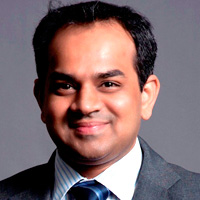
    Amith Prabhu is a Public Reputation Management professional who focuses on communications for national politicians. In his free time, he plans and executes Praxis – the annual weekend summit for fellow professionals. He can be reached at @amithpr on Twitter


  • Amith Prabhu: The Rise of PR firms in India over the last two decades

    By Amith Prabhu


    As we come to the end of the calendar year, it is important to note that this year several PR firms celebrated milestones. Some turned 25, some turned 20, some 15 and some 10. Here’s a quick round up of the history of Indian PR firms for the record.


    Indian PR evolved in the late 1980s and early 1990s with Indian and international ad agencies opening a department to take care of media relations needs of clients. Most pioneers moved from other professionals like advertising and journalism to start PR firms. Some of the oldest PR firms are IPAN (27 years) 20 20 Media (25 years), Perfect Relations (22 years), Genesis (22 years), Sampark (20 years), Clea (19 years), MSL (15 years).


    Roger Pereira started Roger Pereira Communications which was later renamed R&P Communications which Edelman went on to acquire. Dilip Cherian, then the Editor of Business India and Bobby Kewalramani started Perfect Relations in 1992.  That year Prema Sagar who was a printer and publisher (of tourist guides) started Genesis PR which is now known as Genesis Burson Marsteller. N S Rajan joined his wife Bela’s start-up after quitting his full time corporate communications job in 1994 to set up Sampark. Madan Bahal who was part of Adfactors Advertising started the PR division in 1997 and today is India’s biggest firm in revenues. Sunil Gautam moved on from Clea PR to set-up Hanmer & Partners in 1999.


    Then a variety of professionals who either worked in these companies or elsewhere started their PR firms. Nandita Lakshmanan (The Practice) and Archana Jain (PR Pundit) left Genesis to start their firms which are still independent. Nikhil Khanna moved on Good Relations to be joined by Nitin Mantri (the first male employee at genesis) who moved back from Ketchum-Pleon, London to start Avian Media. Blue Lotus was started by Chandramouli after moving on from an Adfactors group company.


    In 2001, Vaishnavi Corporate communications was started by Niira Radia, a publicist who knew her way around the media, government and corporate establishment. The firm wound up on its 10th birthday due to the involvement of its founder in India’s telecom scam. There was considerable damage done to the profession but thanks to the solid foundations of the other firms the community of professionals moved on from this incident.


    Acquisitions have taken place in the last decade starting with Burson Marsteller acquiring Genesis, followed by MSLGROUP acquiring Hanmer & Partners and later 20:20 Media. This was followed by Edelman acquiring R&P Communications.Weber Shandwick taking over Corporate Voice, Hill & Knowlton taking IPAN into its fold, Golin taking charge of LINopinion and Ketchum making Sampark its own.


    Several firms opened shop without acquisitions. These include: Fleishman Hillard, Ruder Finn, APCO Worldwide and very early in the game Text 100.


    Getting the right work force has been a challenge. Companies with good HR practices have managed to battle this out better. More importantly, institutes offering a robust PR programme are far and dew. Genesis created an Associate Learning Programme in 2004 where they hire 10 to 15 young post-graduates every year from campuses and put them on a fast track which involves rigorous training and challenging assignments.


    Some other firms have great in-house training initiatives including exchange programmes and internationals exposures. International firms have training programmes at a regional and global level where they make huge investments.


    The need of the hour in India is an accreditation system that ensures quality talent remains a constant. Academia, corporates and consultancies need to work out a model to ensure there is parity in retainers paid, salaries offered and fees charged to ensure there is no anomaly in this area. Currently the better PR training institutes charge close to a million rupees for a two year programme, the starting annual salaries at PR firms are just 30% of this. How will students repay their education loans? They, then prefer to join a corporate organisation where the learning curve is different but salaries are better.


    If Indian PR firms need to rise higher they need to be compensated better by the clients they work for. Meagre $3000 monthly retainers will not do any good. A standard needs to be created to prevent undercutting and ensure quality work comes out of a quality retainer. Firms need to showcase their work at international award shows, win them and command both respect and money they deserve.


    The PR business in India is on the upswing and there is no looking back. The day is not far when the few Indian firms will acquire smaller international firms to expand their footprint. More importantly the number of Indians getting transferred abroad within organisations and the rise of expatriates working in the sub-continent speaks volumes of where we have reached in less than two decades


  • Amith Prabhu: Media relationships will get increasingly complex in a cluttered world

    By Amith Prabhu


    I had lunch with an interesting journalist who had no objection to be being named in this column but I will choose to let him be anonymous. A month the many things we talked about in the thirty minutes working lunch were two incidents he narrated that stand out. Both involve the Indian corporate communications and Public relations set-up of two US West Coast headquartered iconic companies.


    In both instances, the global CEOs were visiting India in quick succession, exactly a month ago. This journalist was asked by the corporate communications head of Company A to send a couple of questions that they would use in a transparent town hall where the corporate communications head would pick out a few questions from a fish bowl randomly for the global CEO to answer. But to the surprise of this journalist and others gathered the corporate communications chief had already made a list of questions and read them out from a sheet of newspaper thus putting transparency under the carpet in one push.


    In the other incident, the PR consultant called the journalist to invite him to interview the global CEO from Company B and insisted to know in advance what questions he planned to ask. To most journalists this can be annoying for multiple reasons. But the worse was yet to come. As his time to interview the global CEO came close, the journalist was advised to change the interview into more of a round up because he was the last in a series of nearly a dozen interviews. His bone of contention was that his ability to have absolutely different questions was being doubted.


    Now let’s move to the view from the other side. I have two stories to share from personal experience that I personally witnessed while dealing with a large global event last week. The event is managed by a mix of international professionals who are mostly American, British and Swiss and have been holding an average of 10 such events annually for the last three decades. Their media accreditation system is one of the strictest. On the morning of the event, a senior journalist who knows very well that he has not been nominated by his Editor to cover the event shows up at the venue claiming he has registered and wants entry. On being gently told that this is not possible he insists that he has covered the event in the past while working at another business daily and needs to be let in this time round. In the end he had to walk away disheartened but the sense of entitlement he was showing was unfortunate.


    In another instance, a specific media group known for masking brand names if there has been no payment made for the service, attends press conferences when they are invited and then in their city-specific supplement will only carry the photograph of the celebrity without mentioning the brand name of the product the celebrity is endorsing. To my mind and to that of several other marketers, this is outright unethical. You have a choice to not accept an invitation. You also have a choice to attend the press conference and not carry any part of it. But to selectively carry the image of the endorser from the event without giving it due credit is shameful.


    So there are four instances out of many that journalists and PR professionals face when encountering each other on a daily basis. These are not trivial problems. These need to be solved. As media relations gets trickier each day a system needs to be in place or the price will be too high to pay. There cannot be a free for all and there cannot be unfair PR professionals too.


  • Amith Prabhu: Hiring journalists without training them is unfair to the profession and unjust to the individual

    By Amith Prabhu


    PR firms have always had journalists as part of their hiring plan. However, PR firms have not crafted training programmes to convert journalists to become advisors. I spoke to a handful of PR professionals who were former journalists and they work in about five different firms. They all confirmed that they were asked to swim in the deep from the word go and learn on the job.


    This is not just unfair to the individual but a disservice to the profession. Journalists need to unlearn being reporters and editors and fit into the shoes of planners and executors. A consulting job is very different from a journalism job. Firms need to realise that and create specific onboarding programmes for these precious hires. Journalists cannot merely be used as the golden goose who come with those media contacts and the mindset to create content. A PR job is much more than that.


    I believe every PR professional should have had a stint as a journalist. If I ever open a school for Public Reputation Management I would ensure all trainees do a compulsory stint of one month at a media outlet interning as a journalist. I would also think the reverse will hold good. To get students of journalism intern in a PR firm to understand what goes on in the life of a PR professional.


    Well, getting back to the focus of this post I wish associations of PR consulting companies create a programme for journalists who switch jobs to get into the public relations business. It should ideally be a two-week workshop that covers understanding campaign planning, the key elements of consulting and the role of an advisor besides learning the basics of reputation management in theory including making plans, evaluating campaigns and the like.


    If some firms already have such programme in place, hats off to them but as far as I know a specific programme does not exist. As firms expand and hire more journalists to be in consulting an content creation jobs with client servicing as part being mainstay it will be imperative to teach the new professionals how to swim before pushing them into the deep end. If not, our profession will remain mediocre. This is not because the new professionals are no good. In fact they are generally very bright but an investment in giving them a solid foundation is not an option but should be mandatory


  • Amith Prabhu: The Public Relations Campaign brief

    By Amith Prabhu


    This column is for in-house communications professionals. Also known as corporate communications or marketing communications or public relations or fill in the blank as various organisations call it by different names with slight differences in the job description. This column is for those who believe in a better way of planning, executing and measuring a campaign.


    This column is not for the corporate communications professional who has not worked in a PR firm prior to his or her in-house job. This is also definitely not for one who manages all external outreach internally without being the client of a PR firm. This column is about the client brief which barely exists in this day and age.


    I have been hearing several clients of PR firms complain that There Is No Alternative to the firm they are currently engaged with as all firms are almost the same especially when it comes to measurement. I also know several of the clients do not have a seat at the table and hence are unable to convince the high command in the organisation to look beyond advertising value equivalent more notoriously known as AVE. I think the only way to solve this problem is through a basic document that the consultancy and client create together which is the “Brief” that lists out the deliverables and measurable before each campaign.


    A Brief has to be written in a mutually agreed upon template. It has to be professional. It cannot be verbal and it needs to clearly have a measurement metrics that can change campaign to campaign.


    When clients and consultancies join forces to make this a mandatory practice which is not impossible more accountability will set in and better understanding and appreciation of the power of Public Relations will come to the fore. The brief should come to become a non-negotiable document. Teams at PR firms should insist on one and should refuse to work without one. Clients should ensure these briefs are fool-proof and unambiguous.


    Ultimately, a PR firm is made up of people who most often end up becoming clients of some other firms in the future. If this habit is not inculcated early on we are staring at troubled times. There will always be certain aspects of reputation management that will take place without a brief. Those are understandable.


    But what has to be measured should begin with a brief. It is pointless being part of a vicious circle. Maybe in 2015 a new era of briefs gathers support from the fraternity. If PRCAI can take the lead and create a template for all its member firms to follow we could see some hope on this front. We certainly need to move from return on investment to return on objective.


    Award organisers need to have a category for the best brief to drive home the point. Let’s hope this becomes an approach for the future. Here’s to the next Brief.


  • Amith Prabhu: Politics is all about Public Reputation as it is in everyday life and more

    By Amith Prabhu


    The weekend was hectic. A hectic campaign in Maharashtra was ending and I was closely associated with one individual who was contesting the election in a big way. In the midst of this on Friday I was honored to be awarded the PR Professional of the Year title for the year by exchange4media (e4m) at their annual Public Relations and Corporate Communications Awards. Interestingly, the awards began a few years ago when Pradyuman who now runs MxMIndia was the Editor of e4m.


    One of the reasons the independent jury chose me, I was told, is because of my efforts in uniting the PR fraternity in India by putting together PRAXIS three years in a row. Well, I believe I have a long way to go and this award is more a challenge to do more. I began with politics and a very interesting election just concluded in the two states which are home to the highest number of PR professionals (Haryana and Maharashtra).


    As someone who saw these elections for the last 100 days from very close quarters I can share that the voters are more intelligent than ever before. If a Narayan Rane could face defeat and a Prithviraj Chavan could taste success it shows that voters are beginning to differentiate between good and bad candidates. While the Prime Minister addressed over two dozen rallies in less than two weeks his party could not get a clear majority though they really made headway in a state where they always played second fiddle to their erstwhile coalition partner.


    Political Public Relations is part of the larger Reputation narrative that is playing out where a politician needs to be a good person, needs to do good work and then needs to communicate that work. I would translate that further to state that a politician needs to build a Database of achievements and create Insights from them to excite citizens to vote for him or her. The politician needs to then be Decisive about things he or she says and does to Inspire the electorate to make a smart choice. Finally, he or she needs to be Disciplined in order to Impress influencers to build a case for him.


    More importantly just being a good person is no good. The ability to understand that the world is not kind is paramount. This quality comes with experience. This is with regard to a politician.


    What about public reputation managers who run communications for candidates? There are few other Ds that one needs to inculcate as professionals managing Public Reputation campaigns for clients which all lead to constantly communicating. Three of them are Dedication, Determination and Detailing.


    Dedication is the ability to spend long hours in difficult conditions with multiple stakeholders driving various agendas. Journalists, Analysts, Fundraisers, Party members all respect dedicated professional who may or may not share an ideology. Quitting or Giving Up is not an option whatever be the adversity, until the day of voting and if possible till the day of results.


    Determination is less about getting the candidate to win and more about getting the candidate to embrace all forms of communications especially events that are not just photo opportunities but create a feel good factor. As communication professionals the job is not to make a candidate win but to make sure in his or her quest to win he or she communicates well and communicates through all available mediums. This determination is for the cause of communications which is why we are professionals and not politicians.


    Lastly, the Devil is in the Details. An eye that is always open and a constant ear to the ground is a must to be a successful communications professional in the political space. Everything else follows including queries from future clients who want to run for office.


    An outstanding public reputation manager is the one who can integrate the 3 Ds of the politician and 3 Ds of a professional to deliver a seamless campaign. India is coming of age and is seeing a rise of such professionals. Here’s to the next election.


  • PR firm Zero Hour Strategies launched


    Zero Hour Strategies – a political communications firm built around research and public relations, offering digital, creative and outdoor media solutions to Indian Members of Parliament and Chief Ministers has announced its launch in India. The venture is the brainchild of Amith Prabhu who is the Founder-Director, working with a team of three people initially and partnering with couple of other firms.


    The firm will work with individuals who hold office currently or held them previously across party lines ensuring no two persons from the same constituency are clients in order to maintain objectivity. The offering includes communications research, key messaging, community relations, constituency outreach, speech writing, media insights and digital management among other services.


    A highlight will be the unveiling of a unique programme called CAMP – Communication Assistant to Member of Parliament where young graduates and post-graduates in communications and political science will be hired to manage the communications for the MP. The start-up will be headquartered in New Delhi with offices in Mumbai and Bangalore. The firm is in the process of putting together a ten member advisory board from politics, communications, administrative services and civil society.


    “At Zero Hour Strategies our vision is to be the firm of choice to national politicians as the one stop shop for all things communications. Rooted in research and insights our core service offering will be Public Relations to help clients leverage the earned media opportunities and goodwill through word of mouth. We will also have partners who specialize in digital, creative and event management to ensure a seamless experience to the MPs and CMs we work with,” said Amith Prabhu, Founder Director, Zero Hour Strategies.


    Amith has over ten years of experience in India and USA, having worked mostly at communications and PR firms. He interned in the summer of 2003 with a leading political party. In 2012 he worked as a volunteer in the grassroots advocacy team of the Barack Obama re-election campaign and spent time as an observer and as a consultant on multiple campaigns in the 2014 Lok Sabha elections in India.


  • Amith Prabhu: We need to showcase our PR Icons

    By Amith Prabhu


    At the recently concluded ICCO Summit in New Delhi it did not feel good to not see the stalwarts of the Indian PR business around. At least those men and women from the consultancy business who are pioneers in their own right. They may have had their reasons to not be there, but ICCO is the global federation of country associations that represent PR firms.


    We complain that we do not have people to gain inspirations from, in our profession. Our problem is we have not done enough reputation building for our profession. The generations to come will constantly need to look upto achievers and stalwarts.


    The PRomise Foundation that I’m part of was created with that primary objective of doing PR for PR. We hope over the next 100 days we have a list of 100 important people in our profession that is publicly available. To help build that list I created a tentative list of 25 icons we can learn more about who I feel have contributed immensely to our field and still continue to do so.


    The intention of this list was not to say that some people are more superior to the others. The purpose was to tell a new era of youngsters that there is much to look forward to, in what we do and there are at least 25 people we can learn from, right away. I have kept out expats from this list as the aim was to focus on Indians.


    There are few others who are not on the list of 25 but will certainly feature in the Top 100. Some of them include Vinod Nair, Ashwani Singla, Nikhil Dey, Paresh Chaudhary, Ameer Ismail, Amrit Ahuja, Chetan Mahajan and the better halves at Adfactors (Rajesh) and Perfect Relations (Bobby) besides the Founders of Avian Media (Nikhil &Nitin) among others. I hope someone takes the trouble to profile these 25 individuals, so that the hundreds of professionals entering the business every year have a text book to emulate in the years to come.


    Then there are few who retired few years ago including Sunil Agarwal, Sunil Gautam, Mehnaz Curmally, Veena Gidwani and Roger Pereira after running PR firms very successfully. They need to be profiled as well. Without further ado here’s my first list of 25 in random order.


    a. Dilip Cherian
    b. PremaSagar
    c. Madan Bahal
    d. Jaideep Shergill
    e. Atul Ahluwalia
    f. RakeshThukral
    g. Sharif Rangnekar
    h. Bela and NS Rajan
    i. Archana Jain
    j. NanditaLakshmanan
    k. Tarun Deo
    l. Rajiv Desai

    m. Roma Balwani
    n. Shravani Dang
    o. Pragnya Ram
    p. MeenuHanda
    q. SanjivKataria
    r. Mukund Rajan
    s. SenjamRajshekhar
    t. Anthony Rose
    u. Kerman Kasad
    v. AtulTakle
    w. Raza Khan
    x. Seema Ahuja


    I look forward to hearing from you as to who should feature in the list of 100 important people in Indian Public Relations besides the 35 names listed here. Names include those above the list in the paragraphs, so 35. The list of 24 includes the Rajan couple, hence 25.


  • Amith Prabhu: Managing the three Es in PR

    By Amith Prabhu


    I often get asked this question – What do you PR people really do? What else do you need to have besides good relationships with the media? I’m sure every PR professionals gets asked this question every now and then. The response can range from straight forward to sarcastic to convoluted depending on who is asking.


    Well, I do not think there are too many other professions in the world where professionals get asked this question. I have written about this in different ways in the past but will do it once again as India gets ready to host the biggest international PR conference later this week with the ICCO Summit taking place in New Delhi on October 9 and 10.


    I have come to believe that the R in Public Relations should stand for Reputation and Relations is just one aspect of the entire Reputation ecosystem. I am also convinced that PR is about managing three Es – events, egos and expectations. But these lines are useless to people who want a bang for their buck. PR has been defined by various individuals and organisations but those are great for textbooks.


    So how do we find an answer that is sensible and uniform for our own good? There is no one answer that will work. But let me attempt taking a stab at it anyway in two sentences. PR professionals help manage reputation for organisations, individuals and brands through meaningful engagement with stakeholders. The PR profession involves planning, strategizing and executing to achieve favourable results.


    Public Reputation includes Investor Relations, Employee Engagement, Consumer Outreach, Media Management and External Relations which to those not familiar with the range of offerings may just seem like talking to journalists, pushing for a positive story, blocking a negative story interspersed with some wining and dining. This is far from the reality. There is no such glamour in the profession as it is made out to be.


    The high in the business comes from being able to advise senior leaders within the organisation or in the client organisation based on data gathered that is translated into insights. There is a wide canvas to explore creativity if one is able to sell an idea well. Lastly, smart PR campaigns are linked to objectives which when realized can be highly satisfying.


    So the next time you get asked the question or need to explain try the two sentences in bold above. If the other end is blank with just a stare then you have achieved partial success. If the person at the other end still has counter questions then we need to do more homework on how we tell the world what we do.


  • Amith Prabhu: Public Reputation is a matter of PRide

    By Amith Prabhu


    As I write this column my first book is getting wings and taking flight. My first book is a collection of all columns I wrote here from the start and over twelve months. I felt it would be good to put all these columns in one place as our profession lacks literature that one can refer to.


    The book is available for those who want a copy by contacting me on Twitter @amithpr using the hashtag #TakingPRide. Talking of books and I’ve said it earlier that we in India need books on the profession to guide us to do Public Relations the right way. I hope some of the doyens of the Indian PR business will take out time to write books that will inspire and show the way.


    As you read this column, the World PR Forum is taking place in Madrid. This event held once in two years is organised by the Global Alliance for Public Relations and Communication Management, an international federation of organisations and associations devoted to Public Relations. I had made plans to attend but work commitments led to me calling it off at the last minute.


    Communication with Conscience is the theme of this global forum and one can follow conversations on Twitter by checking the hashtag #WPRF2014. I have urged fellow professionals in the past and I do so again to invest in attending one solid national conference in the first five years of the career and one international event in the second ‘five-year’ of the career because there is so much to learn from the connections and conversations that take place in these. It is worth the investment of time and money.


    We have every reason to be proud of our profession, despite the tags that get thrown at it from time to time. In a few weeks ICCO Summit will take place in New Delhi. This global conference is back in the national capital for the second time in six years. Again, a golden opportunity to save on air ticket and visa costs by attending the India edition. If you have not registered yet, the time is now.


    What else can we do in addition to hoping for an accreditation system, of which I wrote in my last column besides hoping that books on our profession get written and attending global events? I think nothing beats award winning work. One way of doing it is by doing some real good work and then entering them for awards. But a better way is to keep awards in mind and design a campaign that will really stand out. Because to have a public reputation is a matter of Pride.


  • Amith Prabhu: Getting professionals together is just half the work done

    By Amith Prabhu


    The third edition of Praxis held on September 12 and 13 in Agra was testimony to the fact that professionals long to belong and would travel a great distance for 24 hours of revelry, learning and belonging. Having stated that I want to say that we have a long way to go! Despite all the shortcomings, the fact that over 300 individuals representing over 80 organizations coming together for 24 hours means this profession is evolving and in the right direction.


    What next? While Praxis will continue becoming an annual feature and we see a lot of interest in an event like this we need to step up to start embracing the concept of accreditation. It is time for Indian professional to get accredited like it happens in the west. Then organisations with the highest number of accredited professionals on its roll will have a better advantage than its peers.


    The goal is that, by the time we are at the fifth edition of Praxis we are able to have a mechanism and structure in place to offer accreditation for Indian professionals. Once again, the leaders need to get together and work on the first draft of this concept. Unless there is a whole hearted support of the stalwarts this idea will not get teeth and wings.


    Much was spoken at Praxis about opportunities in the future for the PR professional. How can we grab them if we are not equipped well enough? Just being smart professionals is not good enough, being smart and respected is the need of the hour.


    The first half of the task is bringing professionals together, the next step is to propel them into a newer orbit of success and growth. Our best quality talent is on par with the best quality talent anywhere in the world but the percentage varies greatly. We need to work towards having a high impact talent force.


    This can only happen when three stakeholders get together. Representatives from academia, corporates and consultancies need to make sure they work towards achieving a higher status for the better professional. One step towards that goal is a smart accreditation programme.


    While the high profile summit, which included several international speakers behind us, and plans afoot for the next edition, it is time to pause and ponder on what we have to offer in terms of innovative ways for the profession in India. It is time to become like doctors, engineers, lawyers and chartered accountants who have exams that qualify them to practice legally and to a large extent ethically. Are we ready to walk that distance?