Category: PR

  • India gives voice a case study of Anna Hazare’s PR


    A good product generates its own PR. That, in a nutshell, is the success of Anna Hazare’s anti-corruption movement. The movement seemed to have a life of its own. Yet, it was a very successful PR exercise at the same time, and this is what leading public relations and communications firm Hanmer MSL has examined in this case study, the first of the thought leadership studies that Hanmer MSL’s new content service plans to put together on a regular basis.


    Anna Hazare took up an issue that affects the common man in every aspect of his life  he must bribe officials for even simple things like a driving licence to something major like getting his child admission into school. In his interaction with the government/bureaucracy, absolutely nothing gets done unless he pays a bribe.

    The product

    You can compare the Jan Lokpal Bill to a product that satisfies a crying need  the reduction of corruption, if not its extinction.

    The success of the agitation is astonishing because it had no professional help. Yet, a good product (the Jan Lokpal Bill), clear messaging and use of the right communication tools for this age (it’s been a social media-fuelled stir, which is why you see such a large youth participation), have led it to great success.

    The brand

    If the Jan Lokpal Bill is the product, Anna Hazare is the brand ambassador. Here are a few lessons he taught us about brand-building through the campaign.


    Lesson 1: Have an idea that connects

    Rocked by five major scams over the past year, India was angry at the government, its seeming lack of will to tackle corruption and the time it took to act. A strong, independent Lokpal that could investigate ministers, the bureaucracy, the judiciary and even the prime minister was an idea whose time had come.


    Lesson 2: Create symbols, icons

    Every timeless brand has its symbols Nike and its swoosh, for instance. Most brands also have their icons Steve Jobs for Apple, for example.

    Similarly, every public movement has its symbols and icons  the charkha and non-violence as symbols and Mahatma Gandhi as the icon of the freedom movement.

    Similarly, Hazare and the Gandhi topi became the icon and symbol respectively of the anti-graft fight.


    Lesson 3: Offer a consumer experience

    Each brand has a distinct character. But how do you make the consumer experience it? Hazare chose the Ramlila ground for its size, allowing thousands to throng it and take in the atmosphere. Having experienced their own power, the people began to believe they could change things. There was no looking back.


    Lesson 4: Test market

    All successful products are test marketed before they are launched. Anna’s earlier fast at Jantar Mantar showed that the idea could work. It provided the vindication for a larger movement.


    Lesson 5: Package it right

    Product, pricing, promotion, packaging are the four Ps of marketing. In this case, packaging was paramount. Anna’s white dhoti-kurta and his clean image were the perfect magnets for the jeans and T-shirt generation.


    Lesson 6: Make a media plan

    The campaign was timed perfectly to grab media attention. Launched between the World Cup and IPL, it filled the media vacuum that existed then.

    Team Anna Kiran Bedi, Arvind Kejriwal, Prashant Bhushan  gave innumerable interviews to the media, making sure the campaign was centrestage all the time.

    Hazare himself did not give too many interviews in fact, none during the second round of agitations. He spoke just once to Kiran Bedi from Tihar Jail, which he refused to leave after his arrest. This created a larger impact than any media interview could have had.

    Apart from this, he addressed the public and media several times at the Ramlila Maidan.

    There was another critical aspect to the media communication: the campaign had only the abovementioned people speaking to the media. This was smart thinking. The fewer the voices, the less scope there was for distortion of the message.

    Would any corporation have 15-10 spokespersons? Normally, they’d have one or two. No reason why the anti-corruption movement should have been different.

    The campaign made impressive use of PR tools and techniques ranging from symbolism (fasts and meditation) to social media (Facebook, Twitter, YouTube, apps), FM radio, news media, television and mobile telephony.


    Lesson 7: Out-think the competition

    Anna kept the competition (the government) guessing. Example: The government thought it had preempted the agitation by arresting Hazare. But, his refusal to leave Tihar even when allowed to go, trumped the government’s move and fuelled the movement.


    Lesson 8: Use the right imagery

    The image of Hazare meditating at Rajghat or of him lying down at Ramlila ground and clapping along to the bhajans being sung proved to be iconic. When he broke his fast, he took water from a Dalit girl and a Muslim girl.

    With a giant image of Mahatma Gandhi in the backdrop, the message was not lost on anybody  here was a frail 74-year-old taking on the establishment, much as another frail old man had done in the 1930s and 1940s, and he deserves your support.


    Lesson 9: Use the right tagline

    I am Anna Hazare is a lot more impactful than I am for Anna Hazare. It is far more participative and has a way of internalising the struggle. It grabs you and makes you want to act.

    The social revolution

    The young, some of them fresh graduates, were the ones who created a countrywide buzz about the campaign for a strong Lokpal.

    While Arvind Kejriwal may have headed the media cell, it was the responsibility of over a dozen team leaders, most of them below the age of 30.

    A dedicated team of IT experts from Public Cause Research Foundation (PCRF), which acted as a secretariat for India Against Corruption (IAC), ran IAC’s main website (http://www.indiaagainstcorruption.org/) along with 14 city-centric websites round-the-clock. They also monitored TV channels and posted videos on the internet to create a buzz across the globe.

    Another team ensured that the latest information about Hazare, soon after he was arrested, was posted on social networking sites such as Facebook (http://www.facebook.com/IndiACor) and Twitter (@janlokpal).

    Till August 27, there were 3.64 lakh likes on Facebook and over two lakh followers on Twitter. In contrast, the I Hate Anna Hazare Facebook page roped in only 4,137 members.

    Hazare’s video recorded in Tihar had 1.6 lakh views on YouTube.

    The media impact

    • Large swathes of the television-viewing public switched to the saturation coverage of Hazare and his campaign, especially those in Hindi. For once, real life was more riveting.
    • While viewership increased for most news channels, time spent on them doubled in just a week. It may, in fact, have eaten into the sports market, which dropped 33%; and Hindi movies, which showed a 12% fall (from a 16.37% genre share to 14.44%) in the week ended August 20, according to a study by media servicing agency ZenithOptimedia.
    • The genre share of Hindi news channels rose from 5.9% in the week ended August 13 to 11.02% in the week ended August 20, according to TAM.
    • The genre share of English news channels also rose  to 0.54% from 0.31%.
    • Viewers were hooked since August 16, when Hazare began his fast.
    • The average daily time spent on Hindi news channels rose to 16.9 minutes from 8.5.
    • Viewership of Star News rose 15%. From 26 million viewers, Star News reached out to 31 million.
    • There was a viewership surge across Tier 2 and 3 towns in Punjab, Haryana and Rajasthan in the past week, which shows how mass-based the movement was.
    • While the news genre viewership more than doubled, Times Now reached 12 million viewers, said Sunil Lulla, CEO of Times Global Broadcasting. Times Now continued as the No. 1 English news channel with a share of 37.8%, followed by NDTV 24×7 (22.2%) and CNN IBN (20.7%).
    • Among Hindi channels, Aaj Tak continued to lead with a share of 17.9% share, up from 15.2%. India TV’s share declined to 11.6% from 14.2% to bring it down to the fourth place. THIS IS BECAUSE IT HAS A STRONGER ENTERTAINMENT COMPONENT COMPARED TO NEWS. Star News took over as No 2 with a share of 14.7%.
    • Many news channels decreased their entertainment-related content to make way for Hazare. In fact, some dropped ads to accommodate more of Hazare.
    • Every newspaper covered the agitation.
    • All newspapers took the stance that corruption needs to be tackled; ToI took an aggressive pro-Hazare stand. Every other newspaper gave the issue and the agitation wall-to-wall coverage, but was careful to balance it.
    • Regional newspapers, which have far more experience of covering Anna, were more balanced too.

    Top-viewed news events on TV

    Event % of audience Period
    Anna campaign 12.41 Week 34, 2011
    Babri demolition case 11.54 Week 40, 2010
    YSR chopper crash 12.31 Week 36, 2009
    26/11 17.81 Week 48, 2008
    Mumbai train blasts 11.78 Week 30, 2006
    Mumbai floods 9.71 Week 31, 2005
    Tsunami 10.35 Week 1, 2005
    Lok Sabha polls 2004 10.22 Week 20, 2004
    9/11 7.56 Week 38, 2001

    Source: TAM

    How the UPA got it wrong

    Manmohan Singh used to be known as one of India’s most effective prime ministers. By shaking off the communists hold on his government, pushing through a historic nuclear treaty and winning the last Lok Sabha polls, he was on a high.

    Today, he’s the face of a government that badly misread the public mood and bungled the handling of Anna Hazare’s movement. What’s more, his extended silence gave the impression that he wasn’t really in charge and that he had no idea of how to manage ministers who seemed to get shriller by the minute.

    He finds himself at the receiving end of a nationwide upsurge against corruption, his government with its back to the wall.

    Sending out the wrong messages

    Action Impact
    Refused to accept need for anti-corruption law Government created a perception that it was stonewalling, seeking to stall an effort to cleanse the country of corruption.
    Arresting Hazare If arresting him was ill-advised, taking him to Tihar was a PR disaster. Tihar is where those accused of some of the worst corruption in recent times A Raja, Kanimozhi, Suresh Kalmadi were lodged.Hazare turned his arrest into victory by refusing to leave jail until his demands were met.
    Failure to communicate The top leaders stubbornly refused to engage with the media, secure in their 2009 electoral victory.
    Let anti-graft crusaders drive the debate Government should have seized the initiative by moving aggressively on the unfinished reforms agenda. It did not even celebrate 20 years of reforms in July, as though it disowned them.A publicity blitzkrieg would have done wonders for its reputation, especially with young middle class Indians who benefited most from the reforms. It is these people who heeded Hazare’s call. Instead of regarding Manmohan Singh as a benefactor, they saw him as an obstacle to change.
    No magic wand to curb corruption, said PM He would have been better off declaring that the battle against corruption and a strong Lokpal Bill were an integral part of the reforms process. If RTI brings openness in governance, Lokpal is part of the restructuring.
    Missed opportunity It would have been a PR coup if Singh had asserted that he was on the same side as Hazare. He could have even joined Hazare on a day’s token fast. That would have gone a long way in bridging the communication gulf between the populace and the government, which they see as remote and loath to abandon old habits.


    Timeline

    January 30, 2011: Marches in over 60 cities to demand Lokpal bill. Social reformer Anna Hazare, former top cop Kiran Bedi, activist Swami Agnivesh and lawyer Prashant Bhushan participate in Delhi rally.

    February 26: Hazare announces fast unto death from April 5 if Prime Minister Manmohan Singh does not decide on civil society’s inclusion in drafting the bill.

    April 5: Hazare starts fast at Delhi’s Jantar Mantar.

    April 8: Hazare announces decision to end fast as government agrees to form 10-member panel of civil society members and union ministers to draft a stringent anti-corruption law.

    April 9: Hazare ends fast.

    April 16: Joint committee meets, both sides exchange drafts.

    May 2: Second meet with no difference of opinion.

    May 7: Agreement on independent Lokpal with powers to initiate investigation and prosecution.

    May 23: Agreement on empowering Lokpal to order list of movable and immovable assets of accused in corruption cases when sufficient evidence found to book them.

    May 30: Differences appear as government disagrees on including prime minister, Supreme and High Court judges and MPs conduct in parliament within Lokpal’s ambit.

    June 6: Civil society members boycott meet a day after police crackdown against yoga guru Baba Ramdev’s fast in Delhi’s Ramlila Maidan.

    June 15: No consensus on inclusion of prime minister, Supreme and High Court judges.

    June 20: Some ice melts amid war of words; government calls it major step forward.

    June 21: Last meeting of joint committee ends on sour note. Both sides exchange drafts; Hazare warns of another fast.

    August 15: Hazare denied permission to fast at Delhi’s Jayaprakash Narayan Memorial Park after Team Anna agrees to accept only 16 of police’s 22 conditions.

    August 16: Hazare begins fast, detained and sent to seven-day judicial custody to Tihar jail. Government decides to set him free late night. He refuses to leave.

    August 17: Hazare refuses to leave Tihar till a solution is reached on fast venue. Supporters gather outside prison, Hazare continues fast from jail. Permitted to fast at Ramlila Maidan.

    August 19: Hazare leaves Tihar, continues fast at Ramlila Maidan.

    August 23: Government invites Team Anna for talks.

    August 24: Second round of talks, all-party meeting held. No breakthrough in impasse.

    August 25: After meetings with political parties and Team Anna, government agrees to debate all versions of Lokpal bill in parliament.

    August 27: Both houses of parliament debate Lokpal bill, adjourn after adopting sense of the house and agreeing to Hazare’s three demands that will be sent to standing committee on Lokpal bill.

    August 28: Anna breaks fast on 13th day.


    Copyright: Hanmer MSL
  • Rediffusion subcontracts Tata work to SBU with Edelman

    By A Correspondent
    We told you so. Rediffusion-Y&R and Edelman India announced a strategic alliance to take care of the Tata group business that starts today, November 1.

    The alliance brings together ad agency Rediffusion and PR firm Edelman. Edelman India is an independent public relations (as against others like Hanmer, Genesis and Sampark being part of international networks). The alliance will involve the formation of a separate business unit within Edelman to operate as Rediffusion/Edelman. Note: the SBU is part of Edelman. So, for all practical purposes, the Tatas have awarded the PR contract to Rediffusion which in turn has let it out to Rediffusion/Edelman. A spokesperson clarified that although the unit has been set up for the Tata account, in future it could also take on other businesses. A la Vaishnavi, which started out with the Tatas and took on other accounts.

    “The complexity of the Indian market favours an integrated communications approach that needs to seamlessly combine multiple marketing disciplines,” said Arun Nanda, Chairman and Managing Director, Rediffusion-Y&R in a communique. “Our partnership with Edelman allows us to partner one of the world’s finest PR companies and offer our clients the best in class thinking and capability in this area. This will enhance our already existing offerings in Advertising, Direct Marketing through Rediffusion/Wunderman, Media through TME/MPG and Digital. We will be able to add greater value to our clients across all of their marketing and communications requirements.

    “We believe this alliance will further enable us to push the boundaries of how PR is practised in India today” said Robert Holdheim, Managing Director, Edelman India in the statement. “We are seeing a significant shift in strategic stakeholder communications. An integrated marketing approach is crucial in addressing today’s communications challenges.”

    The spokesperson from Edelman was tightlipped about the staffing and who would be incharge of the SBU. It will evolve, he told MxMIndia.

  • Niira Radia shuts Vaishnavi. Tatas switch to Rediff (+Edelman) for PR


    By  A Correspondent

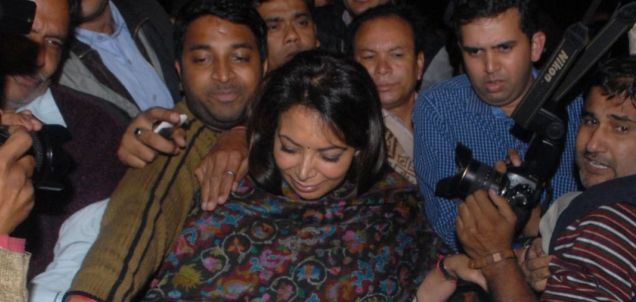
    As captains of Indian industry and the media were busy watching Formula 1 action live in Greater Noida or on telly at their homes or tony watering holes, a PTI message quietly alerted newsdesks across the country. “Niira Radia calls it a day in communication consultancy biz,” it said, adding: ”Controversial corporate lobbyist Niira Radia, the owner of the PR firm which has Tata group and Mukesh Ambani-led RIL as its clients, has decided to exit from the business.”


    Although the move sent shockwaves through the trade, MxMIndia learns that the announcement has been in the works for a while. Around three months. Or more.

    Vaishnavi Communications, Ms Radia’s flagship company and a slew of specialised outfits, will shut shop on Monday, Oct 31 evening.

    A member of the founding team reminisced to MxMIndia that this is exactly a decade after it was launched with much fanfare.

    The Tatas were quick to announce that they have awarded Rediffusion with their PR mandate from November 1. Although we do not have a confirmation at the time of writing, it is rumoured that Rediffusion, which reportedly doesn’t currently have a public relations arm that can handle a large account like the entire Tata group, may in turn strike an alliance with public relations major Edelman for undertaking the PR work. Rediffusion, led by Diwan Arun Nanda, has had his share of highs and lows including competition from within the WPP fold in India of which it is a part. It is not clear whether the Tata PR account is bagged by Nanda for WPP network agency or outside of it.

    An ex-staffer told MxMIndia that Ms Radia is known to take good care of her staff. “Most of the 200-odd staffers are being outplaced near-immediately and those who are not will get jobs soon.” MxMIndia isn’t certain of the number of Vaishnavi group employees. Some say it’s around 300, others say given the high attrition rate, the number has dipped.

    Although all the group websites have been curiously pulled down, a list available on a cached page and according to some industry sources, the following were some of the Vaishnavi group’s clients: Tata Capital, ITC Foods, Infinity Retail, Indian Hotels (Taj), Trent, HCC, Ascendas, Voltas, Rallis, Tata Teleservices, Tata Power, Tata Chemicals, CMC Limited, Tata Steel, Tata Coffee Limited, Tata Consultancy Services, JK Tyre, Tata Realty and Infrastructure Ltd, CII, Tata Motors, IMG-CHENNAI OPEN 2011, Dr. Batra’s Positive Health Clinic, Bennett & Coleman & Co. Ltd provigator.com), Lavasa Corporation Ltd, Tata International, Tata Technologies, Titan, Tata Communications, Himalaya Drug Company, All India Management Association, Roots Corporation Ltd (Ginger hotels), Tata Tea, Tata AutoComp, Tata Sons, Tata Elxsi, Fresh & Honest Café ltd, Mount Everest Mineral Water Ltd, Schnider Electric, Credit Analysis & Research Ltd, Landmark, the Reliance (Mukesh Ambani) group, and actor Priyanka Chopra amongst others.

    MxMIndia did not receive statements issued by various players. However, these have appeared on the Moneylife and India Today magazine sites: http://moneylife.in/article/niira-radia-shuts-down-communications-consulting-business/20974.html and http://indiatoday.intoday.in/story/niira-radia-exit-from-consultancy-business/1/157997.html.

    Mr Ratan Tata: The Tata Group respects the personal wishes of Niira Radia in not renewing any client mandates. She has built Vaishnavi from scratch into the company it is today, often subordinating her personal and family interests in favour of her clients’ priorities.

    Reliance Industries: “We regret the decision of Ms. Niira Radia to discontinue her association with the business of communications consultancy and not renew any of her client mandates. We have enjoyed a professional and fulfilling relationship with Ms.  Radia and her team over the last three years. Ms. Radia’s commitment has been very impressive and she has always led her team in a manner that tactical developments do not lead to a de-focus on the strategic issues.

    However, we do appreciate and respect her wishes for a compelling need to focus on her family and personal issues. Ms. Radia leaves behind a very capable team and an indelible mark on the communications consultancy business. We wish her the very best for the future.

    Ms Niira Radia: To give precedence to my personal priorities of family and health, I have decided against renewing any client mandates and to exit the business of communications consultancy…. I thank our key clients for their understanding and mutual agreement to bring closure to this decision. I am also grateful to them for their support in taking my decision to its logical conclusion, offering assistance in mitigating the damages and thereby fulfilling all our existing contractual commitments.


    Photograph: Fotocorp

  • PRCAI 2011 Report Unveils ‘Talent Crunch’

    By A Correspondent

    The Public Relations Consultants Association of India (PRCAI), in their first ever report on the public relations consultancy sector, has reported a positive business outlook for the PR industry in 2011. More than half the PR industry expects an achievement of 15-20 per cent revenue growth, despite majority of respondents being conservative with their revenue forecast indicating the underlying degree of competition and uncertainty of retaining existing clients.

    The report further outlines that with economic growth becoming broad-based, tier II & tier III cities will become relevant for most PR firms in India. In fact, nearly 55 per cent of the respondents acknowledged hinterland as an important area of growth in terms of business in the selected categories of premium products.

    Mr Sharif D Rangnekar, President, PRCAI said, ”While industry is looking towards expanding horizons, PR firms in India are finding it difficult to fill vacant positions despite the recovery in job markets due to a talent mismatch and lack of requisite skill-sets. Nearly 80 per cent people believe that the Indian education system is not geared up to cater to the PR industry needs.

    Similar to other industries, the hiring mood has been positive and showed an upward trend for the Indian PR sector. In spite of the dampening global economic reports, the industry is witnessing a tremendous spurt in the recruitment drive. Nearly 30 per cent respondents had been thinking of giving salary hike in the range of 20-30 per cent.”

    Hiring is the top priority for PR industry at the moment and improving the writing skills of the PR executives is the focal point of training for most companies. Basics like meeting client’s expectation and increasing efficiency come second. Talent management has emerged as the biggest impediment towards growth in the PR industry.

  • [PR CHANNEL] We are happy being No 1 as MSL group: Jaideep Shergill

    By Johnson Napier


    It was a year of jumps and gains as also of twists and pains for one of India’s leading PR agencies Hanmer MSL. After a fruitful 2010 that saw the company acquire a host of clients leading to a healthy growth story for the agency, 2011 was a challenging year given the lull in financial markets and the possibility of another slowdown striking the industry. But the company did post a 20 per cent growth rate in 2011 that was followed by the launch of a host of new ventures.


    Jaideep Shergill, CEO, Hanmer MSL India puts on his thinking cap and scrutinises the year gone by in a brief conversation with Johnson Napier of MxM India. From an increased focus on digital – led by social media – to acquiring a host of new clients and getting the talent platform right, Hanmer MSL is on track to be amongst the best in 2012, he says. Excerpts:


    Q: As the year 2011 draws to a close, how would you describe the journey so far for Hanmer MSL?

    The year has been a good one, I would say. From a business point of view, the year was good because we tried a few things differently. We started focusing on certain practices and industries; started looking at offering better solutions for our clients… Also, in areas like content and insights where we were not doing much earlier those are the areas that we have invested in now. We have started pursuing digital very aggressively although we were doing that in the past few years as well. The other area that we have gotten into is employee engagement and working with companies on their employee communication.


    But while we had a good year it was also a tough one – partly because the market has become very competitive. My feeling is that 2010 has been a bit better than 2011 and that’s also because of the fact that there has been a slowdown in the second half of 2011. Overall, it has been an okay year for us.


    Q: How would you rate your company’s performances in the last two-three quarters since you took formal charge from Mr Sunil Gautam?

    We continue to do the things we did when Sunil Gautam was around. It’s been a year now that I have been running the company. Sunil and I have been working with each for a long time now and we both had a common vision, which we continue to follow even now. So in that sense there is nothing new that we are doing.


    Q: Could you quantify the growth story of your agency with appropriate figures?

    I would say both in 2010 and 2011, we have grown by 20 per cent plus. We couldn’t grow at that rate in 2009 because of the slowdown.


    Q: While your roster of clients boasts an aggressive line-up, how has the client acquisition exercise panned out for you in 2011?

    It has been fairly good. Like I said, from the market point of view 2011 was not as good as 2010 although we did grow by 20 per cent – the thing is that we could have grown by more than 20 per cent. Normally what happens is when you’ve grown by 20 per cent one year, the next year you are expected to grow by 25-30 per cent. In terms of business development too, it was an okay year for us. We did win a lot of business. As for the centres, Delhi is an important market for us. In Mumbai we keep winning accounts consistently given our size and reputation but I think we need to do more in Delhi. We have grown to 60 people in Delhi though now. Bangalore is another market that has been performing well for us. There are already markets where we are established and are doing well like Pune, Chennai, Ahmedabad, etc. But with Delhi the thing is that there were a lot of agencies who were bigger than us when we entered that market, so they have a natural advantage over us.


    Q: Any (client) win that was worth the effort more than the others in 2011?

    I don’t just want to talk about 2011 but the last couple of years. Airtel, Star, World Gold Council, Western Union…and also across industries like Biocon (pharma), Volkswagen (auto), etc. So there has been a fair mix of clients and across sectors.


    Q: How would you rate Hanmer MSL on the parameter of client retention? How faithful have your clients been to your group?

    The retention levels have been fairly good. I would say 2010-11 have been our best years so far. We have hardly lost any business – less than two per cent, so to speak. This is a good number where the industry in concerned. For a long time the problem would be the inability of the agency to hold on to a business and clients too would not stick to an agency for a long time. But that is not the case here also because of the fact that we are investing in the right people and systems and making things work.


    Q: There was the famous recession of 2008 and now there is financial turmoil that has gripped Europe and to an extent, the US as well. How do you see the PR and communications industry being affected going forward?

    I don’t see an immediate impact right now. But there are signs that it is about to take place – pitches are slowing down, new clients coming and investing in communications is on a downward slide…and it is being observed across sectors like media buying and planning, advertising, etc. Moreover most of it is also psychological; it’s an artificial fear that is created in the market because of which companies start cutting back on their budgets. But after the 2008-09 slowdown, we should have learnt how to tackle the problem, which I believe we are ready for this time around.


    Q: How has the social media as a unit under digital grown over the past year for Hanmer MSL? What can be predicted from the unit going forward?

    It’s a medium that is going to continue to grow. Digital as an industry is growing by over 100 per cent. Currently it’s a very small pie in the entire media mix. As for the budgets, only 2-3 per cent of the budgets go into digital, which is very less. But I would say that digital is a medium that is here to stay. We started investing in the medium in 2008 itself and this year we have seen fairly good numbers.


    Q: You recently announced the launch of a separate Crisis Network unit; what was the need to branch off and launch it as a separate vertical under Hanmer MSL?

    We’ve only now started calling it by a separate name. Actually all global PR firms do crisis communications and we also have been doing it for a long time. The reason we have decided to package it and launch it like this is because we see that the world is changing very quickly and crisis and issues is becoming an integral part of people’s and companies lives and futures. 10-15 years ago nobody cared as such when crisis broke out as there was no social media – digital was largely undeveloped. So something would happen in the US and we in India wouldn’t know about it until later. But today the rate at which it spirals is a matter of concern.


    For us, there are a few things that we see as trends. The first is trust. People don’t trust companies as much as they used to. There’s more accountability because ever since banks and financial systems collapsed in 2008, people have started raising doubts on trusting people and systems. There is also a trust issue when it comes to government. So when there is a lack of trust, an issue or crisis can become much bigger. And the other big reason is digital, as I already explained. So that is the reason we launched the unit in a formal way so that we can strategise and build around it going forward.


    Q: What is the rationale behind agencies hiking their budgets when tending to clients in crises? Is this a common practice that most agencies follow?

    Crisis communications is a very big part of the PR business. I wouldn’t say that clients are over-charged; it’s just that we charge them the right amount of money. Normally they undercharge, so this is the right charge. The fact is that when there is a crisis then money is not the concern – things like reputation and all takes precedence. Also, what happens is that because it’s a crisis, the PR agencies and clients are willing to invest more time in more people and more money because they have to make it work. I am not saying that they would be overcharged but that you will have to spend a certain amount of money or resources or people to make the crisis work in your favour. Moreover we don’t have to do it on a day-to-day basis so it is okay to go the extra mile.


    Q: While pleasing the client is an attribute sacrosanct to any PR firm, is it right to gloss over the wrongs when engaging in a damage control exercise?

    I think the best thing that one can do is have a point of view. So if there is a negative sentiment floating around a company, it’s their job and that of the PR agency to correct that and give the right perspective or message. But that doesn’t mean that media or people can be gagged or stopped from writing; I don’t think that should be the approach.


    Q: How would you analyse the entry of foreign entities into India? Do you see more standalone Indian agencies being acquired in the future?

    The PR industry will see the coming in of more foreign players and also the existence of domestic players. There are advantages of multinationals coming in as they get in systems, practices and other such things. There is also an opportunity for talent acquisition. But at the same time the domestic agencies will continue to exist and operate as well.


    Q: How would you rate Hanmer MSL’s standing amongst your peers in the industry?

    As a group we are definitely No 1 but Hanmer as an agency is amongst the top 3. If the market is valued at Rs 400 crore (rough estimates), then MSL occupies double digit numbers. But it’s difficult to put a specific number as there is no clear indicator of the size of the industry. Even the figure that’s being put out by ASSOCHAM puts the industry at an unthinkable number whereas industry experts peg it to be in the vicinity of Rs 700-800 crore.


    Q: On the industry per se, do you see an order in the way the industry is organised or is it still work-in-progress?

    I don’t think there is a single solution; time is the best healer — like advertising agencies got consolidated with time. There will still be fragmentation – small, medium and large agencies will coexist. In a country like India, you will need to have agencies of different sizes and shapes to service an array of clients. Our market is still not mature enough; it will be another 5 years for that to happen, I guess.


    Q: What is the roadmap you have charted out for the agency for 2012?


    To survive another year and keep on posting healthy growth. If there is a slowdown this time we will be better prepared because we have a game plan. So let’s see how it pans out.


    Q: When do you see Hanmer becoming a clear No 1?

    Only Hanmer becoming No 1 – maybe two years, but we are happy being No 1 as MSL group. We prefer to operate as a single brand under MSL.

  • Introducing the MxMIndia PR Channel

    Welcome to MxMIndia’s exclusive ‘channel’ for Public Relations. And corporate communications. While there are blogs and groups and forums and newsletters doing the work reasonably well, content around the business is kinda scattered. Also, none of the media and marketing publications care too much about PR.


    PR and PR practitioners in India are regrettably lower down the business value chain. Part of the problem is the way PR is practised in the country. And our practitioners have fashioned/ conducted themselves. So, well, PRwallahs may be much higher in the pecking order than suppliers like the stationery printer, but marketing folk don’t really give them the respect they deserve. The last time I said something like this, there was a furore in a section of the trade.


    But, then, this status of PR ought to change. And it will, as it has in many places in the world.


    The MxMIndia PR Channel will not necessarily discuss issues such as these. We are not here to damn Niira Radia either. It’s here to celebrate the business. And give practitioners a forum – and a neurtral one — which they can call their own. From basic things like account wins and exec movements to case studies and success stories. Plus views, interviews, research. Sab kuch. Anaitum/Yellam (Tamil for everything).


    So, PRwaalon, make this your home. While we will update five days a week, a newsletter will be sent out once a week. Every Wednesday.


    Email my colleague and senior assistant editor Johnson Napier who is coordinating the channel. He can be reached at johnsonn[at]mxmindia.com and with a cc at editor@mxmindia.com. And feel free to call any of us.


    Cheers!


    Pradyuman Maheshwari

    Email: pradyumanm[at]mxmindia.com,

    BBM: 23050B5D

    Gtalk: pradyumanm[at]gmail.com,

    Twitter: @pmahesh

    Telephone: 98338 76278.


    PS: Our National Sales Head requests to put in a word that sponsorships and ads for this channel are welcome. As also dosh for events, seminars etc. And awards, where we will make sure it’s only the jury who decides on who to give the awards to. For sales, please mail Alok Kapuria at alokk[at]mxmindia.com and sales@mxmindia.com

  • Remembering Mario Miranda/Dev Nadkarni

    By Dev Nadkarni


    Mario Miranda never really liked to talk about himself or his work. But once during an assignment, when I pressed him on how he went about his meticulously detailed illustrations, he told me in his usual shy manner that he began at one corner of the blank sheet and put his scratchy ink pen nib down only when he had fully filled up the whole sheet.


    The maestro put his nib down one final time yesterday, having finished with the extraordinary canvas of his life. And what an incredibly rich and unforgettable picture he has drawn for all of us in his seven decade long career. His drawings, with their filigree-like detail, are an endless source of joy: you find something new in every illustration no matter how many times you’ve seen it before. That indeed was his genius.


    I knew Mario as a fan, friend, colleague and client – as fan for a lifetime, the rest for more than two decades. My first ever introduction to Goa was through one of his illustrated books, “Goa With Love – by Mario”, a copy of which we still have in our collection nearly half a century later.


    “Goa With Love” is Mario’s finest tribute to his most beloved Goa – it is completely illustrated, no copy except for an odd caption or two. It captures every aspect of Goa – the scenery, the people, the social mores, the cultural diversity, the oddly spelt Hindu names in Portuguese-influenced English, everything except perhaps the smell of feni.


    I have lost count of how many times I must have pored over that book throughout my life. I remember spending hours on each page when I was a child growing up in Panaji – which back then was Panjim. I can still find things to laugh about in the drawings.


    Dev Nadkarni (third from left) with Mario Miranda

    I first shook hands with Mario when I was perhaps all of five in my father’s office in Panaji’s iconic Secretariat Building – my father, Mohan Nadkarni, was the newly formed union territory’s first information officer and was in charge of publicity, publications and PR. “This uncle here drew Goa With Love – his name is Mario,” I remember my father saying. I was excited because I had shaken hands with the man whose book I was so very fond of.


    In later years, I often ran into him in the Times of India building in Mumbai on my errands delivering my father’s music reviews and columns to the newsroom on the third floor (no emails and faxes then). I’d reintroduced myself as his fan from Goa and chatted on some occasions about some of his illustrations from “Goa With Love” and his other work, which appeared regularly in the Khushwant Singh-edited Illustrated Weekly and the Evening News of India.


    Our next significant encounter was at my first real job – as an assistant editor of the popular children’s fortnightly Tinkle at the India Book House. He was illustrating a children’s book, which my colleague Nira Benegal (noted film director Shyam Benegal’s wife) was editing. We settled down for a long chat and at the end of it, he handed two rather tired looking diaries to Nira.


    I noticed Nira put away the diaries carefully in her bottom drawer. After a few days, knowing my respect for Mario and his work and my own ambitions to launch my cartoon strip, she let me have a peek at those diaries. I was amazed as I leafed through them.


    They were diaries from Mario’s childhood. Most of us who kept diaries did so in long hand. Mario simply drew. On one of the pages the only words were something like: “walking back from the market I saw” and there was this amazingly stylised picture of a cow. He must have been 10 or 11 when he drew it – perhaps even younger.


    The picture was greatly detailed. There were the blades of grass, the pebbles, the vegetable vendor, other trappings of the marketplace, a carrera (those small rickety buses – now extinct – with about eight seats that packed in 24 people), the fisherwoman, everything on that A8 sized diary page. It left me dumbfounded. Nira let me borrow the diaries for the weekend and boy, what a weekend that was.


    The Benegals and Mirandas were close friends. Shyam’s Trikaal – based on Goa’s liberation – was shot for the most part in Mario’s splendid colonial Loutolim residence, which is where he breathed his last.


    Mario’s recognition as an illustrator par excellence grew and he was invited for assignments and exhibitions across the globe. The world’s major cities invited him to draw their monuments and main squares. The volume of his published work grew and he was soon awarded both the Padma Shri and the Padma Bhushan, besides many other awards.


    Then Karnataka chief minister Devraj Urs commissioned Dom Moraes and Mario to do a book on the state – and that’s another book in our collection signed by both Dom and Mario.


    By 1987, I had a couple of weekly cartoon strips going. One appeared in the Sunday edition of the Indian Express and the other in the Sunday editions of the Economic Times between 1984 and 1990. The latter, called Doldrumms Ltd, based around office and business situations, was definitely inspired by Mario’s Miss Nimbupani and her cartoon colleagues.


    In the middle of that year, Mario and I were part of a delegation of Indian cartoonists who visited Europe as part of the Festival of India. Our works were exhibited for a week in Sierre in Switzerland. It was there that despite our great differences in age and stature, he took me on as a friend.


    During those long wine filled nights, I got to see his melancholic side, which I had not seen before. On one such evening, I remember, as we were sitting on the deserted platform of the Sierre railway station after a couple of bottles of fine French Beaujolais, he told me the real reason why he left the Times of India – but not before extracting a promise that I’ll keep it only to myself.


    Weeks later we reconnected in downtown London and spent a busy morning drinking some more – this time beer. Celebrated modern dancer Astad Deboo joined us for a while.


    As editor of a publication for India’s first major amusement park Esselworld, I had the pleasure of commissioning some work from Mario. But what I’ll remember most is a one of a kind interview I did with him: we did a four-page cartoon strip interview. He drew the replies to my questions – how cool is that. He later told me how much he had enjoyed doing that.


    Though I visited his home in Colaba, Mumbai, several times, I never really got to know his wife Habiba or his sons. At one time, I remember he had pet turtles clambering up and down the living room. Mario’s close friend and one of India’s finest humorists, Busybee (Behram Contractor), modeled two of the characters of his “Round and About” column – Darryl and Derrick, the two sons of the fabulously rich ‘my friend who lives on the 21st floor’ – on Mario’s two boys.


    There will not be another cartoonist, illustrator or human being like Mario de Brito Miranda. His celebrity came in spite of his self-effacing and humble personality. He will be greatly missed by millions of his fans.


    One of the final pages of “Goa With Love” has an illustration of a Goan funeral. As well as a few weeping relatives around an elderly man’s bier there is also a lot of beer and feni flowing around. The young people are eyeing one another through their tears. There is one young lady by the man’s feet, a tear flying away from her thick eyelashes, as her gaze meets a young man’s standing by the head of the departed gent. Her expression is an inexplicable mix of grief and expectation – there is a definite air of getting on with life once the grieving is over.


    That’s perhaps the best way to lay the great soul to rest – celebrate his life more than grieve his passing.


    RIP Mario Miranda.


    Dev Nadkarni, cartoonist, teacher and editor, drew India’s first cartoon strip – Fekuchand Garibdas – for the Indian Express’s Sunday edition. Around a decade back, Dev shifted base to New Zealand where he edits a newspaper for the Indian diaspora, works closely with the government and international development agencies on a range of initiatives. He is also a columnist with several publications. Email: dev.nadkarni@gmail.com


    Photographs courtesy Dev Nadkarni

  • [PR CHANNEL] PR’s Media Fixation

    By Sudarshan.S


    Welcome to the world of “PR” or public relations, for being in the industry, we do not know what we are into, till you have a client, for the client defines what you will do.


    Public Relations (PR) is something that the clients are clear about, but not the agencies themselves. Clients want Media Publicity – what is perceived as last mile connectivity, or the job of generating coverage/leads with media, and organize Press Meets.


    PR Agencies do this diligently and all claim “we do it differently” (including us), and approach the same media that comprises about a dozen English dailies, half a dozen English Business Dailies, ditto for the channels, websites, the leading vernaculars, and then all and sundry who are a part of the mass mailing list.


    The approach may differ slightly on the basis of the clientele that one handles, depending on Music & Entertainment, Investor Relations, Finance, Lifestyle, Technology, Luxury, Marketing, Commodities, and so on.


    There are full-service PR Agencies that have offices across the metro cities and maybe some other key cities depending on client profile. There is a set of second rung agencies who are region / city specific, and operate through associates, and there are boutiques.


    The key measurement factor becomes the number of cities that one can operate out of, and the amount of coverage (clippings/mentions) that can be generated, and hence the weight of the “Media Coverage Docket” is the ultimate measure of success. Quantity tends to take preference over quality, though the awareness of the former is surely increasing by leaps and bounds.


    For the sake of an intellectual debate, I would like to negate everything that is stated above and say that PR is much broader than this, for a PR practitioner is not just a communications man, but a ‘societal technician’, who knows that effective PR is based on reality-not on images, whether true or false. Deeds and action that serve the public interest are the basis of sound PR, thus establishing a meeting point, to the highest degree of adjustment, between an organisation and the publics upon which it depends.


    Professional PR practice depends on the application of the social sciences (psychology, sociology, social psychology, public opinion, communications study and semantics) to the problem at hand. The PR professional plays an important role in preparing the various segments of the society for coming developments-in order to prevent ‘future shock’.


    What one generates as the last mile coverage is the resultant of some PR advice that covers adjustment to the public, information to the public, and persuasion to the public to accept a service or product in the form of editorial coverage or other innovative methodologies.


    So PR as a profession is an occupation for which the necessary preliminary training is purely intellectual in character, involving knowledge in general and learning in particular, as distinguished from mere skill. Secondly, it is an occupation where one has to learn to wear others shoes and think for them, be it a client, media, or any constituent public.


    Public Relations has expanded to include Events, Experiential Marketing, Integrated Marketing Communications, Brand Programmes, Social Media and so on. Thanks to the Internet and technology, the ambit has surely gone wider than just the Media coverage, for the term Media itself has exploded beyond defined boundaries.


    Sudarshan S teaches public relations at various business and media schools. He also head the Mumbai-based Prognosys Marcom Services

  • [PR Channel | By Invitation] CSR: More than PR, pursuing competitive advantage in the long run

    By Kavita Lakhani


    Governments can’t do enough – they need business to step in. Business can’t step in unless stakeholders see value. As tolerance for corporate malfeasance has dropped, expectations of good corporate behaviour have risen. There has been an increasingly louder voice from the public urging corporations and businesses to fulfill social responsibilities while making legitimate profit.


    As a result, authenticity and transparency have become vital for all companies. Adding a social dimension to the value proposition offers a new frontier in competitive positioning. If, corporations were to analyze their prospects for social responsibility using the same frameworks that guide their core business choices, they would discover that Corporate Social Responsibility (CSR) can be much more than a cost, a constraint, or a charitable deed – it can be a source of opportunity, innovation, and competitive advantage.


    Do the Right Thing

    One of the best ways to win hearts and minds is to do good. However CSR is about more than philanthropy – albeit that’s an important element. CSR is about being a responsible business. It’s about issues like good corporate governance, marketplace transparency, respect for staff, community involvement and reducing environmental impact. Corporates the world over have begun to take their corporate social responsibilities seriously. 64% of the Fortune 500 companies publish CSR reports as part of their annual reports, and 52% publish separate CSR reports. Many companies now include social and environmental commitments in their core mission statements. A growing number are also adopting ‘triple bottom line reporting’ in which social and environmental results are measured and reported next to financial results.


    In India, the Tatas and the Birlas have had a long and distinguished tradition in the area of CSR. As across the world, in India too, the culture of CSR is spreading for various reasons but probably not at the desired rapidity.

     

    Not just acceptable but desirable?

    In a survey conducted by Lowe Lintas (in association with MSN India and Cross Tab) earlier this year, an overwhelming 93% of respondents say businesses should bear responsibility towards society when making legitimate profit and 69% of respondents are ready to exert their influence through consumption habits and to pick products that are made by companies with agreeable CSR initiatives. Interestingly 56% respondents say that supporting brands that undertake socially responsible activities is as good as doing socially responsible activities themselves!


    Choosing which social issues to address

    Gandhiji said, “We must become the change we want to see in the world.” No business can solve all of society’s problems or bear the cost of doing so. Instead, each company must select issues that intersect with its particular business. Other social agendas are best left to those companies in other industries, NGOs, or government institutions that are better positioned to address them.

    There is nothing authentic about merely writing a cheque. The essential test that should guide CSR is not whether a cause is worthy but whether it presents an opportunity to create shared value – that is, a meaningful benefit for society that is also valuable to the business. Supporting a dance company may be a generic social issue for a utility like Tata Power but an important part of the competitive context f or a corporation like American Express, which depends on the high end entertainment, hospitality, and tourism cluster.

    While some may baulk at the idea of deriving commercial benefit out of a social responsibility exercise, the advantage is that when there is a business benefit to be gained through the exercise, the chances of the program continuing and getting larger increase. It’s understandable that the greater the business/image benefit to the brand, the greater the brand’s willingness to continue and even upscale the exercise.


    Don’t be shy. Share It!

    Our economy is increasingly characterized by easier access to information and speedier communication. And like never before, the general public is better informed and able to shape the success of multinational companies. Every day the world’s political and business leaders perform in front of voters, employees, shareholders and the general public. Every word is weighed, every deed dissected – in print, on air, online and in person. Public relations firms create campaigns that go beyond mere product and brand promotion to emphasize transparency, authenticity, good work, and ethical behaviour.

    We advise clients that the speed with which information is disseminated via the Internet can quickly influence a company’s reputation. And a company’s reputation is largely determined by its communication. It has been shown that it is in a company’s best interest to provide substantive information about its responsible initiatives while demonstrating efforts to address vulnerabilities and challenges. We help companies craft the message and carefully consider its tone, because this can considerably impact how the firm is perceived by its stakeholders.


    Indeed companies, in my view, should be up front about their commitment to CSR, about how they are measuring their efforts and how they are tracking against their commitments. Of course, there are risks. We live in a far more transparent world where companies need to be wary of sacrificing goodwill for short term publicity. But doing well by doing good, is not only accepted as good business practice, it’s becoming an imperative. That’s nothing to be embarrassed about.


    In summation, when looked at strategically, corporate social responsibility can become a source of tremendous social progress, as the business applies its considerable resources, expertise, and insights to activities that benefit society. Peter Drucker said it best. All successful businesses serve social goals. Profit is just an internal metric of how successfully you serve those social goals.


    Kavita Lakhani is President, LinOpinion Public Relations & Co-Chair, India, IPG Women’s Leadership Network

  • [PR Channel] Life after Niira Radia: PR needs good PR (and smart ideas)

    By Ullekh NP, Kausik Datta and Malini Goyal


    In the end, Niira Radia’s exit from the public relations (PR) business came in a flurry of press releases. It was just the way she would have liked it – no ungainly media scoop to quell, no unruly mob of television crews to wriggle her way of out of (and she has faced a lot of these in the last year or so), and finally, no probing questions to handle.


    Her laconic public statement was followed by far more effusive press releases from the Tata Group and Reliance – the country’s largest corporate houses and the anchor clients of the agency Radia founded exactly 10 years ago, Vaishnavi.


    Radia often subordinated “her personal and family interests in favour of her clients’ priorities,”,said Tata Group chairman Mr Ratan Tata in a release. RIL has agreed to place some 30 Vaishnavi executives in its internal communications team. And soon, in what a senior executive of a Mumbai-based company describes as a “somewhat late face-saving bid”, Tatas announced Vaishnavi’s PR replacement: Rediffusion and Edelman.


    Ms Radia’s decision to shut down Vaishnavi and its other subsidiaries like Neucom brings to close a chapter which marked Radia’s rise from your average behind-the-scenes publicist to national recognition and most would agree, infamy.


    But it is also a chapter that the fast-growing Indian PR industry would like to forget in a hurry. After all, it is not often that a publicist gets so much publicity and that too for the wrong reasons.


    Earning a Bad Name

    So was Radiagate, as it became known, a loss of face for corporates or for the PR industry? Opinions vary but many PR executives, perhaps not surprisingly, claim that the scandal was a worse reflection on PR. The scandal unfortunately made Ms Radia the de facto public face of PR, at least for a while. A senior executive at a Mumbai-based conglomerate rues that in the case of ms Radia, corporates let PR folks “dominate” them.


    Industry insiders claim Ms Radia distorted the way PR is practiced. “Unethical lobbying got disguised as PR. And the industry as a whole suffered. There is suddenly an overhanging cloud of suspicion,” says one.


    Another longtime practitioner says the alleged involvement Ms of Radia in the scandals did not surprise the Indian PR industry. “Rather, the industry is saddened by the way corporate big guns showered praise on the lobbyist when she shut down her outfit, Vaishnavi.” A Delhi PR executive says his company decided not to pick up accounts of people with tainted reputations, one of them being former McKinsey chief and former Goldman Sachs board member Mr Rajat Gupta. ET on Sunday couldn’t independently verify the claim. Not everyone is so pessimistic though. Mr Robin Banerjee, chief finance officer of Suzlon Energy, doesn’t think the “Radiagate” was a negative for PR.


    Long Road Ahead

    But in spite of Radiagate and its resulting “loss of face”, the 20-year-old industry is growing rapidly. Assocham expects the PR industry to grow around 30% annually – four times faster than the growth in developed markets. “PR as a business can only go up, simply because conflicts in society grow,” says Mr Madan Bahal, managing director at Adfactors Public Relations, India’s largest PR agency according to The Holmes Group, a global tracker.


    PR veteran Mr Dilip Cherian, founder, Perfect Relations, says PR is destined for huge growth because there are “extraordinary levels of interest in matters corporate, and so the flow of information and its management are crucial”. Mr Arun Sudhaman, partner and managing editor of The Holmes Report values the industry at $200 million. Others peg it at Rs 500 crore.


    Edelman chief Mr Robert Holdheim calls the Indian scenario a “perfect storm” that will result in a fast-track growth for the PR industry which, according to industry figures, employs 30,000-40,000 people across nearly 2,000 big, medium and small firms. He adds, “We see episodes like Radia’s everywhere.” A PR professional who has worked across continents and cultures, Mr Holdheim should know.


    Corporate Fights Drive PR Expansion

    Indian PR has come a long way since the early ’90s when liberalisation led to the birth of Indian PR. The PR industry’s growth was also fuelled by the growing ambitions of Indian corporates and increasing competition between Indian companies to capture public mind space. A long-time industry watcher recalls that PR professionals shed their tags as mere ‘couriers’ of press releases and began planting stories in the media when a Mumbai-based corporate house shared information of financial difficulties of its rival with the media in the ’90s.


    PR firms also played their part during the corporate wars of the ’90s. In fact, when British American Tobacco (BAT) tried to take over ITC, a newspaper ran a story with a headline “Good vs Perfect”, referring to the two public relations firms that represented the tobacco companies: Good Relations and Perfect Relations. In 2004, when the Ambani brothers fell out, much of the battle over the Reliance empire was fought through the media. But there’s a twist here. Much of the ammo came directly from the two rival groups. It was after the battle was over that outsiders doing big PR jobs matured as an idea, at least with one of the two rival groups.


    But the real fillip for the PR industry came when the global PR firms started looking at India. Ms Prema Sagar, founder, Genesis Burson-Marsteller, recalls that a decade ago, foreign PR firms weren’t interested in India. But as India’s growth story gained global favour, international PR firms made a beeline for India. “They realised they needed to be represented in this country and understand how media operates here and got into affiliations.”


    Mr NS Rajan, MD at Ketchum Sampark, which was formed after Ketchum picked up majority stake in Sampark PR last year, says in his experience, a global partnership maximises opportunities for an Indian firm and together the partners can service their clients better.


    WPP unit Burson-Marsteller bought out Genesis PR in 2005. Other foreign PR firms that made their Indian foray include Publicis, Weber Shandwick, Ketchum, Ogilvy & Mather, Fleishman Hillard, and Edelman. According to The Holmes Report, expansion of digital and social media in the Asia-Pacific belt has led to PR thriving in the region. Ms Sagar cites a plethora of reasons for such alliances: “Some entrepreneurs feel that they have grown the company up to a point they wanted and they would like to cash out and do something else or retire from working life; others felt threatened by international PR firms because of the international experience, strategic value and depth of domain knowledge they bring to the client.”


    A Cultural Change?

    Mr Sudhaman, however, argues that the talk of a consolidation in the industry thanks to the influx of companies from elsewhere is premature. “Small firms stand a great chance of survival if they are good and focused, and there are many,” he says.


    Besides, he adds, it is not just the local firms, but MNCs, too, that have many lessons in business and practice to learn. “Entry of foreign firms may lift overall standards, but handling India’s complexities isn’t easy,” he says emphasising that there is a lot that MNCs can pick up from Indian firms that follow best international practices.


    Adfactors’ Mr Bahal expects local players to have an edge over foreign companies. Adfactors is one of two big PR houses still wholly owned by local entrepreneurs. The other one is Mr Cherian’s Perfect Relations. In fact, not all foreign forays into the country were tales of success. For instance, College Hill of London has shut operations and the joint venture between Vaishnavi and Financial Dynamics did not last.


    One question that most industry executives were unwilling to talk on record was: will the entry of MNCs reduce unethical lobbying? Unlikely, says an executive. After all, these are part of big groups that are successful in countries with a high rate of corruption such as Italy and Russia.


    Plus, they are all highly focused on results, rather than the process of achieving them, argues a Mumbai-based PR professional, asking not to be named. Radias will continue to thrive in the industry, but in different names, contends the communication head of a large metal company who also asked not to be identified.


    Cheque Please

    One constant gripe that practitioners of this spit-and-polish art has is that they don’t get paid enough by the clients they service. In India, most clients work with PR agencies on a retainer fee basis. In the West, PR companies get paid like lawyers and software code houses – on a billed hour basis.


    In India, agencies get retainer fees-there’s no standard fee-per-head ratio, which makes over-servicing a very real scenario, say industry seniors, who also talk about proliferation of agencies and under-cutting.


    Industry insiders say employees also need to be paid much more to ensure that agencies are able to attract and retain talent. “Remuneration for mid-level and entry-level staff, concedes a top official of a Delhi-based PR firm, requesting anonymity, has to go up much more.


    It’s a growing area of concern for the industry. “The most important issue which the industry should address is that of talent shortage. The industry should invest in creating talent with a view to meeting the ever-increasing market,” says Mr Sunil Gautam, founder chairman of Hanmer & Partners who sold out his company to MSL group three years ago. Cherian puts the percentage shortfall in talent at top-level management in India’s PR firms at 70%.


    Beyond Traditional Media

    With the growth of social media, the very business of PR is undergoing a sea change. Ms Surekha Pillai, an independent communications consultant, talks of an old school versus new school of PR. The old school is obsessed with the media and focuses on the number of newspaper clippings or video clips. That’s media relations, not PR, say many young PR executives, who seem to chaff at the limitations of the old model.


    What is the new school? “I call it integrated communication,” says Ms Pillai, adding that PR must work hand in hand with companies to build brand equity across media platforms from traditional media to the virtual worlds of Twitter and Facebook.


    Genesis’ Ms Sagar agrees that multiple stakeholders are involved here. “With integrated communications becoming a reality, corporations don’t care where the Big Idea comes from – advertising, public relations, digital or any other area of the marketing communication mix,” says Ms Sagar.


    What about the age-old charge that PR is all about spin? Mr Cherian says that there is no getting away from the fact that there an element of spin in PR, which is ultimately about management of an organisation or a person’s image. Pillai notes that none of the big brands or names became big brands overnight. “There is great public relations behind all of them, and there is nothing wrong with it.”


    Bringing in more transparency to lobbying could be part of a solution, contends Mr Cherian. One of the early movers in Indian PR, Mr Cherian expects globalisation to be a major catalyst for PR in the years to come, for both local and foreign companies. “After all every company wants its appropriate share of shout,” he says. But, for the moment, what PR needs is good PR, and a really loud holler at that.


    Source:The Economic Times

    Copyright © 2011, Bennett, Coleman & Co. Ltd. All Rights Reserved

  • [PR Channel] What journalists want: The 10 commandments for PR folks

    By Ashraf Engineer


    Whom do journalists love to hate? Public relations (PR) professionals probably wouldn’t top the list, but they’d come pretty close. The irony, of course, is that the journalist-PR executive relationship is deeply symbiotic – one can hardly do without the other.


    But before I say anything else, you should know that I empathize. I know journalists can’t wait to get you off their back – unless they need you. In which case, you need to respond, like, yesterday.


    How many times have you thought after an I-need-a-response-now ultimatum, ‘What do journalists really want?’


    Here are a few commandments. Live by these and, who knows, the rocky relationship might just get smoother.


    Thou shall be clear and concise

    Most journalists work to a deadline and don’t have the time for rambling, rah-rah press releases. Say what you have to without taking up too many words. You’re working to a deadline too, so this should work to your advantage. A well-written yet short press release has far more value than a tsunami of words that has at the core just one paragraph of usable information.


    Thou shall not promise what you can’t deliver

    Years ago, when I worked for one of Mumbai’s leading newspapers, Nobel-winning mathematician John Nash visited the city. The PR agency managing the visit promised us an exclusive interview, with other newspapers getting access to Nash only the next day. Turned out the agency promised every newspaper the same thing. Imagine our shock when we saw Nash’s interviews everywhere. My newspaper stopped dealing with the agency altogether. The CEO had to come over and apologize, but things were never the same again – we kept the agency at arm’s length and treated every communication from it with suspicion.


    Thou shall not peddle rubbish masquerading as news

    Journalists have had it with ‘news’ that isn’t really, well, news. And surveys that are little more than a few colleagues being asked their opinion. Good journalists are discerning; they won’t let something like that get through. The bad journalists, you should have no use for – they won’t last and will never be in a position to help you or your clients.


    Thou shall respect deadlines

    This might seem obvious, but you’d be surprised how often it is ignored. Nothing gets a journalist’s goat more than information/reactions not arriving on time. Your tardiness could slam the door shut on potential coverage. It could also destroy the goodwill that you and your firm might have with the newspaper concerned. Why risk it? Get it right.


    Thou shall make clients, facts available

    Journalists want people featured in the press release to be available, and also the facts and figures. There’s no point in pushing a story if its basic building blocks are out of reach. So, if your client has a new CEO, it’s not enough to just say it. The CEO must be on hand to articulate his vision and his plan. Unless you do that, a journalist would see no value attached to the story. Journalists aren’t carrier pigeons – they aren’t satisfied with only the information you give them. They may see a storyline you don’t, and would need support accordingly.


    Another sticking point is case studies. Wherever relevant, make sure you have good ones. Journalists love them because they make the story come alive. Make sure they support the larger story, make sure they’re well written.


    Thou shall know your target newspaper

    When I was working for a lifestyle newspaper, I was often flooded with press releases that weren’t relevant to me – from a new type of spark plug to a stent that made heart surgery cheaper.

    What were those PR executives thinking? We covered society events, fashion, cinema and television. Spark plugs? Really?

    Don’t carpet-bomb the media with releases. That’ll only result in a lot of dead trees and no stories to show for it. Read newspapers, know what they cover. Most good newspapers don’t simply run a press release; they use it to spark off an idea.


    Thou shall stay away from jargon

    Using jargon only creates an illusion that you know more than you actually do. And, like an illusion, it’ll shatter at the first challenge. Besides, it turns journalists off.

    So, the next time you’re tempted to say ‘ponzi scheme’, just say ‘a fraudulent investment operation that pays returns to investors not from any actual profit, but from money paid by subsequent investors’.


    Thou shall address releases to the right people

    Have an UPDATED list of journalists and the newspapers they’re working for. My last job involved handling news specials for a leading daily. Yet, I was bombarded with companies’ financial results. On the irritation scale, it ranked only below being addressed as ‘Mrs Ashraf Engineer’ (and that happened too!).

    A newspaper I worked for even received releases for a journalist who had passed away!

    Send your releases to the right people, make sure you address them properly and – for God’s sake – make sure they’re alive. Otherwise, guess where they end up. It’s no wonder they say ‘delete’ is the journalist’s favourite key.


    Thou shall be well informed

    I’ve lost count of the number of times the PR professional at the other end of the line didn’t have even basic information about his/her client – size, location, turnover, etc. Apart from seriously harming your own and your agency’s reputation, it creates a poor impression about your client.

    Wait, weren’t you hired to do the exact opposite?


    Thou shall know this – a newspaper is not just a print product any more

    Every newspaper now has a website. The traditional press release format was developed over 100 years ago for print journalists. But they’ve changed. Most people get their news from the web first. This has sent tremors through newsrooms and altered them forever. In the process, the PR professional’s job has been altered too.

    Help the journalists do their jobs by providing graphics – and, where required, multimedia – that are relevant and on time.

    It doesn’t end there. Journalists might require quotes from experts and client executives. Your story may never see the light of day unless you travel this extra mile. So, help journalists help you.


    Ashraf Engineer is Head – Content at Hanmer MSL. After a 16-year career in journalism, he now heads the high-value content operation of the agency. He can be contacted at ashraf.engineer@hanmermsl.com.

  • PR must look up to advertising: N S Rajan

    By Johnson Napier


    With foreign players taking a keen liking to India, the PR industry is poised for a quantum leap. Not the one to miss out on the race, Ketchum Sampark is doing everything right to stay on track and be counted as a contender worth the deal. In conversation with Johnson Napier of MxM India, N S Rajan, Managing Director of Ketchum Sampark outlines his agency’s plans to be counted amongst the best and why quality, and not numbers, will be the differentiator in the race to win and retain more clients. Excerpts:


    Q: It’s been some 7-8 months since the much-hyped tie-up with Ketchum. How would you analyze your journey post the acquisition?

    There has been no change as such at the ground level but yes, processes have changed, reporting has changed – it is now more in terms of financial and MIS reporting and not so much in operations. Also, what probably has changed and helped us is the access to information, access to best practices, access to case studies… so it is a win-win situation for us while we continue to work the way we are.


    Q: Could you elaborate on your choice of shortlisting Ketchum as your foreign partner?

    We have been working with Ketchum for more than three years now so this tie-up is actually a formalization of our relationship. We have been very comfortable with the cultural match. I think philosophically, Ketchum and Sampark have always had the same focus in terms of client deliveries, choice of clients, etc so there were a lot of similarities between us.


    Q: Come to think of it, the venture looks like Omnicom’s reply to making its presence felt in India – just the way Publicis did with Hanmer. Your thoughts?

    I think this is something like a process of evolution. We have been working with them for 3-4 years, and it just happened that the timing is now. It did take time for us to tie the knot as there had to be a comfort level on both sides. We probably got into a JV at the opportune time as the media is opening up and India remains a good market for bringing a foreign partner where we are able to service global clients in India and also open up our offices and network for Indian clients wanting to go abroad.


    Q: On the growth perspective, how would you analyse the year 2011 for your agency?

    I think we have done well. We have grown by 25 per cent and this has come on the back of 30 per cent growth that we recorded last year. Also, we signed on a lot of good clients. This apart, we just recently announced Ketchum Sampark Digital and also set up specialised verticals in healthcare and infrastructure. We believe this tie-up will take us to the next orbit in terms of skill-sets, information flow, etc. More importantly, what we have learnt from this venture is best practices. We have to understand that the market dynamics are changing and people are looking for specialised services in each of the areas. I think there is a lot of comfort at the client level if you are able to bring in value in each of the domains. That’s because clients are also looking at core focus, specialisation, skill levels, agency background, etc. So to that extent healthcare and infrastructure remains our focus areas because a huge growth is predicted in these areas. Another important area for us is crisis communications; we believe a separate vertical would be good to go with for crisis.


    As for our agency, we are divided into four verticals – brand, corporate, technology and financial services. Healthcare and infrastructure would continue to be separate verticals but could probably be clubbed under corporate. This apart, sports is another area that is huge for us. We have handled some very big marquee properties across India ranging from cricket, golf, football, etc. So that would continue to remain a focus area for us. We also engage in organising festivals like the Jaipur Literary Festival which witnessed the gathering of more than 400 authors and many media professionals from around the world.


    Q: How according to you will digital change the way PR functions, say, in a few months from now?

    According to me, the game changer in 2012 for the PR industry will be digital, as its significance and importance will be largely felt. The traditional way of communicating today will probably go direct-to-consumer with the help of digital. Also, with digital, there is a lot of opportunity for content, for social media, for gathering traffic to your site, to build conversations around content and also monitor them, etc. With Ketchum being one of the global leaders in digital I think we have a huge advantage in terms of assimilating knowledge much faster, so we will be able to scale up very quickly.


    Q: You’ve mentioned a growth rate of 25 percent plus; does that translate to occupying a fair market share as well?

    While we figure amongst the top 5-6 agencies in India, our emphasis has always been on quality. We would probably be happy if we were perceived as an agency known for its quality. I may not be the No 1 in terms of size, but I certainly will be No 1 in terms of quality. We would love to earn the respect, trust and long-term partnership from our clients. Also, we would like our employees to be happy. If in the process of doing all this we improve our ranking, we’ll be happy with that.


    Q: Despite the low-warning signs, how are you warming up to the current economic situation being tagged as ‘tough’?

    While on the slowdown, let me tell you that during the 2008-09 recession, when most agencies lost business, we were the only agency that grew that year – even if the growth was single digit. So there will always be some amount of hardship so long as clients believe that you will be able to deliver value to them. In our experience, our clients have retained us during the tough times as well. The challenge for any business is to see through the bad phase and that is possible when you are focused on quality, people and such attributes. But if you are chasing to be the No 1 player then there are chances of you losing out.


    Q: Do you plan to scale up operations across other centres in India?

    We are currently present in seven cities and we do have aspirations to roll each of the practices in each of the regions. We just hired a senior person to handle our office in the South so we are taking all steps necessary to grow all our offices. Also, we have an SBU concept where we encourage and handhold all our businesses to be profitable and contribute to the growth. So that process is happening. Finally at the end of the day, it is important for each SBU to contribute to the overall growth of the agency.


    Q: Where the industry is concerned, what can be done to make it more organised than the state it is in now?

    I think it should begin with individual agencies taking the onus and coming on a common platform to address the woes of the industry. It is important for the PR industry to look up to the advertising industry which, despite having its share of problems, is much more organised. Today, one is not even sure what is the exact size of the industry. If you put the top 10 PR agencies together I think they would be estimated to be around Rs 300-400 crore whereas the unorganised industry would be around Rs 150-200 crore. So the total industry size could be anywhere between Rs 500-600 crore. Also, the problem is compounded by the fact that compared to other markets, our fees are a little lower. Our fees are 30-40 percent lower than even that of China. There are too many players in India leading to the fees being compromised. But having said that there are clients who are willing to pay a premium if they are convinced about the quality of the service being offered.


    Q: What is the way forward then?

    I think in the long term a lot of agencies would opt for the consolidation route. What is happening is that companies here are also realising that they need networks that will lead them to get more organised, have access to better offices, skill sets, etc. All this is possible with a larger network. While pop-and-mom stores will continue to exist they too will increasingly take the consolidation route.


    Q: Any other attributes that need to be paid greater attention to?

    One attribute I think needs more attention is people. I think we don’t have too many qualified people. Also, the good PR professionals are not adept at running a business – a lacuna that needs to be bridged. This is possible with effective training programmes. We have our own in-house training programmes and we hope to train our colleagues on this front as well. Also, we plan to have a fixed number of hours for training our staff. At the end of the day, being in the services industry skills and people are important attributes that one needs to pay adequate heed to.