Category: PR

  • We’ve already chalked out 2015 vision & roadmap: Ashwani Singla, PSB

    It’s been a busy yet fruitful second year for communications shop Penn Schoen Berland, which completed two years in India recently. Having carved a niche for itself, the focus by PSB has been in establishing its corporate and political consulting practice where it is beginning to find its niche in these domains.


    Ashwani Singla, Managing Director & Chief Executive – South Asia, Penn Schoen Berland asserts that the firm has worked hard in building its capabilities and setting a good foundation. In fact the leadership team at PSB has already crafted a 2015 strategic vision and roadmap for growth leading to that year.


    In an interaction with Johnson Napier of MxMIndia, Mr Singla highlights the highpoints of the second year for his firm and outlines what the future will unfold for PSB in India. The market is vibrant and dynamic enough, he says, and ultimately those who deliver value to clients will thrive. Excerpts:


    It’s been two years since you launched operations in India. How would you describe the second year of your journey in India?

    The journey has been very satisfying for me and the team at PSB; we have grown as a team and served blue ship clients across corporate and political practice areas. We have not only attracted senior talent but also young and dynamic professionals from premier management institutes in India and the APAC region. We have also built our capabilities and have set a good foundation. My leadership team and I recently crafted our 2015 strategic vision and a roadmap for growth leading to that year.


    How have you grown in the past year across the specialities that you operate in, pan India?

    We have focused on our efforts in establishing our corporate and political consulting practice and I can confidently say that we are beginning to find our niche in these arenas.


    You began your Mumbai operations with the introduction of Capital Market Communications for the finance community. How has the vertical delivered for you since it launched last year?

    As you know, last year has been particularly challenging for as regard markets and we haven’t see the growth that we expected from our offering, however we remain committed to growing that practice. We have some very interesting irons in the fire…:)


    Have you launched any other speciality units after CMC in India? How have they performed since?

    Our focus has been to build our corporate and political consulting practices. Our corporate image and corporate affairs work has grown and Gaurav Bhagowati, a senior media and public advocacy professional has joined the firm this year as a Director to handle the growing portfolio of our work. Our corporate political polling and consulting work is seeing growing traction. Ashish Rastogi, a senior market research professional has joined recently as a Director to lead our Insights Services and Suvir Paul, Director now leads our Corporate Image and Corporate Affairs Services unit.


    How have clients responded to your multiple service offerings, particularly during a tough 2012?

    Yes, our clients have faced marketplace challenges but they have needed us more than ever during this time to help generate the insights and develop campaigns in order to get the edge they need. Spending is cautious but when we have demonstrated value of our offer, they have found the budget.


    One of PSB’s USP has been to recruit highly qualified professionals and have them run the show for you in India. How fruitful has this approach been for you in India?

    It has been fantastic. Our “Unagency” Approach has really been appreciated by our clients and they want more of it. Clients value the advice they get from senior professionals and the quality they see in our work with top class young talent. Senior leaders in the firms are hands-on and engage with clients on a day-to-day basis. Our young associates also get great exposure working with seasoned professionals and the empowered work place they get when they work with clients directly.


    Digital, led largely by social media, seems to be the go-to terrain for communication agencies in India. What is PSB’s emphasis on that front?

    What works for the client in a particular campaign works for us. As you know our campaigns run on 3i philosophy. Insights driven, Integrated across stakeholders and mediums and Impact business.


    The communications market in India is seeing the emergence of many new players who are out to carve a niche in the market. How do you view their entry into a market that’s already cluttered?

    The market is vibrant and dynamic enough to absorb new players and ultimately those who deliver value to clients will thrive.


    What were the challenges that you were faced with last year, particularly from the client and industry front?

    As we bring new thinking and a new approach to managing strategic communication we need to invest a lot of time to help people grasp the nuance. Once they get it they become believers.


    How, in your opinion, is the Communications (including PR) space evolving in India in the recent past?

    Communication is a dynamic sphere and it will continue to evolve as people evolve and how they consume information evolves.


    Where do you see PSB in India as you enter the third year of operations in India?

    We are building off our solid foundation…:)


  • Publicitas establishes presence in Japan

    By A Correspondent


    Media service company Publicitas has opened a new office in Tokyo, strengthening its global footprint and providing a strong link between media brands and the local advertising market in Japan.


    Publicitas represents international media owners in local markets, offering advertisers direct access to a premium, worldwide media portfolio. As of April 15, Publicitas operations in Tokyo provide Japanese advertisers with Print, TV, and Digital media solutions along with premier OOH and custom events to reach their international and premier local target audiences.


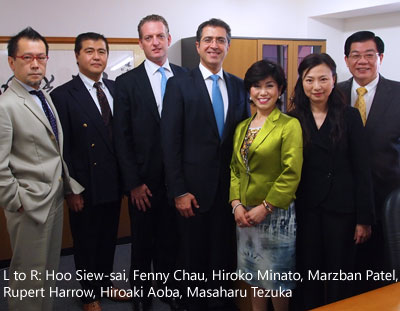
    Hiroko Minato, Managing Director, Publicitas Japan leads the venture. Ms Minato has more than 30 years of advertising sales experience in Japan, and will support Marzban Patel, CEO Publicitas, India and Asia in delivering bespoke solutions to clients in the region.


  • Burson-Marsteller announces new leadership team in APAC

    By A Correspondent


    Burson-Marsteller, global public relations and communications firm, has formed a new executive leadership team for its Asia-Pacific region to drive growth and integration. Patrick Ford will become chairman of the region and will lead a newly created Senior Executive Leadership Team that includes Australia CEO and Market Leader Christine Jones, Korea Market Leader Margaret Key, Genesis Burson-Marsteller Principal and Founder Prema Sagar, and Hong Kong Market Leader Matt Stafford. This new leadership team will work with Mr Ford on setting strategy for growth in the region and business priorities in specific areas, including investments in business development, client development, talent recruitment and acquisitions. The team’s members will continue to be responsible for their own markets, but will also take on shared responsibility and authority for the region as a whole.


    The firm will integrate its Beijing, Shanghai, Guangzhou, Chengdu, Shenzhen and Hong Kong offices into a new Greater China region under Matt Stafford’s leadership to align its international and domestic communications programs more effectively for clients and strengthen integration. Mr Stafford will move from Hong Kong Market Leader to CEO of Greater China. He has served as lead counsel to several Chinese-headquartered clients as they position their brands and enhance their corporate communications around the world. He will now be spending more of his time advising our China-based clients, which he leads.


    Daisy King will become the interim Beijing Market Leader, in addition to her current role as the head of Burson-Marsteller’s U.S. -China Specialty Group. Vincent Li has promoted to permanent Market Leader for Guangzhou, Chengdu and Shenzhen. They will join Regional Managing Directors Angelina Ong, the firm’s Shanghai Market Leader and regional Brand Marketing Practice Chair; Ian McCabe, the regional Public Affairs Practice Chair; and Jackie Price, who leads Burson-Marsteller teams on two key regional client relationships, on the Greater China leadership team while Market Leader for Hong Kong to succeed Mr Stafford is yet to be named.


    Former China CEO Chris Deri will leave the firm to pursue another professional opportunity in the United States. “This new Asia-Pacific team is strongly positioned to provide the leadership and counsel our clients in Asia require in the ever-changing environment they face,” said Burson-Marsteller Worldwide Chair and Chief Executive Officer Donald A. Baer. “Our clients expect us to be their strategic partner, fully understanding their business objectives and supporting their corporate values, staying well ahead of communications trends and capabilities, and combining strategic thinking and breakthrough creativity with rigorous focus on getting the job done. This leadership structure in Asia elevates the best team to provide these essential services for our success, delivering on our promise to be the best ideas-driven, results-oriented communications firm in the world.”


    Regional Chairman Mr Ford said, “This new senior executive leadership team will help the firm continue to steer the best course in Asia-Pacific, where we see enormous opportunities for growth. Each member of this team has demonstrated extraordinary leadership far beyond their own market assignments. Prema Sagar, for one, has been a legendary Public Relations pioneer in India since founding Genesis 20 years ago. In fact, she is the only Asian Public Relations executive in Global Public Relations ICCO Hall of Fame. As we celebrate our 40th anniversary in Asia-Pacific, we think we have a strong mix of seasoned giants in our business, such as Prema and Christine Jones, along with exciting emerging leaders, such as Margaret Key and Matt Stafford. I am excited about Matt’s new role as CEO for Greater China. Under Matt’s leadership, the Hong Kong office has achieved remarkable business growth and low staff turnover. He is the person best suited to lead our China strategy moving forward, particularly given his expertise working with China-based multinational companies, such as Huawei, as they position their brands and enhance their corporate communications around the world.”


    Mr Stafford added, “While I have enjoyed leading our Hong Kong operations since returning to Burson-Marsteller, I am enthusiastic about working with the China team on a new and richer level. This approach for integrating the markets is precisely what our clients have been asking for, and there has never been a better time for our organization to execute on this strategy.”


    Mr Stafford re-joined Burson-Marsteller in Hong Kong in 2008 following five years as the Australian Government’s senior policy adviser on communications reporting to several Cabinet Ministers. He was the lead adviser for the development and implementation of sweeping regulatory reforms in that sector, including a multi-billion dollar national broadband strategy and the privatization of Telstra, the single largest public share offer in Australia’s history.


    Mr Ford, a 24-year Burson-Marsteller veteran, will continue to serve as the Global Vice Chairman for Client Service and as a member of the Burson-Marsteller global leadership team. He has been interim Asia-Pacific Chair since October 2012 and previously had served for six years as President and CEO of Burson-Marsteller US.


  • Leadership tables rank business leaders at the top in the year 2013

    By a Correspondent


    In the year 2013, Indian business leaders are the most effective leaders in the country across categories covering political, business, non-profit organisations, local community, and union leaders/leaders of labour organizations as per the Ketchum’s 2013 Leadership Communication Monitor study.


    As per the findings of Ketchum’s 2013 Leadership Communication Monitor for India:

    • Business leaders are seen as the most effective with 49 % (8% increase since 2012) of Indians rating business leadership as excellent. This is in line with global trends which rank business people as the most effective leaders.


    • Leaders of non-profit organizations rank high at no. 2 with 33%, followed by local community leaders at 28%, political leaders & Union leaders / leaders of labour organizations at 27%.


    • As compared to 21% of global citizens, Indian consumers (52%) have more confidence in business leaders moving into 2013. Indian business leaders are nearly on par with expectations, as their performance often matches consumer expectations as compared to other global counterparts.


    According to Ajay Sharma, Managing Partner, Ketchum Sampark Pvt Ltd, “The Ketchum Sampark Leadership Communication Monitor was launched last year, to study trends in effective leadership across various spheres – political, corporate, religious or community-based. We have received an encouraging response to our annual study that examines attitudes to today’s leadership in India, and explores the fundamental role of communication in informing and delivering the same.”


    He further added, The current year’s findings are similar to last year, as people continue to show more confidence in Business leaders Vs Policy makers, as effective leaders who help the country steer through economic uncertainty.”


    Other findings of the study include:

    • India, more than any other country, thinks that the technology industry demonstrates effective leadership (62%, compared to 43% globally).They are also much more likely than others to feel that banks (54%) demonstrate effective leadership (28% globally).


    • Unlike many other nations, Indians are just as likely to be influenced positively by company’s leadership as they are to be influenced negatively. In the past year, 56% of Indians have purchased less of a company’s products and services and 57% have purchased a company’s products and services for the first time based on the behavior of a company’s leadership.


    • The majority of Indians (66%) feel that leaders aged 35 to 50 are most likely to navigate through challenging and rapidly changing times over the coming three to five years. However, 22% of Indians (more than any other country), feel that Millennial leaders aged 18 to 34 are most likely to navigate through the upcoming years (10% globally).


    • Within the business community, knowledge-based industries were perceived as communicating more effectively. Ranked highest on leadership effectiveness was technology, with a 65 % approval rating, followed by Entertainment (62%) and Telecom (58%). Banks rank fourth in the poll with 57%. Media ranks fifth with 55% and Hospitality ranks sixth with 54%. Mining is at the bottom of the rankings with 38%.


    • Print media ranks the highest on credible media to build leadership with score of 42% followed by TV media at 39%. Globally, though TV and print media have slid in rankings to 3rd and 4th respectively with press releases and televised speeches ranking higher as credible media. Although it decreased by 7 percentage points from 2012 to 2013, In-person contact continues to be the most credible source at 43% when forming opinions about leaders.


    • Facebook continues to be a pleasant surprise. Facebook with a score of 38 % is marginally behind print (42%) and broadcast media 39%). This is in sharp contrast to global rankings where Facebook scores low at 17 % and no 10 in the rankings.


  • MSLGroup India launches Social Hive

    By A Correspondent


    MSLGroup India, Publicis Groupe’s strategic communications and engagement company, has announced the launch of its global digital and social practice in the country, Social Hive.


    Jaideep Shergill

    Jaideep Shergill, CEO, MSLGroup India, said, “While MSLGroup India has been a leader in digital and social engagement for years, the launch of Social Hive means that we are taking the practice to a new level, with even tighter connections across the globe. Digital and social capabilities are central parts of idea -based and fully-integrated client communications solutions. Our top talent at Social Hive makes us well positioned to continue to create award-winning work for our clients across all platforms”.


    Parveez Modak

    The Social Hive team in India is led by Senior Vice-President Parveez Modak and Vice-President Narendra Nag. The team comprises of more than 40 consultants in Mumbai and Delhi who manage 5 million people across communities. Social Hive’s strategic storytelling approach helps brands create stronger connections and relationships with the consumer.


    Glenn Osaki, MSLGroup Asia president, added, “In this fast-moving industry, keeping up is not enough. We have to lead. This large investment in Social Hive might be surprising given that we are already an industry leader in the digital and social space in India. But if we want to continue to attract the best talent and create the best campaigns for our clients, we have to constantly innovate and invest. Our expanding content creation capabilities, tools and insights will drive our digital and social leadership into the future.”


    Alongside Social Hive, MSLGroup has also launched a new proprietary and social tool: the Social Hive Index, which can benchmark a company’s social engagement and compare it to its peers.


    MSLGroup India’s social and digital communications is the leading practice of its kind, advising clients such as Sony, Monsanto, Volkswagen, KPMG, Singapore Tourism Board, Australian High Commission (OzFest), Whirlpool and eBay. The network has also won several international awards which showcase world class, outstanding performance in digital and social media, such as the International Business Awards (Bronze, Social Media Focused Campaign 2012, Sony Mobile) and the Bees Awards (Winner, Best Social CRM 2012, eBay India).


  • Is negative publicity a positive for brands?


    By Meghna Sharma and Ananya Saha


    The Indian Premier League had more than its share of negative publicity this season. Did the brands associated with IPL get affected too? And is it possible for brands associated with an event to avoid negative publicity around the event? Or is any publicity good publicity? MxMIndia spoke to industry professionals to find out what brands can do in such a negative scenario.


    Harish Bijoor, Marketing & Brand strategy specialist and CEO, Harish Bijoor Consults Inc

    Brands are like human beings; they are born, they live, they thrive and then they die. In this entire life-cycle, if a brand has a slur cast onto it, this slur lasts as long or as short as the memory of the brand-audience. A controversy is both good and bad for the brand. It is good as it keeps the brand in public mindsets longer, it is bad because it is a canker that affects the image of the brand at large.


    Brands that are active, dynamic, have large mind-shares and market shares alike, cannot really stay away from controversy. The silver lining is the fact that public memory is proverbially short. Very short. Irreverent brands love all kinds of publicity. Possibly IPL is on the cusp of being an irreverent brand. All controversy is good for such brands.


    Vandana Das, President, DDB Mudra Group, Delhi

    I do not think that any brand associated with IPL got affected with the recent controversies. Brands have their own long-standing equity. Controversy is the pivot, but not necessarily everything in the periphery will get affected. What is important to note is that controversies are short-lived and brands have a longer life than a controversy. While one can say that IPL is in trouble, one cannot say that the brands are in trouble. It is not that the brands knowingly get into controversy. Brands do not have the control or have influence over such controversies. The brands tend to tide over it. At that particular moment, controversies seem big but brands tide over it.


    But this in no way means that any publicity is good publicity. At the end of the day, even short-lived negative publicity can affect a brand. And if a brand is not strong enough, it can even dilute its equity. Just like people, brands also need to avoid any negative publicity around them.


    Sachin Kapur, Chief Marketing Officer, Groupon India

    I particularly do not think that brands associated with IPL will get affected by negative publicity, primarily because it is not in the brand’s or brand manager’s hands. Yes, there are brands riding on the popularity of the event, the association is more to do with individual team or player. The overall interest in the IPL might go down, and while brands might have associated with the event to gain from it, it is still a long shot to say that it might have affect on the brands.


    Today, with active social media, even one negative blog post or tweet spreads like wildfire. It will reach your customer.


    There are times when there are situations, negative situations, surround a brand. These are times that challenges or reactions from the brand do not go down well with the consumer or audience. But no brand, whether six-sigma complaint or not, can stay down for long. The strategy of every brand should be to focus on customer.


    Amitabh Khona, Communication Consultant

    Today, crisis management is very important. Everyone knows about the Cadbury and Coke controversies, but have people stopped eating or drinking them? No. It depends on how a brand strikes back. For instance, Cadbury changed its packaging after worms were found in one batch. Also, another factor is the short memory of people. We will talk about something for a few days or months, but forget about all of it later and move on with our lives. Same can be said about IPL, although the recent events are all over the news channels and newspapers, people haven’t stopped watching the matches.


    Also, today where there are too many brands, one can say that any publicity is good publicity. No one will go out of business because of negative publicity or controversies. Such things keep happening and will continue to happen, everywhere in the world.


  • Winning loyalty with transmedia storytelling


    Extracted with permission from MSLGroup’s report, ‘Now & Next: Future of Engagement’. The report highlights the ten most important frontiers that will define the future of engagement for marketers, entrepreneurs and changemakers.


    Transmedia Storytelling

    Transmedia storytelling involves telling a story across multiple media platforms – including TV shows, movies, graphic novels, books, games, mobile apps, microsites, social networks, online communities and offline events – in a way that each platform explores different aspects of the same storyworld. Media organizations, changemakers, and brands are using transmedia storytelling to create immersive storyworlds that drive participation, action and loyalty. The rise of transmedia storytelling can be attributed to three dynamics around how people create, consume and share stories today. First, people are consuming news and entertainment in bite-sized pieces, on smart phones and tablets, often on-the-go, leading to new opportunities to create cross-platform, location-aware storyworlds. Second, people have access to so much content that they are filtering for out or skimming most of it, except for content they are most passionate about. Third, people are simultaneously acting as consumers, curators and creators of content, making it possible to create non-linear storyworlds that grow through their participation. As a result, movies, TV shows, games and toys are all turning into transmedia entertainment franchises. Studios are releasing not only movies but also alternate reality games (ARGs), set in elaborate storyworlds (A.I.’s The Beast, The Dark Knight’s Why So Serious?, The Hunger Games’ The Capitol, Prometheus’ Weyland Industries). Television networks are creating transmedia storyworlds to sustain fan interest between TV show seasons (Heroes’ Evolutions, Lost Experience,Dexter’s Hunt for the Infinity Killer, Game of Thrones’ The Maester’s Path, True Blood, BBC’s Sherlock’s The Science of Deduction (case study)), and creating book series by TV show characters to deepen fan engagement (Castle’s Nikki Heat series, How I Met Your Mother’s Barney’s Bro series). Video game studios are creating ARGs to heighten anticipation around new game launches (Halo 2’s I Love Bees, Gun’s Last Call Poker). Toy brands are building transmedia entertainment franchises around popular characters (Barbie Life in the Dreamhouse, Barbie and Ken Reunion video). Some authors and publishers are creating immersive online experiences to bring alive the storyworlds in their books (Harry Potter’s Pottermore).


    Filmmakers, TV producers, game designers and writers use transmedia storytelling to extend their fictional storyworlds across channels (True Blood, Halo 2’s I Love Bees). Changemakers and educators often use transmedia storytelling to create speculative universes that provide new perspectives and open new possibilities for participants (World Without Oil). Increasingly, documentary filmmakers and non-fiction authors are creating transmedia projects by creating books, films, games, apps, events and social movements around the same theme or cause (It Gets Better, Half the Sky). Transmedia storyworlds range from simple story extensions to immersive multi-layered, multi-platform experiences. Story extensions can include blogs, vlogs, social network profiles and even books from fictional characters (Gossip Girl’s blog, MarsCuriosity Rover on Twitter, How I Met Your Mother’s Barney’s Bro series), to simple apps and games set in the storyworld (Pretty Little Liar’s Bump and Tell, The Hunger Game’s Become a Citizen), and book or film adaptations of the original project. Other storyworlds are immersive experiences, with multiple interconnected websites, web video series and multiplayer games that explore back stories, introduce new plots, characters and twists, or re-create the story in the real world (Prometheus’ Weyland Industries, Pottermore). In some transmedia projects, the storyworld is distributed across many channels, and each channel explores a different part of the storyworld in an interlocked way, sometimes simultaneously and sometimes in sequence (Heroes’ Evolutions), while other projects have minimal interplay between channels (Welcome to the Pine Point), or replicate the same storyworld across channels (The Lizzie Bennet Diaries). Most transmedia projects that are built around an alternate reality game have a strong live, real-time feel with many moving parts (Dexter’s Hunt for the Infinity Killer), while others are more asynchronous. Finally, some transmedia projects provide multiple possibilities for fans to co-create the storyworld by deconstructing plot twists on fan wikis, contributing fan fiction and fan art, creating their own parallel narratives in virtual worlds,solving puzzles and playing games to unlock newparts of the storyworld, competing in challengesand tournaments, and participating in scavengerhunts, flash mobs and events in the real world.


    Some of these transmedia storytelling programs have had significant scale and impact. For instance, the ARG Why So Serious? launched fifteen months before the launch of The Dark Knight and attracted 11 million participants from 75 countries. Harry Potter’s Pottermore has 4.4 million registered users who have earned nearly 60 million points for exploring the storyworld and performing virtual actions. The Guild web series is currently in its sixth season and has received 83 million views on YouTube. The success of these transmedia storytelling projects shows that, even as attention spans are shortening and media consumption is fragmenting, fans are willing to immerse themselves in non-linear, multi-layered storyworlds, and even extend it through their contributions.


    How Does Transmedia Storytelling Work?

    At the heart of transmedia storytelling is a storyworld with its own mythology and sociocultural norms, which sets the stage for a cast of characters with their individual narrative arcs and web of relationships. Increasingly, people are consuming such storyworlds not as a linear narrative, but as a multi-layered, multi-platform, immersive experience.


    Alternate reality games are a particularly popular form of transmedia storytelling, as they can be effectively incorporated into short-term highintensity campaigns leading up to big launches. Most ARGs comprise of elaborate scavenger hunts that take place across fake websites and blogs, real web publications, fan communities, physical artifacts, flash mobs and rallies, and often include a series of puzzles, single-player simulations, and multi-player challenges or tournaments. Most ARGs induce mystery through hidden clues, suggestive announcements and partial reveals, and new elements are revealed on a preset schedule or after fans complete milestones. Fans share clues and solutions over online communities and wikis, and collaborate to unlock levels and complete the game, to get rewards like points and badges, physical artifacts, or exclusive content.


    Transmedia Storytelling for Brands

    Brands are learning to use paid or co-branded ads to pull consumers into branded transmedia storyworlds, which aim to retain people’s interest over the long term, and convert them first into passionate fans and then into paying customers, much like movie trailers with entertainment franchises. Some brands bring their fictional characters or mascots alive through ads, web videos, video games and social network profiles. Burger King’s former mascot The King made appearances in real life, on TV shows and in video games. Aflac created social media profiles for its mascot Aflac Duck, to engage consumers year round. P&G’s Old Spice created 185 video responses to tap into the popularity of its Old Spice Man, which is not only one of the most memorable marketing campaigns in recent times, but also an entertainment franchise in the making. Most brands have created such storyworlds as part of alternate reality games, as they lend themselves to short-term, high-intensity campaigns. Brands have created alternate reality games to showcase the brand purpose, engage consumers and build excitement around events. Coca-Cola built on its brand promise of happiness by creating a series of ads set in the fictional world of the Happiness Factory. CocaCola has also created a Happiness Factory Bible to outline the storyworld, character back-stories, and potential transmedia projects. Axe created the Axe Anarchy Graphic Novel based on storylines and characters suggested by fans. Wrigley’s 5 created the Human Preservation Project to showcase the importance of protecting and stimulating our senses. McDonald’s created The Lost Ring ARG to engage consumers around the 2008 Beijing Olympics and drive them to its outlets to search for clues. Audi created the Art of the Heist ARG to launch the Audi A3 in the US and showcase its sophisticated technological innovations.


    Several technology brands have created branded transmedia storytelling programs to launch new products, highlight product features, and showcase the potential of technology to change our world. Intel & Toshiba created The Beauty Inside, an interactive film where anyone could play the role of the lead character. Nokia created an interactive story called Someone Else’s Phone to show how a lost phone might reveal all our secrets to a stranger. Nokia also partnered with Tim Kring to create the Conspiracy for Good to support social organizations and showcase its Ovi platform. Microsoft created The Vanishing Point ARG to launch Vista. Google created the Niantic Project ARG to showcase its augmented reality app Ingress. Orange has created a series of ARGs – Alt Minds, Detective Avenue and Fanfan 2 – to showcase the transmedia storytelling technologies created by the Orange Transmedia Lab. Cisco created The Hunt ARG to engage its sales force and inform them about upcoming Cisco technologies.


    Some brands simply partner with existing media properties to create co-branded transmedia storytelling programs. For instance, Ford sponsored the Legends of Alcatraz ARG, based on the TV series Alcatraz. AT&T partnered with Tim Kring to create the Daybreak ARG, based on the TV series Touch, to showcase the power of technology to transform our lives. Microsoft created a Bing-powered treasure hunt called Decode Jay-Z to launch Jay-Z’s book Decoded, by releasing each page of the book in a new physical location, one page at a time, and using Bing search and maps to guide fans to them. Coke Zero created an obstacle course and challenged people to Unlock the 007 in them, as part of its brand promotions around the James Bond movie Skyfall.


    In 2008, NASA created a Twitter account for its latest Mars Science Laboratory rover, Curiosity, to share the story of the robot and the science behind its mission to Mars. A three-person social media team manages the story, tweeting in first person from the point of view of Curiosity, and using simple English – or, as Mashable puts it, “the voice of the internet.” The account chronicles Curiosity’s production and testing stages; interactions with students, journalists and science fans; journey from the NASA headquarters to Mars; and current explorations on Mars. For a more serious tone, people could follow NASA on Twitter. Science writer Annalee Newitz calls this type of storytelling “a new kind of hard science fiction”: “Curiosity’s Twitter account is a lot more than just a hook to get people interested in science, though. It’s successful because McGregor, Smith, and O’Connor have created a character with a very distinctive voice. Their task was akin to writing a science fiction story from the perspective of a robot on Mars.” Some milestones from Curiosity include: “This week, I’ve been testing my newly attached arm & practicing hand-eye coordination. New video at http://bit.ly/b1vnnT” (September 2010) “I HAVE LIFTOFF!” (November 2011) “I’m safely on the surface of Mars. GALE CRATER I AM IN YOU!!! #MSL” (August 2012) NASA also used a variety of participatory programs and multimedia content to engage different audiences and generate excitement around the Mars mission. NASA tied up with Disney’s Wall-E and engaged US students in a contest to Name NASA’s next Mars Rover. NASA also engaged with global space lovers with a program that invited people to ‘send their name to Mars.’ To create excitement around the Mars landing, NASA released the videos 7 minutes of Terror, in which scientists explained the challenges of landing a 1-ton robot on Mars, and Grand Entrance, in which Star Trek actors William Shatner and Wil Wheaton described the landing. The mix of transmedia storytelling and engagement programs contributed to the buzz around the landing and helped Curiosity attract 1.2 million followers on Twitter. As the editorial team of the National University of Singapore’s business blog noted “By playing up the wow-factor, explaining the science of the mission in simple but engaging ways, along with a hefty dose of infectious enthusiasm for its own efforts, NASA has broken down the stereotype of egg-head space geeks unable to communicate with the rest of the world. By challenging perceptions, giving new perspectives, brands can strengthen connections with their community.”


    Blogger Denise Fernandez remarked: “The entire social film experience gives viewers a sense of intimacy and belonging, something cinemas and television have never accomplished yet.” Writer Ella Riley-Adams wrote “This project seems like a solid combination of vital entertainment factors. “The Beauty Inside” features one familiar young celeb, one upand-comer (Topher Grace and Mary Elizabeth Winstead, respectively), and will be directed by Drake Doremus, a man with Sundance clout. Viewers can easily get involved and have input in the plotline when they audition, and they’ll then spread the news to their friends and followers. This may be an elaborate creation for some simple product placement, but a branded movie with both star power and shareability seems likely to succeed.” The Beauty Inside also helped promote the benefits of Toshiba’s new ultrabook and engage people around the product. As Ashraf Engineer, member of the MSLGROUP Insights Network, commented “To me, this was a great way to get your target users involved in the message you want to send out and to display the versatility and utility of your product.” The Beauty Inside is the second social film from Intel and Toshiba, after launching the social thriller The Inside Experience in July 2011. The overwhelming positive reactions to both imply that people are ready for more integrated, immersive storytelling experiences.


    In 2012, Intel and Toshiba created an innovative immersive storytelling experience with The Beauty Inside – a six episode web series in which the audience plays the lead role of shape shifter Alex. 26 people participated in the scripted web series alongside Hollywood stars, and 50 people shared their own stories on The Beauty Inside Facebook page via photos and videos. The combination of celebrities, audience participation and a powerful story engaged audiences and led to the viral success of the web series, which received 5.2 million views on YouTube.


    As part of its promotions for the newest James Bond movie Skyfall, Coke Zero challenged unsuspecting passengers at a train station in Belgium to unlock the 007 in them and complete a mission in 70 seconds. The mission began at a Coke vending machine and directed participants to race to Platform 6 to win free tickets to the premiere of Skyfall. Participants evaded obstacles such as an old lady with dogs, a spilled cart of oranges and an attractive ex-girlfriend. 70 people attempted the mission and a video showing the successful attempts was published a week before the UK launch of Skyfall. The video immediately went viral, with 5.3 million views and 44,692 likes in just 7 days and widespread positive coverage on blogs and social media.


    Future of Transmedia Storytelling?

    In the future, we expect all types of storytellers to create interactive multimedia content using tools like Thinglink, Stipple, Flixmaster, Mozilla Popcorn Maker, 3WDOC and Klynt. We also expect transmedia storytellers to orchestrate transmedia projects – manage content and mailing lists, publish content according to a schedule or in response to audience actions, make calls and send emails or text messages – using tools like Conducttr, IFTTT and Zapier. We expect transmedia storytelling projects, especially alternate reality games and augmented reality experiences, to create customized experiences around locations, using tools like SCVNGR, Moveable and Aris Games. We expect that TV shows will use tools like Galahad and Rides to create truly interactive multi-screen experiences through real-time transmedia storytelling. Transmedia game designer Andrea Phillips believes that television is the most exciting area for transmedia right now: “You already have a schedule, you know when your episodes will be airing and you have your pacing. It’s a fantastic spine around which to build a more intensive interactive experience… If I let you forget about my show for seven days until I air again, that gives you seven days to find something else to care about more.” We see more studios adopt the Participant Media model and create engagement, even movements, around their movies using proprietary platforms like TakePart. We also expect more independent authors and documentary filmmakers to try to catalyze social movements around their books and movies. We expect that ARGs will become an even more important part of the launch campaigns for new movies, TV shows and video games. We anticipate that many of these ARGs will be co-branded with technology brands to showcase new possibilities in technology, or with consumer brands to launch new products or create immersive experiences around the brand purpose. Finally, we expect more brands to sponsor or create their own interactive storyworlds, either as short-term campaigns or as long-term destinations.


    Marketer Christien Smeja applauded the program for its insight: “Great campaign from #coke & #jamesbond, tapping into every man’s secret desire to become a secret agent!” Blogger Joseph Pedro highlighted the challenge brands face as the online space grows increasingly cluttered, and applauded Coke Zero’s success on breaking through the clutter: “OK, we’ve all watched in amusement for the past couple of years as companies worked hard to figure out how to reach consumers through everything from flash mobs to webisodes. We admit we became quite jaded toward the whole thing after a while. So, when we saw that Coke Zero and the new James Bond flick Skyfall were in viral-video bed together we loaded it up with hesitation. Thankfully, it is kind of awesome.” Govind, member of the MSLGROUP Insights Network, attributed Coke Zero’s success to its long term commitment to storytelling: “Coke keeps coming with these interesting engagement ideas all the time. This is a matter of being committed to this strategy of storytelling. Can’t happen just by chance.”


    MSLGroup, is Publicis Groupe’s strategic communications and engagement network. The global report titled ‘Now & Next: Future of Engagement’ is a 94-page report that identifies the 10 most important evolutions pushing forward the frontiers of communications in today’s Social Age. Link: http://www.slideshare.net/mslgroup/mslgroup-now-and-next-future-of-engagement

  • i9 Communications assigned PR mandate for Pegasus Toy-Kraft

    By A Correspondent


    Toy and game manufacturer Pegasus Toy-Kraft has awarded its PR and marketing communications mandate to i9 Communications, a part of the Comniscient Group. As per the mandate i9 Communications will be responsible for brand awareness, corporate reputation and strategic visibility for Pegasus Toy-Kraft businesses in India.


    Commenting on the new appointment, Subhash Pais, Business Head, i9 Communications, stated, “We are truly excited to be associated with Pegasus Toy-Kraft for the opportunity to work in a challenging segment like toys. We are confident in supporting Pegasus Toy-Kraft’s business objectives with our insight-driven strategy and effective communications. ”


    Shyam Makhija, Director, Pegasus Toy-Kraft Pvt Ltd, said, “We are extremely delighted to partner with i9 Communications and are looking forward to a strong working relationship with the agency. They have a very successful track record and embrace the ability to understand our business with strong knowledge about the overall industry.”


    Anuj Mehta, Director, Pegasus Toy-Kraft, said, “The use of PR will help enhance trust in brand ‘Toy-Kraft’ via third party and influencer endorsement. This is a challenge in marketing toys globally and we believe we have the right partner in i9 Communications to help us with this particular objective.”


  • New weekly column ‘PR, etc’ by Amith Prabhu: To new beginnings!

    Introducing a new weekly column titled ‘PR, etc’ by Chicago-based public relations professional Amith Prabhu

    By Amith Prabhu


    It’s summer and it’s the season of awards. That’s when people can make travel plans, look at the year gone by and plan for new beginnings. It’s that time when I make the new beginning as a columnist on the invitation of the Editor of the media outlet you are reading. Public Relations as a profession is coming into its own in India with two awards for the business, with at least two credible conferences for the community and with two portals dedicated to Indian news and views that interests fellow professionals.


    Writing a weekly column should be fun but it won’t be easy. I took up the challenge because our profession needs these platforms to exchange ideas. You, as a reader can contribute in two ways – sharing ideas for forthcoming columns and commenting on the columns with a point of view. And yes, two words you will never see in these columns are ‘industry’ and ‘agency’, other than in this paragraph for the first and last time. Because in our profession these don’t exist as of now. For the first column I wanted to focus on how the last decade has witnessed three major milestones for the profession and how fortunate I have been to be part of these historic times.


    Firstly, a new group of individuals began to flow into the business in the form of natives that will eventually replace the immigrants. Given the advent of media institutes offering robust courses at the under graduate and post graduate level a new breed of professionals began to emerge at the dawn of the new millennium. Until then a large number of pioneers moved from into Public Relations from varied disciplines including but not limited to Publishing, Marketing, Advertising, Journalism and even Hoteliering. This is great for the cause of the profession as people get grounding in theory at these institutes that some smartly apply to the practical world.


    Secondly, almost all the major Public Relations firms headquartered in Europe and the United States have made inroads in one of the fastest growing economies either by starting up from scratch or by acquiring existing firms. This is great for professionals as it gives instant access to global knowledge and best practices, transfers across the world and opportunities to interact with colleagues from across the world thus changing the rules of the game entirely. I joined an Indian PR firm in 2004 after a rigorous campus recruitment process. When I moved on in 2007 the firm was international by virtue of being acquired.


    Third and lastly, several senior communications professionals have made their way into boards and found a seat at the table, thus giving the art and science of public relations its due. This to me is the hallmark of the last decade and something that needs to become a rule rather than an exception. That will happen only when we are able to show value we bring to a business in terms of strategic thinking and innovative tactics.


    I have set myself a target of writing about 500 words (not more) each week and will stick to it. Here’s to new beginnings as I await your suggestions for future columns and points of view on this one.


    Amith Prabhu is the founder of The PRomise Foundation which organises PRAXIS – the annual summit for PR & Corp Comm professionals in India. During the day he is a full-time employee at a leading Public Relations firm in their Chicago office. He spent the first eight years of his post-graduation career in India and is in the US for two years, of which he has completed 18 months. Views expressed here are the author’s own and don’t represent those of his past, present or future employer.


  • Amith Prabhu: The case for Public Relations in governance

    By Amith Prabhu


    The Indian Government’s Public Relations among its most important stakeholder – the citizen, is in doldrums. Public Relations is no more about plugging a story, dining with a journalist, preventing a negative article from being published or sending bland releases to media outlets expecting them to carry the news or information. All this used to be Public Relations in its early avatar. Today, Public Relations encompasses a variety of specialized tasks that include social responsibility, crisis communications, internal engagement, content creation and a lot more. Governments cannot ignore this important function and need to quickly embrace the modern digital offerings to connect, communicate and co-create. The Arab Spring is an example of how a new generation of digital enthusiasts deployed social media to bring about change in the regime.


    What should the present or future governments do in order to be in sync with the times? How will future tax payers – the youth of today view the government’s that run the nation? And who will take the lead in bringing about this change? These are some questions that do not have concrete answers as of now but a few thoughts exist on what can be done and all of these in the realm of Public Relations.


    Internal Communications – A government that does not communicate with citizens in an interactive manner will lose the right to govern.


    Social Responsibility – The government at the centre along with the states needs to go all out to make the five basic amenities available easily to every individual and without making it look like a favour is being done – Clean Air,  Affordable Housing, Motorable Roads, Uninterrupted Water and Power Supply & Quality Education. With these in order, the rest will fall in place.


    Crisis Management – The incumbent government has navigated crisis after crisis by being dwarfed because it not only did what was inappropriate but did not accept, admit and acknowledge wrongdoing with transparent communications. The imperative during a crisis, and every scam unearthed is a crisis, is to allow for a flow of information that is clear-cut.


    Citizen Outreach – A multi million rupee advertisement a year before elections will fall through as trust levels dwindle. The government needs to ensure it does some are all of the following: A monthly address by the Prime Minister on the state of the nation, an annual town hall by members of the cabinet in various Indian cities to connect with the masses and a clean administration that touches people’s lives meaningfully.


    Is this asking for too much? Do all of the above resonate in what we advise our clients or chief executives? Can businesses learn from governments and vice versa?


    I someday hope the leader of the government hires a professional Public Relations manager with a dedicated team to drive all of the above and more. A journalist can never do justice to the role of communications advisor.


    Amith Prabhu is the founder of The PRomise Foundation which organises PRAXIS – the annual summit for PR & Corp Comm professionals in India. During the day he is a full-time employee at a leading Public Relations firm in Chicago. He spent the first eight years of his career in India and is in the US for two years of which he has completed 18 months. Views expressed here are the author’s own and don’t represent those of his past, present or future employer. You can connect with him on Twitter at @amithpr


  • FleishmanHillard appoints Yusuf Hatia MD for India

    Yusuf Hatia

    By A Correspondent


    FleishmanHillard (FH) has announced the promotion of Yusuf Hatia to the position of managing director, India. Mr Hatia is a founding team member of FleishmanHillard in India and joined the firm in 2007 as the agency was entering the market with its first office in Mumbai.


    Mr Hatia is now responsible for overseeing all of the firm’s India offices. He will set the strategic direction for the agency while continuing to provide the high-level strategic communications counsel to corporations and organizations for which he is well-known.


    “Yusuf Hatia has been a cornerstone of FH in India,” said Lynne Anne Davis, FleishmanHillard’s Asia Pacific president. “He has been a key factor in tripling our offices, instrumental in finding and supporting an impressive and fast-growing portfolio of clients, and essential to the mentoring of a close-knit team of communications professionals. Over the past 12 months, he has won an impressive calling of new clients. He is the ideal candidate to take on the leadership mantle and take us into our next phase of growth.”


    Mr Hatia, based in Mumbai, was previously managing director of client service, India. Before that, he was the managing director of FH’s Mumbai office. He has provided strategic communications advice to a broad range of clients.


    He also heads the agency’s Majlis offering, a speciality service created to assist corporations looking to build and protect their reputation with the Muslim community. He brings an international perspective to all his engagements, having worked previously in the United Kingdom and the Middle East.


  • Amith Prabhu: Do you know who your biggest ambassador is?

    By Amith Prabhu


    Over the last two weeks one witnessed two interesting happenings that would make for good Public Relations case studies. One took place in Mumbai and the other in Goa. While the former had low intensity coverage and most of it on Twitter and a handful of portals, the latter was making waves both as a trending topic and headline news for days together with national ramifications and reactions of great proportions. The two cases I’m referring to are what I would like to call the Forbes India Fiasco and the Modi Advani Drama. While I don’t want to take a position on both these events in this column I think there is lot to learn for students of reputation management.


    For those who are unaware and can learn more here, the Forbes India parent company unceremoniously ousted its Founder Editor and along with him three other senior editorial leadership members. While who was right and who was wrong can be debated, on the face of it based on the facts publicly available it seemed another instance of management high handedness. But let’s move to the Public Relations handling of the episode. A reputed media organization like Network 18 could have handled the episode better by having an amicable settlement with transparent communications. There are several stakeholders involved. But key among these are viewers and readers of the various outlets that the group owns, fans of Forbes India and most importantly the employees at the magazine. One way of managing the situation would have been to use social media and the owned media to put out a statement that shared the facts of the case. The media outlets of the group have in the past commented on other conflicts especially among rival media houses. So this would have been a step in that direction. What is happening currently is stories trickling with periodic gaps that will certainly hamper the reputation of the Group brand in the short term. Though insiders may deny any brand damage since there may not be any metrics to prove that, the conversations on Twitter and Facebook as well as the three reports that have been doing the rounds puts the spotlight on unhealthy HR practices as well as corporate high handedness that are rarely spoken of. While both sides of the story will float someday some damage has been done.


    The second incident I mentioned is about how the elevation of a regional leader to a national role (based on the mood of the party members) was managed without prior internal buy-in leading to a messy situation in the principal opposition party’s management, less than year away from elections. The UPA government has literally thrown away its chance to win a third consecutive term but the current situation in the NDA and especially its main constituent make it seem like the race is wide open. The bottom-line is that internal communication is key to any change.


    It is time for organizations to realize that their biggest ambassadors are the employees or members and with them feeling negatively about the functioning there is no way the trickle-down effect of positivity will move to external stakeholders.


    We, as PR professionals are part of organizations (in-house and as consultants to clients) that go through similar situations. Public Relations is not only about what is written in newspapers but a great deal about what goes on at the water cooler. If there is one thing we can learn from these two happenings it is as basic as communicate well internally to build strong external reputation.


    Amith Prabhu is the founder of The PRomise Foundation which organises PRAXIS – the annual summit for PR & Corp Comm professionals in India. During the day he is a full time employee at a leading Public Relations firm in their Chicago office. He spent the first eight years of his post graduation career in India and is in the US for two years of which he has completed 18 months. Views expressed here are the author’s own and don’t represent those of his past, present, future employer or of MxMIndia. You can connect with him on Twitter @amithpr