Category: INDRANI SEN

  • Indrani Sen: Boomtime for Media. A review of the Pitch Madison Advertising Report 2016

    Indrani Sen

    By Indrani Sen


    The official press release of the Pitch Madison Advertising Report (PMAR) 2016 predicting a 16.8% growth rate in advertising spends and a promise to cross the Rs 50,000 crore mark in 2016, instructed that the news should be carried only on Monday, February 15 or later. In true Indian style, the highlights of the report hit the online media on February 11! Before our Advertising & Media Industry could rejoice the prediction of “Boom Time” in 2016, on February 12, the Sensex posted biggest weekly fall in over six years with some sceptics in the industry murmuring about the possibility of a mid-year review by the authors of the report with a downward revision of the predicted trends.


    It will not be surprising if our Advertising Expenditure gets on a roller coaster ride keeping in line with the predictions of PMAR 2016. Let us recall that as early as in 2003, Goldman Sachs forecasted that China and India would become the first and third largest economies by 2050, with Brazil and Russia capturing the fifth and sixth spots. It seems we have a date with the destiny if India has to live up to the forecast of Goldman Sachs. The real growth driver will be the increasing middle class population in India and their sheer numbers will absorb the shocks of falling Sensex, etc. According to Goldman Sachs, the middle class population in India is expected to grow exponentially between 2010 and 2020.

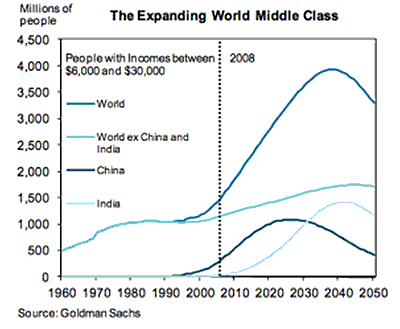


    Sam Balsara’s quote in the Press Release confirms that similar factors have been considered by them– “In arriving at the numbers we are conditioned by the fact that the Indian economy has become the fastest growing economy of the world; our GDP growth rate at 7%+ is the envy of the western world, now  looking at India in new light…”.  Indian advertising market has grown consistently across last three years to achieve a growth of 60 %from 2013 to 2016, compared to the previous 3 years from 2010 – 2013, when the growth was only 28%.
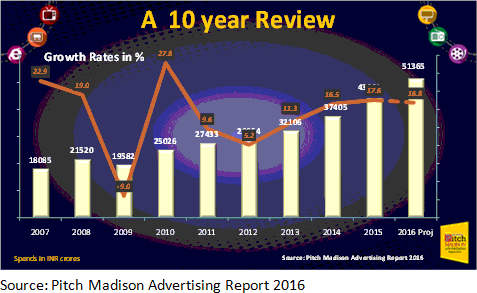


    In February 2015, the Pitch Madison Media Advertising Outlook 2015 first predicted a growth rate of 9.6% in advertising spend from 2014 to 2015. In September 2015, it was subsequently revised to 13. 8%. The final tally has emerged as 4 percentile point higher than their revised predictions. The year on year growth has not helped in our ranking in the global listing, which continued to be 12th with only 2% share of the global advertising pie. However, we have managed to increase our share by 1 percentile point.


    Percentage share in Global Advertising
     

    2013

    2014

    2015

    Brazil

    5%

    5%

    5%

    Russia

    3%

    2%

    2%

    India

    1%

    1%

    2%

    China

    11%

    12%

    13%

    Source: WARC International AD Forecasts


    We should remember that while 1 USD equals 68.13 INR, 1 USD equals only 6.53 Chinese Yuan. Like the practice of calculating normalised GRP in media planning, if we could have normalised the global advertising expenditure, then probably our ranking and share of the global advertising pie would have improved.

    According to PMAR 2016, FMCG clients continued to be the largest contributor in 2015 and spent Rs. 12,364 crore or 28% in advertising across media, followed by Ecommerce players which contributed to 10% by spending Rs. 4,231crores, Auto and Telcom are next in line contributing 9% and 8% respectively.  Contrary to the common belief that Ecommerce was the growth driver in 2015, organic growth from the FMCG sector played a major role in the growth of advertising expenditures. HUL topped the list of advertisers with a whopping Rs 2500 crore (approximate) spent in advertising.


    In the nearly Rs.44,000 crore of Indian advertising expenditure in 2015, TV and Print continued to be the two dominant media with Digital enjoying the highest growth rate. After a gap of five years, TV has again emerged as the number one contributor in 2015 with Print loosing 3 percentile points in share which got distributed  across TV (+1%), Digital (+1%), Radio (+0.5%) and Cinema (+0.5%). The projection for 2016 shows a further dip in the share of Print in spite of a 10% growth over 2015.


    Media wise share in advertising pie
     

    2014

    2015

    2016(P)

    TV

    38%

    39%

    40%

    Print

    41%

    38%

    36%

    Digital

    11%

    12%

    13%

    OOH

    6%

    6%

    6%

    Radio

    3.50%

    4%

    4%

    Cinema

    0.50%

    1%

    1%


    Source: PMAR 2016 & PMAO2015


    TV grew by 22% in 2015 and is expected to grow by another 20% in 2016 and add 1 percentile point in its share of the advertising pie.  Hindi GEC channels continue to enjoy the highest share followed by News Channels (Hindi & English). All regional language channels earned additional revenue with Tamil, Kannada and Bengali channels also getting additional share of the business.  The potential of the regional channels will be exploited by advertisers in 2016 for reaching out to rural audiences and perhaps the same has not been fully explored in the growth projections.


    Print, the second largest medium, grew by 11% in 2015 and is expected to grow by 10% in 2016. However, it is projected to grow by another 10% but concede 2 more percentile point of its share to other media. In the language wise highlights presented in the presentation of PMAR 2016, newspapers and magazines have been combined while in PMAO 2015, similar analysis was presented for only dailies. However, as magazines reflected a negative growth of -3% in 2015, we can presume that most of the growth in Print in 2015 came from dailies. PMAO 2015 showed most of the languages dailies suffering negative growth rate (2013/2014) apart from dailies in Marathi. Gujrati, Kannada, Telegu and Bengali languages. In PMAR 2016 a reverse picture emerged with most of the language dailies enjoying accelerated growth rates except Gujarati which showed a negative growth. Oriya and Bengali (Dailies & Magazines) showed double digit growth rates (2014/1015) which came as a surprise.


    Digital grew by 29% in 2015 and established itself as the third largest medium with a 12% share of the total ad pie in 2015. Digital is projected to grow at a 30% rate (2015/16) and increase its share in the advertising pie by 1 percentile point to 13%. Digital’s share in the advertising pie (11.6%) is more than the combined total share of Outdoor, Radio and Cinema (10.6%). However, the growth of Digital may have been underestimated considering the growth of smart phones and internet accessibility in India and the affinity of our youth with Digital and social media.


    Outdoor revenues have been recast for last three years to include Digital OOH and Malls which are growing rapidly. Total OOH revenue including transit was Rs.2665crores in 2015 and is expected to grow to Rs. 3010crores in 2016.


    Radio is predicted to grow to 1823crores in 2016 from 1545croers in 2015 and maintain its share of 4% in the advertising pie.  While it grew by 20% in 2015, the above prediction means only 18% growth in 2016 when we are expecting the new bunch of radio stations to be operative before the year end. Again, the predicted growth of Radio seems to be conservative rather than bullish.


    Cinema estimates have been revised to include advertising from various Government Agencies as well as local/ retail advertisers in 2015 as well as in the previous years. In 2015 Cinema contributed Rs. 465crores to the total advertising expenditure and is expected to grow to Rs.535crores in 2016.


    As always, the Pitch Madison Advertising Report 2016 is a very useful document which will be used as a reference in the industry till the next report comes out.  When we look at the ups and downs from 2007 to 2012 (chart above “A 10 Year Review”), we find it difficult to believe in the upward swing which we are witnessing over the last three years. Can the growth in 2016 be actually higher than 17.6% which we achieved in 2015? A million dollar question only time will tell.


    Indrani Sen is a media services veteran, having worked with JWT, later Mindshare and then with Emami. In recent years, she is an independent consultant and academic. She is Adjunct Professor in charge of the Media Management programme at the Symbiosis Institute of Media & Communication, Pune. The views expressed here are her own.

     

  • Indrani Sen: Looking back at 2018

    By Indrani Sen


    2018 has been an interesting and inspiring year for the Indian media industry. After struggling with the aftermath of demonetisation in 2016 and the GST in 2017, the industry saw a year without any external interruption and was able to regain the momentum of growth. We have to wait for another couple of months before we get the estimates for 2018 and the projections for the future from various industry sources, but market indicators show that traditional media industry in India has good reasons to welcome tonight 2019.

    Indian traditional media has continued to remain resilient inspite of the growth of the digital media. Globally, 2018 would perhaps go down in history as the watershed year in advertising industry when the old guard bowed down to the new generation, best illustrated by the announcement made by  WPP in November 2018 to merge the traditional agency J Walter Thompson and digital agency Wunderman to form a new agency ‘Wunderman Thompson’. Abi Dan wrote an article in Frobes on the merger where he commented “While these are positioned as mergers of equals, they are essentially a takeover by the digital agencies of their older siblings.”

    Against this global backdrop, traditional media continued to thrive in India in 2018 and the momentum is likely to last till we usher in the third decade of the new millennium in two year’s time. For Print, the oldest medium in the traditional media team, 2018 began on a high note with IRS 2017, released in January 2018, showing a growth of 9% in total newspaper readership from 2014 to 2017 and reiterating the reach and strength of the print media in the digital age. The continuous growth of the regional newspapers which sustained during 2018 indicates that Print in India is going to write its own history. The “fake news” controversy and the “#MeToo” movement made some scratches on the reputation of some publications, but did not have any lasting effect. On the other hand, digital media bore the brunt of the “fake news” more heavily and made readers turn to the printed words for assurance.

    The various new ventures and deals in the Television sector announced in 2018 showed clearly that the medium is thriving for growth. The process of merger of Dish TV India of Essel Group with Videocon D2h was completed in 2018. Essel Group announced in November 2018 its plan to divest up to 50 per cent of its stake in ZEEL to ensure disruptive technological advancement and transformation of the company into a digitally equipped media tech firm. The decision is expected to be processed and implemented in 2019.

    Reliance Jio announced in July 2018 Giga TV set-top boxes which will have the ability to use Internet to offer live TV and live interaction through Jio TV Call. This announcement was followed in August 2018 by the announcement of Jio Giga Fibre, an ultra-high speed fixed line broadband service for homes and enterprises. Jio also made substantially large primary and secondary investment in Den Networks and picked up majority stakes 51.3 per cent in Hathway Cable and Datacom Limited.

    After winning the media rights of Indian Premium League in September 2017, Star TV managed to increase the overall viewership of IPL 2018 through successful implementation of their marketing strategy in national and regional markets.

    E-Auction of DD Free Dish slots was postponed from 2018 to 2019, probably in view of the uncertainty around the implementation of the new tariff policy announced by TRAI. . The next E-Auction of DD Free Dish will play a significant role as all TV viewers will have to pay a fixed base rate for getting access to the free to air channels and then choose the pay channels as per the rate cards.

    Early in 2018 we saw Star India & Star Viay challenging TRAI’s new guidelines related to the tariff order (issued in 2016) in Chennai court. After Chennai High Court ruled in favour of TRAI, Star India made an appeal in the Supreme Court, who also upheld the order of TRAI in October, 2018.  The year has ended amid a lot of confusion related to the implementation of the new tariff order forcing TRAI to extend the deadline by a month from end December 2018 to end January 2019.  Most of the large TV operators have announced their own package deals for subscribers, but the distributors are not offering the same as TRAI has not given any guideline related to such package deals and how the revenue of the same will be shared between the TV channels and the distributors. It remains to be seen if the consumer actually benefits from the new tariff orders or emerges as the looser, particularly in small towns and rural belts.

    Radio, the older yet weaker sibling of the Broadcast media, managed to retain its share of business against the financial disruption caused by demonetisation and GST in 2016 and 2017. The same trend continued in 2018 when we saw the base of FM Radio expanding with many of the new radio stations sanctioned in the Phase III Auction going on air. FM radio stations have been actively integrating for some time their on-ground activations with digital content through innovations which has helped in their overall growth of revenue. 2018 was no exception to the same. While the growth of Radio Adex has remained moderate in 2018, the overall growth in revenues of the radio stations has probably seen a healthier growth riding on the rapidly growing digital and social media.

    During 2018, OOH has recovered from the effects of demonetisation and GST but we did not see much growth in Digital OOH which was expected. Due to lack of a proper Adex system in outdoor medium, its revenue as well as growth has been getting under estimated over the years and 2018 has not seen any change in that condition.

    According to the industry sources, the cinema advertising has seen a healthy growth in 2018 riding largely on in film advertising, particularly in regional cinema. Again, this growth may not get reflected in the overall calculations of advertising expenditure in 2018 which we will get to see in another couple of months.

    As predicted, Indian digital media has grown in an exponential rate during 2018, in spite of the disturbance created by “fake news” etc. The growth has been helped by the increase in internet access through mobile internet and various forms of internet advertising.  Video Games and on line streaming of music and movies have continued to accelerate the growth. The international and homegrown OTT players have also helped in the overall process of digitization of media exposure in India.

    To sum up, 2018 has been a fruitful year for media industry in India with lot of activities across different media. It is expected that the growth will not only continue but will accelerate during the first half of 2019 riding on the upcoming General Elections.


  • Indrani Sen: Indian Social media in 2019: “Big Brother” to watch over users

    By Indrani Sen

    2019 will go down in the history of Indian social media as the year when the “Big Brother” started watching over Indian social media and the users lost to a large extent their rights to privacy and freedom of expressing their thoughts. As we get ready for the general elections in May 2019, the Indian government is planning to change its IT rules to control fake news and curb spread of misinformation under the pretext of maintaining the “sovereignty and integrity of India”.

    The changes in the IT rules proposed by the Information and Technology Ministry towards the end of December, 2018 and open to public comment till January 31, 2019 have sparked some protests from civil rights activists and ensued debates among select experts in cyber media law regarding its scope and interpretations. We have seen fresh news reports over the last couple of days about global social media and technology companies getting ready for legal actions against the proposed regulations.

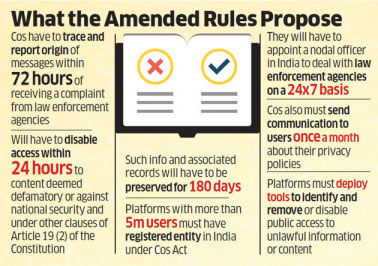
    The new rules, when implemented, would compel all social media platforms to remove unlawful content, such as anything that affected the “sovereignty and integrity of India” within 24 hours. It calls for 24X7 surveillance of 100% of the posts, comments, chats, etc. by all users of social media in India which is estimated to be close to half a billion.  If implemented, this will increase the cost of operations of the social media platforms which eventually will affect the consumers apart from depriving them of their rights to privacy and freedom of expressions as mentioned earlier. The safe harbour protection currently available to intermediaries, which is an integral part of the way the social media business is run, is under threat of removal under the proposed rules.


    Please see the link https://economictimes.indiatimes.com/tech/ites/govt-plans-amending-it-rules-to-curb-social-media-misuse/articleshow/67232660.cms  for details of the proposed rules, a glimpse of which is shown below.


    Infographic: https://economictimes.indiatimes.com


    Indian social media was all set for a roller coaster ride in 2019. Read an article on January 3 in www.socialsamosa.com by Vijay Shenoy, AVP Operations South, WatConsult, highlighting four trends that we can expect to see in social media during 2019: moment marketing, video marketing, applications of augmented reality and influencer marketing in a mobile first Indian market with estimated 258.27 million social network users. The global trends showed that Facebook will have a strong growth of users from Asia-Pacific region headed by India with US accounting for only 10% of Facebook’s global base. Instagram and Snapchat are both expected to grow globally in 2019 and again India will be contributing substantially to their growths.

    In a report on the forecasts and predictions for social media in US in 2019, www.emarketer.com  commented “We expect an explosion of stories and vertical video across the digital landscape. That will lead to the inevitable swing of the pendulum toward backlash and questioning about stories’ effectiveness. Facebook will work hard to promote the format to users and advertisers, but the feed will remain the dominant way users use the app”. In India we are already seeing Facebook and Snapchat investing in the original video content and introducing new tools and features for their users.

    In 2018, social media giants had started actively implementing certain steps against fake news and misinformation generated by users. Managing the election-related interference in 2019 is an uphill task and Facebook announced in October 2018 that they are establishing a task force in India to ensure that users do not abuse their platform. Now the proposed “censoring” of all social media content by the Indian Government with a very steep implementation dead line of removing the “undesirable content” has baffled all social media owners and as per various reports in media they are busy taking legal opinions on the proposed amendments in Indian IT rules.


    The users of social media in India have not yet woken up to the full implications of the rules on their rights of privacy and freedom of expressing their thoughts. We have also not seen much of expert opinions expressed on the topic across different media. In 2016 when Facebook proposed their plan for introducing “Free Basics” in India, we had witnessed much more uproar in our public domain. This proposed amendment in our IT rules has far more serious long-term implications, but strangely till now there have been very little public views with 18 days left for commenting on the same.


  • Indian Ad Industry: Are Happy Times Really Here Again?


    By Indrani Sen


    Indrani Sen

    Last week, the advertising and media industry probably had an overdose of data and information to chew, both GroupM and Madison released their annual reports on industry AdEx “This Year Next Year” (TYNY) 2019 and “Pitch Madison Advertising Report” (PMAR) 2019; Dentsu Aegis Network’s arm Posterscopre released a forecast for only OOH industry followed by the TAM AdEx Report and the results of the DD Free Dish e-auction held from February 11 to 14, 2019. It will not make any sense to discuss the implications of all the reports together. Let me today take a look at TYNY 2019 and PMAR 2019 released by GroupM and Madison.

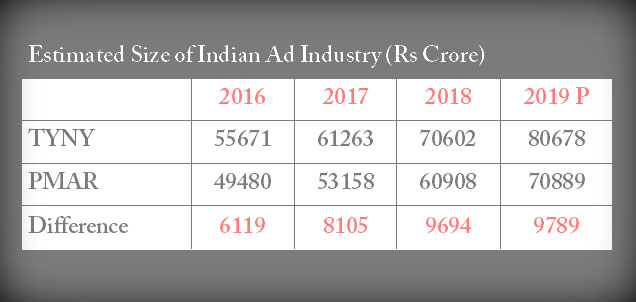
    By now, industry professionals are reconciled to the reality that there is a big gap in the estimation of the size of the Indian Ad Industry by the two agencies. However, as an academic I find it difficult to explain the reasons of the same to my students. I was alarmed to find earlier that since 2016, the gap in real terms increased year on year till 2018 as shown in the chart below. It is reliving to find from the recent reports that the same is not increasing further in the estimates made for 2019 by GroupM and Madison. We can probably hope that in another few years the difference between the two estimates will be reduced to 4% to 8%, the acceptable statistical margin of error at the 95% confidence level.

    Estimated Size of Indian Ad Industry (Rs Crore)
    2016 2017 2018 2019 P
    TYNY 55671 61263 70602 80678
    PMAR 49480 53158 60908 70889
    Difference 6119 8105 9694 9789


    A comparative analysis of the 2018 adspends by media made in the two reports show that the main bone of contention between the two is in the estimated size and share of TV media. Apart from TV, the differences in the estimated size in rupee value of Print, Digital and Radio fall within the acceptable margin of error ranging from 4% to 8%.The estimated size in rupee value are very close for OOH and same for Cinema. The detailed analysis is given below:

    Indian Ad Industry 2018: Estimated Size (Rs Crore) & Share (%)

     Rs. Crore 2018 f   2018  
    Media TYNY %share PMAR %share
    TV 33577 48 23432 38
    Print 17970 25 19467 32
    Digital 12337 17 11706 19
    OOH 3202 5 3365 6
    Radio 2709 4 2144 4
    Cinema 806 1 805 1
    Total 70602 100 60908 100
    Growth over last year 11%   12%  


    In terms of forecasts for 2019, the growth rates predicted by TYNY for different media are lower than the growth rates predicted by PMAR, apart from Radio where TYNY has predicted a higher growth rate than PMAR. Both the reports agree that the highest growth rate will be in Digital media fuelled by mobile, online video and social media, followed by Cinema though on a very small base. In terms of overall growth, TYNY has pegged it at 14%, 2.4% lower than the prediction of PMAR at 16.4%.

    Indian Ad Industry Forecast
    2019p 2019p
    Rs Crore TYNY %  Share Growth % PMAR % Share Growth %
    TV 38612 48 15 27649 39 18
    Print 18368 23 2 20442 29 5
    Digital 16038 20 30 15612 22 33
    OOH 3536 4 10 3750 5 11
    Radio 3116 4 15 2401 3 12
    Cinema 1008 1 25 1047 1 30
    Total 80678 100 14 70889 100 16.4


    Both the agencies have cited upcoming Parliamentary elections and ICC Cricket World Cup 2019 as major contributor to the growth in ad spends in 2019. While Madison have cited increase in government spending to showcase its achievements, the growth of OTT, increased spending in rural sector and India moving to a consumption society as the other reasons for predicting a high growth for the ad industry, GroupM has highlighted major trends like emerging technology, availability of data, content creation and distribution, etc. as factors contributing to the growth in advertising expenditure. There is no doubt that after two bad years in 2016 and 2017, Indian advertising industry has turned around in 2018 and is poised for further growth in 2019.

    Let me turn around and play the role of Devil’s advocate musing over what can disrupt the rosy dreams of advertising industry during next year. Over the last four days all of us are reeling under the effect of the terrorist attack in Pulwama killing 40 CRPF jawans. The entire nation wants revenge and our expectations have increased since the last surgical attack. Such attacks and counter attacks may lead to unforeseen developments affecting our economy and business.

    After the results of the last round of state elections, many political analysts think that BJP may have to depend on coalition with other political parties to run the Government in Centre after the next General Election which may affect smooth functioning of the Government. The gross overspending (Rs. 99610 crores over approved expenditure) by the Union Government as reported recently by CAG may have a diverse effect on various government approved projects in future as well as rural development.

    If RBI falls in line with the directives of the Finance Ministry, then India’s financial ratings may suffer globally and rupee may face further devaluation in its foreign exchange rate. There could be changes in the domestic as well as foreign policies of US which will have far reaching effect on the entire world and India will not be an exception. To sum up, we are living in very uncertain times when any significant change in internal or external political situations or foreign/ economic policies can adversely affect the growth of our advertising industry. Let us keep our fingers crossed and hope that the predictions for the growth in advertising in 2019 made by TYNY and PMAR will be realised without any major disruption.


    List of my articles related to this topic over last three years:


    Feb 20, 2018 Mind the TV AdEx Gap

    Feb 20, 2017 What is the real size of the Indian Ad Industry

    Nov 21, 2016 Post Demonetisation, it’s boom to doom for ad spends

    Feb 15, 2016 Boomtime for Media: A Review of Pitch Madison Advertising Report 2016


  • Gung-ho TV Advertising Trends


    By Indrani Sen


    Indrani Sen

    The recent TAM Axis report on TV advertising trends in India in 2018 published in ET Brand Equity (https://brandequity.economictimes.indiatimes.com/slide-shows/tv-advertising-at-a-glance-tam-report/68096082) on February 22, 2019 shows that contrary to the popular belief TV advertising revenue did not suffer in 2017 after introduction of GST. Demonetisation in 2016 was a big blow which crippled the growth rate, but the advertising revenue was back on its growth track in 2017 which accelerated in 2018.

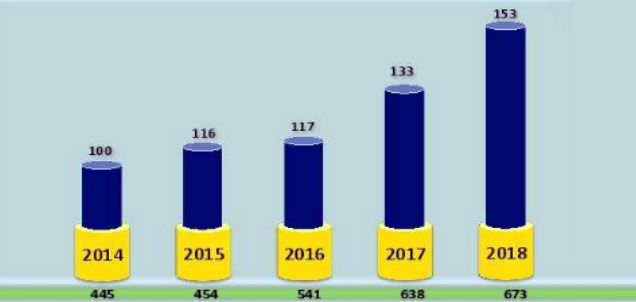
    Indexed growth rate of TV ad revenue 2014-2018: Source TAM Axis (AdEx India)

    N.B. The number of channels covered by AdEx is shown under each year in the green line.

    The above table shows that from 2014 to 2015 the index rose by 16 points and after adding only 1 point in 2016, it jumped by another 16 points in 2017 followed by 20 points in 2018. Over the last five years, from 2014 to 2018 there has been an overall growth of 53% in TV advertising revenue.

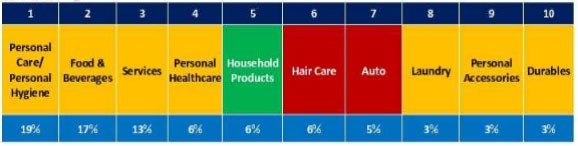
    Top 10 sectors in TV advertising in 2018: Source TAM Axis (AdEx India)

    The Top 10 sectors and the Top 5 sectors respectively account for 81% and 61% of total TV advertising revenue in 2018. While the Top 2 sectors retained their positions, household products rose from rank 7 to rank 5 with 43% growth in TV advertising in 2018 over 2017. Hair Care and Auto ranked lower in 2018 as compared to 2017 while Laundry, Personal Accessories and Durables held on to their ranks.

    It is interesting to note that of the Top 10 categories, 3 (Toilet Soap, Tooth Paste & Perfume /Deodorant) belong to Personal Care/ Personal Hygiene sector; 2 (Washing Powder/ Liquids & Toilet/ Floor Cleaner) belong to Household Product sector; 2 (Milk Beverages & Chocolates) belong to Food & Beverage sector; 2 (Two Wheeler and Cars/ Jeeps) belong to Auto sector and 1 (Shampoo) belongs to Hair Care sector. Though Services and Personal Healthcare hold the 3rd and 4th ranks among the top 10 sectors, no category from the two sectors feature in the list of top 10 categories which collectively account for more than 25% of the total TV advertising revenue.

    Top Ten advertisers accounted for 30% while top 50 advertisers accounted for 56% of the total TV advertising revenue in 2918. Hindustan Unilever topped the list with 10% share, followed by Reckitt Benckiser (India) and ITC who rose from 8th rank in 2017 to 3rd rank in 2018. Wipro and Amazon Online were new entrants among top 10 advertisers in 2018.

    The 2017-18 Annual Report of the Telecom Regulatory Authority of India (TRAI), published last week, indicates that the subscription revenues accounted for 59.5% of the overall TV industry revenue as it rose from Rs 38,7007 crore in 2016-17 to Rs 39,3007 crore in 2017-18. The report quoted the FICCI-EY Report 2018 which indicated that TV advertising revenues rose from Rs 20,1007 crore in 2016-17 to Rs 26,7007 crore in 2017-18, at a much higher rate of 32.8 per cent than reflected in the analysis of TAM Adex data for 2018, albeit referring to a different time period.

    Regardless of different reports based on different time periods, it is a reality that with close to 200 million TV households and 836 million TV viewers In India (Source: BARC Establishment Survey 2018), the Indian advertisers will continue to invest in TV medium for reaching out to the masses. The detailed analysis of TV AdEx data of 2018 by TAM Axis seems to indicate that Indian TV advertising revenue is all set for a roller coaster ride in 2019.

  • Will Skinny Bundles work in India?


    By Indrani Sen


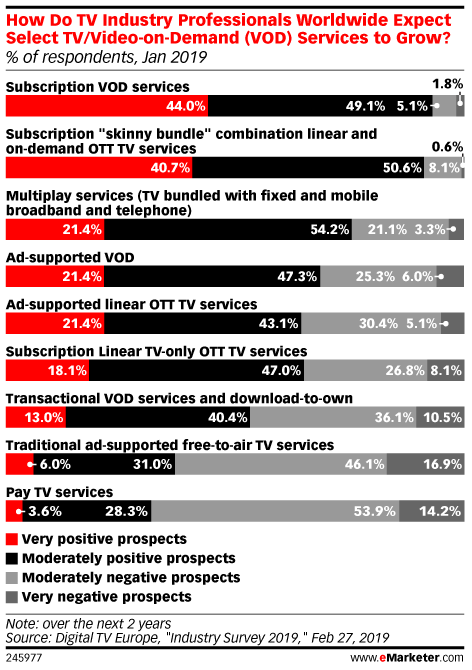
    I recently read an interesting article “TV Industry Eyes Hybrid Linear, On Demand OTT services” in www.emarketer.com based on the findings of Digital TV Europe’s “Industry Survey 2019.” According to the survey, nine in 10 industry professionals worldwide had positive outlooks on the two-year growth of “skinny bundles,” or subscriptions that offer both linear and on-demand OTT services as against subscription of only SOVD services like Netflix and Amazon Prime Video.


    The term “skinny bundle” was first coined to describe pared-down cable TV packages in the United States. In recent times, the concept of ‘skinny bundle’ has been introduced into the digital video sphere with an aim to describe either linear OTT services that offer customizable channel packages or a service that combines linear and on-demand content, as defined in the Digital TV Europe’s survey. As the article explains “The latter definition alludes to linear OTT services like Sling TV and fuboTV, which now have subscriptions that offer additional access to premium, on-demand content from services like HBO and Showtime. But it also represents SVOD services like Hulu, which bolstered its offerings with Hulu with Live TV, a linear service. (Source: https://www.emarketer.com/content/tv-industry-eyes-hybrid-linear-on-demand-ott-services?ecid=NL1001)


    In the US and other European countries, there is a growing trend of “cord-cutters” every year, referring to the consumers who are cancelling their subscription to cable and opting for other digital services. There are also a significant number of “cord-nevers” among younger generation (those who have never subscribed to traditional cable). It would be interesting to wait and watch what impact the growth of mobile internet in India has in the next few years on the cable TV and Dish TV subscribers.


    This model of skinny bundles can be adopted easily to suit the Indian TV industry, against our unique scenario of rapidly growing access to internet through mobile phones. Among the various options of skinny bundles shown in the above chart borrowed from the article, the option of Multiplay services (TV bundled with fixed and mobile broadband and telephone) looks like an ideal solution for Indian TV industry in near future.


    To sum up, it is going to be an exciting time for Indian TV industry from 2020 onwards with constant changes and innovations in the way of doing business. Needless to mention that the TV channels who were early adopters of OTT platforms will enjoy a distinct advantage.


  • No-brainer, but shape of things to come…


    By Indrani Sen


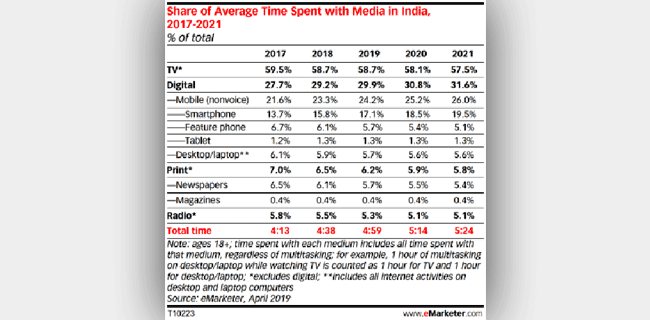
    Recently, eMarketer conduced a global survey of the time consumers in different countries spent on media consumption per day. Adult consumers in India will spend 70.1% (3 hours, 30 minutes) of their daily media time on traditional media and remaining 29.9%, or 1 hour and 29 minutes on digital media in 2019 (https://www.emarketer.com/content/india-time-spent-with-media-2019).
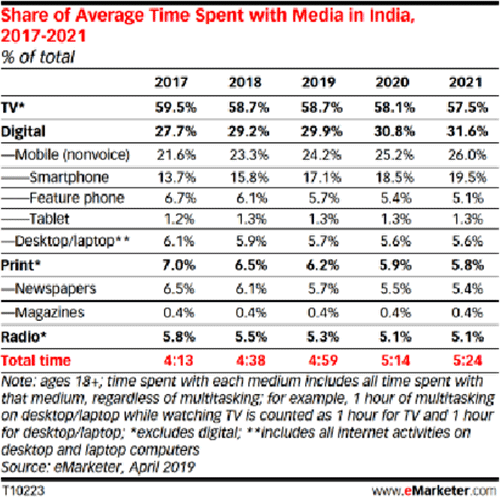
     

    A large part of the growth for time spent by Indian adults with digital comes from content consumption that takes place over the mobile internet. This trend will continue till 2021 based on availability of cheaper smartphones, a growing number of smartphone users and affordable data. It is estimated that in 2019, adults will spend 1 hour, 12 minutes online, and the majority of that time (76.5%) will be via mobile devices.

    In India, TV takes the largest share of total time spent at 58.7%, or 2 hours, 55 minutes. Digital is the second most popular medium with 1 hour, 29 minutes daily, a little under one-third of media time each day.


    In terms of ad expenditure, digital media is lagging behind their market share of daily media time spent. eMarketer forecast that digital and traditional will, respectively, account for 20.8% and 79.2% of media ad spending in India in 2019.


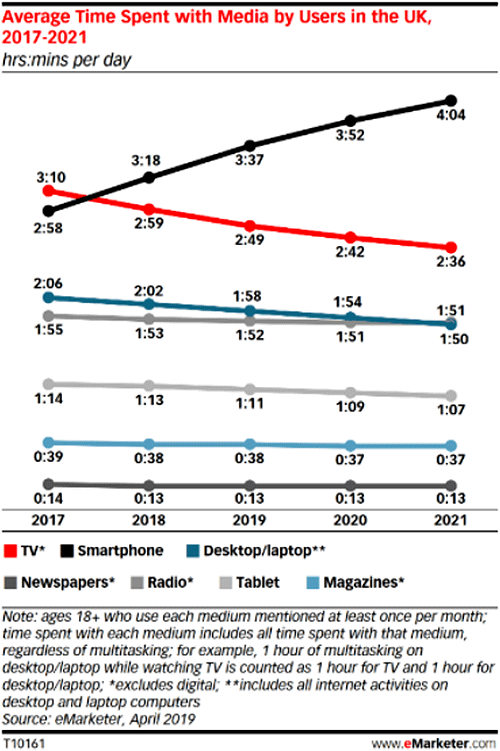
    As per the estimates of daily media time spent, the above table shows that by 2021 adult Indians will spent on an average 5 hours and 24 minutes on media consumption. There is head room for growth in the average media time, as adult consumers in many other countries spend 8 to 9 hours on daily media consumption. In some countries, consumers have reached the limit of their time spent on media and year on year there is hardly any growth. For example, consumers in the UK will spend 9 hours, 38 minutes with media in 2019, a 1-minute increase from last year. Similar to the rest of the world, time spent with mobile becomes a major driver of digital growth in UK as shown in the table below.


    We can expect in the long run, similar trends in daily time spent on media as reflected in the above table. According to the survey, time spent by consumers with digital and traditional media will continue to grow in tandem in India, but digital will grown at a faster rate from 2019 to 2021. However, it will take Indian consumers probably another decade or more before their average daily time spent on media can touch 8 to 9 hours as the growth of time spent on digital media will depend on spread of broadband across the country.


  • Localisation in Indian Digital Media Market


    By Indrani Sen


    Earlier this year, I was delighted to read the news that Chanpreet Arora had stepped down from the position of CEO of Vice Media to join as a Journalist Fellow in Reuters Institute for the Study of Journalism under University of Oxford. In India, only a selective set of people from industry interact with academic institutes and very few academicians act as consultants to the industry. Against that backdrop, Arora’s move was courageous and inspiring to others. Recently, I read on the internet her Fellowship Paper “The Evolving Indian Media Market: Succeeding through Localisation” and was impressed by her analysis. (https://reutersinstitute.politics.ox.ac.uk/our-research/evolving-indian-media-market-succeeding-through-localisation)


    When we discuss about localisation of media, our top-of-mind recall is regional publications, followed by regional TV channels and FM radio stations. Arora has presented an excellent analysis of the various factors guiding and governing localisation of doing business in Indian digital media market. Her article deals with macro economics, key global trends, digital explosion in India and models adopted by international companies in India under the section “Why India”.


    Next is a section on “Doing Business in India” covering from localisation of content and delivery to regulatory framework.  Arora argues: “India is one of the largest, most dynamic and growing markets in the world and is too big to ignore for any global player. Unlike its biggest neighbour, India’s primary attraction lies in its massive market size and open market policies for digital players. There is a viable demand for every solution. However, sharp segmentation is the key to success… If a company wants to come into India without any localisation then it will only be able to capture the top 1% of the Indian consumers who are highly affluent and have similar exposures as that of the western audience.”


    In her article, Arora presents some key aspects of building a robust business and localisation in India as understanding of Indian business culture, creating a strong local leadership, building a strong digital product with ability to focus on consumer segmentation, creating content in regional languages beyond Hindi, focus on video and audio, innovative content, metrics developed for Indian conditions and finally revenue diversification beyond advertiser led revenue model.


    The article deliberates on how to develop a healthy ecosystem and the various adjustment factors which an international company investing in India has to deal with. In conclusion, she elaborates on building a successful internet news media company for the future in India and shares her own industry experiences in the end note.  To sum up, it is a very good guideline for international companies interested in investing in Indian digital media market.


    I found Arora’s analysis lacking in only one aspect. Indian media today is vulnerable to administrative excesses and political pressure to a degree which International organisations are not used to dealing with. Arora has completely ignored this aspect of doing media business in India, though digital media in future will have to deal with many such situations.

  • Okay for media agencies to help clients take media & planning inhouse?


    By Indrani Sen


    According to the grapevine, some global media agencies are contemplating a move to allow clients to take media and planning inhouse. Noted one report suggesting that information coming in from the UK suggest a certain large networked agency is in for a significant restructure that may possibly include the group launching a separate business to help clients take their media and planning inhouse. This would have been unthinkable even in the first decade of the twenty-first century when the media agencies went on an integration drive to offer as many services as possible from one stable to their clients.


    But times have been changing and changing at a very first rate. Globally, consulting agencies have started competing for a share of the media (planning and buying) business and have started enjoying a high rate of growth. In order to counter competition from the consulting agencies, media agencies have rewritten their profiles as consultants and have started offering to their clients multiple choices for doing business. But their woes do not end just with countering the move by the consulting agencies. The bigger threat is coming from the clients themselves, many of whom are planning to move some of the agency work in-house.


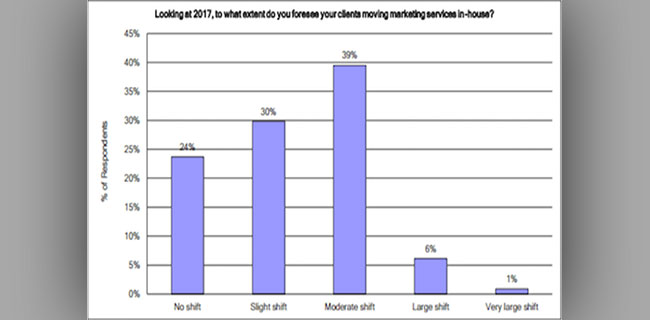
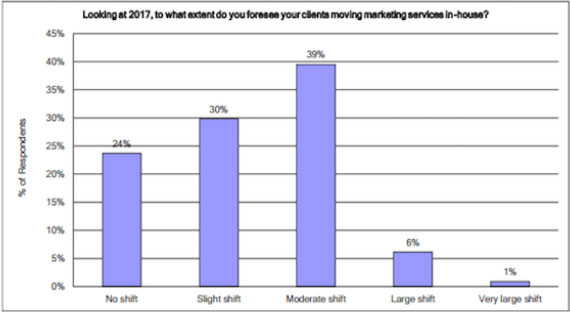
    The above trend has set in from first decade of this century with clients initially hiring media executives and managers to interact with their media agencies for ensuring better ROI. The move gradually expanded to clients shifting some of their marketing services in-house. The 2017 RSW/US New Year Outlook Report indicated that 84% of the marketing businesses themselves were planning a transition which may result in assigning on an average 20% less work to agencies.


    Source: 2017 RSW/US New Year Outlook Report


    In this changing business climate, what could be a better move than launching a consultancy business to help clients to take media and planning inhouse? Data monitoring and gathering, transactional capabilities, like programmatic planning and buying, optimisation through SEM and SEO, can easily be shifted in-house to give clients scope for driving efficiencies guided by the consultants from media agencies. This move will help to kill two birds with one stone, to counter the consulting agencies by providing data strategies to brands and to establish a better client-agency relationship which is essential for retaining the accounts in the long run.


    It may be difficult for individual clients to keep pace with technological changes like AI, VR, Voice, etc. The media agencies can play a role in providing clients with solutions for applications of such new technologies. In other words, the business of media agencies may shift from media planning and buying to creating solutions to marketing problems and application of the solutions across various technologies and platforms for reaching the target audience with least wastage.


    In the last quarter of twentieth century, creative agencies were focussed on creating big ideas, but their ideas were not data driven. The media agencies at the same time were focussed on data based strategies, number crunching and negotiating for best rates and deals. They were not interpreting data in creative ways, on weaving a story with data analytics. The future of media agencies lies in marrying creativity with data and analytics, a lesson which they should learn from the newer digital agencies who have gone back to the good old full service mode under one umbrella.


  • Promoting or Muzzling the Digital Media


    By Indrani Sen


    The Ministry of Information and Broadcasting issued a public notice on November 25 soliciting suggestions/ comments/ inputs from the stakeholders on the draft “Registration of Press And Periodicals (IPP) Bill, 2019”. It also announced that the IPP Bill 2019 will replace the “Press and Registration of Books (PRB) Act, 1867‟. The 152-year-old PRB Act of 1857 has been amended from time to time in the past and it is high time that a comprehensive new version replaces the act of the British period. On the face of it, industry would have been ready to accept MIB’s move.


    However, the salient features of the IPP Bill 2019 highlighted by the Ministry in the Annexure to the draft bill have raised many questions. It appears that the process of title and registration of all press and periodicals will be controlled centrally by the Press Registrar General (who will replace the current Press Registrar) appointed by the Government, doing away with the custom of publishers and printers furnishing declaration to local District Magistrate for authentication. This will undoubtedly raise the cost of the process for small publications that will have to travel to Delhi for registering their publications.


    The IPP Bill 2019 also proposes to strengthen the hands of Central and State Government by giving them the power of framing appropriate rules/ regulations for controlling the accreditation of publications and releasing of Government advertisements. This is ambiguous as if such power is entrusted with both Central and State Government and if in a particular state the local government does not belong to the ruling party at the centre, then a controversy may arise related to accreditation and release of government advertisements in the publications published from that state.


    One salient feature assures that the Bill proposes to do away with the provision under the PRB Act, 1857 of prosecution of publishers. However, going through the details of the draft, one discovers that the publishers can be fined by the Press Registrar General for not abiding by the rules and guidelines provided in the bill, but would not be prosecuted for jail terms. Reading between the lines, it appears that the publishers will have less scope of defending themselves as they would be given a dictate by the Press Registrar General and most likely would have to first pay the fine before starting a court procedure to protest against the dictate/ the fine imposed on them.


    Not highlighted as a Salient Feature but very salient for the publication industry is the proposed clause that Editors must be Indian citizens. MIB should look into how many Indian journalists work abroad as editors of foreign publications. Why should we impose such clauses restricting the scope of employment in India in the era of globalisation?


    Last but not the least, is the Salient Feature “The Bill proposes to have a simple system of registration of e-papers”. The modus operand of the simple system has not been spelled out in the draft bill. As and when MIB finally details it out, one may find it complex instead of simple. However, it is obvious that the intention of the Ministry is to bring all digital platforms dealing with news, e-papers and digital news websites under the governance of MIB.


    Some people within the industry are arguing that the registration requirements for periodicals do not apply to digital-only media houses as the definition of ‘publication’ in the draft bill says anything which is printed on paper and is meant for public distribution including periodicals, newspapers & books”. I would like to point out that the draft Bill does include a definition for ‘news on digital media’, and Section 18 of the draft RPP Bill, 2019 says that publishers of news on Digital Media shall register themselves with the Registrar of Newspapers of India in such manner and giving such particulars as may be prescribed.


    Apart from the fact that the phrase “such Particulars as may be prescribed” is dangerously open to unforeseen and unwelcome possibilities, Section 18 raises the question how do we define publishers of news on digital media? Who all are included in the definition? The digital version of traditional newspapers and TV News Channels; digital-only websites dealing with different types of news (political, sports, entertainment, industry specific, etc. etc.); OTT platforms carrying news sections; websites of various industry and technical associations carrying specialised news; websites of companies carrying news about them, their associates and links to related media releases; websites of academic institutes carrying news about their admission, courses, academic delivery, etc.- the list is endless. How will MIB control news websites not registered in India but available to Indian Netizens?


    In this game of playing catch with the digital media, MIB poses not only a severe threat to the freedom of digital media, but may also end up scrapping the proposal and making a fool of themselves. If it was so simple to control the digital media, then more advanced western nations would have done so by this time. No Democratic country in the world has been able to implement such rules and regulations for controlling the digital media. It would be interesting to wait and watch the developments in India.


    Indrani Sen is a veteran media professional and now an educator. She writes weekly for MxMIndia. Her views here are personal


  • What’s Hot on Online Video Viewing


    By Indrani Sen


    Hotstar, India’s largest video viewing platform, launched the third edition of its India Watch Report last week. The report is an in-depth study of online video consumption behaviour and trends of Indian viewers on Hotstar and narrates their deep connection with various genres of video content.


    As observed by ET Brand Equity on December 11, 2019, “From becoming the favourite destination for cricket lovers on the internet to making Game of Thrones a household name, where viewers in India woke up at 6:30 in the morning to watch episodes of the cult fantasy series, Hotstar has come a long way, and in the process played a critical role in shaping the country’s binge-watching culture.” (https://brandequity.economictimes.indiatimes.com/news/media/hotstar-decodes-the-online-video-consumer-unveils-india-watch-report-2019/72472795)

    The report has unveiled quite a few surprising facts, broken a few myths and has highlighted delightful insights through ‘Fun Facts’ under each topic explored in it. Uday Shankar, President, The Walt Disney Company APAC & Chairman of Star and Disney India says in the introduction “Until a few years ago, online entertainment was restricted to the urban affluent. However, we now see newer horizons of customer reach, with non-metro towns driving online consumption. Digital viewership among women has also grown by leaps and bounds. Moreover, Hotstar’s pan-India consumer base reveals how each person has unique and individual choices – men are watching drama and movies from the South are being consumed in the North. While the enchantment of cricket remains unabated, customers are increasingly getting attracted to kabaddi and football. The new Indian consumer is breaking old stereotypes and defying conventional wisdom.”

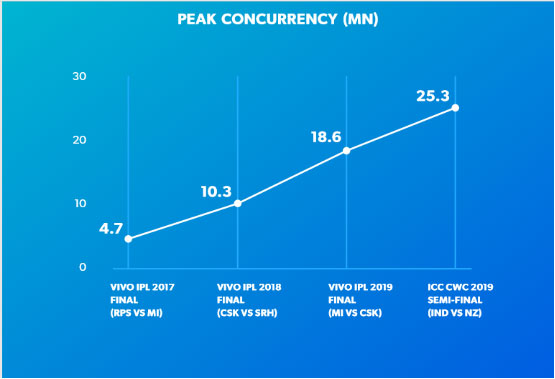
    In 2019, Hotstar saw 555 installs per minute and compared to 2018, the number of installs doubled. Video consumption went up three times compared to 2018. The chart tilted ‘Roti. Kapda. Makaan. Data.’ shows the degree of data consumption by states and surprises us by revealing that West Bengal and Bihar has more data consumption per viewer that Maharashtra and Karnataka. Live viewership of peak consumption of cricket events over 2017, 2018 and 2019 shows it is growing in leaps and bounds.


    Source: India Watch Report 2019

    95% of the video consumption on Hotstar comes from mobiles, which continues to be the primary screen for the users. An analysis of content category split by platform shows that Indians love entertainment, ranging from85% on Connected TV to 58% on Android. Sports are next in a reverse order ranging from 42% on Android to 15% on Connected TV. While most viewers happily switch their smartphone brands, viewers in West Bengal and Kerala have a loyalty to Samsung.

    There has been a shift in the demographics of online viewers of entertainment with the share of non-metros going up from 54% in 2018 to 63% in 2019 and Lucknow, Pune and Patna Surpassed Hyderabad, Bengaluru & Kolkata in video consumption. The overall share on women viewers in entertainment grew from 42% in 2018 to 45% in 2019, but overall video consumption by women grew by 3.2 times over last one year. According to the report “More women are owning their right to me-time!”

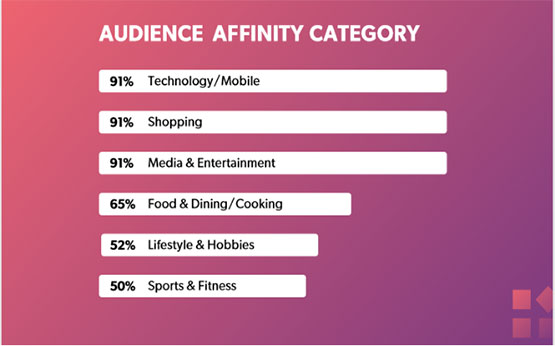
    There has been a huge surge in shopping and food enthusiasts online, particularly over the weekends with these becoming the fastest-growing affinity base on the Internet.


    Source: India Watch Report 2019

    As reflected by consumption across other media, 40% of total video consumption comes from regional languages with Tamil, Telegu and Bengali leading the list. While 80% of Tamil and Telegu video consumption comes from the native states, only 65% of Bengali comes from West Bengal. In cricket also language and loyalty went hand in hand with 2 times jump in Tamil consumptions during CSK matches, 1.6 times jump in Bengali consumption during KKR matches and 1.5 times jump in Kannada consumption during RCB matches.

    The report breaks myth of premium content for exclusive audience by highlighting 40% of Game of Throne viewers and 30% of Koffee with Karan viewers also watch Hindi family dramas. The fact that 40% of viewers of family dramas are men is also surprising as unlike the viewership of the family owned big screen TV, this data is based on individually owned small screen viewership on mobile. An analysis by genres again show men don’t dislike Hindi TV serials and their interest for family and mythological shows is at par with women.

    The report presents Leaderboard of TV shows and movies during 2019 highlighting women prefer scripted dramas over reality shows; Hindi movies are a hit with Mumbai showing the highest consumption, while Bengaluru leads the fandom for English movies.

    In 2019 online video consumption of news grew by 10 times compared to 2018 with consumption per user growing up 3.5 times. Millennials led the way with 65% of news consumption coming from the age group of 15-34. Delhi consumed the most news in India and surprisingly Lucknow and Patna watched more news than Mumbai.

    In sports, Cricket reigned supreme across India and became more interactive in 2019 as Hotstar combined viewing with video games, fandom and food. There is a section ‘Hall of Fames’ giving details of moments that gripped India during cricket matches, Leaderboard of cricket matches as well as most viewed ads during cricket matches. The report shows consumption of both football and kabaddi went up during 2019 but detail analysis shows that football is popular in South India and East India, while Kabaddi is most-watched in Uttar Pradesh and South India.

    The report presents a chart showing city wise log off timings. With the ever-growing options for entertainment and other content, sleep has taken a back seat. However, Mumbai, the city that never sleeps is not the last to sleep. Kochi and Gurugram surprise by staying awake more with Hotstar.

    Finally, kudos to the Hotstar team for the way they have developed India Watch 2019 as their marketing tool. Apart from enlightening the industry through facts and figures related to viewership on Hotstar, it has showcased case studies of how certain brands achieved their marketing objectives by advertising on Hotstar. In the disguise of a research report on video viewership, the report is an excellent marketing pitch to the advertisers and agencies for choosing Hotstar as their video viewing platform and converting non users of the medium to users.


  • Milestone Year for Mobile


    By Indrani Sen


    The current year will go down as a milestone year in the history of Mobile when 5G networks, the next generation of mobile internet connectivity was launched and in US TV was dethroned for the first time by Mobile as the media channel where Adults in US spend the most time.


    In April, 2019 Verizon surprised most of the world by launching first its 5G network in Chicago and few other locations. UK was not far behind as EE launch its 5G network, switching it on in six cities in UK in May 30 2019,  followed by Vodafone launching 5G  in seven cities in July 3, 2019. Australia soon followed suit. China and Korea have also been planning 5G network for a long time and launched the services around mid- 2019. China has officially announced that they will have 150 million 5G mobile subscribers by 2020. By end of 2019, 5 million Koreans are expected to have 5G phones.


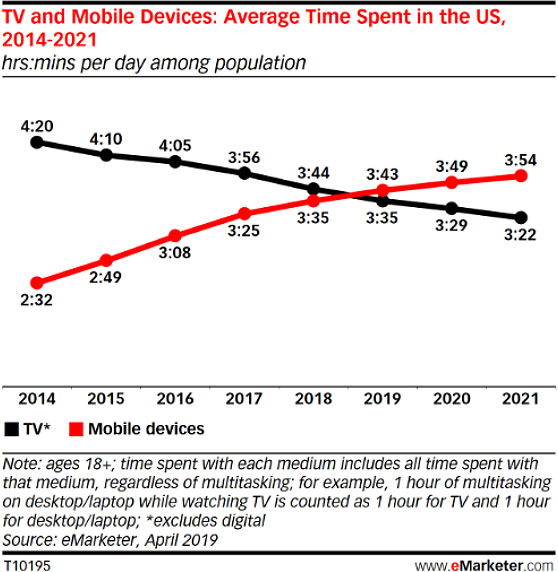
    On December 19, 2019 www.emarketer.com  announced in a report that the average US adult spent 3 hours, 43 minutes (3:43) on their mobile devices in 2019, compared with the average 3:35 spent watching TV (https://www.emarketer.com/content/mobile-year-in-review-the-launch-of-5g-is-the-biggest-story-in-a-busy-year-for-mobile?ecid=NL1001). Only three years back, in 2016 the same US adults watched nearly an hour more of TV than they spent on their smartphones and tablets (4:05 vs. 3:08). The forecast made by www.emarketer.com shows that the trend is going to continue with the share of time spent on mobile climbing higher year on year.


    In India, we are seeing the trend of increasing time spent on digital media driven mainly by mobile, but we have still years to go before an average adult Indian starts spending more time on mobile than on TV. But the trend has set in among select target audience groups including millennials at the upper and lower end of the economic ladder. A survey is conducted among college going students who including their travel and class hours spend a lot of time outside their home about time spend on TV and on mobile, may find that they are already spending more time on mobile than on TV, helped by the choices available on OTT platforms. The student community is a mix of young people coming from lower middle class to upper class homes, but almost everyone today owns a mobile which has become a necessity rather than a luxury.


    Reliance Telecom Services celebrated three years of Jio in 2019. Jio has revolutionised the use of mobile among certain working class people like auto rickshaw drivers, household maids who often indulge in seeking entertainment through their mobiles during short breaks in their work schedule. Such people usually have long working hours and as a result may have started spending more time on their mobiles than on watching TV at home. Again a survey conducted among such target audience groups may reflect the truth, but as these people have poor purchasing power, a survey among them will serve only academic interest.


    Current research conducted by different agencies are showing that time spent on digital media including mobile is growing at a faster rate than all other media in India. A recent report by McKinsey showed that with data becoming more accessible, monthly mobile data consumption per user is growing at 152 per cent annually in India — more than twice the rates in the United States and China and internet users will rise by about 40 per cent and number of smartphones will be double by 2023.
    (https://economictimes.indiatimes.com/tech/internet/internet-users-in-india-to-rise-by-40-smartphones-to-double-by-2023-mckinsey/articleshow/69040395.cms?from=mdr ) Time spent on mobile internet has gone up from 9.4 minutes daily in 2013 to 54 minutes in 2019 and is expected to reach 79 minutes by 2021.


    Global Web Index’s Social Media Trends 2019 Report showed that Indian users spent 2.4 hours on social media, in line with the global average (https://www.globalwebindex.com/reports/social) This finding is confusing as if the average time spent on mobile internet is 54 minutes then how can Indian users spent 2.4 hours on social media which is mostly consumed through mobile internet? The sample size of the social media survey covered 15000 Indians among 2.78 lakh respondents across 45 countries, but the details of the sampling frame work is not available, so it is difficult to figure out if the survey was limited to mobile users only which will explain the discrepancy.


    The writings on the walls are very clear, like the rest of the world the average adult Indian will also be gradually moving to spending more time on mobile than on TV. The global milestone year 2019 should be an inspiration for our telecom industry to accelerate their growth plans and move in that direction.