Category: BHUVI GUPTA

  • Bhuvi Gupta: Consolidation, the content economy & the consumer

    Bhuvi GuptaBy Bhuvi Gupta


    How many times have you watched Leo the Lion roar on a screen to herald the beginning of an enjoyable few hours? Confused? I am talking about the MGM mascot.  Last week when the news of Amazon acquiring MGM Studios came, my thoughts immediately went to Leo and his survival in the ‘prime’ jungle.


    The content jungle has truly become cutthroat and for survival of the fittest. Two years ago Disney acquired 21st Century Fox. The world over major players in Media and Entertainment are consolidating. This comes at a time when smartphones have enabled media consumption to skyrocket, platforms have solved for distribution and smartphones have enabled both easy creation and consumption. As a result, there is no dearth of content to consume. Becoming a content creator has become one of the most desirable jobs.


    As this ‘creator economy’ flourishes, legacy players are consolidating. This is a survival tactic, because unless there are consolidation and strong economies of scale these behemoth legacy players would find it near impossible to survive in the long term. How does this affect the consumer? Does the consumer benefit or not. Let us examine the pros and cons of this oligopolistic market.


    PRO – Customer is King – Infinite Choice

    In a typical oligopolistic market, there can be a lack of innovation as customers have a limited set of options to choose from. However, due to the pressure of the creator economy and the glut of consumer choice the major players know that unless they invest in creating new content, expanding the language markets they serve and have to be on their toes to only survive (forget thrive).  Hence, enabled by their deep pockets they have high-risk appetites that raise the bar for the entire market. The ultimate winner is the customer because of the variety of content, he or she has something to consume.


    Therefore, the creator economy is ensuring that downsides of oligopolies, i.e.

    barriers to entry and a lack of choice are both non-issues.


    CON – Market Dynamics

    When fewer players exist there are two major possibilities – first, prices may become as competitive as can, in a bid to gain market share or alternatively players may collude and prices are artificially hiked to benefit all players instead. The creator economy keeps the market in check because both options are bad for the economy. However, these companies have deep pockets, and they can take advantage of these deep pockets to manipulate customers via advertising to create an illusion of competitiveness in the future.


    CON – Manipulation by Big Media

    The disadvantage of an oligopolistic structure in media and especially news media is that propaganda can become common. Whether done blatantly by some and subtly by others, big media players often employ tactics to control perception and when only a few companies control the landscape they control the narrative. This is very dangerous as across the world we are seeing inciting riots and civil unrest. To a perceptive user these manufactured biases are apparent, but how many users are perceptive?  An oligopolistic news media structure can be detrimental to a country.


    To end, it is only 30 years that we in India went from being a monopolistic  (video) market with the state-owned Doordarshan to a pluralistic market crowded with media sources. Today, digital platforms are creating another kind of monopoly where 24/7 tracking, algorithms and resultant recommendation engines typecast people so they end up developing deep biases. While newer platforms break this dangerous cycle, by means of acquisitions this may be overcome. The US government has filed an antitrust lawsuit against Facebook, as it owns both WhatsApp & Instagram, and they claim it has monopolistic advantage.


    It will be only a matter of time that it is forced to break up to ensure a free and fair market, but I strongly think that will be for the greater good.


  • Brand Purpose & Credibility: Key to survival for Brands


    By Bhuvi Gupta


    Bhuvi GuptaThe last few weeks have had us all heaving a huge sigh of relief. The hold that the Covid-19 Delta variant had taken over our lives seems to have abated for the time being. We are all now in between where we have a longing to return to business as usual (usual being the new normal) at least for the short term but are scared about when the Third Wave will rear its ugly head.


    The storm of the last month made us all grateful for the positive power of the social media. And Dettol captures this sense of gratitude perfectly in its timely Covid warriors campaign which has just been launched. It hits the ball out of the park for multiple reasons – the timing, the ‘grateful’ mood of the nation, how it captures brand’s promise of protection and safety, and its high virality quotient.


    We all depended on Covid warriors the past few months – these are people who managed to save lives by foraging for medicines, ventilators and beds by using social media and extending their networks. It is influencer marketing campaign but in a respectful way because atypical ‘influencers’ are being used. By using influencers, Dettol gets the benefit of their reach and engagement thereby ensuring virality. The campaign replaces its branding on the package to celebrate these unsung heroes. Packaging has long been an under-leveraged branding vehicle. The campaign is hence a win all the way and is bound to pick up many a pencil, elephant and metal.


    Dove and  ‘Hair Love’


    I have talked about how with the information overload that the internet and specifically social media has decreased mental bandwidth for retaining advertising in many of my pieces.  Long-form marketing, content marketing, product placements that add credibility to the product narrative hence become more important to kindle a desire to purchase. Internationally, Dove and Nike are both investing in being true to their brand purpose.


    It has always fascinated me that the 2020 Oscar-winning short film, Hair Love was funded via a Kickstarter campaign and that a major participant in the Kickstarter was Unilever-owned Dove. Despite funding the short film, Dove did not try an overt product placement but kept its participation covert.  Just as other entities that contributed to the Kickstarter, Dove only appears in the ending credits. Because the messaging was true to the brand narrative, it helped market the film by arranging for community screenings, and reaching out to tastemakers and media.  This did not help them to sell products but it did help them to cement their perception as a brand which was genuine.


    Nike – Breaking2

    A similar case is of Nike. Nike has set the bar for sports marketing in the last few decades and they are constantly raising it to ensure they maintain a high share of voice.  In 2014, Nike set out to do what was impossible at the time – a project to break the two-hour marathon barrier. The documentary Breaking2 captured the entire three-year journey that culminated in an unsuccessful attempt in May 2017. While the star marathoner, Eliud Kipchoge missed the 2 hour mark by a mere 26 seconds in 2017, he achieved the feat in 2019.


    The project leveraged science and research to create an optimum environment which enabled the carefully chosen athletes a shot at breaking the record. The environment comprised of the perfect shoe, the best possible time of year, the track, a mechanism to manage headwinds (which affect speed) and many other miniscule parameters.


    While the project executed over a three-year period was directly linked to Nike’s products, it was the larger objective of relentless effort to enhance performance to test the limits of human endurance and capability, which made it closer to brand purpose than marketing communication.


    It was hence a perfect balance – communication that served a larger purpose while also enabling the company to sell shoes.


    Brand purpose is key in 2021. Customers want brands to embody an inspiring ethos, have a strong point of view and take actions to spread their purpose rather than communicate only to sell products.


    In a crowded market, the only way a brand can stand out today is to add credibility in communication.  Marketing is inherently transactional in nature, but communication which leads with brand purpose is key to move customers down the funnel and make them return, especially for products which are easily replaceable.

  • How Meme Marketing has become a Must-have Arsenal for the Modern-day Marketer


    By Bhuvi Gupta


    Bhuvi GuptaDifferent reports peg India’s social media user base anywhere between 350–400 million users. That is roughly the population of the United States. The millennial and Gen-Z generations that form a bulk of this number talk in a universal language of emojis and memes. Memes have penetrated our style of communication indelibly.


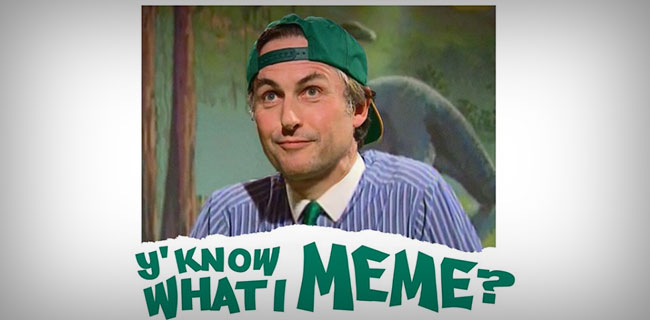
    A subset of moment marketing – Memevertising – is not just having a moment but is here to stay. Like emojis, the language of memes is universal. Memes work because they take universally relatable scenarios coupled with a striking expression on the faces of the meme star(s). This creative hence can lend itself to multiple and different interpretations and hence spreads.


    The word meme has its origins in the Greek word mimetic, which means to imitate. As per Wikipedia, a meme is formally defined as “a unit for carrying cultural ideas, symbols, or practices, that can be transmitted from one mind to another through writing, speech, gestures, rituals, or other imitable phenomena with a mimicked theme. Considering the increase in time spent online due to the pandemic, and difficulty in communicating via non-verbal signals, now more than ever before memes should be an essential part of a marketers toolkit.


    In today’s hyper-connected world where all brands aspire to go ‘viral’ at all times meme marketing or memevertising is a great way to actually accomplish the goal.


    Don’t be blatant, be subtle:

    Memes have a unique structure in which they put a humorous or relatable twist in a piece of communication that is essentially derivative. However, the best memes do not reference brands via their name but the more intangible elements such as the personality, positioning and values. Like moment marketing, memes capitalise on contemporary situations such as sporting tournaments like IPL, Wimbledon, politics, trending TV shows and movies etc. Hence, most memes have a shelf life so timing becomes key.


    Doing it right:

    Today, brands have elaborate content calendars where in they play to every celebrated stereotype and day just to ride on the trend. A lot of this effort often gets lost because the messaging is generic, it doesn’t fit the target audience, and there is a glut of content.  While leveraging memes, this risk is heightened, as memes by their nature are light-hearted. So treading with caution is essential to avoid a misfire.


    The caveat is of course that even when consciously trying to ride on trends, brands must understand their brand, target audience, consumer behaviour profiles so that relevant people discover the generated virality.


    Agility & Responsiveness: 

    Brands need to be agile and responsive to create and sustain brand value today. This is true of managing their reputation online, assessing dynamic consumer behaviors and moment marketing. Most of this, brands are already doing. Memevertising is but an extension of that.  To capitalise on the day that social media posting has to create a few different expression and globally known stars.


    Spreading the message:

    In terms of the marketing funnel memevertising fits into  ‘awareness’ stage. By capitalising on trends, brands have an opportunity to get discovered by an audience that may not have been exposed to the brand before.


    Hence, if brands nail their memevertising they must ensure there is an effort to distribute their messaging. This can be done by animating memes into GIFs and sharing them on GIPHY, and Google-owned Tenor. These platforms allow brands to have brand channels and are integrated with social media platforms like Instagram, WhatsApp and Facebook etc.


    Netflix, Drake & Irrfan Khan – The meme:

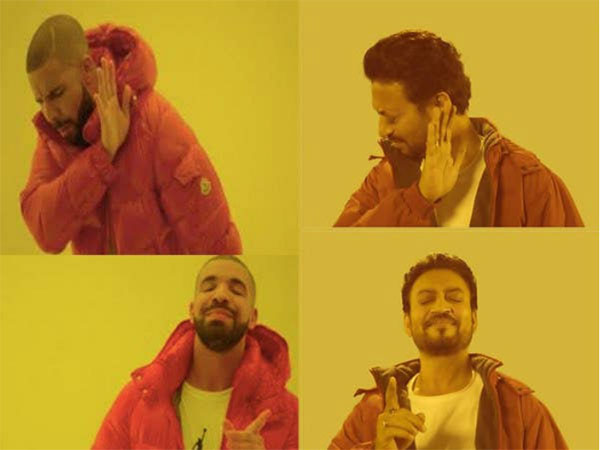
    More than his music, Drake would be remembered for how he has used memes to create his indelible brand across the world. Whether or not one has heard his music the world has definitely seen and mostly forwarded one of the renditions of his ‘Hotline Bling’ meme. A designed strategy, which has helped him gain worldwide, fame and has a million lessons for marketers.

    Irrfan Khan also famously replicated this meme while marketing the film ‘Hindi Medium‘ with AIB in 2017. Khan replicated the Top 6 trending meme formats at the time. The irony of course is that all six original memes are as popular today as they were four years ago.


    Netflix is another master at memevertising. A glance at their social media timeline is a lesson for budding memevertisers, because they are witty, on trend, never blatant about their brand name.


    In conclusion, memes and gifs are here to stay and to brand must use them in their digital marketing calendars.


  • Bhuvi Gupta: How Marketers can both make money and save money via behavioural targeting

    Bhuvi GuptaBy Bhuvi Gupta


    It’s often said half of the monies spent on advertising are wasted, you just don’t know which half. Before the advent of digital advertising this was true. I ‘d say that the vast majority of advertising was a waste and only a fraction reached the right audience, because marketers relied on high-budget, high frequency ATL campaigns to get mass visibility. This was because while behavioural targeting made sense in principle, it was near impossible to execute and marketers had no choice other than relying on demographics to reach potential customers. Hence, attributing marketing spends to customer acquisition always ended up being vague and immeasurable.


    While demographics like age, gender, financial status are a precursor to behaviour, they are not a determining factor. Statements like ‘she doesn’t act her age’, ‘spendthrifts’, being mannish, ‘spinsterhood’ et al while used derogatorily have always been common and defined a larger part of the population than we‘d like to believe. Therefore, depending solely on demographics means losing customers, which may not even feature in the target audience. With gender fluidity, freedom and credit cards gaining acceptance, demographics have lost relevance even more as people can afford to now fit into which ever buckets they like.


    With digital advertising demographic targeting should hence be used only as a filter. There is a wealth of information that digital advertising platforms like Facebook (via Custom and LookAlike Audiences) and Google (via Tag Manager) allow you to access that can help marketers to target consumers in more nuanced ways through their behaviour, personal interests and hobbies and life stage.


    In 2019, P&G changed its targeting strategy from demographic based to a psychographic based. They called it ‘smart audiences’ and described it as “reinventing brand building from wasteful mass marketing to mass one-to-one brand building fuelled by data and technology. Based on a 1 billion strong customer database they defined up to 350 + new narrowly targeted audiences focused on the intersections of behaviours, mindsets and P&G products minus typical demographic information. Examples of these newly targeted audiences included ‘first-time moms’, ‘first-time washing machine owners’ etc. The move helped them cut $350 million from their advertising budget while increasing sales.


    The caveat here is that a company the size of P&G has a wealth of first-party data that it can leverage to great effect. However, for smaller companies, this is just not possible. A similar way to reach audiences is to leverage third party cookies or lookalike” or “actalike” audiences offered by large advertising platforms (like Google, Facebook, Snapchat, and Pinterest).


    Cookies to avoid the cookie-cutter approach

    Bad puns aside, Cookies are trackers that are placed on a user’s computer by a website or application. These trackers collect data that is used to provide the user with a more relevant web-surfing experience. Cookies also store user settings, login information, and other useful information. There are two main types of Internet cookies: first-party cookies (like used by P&G) and third-party cookies.


    First-party cookies are stored by the website and third-party cookies are created by domains other than the one currently being viewed. First-party cookies make a user’s experience on the website more streamlined, while third-party cookies streamline user experience across the Internet by serving relevant ads on other websites.


    Third-party cookies can be used to personalize user experience across the Internet. For smaller companies that do not have access to first-party data, they must be used for retargeting and advertising.


    Hence, focusing on behaviour and life-stage that are now disassociated from demographics like gender, income, location, age is key to measuring the Return on Investment for marketing. As technology evolves using tools like Artificial Intelligence and automation, personalisation to improve customer experience will become crucial. Behavioural targeting will be key to unlock the future. The sooner marketers jump on the bandwagon, the better it is for them and the customer.

  • Why Humans are Obsessed with Sports & Why Marketers Maximise it


    By Bhuvi Gupta


    Bhuvi GuptaWell aware that I belong to the minority I have always been surprised by the widespread obsession around sports. Why do so many of us care about wins and losses, have heated debates around teams and players, stay up at odd hours (to catch up on international matches) for something that ultimately has no impact on our lives?


    Last week, I went down the rabbit hole to find out how science explains it. Turns out scientists are mystified too, But they’ve been working on it, and this ASAP Science video shares some logic, which adds up. Apparently, watching the team you support, win, leads to a spike in both testosterone and dopamine levels. Testosterone helps spike brainpower, awareness and muscle growth and Dopamine activates the pleasure centers in the brain, helping increasing memory and learning. Hence, we are biologically wired to watch Sports.


    These biological hormonal spikes are not limited to Sport but even to Politics. This explains the mystifying skyhigh TRPs during exit polls and 24/7 on counting day, even for state elections too far from your location to have any impact on your life.


    Marketers know that this works and that possibilities are endless. With the ubiquity of the mobile phone there are now a plethora of options for advertising across budgets. With easy access to content, India is also moving beyond cricket for advertising, product placement and brand ambassadors.


    Generating mass awareness at mega sporting events

    From a marketing POV, sports advertising works best for the ‘generating awareness’ peg of the marketing funnel. Every year, records are broken for advertising revenues earned during IPL in India, the Super Bowl in the US and other tournaments across the world. IPL and Super Bowl ads are recognised sub-genres. And marketers can use the various platforms available. These include in-stadium advertising, advertising on TV, and digital, second screen advertising, social media advertising and digital content platforms for post-match analyses. There is a well-oiled ecosystem that works to maximise eyeballs and using it well, while no cakewalk reaps dividends.


    Work + Play for B2B

    B2B companies have been using international sporting tournaments to create awareness at both B2B and B2C levels while building new business opportunities. Case in point, Indian IT companies in the last decade. In 2015, HCL officially partnered with Manchester United to innovate a unified fan experience. This partnership used technology to transform both the real-time stadium customer experience as well as the digital user experience. A ‘physical’ UnitedXperience Lab was also set up at Old Trafford Stadium.


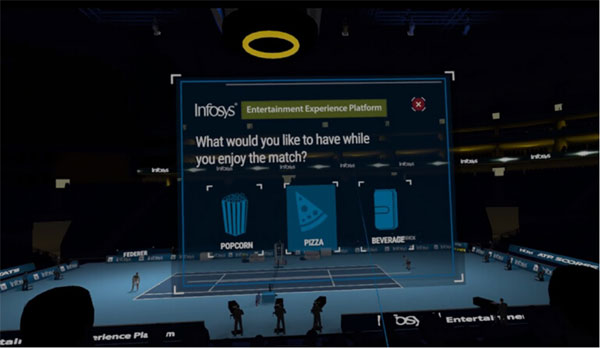
    In the same year, Infosys also executed a similar partnership with the Association of Tennis Professionals (ATP), the governing body of the men’s professional tennis circuits. They have been instrumental in supporting ATP’s development of key digital assets and infrastructure, including ATP PlayerZone, ATP Stats Leaderboards, ATP Second Screen, and the ATP app.


    Such partnerships help showcase the company’s skills while getting them eyeballs globally.


    Brand Ambassadorships

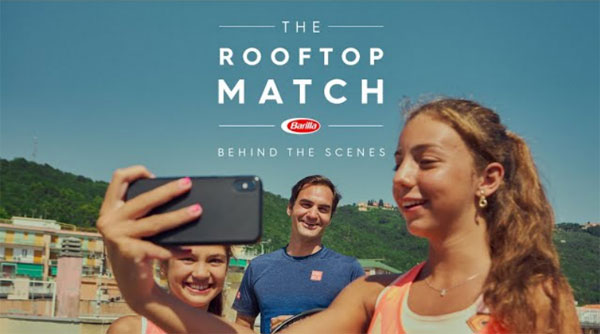
    The oldest trick in the book, but still so effective are vanilla brand ambassadors. The medal and match winners are role models for ordinary citizens. Their tough journeys to the pinnacle of sporting success occupy reams of media coverage and remembered. All players have clearly defined value systems and choosing an ambassador whose values align with the brand can work wonders to generate awareness and credibility. I like the way Indian brands are now gravitating towards Olympians, Badminton, Boxing and Weightlifting stars and looking forward to the advertising that Tokyo 2020 winners will bring in the wake of their wins. An international favourite is the world’s largest pasta company, Barilla’s long-term association with tennis legend, Roger Federer.  The brand releases one campaign about every one-and-a-half years that highlight quality, simplicity, and excellence which are values synonymous with Federer.


    Watch the 2020 Covid-19 campaign ‘The Rooftop Match’


    Sports are the best of reality TV and give all the thrills except those voyeuristic. The viewer gets unedited and unscripted emotion, drama and discord, fun and all the dopamine hits described before. There are underdogs and alphas, strategizing and wild cards and even fixing. Marketers need to expand their budgets beyond cricket in the long term and not just in the wake of wins. The urge to watch is biological and there is so much that can be done!