
Category: BHUVI GUPTA

  • Amp up your Communication Strategy through Easter eggs

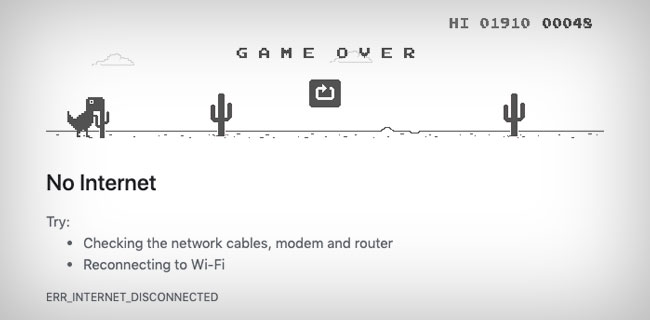
    The Google T-Rex game helps pass the time while waiting for the internet to come back


    By Bhuvi Gupta


    Bhuvi GuptaAs I sat this Sunday morning, weighed down by the news that India had breached the 90,000 mark of daily Covid case reportage, I turned to my favourite hack to calm myself down – turn off my Wi-Fi to stop the notifications engage my mind with the T-Rex game on Google Chrome. As I used my cursors to miss the obstacles, I realised that Google’s communication strategy has used so many of these Easter Eggs over the decades, and how they have kept the user engaged so well.


    Easter Egg is a funny name for communication strategy and refers to the treasure hunt for children organised during Easter, where children hunt for the colorful and decorated chocolate eggs, hidden around the house by their parents. The eggs often contain surprises inside their chocolate exterior, making the experience of finding them, even better. Like its eponym, in business terms an Easter egg refers to brand communication hidden within your user interface. Originally, used by coders, to add quirk to what they felt was boring lines of code, it is now colloquially used to refer to any covert brand communication and is designed to humour the user and add personality to the brand, when discovered.  Due to their covert nature, Easter Eggs inherently generate word-of-mouth, which aids even more discovery and virality.


    In a crowded market where users are estimated to be bombarded with more than a thousand ads a day, (this number is debated, some research claims its more than 5000) an Easter egg is a great way to be memorable. However, Easter eggs are most effective for brands that have an established and growing audience, as the discovery of the communication is purely organic. Hence, for companies and products in beta, even if the idea of communication with zero spends seems attractive, deploying Easter eggs should be delayed until the product has an established consumer base.


    The Google search page actually does a barrel roll, when you search for ‘Do a barrel roll’ on Google


    On the Internet, the possibilities are endless – while most online businesses have caught on to having creative 404-pages, there is so much more potential to make an impression. Both Google and Apple have used Easter eggs as a communication strategy –  Google has used the T-Rex game,  Google Doodles and customised search results to drive conversation and engagement since its inception. The customised search results for ‘Do a barrel roll’, ‘Google gravity’ etc., also keep getting a new life every few years, when they are discovered by a new set of users.

    Apple generated far more organic word of mouth when Apple users discovered Siri’s sassy responses, than the traditional PR and marketing they did for the Apple assistants’ launch.


    Easter Eggs have gotten relatively under-utilised in India. A missed opportunity as the Indian marketplace for internet-based consumer businesses is growing and building a loyal user base is crucial for each player. For instance, every e-commerce site has mega sales every quarter, which are promoted through multi-crore ATL campaigns. Planting some Easter eggs on the app & website during these times of high traffic is a great way to enhance user experience, generate word of mouth and differentiate from the competition. Another great application is using an Easter egg to stem the irritation during a negative experience like a broken link or a product in your basket, which gets sold out before purchase.


    Easter eggs are possible on every product with an interface – be it product (via its packaging) or even content ( show credits, the set). My personal favourites include the messages on the bottom of Paper Boat pack and the vanity cards written by producer-director Chuck Lorre at the end of every Big Bang Theory episode, both of which make you feel closer to the product.


    It’s 2020 and people are tired of challenges and trends which ‘go viral’ on the back of generous advertising budgets and often end up losing their core message (Black and White photo challenge, anyone?). Easter Eggs are memorable because their playfulness helps them to become conversation starters, gain word of mouth, discovery and trial. Marketers, I request you to have some fun with your brand, add the personality that is missing, and watch as the organic love flows.


    Bhuvi Gupta is a marketer with over 10 years across industries, of which the last six have been in Media & Entertainment. She has been a part of many launch marketing campaigns – specifically at the Times of India group, Republic TV and the latest in marketing a Bollywood film. She will write on A&M (mostly marketing, but often on advertising too) every other Tuesday. Her views here are personal. She tweets at @bhuvigupta3

     

  • Why Brands have a Responsibility to Step Up & Help in Economic Recovery


    By Bhuvi Gupta


    Bhuvi GuptaIndia has been under a full lockdown since March 24, 2020. After three subsequent extensions, a relatively unsuccessful Unlock 1.0 & 2.0 in June and July, spikes in positive cases are forcing many Indian cities to go under full lockdowns, again.


    As the economy degrows, unemployment rises and sales decreases and every subsequent FY21 GDP forecast is worse than the previous one, the future seems bleak and unlikely to bounce back soon.


    Basis a GroupM report released in June 2020, India’s GDP will contract by 3.7% and subsequently overall advertising spends will decline by more than 20% this year.  This follows, as advertising in current scenarios is an after-thought, with most companies focused on reviving production and distribution. The drop in advertising has led to unprecedented job losses in the ad-dependent media industry, so much so that industry body International Advertising Association (IAA) has been running a campaign, ‘Let’s Advertise’ to spur advertising, since June 2020.


    The campaign seems to have made some impact  – brands in the Health & Hygiene categories or those that can pivot their messaging to sound Covid-wise have started advertising. However, this is a small portion of the market, and for the economy to revive, brands which can afford to, should, play a bigger role in recovery.


    As Keynesian economics espouses, spending spurs consumption during times of economic downturns. If brands (which can) spend monies, this will spur demand, and the money will help the economy as a whole. In such pandemic times, the messaging of many brands is irrelevant, a great way to remain visible is by running Public Service Announcements (PSAs) campaigns.


    While a decade ago, PSAs were issued by govt bodies, with the advent of social media, brands regularly run socially relevant campaigns because they help the brand earn respect and hence brand equity while also doing social good. Due to their affirming messages, PSAs also have higher than average trend-worthiness, i.e. audiences share these ads more because it helps them feel good about themselves to do something socially relevant.


    With the notable exception of Mumbai Police PSAs, most PSAs released by government bodies in India, are pedagogical spiels, which are not engaging, even when starring celebrities.


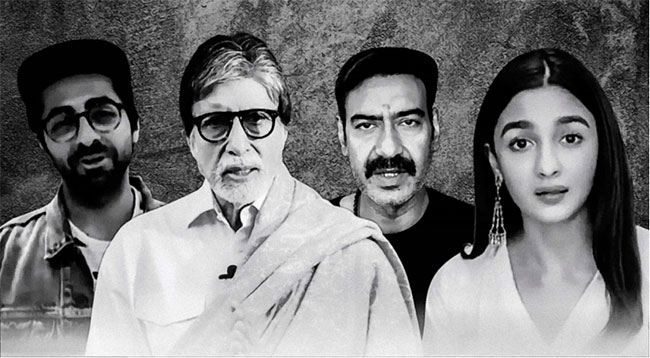
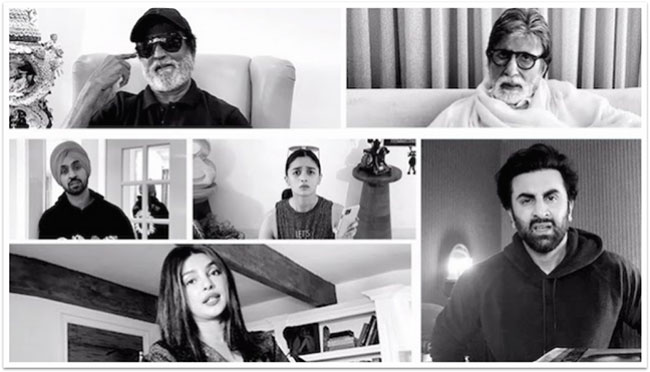
    In March 2020, just as the lockdown was announced, the Maharashtra government released a pedagogical PSA on Covid-19 headlined by the biggest stars of Bollywood including Amitabh Bachchan, Ranveer Singh, Ayushmann Khurrana, Alia Bhatt, Akshay Kumar etc. A month later, Sony launched a PSA with a similar Bollywood lineup but a much better storyline. (The PSA can be viewed here – https://www.youtube.com/watch?v=OQk0VrL2I-w


    Short film – ‘Family’, conceptualised and virtually directed by Prasoon Pandey for Sony Network starring celebs from across the country used storytelling creatively to communicate the importance of staying at home. It was telecast in April 2020. https://www.youtube.com/watch?v=ju7ku–S6F4


    Hence, in Covid-stricken times, effective PSAs can help brands kill many birds with one stone  – create brand equity, earn public goodwill, spur good behaviour, meet annual CSR target spends as mandated by Indian law and, most importantly, help the economy recover.  Earned goodwill will also spur trials for those whose loyalties lie with competitors.


    Budget-struck brands can collaborate with other brands; conduct digital-only campaigns to give the push to the economy to help its recovery.


    As brands with diverse target audiences release PSAs, different strata of society will get targeted which will help in overall compliance. This is backed by research conducted by 2019 Nobel laureates in Economics, Abhijit Banerjee and Esther Duflo. In a paper released last month, they have shown that frequent celebrity messaging, in addition to the existent large-scale government messaging on Covid-19, can positively impact behaviour by nudging people to follow best practices. The research also shows that there are spillovers of good behaviour in the entire community even when a few are targeted.

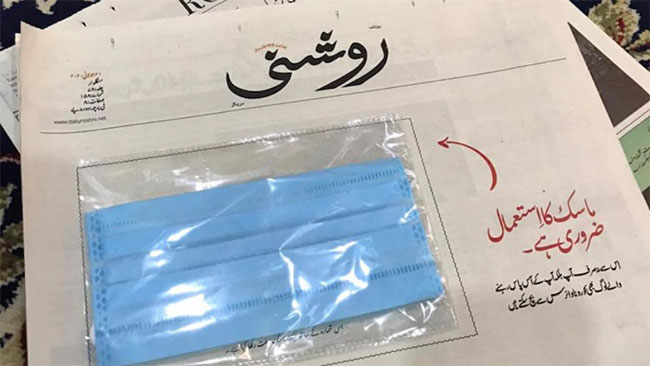
    In a CSR initiative, waiting to be replicated by national dailies, Kashmir ‘s Urdu newspaper Roshni, affixed a mask on the front page of the paper on July 20 to drive home the message about mask usage. Kashmir was under complete lockdown from 22-27 July, due to a rise in Covid cases.

    VIRALITY TO BEHAVIOURIAL CHANGE

    The challenge even for good PSAs is translating virality to behavioural change. The ease of communication brought on by social media has made armchair activists of the majority of the population. However, while these activists enable knowledge-sharing with other people they don’t bother much with acting upon the gained knowledge before moving on to the next trending topic. Which is why, despite the dangers of inobedience, many who wear a face mask, style it as a chin-guard.


    Hence, brands should be careful to create PSAs which are not just a retelling of facts, but facts communicated in way to appeal to their targeted audience, whether it is through high quality storytelling, a new ‘Hook Step’ or a ‘Challenge’ which is creative enough to warrant sharing.  Basis the research by Banerjee and Duflo, leveraging brand ambassadors signed on for lavish multi-year contracts will also help to drive behavioural change. So brands, any takers?


    Bhuvi Gupta is a marketer with over 10 years across industries, of which the last six have been in Media & Entertainment. She has been a part of many launch marketing campaigns – specifically at the Times of India group, Republic TV and the latest in marketing a Bollywood film. She will write on A&M (mostly marketing, but often on advertising too). Her views here are personal. She tweets at @bhuvigupta3


  • Pivot or Perish… Using your business moat to survive in the pandemic


    By Bhuvi Gupta


    Bhuvi GuptaAs a marketer for the last decade if there is one thing that I can attest to be true is that marketing jargon comes and goes with an average lifespan of a year or two. The jargon du jour is backed by stellar logic, often introduced by a book, or a widely respected businessperson, and has wide applications in the entire gamut of business strategy.


    The latest buzzword is the concept of the ‘moat’ as espoused by Warren Buffett. While he first shared this concept during a Berkshire Hathaway shareholder meet in 1995, it has seemed to catch on in pandemic. (Maybe, because being stuck at home is like a having a moat around you?). Mark my words, we are just at the beginning of the lifecycle of this jargon and you’ll see multiple applications in interviews, podcasts, CEO roundtables et al in the coming times. 


    What are economic moats?


    The usage comes from ancient times, when a moat was a water body built around a castle so as to give the king some time to plan his defense when attacked by an invader.  The concept itself is golden, as most espoused by Buffett are – An economic moat is a distinct competitive advantage a company has over its competitors, which allows it to protect its market share and profitability over the long term. Companies can build moats by strengthening their brands like Apple and Coca-Cola, achieving economies of scale like Amazon, or even lobbying for special status from the government like Patanjali.


    Economic moats have existed since commerce has, but in the digital age, using data, network effects, online marketplaces, search, and social networks can help create wider and longer-lasting moats.


    According to a report from CBInsights, moats can be classified into four types –


    Network Effect– those products whose value increases the more people who use it. All social media networks have network moats, which explains why a Telegram has not replaced WhatsApp despite offering some advantages

    Cost Moats– when users have a high sunk cost in the product or service (high one-time or recurring membership fee) which make them reluctant to switch

    Cultural Moats– when consumers buy into the product for the brand promise and the values it represents. For e.g. people consume Dove because it promotes ‘real beauty’, Coca-Cola due to its great emotional marketing which talks about happiness

    Resource Moats– due to patents or preferential treatment on account of a governing body. Typically why pharmaceutical companies have huge lobbying budgets


    How companies have used their moats in India to remain relevant in the pandemic


    The pandemic has been a death knell to the global economy – USA’s economy has contracted by a third, in its largest quarterly contraction since 1921. India is not expected to fare any better, when numbers release later this month.


    Companies are being forced to be agile and leverage their business moats, and pivot to newer consumer behaviors to remain afloat. Many companies have successfully pivoted their products, launched line and brand extensions to have new health and immunity claims, which is why we even have Chyawanprakash and Haldi ice-cream now (from Amul and Dairy Day Plus). This has come easier to the behemoths like ITC and Dabur, which have both Innovation teams sitting on years of research, and vacant factories to put into use.  As a result, in the last three months, ITC has launched six, and Dabur 15 new products. Such companies also have the business advantage of well-established supply chain and distribution channels.


    How companies which don’t have a moat can remain relevant in the pandemic


    A July 2020 McKinsey survey found that an overwhelming 91% of consumers reported trying a new shopping behavior in India due to the pandemic. Two key trends that stand out from the survey are an acceleration in the rate of digital adoption which has seen a 10+ percent growth in online customer base during the pandemic & a new DIY culture in the middle class which was reliant on household help or access to almost everything via a few taps on their mobile screens. New product categories for fruit & veggie wash, contactless dispensers, dishwashers which would have years of promotion and audience interactions have seen demand rise exponentially.


    These two are the life jackets for Indian companies that can help save them in the coming months.


    The pandemic has facilitated trials (often via e-commerce) as well as repeat buys in the 5+ months of its duration. This is one of the silver linings of the pandemic because categories and products, which would have taken companies years to launch and for consumers to adopt, especially in a value-conscious market like India, have launched overnight.


    Restaurants, which are arguably the worst hit, have started retailing recipe and ingredient kits and sauces. Pictured above are the ready-to-cook sauces, and gravies launched by Jubilant FoodWorks (which runs Domino’s Pizza and Dunkin’ Donuts in India)


    Indian companies, especially the beleaguered ones, must leverage this time to pivot, because even if some of these consumption shifts are pandemic specific, many new behaviours will stick because, getting consumer trials is one of the most difficult parts in a product’s lifecycle.


    Talking from personal experience, now that I have been forced to realise that I am not a half-bad cook, I have often wondered why was I so reluctant to cook earlier and why was I so dependent on my cook or ordering food in. If the rough survey of my social circle is to be believed, I know I am speaking for scores of us in the middle class. These cooking sauces and cheaper dishwashers are only helping to cement this new-found realisation into a resolve to be more independent.


    Bhuvi Gupta is a marketer with over 10 years across industries, of which the last six have been in Media & Entertainment. She has been a part of many launch marketing campaigns – specifically at the Times of India group, Republic TV and the latest in marketing a Bollywood film. She will write on A&M (mostly marketing, but often on advertising too) every other Tuesday. Her views here are personal. She tweets at @bhuvigupta3
     

  • MxM Open Classroom: Digital Marketing


    Why MxM Open Classroom: Upskill yourself!, That’s what one is told so as to make the extended lockdown work for us. But while doing one of the hundreds of free or paid courses sounds easy, in realit,  it isn’t. And going through the tests and quizzes that are contained in them can be quite daunting. Starting this week, we start a series of ‘open classroom’ sessions. Each week, we will have a five-part series – Monday through Friday that will tackle an important area of the media marketing services domain. We kick off our series with a focus on Digital Marketing with Bhuvi Gupta, a marketing specialist who has


    The HOWs and WHYs of making trends


    By Bhuvi Gupta


    According to a FICCI EY report, the Indian Media and Entertainment (M&E) sector grew 9% to reach INR 1.8 trillion in 2019.


    The rapid spread of mobile access is helping the growth of the digital media industry. With a population of 1.3 billion, 688 million internet subscribers and nearly 400 million smartphone users, quantitatively, India already has high numbers but also has high potential for growth. This means that the digital media industry which grew 31% to reach INR 221 billion in 2019 will continue growing and industry experts expect it to grow at 23% CAGR to reach INR 414 billion by 2022. Digital advertising grew 24% to INR 192 billion and is expected to follow a similar growth trajectory. As digital penetration increases, more advertising budgets will get diverted to digital, especially because digital advertising is easier to measure and to finely tailor target audiences.


    The biggest challenge with digital is the evolving landscape – changing algorithms of popular platforms, newer applications of Augmented Reality, new platforms with niche demographics (like Helo, ShareChat, Likee, Bigo), and newer forms of advertising like influencer marketing to only name a few. This makes it difficult to allocate digital budgets effectively because the ‘how’ of being effective is constantly in flux.


    This series is in a sense a cheat sheet to understand digital advertising better and to ease navigating this evolving landscape. In each article, we will evaluate how to best create virality by leveraging popular digital platforms. Key focus platforms will be Instagram, TikTok and Facebook, chosen because of the reach, they garner.


    To kickoff the series we focus on the objective of many if not most campaigns – ‘Virality’. Making a campaign ‘viral’ is the holy grail by which campaigns are measured & many awards given, today.


    Marketers know that in spite of how topical and relevant the communication it is impossible to guarantee campaign virality because there are too many variables.  However, what is attainable is ensuring that a campaign ‘trends’.


    The key difference between a campaign ‘trending’ and it ‘going viral’ are in longevity and organic reach. While a trend may last for a short period of time, may be paid for and limited to a particular target audience, a campaign going viral implies that it has had the longevity of a few days, substantial word of mouth and a high recall value that has surpassed its initial targeting. Hence, while all viral campaigns, trend, not all trending campaigns go viral. With the right strategy it is possible to make a quality campaign trend, which may be the push it needs to achieve virality.


    A quality campaign is one, which while espousing product benefits, is topical and evokes a strong emotional response so that it is prompts the viewer to share it to enable word of mouth. An easy test to determine shareability is to ensure that the messaging is entertaining, inspiring or informative or a combination of the three.


    Here are Five ways to make a quality campaign ‘trend’–


    I. Choosing 1 or 2 focus platforms

    Today every social media platform has a key age and socio-economic demographic. Depending on the messaging, the brand, and campaign budgets focus platforms should be defined. It is wise not to focus on more than two, even if budgets permit. Successful campaigns will spillover organically to other platforms, anyhow.  For e.g. in 2019, Pepsi used TikTok as their primary platform for promoting their new brand anthem with the tagline ‘Har Ghoont mein Swag’. The campaign anthem was sung by 2019’s most popular Bollywood Punjabi singer, ‘Baadshah’ and the music video starred popular Bollywood youth icons & social media influencers, Tiger Shroff & Disha Patani. TikTok was was aligned to the brand’s mass & youth focused targeting. The campaign was a huge success, with 240+ million views and over 15,000 user-generated videos within 24 hours of its launch. The campaign also naturally spilled over to Instagram, where it received 20+ million views. The campaign remains one of TikTok’s most successful brand campaigns in India.


    II. Challenges

    A campaign which requires the consumer to engage will automatically have higher recall value & will also allow for the network effect which will help it to trend organically. The messaging of the campaign is key to how it can have a challenge component.


    Challenges are especially relevant for TikTok, and Instagram. Hashtag challenges form a key component of TikTok and challenges typically trend for a week. Hence, hosting challenges aligned to brand campaigns on TikTok can help a campaign achieve virality.  Currently, a Challenge trending on both TikTok & Instagram is the #PassTheBrushChallenge, where different women, pass a makeup brush to each other while showing before & after images of themselves wearing makeup. The challenge has not been initiated by any brand, but has gone viral with different kinds of iterations being produced, including a male version with a hairbrush!


    III. Hashtags –

    A hashtag, which can be the campaign tagline in entirety or a part of it is a key component of a trending campaign, as it is an easy identifier when the post gets shared, or mentioned. A hash tag is easy to understand, catchy, and related to the brand. It should ideally be not more than 3-4 words, have a verb, and either the brand name or a keyword from the catch phrase.


    Hashtags are vital for discovery on Twitter& TikTok, while they serve as identifiers on Instagram, Facebook & YouTube. Along with the key campaign hashtag, it is advisable to use other aligned & popular hashtags with which the content can be discovered.


    For e.g. in the Pepsi ‘Har Ghoont mein Swag’ campaign the key hashtag used was the same as the tagline, #HarGhoontMeinSwag along with #SwagStepChallenge. The campaign was followed up by a follow up campaign, with a new single called ‘Swag Se Solo’ sung by 2019’s breakout Bollywood singer, Tanishk Bagchi, released in February 2020. This campaign used the hashtag #SwagSeSolo and re-used the hashtag #SwagStepChallenge.


    IV. Influencer Marketing –


    Today, to break the clutter, it is crucial to invest a part of advertising budget on influencer marketing. Influencers enjoy loyal fanbases, and due to their relatibility, are often more trustworthy and credible than celebrities. Targeting influencers aligned to target audiences can help get exponential reach and engagement.


    However, influencers per platform need to be defined because each platform has different influencers in the same niche. A beauty influencer on TikTok may not  enjoy the same following on Instagram & YouTube, and hence can not be used for a campaign with Instagram as the primary social media platform.


    Influencer marketing works on all platforms, but is especially relevant on TikTok, Instagram and YouTube. It is especially effective for marketing new launches. Popular mobile phone brands often leverage influencer marketing while marketing their new launches – One Plus, gets influencers across industries to post videos highlighting the USP of the new launch. Google hosts parties with photo booths and gourmet food and, gifts influencers the latest ‘Pixel’ device. Photos of the party get shared on social media by all the attending influencers, thereby successfully creating a buzz.  One of the most successful examples of influencer marketing remains the selfie taken by Ellen DeGeneres at the2014 Oscar ceremony  (sponsored by Samsung) where Hollywood’s A listers posed for a selfie taken with a Samsung Galaxy Note 3. What remains ‘Note’-worthy is that the picture, which was shared, was not of the selfie but that of the stars taking the selfie so that the ‘Samsung’ logo was prominently displayed.


    V. Digital Advertising –

    For platforms such as Facebook, and now Instagram, which have attained maturity in their life cycle, the competition for organic reach is high. Hence, using advertising for discovery and amplification is necessary for virality. To enable speedier discovery it is advisable to use advertising on TikTok as well. Digital advertising used in conjunction with the above strategies, on the chosen platform (s) can effectively amplify the campaign. While it will definitely help a campaign to trend, it can often serve as a tipping point for creating virality.


    The gulf between a trend and virality is deep and often, a trending campaign that reaches relevant audiences is sufficient to earn ROI and achieve the brands marketing objectives. Virality is very often a vanity metric, which helps the brand create widespread awareness like traditional ATL marketing but may not aid in creating actual consumer intent.


    Bhuvi Gupta is a marketeer with over a decade of work experience, of which the last six have been in the media & entertainment industry. She has been a part of many launch marketing campaigns with experiences at the Times of India group, Republic TV and the latest in marketing a Bollywood film


  • MxM Open Classroom | Digital Marketing Day 5 | Understanding the Social Media networks on the Fringe

    Bhuvi GuptaBy Bhuvi Gupta


    And so, we have come to day 5 of the Open Classroom series.  The focus of this series was to give readers a deep understanding of the social media networks which occupy the most mindshare currently  – TikTok, Facebook & Instagram, to windup the series, we will briefly discuss advertising on popular social media networks from two opposite spectrums. Firstly, those which have existed for the last decade and are used for reaching a specific, mostly urban demographic, that is YouTube, & Snapchat and secondly  those which are not more than 5 years old and targeting audiences in tier 2, 3 & 4 cities.  There are multiple social media platforms trying to capture mindshare in in tier 2, 3 & 4 cities, and while userbases differ, they offer more or less the same audiences & suffer from the same issues. Prominent platforms include, Likee, Bigo (both owned by Bigo) , Helo (owned by ByteDance) & Sharechat (an Indian VC funded startup).  In this article, we focus on Likee & ShareChat.


    As per the Kantar ICUBE 2019 report, rural India registered a 45% growth in monthly active internet users (MAUs) in 2019 to reach 264 million internet users, and is expected to grow 15 percent or reach 304 million users in 2020.

    The report also states that Video, Voice and Vernacular (3 Vs) are the underlying factors for the internet boom in rural India. The truth is vernacular penetration will define the next wave of growth for all social media platforms including Facebook, Youtube & Snapchat, and not only those focused on tier 2, 3 & 4 markets.

    Old but not yet established


    YouTube

    YouTube is an online video sharing platform which has 2 billion users globally, and a presence in more than 90 countries. YouTube as also the internet’s second largest search engine, after Google.


    While YouTube has enjoyed a steady presence in India, it is in the last 2 years that an Indian focus has lead to exponential growth. In 2019,  the number of channels with more than 1 million subscribers grew four-fold to reach 1200.  Regional language channels also grew. There are 94 Tamil channels 60 Telugu channels, 35 Bengali channels and 15 Malayalam channels with more than 1 million subscribers, today.


    Because of YouTube’s huge viewer base and granular targeting, it can play an effective part for reaching diverse audiences. Points of note –


    • Advertising on YouTube is especially relevant if TV is apart of the marketing mix.

    • Budgets allow advertising on the YouTube Masthead (price tag of 2 crore plus) is a high impact property which can help in 1 billion plus impressions & hence high awareness. While previously the banner was sold on a per day basis, YouTube now also sell the masthead banner space on a Cost per Impressions(CPM) basis for a few days every month.

    • Use Influencer Marketing – leverage channels aligned to the brand’s target audience to create branded content


    Quick Facts

    • User Base in India – 265 million Monthly Active Users

    • Demographic Profile – Age-agnostic. Regional and gender diversity (120+ channels with more than 1 million subscribers are run by women)

    • Ad formats – Video ads (Non skippable  & skippable), Display ads, Cards, Overlay ads, Masthead banner ad, influencer marketing


    SnapChat

    Snap Originals in India

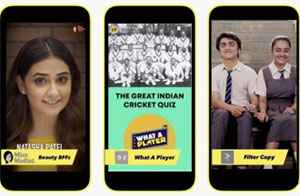
    Snapchat , owned by USA headquartered Snap Inc. is a multimedia-messaging app which allows users to share static & video content called ‘Stories’. It also includes a Discover tab where content partners & brands show ad-supported short-form content. Snapchat has become known for representing a new, mobile-first direction for social media, for e.g. it was the first to introduce both Augmented reality filters & Stories on its platform, both of which have since got replicated in most other popular apps. India has been a focus market for Snap Inc., since 2018., which has lead to an 80% increase in DAUs (Daily Active Users) in the country. This growth is partly fueled by the integration of  four new Indian languages including Hindi, Gujarati, Punjabi and Marathi & partly by local partnerships across device manufacturers, telcos, content creators (Brut, HuffPost India, The Logical Indian, The Quint, VICE India, Pocket Aces,) etc.. These content partnerships have also been used by Snap for original content creation, branded as ‘Snap Originals’.  Brands should advertise on Snap primarily to reach the youth in metros, and definitely if they target women below 34 years in metros .  Snapchat also offers granular targeting options with low ad spends.


    • User Base in India – undisclosed, 229 million MAUs globally

    • Demographic Profile – Urban Youth, below 34 years of age, 55% of the audience being women

    • Ad formats – Sponsored Lenses , Sponsored filters,  Sponsored stories, ads in discover


    The platforms targeted at Rural India

    Most platforms which are targeting rural India have a few commonalties – firstly they are focused on regional languages, they are still focused on building communities and while have made inroads on revenue streams, they are not focus areas. Thirdly, most have come under some flak for objectionable content, whether pornographic or political. Marketers are hence, still wary of leveraging them, but as the platforms get more established in the coming few years, they will contribute to sizeable digital spends. We focus on two such platforms, which seem to be winning the numbers game in 2020 –


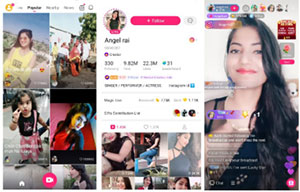
    Likee –  was the 7th most downloaded app of 2019 and has 115 million Monthly Active Users in India.

    Screenshot of Likee user’s profile, homepage & Live

    Likee (rebranded from Like) is a short video creation platform created by Singapore based firm, BIGO Technology in 2017. It offers  short video creation with a variety of creative Augmented Reality filters and effects, a news tab to catch up on current affairs & an option to go ‘Live’ where users are allowed to send virtual gifts and roses to their favorite creators. It offers support for 15 Indian languages, including Tamil, Telugu, Marathi, Gujarati, Urdu and Sanskrit.


    While similar to TikTok, the user interface is much simpler and filters are more creative. Its 115million+ user base is primarily concentrated in tier 2& 3 cities. Advertising options on its platform, are similar to those offered on TikTok i.e. branded filters, branded challenges & in-feed ads. Inventory on Infeed-ads are sold using the Google Ad Exchange & Facebook Audience Network


    Likee has been used for promoting many popular movies of 2019 such as Chhichhore, Dabangg 3 & Housefull4.  For e.g. For Housefull4, users  could transform into any of the characters they chose from the film using the Facemorph filter. Selected users were then invited for a meet& greet with the cast


    Sharechat

    Sharechat is a social networking service founded in 2015 in India which available both on mobile & web. It allows sharing of both video & static content, and is available in 14 languages including dialects like Rajasthani, Haryanvi and Bhojpuri. It also has a chat feature, which allows users to communicate with each other. The platform currently has a user Base in India of 60 million+ MAUs.  Rather than follow the strategy formulated by TikTok, as most platforms in the space are doing, ShareChat has managed to differentiate itself from other platforms  due to its multipronged strategy –


    • Advertising – Brand integrations through micro-influencers on the platform. Micro influencers help create unique brand experiences through UGC (User Generated Content). Coca Cola, Oyo, MTR, Airtel, Pepsi and the Future Group are some of the advertisers already working with ShareChat.

    • Community – it has focused on targeting users in tier2,3 & 4 cities only in Indian vernacular languages. It has recently launched several interest-based micro-communities on subjects such as commerce and religion, gaming and fantasy sports to drive user-engagement

    • Content Moderation – moderates content to global standards followed by Twitter ( who led a Series D $100 million investment round in 2019)


    Images courtesy indianexpress.com, qz.com, public feeds of apps

    Bhuvi Gupta is a marketer with 10 years of work experience, of which the last six have been in the media and entertainment industry. She has been a part of many launch marketing campaigns with experiences at the Times of India group, Republic TV and the latest in marketing a Bollywood film.

  • In an AI-powered world, what’s the road ahead for Marketers?


    By Bhuvi Gupta


    Bhuvi GuptaAs another close friend launches a podcast in a bid to ‘network’ and the US’s renowed Venture Capital firm, Andreessen Horrowitz announced the launch of its media company (Link – https://a16z.com/2021/01/25/doubling-down-marketing-update-new-media/ ),  I am stating the obvious  when I say that today we are all content creators and marketers. But in a world where everyone is a marketer what happens to the full-time marketer?


    Last fortnight, we talked about the why of this marketing evolution and this fortnight we tackle how can a true-blue marketer deal with this evolution to ensure her or his relevance.  This change has been especially hard on marketers who are in middle management because their education and initial work experience are no longer relevant.  So what can marketers do to remain relevant ?


    Upskilling


    The obvious truth of remaining relevant in any evolving discipline is upskill oneself. While there is a lot changing, what is key is to keep oneself up-to-date with the latest trends, algorithmic changes to social media platforms, and new formats for content and advertising.  Hence the first diktat of upskilling is to understand Performance Marketing, even if one only has to work with an agency to execute campaigns. Despite it now having been around for the better part of a decade, there are still hangups and a lack of genuine understanding about it. Everyone knows they should but what and how much are still mysteries. These are heavy time investments but with the plethora of MOOCs and content on the internet finding the right course is easier than having the discipline to finish it. The importance of this cannot be underestimated. The landscape is consistently evolving and the evolution follows every previous step on the digital ladder. Even if your job doesn’t currently involve performance marketing, it is the elephant in the room, which is bound to become visible sooner than later.


    As detailed in my previous article, due to the revolution in communication brought about by the internet, there has been a drastic change in the customer life cycle. Information is now available to the consumer on her/his fingertips and s/he shares thoughts about the brand, the category and the brands’ competitors. Ignoring such a wealth of consumer input is almost a crime . But it happens more often than it should, because there is a stockpile of data and a dearth of skill on how to effectively mine it. Hence the second diktat of upskilling is to learn how to use data mining and sentiment analysis software such as SQL, HootSuite etc to help generate insights. These insights must be reviewed and responded to as regularly as can be.


    Creating a personal brand


    In 2021, creating a personal brand is important no matter what one’s profession and work experience, but it becomes even more important for marketers, because we are in the business of communication.  With the plethora of social media platforms available, building a personal brand will help increase visibility, gain knowledge, network with colleagues in the industry and hence generate opportunities. Today, not having curated and active presence online is akin to being invisible.


    Network


    Never before have existed opportunities to gain insight and interact with the greatest business minds, across the globe sitting right in the comfort of your own house and probably in your pyjamas! While I will assume that most of my readers will have crated Twitter feeds, today using apps like Clubhouse (link- https://www.joinclubhouse.com) can help marketers interact in real time with thought leaders across the world. Other apps to explore include Lunchclub (link – https://lunchclub.ai ), which allow 1:1 video meetups (currently virtual but pre-lockdown the meetups were in-person) basis career interests and goals. Because both apps curate their members the quality of connections is high and takeaways aplenty.


    ~ ~


    That the role of a marketer has transformed drastically is unquestionable.  All in all, it has been a tough decade to be a marketer, but the coming decade(s) will force out those who are unable to adapt. I would love to hear back thoughts from fellow marketers about how they are coping with the evolving landscape and any tips or tricks they use to keep themselves up to speed. Write to me c/o editor@mxmindia.com.


    Bhuvi Gupta is a marketer with over 10 years across industries, of which the last six have been in Media & Entertainment. She has been a part of many launch marketing campaigns – specifically at the Times of India group, Republic TV and the latest in marketing a Bollywood film. She writes on A&M (essentially on marketing, but often on advertising too) mostly every other Tuesday. Her views here are personal. She tweets at @bhuvigupta3


  • In a world full of influencers, are celeb-endorsements worth it?


    By Bhuvi Gupta


    Bhuvi GuptaIt was 2015, Diwali had just passed and Snapdeal was one of the three big e-commerce players in India with Bollywood icon Aamir Khan as its brand ambassador. A personal comment by Khan at the Ramnath Goenka Awards event launched the first boycott trend online for Khan-endorsed Snapdeal, whose Play Store ratings plummeted, orders got returned. Despite the official statement released disassociating itself from both the brand ambassador and his views, the damage had been done. Aamir Khan was soon fired from his role as brand ambassador.


    Khan has since learnt his lesson and kept his personal opinions to himself, a dictum closely followed by the other two Khans as well (controversy’s favourite child, Saif Ali Khan not included!). But it was definitely the first time I thought about the wastefulness of celebrity endorsements, a point of view that has only since strengthened.


    Why do brands turn to celebrities?


    The simplest reason for using celebrity endorsers is for the awareness they help generate.  For most mass market brands in crowded marketplaces and high advertising budgets, a celebrity endorser is an easy and sureshot way of getting recall. The Duff& Phelps Celebrity Brand Valuation report which came out last week, showcases the same – despite the decrease in advertising budgets, the brand valuation of the Top 20 celebrities has remained more or less consistent at USD 1 billion. To get the most bang for your buck, a brand is only limited to signing these top 20 celebrities who are neither cheap nor easily available.


    Going any farther down the totem pole, especially when budgets have to be devoted to ensure a purchase decision is made is just not worth it.


    Consumers are also well aware that celebrities do not have any brand loyalty and are not really endorsing the product. This is evident when celebs routinely jump to competitor brands and claim innocence when the brand is found not to meet safety standards.


    Circling back to my initial thought, in 2021, brands no longer need to be dependent on celebrities to drive awareness. A much better option is effective influencer marketing.


    Why Influencer Marketing?


    The biggest differential that influencer marketing has with respect to celebrity-focused advertising is that (the right) influencers are believable, trustworthy and authentic.  An influencer post will typically have much higher quality with longer captions and explanations, and engagement by them in the comments section.


    Hence, when an influencer creates content recommending a product it doesn’t feel like an advertisement but like a close friend sharing a secret about something he or she liked. Hence, a brand endorsement from them really means something and can drive sales conversions.


    Secondly, most influencers have a specific niche and loyal audiences.  Therefore, even though their audience is a lot narrower, it is more focused than a typical celebrity’s audience.


    Thirdly, the influencer marketing industry in India has matured. Influencers are no longer hired purely on the basis of their follower count but also include parameters like average engagement rates and their demographic profile. Hence choosing influencers whether to target a specific geography or a specific interest is easier.


    Fourthly, influencer marketing is accessible. Unlike celebrity endorsements which can only be afforded by brands with deep pockets, a successful influencer campaign can cost as low as a few lakh, if one chooses to use nano-influencers (follower counts of less than 20,000) in their campaign.


    Fifthly, with the influencer marketing industry maturing, Advertising Standards Council of India (ASCI), announced plans to roll out new norms for social media influencers to promote products on the Internet. (Link – https://www.news18.com/news/tech/guidelines-for-influencers-are-incoming-a-few-folks-and-brands-must-be-very-worried-2350469.html) While the guidelines are awaited, once in place, either celebrity endorsement campaigns will reduce drastically or become a lot more cost-effective.


    In conclusion, testimonials and endorsements have been a mainstay in marketing for many years. Influencers combine the best of the word-of-mouth recommendation with the reach of a celebrity to help brands cover the distance between awareness to action in the marketing life cycle. With the influencer industry maturing, brands must move budgets from celebrities to influencers to get the most bang for their buck.

  • Influencing the Influencers, finally


    By Bhuvi Gupta


    Bhuvi GuptaI have long held a strong belief in the power of Influencer marketing (as regular readers of this column would vouch). Digitisation and connectivity has changed marketing forever and Influencer marketing is the sweet love child of this new media – it’s part Celebrity advertising (influencers with large followings become celebrities), word-of-mouth (influencers are relatable, hence their recommendations seem to come from a friend), branded content (product placements and content marketing) and pure play advertising.


    Influencer marketing is here to stay and which is why I was enthused to hear that the (Draft) ASCI Guidelines for Influencer marketing, which have been in process since 2019 have been released.


    The guidelines are available for all stakeholders, including industry, digital influencers and consumers for feedback till March 8, 2021. Based on the feedback, the final guidelines will be issued by March 31 and will be applicable to all promotional posts published on or after April 15, 2021.


    Manisha Kapoor
    Manisha Kapoor

    I joined a freewheeling chat that Manisha Kapoor, Secretary General, Advertising Standards Council of India (ASCI) had with the MxMIndia editor and it helped me understand the thought process behind drafting the guidelines. Sharing an overview of my thoughts and a few points of feedback which can get incorporated before the guidelines are finalised. The highlights of our conversation and my thoughts ar:


    Who will take the fall?


    One of our major points of discussion was around the roles of the platform and agencies which form crucial parts of the current ecosystem. In the current draft regulations, the onus of the responsibility lies only on the influencer and the brand. ASCI has already onboarded a few major platforms on their board and hopes to also partner with other major platforms and agencies to disseminate the guidelines.

    From a managerial perspective, this is perfect. However, digital platforms unlike traditional platforms like TV and Print run on algorithms with low human intervention. This means that content gets served a multitude of times to people dependent on the influencer’s engagement, followers and other weighted parameters (parameters which are only known by the platform and are tweaked constantly basis multiple feedback loops). Hence, beyond the influencer and the brand, the platforms also ideally should be held responsible because they control the spread of the message.


    The Influencer Agency


    Influencer agencies are the newest agency type to hit the agency marketplace. As influencers mostly wear multiple hats like scriptwriter, actor, director, editor and costume designer, the influencer agency is part-celebrity management and part-media agency.


    The role of these agencies is primarily to be responsible for deals they broker for influencers and to help brands partner with relevant influencers for their campaigns and to ensure speed in execution and content quality. ASCI will be using these agencies as a means to reach and educate influencers. Agencies typically work on commissions and will charge a percentage from the brand and from the influencer as well. However, by putting all the responsibility of the due diligence on the influencer, the role of the influencer agency is severely limited to being only a vanilla middleman. Whether or not it becomes a part of ASCI’s official guidelines, for survival, agencies must provide these services to influencers.


    The Question of the Disclosures


    One of the best directives of the guidelines was the prohibition of filters in case they emphasise the claim the brand is making.  [Filters should not be applied to social media advertisements if they exaggerate the effect of the claim that the brand is making – like makes hair shinier, teeth whiter etc.] It is no secret that using the augmented reality and editing features (available easily on smartphones today) can dramatically alter your features. For influencers whose sphere of influence and impact is contingent on their credibility and trustworthiness, using augmented reality for a before/ after to promote a product to a trusting audience is more unfair than a photoshopped celebrity in an ad, because the audience trusts the influencer is real and just like them. This is hence a step in the right direction to minimise the pressures of fake imagery on consumers. Beyond filters, a declaration about whether images have been edited should also be added to this directive to ensure transparency


    Damage control, Punitive Measures & their Efficacy


    Manisha Kapoor mentioned that while ASCI is a self-regulatory body and doesn’t have the authority to take punitive action, the compliance rates with ASCI decisions have always been over 90% and they expect the same compliance for these influencer guidelines. In terms of any wrongdoing, or misleading advertising, they expect influencers to carry corrigendum announcing the error while taking down the content.


    While mistakes will happen, because influencer content on social media gets reposted and reshared there will have to be some social media platform involvement to ensure takedown of the misleading content and the review cycle may need to be speedier as ASCI’s review of misleading advertisements follows a schedule.


    __


    One of the biggest positive takeaways of our conversation with the ASCI Secretary General was that the entire industry has welcomed this step because the influencer ecosystem has been disorganised and self-regulated till now. With clear guidelines to follow in place, both brands and influencers now have a reference to ensure that they are responsible in their messaging.


    ASCI also recognises this is just the first step in creating a regulatory framework for a digital marketplace that is evolving at breakneck speed and the framework will adapt as the ecosystem evolves.


    This was a much-needed and long-awaited framework for the industry and I am excited about the creation of a more transparent digital ecosystem.


    While stakeholders are very enthusiastic about the self-regulatory mechanism falling in place, a lot rests on them to make a success of the guidelines when they come into force on April 15.


  • Brands, don’t let FOMO drive your social media strategy


    By Bhuvi Gupta


    Bhuvi GuptaUnless you have been living under a rock the past month the words ‘Pawri ho rahi hai’ would definitely ring a bell. Chances are that you did not see the original video from Pakistani content creator, Dananeer Mobeen, (link: https://www.instagram.com/p/CK9JmaXBEtc/) but the maelstrom of content around the phrase would have made you curious enough to Google it or go back to the original post and figure it out. (If not, I congratulate you; you are definitely more evolved than the rest of us.)


    Just like social media has created stars of people who are famous for being famous, content today trends for the sake of trending. The world of marketing and communications has changed in unimaginable ways post the digital revolution, but the real challenge is that the medium’s pace of evolution – by the time marketers learn about a particular digital best practice and start to apply it, it or facets of it are no longer relevant.


    So what do marketers do and what should they not do?


    Don’t become a victim of social media FOMO

    There was a time in the early 2010s, when Facebook advertising was still very new and the platform gave brands high organic reach. Hence, posting quality content regularly and often a few times a day helped brands build big communities and generate high awareness and drive sales.


    Those days are long gone but best practices of those times, which are bad practices today, still remain.


    The content calendar dilemma

    Google ‘number of posts brands should post per week on social media’ and you will get millions of responses, most of which is bad advice because it is dated. Unless you are a Fortune 500 company investing precious financial and human resources in ensuring that your brand posts content relevant to every single festival, special days (a construct of the greeting cards industry) and remain on your toes to play fastest finger first on any ‘trend’ is a waste of time.


    Brands have a positioning and clearly identified target audience – all trends, all festivals, all ‘days’ need not be celebrated. Case in point all brands made ‘Pawri ho rahi hai’ content, but even if it got engagement unless it helps strengthen your community, what’s the point?


    Trends often get created today because platforms are designed to make people scroll infinitely. As a result, content often trends not because of its quality but because of FOMO displayed by all and sundry on the platform to be seen as relevant. Thereby creating a vicious circle of creating content around a ‘trend’, which helps it ‘trend’ even more.


    Platforms today, unlike in the days of (their) yore, are limiting reach and engagement for organic content on basis of unknown defined parameters. Hence, even when posting trending content it gets little reach unless boosted.  Hence, forced content creation to reach an irrelevant target audience gets a brand no benefit and it must stop.

    WHICH PLATFORM WORKS FOR WHICH TARGET AUDIENCE?
    Platform Target Audience
    Facebook Millenials, Gen Y
    Instagram Gen Z, Millenials
    YouTube All users
    Twitter News enthusiasts
    LinkedIn Professionals
    Pinterest Women, Craft enthusiasts, Fashion enthusiasts


    The platform dilemma

    Brands do not need to be on all social media platforms. Every mainstream social media platform has a specific niche audience. To enable presence across all platforms, most brands end up reposting the same content on all platforms. While this can work for some posts, it defeats the very objective of being on different platforms.

    Ideally, brands should look at their website’s Google Analytics to assess where their traffic comes from and/or alternatively which platform gets the maximum engagement to identify priority platforms. Once identified, they must devise a social media strategy specific to the platform. The strategy should include three key parts – the content, regularly analyzing metrics to revise strategy as and when needed, and responsiveness on comments on posts.

    Social media bears dividends when a brand creates a well-engaged, loyal community. Hence, brands should utilise their limited financial and human resources to build an engaged community that can yield dividends rather than spreading themselves thin across all platforms without achieving anything.


    When used strategically with proper planning and thought, Facebook, Instagram and Twitter can be used to pinpoint-target very specific audiences at scale. They can be used to distribute valuable content that resonates with those audiences to create awareness, improve brand perception, and generate a predisposition to purchase and to encourage loyalty.


    As per the ‘Digital in India’ report by the Internet & Mobile Association of India (IAMAI), as of November 2019, there were 504 million active Internet users with 10% more rural users than those in urban areas. As hitherto unconnected users access the interwebs the most effective way of reaching them would be the Internet. It is a goose that can lay golden eggs, but brands can benefit only if they don’t get greedy by being everywhere!


  • Legacy Media Must Leap Ahead


    By Bhuvi Gupta


    Bhuvi Gupta

    The media industry the world over is in a state of flux. The internet has made us all both publishers and reviewers and the odd part of that is that it has made the world both biased and unbiased in equal measure. It has never been easier to publish and publicise your opinion and it has never been easier to polarise either. But leaving propaganda aside, the fact that we all have access to multiple media in function and form means that media models are themselves obsolete. While the pandemic has accelerate the print medium’s deceleration, aural media has had a comeback with podcasts going mainstream. But noteworthy in this comeback is the role played by the individual creator.


    This comeback will define what media will come to represent as a whole across the world.  Individual creators will define media because:


    Traditional Media Measurement is Broken

    In India, media as a whole has been slowly losing its credibility. In the earlier part of the last decade both, which I consider a load shed decade for media measurement, both IRS and TAM/BARC overhauled their entire systems to keep up with the times and both ended up getting boycotted or sued – IRS in 2013, and the TAM by NDTV  in 2012, which eventually  resulted in the formation of BARC (LINK – https://timesofindia.indiatimes.com/business/india-business/ndtv-sues-nielsen-for-fraud-negligence/articleshow/15302393.cms). The latest alleged BARC TRP-manipulatiom investigation highlights the flaws of a system based on extrapolation of a relatively small sample data set, especially in a country the size of India.   This is not to point fingers at a case currently sub-judice but to make a case for system which is not so advertising-dependent, that such misdeeds become commonplace. (https://economictimes.indiatimes.com/industry/media/entertainment/media/indian-newspaper-society-rejects-irs-2013-findings/articleshow/29871308.cms?from=mdr)


    Monetisation Models are Fragmented

    The media’s monetisation in itself has gone through many changes.  Once almost entirely run on ads (and later on advertorials as well), media houses realised that their strength lay in the deep networks and complementary relationships they had built with the elite and powerful, which was monetised via events. Then came the digital era when media houses put all their content on the web only for brand visibility with advertising as an afterthought (hence, letting the Google-Facebook duopoly control digital advertising which is now coming to bite them) and now finally the era of subscriptions and donations because survival for media companies has become harder.  What will work going forward is a system based on subscriptions with a content aggregator probably charging the consumer on the basis of the quantity of content consumed


    Media Biases are Clearer than Ever

    While I believe that all individuals have deep-seated biases which are hard to displace even when they try their best, media today seems to align strongly to either the Right or Left. This can become inexcusable when defending a political party in the face of visible wrongdoing.  Once biases become visible by the viewer, especially on major mainstream media, viewers/readers start deserting them.


    For entertainment, a lot of TV content seems to be scripted for audiences in the 90s – the quality of script, actors and direction especially when compared to international content easily accessible on OTT platforms. That has had an impact on TV viewership.


    So, Is there a Way Ahead for Legacy Media?

    Yes, of course, there is. I feel as platforms like Substack and the OTTs move towards the maturation phase in their product lifecycle, there will be further fragmentation in media consumption and clear market leaders will cease to exist. While consumers who are early adopters might have already given up their legacy media subscriptions in favour of Substack, The Ken et al, the majority of the market is yet to catch up. It is here that traditional media outlets must evolve to remain relevant enough.  They have the advantage of knowing what the audience wants, and robust role models like New York Times (NYT) which in November 2020 generated more digital revenue than print with 7 million digital subscriptions. There’s also pay-as-you like journalism which has been implemented in part by Newslaundry.


    Early signs of traditional media evolving are there. Today, most traditional media outlets whether Print, TV or Radio have robust video and print teams and soon-to-be-announced podcast teams as well.


    But as they all put their fingers in more and more pies, I hope they don’t lose the entire plot by spreading themselves thin too soon.


    Bhuvi Gupta is a marketer with over 10 years across industries, of which the last six have been in Media & Entertainment. She has been a part of many launch marketing campaigns – specifically at the Times of India group, Republic TV and the latest in marketing a Bollywood film. She will write on A&M (mostly marketing, but often on advertising too) every other Tuesday. Her views here are personal. She tweets at @bhuvigupta3


  • Cult of the Influencer CEO


    By  Bhuvi Gupta

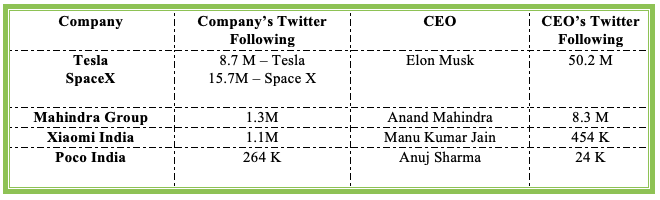
    Bhuvi GuptaElon Musk. Anand Mahindra. Manu Kumar Jain. Anuj Sharma. Thomas Edison. Richard Branson. Steve Jobs.


    What do all the above have in common? Well, a lot. They are all CEOs of companies, which have impacted the world via their products either technologically or pricewise. But what they also have in common is a strong personal brand, which was bigger than the company they led, and which helped that company more than a brand ambassador might have. If Edison, Jobs and Branson are anything to go by, what is noteworthy is that while digital has made it easier, carefully crafting and curating personal brands can have immeasurable impact on the company irrespective of how they have being built.


    CEOs who have leveraged their personal brand to great effect to help the company have follower counts which compete with their company’s


    The cult of the CEO has always existed. Digital access has made it easier to leverage it even as curating a personal brand remains as difficult. But with the sheer din of marketing messaging and competition for quality talent, companies are missing out if they don’t leverage their CEOs.


    Firstly, because it is such a great source of gathering information from customers, and (junior) employees who communicate actual issues, which often a times get lost in Chinese whispers while going from middle to senior management.


    Secondly, an active and engaged CEO as the face of the brand helps in building trust and credibility over and above celebrity brand endorsers who are endorsing multiple brands and on-hire for the highest bidder. Hence, while celebrities may help build brand awareness, they won’t contribute as much to help target consumers travel down the marketing funnel.


    Thirdly, a responsive CEO makes the company and brand approachable. All consumers want to feel heard and a CEO who is willing to listen to feedback, compliments and complaints makes the audience all the more invested in the product and brand.


    Anand Mahindra explains how much his followers on Twitter have helped him connect to both employees and consumers thereby enabling him to become a Big Brother of sorts to reward good behaviour and correct wrongdoings.


    When the CEO gets feedback so freely it also reduces the need for traditional market research where extrapolated data and inaccurately curated focus groups can often result in wrong takeaways. Hence, a CEO who can remain connected to his audience can greatly help the company’s overall strategy and speed of execution.


    Lastly, an engaged CEO acts as a great tool to build the employer brand. Having a strong personal brand (also crucial to help gain followers in the first place) will help showcase a company’s values and help attract talent which resonates much more than that ‘Great Places to Work’ Badge.


    Using your employees as influencers – Employee Advocacy Programmes


    While all the above reasons have high impact coming from the CEO, in 2021, with a socially connected population all employees have a sphere of influence that collectively can help a company via Employee Advocacy programs.


    Creating a strong brand for a CEO requires the creation of a personal brand backed by a robust content calendar, ORM (Online Reputation Management), PR and public appearances.


    Employees, if guided and empowered with similar tools and content, can become brand evangelists on social media, while also getting positioned as subject matter experts and create stronger personal brands.


    A well-implemented employee advocacy programme raises brand awareness, improves customer satisfaction, saves money in marketing spending, and, ultimately, grows business in much the same way as an Influencer CEO albeit at a micro level.


    It is very interesting to see the power that influence has on consumption. Whether coming from CEOs, celebrities, or content creators, social media in 2021 has made business & marketing come a full circle with influencers  launching their own brands and CEOs are becoming influencers.

  • To Copy or Not to Copy. That’s the Question


    By Bhuvi Gupta


    Bhuvi GuptaHave you ever used any of the short video apps that sprung up after the ban on Tik Tok?


    At first look, you couldn’t differentiate between the apps. They have similar if not outright identical user interfaces. The differences only start peeping in when the ‘satisfaction’ achieved after some scrolling doesn’t quite match up to what was achieved with TikTok due to their much-praised algorithm.


    While the apps did receive some flak for not investing into development, innovation, and design despite having the resources to, the logic, which I believed trumped, was user familiarity that accelerated migration.


    TakaTak is designed to be mistook for TikTok


    Feature Replication has become a common practice for digital products. Snapchat’s success with stories was very quickly replicated across all platforms as was TikTok’s short videos. Substack and Clubhouse are the the latest digital groundbreakers whose formats are being replicated by tech giants or already have been launched (Twitter’s Spaces)


    So should brands copy? Or innovate? I think the right answer is to copy, but  innovatively like Apple. Apple has never launched a product category. What it has done and brilliantly, is to innovate on user experience and design on what already existed. This is true for its vast product line, be it the personal computer, the iPod or even their latest success, Airpods.  This is the holy grail of imitation.


    Why Copy? The answer is Network Effects


    All social media networks have largely been governed by Metcalfe’s Law, which states that the value of a network is 2x that of the total users using it. Metcalfe’s Law governed the success of the telephones and explains the dominance and success of all digital social networks today. By replicating popular features into their pre-existing interfaces, digital networks try to make best use of their critical mass, which helps to stem migration to other platforms.  Also, great for creators which to take advantage of monetization and different audiences often come to the legacy imitator social network.


    The Art of Imitation


    Beware though; blind replication without paying attention to brand and objective will lead to deterioration and debacle. Something, which is happening with LinkedIn. LinkedIn has tried replicating Facebook’s newsfeed and Snapchat’s Stories but both have been done without much thought and adequate content moderation filters. As a result, LinkedIn has moved away from its primary objective of a robust professional network to somehow straddle a reality that is now part social. Stories on LinkedIn are another such misfire. Stories, which by their format, are fun and frivolous, do not fit with the brand ethos of a professional network that LinkedIn is.


    This is in contrast to Instagram, which copied Stories from Snap but modified them to suit their audience rather than replicate all features of Snap. As a result, Stories has now become a useful addition to Instagram, and more successful than the original.


    Apple, which understands its brand positioning and accordingly creates products in pre-existing categories, is also able to get away with charging a sizeable premium for copycat products.


    Copying today is essential for survival for social media networks. One is already seeing the mass migration of people from Facebook to other social networks. If it was not for products such as Groups and Messenger, the platform would have been long dead. Hence, all the Snapchat-inspired features and now a Substack copycat product have ensured that Facebook has not gone the Orkut way.  Hence, it is safe to say that the copycats in the digital world are here to stay. They will live long but prosper only if they copy smart!