Category: BHUVI GUPTA

  • Bhuvi Gupta: On Fesive sales, Micromax & Hooked by Nir Eyal

    Bhuvi GuptaBy Bhuvi Gupta


    Today’s column is a bit different from my usual deep dive into a single topic, with some thoughts from my notepad about things that have caught my eye in the last fortnight.


    2020 has been strange, to say the least, and I, like most, have been awaiting the festival season to celebrate and feel some joy. A sentiment shared by the corporate sector, which depends on this quarter for their profits, but this year, it’s depending on it for minimising losses. The initial reports are showing signs of recovery and buoying positive sentiment. According to data from Redseer Consulting, the first week of festive sales conducted in the last fortnight has seen an increase of 51% in Gross Merchandise Value  (from $2.7 billion in 2019 to $4.1 billion). While this is partly also fuelled by offline consumption moving online, the economy is heaving a sigh of relief.


    Micromax’s Comeback

    You might have seen Micromax’s relaunch campaign helmed by the CEO, Rahul Sharma.  With more than half a million people yet to go online in India, combined with the high replacement rates for smartphone for people, the smartphone categpry is and will be on fire for the coming decade at least. Every year the festive e-commerce sales also depend on smartphone sales with the category contributing upwards of 40% to the GMV. Coming back to Micromax, India’s Number 1 homegrown smartphone brand, in the relaunch video (link – https://www.youtube.com/watch?v=aRo69b1wTNg), Rahul Sharma plays all the cards which are sure to strike a chord in the average Indian’s heart – he talks about being a middle class boy who took a loan of 3 lakh from his father to launch Micromax, but with the onslaught of Chinese smartphone makers stumbled, and lost his way, vision and subsequently market share. He touches on the ‘Make in India’ call to rouse audiences to buy the new series aptly titled ‘In’


    The problem of course is that the story, while compelling omits certain points Micromax built its market share on the back of great marketing.  It took China-manufactured phones and branded them as Micromax devices. As a result, because of a lack of R&D, the after-sales service and support was negligible – a weak point which all the China mobile behemoths took full advantage of to wipe out market share (and rightly so, after-sales service is crucial for an essential device like a phone). He also forgets to mention his marriage to Bollywood/ Kollywood/ Tollywood star Asin, which makes his description of the middle-class boy-next-door a little hard to stomach, as these descriptors no longer hold true.


    While the majority of the market is oblivious to these facts, and these points will work, I am sure it will give competition to the Chinese behemoths which control the smartphone market for a large part today.


    Hooked by Nir Eyal

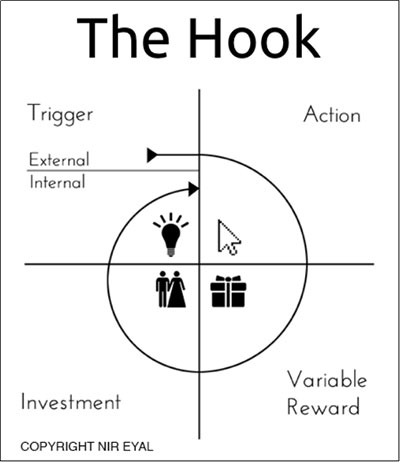
    The advent of the internet has brought with it great changes in marketing in the last decade. A key differential of the digital evolution as compared to the TV evolution is how understanding consumer behaviour has become easier. This in turn has lead to building products, which fit target audiences better. The concept is beautifully explained in my latest read, ‘Hooked’ by Nir Eyal.


    Eyal has explained the consumption process through a four step model – a internal trigger like a frisson of anxiety or external trigger such as an ad, which leads us to the action of logging into social media like Facebook or Twitter, which through previous interaction, we know will reward us by showing us our posts which has been liked, or content which is of interest to us, thereby assuaging our anxiety.


    Such feedback loops help in establishing habits, which make these products so addictive. The fourth quadrant which focuses on ‘Investment’ explains why such habits are so hard to break – users invest time and build a community of friends and followers which feeds these feedback loops and creates stickiness to the platform.


    While the book focuses on digital products like Facebook, the concepts can be applied to other industries and products. All in all a great read on understanding consumer behaviour and psychology.


    That’s all from me today. Do share if you have read ‘Hooked’ or whether I have inspired you to pick up a copy.


    Bhuvi Gupta is a marketer with over 10 years across industries, of which the last six have been in Media & Entertainment. She has been a part of many launch marketing campaigns – specifically at the Times of India group, Republic TV and the latest in marketing a Bollywood film. She will write on A&M (mostly marketing, but often on advertising too) every other Tuesday. Her views here are personal. She tweets at @bhuvigupta3


  • Bhuvi Gupta: 2020 Trends in Media – Because Genuinely now Hindsight is 2020

    Bhuvi GuptaBy Bhuvi Gupta


    It is the time for all the year-end pieces where one looks back and evaluates the year that was and what the coming year will be.


    2020 was universally one of the most difficult years for the majority of us the world over. All of us have been forced to embrace disappointment and suffering, be jolted out of our comfort zones and respond to the ‘new normal’ with changed behaviours for no other reason but survival. The media the industry has been one of the worst affected – too many media outlets have reduced headcounts, shut shop or changed business models. This was a change that would have happened anyhow as consumption patterns have changed drastically in the last few years. The pandemic only accelerated the change. And in this digitally friendlier environment, I share four monumental ways in which the M&E  industry will change  in 2021 in the coming decade:


    Paywalls & Advertising Revenue  – The free lunch is ending

    More and more publications will start to go behind paywalls. This has been an eventuality long in coming. It was never going to be sustainable for media outlets to give away content pro bono.  Media companies depend on a combination of subscription and advertising revenues for sustenance. Traditionally, the more niche a media brand’s target audience, the more it can depend on subscription revenue. Hence, relatively niche brands such as The Hindu (which targets the intelligentsia) and Business Standard (which targets the corporate sector) have been behind paywalls since long. This year, however mass brands such as Hindustan Times are also gradually following suit, and more are bound to follow.


    Had digital advertising revenues been controlled by publishers and not content aggregators paywalls might not have been built. However, currently Facebook and Google, which control the majority of content distribution on the internet and take the lion’s share of advertising revenues. This is set to change in Australia and UK (link – https://www.medianama.com/2020/12/223-facebook-news-launch-uk/)  where the respective antitrust regulators have enforced laws requiring both Google and Facebook to give a higher share of revenues to publishers. A move bound to get replicated globally as the current revenue share model is inherently flawed. Both the distribution behemoths are delaying this eventuality for obvious revenue benefits. I think by the time it reaches India in a few years, most mass media outlets will be behind paywalls so the increase in digital ad revenues will benefit their bottomline but not change the paid model that they would have established.


    Podcasts – because ‘Video has not killed the Radio Star’

    Podcasts have slowly been making their presence felt as a medium of importance. While they have been around for a few years, I must confess, it is only in 2020 during the pandemic, when faced with an endless stream of chores that I started listening to podcasts as a way to engage my mind while physically occupied. And to say I am hooked would be an understatement.


    While the podcast industry is still in the early adopters phase of its lifecycle, it is booming globally in terms of both content being generated and consumed. It will go mainstream for a multitude of reasons. Firstly, it is an ambient medium, which fits seamlessly while primarily occupied with another task. Secondly, it enables listeners to access indepth conversations with industry experts and thought leaders they previously would not have exposure to.  Thirdly, the pandemic has accelerated its adoption and lastly it lends itself easily to content creation because one truly needs only a phone to record a podcast. Hence, in an ecosystem where we all are creators, it is an easy medium of expression with a small learning curve.


    Hence, 2021 will be the year that podcasts will become mainstream.  Music streaming app Spotify recognised this and launched ‘Daily Drive’ (link- https://www.musicbusinessworldwide.com/ spotify-launches-your-daily-drive/)  in the US market in late-2019. (Daily Drive is a customised one-hour stream of music, news and podcasts basis user preferences). While the global rollout was halted due to the Covid outbreak, it is a sign of the times to come for podcasts.


    New business models for news

    An unfortunate outcome of the advertising-first business model for news media has been the ‘tabloidisation’ of the content. This means rather than focusing on what is important, an inordinate amount of show time is dedicated to sensationalist topics to get the maximum eyeballs and as a result advertising. Mix this tabloid-like content in with an additional layer of political biases  and as a result news today is more like entertainment rather than actual news. As a result, there is a rapidly spreading sense of disillusionment with news media and citizen movements targeting advertisers that advertise on seemingly biased media portals are gathering speed.


    In 2020, two key things happened  – the tabloid genre died because most mass news content became tabloidesque. Case in point: the shuttering of both Mail Today and Mumbai Mirror. As a result of the first, subscription-led individual or small collective based journalism, which markets itself on credibility, came into being  facilitated by self-publishing tools like medium.com, newsletter platform Substack (link – https://theprint.in/opinion/youve-got-mail-indias-newsletter-ninjas-are-here-to-charm-your-inbox/496762/) and even Instagram. Case in point: Faye D’Souza whose Instagram is now a trusted source of news especially for millenials & GenZ.


    In 2021, I think Indian audiences will start moving en masse towards paid portals and newsletters as their primary news source in the search of credible news.


    The collapse of the singular media genre

    Another important change is how in the last decade most media companies have crossed over from their primary medium to produce content in other media – all TV channels have websites where they produce quality written content. Most radio channels now produce video content as well.


    In 2021, all media companies will stop identifying themselves as only TV or only Print or only-Radio and instead will become omni- channel media companies.  Case in point is the Times Group-owned Radio Mirchi, which rebranded to ‘Mirchi’  (link – https://www.businessinsider.in/advertising/media/news/as-radio-mirchi-rebrands-to-mirchi- prashant-panday-walks-us-through-the-brands-transformation/articleshow/79532987.cms) to embrace this expanded identity, which in reality has existed for a few years already.


    In summary, the media industry is set to go through a monumental shift in the coming year because the biggest advantage that legacy media companies had was of distribution, a high-quality workforce and access to newsmakers. While the glass ceiling on the former has been shattered, the latter three still exist in varying degrees. Hence, to remain relevant leveraging this competitive advantage with credibility and honesty is key for both survival and success.


  • MxM Open Classroom: Day 3 of Digital Marketing by Bhuvi Gupta | 10 Commandments to Max TikTok

    By Bhuvi Gupta


    Bhuvi GuptaTikTok is a short video-sharing social networking service owned by ByteDance, a Beijing-based company founded in 2012. It is used to create short dance, lip-sync, comedy and talent videos. Its mission is to inspire creativity and bring joy. It can also be described as a bite-size version of YouTube, with videos ranging between five and 60 seconds in length. Users have access to an assortment of filters and effects, as well as a massive sound library with dialogues, popular songs, and other sounds.


    The app in the last one-year has seen massive growth in India. According to a report by data analytics firm App Annie, TikTok was the most engaging mobile application in India in 2019, and accounted for 44%, or 323 million, of Global TikTok downloads. As of December 2019, TikTok’s monthly active users were 81 million.


    That the app has taken over India’s mindshare is no exaggeration. The App Annie report also states that Indians spent 5.5 billion hours on the app, as compared to the 900 million hours in 2018.


    There are many reasons why TikTok has struck such a chord with people, across strata. Unlike other social media platforms like Instagram or Facebook, where you are expected to showcase your best self, TikTok encourages you to be whimsical and authentic. The content that is posted is short, and without possessing fancy video-editing skills, one can showcase their creativity due to the huge variety of augmented reality filters, and special effects. If being creative also takes too much effort, users can just lip-sync on a variety of trending videos to express themselves.


    Because of the sheer ease of using the app, it has been an equalising social media platform unlike Instagram & Facebook, which remained bastions of the urban communities in India.


    This stupendous growth which is a sign of things to come, means that brands should no longer ignore TikTok from their social media strategies. 10 Commandments to help brands navigate the platform are –


    Commandment 1 – Optimise your profile

    There are 6 key things to take care of when optimising your profile for a brand –


    User Name– TikTok has two fields where one must fill their user names – the profile name at the top of the page and the unique user name. As profiles are searchable using both these names, they both should ideally be your brand name for better discoverability

    Profile Pic– should be a bright logo or picture with high contrast. This is important as the profile pic, which is displayed in the middle of the right edge of every TikTok video, risks being missed unless it is eye-catching. The profile pic also has a small follow button on the post itself, so the more it stands out, the better it is.

    Profile Bio– TikTok gives you 80 characters, for a bio. Bio should either be informative, entertaining or inspiring or a combination of the three, so as to inspire action.

    Links– As TikTok allows direct links to Instagram & YouTube pages, hence these accounts should be linked. A robust YouTube or Instagram presence also gives credibility to brands new to TikTok.

    Account Verification– TikTok doesn’t have any official application procedure for getting verified. Account verification happens organically when TikTok staff see a need or want to reward users

    Pinned post– TikTok allows pages to pin upto 3 posts to their profile. These posts should be used to highlight videos that represent the brand or the latest brand campaign.


    Commandment 2 – Optimise Settings
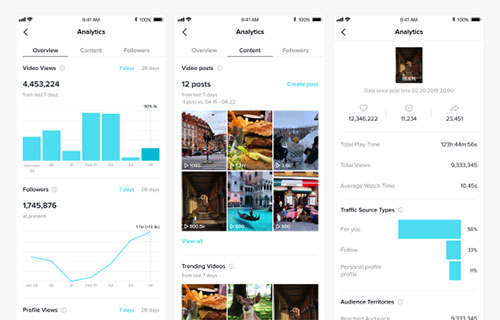
    Ensure that in your profile settings (Go to Manage Your Account), the setting is for a ‘Pro’ account, as that will give you access to analytics.

    Ensure that your account is not set to private so that people can discover your content organically (go to Privacy settings)

    Ensure that all the languages of regions aligned to the brand’s business objectives are selected (go to Content preferences). This is an important so that consumers in those markets can discover and engage with the brand.


    Commandment 3 – Engagement Hacking


    TikTok uses Artificial intelligence & Natural Language Processing (NLP) to understand the content and context of each post. This helps the platform to understand which users to serve the content to. Its algorithm has been lauded for its exceptional machine learning which has enabled its far-reaching success.


    It is widely understood that every time a video is posted, TikTok will show the video to a sample set of 200-300 users. From this chosen audience, the algorithm uses the rewatch rate, completion rate, comments, shares & likes, new users gained as key factors among others, to evaluate every post’s engagement ranking. On the basis of this engagement ranking it will choose whether the video should be shown to how many other users or not. However, it must be noted that it is impossible to know the weights assigned to these and how best content can be optimised because that is proprietary to the TikTok algorithm.  Best practices to increase engagement, are as follows –


    Completion rate & Rewatch rate are key metrics basis the current algorithm, and hence brands should create shorter but high quality videos, so that the completion rate metric is met and a viewer is motivated to rewatch the posted video, as it will barely take any time.

    Engage with viewers interacting with your content – Turn on post notifications so that you can be responsive to your followers who engage with your content.  Engaging with people who react to the post, within the first few hours of posting it, will also help to increase the post’s engagement rate. In layman’s terms, the higher the engagement, the more the post will be shown to other users, which in turn creates a virtuous circle for more engagement

    TikTok’s algorithm will down vote content which is extremely violent, dangerous, sexual, political or incendiary.  Accounts that frequently post such content also get shadow banned. In India, TikTok was banned for download, in early 2019, due to alleged pornographic content on it.


    Commandment 4 – Leverage the USP’s of TikTok


    Post frequently as on TikTok as accounts use compounded growth metrics (Likes & Views), and hence profile benefits from frequent posting.

    Brands should participate in some viral trends aligned to their brand, rather than only follow their marketing calendar to keep their TikTok community engaged.

    Make your content basis the analytics – this means its best to have a content strategy, which is responsive to the brand’s community, so as to create content, which will drive the most engagement. Hence, brands should post when their followers are active, in languages spoken by most followers, etc.

    Never delete content – Unlike other social media platforms, content on TikTok often enjoy what is knows as a ‘Delayed explosion’. This means, content posted on the platform may not go viral when its posted but see an upswing in discovery after weeks or even months.

    Follow popular trends – The short video format survives on content that is current. Hence, creating content around news stories, such as Covid, cultural events like festivals & current TikTok trending hashtags & sounds, helps in increasing discoverability

    Ensuring that content you post follows conventional how–tos of content marketing to create content with stickiness.


    Commandment 5 – Optimise Hashtags

    Ensuring that you keep the below n mind while using hashtags can help to increase the discoverability of your content –


    Use 5-6 hashtags per post – if too many hashtags are used on TikTok, then the caption moves up and the vertical frame looks crowded  & unaesthetic. If too few hashtags are used then it means decreased discoverability.

    :: Use hashtags relevant  & popular to posted content

    :: Use trending hashtags – TikTok shows the highest trending hashtags on its ‘Discover’ button. Hence, using relevant trending hashtags increases discoverability

    :: Use hashtags related to popular keywords for which your brand is discovered.

    :: Use long tail hashtags – a long tail keyword is a phrase that is longer and more specific to search queries. Long tail keywords get lesser traffic but have higher engagement, as they are so specific. For example #howtobakechocolatecake is a long tail keyword as compared to #baking, which is a general keyword

    •  Add hashtags relevant to your brand, for e.g. competitor’s hashtags to ‘Favourites’ so that you can monitor them


    Commandment 6 – Using TikTok Music


    TikTok allows you to use a variety of sounds in videos. These sounds can be songs, dialogues, and variety of other sounds, which can be used as background music or audio tracks to lip-sync to.


    Music is key to TikTok videos. The more times the algorithm sees people using a particular audio track, the more it’ll feed your song to new viewers, thereby creating a virtuous circle of virality.


    This chain reaction has helped lots of otherwise overlooked songs go viral on TikTok. Music labels are now releasing snippets of songs on TikTok alongside their release, as it helps drive massive discovery and virality for original music. For example, the Baadshah and Jacqueline Fernandes song, Genda Phool, released in March 2020, amassed 250+ million views on YouTube, in a month of release, helped in part by its massive reach on TikTok. Brands can use music in the following ways


    Use pre-existing and new audio tracks – As a brand, background scores, catchy brand jingles and witty repartee as dialogue form a key part of marketing communication. It is hence advisable to leveraging ads to create original content – Popular jingles & ads from the past, as well as new original audio tracks, when launching new campaigns. Creating engagement for the brand jingle can help to drive discovery for the campaign.

    Use trending sounds  – they are a way to get your content discovered as they have a proven track record of getting engagement. As they use sounds which are already trending your content has a higher probability of being on the ‘For You’ page of users which have engaged with the sound


    Commandment 8 – Be creative


    Ideas are central to the TikTok experience. Videos can be uploaded or created in-app with stop and start recording, timers, and other tools. Live streaming is also an option. Users can add visual filters, time effects, split screens, green screens, transitions, stickers, GIFs, emoji, and much more.


    TikTok which initially started as a lip-sync app has evolved to house content across industries – for fitness enthusiasts, bakers, photographers, salsa dancer et al


    Hence brands should create content strategies accordingly.

    Branded Hashtag Challenges 

    These campaigns encourage users to create videos around a specific hashtag, often using a specific song or set of dance moves. in 2019, Pepsi used TikTok as their primary platform for promoting their new brand anthem with the tagline ‘Har Ghoont mein Swag’. The campaign anthem was sung by 2019’s most popular Bollywood Punjabi singer, ‘Baadshah’ and the music video starred popular Bollywood youth icons & social media influencers, Tiger Shroff & Disha Patani. The campaign required users to recreate the trademark dance move of the song which was called the  #SwagStepChallenge. The campaign was a huge success, with 240+ million views and over 15,000 user-generated videos within 24 hours of its launch. The campaign also naturally spilled over to Instagram, where it received 20+ million views. The campaign remains one of TikTok’s most successful brand campaigns in India.


    Branded lenses

    Brands can partner with TikTok to create 2D and 3D lenses for users to “try on” and share. Doing so also lands companies in the Trending section of the Discover tab for 10 days. Pepsi used branded lens in a followup campaign to the #SwagStepChallenge called #SwagSeSolo


    Commandment 7 – Get inorganic reach via Ads & Influencers


    As the TikTok platform is relatively new and nascent, both the popular modes of getting inorganic reach i.e. Advertising & Influencer Marketing give better ROI than more mature social media platforms like Instagram, Facebook & YouTube.


    Influencer Marketing on TikTok

    Ensure the influencer’s audience demographics is aligned to you brand

    Use cloutmeter.com to assess profiles. Typically, a good engagement rate is upwards of 5%

    Influencers are relatively underpriced basis influencers with similar reach and followers on YouTube & Instagram, as the platform is still nascent

    Accounts which can be categorized as ‘Influencers’ differ basis social media platforms, i.e. an Influencer on Instagram may not enjoy similar reach on TikTok, and hence influencers should be defined basis the platform

    Leverage your existing PR & social media agencies for influencer marketing as many have started to offer these services as well. Specialist Influencer marketing agencies have also sprung up, but the industry us still nascent

    Beware of fake influencers –

    Likes to Followers ratio – On TikTok, as organic reach of quality content is a key feature of the app, the average Likes should always be a multiple of the Followers.

    Check for genuine followers – scan followers to check if they are genuine or bots (typically have with no profile pictures and followers, but will be following a lot of people)


    Commandment 8 – Use developed social media communities from other platforms to drive growth


    Most brands have been using social media on other platforms and have invested considerable energies in developing robust communities. Developing synergies across their content and community can help jumpstart reach on TikTok via –

    Repurpose content posted on other platforms – Brand having presence across multiple different social media platforms will already have a robust marketing calendar, and multiple pieces of original and quality content per platform. Repurposing the content o create short videos will help build a brand’s community on TikTok and utilize resources, effectively.

    Share original content created for TikTok on Instagram – TikTok allows accounts to share their posts on Instagram using TikTok’s built-in “Share to Instagram” feature. This moves the TikTok watermark and crops the frame of the video to make it suitable to the Instagram user interface. Resharing such posts can help make your community on Instagram also follow you on TikTok.


    Commandment 9 – Don’t confuse TikTok for Instagram


    • Content discovery is central – TikTok’s default screen is the ‘For You’ page of trending videos customized basis a users’ browsing habits. The platform is customized for discovery of ‘viral’ content. This is similar to Instagram’s second tab of ‘Search & Explore’

    • Allows you to be whimsical – Mainstream platforms like Instagram & Facebook have focused on presenting a curated image of your brand persona. TikTok allows and celebrates brands, truly with #NoFilter, allowing the brand to showcase more whimsical content.

    • TikTok helps to reach audiences in tier 3 and 4 cities – generating content and going viral is easier than other social media applications. Even if you’re a new user or an inexperienced video maker with a low-quality phone camera, the world of TikTok embraces you.

    • As the platform is still at a nascent stage, it allows for easier and more organic discoverability and reach


    Commandment 10 – Underused features of TikTok – Lives  & TikTok coins


    TikTok like Instagram, Twitter, Facebook & Youtube also offers pages the option of going ‘Live’. This feature is accessible only when an account gets 1000 followers. Brands will soon start to leverage TikTok Lives as well. Livestreams can be hosted by users are older than 16 years. Only those aged above 18 years can purchase, send, or receive virtual gifts.


    Lives on TikTok, have an interesting feature, where viewers are allowed to give virtual gifts to the page. These gifts can be purchased using TikTok Coins. The price for these coins at the user’s end is approximately INR 100 for 80 coins.  Diamonds are a measurement of the popularity of the relevant. On the basis of the gifts, Content Provider receives, Diamonds get accrued to the content creator’s account at a rate of conversion determined by TikTok.  Users cannot purchase Diamonds. These ‘Diamonds’ are exchangeable for currency.


    Pictures taken from public feeds of users on TikTok, TikTok Newsroom & pexel.com


    Bhuvi Gupta is a marketer with 10 years of work experience, of which the last 6 have been in the media & entertainment industry. She has been a part of many launch marketing campaigns with experiences at the Times of India group, Republic TV and the latest in marketing a Bollywood film.


  • MxM Open Classroom | Digital Marketing by Bhuvi Gupta | 10 Commandments of leveraging Facebook effectively

    Bhuvi GuptaBy Bhuvi Gupta


    Facebook, while not the first social media network, was the first social media network, which the world holistically adopted, because it evolved to keep itself relevant.


    Even today, with a plethora of new social media networks, Facebook with a subscriber base of over 2 billion users globally remains relevant and for marketers crucial to reach customers. In India, Facebook has, 300 million users, which means that which means that 60 percent of its online population (500 million) have a Facebook account. It remains the social media network with the highest subscriber base in India and the best platform for advertising (on social media networks) by far. Therefore, marketers cannot  and should not ignore Facebook.


    Most marketers would have used definitely Facebook both as a platform for content marketing  & for digital advertising.  Both have evolved considerably, due in part to the platform’s declining organic reach & changes in the product, over the last decade. Here are 10 Commandments for leveraging Facebook effectively in 2020 –


    Commandment 1 –Optimize your Profile


    The first commandment is necessary, as an optimized profile is the base for implementing strategy. Facebook allows brands considerable more space to detail information about their business, their objectives, mission, locations etc. These details often get missed on other social media networks, which focus on keeping profile bios short and sweet. Best practices are –

    Dharma Productions has  a business profile customized to its business of a film production house

    • Have an eye-catching profile picture & cover image or video, optimized for the correct sizes.

    • Create a Facebook Business page which helps  –

    :: Access to Facebook Audience Insights

    :: Running ads

    :: Allows page customization to suit business objectives i.e. you can shift or delete sections basis on what is important

    :: Allows you to create a shop front on the page

    • Fill out your profile with brand description, locations, visiting hours as applicable

    • Use ‘Call to Action Buttons’ aligned to business objectives.  This button shows on your page, right below the cover photo and is a trigger for A profile visitor to take action – ranging from browsing products, subscribing to updates, getting a discount code etc.

    • Pinned post– FB allows pages to pin 1 post to their profile. This post should be used to highlight any update, or the latest brand campaign.

    • Apply for page verification – on the ‘Settings’ tab

    • Link all other social media profiles to the page to benefit from cross promotion. This is especially beneficial for Instagram, and you can simultaneously post on Facebook & Instagram stories

    • Create a Vanity URL – Change the random URL assigned to you when you create a page to a URL, which is ideally your brand name and SEO friendly


    Commandment 2 – Create a FB Content & Community strategy

    Over the years Facebook has made considerable changes to its newsfeed algorithm. Today, Facebook prioritizes content from pages that enjoy high viewership, and quality engagement. Hence, focus on quality content, which inspires reaction.


    Organic reach on Facebook has reduced considerably, with posts reaching less than 5% of your page’s audience, earmarking budgets for boosting posts is necessary. Posts can also be geographically & demographically targeted so as to ensure effective reach.


    CONTENT

    • Use Facebook Page insights to understand the content has stickiness and the demographics of the followers who are returning to consume more content, so that you can create better and more engaging content

    • Diversify the content mix – images, videos, GIFs, polls, and User-Generated Content (UGC). FB prioritizes video over photos, and photos over status updates, hence that should be accounted for in the content mix

    • Adopt the 70-20-10 approaches: Post original material 70 percent of the time. Share existing content that’s relevant to your audience’s interests 20 percent of the time and -promotional content the remaining 10 percent of the time.


    COMMUNITY

    • Be responsive to people commenting on posts to increase engagement.

    • Don’t use ‘ Engagement bait’ as Facebook doesn’t count such posts as genuine engagement.  These are those posts that encourage responding with a single word or an emoji, or ask people to tag friends in the comments only to drive up engagement

    • Switch on profanity filters in Page Settings so that defamatory comments don’t show

    • Because of the sheer numbers of users and business pages on Facebook organic reach is low. Hence, it is important for Pages to ask followers to turn on post notifications so that they know every time the page posts. Before this request, pages should ensure that their page is active, with high quality and engaging posts so that followers are motivated to turn on post notifications.


    Commandment 3 – Leveraging Facebook Page Insights


    A snapshot of FB page insights


    Facebook offers very detailed page insights, as compared to other social media networks. Understanding these insights can help unlock the potential that Facebook with its large audience base has. Marketers should frequently use Page insights to help answer the following questions, and accordingly alter their page strategies-

    • What content performs best in terms of reach and engagement ?

    • What are the demographics of the people who interact with your page, and what time are they most active ?

    • What are the numbers of people interacting with your page and content and how is it relative to your competition?

    • What actions are people taking through your page; do they click the call to action button?


    Commandment 4– Granular targeting with Facebook Advertising


    Enough and more has been spoken about how advanced Facebook ad targeting is and it’s easy to measure and optimize campaigns to get the best possible ROI. Best practices are –

    • Use Custom Audiences (existing customers or followers) to retarget them with new products or updates

    • Use Lookalike Audiences to discover customers similar to people who have interacted or purchased products

    • A/B test ads to invest funds in better performing ads

    • Track ads performance regularly – Ads peak and then performance starts dropping, when the audience being targeted has been exhausted. Tracking ad performance can help marketers to pinpoint when this drop happens and modify the campaign accordingly

    • Different industries have different ad metrics and there is no average CPM or CPV, or CPA

    • Use Facebook audience insights – Facebook Audience Insights, (accessible from the Ads Manager) is a tool designed to help marketers gain better insights about their community, their custom audience (customers) and potential audiences, by studying aggregate information about geography, demographics, purchase behavior and more.


    Commandment 5 – Leverage Facebook Audience Network while Advertising

    An underused part of Facebook Advertising is the Facebook Advertising Network, (the Facebook equivalent of the Google Display Network). The FAN is a collection of websites and apps that allows advertisers to extend their Facebook and Instagram campaigns across their advertising real estate.


    The FAN is easy to use as using it uses the same targeting available for Facebook ads, including Custom Audiences, core audiences and lookalike audiences and features the same measurement tools marketers’ use for their Facebook ads. It takes only one additional click while creating ads.


    Basis a Facebook study, conversion rates were eight times higher amongst people who saw ads across Facebook, Instagram and Audience Network than people who only saw the ads on Facebook.


    Commandment 6 – Leverage Facebook Pixel to optimize ROI


    Using the Facebook Pixel is a piece of code used on your website (where customer conversions take place) to optimize ad delivery to an audience is more likely to take an action like a purchase checkout for an ecommerce website, a subscribe for a media website, etc.

    The Pixel allows you to track visitor activity on your website. This way,  brands can track when a customer took an action and after seeing which Facebook ad. Tracked conversions appear in the Facebook Ads Manager and in the Facebook Analytics dashboard, where they can be used to measure the ad effectiveness of your ads, dynamic ads campaigns, retargeting, and to analyze that effectiveness of your website’s conversion funnels. This is called conversion optimization.


    Commandment 7 – Don’t forget the Power of Facebook Groups

    In the macrocosm of Facebook, Facebook Groups are a relatively untapped opportunity for brands to create new and leverage existing communities.


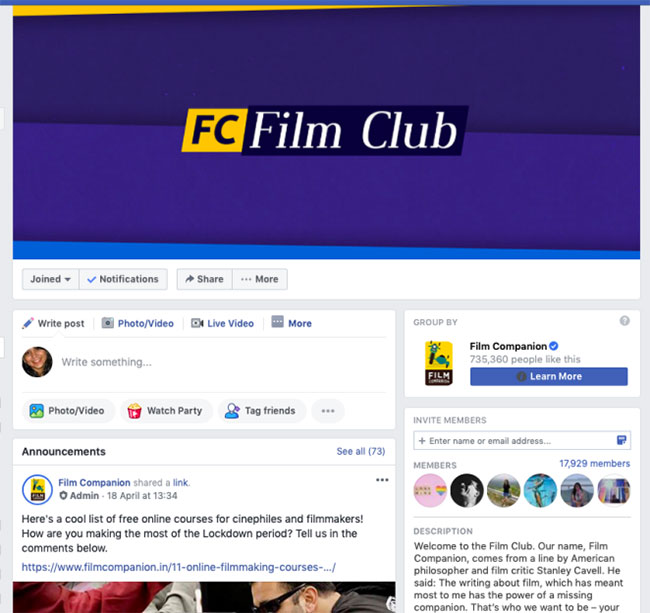
    Film Companion, a media company focused on reviewing content has their own FB group

    Groups, which  are a different asset to a FB page, are communities built around a certain common interest, and often geography. The format is that of a public forum, where members of the community are allowed to communicate with other members publically. The communication is managed by one or multiple Admins, who ensure that the group is communicating in line with rules defined by the Group owner.  Groups can be closed i.e. requiring approval to join or open.

    There are 2 ways to leverage FB Groups –

    1. Create a FB Group – Time consuming but a high quality community of brand loyalists will  be built. As groups offer communication even between followers, it will mean that a robust multi-way communication channel will get formed.  While this will require regular group management and even policing, this community is a high quality focus group that can be used in multiple ways

    2. Join Groups – relevant to your brand can help give access to a ready community that can then boost your page following, and even become customers. Ways of creating awareness in groups can be multiple, but must be done with prior Group Admin approval, as not all groups will be willing to let brands leverage them, but some may –

    • Content – sharing posts that utilize your brand rather than only promote it

    • Hosting exclusive competitions for group members which require using your products or services

    • Using the group’s real estate for advertising – this means the cover image, pinned post etc.


    Commandment 8 – Go Live on Facebook

    Facebook Live is a feature of that uses the camera on a computer or mobile device to broadcast real-time video to Facebook. Lives have become ubiquitous across social media. Since the launch of live in 2016, as per statistics shared by Facebook, more than two billion people have watched a Facebook Live video. Lives are a helpful tool and help brands to –

    • Provide access – Live streams of public events like press conferences and product launches

    • Provide engagement to the brand – The brand can respond to viewers in real time

    • Humanize the brand – showcase the behind-the-scenes functioning of the brand, your product, ad shoots, or the people behind your brand.

    Some best practices of using them –

    • Choose live topics on the basis of what your community wants more information on

    • Promote the date of you live for a few days, so that your community is aware of the Live taking place

    • Take questions and respond to comments from the viewers

    • Cross promote your Live on other social media

    • Ensure you post your Live as a video after the stream has ended, with an relevant description & video title

    • Ensure you data connection is strong, so that the video doesn’t lag or drop during the Live

    • Ensure you have a visible branding during the Live


    Commandment 9 – Consider using Chatbots on FB Messenger

    The chatbot launched by MyGovIndia to resolve queries on Corona virus


    Chatbots on Facebook messenger are a great tool to complement a Facebook page. Messaging enables businesses to pursue two-way conversations, which are personalized (users are greeted with their first name), customized (according to their purchase history or search history), simplified (only information relevant to the user’s query is given as opposed to a FAQ or a one-way post), responsive, (comments on Facebook posts can be responded to) fast, and documented.


    Hence, FB Messenger as a more intimate way to communicate with users for retargeting, customer sales support & communication, should be leveraged.


    As per a Facebook study, 79% of people in India say that being able to message a business helps them feel more confident about the brand

    While there are many companies which make Chatbots, popular companies include Mobile Monkey, ChatFuel, & ManyChat.


    Commandment 10 – Use360 Degree Photos & Videos

    The film Bhoot used 3D posters as a part of its marketing communicatons


    Facebook’s USP over other social media networks is that allows users to take, upload and view 360-degree photos. While Facebook supports 360-degree videos, they need to be shot using special cameras.


    3D photos can help create the wow factor, which can help brands to break the clutter – something which on Facebook is necessary.


    _______


    Facebook offers short and comprehensive courses and guides on how to use all their features. I recommend going through Facebook Blueprint, which is an e-learning platform that offers free, self-paced courses on Facebook and Instagram advertising for detailed guidance.


    Pictures taken from public feeds of users on  Facebook, Facebook newsroom & blog, hootsuite.com & pixabay.com


    Bhuvi Gupta is a marketer with 10 years of work experience, of which the last six have been in the media and entertainment industry. She has been a part of many launch marketing campaigns with experiences at the Times of India group, Republic TV and the latest in marketing a Bollywood film.


  • Bhuvi Gupta: Indian TV news media needs to clean up its act to avoid irrelevance

    Bhuvi GuptaBy Bhuvi Gupta


    The Indian media industry has rapidly evolved post liberalisation.  With the advent of the Internet and increased digital penetration primarily driven by mobile phones, digital news media outlets have increased exponentially.  As an early millennial, while I can still remember having only 2 channels to choose from, which time with its paucity of choice is unimaginable.


    News Media especially TV news media has lost its equilibrium with every passing day unearthing TRP scams and defamation cases.  This is because unlike robust regulation for films via the Central Board of Film Certification (CBFC), Print via the Press Council of India (PCI) or advertisements via Advertising Standards Council of India (ASCI), TV and digital media largely rely on self-censorship and get ticked off only through PILs /defamation cases filed in court. TV Content ideally should adhere to guidelines set forth in the Cable Television Networks (Regulation) Act, 1995 and Cable Television Networks Rules, 1994. While self-regulatory bodies News Broadcasters Federation and News Broadcasters Federation exist, they don’t include all TV news media and hence are powerless.


    For a genuinely free and fair Press, content regulation is key. This is because content biases are becoming incendiary, defamation cases aplenty, and this decrease in content quality is causing advertisers to walk away, which will in the near future, cause advertising-dependent media to become unsustainable.


    Media has always had bias – From news broadcasts to opinions.

    Media companies the world over has political biases, which are usually determined by the company owner. Company owners are human and hence will hire an Editor-in-Chief who resonates with his thought process and biases.  Hence, the content invariably toes the owners’ biases. This is human and despite the best of efforts to be balanced.


    https://twitter.com/hamzamlakdawala/status/1315640922567143425

    The Rajdeep Sardesai and Arnab Goswami Star News Bulletin that went viral on social media recently reminded us of what news used to be  


    In the 90’s and the ’00’s, when news meant bulletins, these biases were subtle and indiscernible to the inattentive because they existed in expression and terminology rather than opinion. With the advent of the debate-focused prime time that drives the news cycle today, these biases have become prominent, with the flow and tonality of the debate making the news channels’ leaning apparent. Hence, when watching layered issues discussed on channels with opposing leanings, the protagonist often becomes the antagonist and vice-versa.


    These biases are however often designed to suit political motivations.  The majority of Indian media today has apparent or circuitous linkages with some or the other political party. (Link- https://www.newslaundry.com/topic/who-owns-your-media)


    Hence, due to conscious and unconscious biases and a minimal fear of regulation, news channels today get away with content based on incomplete fact and opinion.


    Advertising drives the business of media In India


    India’s media industry relies on a mix of advertising, subscription and ancillary revenue streams from events, awards and branded content. Most media companies heavily rely on advertising with other revenue streams being strictly supplementary.


    The media can’t afford to lose advertisers. Legacy advertisers like Bajaj, and Parle Products have already announced that they wont be advertising on channels which promote hatred, and other advertisers will succumb to public pressure and follow suit.  A situation that spells doom for the sector where most channels do not manage to breakeven.


    So what is the solution?


    As TV debates become more slanderous, and more advertisers leave it is becoming evident that there needs to be a self-regulatory body with power to keep media in check.  A good example could be a body modeled after the ‘Advertising Standards Council of India (ASCI)’, which has representation from advertisers, media agencies and audiences to regulate ads.  The inclusion of audience is genius because it ensures that advertiser biases get neutralised and ads, which are upheld, are in the interest of the audience.


    However, TV news is complicated and fractured. Currently, two self-regulatory bodies, the News Broadcasters Federation and News Broadcasters Association exist. Both are ineffective for the same reasons – neither is fully representative of the diverse news media in the country, have any audience participation, allow audiences to report any complaints, nor have government support or accreditation. Hence both are equally ineffective in producing any real change.


    What is needed is government support to make membership essential to the grant of a broadcast license to ensure full membership. (Direct government involvement like in the Censor Board for films is dangerous as it impinges on the fundamental right to the freedom of speech and expression)


    Regulations should be instated by this body to ensure that content on TV is broadcast only after verification, opinion is not shown as news, decorum in language is maintained and words that would count as sedition when spoken in small groups are not broadcast.


    The current state of media affairs is not sustainable for either a functioning democracy or the success of our economy and people. Hence, it is for all our sakes I hope that the news media industry wakes up and takes actions to regulate itself.


    Bhuvi Gupta is a marketer with over 10 years across industries, of which the last six have been in Media & Entertainment. She has been a part of many launch marketing campaigns – specifically at the Times of India group, Republic TV and the latest in marketing a Bollywood film. She writes on A&M (mostly marketing, but often on advertising too) every other Tuesday. Her views here are personal. She tweets at @bhuvigupta3


  • MxM Open Classroom: Day 2 of Digital Marketing ‘School’ by Bhuvi Gupta | The 10 Commandments of Instagram in 2020

    By Bhuvi Gupta


    Instagram is a photo and video-sharing app owned by Facebook, which as of March 2020 has over 1 billion monthly active users globally. India is one of Instagram’s top 5 markets with 86.4 million users with 41 million users (40%) belonging to the age group of 18 to 24 years. India is a focus market for Facebook, as we all know after the USD 6.4 billion investment that was made in Mukesh Ambani owned Jio Platforms. Amongst the many reasons, for this focus is the potential that India’s relatively unpenetrated digital population has.


    To put into perspective, there are 400 million smartphone users in India, & 86.4 million Instagram users in India. This means that four of every five people with a smartphone do not use Instagram. However, the one in five, which do still offer a sizeable opportunity for brands, especially when targeting the urban individual below 34 years of age. Facebook’s investment in Jio Platforms is a sign of how ubiquitous Instagram will become in the future for audiences across different strata. This means that understanding how the platform works to leverage it for maximum visibility for your brand is key, irrespective of who the target audience is.


    Instagram for the uninitiated, is a photo and video sharing app, which allows users to upload photos, and short videos, which can be edited with filters and organised with hashtags and location. Profiles can be either public or accessible only to pre-approved followers. Users can browse other users’ content by tags and locations, and view trending content. Users can like share and comment on content posted by people they follow.


    Other features also include messaging, stories, Explore tab and IGTV. Stories are 15 seconds of video or static content, which disappears after 24 hours, & IGTV is a YouTube competitor add-in app, that can be accessed from within Instagram. The Explore tab is a collection of trending content customized to each user by Instagram’s algorithm on the basis of his browsing habits. A users newsfeed is also customized according to their browsing habits. However, it contains content posted by people they follow.


    Instagram is an essential social media platform to understand today. It also has evolved and keeps evolving as new features are added. Below are the 10 Commandments of Instagram, understanding which; irrespective of the changes it may go throw will hold –


    Commandment I – Conduct a Basic Hygiene Check of your profile.

    To ensure that the page is primed for optimum performs its necessary to ensure that all the below are in place. –

    • Ensure that the profile name is the same as your brand name.

    • Apply for account verification (by going to ‘Business Settings’) as the blue tick against your brand gives the page extra credibility

    • Descriptor should include keywords & taglines for which your brand is most likely to be found when searched

    • Add a call to action in your profile to your website, your Amazon shop front, landing page for your current campaign etc.

    • Ensure that comments are switched on for all posts

    • Ensure profanity filters are switched on so as to filter out abusive comments

    • Ensure that the account is a ‘business account’ so that there is access to analytics. A business account makes it necessary for you to include the industry you function in. In this case, Jay Shetty, a popular Purpose coach has ‘Public Figure’ in his industy field,as he is an individual


    Commandment II – Optimise your content for Discovery –

    • Instagram allows discovery of content primarily via hashtags & location. Hence all content should be posted with related, and popular hashtags & geotags to increase discoverability.

    :: While it allows using up to 30 hashtags on each post, it is advisable to use at least 10 hashtags per post.

    :: Geotags, which are optional, should be used whenever applicable

    • Every posts should have a story announcing the post, as increasingly users view stories without viewing their content feed.

    • All content should be high quality & in correct dimensions

    • All content should be true to your brand personality.

    • Captions accompanying posts should be short


    Instagram Video  & IGTV preview –

    Thumbnail– Ensure that you choose a thumbnail that communicates what the video is about. While thumbnails can also be screenshots from within the video, a best practice is to use a customized thumbnail with a descriptive click-bait title to increase clicks.

    • Aspect ratio –ensure the right aspect ratio is used for posted videos

    • A great rule of thumb to ensure that a video grabs attention for a user scrolling his newsfeed is to have a lot of action & bright colors during the first 3 seconds of the video.


    Commandment III – Optimise your content for virality & stickiness –

    It is key to ensure that while building a page organic reach and followers are a focus, as an engaged community will help to drive ROI. Jonah Berger’s book, ‘Contagious’ gives 6 concise principals which help define what will trend and what won’t, easily identifiable by the acronym STEPPS –

    • Social currency – people share things that make them look good, when they are the first to discover it, or it is for a noble cause

    • Triggers – products need to be put on the back of people’s minds via reminders. This helps in creating desire.

    • Emotion – people need to feel a strong emotion like awe, amazement, anger to feel motivated to share

    • Public – when people see other people engaging with a trend it creates a domino effect which helps to make it trend even further.

    • Practical Value – it has to be useful.

    • Stories – there has to be a story around your content. Stories make content easier to remember and humanize a piece of branded content

    • Many trends have been a combination of a few of the STEPPS. Case in point, Dalgona coffee recently can be associated with both the P’s – people saw their friends make the coffee with easily available ingredients and they made it themselves.


    Commandment IV – Optimise Stories for interactivity

    Instagram stories are ephemeral content, which have a lifespan of 24 hours. Stories are interactive and have entertainment value. They are a great way to showcase brand personality & to participate in trends & moment marketing. This is because they allow the usage of stickers and augmented reality filters.

    Stickers – Instagram has the option of adding multiple stickers on stories, which can help give your brand more personality.

    • Interactivity – The most popular stickers include polls, multiple choice questions, polls, emoji sliders etc. which help increase engagement with your community.

    • Brand Personality – music stickers, locations, gifs.

    • Add landing pages to stories to achieve other business objectives using the ‘Swipe Up’ feature.

    • Add hashtags as that makes stories discoverable


    Commandment V – Don’t forget to use Instagram Live & IGTV

    Instagram Live- is a video format of the AMA (Ask Me Anything) format, made popular by Reddit. ‘Lives’ as a format have gained prominence in the last 2 years and can also be hosted on Facebook, Twitter & YouTube.  Followers can tune in to the live, ask questions and interact with other members of the community on the ‘Live’. Instagram also allows you to invite viewers or a co-chair on the ‘Live’ via a screen share thereby adding to the interactivity. Can be used for product launches and announcements, tutorials, general Q&As, press conferences etc.
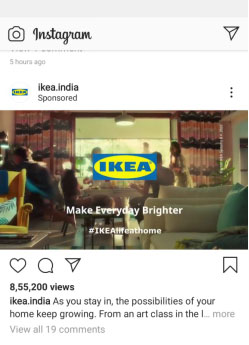
     

    IGTV is an app similar to YouTube. Its biggest USP is that it can be accessed from within the Instagram app, which allows you to leverage your Instagram community to discover longer content without leaving the platform. IGTV is a platform that is in the nascent stages of its growth; hence it is easier to build an audience on it as compared to YouTube.


    Commandment VI – Engage with your community

    The follower base that a page enjoys is the key asset for a brand or page on any social media platform. Followers can be present customers who are brand evangelists or future customers who relate to your brand personality. The community is a great way to build loyalty, as a follower becomes more engaged and loyal to you. Instagram’s algorithm uses the Page’s engagement rate, to decide how visible it makes your content, in feeds or in the ‘Explore’ tab. Visibility on ‘Explore’ tab can help exponentially boost your follower base. Best ways to engage with the community are –

    1. Reposting User Generated Content (UGC) mentioning or using your brand, keeps your community engaged, with you.

    2. Run contests so as to encourage your community to communicate with you. A caveat, ensure that giveaways linked to contests are aligned to your brand and not greed-inducing prizes like IPhones or IPads. This will ensure that reach achieved due to the contest is genuine.

    3. Responsiveness – Responding to post comments on especially those made in the first hour is how Instagram will decide the engagement rate of the post, which will in turn determine the post visibility. Being responsive also acts as encouragement for users to engage with the page on future posts, as they know that someone is listening and responding to them.


    Commandment VII – Supercharge your community base with Influencers

    Influencers enjoy loyal follower bases, which trust their recommendations. Hence, identifying accounts whose beliefs are aligned to the brand can help your page gain visibility & credibility in the right target audience. Influencer marketing can take many forms –

    • Posts reviewing your product and service offerings

    • A ‘Live’ recorded at a press conference or product launch or any other events

    • A page takeover, where the influencers interacts with your page’s followers all day long, answering the community’s questions about the brand, their experiences with the brand etc.


    Commandment VIII – Leverage analytics

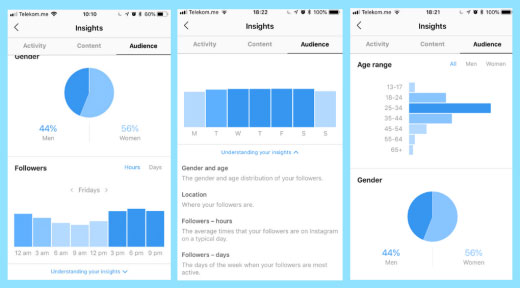
    Analytics will help you understand how different content performs and give you insights about your community. Community insights include age splits, locations, gender splits, times when your community is most active.

    This should define, the content you post and the time at which you post.  Instagram analytics will give insights about –

    • Content: insights on your posts, stories, and promotions.

    • Activity: your profile, including Interactions (such as profile visits and website clicks) and Discovery (how many people see your content and where they find it).

    • Audience: about your followers and audience, including growth in follower count by day or week.


    Commandment IX – Instagram Advertising

    Using advertising to increase the reach of important posts, about launches, brand campaigns, upcoming events etc. is a key supplement to any digital campaigns. Instagram’s algorithm limits the visibility of posts, even when engagement rates are above average, so it is important to budget for advertising for visibility.


    Commandment X – Ensure frequency of posts to maintain engagement

    Last but definitely not the least; ensure that your page is active with frequent posts. This frequency may be twice daily or 4 times weekly, but it is key to ensure that regular posts are done to ensure that Instagram classifies your page as active. Even if there is limited content that you create, leveraging user generated content, leveraging moment marketing on trending topics should be done so that, during a crucial time of a launch or event, your community is active and engaged with you.


    Images taken from pixabay.com, later.com and currently running public pages on Instagram. Instagram definition source: Wikipedia


    Bhuvi Gupta is a marketeer with over a decade of work experience, of which the last six have been in the media & entertainment industry. She has been a part of many launch marketing campaigns with experiences at the Times of India group, Republic TV and the latest in marketing a Bollywood film


  • Bigg Boss is Back. Long Live Bigg Boss!


    By Bhuvi Gupta


    Bhuvi GuptaBigg Boss Hindi, by far India’s biggest reality TV show, came back on TV last weekend, after having been delayed by over a month due to compulsory quarantines for its participants. While there were no stops put on the accompanying media blitz, the launch attracts and manufactures, this year there is an increased focus on digital rather than traditional media whose consumption has dropped on account of the lockdown.


    This lockdown has given us all a bird’s eye view of what living in the Bigg Boss house is like – rationed food (because you cant keep stepping outside to grocery shop), stuck with the same people day in and day out with some amount of conflict (have you ever spent such an extended period of time with your family), household chores division (after some negotiation to ensure its equitable), video calls with higher authorities who designate your priorities (yes bosses on Zoom, that is you). The only thing missing is evictions and if conversations with fellow countrymen are to be believed, that is the one feature which most of us need!


    Jokes apart, Bigg Boss or Big Brother, (as its internationally known) is the most successful global reality TV franchise with editions in 60+ countries. India itself has seven different versions of the show, and most have had record-breaking TRPs in their respective markets.


    I personally have always been a fan of the show, and try to balance keeping up with every season while not getting too hooked. Since Viacom’s OTT service, Voot started hosting unseen footage on Season 10 in 2016; this has become an increasingly harder hard task!  I have several explanations for why I am so invested in the show, every year without fail –


    The Format

    While Bigg Boss is a reality show, and like all reality shows is edited to create heroes and villains, the social experiment which blocks all outside communication makes it a unique forbidden window into human behavior, which makes it fascinating. New twists are thrown in every season, which makes the show unpredictable and hence never boring. Despite being more than a decade old, Bigg Boss has kept up with changing technology and media consumption powered by the internet. The audience can now can watch unseen footage on Voot Select, interact with contestants live, use Bigg Boss filters on pictures and much more. The various supporting elements help make the show engaging across different age groups and media preferences.


    It is a marketer’s delight

    From a marketer’s perspective, Bigg Boss is and has been a great vehicle for brand marketing. While there are many good reality shows, it is the only show that keeps interest in the show alive all through its 100+ day run. This is driven by a consistent 360-degree PR and media blitz, evolving show twists and really no rules. This ensures viewership and a RoI estimated to be 3-5 times the (high) investment for brands.


    This media blitz ensures that even vanilla FCT advertising and associate sponsorship options help drive brand recall. For brands with smaller budgets, the flexible show format makes brand integrations, which can include in-house product placement and branded tasks, seamless.  There is also product demonstration due to on-screen engagement of actors with the product during branded tasks, and audience engagement on voting during that week which make each integration a unique value proposition.


    Screen grab from ‘Kurkure Vigyapan Mein Chatpatapan’ episode of Bigg Boss 13


    One of my favourite integrations from last season was  ‘Kurkure Vigyapan Mein Chatpatapan’, where contestants were divided into groups and tasked with making ads promoting Kurkure. It was simple, and yet brilliant. Can you imagine any other brand integration where the brand advertisement with celebrity endorsers gets promoted continuously as content?


    Promotes Diversity & Inclusiveness

    Former adult star Sunny Leone became a mainstream Bollywood actress because of her stint on Bigg Boss 5


    The show has been a great vehicle for promoting diversity and acceptance in our conservative Indian society. Since the very first season, the show has regularly hosted contestants, who are ‘different’. While the objective is eyeballs, the show gives a platform to those marginalised making them human beyond their taboo relationship, sexuality or profession which in turn make the audience more accepting of them. The biggest example of this acceptance is Sunny Leone. It would not be presumptuous to say that the former porn star transcended her previous persona to gain acceptance as a mainstream Bollywood actress only due to her stint on Bigg Boss.  Bobby Darling from Season 1, Sushant Divgikar, Mr. Gay India 2014 from Bigg Boss 8 are a few other examples, of people from the marginalised LGBTQ community who have helped make the trials and tribulations the community faces more visible.


    As the skyrocketing news television ratings on coverage of the relentless hounding of movie stars over the Sushant Singh Rajput case proves, the voyeur in us is alive and kicking. And with the interest in the case waning, I wont be surprised to see the news audience shift focus to Bigg Boss. The lockdown has only made our voyeuristic urges stronger and I wont be surprised if Bigg Boss 14 breaks previously held records this year.


    Bhuvi Gupta is a marketer with over 10 years across industries, of which the last six have been in Media & Entertainment. She has been a part of many launch marketing campaigns – specifically at the Times of India group, Republic TV and the latest in marketing a Bollywood film. She writes on A&M (mostly marketing, but often on advertising too) every other Tuesday. Her views here are personal. She tweets at @bhuvigupta3


  • Is Gaming the Silver Bullet that can change Brand Marketing in 2021?

    Barack Obama used in-game advertising hoardings in the game Burnout Paradise among others, during his 2008 Presidential campaign


    By Bhuvi Gupta


    Bhuvi GuptaThis is the first time I am going on the record to admit that I have spent a lot of time playing online. Luckily though, these obsessions were recognised before they became addictions after an unhealthy time spent on Farmville, Angry Birds and lastly Candy Crush, before I admitted that I would not go down the slippery rabbit hole that can be gaming and have kept myself away since 2015.


    I am definitely the exception. In the last few years, driven by increased digital penetration and bandwidths, (and this year COVID-19) mobile gaming in India has exploded. As per a report from app intelligence firm Sensor Tower, Indians installed 7.3 billion games, nearly 17% of all worldwide downloads in the first nine months of 2020, beating countries like USA and Japan to the number one position.


    Basis the Google-KPMG Media Report 2020, the Indian gaming industry will cross USD 1.1 billion in 2021. With around 500 million people in India having smartphones (give or take a few million) and around 300 million+ gamers, there is no denying that this market is growing with the lockdown having helped accelerate the growth. The biggest USP of mobile gaming is the level of engagement that the audience has while playing a game. A GroupM- Mobile Marketing Association report (link – https://www.groupm.com/mobile-marketing-association-and-groupm-launch-mobile-ecosystem-report-2020/) highlighted that gamers are more than twice as likely to pay attention to advertisements placed in mobile games at 41 percent, as compared to ads placed on the internet at 17 percent, in magazines or on billboards at 15 percent each.

    This implies the inherent value of digital impressions becomes much higher.


    Marketing during gaming takes three forms primarily –

    :: Integrations – which are well-integrated into the narrative like branded ‘Virtual Real Estate’ like banners within the game, branded items like clothes or accessories worn by avatars, and fully branded modes or levels

    :: Advertisements for additional lives, etc. which can be typically purchased on ad exchanges

    :: Events such as e-sporting leagues


    Barack Obama used in-game advertising hoardings in the game Burnout Paradise among others, during his 2008 Presidential campaign


    Barack Obama used in-game advertising hoardings in the game Burnout Paradise among others, during his 2008 Presidential campaign.


    In India, Gaming in India can primarily be classified into four heads-

    :: Fantasy Gaming – which already has 100 million users with companies like Dream 11, Mobile Premier League dominating.

    :: Action games – such as PUBG and Fortnite. While Fortnite doesn’t have as many users in India it has been the front-runner in terms of brand integrations globally.

    :: Real Money Gaming – like online Rummy, Poker, and Ludo King. This comes under the purview of gambling and hence basis Indian law is subject to laws as dictated by states. While skill-based games such as Poker and Rummy are usually permitted, games of chance are prohibited. The recent PayTM First Games ban on the Google Play Store was also related to the definition of what constitutes ‘Gambling’

    :: Live Trivia apps – such as Pocket Aces owned Loco


    Why Gaming?


    With more people coming online there is ad fatigue that takes place due to the high number of ads users see. Many users also use ad blockers, and hence awareness and engagement with even well-targeted ads is low as the audience is just waiting to skip the ad.


    This is as opposed to the active audience that plays online games, where they are tuned to engage with the gaming platform to maximise scores. By using product integrations, or branded levels, brands can also help create immersive experiences for the target audience.


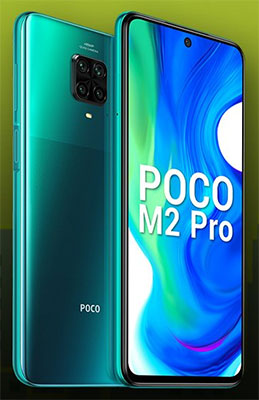
    Poco introduced their new launch, POCO M2 Pro via the game Tappy birds. A weeklong tournament called ‘Tappybird showdown’ was held where the mobile phones were placed inside the game, and players had to collect the phone to earn extra cookie points.

    Secondly, as the market is still nascent, brand integrations remain relatively unexplored. With 5G coming into India in the next 5 years, gaming will become immersive and hence technologies such as AR/VR will help create a value-added gaming environment, which is perfect for marketing.


    Poco introduced their new launch, POCO M2 Pro via the game Tappy birds. A weeklong tournament called ‘Tappybird showdown’ was held where the mobile phones were placed inside the game, and players had to collect the phone to earn extra cookie points.


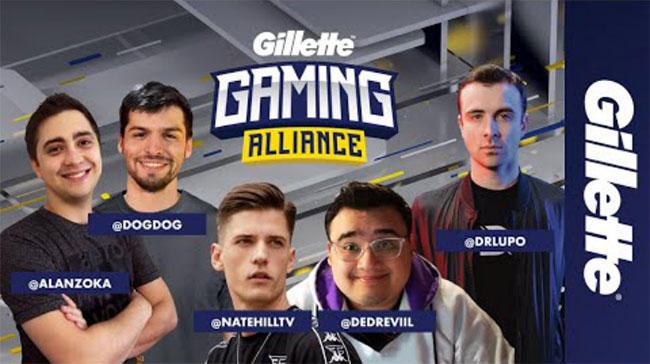
    Thirdly, emergence of e-sporting leagues and tournaments and live game streaming allows brands to leverage gaming influencers, do cause marketing, sponsorships etc. for a well-defined audience. The Google-owned YouTube has a vibrant community of gaming live streamers such as Tanmay Bhat, Gagandeep Singh (Sikh Warrior), Manasvi Dalvi (Manasvivi) etc. in India. Globally such campaigns are have already become common, for e.g. P&G’s Gillette has hosted the Gillette Gaming Alliance on Amazon-owned live streaming platform Twitch in 2019 and 2020 with a team of five Twitch influencers to create content for their fans, and highlight other campaigns and causes.


    Lastly, just like in digital advertising, brands can target users on the basis of demographics and geographies, which makes in game advertising all the more effective. There is also high prevalence of gamers in Tier2 and Tier 3 cities, which can be leveraged by brands.

    While it may seem that Gaming is more relevant for youth-focused brands, the 35+ age group has high usage in more traditional games such as LudoKing, Online rummy and Poker. Hence, depending on the target audience, brands should choose games online to create impact.


    The timing is right, the lockdown has helped accelerate user growth, and Indians brands must strike when the iron is hot to make the most of a relatively undiscovered avenue for advertising before it gets too crowded.


    Bhuvi Gupta is a marketer with over 10 years across industries, of which the last six have been in Media & Entertainment. She has been a part of many launch marketing campaigns – specifically at the Times of India group, Republic TV and the latest in marketing a Bollywood film. She will write on A&M (mostly marketing, but often on advertising too) every other Tuesday. Her views here are personal. She tweets at @bhuvigupta3


  • Chinese Lessons to make Bharat ‘Atmanirbhar’


    By Bhuvi Gupta


    Bhuvi GuptaIndia-China relations have been in the news for all the wrong reasons for the most part of 2020. With 47 apps banned last week, the tally of banned apps now stands at 220. The latest announcement however made me contemplate how Chinese apps may have started off as clones of popular western apps but have innovated to serve the needs and culture of their Chinese users and become beacons of innovation, which are being copied by the West.


    Irrespective of how localised globalised platforms (in other countries) try to be, the benefits of creating products nuanced to the people who will use them cannot be denied. The lesson for India hence becomes to create products with features, which suit our behaviour — be it ‘jugaad’ or  ‘bachhat’. More than copying the west, I feel Indians apps should ape China, because we share more with its collectivistic culture than the individualistic culture of the west. Also noteworthy and ape-worthy is that Chinese apps have evolved to serve people who have leapfrogged the PC era directly to mobile, exactly like the majority of the Indian population have already and will in the future. 


    I am sharing some of the most ape-worthy strategies below.


    The Micro-transaction Model

    Isn’t it commonplace to have 10 tabs open on our browsers or a Kindle full of fabulous e-books, which you have lost interest in or are too busy for?


    One of my strongest beliefs in the digital world where access to information is no longer an entry barrier is that attention is what will be valuable, because attention is in limited supply even if information isn’t.


    With that central thought and taking into account the limited affordability of many Chinese people, China’s companies sell products like books and music streams in bite-sized manner. For example, China’s largest online/ e-book publishing company, Yuewen Group, sells books in capsules of 1000 words. This micro-transaction model is beneficial to both writers and readers, because writers end up selling more to readers who are on the fence about paying full price for a book they may or may not finish. In price-sensitive India, where value-for money is a key determinant for success, this can open the audience with limited affordability and accessibility who can choose to consume only that they continue to find value in. 


    The Cult of the SuperApp – Apps as Phone OS (Operating System)

    Alipay’s homescreen could be mistaken for the homescreen of your phone


    Reams have been written about Tencent owned WeChat, which transitioned from a messaging app modeled on WhatsApp, to one that can order food; send money, book travel and much more. Wechat has 1 billion monthly active users and has spawned a multitude of copycats both within China and abroad. While super apps other than Wechat are common in China, Gojek in Indonesia, and PayTM in India are what have possibly come closest to replicating their breadth in other countries but are still far from penetrating the market to the extent that Chinese apps have.


    SuperApps basically capitalise on their loyal user base and brand salience to share it across different survives. This in turn helps drive app traffic to retain mindshare and relevance. As a result of this bundling of apps, users never feel the need to go out of the app ecosystem and the app homescreen becomes the pseudo phone homescreen. For older generations who face a tough learning curve when it comes to technology, such apps are very useful. This is also one of the key reasons why superapps have been so successful in China.  For the app, it is beneficial because it opens multiple revenue streams other than advertising. For example, today more than 80% of Wechat’s revenues come from transactions rather than advertising. It is a model that may just work very well with the recently launched WhatsApp Pay in India.


    In India, the Covid-19 lockdown helped drive additional functionalities like grocery delivery features into Swiggy and Zomato, parcel delivery to Uber. However, posts lifting of lockdown these additional features have lost priority, which is unfortunate because this was just the beginning of a possible super app journey.


    Path to Market

    Understanding local customs is the USP for Indian founders. This is most often where MNCs who launch their products in India flail. Local doesn’t only mean language, etiquette, social norms; it extends beyond these to attitudes and quirks unique to Indian hardships and society.


    In business terms, this can mean paying attention in app strategy to India’s love for discounts, value for money, a culture which doesn’t believe in credit, ‘jugaad’, cashbacks, the importance of family, arranged marriages, one device shared by a family or mostly by siblings, Bollywood and cricket etc. in addition to logo, design layout, and language etiquette. The latter matters, but ignores fundamental insights about customers that can drive adoption of new technology.


    QR Codes for a Phygital world


    PayTM has used QR codes to drive digital transactions but scope for them to be leveraged a lot more remains


    QR codes have been one of those digital features, which despite having been around for a long time have not been leveraged as much as they can be (with the exception of PayTM who has helped their cause). For the 700 million Indians who will come online directly to a 5G world, QR codes can be great way to help simplify the digital world — all QR codes require are a working camera and a data connection.


    In China, QR codes are used extensively – as authentication stamps on goods often faked, as identity tags at workplaces, pet tags, as credit cards, on billboards… Applications are in fact endless and should be used extensively as the remaining 700 million Indian users whose technological learning curve will be steeper come online.


    ~ ~


    While I am winding up my love letter to Chinese innovation here in my column today, I have only scratched the surface of what China is doing. At the core China is using every feature of the mobile device available to innovate. For e.g. QR codes use the camera as a data entry feature instead of a data collection feature. The lessons for Indian businesses are many and just waiting to be applied for large-scale success.


    Bhuvi Gupta is a marketer with over 10 years across industries, of which the last six have been in Media & Entertainment. She has been a part of many launch marketing campaigns – specifically at the Times of India group, Republic TV and the latest in marketing a Bollywood film. She writes on A&M (mostly marketing, but often on advertising too) every other Tuesday. Her views here are personal. She tweets at @bhuvigupta3


  • Has Internet Killed the MBA Marketing Star?


    By Bhuvi Gupta


    Bhuvi GuptaThe advent of the Internet has brought with it multiple changes, the biggest of which is access.

    This access has brought monumental changes to both the manufacturing and services sectors but in terms of functions, the most impacted has been the marketing function. Over the last decade, the function has evolved and made experience a lot more valuable than business degrees, which have been a strict entry barrier previously.

    Why has marketing been so affected?

    Marketing is a cost function that doesn’t have a measurable output. The function is primarily responsible to oversee other departments and ensure that strategy is being implemented as planned; and if there are gaps in sales plug in the holes through effective communication campaigns. However, what is effective? Is it virality or product sales? And which function takes ownership of increased sales? After all it is a composite of sales, supply chain and marketing and measuring marketing effectiveness is still not quite science.  These were problems that have always existed, but have got highlighted with the advent of the Internet because the Internet brought with it access to people, businesses, information and platforms. All of which were at the premium of money and privilege which marketers had access to. While both still matter the premium has definitely decreased and both creation and distribution of communication is much easier.

    Secondly, with the internet and social media, the marketing function has exploded in terms of work responsibilities. While this may seem to be counter-intuitive to this topic, it is not because this work explosion has been haphazard.  What is the job of a marketer today? Is it writing content for social media posts, or is it running ad campaigns, or is it making strategy? When is work to be outsourced to an agency and why?

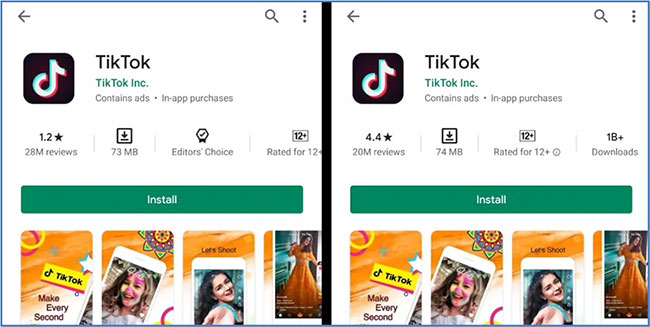
    Most Fortune 500 companies have divided the marketing and communications function into micro-functions – there are different functions for corporate communications, performance marketing, market research, brand management, digital marketing and off late influencer marketing too. The solution is two-fold  – a restructuring of marketing in companies and revised curricula in B-Schools and c- schools to build 360- degree competencies across all these functions.

    Thirdly, with the internet, consumer behaviour has changed. Whether one wants to buy a car or a new brand of oats, the internet has facilitated reviews of all products at the click of a button. I confess I have been guilty of searching for reviews online (sometimes) before purchase even when I spot an interesting product at the grocery store, and I know I am not the only one. This online decision-making moment is called the ‘Zero Moment of Truth’  (ZMOT). This basically means that while marketing campaigns are important for building awareness and interest, in the information age a brand needs to engage with its users, be responsive to feedback to actually translate consumer intent into a purchase over and above being a good product.

    Lastly, and this is a prediction, in the coming future, as algorithms become better at predicting and personalising our ads, we will gradually see the death of mass-market ads. This is already in practice digitally with Google Marketing Platform, but will become more and more ubiquitous as it transcends into smart TVs, and soon in smart radios et al. Print advertising, the flagbearer of mass market advertising, is on its last breath and its share of the content pie will reduce drastically in the coming decades, what will truly remain mass will be outdoor advertising and smart glasses may even personalise that! Hence, marketing communication will need to be customized as per audience to be truly effective in crowded markets.

    Overall, because of the pace of change in marketing and communication, new facets are emerging and the importance of pre-existing facets has changed. MarCom teams and managers are unfortunately still catching up which is why the entire function is in flux.

    I must end by issuing a standard disclaimer of this being my opinion but based not on conjecture but actual experience. But experiences differ and this may just stir a hornet’s nest of differing opinions. I would be very interested in hearing from other marketers whether they agree or disagree, the reasoning behind their opinions and how they are keeping up with the dynamic environment.

  • What ‘The Social Dilemma’ gets right, and what it misses by a mile


    By Bhuvi Gupta


    Bhuvi GuptaUnless you have been living under a rock the past month, you have probably watched, heard and discussed the Netflix documentary ‘The Social Dilemma’, which denounces the power that advertising-powered digital media today holds over connected audiences. That you may have read about the documentary’s impact on Facebook or/ and have watched it on Netflix is of course the irony that escapes none of the documentary’s proponents.


    The documentary covers how the objective of social media networks is to maximise the time spent by users on them so that they can better profile their users and serve their customers, i.e. advertisers with better audience targeting solutions, which are for sale to the highest bidder, irrespective of whether it is fake news or diet pills that is being advertised.


    The Internet and social media have dramatically changed our lives in the last decade. There is no denying how much positive change the internet has brought with it – reuniting families, facilitating blood transfusions and donations, and currently enabling a robust WFH culture which is allowing the global economy to function during a pandemic. However, the same connectivity that has been used to bring about positive impact has been exploited to bully individuals, spread propaganda, and win elections.


    The documentary does not make any big revelations. Since the 2016 US Elections, we have consistently heard how political parties have misused social media, specifically Facebook across the world to sway public opinion.  All ‘The Social Dilemma’ does is piece together much of what we already knew, in way that it created impact and will hopefully institute change.


    The Disruptive Power of digital advertising – pro for a marketer, con for humanity

    As a marketer, who has run too many Facebook and Google ad campaigns, my favourite tool to ensure a low CPM and high CTR are the LookAlike Audiences.  For the uninitiated, Facebook and Google allow you to target people similar to an audience that you share with them. All you have to do is list some demographic and interest based qualifiers or share a database of people who have visited your website to create a ‘Custom Audience’ and the platforms generate a Look Alike audience, which behaves just like your ‘Custom Audience’. The first time you use it and see your CPMs go down, it seems like magic. It is not.  It is the power of tracking audience behavior over long periods of time, which has helped classify audiences and behaviour patterns.


    As a marketer, the ability to find such audiences, and to be able remarket to them is a dream. Digital advertising has been a gamechanger for many businesses because of its measurability. Unlike traditional advertising, where you target the masses on Print or TV media and hence have massive spillage, digital ads are shown only to potential consumers, bettering the ROI.


    The flipside is that the ease in targeting audiences, which depict a certain behavior, is the same whether the intent is noble or malicious.  As the documentary explains, incendiary elements actually exploited Facebook’s algorithm to create a hoax scare called ‘PizzaGate’ amongst gullible audiences to successfully link the 2016 Democratic party Presidential candidate, Hillary Clinton with child trafficking, and hence, sway crucial vote banks.


    It has never been easier or cheaper to sway impressionable minds. Even those not so impressionable can get swayed when served fake news dressed-up to sound authentic.


    What The Social Dilemma missed – it’s not only Social Media

    The documentary solely focused on the power of social media networks driven by algorithms which work on a trifecta of engagement of users, growth of the network & increase in advertising revenues, it missed how other platforms which are not reliant on algorithms & ads such as WhatsApp, Reddit, 4Chan have also been leveraged to spread harm via fake news and doctored content.


    This problem is gargantuan, because it has transcended the level of doctored news whose veracity can be easily verified by a simple Google search to include Deepfakes. Deepfakes are synthetic videos in which the face of a pre-existing person is replaced by someone with a high likeness to them. The quality of Deepfakes is so advanced; today that it is very difficult to make out authentic videos from doctored ones.


    Reddit and WhatsApp have both facilitated the spread of fake news and deep fakes, which have been incendiary enough to incite rioting and lynch mobs in India.


    The Monopolistic Power of the FAANG

    FAANG or Facebook, Amazon, Apple, Netflix and Google together are synonymous with the Internet for most of the 4.5 billion people online today.  These companies own complementary parts of the ecosystem and often take advantage of this monopolistic ownership to prohibit competition. While countries in the EU and Australia are instituting regulations to protect their citizens, most countries, including India do not yet have strict regulations or competition laws to prohibit monopolies for digital companies like they do for other industries. As a result, FAANG continues to control what users see on the Internet to benefit their profit objectives. Last weekend, Google banned PayTM from the Google PlayStore claiming Paytm’s IPL promotion, which was offering scratch cards and cash backs was a form of ‘sports gambling’. 95% of India’s smartphones run on the Google owned Android operating system, and hence were shut out from Paytm.  It is ironic that such a ban was instituted when similar promotions have been used by Google Pay (a direct competitor of Paytm). While Paytm was reinstated after it removed the cash back feature, given that the ban was instituted without any warning sets a dangerous precedent for the monopolistic power wielded by Google.


    Hence, adequate regulations and competition laws are crucial to protect the online marketplace.


    Content Regulation

    Unlike rigorous procedures, which govern the licensing of traditional media companies i.e. Print TV and Radio, and industry bodies such as ASCI which monitor the veracity of ads shown in Indian media, digital media has no such eligibility criteria or monitoring to check the credentials of media owners or ‘content creators’.


    While many petitions are currently running against hate speech and defamation on TV news channels, the incendiary content on digital media is going ignored. Content posted online requires stringent checks including both govt. regulations and human monitoring to manage it. Currently, YouTube employs both Artificial Intelligence and human resources to protect copyrighted content. Similar checks and balances are required before any content is posted, as systems driven without human intervention cannot differentiate between fake news, sarcasm, exaggeration etc.


    Last week, former Facebook employee, Sophie Zhang who was employed as a Data scientist released a explosive memo (link – https://www.buzzfeednews.com/article/craigsilverman/facebook-ignore-political-manipulation-whistleblower-memo) on how Facebook did not attempt to stop coordinated campaigns by political parties to sway public opinions and incite civil unrest in countries ranging from Azerbaijan to Myanmar, because their attention was focused on markets which yielded higher revenues for them. The memo brought to the fore many of the problems highlighted by ‘The Social Dilemma’.


    While I do agree with ‘The Social Dilemma’ about individuals taking ownership and governments making regulations to monitor these platforms, I believe that the platforms themselves need to step up to regulate the content allowed on their platforms to both stem their misuse and ensure their long term survival.


    Bhuvi Gupta is a marketer with over 10 years across industries, of which the last six have been in Media & Entertainment. She has been a part of many launch marketing campaigns – specifically at the Times of India group, Republic TV and the latest in marketing a Bollywood film. She will write on A&M (mostly marketing, but often on advertising too) every other Tuesday. Her views here are personal. She tweets at @bhuvigupta3


  • The Big Bad World of Bought Likes & Trends


    By Bhuvi Gupta


    Bhuvi Gupta

    The business of news and entertainment is unique from other businesses as there is no underlying need for consumption and content is easily replaceable with similar alternatives. Hence, the entertainment industries have always relied heavily on glitz, gossip and glamour to garner consumption.


    This has taken many avatars through the decades. In the early 2000s, the Times Group innovated and changed the PR landscape when they launched Medianet, renamed as Optimal Media Solutions (OMS) since. It was very successful for the both the media and entertainment industries, because of the blurred lines between ads and news. The audience was oblivious as long as gossip and entertainment was delivered and hence many a film were boosted due to entirely manufactured gossip on link-ups and skirmishes on set. TV news followed soon after. NDTV was the front-runner of branded content in TV with shows like Earth Hour, Greenathon etc. Today, weekend programming across English news channel almost entirely comprises such branded shows.


    The digital equivalent of Medianet is the manufactured views, likes, followers and trends because the lines between the inorganic and organic are blurred. This is more dangerous than Medianet, because all social media platforms have Achilles’ heels which can be exploited to manufacture reach that is invisible even to the discerning viewer.


    All this changed when last month, the Mumbai police launched an investigation into the 75 Lakhs worth of YouTube views purchased by Aditya Singh Sisodia aka Baadshah for his 2019 single, ‘Pagal’. The song launch was a mega-affair with influencer marketing campaigns on Instagram and TikTok, YouTube advertising and other dubious means employed in an attempt to break records. Baadshah claimed that ‘Pagal’ was the fastest video to reach 75 million views on YouTube, which was promptly shot down by them due to inorganic means employed. This has subsequently lead to the ongoing criminal case filed by the Mumbai police and the investigation thereafter. The case has opened a can of worms, as newer unethical practices of the digital ecosystem of the entertainment industry began slowly getting exposed.


    To be honest, in 2020, Baadshah’s admission to buying views would not have come as a  shock to most of us. Even the undiscerning viewer sees enough chinks in the digital armour – screenshots of identical tweets from celebs (right down to grammatical errors) praising a government or a popular icon, TikTok’s Playstore ratings being brought down in a day and then restored are two of many examples. What is not common knowledge is the sheer mechanics and extent of what goes into digital influence manufacturing and the reasons behind it.


    In May 2020, TikTok’s app store ratings were restored after Google deleted 80 Lakh negative comments made in the span of a week in response to the Galwan Valley skirmish. The Chinese app has since been banned in India.


    Why do Indian Artists companies do this?

    Creating a buzz in the entertainment business is crucial to remain relevant. Social media metrics have come to define the salability of the artist for producers and distributors. It is a flawed ecosystem exploited by all the players. To elucidate –


    The problem with the Algorithm

    View counts on YouTube, don’t differentiate between paid and unpaid views or the viewership duration (a view is counted after only 30 seconds of consumption). Views are a key metric for YouTube’s algorithms, especially when it comes to search result rankings and recommendations, which help drive organic views and hence generate revenue. Hence, paying for views is a natural choice because they help recoup advertising investments through organic views, while adding the credibility that higher view counts get.


    Not only vanity metrics

    For films, OTT and satellite TV, rights are often sold after movie trailers are released and the view metrics of the trailer, contribute to the negotiating power of the producer. Likewise, in the music industry, licensing deals, terms of contracts, concert tours and appearances are often measured basis song popularity. Hence, paying for YouTube views is a natural investment that pays for itself many times over.


    The problem with the platforms

    It serves social media platforms to have higher view counts because, it drives up daily traffic on the platform, while generating ad revenue. This problem of fake news, fake views, and bots serves social media portals which rely on user metrics to help set ad rates. In the absence of stringent laws, while popular social media platforms do make the right noises about removing bots and fake profiles they have little incentive to actually follow through.


    It’s not a crime in India… not yet!

    Many countries across the world like Singapore, France and Germany, are enacting strict cyber laws that punish hate-speech, threats, and impersonations (under which fake followers lie) as criminal offences, liable to both imprisonment and fines. In the absence of such laws in India, manufacturing inorganic views becomes dishonest but not illegal. While the fake likes industry has been thriving for the last few years, the case against Badshah may just be a watershed moment in the creation of cyberlaws, which will bring more transparency in Indian cyber space.


    Till laws change, as a marketer, I leave you with my content checks to avoid being gamed. On YouTube, I check engagement (likes and comments as a percentage of views), for highly viewed content before investing the time to watch. If the number is low, it is safe to say that the views have been bought. And on Twitter, inorganically trended hashtags will have a majority of tweets with the same sentence structure and central thought – so a quick scan of tweets under a trending hashtag will help check ingenuity.


    Bhuvi Gupta is a marketer with over 10 years across industries, of which the last six have been in Media & Entertainment. She has been a part of many launch marketing campaigns – specifically at the Times of India group, Republic TV and the latest in marketing a Bollywood film. She will write on A&M (mostly marketing, but often on advertising too) every other Tuesday. Her views here are personal. She tweets at @bhuvigupta3