Category: NEWS

  • beStylish.com ropes in ‘EKA’ as ambassadors

    By A Correspondent


    beStylish.com has roped in the upcoming music band ‘EKA’ as brand ambassadors for their online shoe store. With this association, beStylish has launched the first phase of its ‘Friends of beStylish’ program that encourages partners across various walks of life to connect with the online brand.


    As the ambassadors of beStylish, EKA will play a key role in creating a brand connect with beStylish.com’s customers and prospects with its highly energetic performances, in various concerts held in music festivals, college fests, corporate events, radio and television shows, clubs, pubs, and so on across the country. Specially composed beStylish jingles will be played as part of these concerts. The brand promotion would be further amplified in the online space through co-promotion on beStylish.com’s online store, online music channels, vignettes, and others.


    Speaking about the beStylish brand value and its association with EKA, Shailen Amin, Co-Founder and CEO, beStylish.com, said: “Given our strong marketing focus emphasizing on brand awareness and building a loyal consumer base, we have associated with EKA under our ‘Friends of beStylish program’. EKA’s eclectic, original and contemporary music syncs perfectly with our own approach towards our customers and fans. With this partnership, we are confident of creating real-time public engagement opportunities for the brand, moving beyond a virtual-only space”.


    Conferred with ArtistAloud Awards 2011 for the ‘Best Group’, the renowned band ‘EKA’ comprises of Benjamine ‘Benny’ Pinto on Keyboards, Hitesh ‘Rikki’ Madan on guitars and vocals and Lokesh Madan on vocals and bass. The seasoned musicians forming Eka and have performed at over 2,000 concerts in 15 countries and have recorded over 100 songs in various capacities.


    Commenting on the occasion, EKA said: “We are excited to be chosen as the face of this youthful brand. beStylish.com aptly reflects the attributes of today’s youth and we are proud to take the brand from the virtual space to their real audience. Through this association, we hope to take our music to new audiences and hope we can help our audiences put their best foot forward with beStylish.com’s ever-growing list of top of the line fashion products. We look forward to growing with the brand and hope that our association with the brand grows stronger in the years to come”.


    beStylish.com isIndia’s largest online shoe retailer with the largest range of international, high street and popular footwear brands. It offers its customers an exceptional online shopping experience with over 130 brands and 4,600 styles in shoes catering to men, women and children. beStylish.com was launched in May 2011 under the umbrella of the Smile Group, which has consistently created trusted digital and ecommerce assets, business ideas and entrepreneurs in the digital space.


    Eka has performed at prestigious events including The Times of India Earth Care Awards, United Nations Initiative for Women & Children’s Health, International Film Festival of India (Goa), Finale of Bengaluru Habba, Chivas Studio Spotlight & The Great Indian October Fest, among others. Eka calls its music genre ‘Swatantra Rock’ – music beyond music, time and boundaries. Eka delivers a unique experience by blending its originals with selected classic rock, sufi and popular Hindi / Bollywood music.


     

  • New Samsung TVC from Cheil takes ‘Y’ smart to next level

    By A Correspondent


    Cheil’s latest television commercial promoting the Galaxy Y DUOS is an extension of the earlier campaign that drove preference for the Samsung Galaxy Y Smartphones and set the pace for Gen Y to make a shift from feature to smart phones.


    Once again Samsung has created a buzz in the market by launching the Dual SIM Android phone – Galaxy Y Duos (GT-S6102), a touch-screen dual-SIM Smartphone. It has 3.14″ screen with QVGA resolution and an 832 MHz processor.


    For Cheil the launch of the Samsung Galaxy Y Duos was an ideal platform to carry forward the DNA of Galaxy Y and at the same time display the benefit of a Dual SIM Android phone.


    Speaking about this new commercial for the Galaxy Y series, Alok Agrawal, COO, Cheil Worldwide SW Asia said,  “Galaxy Y is a great franchise which we’ve built by riding on an insight where we have divided the world of tech into the have and have nots. Smartphones is the way forward in the mobile category and the market is in an exciting phase. This is the second campaign from Galaxy Y and we are looking ahead to more exciting work in this space.”


    Cheil’s communication clearly shows the protagonist with Samsung Galaxy Y Duos demarcating the world between the have and the have nots and the need to be smart and have a smart phone in life.


    The new TVC created for Samsung ‘s new smartphone is set in a cafe showing a young girl with the new Galaxy Y Duos putting an irritating loud mouthed character in his place. As before, the communication ends with the antagonists being teased with a simple question “Dual SIM hai aur samsrtphone bhi, lekin aap ke pass nahin hai…Uncle?”.


    India’s mobile phone market is witnessing exponential growth and the smartphone market has gained traction with every mobile handset manufacturer offering smartphones at various price points and service providers providing lucrative data plans to entice the consumer to use email, apps etc on their phones.


    In this growth story, Samsung mobile has emerged as the No. 1 Smartphone brand inIndia. Samsung’s positioning is no surprise as it understands the consumer and develops smartphones to cater to the needs of all types of users. In 2011, the Galaxy Y series were launched though a successful campaign of TVCs that clearly focused on the youth of today- confident and courageous to take up challenges and solve them in their own unique ways.


    This TVC is part of the line up of an exciting range of products where Cheil Worldwide is actively involved in building communication across 360-degree consumer touch points, that offer a high degree of excitement and creating buzz for the brand.


    Client: Samsung electronics India Limited

    Agency: Cheil Worldwide SW Asia

    Creative Team: Varun Arora, Dinkar Porwal, Vishal Sagar

    Client Servicing team: Srijeet Das, Soma Chatterjee, Shruti Nanda, Chandramouli Prasad

    Production House:Code Rd

    Directed by: Gajraj Rao


    Cheil Indiahas been on an aggressive growth plan over the last 2 years, almost doubling its size in its employee strength and billings. Significant expansion and growth has been seen particularly in BTL and Digital areas, making Cheil one of the largest fully integrated single agencies inIndia, executing some of the largest cross-functional integrated campaigns, providing 360°implementation across all facets of marketing services.


    Cheil Worldwide Inc is Korea’s largest and one of the world’s leading advertising groups. Cheil offers a full portfolio of marketing communications services including advertising, PR, sports marketing, exhibition and display production, and production of large-scale performance events. In 2011, Advertising Age ranked Cheil as the #11 largest creative agency in the world.


  • Out with a Bang! Prathap Suthan, Naresh Gupta etc launch new agency

    By A Correspondent


    Prathap Suthan
    Naresh Gupta
    Viral Pandya
    Manoj Deb
    Sabu Paul

    It was one of the biggest news to have hit adland in March 2011 when Cheil Worldwide’s NCD Prathap Suthan quit his agency to join lesser-known direct-to-consumer remote tech support company iYogi as its Chief Creative Officer. It was seen as an unexpected move by the creative maverick who was responsible for creating some startling work for Cheil Worldwide in India. But after lying low-profile with its activities and having stayed away from the advertising glitz and glam for most part, Suthan (or Pat, as he is affectionately called) made an interesting announcement on Monday when he announced branching out from iYogi to float ‘Bang in the Middle’ as an independent agency.


    Started in early 2011, the division headed by Prathap Suthan was set up as the in-house branding, advertising and communication team at iYogi. The unit managed campaigns for the company, primarily leveraging digital media across North America, the United Kingdom, Middle East and Australia. After 12 months, and over 20 campaigns later, iYogi’s in-house agency is ready to step out and offer its services to a wider set of brands. The agency will now offer expertise in brand advisory, communication design and advertising to Indian and global corporations.


    To be based out of Gurgaon, the team line-up includes some of the best names in the business including Prathap Suthan, Naresh Gupta, Viral Pandya, Manoj Deb, and Sabu Paul. Speaking about the team, Naresh Gupta, Managing Partner, Bang in the Middle, said: “All the existing employees who worked in the branding department of iYogi are the founding members of BITM. Prathap is a creative leader of outstanding pedigree. I, myself, have worked for a spectrum of clients. Viral Pandya is a celebrated designer who has won every possible international accolade and Manoj Deb is a celebrated art director. Between the four of us we have over 100 years of experience across geographies. The team we have right now is the best that is in the business.”


    When asked on the funding pattern being adopted by the company, Gupta said: “There is an external investor who is helping us make the unit operate independently. Our approach is to marry the strengths of new media with the traditional roles of mass media. We have an industry tested model of working and we have real life experience of making it work for the brands.”


    In a statement to MxM India, Prathap Suthan, Managing Partner, Bang in the Middle, said: “Despite an overcrowded communication services market, India needs a new kind of communication agency. India is booming with opportunity. Increasingly Indian brands are spreading their wings to global opportunities and new age businesses are coming up all over the country bustling with enterprise, ambition and opportunity. There is an increasingly younger nation out there with global ambitions and enterprises are demanding better communication solutions.”


    On his decision to branch out from iYogi, he said: “Organized advertising is getting weaker and getting scattered across many areas, giving rise to independent agencies. We believe that Bang in the Middle comes with the right experience to exploit that opportunity.”


    The agency’s services span across brand advisory and campaign design and advertising across platforms and customer touch-points. Bang in the Middle will assist brands in establishing a deeper engagement with customers by creating an ecosystem from visual language to design guidelines and interaction across mediums. It will also assist brands create holistic communications approaches that will reduce dependency on traditional media and leverage digital to gain market share.


    As of now, the company just has a single client to boast of but are said to be in advanced talks with a few clients already. But that really may not be an issue for BITM, who have some experienced team that have bagged big clients in the past. What will now matter for the agency is to be seen as a new and small creative force to be reckoned with. Asserts Gupta: “We believe the age of independents is here. The biggest thing going for them is flat structure, focused delivery and hands-on experience of senior people.”


    That seems to be an assurance high on confidence and competency too. Given the run that small independents are having at the awards, a new addition will only make life for other agencies, especially the biggies, a tad more challenging. Only time will tell if BITM has it in them to challenge leadership norm and emerge a superior agency in the future.

     

  • Star to launch Movies OK channel on May 6

    By A Correspondent


    The offices of Star India are buzzing for more reasons that one. On May 6, not only is perhaps the biggest ever TV show on Indian TV being launched in the form of Aamir Khan’s Satyamev Jayate, but the network is also introducing to the world its second Hindi movie channel, Movies OK.


    Star has confirmed the news of the launch and test signals are on. So how will it be different from Star Gold? It will be part of the Life OK suite, and reinforce family viewing and togetherness.


    The channel is going to exploit the library it bought from Viacom 18 and starting May 28, it will have a week-long World TV Premiere… so a new film every day at primetime.


    The channel will be headed by Star Gold general manager Hemal Jhaveri.


  • Manisha Sharma to head wknd content @ Colors

    By A Correspondent


    Media conglomerate, Viacom18 Media Pvt. Ltd. on Monday announced a key appointment of Manisha Sharma as the Weekend Programming Head at Colors, the Hindi General Entertainment Channel. Starting May 1 2012, Ms Sharma will work along with the Weekday Programming Head, Prashaant Bhatt to manage the entire portfolio of fiction and nonfiction content on Colors.


    As part of this new role, Ms Sharma will be solely responsible for the shows that air on weekends. Both Mr Bhatt and Ms Sharma will report to Raj Nayak, CEO – Colors.


    The realignment and the structural changes have been set up keeping in mind the need to strengthen the entire week, bringing in concentrated effort towards developing content. This move will bring about more attention on building the channel ahead.


    Announcing this appointment, Raj Nayak, CEO, Colors commented, “We are delighted to have Manisha on board with us. Given her vast experience and thorough knowledge of the industry, I am sure she will bring in the edge and experience in taking Weekend Programming to a new level.” He added: “With this dynamic combination of Prashant managing the Weekday Programming and Manisha taking charge of Weekends, we are hoping to make sure that Colors is a strong player throughout the week and, through this realignment equal focus will be laid on both – weekday and weekend.”


    Ms Sharma, on joining Colors as Weekend Head said: ” I have tremendous appreciation for Colors’ constant attempts towards providing new and innovative content to the viewers through their shows. I am looking forward to working with this incredibly talented group of people and contribute to the weekend programming.”


    Prior to joining Colors, Ms Sharma was a Senior Vice President with Sony Entertainment Television. She comes with an experience of over 8 years with Sony and has been responsible for developing shows like Comedy Circus, CID, Crime Patrol and Kaun Banega Crorepati and events.


    Colors is Viacom18’s flagship brand in the entertainment space inIndia. A combination of ’emotions’ and ‘variety’, Colors, launched on July 21, 2008, offers an entire spectrum of emotions to its viewers. Colors is a pay channel and is available as a part of SUN18 Media Services in India.


  • Wow Awards 2012 ends on a high note

    By A Correspondent


    The Gitanjali WOW Awards 2012 were held on April 26 at Bhavan’s College Ground in Andheri, Mumbai. The WOW Awards were instituted in 2009 by Eventfaqs to celebrate excellence in events, entertainment and live experience creation.


    The fourth edition of the WOW Awards witnessed awards being presented in a total of 27 categories. The title sponsor for the WOW Awards 2012 was Gitanjali, while Giftyaar.com and Wings Group of Cos. were the co-sponsors. The awards show was powered by Idea.


    The awards ceremony opened with Sachin Gupta performing the WOW anthem. Hemant Malik, COO – Trade and Distribution, ITC Ltd. and EEMA President Brian Tellis took to the stage to address the audience in the inaugural segment.


    There were performances by Pakistani band Junoon, Sophie Choudhry with Sumit Vinod’s dance troupe, a special percussion act by DJ King, Terrence Lewis along with the Terrence Lewis Contemporary Dance Company and the finale act was by Bollywood actor Chitrangada Singh also backed by Sumit Vinod’s dance troupe.


    At the event, Gitanjali launched The Great Indian Wedding Carnival, a mega shopping festival dedicated to the wedding season. Actor Aditi Rao Hydari made a glamorous entry on stage with a doli. Aditi Rao Hydari and Gitanjali Gems CFO Kaushik Shah unveiled the The Great Indian Wedding Carnival logo on stage.


    Kaushik Shah, along with Raj Naik, CEO of Colors, Viacom 18 and Shri Krishna Hegde, MLA, Vileparle presented the WOW LIVE Film Personality award to Ayushman Khurana.


    Television personality Mini Mathur and actress Tisca Chopra were the hosts of the ceremony which also saw a special segment hosted by Roshan Abbas and Brian Tellis and another by RJ Malishka.


  • Movies OK will focus on families: Hemal Jhaveri

    By Meghna Sharma


    After the launch of Life OK in December 2011, Star India is planning to launch a new channel on May 6 under the OK banner – Movies OK.


    The channel promises to be different from Star Gold, the movie channel launched by the network in 2000. “There is a difference between the two channels. Movies OK will focus on family audience. This means we are going to showcase movies which a whole family can enjoy together,” said Hemal Jhaveri, general manager, Star Gold, who heads the channel. The channel plans to concentrate on genres like comedy. “There is going to be more comedy and less action on the channel,” he added.


    Apart from content, the other thing which will differentiate the channel from the competitors is the treatment. “The promos are going to be very different and unique from what the other channels do. For instance, we are going to have a Best of Salman Khan Festival called ‘Bhai Ok Please’ where no film footage has been used. So, for the first time, people will see a promo for Salman Khan without him in it. Communication is going to be unique,” explained Mr Jhaveri.
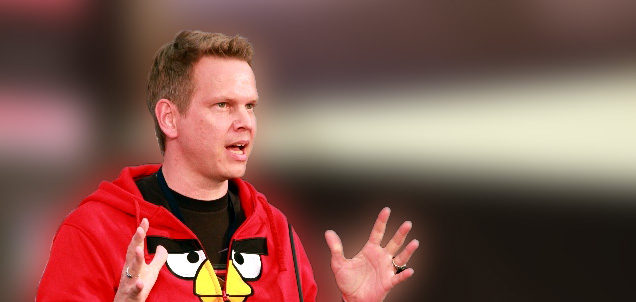
     

    If that’s not enough, the channel also boasts of having a World TV Premiere every night by the end of this month. Mr Jhaveri said: “The 7 day 7 premiere is something which no other channel has experimented with earlier. I think it’s the first-of-its-kind in the world as well. So, every night at primetime, one will get to see movies like Kahaani, London Paris New York, Jodi Breakers and others. We are planning to build our channel as a unique platform.”


    The channel also hopes to use the learnings from their other channels, especially Star Gold which was revamped last year. So, one can expect shorter breaks.


    The channel has a library of over 1000 movies. “We have been investing in the channel from the past two-three years and will continue to do so in the future as well. Therefore, it’s going to be a unique library. Last year, we acquired the Viacom18 library so that will also add to it,” elaborated Mr Jhaveri.


    The Hindi movie genre enjoys the third largest viewership pie, trailing behind regional channels and Hindi GECs, according to a FICCI-KPMG report on the Indian media and entertainment industry, released in March.


    “There are various Hindi movie channels, but there is always space for one more, if it’s different and has good content,” said Mr Jhaveri. Agreeing with Mr Jhaveri’s sentiments, Ashwini Kamat, general manager, MediaCom added: “People don’t have loyalty towards movie channels. So, if a channel has a good library, then it doesn’t need to worry about others because people will switch to it, if they want to watch a particular film.”


    Janardhan Pandey, associate vice-president, DDB Mudra Max elaborated: “There is enough space on TV to launch a channel but all depends on if one can sustain it at the top slot. A new channel might showcase latest movies, but after some time, many stop investing in a new library and repetition starts. It is then people tend to move away from it. So, it might make an impact in the beginning, but it is difficult to say how a channel will do in the future.”


    However, advertisers aren’t optimistic about it. “One more channel means more segmentation. So, I don’t think it’s going to benefit us,” said Praveen Kulkarni, general manager (marketing), Parle. The categories which spend heavily on Hindi movie channels are services, auto, personal accessories and telecom. “Launch of any new channel means fragmentation and overall inflation for advertisers,” added LK Gupta, CMO, LG.


    The channel has a 360 degree promotional plan for the channel. It will also be promoted during Star’s new show, Satyamev Jayate, which will also be premiered on May 6. Radio and digital platforms will be used too.


  • What’s ailing RIM’s Blackberry drive globally & in India?

    By Ravi Balakrishnan


    Don’t let the kid on the next seat in the train, furiously typing away on his or her BlackBerry fool you. Despite the fact that Indian youth have bonded over BBM, the performance of the parent RIM and maybe even the launch of its latest product in India have revealed a number of holes in the phone maker’s strategy. BE asks what’s troubling BlackBerry, boys?


    Minutes before Research In Motion, the makers of BlackBerry, made an announcement at a press conference in Delhi, there was a definite vibe of anticipation. Tech hacks idly wondered just what was going to be unveiled, given that BlackBerry has a fairly conservative release schedule.


    The more optimistic were holding out for a glimpse of BlackBerry’s OS 10 rumoured among the brand’s faithful to be a potential Android-slaying, iOS-wrecking killer operating system; one that would propel BlackBerry back to the top of its game. But instead, BlackBerry amid much fanfare and celebrity preening unveiled the Curve 9220.


    At the Q&A and after, the questions flew thick and fast: why only a 2MP camera? Why no 3G? And why such a stiff price tag for a phone that lacked these two features?


    The device was launched at Rs10,990; inexpensive for brand BlackBerry, but a tad pricey compared to other mobiles, even smartphones if one considers budget Android models from Samsung, LG, Spice and Lava among others.


    The Curve offered unique features like a quick access BB messenger button and, critically, long battery life, something of a rarity in the smartphone category.


    FM radio, a feature that’s bog standard even for phones that are sold at a tenth of the cost, made its way to Blackberry Curve. But to an audience weaned on revolution, having to settle for evolution was a disappointment. It was a dangerous reaction for any company to deal with; especially a tech firm that’s been gradually losing its reputation as a pioneer.


    As one of the first smartphones, BlackBerry had a dream run starting with the enterprise segment and slowly making inroads into the consumer space. ‘Sent from my BlackBerry’ soon became a ubiquitous signature; first for emails from globetrotting CEOs and later among the rank and file as well. Except of late, it has taken a beating globally, trounced by the iPhone on the one hand and a gamut of Android powered devices on the other.


    Its most recent financial results reveal a loss of $125 million. And shipments of 11.1 million, down 21 per cent from the previous quarter. Reviews for its Torch series have been unenthusiastic and the game changing OS10 is expected to show only in the latter half of 2012. An industry insider said: “They decided to step back and relax and that cost them. The engine has stopped innovating for some time.”


    In some countries like India though, BlackBerry still counts among the contenders. According to Frost & Sullivan, it’s at the third place in the Indian smartphone market with a share of 15 per cent, trailing behind Nokia’s 35 per cent and Samsung’s 40 per cent. It’s attracted a strong app developer network of 30,000 in India up from 4,000 two years ago, according to a company source.


    More importantly, for a product that’s worldwide reputation veers towards the stodgy, it has a strong traction with the youth. Abhishek Chauhan, senior consultant, ICT Practice, Frost & Sullivan, South Asia & Middle East observed: “In India, they’ve been taking segmentation seriously, targeting the youth. I don’t feel India will be a danger space for them if they launch affordable devices and data plans for their consumers here.”


    The youth connect has been built in part on the back of initiatives like the BlackBerry Boys campaign; a co-branded effort with Vodafone, currently in its second year. On the distribution front too, BlackBerry was quick to realise there was a world beyond the metros. It is currently present across 250 cities and according to RIM India’s managing director, Sunil Dutt, it continues to expand.


    However, BlackBerry India has not remained unaffected by the pressures facing its parent. The pricing strategy has changed: the jury is out on just why this is happening and what it will lead to. Of late, there have been price cuts across its portfolio.


    Coupled with the relatively ‘inexpensive’ tag on the new phone, it indicates either a thawing on part of the company or an act of desperation depending on who you ask. Mr Dutt explains the price cuts: “Sometimes when you reach economies of scale, they allow you to pass on benefits to customers.” This becomes important as the phone reaches towns and cities that want the device but find the price tags forbidding.


    Mr Dutt has a different take on discounts. He believes they are not an indication of a brand in trouble but an invitation to consumers to be a part of an ecosystem and experience. “We want to reach more consumers. A lot of them want an affordable solution and we provide just that,” he said.


    Marketing consultant Shripad Nadkarni of MarketGate however cautioned that the strategy could well be a double edged sword: “It helps garner short term sales, but the brands future depends on how they keep in synch with innovations of the competition. They can reduce the price of existing products but need to buffer up the offering to be a serious player.”


    There seem to be several options and suggestions available to BlackBerry, many offered gratis by various tech columnists. Part of the problem according to industry pundits is that the brand strayed too far away from its enterprise roots and ran the risk of being “everything to everybody.”


    The industry insider said: “It is still a high stable platform that gets jobs done in least number of steps. They need to recognise what’s driving them as a company and drive it even harder. BlackBerry 10 could change the way people think about the  company. The question is whether it will be too little too late.”


    For the longest time, BlackBerry believed the experience its products offered was good enough for it to command a premium. Even as rivals ramped up the megapixels on cameras, and made their phones more music, game and leisure friendly, BlackBerry’s phones remained on a pound for pound basis, a tad underpowered.


    But with the competition evolving at a furious pace and throwing in more for less with each generation of phone, it may be a matter of time before even the BlackBerry boys begin to wonder if the experience is worth the price.


    Source: The Economic Times
    Copyright © 2012, Bennett, Coleman & Co. Ltd. All Rights Reserved


  • Indian film trade to benefit from partnering Hollywood: E&Y

    By Nandini Raghavendra


    India’s film industry will benefit from an increased collaboration with Hollywood in the areas of film entertainment, education, VFX and tourism, according to Ernst & Young in a report issued for an initiative launched by the LA Film Council.


    The report, ‘Film Industry in India: New horizons’, has also said that with Hollywood already contributing Rs850 crore to Rs900 crore, or 10-12 per cent of the overall box-office revenue in India, the Indian film industry will witness an accelerated growth than competition from countries like China, Japan, Russia and Brazil.


    There has been 42 per cent increase in the number of Hollywood movies shot in India between 2010 and 2011, and that number is expected to grow, the report said. At least five big-ticket Hollywood productions, including the next James Bond, will be shot in India, while Fox is looking at two more films.


    The Indian film industry is projected to grow from $3.2 billion in 2010 to $5 billion by 2014 at a CAGR of 14.1 per cent. With close to a 1,000 films produced a year, India’s filmed entertainment industry is the largest in the world coupled with its theatrical admissions at around $3 billion.


    A greater collaboration between India and US will result in increased film tourism, cultural and technological exchanges and boosting local talent, and most importantly serve as a showcase on the global stage for India art, culture, history and talent. Perhaps, this is a beginning of a revolution similar to the one we witnessed in the IT industry at the beginning of this millennia,” Rakesh Jariwala, partner and segment champion, filmed entertainment at E&Y, said.


    According to estimates, there are more than 40 major domestic VFX companies catering to domestic and international clients. Currently, India accounts for only around 10 per cent of the total animation and VFX outsourcing pie. However, there is room for growth and the amount of work coming to India from Hollywood is on the rise.


    Of late, the VFX industry has been shifting toward higher-end assignments. India has well developed post-production facilities available at low cost. A foreign producer who comes to shoot in India can complete his entire movie here, from shooting to post production to cut costs. Industry players are also tying up with film and entertainment companies on dedicated projects.


    As far as India’s travel and tourism industry goes, it contributed $1.7 trillion (or 2.8 per cent of the global GDP), which is expected to rise to 4.2 per cent ($2.9 trillion) by 2021. Furthermore, investments in the global travel and tourism industry are expected to grow at a CAGR of 5.4 per cent to reach $1.5trillion by 2021 from $0.6 trillion in 2010.


    Many US states such as California, New York, Michigan, Nevada and Utah offer incentives to film and television production companies from India. Canada also offers incentives to producers of film, television, animation and visual effects from India and has attracted many Bollywood producers, who have shot movies in the country.


    Source: The Economic Times
    Copyright © 2012, Bennett, Coleman & Co. Ltd. All Rights Reserved


  • Angry Birds forever!

    Angry Birds Space visual Courtesy Rovio.com
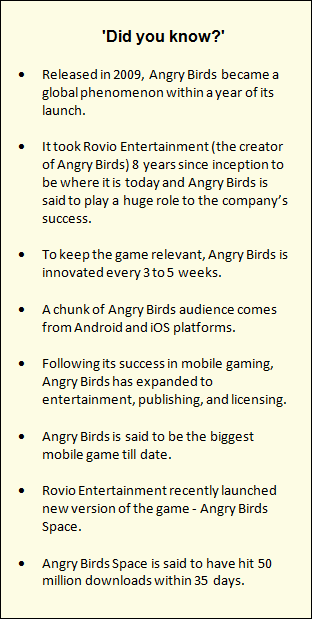
     

    Henri Holm is the Senior Vice President at Rovio Entertainment, the creators of Angry Birds. Holm, a Harvard alumnus, has extensive international management experience in consumer electronics, mobile internet, manufacturing, distribution, retail and brand management. At the sidelines of the recently concluded MTV Youth Marketing Forum 2012, MxMIndia’s Robin Thomas caught up with Henri Holm  who spoke at length about his India plans, India as a market for gaming and of course about Angry Birds and much more.


    You had said that it took Rovio Entertainment eight years to be where it is today. Tell us a little more about your company and your journey so far?

    Rovio Entertainment is a company which has grown very fast. We grew from a 12 people organization to over 300 plus professionals as of today. In our operations we cover mobile gaming, entertainments which include animations, books and publications, education content or edutainment, merchandising, licensing and sponsorships. In the entertainment space, we also cover advertising, so we are a major premium advertising channel provider. Globally, in fact, our ad impressions reach over 10 billion. It’s a company of young people who believe in their course, who neither give up nor give in.


    There are talks about the slow death of console gaming in India with the onslaught of mobile gaming especially with 3G and 4G coming in. Would you agree? Is the next phase of gaming coming from mobile?

    Console gaming is not necessarily as scalable as mobile gaming because I think it caters to a different set of audience or different media consumption or entertainment consumption. The mobile devices, including the tablets, are always with you and you can consume the game anytime anywhere, so the industry is certainly changing.


    Can you please throw some light on the entire thought process behind the Angry Birds concept? How did it come about?

    Everything started from the fact that the company has gone through 50 plus games. Being an audio manufacturer, we didn’t own a brand, we wanted to have our own IP and we wanted to build a brand. The thought process started with the characters and with distinctive personalities in those characters. The story was unique too, it was not a me-too story, and besides, the mechanics of the game itself was about simplicity, quality and paying a lot of attention to the details.


    You also said that Angry Birds will continue forever and that this is only just the beginning… How do you intend to stay relevant to the audience?

    Yes, we feel that this is just the beginning for us. Angry Birds as a brand, and as a story, will definitely continue. Every three to five weeks we try to keep the game relevant and innovative or new for our audience. However this does not mean that we will not be looking at other games or characters or stories, it’s just that we need to find the right time to introduce something new.


    Where is the Angry Birds audience coming from?

    Today’s audience primarily comes from the android and IOS platforms, however there are other very significant platforms besides the androids and IOS. So today we can cover all operating systems in mobile devices ranging from the smallest screens of the feature phones to the largest of the screen which are the tablets. So the mobile space is certainly growing the fastest. When you move away from the mobile to the web we cover the operating systems where Chrome has been leading the web experience supported by flash and now the social gaming like Angry Birds on Facebook. So each one of these platforms needs to be looked after individually and what is important is that we present the channel and the content where the fans are. So, if the fans are moving primarily into one operating system or one type of access into the content, we move with it.


    What is the role social networking sites have played for the success of games? According to a survey, young people in the west visit social networking sites only for friends and not necessarily brands…

    We are an entertainment company and we engage our fans on social media so, we are living social media 24×7 and we are participating in conversation all the time. Our business is about the fan engagement, delighting them and therefore I believe that social networking sites play a huge role in the success of any brand.


    What is the business model of Rovio Entertainment? Is it advertising led and how much has Angry Birds contributed to its revenue share?

    We have different business units, we have the games business unit, entertainment business unit and merchandising and licensing business unit. Each one of them contribute their own revenue but, they also complement the entire brand experience and the brand presence because of the huge opportunity to manage and monetize the brand. So our business model is purely based on the fan and the brand.


    How has 2012 welcomed you? What are your business plans this year? When you compare it with 2011 how has the growth been so far?

    In 2011 we launched one game and this year we have already launched two and have several more to go. The year 2011 was about building the infrastructure and the making the organization ready, 2012 on the other hand is about finding the right partnership and making the entire business ecosystem stronger and more global.


    So are you looking for more expansions and new partners?

    We are constantly looking for new partners and expansions as we need to build a very robust business and country plans before this.


    What is your view on India as a market for gaming and for your business?

    India is a very important market for us, as of now we are scouting for partners and once we find the right partnerships here it will give us better footprint and presence. We are looking for partnerships in the media space, in the digital distribution space, operators, and the major brands and all the big movers and shakers in the country.


  • [60 Days to D-Day] NBA damns Order for ‘legitimizing’ carriage fees

    By A Correspondent


    News Broadcasters Association (NBA), the apex association of Indian news broadcasters, has expressed “shock” and “dismay” at TRAI’s Tariff Order.


    The Notification has legitimised the very practice the NBA had hoped would be ended, said secretary general Annie Joseph in a communiqué, referring to the payment of “steep” carriage fees by broadcasters: “The primary purpose of digitisation was to increase the number of channels broadcasted. The objective was to give consumers greater choice and to eliminate the phenomenon of ‘carriage fees’, which were being charged due to capacity constraints. However, the NBA is distressed and disappointed that TRAI’s new notification has actually legalised the practice of ‘carriage fees’ and given distributors the freedom to unilaterally set the amount of ‘carriage fees’ broadcasters must pay.”


    Ms Joseph added: “This unfairly penalises broadcasters and threatens the very survival of the broadcasting industry.” The NBA has urged the government and TRAI to take corrective action.


    A member of the cable trade pooh-poohed the NBA’s reaction as childish. “Let them set up their own distribution mechanism and see how much they will need to pay. If we bleed, they will cease to exist,” a senior industry person told MxMIndia, requesting anonymity.


    We are fine with rationalising carriage fees, but not eliminating them, the industryperson from the distribution sector added. “They should look at increasing ad rates to earn more,” he said, arguing that carriage fees are justified


  • [60 Days to D-Day] All stakeholders need to work together: Neeraj Sanan

    The Telecom Regulatory Authority of India (TRAI) issued new rules refurbishing the regulatory structure of the broadcasting, cable and DTH industry ahead of the digitization switch over in four metros, Delhi, Mumbai, Kolkata and Chennai from July 1. The order deals with issues such as channel availability, channel pricing, carriage fee and revenue sharing.


    Digitization is being seen as the game changer for the Indian TV industry, expected to bring a sea change for viewers, broadcasters and cable operators. The broadcasting industry is expected to see a growth in subscription revenue post digitization, as opposed to the present model where they depend largely on advertising revenue.


    As per the new guidelines, ‘The Broadcaster would enjoy ‘must carry’ provision from 1.1.2013 or 1.4.2013 as the case may be, for Hindi, English and channels in the regional language of the concerned area.’  In the order, TRAI has also addressed the much debated issue of carriage fee. The order states, “Keeping in view the fact that substantial investment for implementation of Digital Addressable Cable TV Systems is made by the MSO and the cost involved in carriage of channels, the Authority has decided that every MSO may fix the Carriage Fee. However, it should be published in the Reference Interconnect Offer and applied in a uniform, non-discriminatory and transparent manner. The Carriage Fee cannot be revised upward for a minimum of 2 years. The Authority would intervene in case it is felt that the Carriage Fee is unreasonable.”


    The regulatory has also prescribed the MSOs to increase their channel carrying capacity, stating that every MSO should have a minimum capacity to carry 200 channels by July 1, 2012.


    MxMIndia’s Shruti Pushkarna spoke to Mr Neeraj Sanan, EVP- Marketing and Distribution, MCCS to get his response on the Tariff Order and Interconnection Regulations for the Digital Addressable Cable TV Systems issued by TRAI.


    What’s your first response to the Tariff Order? Specifically the MCCS position?

    It is a reaffirmation of the government’s stated position and something that TRAI has been working towards for a long time.


    The TRAI observes that the Order will help profitability of channels. But carriage fee exists. Do you think your bottomline will be impacted in a positive way with this?

    The TRAI’s order will help all stakeholders move to a position of working in a structured manner. A well-run business can hope to get its deserved profit.


    Do you see the implementation happening in the four metros before July 1?

    I understand that a lot of intelligent people in well-run MSO and LCO organizations are working round the clock to make it happen. A key factor here will be for the government to continue to do what it has been saying. We shall all have to brace ourselves to a large surge in operational logistics at the last minute, but yes all this is surmountable.


    What are the marketing initiatives you are undertaking to ensure that you retain viewers?

    This is a challenge more for a distributor.


    Do you think the government is doing enough to promote the switch to digitization and explain the benefits to consumers?

    There is always something better we could do, but yes, government has been consistent in it’s thought. Now it is for all stakeholders, including all state governments to realize the prudence of digitization and work together to make it happen.


    Are there any areas of worry in the run-up to digitization (given that we have just 60 days to go)?

    No constructive business happens without risk and yes there are a lot of things that could go awry but if all players remain aligned, this is achievable. We should all realize that it is history being written everyday for distribution and we need to carefully tread this path.