Category: NEWS

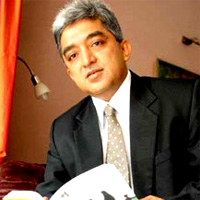
  • A channel is vulnerable only if quality drops: Ashok Venkatramani, CEO, MCCS

    By A Correspondent


    A mechanical engineer from Mumbai and MBA from IIM, Ahmedabad, Mr Venkatramani started his career with Unilever, and was with the FMCG giant for 19 years. He held the position of Vice President and Business Head for Unilever inIndiatill February 2008, heading their largest and most profitable business – toilet soaps and skincare business.


    From Unilever, Mr Venkatramani moved to being appointed CEO of the Star-ABP JV which ran the news channels of Star India.


    While the buzz in MCCS that we are hearing is very positive, what we hear is that the end of the alliance will possibly see MCCS expanding into more channels… a Punjabi news channel, for instance?

    We are always on the look-out for growth and this development has nothing to do with it. I think we have the scope to grow organically and inorganically and we are constantly evaluating options.


    While it’s the content that should speak for a media entity and not its name, the fact is that Star is a household brand in the country. Do you see a setback for the Hindi and Marathi news channels since ABP may not necessarily strike a chord with viewers?

    No, not a set back at all. With the Marathi and Bengali channels, Majha and Ananda as suffixes are unique and have grown in popularity and acceptance. Of course, that’s not the case with Hindi where the suffix is ‘News’ and hence generic. So, yes, Hindi is a challenge on a relative scale, but not so with Marathi and Bengali.


    Would you expect more synergies with ABP print from now on?

    There will be no significant change on this front… it will be what it has always been.


    So will we now a see a blitz to communicate the name change?

    Yes, there will be an aggressive campaign to announce the change, especially in Hindi.


    Will the change impact MCCS… your key resources, and the way the business has been done?

    No change whatsoever.


    There have been many cases of brands changing in the past. In telecom in Mumbai, we’ve seen Max Touch becoming Hutch, Orange and finally Vodafone. But what is fine for telecom, may not be the case for media, right?

    Yes, there are several changes. UTI Bank to Axis Bank, L&T Cement to UltraTech Cement. When there is a name change, there’s no shift in consumer base. People don’t change their bank or telecom provider as long as the service quality is maintained.


    So you are vulnerable only if the quality drops, and that can happen even if the name doesn’t change!


  • Harish Bijoor: What’s in a Name?

    By Harish Bijoor


    So STAR News is ABP News. STAR Ananda is ABP Ananda. And STAR Majha is ABP Majha.


    Here’s a brand name change once again, and the question is out in debate again: What’s in a name?


    What’s in a name? Plenty! Shakespeare-dada was wrong!


    For a start, the name is a brand. The brand is a name. And the name is a very important starting point in the voyage of discovery of a brand.


    Let me start with my definition of a brand. It is a simple one. I define the brand with the consumer simplicity it deserves. “The brand is a thought”! A thought that lives in people’s minds. A thought that thrives in the soft-space of the human mind.


    By this definition, everything that lives as a thought in your mind is a brand. Shantabai, the multi-tasking maid is one, Osama Bin Laden, the late terrorist is one and so is the young Akhilesh Yadav. Each of these brands possibly rub shoulders with other brands such as an Amul and Bata and Tata in your head. The brand is a thought. Nothing more. Nothing less.


    What does a name transition mean to companies and brands? Plenty really. Plenty in the initial six months for sure. The first 180 days of a brand name change are the most crucial and critical days. It is in these frenetic days of frenetic brand activity that a name change can be made successful or not. No wonder then that you see a flurry of advertising activity that goes in to establish a new name solidly in the mind of the consumer.


    There are brands that have done it well. Vodafone is a veteran of many changes. An Orange became a Hutch seamlessly, just as a Hutch became a Vodafone seamlessly. Every change was accompanied by a high decibel campaign that had transition elements of one collapsing seamlessly into another. The first 180-days are therefore the most critical. You can make a brand name transition happen or collapse. Both are possibilities. The period after just does not matter. This is really the Golden six months of a brand name transition.


    UTI Bank did it seamlessly as well, with a transition into an Axis Bank so seamlessly that today UTI is a non-important part of its total brand equity and recall altogether. That is the power of a powerful brand-name transition plan.


    In the case of this current transition from STAR to ABP, there are indeed two big brand names. One is a region-centric one (ABP) and the other (Star) is a world-brand for sure. Moving from one to the other will require some degree of panache and scientific brand action.


    There are really two sets of dynamics in this transition. One is a B2B dimension. Out here, MCCS is the back-end brand. It is the company that runs the show. It is the company that is the backbone. Employees, clients who advertise, distributors and vendors are all key participants here. These key actors are the easiest to communicate to. These key actors will buy into this name change without a whimper.


    The second set of dynamics is that of the viewer. This is B2C space. This is where there is bound to be ruffled feathers and ruffled sentiment. This is where there is bound to be confusion and lack of clarity. This is really the end that needs to be handled well and seamlessly through a process of cogent communication.


    STAR News is a thought. The thought of a channel can be a potent one. It starts with the name at hand, and goes on to attach to itself a host of other meta-tags that bring to mind the memory of a channel that is an intrinsic part of compelling and credible viewing experience.


    The brand to that extent is plenty. It is a name. A slogan. A symbol. A colour. A character. A personality. A charisma. An image. A reliability. An emotion. A passion. A perception. And lots more. ABP needs to handle each of these. With kid gloves, speed and scientific brand action.


    The author is a brand-expert and CEO, Harish Bijoor Consults Inc.

    Twitter.com @harishbijoor


  • Mediaah!: So what let to the Star-ABP split? Will Star start a new news channel?

    By Pradyuman Maheshwari


    In many ways, Mediaah! owes its existence to the controversies around Star. Many moons ago – in July 2003 to be precise – the network was facing rough weather from rival interests on the issue of foreign equity in some of its ventures – especially news and radio. Most pro-FDI media entities were muted in their response, and realising that it was necessary to have an independent and active media observatory, I set up Mediaah!.


    Given the pains that both parties went through to get together in their early days, it’s sad to learn of Star withdrawing its branding from its news channels managed by MCCS, an joint venture with the Ananda Bazar Patrika (ABP) group. No, Rupert Murdoch hasn’t exited the Indian news TV business. Star will continue to be a 26 percent partner in MCCS, but the only difference is that the channels will no longer be prefixed Star, but ABP. So: ABP News, ABP Ananda and ABP Majha.


    Before the Kolkata-based Ananda Bazar Patrika turned majority (74 percent) shareholder (in September 2003), there was a time when the Star News was part-owned by folks like Kumarmangalam Birla, Vir Sanghvi and Suhel Seth.


    So what led to this divorce? The reason that a Star India communiqué says is:

    “Given the current regulatory environment and structural issues ailing the Indian cable and satellite television market and the news genre in particular, Star took this extremely difficult decision to withdraw its brand from the genre. Star, ABP and MCCS sustained this affiliation for a lengthy period of 8 years and Star is grateful to its partners, ABP and MCCS for acting as guardians for the Star brand during this period.”


    The communiqué adds that this was “one of the steps proposed to be taken by Star in its endeavour to refocus and re-energize the core strength of its business viz. general entertainment channels”.  Note the choice of words in this carefully drafted statement. Announcements of this nature have been subjected to various checks, so you’ve got to read between the lines.


    Hence it’s possible that Star might withdraw entirely from the venture. But what’s this bit about re-energizing the core strength of its business – GECS… Star recently exited Hathway, a cable TV company where it had minority stake. Could it therefore also move out of Tata Sky?


    Meanwhile,  given the regulator environment cited for withdrawl, does it mean that Star will not return to the genre? Also, there has been no change in the regulatory framework in the last 8 years… why this shift in thinking now?


    My questions to Star India have not been answered, but from I understand, yes, the restriction on ownership is the real reason. Star, my sources tell me, wanted greater control of the network (which is impossible with minority control). Since it already handled distribution, it also wanted to look at other non-editorial operations – specifically sales. Star now leads the sales effort for NDTV.


    Even on content, Star wanted some say. As the channels bear the Star branding, there have reportedly been occasions when the GECs have lost business due to what’s aired on Star News. Since the Star brand is well-known, the network’s top brass would often be at the receiving end from governments and private corporations.


    The problems have been simmering for a bit. Star was apparently unhappy that ABP launched a Bengali GEC to counter its own Jalsha and ABP in turn was said to be upset when Star chose to handle sales for NDTV. MCCS insiders also tell me that these differences were cramping their work and impacting the company’s desire to grow.


    “It was an ego battle,” a senior manager told me adding that I shouldn’t be surprised if Star were to come up with a rival channel a year from now. There could be issues on that score though. There is apparently an 18-month cooling off, no-compete period. But, of course, the new channel needn’t be christened Star News. Also, Star India is said to have served the notice on ABP in January this year, so 18 months is just a year away.


    Remember, Star India CEO Uday Shankar was CEO of MCCS, a role that he took on after many years as a journalist and editor, and from he has told me in the past that he isn’t happy with the way Hindi news channels were doing (in content) and wouldn’t mind going in for a news channel if and when possible.


    So what next?

    MCCS staff is happy to be part of the ABP group, known for its progressive outlook and emphasis on quality deliveries. Not that Star isn’t that, but the ABP group is known to be a fair employer. What they are worried about is the immense challenge that Star News will face with the rechristening. In fact, given that it’s been doing rather well in the TAM ratings roster, this development is a blow. Even MCCS CEO Ashok Venkatramani, in his interview to MxMIndia, concedes that while Majha and Ananda were popular prefixes, the new identity for Star News will be a challenge.


    The ABP News logo is ready was unveiled to the staff, with an advisory that it should not be leaked out. Bossman Aveek Sarkar is said to be keen that the switchover happens even before May 31.


    My own sense is that Star India will eventually get out of the jv entirely. MCCS is now profit-making and it aggregated sales of around Rs 300 crore in the last fiscal. Private equity players may invest in the enterprise but will be a little wary of how much the Star exit from the brand will take away from the company’s shine?


    The brands may take some to regain their shine, but the one thing that is certain to grow at the all-new ABP News channels will be quality journalism. That much one has to grant the Sarkars.

    As for Star, remember Rupert Murdoch is essentially a newswallah. So’s Uday Shankar.


    Buzz me if you have a story to tell. Confidentiality assured. There are various ways you can reach me:

    pradyumanm[at]mxmindia.com, BBM 23050B5D, Gtalk pradyumanm@gmail.com, Twitter @pmahesh and of course the mobile: 98338 76278.


    Disclaimer: Although he is CEO and Editor-in-Chief of this site, Pradyuman Maheshwari’s views in Mediaah! are not necessarily those of the rest of the team and MxMIndia.com. And decidedly not those of the sales team 🙂


  • [MJR] The Bofors scandal will never die

    By Ranjona Banerji


    There it is, after quarter of a century, back to plague us. Or has it? The Bofors gun, once the symbol of corruption in government, and which apparently led to the death of one prime minister and the fall of another, is in the news again.


    For those who can’t remember anything about it, there were allegations of kickbacks in the purchase of the howitzer (the word sounds better than gun) from the Swedish company Bofors. Last week, a Swedish police officer who had spoken secretly to journalist Chitra Subramaniam all those years ago, came out in the open – to Subramanian, who had covered the story extensively in the olden days.


    The problem is that much worse has happened since the Bofors scandal and the grand sum of Rs64 crore – the bribe amount – seems quite teeny-weeny compared to the giant figures we’ve become used to. Also, after years and years of investigation and allegation, nothing really happened.


    Swedish prime minister Olof Palme was assassinated, Rajiv Gandhi lost an election and was also assassinated. Meanwhile Martin Ardbo, president of Bofors at the time, whose diary had many leads about money that went from one letter of the alphabet to another, mainly the mysterious middleman Q, also died and so did Win Chadha the Bofors contact for India.


    Under successive governments (including non-Congress ones), the CBI floundered all over the place, as it muffed procedures, forgot to send the right letters (not of the alphabet, the other type, probably because neither the CBO nor anyone else in India could understand what a “letter rogatory” was. It’s not ‘R’, that was another alphabet in Ardbo’s diary) and couldn’t conclusively get to Q. Everyone knew who Q was – an Italian middleman who was a friend of Sonia Gandhi’s. Of course, every Italian is a friend of Sonia Gandhi’s because she is Italian. Like all Indians are friends of mine or maybe not since I am not remotely as important as Sonia Gandhi. Anyway, after some time, the CBI gave up on Q.


    The story, by the way, was broken by Swedish radio in 1987 and not in India. Amitabh Bachchan was also included in the deal by the Swedish newspaper Daagens Nyheter, and not the Indian media. He successfully sued them and the CBI and everyone else, (except maybe the mysterious Q?) agrees he was not involved.


    Meanwhile, everyone says that the Bofors field howitzer is a nice gun or tank or whatever it is. It was very useful in Kargil.


    The Bofors  scandal we know will never die. But as time passes, the alphabet will get weaker and weaker…


  • Yudhvir Singh joins Mogae from Videocon

    By A Correspondent


    Yudhvir Singh has joined Mogae Digital as General Manager & Head of Mobile Activation from Videocon’s Corporate VAS team.


    “We are delighted to have Yudhvir on the Mogae team,” said Tanya Goyal, Executive director, Mogae Digital, adding: “Yudhvir has many years of telecom experience spread over the entire value chain of value added services and mobile application to brands. He has worked with VAS product-based companies, system integrators and with telecom operators… his kind of experience will enhance Mogae’s cutting edge in the market.”


    “My stay at Videocon corporate VAS team was a great learning experience. Videocon being a greenfield project, I was involved in conceptualization, creating requirement documents for IT solutions, carrying out UATs, product designing, vendor selection and laying out the go-to-market strategy initially. At Mogae, I see similar opportunities to grow new businesses,” said Mr Singh.


    After completing his B.E fromITMUniversityand an MBA from IBS Hyderabad, Mr Singh started his career with IMImobile at Hyderabadas a business analyst. After a short stint as analyst, he moved to the company’s international sales team and was based out ofKuwaitfor business development covering all of Middle East and Asia. His next project with IMImobile was as Country Head Sri Lanka where he incubated a completely new mobile activation & VAS business.


    After 3 years at IMImobile, Mr Singh moved to the telecom practice of TCS (Tata Consultancy Services) with assignments on SDP (service delivery platform). As a business consultant on SDP, he worked on multiple projects including the much acclaimed Tata Teleservices SDP.


    Mogae Digital is an emerging leader in VAS and mobile activation, with products on offer across Aircel, Airtel, Tata Docomo and more. The Mogae Group is co-owned by Sandeep & Tanya Goyal, former JV partners of Dentsu in India & the Middle East.


  • Lonely Planet Magazine India announces Travel Awards 2012

    By A Correspondent


    Lonely Planet Magazine, India has announced its first Travel Awards, which celebrate the best travel experiences available to Indians, and anoint the best service providers, the preferred places to stay and the destinations Indians most love to visit.


    Lonely Planet is recognised as the traveller’s best friend the world over, and as the flag-bearers of this brand in India. The team felt that there wasn’t yet a credible benchmark in the country. There was nothing to measure the standards the increasingly sophisticated Indian traveller has come to expect.


    The aim of the awards is two-fold. One, to celebrate those who are giving the Indian traveller the experience he or she wants. Two, to spur non-winners to do better still, to provide a richer experience and please the Indian traveller; and in doing so, to aim for the trophy next year.


    The ethos is simple – if, and only if, the Indian traveller is satisfied and happy with what you have laid out, will you win the trophy.


    The team believes the Lonely Planet Magazine India Travel Awards 2012 will provide the benchmark Indian travellers are looking for. The winners will become part of an exclusive club of travel facilitators, hotels and destinations that Indians love and will return to.


    The winners were chosen by readers for the benefit of other readers. Voting was through a reader poll (online and in the magazine); there were 39 categories to choose a winner in, making these the most extensive and industry-wide awards yet seen.


  • The Hindu launches luxury supplement – Watches, Luxury & beyond

    By A Correspondent


    Followed by a successful launch in 2011, The Hindu Group of Publications, South India’s most read English daily, has launched Watches, Luxury & Beyond as a monthly glazed tabloid on April 28. The supplement will focus on luxury products and services including high-end automobiles, travel, jewellery, watches, living spaces and fashion.


    Targeted at high net worth individuals, corporate managers and discerning buyers, WL is a one-stop shop for information on the finer things in life.


    The format will be engaging and dynamic with a focus on collages, trend meters and snapshots on the most important moments in the world of luxury.


    This supplement will be published on the last Saturday of every month and will be circulated in 7 important markets along with The Hindu and Business Line: Chennai (with The Hindu) and in Delhi, Mumbai, Bangalore, Hyderabad, Coimbatore and Kochi (with Business Line) with a total circulation of 3,50,000 copies.


  • Reliance Broadcast & RTL name JV channel ‘Thrill’

    By A Correspondent


    BIG RTL, the television joint venture between Reliance Broadcast Network and RTL Group, has named its soon-to-be-launched action channel Thrill.  The thematic action channel, positioned as the first action entertainment channel, is the result of a detailed audience mapping and insight mining among Indian audiences to determine entertainment need gaps. The joint venture channel will address this need gap and serve the very best of international content from across the globe, dubbed in Hindi. The channel is slated to launch by the end of the Q1FY12-13.


    With several options to choose from, the internal team set out to test names with the potential core target group: male audiences across metropolitan and non-metropolitan areas in the Hindi-speaking markets. With focus groups spread across the country and moderators mapping feedback closely, Thrill emerged as the hands-down winner for the name for the channel. The name is easily comprehensible across all social strata and encapsulates the core values of the channel – ‘daring’, ‘action-packed’, ‘electrifying’, ‘sporty’, ‘challenging’ and ‘adventurous’.


    The core viewers of the channel would be Thrill-seeking males in the age group of 15-44 years, who are action and adventure lovers.


    As part of the plan to offer a diverse programming mix, the channel has signed strategic deals with various leading international content providers for successful global formats and series across a variety of genres: action reality, action thrillers, fighting and wrestling championships, shocking, never seen before films, extreme sports, late night entertainment and a robust library of hit Hollywood action movies, all dubbed in Hindi.


    Speaking on the occasion, Mr. Tarun Katial, CEO, Reliance Broadcast Network Ltd. said, “We are excited to offer India its first action entertainment channel, Thrill which will showcase world-class international content, dubbed in Hindi. The channel fills a need gap that exist in the entertainment landscape and we are confident that our proposition, backed by consumer insights, will resonate excellently with viewers and marketers alike.”


    BIG RTL has already teamed up with Reliance Digital TV, India’s leading direct-to-home service provider, to distribute Thrill, giving the channel access to 30 lakh digital television homes across India and the channel is in the process of closing deals with other operators. This partnership marks the beginning of the quest to extend BIG RTL’s top-of-the-line content to maximum audiences across the country. Thrill will be distributed as part of a 7 Channel robust bouquet of Reliance Broadcast which includes BIG CBS Prime, BIG CBS Love, BIG CBS Spark, BIG CBS Spark Punjabi, BIG MAGIC and UTV Bloomberg.


    The present joint venture marks RTL Group’s entry into the burgeoning Asian television market and is Reliance Broadcast Network’s second international joint venture, following on the heels of its successful joint venture with CBS Studios International.


    Reliance Broadcast Network Limited is a multi-media entertainment conglomerate with play across radio, television, intellectual properties and out of home. It is part of the Reliance Group and specializes in creating and executing integrated media solutions for brands. It houses the following verticals: 92.7 BIG FM, BIG CBS- a joint venture with CBS Studios International which has launched four channels, BIG CBS Prime, BIG CBS Love, BIG CBS Spark and Spark Punjabi. Added to this robust bouquet, the Company also distributes Bloomberg UTV, India’s premier business news channel.


  • Authenticity and engagement is what brands must give consumers: MTV youth summit

    By A Correspondent


    Brands today need to listen, learn and begin to engage with the youth; they need to be authentic as young people today are willing to speak positively about the brand they trust. These were some of the points discussed at the ‘MTV Power of One’- Youth Marketing Forum 2012.


    Ms Angela Barkan, Senior Director, Marketing and Publicity, Sony Music Entertainment; Mr Chetan Bhagat, Author of five blockbuster novels; Mr Andrew Ridley, Executive Director and Co-Founder, Earth Hour; Mr Henri Holm, Senior Vice President, Rovio Entertainment, the creators of Angry Birds; Simon Smith, European Digital Director at Interbrand were some of the speakers at the Youth Marketing Forum which saw presentations and a panel discussion on ways to engage the youth in the digital media era.


    Aditya Swamy

    The MTV Youth Marketing Forum 2012 kick-started with Mr Aditya Swamy, EVP and Business Head, MTV India sharing some of the findings from the MTV’s study on the Indian youth. The study titled ‘Power of One’ was unveiled on Friday, April 27. Mr Swamy said that over 5,000 youth were interviewed across the Country and an overwhelming 76 per cent said that they are happy with their life. According to the findings, for today’s youth family is more important than their friends, as a lot of young people see their parents as their role model.


    The survey also says that 97 per cent of the youth believe that they can bring about change and that social media has given them a voice, thus making them feel empowered. “Single screen engagements are not going to work, today web and mobile are required to engage the youth. Today the youth do not need inspirations but engagement, so there needs to be a two way conversation. If brands learn to keep the promises they make to their consumers, it will see more people, particularly youngsters flocking towards their brands” Mr Swamy added.


    Andrew Ridley

    A good idea needs good platform:

    Mr Andrew Ridley, Executive Director and Co-Founder, Earth Hour spoke about how the movement first started in one city -Sydney, before it became a global movement. He spoke about how every individual has the power to change the world they live in and how social media strengthens that power and provides a vehicle to take action. Citing the example of how Earth Hour was designed to build reach and increase its reach to billions of people around the world, Mr Ridley was of the view that a good idea needs a good platform in order to reap rich benefits. “I believe that for the first time we have the power to connect. We are still at the initial stage of creating a big change, but if our core idea is relevant and connected to the young people in particular, it will lead to a huge change in the world” said Mr Ridley.


    Henri Holm

    It’s all about communication…

    Speaking on the success story of Angry Birds, Mr Henri Holm, Senior Vice President, Rovio Entertainment, said that it took the company nearly eight years to be where it is today. He also spoke about how to engage the younger generation with the powerful concept and the characters and also how the distribution channels were also chosen carefully to reach out to the millions and to be of service to the fans. Since youth is the core TG, Rovio Entertainment hopes to stay relevant, connected and constantly find new ways to engage the youth.


    Besides the online experience, Angry Birds also gave the audience offline experience of the game, thus not only engaging its TG but even getting newer audience. “One of the reasons for the success of Angry Birds is its simplicity. We put a lot of weight on communication and feedback from our audience, therefore for us it is all about building business with fans and not features. Angry Birds is a permanent part of the youth culture and our aim is to further service the youth efficiently in the years to come.”


    Chetan Bhagat

    Reaching out through social media

    Author of five blockbuster novels, Mr Chetan Bhagat, also known as the marketing guru gave his insights on marketing. He said that social media is a good way to execute the power of one: “Social media has become very popular today and one must know what a Facebook or a Twitter is. As far as I am concerned social media is a great platform, my goal is to reach out to maximum number of people and social media is one of the ways to reach out.”


    He said that one of the reasons why his books worked was because the plots were tight, they were unputdownable, the language was simple, and the characters were relatable. Mr Bhagat also gave some insights into the mind of the youth. He said that the youth today has the ‘hunger’ to do well in life, to gain respect and make money; that they want an education that could provide them skills that would help them make money. Besides the love for their careers and seeking out their love, youth today deeply care for their country and are willing to clean up the system.


    Simon Smith

    The power of one

    Mr Simon Smith, European Digital Director, Interbrand spoke about the power of conformity, and the willingness to conform publicly in order to attain social rewards. We need to understand the power of one and how powerful it is. The power of one, I believe, is simply about being human. One must not move with the crowd but, remain an individual he or she is supposed to be. “Fundamentally, as humans, we haven’t changed much, but our expressions to our needs have dramatically changed with technology, society and changing power structure. The relation between brand and consumer has fundamentally changed, so if a brand makes a promise to its consumers, it better deliver on those promises or the consumer will never trust the brand and influence others to rebuke the brand too.”


    Angela Barkan

    Authenticity and the art of listening to the youth

    Ms Angela Barkan of Sony Music International spoke about millennials, youngsters aged between 12 to 30 years. She was of the view that millenials are multi-taskers and optimists, that they expect brands to be authentic and have two way communications with them. She also said that this is a group which loves to share and that they define themselves by what they share. She also said that this unusual group is found mostly online. “Collaborations and interactions are very important when talking about music as it results in lifelong fans. However, there is a need for brands to be authentic because if a brand is authentic, then millenials are willing to speak positively about the brand they trust.”


    Reaching out to the youth

    A panel discussion which included eminent panelists like Mr Avinash Pant, Marketing Head, Nike India; Mr Sumeet Pahwa, DGM – Marketing, TATA Docomo; Mr Vikram Malhotra, COO Viacom 18 Motion Pictures; Mr Bejoy Nambiar, Director and Screen Writer; and Mr Ayushman Khurana, VJ turned Actor and was moderated by Mr Nikhil Chinappa, VJ and Founder, Summer Sunburn Festival spoke about the difficulties of marketing to the young generation and the possible ways of reaching out the youth. They also spoke on the role of social media marketing and whether social media is actually an effective tool to reach out to the youth.


    Mr Pahwa spoke about how the social media is a big platform to engage the youth citing the example of how it helped Tata Docomo successfully engage the youth by having a two way conversation with them.


    According to Mr Malhotra, “Brands need to listen a lot more, even to criticisms, and problems must be solved as and when brought by the consumers. The attitudes of the youth are fast changing, today they trust their family and friends more than the brands, hence brands need to listen, learn and begin to engage with the youth.”


    Mr Pant was of the view that the youth today are looking for innovation: “Things are moving so fast today that our conventional thought process itself needs to change drastically. We have to think a lot more digital.”


    Ayushman Khurana pointed out that the youth do not have the patience to listen, but they do have a strong opinion about films or any other product or brand. So one needs to understand its audience and find ways to connect with the audience and have a two way communication with them.


    Be authentic, have a two way communication, listen a lot more to your consumers, respond to criticisms and fix problems because young people are willing to be advocates of brands on social networking sites as long as they trust it otherwise brands must be ready for a backlash. These are some of the lessons to be learnt from the MTV Youth Marketing Forum 2012.

     

  • Madison Media wins Enamor media AOR

    By A Correspondent


    Madison Media Omega has just announced that they have won the media AOR for Gokaldas Intimatewear P Ltd, makers of Madison Media Omega media AOR Gokaldas Intimatewear P Ltd Madison World Enamor lingerie. The account was won in a multi-agency pitch. The agencies that participated in the Pitch were Maxus, OMD and RK Swamy Media. The account, previously handled by Lintas Media Group, will be handled out ofMadison’sBangaloreoffice.


    Mr Sam Balsara, Chairman & Managing Director, Madison World said: “We are delighted that Enamor has chosen us and are confident that we will be able to add a lot of value to their business. We are also happy to add a new product category to our portfolio.”


    Madison Media was recently in the news for winning the Crompton Greaves and Dixcy Textile’s Media AOR.


    At the recent Goafest 2012 awards Madison Media won 4 awards, including a Gold for Best Use of Newspapers & Magazines for Parachute Advansed Ayurvedic Hair Oil; 2 Silvers for Best Use of Internet & Digital Media for Airtel and Best Use of Branded Content for Cadbury and a Bronze for Best Use of Events and Stunts for Cadbury Celebrations.


    Madison Media Group is India’s foremost media agency handling media planning and buying for blue chip clients including Airtel, Godrej, Cadbury, ITC, General Motors, Marico, McDonald’s TVS, Britannia, Procter & Gamble, Asian Paints, Tata Tea, Shriram Transport Finance, Levis, SpiceJet, Crompton Greaves, Axis Bank, Domino’s, Bharti Axa, MaxNewyork Life Insurance, Tata Salt, Acer, Dish TV, Times Television Network, Indian Oil, Dixcy Textiles and many others.  The gross billing of Madison Media is Rs. 3000 crores.

  • Disney appoints Design Stack as creative agency

    By A Correspondent


    Mumbai based design and communication studio, Design Stack, has been appointed as the creative agency for the Disney Network. Design Stack will handle the entire gamut of off-air publicity and promotional campaigns for the network’s three channels – Disney Channel, Disney XD and Hungama TV.


    In early 2011, Design Stack had handled the creative duties for the immensely successful project – Disney Channel’s Shooting Stars: The country’s biggest nationwide, talent hunt by a kid’s channel.


    “The Disney Network’s continued success with kids and families is testament to how our stories and characters work at multiple levels and we are committed to further increasing the visibility of our brands and creating a deeper and richer connect with the viewers. We felt the time was right to appoint a creative agency that understands our brand values and can help bring them alive visually in our campaigns. The team at Design Stack brings an immense amount of enthusiasm and creative excellence to the table and we look forward to their contributions on our upcoming projects”, said Bikram Duggal, Director Marketing, Walt Disney Television International India.


    “We’ve all grown up with Disney as a part of our childhood and it’s a thrill to be associated with such an iconic brand, especially at a time when they are building a strong local presence in India,” said Priyanka Bhasin, Partner, Design Stack


    “The Disney Channel is very particular about maintaining consistency of their brand. It is exciting collaborating with their team of sharp marketing strategists and visual communication design specialists, who have high standards when it comes to messaging and design. In a sense, it’s a fitting partnership,” added Anoop Patnaik, Partner, Design Stack


    Design Stack, founded in 2004 by Priyanka Bhasin and Anoop Patnaik (graduates from the National Institute of Design), is a branding and strategic design studio located in Mumbai. Over the years, the firm has built up a diverse range of clients – from retailers like Westside and youthful, experimental brands like Chimp to corporate entities like Asian Paints, Cox & Kings, Standard Chartered Bank, Times of India, Sahara Housing & Infrastructure, to name a few. The studio was also awarded The International Design Award, LA,Californiafor Asian Paints Colour Spectra Pro – Packaging Design and Chimp Retail Branding.


  • Mindshare makes thousands experience Lays Magic with Saif

    By A Correspondent


    Imagine being in a television commercial of a major brand like Lays with a superstar like Saif Ali Khan with thousands others. Imagine all your friends liking and sharing the YouTube video of that commercial on Facebook.


    That’s exactly what Mindshare set out to do when they brought to life experientially the new Lays proposition of ‘Pal Banaye Magical’ through an interactive augmented reality activity. Augmented Reality adds new dimensions by letting users discover emerging technology whilst enhancing brand awareness through virtual reality game play within their own everyday life environment.


    A first inIndia, in terms of scale, the activity saw thousands of consumers dancing  virtually with the Lays brand ambassador Saif Ali Khan and saw their own projection in the ‘Pal Banaye Magical’ commercial on a giant screen – across several malls in Delhi and Chandigarh- making their moment truly magical!


    The Mindshare Dialect and Digital teams worked on the campaign in handling the activation and its digital amplification respectively. The icing on the cake was the consumer videos of the AR activity, made viral on social media platforms such as YouTube and Facebook by Mindshare Digital.


    Speaking about the concept, Rahul Thappa, Client Leader for Mindshare North India, said: “Augmented reality campaigns are an effective means of effectively engaging with the audience. This campaign provided an unforgettable experience for people present at the malls. The activation has helped us bring alive Lays new ‘Pal Banaye Magical’ proposition for consumers, the essence of the proposition being that Lays makes every moment magical!”


    The Augmented Reality experience was organized atNew Delhiand Gurgaon whereby more than a thousand consumers engaged with Lays and Saif. Such experiences provided the brand with the chance of interacting with consumers in an original manner.


    As a follow up, Lays is now engaging its consumers with another campaign fashioned around the IPL. Six big hitting cricketers have created six distinct flavours, and consumers have to associate the right cricketer with the right flavor. The entire engagement titled “Guess Whose Flavor” is driving participation to laysguesswhoseflavor.com


    Mindshare is a global media and marketing services network with billings in excess of $27.8 billion (source: RECMA). The network consists of 114 offices in 82 countries throughout the North America, Latin America, Europe, Middle East, and Asia Pacific, each dedicated to forging competitive marketing advantage for businesses and their brands.  Mindshare is a member of WPP, the world’s leading communications service group with $84.2bn in billings (source: RECMA), and is part of GroupM, the world’s leading full service media investment management operation, which was created by WPP Group to oversee its assets in this sector.