Category: NEWS

  • RBNL announces alliance with Speed Records

    By A Correspondent


    Reliance Broadcast Network (RBNL), one ofIndia’s youngest multi-media conglomerates, announced its alliance with Speed Records,Punjab’s music leaders. The partnership gives RBNL’s business verticals - 92.7 BIG FM and BIG CBS Spark Punjabi – immediate access to the extensive and expansive library of Speed Records, thus further strengthening its offering.


    The alliance simultaneously gives Speed Records excellent platforms through which they can reach their rich music content to a huge audience base in the region. Speed Records boasts of an enviable library with music ranging genres like Sufi, Punjabi, Hip Hop, Contemporary, and featuring music ranging stalwarts to fresh talent with names like Gippy Grewal, Jazzy B, Satinder Sartaj, Amrinder, Honey Singh, Alfaaz, Preet Harpal, Master Saleem, Nacchatar Gill, Geeta Zaildaar and more.


    92.7 BIG FM is already a leading FM station in the region with a strong reach to over 22 cities in the PHCHP region. With a significant part of its programming featuring local music featuring the latest and widest Punjabi music preferences, the alliance with Speed Records will allow the radio station to serve an assortment of music ranging genres. The deal allows for 92.7 BIG FM to play the music of Speed Records across any of its Stations in India.


    Similarly, BIG CBS Spark Punjabi caters to audiences who demonstrate high music preference in their entertainment choices. With a high affinity for music, the library of Speed Records promises to further strengthen the offerings of the Channel. The increased music content will see categorization of the songs and introduction of new daily music shows that have been christened - Dil Bole Haddipa, Chak De Dholiyan, Spark Top 20 and Punjabi Melodies.


    Reliance Broadcast Network said in a statement: “This alliance allows our audiences immediate access to an enviable music library, featuring some of the best and latest from the Punjabi music industry. With music surfacing as one of the key entertainment preferences during audience insight mapping, we are happy to be upping the ante on it. Through our media platforms – both 92.7 BIG FM and BIG CBS Spark Punjabi, we offer audiences the entertainment that they seek while offering marketers the best ROI for their brands.”


    Reliance Broadcast Network Limited is a multi-media entertainment conglomerate with play across radio, television, intellectual properties and out of home. It is part of the Reliance Group and specializes in creating and executing integrated media solutions for brands. It houses the following verticals: 92.7 BIG FM,  BIG CBS – A joint venture with CBS Studios International which has launched four channels, BIG CBS Prime, BIG CBS Love, BIG CBS Spark Punjabi and BIG MAGIC. Added to this robust bouquet, the Company also distributes Bloomberg UTV,India’s premier business news channel.


  • Improved enforcement & surveillance musts to check misleading ads: Consumer affairs minister

    By A Correspondent


    Close on the heels of the Advertising Standard’s Council of India’s announcement of the ad monitoring service that it is setting up along with TAM, Prof K V Thomas, Minister of consumer affairs, food & public distribution, has said that there is urgent need to update laws and improve enforcement to protect consumers from misleading advertisements as despite several provisions false and misleading advertisements continue to exploit the consumers and now have a wider canvas. He said that the widely accepted opinion is that both self-regulation and legal controls should work in synergy. Prof Thomas was addressing a national seminar on misleading claims in advertisements organised by the Department of Consumer Affairs with a view to protect the consumers from exploitation.


    The full text of Minister’s address is given below:

    “I welcome you all to this national Seminar on misleading claims in advertisements organised by the Department with a view to find a way to tackle or regulate them effectively so as to protect the consumers from exploitation. As you all know the Department of Consumer Affairs has started country-wide consultations with all stakeholders on this important matter to elicit their views in order to come to a consensus on what suitable measures could be put in place to regulate such misleading advertisements.


    Advertisements have become a part and parcel of our lives today. However, it is necessary to use advertisements with caution to avoid a vicious effect on social values. Advertisements are a crucial aspect of any type of business because they promote products or let the public know about them. Consequently, when this route is exploited by unscrupulous businesses persons to mislead the public, then it may destroy the very image of advertising.


    Though advertising is a useful tool to give information which are factual and accurate, questions are frequently raised whether it creates class consciousness, materialism, conspicuous consumption and other values which are not universally accepted. For most companies, the question is how often to communicate with the consumers. To reach the target markets advertisers sometimes overstep the legal and social norms.


    The Constitution of India guarantees freedom of speech. Nevertheless, the government is authorized to regulate commercial advertisements. It can restrict deceptive, unfair, false and misleading advertisements. An advertisement is termed deceptive when it misleads people affecting the purchasing behaviour of the consumer. In India, advertisements for cigarettes, liquor, pan masala (chewed tobacco), products that are harmful to the public continue to find a place in the TV channels, despite the ban imposed by the Government of India.


    Unfortunately despite several laws meant to protect consumers against such unfair trade practices, false and misleading advertisements continue to exploit the consumer. In fact such advertisements now have a wider canvas. While earlier, one saw them only in the print media, today you can see them on television, influencing a larger number of people and impacting even the illiterate. Proliferation of advertisements through television marketing networks promoting health cures, slimming and beauty gadgets of unproven value is a cause of great concern, because today the reach of television channels is phenomenal. And undoubtedly, the impact of the visuals on the television screen is far greater than the newspapers.


    Outdated laws and poor enforcement of laws are the main reasons for the prevalence of any social malady and mal-advertising is no exception. The need of the hour, therefore, is better laws, their regular updation, improved enforcement and regular surveillance by the authorities. Widely accepted opinion is that both self-regulation and legal controls should work in synergy. In certain countries there are stronger legal controls over the advertising, for example in Scandinavia. On the other hand the industry`s self regulation is preferred in the Anglo-Saxon world. Needless to say, the social acceptability varies from one culture/country to another. At the end of the day “good taste or bad is largely a matter of the time, the place, and the individual”. It would be also probably impossible to set clear-cut and detailed rules in the era of Internet and interactive TV.


    Therefore, I feel that both types of regulation should be applied with the ultimate aim of reaching balance between the sacred right of freedom of choice and information and minimizing possible widespread offence.


    Probably the most controversial issue in the field of marketing communications is the content of advertisements. Three areas of interest in terms of ethical judgment of advertisements are “individual autonomy, consumer sovereignty, and the nature of the product”. The individual autonomy is concerned with advertising to children. Consumer sovereignty deals with the level of knowledge and sophistication of the target audience whereas the ads for harmful products are in the centre of public opinion for a long time. Advertising of hazardous products is even more harshly criticised when it is aimed at audiences with low individual autonomy, i.e. children. Children are not only customers, but also consumers, influencers and users in the family Decision-Making Unit. Additional difficulty is that they are too impressionable to be deciders. It is not a surprise then that “spending on advertising for children has increased five-fold in the last ten years and two thirds of commercials during child television programs are for food products”. In some countries like Sweden, Norway, Germany, Netherlands and Australia, there are harsh restrictions to the children advertising.


    Advertising standards and self-regulation by the advertising industry is an important issue, particularly so in a country such as India where a majority of the consumers are in rural areas. To improve our record, we need to compare ourselves to the rest of the world. This does not mean that there is a global barometer which sets standards on which ads are offensive and which are not. If we go simply the number of ads for which the ASCI (Advertising Standards Council of India) receives complaints, then Indian advertising is of exceptionally high standards! Far fewer advertisements are hauled before the ASCI than the ASA (the Advertising Standards Authority of Britain). If the ASCI receive complaints in the hundreds, the ASA receives them in tens of thousands. In India, the number of complaints does not always give a true picture of the standards of advertising nor does it say anything about the level of consumer dissatisfaction. The reasons are low awareness level and apathy. The ASA, I am told, is also quite pro-active. It has conducted surveys of the national and regional press to check compliance with the ASA codes. Its results have been encouraging. 97 per cent of ads were found to comply with the codes in one such survey.


    Section 2 (r) of the Consumer Protection Act gives a comprehensive definition of unfair trade practice and Section 14 deals with the directions that the court can give to deal with such practices. The consumer courts have given some excellent orders in this area, but they cannot deal with misleading advertisements like the MRTPC. For one, the consumer courts neither have the power nor the infrastructure to investigate, suo motto into misleading advertisement nor take up such cases on their own, as done by the MRTP Commission. Nor do they have an investigative wing like the office of the DG (Investigation and Registration) under the MRTP Act. The consumer courts can only adjudicate over complaints filed before them. However, the consumer courts can issue interim orders stopping such advertisements pending disposal of the case. They can give directions to the advertiser to discontinue such advertisements and not to repeat it. They can award compensation for any loss or suffering caused on account of such unfair trade practices, they can also award punitive damages and costs of litigation. Section 14 h (c) of the Act, describing the powers of the court, says that the court can order “corrective advertisement to neutralize the effect of misleading advertisement at the cost of the opposite party responsible for issuing such misleading advertisement”. In so far as misleading advertisements are caused, this is the most important provision and can really have a deterrent effect, if used effectively. Unfortunately, this provision has hardly or perhaps never been used.


    Ladies and gentlemen, I have placed before you, a set of arguments and counterarguments so that the delegates, informed and involved stakeholders as they are, could further deliberate on them. In the end, I am hopeful that the outcome of these discussions would produce a consensual document delineating the steps leading to affirmative action, including legislative efforts if found necessary, without impeding the freedom of responsible speech. Because, the need of the hour is a strong signal to the people of the country that the sovereignty of the consumer is nonnegotiable and they will not be allowed to be taken for a ride. Equally important is to tell the comity of nations that India, as an emerging economy and a promising market is fully committed to ensure, protect and uphold consumers’ interest and rights”.


    The seminar was attended by representative of State Governments, various Central Ministries, the Advertising Standards Council of India and consumer bodies.
     

  • Ad Conclave Takeout #1: Technology is the new tool for creativity!


    By Robin Thomas


    ‘Ideas that impact the full circle’ is the theme for Goafest Advertising Conclave 2012, expected to be attended by over 3,000 members of the media, advertising and marketing fraternity from not just India, but various south Asian countries as well. Yes, this year’s edition of Goafest is billed as the biggest ever in the history of the event and will include delegates from Sri Lanka, Pakistan, and Bangladesh.


    The Goafest Advertising Conclave 2012 held on Thursday highlighted the fact that the next few years are going to be transformational as far as creativity in the industry is concerned. We live in an era where young people are growing up in a digital era, they spend more time on social network and brands are targeting their consumers on social networking sites. India is restless and what the country needs is not traditional creativity, but radical creativity. Technology is the new tool for creativity and India must immerse into it.


    Tim Love, CEO, APIMA, Vice Chairman, Omnicom Group spoke about how the world has become not only interconnected but also inter-dependent due to digitization and globalisation. He was also quick to point out living in an era of digitization, there is plenty of information available, but there is a need to know how to use that data effectively.


    Jonathan Mildenhall, VP, Global Advertising Strategy and Creative Excellence, Coca-Cola pointed out that there are two types of creativity – traditional creativity and radical creativity. What India needs today is not traditional creativity but, radical creativity. “We need to develop ideas and hence we need to integrate technology with creatives. We need to move away from 30 minute television storytelling to dynamic storytelling,” he clarified.


    Mr Mildenhall also explained that brand stories must add values and significance to the consumers’ life. The stories must engage the consumers and make them feel connected to the brand. “We need bigger creative thinking in our heart and we need online dialogue as well as engagement with our consumers. Nevertheless, we need to iterate our content and not replicate them.”


    While speaking on ‘Building brands in an era of multiple degrees of freedom’, Jayant Murty, Director of Strategy, Media and Integrated Marketing, Asia Pacific Region, Intel Corp  observed that most often brands bribe their consumers to get involved, but they fail to understand that the consumers do not want to be bribed. He added that brands must be remarkable and different. “Immerse in technology because technology is the new tool to creativity and find partners that understand the use of technology,” he further added.


    Keeping in line with the theme of ‘Ideas That Impact The Full Circle’, a panel discussion moderated by Anuradha Sengupta, Features Editor, CNBC TV18 and including panellists Tim Love of Omnicom Group, Jonathan Mildenhall of Coca-Cola, Jayant Murty of Intel Corp and Jean-Yves Naouri, COO, Publicis Group focussed on the need to present their agencies differently; the loss of long-term relation between the clients and the agencies and the need for multiple agencies to build a brand.


    Mr Love observed that advertising is actually an education, also noting that while the advertising industry is all about ideas and thus the need for young rebellious minds, there is also a need for the old and the wise to guide and direct the youth.


    Mr Jean-Yves Naouri, on the other hand, highlighted that creative agencies are here to respond to business and gain the trust, mind and presence in their client’s life. “Keep the dialogue between brand and consumer alive. Engage consumers as there will be people who will be inspired b the brands and this is what matters the most,” he counselled.


    Speaking on the agency-client relationship, Mr Mildenhall said that it is easy to maintain one relationship better that ten different ones, and therefore he would reluctantly look outside his roster agencies for creativity. However, he felt that brands may scout for multiple creative agencies if they find the need for specialist agencies that could help them reach out to their clients more effectively. He was also quick to point that although digital is showing robust growth inIndia, it needs to boost its creativity in this space. “Majority of the UK spends on digital, however the internet reality is bigger than the creative ambition inIndia.”


    KV Sridhar aka Pops, NCD, Leo Burnett talked about how advertisements look in a world of censorship. He was of the view that though advertising is a serious subject, it is nothing less than entertainment. Therefore, if one puts restrictions on advertisements, it may lose its enjoyment. Pops highlighted that there are two types of people in advertising, the ones that care and the ones that don’t care and therefore the industry must be sensitive to the sentiment of various people. He also said that while the industry should be governed by creativity and not regulations, there is also a need to keep a check of the contents as it is in our hands.


    Industry expectations are high, especially after the conclave on Thursday as was summed up by a variety of delegates. Said Niloufer Dundh, Head- Integrated Media, Hungama Digital Media Entertainment Pvt Ltd: “The advertising conclave was fabulous. Great speaker line-up and the points raised finally focused on digital. The international speakers don’t treat digital as an extra or add-on; it is part of their communication strategy. Jonathan Mildenhall’s speech on Global Advertising Strategy and Creative Excellence was awesome!”


    Another delegate who did not wish to be named said he was looking forward to getting the ”real” lessons from marketers. “I am glad Goafest is giving us this opportunity.” But, he said, the only problem is the “awful” heat. Now you can’t get all things in the world your way, can you?


    Click here to view all Goafest 2012 stories


  • Idea is to make Goafest evolutionary than revolutionary: Arvind Sharma

    It takes quite an effort to put up an event of Goafest’s scale where delegates assemble to exchange and co-share ideas that have evolved over a period of time. As the first day of the festival kicked off with the Advertising Conclave, MxMIndia spoke to Arvind Sharma, festival Chairman, to gather his perspective on the start and expectations from the rest of the event.

     

    On Ad Conclave being evolutionary

    We are only half way through and there are still two days to go. From what I have heard, the start has been brilliant so far. There are more than 3,000 delegates expected, the quality of entries have gone up and the speaker line-up is exceptional. So all in all, it should be a magical Goafest.


    The idea is never to make it different; the idea behind festivals like this is to make it evolutionary, than revolutionary. That’s because about 2,500 people came here last year and they expressed their liking towards what we had put up for them. So it would be irresponsible on our part to do something different. How we can make the event more relevant to the industry in the coming years, how we can add pieces, how we can add streams of participants like clients, and so on… all of these things are evolutionary. I think it needs to remain the same 90 per cent and 10 per cent, you say, how can I make it more attractive and relevant to the delegates?


    On ideas taking centrestage

    The media environment is changing and the consumer is changing. There are infinite number of conversations happening and they will continue to happen. But if they happen in private drawing rooms, you wouldn’t know about them, but now they happen in public. So, if two of you are chatting the whole world can see you chat.


    And that creates anxieties and it creates opportunities. The speakers presented their take on how to deal with it, have stories that are linked to the brand, allow stories to evolve, and to curate the best thing that is done. The most powerful way is if you use these ideas in creative, unorthodox combinations and make people the centrepiece of everything that you do.


    Future belongs to digital

    I think client spends and advertising agencies’ attention and commitment have been lagging behind, where the consumers already are. We need to believe and commit to the medium of digital. So if you are not embracing digital, you would be doing disservice to your brand. Nobody disagrees on the importance that the medium bears but we need to have conversations and invite people to come and share their ideas and aspirations around the medium and that is what we intend to do at Goafest this year.


    Click here to view all Goafest 2012 stories

    Click here to view all Goafest 2012 stories


  • Special to MxM | Daily Commentary by Shashi Sinha

    By Shashi Sinha


    The Conclave got off to a rousing start yesterday. The sessions this year were in a different format from last time, where we had a few international speakers. What’s working is the international case studies that were being presented by several international leaders. There is a common theme running this year where it is not about digital, it is not about activations but about larger ideas which can be made popular and which people can use as a part of their journey. They don’t necessarily have to embrace the content, but they can embrace an idea and they can exploit it as per their wishes. So there is a consistency in the way in which the sessions have been rolled out.


    One of the moving sessions was by Tim Love of Omnicom, who expressed how ideas multiply when you connect with them in different ways. So, while there was a common theme this year at the Conclave, each one was different and had their own theories to present. Personally, this format works better than the format we had last year, where we had presenters coming and discussing internal issues like recession and so on, which were good to an extent but there is a newness that is needed every year and that was what has been achieved at the Conclave this year.


    This enables a level of conceptual thinking that is needed behind every idea. So, all in all, it was a good day to start with as there were not too many sessions and there were less but effective presentations.


    The Conclave saw some big international marketers from Coca Cola and Intel discuss the way ahead for the industry, but the sessions on Saturday will see some key and large marketers from India shedding light on mantras and ideas for a better tomorrow. I think from an organiser’s point of view, not only getting them to interact but also present their point of view is what will make it a different experience for the delegates this year.


    As for the awards that would begin from today, we are proud to have received tremendous amount of participation from agencies, but I think still that the scale could have been bigger. That is what we will attempt to do next year. This year there was a delay in the forms being dispersed and so on, so it requires evangelisation and we need to sell the idea and concepts well. But it is a very good beginning; you will see the results on Saturday.


    Net-net, I think, this year we have managed to get some high quality marketers to come and share their mantras. Second, the whole theme around the power of ideas has been simplified and has been presented in an enlightening way to the delegates. A lot of people were saying it is all about digital; but that is not the case. It is about an idea and how you magnify an idea. Third, and last, everyone keeps talking about co-creation of ideas but it is not about that – it is about how consumers embrace ideas. Delegates can look forward to more empowering sessions in the two days, especially the young turks from the industry.


    Shashi Sinha is CEO, Lodestar UM. He is also President of the Advertising Club Bombay and Chairperson of the Goafest Awards Governing Council.


    Click here to view all Goafest 2012 stories


  • Goafest has grown in stature: Rahul Johri

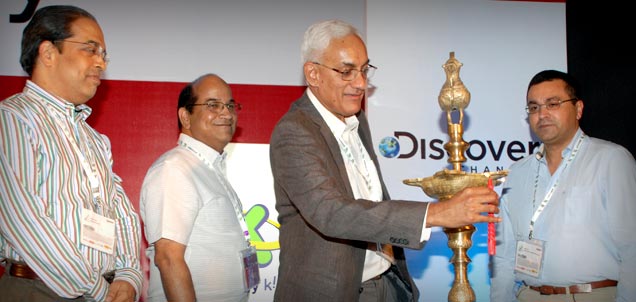
    The Discovery network is partnering Goafest for the fourth time and the focus this year is around Discovery Kids, its soon-to-be-launched channel for kids. MxMIndia speaks to Rahul Johri, Senior Vice-president & GM, Discovery Networks on Discovery’s association with Goafest (and of course Discovery Kids and how he is looking forward to digitization).


    On partnering Goafest in 2012

    Goafest is a landmark event of the industry and this is our fourth year of participation in the event. The who’s who of the industry congregates here for co-sharing and exchange of ideas and solutions. It has grown in stature over the past years – the quality of speakers it attracts, the kind of discussions that take place…it has gotten better every year and that is why we are excited to partner such an event. The focus of what was said today was on good quality content and we are one of the biggest content producers in the world. It is good to hear speakers deliberate on how content is playing an integral role and is at the core of everything that we do.


    On the age of digitization

    The onset of digitalization presents an opportunity for niche networks to come in and therefore you see our channels like Discovery Science, Discovery Turbo or Discovery HD…these channels really thrive in a digital environment where they are not limited by capacity constraints of analog cable and we are really looking forward to digitization.


    On Discovery’s stride in India

    We have just announced the launch of Discovery Kids a few weeks ago and that has been a big move for us. Discovery has grown rapidly in the past one year. In the last three years, we have gone from three channels to eight channels, from two languages to five languages…so we are growing very rapidly and this year it is going to be all about Discovery Kids.


    Click here to view all Goafest 2012 stories


  • We need to stop ranking ideas: Jayant Murty

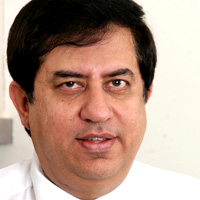
    At the Advertising Conclave, Jayant Murty, Director of Strategy, Media and Integrated Marketing, Asia Pacific Region, Intel Corp presented his ideas on building brands in the era of multiple degrees of freedom. MxMIndia spoke to Mr Murty to gather his perspective on the festival and the role that marketers can essay at such events.
     

    On Intel’s association with Goafest

    A few of us, marketers, were invited here to share as to where do we think brands need to head and the kind of communication support it needs to get there. According to me, this is not a place to lecture but to engage in meaningful dialogue. Any speaker who speaks at such forums is good when they can bring in something radical and controversial that you can start a new kind of conversation. I am viewing this as: can I, as an individual, bring in something that can start a new conversation.


    On digital as a way of life

    One of the talking points today was digital and I do not think consumers look at life as being analog or digital or television or web. I think consumers are looking at things that inspire and interest them and it is up to marketers to figure at all points of time which medium will deliver that inspiration. What is important is that consumers, at any point in time, deal with multiple screens – computer, tablet, phone, television and the newspaper and as long as you understand and respect the fact that consumers have different expectations and you build content to make that screen as engaging and inspirational as possible, I think that’s what brands need to strive for in the future.


    On the power of an idea

    I think what we all need to do is stop ranking ideas. I do not think anybody can say that this idea is better than the other one. That’s because a great idea from one industry looks a little bit different from a good idea from another industry. And some, unfortunately, look fashionable and sexy than other ideas. I think it would be better if we stopped rating ideas. But what one must do diligently with all the ideas that we implement is see how they fared. Did people engage with them, did it build new fans, did it start conversations…and I think we need to become more analytical in our analysis rather than this public sentiment that this is a great idea and this is an average idea.

    Click here to view all Goafest 2012 stories

    Click here to view all Goafest 2012 stories


  • All roads to a bigger, beerier Goafest!


    By A Correspondent


    It’s the time of the year when the adfrat congregates in Goa for the sun, sand and loads of learning. And may we add: gallons of beer. As Goafest 2012 begins at The Zuri White Sands in South Goa today with the industry conclave, one will see more than 3,000 people get together to celebrate creativity.


    Says an ecstatic Arvind Sharma, Chairman, Goafest 2012: “We were ourselves surprised with such an encouraging response. This year will see the biggest crowd gather in the history of Goafest.” If the number of registrations has skyrocketed, guess will so be the consumption of beer and assorted liquids. Remember, the excise levies are perhaps the lowest in the country in Goa!


    “Goafest 2012 is a brand owned by the advertising and marketing fraternity. The high numbers that will attend the festival goes to show that fraternity looks at it as an extremely responsible event that is representative of the industry. We have an outstanding line-up of speakers this year, the process of judging has been rule-based and transparent and the jury has been extremely happy with the quality of entries that have come in. I just hope that people will enjoy the Goafest, Mr Sharma adds”


    Goafest will start, as has been the norm, with the Advertising Conclave with the theme Ideas That Impact the Full Circle. The session will begin with the welcome address by Nagesh Alai, President, AAAI. Srinivasan K Swamy, Chairman, Goafest Advertising Conclave will give his address on the theme of the Conclave. This will be followed by introduction of speakers by Arvind Sharma, Chairman, Goafest 2012.


    Jean-Yves Naouri, COO, Publicis Groupe and Tim Love, CEO, APIMA, Vice Chairman, Omnicom Group will give a global insight to the theme of the conclave. Jayant Murty, Director of Strategy, Media and Integrated Marketing, Asia Pacific Region, Intel Corp will speak on building brands in the era of multiple degrees of freedom. The last session will be a panel discussion on the theme which will be moderated by Anuradha Sengupta of CNBC TV18.


    Post the Conclave, April 20-21would have seminars during the day and awards night. On Day 1, the sessions will start from 2.30pm and the speakers would include Lucas Watson of Youtube, Jonathan Mildenhall of Coca-Cola, Tim Love of Omnicom, Charles Wright of Wolff Olins. On Day 2, one would get to hear author and brand guru Prof John Philip Jones, Rishad Tobaccowaala of Vivaki, Erik Vervroegen, Publicis Worldwide and Simon Wardle. These sessions will begin from 11.30 am.


    This year, Goafest has included segments that would appeal and include the marketers to their fold. During the seminars, a leading marketer would pose questions to the speaker and also bring an Indian context to the entire session even giving his or her interpretation.


    Some of the marketers who would be part of the sessions include: N Rajaram of Airtel, Sanjay Behl of Reliance, Kainaz Guzdar of P&G, Rajesh Jejurikar of Zee, Viral Oza of Nokia, Gayatri Yadav of Star and Hemant Bakshi of HUL. Goafest has also introduced the Marketing Wizards encouraging marketers under 30 years of age to participate in the fest.


    In the case of the awards, the number of jury members in each category has been increased to give a better representation. The number of Grand Prix too has been extended to all 9 categories (10 if film and film craft is considered separately).


    The focus has been to make the awards bias-free (as they ought to be!) and the Goafest Committee has brought in many filters to ensure that awards are held in high esteem by the fraternity. Also there are entries and delegates from Sri Lanka, Pakistan and Bangladesh this year.


    On April 20, the Media Abbys Night will be held where Digital, Design and Direct Abbys will also be presented and on April 21, the rest of the awards will be given including the coveted Creative Abbys.


    On the downside, while Lowe continues to skip the awards, among the bigger agencies, McCann too did not send any entries though it is learnt that folk from the agency will attend the fest.

    Click here to view all Goafest 2012 stories


  • Go-Goafest!: Ajay Chandwani on why the Abby this year is special

    By Ajay Chandwani


    The Creative Abby has evolved in many ways and this year is no exception. With the 9 verticals, the Abby is not just a creative advertising award any more, though it had started that way more than 40 years ago. Direct, Design, Digital and Film Craft have all created new communication communities with companies participating from these functional areas. The Abby is sought after by film directors, through the line stalwarts, mobile and digital companies and others.


    New categories like Environment Design, Online Integrated Digital andMobile, Augmented Reality, Direct response inMobileand so on added a new dimension to entry opportunities. No wonder we saw 4,253 entries this year, a significant increase over last year.


    The combination of discussion with secret ballot seems to have been welcomed by most creatives for the second year running. This is a departure from the open hands vote of 3 years that Goafest 2008-10 used, with endorsement from the creative community. Also new rules on multi-category entering and discretionary clubbing on winners with similarity has gone down well with the creative folks.


    Jury composition has also evolved with younger and recent award winning contemporary judges being added from several agencies. At least 15 per cent of the judges were first time jury members at Abbys. Also we saw 3 new Jury Chairmen at Goafest Abby this year … Sonal Dabral of Mudra DDB, Ashish Khazanchi of Publicis and Abhijit Awasti of Ogilvy.


    Another added feature this year has been that judges from advertising mainstream agencies are rubbing shoulders with specialist judges in Direct, Design, Digital and Film Craft juries. The lines between specialists are blurring as convergence and creativity becomes a child of the 360 degree touch point era.


    The healthiest debates in discussion have been on ‘Are we honouring best in local Indian standards or benchmarking against international winners?’ With so many Indian entries chasing International awards and Indian judges at global festivals, it’s not surprising that most juries have worked out their balance on this subject.


    Let’s hope the audience likes the winners picked on April 21!


    Ajay Chandwani is Director at Percept Limited and is member of Award Governing Council in charge of Jury selection, judging process and conducting of Creative Abby

    Click here to view all Goafest 2012 stories


  • 6 Days to Go-Goafest: I would like to see less of scam, says Subhash Kamath

    By Subhash Kamath


    There is the advertising awards night and then there is Goafest, difference being that the latter is a three-day affair and is a festival of advertising. The Festival sees more than two thousand people from the fraternity congregate at one place to celebrate Indian Advertising. Its three day outing of learning, networking, meeting, fun and party.


    What I would like to see at Goafest? Well, less of scam for sure. Over the years, I have become disillusioned with the amount of scam one sees at awards and this is the case not just peculiar to Indian advertising but across the globe. What used to be an exception has become a rule now. It is like creating a parallel culture comprising real work v/s work created just for awards.


    I don’t really know what the solution is for this but the number of scams surely brings down the credibility of any awards.


    Another thing that I would like to at the Goafest would be speakers from outside our industry. I know that the biggest challenge at the Fest is to get an impressive line of speakers. If you get a big name, then it ensures a full house but lesser known speakers warrant an empty hall. I say, why not get Nandan Nilekani who is a great speaker and people would love listening to him, MS Dhoni could talk on how to motivate a team or Aamir Khan on creating different identity. They would surely be worth listening to. The whole idea should be to make Goafest bigger, popular and global.


    Goafest is a good break from day to day drudgery. I would like to see cultural activities go hand in hand with the learning. It would be great if one sees parallel activities like a music fest, or a stage for impromptu standup comedy or street theater. At ASCI, I had initiated to engage people in installation art or mobile film making, like these there are several creative options one could explore. There is a lot of talent in our industry and giving a platform to showcase these at Goafest would add a new element to Goafest.


    There should be an amalgamation of learning, fun and work shop at the Fest and let people choose what they would like to go for.


    Bottom line being that lets take Goafest beyond the place to network, meet people, listen to speakers and just enjoy being there. Let’s do all the things mentioned above but let’s also strive to add more to the Fest and truly strive to make it a Festival that’s helps in bringing the passion back to advertising.


    Subhash Kamath is the Managing Partner at BBH India


    Photograph: LinkedIn profile

    Click here to view all Goafest 2012 stories


  • 7 Days to Go-Goafest: Rajan Narayan on why Goafest is a hub of creativity

    By Rajan Narayan


    Because our clients do not allow us to say interesting things on their behalf.


    Because where else would you find people who’ve chucked high paying jobs for peanuts?


    Because Goa is far, far better than Gokul. Because we’re too honest to do financial scams.


    Because Cannes is beyond reach.


    Because we aren’t dull boys.


    Because where else are the essentials of a brief: the product, the TG and the market in one place?


    Because even if we don’t have a heavy bank balance or a heavy address at least we’ll have a heavy brass trophy.


    Because it’s a low-cost, self-paying method for the big seths of advertising to humour their underlings.


    Because only so many drunks will listen to the gyan of old men.


    Because client deadlines can wait at least one weekend in a year.


    Because we need better memories than staring bleakly as our best ideas are thrashed about by lesser men.


    Because if not an award, at least there’s a chick waiting in the white sands of Goa.


    Because in one shot, in one place we can show our peers, our metal.


    Because pure art needs a gallery.


    Because there are only some who’ll get it.


    Because we want to spend some time with people with our abilities and frailties.


    Because if a salesman and a banker can get an award, we can too.


    Because we need to do a pilgrimage at least once a year.


    Because even if no one cares and no one applauds our work, it should not mean that we can’t.


    Because indeed, we’re worth every bit of it.

    Click here to view all Goafest 2012 stories


  • 8 days to Go-Goafest: Ajay Kakar on why the client frat should not attend Goafest!

    By Ajay Kakar


    I do believe that as a client/marketer you should definitely not waste your valuable time attending the Goafest…


    …if you believe that agency partners have no role to play in the building, nurturing and success of your brand


    …if you believe that the output of your agency partners is mere creatives


    …if you believe that your agency partners do not value your presence and encouragement


    …If you believe that your agency is a mere vendor


    …If you have not certified the entries made by your agency as your work, actioned by you


    …if you believe that agency partners do not want to share their success and joyous moments with you


    …if you feel that it is ‘their’ win and you have had no role to play in it


    …if you do not feel a sense of ownership and pride to see your agency win


    …if you do not want to partake in their success celebrations


    …if you do not feel the need to be by the side of your agency team, holding their hand – in case they do not win


    …If you do not hope and aspire that some day your agency will do work that is worthy of industry recognition


    …if you feel that there is nothing that you have not seen, or there is nothing left for you to learn from


    …if you do not feel inspired by work that has won the recognition of a distinguished panel of jury


    …if you do not feel the need to be inspired by speakers who have proved their mettle against the best of the best – in India and abroad


    …If you believe that the only place for good creatives to be displayed at is the Jehangir Art Gallery


    …If you would not like to see all the best work done, from across the country, from across agencies, across the year, at one place – at one time


    …If you do not like to meet your peers from the advertising, media and marketing fraternities


    …If you believe that the 3000+ people who went last year have wasted their time


    …If you….


    Rather than think, procrastinate and defer the decision, come and experience the learning, the networking, the inspiration, the bonding….kuch din to gujariye Goafest men. And I can assure you that you will come back for more. Take it from a client who has been there every year, with a contingent size that could be the envy of many an agencies.


    Ajay Kakar is CMO – Financial Services, Aditya Birla Group


    Click here to view all Goafest 2012 stories