Category: NEWS

  • ASCI is not a toothless tiger: Bharat Patel


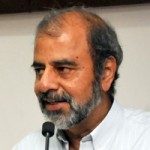
    Bharat Patel

    By Robin Thomas


    The Advertising Standards Council of India (ASCI) has joined hands with TAM Media Research to introduce National Advertising Monitoring Service (NAMS) which will come into effect from May 1. The aim of the monitoring service is to reduce the number of misleading and unsubstantiated advertisements (see accompanying story: ‘Paradigm shift for self-regulation’). AdEx India, a division of TAM, will monitor around 350 televisions and 10,860 newspaper advertisements released every week.


    In conversation with MxMIndia, Mr Bharat Patel, former chairman of Procter & Gamble and Board Consultative Committee Member and also former Chairman of ASCI spoke about NAMS and its impact on consumer complaints. And that ASCI is not a toothless tiger!


    NAMS has been introduced shortly after the government asked ASCI to fast-track the decision-making process…

    Absolutely. In order to speed up decision-making, the CCC (Consumer Complaints Council) decided to meet twice every month from the earlier once a month meeting. This decision was made following the advice of Ms Ambika Soni, the Minister of Information and Broadcasting. We are open to receiving suggestions, and when the Ministry of Consumer Affairs pointed out that something needs to be done on the increasing number of consumer complaints, we decided to do monitoring and thus the introduction of National Advertising Monitoring Service (NAMS).


    And the discussion to set up NAMS?

    The discussion started over three or four months ago. We were in talks with a lot of people, including consumer organizations and we found that TAM has the best availability and resources for the service.


    There were reports of the government planning to launch its own version of advertising monitoring services to reduce consumer complaints…

    I don’t think it’s true because the Additional Secretary at the Ministry of Consumer Affairs denied any such move. So we don’t know how true this is but, the Ministry denied it at this stage. The I&B Ministry has been very supportive of the ASCI. They have, in fact, mentioned in their codes that any advertisement that violates the code of ASCI will not be allowed. The Consumer Affairs Ministry is also supportive of self regulation.


    What is your reaction on ASCI being called a toothless tiger? Will NAMS give ASCI more teeth in dealing with ads that violate ASCI code?

    Calling ASCI a toothless tiger is absolutely wrong.  Cable TV Act Rules state that no ad which violates ASCI’s code can be released on TV.  Nowhere in the world has such recognition of an advertising Self Regulatory Organisation (SRO) been granted by the Government. All the ads, against which a complaint is upheld by CCC, are modified or withdrawn voluntarily in writing by advertiser. In fact, the I&B Ministry sends all the complaints it receives to ASCI for adjudication. In print, nearly 80 per cent ads voluntarily comply with CCC rulings. So, how can ASCI be called toothless tiger? ASCI is not a toothless tiger!


    It has been 26 years since ASCI was established, what are the changes you think ASCI has brought to the minds of the consumers and the advertising industry?

    ASCI has increased awareness, atleast among its members who release 80 per cent of non-government advertising in India, on the need to have ads which are true, decent and fair to competition.  Consumers are also made more aware of ASCI as a service that can help remove ads which they find misleading or indecent or displaying unsafe practices. As a result, the total number of complaints to ASCI has increased from 770 in 2010/11 to about 2,000 in 2011/12.


    ‘Paradigm shift for self-regulation’


    I Venkat
    LV Krishnan

    According to the Advertising Standards Council of India’s agreement with TAM, AdEx India will identify ads which are potential violation of Chapter 1 of ASCI code – to ensure truthfulness and honesty of representation and claims made by advertisements against misleading advertisements. The advertisements that violate the ASCI advertising code will be forwarded to ASCI on a weekly basis, post which ASCI would process them as per its complaint redressal procedure involving its Consumer Complaints Council (CCC) for adjudication.


    AdEx India will monitor ads in the auto, banking, financial services and insurance, FMCG (including F&B), consumer durables, educational institutions, health care products and services, telecom and real estate sectors. AdEx will track more than 30 newspapers which is said to contribute over 80 per cent of national newspaper readership and all television channels across India in all languages.


    Said Mr I Venkat, Chairman, ASCI: “The National Advertising Monitoring Service or NAMS initiative is a paradigm shift for self-regulation in Indian advertising and probably a benchmark for the other countries. For such an important industry central initiative, TAM’s AdExIndiawas the obvious option to handle such a large responsibility that brought in requisite infrastructure, neutrality, integrity and quality.NAMSwill strengthen the ad self regulation redressal process manifold, as we will be able to proactively monitor wider number of ads. This will be in the best interest of the Indian consumers as it will significantly reduce release of misleading advertising in India.”


    Mr LV Krishnan, CEO, TAM Media Research said: “Apart from media measurement, for decades now, we have been playing a silent, yet central industry, role towards media (advertising) monitoring and analytics as well. Our partnership with ASCI is yet another reiteration of the neutral role we play within the Indian landscape.”


  • Dainik Bhaskar Group launches Bhaskar School of Media Education

    By A Correspondent


    The Dainik Bhaskar Group has identified a gap in quality media training and education and with an aim to provide a solution- training media professionals and matching the global standards- have launched the Bhaskar School of Media Education.


    Shiv Khera, the eminent motivational guru and author of self transformation, inaugurated the school on April 17. The Bhaskar School of Media Education will be run under the able leadership of Mrs. Jyoti Agarwal. The curriculum has been designed keeping the demands of the media industry.


    The Dainik Bhaskar School has tied up with Dale Carnegie Training Consultants, a renowned US-based Training company conducting training programs worldwide for over 100 years, to adapt and create the training programs in identified areas.


    The modular curriculum is designed to strengthen students’ skills across areas that will give them personal and professional advantage. The participants will be updated on latest global trends and technological advancements that will open new vistas for development through refresher programs across different verticals in media.


    Commenting on this new initiative and launch, Mr. Sudhir Agarwal, Managing Director, Dainik Bhaskar Group, said: “This is a first of a kind initiative by a media group to partner with Dale Carnegie – a world leader in enabling businesses to enhance performance and increase knowledge by imparting highly resourceful training and consulting services. We are delighted to join hands with the best in the training industry. This endeavour is an extension of Bhaskar’s vision to drive socio-economic change as the largest print media group and to help develop professionals attuned to the latest trends in media systems, processes and values. We aim to offer challenging careers and training modules in media to aspiring youngsters.”


    Every participant will have to undergo a rigorous training program to earn the ‘Dainik Bhaskar – Dale Carnegie Training Certificate’.


  • ESPN STAR Sports launches ‘Event Management Group’

    By A Correspondent


    ESPN STAR Sports, Asia’s leading sports broadcaster, announced the launch of its on-ground division ‘Event Management Group’ (EMG) in India. The company also announced that PepsiCo India has signed on EMG to manage its mega football league Pepsi T20 Football’s on-ground events in India. As a part of the deal, ESPN STAR Sports is producing and showcasing the Pepsi T20 Football tournament in a special 8-episode series. EMG is also managing the School Quiz 2012, where it has roped in HDFC Life as the title sponsor. While the on-ground initiatives around HDFC Life School Quiz 2012 have already started, on-air telecast of the Quiz begin on June 01.


    The Event Management Group (EMG) will manage and promote premier sporting events around Asia. EMG specializes in creating, managing, promoting, consulting, producing and syndicating leading sporting events such as the KIA X Games Asia, KL World 5s and Guinness 9-Ball Tour. With over 1000 events in 11 countries, all events organised by EMG enjoy unrivalled regional broadcast across Asia through the ESPN and STAR Sports channels.


    Speaking on the occasion, Sanjay Kailash, Executive Vice President, ESPN Software India Pvt Ltd, said: “Our Event Management Group has firmly established itself across Asia Pacific with world class products designed to engage and entertain sports fans. It offers an exciting business opportunity in the India market as well. We can bring our deep international experience into play; create tailor made events and offer interesting and innovative marketing solutions using multiple platforms of ESPN STAR Sports. I am sure corporates will see lot of value in what EMG has to offer.”


    ESPN STAR Sports is a 50:50 joint venture between two of the world’s leading cable and satellite broadcasters. As Asia’s definitive and complete sports broadcaster and content provider, ESPN STAR Sports combines the strengths and resources of its ultimate parent companies – Walt Disney (ESPN, Inc.) and News Corporation Limited (STAR) – to deliver a diverse array of international and regional sports to viewers via its encrypted pay-TV services.


  • Starcom bags Linc Pens media mandate

    By A Correspondent


    In a recently held multi-agency pitch, Starcom Worldwide bagged the media mandate for Linc Pen & Plastics Ltd, the leaders in writing instrument industry. Starcom would be accountable for handling its entire media portfolio, to be managed out of the Mumbai office.


    Linc Pen & Plastics Ltd is engaged in the manufacturing, marketing and exporting of writing instruments and stationery products. Its product portfolio consists of 50 products, which are sold in over 30 countries. Along with 12 direct retail stores, the company supplies its products to the likes of Sanford, Wal-Mart, TESCO, and others.


    Confirming the appointment, Dr. Tanmay Chattopadhyay, General Manager – Marketing, Linc Pens, said: “Our mission is to create a smooth writing experience for our consumers. We chose to partner with Starcom for their ability to create experiences and associations with a long-lasting impact. We are certain that our alliance with Starcom will help us further leverage our brand association and become the preferred writing equipment for every consumer.”


    Commenting on the win, Rajendra Dwivedi, Vice President, Starcom Worldwide, Mumbai, said: “We are extremely happy with the win and look forward to our alliance with Linc Pens. We are sure our approach of Human Experience strategy will create long lasting associations between brand and consumer. Our robust planning coupled with proprietary tools and techniques will make it a preferred brand among consumers.”


  • Cyrus Mistry redesignated Tata Sons MD

    By Satish John


    In a quiet move, the board of Tata Sons has re-designated Cyrus Pallonji Mistry as the managing director of Tata Sons. The new designation became effective from April 1, 2012.


    On November 23, 2011, Tata Sons named Mr Mistry the successor to Ratan Tata, the current non-executive chairman of Tata Sons. Tata will retire by the end of 2012, when he becomes 75 on December 28.


    Mr Mistry is currently learning the ropes directly under Ratan Tata, shadowing the chairman as he prepares Mr Mistry to take on the mantle for bigger responsibilities within the Tata group.


    Mr Mistry’s induction is closely tracked within and outside Bombay House, the Tata headquarters. In recent times, he has met chief ministers of states such as Jharkhand and Gujarat, Union ministers and also been introduced to senior business captains of industry associations.


    Interestingly, when Ratan Tata took over from JRD Tata, he was appointed the executive chairman. Following the group’s policy, Mr Tata shed the executive role when he attained 65 years of age, but retained the post of non-executive chairman of Tata Sons and flagship group companies.


    In recent years, the Tata Sons board has seen senior board members shed their executive roles, even as they retained their role as a non-executive board member. The senior members include R Gopalakrishnan, Arun Gandhi and R Krishna Kumar.


    Legal circles say it is logical to appoint Mr Mistry as the managing director of Tata Sons. As a deputy chairman, Mr Mistry wouldn’t have the direct management role in managing the day-to-day affairs of the company. “Appointing him as the managing director gives him the legal authority and responsibility,” to manage the day-to-day affairs of the holding firm.


    Source: The Economic Times
    Copyright © 2012, Bennett, Coleman & Co. Ltd. All Rights Reserved

  • Rohit Surfactants to launch mid-premium laundry brand Uni Wash to challenge HUL & P&G brands

    By Sagar Malviya


    Maker of India’s largest-selling detergent brand Ghari, Kanpur-based Rohit Surfactants plans to launch a mid-premium laundry brand to take on Hindustan Unilever’s Rin and Procter & Gamble’s Tide.


    “We want to tap into mid-priced category which has good potential as well as offer higher margins,” Rahul Gyanchandani, director at Rohit Surfactants, said. Ghari competes in the highly competitive mass-priced segment, where companies are under margin pressure due to high raw material costs. “In addition, apart from brands such as Rin and Tide, there is a vacuum in the segment which we want to fill,” said Gyanchandani.


    The new brand, Uni Wash, will be launched in the next 2-3 months and be priced similar to Rin and Tide, the company said. Rin’s 1-kg pack costs Rs50, while Tide Naturals’ 870-gram pack is sold at 30. Spokesperson of HUL and P&G said as a company policy they do not comment on competitors.


    Rohit Surfactants’ Ghari beat HUL’s Wheel late last year to become the top brand in the 13,000-crore laundry industry. The firm’s entry into the mid-premium segment is expected to make the infamous Rin-Tide fight even murkier. HUL, early this year, priced Rin lower than P&G’s Tide and released an advertisement asking consumers to choose the better brand-the latest in a series of aggressive commercials from either brand targeting the other. Some blatant ads even attracted legal recourse from the other side.


    According to an industry insider, Tide’s share has doubled in the last two years to over 13.7 per cent in 2011 while Rin’s share has grown from 4 per cent in 2009 to around 6 per cent.


    TOUGH MARKET

    Analysts feel that Rohit Surfactants’ entry could further dent margins in laundry, one of the largest segments that contribute to more than a quarter of the revenues for both HUL and P&G.


    “The category has limited pricing power already and a new brand entering will surely affect the exiting brands in the long term,” Gautam Duggad, an analyst at brokerage Prabhudas Lilladhar, said. Mr Duggad, however, added that it would not be easy for Rohit Surfactants to build a brand from scratch.


    “Launching a completely new brand altogether would be a challenge in this cut-throat market as it will take a long time for a brand to start from scratch,” he said. Rohit Surfactants has been building its distribution network to reach most of the country and believes it now has the wherewithal to compete with established brands.


    “We already have a solid platform now, which we can leverage for the new brand to push it,” Mr Gyanchandani said.


    Rohit Surfactants entered 10 new states in the last three years to expand its reach to 19 states through more than 3,500 dealers. It has 21 manufacturing units, 15 of which were added since 2006. The company now plans to expand its distribution and build manufacturing plants in markets such as Bihar, Raipur and Karnataka.


    Launched in 1987 by brothers Muralidhar and Bimal Kumar Gyanchandani, Rohit Surfactants had sales of over Rs2,500 crore in the year ending March 2012.


    But there is increasing pressure on the margins of detergent makers due to increasing prices of key raw materials such as LAB, or linear alkyl benzene,  that has increased 19 per cent, and soda ash that climbed 4 per cent in the last three months.


    HUL, the Indian unit of Anglo-Dutch Unilever, has indicated that it is facing the heat of inflation in categories such as soaps and detergents, and has tried to moderate its advertising spends to protect margins.


    At the same time, P&G is looking to expand production capacity in India so that it can make products cheaper locally.


    Source: The Economic Times
    Copyright © 2012, Bennett, Coleman & Co. Ltd. All Rights Reserved

  • Emerging markets offer potential that we digital natives thrive on: Amanda Richman

    It has been a dream run for Starcom MediaVest Group that bagged a series of client wins in 2011-12 and saw it post commendable growth numbers for the network. Of the many divisions under the network, probably the unit that surprised one and all with its performance was its digital arm – SMG Digital that managed to deliver 200 per cent growth in 2011. according to amanda Richman, President – Digital, MediaVest Worldwide & Digital Lead for Emerging Markets, Starcom MediaVest Group, that’s an impressive milestone, and a testament to the digital talent and the focus of the new leadership team at SMG.
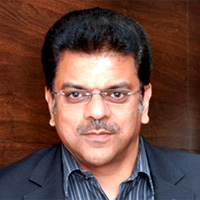
     

    On a short Indian sojourn, Ms Richman took some time out of her busy schedule to reply to MxMIndia’s Johnson Napier’s questions about the strides made by the digital agency in India and around the globe. While India continues to deliver spectacular growth, Ms Richman asserts that the next phase of digital growth will come from Greater China,Russia, as well as the Middle East and Central Europe.


    It’s the size and scale of the BRIC markets that offers unprecedented growth opportunities for SMG, as well as its clients, she affirms. Ms Richman also delves on how social media will change the advertising ecosystem going forward and what is SMG Digital’s plans for India.


    as you continue to deliver above-par growth in the realm of digital, could you elaborate on a few eminent strides that MediaVest has managed to gain under your leadership over 2011-12?

    Our focus on designing and delivering human experiences as an agency puts digital at the core of what we do, and demands that we build that skill set across the organization.

    From developing connection strategies based on digital behaviours, to integrated video buying approaches, to building capabilities in social, mobile, content and analytics, digital growth has been a singular focus of the entire agency, and that drives momentum.


    How would you sum up the growth put up by the digital division here in India?

    SMG Digital delivered 200 per cent digital growth in 2011 – that’s an impressive milestone, and a testament to the digital talent and the focus of the new leadership team.


    How do the other asia Pacific countries stack up against India vis-a-vis harnessing the digital tide?

    Each market has its own success stories, driven by our client’s objectives and digital appetite. What’s unique aboutIndiais the focus on cost and scale – the constraints of investment can lead creative innovation in how we build and scale ideas more efficiently.  There’s also an inherent creativity in this market linked to such a strong appreciation for technology. This networked mindset inIndiacan see new possibilities in both, the art and the science of digital.


    How would you describe the agency’s growth in your global markets, including the US, Europe and elsewhere?

    Digital growth continues to be strong in our core markets, driven by our integrated approach. When you start with human insights at the core, and build out experiences based on creating value, it naturally leads to opportunities with social, content and mobility, and we’re seeing tremendous growth in these three areas. However, it’s a more measured growth in theUSandWestern Europe, whereas the emerging markets offer that unbridled enthusiasm and potential that we digital natives thrive on.


    Despite the current digital boom being witnessed in India, the country is still in its infancy, gripping with the sudden demand for the medium. What are the pros and perils of being a young, yet highly sought-after, market?

    Hyper-growth, and the resulting chaos, creates a climate of intense creativity – and we’re clearly in that phase of opportunity inIndia. However, there’s a risk that this energy is expended on chasing apps and shiny objects, rather than building a digital foundation. It’s important during this early stage that we balance the passion for innovation with the need to execute the ‘brilliant basics’, train our talent to have a digital mindset over skillset, and find solutions that will grow our clients business – not simply check the box on doing digital.


    Will social media emerge out of the shadows of the web and take on a singular role of being a popular medium for advertisers?

    Social media is more than an ad opportunity – social is human behaviour that will increasingly power the web. Paid advertising is one part of the experience, but the real value is in understanding the human interactions and conversations, so that marketers can learn and engage in ways that provides real value in their consumers’ lives. That’s the real opportunity with social.


    Of the three screens, television, web and mobile, which would be the most definitive in terms of ROI and reach for clients?

    We approach the ROI challenge uniquely for each client, based on their objectives and audience goals.  While television is still a great reach driver with strong ROI, online has proven to deliver better ROI for several clients and targets, and mobile is quickly gaining ground as both a reach, engagement and acquisition tool vehicle.


    Despite the huge buzz, spends on digital are still abysmally low, atleast here in India. What do you advocate the industry needs to do to attract more revenues?

    In theUnited States, we faced the same level of resistance in the early 2000s, as marketers questioned the value of digital relative to traditional, proven media.  The shift to Internet being the #2 media came thru a series of wake-up calls:

    • For performance marketers, search and performance display was proven to be high-performers, resulting in ‘digital first’ planning, and quickly setting the pace for double-digit investment.
    • as time spent online exceeded time spent on most other media, brand marketers realized they needed to follow the consumer across all digital touchpoints.
    • as brand marketers began to engage with real dollars, they quickly realized how digital not only offered unique targeting opportunities, but also could complement v/s compete with their traditional media investments, serving as an activator towards the sale. The era of integrated planning took hold.
    • The advent of video, social and gaming demonstrated an unprecedented level of engagement that couldn’t be delivered elsewhere, leading to greater investment in creating digital content.
    • as mobile and smartphones usage increased, it was clear that digital was an always on, always connected medium that warranted deeper investment and experience design across all three screens.


    Which are the new and emerging markets being tapped by your agency for the future?

    Our emerging focus spansIndia, Greater China,Russia, as well as the Middle East andCentral Europe.  Clearly the size and scale of the BRIC markets offer unprecedented growth opportunities for SMG as well as our clients.


    As you move forward, is there a vision that you’d want the agency to abide by as it prepares to take on the future?

    Our dream is to grow our clients’ business by transforming behaviour through uplifting, meaningful human experiences. That vision transcends digital and market boundaries, and enables a level of creativity and commitment that motivates our entire organization.


  • Press Club Awards for Excellence In Journalism

    By A Correspondent


    The Press Club Mumbai has received overwhelming participation from journalists all over India for its prestigious ‘Press Club Awards for Excellence in Journalism-2012’. With over 500 entries, participation has gone up more than 4-fold from last year. Currently, judging the entries is underway and the final Awards will be held in Mumbai on May 5, 2012 at the NSCI Club, Worli.


    The Awards will be conferred for excellence in print journalism in six categories for best writing in ‘Crime’, ‘Cricket’, ‘Entertainment’, ‘Health & Environment’, ‘Politics’ and ‘Business’; in addition to the ‘Lifetime Achievement Award for Outstanding Contribution to Journalism’. Citations and prize money of Rs1 lakh in each category will be awarded to the winners and runners-up from each category by eminent journalists and corporate partners.


    The past couple of months witnessed over 500 entries from journalists pan-India. The jury finalising the winners comprises prominent journalists and personalities including Sanjay Manjrekar, Ayaz Memon, Sambit Bal, Brett Lee, Clive Lloyd, Shabana Azmi, Khalid Mohammad, Amit Khanna, Mahesh Jethmalani, Meenal Baghel, Uday Kotak, N. Jagannathan, Bittu Saighal, Cyrus Guzder, Vithal Kamat, Yogendra Yadav, Vinod Sharma and Paranjoy Guha Thakurta.


    The Press Club Awards for Excellence in Journalism have been instituted to promote best practices among journalists and encourages good quality writing, fair play and high ethical standards.


    The response from corporate partners too has also been immense with 6 corporate brands coming on board to back the awards. These include Podar Enterprise for the K.N.Prabhu Award for Cricket Writing, Yes Bank for the Best Business Writer,

    Glenmark Pharmaceuticals for the Environment / Health Awards, MCHI for the Political Story of the Year, Eros International for the Entertainment category and the Adani Group for Lifetime Achievement.


  • Govt ought to leverage social media for public consultations: DoT secy

    By A Correspondent


    The World IT Forum 2012 came to a close on Wednesday after two days of deliberating on the role of ICT in agriculture, education, health and e-governance, within the overall theme of ICT for sustainable human development.


    On the second day, during the Plenary Session on ‘Networking – connecting people’, R Chandrashekhar, Secretary, Department of Telecommunications, Ministry of Communications and IT acknowledged the need for the government to have a systematic engagement on social media. He said the government has prepared the draft of a Social Media framework.


    Underlining the importance of social networking, Mr Chandrashekhar said there are issues and programmes like NREGA, Food Security Bill and e-governance projects where it is imperative for the government to engage the public through consultations. This is where the government can leverage the power of social media.


  • Rohit Ohri appointed on Dentsu Network’s Global Operating Committee

    By A Correspondent


    Bringing together leadership teams from the East and the West, Japanese communications conglomerate Dentsu Inc., has consolidated all its operations outside of Japan in a single virtual company, Dentsu Network. Rohit Ohri, Executive Chairman, Dentsu India Group is among the key leaders from across Dentsu’s Global Network to be part of Dentsu Network’s Global Operations Committee to help develop and drive Dentsu’s strategy, collective vision, values and motivation.


    In a move to make Dentsu a more competitive and powerful global network, Dentsu Inc. is, for the first time, combining all its overseas operations into one global team with a unified management structure. Led by Tim Andree, President and CEO, Dentsu Network, the Dentsu Network will foster collaboration and sharing to serve more clients in more markets with more capabilities more profitably, with innovative strategies and collaborative entrepreneurship. Effective from April 2, the Dentsu Network will launch with 82 operations in 29 countries.


    “Our goal as the newly formed Dentsu Network is to serve more clients, in more markets, more effectively through truly global collaboration,” explained Tim Andree. “We have had the benefit of testing our growth strategy in the western hemisphere through our Dentsu Network West operation, and saw the rewards it has brought to all of our agencies and business partners. By combining our power in the East with our rapidly growing operations in the West, there is nothing stopping us from serving our clients in the most dynamic, nimble and resourceful way possible.”


    Sharing his thoughts on the India implication of this development, Rohit Ohri, Executive Chairman, Dentsu India Group said: “The formation of the Dentsu Network is a reflection of our President and CEO Tadashi Ishii’s vision for accelerated global growth.  This new organization of our global operations has been designed for speedier decision-making, accelerated sharing of know-how across geographies, and more empowerment of  developing markets like India. This structure will power Dentsu India Group’s skill and capability to be the best integrated communication solutions partner for our clients.”


    Tim Andree joined Dentsu in 2006 as CEO of Dentsu America and by 2008, it became the fastest growing agency in the US. That same year, underscoring Dentsu’s commitment to globalization, Tim was appointed Dentsu Inc.’s first non-Japanese Executive Officer. Mr Andree is a co-author of The Dentsu Way: Secrets of Cross Switch Marketing from the World’s Most Innovative Advertising Agency.


    Dentsu Inc., Tokyo commenced its India operations in October 2003 in a joint venture with the Mogae Group. In 2011, the parent company acquired the India businesses and the new Dentsu India Group became a 100 per cent subsidiary of Dentsu Inc., Tokyo. The new Dentsu India Group comprises three independent, full-service advertising agencies-Dentsu Communications, Dentsu Marcom and Dentsu Creative Impact, a media company, Dentsu Media and a digital company, Dentsu Digital. Besides the core advertising and media business, the Group also houses world-class expertise in the areas of design, digital media and sports.


    Founded in 1901, Dentsu Inc. has held the position of the world’s largest single-brand agency for almost 40 years. Through its unique “Integrated Communication Design” approach, Dentsu offers multinational clients the most comprehensive range of advertising and marketing services in the industry. While continuing to pursue innovation in the digital arena, Dentsu is active in the production and marketing of sports, movies, anime and other entertainment content on a global scale.


  • Bharat Matrimony’s Guinness World Record for world’s largest photo album

    By A Correspondent


    In lieu with the Matrimony Day celebrations, Bharatmatrimony.com, largest matchmaking company with presence both online, with over 450 Matrimony portals, and offline with 150+ company owned retail outlets, gathered to set the Guinness Book of World Record with the World’s Largest Photo Album (Wedding) featuring the contributions by the public.


    Matrimony Day is an ode to the magic of marriage. It turns the spotlight on these positive aspects and encourages the young to look forward to matrimony rather than stay away or step into it with trepidation. It also provides an opportunity to showcase the myriad hues, traditions, rituals and customs of Indian weddings that vary by religion, region, city and village.


    The World’s largest Photo Album (Wedding) is 14 feet (4.26 meters) in width and 17 feet in Length (5.18 meters) in physical size. Guinness World Records adjudication authority examined the album and presented a certificate to Mr. Murugavel Janakiraman, Founder & CEO of BharatMatrimony.com commemorating this feat.


    The previous record for the ‘largest photo album’ measured 4 m x 5 m (13 ft 1 in x 16 ft 4 in), created by Johnson’s Baby China and was unveiled in Beijing, China, on 10 June 2008.


    The certificate ceremony saw the support of people from all walks of life


    BharatMatrimony.com is owned by Consim Info. Pvt. Ltd,India’s leading internet business group with leadership presence in all key categories. The group currently owns and operates BharatMatrimony.com and has 400+ community portals.


  • Department of IT (DIT) renamed Department of Electronics & IT (DeitY)

    By A Correspondent


    The Minister of Communications & IT, Kapil Sibal, has said thatIndia’s electronic sector aims to achieve a turnover of about $400 billion, with an investment of about $100 billion and employment to around 28 million by 2020.


    Shri Sibal said it is proposed to set up over 200 electronic manufacturing clusters and significantly upscale high-end human resource creation to 2500 PhDs annually by 2020 in the sector. He was presiding over a function in New Delhion Thursday where the Department of IT (DIT), Ministry of Communications and Information Technology, was officially rechristened Dept of Electronics & IT (DeitY).


    Dwelling on the name change of the Department, Shri Sibal said the introduction of electronics in the Department’s name is a signal of embarking on the development of electronics in the country, a journey which is essential if the country has to realize its dual objective of accelerating the growth momentum and enabling inclusive growth and development. The renaming of the department is reflection of the thrust which government provides to the electronics sector.


    Shri Sibal said the new National Policy on Electronics is under finalization, now that the process of widespread consultations is over. Its draft was released last October. He said the policy will provide a clear road map for the development of electronics sector in the country for the coming decade.


    He also said the Ministry has already initiated several initiatives for the development of electronics sector in the country.India has become the hub for semiconductor design, generating nearly $2 Billion in revenues. He said the government has, therefore, decided to set up semiconductor wafer fabrication facility in the country and the Cabinet has constituted an Empowered Committee to recommend technology and investors and incentives required to make the fabrication happen.


    In response to a global Expression of Interest, some of the leading technology providers have shown interest in participating in the fabrication project. The Minister said the Government has also decided to provide preference to domestically manufactured electronic goods in all Government procurement as well as all those electronic goods whose usage has security implications for the country.


    The policy is expected to strengthen the cyber security ecosystem in the country as well as provide a boost to the domestic manufacturing. Emphasising on developing human resource, Shri Sibal said the Department is in the process of extending and expanding the Special Manpower Development Programme for VLSI and chip design.