Category: NEWS

  • TIL brings a bigger and better IPL season 5

    By A Correspondent


    Times Internet Limited (TIL), in partnership with YouTube, is back with a slew of new features to woo cricket lovers for the fifth edition of the Indian Premier League (IPL), which starts on Wednesday.


    TIL’s dedicated IPL site, ipl.indiatimes.com, now offers interactive scorecards, high-definition streaming of IPL matches, DVR features (to rewind during a match), online radio commentary in partnership with AIR , video-on-demand facility, and an all new ‘Battleground’ section.


    Making its debut this year is the interactive 10 minute video show ‘Pitch Studio’, where fans can interact with stalwarts from the cricketing world including a former cricket team captain and expert, by posting their comments and questions on Facebook and Twitter. These pre-match shows will give a quick recap of past matches and talk about key events, with guest stars adding an element of surprise.


    “Having attracted a total of 72 million global views last year, we are looking to make IPL 2012 a lot more user-centric, giving user’s total control over their IPL viewing experience,” says Rishi Khiani, CEO, Times Internet Limited.


    In the ‘Battleground’ section, IPL fans can post their comments and also indulge in activities such as throwing tomatoes and eggs at the other side during a live match. The new DVR feature will allow fans to rewind on the time-line and watch any part of the match that they may have missed. Adding to all the fun is the cheerleader application, video scorecard that captures video highlights on the fly during the match stream, and the video-on-demand feature, which offers match highlights such as fours, sixes and face-offs between players.


    Given the phenomenal success of the Indiatimes platform during the previous IPL season, it’s no surprise that this year too, some of its heavy weight sponsors including Maruti, Coca Cola, and Samsung, have put their weight behind TIL as premium sponsors.

  • Will IPL 5 ratings match those of earlier seasons?


    By Johnson Napier


    The Indian cricket team’s performance over the last year has left much to be desired. Having suffered humiliation at the hands of several opponents and having failed to pep up ratings with their cricketing prowess, it was a telling sign that all was not going well for the men in blue who were crowned World Champions just about a year ago. Had such a downfall in form gripped any other country, it would have attracted the wrath of the fans that would’ve boycotted the sport by staying away from the game even if it meant empty stands (in stadiums) or viewership ratings on television taking a plunge.


    But that is precisely what is different about India, especially the bond that its people share with their favourite sport – cricket. Lose or win, big score or small score, there will always be a legion of fans who will continue to stand by the sport (and their idols), and be there in good times and in bad. This probably even sums up BCCI’s recent move in selling the broadcast rights of Indian cricket to Star Group for a staggering Rs 3,851 crore for a period from 2012-2018. One can only empathise with the broadcaster who now requires to come with a foolproof strategy that would see it recover revenues and also arouse curiosity levels amongst advertisers. But that is for later. For now, all eyes are on the most-anticipated tournament – IPL, that kicks off from April 4, 2012.


    Not wanting to take sides and given the string of ups and downs surrounding cricket in the recent past, experts are opting to play it safe and are predicting viewership ratings to be at par or slightly lower than the past year. In a sense, this augurs well for the wellbeing and popularity of the sport given the uprising it has faced in the recent past particularly with brands many of whom have opted to stay away from the event given the high costs being quoted for a 10-second ad. Also, the fact that a few franchise owners were left in the lurch awaiting divine intervention from the BCCI and with big players not being picked up by stake owners during the bidding process didn’t help solve matters either. And so while an average rating of 3.5 was what IPL managed to throw up in its fourth season, experts predict a somewhat similar rating for the fifth instalment too.


    Avg. Viewership of all IPL Seasons
    Tournament Number of Matches Avg. TVR
    IPL Season 1 59 4.81
    IPL Season 2 59 4.17
    IPL Season 3 60 4.65
    IPL Season 4 74 3.5


    Viewership of first match of all IPL Seasons
    Tournament First Match TVR
    IPL Season 1 L/T DLF IPL T20 KKR/RCB-BG 7.19
    IPL Season 2 L/T DLF IPL2 T20 MI/CSK-CT 5.09
    IPL Season 3 L/T DLF IPL3 T20 KKR/DC-NM 5.86
    IPL Season 4 L/T DLF IPL4 T20 CSK/KKR-CH 7.14

    (Source: TAM Peoplemeter System / Market: All India / TG: CS 4+)

    * In IPL 1 one match was abandoned due to rain

    * In IPL 2 two matches were abandoned due to rain

    * In IPL 4 one match was abandoned due to rain


    According to data from TAM Sports for season 4, the inaugural match between Chennai Super Kings and Kolkata Knight Riders had notched up a 7.14 TVR in the all India market for CS4+ (refer table for data). The number was much higher than what the previous seasons had managed to notch up. But despite the number of matches being increased to 74, the tournament managed an average TVR of 3.5. For season 5, while the tournament average is touted to stay the same the opening day numbers are estimated to be below par than the previous year. Asserts Anita Nayyar, CEO India & South Asia at Havas Media: “There is some commonality in the average ratings that season 5 is expected to throw up from the previous year but where for the opening day numbers are concerned, it could fetch a TVR of 5 or so.” Elaborating on why the numbers would not be as high as the previous years she said, “If you see, there has been an overdose of cricket in the past one year leading it to be a cricket-heavy year for team India. This has resulted in some form of fatigue setting in amongst the masses. The fact that a host of advertisers have opted to stay away from the event this year further signals the plight of the event in the days to come. But one could look forward to the event garnering an average rating of 3-3.5.”


    Echoing a similar sentiment, Nandini Dias, COO – Lodestar UM said that this year could be one of the bad years for the event where ratings are concerned. “The average ratings have been slipping over the years and would hover around the 3-3.5 mark this year. But what is more concerning this year is the way the advertisers have been treated despite trends suggesting an expected downfall in ratings. With such exorbitant rates, most advertisers have preferred to stay away from the event.” On the opening day numbers to be expected from the event, Dias said, “The buzz around the event this year has been surprisingly low and much of this may have to do with India’s dismal performance in the year gone by. I expect lower opening day numbers compared to last year given the low decibels around the event. Even the sale of tickets is low-profile with many preferring to stay away from making a purchase.”


    So while a dip in numbers is what is forecast, it would be interesting to see how the broadcasters play up the viewership numbers game as there is a slight change in the opening day schedule of the event. While in previous years, the opening ceremony was followed by a match on the same day, this year the organizers have split the two for separate days. Explains Jai Lala, Principal Partner – The Exchange, Mindshare: “Last year and in the previous years the opening ceremony was followed by a match being played on the same day and the number as such was high but this year there would be a difference in the numbers as the opening ceremony and the match have been separated from each other. So just the ratings from the opening day of the match per se, I would say it would be marginally low but as suggested that is due to the splitting of events. We’ll have to watch how the broadcaster plays up the numbers.” In fact according to Lala, “Season 5 may have an upper hand where the average ratings are concerned as one, there was no World Cup like last year that resulted in fatigue amongst viewers and also the fact that a lot of teams were in a sense rehashed last year resulting in small drop in ratings. But that shouldn’t be the case this time around; hopefully the ratings could be better than what was last year.”


    Preferring to stay optimistic, Neelkamal Sharma, COO – Buying of Madison Media Group is hopeful of the event managing a good opening in terms of ratings. And his supposition stems from the fact that the “general public’s mood being low due to economic slowdown/ scams/inflation etc hence they may look forward to watch something more entertaining and something that will drive away their attention from regular news.” As for the average numbers per se, he expects the numbers to be somewhat similar to last year +/-5-10 per cent.


    Having faced the heat last year for reporting a drop in viewership numbers that was backed by an unwarranted hike in ad rates, MSM would probably have to come up with some magic formula that would see them gain their way into the hearts of the viewers and naysayers too. It may help that the reach numbers for the tournament are estimated to be 8-10 per cent higher than last year due to rise in C&S households but the question is: will the viewer cling on to see the event complete the journey in its entirety or will he (or she) quit midway resulting in depleting numbers than previous years? The ball, for now, is in MSM’s court.


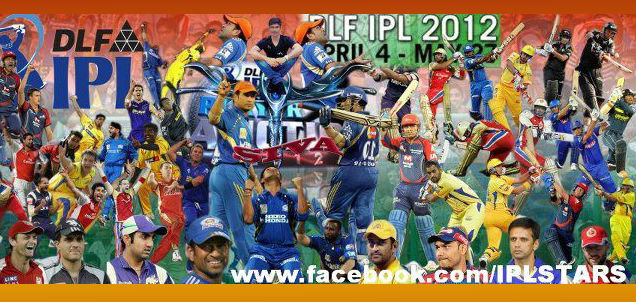
    Image courtesy http://www.facebook.com/IPLSTARS

  • Brand India saving grace in time of crisis

    By Namrata Singh & Reeba Zachariah


    There’s more to India than just its over-emphasized status of being the most populous democracy in the world. Random economic facts like India being the largest producer of milk, the largest consumer of sugar and spices as also the largest consumer of gold till last year, crop up now and then.


    But there have been achievements in the last few years which have put India on the world map. Over the last couple of years, India has been seen stamping its presence in the league of global leaders by the strength of its economic power.


    Consider these facts: The Tata Group is the largest manufacturing employer in the UK; Ireland’s richest person — Pallonji Mistry — is an Indian ; Coal India is the single largest coal producer in the world; India is the largest whisky manufacturer in the world and the Taj Group is the largest chain of hotels in Asia.


    Despite a generous trickle of negative news, the list of these positives is also getting bigger.


    Brand India today is not just about economics. A significant way in which

    India is asserting itself is through its soft power.


    According to Bhaskar Chakravorti, senior associate dean of international business & finance, The Fletcher School, Tufts University, this “soft” presence is India’s greatest asset in making sure it counts on the world stage.


    Household brand names such as Citigroup, Pepsi and Motorola are associated with an Indian CEO. Clearly, India has moved on from being a nation of snake charmers and appears to be on its way to become an economic power.


    Soft power aside, it’s also working its way through innovations. The list includes , Nano, the cheapest car in the world from Tata Motors; Aakash, the cheapest tablet PC in the world, priced at $46; and other cheap tablet PC initiatives by private companies.


    However, there are some missing pieces too. “India should surely move forward in the area of innovation where we can capture the value from our intelligent cheap resources from being just a provider of cheap labour. As of today, most companies (Apple, Microsoft, Google, Intel, etc), especially in IT, that generate maximum value from innovation, rely on resources from India and we are clearly not getting the deserved share of the value created,” said Thomas Kuruvilla, MD, Arthur D Little, a consulting firm.


    Richard Rekhy, head of advisory practice at KPMG, a global consulting firm, however, believes India has some way to go. “But India, with 100 companies of over a billion dollar market cap, has established its position globally which is why GE set up its first R&D centre outside US in Bangalore. At the same time, Indian banks have only 2 per cent bad loans versus 20 per cent in China,” he said.


    In the mid-90 s, on a representation made by Indian exporters, the government had removed the mandatory use of the ‘Made in India’ tag from goods exported. The law still exists on paper. Ostensibly, Indian exporters were embarrassed of using it then. But, today, no one is shying away from using the tag.


    Source: The Economic Times
    Copyright © 2012, Bennett, Coleman & Co. Ltd. All Rights Reserved


  • Watch IPL on mobile through Apalya

    Apalya Technologies, specializing in mobile video streaming delivering more than 150 plus million minutes and the leading mobile TV service provider for all telecom service providers will provide exclusive, mobile, video streaming for all the matches of the 5th edition of the IPL. This will be the 4th consecutive year for Apalya for IPL Streaming.


    Apalya Technologies, this year again, through its platform will enable sports fans to catch all the DLF IPL action real-time on their mobiles even when they are ‘on-the-move’. Subscribers will be able to watch it on the mobile through their existing mobile service providers, as Apalya has tied-up with all the leading telecom partners in India to enable the DLF IPL Mobile stream on the existing Mobile TV service. To avail this, subscribers can SMS TV to 58888.


    Speaking about this alliance, Vamshi Krishna Reddy, Co-founder & CEO, Apalya Technologies said, “We are happy to announce that we are yet again the Official Mobile Streaming Partner for IPL 2012.  This year we aim to cross 10 million subscribers with IPL V and expect the viewing minutes to more than double. Thanks to the evolving 3G network, better and stable 2.5G network coupled with advanced smart phone proliferation in the market, mobile TV has been a big success among consumers who are always on the go.”


    With emerging technologies and growing mobile video viewing habits, India records over 200 million video views a month on mobile devices and Apalya is all set to capitalize the opportunity to tap the interest of the youth, allowing them mobile video viewing for various popular events. During the World Cup season in April 2011, Apalya generated 17 TB of streaming and with close to 50 minutes of usage per user for the 6 matches India played. Currently, Apalya powers mobile TV for all the major telecom service providers in India and has also launched its services with leading operators in Sri Lanka & Indonesia.


  • Rise of internet radio: What do traditional FM players think?

    By Robin Thomas


    The internet today has become the fastest growing medium in the country, and mobile has more or less become a necessity. So influential is the internet and mobile today that every medium is harping onto the digital bandwagon. The rise of internet and mobile has compelled even FM radio to spread their wings online. Radio Maska which plays 24×7 Hindi music claims to be India’s first Bollywood internet radio station, catering to Indian and NRI listeners.


    Besides, Timbre Media, a multi platform and multi genre radio company will soon be launching an internet radio station; VentureNet Partners, a Bengaluru based internet radio company will also launch Radiowalla, a premium model internet audio service that promises a variety of special interest internet radio channels. Realizing the potential of internet, even traditional FM radio stations have extended their reach online. Radio Mirchi for instance launched two internet radio stations- Meethi Mirchi, (plays contemporary melodies) and Purani Jeans (plays Hindi retro). Nearly 3.5 years ago, Radio City launched its music portal, PlanetRadiocity.com and only recently the music portal announced the launch of its new web radio genre, IndiPop Radio.


    Rachna Kanwar

    Rachna Kanwar – VP and Business Head, Digital Media and New Business, Radio City was of the view that the rise in internet radio stations is a reflection of people’s media consumption and the rising internet penetration in India and around the world. “More and more people are consuming music on the internet and therefore it is but natural that the potential has been tapped by players. While music has always been available illegally, today the whole process is getting legalized. Even music companies are realizing the potential of the digital platform and its demand and looking at the platform differently. This is the future of consumption and serious players realize they cannot ignore the phenomenon.”


    Prashant Panday

    For those complaining about lack of differentiation in FM radio, internet radio may have come as a huge relief as it promises variety in both music and non-music content. However, once FM phase III is rolled out, FM stations hope to witness more innovations along with differentiation in content. So, is there a scope for the two to co-exist or do traditional radio stations need to press the panic button? According to Prashant Panday, CEO Radio Mirchi, “No one needs to be worried about anything if they can adjust to the new realities. If an FM broadcaster prefers to remain only an FM broadcaster, it will be in trouble. But if it can seamlessly migrate to the internet platform, it will be able to maximize the combination of the two formats. So no….there is no need to worry.”


    Rabe T Iyer

    Rabe T Iyer, Business Head, BIG FM was of the opinion that online radio stations traditional FM stations need not worry about online radio and although there are limitations, online radio is an extension of traditional radio stations.


    Internationally, online radio stations augment terrestrial radio listening rather than substitute it. It’s augmented by users logging in from work and homes via the net and accessing their favourite stations. Yes, Online music with its niche music genre will fill the gap which traditional radio is unable to experiment with due to commercial consideration however traditional FM stations will not worry about growth of online radio.”


    In an earlier interaction with MxMIndia, M Sebastian, Co- founder and CEO, Timbre Media had said, “There is sufficient space for everyone to co-exist and grow. Rather than worrying, we need to identify areas of partnerships that lead to mutual benefit and faster growth and work towards realizing the full potential of the audio medium.”


    The listeners of internet radio stations are said to be those that are dissatisfied with the traditional FM radio stations however the market for internet radio is still small and currently caters to only specific or niche audience. Ashish Pherwani, Associate Director, Advisory Services, Ernst & Young believes that terrestrial FM radio stations will not have to worry about their internet radio counterparts at least for the next five years. He is also of the view that as a business there are many similarities as both internet radio and traditional FM radio stations are in the business of disseminating music.


    Speaking about the advantages and disadvantages of the internet radio and traditional radio stations, Mr Pherwani said, “As far as listening to radio is concerned, FM radio stations is absolutely free and this is where traditional radio has an upper hand over the internet radio. The disadvantage however is the fact that FM radio licenses are very expensive as a result many companies undergoing loses.”


    Unlike the traditional radio stations which do not charge listeners for listening to radio and is mainly advertising led, the business model of most internet radio stations are either subscription or advertising led or both depending on their radio channels. Like their traditional radio counterparts, internet radio stations too have to pay music royalty costs i.e. a minimum royalty and revenue sharing model. When asked to share his views on internet radio and the benefits it may have on the music companies, Rakesh Nigam, CEO, IPRS (The Indian Performing Right Society Limited) said, “Digital music in India is only picking up, with 3G and 4G services entering the market, internet radio stations will only grow. As a result the sale of music CD’s will only further decline as they will be heard online rather than be purchased. Thus there is potential for internet radio and as a result it will be a win-win situation for all including the music companies.”


    Although internet radio has been around for a while, it is still at a nascent stage in India and perhaps for many it is still a new format of radio station hence it needs to first spread awareness about its existence and features. Traditional FM players on the other hand have established themselves in the market and realizing the potential of the internet some of them have already taken their station online. Most of these FM players therefore find no reason to worry about the rising number of internet radio stations. They are of the opinion that differentiation and innovation in FM radio will further increase with phase III rollout and besides it will further increase the reach of traditional FM radio which the internet radio stations may find hard to match, at least initially.


  • Wooing vibrant India’s Wonder Woman


    By Ritu Midha


    Indian women can by no stretch of the imagination be defined as a homogeneous market – it is heterogeneous. And the distinction cannot be made merely on the basis of their socio-economic status or the town class they belong to.


    TNS – GEMS February 2012 issue has a very interesting observation about a BoP (Bottom of Pyramid) 19-year-old girl, who saves from her small lunch allowance so that she can buy a tube of Neutrogena moisturiser. Surprised? The Indian woman consumer indeed is changing behaviourally, and the marketers are trying their best to understand her.


    Affirming the new shift being observed, Praveen Malhotra, EVP – Sales & Revenue, Reliance Broadcast Network Limited states, “There is a paradigm over here – women are making decisions and yet they are being dismissed. The evolution is significant not just because women are waking up to discover their identities, it is also because of the way the social order is changing in our country – the place of women is enlarging in our families. However it’s a dichotomous situation; it is happening and yet women are trapped in difficult life situations of being dominated.”


    Truly, the Indian woman has evolved, and the traditional boundaries are breaking – she is taking charge of family shopping and expenditure across the board. However the pace of change is much faster in India A than India B.


    Segmenting women by town class

    Even today, the pace of life is quite different in a metro like Delhi and a smaller city like Agra. Does this mean that consumers in Delhi and Agra are very different as far as consumer patterns are concerned?


    Punitha Arumugam, Group CEO, Madison Media disagrees. She says, “More than segmenting women basis geography, it is important to segment them by mindset or aspiration or representative clusters. For example, a homemaker in a small town in Karnataka and a homemaker in Mahim – Mumbai may be very similar. However, despite being based in Mumbai as a geographical unit, a homemaker in Nariman Point may be vastly different from the said homemaker in Mahim. This dilution of geographies and convergence of aspirations across borders has, to a large extent, been driven by mediums like television and mobiles.”


    Women in smaller towns aspire to be like their metro counterparts – however, the traditions are still stronger in smaller towns, and the lifestyles differ as metros have more working women than smaller towns. Divya Gupta, CEO, Dentsu Media elaborates, “A distinction born out of the fact that a typical metro woman is more likely to work out of home, leading to greater confidence, empowerment and equality coupled with greater time pressures! These factors have a direct influence on her purchase decisions and behaviour. However, the aspiration to succeed is universal. And media is a great equaliser; today product and brand awareness is ubiquitous across towns big and small. The needs and style might vary.”


    It is, nevertheless, important to understand, how different actually is the middle India woman (marketers’ new muse) from the metro woman.


    Women in middle India

    While the traditional role of male has not really changed much, that of the woman has seen a change of several generations in one decade – very similar to India’s economic growth story.


    Anita Kotwani, Principal Partner – Client Leadership, Mindshare defines the middle India woman succinctly stating, “She is the loving wife, the doting mother, if working she balances her home and personal life. She is committed to the institution of marriage and family. She is conscious of the changing environment, is aware of brands and is social online and off-line as well. She realises the importance that technology is playing today and wants to ensure that her kids today are internet savvy and ready for the future.”


    Very similar to the metro woman in many aspects, yet very different in many others. Anita Nayyar, CEO – India & South Asia, Havas Media, makes an attempt to demystify her. Says she, “Yes, the psychographics of a metro woman and a middle India woman are different. You will observe a lot of differences emerging, interestingly portrayed in the GEC channel soaps. Metro woman is modern and forward-looking, while middle India woman is not so modern but is becoming forward-looking.”


    As for what lies beneath the change, and how it has impacted the women in middle India, Shubha George, Chief Operating Officer, South Asia, MEC reflects, “The woman living in middle India is certainly more evolved today as she has more access to information. They have greater access to telecommunication, retail, media including the Internet and this has begun to narrow the gap with metropolitan India, even if it is early stages yet. Apart from the more obvious consumption pattern changes, this information explosion has intrinsically made middle India women aspire for more – especially when it comes to their children and what opportunities they make available for their children.”


    Marketing to women in middle India

    Middle India woman, then has different sensitivities, though she might be very similar to metro women on several fronts. Do the marketers need a different marketing strategy to reach them or don’t they? States Anita Kotwani, “One does need to have differentiated marketing strategy for women in middle India. They are different in their values – what makes them tick might vary from the metro women. Their realities may be different however, their aspirations and expectations might be similar.”


    So while the marketing strategy may need an element of differentiation, does the communication strategy too need to be different? Ambika Srivastava, Chairperson, ZenithOptimedia India and Chairperson, VivaKi Exchange believes that it would be foolhardy to formulate a rule here and apply it across brands and product categories. She says, “It depends on the positioning of the brand, and Insights the communication is based on. If the communication is about the universal truth – or a specific emotional need like safety, love, and need to nurture – it might work across the board.” However, she cautions, “Context may need to change, dependent on what the product or brand is. You have to be extremely relevant.”


    A brand’s need to reach out to middle India women might vary in intensity based on the product category it belongs to. While an upmarket automobile brand might be happy targeting the metro women, in case of a new detergent variant, it might not be the case. Says Basabdutta Chaudhary, CEO, Platinum Media, “Especially for FMCG, we by and large target the middle India woman. Especially in television, GECs, celebrities, Bollywood are the major contributors to overall media spends.”


    Sudha Natrajan, CEO, Lintas Media, believes that television, by far, is the best medium to reach the middle Indian woman. However, she makes an interesting and accurate observation about men being involved in the purchase decisions as well. She avers, “Out of home entertainment avenues being restricted, they can be reached almost completely through television. Also, where the evening primetime is concerned, soaps have dual viewership of the husband as well as the wife. It is important to reach the man of the house too, as he definitely has a say, or even ends up purchasing items of daily or frequent consumption in the house.”


    Having said that, while the woman might not be the real buyer, she does influence the purchase decisions and is the most important influencer. Marketers would thus ignore her in their marketing plans at their own peril.


    As per a study, about 85 per cent of the purchase decisions are taken by women in the United States of America. Our experts, however, are unanimous that the percentage of women taking purchase decisions in India is much lower. However, the numbers sure are increasing and across the categories. States Arumugam, “The era of looking at women as decision makers only for low-cost FMCG products is long over. Marketers across categories, be it finance, automobiles, telecom, durables etc have been targeting women as key influencers, if not the actual decision-maker on their brand, for quite some time.”


    In semi-urban and rural areas the story is a wee bit different – as the male is still the actual buyer of products in most categories. Affirms Sudha Natrajan, “Percentage of women taking purchase decisions is definitely lower in India. In semi-urban and rural areas, even FMCGs and groceries are bought by the man of the house. But having said that there has definitely been a rise in the power and control that the woman – who used to be the housewife – is now having, as she is evolving into being a homemaker.”


    Increase in the average income of working woman is indeed an important factor. In addition to it, there are several other socio-cultural factors that come into play, as explained by Nandini Dias, COO, Lodestar Universal. “With the change in household patterns, the decision making process is changing too. Now we have far more nuclear families with no senior citizens; smaller family sizes – DINKs and single child trend. Also, what is observed os that women are staying away from home for education and career and there has also been an increase in the divorce rate and number of singles over the years. With smaller size families, the decision process is also becoming more inclusive. Hence the traditional demarcation or the edges are no longer sharp.”


    What does this augur for marketers? Do they need to opt for gender specific marketing and advertising, or does it not really matter?


    Gender-specific advertising

    One can continue to put forward assumptions or theories on gender specific advertising but there will always be varied outcomes that will evolve. Divya Radhakrishnan, MD, Helios Media, for one stresses on the need for gender specific marketing, “Men are from Mars and women are from Venus. The comprehension, rationalisation and attention getting capabilities for women are very different from men. Across age groups, there is a stark differentiation in behaviour and therefore it is critical to have gender specific marketing strategies. The differentiation begins right from Pink vs Blue to Barbie vs. Nerf guns.”


    And she has an emphatic endorser in Madhuri Sapru, W-I-C, Encyclomedia Networks. States Sapru, “There are numerous products being used by women that need to have a women centric marketing strategy. Whether it should be women sales ladies handling footwear sales to women (I have never seen a female shoe saleswoman) – do men even know what women are looking for in footwear other than to say the size is right, or even more strangely “aap pehen ke chaloge toh loose ho jayega, phir fit theek rahega!” – or even a script for a telemarketer: they seem to have standard scripts which always address a customer as “sir” – whatever happened to the purchasing power of women?”


    Divya Gupta meanwhile opines that gender specific marketing strategy is a given for product categories specifically meant for ‘her’ – like makeup or skincare products, however, her involvement in purchase decisions now goes much beyond that. She elaborates, “Responsibilities and role-play between genders overlap; increasingly so today. Gender specific marketing and strategy is restricted today to only those categories meant exclusively for either gender. Our society is changing, more so in the metros/ larger towns, where increasing number of women work out of home. Given multiple responsibilities, pressure and paucity of time, decision-making, be it purchase decisions or related to the children’s education is now mutual and shared.”


    The belief is that it needs to be a strategy of inclusion rather than exclusion of either gender for most product categories – and it holds true especially in the case of metros and larger towns. States Nandini Dias, “We have moved away from demographic targeting to segmentation and relevance. In smaller towns there will be certain instruments within the finance category, or computer peripherals or cements etc where the focus on women will be almost negligible. But in larger towns, right from durables to finance to education…women are expected to participate and hence are addressed.”


    Internet on their radar

    Since the last year-and-a-half, brands targeting women have acknowledged the power of the internet. From Whisper sanitary napkins and Johnson’s baby care to high-profile fashion designers, internet is becoming an unavoidable tool to each and every marketer today.


    There is a dogged optimism that in the times to come, Internet consumption by Indian women would increase manifold, and there indeed is a need for marketers to gear up. Anamika Mehta opines, “The ratio of women:men users in 2001 was 10:90. From there on, today the ratio has risen to 35:65. Even in terms of time spent on internet, an average female user spends more time and consumes more pages than the male counterparts. With higher penetration of home PCs, their numbers are set to increase.”


    Women are indeed the growth drivers of internet usage today. Though the user base is small at the moment, the percentage growth is quite substantial. States Shubha George, “The YoY growth among women is over 30 per cent whereas it is just 3 per cent among men. Working and non-working women between age group 15-34 years across metros and tier 2 cities are the primary reason for increase in internet consumption in India. Of course, students constitute a critical chunk as well.”


    However, the efficiency of the internet in reaching a wide target female group is still questionable. Asserts Sudha Natarajan, “The penetration of the digital medium amongst women users still stands at about 30 per cent, that too in urban India. There are other mediums that give better ROI. This medium only reaches about 2-3 per cent of the total female Indian population as of now.”


    Women and brands

    Coming to the most important questions of them all, what the brands need to do for women to purchase their brands or influence their husband to do so? Explains Alpana Parida, President, DY Works, Mumbai “The first thing to keep in mind is to stop talking down to them. Brands see women as caricatures of themselves as the woman who waits for her husband’s smile or for children to say she is the best. No doubt these are important payoffs in a woman’s life – but brands tend to make simplistic associations. To truly earn their loyalty and advocacy – brands need to understand the women more deeply. Understand their layered dreams and unfulfilled desires, help her achieve than become her savior. For instance, Maggi allows her to add her own creativity and thus, nutrition to the basic noodles rather than wait for the beaming smiles of her kids.”


    Adds Madhuri Sapru, “Other than for women’s personal products, marketers have barely started “marketing” (and I don’t mean just a media plan skewed towards day time audiences) to women. We do not have any media isolation opportunities created as yet, and hence it is difficult for marketers to communicate to them in isolation.”


    Brands indeed acknowledge the value of engaging female consumers – increase in their purchasing and decision-making powers has not gone unnoticed. Last five years have seen a huge increase in product categories and brands (beyond FMCG) specifically targeting women – including computers, mobile phones and financial products.


    INDEX
    Success mantras from media captains
    All work and some play
    Riding the creative crest
    Holding up the managerial sky
    Celebrating the difference
    Managing Middle India’s Golden Lady
    Wooing vibrant India’s Wonder Woman
    Rural women – how strong is their ‘spending say’?
    Is the serial woman tellying it like it is?


  • Rural women – how strong is their ‘spending say’?

    By Ritu Midha


    The rural marketplace has long been touted as Destination Next for marketers. FMCG and mobile marketers along with a few evolved consumer durable ones have made inroads there. Considering that seven out of every 10 consumers reside in rural India, it comes as no surprise.


    As per the Nielsen estimates the fast-moving consumer goods (FMCG) market in rural India will hit $100 billion by 2025. As per Nielsen Consumer 360 India 2011, premiumization, commoditization, indulgence and brand acceptance levels would be the most important components of sales growth.


    Another study undertaken by ASSOCHAM on “Rise of Consumer Durables in Rural India states that the consumer durable market in rural India will witness an annual growth of 40 per cent in 2011 -12 due to higher disposable income of the rural India that has brought in lifestyle changes.


    But unlike urban India, where women are involved in purchase decisions in most of the product categories – women’s involvement in most purchase decisions was missing till lately. Divya Radhakrishnan, Managing Director, Helios Media, explains, “The rural woman unfortunately does not get involved in the purchase decision of even FMCGs. In the first place, rural India is a lesser consumer of branded products – loose/unbranded products work even in essential segments like salt, tea etc. The incidence of the woman going out to the mandi is limited, and hence it’s generally the male who takes purchase decisions.


    However, as per the Nielsen study, “Reaching rural Indian consumers today is becoming easier. Increasingly, rural consumers are upgrading technology – 84 percent have a television and 80 percent own a mobile phone.” With a television and mobile phone at their disposal their exposure to Urban India is increasing, and so is women’s involvement in purchase decisions.


    Anita Kotwani, Principal Partner, Client Leadership, Mindshare opines, “Women in these markets do make purchase decisions specially for FMCG brands. The strength of rural marketing lies in the 4A approach: of Affordability, Acceptability, availability and awareness and there is effort by marketers to ensure that they have the pricing strategies in place for such markets.”


    Opinion leaders have a huge impact on rural women’s purchase decisions, and smart marketers are taking note of it, and using them as influencers. States Shubha George, COO, MEC, South Asia, “Key influencers play an important role in connecting with the rural woman. By key influencers I mean trustworthy people from their environment such as a lady teacher or a social activist. These influencers are catalysts in permanent change in attitudes and behaviour. Touchpoints such as the local NGO or the health centre are significant in reaching out to rural women. Local activation is an important supplement, especially in the pockets where mass media is still limited.”


    Activation is key to reach rural women. And it has been noticed that activation by women’s groups is more effective. Microfinance and children’s education/ opportunities are two other major concerns and brands might gain by associating with these.


    No discussion on rural women can be complete without a mention of Shakti, HUL’s rural women empowerment project. States Anita Kotwani, “HUL’s Project Shakti is unleashing the potential of rural India. It is ushering in prosperity and more importantly self-respect. It is an Entrepreneurial Programmer that helps women in rural India set up small businesses as direct to consumer retailers. There is a definite need for such projects as they are all in the space of empowerment and making individuals self-dependent and confident of taking care of themselves.”


    In another direction, Nielsen Consumer 360 India presents a very interesting insight based on the spending habits of two rural Indian families for a three-week duration in which income increased each week. The study indicated that as spending increased three-fold, the housewife took on a greater role in the process.


    Going by the study, as the per capita income grows in rural areas, there is a fair chance of rural woman’s involvement increasing in purchase decisions. Perhaps it would pay off if marketers increasingly include women’s engagement in their rural marketing strategies.


    INDEX
    Success mantras from media captains
    All work and some play
    Riding the creative crest
    Holding up the managerial sky
    Celebrating the difference
    Managing Middle India’s Golden Lady
    Wooing vibrant India’s Wonder Woman
    Rural women – how strong is their ‘spending say’?
    Is the serial woman tellying it like it is?


  • Is the serial woman tellying it like it is?


    By Ritu Midha


    About a decade ago, we saw the emergence of Tulsi, Parvati and Kussum. Strong protagonists – but all of them set in more or less the same socio-cultural setting, grounded in traditions but fighting against the evil (another woman in most cases) trying to tear their families apart.


    Cut to the present-day GEC. The protagonist is stronger, and differentiated. She is no longer just about pacifying the mother-in-law, and mothering her growing-up children. She is aware, educated, has a mind of her own, and she speaks it too. She has the spunk, and many a time, she takes the lead in decision-making. To put it simply, she does not wait for someone to save her, she is fully capable of doing the saving. And in between all this, she has a heart too, and dotes on her family.


    There is a Pratigya fighting against the issues in her own house – a decision maker in Allahabad; there are working or aspiring-to-work women in quite a few soaps – among them Kuch Toh Log Kahenge set in Lucknow and Afsar Bitiya with a Bihar backdrop. There also is a Hitler Didi, where the protagonist, living in Delhi, is the master of the house, and of course Balika Vadhu and Diya Aur Baati Hum (both set in Rajasthan), which propagate women’s empowerment in the rural and semi-urban areas.


    Is it an accurate reflection of the real Indian woman, or are these shows akin to the funhouse mirrors that exaggerate certain parts of our collective reality? Even if it does exaggerate the social consciousness, it definitely provides an example for those women whose staple diet of entertainment is still the Hindi GEC.


    States Anamika Mehta, COO, Lodestar Universal: “Undoubtedly media, at an overall level, influences society and television has a huge role to play in that sense. While at some level, some shows and protagonists do play a role in sounding a wake-up call or instilling confidence, courage, and independence of thought, they thereby create followers or loyalists. However it’s more of media mirroring society on television essentially – witnessed for instance in the shift from ‘saas bahu’ soaps to the current lot.”


    While the woman protagonists are bolder and more intelligent now, the socio-cultural cauldron from which they emerge varies from show to show. The reason, of course, is increase in purchasing power of women across middle India – Madhya Pradesh, not a favourite setting for television serials till some time ago, suddenly finds itself as the backdrop for a number of soaps. Is the appeal of these shows universal or does it appeal to audiences in a particular geography? States Nandini Dias: “The traditional shows like Uttaran and Balika Vadhu do find better resonance in smaller towns while the talk shows like Oprah Winfrey or Barkha Dutt show a skew towards metros. The shows which do well across all towns are usually love stories like Kuch Toh Log Kahenge.”


    However, Shubha George, COO, MEC, South Asia, believes that in case the objective is to target a specific audience profile, a lot more needs to be done in this direction. She states: “Indian TV shows are fairly homogeneous and cater to a pan-India audience in most instances. I cannot think of any particular example that is more popular in metros because of a bolder woman character. Rather, this is a concept which is yet to be experimented on by Indian TV shows for mass audiences.”


    Many of these shows depict subjects like second marriages, domestic violence and other women-centric issues, but do they manage to send a message across to society? As per Anamika Mehta: “Frankly it’s little to do with evoking social consciousness and more to do with experimentation with new audiences, new generation, different content and eventually eyeballs. While many of these shows initially kicked off with a social idea and an attempt to rouse audiences, eventually, given the eyeball battle, they turn more into trials and tribulations of a woman with plot twists and turns.”


    There is a conscious attempt at creating a protagonist who wants to change the world, who would capture the attention and imagination of young women. Are these shows with the new realistic woman favoured by certain brands – or it is only TRPs that matter in the end? States Ms Dias: “Media planning is called a science and an art for exactly these reasons. Media planners do look at data , quantitative parameters. But finally when they take decisions they need to predict the future of how a show will do in the future. So the qualitative factors need to be considered too. In fact with the number of brand integrations that are done, it is detrimental to a brand if they do these brand integrations without understanding the content and relevance of the show.”


    Ms Mehta too states that brands do look at the content of the show, however, many times the storyline changes in chase of TRPs. She says, “Only if the brand’s personality is in sync with the show do they look at doing show exclusive deals. Very often the shows digress/change/derail chasing eye balls which often could defeat the rationale for association.”


    On India’s wide-ranging social canvas, there are many Indias, and the psychographics change not only from New Delhi to Basti, but also from Defence Colony to Rohini. It is not easy to depict the myriad colours of the Indian woman. However, the effort is being made towards being progressive, covering a broader spectrum, and bringing to the fore social issues that women in particular face. Does it matter that it is for the sake of eyeballs, or to get more advertisers on board, if the issues are addressed in the end?


    INDEX
    Success mantras from media captains
    All work and some play
    Riding the creative crest
    Holding up the managerial sky
    Celebrating the difference
    Managing Middle India’s Golden Lady
    Wooing vibrant India’s Wonder Woman
    Rural women – how strong is their ‘spending say’?
    Is the serial woman tellying it like it is?


  • MSM hits the ball hard for Six

    By Rishi Vora


    It’s been about two years since it was first heard that Multi Screen Media Pvt Ltd (MSM) will launch a sports channel. The wait is finally over as the channel was launched on April 7. This is MSM’s sixth channel – one of the reasons why the network chose ‘Six’ as its brand name.


    The TG for Six is skewed slightly towards the younger lot of sports fanatics and the first phase of the content plan is to  make most of the Indian Premier League’s five editions and evoke special interest among fans to watch non-cricketing sports such as mixed martial arts, basketball, badminton and football. Its main property, to begin with, is Ultimate Fighting Championship (UFC), a martial arts contest that has more than 30 events globally. The next season of IPL will be aired on Six.


    The channel will reach out to 80 million homes on DTH and analog platforms in India with a reach of 20 million in phase 1.


    Six is being promoted heavily on network channels and the on-air biggest cricketing property, IPL. Quite surprisingly, the channel has not gone for a 360-degree marketing blitzkrieg – the usual strategy adopted to support the launch. It is learnt that outdoor and radio will subsequently follow promotions on TV.


    If one looks at the sports broadcast arena as is currently placed, it makes an interesting read. Neo Sports and Ten Sports are facing a tough time sustaining business. And, of course, the fact that IPL was running on a sticky wicket as far as sponsors are concerned, tells the story – that advertisers feel there’s no point investing big monies where the returns are not very good. Plus, the recent development of Star winning the BCCI rights… something which MSM was eyeing to provide that much required impetus for the new channel, is a sure-shot big miss of opportunity.


    “We have the IPL and as we move along, we hope to acquire more rights,” said NP Singh, Network COO. He confessed that the BCCI rights was an opportunity missed, however, he also said: “It was in our long term interest to launch a sports channel. We had been talking about it, so it wouldn’t have made sense to further delay the launch just because we did not win the rights to broadcast Indian cricket.”


    According to a senior media planner who wished anonymity, the launch of Six has happened at a time where it may not be easy for the channel to make a mark. “Cricket is the only sport India loves. Besides IPL, Six doesn’t have much to offer. Also, there isn’t much left as far as rights are concerned, so the channel will really have to do well on non-cricketing sports, which is a big challenge in a country like India.”


    Ms Basabdatta Chowdhury, CEO, Platinum Media is of the opinion that though the channel might face many roadblocks, in the end it’ll be a sustainable business. “I think there is space for one more sports channel. It depends on what kind of content they bring to the channel. Football is quite popular in some sections of the country and they will look to target them. Similarly, other sports which have their specific audiences in the country. If the channel does well in targeting these niche sections, it’ll sustain. And of course, they have the IPL and the New Zealand board for cricket lovers.”


    Mr Anwesh Bose, Senior Vice President, DDB Mudra Max offers a similar view: “MSM has made very good profits this year and that would give them muscle to gain rights from other cricket boards around the world, they already have the New Zealand Cricket rights. In addition, there is football and a few other sports to look forward to. With the new channel, new vistas would open for Sony and given their past successes, they can surely make a profitable venture out of the sports channel.”


    He further added: “They still have five years of IPL left and they will make good use of it.”


    Overall, there are mixed reactions on the prospects of MSM’s new channel, Six. One major worrying factor is that there aren’t many rights left to be acquired, and those which are, are available at exorbitant prices, making sports broadcast a challenging business.


    As the Network’s COO mentioned, every time they’ll (channel execs) step out to get the much important rights, the attempt will be to go for a six.


    Time will tell how well they hit the ball.


  • Bharat Ranga to be Chief Content & Creative officer at Zee, Nittin Keni to be Head-Production

    updated from the news flashed on Saturday, April 7.


    By A  Correspondent


    Zee Entertainment Enterprises Limited (ZEE) has announced significant senior-level changes in its leadership team.


    Mr Bharat Ranga, who headed international operations at the network, will now be head of content and will be designated as Chief Content & Creative Officer. Mr Nittin Keni, National Creative Director will now look after production initiatives responsible for setting up studios and will be re-designated as Head – Production.


    Both moves are significant. Mr Ranga has been an old and loyal Zee hand and has made a success of the international operations. Given the current standings of general entertainment channels, the flagship Zee GEC needs a sound mix of content strategy and business acumen which Mr Ranga can provide. On the other hand, Mr Keni, again a Zee old-timer who returned with some fanfare last year, has some quality experience on the production sphere. While Gadar: Ek Prem Katha which he produced for Zee was a superhit, there are other projects that he was associated with: Fareb (1996), Aisi Bhi Kya Jaldi Hai (1996), Spot Boy (also 1996) and the 1993 telefilm Phir Teri Kahani Yaad Aayee.


    More on Mr Ranga, courtesy the Zee corporate site: Mr Bharat Ranga has been Executive Director – International Operations based out of Mumbai. He has been with Zee since 1998. Prior to this, he was the Business Head for Zee Cinema, Premier, Action, Classic Cinema. And before that he was major media groups including The Times of India. A commerce graduate from the University of Rajasthan, Mr Ranga has done his MBA from the University of Ajmer and an Advanced Management Program from Wharton Business School.


    Photograph courtesy Zee corporate website


  • Our aspiration is to be the leader: Amar Babu, Lenovo


    One of the biggest worries of being a Chinese company wanting to make inroads into India is gaining trust of the customers who approach brands from that nation with caution. But Chinese-origin company Lenovo has had a smooth sailing on that front as it continues to make steady gains by winning consumer trust and confidence leading to rising sale of their brands. Much of the credit for the stellar showing goes to its Managing Director, Amar Babu, who has carved out niche priorities which he feels would enable the company to become a leader in the space.


    In conversation with MxM India’s Johnson Napier, Mr Amar talks of Lenovo’s dazzling growth story in India, on the parameters that have set Lenovo aside from its peers and how the company plans to replicate the dominance that it shares in China and Japan in India too. Excerpts:


    You’ve managed to throw up impressive growth figures in 2011-12. How would you define the year for Lenovo in India?

    We’ve had an excellent year where we grew in excess of 40 per cent y-o-y in a relatively flat market. We have managed to move to the No. 2 position with a market share of 13.7 per cent. We had our strategy of protect and attack where we protected our strength which is enterprise business and attacked our opportunities in SMB and consumer. So we invested in retail outlets and we invested in the brand; which is where we need to improve our positioning of the brand and our reach with consumer and SMB. The strategy would be similar; we are not going to change the fundamental strategy where we will continue to protect and attack. But the nuance will change as today we have more than 1000 retail outlets, we now need to ensure that all these outlets are productive and profitable. So while we had invested in the brand and created a larger framework now we will work and try and continue that journey and try and relate that brand to a wider range of people. So we believe we have the right strategy; it has worked brilliantly for us till date and we hope it will deliver equally well as we move forward.


    Despite being a relatively new player in the space, you attained the No. 2 spot in a short space of time. What were the factors that helped you achieve that kind of growth?

    We took over IBM business over six years ago but as you said, we are a relatively new player in the market. I think what has worked for us in the first place is products – as a technology company we need to have the right products. A technology company is as good or bad as its products. We do have great products – whether it is the ThinkPad range of enterprise business or whether it IdeaPad range of business, we have great products with us. The second most important thing is partners. We’ve really built a nice network of some strong and loyal partners. Those channel partners make a difference to us especially in the consumer and SMB business and also in the enterprise business. And the third is the brand. We have invested in the brand in a big way – Lenovo as a brand has a good awareness level, what we are now trying to do is build the preference so that we may be more in the consideration set and the preferred brand of consumers.


    What was remarkable for Lenovo was that you achieved stardom when the rest of the players were seeing a slump in sales due to the economic turmoil. How would you explain this phenomenon?

    There are two areas that we invested in — one is we invested in the brand during the slowdown and created a communication where we said we are ‘For those who do’. It is for people who use technology as a tool and not as a badge and we wanted to build the association by targeting the youth. So we invested in the brand. The other thing is that we invested in our retail outlets. Two years back we had 150 exclusive retail outlets and today we have more than 1000 retail outlets. So we have worked with our partners and are today the largest retail & IT company in the country. Also, we have invested sufficiently in our sales network. Earlier we had service centres in a little less than 100 cities, today we have service centres in excess of 400 cities. Again, we have invested significantly in our post-sales service so that we can provide great service to the customers.


    Apart from urban and metro cities, have you made a conscious effort to reach out to more markets across India?

    If you see how our 1000 stores have panned out, most of them are beyond the top-15 cities. Clearly our focus has been beyond the metros and that’s where now since we have got the infrastructure on the ground we would also like our brand to be related to that part of the world and not just metro cities.


    How does Lenovo India view the digital medium that’s caught the fancy of many players?

    I look at digital as a medium, just like television or print. But digital is an important medium because in print or television you communicate one way but in digital you have the ability to improve customer engagement and it’s a two-way process. We have done a lot of work on digital including tying up with projects and companies for various assignments. So digital for us is important as one, people research online but purchase offline. So the offline purchases are the retail stores whereas the research online is what we need to do. So we need to ensure that we are present in terms of communication. Second, is to increase brand engagement. Clearly, digital plays an important role in both these areas and we are investing heavily in the medium.


    What would be your focus areas going forward?

    What we now need to do is take our messages beyond the top 15 cities and see how we can be a little more of a mass brand, especially in the upcountry markets or what I call India 1 and India 2. In India 1, Lenovo is well-known and has good preference but in tier 2 we have to do some work and are aggressively pursuing that. But the bottomline is we need to ensure that we are able to send across our message to both these markets and increase our awareness.


    When do you see yourself emerging a dominant No. 1 player in India?

    We are the No. 2 player right now but the aspiration is to be the leader. I am not saying that we will achieve it this year, but clearly that’s the path that we would like to go towards. We are No.1 in China with over 35 per cent market share, we are No. 1 in Japan with over 27 per cent market share so clearly that’s what is the dream in India too – to be a No. 1 player soon. Though I must say that we are not in a hurry to race to the top; the plan is to build the business and stay there. I am not in a hurry to get there but yes, I would want to get there as soon as possible.


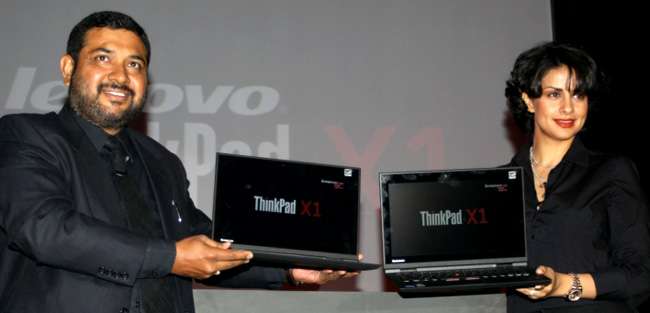
    Photograph: Fotocorp

  • Anita Nayyar quits Havas, to join BCCL as Head of Customer Strategy

    By A Correspondent


    Havas Media CEO – South Asia Anita Nayyar is moving on and is joining Bennett Coleman and Company Ltd (BCCL) as Head of Customer Strategy.


    A Havas Media spokesperson has confirmed the development. While a hunt is on for Ms Nayyar’s replacement, Mr Mohit Joshi, until now Managing Partner of MPG India, has now been elevated to Managing Director.


    “It is a challenging role and I will be able to utilise all the learnings of 28 years from the agency side,” Ms Nayyar told MxMIndia indicating that she will continue to be based in Delhi.


    Ms Nayyar has been with Havas since 2007 and prior to this was Executive Director at Starcom and Vice President at Mudra Communications.


    Said Mr Vishnu Mohan, CEO, Havas Media APAC, “After five years, Anita leaves behind an organization seven times stronger with several specialist brands that today are over 40% of group’s portfolio and a strong talent force that are leaders in their own right. We thank her for her stewardship and wish her every success in this new stint on the other side after 28 years in the agency business. We are at present in the process of identifying a suitable leader for this role and should make an announcement to that effect shortly.”