Category: NEWS

  • Disney launches new reality-based content to target kids and young parents

    By Deepali Gupta


    It’s not just kids. When Disney launches new reality-based content on its kids channel shortly in India, it is targeting young parents as well.


    Every weekend, the flagship Disney children’s channel will air three hours of fresh content, created in association with production houses Optimystix, Cinevistas and The Troublemakers. The company is targeting people in the age group of 4-34, with an eye on expanding advertisers’ base and revenue. “We are now evolving to appeal to the progressive Indian family of today,” said Siddharth Roy Kapur, MD of Disney India.


    Disney has eight channels in India, including the Disney Channel that will soon complete 10 years. Of these, four cater specifically to the children’s segment: Disney Junior, Disney XD, Hungama TV and Disney Channel. Fresh content at the moment is for just the last one. “The channel enjoys high parental approval.


    We are now trying to turn it into parent engagement,” said Vijay Subramaniam, vice president for content-communications. The first new show – ‘Maan Na Maan Mein Tera Mehman’ – is about a family that finds a photo frame that brings to life the departed souls, who return with a task to complete.


    The second is a family drama and third of a 40-year-old school dropout who must pass to inherit wealth left behind by his uncle. Reach expansion is part of Disney’s global strategy to engage audience for 360-degree buying, such as Mickey merchandise that ranges from lunch boxes to neck ties for adults.


    The children’s segment in India generates annual advertising revenue of  Rs 300-350 crore and Disney India has a 36-42% market share, said a person familiar with market details.


    Source:The Economic Times

    Copyright © 2014, Bennett, Coleman & Co. Ltd. All Rights Reserved

    Licensed to republish


  • Reliance Retail to start online sales of smartphones, laptops and televisions

    By Writankar Mukherjee


    Reliance Industries (RIL) plans to start online sales of mobile phones, laptops, televisions and home appliances next quarter, significantly expanding its e-commerce business currently confined to only grocery sales in Mumbai. But the country’s largest private company is unlikely to start a price war with existing e-commerce majors such as Flipkart and Amazon, said three senior executives in white goods industry.


    According to them, the Mukesh Ambani-led group’s retail arm Reliance Retail has already started trials of consumer electronics and home appliances e-commerce among its employees, which is likely to have a full-fledged debut next quarter. An e-mail sent to Reliance Retail spokesperson did not elicit any response till Sunday press time.


    Reliance Retail will focus on customer experience, installation and service support through its inhouse service network, Reliance resQ, to woo online customers, said the three executives. There would be some product deals such as exclusive model launches and promotional offers to draw traffic, they said.


    “The company has decided to stay away from heavy discounting for online sales to prevent conflict of prices with its mainstay brickand-mortar stores,” one of them said. “However, it has ambitious plans and the e-commerce foray is done by a separate team.” He said Reliance Retail is moving towards an omni-channel strategy – which essentially means using multiple channels and resources, both online and offline, to push sales – and digital retailing business will be one of the main pivot. Another executive said the company will utilise the wide brickand-mortar network of Reliance Digital stores for faster delivery and product exchange. Customers can also buy online and pick up the product from the nearest Reliance Digital store. Reliance Retail has a network of more than 700 Reliance Digital fulfil the online orders in their locality.


    Tata-owned Croma, which is Reliance Retail’s biggest rival in the consumer electronics retailing business, too has expanded its focus on e-commerce and has started selling through online marketplaces Amazon and Snapdeal besides its own e-store. Future Group, too, plans to boost its online sales of consumer electronics while electronic regional chains Viveks and Vijay Sales, too, have recently gone online.


    Mobile phones, tablets and laptops make up one of the largest business segment of e-commerce in India. However, discounts on consumer electronics have recently moderated on leading websites after brands started tightening the noose on online discounting. A recent study by price comparison website MySmartPrice also indicated that more than half of consumers are denied warranty for products purchased online.


    Reliance Retail plans to expand its online presence beyond electronic products. At present, it provides online shopping for grocery in selected localities of Mumbai, which will be extended to other cities. The company is also exploring online sales of apparel, sources said. According to a recent Google report, India’s e-commerce market will grow to $15 billion, or about Rs 93,000 crore, by 2016 from about $3 billion this year even as the number of online shoppers rise to 100 million from 35 million now.


    Source:The Economic Times

    Copyright © 2014, Bennett, Coleman & Co. Ltd. All Rights Reserved

    Licensed to republish


  • Ajit Thakur quits Life OK, may get into a film studio

    By A Correspondent


    Ajit Thakur

    He had wanted Life OK to be the No 1 Hindi GEC within the next six months. It could well happen, but only he has put in his papers as Business Head of Life OK. Since July this year, he was also holding additional charge of youth channel, Channel V.


    Although there is no official intimation, it is reliably learnt that Mr Thakur was joining a movie studio at a senior position. He is still serving notice and will be with Star India till February 2015.


  • Airtel launches ‘WynkMusic’ TVC campaign

    Leading telco Bharti Airtel has rolled a new TVC campaign for its ‘Wynk Music’ application. Wynk Music is a carrier agnostic music application for mobile that offers an integrated mobile music experience with full track audio streaming, cache downloads, mp3 purchase, internet radio and caller ring back tone features.


    The TVC has been shot with a congregation of musicians and showcases the fact that music changes one’s mood, in an evocative manner. The film starts on a sombre note, with a college girl in a bad mood because of a fight she has had with her boyfriend. She starts the Wynk app on her phone and realises that she has taken centrestage in a large auditorium filled to the brim with musicians of all genres and languages. As she swipes from one song to another on Wynk, a motley group somewhere in the crowd livens up and delivers the chosen number. The wide range of genres available on Wynk are reflected in the colourful melting pot of artists in the auditorium. Each artist is jostling for space and an opportunity to play his piece and impress the girl. The film ends on a musical high, with the girl grooving to a number she starts air-guitaring with. She throws herself at the crowd, completely lost in her music.


    The campaign team

    Creative agency: – Taproot

    Director: – Ram Madhwani

    Music: – Sameeruddin

    Production: – Equinox Films

    Media Agency: – Madison

    Date of release: – 19thDecember 2014


  • Get set for the Mediaah! Dubious Achievement Awards 2014


    There are awards and awards and awards. We don’t yet have an awards for awards shows, but the way we are headed in the Media & Entertainment industry, don’t be surprised if you receive a mailer one of these announcing an awards for awards with a 12-member jury named.


    The Mediaah! Dubious Achievement awards are, as the name suggests, for achievements that are dubious.


    It’s a fun feature that we’ve been carrying on MxMIndia since we started and the objective is to have some fun at the expense of others and ourselves.


    Let’s take a few possibilities:

    The Congress under Rahul Gandhi Award for Loyalists Dumping the Party Award

    To CNN-IBN business executives and editors for exiting from the channel the moment the full acquisition by Mukesh Ambani’s Reliance Industries


    The Lagaan Award for Extra-Long Ad Films Award

    To Pepsi-Kurkure Gharwali Diwali Ad which went on and on and on even as it was fun watching


    The Ajay Devgn Award for ‘Aata Maazi Satakli’

    To Rajdeep Sardesai for giving one ‘kaan ke neechey’ to the NRI audience  at Madison Square Garden in New York City


    The Hum Aapke Hain Koun Award

    To Delhi journalists who were the shown the finger by the new NDA government as we now have a PM who doesn’t taken then on overseas visits and prefers to bypass the very journos who propelled the BJP to winning position


    Get the drift? If you want to send in your entries for these, inbox them to pradyumanm@mxmindia.com. Confidentiality assured. We will protect your identity if you don’t want it disclosed.


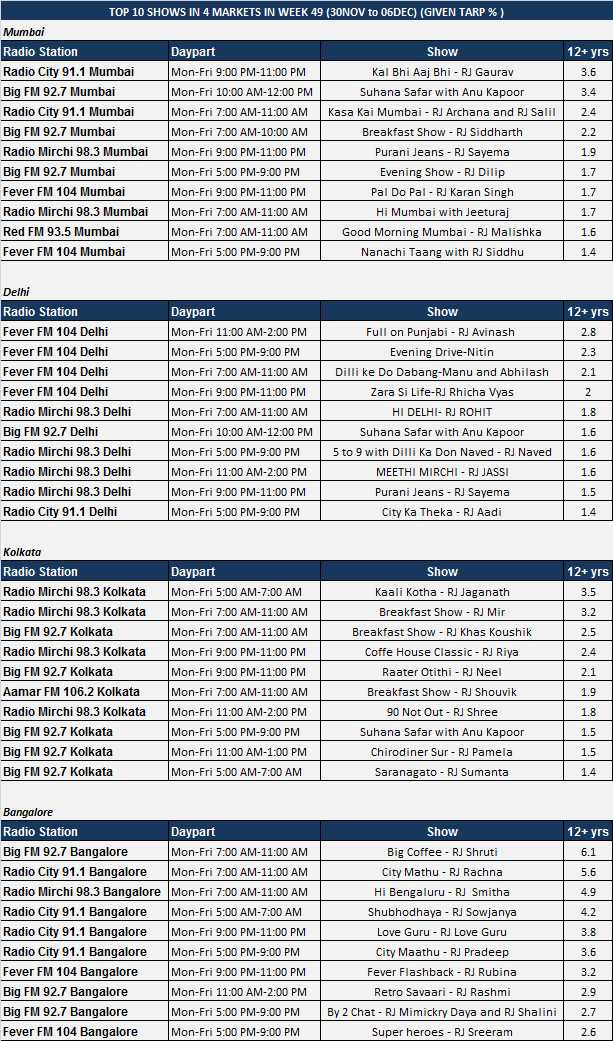
  • RAM ratings for Week 49

    Presenting RAM numbers for Week 4​9​​ ​ ​- that’s November ​30 to December 6​, 2014.


    Like in the case of TAM, these numbers are not provided by RAM, but we source it from one of the subscribers. We advise advertisers and media agencies to make their buying decisions after validating the numbers with authorised data.


    .


  • Concept Communication acquires majority stake in Liqvd Asia

    By A Correspondent


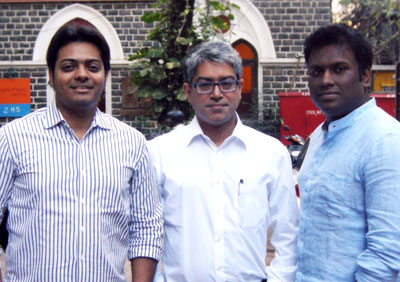
    Zubin Nalawala, Founding member, Liqvd Asia, Vivek Suchanti, Chariman and Managing Director, Concept Communication, and Arnab Mitra, Founding member, Liqvd Asia(l-r)

    Concept Communication announced it has acquired a majority stake in Liqvd Asia, an experiential digital marketing company. With this, the two founding members of Liqvd Asia – Arnab Mitra and Zubin Nalawalla along with their team of 28 will become an integrated part of the Concept Group driving the digital mandate in the country and select markets in Asia.


    Liqvd Asia started operations in 2013. Its clients include Celkon Mobile, Axis Bank, Benetton, LifeCell, Lonely Planet, Sennheiser, Kalpataru, Glanbia plc and Adidas Originals. The company is head quartered in Mumbai and has a presence in Singapore as well.


    Commenting on the acquisition, Vivek Suchanti, Chairman and Managing Director, Concept Communication, said: “This acquisition consolidates our position in the digital space. Arnab is experienced at establishing operational excellence within diverse new age marketing techniques, translating conceptual models into specific growth strategies, and planning and executing multi-faceted national and regional advertising campaigns. His expertise will help us create a bouquet of offerings to our clients across various Group entities. With the addition of Liqvd Asia, we are taking another step in helping our clients ‘get digitally right’. We are delighted to welcome Arnab and his team to be an integral part of Concept family.”


    Before starting up, Arnab Mitra worked as National Director for Starcom Mediavest Group and prior to that he has worked with Havas Media, where he was heading the agency in South Asia.


    Sharing his views on the merger, Mr Mitra said: “We’re very excited to become a part of the Concept Group. Concept is recognized as a formidable brand in the country and Vivek has been one of most respected names in the Indian advertising and related services industry. With this merger we will soon emerge to be the leaders in providing digital experiential solutions in the country and region.”


  • Lowe’s new campaign for Flipkart spreads happiness

    By A Correspondent


    Lowe Lintas Bangalore has rolled out new campaign for Flipkart. The campaign titled Iss Mein Hai Kisi Ki Khushi’ aims to bring alive the magical moments that emanate by shopping on the Flipkart mobile app.


    The campaign kicks off with a couple of stories about how shopping on the Flipkart Mobile app can help fulfil small wishes, in an instant. The idea was to not just appeal at an intellectual level but also on an emotional level by representing real life events, where app shopping triumphs over web and offline shopping.


    Commenting on the initiative, Shoumyan Biswas, Senior Director – Marketing, Flipkart, said, “Mobile is the future for e-commerce. We believe that the instant connect and convenience afforded by a mobile experience is unparalleled. Based on our customer feedback on how the mobile app has made life easier for them – we wanted to explore this aspect through our new campaign and create active consideration by seeding a deep emotional bond. For a generation living on the mobile, we are positive that these ads will have an instant connect with them.”


    Commenting on the same, GV Krishnan, Executive Director, Lowe Lintas Bangalore, said, “Brand Flipkart means lot to us and the entire team has put in tremendous effort to bring this first campaign alive. The campaign dwells on a powerful emotion – the joy of fulfilling someone’s wish – and has a universal appeal. The Flipkart Mobile app allows one to access a range of products anytime,anywhere and ‘Make Any Wish’ for your near and dear ones come true. I believe this has been brought alive in an engaging manner by the team.”


    The creative brief given to the agency was to come up with an interesting way to showcase how shopping in India is changing and how mobile shopping apps are fast becoming the key to on-the-go shopping today.


    The first film shows how the Flipkart mobile app helps bring a smile on a little girl’s face who was upset as she couldn’t participate in a dance. Seeing the little girl upset, her cousin orders the dress through the Flipkart shopping app, which instantly brightens up her mood.


    In the second film, while at a friend’s wedding, a girl realizes that she has lost her luggage. The protagonist overhears her distress call and uses the app instantly to solve her problem by ordering something to wear at the wedding. This small gesture sparks off a strong chemistry between the two.


    Highlighting the creative standpoint taken by the team, Rajesh Ramaswamy, Group Creative Director, Lowe Lintas Bangalore said, “The brief was a great guide for us to arrive at this communication. Creatively, the task was to present the role of the mobile app in everyday life. To arrive at an interesting yet relatable context was our biggest challenge. And unlike other categories, the possibilities of situations where this could play out were many. ‘Which one to pick?’ is a good place to be in. It’s great fun when observations and insights stemming from our own lives can be used.”


    The campaign has been launched across major television channels and will be played suitably on multiple digital platforms as well.


    Team Credits –

    Agency – Lowe Lintas Bangalore

    Client – Flipkart

    Creative – Arun Iyer,Rajesh Ramaswamy, UjjwalKabra, Indrasish Mukherjee, Adarsh Atal

    Business – GV Krishnan, Anand Narayan, Kunal Madhavdas, Pritika Gupta, Sandhya Subramaniam

    Planning – S Subramanyeswar, Vishal Nicholas

    Producer – Curious Films

    Director – Vivek Kakkad


  • Happy New Year awaits FMCG companies

    By Sagar Malviya


    The FMCG industry in India is set to return to double-digit growth rate next year after a gap of two years on the back of improved consumer sentiment and lower inflation rates, according to leading market tracker Nielsen. Nielsen expects the fast-moving consumer goods market to grow 7 per cent in 2014, 10 per cent in 2015 and about 12 per cent in 2016.


    “While India’s GDP might not revive drastically and could stay below 6 per cent, we still don’t see it weighing down the overall FCMG growth due to better sentiment and lower inflation,” said Ranjeet Laungani, vice president at Nielsen India. “Nearly half this growth will be volume-led, indicating favourable real consumption growth,” he said.


    India’s FMCG market has normally been immune to macro-economic pressures, but sales have fallen to single-digit growth since 2013. Worse, volume consumption remained flat and nominal growths came from price increases driven by inflationary pressure. However, the quarter ended September saw a bit of a revival at 7.2 per cent growth compared to 5.2 per cent in the previous quarter. Marketers say things have started looking up since the last two months.


    Source:The Economic Times

    Copyright © 2014, Bennett, Coleman & Co. Ltd. All Rights Reserved

    Licensed to republish


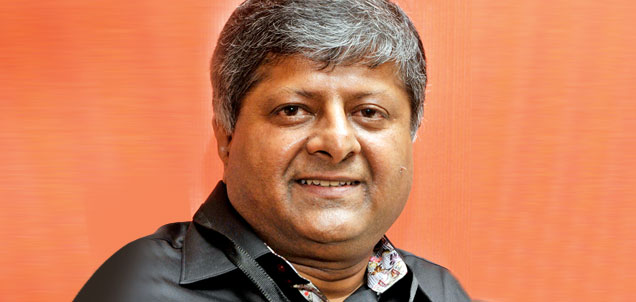
  • Digital awaits breakthrough: Shashi Sinha


    Twenty-fourteen will be remembered for long because of two things, the general elections and the upsurge we saw in e-commerce. But if you were to remove these, I don’t think adspends have gone up dramatically. There is a lot of noise about ‘achche din’ but we haven’t seen any real change on the ground. In our business, the FMCG sector is the true indicator of performance and these companies are not reporting a big turnaround. I know it takes time after a new government settles in, but the fact is it hasn’t happened so far. The trends in e-commerce indicate that the upsurge will continue through the next year but if FMCG revenues don’t improve and they don’t start spending, then we could be in trouble.


    Digital has been a big talking point of the year but I think we are far away from a big breakthrough. It will grow at a particular pace. So consumers may adapt to it but advertising will take some more time. I have always believed that collective consumption of media is in our DNA, and purchase decisions still happen collectively in India as opposed to the western world where decisions are mostly individualistic. This difference is because of our culture. Our society is very outwardly-directed, unlike the US, which is an inwardly-directed society. When it comes to consumption and spends, societies and culture matter a lot. For instance, television viewing in our country is still perceived as a family thing. So while personalisation has happened with devices, the family still remains in our DNA. In fact the whole Hindu ethos is made up of the family and the principle of collectivity. And that’s not going to go away. Devices will help you, they are mere enablers. But our ethos, psychology and culture are not going to change.


    There has been a tremendous increase in numbers as far as the internet penetration and users go, and I believe India is the second biggest user of Facebook today. But have you ever wondered why is India such a big Facebook user country? That is because Facebook stands for a collective consciousness and it is the same as our ethos. As a country, the penetration of Facebook is higher because Facebook is an example of connected-ness. That culture is not going to change in a hurry. It will happen, with a lot of internalisation, but it will take time. At this point of time, it will all be collective.


    As for the talk of 2014 being the year of digital innovation, I think we haven’t scratched the surface yet. I think we have a long way to go for us to say that this is the year of digital innovation in India. India is a very strong content country, one of the few countries in the world where original content is done. In my mind, while creativity will stay, digital is just a format. A lot of people are experimenting with content but the truth remains that digital spends are still at 8 or 9 per cent of the overall spends.


    Digital is also a mindset. In our mindset, the transition to digital has happened, it may not reflect in terms of numbers and volumes. But as far as mindsets go, at least we are talking digital. It’s probably the fashionable thing to do or even the right thing to do but I’m not sure whether the numbers justify. Television and print are still very big in this country.


    Today, to get into digital, you have to make investments in people, for the right kind of talent, which is expensive. It’s a huge investment. We are making the investments and hoping that the returns will come.


    As for the next year, the situation on the ground is not good but there is collective hope.


    The forthcoming ICC Cricket World Cup will bring some hope of being a trigger to growth in ad spends. It’s all about activity around events. Cricket is a big sport in India and World Cup come once in four years. I see some advantages, it may not be as dramatic as last time because it was in India then but still, the World Cup is big enough.


    Reports indicate that the global economy is expected to improve and therefore global adspends will improve. Hope is what drives the economy, hope is what drives the stockmarket, hope is what drives sentiment, this is the hope for India and why should I go against that hope. But we have to be slightly cautious. We are hoping that with the new government and with their will to improve things, things should improve. It all depends on the budget. If the government can push through the budget, they can do a lot of stuff otherwise there is trouble.


    What I see as a challenge for myself is to ensure that our clients do well. I am not sure that it’ll be dramatic. But I feel if we can consolidate in the next year in spite of what everyone is saying, that’ll be a big achievement. If we can sustain, if we can just do what we have done in 2014, it should be alright.


    Shashi Sinha spoke to Shruti Pushkarna on the sidelines of The Advertising Club’s Media Review 2014 held last Thursday (Dec 18) in Gurgaon. A version of this appeared in the December 22 issue of ‘dna of brands’


     

  • Percept One CEO Shiv Sethuraman resigns

    By Pritha Mitra Dasgupta


    Shiv Sethuraman, chief executive officer at Percept One, has quit just six months after taking over the job. “Something really exciting and challenging has come up that I wish to pursue,” said Mr Sethuraman, who was CEO at TBWA India Group before joining Percept earlier this year. “Percept was a short but enjoyable journey,” he said. Percept One is the integrated marketing and communications division of the company.


    Mr Sethuraman was brought in with the mandate to integrate all marketing and communications businesses of Percept. Sanjay Shukla, CEO at Percept Sports & Entertainment, will now have the additional task of handling Percept One. “Currently, Percept One needs integration and growth which he can handle till we recruit someone from the advertising industry to drive the business,” said Harindra Singh, founder, vice-president and managing director of Percept. Shukla has no advertising background.


    Mr Sethuraman joined TBWA India in 2008 from Ogilvy Paris, where he was managing director since 2005. Before that he was vice-president at Ogilvy’s Mumbai office. Singh said Percept’s marketing communications business is growing faster than the industry average and “it needs a senior leader who can drive growth”.


    He spends more time on building the company’s live business that owns five intellectual properties including electronic dance music festival Sunburn, because “in India there is no standard operating procedure for the IP business and therefore it requires an entrepreneurial approach and more time”.


    Source:The Economic Times

    Copyright © 2014, Bennett, Coleman & Co. Ltd. All Rights Reserved

    Licensed to republish


  • Advertisers move to tweets & FB posts in regional languages

    By Ratna Bhushan & Varuni Khosla


    Coca-Cola posted its first tweet in Hindi last fortnight when the International Premier Tennis League was being held in New Delhi, and it got it 350 retweets compared to just 10-15 retweets of most of its English tweets. Nobody’s surprised.


    There’s a substantial increase in use of Indian languages on social media platforms such as Facebook, Twitter and Pinterest, and several large and small advertisers including Pepsi-Co, Bharti Airtel, suiting brand OCM and winery Sula Vineyards say use of regional languages in social media campaigns give them much higher resonance than the same thing in English.


    According to social media agencies, brands’ Facebook posts using Indian languages such as Hindi, Tamil and Marathi get almost 150 per cent more response than similar English posts, thanks to increasing penetration of Internet into smaller towns and cities. “Language is surely helping a better engagement,” said Anusha Shetty, CEO at Autumn Worldwide, a Bengaluru-based advertising agency specialising in social media.


    “This approach will start playing an important role in the next two years as Internet penetration increases and more people from tier-III and -IV (cities) join the social space,” she said. “We are seeing the birth of this approach now.” Ms Shetty said sprinkling languages such as Hindi, Malayalam or Tamil boosts engagement from consumers by 160 per cent to 220 per cent.


    For a recent Luminous ad, the video content on Facebook was in Hindi, which got replies in ‘Hinglish’, leading to ‘massive engagement’. PepsiCo’s Mountain Dew recently had a campaign in the south with one Tamil word in it, while Orient Electric had a campaign with Chennai Super Kings with Hindi words. All these campaigns received good response on the social media.


    Aneesh Madani, head of sports partnerships at Twitter India, said there has been 300 per cent increase in tweets in Hindi in 2014 alone. “Given that Twitter now renders in all Indian languages… we will see an upward trend in vernacular conversations,” he said. “Brands and partners are starting to explore the vernacular and the opportunity to stand out while connecting to users is ripe,” Mr Madani said.


    “Expect more during the ICC Cricket World Cup as well as the Indian Premier League.” Coca-Cola’s recent experiment on a refreshment-based post in Hindi, Punjabi, Tamil and Kannada got over 150 per cent response compared to the same post published in English.


    Source:The Economic Times

    Copyright © 2014, Bennett, Coleman & Co. Ltd. All Rights Reserved

    Licensed to republish