Category: NEWS

  • Grey re-appoints Dushyant Chopra as Creative Director

    By A Correspondent


    Dushyant Chopra

    Grey group India has appointed one of its former creative team members Dushyant Chopra as the Creative Director and Head of Art.


    During his first stint at Grey, he had been actively involved in launch campaigns for Honda Brio and initiatives like the India Bike Week for Fox Traveller. He had also worked on the brand campaign for National Geographic – Unlock.


    Malvika Mehra

    On his joining back, Malvika Mehra, NCD & EVP said, “It’s rare to come across good talent; rarer still having it come with a great work attitude. Dushyant seems to have both and I couldn’t be happier welcoming the prodigal son back into the Grey fold. In less than eight months.”


    In a career spanning almost 13 years, and apart from Grey, he has worked for leading agencies like OgilvyOne Worldwide, Rediffusion Y&R and Iris Worldwide. He has handled some leading brands across verticals like American Express, ITC Hotels, Cisco, Honda, Fujifilm, National Geographic, Fox Traveller, Sony Ericsson, DishTV, Videocon, GSK, General Motors, Chivas, Avaya, Adidas and Intex Mobile Phones.


  • Prof. Arvind Rangaswamy hosts workshop in Mumbai

    By A Correspondent


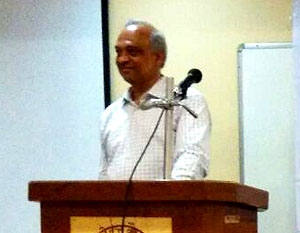
    Prof. Arvind Rangaswamy

    K. J. Somaiya Institute of Management Studies & Research (SIMSR) had organised a workshop on 18 &19thSeptember, 2014 on topic – ‘Marketing Analytics for Developing Effective Marketing Strategies’ as a part of the celebrations for the 10th Global Marketing Conference. The workshop was conducted by Prof Arvind Rangaswamy, Anchel Prof of Marketing, The Smeal College of Business, Penn State of Marketing, USA.


    A pioneer of the subject ‘Marketing Engineering’- Prof Arvind Rangaswamy focused on traditional areas of marketing analytics as well as emerging aspects for online, mobile and social media further gaining insights for managing and exceeding customers’ expectations. Tapping in different functional areas of Marketing, Human Resources, operations and information system, the current business environment demands more analysis and rigour in marketing decision making.


    In 21st century, increasingly, marketing decision making resembles design engineering-putting together concepts, data, analyses, and simulations to learn about the marketplace and to design effective marketing plans. While many view traditional marketing as art and some view it as science, the new marketing increasingly looks like engineering (that is, combining art and science to solve specific problems).


  • The Impact of Social Media on Luxury Goods


    Presenting excerpts from Deloitte Touche Tohmatsu Limited (DTTL)’s  1st annual report on ‘Global Powers of Luxury Goods’


    Controlling all aspects of business has been the hallmark of luxury brands. From product design to sourcing of raw materials, to distribution and marketing, luxury brands have kept tight control, thus guaranteeing brand-appropriate quality and service levels. While companies serving the mass channel took to outsourcing manufacturing and sourcing of materials to support more rapid growth, purveyors of luxury goods continued to do it the old-fashioned way, satisfied with their healthy profit margins, although perhaps with muted revenue growth.


    The internet has changed all that, forcing executives to rethink the tight control typical of luxury brands. The internet leveled the playing field, putting more power in the hands of the consumer with a platform that enables them to shop on their terms, when and where they want, while providing price transparency. Consumer expectations regarding price, value, and brands have all been elevated by increased information and access, and this ubiquitous access undermines one of luxury’s core tenets-exclusivity. The lack of intimacy in the virtual world can diminish brand loyalty, and the ease of comparison shopping and the fluidity of pricing further exacerbate the control issue. What follows is a closer look at the challenges and opportunities that this digital revolution presents to luxury brands.


    The Indian luxury goods market appears to be on a lower growth trajectory as pointed out in the Deloitte Touche Tohmatsu Limited (DTTL) 1st annual report on ‘Global Powers of Luxury Goods’. In 2012, India once had the fastest growing luxury markets in the Asia pacific region. India grew much faster than China but lost steam due a lack of sustenance of the growth which once made the country an attractive market.


    “The entire luxury goods market in India has seen a significant dip in the growth rate and is likely to see a couple of more turbulent years. However, the long term outlook remains positive and India’s luxury market is expected to rise with a strong performance. To supplement this long term growth trajectory, holistic implementation of new reforms and initiatives by stakeholders and regulators would only facilitate the vision,” said Gaurav Gupta, Senior Director, Deloitte in India.


    ‘Global Powers of Luxury Goods’ highlight the fact that along with Indian markets, many emerging markets like China, Brazil and Russia have seen deceleration of growth in the past year. This follows a period of rapid growth that was driven by several factors. Going forward, the emerging world is likely to have a year or two of disappointing growth while imbalances are unwound.


    In the last five years, the expanding global middle class in the emerging markets has supported growth in the luxury sector and is continuing to grow through 2018. According to Euromonitor the emerging markets like Asia Pacific, Latin America, Middle East and Africa combined together accounted to 9 per cent of the luxury market in 2008 these figures spiked to 19 per cent in 2013 and is expected to leap up to 25 per cent in 2025.


    The developed economies like U.S. and Europe benefits from the emerging markets. Over the 2012 to 2017 Euromonitor projects China to lead the tourist expenditure growth followed by India and the other emerging Asian countries. The appetite for American and European brands in the underpenetrated markets is strong and growing many luxury companies to expand its international presence hence creating opportunities in emerging markets like India.


    Ubiquity versus exclusivity

    E-commerce is the fastest growing retail channel, accounting for up to 20 percent of a retailer’s or brand’s total volume. According to WWD (December 16, 2013), industry sources estimate Amazon’s fashion business at $95 billion in global revenues in 2013; it is considered one of Amazon’s fastest growing businesses, with an expanding portfolio of aspirational brands. Luxury brands, however, were late to e-commerce, with many assuming that the aesthetics of their selling experience in the designer’s atelier or the flagship ‘maison’ would be difficult, if not impossible, to replicate on the internet.


    The potential loss of exclusivity and the prestige associated with luxury brands’ bricks and mortar locations are hurdles that can be difficult for luxury brands to overcome, but they are surmountable, and some brands have clearly embraced the technology-one can shop Louis Vuitton’s website for selected handbags, accessories, and shoes and its social media tab connects the user with Louis Vuitton on Facebook, YouTube, Google+, Twitter, Instagram, Pinterest, and Foursquare.


    Ultimately, luxury brands, like most consumer-facing brands, need to deliver an interactive, exciting and efficient shopping experience to all their customers regardless of channel, from flagship to mobile and everything in between. Many luxury brands reluctant to sell online have begun to use their websites to house brand stories, fashion shows, celebrity product sightings, and the like.


    Social media

    With the advent of social media, consumers had a new voice, increasing their individual and collective power, and communities of both brand advocates and critics sprang up. While this erodes message control for luxury brands, the internet, along with mobility and e-commerce, is one of the most effective means to introduce new products globally and provide instant gratification to shoppers in any part of the world. Moreover, social media can be used effectively as a vibrant storytelling medium for luxury brands, communicating brand heritage and iconography to a new audience of potential clients.


    The visual nature of Instagram, the social photo and video sharing app purchased by Facebook in 2012, makes it a natural platform for luxury and fashion brands. Users have been known to spend hours tracking their favorite brands, looking for a particular fashion silhouette, or posting pictures. With 150 million monthly users, Instagram is a powerful new social media platform: according to Pew Research, most of its users are between the ages of 18 and 29, and about 17 percent have incomes of $75,0001 and above.


    Michael Kors ran the first company sponsored advertisement on Instagram on November 1, 2013 and, according to Nitrogram, which ranks the most popular brands on Instagram, the brand’s increase in followers was 16 times more than it would have been following a non-sponsored post. Nike, Gucci, and Louis Vuitton all have official Instagram presences and each company has millions of followers on the platform.


    Omnichannel

    As retailers and mass brands have adopted omnichannel or channel agnostic distribution strategies to keep pace with consumer expectations, luxury brands would be wise to acknowledge that the internet has radically altered the path to purchase with shoppers nimbly navigating from cyberspace to store visits in pursuit of their desires. The virtual world is vital in the discovery and path to purchase. According to a recent Deloitte U.S. study, during the 2013 holiday season, omnichannel shoppers- defined as consumers who shopped online, on their smartphones, and in-store-spent 76 percent more than store-only shoppers in total2.


    Consumers are spending increasingly greater portions of their day online and are connected with smart phones and tablets. As uncomfortable as this change may be, for luxury players, it is participate or perish. While an entire brand’s assortment needn’t be available for sale on the internet, a luxury brand can offer, for example, a select group of accessories that help promote its brand story and keep the customer happy.


    To remain relevant, luxury brands have to go where their consumer and new consuming audiences are-social communities. Consumers have extremely high expectations for luxury brand sites, from design layout, functionality and ease of navigation, to brand iconography, and strength of overall brand presence. A brand strategy that encompasses the internet holistically can be successful generating interest, brand affiliation, and, ultimately, evangelism, where a customer feels compelled to share ‘brand good news’ with others through social media or word of mouth. Aspirational or premium brands such as Coach, Kate Spade, Michael Kors, and Tory Burch have been quick to adapt to the internet, as well as to social media and omnichannel strategies, and increasingly we see the most exclusive luxury brands joining the ranks.


    **


    The internet has created new distribution channels for luxury fashion brands to keep up with consumer demand for the latest fashion at a value price. In addition to ebay.com, where individuals and businesses bid on used and never-worn fashion items, flash sites such as Gilt.com provide discounts up to 60 percent off original prices, while Rent the Runway allows for temporary ownership of designer apparel and accessories, and TheRealReal.com is an online consignment shop of designer and luxury products.


    Custom and bespoke initiatives

    Luxury brands can retain exclusivity while still broadening their client base with the expanding market for luxury goods with custom made products, limited editions, and exclusive assortments for the internet, wholesale and flagship locations. These efforts create demand, drive store/site traffic, and elevate exclusivity while sustaining the distance between a luxury brand and a mass fashion brand. Moreover, client involvement in product design, from Van’s and Nike’s $100 sneakers to a Louis Vuitton bag for $60,000, creates an emotional attachment with the brand, driving loyalty and brand advocacy.


    From communication to conversion

    According to Elizabeth Canon, founder and president of Fashion’s Collective, luxury brands have spent the last few years exploring the risks and opportunities that existed for them on social media and e-commerce: “should a luxury brand have a Facebook page? How should they collaborate with bloggers? How should brands translate their offline store experience to an immersive web store?” It is likely that going forward such brands will increase their focus on how big data can increase conversion and on tracking global consumers, with return on investment and data metrics supporting branding and marketing decisions.

     

  • Big Bang rewards achievers at event in Bengaluru

    By A Correspondent


    Ad Club Bangalore hosted the Big Bang Awards 2014 for excellence in communication and media last week at The Ritz Carlton, Bengaluru. As many as 956 entries were submitted across 75 categories spanning creative, media, digital, social media, mobile, healthcare and PR. Apart from these, clients and young professionals also participated for the coveted heads.


    Saatchi & Saatchi Focus Network was named Creative Agency of the Year. Maxus was the biggest winner of the night bagging awards for Media, Digital, and Social Media Agency of the year. Saatchi & Saatchi Health & Wellness was the Healthcare Agency of the Year and Aim High Consulting was the PR Agency of the Year. Infosys was awarded the Client of the Year winning across several categories.


    The event also featured a book release of Pavan Padaki’s Brand Vinci, a definitive book on the various facets of branding.


  • Sreekumar Balasubramanian appointed SVP at Publicis Capital

    By A Correspondent


    Publicis Capital announced the appointment of Sreekumar Balasubramanian as Senior Vice President. Sreekumar comes with a 19 year testimony of working with global marketing communications companies and successfully driving growth and thought leadership for iconic global and local brands. Sreekumar will report in to Hemant Misra, Chief Executive Officer, Publicis Capital.


    Commenting on the appointment, Hemant Misra- CEO Publicis Capital said, “It’s great to have Sree in our team. His mandate will be to focus on maintaining our high standards on existing businesses as well as on new business development. I wish him the very best!”


    On his appointment Sreekumar said, “It is always important for people to get out of their comfort zones and face new challenges and Publicis has provided me that opportunity. Publicis Capital is an innovative forward thinking agency with iconic brands and renowned talent. I see exceptional potential for leveraging their credentials on existing business and for growth. I look forward to being a part of this endowed team.”


    Over the years Sreekumar has worked with eminent agency networks like Leo Burnett, Lowe, Rediffusion and W+K, where he has worked on categories like Food and Beverages, Automotive, Telecom, Retail and services.


  • Lakshmi Narasimhan to lead mobile & data offering at Crayon Data

    By A Correspondent


    Big data company Crayon Data has appointed Lakshmi Narasimhan to lead, and further enhance the company’s mobile and data transformation offering. In his new role, Lakshmi will be advancing Crayon’s advertising, FMCG, media vertical along with its Mobile First initiative.


    With close to 20 years of media marketing experience, Narasimhan was previously the CEO of Network18 digital (previously known as web18). Prior to Network18 digital, Lakshmi was leading GroupM’s Central Trading Group during the company’s early days in India.


    Srikant Sastri, co-founder, Crayon Data said “Lakshmi brings with him extensive and in-depth knowledge of the data analytics and media spectrum which will add a new dimension to Crayon’s overall offering. As the company steps into one of the most exciting phases of growth, we look forward to having Lakshmi on-board to supplement and accelerate our efforts.”


    Lakshmi Narasimhan speaking on his new role shared, “The future of marketing lies in being mobile and digital, Crayon Data in a very short time has shown eminent growth within this space. I am delighted to come on-board and deliver on the company’s vision of being the most valued business partner for all its customers.”


  • India TV’s Salaam India Awards 2014 presented

    By A Correspondent


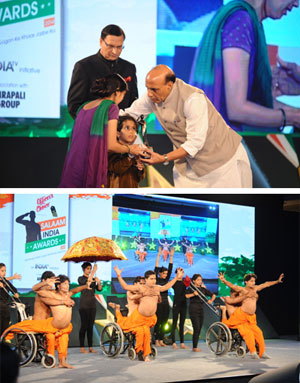
    India TV honoured bravehearts of the country through the second edition of the ‘Salaam India Awards’.


     

    The awards were presented in New Delhi on Sunday, September 21with Union Home Minister Rajnath Singh as Chief Guest. Several other political and social luminaries were present, including Ravi Shankar Prasad, Salman Khursheed, V K Singh, Kalraj Mishra,  Janardan Dwivedi, Maulana Mahmood Madani, Ram Gopal Yadav, Amar Singh, Kiran Bedi,  Rajyavardhan Singh Rathore, Kishore Chhabria, Ghulam Ali, Manoj Tiwari and Dr Naresh Trehan amongst others.


    The selection of the final 14 awardwinners was done by a high powered jury comprising India TV Chaiman & Editor-in-Chief Rajat Sharma, Kiran Bedi, Deepak Kapoor, Rajyavardhan Rathore. The Jury was chaired by former CEC Dr  SY Quraishi.


    Addressing the gathering, Rajnath Singh highlighted, “Salaam India Awards is a great “point of reference” initiative by India TV. Our society that is fast transforming, needs many more similar initiatives. This will surely motivate all of us to rise above of our selfish motives for the larger societal good.”


    Congratulating the winners, Rajat Sharma observed, “These bravehearts are the real heroes. It’s an honour for all of us present here to be able to honor such heroics.” Said Ritu Dhawan, MD & CEO, India TV, said, “India TV will be working on more such initiatives and further our humble attempt as a responsible news channel to not only honour the extraordinaire but also motivate the society at large.”


    This year’s initiative was presented by Officer’s Choice packaged drinking water in association with Amrapali Group. Dainik Bhaskar & Pioneer Publicity were the media Partners. The event was executed by Showtime events.


    Winners’ List for Salaam India Awards 2014


    Bravery Awards

    1. Payal Senani

    2. Late Nitin Yeolekar (posthumous)


    Gallantry Awards

    1. Gunjan Sharma

    2. Late Aryan Raj Shukla (posthumous)

    3. Rosy Ara


    Jyoti Singh Awards

    1. Fatima Khatun

    2. Sakshi Vidhyarthi


    Special Awards

    1. Inspector Gaurav Godbole

    2. Constable Sunil Kumar T.P.

    3. Late Sepoy Vikram (posthumous)

    4. Nathu Singh Uttam Adhikari (QA)

    5. Late Lt Cdr Manoranjan kumar (posthumous)

    6. Aadesh Kumar Sea I CD III

    7. Riffat Abdullah


  • DDB Mudra North partners with Shri Lal Mahal Group

    By A Correspondent


    Post a multi-agency pitch, DDB Mudra North has been entrusted with the creative mandate of Shri Lal Mahal Group.


    With a legacy spanning over a century, Shri Lal Mahal Group is one of the largest exporters of Basmati and non-Basmati rice from India. In addition, the Group holds the credit of being the first Exporter to have exported 5000 MT of Basmati Rice for the first time from India to Europe, in 1978.


    Dev Garg, Director & Uday Nayak, Business Head, Domestic Market of Shri Lal Mahal Group said, “From its modest beginnings as a small business house, the company has grown into a large multinational conglomerate with a steadily rising annual turnover. Shri Lal Mahal is a Star Trading House and one of the biggest exporters of rice from India, exporting Basmati rice to Europe, USA, Canada, Australia, South East Asia and the Middle East. Our need of the hour is a complete revamp of the brand in order to further strengthen our presence in both national and international markets. In this interesting phase of our brand journey we needed a partner to deliver not just creative excellence but business solutions to us. In DDB Mudra, we’ve found that able partner.”


    Vandana Das

    Vandana Das, President, DDB Mudra North, said, “It’s a delight to be partnering Shri Lal Mahal, a client with a rich legacy. We look forward to partnering them into taking this brand on a growth path with a communication package that would be much noticed.”


  • SMG India bolsters its senior team with key appointments

    By A Correspondent


    Starcom MediaVest Group (SMG) India has announced that it has bolstered its senior leadership team with the hiring of two key executives. Natasha Kapoor joins the agency as VP, SMG Mumbai and Gautam Surath as VP, Strategic Planning.

     

    In a newly created role Natasha will be responsible for client service, product delivery and growth for the Mumbai market. Natasha has more than 15 years of media experience. Her last job was at Samsung India, where she handled investment, brand activation and strategy for its media procurement and process audit division. Prior to that, she was a media purchases director at Mediacom where she handled television buying for the Procter & Gamble team. She also has worked on the Unilever business at Fulcrum and Mindshare.


    “I believe SMG offers a unique opportunity in the market for staff and clients alike. Nowhere else in India can you find a world class Digital and Data and Analytics practice coupled with great media tools, systems and thinking resulting in a great all round product. It is a wonderfully challenging assignment and I am looking forward to it,” said Natasha.


    Gautam Surath also joins the agency as VP, Strategic Planning Director at a national level and will be responsible for strategic planning, training and guiding the digital transition of SMG’s clients across its offices. Surath is an SMG veteran having worked for the company from 2003 in both India and China. For the past four years he has been a Business Director at SMG China in Guangzhou, where he was strategy lead on multiple categories of the Procter & Gamble business.


    “Quite frankly, having started my career at Starcom and having worked here ever since, moving back to the India office from China was a bit of a no-brainer. Having seen the company evolve with evolving consumer trends, I have no doubt that our vision is the right one. Exposure to the global marketplace has only strengthened my belief in this regard. Exciting times in India and it’s great to be back home!” said Surath.


    “Natasha and Gautam bring key skillsets to complement and enhance our offering to clients in India and both Malli and I look forward to working with them.” said Hanley King, Chairman, SMG India.


  • Quikr appoints Vineet Sehgal as Chief Marketing Officer

    By A Correspondent


    One online classifieds major Quikr has announced the appointment of Vineet Sehgal as the company’s Chief Marketing Officer. Vineet will be responsible for marketing strategy and plans across all areas including brand building, performance marketing, partnership and alliances at Quikr.


    Vineet brings to the company more than 18 years of experience in marketing and business strategy across diverse industries such as telecommunication, FMCG, banking and management consulting. He has helped scale several operations from start up to maturity in some of the world’s leading organisations such as Nokia, Nestle, Accenture, Cadburys and HSBC.


    Commenting on his appointment, Pranay Chulet, Founder & CEO of Quikr said, “We are delighted to welcome Vineet to Quikr. Quikr is made in India and for India, and Vineet has built his career scaling consumer businesses in the country so there was natural chemistry here. Vineet knows the Indian consumer and he knows the Indian consumer on mobile. His arrival was particularly well timed with our own plans, as the fun is just beginning.”


    Prior to joining Quikr, Vineet headed Nokia’s programs and planning portfolio. He led large scale launches of some of the most used mobile devices in India. He also founded the Nokia Money start up team and drove its growth from conception to market roll out. He began his career in consumer marketing with Nestle.


  • TheSmallBigIdea promotes interactive application Dil Se

    By A Correspondent


    ANDPictures’ digital agency, TheSmallBigIdea roped in stand up comedians Ashwin Mushran and Amogh Ranadive to promote their interactive application Dil Se. In a one of a kind interactive campaign, the audience’s tweets were converted into videos within minutes of them being posted.


    ANDPictures, the interactive movie channel from the stable of Zee Entertainment Enterprises Ltd (ZEEL) recently launched an interactive application called Dil Se, which allows people to record and upload messages for their favorite celebrity. The recorded messages are then sent to celebs for them to reply with personalized messages for their fans.


    The audience had to tweet to the channel, the extent to which they would go to catch the attention of their favourite star. While audiences flooded AndPictures timelines with crazy ideas in the form of tweets & posts, Ashwin Mushran, Amogh Ranadive and the agency was busy converting the tweets into video sketches. The gags told the audience how their ideas of impressing their stars might not to be the best, by mocking the idea itself. The videos were hilarious and that attracted more than 6 lakh impressions on twitter alone.


    Harikrishnan Pillai, Founder-Director, TheSmallBigIdea shared, “Our route was twisted and twisted works. People didn’t expect their version of celeb-love to come out in such funny manner, and that too within minutes of them tweeting. Good part is that people were OK to laugh at themselves. The giggles ended at 6 lakh impressions, validating the efficacy of the idea too.”


    Deputy Business Head – Hindi Movie Channels, Ruchir Tiwari added, “The end objective was to make people aware of this application. The core message was beautifully weaved around the social activity, giving us dual advantage of creating great online content and marketing the digital property.”


  • CNBC and Burson-Marsteller reveal outcome of global survey

    By A Correspondent


    CNBC and Burson-Marsteller have unveiled the results of the CNBC/Burson-Marsteller Corporate Perception Indicator: A Global Survey from Main Street to the Executive Suite.  Exclusively for this sweeping report, research firm Penn Schoen Berland surveyed more than 25,000 individuals from the general public and more than 1,800 business executives in 25 global markets on their opinions about the roles and responsibilities of corporations in society and in contributing to the economy.


    The survey uncovered a sharp divide between the developed economies of North America and Western Europe, and emerging economies like China, Russia and Brazil, particularly in people’s disposition toward corporate influence over government, corporate stewardship of the environment, and perhaps most importantly, the role corporations play as engines of job creation and economic growth.


    According to the survey, the general public in developed economies has a much more cynical view of corporations compared to the general public in emerging economies. In developed economies, 52 per cent of the general public has a favorable view toward corporations versus 72 per cent of the general public in emerging economies. A deeper dive into those emerging economies finds that the general public and business executives are much more likely to see corporations as a source of hope, rather than fear, when compared to their developed country counterparts.


    When it comes to corporate taxation, however, the major markets are generally in agreement. Fifty-seven percent of the general population and 53 per cent of executives say corporations take advantage of tax loopholes to avoid paying their fair share rather than paying what they owe. Most of the global markets agree that it’s important for corporations to pay their “fair share” of taxes including 70 per cent of the general population and 67 per cent of business leaders in the United States saying it’s very important.


    “We discovered in our initial reporting that there is a serious dearth of data spotlighting the way corporations are perceived from all points of view,” said Nikhil Deogun, SVP & Editor in Chief, CNBC Business News. “These findings will ignite debates and discussions important to CNBC’s audience across all platforms.”


    “Six years after the economic crisis hit, this major survey makes clear that, while the reputations of corporations and business leaders are improving, there is still real work to do to dispel doubts about their impact,” said Donald A. Baer, Worldwide Chair and CEO of Burson-Marsteller. “The good news is this survey is a corporate compass that points in the direction of even deeper engagement between corporations and their leaders and the broader public about their essential roles in building the economy and improving society.”


    For more information including more in-depth results as well as exclusive videos, stories and graphics visit www.cnbc.com/corporate-survey.