Category: NEWS

  • TAM to provide measurement updates through new mobile app

    TAM Media Research has announced the launch of the first ever mobile app called “TAM India”. The objective behind this launch is to provide quick and easy access of weekly top line TAM data to its subscribers including Advertisers, Media Agencies and TV Broadcasters. This mobile app has been exclusively designed for the TAM subscribers using iPhone, Android & BlackBerry and, therefore, is available for download on App Store, Google Play and Blackberry World. Subscribers can also get the download link by visiting TAM Website: www.tamindia.com.


    The Mobile App will be updated every Thursday immediately after the regular release of TAM data to the Industry.


    Commenting on the launch of TAM India Mobile App, LV Krishnan, CEO, TAM Media Research, said, “Our focus, as always, has been to enrich our customers with actionable insights through credible data. With this first ever unique initiative of launching “TAM India” Mobile App, we have fortified our service commitment to the industry with that of anytime anywhere access to data and quicker decision making process for clients. I am especially excited about the different ways in which this Mobile App will be of value to the Senior Management across Advertiser, Media Agency and TV Broadcast Organisations.”


    L V Krishnan

    “TAM India” Mobile App will, on a weekly basis, provide a quick snapshot of different TV channel genres, markets andprograms. At any given point in time, this App will have data for the latest week but also the preceding four weeks. The data will be updated every week immediately after the regular industry release of TAM Weekly Data. “TAM India” mobile App user will get anintimation for the update of the data.


  • Times Group extends support to youth for Spikes Asia

    The Times of India Group has been supporting young talent in the advertising and media industry by creating opportunities on the Young Lions and Young Spikes stages. A great outcome this year was the Silver bagged by the Young Marketer’s team by HUL at the Cannes Young Lions last month. In keeping with this endeavor, The Times of India has announced the Young Spikes contest for two categories – Integrated & Media.


    Times Group will sponsor the winning teams with an all expense paid trip to Singapore to represent India and compete internationally at Spikes Asia 2014, happening on 23rd – 26th September 2014. Entries will be judged by a prelim jury and the chosen finalists will make a physical presentation to the final jury in the first week of August in Mumbai. The entire judging process will be overseen by Ernst & Young, Process Partners for Young Spikes.


    This year’s Theme for Young Spikes – Integrated is on “Stop Unnecessary & Incessant Honking on Roads”, while the Theme for Young Spikes – Media is on “Naked Overhead Wires, a Threat to Life”.


    The final jury for Young Spikes Integrated has a host of prominent names like Josy Paul, Arun Iyer and Senthil. An equally distinguished jury for Young Spikes Media consists of names like Nandini Dias, Yesudas and Ravi Rao.


  • Veteran musicologist and critic Mohan Nadkarni passes away

    By A Correspondent


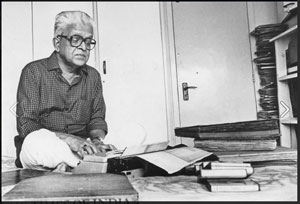
    Mohan Nadkarni, one of India’s most well known Hindustani musicologists and perhaps the most published author on the subject, passed away yesterday (Tuesday, July 22) in Auckland, New Zealand. He was 91.


    Mr Nadkarni was the music critic of The Times of India for over 50 years, having reviewed thousands of concerts between 1948 and 2000. He was also a columnist with mid-day in the 1990s. He has authored over 4000 articles mostly on Hindustani music, but also on Marathi and Sanskrit theatre and other cultural topics in leading publications all over India and abroad. He has had the rare privilege of reviewing the earliest concert performances of such legendary musicians as Pandit Ravi Shankar, Ali Akbar Khan, Fazal Qureshi’s father Ustad Alla Rakha and brother Zakir – and Fazal himself, besides several others, too numerous to mention here.


    In those years, he also consulted with recording companies like HMV helping produce the early LP records of many of these artistes in terms of repertoire and promotional notes that appear on the record covers. In the process, he developed lifelong friendships with musical luminaries of three generations and had fond memories of his discussions, arguments and the rare camaraderie he shared with them at different times in their successful careers. He has touched upon many of those experiences in the eight major books on Hindustani music that he authored, including the bestselling biography of Pandit Bhimsen Joshi that continues to be a fast seller on Amazon.com and which has been translated into several Indian languages.


    Mr Nadkarni has won several awards including the Karnataka State Government’s Kalashree award for lifetime’s contribution to music and the Shreshtha Sangeet Sadhak Award from the prestigious Bhatkhande Institute, again, for lifetime achievement. He is a permanent member of the Sangeet Research Academy, Kolkata, which continues to produce such talented artistes as Ustad Rashid Khan. He has lectured and held workshops on Hindustani music in several cities in India as well as in Switzerland, the Netherlands and the United Kingdom among other countries. He addressed the World Music Forum in Rotterdam in the Netherlands in 1995.


    Mr Nadkarni moved to New Zealand eight years ago to live with his only son and before migrating donated his entire musical library comprising thousands of articles and rare photographs, about 1200 rare LP and 78RPM records and thousands of cassettes to the music department of the SNDT University in Pune, where a musical library has been set up in his name.


    Mr Nadkarni would have turned 92 on September 22. Is survived by his lifelong collaborator, his wife Suniti, who assisted him with every piece of his writing by typing the manuscripts in real time while he dictated, his son Dev and his family.


    RIP, Mohan Nadkarni


    Photographs: Courtesy Dev Nadkarni


  • Germany on the field, Twitter off it!


    By Delshad Irani


    World Cup 2014 had socially active fans of football, and everyone else who didn’t want to be left out, spend as much time watching the likes of Goetze and Suarez make history as sharing their two cents on the moments of joy, agony, madness and comedy on social media. Their eyes darted like Captain Luiz’s caught in the Mineirão lights between the antics on pitch and the tweets and posts off it.


    The sheer volume of World Cup tweets that flowed like tears on a Brazilian babe on Black Tuesday has given the good folks at Twitter and marketers who bet big on the first truly social World Cup, reason enough to celebrate, regardless of national allegiances.


    The opening match between Brazil and Croatia was bombarded with 12 million tweets, that’s more than the entire tweet volume of the previous FIFA World Cup. So, for Pele’s sake, let’s be reasonable, and put things in perspective shall we? Yes, your team crashed out in a blaze of shame leaving in its wake psychologically scarred five-year-olds who can no longer bear to look at a football.


    But what’s a little heartache, even if it’s splashed on the front pages of every major paper in the world, when you’ve got a couple hundred more followers in 90 minutes? No extra time required, Ref. (Hear that, #ARG?)


    00:00

    Before the 20th FIFA World Cup kicked off in early June, Twitter went all out to woo people to use the platform as an ideal companion that enhances your World Cup experience and not as just another megaphone for the newborn soccer pundit in you. Though a few didn’t get the memo. Twitter’s campaign included an all-you-can-tweet buffet of hashtags like #BRA #GER #NEDARG #WorldCup, et cetera.


    They made sure every player on every team for every country is on the platform, knows how to tweet and is tweeting. All 32 countries were active on the platform and most players tweeted regularly be it from practice sessions or the stands. The company made certain the content flowed across media. There was even a video akin to the likes of World Cup favourites Nike (‘Write The Future’ – 2010, ‘Risk Everything’ – 2014), Adidas, Coca-Cola and Pepsi. The site quickly turned in to a carnival of planned and reactionary content around the Cup.


    In 32 days, 672 million tweets related to the World Cup were unleashed, that’s over 10 per cent of the planet’s population. Brands had conversations and engaged not only with fans but with each other also. Tweets went back and forth between McDonald’s and Visa who indulged in a round of Twitter joust in the group stage. Taking a hands-on approach, the social media platform sent in specialists to work closely with brands like McDonald’s and Coca-Cola to operate their social newsrooms from Rio to Tokyo, and drove conversation further and wider than in any previous marketing campaign to date.


    Coca-Cola India garnered a social footprint of 6.2 billion impressions on Twitter. According to a Coca-Cola spokesperson, “This has by far been the brand’s largest ever social campaign in India which was a result of integrated marketing supported by a well knitted TV, radio, print and on-ground activity in its key geographies.” The social campaign was led by an editorial team at a specially created Live Wire room by Coca-Cola India. This team created and seeded real time content using meme images, Vine videos, leveraged multiple celebrities along with 250 advocates or influencers to cover everything from stats, WAGs and wacky hairdos to contests.


    While Coke had the big global TV campaign, “in India the goal was to drive real-time conversations and content around the global asset, #WorldsCup. Twitter was at the heart of the social media strategy integrating multiple touch points from TV and radio to on-ground to leverage available content,” says Anamika Mehta, CEO, Initiative, who led the media team for Coke’s campaign.


    45:00

    “Compelling moments like the World Cup become the way to make Twitter more concrete,” says Shailesh Rao, VP – Asia Pacific, Latin America & Emerging Markets, Twitter Inc. “If you are following a match, well, participate in the conversation. If a goal excites you, tell the world. Not only was it hugely successfully in terms of engaging users but brands as well did some phenomenally creative things.”


    Big ticket marketers pump in millions in the Cup, in the range of $25 – $50 million, to realise their marketing strategies, to be part of the conversation and to engage with fans, old and new across the world. For instance, markets like the US saw a surge in popularity of football and renewed interest in the game from marketers. The US goalkeeper, Tim Howard being its greatest beneficiary.


    India, a Top 10 market for Twitter, was responsible for 3.2 per cent of the entire buzz on the platform, according to reports. Since the first match on June 12, @DFB_Team and @Argentina have increased their followers by 62 per cent and 139 per cent, respectively. Whichever way you look at it, that’s good news for kit sponsors and global and national brands associated with the teams and the game’s international stars.


    Says Adidas Group CEO, Herbert Hainer; “From having both finalists, the winning team and all three Adidas golden award winners to being the most talked about brand in social media, we were able to dominate the tournament on and off the pitch.” From its base in Rio, “Posto adidas” (Posto is the name for local landmarks along the beaches of Rio de Janeiro), the sportswear brand’s marketing team uploaded planned, anticipated and reactive content to drive its conversation online with football fans.


    Focussing its campaign on share of voice and reactive moments, Adidas had 917,000 mentions of #allin on Twitter – more than three times as much as any other brand during the tournament, the official sponsor claims. Certainly, the Adidas poster of Uruguayan striker Luis Suarez channelling his best Fox Terrier near Copacabana which turned in to a tourist attraction helped. Adidas took down the poster, of course, but not before hundreds of fans shared their Suarez bites with the world. Along the way, Twitter became a powerful and efficient tool in the marketer’s arsenal to amplify their efforts so one can get more shots on goal. And, according to Rao, “what we saw in terms of results was that TV conversation retargeting in Brazil lifted the engagement rate substantially when it was included in the overall campaign.”


    GOAL!

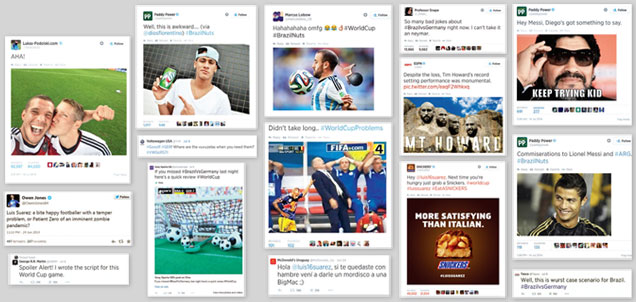
    During this World Cup, in the seconds that followed spectacular goals, saves, dives and bites and referees fixing their hair on screen and Lukas Podolski and Bastian Schweinsteiger’s smooch selfie, fans, brands and “newsjackers” got to work on the platform to share comments, vines, memes and japes with the planet. When Italian centre-back Giorgio Chiellini’s shoulder ran in to Suarez’s teeth it launched a thousand tweets. Brands dived in to the action with their own cheeky takes. Real-time marketing war rooms are set up for exactly this kind of stuff.


    “More Satisfying Than Italian” Snickers tweeted. Budweiser and Listerine promptly bought Promoted Tweets around the #Suarez hashtag. And @Listerine tweeted: ‘We recommend a good swish after grabbing a bite of Italian. #WorldCup #PowerToYourMouth’. Brazil’s catastrophic 1-7 loss to Germany in the semi-finals (a match that triggered a record breaking 35.6 million tweets) and Germany’s ultimate triumph gave some marketers their Oreoesque moments as well. Irish bookmaker, Paddy Power tweeted a picture of Brazilian striker Neymar Jr brandishing a 7Up can with a tweet that read: ‘Well, this is awkward…. (via @diosflorentino) #BrazilNuts’.


    And, in case you missed it, Sony Xperia recreated the match in Vine form with Subbuteo figures and a goal net with seven holes in it. Besides receiving countless retweets and favourites, they and many more were extensively shared and covered in the news, online, TV and print. Even traditional ads got traction online, when people tweeted a Singapore anti-gambling ad in which one boy tells another “I hope Germany wins. My dad bet all my savings on them.” @Mr_Mike_ Clarke tweeted: ‘This anti-gambling poster has backfired a little.’ Instead of just taking down the poster, the National Council on Problem Gambling had to come up with a save à la Howard with another ad. “Your dad’s team won. Did you get your savings back? “No, Dad never stops.


    He wants to bet one more time.” Says Vishal Sampat, CEO, SMG Convonix, “One could easily follow the entire game by just being on Twitter. This meant that Twitter became important not just for a digital campaign but also a 360 degree campaign. As a platform it allowed brands that used it effectively to run a two way communication campaign with potential or existing consumers of their products.”


    90:00

    Although the following might sound needlessly laudatory, the fact is while the beautiful game was played on the green pitches of Brazil, the drama unfolded on our Twitter timelines. That’s where the millions who couldn’t afford a trip to the Maracana watched the game together and shared their collective glee and distress. Sure we could spend hours attempting to put results in to tangible returns on investment and argue over matters close to the CFO’s heart, for instance, raking up the mentions is all dandy, but what did it do for sales? As it stands today, social media is more about engagement and awareness and not how many shoes flew off the shelves.


    It’s about engulfing your brand in a thick cloud of buzz. For now, it’s all worth it when people stop seeing the brand as a nuisance trying to butt in on a conversation and instead become the friend at the party everyone wants to hang with. Isn’t that the point of all marketing nowadays anyway?


    So to answer the question which brand won the first social World Cup? The one who scored the equivalent of Mario Goetze’s goal to take home the marketing trophy are not the sponsors or the unofficials, Adidas or Nike, Coca-Cola or Pepsi, Hyundai or Mercedes or Audi or Visa or Sony or any of the marquee marketers.


    Those who’ve dominated cups past and spend years and many millions to leverage the biggest, most electrifying, spectacle in the history of mankind (the Indian General Election comes a close second). The brand champion of FIFA World Cup 2014 is, in fact, Twitter. Because much like Germany it had the best, most dedicated team players in the tournament – @YOU.


    Source:The Economic Times

    Copyright © 2014, Bennett, Coleman & Co. Ltd. All Rights Reserved

    Licensed to republish


  • Now, more focus on Reader’s in Digest

    By A Correspondent


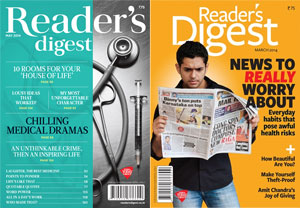
    The Reader’s Digest magazine has refreshed its masthead.
     

    The masthead in the Indian edition changed with effect from May 2014 following a worldwide change. The objective was to put the focus back on the reader, as it was always intended to be, said a senior official close to the development.


    According to a report in Masthead quoting managing editor Dominique Ritter, the “new logo is set in a customized font “with a sweeping element that recalls our classic logo,” The report adds: “The most notable change is the emphasis on the word ‘Reader’s’, which is now larger to convey a commitment to the brand’s audience and its love for the written word. Before, ‘Digest’ enjoyed more real estate.”


    In the earlier version of the masthead, the word Digest in the name had more prominence, but in the new logo, not only has the emphasis vastly been reduced, the ‘d’ in Reader’s Digest has been lower-cased.


    The Indian edition of the Reader’s Digest celebrates 60 years this year having commenced circulation since 1954. The licence was first owned by the Tatas and it’s now run by the India Today group. Other than India, the magazine has 48 editions in 21 languages and is published in over 70 countries.


  • Anthony BM conferred the Order of the British Empire (OBE) honour

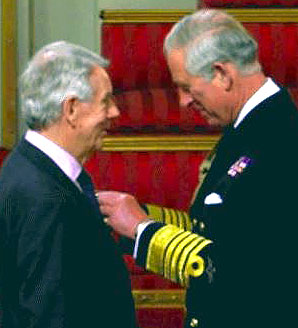
    In recognition of his support in furthering British business to India, Anthony B M Good, fondly referred as Tony Good, Founder and Executive Chairman of Good Relations India and Global Chairman, Cox & Kings, has been honoured as an Officer of the Most Excellent Order of the British Empire (OBE) in the Year 2014 Honours List.This coveted honour is in recognition of Tony Good’s contribution to Britain through his India initiatives which include the role played by him in facilitating several UK business ventures to India.
     

    Tony Good attended his formal investiture at the Buckingham Palace and received the Honour from His Royal Highness Prince Charles.


    An internationally acclaimed PR Veteran who has played a significant role in raising the bar for the profession akin to the practices of Law and Accountancy globally, Tony Good has more than over 40 years of experience in the public relations industry, credited with founding Good Relations Group plc, the first public relations consultancy in the world to be listed on the London Stock Exchange.


    Tony Good is a board member of the UK India Business Council (UKIBC). He was responsible for bringing Marks & Spencer to India and was involved in their JV with Reliance Industries. He was also responsible for the JV between United Distillers and the Indian UB Group and later between Scottish &Newcastle Breweries PLC and United Breweries. He was instrumental in bringing Sun Life to India, leading up to their JV with Birla Group.


    Acknowledging the honour, Tony Good said,” I am delighted to receive the honour.  I look forward to continuing to assist the development of relationships between British and Indian companies which are so important to both countries”.


    Lauding Mr Good’s visionary leadership, Deepak Kanulkar, CEO of Good Relations India said, “Incidentally, this honour happily coincides with the completion of 25 year of GRI’s presence in India as the country’s first Independent Public Relations Consultancy with an impeccable record of integrity, strategic thinking and quality of service”.


  • Axis Bank & Lowe Lintas unveil myideaofprogress.com

    By A Correspondent


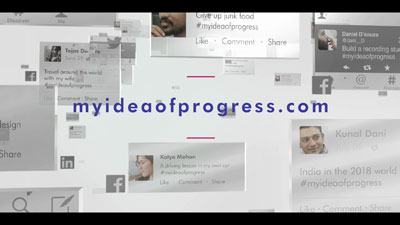
    Axis Bank and Lowe Lintas have unveiled myideaofprogress.com, one of the largest consumer engagement initiatives undertaken in the banking industry. The initiative will see the entire network of Axis Bank actively promoting the philosophy along with a 360 media campaign on TV, digital, outdoor and radio to reach out to as many people as possible.
     

    The initiative is a unique attempt by an Indian bank to involve people beyond transactions and get them to experience the bank through its beliefs and to reach out to them so that they get to like the bank for what it does.


    Axis Bank’s articulation of progress, Badhti Ka Naam Zindagi, captures the continuous, all-inclusive nature of progress. And the current campaign, on-air since June, is about how progress has different connotations for different people. In this case Deepika Padukone. Taking it forward from there, in the latest leg of the campaign, Axis Bank is taking its philosophy to the next level by embarking on a journey to connect directly with existing and potential customers of the bank.


    The challenge for Lowe Lintas was to keep the idea simple, yet such that the multiple facets of progress come across in a manner not done before while engaging people so that they participate and interact with the brand not only at a transactional level but also a deeper emotional level.


    The simplest way to connect in fact is to actually ask people what Progress means to them. And that’s just what one needs to do – tell Axis Bank what Progress means to them.


    For this a dedicated microsite – myideaofprogress.com was created. One can also go to select Axis Bank branches and submit their idea of progress. Of all the entries few will be shortlisted and will be put up for voting culminating into a possible execution by Axis Bank basis the votes and the decision of a jury.


  • With Sabbas Joseph at the helm EEMA charts out growth agenda

    The Event & Entertainment Management Association (EEMA) recently held a three-day conference – EEMAGINE 2014, in Cochin. The conference highlighted EEMAs Vision 20:20 to drive the next phase of growth for the event management and experiential marketing industry. Also announced was news of Sabbas Joseph taking charge as EEMA President with Vision 20:20.


    Sabbas Joseph

    On the occasion, Sabbas Joseph, as President of EEMA outlined a peep into the future with Vision 20:20 to drive the industry forward. He described the state of the industry as akin to the hanging of a computer or mobile phone and called for a “reboot” of the events and experiential marketing business and called on industry colleagues in EEMA to lead the future path. On behalf of EEMA, the new president of the premier organization said that the focus will be on improving the industry’s engagement with government, policy makers, clients, artistes, supply chain and also the relationship between member-agencies.


    Joseph is one of the founders of India’s first event management and experiential marketing company – Wizcraft International. While setting the agenda for the EEMA’s growth, he set out an aggressive plan that has 20 task forces working simultaneously guided by mentors including industry stalwarts – Michael Menezes, Brian Tellis, Roshan Abbas and Sameer Tobaccowala.


    The task forces will work simultaneously in a cohesive approach along with knowledge companies and domain experts. The task forces are largely geared to the re-engineering and redefinition of the entire Indian experiential marketing and event management industry at one end and globalization at the other end. EEMA standards would be established and the gradation and certification of agencies would be undertaken. Industry standards would be set along global benchmarks. The task forces include owners of EEMA member agencies from across the country experienced in verticals such as corporate event management, experiential marketing, digital experience creation, social events, weddings, public events, sports, international projects and mega spectaculars.


    In a related development, the President appointed a 20-member National Working Committee comprising the Chairpersons of the task forces. While terming the entire effort as Mission Critical, EEMA is focused on the future with mantras that can be best described as: Growth, inclusivity, globalization, respect, nation-building with major focus on accountability, integrity, providing value to customers and respecting values.


  • Google Search Trends unveils popularity of young Bollywood stars

    India’s crazy love for Bollywood stars, movies, and songs is a celebrated and known fact. With the entry of fresh talent and dynamic performances over the last year, Bollywood fans across the country have been extending their support to the stars of tomorrow. While some are new to film fraternity, the others hail from filmy homes and have grown up in Bollywood.


    Starry kids including the likes of Alia Bhatt, Shraddha Kapoor, Arjun Kapoor, Varun Dhawan and Tiger Shroff are leading searches on Google. Although filmy background gives them a clear edge, the other non-filmy newbies on screen including Sidhartha Malhotra and Ileana D’cruz have made their way to fans’ hearts with their performances and talent.


    An analysis of recent searches on Google (Google Search trends) takes a look at the popularity of these stars among the fans online. Mahesh Bhatt daughter Alia Bhatt’s dream launch in Student of the Year followed by blockbusters movies including Highway and Humpty Sharma Ki Dulhania has gained a lot of interest online as she leads search interest among fans for emerging stars.


    Among the male stars, actor Arjun Kapoor is the latest on the block attracting huge search interest online. With he made his debut in 2012 with Isaqzaade, he took on the spotlight with his blockbuster hit 2 States this year. Sidhartha Malhothra’s journey with his charming performance in Student of the Year & Hasee Toh Phasee to Ek Villian has been followed closely by his fans. The actor has shown steady and charismatic performances that are driving searches online.


  • Croma Home Stories survey unveiled

    By A Correspondent


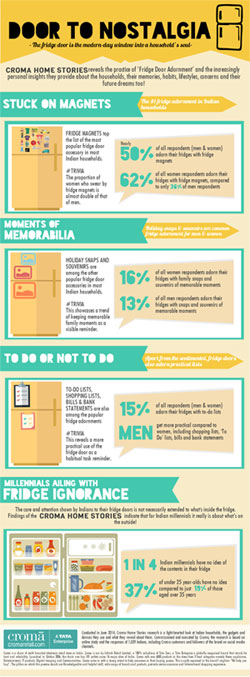
    The Croma Home Stories survey has revealed that nearly 50 per cent of Indians adorn their fridge doors with magnets, with 15 per cent of them adding holiday snaps and souvenirs, the same percentage of 15 per cent appending ‘To Do’ lists, and 13 per cent sticking their weekly shopping lists to this particular piece of kitchen furniture.

     

    According to Ajit Joshi, MD & CEO, Infiniti Retail Ltd, “Fridge door adornment serves a vital purpose within modern families; not merely to prevent them from forgetting what to buy or when to collect the dry cleaning, but of holidays, trips, vacations and other family moments for which the fridge door can provide a constant – and very visible – reminder.”


    Croma Home Stories, in its second leg, further reveals the practice of ‘Fridge Door Adornment’ and the increasingly personal insights they provide about the households, their memories, habits, lifestyles, concerns and their future dreams too.


    Other insights from the survey include the fact that women are the principal protagonists when it comes to Fridge Door Adornment with 62 per cent admitting to decorating their fridge doors with magnets compared to just 36 per cent of their male counterparts, while men lead the way with more practical types of adornment including shopping lists, ‘To Do’ lists, bills and bank statements.


    The survey noted that while Fridge Adornment is actively being practiced across generations in India, the younger age group pays decidedly less attention to what’s actually inside; 37 per cent of under 25 year-olds have no idea compared to just 19 per cent of those aged over 35 years. Clearly, the survey findings indicate that for Indian millennials, it really is about what’s on the outside.


    Conducted in June 2014, Croma Home Stories research is a light-hearted look at Indian households, the gadgets and devices they use and what they reveal about them. Commissioned and executed by Croma, the research is based on online study and the responses of 1,029 Indians, including Croma customers and followers of the brand on social media channels.


  • Mediaware unveils TV Market Rates service

    For a medium as diverse and fragmented as broadcast, there are a number of questions that get raised regarding ad rates. What are the “going rates” for advertising on a television channel? What were they last month? Can I predict next month’s rates? Moreover, market rates change practically each month, based on a number of factors.


    Also, market rates have some elasticity which is used by large, savvy clients to advantage – which is reflected as the minimum rate. And apart from to periodic rate revisions, market rates are affected by major events like Cricket World Cup, General Elections, Assembly Elections, FIFA World Cup, etc.


    But despite all the issues and solutions at hand, market rates are a necessity for building plans. And used for benchmarking TV buys.


    “To address these industry needs, Mediaware has launched its service for 100+ TV channels as part of its Brandintell Services. Market rates are gathered by a team of independent professionals residing in different cities – who are not linked to any client, agency or channel,” shared K Raghavendra), Director of Mediaware.


    “Rates are published on a monthly basis and we have made them available to all media professionals for reference free of cost”, shared Biswajit Das, Managing Director of Mediaware. The same can be accessed by logging in to www.m-net.in using the official email id as login.


  • Havas wins Digital AOR of Businessworld

    By A Correspondent


    Havas Media Group India has won the integrated digital duties of Businessworld in a multi-agency pitch. Commenting on the win, Annurag Batra, Chairman, Businessworld, said, “Havas Media’s passion and commitment along with their Meaningful Brands framework touched us. We are looking at a digital first strategy with multi-platform presence driving engagement and conversation. Businessworld must be on par with any international online media platform.”


    Anita Nayyar

    Speaking on the win, Anita Nayyar, CEO, Havas Media Group, India and South Asia said, “We are delighted that BWIBusinessworld thought us apt partners for their digital story in the world of media. The mandate includes digital strategy, planning, design and execution as BW digitally revamps and grows. We will ensure all necessary steps to make it a meaningful and successful experience for all stakeholders of this marquee brand”.


    Havas Media recently also won the integrated media duties of Yepme.com and digital mandate for Xolo mobile. The account size has not been disclosed.