Category: NEWS

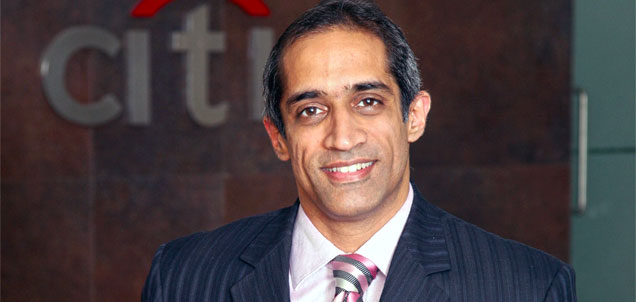
  • Malcolm Mistry joins dna as CEO

    By A Correspondent


    The Zee group’s English daily dna has appointed Malcolm Mistry as CEO.


    Mr Mistry has over two decades of experience across the India Today and Indian Express groups. As Publishing Director at the former, he was responsible for the flagship India Today magazine and all its language avatars, Business Today and Readers Digest amongst others. In addition, he was the chief architect of the sales synergy process as he created a unified sales team across various brands. His last stint saw him turning entrepreneur and launching Ushta Te HR Consultancy Services to provide recruitment solutions across key verticals like media, advertising and luxury. The appointment, say industry observers, will be a boost to the sales function at dna which needed a ‘face’.


    Commenting on the appointment, Subhash Chandra, Chairman, Essel Group said: “We are delighted to have Malcolm on board. His extensive experience in leading strong media brands will help build on the momentum and navigate ‘dna’ into a phase of high growth.”


    On his new role, Mr Mistry said: “dna has strong brand equity. I am excited with the challenge of raising the bar and creating a more vibrant ‘print plus’ product with greater consumer traction and increased shareholder value.”


    dna is now part of the Zee Media Group which also comprises a slew of television channels and digital offerings. Dr Bhaskar Das, formerly President, Bennett, Coleman and Co and associated with several industry associations, is Group CEO. The position of CEO at dna has been vacant since K U Rao moved on to a Zee group firm and later exited the media conglomerate.


    In recent months dna has gone in for a new look, appointed an editor-in-chief and also undertaken an aggressive marketing campaign.


  • Luxury market takes a hit but likely to regain its bling next year: CII-IMRB report

    By Vijaya Rathore


    The Indian luxury market is expected to post a slight revival and grow about 17% next calendar year even as the industry faces serious growth challenges in the country, says a new report.


    ‘The Changing Face of Luxury in India’ report by industry chamber Confederation of Indian Industry (CII) and market research firm IMRB International pegs the luxury industry in the country at $7.58 billion, or about Rs 47,127 crore, in 2012.


    The luxury market has grown at a compounded annual growth rate of nearly 15% in the last three years, powered mainly by luxury cars and other products that grew faster than luxury services and assets.


    The report says that the economic slowdown has impacted the luxury market to a certain extent this year. “The industry, which until 2010 was poised to take off in a big way, has paused in its tracks to relook at financials, strategies and plan the way forward,” it says.


    The luxury market had grown 20% year-on-year in 2010 before slowing down due to an overall dip in the consumer and market sentiment. Currently, returns for luxury brands are trickling in slower than anticipated and they face serious growth challenges. “There are multiple factors which are stunting growth of the market; government regulations, ambiguity in the FDI policy, lack of quality infrastructure, etc, often come up as some of the important contributors, but a key factor is perhaps the Indian consumers themselves,” the report says.


    It expects mid-2014 to be a crucial period for the luxury market in the country owing to the general elections being held in the country. Factors such as high quality infrastructure, surge in luxury real estate space and renewed investor and consumer confidence will be key determinants of success.


    Luxury real estate, which is currently stagnant, is expected to revive by the second half of 2014.


    PRODUCTS OUTPACE SERVICES, ASSETS

    IMRB research shows that over the last three years, the luxury products segment has grown faster than both services and assets segments with a CAGR of 21.8%, thanks to the entry of leading labels across categories, increase in their geographic footprint and rising aspirations among consumers not impacted by the market slowdown.


    Products, including the ‘recession-proof’ categories such as apparel, accessories, personal care, wines & spirits, electronics, watches and home decor, are expected to account for 45% of the overall luxury pie by 2014, it says.


    While luxury services grew at a CAGR of 15% in the past three yeas due to increase in inbound tourists availing luxury hotel services and upsurge in number of standalone high-end restaurants, assets have grown at a slower CAGR of 9.4%. “Primary contribution to the growth has come from the luxury cars segment. Luxury real estate segment is currently stagnant owing to weak investor sentiment, but is expected to revive during the second half of the 2014,” the report says.


    EMERGENCE OF ‘CLOSET CONSUMERS’

    What makes India a market with tremendous potential for luxury is that a new segment – ‘closet consumers’ – that does not typically fit into the boardroom definition of luxury consumers is staking claims to luxury products, brands and services.


    But these closet consumers come into the market on their own terms as they are caught between rising incomes and traditional middle-class distaste for unabashed luxury.


    “This inner conflict between a middle-class mindset and the globally rich income level, between conspicuous consumption and a level of luxury which is a reward for hard work, shapes what we call the closet consumer,” says the report.


    These are consumers who may well have the capacity to spend on luxury in terms of income levels but due to an inherent conflict between their values and those that luxury brands are seen as espousing, their consumption of luxury is restricted or at a much lower level than potential.


    “It is not the ability to afford that shapes their buying behaviour, but their values and their belief system towards money and luxury,” the report says. So besides infrastructure and government regulations, one of the biggest challenges for luxury players in the country is to change middle-class perception about luxury and bring ‘closet consumers’ out of the closet.


    Source:The Economic Times

    Copyright © 2013, Bennett, Coleman & Co. Ltd. All Rights Reserved

    Licensed to republish


  • Pre-poll sop? I&B ministry grants interim 19% hike in DAVP rates of print media

    By A Correspondent


    You will not read this interpretation in any newspaper. Nor will any news channel discuss this in its various panel discussions. Perhaps social media may. But you never know. For, it’s seen as a sop to newspapers ahead of the elections – the rest of the State elections to be held this month and next and the 2014 general elections. The Ministry of Information and Broadcasting has granted an interim hike of 19 percent in DAVP rates for the print media with effect from October 15, 2013.


    The rate card decided by the 6th Rate Structure Committee (RSC) was valid till October 14 and even though a 7th RSC was constituted by the MIB on May 31, 2013, the recommendations haven’t come in so far. According to a communiqué, the ministry has received a number of representation from various stakeholders and DAVP for grant of immediate interim relief in the Print Media Rate Card of DAVP pending revision of rate card on the basis of recommendations of 7th RSC.


    Accordingly, a proposal for grant of an interim hike was considered by the MIB in consultation with Ministry of Finance and the Election Commission of India. All stakeholders have been to cooperate with the Rate Structure Committee so that its recommendations may be finalized at the earliest.


  • Social Media finds its use in corporate HR


    By Priyanka Sangani


    When Marriott International announced it was opening a new Courtyard by Marriott property in Bilaspur, it got over 300 CVs through its Facebook page. The page was launched just a month ago and already has 1.1 million likes.


    A few months ago, Godrej Consumer Products started using Yammer, an enterprise social networking site, not unlike Facebook. What surprised Sumit Mitra, head – group HR and corporate services, the most is the rapidity with which employees caught on to it, irrespective of age, location and hierarchy. It is rapidly emerging as a platform to share best practices across the business, and has now been rolled out across the Godrej Group.


    Cisco Systems has brought down its usage of placement agents from 50% to less than 5% of the total people hired over the last four years bringing down recruitment expenses by over Rs 30 crore a year, while L’Oreal India saved on 93% of its recruitment costs last year by using social media.


    Look closer and you realise that these aren’t stray examples. From a time when Indian companies instructed their IT departments to put in firewalls to block access to all kinds of social media, they are now exploring how these sites can be leveraged. “We are past that stage where we debate the impact social media will have on productivity; you have to learn to channelise it creatively,” says Prasenjit Bhattacharya, CEO, Great Places To Work, India.


    Godrej first started experimenting with social media as an HR tool in July 2012 for Godrej Loud, its campus recruitment programme. “After the initial campus visit, all communication for this initiative was done through Facebook and Twitter. The benefits in terms of reach, cost effectiveness and productivity are significant,” says Mr Mitra. Apart from the tangible cost incurred in flying people across the country multiple times, there was a high hidden cost in terms of management time and productivity. The company has now moved its entire summer internship (and campus recruitment) process to Facebook.


    Platform Play

    At L’Oreal India, the use of social media stretches up to mid-management positions as well. Mohit James, director-HR, says that the company has its own company page on LinkedIn and has hired for over 20 senior level positions in functions like IT, marketing innovations and development through social media platforms: “The hiring process becomes a lot more open, cost effective and has a faster turnaround time. Using social media allows you to reach out to far more people than you could have earlier, and it also gives them a chance to see what the brand is all about before they even apply.”


    While a number of companies have signed up with Microsoft’s Yammer or are simply using Facebook for their online communities, for those with the tech expertise and inclination, building your own platform is always an option. At HCL Technologies, MEME was the result of a group of enthusiasts who went ahead and created an internal social networking platform despite feasibility concerns from the IT department. With over 80,000 active employees, this is now an integral part of the communication process at HCL. Prithvi Shergill, chief human resource officer, HCL Technologies, says, “The company is present in 31 locations and this is a convenient way to reach out to everyone.” There are special interest pages and the human resources department even uses it to get people’s opinions on policy changes before actually rolling them out.


    One big reason why social media is gaining acceptance as an effective communication tool for companies is the entry of the digital natives into the workforce. Over 60% of the employees at Cisco are under 30. The company uses Webex Social, its own social networking platform for all internal communication, including buying and selling things. Subash Rao, senior director – human resources, Cisco Systems says, “It is essential to reach out to employees in a manner that they are most comfortable with. So with most people spending more time on their phones, we’ve ensured that Webex Social and Cisco Jabber, an instant messaging service, are both accessible on the mobile.” The company is now in the process of shifting static intranet pages like blogs to this platform which will make the exchange far more interactive.


    “While traditional channels continue to exist we are increasingly finding that our audiences prefer to consume information at their own pace. Moreover, given the dynamic nature of our business employees feel the need to connect informally in addition to connecting formally with their peers,” says Microsoft India’s head of human resources, Rohit Thakur. In August, Microsoft created a special employee microsite using SharePoint for their annual kick-off meeting. “The microsite provided our employees with the facility to register for the event, learn about the agenda and logistics and comment on the topics covered in the meeting. We also used the microsite to poll our employees about their feedback. This will help us design next year’s event in line with the audience needs. All this was possible due to enterprise social technologies such as Yammer, SharePoint and Lync. I also strongly believe the engagement during this meeting helped us drive significantly better business momentum during the quarter,” says Mr Thakur.


    Mr Bhattacharya, who has observed various companies up-close says, “Social media is an enabler and allows a multi-dimensional view of the organisation as against the earlier unidimensional view where the conversation was restricted to job description and compensation. Whether you like it or not, social media has an impact on the perception of the organisation. If you are smart about it, you will allow access and use it to promote discussions and dialogues on the company and the brand.


    Godrej for instance tried using blogs earlier but with limited success given that the degree of interaction was far lower. “We were looking for a platform to connect employees across the world where we could have a free flow of ideas without hierarchies,” says Mr Mitra. So, if a distributor has run a successful promotion in a small town, he can post details and pictures within minutes and share his experiences. Earlier this kind of knowledge exchange would have taken a few months. It helps that the senior management is fairly active on this platform as well, with Godrej Consumer MD Vivek Gambhir ensuring that he spends at least 30 minutes a day on it. Mr Mitra himself is a part of various groups related to HR and people management.


    Last year, Polaris Financial Technology launched its own enterprise collaboration portal, Octopus, which primarily functions as a project management platform. Employees have access to all the details related to the project they are working on, but what sets it apart from other such portals is that it integrates various other social networking features into itself. “The site facilitates sharing of knowledge through the technology wikis and design wikis, and also provides a platform to ask questions. Chances are that someone else may have already encountered the problem you are facing and has a solution, so you don’t need to reinvent the wheel,” says Sashi Mohan, CIO and CTO, Polaris FT. The company also has a popular video sharing channel, KTube which it uses to share videos on a wide range of issues, not just related to technology.


    However, using social media to communicate with your employees, or as a recruitment tool, isn’t necessarily idiot proof. “While finding people may have become easier, a recruiter needs to know how to engage, network and harvest a talent group and not just use social media as a search engine. LinkedIn is more than a platform to acquire talent; it is a medium to build candidate consideration and employer branding as well,” says HCL’s Mr Shergill. Cisco has a separate page for campus recruitments where it gets the alumni from these institutes who are working at Cisco to talk about their experiences as it builds a far stronger connect with potential employees. The biggest challenge, says Mr Rao, is that most companies still don’t take social media very seriously. “You need to have a dedicated resource monitoring social media. If activity levels on your page lag, it has an immediate fall out or impact on people’s interest levels.” This is also perhaps one of the biggest challenges of using social media – constantly updating it with relevant information. While it definitely helps cut down on the deluge of emails and brings in a lot more democracy to the communication process, companies need to ensure that they are providing meaningful -and not distracting- content.


    Marriott International launched its dedicated jobs and careers page on Facebook as a result of the traction they were getting from (potential) employees on their hotels page. In addition to job postings, they also update the page with excerpts from Chairman Bill Marriott’s blog and employee success stories. Gurmeet Singh, area director of human resources-Indian subcontinent, Maldives, Marriott International says, “Attrition in this sector is high at about 35% so it’s useful to employ non-traditional methods of sourcing. Besides, the generation is also such that you can reach them more effectively through social media.” A clear indication of how seriously the company takes its social media initiatives is that it has fairly detailed corporate and regulatory guidelines on how to use social media. These have been in place for three years, but are constantly evolving. Prasad Iyer, cluster ecommerce- India, Malaysia & Maldives, Marriott International, says that this is a double-edged sword. “While you want to reach out to people externally, you have to manage expectations internally as well. At the end of the day, it’s a social platform and cannot replace the existing professional systems you have.”


    Mr Shergill echoes this sentiment adding that it’s primarily an enabling mechanism and you cannot devote all your energies to it. Then again, there will always be topics that won’t generate the kind of interest you want in these forums and at such times, it’s best to revert to email or face-to-face conversations. It’s also important to ensure that the posts don’t get offensive or aggressive.


    Going ahead, while a lot would depend on how these particular platforms themselves will evolve, most companies are working towards moving their e-learning initiatives to social media. Another trend that’s rapidly gaining traction is gamification. L’Oreal has been using an offline game Brandstorm globally for two decades now, and has recently introduced two online games, Reveal and RU HR? The company tries to recruit about a third of its managers through these channels. While RU HR? requires participants to deal with real human resource situations and develop an HR strategy, Reveal is aimed at non-marketing professionals who can get online and participate in say a discussion on supply chain issues and solve a problem to move to the next stage. James says that the benefits are twofold. “Not only does this expose people to L’Oreal, but it also allows the company to assess them in terms of brand fit based on their reactions to various stimuli.” This is followed up with an actual interview since there’s always the danger that it could be a group of people playing the game as one candidate. “The two most important benefits of gamification are crowdsourcing and collecting powerful customer data. Crowdsourcing helps in solving complex business problems where participants bring in a fresh perspective to solve tricky situations. As these games require comprehensive research and study, it also helps the organisation to collect important customer data and statistics,” he says.


    One thing that is clear is that as just as social media influences how we communicate in our personal lives, it will have a bearing on how we communicate at work and companies would do well to adopt it, albeit with caution.


    Source:The Economic Times

    Copyright © 2013, Bennett, Coleman & Co. Ltd. All Rights Reserved

    Licensed to republish


  • Taking Citi to #1 Bank Brand


    By Rahul Sachitanand


    Sanjeev Kapur followed the conventional marketer’s career path when he joined Hindustan Lever (now Hindustan Unilever) and quickly notched up his first career highlight by revitalising the sluggish Lux brand in the 90s.


    He helped reinvigorate the brand, adding as much as Rs 100 crore to the topline. Then, in 2007, he gave up the stability of consumer goods to move to financial services, specifically to work at Citibank. In 2010 Citibank India cards segment was ranked No 5 and the ‘Citibank’ brand No 3 within the Citibank Asia network across nine countries. Mr Kapur, 38, along with the various product teams at Citibank, has helped change this perception.


    Today Citibank India, despite having a relatively small footprint in the country, is the strongest brand in Asia and the third-strongest brand globally within the network, according to the monthly internal ‘brand track’ survey conducted by IMRB in India and other such research agencies elsewhere.


    “As a marketer, he took his brand from a challenging situation to success, based on specific interventions that he drove passionately,” says Anand Kripalu, managing director of United Spirits. “Sanjeev is a person who is intellectually and operationally agile, who challenges the status quo in whatever he does, taking the job and himself to the next level.”


    Mr Kapur was rewarded for his efforts a couple of months ago. From being just the marketing chief of Citibank in India (with a team of 20), he was made the head of customer franchise management. Not only does he now head a 60-member unit, but his role also goes beyond the confines of traditional marketing, he says. Now, he has been tasked with improving client experiences across all segments and products and expanding the use of analytics and big data to make business decisions.


    Punching above its weight (the bank has barely 40 branches in India compared with 16,000 for SBI, over 3,000 for HDFC and about 3,000 for ICICI) is becoming a habit for Citibank India.


    Restricted by banking norms from expanding the branch network, Mr Kapur has used other means to give the bank a disproportionate brand recall. “Sanjeev is a transformational marketer – under his guard brands move forward – and he combines data with intuition and is not afraid to take bold brand decisions,” says Vikram Sakhuja, CEO, Maxus Worldwide, a media planning and buying agency. Citibank has had to take the long route to becoming a well-recognised brand in India. Although it was the first bank to launch phone banking and text message alerts for transactions, its history is a mixed bag in India.


    Three years ago it was rocked by a 250-crore scam at one of its branches and it also struggled with Citi Financial, its NBFC, and indiscriminate personal loan lending and credit card issuance. Since then, it has rolled things back, focusing on building its own sales force (rather than rely on third parties) and picking its clientele carefully. At the end of the last financial year, Citibank India became the largest foreign bank in India ahead of Standard Chartered.


    Mr Kapur is looking beyond, hoping to build a very different perception for Citibank India and he’s discarded conventional marketing norms. “Consumers today are assimilating the same content across multiple platforms, making traditional concepts such as offline and online, as well as below-the-line and above-the-line less meaningful,” says Mr Kapur.


    Mr Kapur, who spent three years in eastern UP as a rookie manager with HUL, is looking beyond consumer goods for marketing insights. Citibank, for example, can better deliver marketing messages to constantly connected customers (via Twitter, Facebook or a mobile ad). “Citibank, has the ability to provide targeted marketing messages to its customers using the social, mobile and ATM platforms, allowing for a richer customer connect experience than most other consumer sectors,” he adds.


    For example, Citibank wants to help customers not only find Chinese restaurants in Bandra, but get directions also using My Privilege app’s mapmyindia application. Then there are discounts and freebies too to be availed of. Mr Kapur thinks technology can help sharpen marketing – pinpoint ads when you’re in an airport (for a Premier Miles card) or in a shopping mall, with tailored offers.


    “Location-based connected experiences are the future of marketing,” says Mr Kapur. Citibank has used social media to find the most convenient locations for its ATMs and devised an application to make social media-based dining and shopping recommendations.


    “The future of marketing lies in creating and delivering customized information to our consumers who are constantly on the move.” This content may be location or time based and displayed on multiple platforms including mobile phones and ATMs.


    An admirer of brands such as Nike, Starbucks, Apple and Ikea, this mechanical engineer by training is adding some new gears to Citi’s marketing engine. Citibank’s Dil v/s Bill campaign did not just crank out cookie cutter print ads, but ran an aggressive twitter promotion (15 tweets a day) and had it as the trending topic for 53 hours. As a marketer, Mr Kapur is clearly focused on the profile of his customers.


    “Over 60% of our banking transactions are online… We attract digitally savvy early adopters as customers and we have turned our distribution disadvantage (of a small branch network) into a technology advantage,” says Mr Kapur.


    Citibank’s ability to use the internet and mobile aggressively, he adds, demonstrates its ability to leverage technology efficiently across platforms, providing easy access, more control and a superior customer connect experience. Citibank India built on the success of its Dil v/s Bill campaign with the Happiest Diwali initiative. While the final results of this campaign will take a couple of more weeks to crystalise, Citibank has reached out to 1,500 merchants and is confident of making a splash in the market. Like its previous campaigns, Mr Kapur is focusing on converting purchases from heavily rationalised ones to those driven by the heart.


    Mr Kapur, a university level football player, is also changing the rules of the marketing game. So, the Dil v/s Bill campaign had someone else (for example, a consumer electronics firm) create the demand, while Citibank only cashed in on it later. “Consumers tend to splurge beyond their means during the festival season on their family and friends,” he says. “Our brand is about providing financial solutions to fulfil the individual aspirations of our customers responsibly.”


    Source:The Economic Times

    Copyright © 2013, Bennett, Coleman & Co. Ltd. All Rights Reserved

    Licensed to republish


  • SAP’s Rajesh Kumar to chair DMAi 2014 marketing convention

    By A Correspondent


    Rajesh Kumar

    Rajesh Kumar, Marketing Head, SAP, Indian subcontinent has been announced as the chair for the third edition of the Association for Data Driven Marketing & Advertising in India (DMAi) International Marketing Convention scheduled to be held in January 2014 in New Delhi.


    Said Umang Bedi, Managing Director – South Asia, Adobe and member of the DMAi Board of Governors: “I have seen the format of the show grow in the recent years to become a real power packed show that is of immense value to any traditional or digital marketer alike and we look forward to the change that Rajesh ushers in.”


    According to a communique, the convention aims to addresses the quest of CMO’s and agency professionals who want to leverage data and ‘Re-define customer understanding’ – due to richer context, stronger behavior insights beyond simple demographic construct. The agenda accent this year remains on harnessing data responsibly to ultra-segment our customers, hyper personalize marketing programmes through specific product, pricing & promotion actions resulting to innovation, delightful customer experience and improvement on marketing ROI.


    Speaking on his appointment, Mr Kumar said: “Organizations like the DMAi have the responsibility to orchestrate conversations amongst marketers to champion this change and harness innovation to drive growth. I am happy to be associated with DMAi and look forward to working with peers in the industry to bring together content, best practices and experiences that will drive this agenda and unravel together what future holds for us”.


    The three-day convention will host a strategic summit for the C-Suite, keynotes, debates, 15 dynamic conference streams, live certification and workshops, an expo and an awards programme. Noted Vatsal Asher, CEO, DMAi:  “Rajesh has been involved over several weeks on shaping the event. The format and experience of the show has been redesigned from scratch to encompass the needs of our attendees.”


    Details on DMAi and the convention are at www.dmai.co


  • Outdoor adspends grow 8% in H1 FY 2013: Laqshya research

    By A Correspondent


    Outdoor Advertising ad revenues have grown 11% in the first quarter and by 4 percent in the second quarter of 2013 over the corresponding period of 2012 making it a total of 8% growth for the H1 fiscal 2013 over 2012. These numbers were revealed by the Laqshya Media Group research wing which conducted the research.


    According to a communiqué from Laqshya Media, the good news is that despite the lingering economic uncertainty OOH continues to grow which is an excellent sign for advertisers who want to reach out to people with billboards, bus shelters, huge gantries, foot-over bridges, and any other outdoor vehicles. The industry going by this analysis has every reason to be optimistic.


    The sector-wise analysis is as follows:

    – Real Estate upped OOH investments most rapidly as compared to any other sector making it the most dynamic category for the first half of 2013. Spends grew by 51% as compared to H1 of 2012. The realty players from Mumbai and Delhi have been spending heavily in traditional OOH, whereas South India-based players are also actively visible in premium ambient media like airports.

    – Education Sector with large focus on Q1 dominates the other category spends though its spends have reduced compared to H1 of 2012.

    – In the Media & Entertainment category, TV channels particularly the GECs hold a substantial pie in the OOH share of spends.

    – Jewellery Brands like Tanishq has been spending heavily along with south based brands like Malabar and Kalyan on their store launch across various towns using OOH to create awareness. There has been a 28% rise in their spends observed this year as compared to H1 2012.

    – Many other sectors slightly exceeded their spends in the first half this year as compared to last year making the overall OOH share of spends bigger and thus creating an 8% growth as compared to last year. Categories like banking, mobile handsets, airline operators, housing finance, life insurance, retail (particularly the Innerwear Segment) and healthcare saw greater growth as compared to last year’s first half.

    – Two-wheelers emerged as one of the most active spenders in the first half of 2013 as compared to the same time last year 2012, registering a growth of at least 50%. Brands like Hero Motocorp, Bajaj and Honda have captured the roads with larger than life displays for their two-wheelers.

    – The first half of this fiscal year 2013 also saw a decrease in spends by the top OOH spenders like automobiles (four wheelers) and mobile services.


    Commenting on the statistics and trend, Atul Shrivastava, COO, Laqshya Media Group said, “The overall OOH pie has grown 8% this year as compared to same period last year. There has been a moderate growth in various other sectors but OOH that has traditionally thrived on automobiles and mobile services took a hit. Big players in the Four Wheeler category like Hyundai and Tata Motors-owned Jaguar Land Rover have been successfully banking on OOH long term sites to create brand salience. The only spike observed in the category was during the brand launch of Honda Amaze and Chevrolet Sail.”


    The evident growth in both quarters Q1 and Q2 of 2013 as compared to the same period of 2012 reflects the progress the industry has made, adds the communiqué.


  • After Designyatra, Kyoorius launches FYIday series with Laura Jordan Bambach

    By A Correspondent


    After holding nine editions of the Designyatra very successfully, Kyoorius, a not-for-profit initiative by Mumbai-based Transasia Fine Papers, has announced Kyoorius FYIday. Under the aegis of the ‘For Your Information day’ or ‘FYIday’, a series of seminars, workshops and training sessions will be held periodically across different cities. The platform explores a more intimate, interactive and informal knowledge-sharing format as against the umpteen conferences, panel discussions or just plain speeches by unprepared biggies attended by disinterested industry folk.


    Rajesh Kejriwal

    FYIdays will be led by specialist speakers on a defined subject and with a limited attendance of around 100 people for a seminar to 25 people for workshops. To be flagged off in New Delhi on November 28 at Gurgaon and on November 29 in Mumbai, the first edition will feature Laura Jordan Bambach,  President of D&AD & Creative Partner at Mr President – on the UK’s most celebrated boutique digital agencies.  She will share her insights on ‘Digital Campaigns: Building Brands & Memories Through Digital Media’ Said Ms Bambach: “After the overwhelming response at the Designyatra, I am glad to return to India for the Kyoorius FYIday and share  greater detail, insights and interact more directly with Indian designers and  marketers alike. Commenting on the initiative, Rajesh Kejriwal, Founder CEO, Kyoorius said, “The Kyoorius FYI Days is focused on events that are much more specific, engaging and informative. Through this initiative we hope to help bring the local community together to share knowledge, exposure and learning. Over a period of time, FYIdays would have speakers from specific disciplines – Typography, Broadcast Design, Publication Design, Strategic Planning, Strategic Branding, Retail design, Architecture, Product


    Design etc – with seminars, workshops and training sessions held through the year and across India – leading up to the annual design conference – Kyoorius Designyatra. Registrations close on Monday, November 25 at www.kyoorius.com/fyiday/


  • Gaurav Banerjee takes charge of Star Plus as GM

    Gaurav Banerjee

    By A Correspondent


    It’s an office that’s has seen various occupants in the recent past, but Gaurav Banerjee, who has been part of the Star India system for a while, should well reverse that trend.


    Uday Shankar

    Star India CEO Uday Shankar spotted his talent at Star News (now called ABP News) where he was CEO and at the TV Today (Aaj Tak) group, where he was News Director. Mr Banerjee joined Aaj Tak in 2000 and was the 9pm primetime news anchor and exec editor at Star News. A St Stephen’s and MCRC Jamia student, the new Star Plus business head was responsible for the successful launch of ABP Ananda, MCCS’s Bengali news channel (then Star Ananda), and later setting up the network’s regional channels and taking Jalsha to No. 1


    Mr Banerjee joined Star Plus in October 2009 and played a key role in shaping content around the “Rishta Wahi Soch Nayi” theme, we are informed. He also helped shape content strategy for Life OK and has developed popular shows like Mahadev, Diya aur Baati Hum and Sasural Genda Phool.


    The last occupant of the Star Plus biz head office was Nachiket Pant Vaidya who moved to MSM Sony’s movies division in September this year. Mr Vaidya took charge of Star’s flagship channel in July 2012 from Nitin Vaidya who helmed the network’s Hindi channels for a little over a year.


    Mr Banerjee will report to Sanjay Gupta, COO, Star India.


  • Subhash Chandra receives doctorate at Univ of East London

    By A Correspondent


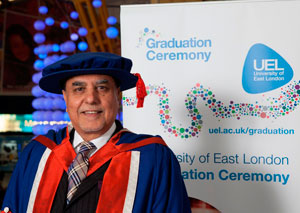
    Zee and Essel group Chairman Subhash Chandra was awarded an Honorary Doctorate of Business Administration from the University of East London (UEL).


    Mr Chandra received the Doctorate from Lord Gulam Noon, the Chancellor of the University of East London, at the ceremony for their Royal Dock Business School graduates. Accepting the award, Mr. Chandra thanked the entire senior management team at the Royal Dock Business School, saying, “It is indeed a privilege to be recognized outside one’s country, and in the presence of such highly acclaimed and respected individuals. I thank you all for bestowing this prestigious award that I feel honored to receive.”


    Mr. Chandra’s felicitation adds a feather to the crown of Zee Entertainment Enterprises Ltd and marks the establishment of the broadcaster in the UK andEurope, and follows a recent launch of DittoTV, an online, tablet and mobile platform providing live streams and TV on demand from 17 Zee channels. ZEE TV is now in the process of commissioning new programming produced specifically for the UK and European audience.


    Later today (Nov 21), Mr Chandra will deliver a keynote speech at AsPIRE, the annual event hosted by JP Morgan at Lord’s to promote Asian-Pacific global leadership. Mr Chandra will take the audience through his life journey from humble beginnings in India to becoming a global billionaire. He will reveal his role models and advise on implementing ideas into successful business operations.


  • Return of the global desis

    By Kala Vijayaraghavan & Ratna Bhushan


    Sanjiv Mehta, who took charge as MD and CEO of HUL early last month, has never worked in India before. But he has headed two countries and a region (north Africa and Middle-East) in his 21-year career in Unilever. Sources within Unilever say he specifically asked for an India posting.


    Like Mr Mehta, over half-a-dozen top-level executives from P&G, PepsiCo, Mondelez, Coke and Reckitt Benkiser have given up global roles to move back to India in the past six months.


    “India provides a unique leadership experience,” says Samik Basu, chief people officer, PepsiCo India. “It is a highly competitive and complex market and provides an opportunity to combine global learning with local resourcefulness.”


    Gautham Mukkavilli, CEO-beverages, and Chetan Mathur-controller, Pepsico India, both moved back to India from Dubai in mid-2012.


    At Coke, Venkatesh Kini spent three years at the beverage firm’s head office Atlanta as global vice-president for juices, before moving back to Gurgaon as deputy president, India and South West Asia.


    P&G’s Sonali Dhawan moved here as the India marketing leader after leadership roles in Singapore on hair care and more recently as the pet care marketing leader for Asia & Australia-New Zealand.


    So has Vivek Sunder, who has spent a decade outside India in various roles across Thailand, the UK and Singapore, before coming back here in a leadership role in the India sales & distribution team. At least three senior managers from Mondelez International – Arjun Bhowmik, Sid Mukherjee and Venkat Venepally – have also done the same.


    “The most exciting reason for me to come back was that the India business of Mondelez International has been growing at a rapid pace and is one of the key priority markets for the company,” says Arjun Bhowmik, director, expansion, Mondelez. “Also, I wanted to be closer to family and was keen that my daughter should complete her secondary education in India.”


    He worked in the Philippines, Thailand and Indonesia for over seven years. Industry watchers say even with a 6-7 % growth, India fares better than other developed markets.


    “Several managers who had moved straight into global roles are now keen to work in India,” says Rajesh Ramanathan, HR director of Mondelez India. “Those with developed markets exposure now want developing markets and India experience on their CVs.”


    In advertising, Leo Burnett’s Saurabh Varma and Lowe Lintas’ Vikas Mehta both moved back from Singapore.


    “India postings have become hot property since it is an exciting growth market and offers diversity of experience,” says Suchet Narain, MD, DRH International, a global executive search firm.


    “Global organisations are also happy to send their managers to markets such as India to ensure implementation of global best practises such as corporate governance, safety or environment issues.” Most managers have children studying abroad, so they move in with their spouse but may not necessarily stay here long term. India’s infrastructure still compares very badly with other cities globally. “But having India on their CV gives them that depth of experience,” he says.


    Several top managers such as Atul Singh of Coke and V Chandramouli of Cadbury who have been offered global postings are opting to remain in India. Gopal Vittal, former director of HUL’s home and personal care business, once seen as a top candidate for the CEO job, chose to opt out of a plum global posting and quit early last year. Vittal, officials close to the development say, was unwilling to move out of India. He now heads Bharti Airtel in India.


    Says Sameer Wadhawan, VP, HR, Coca-Cola India and South West Asia: “India is emerging as one of the nodal points of the world economy and one-fourth of the world’s population is centred in Asia. India can be an operational hub for global CEOs.” But not all executives want to come back home. “Many young executives in their late 30s or early 40s are still open to take diverse challenges in different countries,” says Sangeeta Pal, partner at search firm Transearch.


    Source:The Economic Times

    Copyright © 2013, Bennett, Coleman & Co. Ltd. All Rights Reserved

    Licensed to republish


  • NDTV Good Times refreshes, adopts #LiveYoung positioning

    By A Correspondent


    Lifestyle entertainment channel NDTV Good Times has refreshed itself and adopted the #LiveYoung positioning from earlier this week. In the new avatar, the channel will take a fresher, edgier and more relevant approach to its programming targeted towards the young and the young at heart, notes a communiqué.


    Smeeta Chakrabarti

    So what we see is a new logo, icons, idents and colour palette that reflects a “hip-cool on-air” look.   Elaborating on the channel refresh, Smeeta Chakrabarti, CEO, NDTV Lifestyle said, “After an in-depth research and a deep dive into our consumers’ mindset, the channel has recharged its offering. The new visual and content strategy is a direct result of these initiatives, and we are confident that they will resonate and connect with our viewers”.


    Said Channel Head Arati Singh:  “The programming of the channel has become more impulsive, interactive and action oriented with a younger and edgier attitude. Keeping in sync with the young and young-at-heart viewers, we have reworked on the visual appeal by introducing vibrant icons reflecting the different content and mood of the programming on-air.”


    As part of its refresh, NDTV Good Times aims to be in tune with viewers’ lives through the week and at different times during the day by introducing dedicated categories such as; ‘Good Night with Good Times’, ‘Good Food with Good Times’, ‘Good Travel with Good Times. Additionally, Kingfisher Supermodel 2013 and Bachelor’s Kitchen with Aditya Bal have been reintroduced with a brand new flavour, with more to come in the next few months.  Highway on My Plate, one of the more popular shows on the channel is scheduled to be seen in a younger avatar, we are told.