Category: NEWS

  • Rediff.com goes in for new, mobile-friendly look

    By A Correspondent


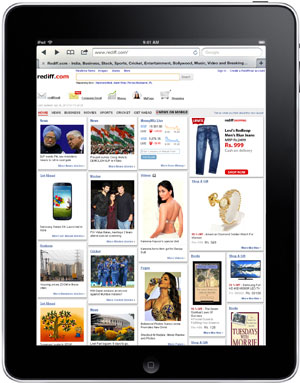
    Rediff.com India Limited has released its latest version of its website Rediff.com, featuring a new and enhanced homepage sporting a tiled interface. The design, developed inhouse, is based on user feedback. The Rediff homepage in its new avatar brings alive an assortment of content and services using the contemporary grid layout. Each unit of the grid features information photographs and videos, giving it a more interactive, image-friendly feel.


    “Current change is to respond to the consumer shift from PCs to high-graphic quality tablets and smartphones and better bandwidth in India and international markets,” Ajit Balakrishnan, Chairman and CEO, Rediff.com told MxMIndia. According to him, mobile access of Rediff.com in India currently stands at 20 percent and is rising fast. “In markets like the US it is much higher,” he said.


    Mr Balakrishnan further stated, “We have also redesigned the site in terms of providing users with the content and imagery they desire on our home page, while adding more e-commerce options, which have been in higher demand from this growing population. The Indian internet user base is quickly moving to consuming our services on various types of mobile devices, whether at home or on the go. As a result, this transition required us to take a fresh and innovative view of how our users are likely to interact with our portal. Our new tiled interface is a step towards making it easy for a rapidly growing segment of users who access our website from tablet like touch screen devices.”


    Apart from the grid layout, Rediff’s e-commerce platform, a fast-growing segment for Rediff, also gets a boost with a large footprint on the homepage to capitalize on the growing usage of e-commerce platforms throughout India.


    While e-commerce websites in India are gung-ho about their promotional and marketing activities, Rediff plans to keep it low. “We used to use TV up until 2008; since then the intersection between TV and Web has decreased. Active web users do not seem to be watching much TV. Word of mouth will carry this initiative forward,” Mr Balakrishnan asserted.


  • Times Internet partners AIR for live IPL commentary

    By A Correspondent


    Times Internet Limited (TIL) and AIR will broadcast live commentary of 33 select Pepsi IPL 2013 matches over AIR’s National Channel and FM Gold. Updates for all matches will be broadcast on AIR FM Rainbow Channel.


    The running commentary of the matches of Pepsi IPL 2013, including the Playoffs/Final, being played in India, will be broadcast alternately in Hindi and English on National Channel and FM Gold Network. The coverage area of National Channel includes Andhra Pradesh, Bihar, Chhattisgarh, Delhi, Goa, Haryana, Jharkhand, Karnataka, Madhya Pradesh, Manipur, Meghalaya, Orissa, Pondicherry, Tripura, Uttar Pradesh, Uttaranchal and parts of Assam, Maharashtra, Rajasthan and Tamil Nadu. The live commentary of all 33 identified matches will be broadcast over National Channel of AIR which is available all over India.


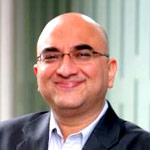
    Satyan Gajwani

    Speaking on the association, Satyan Gajwani, CEO, Times Internet, said, “We’re delighted to renew our association with AIR on Pepsi IPL. By partnering with All India Radio, Pepsi IPL 2013 will tap into a new set of cricket fan audiences across India, particularly beyond the metros.”


    “All India Radio, which has always been in the forefront of popularizing sports in India including cricket, is happy to bring live and exciting action from IPL to its listeners”, said LD Mandloi, Director General, All India Radio.


  • Zee Cinema plans to add a punch at primetime with South Indian films

    By A Correspondent


    Move over SRK, Salman and Akshay. Nagarjuna and co are here with their OTT action and comedy sequences. To make most of the genre, Zee Cinema has launched a two-week-long festival of popular southern blockbusters dubbed in Hindi – ‘South Ka Super Punch’. “Films from the South dubbed in Hindi have always given us a great response. They have their own unique brand of over-the-top action that works extremely well with the male audiences,” says Mohan Gopinath, Business Head – Hindi Movie Cluster, ZEEL when asked why the channel chose dubbed movies for the primetime slot.


    Mr Gopinath, adds, “In times when we all lead hectic lives, viewers look to cinema or television as a stress-buster. Cinema from the South with its larger-than-life hero worship and flamboyant brand of action and drama, serve as a beautiful avenue for escapism where people can forget all their stress and have a good laugh. These films have been enormous successes down south and the lead actors are worshipped like demi-Gods. Dubbed versions of south films have always rated extremely well each time we have aired these in the past and there is a strong demand for us to air more such films. Our previous festival of a similar nature ‘Dosa Meets Samosa’ had met with an overwhelming response. We’re confident that the audience will enjoy the new festival too!”


    Like the movies to be shown, the channel has also taken an off-beat creative route to promote the festival. Instead of showcasing any of the stars or even visuals from the films being aired as a part of the ‘South Ka Super Punch’ festival, the promo raises a toast to the sheer flashiness and flamboyance of southern cinema and its unique brand of comical action. It features a special rap song that has been composed in-house by the creative team at Zee Cinema, celebrating the magnificent larger-than-life attributes of these films, explains Mr Gopinath.


    Similarly to cash in on the current rage of cricket, Zee Cinema has created cricket-centric comic strips, spoofing the most widely discussed developments from the ongoing series and associating them with the festival in a unique manner. These comic strips will be available across various digital platforms.


  • Chat live while watching TV

    By A Correspondent


    iCouch, an exclusive Live TV chat platform has been developed for the ardent TV viewers and show fans. It is a free mobile application by iDubba. Launching in partnership with Zee Cafe’s ‘Grey’s Anatomy’ Season 7 from May 1, iCouch lets the viewer chat while the program is running and captures the favourite scenes.


    iCouch enables the viewer to read and ‘like’ popular chat and get heard by thousands of other fans watching the program. One can find out interesting facts and trivia about a show, invite friends and send them alerts, play contests and win big prizes while making TV viewing experience extremely entertaining and fulfilling.


    Rabi Gupta, Co-Founder – iDubba, said, “iCouch is definitely not another news or gossip outlet where we reports things or events, in-fact here the news and gossip makers and breakers are the ardent fans of the TV show. It is a chat forum that has no bar, you are the one building and developing the discussion of your favourite show.


  • McDonald’s becomes ‘Pakka Indian’

    By A Correspondent


    McDonald’s recently introduced two new ‘Pakka Indian’ burgers – Masala Grill Chicken and Masala Grill Veg. And to promote the two, it has has adopted a 360-degree approach to promote the products across all marketing platforms. The entire messaging in the communication reiterates the brand’s Indian-connect by ensuring that it caters to its customers tastes. Conceptualised by Leo Burnett, the new television commercial goes on air April 15, 2013, accentuating the ‘Pakka Indian’ ideology of an Indian customer in humorous manner. The commercial focuses on the typical Indian habits which are intrinsic to all of us – the gist being that no matter how contemporary we like to be in day-to-day life; our essential behavioural pattern still remains ‘Pakka Indian.’


    [youtube]http://www.youtube.com/watch?v=o-Mh6iAQdEU[/youtube]

    Speaking about the new product launch, Ruchin Khanduja, General Manager, Marketing (North & East), McDonald’s said, “We’re delighted to expand our menu and offer our customers a product that is unique in taste as well as  value. Indian consumers have a palate for Spicy/Masaledar/Chatpata products, this taste is well preferred across all age groups. We have tried to establish a connect between the product and consumers;  by emphasising on unique Indian traits like amazing bargaining skills, not eating non-veg on Tuesdays,   and many more such habits that make us Pakka Indian. In a similar way, the product also has a distinguished ‘Masaledar’ flavour with great value attached to it. The campaign has been designed keeping in mind the ‘Pakka India’ style.”


    The campaign is an integrated mass media campaign, which will leverage a mix of communication elements like outdoors, print and television. In addition to this, the in-store activation will be at par with efforts made on national and regional media.


    To further build excitement, McDonald’s has also stimulated some customers connect activities: running product offers to promote the trial of Masala Grill and also plans to organize Fun/Humorous activities on Pakka Indian concept, from May.


  • Rishi Khiani’s Ant Farm launches Fork Media

    By A Correspondent


    Ant Farm – an innovation sandbox that aims to create global brands ideated and built out of India – has announced the launch of its first venture in the advertising space, Fork Media. Founded by Samar Verma and Upen Roop Rai, both of whom recently stepped down from leadership positions at the Times Group, Fork Media offers advertisers innovative content-led marketing solutions, high engagement ad formats and exclusive access to the country’s leading publishers across the online, mobile and video platforms.


    “Our constant feedback from advertisers is that the typical ad formats prevalent on the web and mobile today are flawed. Users tend to tune out advertising; as a result click-through rates and engagement are trending downwards. We saw this as a great opportunity to create seamless, brand-led content propositions that give advertisers longer-term engagement with their target audience,” said Samar Verma, CEO & Founder, Fork Media.


    Upen Roop Rai, Managing Director & Co-Founder, Fork Media, said, “There is a genuine need to address challenges such as low benchmarks set on pricing, lack of innovation and broken ad formats. This is an exciting proposition for both the publisher for driving optimal revenue levels and the advertiser for creating longer-term engagement with its target consumer group. Our aim is to create meaningful, conversation-based advertising for premium brands. We have seen tremendous success in the past in creating synergies between brands and content, and we want to extend that philosophy at Fork.”


    Fork puts the brand before measurability and has created a unique index that helps advertisers reach out to their intended audience via the right publisher collaboration. It focuses on alternative revenue streams that can run parallel to the publisher’s existing monetization efforts. It has also created the biggest differentiator in the market with its core proposition – the content marketing arm Thinktank, which is the network’s in-house ideation, content creation and design cell.


    Even before the official launch, Fork has roped in clients such as HT Media, The India Today Group, The Hindu, and The Daily Mail. This collectively gives Fork a reach of over 25 million premium users across the online and mobile platforms. More publishers have signed on and official announcements will be made in the coming weeks.


    “When Samar first approached us with the Idea of Fork Media we immediately saw the potential. He has had one of the fastest growths in the online industry largely due to his disruptive ideas and aggressive approach to monetization. We are excited with the traction Fork has managed to gain in such a short period of time. It’s a winning proposition for any publisher or brand,” said Rishi Khiani, MD of Antfarm.


  • Directors discuss Bombay Talkies and 100 years of cinema

    By A Correspondent


    The directorial cast of Bombay Talkies made an appearance on the show Etc Bollywood Business with trade expert Komal Nahta. The team shared their experiences about each of their short films in the upcoming Bombay Talkies, which is slated to release today.


    The trio – Dibakar Banerjee, Zoya Akhtar, and Karan Johar – talk about the evolution of Bollywood over the past hundred years, the oldest movies that the directors have seen, the longest kiss on celluloid and the journey of each of their careers in Bollywood.


    This episode of Bollywood Business will be aired exclusively on Etc on May 3 at 8.30pm with a repeat telecast at 11.30pm on the same night.


  • RK Swamy Media Group appoints Vinish Joshi as Vice President, North & East

    By A Correspondent


    Vinish Joshi

    Vinish Joshi joins RK Swamy Media Group as Vice President, North & East. He will be responsible for the integrated media offering of the company in these regions. He is based in New Delhi and will be part of the management team at RK Swamy Media Group.


    Confirming the appointment, Sandeep Sharma, President, R K Swamy Media Group said, “We look forward to Vinish strengthening our Delhi & Kolkata operations and growing the business. His marketing and media agency experience along with his understanding of digital media will help in enhancing our integrated media offering to clients.”


    Mr Joshi has over 19 years of experience having worked with Shaw Wallace, ABP and Spicejet on the client side and JWT, Lintas, Mediacom on the agency side. In his last assignment he was heading the Mediacom Delhi office for over six years.


    On his new assignment Mr Joshi said, “I am delighted to be given this opportunity and look forward to be part of an agency that has a clear vision of growth and a result-oriented culture.”


  • Aiming to be the most complete communications firm in the world: Yusuf Hatia, FleishmanHillard

    By Johnson Napier


    In what could be termed as a defining moment, communications shop FleishmanHillard unveiled a newly refreshed corporate brand and associated digital media property on May 2. The new branding reflects the evolution of the PR firm into a fully integrated communications company that provides clients with complete communications solutions.


    As part of the exercise, FleishmanHillard has unveiled a new brand platform, tagline and logo. The new logo reflects the trust and confidence that clients have placed with the firm and is said to have a more fresh, innovative and contemporary interpretation. While the logo has brought the names of both founders – Fleishman and Hillard – on one line to reflect the heritage of the firm, there is also an iconic mark that can be seen that complements the logo and symbolizes the transformation of the firm.

     

    Yusuf Hatia, MD, Client Service, FleishmanHillard India responds to queries by MxMIndia on the significance of engaging in such a game-changing exercise. While there is a lot that is being planned through this initiative, Mr Hatia asserts that the aim is to let everyone know that FreishmanHillard is the most complete communications firm in the market. Excerpts:


    Given that FleishmanHillard is in the midst of a rebranding exercise at the moment, how game-changing and extensive an initiative is it going to be?

    We think it is part of a very important and significant development in how we position the changing nature of our business in an industry that has been rapidly evolving over the last few years. Over these years, in most of the markets we operate in, we have been delivering fully integrated work – from identifying a critical insight, to taking responsibility of the strategy, to developing the story, and delivering content across paid, earned, shared and owned channels. Our brand refresh permeates our agency and we see it as game-changing. Our industry is evolving and we plan to be at the forefront. In most of the markets we operate in, we’re being asked for and we’re delivering integrated work from insight to strategy to the story and content across all channels, not just via traditional print or broadcast. For instance, many of our clients and industry peers are surprised to hear that, last year, FleishmanHillard placed $1.2 billion in paid media. Our new brand will communicate the new reality of our company.


    What are the reasons for undergoing a repositioning initiative at this juncture?

    The market has evolved beyond the previous silos of advertising, media, PR and other disciplines and we feel it is time that we reflect how our business has changed and is changing. While PR remains at the heart of FleishmanHillard, the very definition of PR is changing and broadening. Our brand refresh let’s everyone know that we’re in communications and that we want to be the most complete communications firm in the market. Our brand hasn’t changed since 1990 but the market has, so we took a hard look at what it represented, what we’re actually doing and have recreated ourselves for the present and positioned ourselves for the future. Where we landed was the concept of true and the need to be true.


    What are some of the new changes that one will get to see from this rebranding exercise?

    FleishmanHillard is treating the change through a brand refresh. This goes beyond a new logo and a strapline. We went back to our DNA to understand what our unique proposition is and listened to clients, partners and employees. All of our analysis focused on a need to be true and our refresh is built around that word. True is our reality as well as our aspiration. We see our role as helping clients be as they wish to be seen. In many respects, this is what PR has always been about and we’re remaining true to our virtues in helping our clients present a true picture of who they are but in a new age where the dynamics of communication are very different. Organizationally, we’ve invested in digital in India and globally. We’ve also brought in marketing integration experts and key insight specialists.


    How would you analyze the year 2012-13 for FleishmanHillard on the growth parameter in India?

    Our business in India is still growing and we had a solid year last year that is in line with our strategy for what we believe in will be one of the most important PR markets in the world. India is unique in its size, demographics and growth trajectory but also because it is a democracy with a free and independent media. We have a strategy to organically and inorganically grow and work for some of India’s leading brands as well as helping our global clients navigate the Indian market.


    In terms of new client wins, how would you rate your performance across verticals?

    We had a good year in 2012 and added some important clients to our existing list. They include L’Oreal, Sony and Convergys; we’ve also extended work with existing clients such as Godrej and Emerson (a company that FleishmanHillard has worked with for nearly 60 years). We’ve only just scratched the surface but that’s what makes this market so interesting – the potential for growth is immense!


    What were some of the new initiatives you undertook in 2012-13 to spur growth for your company?

    We invested in digital talent at a very senior level when we hired Riitu Chugh who came to us not from another PR agency but from other creative and digital specialist agencies. We’ve strengthened our senior management talent with new general managers in Mumbai and Delhi to lead our businesses in the two biggest Indian markets. Our talent strategy in India is consistent with our strategy elsewhere: find the best people, build the business around them and give our clients what they really need. It is in line with our holding company Omnicom’s motto: talent conquers all. In 2013, we’ll continue to add to our senior talent, invest in our teams through training and cross network account work and look for non-linear growth in areas including social, digital and across paid, earned, shared and owned channels. We’re also collaborating closely with others in the Omnicom network and have pitched and worked alongside TBWA, BBDO and DDB Mudra. In fact, earlier this year, we moved in with DDB Mudra not just because the company has a great working space but because there are immense advantages of sitting alongside hundreds of creatives from every single marketing discipline. PR cannot afford to sit in isolation and remain independent of other marketing strategies. The new reality is to work with everyone else to address what clients want – and more often than not, that’s a total solution to a business need and not PR. A project for Nissan last year did just that and we worked with TBWA, a UK digital agency and others to deliver a multi-discipline campaign that was shortlisted for a Spikes Asia Award.


    The past year was believed to be a tough one for many players in the PR & Communications space. How did the year pan out for FleishmanHillard?

    In India, our business is still growing and we didn’t see the kind of slowdown that others may have experienced. But our business is a little different from other players in this market and we have taken a contrarian view of the India opportunity. We have benefitted from international clients who still see India as a growth opportunity and we work with Indian enterprises that are looking to grow in India and beyond. There was a period over the last 6-8 months when there was a slowdown in activity which some of our clients put down to the changing political landscape and a policy paralysis, but that seems to have now passed and we’re seeing business as usual.


    A few big players from the fraternity have highlighted a degrowth that’s being observed and also skepticism from the client’s end to pump in more money. Is it a cautious phase for the industry to be in right now?

    The market is changing and we’re seeing clients ask for more evidence and measurement to prove the value delivered. But we are used to this approach in other markets and we have processes and mechanisms in place that can put across a convincing position to, for instance, a procurement team or a CFO. This is a market where there is an instinctive need to show a return on investment and asking for a hike in fees is not a given at all. But when you can show extra value or tap an unidentified need, for instance digital, then clients are open to investment.


    The recent past has also seen a few players venturing out to offer unique solutions of their own. Will it be a healthy exercise to engage in the long-term?

    Every agency needs to differentiate so it’s always a healthy approach to bring new solutions to India. You will see our brand refresh showing how we’re different and how we can bring something new to the conversation.


    Are you contemplating launching new verticals/arms in the imminent future?

    At this stage, we’re focused on delivering the core business of FleishmanHillard in India and since we’re still relatively new to this market, we have a lot of opportunities and potential to address. However, if a client needs a particular offering and we see a business justification for doing so, we’re always open to expanding our scope in India. We’ve done this in the past: a major banking client wanted a very specific offering and we created a dedicated team for that client and for a particular need.


    What is your vision for 2015 in India?

    Exactly what we aim to be in every other market: the most complete communications firm in the world.
     

  • Go Air awards creative duties to Lowe

    By A Correspondent


    After a pitch that lasted seven months, Go Air awarded its creative mandate to Lowe Lintas and Partners’ Mumbai office.


    Explaining the reason behind selecting Lowe Lintas and Partners, Go Air’s Chief Executive Officer Giorgio De Roni said, “We believe in the capability and expertise of Lowe Lintas & Partners to enhance our creative outputs and better engage our audience to experience and interact with the Go Air brand”.


    Abhimanyu Mathur, Senior Vice President, Lowe Lintas and Partners added “We are delighted to get an opportunity to work with Go Air. It’s a challenging yet interesting category and we will do everything possible to justify the trust reposed in us by the Wadia Group.”


    Joseph George, Chief Executive Officer, Lowe Lintas and Partners India adds, “Airlines is a very exciting and challenging category, and the low cost sector even more so.  We are ready for this challenge and look forward to helping Go Air fly higher. This alignment is even more gratifying since this will further strengthen our relationship with the Wadia Group given our long and successful involvement on the Britannia business”.


  • Intel, doing something wonderful


    By Ananya Saha


    Intel, which has been getting quite aggressive in the Indian terrain, has been developing many consumer products in computing device and mobile segment. To name a few, Xolo X900 smartphone in association with Lava and Fonebook in association with Asus. Apart from the consumer products, Intel has also initiated its National Digital Literacy Mission that entailed the ‘Go Do Something Wonderful’, ‘My Discoveries’, Digital Literacy Week’ and ‘Follow the Fiber’ campaigns in urban, semi-urban and rural areas.


    The ‘Go do something Wonderful’ campaign that has been playing up on the ATL level claims to have had more than 65 crore impressions online and is spanned across seven languages to drive technology adaptation in rural, semi-urban and urban areas.


    On the BTL level, Intel launched ‘My Discoveries’ campaign targeting college youth, IT Hubs, Corporate parks to demonstrate the interaction between multiple technology experiences in a connected world. The My Discoveries campaign boasts of being ab experiential marketing at a BTL level, the touch and feel factor is showcased in a way where the students not only get the feel of the product and the technology but also enhance the skill-set using the product. More than 30 lakh youth have been engaged though this campaign


    While in conversation with MxMIndia, Sandeep Aurora, Director of Marketing and Market Development, Intel South Asia, prefers not to divulge financial details, but he does reveal the plans for Indian market.


    Sandeep Aurora

    How is the Indian market growing for Intel?

    InIndia, personal computing device penetration is a mere 10% which means there is huge growth potential that the country offers. Intel is committed to driving the growth forward by showcasing the magic of a personal computing device and driving greater relevance. In today’s multi-device connected world, Intel enables consumers to explore their creativity, enhance their productivity and indulge in a world of digitally powered entertainment. The aim is enhancing affinity and excitement for the personal computing device as an enabler of amazing possibilities in their everyday lives.


    Intel recently launched My Discoveries campaign. What was the thought behind it?

    Indiais a growing market; consumers are adapting to new products and fast moving towards brands which enable them to better their lifestyle, connectivity and productivity. It is important that our consumers experience the possibilities that the brand brings alive for them and how this impacts their future in a real time scenario focusing on making people realize what they are capable of doing.


    The My Discoveries program spanned across two quarters was hugely successful reaching over three million youth across India with the message of personal computing device relevancy and usage in a highly contextual, relevant, personal and engaging manner The approach of a personalized experience for the consumer has worked well, it’s amazing to be able to actually create an original sound track, a photo or video montage and carry it back with you.


    My Discoveries extended beyond BTL.

    On ground activations under the ‘Go do something wonderful’ campaign, which we call ‘My discoveries’, targets people in campuses, i-cafes, malls and other places. The campaign reached out to the audience at multiple touch points including campuses, corporates, BPO’s, Internet cafes, malls and retail with its unique experience. The engagement extended itself to digital and social enabling audiences to experience the My Discoveries on a virtual platform while sharing their wonderful experiences online. Pulp Strategy was the agency responsible for the execution of the campaign.


    Does the campaign mark Intel’s marketing shift?

    In the recent past, Intel made a critical & fundamental shift in communication. A leap from “what we make” to “what we make possible”. The objective of this campaign was to build a deeper, enduring emotional bond between Intel & the end-user while creating an increased preference for the Intel Powered PC in the minds of our target audiences. The premise of our campaign was that even though devices like cameras, smartphones, and MP3 players are handy and generate excitement, their potential is limited without a personal computing device. The personal computing device is the central hub to a connected device world.


    The campaign plays on the sentiment that “Tabs, phones, cameras are an expression of me, but my personal computing device is me and it’s where I do wonderful things”. Intel enables consumers to explore their creativity, enhance their productivity and indulge in a world of digitally powered entertainment. We wanted to showcase these possibilities by creating inspiring and compelling experiences which drew out the relevance of owning a PC in a connected world. The focus was also on offerings hands on experience of the power of a processor, while making the experience delightfully personal “what an Intel Powered PC can “do for me”.


    What was the brief that was given to Pulp Strategy for this campaign?

    We briefed several vendors during the RFP process about this concept but Pulp Strategy, the agency chosen for this campaign came back with the best response to our brief and through extensive mutual collaboration we fine-tuned the brief and the deliverables in a way that would deliver the best impact for consumers to explain the relevance of a personal computing device by offering a delightful, engaging and personal hands-on experience.


    Has Intel’s strategy in the Indian market changed over the years? Does this change reflect in your marketing and advertising in this market?

    In the process of brand evolution, marketing plays an important role. For a 40-year-old company, whose first marketing campaign was focused at projecting how things have changed and advanced; Intel has evolved in its marketing strategy with the various products that it has launched over time, learning at each step. We have moved on from what Intel is and what it can do to make people realize what they are capable of doing. Campaigns like My Discoveries, and Go Do something Wonderful is a step in the direction of making consumers realize the possibilities that owning and using a PC opens up for them.


    India remains a complex market. What will be your strategy for the Indian market, going forward?

    Our research has revealed that one of the main reasons for consumers to not buy a personal computing device immediately is the lack of relevance for it in their minds. But we believe that as the awareness about technology coupled with digital literacy increase in the country, more and more of the hitherto untapped individuals would realize the importance of owning a PC and the sales would pick up. Keeping this in mind, Intel will continue to focus on India’s personal computing device market which is growing at a rapid pace. Also growth of the personal computing market inIndiais inevitable given the low rate of domestic technology adoption in the country.


  • Ads back on telly as IBF, AAAI resolve differences on Net billing

    By A Correspondent


    Advertisements will be back on Indian television as the Indian Broadcasting Federation (IBF) and Advertising Agencies Association of India (AAAI) resolved their differences on the net billing issue in a meeting that ended late last night (May 2).


    Facing tax liabilities on account of non-deduction of TDS on agency commission, broadcasters had stopped airing ads as advertising agencies did not agree to their proposal to move to net billing. While the Advertising Agencies Association of India (AAAI) continues to maintain that the tax demands made on some broadcasters are bad in law, it has committed that it will attempt to get a circular from CBDT that clarifies that broadcasters like other media  are not required to deduct TDS from agency commission since broadcasters do not pay the agency commission.


    In a meeting that lasted over seven hours, representatives from IBF and AAAI arrived at a solution that met the needs of broadcasters and at the same time assured agencies of their legitimate earnings. Consequently, ads will be back on air starting today (May 3).


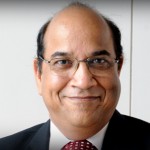
    Arvind Sharma

    Says Arvind Sharma, President AAAI, “We are happy that we have resolved the impasse.  We ensured that both broadcasters’ and agencies’ business interests are protected.  We are happy that the solution we have found will meet the needs of our member agencies in terms of their transactions with their clients.” The IBF spokesperson wasn’t available for comment at the time of writing though informally they communicated to this correspondent that all was now well.