Category: NEWS

  • DDB Mudra Mumbai & Adventure 18 urge Corporate India to step Outdoors

    By A Correspondent


    While the rest of the world works 50 to 60 hours a week, corporate India clocks in 80 hours a week, leading lives that revolve around their desks, with time away from work defined by time spent surfing the internet.


    DDB Mudra Mumbai and Adventure 18 saw this as an opportunity to urge corporate India to get away from their workstations and step out for an adventure. Apart from this, the other challenge faced by the team was execute the campaign in a cost-effective way.


    The team used a surprisingly overlooked, yet effective medium of communication – window washers – to do the job.


    Window Washers, dressed up in adventure gear, were sent down office buildings located across the city of Mumbai. In a sight worth a watch, mountaineers, rock climbers and para gliders descended on buildings across the city.


    The result was overwhelming. There were a few who were scared, some were amused, but everyone took note of the men in adventure gear. And when the window washers had the attention of the office they revealed their message: “Don’t you wish you were outdoors?” The message went on to give the website address of Adventure 18.


    Speaking about the activity, Louella Rebello, Executive Creative Director, DDB Mudra Mumbai, said, “Sometimes you are at work, you look out of the window and wish you could be in the great outdoors instead. We decided to actually put a guy out there telling you to do just that. Adventure 18 was a great partner in making this happen.’”


    Mohit Oberoi, Owner, Adventure 18, added, “It’s a great concept. More importantly, it’s brought attention to what we do and stand for as a company. That is to give people an unforgettable experience of the outdoors”


  • Paradox of choice is the issue: Nitin Paranjpe

    By A Correspondent


    It is time to listen, as the Goafest 2013 Conclave’s theme says. Hindustan Unilever MD and CEO Nitin Paranjpe did exactly that in preparation for his keynote speech. He asked his team to go out and ask TV viewers what they felt about advertisements, and to his dismay, he said, he discovered that practically everyone said they found ads an unwelcome intrusion.
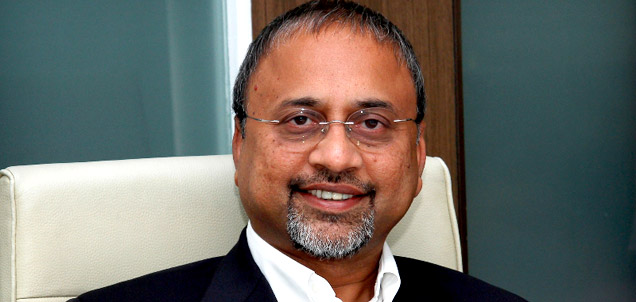

     

    Thinking about what is troubling the industry today, Mr Paranjpe said, he had come to realize that the issues facing it are such that merely expecting agencies to fix them is not possible. We have to look at the larger advertising and marketing function, he said. He pointed out that the basic function advertising serves, that is, the human need to stand out, has not changed – the techniques and the medium have changed. The Why remains the same, the How has been transformed, he said.


    The consumer today is faced with the paradox of choice, Mr Paranjpe said. Consumers have never had it so good. There are lots of choices, yet there is little to choose between them. Differentiation is tougher, and the pressure makes for desperate attempts to stand out, leading to meaningless differences.


    In the days of Doordarshan, he said, there was no choice of channels and communication vehicles were limited to either the Hindi feature film or Chitrahaar, both sure ways of reaching one’s audience. Content was so bad that people waited for ads, he remarked. From that single channel to over 700 channels today, audience fragmentation has meant that it is difficult to reach people. Hence the bombardment of people with messages. Despite this, however, they remember nothing.


    People are not interested in seeing our ads, Mr Paranjpe said, and advertisers are getting away with it because consumers do not really have much choice. But once the choice comes, he said, people will not watch ads. The cost of digital video recorders is getting lower, and with a DVR in every home, it is unacceptable that we do nothing about it, he said.


    The impact of social media

    Mr Paranjpe said social is transforming word-of-mouth, enabling it to become dramatically more powerful. The proverbial six degrees of separation between individuals has now shrunk to four degrees.


    He said the digital revolution calls into question the precept that advertisers are the creators of content. Now, the ability of every individual to create and share content is catastrophic for marketers. In some cases the assumption that the marketer has control over social content is a mistaken one, as social media users take ownership of the content, make up their own minds about it, and it can even backfire on the marketer. He cited the case of the Vodafone #mademesmile hashtag campaign, which resulted in embarrassment when questions of tax evasion were shared using the company’s own hashtag.


    Brands cannot control content any more, and in such a scenario how do we brand, how do we market? Mr Paranjpe said marketers need to profoundly rethink branding. “Yesterday was creating a myth around branding. Myths which are not founded on truth cannot survive. Today and tomorrow, branding is about finding the truth and sharing it,” he said.


    Winning back the trust of the people is key, he said. “If people trust you, they will buy, recommend, share. Why don’t we do that?”


    Touching on consistency, Mr Paranjpe said creativity is remarkably powerful but if it is not consistent, there is no coherence and the brand loses equity. “We underestimate the role, the power of consistency,” he said, adding that there is no disconnect between creativity and the ability to create value. “We only assume that discipline kills creativity.”


    Giving purpose and meaning to advertising

    The context around us today, Mr Paranjpe said, is that trust and confidence in business is at its lowest. Business cannot survive if we don’t address this. Events such as Occupy Wall Street will bring down brands, companies, governments if we don’t act responsibly.


    Consumers today are more aware and concerned about big issues, but feel helpless to do anything about them. There are challenges and opportunities for brands here, Mr Paranjpe said, as a brand is basically a product to buy and an idea to buy into. Smaller brands are doing this, and big brands have to follow suit. It is possible to run a commercial enterprise while doing good, he said, and consumers who feel for the cause will gravitate to the brand which empowers them to do something about it.


    The situation today is that people are cynical about brands, and about advertising and marketing. Brands have an opportunity to change this, he concluded.


    Photograph: Shailesh Mule/Fotocorp


  • It’s time to listen:speakers @ Conclave

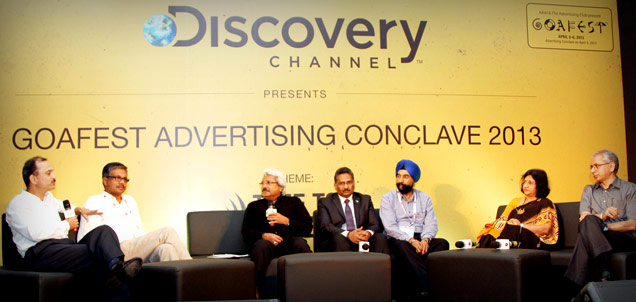
    LtoR Nitin Paranjpe, Arunabh Das Sharma, Sunil Alagh, Suresh Bandi, RS Sodhi, Arundhati, Bhattacharya, Harit Nagpal

    By A Correspondent


    The word Conclave suggests a serious discussion on matters of importance. While the Goafest 2013 Conclave has every intention of achieving this aim, and eventually does achieve it, one cannot put a number of intelligent, good-humoured people into the same room, ask them to speak, and then not expect at least a few chuckles.


    To be fair, Conclave President Srinivasan Swamy struck a serious note when he outlined the topics the Conclave has tackled over the years, from recession, growth, change and dearth of ideas. This year, with the feeling again being that it is time to grow, the Conclave’s theme is ‘Time to Listen’, as it expects to have seniors tell the advertising fraternity what is wrong in the profession and how best to address it, he said.


    Advertising Agencies Association of India President Arvind Sharma introduced keynote speaker Nitin Paranjpe, MD and CEO of Hindustan Unilever, who, he said, is a strong proponent of the idea that businesses can survive only if they seriously serve society. Most of his leadership of HUL, Mr Sharma said, has been in tough times, and he is a client who truly believes in advertising and marketing.


    After Mr Paranjpe’s thought-provoking address, Gujarat Cooperative Milk Marketing Federation managing director R S Sodhi introduced a dose of levity with his presentation revolving around the engaging Amul moppet. Having worked with Amul creator Verghese Kurien, he said, had been immensely valuable as Dr Kurien understood the importance of advertising in an era when no Indian company was being advertised.


    Highlighting the learnings he had gleaned from Dr Kurien, Mr Sodhi said that stability in the core team was very important, both in client and agency. Da Cunha Associates had been the custodian of the brand (Amul) from the start, and stability had paid the brand rich dividends.  The core brand identity had remained the same since 1956, and there had been consistency in execution as well, which was a consequence of the complete trust there was between client and agency. In fact, Mr Sodhi said, the client sees the Amul creative only when the public sees it – that is the degree of the trust between them.


    Mr Sodhi added that advertising should sell the product, not the creator of the product. “Why is creative created? It is to sell the product,” he said.


    Summarising other learnings from Amul over the years, he said the agency needs to not only listen to the client, but also understand them. Raising a hearty laugh from the audience while concluding, Mr Sodhi recommended that advertising awards should be done away with. “The advertising fraternity are creating the awards and also giving them. It is the clients and the consumers who should be giving these awards,” he quipped.


    Arundhati Bhattacharya, MD, SBI Capital Markets, spoke about the agency-client partnership which, she said, has to be equal. In public sector units this partnership tends to be amorphous specially since people tend to be transferred and the agency may end up dealing with a few different individuals on one account. In such cases, she said, maintaining consistency becomes difficult and the agency should make it a point to partner the organization, not the person they deal with.


    For PSUs, Ms Bhattacharya said, it was often observed that agencies do not recommend new media and instead focus on traditional print. Agencies need to tailor media to the client’s needs, she said, and should understand the corporate personality and ethos. Often, she added, agency people tend to get overawed by the client to such an extent that they allow the client to dictate the ad content. Moreover, agencies need to do primary research, without which they will not have the big idea and the differentiation.


    Concluding, Ms Bhattacharya emphasized the importance of keeping things simple, giving the example of the classic Jenson and Nicholson paints advertisement, which used varying visuals and the slogan, “Whenever you see colour, think of us.”


    Asking the key question, “What do clients want?”, Suresh Bandi, Deputy Managing Director, Panasonic India, said the answer is Value. Value can be subjective, he said, but in general value came in the form of results, process quality, access costs and fees. Clients do not want creativity for the sake of creativity, he said. They appreciate creativity but there is a commercial objective. On process quality, he said agencies can be disorganised but there should be a method in the madness. Moreover, agency personnel must be accessible to the client – the greater the effort the client has to make to reach the agency, the lesser the value for the client. Also, he said, higher fees mean less value for clients, as they need to reduce expenses. When clients get value, it ensures their loyalty, commitment and satisfaction, he added.


    Later, Arunabh Das Sharma, President, Revenue, Bennett Coleman and Co, said five trends that bother him are: Seeing the world through a 30-second TVC, separation of creative, media and account planning, the demise of planning, decline in the quality of client-facing talent, and overused excuses which leave clients frustrated.


    Limiting advertising to the lens of a 30-second commercial meant both, the death of imagination and a lack of quality work, Mr Das Sharma said. He added that the decline in planning had led to lack of marketing insights, lack of imagination and consumer insights, and to media planning being subservient to media buyers.


    Harit Nagpal, MD and CEO, Tata Sky, made a short and entertaining presentation on what he feels are issues that need to be addressed. Role clarity in agency-client expectations is needed, he said; Digital video recording is changing how people are watching TV, and brands must be conscious of inputs from this section; Digital is changing consumer behaviour and feedback paradigms; complexity in medium and technology means that things are no longer as they were, and both agency and client have to move with the changes; Clients have to be selective and hire professionals and specialists; and agencies have to take a stand, confront and contradict the client if required, and for that they need to hire strong people to meet with clients. Sunil Alagh, founder and CEO, SKA Advisors led the final panel with a Q&A of the speakers of the day.


    Photograph: Shailesh Mule/Fotocorp


  • Mindshare tops in Media Abby 2013


    By A Correspondent


    >It was the first day of awards at Goafest and media major Mindshare was flying high being ahead of the pack. The Group M agency continued its domination of the media advertising agency awards scene in recent times by bagging 10 metals in all, three of these being golds.
    While there were no Grand Prix awarded in the Media Abby, the highest level of awards in each category, Starcom Mediavest, Interface Business Solutions and Milestone Brandcom bagged a gold each. Although in terms of number of metals, Maxus was #2 with a tally of six, the bulk of its metals were bronze. Lodestar UM and BBDO Proximity bagged two silvers each.


    Crediting his team’s hunger for effective work and also awards, Ravi Rao, Leader, South Asia, Mindshare said that his clients also active encourage them to “break through the norms and come up with unique and different but also be effective in the process”.


    And how does Rao expect to carry on the winning spree into the next awards season? “Well, continue to do disruptive ideas that can really come alive, implementation is key but at the end it should be effective on the brands.”


    As many as 660 entries were received in the Media Abby category from 50 agencies. Of these, 16 agencies bagged 46 awards.


    Other than the Media Abby, awards for three award categories from the Creative Abby were also given away. These being from the Design, Direct and Digital domains. The highlight here was that Interface Business Solution won a Grand Prix for Tata Docomo.


    The Abby, which is organized by the Advertising Club at Goafest each year, is regarded as India’s most recognized award for the advertising fraternity.

    Sr No Name of the Agency Grand Prix Gold Silver Bronze

    Total

    1

    Mindshare


    3

    6

    1

    10

    2

    Starcom Mediavest Group


    1

    1

    2

    4

    3

    Interface Business Solutions (I) Pvt.Ltd


    1


    2

    3

    4

    Milestone Brandcom


    1


    1

    5

    Lodestar UM


    2

    3

    5

    6

    BBDO Proximity India


    2


    2

    7

    Maxus


    1

    5

    6

    8

    Madison Media -Pinnacle


    1

    4

    5

    9

    Interactive Avenues Pvt. Ltd


    1

    1

    2

    10

    McCann Worldgroup


    1


    1

    11

    Mediacom Communications Pvt. Ltd


    1


    1

    Source: Goafest/Media Abby. Note: the ranking, done in the Olympic style with metal type being the yardstick, is not provided by the organizers.


  • Put customer first: Ray Velez @ Goafest 2013

    By A Correspondent


    With the mantra being Digital everywhere one looks, it was not surprising that this theme predominated at the knowledge seminars on Day 1 of Goafest 2013.


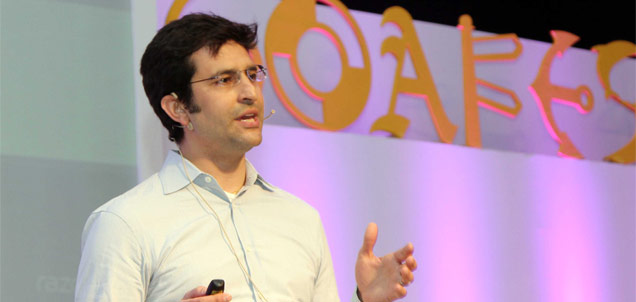
    The most significant points came from Ray Velez, Chief Technology Officer of Razorfish, who spoke on Transforming Business at the Intersection of Marketing and Technology. Emphasising that technology is transforming the customer experience, he cited a Gartner study which predicted that CMOs will own more of the technology budget than CTOs.


    This meant that technology plus media plus creativity made for the new brand experience, he said. Traffic is now two-way, and the hashtag is a way for customers to communicate back to the brand.


    He said there are five principles that must be embraced:

    1. Put the customer at the centre.

    2. Think of your brand as a service.

    3. Reject silos.

    4. Act like a startup.

    5. Embrace diversity.


    Your organization must be structured around the customer, Mr Velez said. What you get is data based on actual activity, in digital more than anywhere else. Strategy must be based on actual data from customer feedback. Marketing, technology and creativity are no longer discrete activities. If you don’t act like a startup and put the customer first, someone else will.


    As an example of such proactive responsiveness, Mr Velez cited the case of the Smart Car / Smart USA Twitter reaction to negative comments about the car. The tack taken was Humour the Haters, and for every wisecrack about the car, the company put out well-thought out, informed responses which gained them a great deal of goodwill and appreciation for the wit and good humour with which they had handled the comments.


    Mr Velez stressed that the organization must be structured around the customer; and that if it does not put the customer first, someone else will.


    Roger Mulchandani, Director of Warc Asia-Pacific, tackling the topic of ‘Seriously Social’, said the traditional way of looking at television and digital as rivals was no longer valid. TV and digital are buddies, he said, as their roles were overlapping and often symbiotic.


    Social media is certainly here to stay, he said, but he also highlighted the dangers of over-reliance on it. In any given week, less than 0.5 percent of a brand’s Facebook fans engaged in any actual engagement with the brand that they are fans of. That is how effective Facebook really is, he said, and added that we need to lower our expectations of brands on social media. Social media should be used for reach rather than loyalty, he suggested.


    Nick Vale, Global Planning Director of Maxus Worldwide, speaking on “What great work looks like in our changing world”, said that the focus needs to shift from the big idea to the long idea, ie, ideas that are sustainable over time and have staying power. Digital was a great enabler, as it can make ideas now live beyond the screen, he remarked. He added that the focus should be on storytelling across channels, not silo-based thinking.


    Each speaker also interacted with the audience in a Q&A session at the end of their talk, and the best two questions in each session won iPads.


  • Filmmakers need freedom: Dave Alberts @ Goafest 2013

    By A Correspondent


    Dave Alberts of Mo Film, speaking on Democratization of Creativity, said that for a filmmaker the most important aspect of democratization is freedom. He said that independence of thought was key to making groundbreaking and memorable films.


    He showed examples of films made independently by small and individual filmmakers, and said that technology was increasingly enabling filmmakers. “Any filmmaker can make a film of broadcast quality,” he said, quoting Francis Ford Coppola who had once remarked, “Some little fat girl in Ohio is going to make a beautiful movie with her father’s camcorder.”


    “The exciting thing about the internet and technology is that it is giving creative people a stage,” Mr Alberts said, adding that the agency should keep the process simple in order to liberate creatives. This only helps the client, he said, because different films have different roles, and with democratized creative, one can make certain types of films to reach specific targets.


    He said Mo Film had always encouraged independent film-makers, said Mr Alberts, and took the opportunity to announce their contest for a Durex film that interested people could bid for.


  • Digital dominates discussions @ Goafest 2013


    By Vidya Heble


    With the mantra being digital everywhere one looks, it was not surprising that this theme predominated the knowledge seminars on first day of Goafest 2013. Thursday’s speakers were part of the Industry Conclave which always precedes the two-day Goafest, the Indian advertising trade’s flagship convention-and-awards event.


    The most significant points came from Ray Velez, Chief Technology Officer of Razorfish, who spoke on Transforming Business at the Intersection of Marketing and Technology. Emphasising that technology is transforming the customer experience, he cited a Gartner study which predicted that CMOs will own more of the technology budget than CTOs. This meant that technology plus media plus creativity made for the new brand experience, he said.


    Mr Velez stressed that the organization must be structured around the customer; and that if it does not put the customer first, someone else will.


    Dave Alberts of Mo Film, speaking on Democratisation of Creativity, said that for a filmmaker the most important aspect of democratization is freedom. He said that independence of thought was key to making groundbreaking and memorable films.


    He showed examples of films made independently by small and individual filmmakers, and said that technology was increasingly enabling filmmakers. “Any filmmaker can make a film of broadcast quality,” he said, quoting Francis Ford Coppola who had once remarked, “Some little fat girl in Ohio is going to make a beautiful movie with her father’s camcorder.”


    “The exciting thing about the internet and technology is that it is giving creative people a stage,” Mr Alberts said, adding that the agency should keep the process simple in order to liberate creatives. This only helps the client, he said, because different films have different roles, and with democratized creative, one can make certain types of films to reach specific targets.


    Nick Vale, Global Planning Director of Maxus Worldwide, speaking on “What great work looks like in our changing world”, said that the focus needs to shift from the big idea to the long idea, that is, ideas that are sustainable over time and have staying power. Digital was a great enabler, as it can make ideas now live beyond the screen, he remarked. He added that the focus should be on storytelling across channels, not silo-based thinking.


    Roger Mulchandani, Director of Warc Asia-Pacific, tackling the topic of ‘Seriously Social’, said the traditional way of looking at television and digital as rivals was no longer valid. TV and digital are buddies, he said, as their roles were overlapping and often symbiotic.


    Highlighting the dangers of over-reliance on social media, he said that in any given week, less than 0.5 percent of a brand’s Facebook fans engaged in any actual engagement with the brand that they are fans of. That is how effective Facebook really is, he said, and added that we need to lower our expectations of brands on social media. Social media should be used for reach rather than loyalty, he suggested.


    Each speaker also interacted with the audience in a Q&A session at the end of their talk, and the best two questions in each session won iPads.


    A highlight of the day was the IAA Debate organised on the sidelines of Goafest which saw senior members of the industry debating whether with fragmentation of the media, the role of creative advertising has become more important in brand communication. Vikram Sakhuja and Anupriya Acharya from the Group M fold were against the motion while Prasoon Joshi from McCann Worldgroup India and Partha Sinha of BBH India were for the motion. The debate was won by those against the motion.


    The Media Abby and Creative Abby awards in the Digital, Design and Direct categories were awarded in the evening. Saturday is the closing day of the event with some more knowledge session, the rest of the Creative Awards and a rain dance to add to the festive spirit.


  • We are not competitive, we’re lazy: Abhishek Kapoor

    Abhishek Kapoor

    By A Correspondent


    Speaking on the theme of “Do what your heart says” at Goafest 2013, Bollywood director Abhishek Kapoor, who received a rousing welcome with whistles and cheers from the audience, shared how his early years had been a time of struggle and a lot of self-doubt. Still, he said, he had persevered because he believed in what he wanted to do. It is all the more difficult to carry on when everyone around you is casting doubts on your goal, he remarked.


    He said he grew up surrounded by films but didn’t really want to become an actor. He considered different careers including a dotcom business, but it took 4-5 years and a slump to make him start writing.


    After his ground-breaking Rock On, it took four years to make Kai Po Che, he said. “It is difficult to do something you believe in. it was a difficult film to make, but when it came out it was immensely satisfying.” He said it was the many failures and setbacks he had encountered which had driven and sharpened him to do better work. “Success is all very well but it is the failures which are important in my life,” he remarked.


    Mr Kapoor was scathing about the state of the film industry in India. “People are not competing, they are lazy. We are congratulating ourselves on making something but it is not standing out, there is nothing new.”


    Compensation played a significant role in this, he said. “We don’t pay writers. But when the film reaches the stars level, that is when payment starts, because the stars are there.”


    The audience responded enthusiastically to Mr Kapoor’s talk with questions, in a session moderated by Madhukar Kamath.


  • Leave marketing behind: Pepsi’s Shiv Singh


    Shiv Singh

    By A Correspondent


    On the second day of knowledge seminar sessions at Goafest 2013, Shiv Singh, Global Head (Digital) of Pepsi, spoke about “Why no one cares about marketing” and outlined five ideas which he said were important in the current climate.


    1 Leave marketing behind

    Expanding on this, he gave the example of Beyonce’s unmarketing campaign, #beyherenow. “It was not just an ad but a new lens into Beyonce,” he said. The ad also launched a new song, Grown Woman, and the visuals and lyrics were anchored in the culture of her past and her future. It was the start of a deep creative collaboration.


    2 Think about experiences, not more ads

    In an age when every brand can have a tangible relationship with customers, original programming, owned or shared distribution, and sustained engagement and loyalty are replacing traditional marketing, Mr Singh said. He said digital data should be used to drive new business insights. “The insights you get from social impact how you understand cultures, consumers, brands and products, and how you can predict sales and measure engagement.”


    3 Bet on Facebook.

    He said that though Facebook was here to stay, the mere number of likes a brand has on Facebook is meaningless. “Having a lot of likes is like having a large hall with empty chairs. It’s meaningless unless you have people sitting in these chairs,” he said, adding that it is more useful to have a smaller audience that engages.


    4 Develop a 365-day culture. When the customer is listening 365 days, the brand should be there too, Mr Singh said. Realtime marketing is the answer, with realtime insights, and response, content studio, co-creation and distribution happening in real time too.


    5 Capitalise on the India opportunity. He said advertising needs to look at new forms of creativity. “Commercials are videos. Embrace that notion now,” he said, recommending that agencies should hire as many journalists as they have creative directors.


    The Q&A with the audience at the end of Mr Singh’s presentation was moderated by Viral Oza.


  • HT Media’s Bridge School to be operational in a year

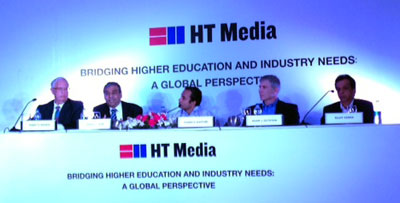
    (L-R) Professor Henry Bienen, Professor Dipak Jain, Charu Sudan Kasturi, Adam Gutstein and Rajiv Verma

    By Ananya Saha


    After launching Studymate tuition centre for Class IX-XII in association with MT Educare in the year 2010, HT Media has announced another JV in the education sector. India Education Services Pvt Ltd is a JV between HT Media Ltd and Apollo Global, Inc. (USA).


    To address the skills gaps in India, IESPL is planning to enter Higher Education with the Bridge School of Management. Bridge School of Management has been conceived to address the ’employability’ gap to help India’s rapidly growing Service and Manufacturing Industry educate and empower employees for a 21st century global workplace. Leveraging the best-in-class knowledge, experience, expertise and technology from Apollo Global, Inc. (USA), Bridge will aim to provide an innovative learning environment and industry focused management programs for working adults to boost their career.


    To announce the launch, IESPL held a panel discussion on ‘Bridging higher education and industry needs: A Global Perspective’ recently in Delhi. The panelists in the discussion included experts from the academic and corporate world – Professor Henry S. Bienen, former President of Northwestern University, Professor Dipak Jain, Chaired professor of Marketing and former Dean, INSEAD, Adam J. Gutstein, Principal and Management Consultant Leader PwC, USA, and Rajiv Verma, CEO, HT Media Ltd.


    Mr Verma said, “I strongly believe that it is possible for an enterprise to ‘do well’ and ‘do good’ and these are not mutually exclusive goals. Thus for HT as a company we realised that there is an opportunity, since there are many young adults looking to improve their skill sets in accordance with the needs of the industry, we decided to enter this space where we can’t only ‘do well’ but also ‘do good’. ”


    The panel discussed how most management institutes today focus only on theoretical learning with outdated content irrelevant in today’s competitive world, which results in an ‘education-employment mismatch’. As high as 44% of recruiters find it difficult to find the right talent in the 4- to 8-year-experience bracket. On the other hand, there are millions of working adults who are unable to fulfill their need for career enhancement and higher income due a mismatch in the skills and competencies that they have and what industry needs. Forty percent try and upgrade their qualifications while making a career shift.


    Speaking to MxMIndia, Mr Verma informed, “There is a lot of intricacies involved in this project. We are working with academicians and corporate industry to gauge the scene, We are also mapping the kind of courses we should offer. However, we do plan to open the institute in a year. Delhi is definitely one of the markets we will be present in.”


    Talking about education needs and India in particular, Professor Henry S. Bienen said, “The world keeps changing, so what becomes important is to provide people with continuous learning and in a heterogeneous country like India, a lot of different institutional forms need to be developed to meet the needs of a highly differentiated population.”


    Said Professor Dipak Jain, “When students graduate from American institutions they feel a need to ‘give-back’. This is the kind of culture we need to develop in India, where the students feel that the school made a difference to them. The most important aspect of an MBA education is the sharing of knowledge between teachers and students. It is equally important for teachers to learn from their students as we, in the education profession, are in the business of lifelong learning.”


    According to Mr Gutstein, what is really required in management curriculums is the “focus on developing these sector specific skills”. “Additionally, there is a big need to take advantage of today’s technology and educational institutions need to remain abreast with technology as much as the corporate,” he said


  • Indo-Aus Test series garners highest TV ratings for ESPN-Star

    By A Correspondent


    The television broadcast of the recently concluded India Australia-Test cricket series 2013 has delivered an impressive average rating of 2.05 TVR. This is the highest average rating for a Test series played by India in the past four years. ESPN Star Sports’ introduction of a Hindi commentary simulcast found favour with cricket fans as it contributed 40 percent of the overall ratings. The four-test series delivered impressively on reach as well with 9.28 crore people watching the telecast.


    Vijay Rajput, Chief Operating Officer, ESPN Software India Pvt Ltd, said, “We are extremely delighted with the results. Our approach to the presentation of Indian cricket has been a game changer in many ways. Our aggressive marketing campaigns through the season which focused on new and upcoming heroes of team India in transition culminating with the ‘Asli Test Baaki Hai’ campaign for the India-Australia series struck a chord with fans across the country.”


    India Australia Test series 2012/2013

    Test match TVR Ratings*
    1st Test match 1.9
    2nd Test match 2.1
    3rd Test match 2.0
    4th Test match 2.3
    Average 2.05

    Source: TAM

    TG: CS M, 15+, SEC ABC


  • Godrej aims for digital connect with consumers

    By Meghna Sharma


    As more and more brands enter the already cluttered market today, the challenge for any brand is not only to reinvent itself but also to gain and retain new customers.


    Companies are invading the digital space as they see a lot of potential in the medium to tap their audiences. Selling the brand or product is no longer paramount – the aim is to develop and sustain a relationship over a period of time. And as youth are increasingly spending more time on social media, promoting a brand/product/service digitally serves the purpose of attracting and sustaining.


    #InViratsHead, #MakesMeAlive, #colouryourfriends and #firsteverfragranceapp are just a few hashtags of the various digital campaigns Godrej has launched lately. The company re-invented itself and has been implementing innovative techniques on various forms of media to drive awareness and establish brand tonality and brand connect with urban TG.


    The aer Twitter campaign #colouryourfriends and #firsteverfragranceapp garnered more than 12,500 tweets, reaching out to 6.7 million people and creating more than 47 million impressions in a span of three days.


    MxMIndia spoke to Sunil Kataria, Executive VP, Marketing and Sales, Godrej Consumer Products Limited (GCPL) on the insight behind their latest campaigns.


    Lately, Godrej has launched a lot of campaigns digitally. What has been the thought process behind them?

    Godrej as a brand believes in building a connect with the consumers at every step across platforms. Companies across sectors are leveraging social media to connect with consumers to get instant feedback. For companies it has not only been to sell a brand/product to the consumers but to develop and sustain a relationship over a period of time. The youth are increasingly being spending more time on social media and a lot of their conversations on this medium influence their shopper decisions. Promoting a brand/product/service digitally serves the purpose of attracting and sustaining interest among their consumers and it could be done in innovate and engaging ways. The Godrej campaigns for Cinthol and aer have been the most trending on Twitter lately.


    How do you see the digital platform help the brand to rebrand itself in the market?

    With the growth of internet and rising popularity of social media among younger audience it is imperative for brands to create a very significant presence in the digital space. Also, the increasing use of smart phones has significantly reduced consumer consumption of traditional mediums of TV and paper. The digital medium is an exciting platform for brands as they communicate with the consumer directly and the consumer can share his experience with the brand. Apart from that, key influencers/celebrities who are a part of a campaign also help to reach out to a larger pool of audience since the fan following of these influencers get acquainted with the brand through the campaign. For example, fans of Virat got acquainted with the Cinthol brand through the #InViratsHead campaign.


    How much is the budget for the digital platform?

    The budget is 2 percent of total ATL budget for digital media.


    Apart from digital, what is the marketing mix of the brand?

    Godrej aer is promoted through a 360-degree marketing media. The media vehicles used are TV, Print, Radio & Digital media. Brand has been doing innovations in all the media vehicles planned. Olfactory marketing experience generating initiatives are planned at important touch points like car accessory stores, modern trade stores, petrol pumps and lifestyle-oriented touch points like a gym etc.


    With competitors too exploring the digital platform, how can one deal with it to stay ahead in the clutter?

    With the growing popularity of social media and increasing use of digital medium by consumers it is imperative for brands to have an active presence on the digital platform. Consumer conversation on social media influence shoppers’ preferences and hence brands needs to be a part of these conversations to gain new potential customers and sustaining the existing ones. The key challenge for any digital campaign is to identify the right target audience and to creatively engage with them which has been the key focus area for the campaigns by Godrej #InViratsHeadwas trending for three days and # firsteverfragranceapp was trending for two days, which is a clear indication of huge consumer response that the campaign received.


    And lastly, where do you see the digital platform in the next five years?

    Increasing internet penetration and demand for smart phones will only increase the engagement of consumers on social media. We could probably see new social media apps being developed to cater to custom made requirements. Consumer would also find new platforms of communications similar to Facebook, Twitter etc which would further accentuate the brand engagement with consumers. Digital will definitely be the pivotal focus of most marketing campaigns and will be the new battlefield for brands to fight for consumer attention.