Category: NEWS

  • Sachin exceeds target for Support My School campaign

    By A Correspondent


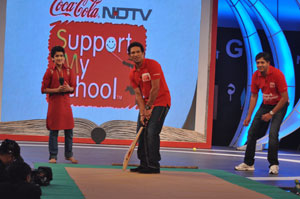
    NDTV, along with the entire Coca-Cola family of bottlers and employees came together with campaign ambassador Sachin Tendulkar and Bollywood superstar and icon Aishwarya Rai Bachchan to support the live 12-hour telethon which was telecast across the NDTV network channels on February 3. Sachin set a target of 250 schools to be supported.


    This edition of the campaign received an overwhelming response from people across different walks of life and generated 13.5 crores to support 272 schools, with the Bollywood and TV fraternity, corporate houses, athletes, NGOs politicians and everyone contributing wholeheartedly to this cause to raise funds, and partner NDTV in its mission to make a difference to as many schools as possible across the country.


    A host of prominent personalities including Kajol, Ajay Devgan, Anil Kapoor, Ronnie Screwvala, Alyque Padamsee, Pamela Chopra, Priya Dutt, Yuvraj Singh, Shashi Tharoor, Kailash Kher, Javed Ali, Sushant Singh Rajput, Rahul Bose, Adnan Sami, Shilpa Rao, Cyrus Broacha, Prasoon Joshi, Govind Nihalani, PT Usha, Nagarjuna, Chief Ministers Shivraj Singh Chauhan, Bhupinder Singh Hooda, Coca-Cola CEO Atul Singh, Dr Kulwant Singh of UN- Habitat, Bhagyashree Dengle Head World Vision & Plan India, Dr Jay Kumar of World Vision, Meenakshi Batra CEO CAF, Khozem Merchant CEO Pearson, Anubhav Sinha and more, along with NDTV’s Group CEO Vikram Chandra, campaign ambassador Sachin Tendulkar and co-host Aishwarya Rai Bachchan took centre-stage to reach out to millions of viewers to generate maximum funds for the cause.


    Delighted with the tremendous response received for the initiative, Dr Prannoy Roy, Chairperson, NDTV Group, said, “This campaign which focuses on reducing the school drop-out rate by girl students across the country is of great importance. Most girl students drop out of school because there are no toilets for girls in majority of our schools. This campaign aims at changing that directly by adopting schools and building these facilities as well as indirectly by raising awareness of the problem and putting pressure on state governments to ensure that every school has toilets and facilities for girl students. We appreciate the amazing support from our viewers and urge everyone to once again come forward and help Sachin and NDTV “Support My School”


    Speaking about the campaign, Atul Singh, President & CEO, Coca-Cola India and South West Asia, said, “It has been a heartening experience to see the variety of stakeholders who came together for this noble cause today. We believe that Support My School’s success is a result of collective endeavor and this has been proven again today. I am proud to be part of this initiative which is not only revitalizing schools but also helping shift the national focus to the issues plaguing our education infrastructure. The response we have received this year has surpassed the previous year and I am excited about the journey ahead for the campaign, this season. The contributions raised at the Telethon 2013 will go a long way in fulfilling our vision for season 2 and bring more children back to where they belong.in schools.”


    Actress Aishwarya Rai Bachchan, Campaign Ambassador, who led the campaign along with Sachin Tendulkar said, “Joining the Support My School Team on this platform today truly gives me great pleasure. I believe Education is immensely Invaluable, Essential and the most Empowering gift we can give the children of our Country. Every child deserves the best of opportunities to grow and prosper… Every girl needs to recognise that she herself is a beacon of hope and has the potential to influence her future. And I understand and recognise, for this to be possible, these opportunities have to be made available to our children!!! In a vast country like India, there are many and varied challenges one faces while working with diverse rural and semi-urban communities. Individually, we may not comprehend these challenges, but collectively we are much stronger! And the overwhelming response to this campaign this time has proven that! With 272 schools and counting, the second season of Coca-Cola NDTV Support My School is spreading the joy of learning amongst the children of our country… And this has only been possible All Thanks to Every support and encouragement from donors, viewers, campaign partners and all on board the collective effort today!!! God Bless everyone for their contribution and Thank you!!!”


    With the funds generated through the ‘Support My School’ Telethon, NDTV and Coca-Cola along with CAF, UN-Habitat, World Vision, Plan India and Pearson will reach out to transform 272 schools across the length and breadth of the county providing Sanitation, separate toilets for girls and boys, drinking water, libraries, Sports and Recreation facilities and improvement in their overall infrastructure and environment, to give Indian children a better tomorrow.


    Supporting the initiative actor Ajay Devgan said, “The only thing we lack in our country is education. Any solution to any problem in our country is education.”


    Adding to it Kajol said, “For a country to go forward education is the first basic step to it and it is every child’s birth right. If by taking small steps such as this can change the situation, more of these should be done.”


    The event also featured several enthralling performances by Ayushman Khurana, Kailash Kher, Javed Ali, Adnan Sami, Shilpa Rao, Shweta Tiwari, Nikhil Paul George, Anwesha from Chote Ustad, Anshuman and Deep Raj from India’s Got Talent, Faisal and Ronan from Dance India Dance, Salman, Azmat Husaain and Sanjana Bhola Sa Re Ga Ma Pa Little Champs and India’s 3 year old Drummer, Anshuman Nandi, young singers Priyanshi and Rimsha and honoured a few deserving teachers, toppers and child prodigies. Adding further excitement to the event was ‘Sachin ki Paathshala’ – an interactive session where the Master Blaster shared his Gyaan with children joining in live from across the country. The telethon also featured success stories from supported schools across rural India.


    Batting maestro Sachin Tendulkar, who spent 12 hours on the show giving valuable tips to school students while repeatedly appealing for donations, made a personal contribution of Rs 10 lakhs, as did Aishwarya Rai Bachchan and Kajol and Ajay Devgn.


     

  • ZeeQ on-Wheels flagged off in Mumbai

    By A Correspondent


    On Friday, ZeeQ, India’s first edutainment channel, flagged off the ZeeQ van called, ZeeQ on-Wheels in Mumbai, to visit 20 cities across the country.


    En route, this van will connect with children across India. “ZeeQ’s main aim behind this journey is to interact with children and their parents to communicate how learning can be fun,” said Subhadarshi Tripathy, Business Head,ZeeQ at the launch.


    ZeeQ on-Wheels is a knowledge treasure for children, providing opportunities of playing games like Balloon Maths, Bottle Cap Memory, Larger than Life Scrabble, English Wordmatch and M.I. Four Quiz. Along with games, ZeeQ on-Wheels will also screen ZeeQ programmes like Amar Chitra Katha Heroes, Sid the Science Kid, Teenovation, Word Match, Science with Braincafe and Cyberchase, etc. for children and parents on the van.


    On the whole activity, Aparna Bhosle, Programming Head of ZeeQ, is confident that firsthand engagement with children will enrich the experiences of ZeeQ’s Programming team. She said, “As a broadcaster, through our shows, we are committed to give life experience to children and this initiative, ZeeQ on-Wheels is the extension of our very same commitment.”


    From marketing perspective, ZeeQ on-Wheels will ensure sampling of ZeeQ’s shows in its target market. Anuj Katiyar, ZeeQ’s Head, Marketing and Research, informed that the activities on ZeeQ on-Wheels are interactive in nature and are formulated considering the four key subjects like English, mathematics, science, and general knowledge. For conducting the mentioned interactive activities, ZeeQ on-Wheels will halt at various locations in each city for four days.


    Over next few days, this van will ply on Mumbai roads and then it will cover the rest of the Western Zone. Apart from Mumbai, in the Western Zone, it will visit Pune, Surat, Baroda, Ahmedabad, Indore, Bhopal and Nagpur. In the North the ZeeQ on-wheels is set to tour New Delhi, Jaipur, Agra, Kanpur, Allahabad, Lucknow, Chandigarh and Amritsar. In the Southern region the touch points will be Chennai, Bengaluru and Hyderabad, while in the East, ZeeQ on-Wheels will mingle with children in Kolkata.


  • RBNL announces quarter results

    By A Correspondent


    Reliance Broadcast Network Limited, a Reliance Group company, has announced its un-audited financial results for the quarter ended December 31, 2012. The company’s board of directors approved the financial results at their meeting on February 9.


    The company reported total income of Rs 73.2 crore and reported the highest ever revenues for radio at Rs 51.7 crore. The company’s television business also delivered healthy growth with revenue at Rs 11.7 crore. Both radio and television businesses consolidated their leadership positions delivering robust revenue growth and tight control over costs. EBIT excluding TV business was positive at Rs 4.8 crore.


    Tarun Katial

    Commenting on the performance, Tarun Katial, Chief Executive Officer, Reliance Broadcast Network Limited, said, “Reliance Broadcast has delivered impressive results in both radio and television businesses, with radio recording its highest ever revenue quarter. The television business has reported significant growth in revenue and reduction in carriage, reaping benefits from digitization, and a well crafted business strategy. We are on track to deliver improved margins, and build reach and value in the long term.”


  • ASCI’S CCC upheld complaints against 11 out of 19 advertisements in November 2012

    By A Correspondent


    During November 2012, the Consumer Complaints Council (CCC) of ASCI, upheld complaints against 11 out of 19 advertisements. ASCI’s National Advertising Monitoring Service (NAMS) has been very proficient in tracking down the misleading claims made by advertisers in various sectors.


    Advertiser Advertisement Complaint CCC
    HEALTHCARE
    Diwan Chand Imaging & Research Centre  Stan Health Check Programme As per the complaint, the advertiser claims that, Diwan Chand Imaging & Research Centre “has the most advanced diagnostic modalities”, “Is India’s first integrated diagnostic chain of imaging network”. These claims need to be substantiated with scientific evidence or proof of efficacy along with appropriate statistical & support data.  Advertiser provided proof of the installation of the latest state of the art ultrasound machine. The claim, “have the most advanced diagnostic modalities”, was substantiated. This complaint was NOT UPHELD. 

    In the absence of comparative data, the CCC concluded that the claim, “Is India’s first integrated diagnostic chain of imaging network”, was not substantiated. The advertisement contravened Chapter I.1 of the Code.

    This complaint was UPHELD.

    The advertiser has subsequently modified the advertisement.


    Maruti Herbal  Stay-On Capsules As per the complaint, the advertiser claims that, Stay – On Cap & Oil contains ginseng, shilajit, salampanja, valuable herbs and bhasmas that keep you energetic and powerful and makes you muscular. These claims need to be substantiated with proof of efficacy along with the appropriate supporting data.  The CCC concluded that the claims mentioned in the advertisement and cited in the complaint were not substantiated. Also, the advertisement violated The Drugs & Magic Remedies Act. The advertisement contravened Chapters I.1 and III.4 of the Code. The complaint was UPHELD. 
    Emami Limited  Himani Sona Chandi Chyawanprash As per the complaint, the claims “Take Himani Sona Chandi Chyawanprash every day for a strong body and razor sharp mind”, “Gold removes toxins to boost immunity power”, “Silver activates neurons to enhance memory and concentration”, “51 rare herbs protect from weather changes, pollution and general illness”. Advertiser should provide supporting technical submission, details of tests/trials conducted, with comparative data, in substantiation of these claims.  The CCC concluded that the claims mentioned in the advertisement and cited in the complaint were inadequately substantiated. The advertisement contravened Chapter I.1 of the Code. The complaint was UPHELD.
    HOME AND PERSONAL CARE
    AMRA REMEDIES LIMITED AS SUGGESTED BY BHARAT, PLE. CHANGE THE COTEGORISATION. Elavo Toilet Seat Sanitizer Spray 


    As per the complaint, the advertisement claims, “Spray Elavo on toilet seat and enjoy a 99.9% safe toilet experience in just 5 seconds”. This claim needs to be substantiated with proof and efficacy, research data along with other appropriate support data.  The claim, “Spray Elavo on toilet seat and enjoy a 99.9% safe toilet experience” was substantiated. This complaint was NOT UPHELD. In the absence of data proving its “effectiveness in just 5 seconds” this complaint was UPHELD as the advertisement contravened Chapter I.1 of the Code. 
    SILVERMAPLE HEALTHCARE SERVICES PVT LTD-  Direct Hair Implantation As per the complaint, the advertisement headline states, “No one gets you your hair back like DHI”. Also, the advertisement claims that DHI “is the best hair restoration treatment in the world with Total Care System” .These claims need to be substantiated with statistical and other necessary data. 


    In the absence of scientific data from the advertiser, the CCC concluded that the claims mentioned in the advertisement and cited in the complaint were not substantiated. The advertisement contravened Chapter I.1 of the Code. The complaint was UPHELD. 
    EDUCATION
    CADD Centre Training Services Pvt Ltd  As per the complaint, the advertisement claims, CADD Centre “is Asia’s No.1 CADD Training Company”. These claim needs to be substantiated with comparative data of other leading training institutes, certification and other necessary data. The CCC noted that CADD Centre Training Services is the largest network of dedicated CADD training centre in whole of Asia with over 300 training centres spanning across 13 countries in Asia and Africa.In the absence of comparative data, the claim, “Is Asia’s No.1 CADD Training company”, was not substantiated. The advertisement contravened Chapter I.1 of the Code. The complaint was UPHELD.

    The advertiser has subsequently modified the advertisement.


    CONSUMER DURABLES
    LUMINOUS WATER TECHNOLOGIES PVT LTD  Livpure RO Water Purifier As per the complaint, the TVC states that Livpure Water Purifier gives “Duniya ka sabse shudh pani”. Kent Water Purifier’s last campaign was based on the key proposition that Kent provides “Duniya Ka Sabse Shudh Pani”. This has been carried out in all their communication material since 2011 consistently. This is a blatant copy of the same proposition and a gross violation of Kent Water Purifier’s brand property.  The CCC concluded that the tagline of Livpure Water Purifier that it gives “Duniya ka sabse shudh pani” was similar to the tagline of Kent Water Purifier so as to suggest plagiarism. The advertisement contravened Chapter IV.3 of the Code. The complaint was UPHELD. 

    The advertiser has subsequently modified the advertisement.


    BAJAJ ELECTRICALS LTD Bajaj Water Heater As per the complaint, the advertisement claims, Bajaj Water Heateris “India’s No. 1 water heater”, “Bajaj Rapidotherm Water Heaters powerful heating coil helps heat water 50% faster than any other water heater”. These claims need to be substantiated with scientific evidence, comparative analysis data, and safety data along with appropriate support data.


    The CCC concluded that the claim that Bajaj Water Heaters is “India’s No. 1 Water Heater” was substantiated on the basis of a syndicated retail audit done by independent market research company. This complaint was NOT UPHELD. 

    The claim that “Bajaj Rapidotherm Water Heaters powerful heating coil helps heat water 50% faster than any other water heater” was not substantiated with comparative data of other water heaters of the same electrical rating (3000 watts). The advertisement contravened Chapter I.1 of the Code. This complaint was UPHELD.


     The advertiser has subsequently modified the advertisement.


    HAVELLS INDIA LTD Havells Water Heater  As per the complaint, the advertiser has claimed “24 Hours Hot Water in Just ½ unit of electricity”. The interpretation of this is that, we will get 24 hours hot water supply for usage in just ½ KWH of electricity.The complainant found out that ½ unit electricity is consumed by the geyser for keeping the water, already heated and stored inside, warm at a particular temperature for 24 hours if no water is drawn out for usage. This claim is hence highly exaggerated and misleading.

    Further, the TVC claims, “24 Ghante On Rahe to bhi Sirf ½ unit bijli lage To Off Kyun Kare?” This is true only in the case where the water geyser is not used through the day. This claim is also misleading as the consumption of electricity would be considerably higher on usage of the water heater.


    The CCC concluded that the claim that “24 Hours Hot Water in Just ½ unit of electricity” is misleading as it does not account for heating of water from ambient conditions to hot conditions. The advertisement contravened Chapter I.4 of the Code. The complaint was UPHELD. 

     The advertiser has subsequently modified the advertisement.


    MEDIA
    DAINIK BHASKAR GROUP Circulation in Bhopal As per the complaint, “Dainik Bhaskar is making a comparison on the basis of Net Paid circulation as per market estimates treating Patrika newspaper on 1/8th position in respect of circulation in the city of Bhopal. The remarks are totally untrue and baseless as the basis on which the comparison was said to be made was not shown in the advertisement nor the publication Dainik Bhaskar has stated the name of any agency on which such comparison was made. As evident from the website of DAVP, the circulation data of Dainik Bhaskar (as provided by RNI) and circulation data of Partika newspaper (as provided by Audit Bureau of Circulation ABC) are almost equal but despite of the above fact Dainik Bhaskar have diminished the circulation size of Patrika newspaper to the extent of 1/8th as shown by the graphical comparison.” 


    The CCC concluded that the claim that Dainik Bhaskar “had 8 times more Net Paid Circulation than Patrika in the city of Bhopal”, was not substantiated with ABC/RNI or IRS Data, and was misleading.  The advertisement contravened Chapters I.1 and I.4 of the Code. The complaint was UPHELD. 

    The advertiser has subsequently withdrawn the advertisement.


    OTHERS
    CENTRAL UP GAS LIMITED  CNG As per the compliant, “Central UP Gas Ltd (CUCL) CNG”, is 100% Safe”. The claim needs to be substantiated with scientific evidence. The CCC concluded that the claim, “100% safe” was not substantiated with scientific evidence. The advertisement contravened Chapter I.1 of the Code. The complaint was UPHELD. 

    The advertiser has subsequently modified the advertisement.


    During the month of November, the CCC also received complaints against 7 advertisements. The complaints were received against the advertisements of Emami Ltd’s ‘Himani Fast Relief’, Ranbaxy Laboratories Limited’s ‘Revital Capsules’, Cure Spect’s ‘Eye Care’, L’OREAL INDIA PVT LTD’s ‘Inoa Hair colour’, PARLE PRODUCTS P. LTD’s ‘Parle Londonderry’, MICROMAX INFORMATICS LTD’s ‘Micromax Ninja 3.5 & Ninja 4’, Dabur India Limited’s ‘Dabur Chyawanprakash Sugar Free’. However, as these advertisements did not contravene ASCI’s codes or guidelines, the complaints were NOT UPHELD.


  • The Hindu’s Lit for Life festival begins

    By A Correspondent


    Lit for Life, a festival that celebrates literature in India, was kicked off by The Hindu Group of Publications in New Delhi on February 6. The Delhi segment featured a discussion on the book “Accidental India – A History of the Nation’s Passage Through Crisis and Change” by Shankar Aiyar. The speakers were Communist Party of India (Marxist) politburo member Brinda Karat, Union Minister of State for Environment and Forests Jayanthi Natarajan, economist and professor at the Centre for Policy Research, and columnist Bibek Debroy and editor of The Hindu, Siddharth Varadarajan. The event also featured a presentation of photographs by award-winning photographer Steve McCurry, famed for his picture of the “Afghan Girl” on the cover of National Geographic.


    The event saw the announcement of the shortlist for The Hindu Literary Prize, an award given to encourage Indian writers in English. The shortlist: Anjum Hasan for Difficult Pleasures, Easterine Kire for Bitter Wormwood, Jeet Thayil for Narcopolis, Jerry Pinto for Em and the Big Hoom, and Kiran Nagarkar for The Extras.


    Previous winners of The Hindu Literary Prize are Manu Joseph (2010) for ‘Serious Men’ and Rahul Bhattacharya (2011) for ‘The Sly Company of People who Care’. The conclave will now move to Chennai (February 16-17, 2013, at Sir Mutha Venkatasubbarao Auditorium) for two days of discussions, lectures and workshops by speakers such as Gopal Krishna Gandhi, Rahul Bose, Jeet Thayil and Sidin Vadukut. The winner of The Hindu Literary Prize 2012 will be announced in the Chennai segment of the festival on February 17.


    Suresh Srinivasan

    “For a publication respected for its English, credibility and authenticity, it’s not surprising that The Hindu Literary Prize has rapidly become the most coveted award in its genre in India,” said Suresh Srinivasan, VP, Advertisements, The Hindu. “Lit for Life is an opportunity for our readers to engage in conversations with leading world class authors and participate in the workshops and seminars of their interest.”


    The festival was conceptualised by Nirmala Lakshman, Director, Kasturi & Sons Ltd (publishers of The Hindu). “Lit for Life is a festival which will make the experience of books and reading more meaningful to readers. It is an opportunity for people to interact directly with many well-known authors,” said Ms Lakshman. “It is also a chance to engage with issues of contemporary interest through discussions and workshops that we hope will be of lasting value to them. Through The Hindu Literary Prize being given for the best published work of fiction this year, The Hindu recognizes, felicitates and supports excellence in writing in India.”


    Website: www.thehindulfl.com/www.thehindu.com/litforlife

    Facebook: www.facebook.com/TheHinduLitForLife

    Twitter: @hindulitforlife

    YouTube: www.thne.ws/playlist-lfl


  • Ad Club to screen Cannes showreel in Mumbai today

    By A Correspondent


    The Advertising Club in association with the Times group, official representative of Cannes in India, will screen the Cannes showreel on February 11 at the Mayfair Rooms, Worli, at 5.30 pm.


    The screening will last for two hours. Beer and snacks will be served during the course of the screening. Those interested may contact the Ad Club secretariat on 23810213 / 23894091 for donor passes.


  • MxM Mondays: Is magazine readership sliding?


    By Ananya Saha


    As magazine publishers are set to meet for the Indian Magazine Congress in Mumbai on February 14 and 15, the indifferent numbers posted by the latest findings of the Indian Readership Survey continue to mar what appears to be business as usual. According to the IRS 2012 Q3 figures, magazine readership is on the decline barring a few magazines that have gained AIR.


    Even as the Indian print industry continues to see new launches, the readership of magazines is sliding (including regional language, Hindi and English magazines), as recorded by the IRS. MxMIndia spoke to a cross-section of industry veterans about the Indian magazine industry, and the shape of things to come. In alphabetical order of their last names:


    Suresh Balakrishna, CEO, BPN

    Newspapers and television have taken over the space which was once occupied by magazines. Therefore, general news/interest magazines readership is on a decline. However, niche magazines which cater to a small but specific audience are doing well and will continue to do well. Even as we speak niche magazines on jewellery, garments, travel etc are being launched. And advertisers are interested in putting their money on them as they are leisure magazines and will get their message across to their target audience. Hence, the future of niche magazines is bright although other magazines will have to take a hit


    Mitrajit Bhattacharya, Publisher & President, Chitralekha Group

    A survey like IRS hardly does justice to a highly complex category like magazines. Magazines are heterogeneous in nature with skewed distribution, which is missed by a huge survey like IRS; or in simple words, IRS is not even designed to capture readership of magazines (particularly special interest or niche ones). There are concerns about certain genres of magazines facing difficulties in retaining loyalty among its audiences, but there is surely traction in the specialized space. How else can you justify launch of so many new titles every year? IRS is not a good measurement tool. It is a one-size-fits-all omnibus survey with no focus on skewed distribution of magazines.


    The industry is reorienting, specialised genres are doing great even if some traditional genres are threatened. Also the digital formats are doing well for all big magazine brands. I see further traction in this. Digital will complement the print formats in a great way and magazines will lead the space for their superior content and presentation.


    Varghese Chandy, Chief General Manager, Marketing Advertising Sales, Malayala Manorama

    The quarterly result or six-month readership data will not establish if readership is declining or not. The readership is dropping compared to a few years ago. What we need to understand is that the way a magazine is consumed or read is getting different. It is changing because online versions are available. The time will come that when you talk of magazine readership, you will actually have to add the online and offline (print) readership of the magazine, including tablets and mobile. That is what one should look at in the long run, whether you are able to retain readership through all possible formats. Unfortunately, we are not in position to capture this readership currently.


    The way readership is captured in India for the magazine is very newspaper-oriented. For the newspaper, the readership is concentrated is the catchment area that is near printing or publication centres. Magazines, on the other hand, are dispersed widely, and in most cases, nationally. Even the language magazines are dispersed beyond one geographical state where the language is read. Thus, the sample pickup for magazine and newspaper cannot be the same because of the wide dispersion. The present readership survey, and this is something all of us have been saying for some time, is not actually geared to capture the readership of the magazines; particularly the niche magazines and magazines that have specialized readership.


    That is why you see readership drop even in cases of English and general interest magazines. Some readership figures and drops should be seen as rationalization of numbers. There used to be a time when the readership of one copy was seen as 10 or 15, which is out of the question. Some of this rationalization is definitely happening.


    We need a much larger sample base for a magazine-focused readership survey.


    Ashish Pherwani, Partner, Advisory Services, M&E, Ernst & Young

    To measure the readership of magazines, a standard measure is used by IRS. It does not capture the online readership of magazines. Also, one needs to understand that readership is one of the ways that a magazine reaches the readers. The magazine is a brand that you (readers) believe in. The brand can reach their targeted audience via television, internet, tablet, event etc. Take the example of Femina: the brand is larger than a magazine and the database of customers that Femina is connected with is much bigger than its magazine readership. It is connected to readers via Facebook, social media, its website, events, and what not.


    IRS is the only currency, so it needs to be used. It does not measure the brand value. IRS is just one part of the brand and publishers need to take cognizance of that.


    Tarun Rai, CEO, World Wide Media and President, AIM
    Declining readership of magazines is a myth. Magazines like all media are going through dynamic changes. Yes, there are some genres of magazines which may be witnessing some decline but most others should actually be showing an increase. Our circulation numbers are going up. So many new magazines are being launched. That wouldn’t be the case if readership was going down.


    There are issues with the retail infrastructure of magazines. Getting our magazines to our readers is not easy and is expensive. However, our concern is more fair measurement. In its current form the IRS does not capture the reality of magazine readership. We have been in discussions with them and hope we will be able to get to a satisfactory solution soon.


    Rather than a decline, we see an increase in magazine readership, going forward. There are two reasons for this. On the one hand, with increasing disposable incomes and more choices, people are looking for quality content and expert advice which only magazines offer. On the other hand, digital devices are enabling magazines to take their content to a much larger number of people. And digital technology also allows magazine editors to enhance the reading experience. I believe that lifestyle and special interest magazines are the sunrise sector of Indian media.


  • Responsible internet use programme for kids launched

    Integrated children’s media company Focus Kids has launched ‘Internet for Kids’, a first-of-its-kind initiative that is aimed at championing the cause of ‘Responsible Usage of Internet for kids’. Internet for Kids is a downloadable PDF guide that will help parents to have an active dialogue with their children about internet usage which is more ‘constructive’ than ‘restrictive’.


    The campaign revolves around three key principles – LEARN, TALK and EXPLORE.


    LEARN-Parents and children need to know internet better. Parents, in order to ensure their children have a safe, well regulated and effective internet usage; and children to understand the medium and how it can be helpful to them. TALK-Discussing and talking about the doubts, myths, confusions, concerns in the most open manner is very important for both parents and children. EXPLORE -It is important for parents and children to explore the various benefits of the internet, as it is a wonderful and ever evolving resource of information.


    Speaking about the launch of Internet for Kids, Swapnil Puranik, Business Head, Focus Kids said, “The Internet is an excellent medium for kids to learn and explore. Today, it has become a way of life for both – parents and kids, making it imperative for them to understand this medium better. Parents should monitor what a kid sees and absorbs on the internet; without making him or her feel intruded uppon. Restricting kids from using the internet or accessing social networking websites may not be the best solution. The ‘Internet for Kids’ parenting guide provides some simple yet effective methods in ensuring effective’ Internet Parenting’ to address these issues.”


    Advocating the need for online safety of kids Mr. Puranik further added, “According to a recent survey it is estimated that 27% of urban kids in India currently consume internet, through various screens. Subsequently there is a growing concern among parents about the digital divide between them and their kids. It is not possible for parents to control the online activity of their kids at all times. Additionally, India does not have a cyber-policy that safe guards the interests of children like Children’s Online Privacy Protection (COPPA) in the United States. These gaps have increased the instances of online bullying and threatening, which can have an adverse impact on kids. Having worked with various kid’s brands and schools in the past, our intention is to inculcate the culture of responsible internet usage in kids across India, and increase awareness among parents, through an initiative like this.”


    As an extension to the campaign, Focus Kids will be organizing interactive sessions in various schools across select cities in India, which have commenced from 8th of February 2013.Colorful posters spreading awareness about the Good Internet versus Bad Internet sessions will be displayed in the schools prior to the same. During these sessions a brief will be provided by a Focus Kids representative and an edutainment video will be played, demonstrating the difference between good internet habits versus bad internet influence. A quick quiz will be held at the end to gauge the understanding of participants. A Good Internet tracker will be provided to all participants to keep a tab on useful websites they will be visiting through the year.


    As a social responsibility aspect of the campaign, Focus Kids plans to donate desktops units to deserving schools across Maharashtra, for every 1000 downloads of the Internet for Kids guide. This donation-drive will not only help encouraging downloads of the Internet for Kids guides, but will serve needy schools with quality internet access, in a bid to usher in a fresh medium of learning. Focus Kids plans to reach out to 400 schools across the country through this campaign.


    The Internet for Kids PDF will be available on the following website www.internetforkids.in.It is an easy-to-follow guide with a colorful representation of the information. Parents or kids wishing to download the document can do so using either their email id’s, or logging-in with their Facebook accounts, which will display on their profiles participation in the initiative. The Good Inernet versus bad internet video will be accessible on the website. Information and photos capturing the desktop donation drive and Good Internet versus Bad Internet demonstrations being organized at schools will be displayed on the website. Focus Kids aims at reaching out to One million individuals across India, through this campaign at the end of one year.


  • Click for a Linc

    By A Correspondent


    Linc, one of the top three players in the organized writing instrument industry in India, launched its retail sales online through its portal www.officelinc.com. Now consumers can directly buy pens & stationery from Linc’s website.


    Earlier available through online platforms like William Pens, TSG Fashions, Flipkart, Snapdeal, Indiaplaza, etc., Linc has planned to start its distribution through the online channel in an aggressive way. Through this site, consumers (both B2B & B2C) can choose from a wide range of products right from the convenience of their home/ office.


    Commenting on this new development, Rohit Deepak Jalan, Business Development Executive, Linc Pen & Pl. Ltd. said, “We realized that companies/consumers spend time online on researching for gift products and prefer dealing online. Linc provides this opportunity, through Office Linc, to shop for not only pens but also stationery through its online platform. The format will be like the Office Linc store, only that the model has been shifted to a digital platform. The payment can be done online and will also have the Cash on Delivery (COD) convenience.”


    He added, “For any product to succeed in the market, the target segment must be taken into account. With the changing preference in consumers and digital marketing becoming an important tool, having an online sales platform was an important decision. Through this platform we want to bring service right at the doorstep of our consumers and make it convenient for them to shop.”


    Office Linc sells products starting from Rs. 5 to Rs. 65,000. The online store will have pens from Linc, Uniball, Lamy, Cruiser and stationery from select brands like Markline, Bensia, Faber Castell, Maped etc to start with. More product categories might be added in the future. Initially this service will be launched in Kolkata where products will be delivered at the door step of the consumer against a minimum order amount of Rs. 200.


    Currently the company’s products are available across more than 1,25,000 retail outlets throughout India covered through a network of over 2200 redistribution stockists and 40 main stockists. This is facilitated by sales and marketing team of around 300 professionals.


  • Into the printed world of luxury


    By Johnson Napier


    Be it a shopping mall or a supermarket, one cannot help but notice some loud and in-your-face visuals that crave the consumer’s indulgence. In fact this practice is not just limited to malls and large stores where consumers flock in droves – these humongous posters seem to greet us everywhere.


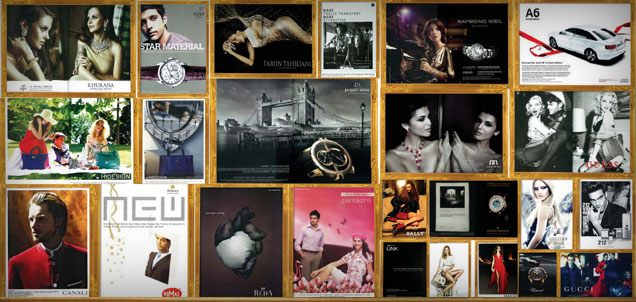
    And they are familiar sights – one sees them not just outdoors but within the pages of glossy magazines as well. Most of these larger-than-life posters are for luxury brands. While out-of-home is generally the medium of choice for brands, it still doesn’t compare to what the medium of print has been delivering as it continues to rule the course where advertising of niche and lifestyle-centric brands are concerned. At least that’s what can be inferred from a survey released by Cogito Consulting.


    In its report ‘An Analysis of Marketing Communication of Luxury Brands through the Lens of Luxury Magazines’, Cogito Consulting decided to do a deep dive into leading upmarket magazines carrying advertising for luxury brands to unearth key trends and semiotic codes of luxury advertising in India.


    The report is an analysis of some 511 advertisements in leading luxury magazines like Vogue, Verve, Time N Style, GQ, Harper’s Bazaar, MW and Cosmopolitan. All the ads were mapped quantitatively on various parameters and additionally, a qualitative analysis along with few expert interviews were done to arrive at some key learnings.


    Kinjal Medh

    Sharing his thoughts on the study, Kinjal Medh, COO, Cogito Consulting said, “The idea was to understand whether there were any patterns or codes that were common to most luxury brands. What we observed through our course of analysis over a six-month period is that a lot of luxury brands follow a similar pattern of advertising. We sampled over 500+ publications which typically feature advertising by luxury brands.” In fact according to Mr Medh, the unique trend that this study throws up is that “Luxury brands have grown perhaps more than the other brands in the market as they are not sensitive to economic conditions. As a result, people who can afford them can do so without being worried about what the economic climate in the country is. In fact my guess is that this sector will grow even faster and has a long way to go in India.”


    Composition of Ads

    According to the study, personal adornment brands feature the maximum number of ads in the magazines under study. On the other hand, products which do not directly enhance personality are advertised far lesser. For example: Apparel and watches which are a direct gateway to status elevation have the highest number of ads. While categories like real estate, home furnishing, hospitality etc. are relatively lesser.


    Affirms Mr Medh on the trend: “Where the composition of ads is concerned, it has remained somewhat the same. In fact it has not changed since the coming in of international brands in India. Before that there was not much of luxury brands who advertised; just a few jewellery brands. This was a trend prevalent almost about a decade ago. But that has now changed with the coming of international titles in India who brought with them the scope for luxury brands to associate with.”


    Another important trend that the study analyzed was the use or rather non-use of celebrities for luxury advertising. The study notes that only 12 percent of the ads studied, featured celebrities. Among the ads which featured celebrities, Watches, Jewellery, Perfumes and Apparel were the top categories using celebrities in their advertising. Further, of this 12 per cent, the majority (52 percent) were international celebrities while 48 percent featured Indian celebrities.


    Sharing his views on the trend, Mr Medh asserted, “One of the things happening in India is that there is a celebrity overplay. In fact there are instances where a same celebrity endorses high-end products and then also endorses hair oil, which is contrasting in a sense. As a result the level of exclusivity that luxury brands require is often not possible. This is not the case with international celebrities who are very selective in terms of the brands they accept to endorse.”


    Paradoxes of Luxury Advertising

    An important facet of the study or rather a paradox is the occurrence of luxury brands going increasingly local while mainstream Indian brands were going international. The study goes on to state that lot of Indian brands are trying to project an international imagery by using international models in the advertising. Approximately 14 percent of Indian brands advertised have used international models in their advertisements, it claims. “It is part of the experimentation that luxury brands do to discover new ways of marketing themselves. So while international brands tend to look inside India most Indian brands are looking outside to expand their base,” Mr Medh commented.


    Another interesting finding that the study highlights is that most of the brands advertised in the magazines have no body copy. About 60 percent of the ads analyzed did not have any copy, it noted. They featured only visuals and brand name. The ads project visuals which define the personality of the brand and along with visuals just the brand name. For those consumers well versed with the personality of the brand, only the name is enough and for the uninitiated, sharp visuals work in attracting them.


    Ironically, from the consumer’s point of view the financial investment in luxury brands is far higher than mass brands and the justification from the seller’s point of view is correspondingly far lesser. In other words, Mass brands’ advertising sell, Luxury brands’ advertising evoke Desire.


    The analysis revealed that primarily there are six key tenets that form the basis of most luxury brand advertising. These 6 codes include The Two Tone Code, The Exclusivity Code, The Sensuality Code, The Craftsmanship Code, The Origin Code and The Heritage Code. Of the whole lot, the study noted the Two Tones Code to be more effective. In its analysis of 511 ads, about 66% of brands that were advertised had black/white logo. On the other hand, in the case of mainstream Indian brands, logos do not necessarily follow a black and white pattern.


    Asserted Mr Medh about the popular Code, “I think that the Two Toned Code is the most interesting be it for its advertising or even the use of logo which mostly is black & white. I expect this trend to continue going forward as black and white tones do lend a certain amount of mystique and sophistication; unless certain brand advertising demands the use of colour I largely see two toned as the most popular form of advertising.”


    As for the Sensuality Code, the study observed that advertising for luxury brands is much more sensual than mass brands. Probably it is one of the ways to create a desirable personality and distance luxury brands from others brands. From perfumes to handbags to watches, sensuality is an integral part of luxury advertising, it noted.


    Where the Exclusivity Code was concerned, the study noted that luxury brands try and create an aura of uniqueness since it gives an assurance of being owned only by selected people. Over abundance and easy availability of a luxury brand can cause dilution of luxury character, hence many brands try to maintain the perception that the goods are scarce.


    Where the Craftsmanship Code is concerned, the study states that luxury brand advertising lays more emphasis on the craftsmanship and intricate mechanisms involved in the product. For example, an apparel ad shows the cut and fabric up close or a watch ad shows the mechanisms inside the watch.


    The study further notes that for the Origin Code, some luxury brands elucidate the luxury quotient of their brand by mentioning the country of origin of the brand. Going ahead, luxury marketers are taking a step further and using the city of origin and bringing in more credibility to the brand.


    As for the sixth code, the Heritage Code the study notes that the heritage of a brand builds an aura of several years of finesse and excellence in providing luxury products. It exemplifies the years of mastery or lineage to add a mystique to the brand. A mystique is generally built around the exceptional legendary founder character of the past, making up an integral part of the brand story and brand personality.


  • We are very optimistic about India: Tripti Lochan

    By Johnson Napier


    Digital marketing agency VML Qais has had a busy 2012-13 helping multinational clients and digital start-ups chart their digital course and implement groundbreaking online initiatives. One such recent example the agency undertook was an online study for their client Revlon India, which was conducted to better understand the mindset of Indian women and their attitudes and habits towards foundation.


    According to Tripti Lochan, CEO, VML Qais, as was the case with Revlon India, brands are today recognizing that digital provides a more powerful engagement than any other media. In fact she is very confident that marketers will soon be putting their dollars more convincingly behind digital.


    In an interaction with MxMIndia, Ms Lochan stresses on the need for real-time creation of branded content by brands and how regional clients are increasingly demanding India-specific strategies as part of value-added services. Excerpts:


    We know of brands flocking to the social media platform to reach out to their audiences wherever they are. What was unique about the social media exercise you undertook with your client Revlon India?

    We believe that all strategy needs to be driven by consumer insights. As a first step for Revlon India, we carried out a social listening piece, to understand real consumer conversations & attitudes regarding beauty, health, and wellness. Our strategy was then pivoted on these insights. With Revlon India we are bench-marking not only against Indian competition but global beauty and fashion players like MAC/ Estee Lauder/ Burberry. We want to use social media as a long-term conversation platform that allows Revlon to continuously gain insights from consumers, and be relevant to their needs.


    Any notable trends that emerged as the users sampled your questions/survey?

    There were a lot of interesting trends, notably the fact that Indian women prefer natural make-up. Colours are welcome but those that work best with Indian skin tones. Many Indian women are multi-tasking and looking for beauty brands that match that lifestyle – easy to use and long-lasting are two recurring needs. This is validated through Generation Asia India research that we carried out earlier in the year where the theme of individualism is strong.


    Is a sample size of 75,000 (via online) big enough a number to convert perception to reality? Did you consider collating inputs through the offline route as well?

    It is a substantial sample to consider. And since our strategy was online focused, with focus on communicating on Facebook, we wanted to get the perception of this audience – which is digital, the connected segment.


    As a digital agency, how according to you have brands woken up to pursuing online marketing activities in terms of budgetary allocations and importance vis-a-vis traditional mediums?

    The spends on digital do not by any stretch of the imagination mirror the time consumers are spending online. This is because brands have a “comfort factor” concerning spending on things they know well. But the good news is that brands are recognizing that digital provides a more powerful engagement than any other media. We are already seeing experimental budgets being set aside. I am very confident that marketers will soon be putting their dollars more convincingly behind digital. If you look at a brand like Revlon, it’s an opportunity to replicate beauty-counter conversation around make-up into a digital dialogue with consumers. Which other medium would allow them this?


    VML Qais seems to have an array of corporate clients under its belt. What makes your firm an agency to vie for?

    As an agency we have a firm belief: we are marketers first, before anything else. And as marketers, we keep to the fundamentals of marketing: take direction from business objectives, base everything on consumer insights, and think holistically. Yes, digital is complex; it requires an understanding of an added layer – technology. Of course the importance of understanding this cannot be underestimated. And to steer through this requires you to have the ability to join the dots – between what your business objectives are as a brand, what consumers want, and what technology allows us to do today. We believe that technology will continue to change, as it has been over the last decade. There are new developments that impact marketing every day. And we need to be in continuous curiosity and learning mode, so we can help our clients navigate through this sometimes-confusing environment. The first thing I tell our clients is that we are not experts in their business – and that we learn as much from them as they do from us. As an agency, it is our desire to do the best we can by our clients that shows results.


    What is the trend you anticipate 2013 to throw up regarding brands taking the social media space for marketing & promotional activities?

    I think one of the most interesting trends we have been seeing is the real-time creation of branded content by brands. This is the ability, in real time, to look at conversation in real time, create a point of view or response against this, weaving in the brand’s POV. This, done in an innovative, creative way, can be used for marketing and promotional activities by brands.


    What does 2013 augur for VML Qais on the growth front in India?

    We continue to have some really interesting projects at hand in India. Our client relationships are strong and growing. We have set some aggressive growth targets for VML Qais in the region, including for India. The year has begun well with big regional wins. We see a lot of our regional clients wanting specific India strategies, and that is part of the value-add we can offer them. We are able to provide global insights in India to brands that want to benchmark against global competitors, and Indian companies that want a regional or even global strategy. We are very optimistic about India.


  • DDB MudraMax appoints Deepak Trikha as VP, Experiential

    By A Correspondent


    DDB MudraMax has roped in Deepak Trikha as VP, Experiential. Mr Trikha will be based out of Delhi and will report to Mandeep Malhotra, President, DDB MudraMax.


    Mr Trikha joins DDB MudraMax’s experiential team from Sistema Shyam Teleservices (MTS), where he was AGM, Marketing Communication, responsible for strategy and execution of 360 degree marketing campaigns for MTS’s telecom products and services. He started his career with Kidstuff, DDB MudraMax’s Promotional & Events unit, and then moved to Encompass as AVP where he served for six years. With over a decade of experience in the field of marketing, he has worked with some world renowned MNCs such as Ford, Britannia, World Space, Toyota, Sony, Hewlett Packard and Nokia among others.


    Mandeep Malhotra

    Commenting on this new appointment, Mandeep Malhotra, President, DDB MudraMax, said, “I am really glad to welcome Deepak in my team. He comes with a lot of experience in the business. I strongly feel he will complete the dots for a constellation in our Delhi office of glittering stars. Looking forward to a great innings with DDB MudraMax. My advice to him is stay hungry, as I strongly believe Delhi has a lot to offer.”


    Mr Trikha said, “I am very excited to be part of the DDB Mudra Group family which is India’s largest Integrated Marketing Communications entity. Creativity and customer centricity being the driving factor to run its business. The DDB Mudra Group is well poised to take up the market leadership position in the field of brand and marketing communications. I am delighted to be a part of this passionate and highly spirited team and looking forward to play a pivotal role in achieving greater milestones in times to come.”