Category: NEWS

  • Gopi Kukde feted by Maharashtra govt

    By A Correspondent


    Advertising industry veteran Gopi Kukde has been felicitated by the Maharashtra government for his outstanding contribution in the field of advertising.


    Minister of Higher and Technical Education Rajesh Tope presented the award, which is given at a ceremony along with prizes for the government’s annual state-level art competition.


    Mr Kukde, best known in recent times for creating and developing the ‘Onida Devil’, has had an illustrious career in advertising, including the foundation of Advertising Avenues, and a long association with the Communication Arts Guild.


  • Draftfcb Ulka creates new campaign for Tata’s Vista D90

    By A Correspondent


    Draftfcb Ulka has created a new campaign for Tata Motors which has unveiled the Vista D90, positioned as a hatchback that is designed to thrill.


    [youtube width=”400″ height=”220″]http://www.youtube.com/watch?v=RKqqGHXXj8A[/youtube]

    The TVC shows two Vista D90s driving alongside each other with parasailers, attached to the rear of the car, being lifted in the air as the cars catch speed. The analogy highlights the Vista D90’s powerful 90 PS engine and its claim of being ‘designed to thrill’.


    On the rationale behind the campaign, Kartik Smetacek, Group Creative Director, Draftfcb Ulka, said, “The commercial is essentially a demonstration: Of power, of thrill, of the adventurous, adrenaline-fuelled lifestyle that defines the new Tata Motors.”


    Amit Sagar, Head, Vista Product Group, said, “The Vista D90 comes as a refreshing option for the thrill-seeking youth of today. The car redefines the category with over a dozen first in class attributes.”


    Kartik Smetacek

    Ranging from popular television channels, to print and online, the 360-degree campaign would maximise the experience of the new Vista D90 at various touch points.


    Credits:

    Client: Tata Motors

    Agency: Draftfcb Ulka

    National Creative Director: K S Chakravarthy

    Group Creative Director: Kartik Smetacek

    Creative Director: Devendra Mankame

    Creative Team: Donovan D’Souza, Mayuresh Wagle, Tushar Sawant, Roshan Pawaskar, Varsha Kahridaha

    Vice President: Kulvinder Ahluwalia

    Client Servicing: Kailash Kondath, Nisha Philip, Manan Valia

    Planning: Sunil Shetty, Mayur Kaku

    Films: Alpa Jobalia, Vikas Malhotra

    Production House: Chrome Pictures

    Director: Amit Sharma


  • BBC Global News appoints Preet Dhupar as COO, India

    By A Correspondent


    The BBC has announced the appointment of Preet Dhupar as Chief Operating Officer for the Indian operations of BBC Global News Ltd, the company which comprises the BBC’s commercial news operations, BBC World News and BBC.com/news.


    The role was created in India in order to ensure an integrated and consistent focus on its English language news interests during a period of rapid change and growth in the Indian media sector. In addition to her existing remit Ms Dhupar will take responsibility for determining the BBC’s commercial priorities and targets for news across India and for monitoring performance against them in terms of advertising revenues, content distribution and overall audience growth.


    Jim Egan, COO of BBC Global News Ltd, said “This appointment comes at a crucial time for BBC Global News Limited in India as we build on recent successes and seek to expand onto new and evolving platforms. Preet will bring increased focus to the market, helping to support our ambition of bringing world class international journalism to dynamic and sophisticated Indian audiences.”


    A chartered accountant by qualification, Ms Dhupar joined the BBC in 2000 and was instrumental in setting up operations in India. Most recently the Director of Finance and Operations for BBC Global News Ltd and BBC Worldwide in India, she has been responsible for providing operational leadership and management of the BBC’s commercial businesses in India and Singapore. While supporting growth opportunities in the market, her core role has been to provide financial, commercial and regulatory expertise to the business. Prior to this, she was part of the BBC’s global finance team based in London.


    Before joining the BBC she worked with Becton Dickinson India in a strategy and financial planning role as part of the team that established the company’s business in India. She has also worked for Caltex and KPMG in India.


  • The Caravan completes three years

    By A Correspondent


    In January 2013, narrative journalism magazine The Caravan completed three years. The magazine, which was earlier in publication from 1940-88, was re-launched in 2010 as a long form narrative journalism magazine dedicated to politics, culture, art and literature.


    The third anniversary special, which came out in January 2013, had the theme of journeys signifying a sense of movement and experience – Howard W French on Hong Kong’s Chungking Mansions, that is at the centre of the global cell phone trade; Deborah Baker on the Auden brothers, one a poet and the other a mountaineer, during the twilight of Empire. The cover story was on Dibakar Banerjee, one of India’s most exciting and creative new directors.


    In the December issue of 2012, The Caravan came out with a Media Special that reflected on the state of the Indian media, noting its major transformations, possibilities and limitations, and the expectations of those who create and consume it.


    Since its re-launch in 2010, the magazine has tried to reach out to a different readership that looks for nuance and perspective in the stories: whether it is of Manmohan Singh’s precarious leadership, the story of the Hindu Right in the rise of Narendra Modi, or Samir Jain’s ordering of the print universe through Times of India. The Caravan’s 2012 story on the remains of the Sri Lankan war was awarded an award for humanitarian journalism by the International Committee of the Red Cross.


    The Caravan has seen increase in circulation from 15,000 to 45,000 in these three years. Over 175,000 unique visitors have viewed The Caravan’s new website since its October launch.


    The magazine has also been organising Caravan Conversations – literary forums, discussions and conversations across the country in an appreciation of arts, culture, literature and politics. These events are organized in bookstores, art galleries, cafes, and literary and cultural centers. Over the past three years, the magazine has organized more than two-dozen such Caravan Conversations.


    Recently The Caravan brought its unique narrative style to the world of fashion and lifestyle, with the richly produced Caravan Style and Living magazine. The inaugural issue of CSL came out in May 2012, and the second issue in November 2013. The third edition will be offered along with the March issue of The Caravan.


    In February, the magazine also launched a new science and technology magazine, Periscope. Periscope’s first cover story tells the story of Santhi Soundarajan, the Indian athlete stripped of her silver medal at the 2006 Asian Games at Doha thanks to a failed gender verification test. Other stories include a short evolutionary history of the human hand, an examination of the changes the technology of hidden cameras has unleashed on today’s society, and a report on the advances made in genetic research that would allow the duplication and manipulation of personal genetic blueprints. Both Periscope and Caravan Style & Living are being offered along with The Caravan.


    In January, The Caravan magazine also launched its new initiative to recognize the most vibrant cafes and bookstores in three cities in the country - Delhi, Mumbai and Bengaluru – and promote them as Caravan Quarters. The Caravan Quarters is an initiative to curate and identify hubs that define the cultural and literary character of a city. Towards this end, The Caravan has long-listed 150 cafes and bookstores in the three metros. Through a process of reader/consumer voting and jury evaluation, The Caravan will identify the most vibrant cafes and bookstores from within this long-list as the Caravan Quarters.


  • MIB launches ‘MyIndia Initiative’, digital volunteer programme

    By A Correspondent


    The I&B Ministry is set to host the first Twitter conference on Community Radio today. In a major initiative to reach out to the people in the Social Media Space, the I&B Minister, Manish Tewari launched the ‘MyIndia Initiative – A Digital Volunteer Programme’. The initiative aims at disseminating the development messages across the social media platforms by registering citizens as volunteers in an effort to contribute positively towards nation building.


    Speaking on the occasion, Mr Tewari said that this initiative is a programme rooted in the principles of participative governance, leading to real-time engagement through social media tools. The minister called upon the youth to be part of the Digital Volunteer Family that would enable the government to have personalized interaction with the citizens. Registration for the programme is now open at Ministry’s Blog inbministry.blospot.in.


    MIB has also planned a live Twitter conference on the eve of the Third Community Radio Sammelan, on Friday, February 8 at 4 pm. This will be the first ever such conference by any ministry of the government of India.


    The topic for the Twitter conference is “Community Radio: Road Travelled & way forward”, and it will use the hashtag #ComRadio. The Twitter conference will continue for 30 minutes from 4pm to 4.30pm. At the conference, people can interact with ministry officials including the Secretary of the Ministry of Information and Broadcasting. The Twitter account for the Ministry is @MIB_India. Tweeple can ask questions by mentioning #ComRadio and @MIB_India during the stipulated time, for which they will get answers from the ministry.


  • TELiBrahma launches Brandclub

    By A Correspondent


    Mobile advertising solutions company TELiBrahma has launched Brandclub, a digital media closest to Point of Sale to enhance media efficiencies by targeting consumers who are within the vicinity of the retail outlets.


    Brandclub enables retailers to cross-leverage partner network to increase and engage the walk-ins. Brandclub will offer consumers the best shopping experience at a given shopping destination. They can get relevant information about new arrivals, coupons, menus, offers and other promotional content from the store they are in, as well those nearby.


    Upon connecting to Brandclub through Wi-Fi or Bluetooth, consumers can access the above information right on their mobile phones without having to download any application.


    Retail Brands can benefit from Brandclub by engaging deeper with serious shoppers and also generate additional walk-ins from the participating brands in their cluster. Brandclub can deliver reach to consumers within the proximity, with the commitment of a reach to eight-times the footfalls at fraction of the cost of other media; this in addition to increased targeting, interactivity and measurements possible.


  • Final Shiva Trilogy book to be launched with music album, video

    By A Correspondent


    Think WhyNot, a strategic creative agency, is all set to usher in an era of unprecedented innovation in book marketing through the launch of the campaign for the release of Amish’s 3rd book titled ‘The Oath of the Vayuputras’, the concluding book of the Shiva Trilogy. The first two books in the Shiva Trilogy - The Immortals of Meluha and The Secrets of the Nagas – have sold a million copies till date, making it one of the fastest selling book series in Indian publishing history. Think WhyNot has been a key partner in the marketing strategies that have played a role in its success.


    Think WhyNot, which has retained the creative account of Shiva Trilogy, will launch the latest campaign by unveiling one of the world’s first-ever music video and original soundtrack made for the promotion of a book. The video will be broadcast in popular television channels and across all social media platforms. It will bring alive the journey of the 3 books of the Shiva Trilogy in a world-class 5 minute music video. The Music video is part of an album with 10 songs by top-notch artists including Sonu Nigam, Taufiq Qureshi, Bickram Ghosh and Palash Sen among others. All the songs of the music album were created around relevant situations drawn from the three books. The album has been conceptualised by Think WhyNot, while the video has been directed by Amit Pandirkar and the music has been produced by music industry veteran Rajeev Sharma.


    The final leg of marketing initiatives for the Shiva Trilogy will include launching interactive apps, innovative merchandise and some great viral events that will follow the music and book launch.


    Speaking on the occasion, Sangram Surve, CEO, Think WhyNot said, “After tasting the stupendous marketing success of, ‘The Secrets of the Nagas’, we are very excited to partner with Amish for the launch of his third book, ‘The Oath of the Vayuputras’. The ‘think big’ brief given to us was apt for the launch of the final book of the Shiva Trilogy, which has the largest-ever initial print-run in Indian publishing history. The challenge was to not just get existing fans of the franchise to buy The Oath of Vayuputras – that would happen anyway – but to expand the reader base. The campaign idea revolved around creating another ‘first-of-its-kind’ in book marketing, which this time around turned out to be the production of a world-class music video which is poised at reaching out to the masses through television, in a bid to garner greater awareness about the book.”


    Commenting on the partnership Amish said: “I am glad to have Think WhyNot on board again for the launch of the third and final book of the Shiva Trilogy, The Oath of the Vayuputras. Think WhyNot has been a crucial partner in the marketing of my books, with excellent conceptualization and implementation of some out-of-the-box initiatives. The music video and original soundtrack idea is fantastic and will help in introducing the trilogy to a larger base of readers and followers of Lord Shiva.”


    The music album will be sold in physical stores as well as digital ones, and is available for pre-order from the first week of February.


  • Publicitas Digital signs exclusive sales partnership with Orbitz Worldwide

    By A Correspondent


    Publicitas Digital in India has signed an exclusive sales partnership with leading global online travel company Orbitz Worldwide, wherein they will provide Orbitz digital expertise and access to their sales network to help Orbitz enter the Indian market.


    Publicitas Digital will sell Orbitz Worlwide digital inventory to advertisers in India aiming to reach foreign tourists. Orbitz Worldwide is a leading global online travel company that uses technology to enable travellers to research, plan and book a broad range of travel products, with a portfolio of consumer brands that includes Orbitz (www.orbitz.com), CheapTickets (www.cheaptickets.com), ebookers (www.ebookers.com), HotelClub (www.hotelclub.com), RatesToGo (www.ratestogo.com) and the Away Network (www.away.com).


    “Orbitz is pleased to partner with Publicitas as we enter into a new market with tremendous growth potential,” said Josh Winkler, Vice President of partner marketing for Orbitz Worldwide. “Publicitas offers an extensive sales network coupled with a deep understanding of the local market, so we look forward to leveraging their expertise throughout the course of this partnership.”


    Namita Sahu, COO, Publicitas Digital India and Asia, said, “Travel advertisers are looking at catching the attention of their audience at the decision making stage. This is the best contextual environment where an Indian advertiser looking to connect with the foreign tourists can promote their offerings. With this partnership we have further consolidated our position in the Indian market to provide our advertisers a one stop shop for all their communication needs to reach out to the discerning travellers. Our goal is to provide Orbitz access to our extremely well spread sales network and digital expertise to help them enter the Indian market.”


  • MSM partners Affle’s Ripple for advertising on Sony LIV

    By A Correspondent


    Smart media company Affle Group has announced its partnership with Multi Screen Media (MSM) to exclusively power all advertising during the Sony LIV launch phase through its ‘Ripple’ rich media and video ad network. Sony LIV is MSM’s recently launched Video On Demand (VOD) brand. As a part of this partnership, MSM will employ Affle’s Ripple ad network to serve all video and mobile advertising on Sony LIV across all screens (Mobiles, Tablets & PCs).


    Commenting on this partnership, Anuj Kumar, Co-founder and CEO, Affle, said, “We launched Ripple with the philosophy of delivering engaging ad experiences to the digitally connected consumers of today across all screens. In MSM we have found a truly like-minded partner, as with Sony LIV they have created a best in class VOD platform, which works seamlessly across devices to give their fans an unlimited and on-the-go access to premium content. This, coupled with our technology innovations around seamless cross-screen ad experiences, creates a solid proposition for top advertisers to leverage. We remain confident that several leading brands who are targeting digitally savvy audiences will find this exciting mix of user-centric product, sticky content and engaging advertising very meaningful.”


    Nitesh Kripalani, Senior Vice President, New Media, Business Development & Digital/Syndication, MSM, said, “Sony LIV has debuted with a big bang. Within a few days of the launch, over a million Sony LIV mobile apps have been downloaded and the portal has received millions of video views. We are confident that the platform will gain greater traction amongst consumers and that a launch partnership with a leading industry innovator like Affle will give us the edge to drive greater ad experiences, partnerships and monetization on Sony LIV.”


  • Jaldi 5 with Darshana Bhalla: Talent management needs recognition

    By A Correspondent


    Maintaining stardom for new-age celebrities is no longer confined to getting roles and films. The growth of advertising and alternative means have expanded the horizon from endorsements to appearances to event participation and many more. The emergence of media agencies, such as Mates, specialized in handling the 360-degree portfolio of celebrities, has added a corporate angle to this business. Darshana Bhalla, CEO, Mates, talks to MxM India about her agency and the industry.


    01. Is India an evolved market for your agency?

    India is not a very evolved market. The strategies are substitutable. However, if the agency and talent focus on developing strategies of building revenues for their talent, vis-a-vis transacting them, I think this can grow into a much bigger place.


    02. How has Mates been growing?

    Mates was established about eight years ago when Madison and Teamwork came together. Today we are seeing higher growth than industry numbers year-on-year.


    03. What makes your agency tick?

    We have better understanding of our clients, including advertisers and celebrities only because of the pedigree we come from. We are an advertising agency first, and everything else later. So it is in our DNA to understand the clients-need before we actually provide solutions to them. We provide solutions, and do not push our commercials.


    Five years down the line, we see ourselves being able to provide much larger value to our clients, which includes advertisers as well as our talent. We will be hopefully be able to create methodologies and research formats that will also aid the industry.


    04. Working with stars and celebrities: Is it as glamorous as it sounds?

    The glamour quotient with any individual who is working in this industry will last for a month. Post that it is not about glamour, it is always about value and service. As we talk, each one is representing a very vulnerable brand in the country – celebrities. Effort and thinking that goes behind each of them, overtakes the glamour preference that you have when you are entering the industry.


    05. What are your concerns about this industry?

    Mates is a mid-sized agency. Finding and managing talent is always a concern. I always feel that mould people into this. But I am hoping, with time to come we will have domain experts in this industry.


    Other than this, whether it is celebrity or film business, there are hardly any research methodologies and data or papers available to analyze the decision taken in this area. It’s time the advertising industry starts recognising that this is an important part of advertising. If you look at the top 100 brands, my assumption is that top 25-30 brands at any given point in time will have celebrities. If that’s the kind of momentum that this entire format of advertising to get brand ambassadors, then there should be recognition for it in industry forums. Currently, there is no recognition for it. There are no mentions or analysis related to this industry.


  • Getting set for the Big Leap: John Goodman


    Of the numerous verticals under the ambit of advertising and communications behemoth Ogilvy, the one that John Goodman is particularly proud of is Ogilvy Action. While it may be natural for him to favour the agency, given his association as President, Asia Pacific he in fact has a firm reason to share: it is the fastest growing agency in the world for the group.


    Not a surprising statement to make given that in the last couple of years, Ogilvy Action has seen annual growth across Asia Pacific in the range of 30 per cent a year. That’s miles ahead of the growth number that the other agencies have managed to throw up year-on-year. And if Mr Goodman is to be believed, apart from the fabulous growth, what makes his agency a favourite is its ability to offer both the analytical and creative & implementation side of solutions.


    In India to release and share findings from the survey Shop Talk, Mr Goodman takes some time out prior to the event and talks shop with Johnson Napier of MxMIndia. India, talent, emerging markets and FDI take prominence as Mr Goodman gets talking on these topics and more. Excerpts:


    Could you take us through some of the findings from Shop Talk – the survey that reveals valuable information around the shopper-consumer?

    The event is intended to announce the findings of the research that we have done into how Indian shoppers behave, how they act when they are in hypermarkets, what the differences are between what people think and what the reality is and then talk a little bit about the tools that we have developed to help people understand that and be able to use it to be more effective in their marketing.


    You’ve concentrated on three important markets of Delhi, Mumbai and Bangalore for the survey. What was unique about these shortlisted markets; why did you leave out other important metros that could’ve lent you a wider perspective?

    There are many important markets in India and beyond a point you have to draw a line on how many cities you want to cover. The hypermarket area is the most developed in these three cities of Delhi, Mumbai and Bangalore and therefore we thought we could get more useful information from these pivotal markets. There may be regional differences that could arise from a Chennai, Kolkata or Hyderabad etc but in general we haven’t seen great difference in behaviour from one city to another.


    Is this the first such study based out of India? What relevance does it hold for your agency from an Asia-Pacific perspective?

    We’ve done various studies on how people behave in stores and how it makes a difference to what brands are trying to sell. In the recent past we have done studies in China, UK, the USA etc and what you see is that people often change their decisions; they behave differently when they are in the store. We always talk about the difference between the consumer and the shopper; the consumer is fairly passive – they are sitting and watching television or out in the car or in the office and they may have seen some advertising but they are not actively making decisions. But when they are in the store whether in the hypermarket or mom-and-pop store or even online, they behave differently. They are thinking about what they are going to buy, they know they are going to spend money, they are engaged…they are thinking positively about what brand, what products and what decisions they make. Up until a few years ago people really didn’t think about it and they spent all their money trying to influence people when they are home or out through radio, billboard etc but so many decisions get made at the last minute when people are actually in the store or are just deciding to buy or whatever – you need to communicate to people and need to understand what’s going on in their mind.


    What are your observations about the Shopper Marketing space in India? How have you seen it evolve over the years?

    There is a lot of traditional trade existent in India; it is the smallest market for organised trade. It has changed hypermarkets, changed supermarkets, branded stores and so on…it has changed quickly but it is still much further away from say a China or Thailand or other developing countries. As a result the behaviour is different – people are coming to a new experience and are going to shopping malls, hypermarkets, which were not there a few years ago. And therefore we have to have an understanding of how Indian consumers react, which is a new territory because we often know how consumers behave when they shop in a mom-and-pop or big stores but how they behave in an organised trade is very different. Our research tells us that this will continue to be the trend; it is inevitable over the next few years that whatever happens with FDI or with local investment that the trade will become more organised because it works much better that way.


    In terms of criticality, how has your focus around research / analytics grown over the years?

    We put a lot of emphasis on research, data and insights and where we are looking at insights we want evidence whether those insights are correct or not. So if we want an understanding of how people are behaving in stores we need not just take a guess but research and analyse that data in order to have robust outcomes that people will want to use.


    How has Ogilvy Action as a unit performed for you over the past one year, including India?

    In Asia, this has been the fastest growing part of Ogilvy’s business. We are starting to see that take off in India as well. So we have a lot of clients whom we work with who are now coming to us for this kind of support and advice. Also, there aren’t many agencies in India who are doing this. If you look at traditional advertising there are a lot of agencies out there available to service you but that’s not the case in this arena. Though we have big competitors from other agencies who come here to India but we obviously have an advantage as we are the first in this space.


    How have you been able to quantify this fast growth into absolute numbers?

    In the last couple of years we have seen an annual growth across Asia Pacific in the range of 30 per cent a year. We think we are in a good position as we are able to offer both the analytical and also creative & implementation side of solutions. While there are others who are either good in creative or analytics but not in both the disciplines. That has been our point of difference. We can tell you what to do and then we can do that for you too.


    Do you see India leading from the front where growth is concerned?

    I expect in India the business to grow very quickly as I expect the client to firstly wake up to the trend and secondly, the advertising market is quite cluttered so people are looking at new ways to reach out to consumers. Also, the trade is becoming much more organised and as that happens these kinds of services become more important.


    In a normal scenario, clients would prefer to wait and watch then reach out to their purses during an economic slowdown. Did you see that happen with your agency?

    We operate in an interesting area because we combine with three parties: client, retailer and the consumer and we have to come up solutions that make all three happy. That’s because retailers won’t co-operate with us if they do not feel it is going to build their business, clients want to see things move in their store and for the consumer it is about better information and choices. So things go up and down in the Indian economy but generally we see a lot of growth to come from this market. It is such a huge country that it’s potential for growth is limitless.


    What is your observation on the current state of affairs where FDI in retail is concerned?

    This is one of those situations where it is one step forward, one step back. It’s like they decide on something, and then they change their mind. It’s difficult to predict. From the point of view of the client, it is both an opportunity and a threat. Opportunity because they can deal with fewer consumers and bigger networks but the threat is that retailers tend to control the retail environment. If you’ve invested in a big network in a hypermarket the retailers are in a very good negotiating position with the manufacturer and therefore the manufacturer has to demonstrate value to the retailer. It becomes a very competitive environment for the manufacturer.


    Any other challenges you foresee for the sector in India?

    The politics of it is really very worrying because as I said if the FDI becomes less controversial and if people see the benefits it brings to ordinary people, then it will continue to keep growing. The fact is that in organised retail the consumer benefits the most, more than anybody else. They get better prices, better quality of food, good hygiene standards and so on. At the end of the day it is the consumer who is going to win.


    How has your Rural Marketing division been performing over the years?

    We were the first ones to develop a rural marketing agency, started back in 1995. We work extensively with clients like Unilever and Castrol in terms of reaching out to villages, rural areas, small towns… and it is really an exciting part of our business. Also it is very challenging as we get faced with infrastructural issues and the fact that you are dealing with a huge number of people who are very diverse and spread out. But it’s an interesting part of the business because the messaging has to be very different. While the urban audiences tend to be more sophisticated and good at decoding messages and understanding communication, that’s not the case with rural audiences for whom the communication has to be different.


    As you move forward, what would be the core areas of focus for Ogilvy Action?

    There will be a growing emphasis on digital and data that enables clients to get a much better understanding of the big picture. We are now in a situation where the client can stop to build up data and digital contact with a much bigger reach. So from the technology point of view, it is helping the way we work. At the same time the rural area is still underdeveloped, and if you see the size of the rural population we have barely managed to scratch the surface where reaching out to them is concerned. So the sophistication of data and rural contact are important for the Indian market, and when the two come into contact the connections become better.


    What about growth from the Asia Pacific market – how has it panned out for you?

    For Asia Pacific it is difficult to say because what happens in Japan is different from what we do in China or Malaysia etc. But at the end of the day, the client wants to reach out to the shopper, wherever they are. That’s where the decisions get made.


    Any emerging markets that you are aggressively considering tapping into, moving forward?

    I think Indonesia will be a huge opportunity because it has been a sleeping giant for long now. It is the third largest country in the world but it has remained quiet so far. That is all set to change, I guess. Similarly Vietnam, that has a large rural population and is also a very dynamic market. A place where we have just opened an office is Myanmar, because with the political situation changing and with the country being open to the West we saw a good opportunity there. We are the first ones to enter that market.


    Are you content with the talent situation in your agency or is it still WIP?

    Talent is the most difficult challenge we face. To be quite honest, it is easier to find a new client than to find new talent. We are trying very hard to train, to develop to get new talent from outside and move experienced people from one place to another, but the demand for talent is huge and if we could find more people who are good at what we do, we would grow quicker. While we are not worried about the leadership issue in Mumbai, we are looking at positions outside Mumbai including Delhi, Bangalore etc where we are seeing good traction in the business. We hope to appoint new people in these markets soon.

     

  • HUL sells Lifebuoy by stamping rotis at Kumbh Mela

    By Sagar Malviya


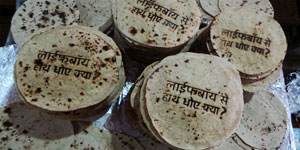
    At Kumbh Mela, the largest congregation on earth where all big marketers are vying to sell their wares and boost their brands, one promotion that stands out is Hindustan Unilever’s ‘Roti Reminder’ for its Lifebuoy soap brand.


    The country’s largest consumer products firm, along with creative agency Ogilvy, has partnered more than 100 dhabas and hotels at the mela site to serve rotis that are stamped with “Lifebuoy se haath dhoye kya?” (Have you washed your hand with Lifebuoy?) “The ‘Roti Reminder’ gets a consumer’s attention at the exact time when hand washing is critical,” Sudhir Sitapati, general manager, skin cleansing, at HUL, says. That is, right when she sits down to eat roti with her hand.


    The company has made special heat stamps to make an impression of its message on rotis and hired 100 promoters to stand in 100 kitchens across the mela. The campaign started on February 1 and will run for 30 days. The company hopes to put the hand wash reminder on 2.5 million rotis.


    “The Maha Kumbh provides a unique opportunity to communicate this message to a large, predominantly small-town and rural population,” Sitapati says. “In effect, this simple, clutter-breaking idea will help us reach out to a massive audience, at a fraction of the cost.”


    Source:The Economic Times

    Copyright © 2013, Bennett, Coleman & Co. Ltd. All Rights Reserved