Category: NEWS

  • DB Corp posts robust revenue in Q3

    By A Correspondent


    DB Corp Limited (DBCL), print media company and home to flagship newspapers Dainik Bhaskar, Divya Bhaskar, Dainik Divya Marathi and Saurashtra Samachar, has announced its financial results for the third quarter and nine months ended December 31, 2012.


    • Consolidated Advertising Revenues grew by 5.2 percent to Rs. 9,100 million from Rs. 8,651 million in the period under review
    • DBCL achieved Consolidated EBIDTA Margins of 24.4 percent in 9M FY2013 at Rs. 2,943 million, as against Rs. 2,768 million in the last fiscal, demonstrating a growth of 6.3 percent
    • Consolidated PAT has expanded to Rs. 1,629 million (13.5 percent margin) , from Rs. 1,567 million (14.1 percent), up by 4 percent on a YOY basis


    In the radio business, it has been reported that advertising revenues have shown a robust growth of 22% to Rs. 191 million in Q3 of current period, against Rs. 157 million in Q3 of last fiscal. The EBIDTA stands at Rs. 73 million (38.3 percent margin), 68 percent YOY Growth. The PAT stood at Rs. 47 million (24.5 percent margin) in Q3 FY 2013, with 113 percent YOY growth.


    DB Corp’s digital business continued to register impressive growth with ad revenue touching almost 100% growth in Q3 YOY, on the strength of continuous impressive high volumes of unique visitors (UV) and page views per month while revenues from advertising reported a growth of 12 percent YOY to Rs. 3,412 million in current period from Rs. 3,059 million in Q3 of previous year.


    Commenting on the company’s financial performance, Sudhir Agarwal, Managing Director, DB Corp Ltd, said, “We are pleased to have once again delivered a satisfactory performance this quarter driven by several key factors. Following the past few quarters of sluggish economic growth and subdued sentiments, I believe this quarter heralds better tidings on the back of an improved economic environment that has also spurred the momentum of media ad spend over the last few months – a trend that may continue. We continue to strengthen our internal capacities and resources and remain optimistic about our progress in every region. Our efforts in consolidating pan-India readership growth especially in the recently launched areas of Jharkhand and Maharashtra that are emerging strongly, and persistent cost rationalisation – is reflected in this quarter’s performance. We are greatly encouraged by the positive feedback and the strong renewal of subscriptions of copies in Jalgaon. We are expending considerable time to conduct more focused consumer feedback, bringing in more innovation in content and further localizing it, connecting with the consumer in our emerging centres, to create differentiated products.


    “On an overall basis, the economic environment – on the back of positive measures such as policy changes, mega project clearances, a continuation of reform momentum and anticipated interest rate reduction, is poised to reflect healthier growth. We will continue in our endeavours to utilise our competitive strengths most productively, to strengthen our infrastructure, monetize our centres and thereby translate this growth to deliver greater value to all stakeholders,” he said.


     

  • Jaldi 5 with Arun Sharma: Friendship will never be boring

    While Airtel has been making the right noise with its ‘Jo Tera Hai, Woh Mera Hai’ campaign, is it moving towards saturation? Arun Sharma, Vice President Marketing, Head Media & Rural at Bharti Airtel Limited, speaks to MxMIndia about this and other issues.


    01. Is the ‘Jo Tera Hai, Wo Mera Hai’ not reaching a point of saturation, though it remains the clutter-breaking communication from Airtel?

    No, I do not think so. The whole campaign is only a few months old. The campaign is around the theme of friendship and there are different renditions of it. So when ‘Har friend zaroori hai’ campaign was ongoing, we actually cut it short even when it was early to do that. The ‘friendship’ theme will remain, but every year or so we will bring out new renditions so that there is no boredom.


    02. Digital’s role in the media pie for Airtel is increasing. How is it leading to innovation in advertising on this medium?

    Digital and creativity or innovation are synonymous for me. I do not see any difference. Digital, however, is not a linear medium; people have the control of skipping your ad at any point of time. Hence, creative is very inherent to this medium. The medium, with technology seeping in, allows you to do so many things, which is not the case with so many other media. Attention span here is less when compared to others such as outdoor or television.


    03. Digital ROI: Much appreciated yet criticized. What do you think?

    ROI is getting measured. We are in the eCommerce platform and can actually track our ROI to the last decimal. But it so happens that the more the data is re-routable, the more you want. More questions are raised when there is data. In terms of outdoor, there is no data but no questions are raised. I believe the problem is the part of the solution and vice versa.


    04. Which is showing more digital growth penetration: Rural or Urban?

    Rural.


    05. Going forward, what can be expected from Airtel on the digital platform?

    It’s too early to say. But whatever we do, it will be core to the brand idea and it will be available to those audiences. What we do has to be relevant to their language, to their needs and for the devices they have. For instance, in rural areas we cannot create communication on smartphones because there the device penetration is different.


    As told to Ananya Saha


  • Citizen Dentsu relaunched

    By A Correspondent


    Dentsu Communications has announced the relaunch of Citizen Dentsu, a specialized division for social and development sector communication. Recognizing the power of specialization, Citizen Dentsu has been formed as a division of Dentsu Communications to address the unique requirements of the social and development sector, with the support and resource bank of Dentsu Global.


    A release from the company said that the ambition will be to build Citizen Dentsu as a ‘Centre of Knowledge’ with specialised skill sets and strategic capabilities that would address the specific sectoral requirements and focus on building currency for causes, and thereby deliver value-added communication solutions for social clients.


    Rohit Ohri

    Rohit Ohri, Executive Chairman, Dentsu India Group, said, “Citizen Dentsu will focus on developing communication for social issues. Social sector communication is unique, in that it has to touch a multiplicity of target audiences and advocacy groups and, therefore, demands unconventional communication devices and unique interactive community media. Our investment is going to be on ‘innovations’, so as to create currency for social issues. I’m delighted to have Rajendra Singh on board to lead this new initiative.”


    Arijit Ray

    Arijit Ray, CEO of Dentsu Communications, added, “Social and development sector communication demands talent with a human touch and passion for ‘making a difference’. Therefore, our endeavour has been to put together a team with the right mix of cross-category and cultural learning and passion for social marketing. I am sure Rajendra and his team will strive towards building and crafting simple and breakthrough solutions that will add value to various community groups and stakeholders’


    Rajendra Singh has recently joined Citizen Dentsu as Senior Vice President. His last tenure was with JWT, where he worked for 10 years. Apart from a set of mainstream clients, Mr Singh headed JWT’s social communications division called Thompson Social for five years. He has worked on a multitude of social programmes, from issues like HIV/Aids, polio, child health and safe motherhood, health and hygiene to causes such as environment, education, food safety & drug usage, safe water and ozone layer, for clients like Unicef, World Bank, Nike Foundation and various ministries, as well as political advertising. He said, “We believe we need to break the mould of traditional advertising and leverage the power of ‘innovation’ for social communication, by employing technology as much as possible. That’s the only way to beat the din and build strong currency for a cause. This is going to be the Citizen Dentsu differential.”


  • Dish TV reports Rs 4,943 revenues in Q3

    By A Correspondent


    Dish TV India Limited has reported third quarter fiscal 2013 unaudited standalone operating revenues of Rs 5,578 million, recording 13.1 percent growth over the corresponding period last fiscal. EBITDA of Rs1,377 million registered 4.8 percent increase over the corresponding quarter last fiscal. EBITDA margin for the quarter stood at 24.7 percent.


    Highlights

    • Dish TV added 829 thousand new subscribers in the quarter ended December 31, 2012 achieving a total of 14.7 million gross and 10.5 million net subscribers at the end of the period.
    • Total standalone operating revenues for the quarter stood at Rs 5,578 million, recording a growth of 13.1 percent as compared to the corresponding period last fiscal.
    • Subscription revenues for the quarter were Rs 4,943 million, recording a growth of 16.2 percent as compared to the corresponding period last fiscal.
    • Subscriber Acquisition Cost (SAC) at Rs 2,201 compared to Rs 2,273 in the immediately preceding quarter.


    Subhash Chandra

    Subhash Chandra, Chairman, Dish TV India Limited, said, “The Indian media industry is witnessing a sea change as it moves towards a fully digitized environment. With the government remaining committed to the cause, stakeholders across the value chain are working overtime to make the best of the opportunity. As digitization sweeps the pay-tv households in India, platforms with evolved business systems and processes having last mile reach are likely to have an upper edge. Amongst DTH platforms, Dish TV with its technological lead and superior product line-up is one of the best placed to capitalize on the digitization mandate,” he added.


    Jawahar Goel, Managing Director, Dish TV, said, “While the distribution industry remained on tenterhooks preparing for digitization, the third quarter saw the much debated compulsory switch off of analog television signals take place in key metro markets. Although lack of execution in Chennai and Kolkata was a dampener, festival demand coupled with mandatory conversion in Delhi and Mumbai brought the DTH industry back to the 1 million plus monthly run-rate. DTH garnered around 35 percent share of incremental additions post the sunset date.”


    He added, “In line with our expectation, we witnessed significant subscriber uptake around the sunset date of 31st October. Dish TV achieved the largest share of 28 percent amongst DTH platforms in the digitization territories. ‘Dish+’, India’s first standard definition recorder, played its part in differentiating and attracting consumer interest in a crowded market.”


    Commenting on the third quarter performance, Mr Goel said, “A larger base did create pressure on the average revenue per user which, primarily supported by price hike in the second quarter, increased marginally to Rs 160. In the third quarter, apart from the usual additional spends typically experienced due to the festive season, additionally this year the company’s investments to capitalize on the digitization opportunity are also reflected in higher costs during the quarter. A seasonally higher marketing expense was as per budget. Content cost for the year is expected to be within the guided range of 12 percent increase over the previous fiscal.”


  • Sony goes Liv with digital entertainment

    By A Correspondent


    Multi Screen Media (MSM) has announced a new product for digital entertainment, Sony Liv. Sony Liv is MSM’s new Video-on-Demand service, which will provide viewers a world-class viewing experience of their favourite shows from the Sony stable – Sony, Sab and Max. Viewers can watch ACP Pradyuman solve the most interesting cases on CID, revisit the most hilarious episodes of Comedy Circus and watch the 1st ever episode of Taarak Mehta Ka Ooltah Chashmah, online, on their personal mobile handsets and tablets, on the go, at their convenience.


    Apart from current shows, Sony Liv also gives viewers a chance to watch past episodes of their favourite shows on Liv Classics. In addition to episodes of all-time favourites like Jassi Jaisi Koi Nahin, Kkusum, Heena, Boogie Woogie, Movers & Shakers and Office Office, Liv will also showcase a large archive going back 17 years of movies and special events like Stardust and Filmfare Awards.


    The Sony Liv application is available globally for free, online on www.SonyLIV.com, for download on major app stores iTunes and Google Play (Android).


    Man Jit Sigh

    Commenting on the new initiative, Man Jit Sigh CEO, MSM said, “Liv is aimed at providing entertainment on the go for young India on the move. With the launch of this user-friendly and highly interactive application, Sony is slated to change the way this nation consumes entertainment. It is a great platform for brands to enhance their engagement and interactivity with today’s young consumers.”


    NP Singh

    NP Singh, COO, MSM, said, “Innovation is the bedrock of business at Sony and our latest offering, Sony Liv reiterates our commitment to engage and interact with our audience in a whole new way. Sony’s shows like Bade Achhe Lagte Hai, Comedy Circus, CID and Sab’s shows – Taarak Mehta Ka Ooltah Chashmah and FIR have very high repeat value and have been rated amongst the most viewed shows online. Through Liv, we want to strengthen our viewership in the digital space and provide the best entertainment preferences to our audience.”


  • Jaldi 5 with L V Krishnan: Core viewers of genres is up

    By Ananya Saha


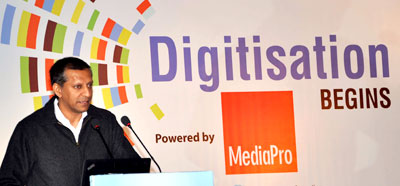
    Digitization is having multiple ramifications for all stakeholders: MSOs, LCOs, broadcasters and advertisers. On the sidelines of the ‘Digitization Begins’ conference convened by afaqs.com, MxMIndia spoke to LV Krishnan, CEO, TAM India to get upclose to the real picture after mandatory digitization was implemented in the three metros.


    01. What can broadcasters learn post DAS, given that the two metros (Delhi and Mumbai) have shown differential changes towards genre preference?
    There are two aspects to it. One, distribution is bringing order in the chaos post-DAS, where channels are getting in two metros. In a way, order that you now see will be much more systemised order and consist of core audience wanting to watch that genre than the trespass audience. This will go the long way in Phase II. The learning of Phase I is good enough to say what the next step should be. Step one is marketing: tell the consumers what the channel has and come and watch it. The second step would be much stronger content of engagement.


    02. So, do we have any surprises post-DAS?

    Overall, the core viewers of the genres have gone up. However, the overall reach of mass channels has gone down. Engagement levels have marginally increased with the genre and strong properties that are marketed are getting the audience. The core audience is still sticking to the preferred genre; it is the trespassing audience that are no longer accessing it. The broadcasters can create strong properties and communicate those properties to the audience so that the audience becomes loyal.


    03. How do you see the audience trend of Delhi and Mumbai replicating in other cities?

    Rollout of digitization will exhibit same phenomena in other markets as well. But the difference will be those markets already have strong penetration of digitization, eg MP and Gujarat. In metro markets, we see 50 percent penetration so such cities will see much smoother rollout of digitization than a Delhi or Mumbai.


    04. Many channels are claiming a spike in viewership. Have things shaken up much with digitization?

    These are the initial stages of digitization. The channels have worked hard to get their communication across to the audiences and have created better content and engagement.


    05. What is in it for the advertiser in the post-DAS scenario?

    They are getting targeted with audiences getting skewed to genres. Therefore, they can target their advertising more efficiently unlike the pre-DAS scenario. Secondly, geography is becoming clearer, especially for niche genre. Communication will be much easier in the digital era.


  • Your Mom is on FB… and other key Social Media trends for 2013


    By A Correspondent


    Leading online marketing firm ODigMa has outlined six trends that are expected to define the social media landscape in India in 2013. These trends have been captured basis the company’s analysis of the social media industry, customer usage and customer demands. Says Advit Sahdev, ODigMa’s CEO and Founder, “To lead in a competitive business environment, companies and marketers need to integrate their marketing and social media strategies. Functions within businesses need to venture out of traditional marketing and social media boundaries to realise their true potential. The year 2013 will see the emergence of various new tools and platforms which can be used to augment business objectives.”


    Trend 1: Moving beyond Likes and linking them to assess competitiveness


    Most companies on social media platforms restrict their engagements to Likes, Sharing and increasing their Fan base, but companies are maturing in their social media presence. There is an immediate need to translate these engagement tools into tangible and measurable benefits.


    What it means: 2013 will see marketers and advertisers demand an assessment of how Likes, shares and increase in fan base will affect campaigns, product innovations, pricing and market competiveness.


    Trend 2: Mobile is moving to the centre of social media campaigns


    Internet-enabled smartphones in India reached the 24 million mark in 2012, as per Federation of Indian Chambers of Commerce and Industry (FICCI) and KPMG International. The increase in smartphone usage has spurred online activities on the move. This, coupled with a slew of new smartphone launches lined up in 2013, will make the smartphone the epicentre of all social media activities.


    What it means: In 2013 advertisers and marketers will need to devise a mobile strategy to meet their marketing objectives – be it retention, conversion, or branding. Engagement platforms on the mobile phone that enhance reach, and help to explore new audiences and market will be an essential element of every marketing strategy.


    Trend 3: The rise of video content


    At a time where there are zillions of mediums which hanker for a customer’s attention words no longer have a lasting impression. 2012 saw the popularity of mediums that use pictures, including Instagram Pinterest, and even Infographic. 2013 will focus on Video content, moving pictures which will speak, express and eventually leave a more lasting impression on consumers.


    What it means: Innovation, creativity and out of the box thinking to communicate via moving pictures will rise. Marketing decision makers will need to equip themselves with video content management insights and knowledge.


    Trend 4: The magic of analytics


    In today’s competitive environment, companies irrespective of their size and industry necessarily need to employ analytics tools to improve efficiencies. 2013 will see more traditional segments employing these tools such as governments and regulatory bodies who are required to cater to a population of over a billion citizens and not just sunrise segments such retail or telecommunications.


    What it means: Analytics tools will become a standard that marketing decision makers will need understand and implement to understand how their social media campaigns impact strategic goals, be they retention, conversion, or branding. Analytics tools will help companies observe the pattern of online behaviour of customers across search engines and social media platforms. They will aid businesses in customising their marketing strategies in a manner so as to attract as well retain more customers. It will be imperative for companies to gather accurate and relevant data from all these sources and analyse it for customer insight thereby significantly improving their customer acquisition and retention strategies.


    Trend 5: Your mother is on Facebook


    There is a mindset that social media is a tool to reach out to a certain demographic. 2013 is going to bust this myth. Last year has seen a diverse age group join the social media bandwagon, from grandmothers to school kids. This audience is well poised to be targeted by marketers.


    What it means: Marketers will need to reckon with this phenomenon and move beyond the traditional mindset that suggests that social platforms reach out to the under-30 years of age population.


    Trend 6: A 360-degree integrated approach


    Offline and Online marketing cannot work in silos any more. Marketing strategies need to take a 360 approach where both these facets complement each other.


    What it means: Brands will have to create campaigns wherein online programs, such as a campaign running on Facebook, will have an offline component to maximize impact.


  • What next, now that digitization has begun?

    By Ananya Saha


    L V Krishnan

    The past two months, after the implementation Phase I of digitization, have been quite an incredible journey. From doubts about whether we would achieve 100 percent digitization at all to achieving it in Mumbai and Delhi. Of course the hiccups still remain. Probably Phase II will see less of these hiccups and more of successful implementation. This and many more issues about digitization were discussed at afaqs event in the capital titled ‘Digitization Begins’. The panellists not only discussed the ramifications of post-DAS scenario but also what the stakeholders should do to take advantage of digitization.


    Numbers game

    According to LV Krishnan, CEO, TAM India, the digitization onus is on marketing and programming. At the summit, ‘Digitization Begins’, culling facts from the data (based on eight weeks pre vs post DAS CS4+ in Delhi and Mumbai), Mr Krishnan said, “There has been 2.5 times growth in the availability of channels in the initial months but it does not match the viewing with 30 percent increase in incremental fragmentation.” He also noted how North and West markets in India are maturing faster than the Southern market when it comes to digitization. “Today channel-surfing behaviour is prolonged in digital homes, while direct landing is leading to increased reach for English entertainment, English movies, and the kids genre.” According to him, inter-genre surfing may also come down.


    Other findings that Mr Krishnan shared included: with sports channels becoming omnipresent, other sports will also get benchmarked; viewing is getting spread from primetime to other day parts, eg: youth music to the early morning band of 7-9am. However, he cautioned, “The biggest disadvantage is that DAS will hit single channels since the top seven channels garner almost 80 percent of audience in DAS-enabled Delhi and Mumbai.”


    Mr Krishnan, however, viewed digitization as a positive change and said, “The clear action step for the broadcaster to be present on distribution chain should choose between two cluster homes: home with kids, and home without kids. For the advertiser, they need to focus on cost of targeting, increase in co-creation of brands. Advertising will see a boost via paid media, and additional media budgets will get shifted from localized ground promotions to unique television content channels.”


    The next 6-8 months will also see a spike in free-to-air channels, according to Mr Krishnan, to cater to the bottom-end of the market.


    Chasing the momentum

    Roop Sharma

    Digitization was promised to bring in not only the set-top boxes (STBs) into the house of the consumer, but also digital services such as digital billing, services such as video-on-demand, broadband etc. Even though the seeding of STBs has been achieved, it is still a long way before we achieve digitization in the true sense.


    Vivek Takalkar, VP, Marketing and Business Development, MediaPro and Roop Sharma, President, Cable Operators Federation of India believe that post seeding of boxes, digitization has not achieved desired results while Ashok Mansukhani, Director, Hinduja Venture and President MSO Alliance asserted that the all the stakeholders of the digitization process should work together towards establish contact with the consumer.


    Sugato Banerji

    Sugato Banerji, COO, What’s-on-India, noted, “Content discovery will become important for operator to push channels. As digitization progresses, EPG in various languages will also be required.” While broadcasters and content creators might struggle with monetisation, the panelists were of the view that digitization will result in demand for more content.


    Giving the advertisers’ perspective, Anita Nayyar, CEO India and South Asia, Havas Media, initiated a discussion with Amit Tiwari, Country Head, Media and Digital, Philips India and Sunil Raina, Business Head, Lava International. Mr Raina emphasized content co-creation, while Mr Tiwari said, “Channels have to become brands. They have to think from a marketers’ perspective. Even though we have not changed our media plans, depending on digitization numbers, but I am sure that as digitization grows and sub-category of genres emerges, it will impact us directly. We will look at focused advertising.”


    Anita Nayyar

    Ms Nayyar noted, “When it comes to advertising, the brands prefer to go with what has been working in the past and their gut feeling. When the digitization process began close to Diwali, we did not have the numbers. But even then the brands advertised because it was the season and went with the gut feeling.”


    Even as marketers have not clearly changed their media strategy based on initial numbers, it is clear that as content becomes targeted, media preferences could change dramatically.


    Neeraj Sanan

    Neeraj Sanan, CMO and Head, Distribution, MCCS India said, “Good content will determine market share and role of distribution will reduce. Even as time spent on television has increased by 5 percent, the choice has also increased from 80 channels to 250 channels.”


    Even as business models will undergo huge changes, the panel believed that the future implications have not had any affect on their current strategies. And while DAS is believed to be a game-changer, the veterans think that more then the distribution equilibrium, it is the convergence that will have an effect on the consumption of content. As Mr Raina said, “It is important for us to integrate online and offline media to create impact. Plans are not going to change because of digitization but because of convergence. I would like to reach my consumer through the medium they prefer: it can be a television or a tablet. I have to be present where they are.”


    With competition rising, Mr Sanan noted, “There are going to be some wild implications of digitization including, local events can become content through MSOs; a good EPG search engine could take off; concept of broadcast UGC can happen; with triple play, MSOs can think of ad options with a clear-to-call action.” He also noted how MSOs will start competing with national channels for content rights.


    Though there is still a long way to go, digitization is throwing up interesting trends. How many of these will get converted, only time can tell.


  • Havas to handle media duties for Voltas

    By A Correspondent


    Voltas has entrusted its media planning and buying responsibilities to the newly rebranded Havas Media, with digital at the core, in a multi-agency pitch including GroupM, Madison, Aegis and IPG.


    Speaking on the appointment, Pradeep Bakshi, Chief Operating Officer, UBBG, Voltas, said, “We are happy to announce that Havas Media has been appointed as our Media Agency for our Room AC and other Unitary Products business. During the multi-agency pitch we were impressed by their capability to look beyond seasonality and traditional media. Their understanding of the category from a regional perspective was also very accurate. We look forward to working closely with them in our next phase of growth in the coming years.”


    Anita Nayyar

    “We are delighted to have Voltas as a part of our portfolio yet once again. It was a very tough but a ‘well-organized’ pitch with practically all the leading agencies in the fray. I am delighted that we have been able to demonstrate our capabilities through our insights and category understanding. I believe our extremely focused and well integrated effort made us win the business. While it is a great brand to be associated with, more importantly, they are a wonderful client to work with. This prestigious win is yet another very important milestone in Havas Media India’s ambitious growth plans,” said Anita Nayyar, CEO Havas Media, India and South Asia.


  • Losses widen even as sales grows for big retailers

    By Sagar Malviya


    Big unlisted retail chains Reliance Industries’ Reliance Fresh, Aditya Birla Group’s More, Bharti Retail’s Easyday and Tata-owned Star Bazaar grew their sales in high double digits, but their losses too widened to take them farther away from the breakeven point.


    According to their financial statements for 2011-12 filed with the corporate affairs ministry, these food and grocery retailers increased their combined losses 42% year-on-year to Rs 1,277 crore. Combined sales jumped 55% at Rs 6,560 crore.


    “Our losses for FY12 have been impacted due to increased cost of funding and one-time store closure costs,” said Pranab Barua, apparel & retail business head at Aditya Birla Group, whose net loss increased 26%. “Since food and grocery retail is a thin margin business, the right rent-to-revenue ratio is critical for the success of the store and hence the success of the business,” he added.


    High costs of real estate, paucity of skilled manpower and the lack of infrastructure like cold storages and efficient supply chains have all contributed to making organised retailing a high-investment, low return sector so far.


    A recent report by India Ratings suggests that EBITDA margins for the retail sector are likely to contract by 50-75 basis points in 2013, while overall revenue is likely to grow 3-8% year on year across large retailers.


    Experts, however, say that while all big retailers continue to be in the red, their losses as a percentage to sales would reduce going forward. “While few retailers are shutting stores, many are also expanding in profitable places.


    Since they now have a critical mass, bargaining power has improved too, which will help in improving gross margins,” said Kumar Rajagopalan, chief executive of Retailers Association of India, an over 1,000-member strong industry body. He said food and grocery retailing takes at least 7-10 years to break-even.


    More than five years ago, in the wake of a slowdown when they were on an expansion spree, most retailers were left saddled with a huge inventory, faced cash crunch due to higher working capital requirements and were unable to raise funds. This made most retailers cut costs aggressively. Some deferred expansion and some shut down shops, while all now focus on store-level profitability and supply chain issues.


    For instance, one of the key tasks for Rob Cissell, the British CEO of the value retail format of Reliance Retail (RRL) since September 2011, has been growing aggressively by launching new stores and new formats, as well as by building a robust supply chain; and to do all this profitably.


    Reliance Fresh losses increased 71% to Rs 274 crore in financial year 2012, while its sales grew 55% at Rs 3,860 crore. “The supply chain cannot be outsourced, it is the heart of the business. We are currently working with 15,000 farmers now but, like Walmart does in China, we want to work with a million farmers,” Mr Cissell said last year in an exclusive interaction.


    Aditya Birla Retail’s Barua said the company has started getting positive results. “In the last nine months, our sales have grown in double digits with substantial improvement in store contribution over 2011-12,” he said. Birla Retail shut over three-dozen stores last year to increase productivity and cork losses from unviable stores across the country.


    Bharti Retail and Trent Hypermarket widened their losses last year due to aggressive expansion. Bharti Retail, for example, opened 46 Easyday supermarkets and 12 Easyday Hypermarkets during calendar year 2011, taking its tally to 180 stores. While it helped the retailer to grow its sales 117%, its losses jumped 48%. Star Bazaar reported 32% jump in sales and 54% increase in net loss for the year ended March 2012.


    Experts say that apart from store expansion, deep discounting too added to the retailers’ losses. “Sales in 2012 were driven by discount offers; and the trend is likely to continue in 2013, providing volume growth at the cost of margin,” said an India Ratings report.


    Source:The Economic Times

    Copyright © 2013, Bennett, Coleman & Co. Ltd. All Rights Reserved


  • Banking on the highway of life

    By A Correspondent


    Axis Bank, India’s third largest private sector bank, has announced the launch of its new campaign ‘Zindagi ke highway pe koi akele nahin badhta’ that aims to drive home the message that progress and subsequent success is mutual.


    The campaign designed by Lowe Lintas features Axis Bank’s Brand Philosophy ‘While we keep progressing in our lives, there always is someone else progressing along with us, so let’s Progress Together’. The campaign highlights Axis Bank’s credentials as a customer centric bank and a partner in progress who walks with its customers on the highway of life – hence the tag line Zindagi ke highway pe koi akele nahin badhta.


    Speaking on the launch of the campaign, R K Bammi, Executive Director – Retail Banking, Axis Bank said, “The new film takes our brand positioning of  Badhti ka naam zindagi… or Progress On…  ahead. We understand that Progress always has a ripple effect. When one person progresses, others around him progress too. This insight is captured in our new TVC that clearly demonstrates the circle of progress and how you touch lives of others even when you do not know them.”


    Explaining this new phase in Axis Bank’s communication journey, Arun Iyer, National Creative Director, Lowe Lintas said, “Last year we crafted ‘Badhti ka naam zindagi’ to define the fundamental philosophy for Axis Bank. The task this year was to continue building this sentiment on a larger canvass. What better than changing the frame of reference from what it means for one individual, to what it means in the context of the entire community we live in? The fact is that when you progress, others benefit too. And hence no one really progresses alone. When you move up, others do too. We hope the execution will make our audience have this joyful realization about how we are connected with each other.”


  • IAA takes a gender sensitization VOW

    By A Correspondent


    Srinivasan K Swamy

    Srinivasan K Swamy President of the India Chapter of International Advertising Association (IAA) announced the ‘IAA Gender Sensitization Drive’, which seeks to fundamentally change the deep-rooted bias against women. The drive, termed the ‘VOW’ or ‘Violence on Women’, involves industry members “taking a vow to get rid of this scourge in our society”.


    The initiative consists of two segments.


    1 Gender sensitization seminars for content creators

    The first part of the drive would be to hold a series of seminars across five cities, Mumbai, Delhi, Kolkata, Hyderabad and Pune, to sensitize content writers in film and TV, story writers in print media and in advertising, to guard against typifying women and on other gender nuances, and create focused awareness about the right way to project women across media. The seminars are to be addressed by a galaxy of experts in the field and also leading lights of the communications industry. The first one is already scheduled in Mumbai on February 16 which the IAA hopes will be inaugurated by Union Minister of Women and Child Development Krishna Tirath.


    Kaushik Roy, Chairman, IAA Public Service Committee, said, “There has been four-fold increase in ad revenues. Advertising remains a buoyant sector despite a flat growth year. There has been 144 percent growth in C&S homes and time spent on advertisements has risen to 96 mins/day according to IRS. Now, this shows what impact advertising can or does have on society. Today many ads tell what women should wear or look like. The personal category, cosmetic, beauty and hair etc have 23,000 spots per day. It is thus necessary to sensitize advertisers and content creators about how to project women.”


    2 Multimedia advertising campaign against ‘eve-teasing’

    The second initiative is a national advertising campaign that will use the creative resources of the communications industry and the strength of media linkages to address behavioural patterns in a manner that would benefit women. ‘Eve-teasing’ has been identified as the critical issue that needs to be addressed. Mr Swamy said, “Eve-teasing is seen as the mother of most evils affecting women. Today’s eve teaser is tomorrow’s molester, and could be a future rapist. It is necessary to nip this in the bud.” He further added, “Research and experience of experts in the field like UNFPA and leading NGOs like Laadli have also suggested this subject as the critical one to address.”


    A national contest will be run inviting entries from creative people all over the country on how to tackle this issue through effective communication. The entries for this contest will be judged by the best creative minds in the communications industry, and a jury consisting of leaders from a cross-section of society and NGOs will then select the winning campaign from the shortlist. The IAA will fund the production of this winning entry, and will use its strong media linkages to run a high-decibel and high-power campaign on all newspapers and TV channels across the country. The call for entries should begin in 10 days.


    Mr Roy said, “You will realize that in a period of about three months we will have a concentrated burst of positive attention on the importance of women’s issues. We believe that such an initiative conducted by the entire communications industry led by the IAA will have a very salutary effect on the burning issues confronting women today.”


    Pradeep Guha

    Pradeep Guha, IAA Regional Director (Asia Pacific), said, “This is yet another instance of the IAA taking the lead and showing how the power of communications can be used for a good cause. This will go a long way in sensitizing people on a very important issue.”


    Mr Swamy told MxM India, “Even at our agency (RK Swamy BBDO) we are cautious that our ads do not typify women. Clients should also be aware that resorting to such things will not boost sales.”