Category: NEWS

  • Dainik Bhaskar unveils 8-page gatefold ‘Gateway to New Bhopal’

    By A Correspondent


    On Sunday, October 21, readers of Dainik Bhaskar’s flagship Bhopal edition in Madhya Pradesh were treated to an 8-page gate fold. The innovative gatefold was specially printed on the state-of-art KBA machine.


    The front page gave no indication of the 8 page gate fold (Image- Cover page), but when the readers opened it they were treated to the Door visual (image – inside page) which opened from the centre on both sides (image- inside opening) and resulted in a 8 page gatefold with details on all the properties from the participating builders (image- 8 page gate fold). An initiative by the Dainik Bhaskar Bhopal sales team, it brought together 10 Builders of Bhopal which are developing ‘New Bhopal Area’ near International Airport. This opportunity was created with the Builders Exhibition ‘Awas Mela’ happening at Bhopal. Festival season is a very auspicious period for booking residential assets in our markets and hence this Gatefold, primarily a collective advertisement feature by the 10 Builders was highly relevant for the market. This special feature was circulated with the Bhopal City edition of Dainik Bhaskar.


    Speaking on this initiative, Alok Purohit, CEO, MPCG & Gujarat, Dainik Bhaskar Group said, “Innovation works best when it is relevant and a pleasant surprise to the readers. For impact this is an intrusive innovation – as the reader must interact with it to get to their favourite newspaper and hence has a huge visibility and impact generator. To have done this in a live edition with the huge print run of Dainik Bhaskar Bhopal is another plus”.


    R D Bhatnagar, CTO of Dainik Bhaskar Group said, “Dainik Bhaskar group is one of the few media houses, which have KBA Machines allowing multiple innovative possibilities. The special feature for the Bhopal Unit was printed at the Ahmedabad centre. The group is geared to bring alive such possibilities by utilising its strength in printing technology across centres”. Vinay Maheshwari, Sr. Vice President, SMD added, “This task required a massive effort on logistics and distribution to be able to reach readers on time with a large print run.”


    KBA Machines are the state-of-art newspaper printing machinery from Germany. These high speed machines are capable of printing 80,000 copies in an hour allowing paper to go to bed late.


  • Only 59% (&not 87%) digitization achieved!


    By Pradyuman Maheshwari


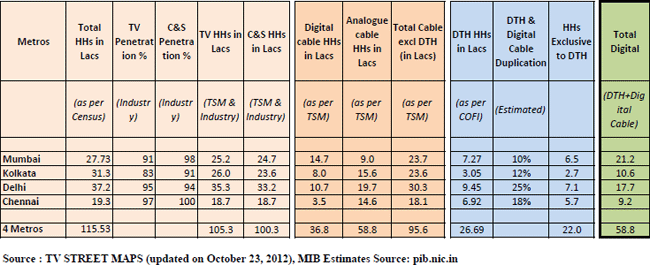
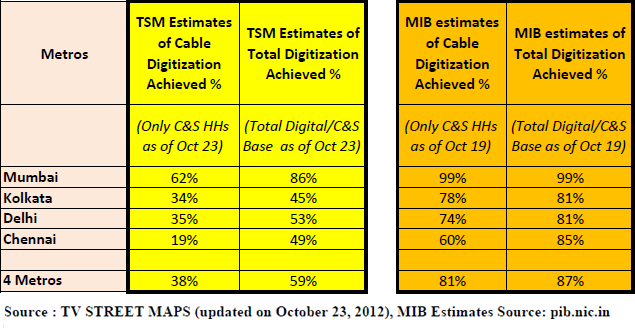
    Only 59 per cent of digitization has been achieved in the four metro as per the first ever independent survey of the extent of digitization in the four metros was conducted by Television Street Maps for MxMIndia. This number is in sharp variance to the claim made by the Ministry of Information and Broadcasting that 87% of the four metro was digitized.


    The figures for the four metros tell the story:


    For Cable & DTH:

    Mumbai: 86% (Govt: 99%)

    Delhi: 45% (81%)

    Kolkata: 53% (81%)

    Chennai: 49% (85%)

    The gap grows when you look at the achievement of digitization only in cable homes.


    Mumbai: 62% (Govt: 99%)

    Delhi: 34% (78%)

    Kolkata: 35% (74%)

    Chennai: 19% (60%)


    On Tuesday, we made a clarion call to the mandarins of the Ministry of Information and Broadcasting urging them to put an end of this charade of make-believe numbers of digitization.


    MxMIndia strongly believes that digitization is THE ONLY way in which the broadcast business can survive and thrive. For too long there has been much confusion amongst stakeholders. With half-baked regulations and guidelines, certain sections of the ecosystem were getting away with unethical practices.


    India has been among the most happening markets in the global broadcast business. Most of the world’s media superpowers are here. What was needed was some order in the business. Which digitization was going to bring in this, as it happened internationally. Unfortunately, the government has appeared to have missed  a trick in its attempt to execute this.


    The Sunset Date for the switch from analogue to digital transmission in the four metros was first fixed as June 30, 2012.  Then it was shifted at the last-minute to October 31.  When this writer mentioned that even that date looks tough to achieve, there were many in the industry who said that the momentum will build eventually.


    Although MxMIndia had been running a series starting 100 days to the June 30 deadline, we didn’t look at digitization in a big way until there 50 days left for November 1. But soon after interacting with all stakeholders, we figured that none of the numbers on the extent of digitization achieved that were being dished out could be believed.


    Jaldi 5 with Joydip Kapadia: Data based on ground-level info + professional & expert assumptions
     

    The government claimed an 87% achievement of digitization while the study conducted for MxMIndia by Television Street Maps showed this achievement to be only 59%. While this figure is for cable and DTH homes, that in cable homes alone is a low 38% as against the I&B ministry claim of 81%. MxMIndia spoke to Joydip Kapadia, Business Head, Television Street Maps on the issue:01. There is a huge variance between the TSM study figures of 59 per cent total digitization as against 87 per cent which the government is quoting. Why do you think do we have this huge difference between the two figures?

    I wouldn’t be in a position to comment on the numbers quoted in other studies. After all, whether its the authorities or TSM or other third parties releasing info about the ground, we all have to resort to diverse methodologies and assumptions. Sometimes the estimates of individual studies could vary due to the underlying assumptions considered. These assumptions work at multiple levels – each or all of these assumptions levels could influence the end result. For instance, differences in defining the areas within the city, definition of Digital TV (including or excluding DTH), total cable homes in a city extrapolated from census and other sources – are just some of the places where assumptions taken upstream within the analysis could produce variations in numbers coming out downstream – at the end of the analysis. All I can say is that our data is based on information obtained from the ground overlaid with our professional and expert assumptions.


    02. By your estimates how much do you see the 59 per cent grow to by October 31?

    It’s difficult to predict given the scale of the initiative and the number of players and variable involved. I wouldn’t like to hazard a guess.


    03. Would you see broadcasters lose out because of the delay (given more carriage fees, the delay in transparency, but then assured reach)

    We have actually not looked at these aspects so I wouldn’t like to say anything on that.


    04. Is there any one thing that you would like to see being done right if there’s a delay in the date and/or for the digitization for the rest of the country?

    We are not direct stakeholders in this and cannot offer any advice in this regard.


    05. 05. Do you think it would be prudent for the government to push the digitization date in the four metros by another three months?

    The math for all stakeholders comes down to what is the overall target to achieve vis-a-vis the seeding pace of the industry to reach that target. If that Math adds up then great, else the verdict would be to budget for greater time.


    It is then that we commissioned Television Street Maps (TSM),  India’s largest and widest channel distribution monitoring service covering over 1500 headends across  675+ cities/towns, to conduct this study. TSM placement monitoring data is provided on a weekly basis to its clients who include names such as Indiacast, One Alliance, Viacom18, MSM, Star, UTV, etc. Besides providing distribution monitoring for analogue and digital for Class-1 towns, TSM has recently started providing distribution monitoring for LC1 towns as well as Digital Track, a system to analyse Digital offerings of MSOs and DTH companies.


    Over the last two years, TSM has been tracking cable headends on a daily basis and reporting on a weekly level in almost a cable census style – covering every headend for the geographies it represents. While the data provided here are just the toplines we intend to provide detailed insights to our client on DAS. (see box: Jaldi 5 interview with TSM Business Head Joydip Kapadia: Data based on ground-level info + professional & expert assumptions ).


    Methodology of Data Capture:

    Over the last two years, TSM has been capturing TV channel distribution on a daily basis – the expanse of which is now a staggering 1500 headends across 675+ towns. This daily activity has been augmented since August 2012 for the four metros to capture the movement from analogue to digital at a more granular level. This augmentation/ expansion has been done using extensive ground intelligence and multiple verifications due to the criticality of the data. To ensure correctness of the data, more frequent scans were done in the last few days. The current release is for the ground situation as on October 23, 2012.


    The ground info on Analogue versus Digital has been layered with metro universes data collated from census and other third party sources to ultimately validate and put together the digital penetration data for the 4 metros.


    The sharp variance in the numbers as per the TSM survey and those put out by the government is reason for worry. But this is precisely what led MxMIndia to commissioning this study. No one really believes the numbers that are being put out by the government though MxMIndia, like other media, has been publishing these.


    MxM View

    MxMIndia recommends that the government act in a mature way on the issue. While a delay will mean a loss of face, it’s better to schedule for a time when 100 percent digitization is truly achieved. At the time of writing, we’ve heard of rumours that the government may well announce a delay by two months. We would urge the government to not look at December 31 as the Sunset Date. There is a fair amount of special programming on television planned on that day and the government would be well advised to look at a date like January 31.


    However, while doing so, it must get assurances from the governments in West Bengal and Tamil Nadu on compliance. The government must also meet all stakeholders to ensure that everyone is on the same page and is working towards the greater common good. It may be a good idea for it to appoint a full-time Officer on Special Duty for digitization. Either someone from its ranks, or pulled from the industry.


    A note of caution: there is a general election coming up in 2014, possibly earlier. Elections have been lost due to grave national issues and teary ones like onion prices. If there’s any mess-up with digitization, the government can ill-afford a crisis where the masses won’t get to watch their favourite shows on telly. Then, the cry will surely be: alag chahiye!


  • Rowdy Rathore leads Sunday programming; Veera set to open well: Ormax study

    By A Correspondent


    According to the results of Ormax Media’s TV Track, a syndicated study based on Day After Recall (DAR) of TV channel and programme viewing, the premiere of Rowdy Rathore was by far the dominant programme watched on television on Sunday, October 21, 2012.


    Ormax TV Track covers respondents in the 15-44 years age group in SEC ABC, across 17 cities in India. The top 5 viewed programmes on Sunday were: Rowdy Rathore (Sony), Cocktail (Colors), Bigg Boss (Colors), Crime Patrol (Sony) and Taarak Mehta Ka Ooltah Chashmah (SAB TV).


    According to Ormax’s syndicated product Showbuzz, Star Plus’ next week’s launch Veera has been tracking well and is set to grow the 10.30pm slot for Star Plus by at least 30%.


    Speaking about the findings, Shailesh Kapoor, CEO – Ormax Media said: “TV Track is conducted amongst regular TV viewers across the week. Rowdy Rathore’s excellent performance was expected given the film’s immense mass appeal. Veera has broken the Showbuzz record of being the most recalled new programme on Star Plus two weeks before its launch. If the campaign sustains itself well, Veera may even show a 40 percent growth in the 10.30pm slot.”


  • Jaldi 5 with Tripti Lochan, CEO-Asia, VML Qais

    Tripti Lochan

    By Tuhina Anand


    1. Does the tag of ‘Cannes Lion winning network’ make it easier for VML Qais to make inroads into India?

    Winning Cannes Lions is a fantastic achievement – because being recognized for something like Cannes is a validation of one’s work. But in India clients are looking for our local portfolio as much as they are looking at what VML has achieved globally. To that end, awards are great – but equally important is the context of work you do in that market for brands that are recognized.


    2. How do you perceive the Indian digital advertising space and the opportunities here?

    The Indian digital advertising space is an extremely interesting place to be. There are fantastic opportunities, and brands that have global aspirations. But, digital is still at the “lets experiment seriously with it” stage. As brands get successful with their digital initiatives, we will see the real opportunities open up.


    3. What will be your focus for the next year in India?

    Continuing to build a solid company, hiring the right people, delivering against the promise we have made to clients, and ensuring that best practices from around the world are show-cased to our clients.


    4. What is one factor that differentiates VML from others in India operating in a similar space?

    It’s our insights-based strategic thinking. What we recommend to clients is based on real knowledge of what users want from specific brands. We create actionable insights through research that drives strategy. We have a full research team that does 360-degree research that drives strategy. This is our differentiation.


    5. What is the biggest drawback in India that is holding back the progress of digital advertising/marketing making the most of its potential?

    Frankly, India is like the rest of the world in its evolution of digital. The budgets put against digital advertising do not reflect the amount of time consumers are spending online. When this imbalance gains equilibrium, that’s when we will see the real potential of digital unfold!


  • Advertising Council of India launches new website

    By A Correspondent


    In an ongoing effort to make the Advertising Council of India (ACI) more relevant and useful to its constituents, its new website (www.adcouncilofindia.org) went live on the occasion of Dussera.


    Pradeep Guha of the ACI said “I believe this will be very useful in the times to come. Right now, the site gives one an overview of what the ACI is all about. It has information about the interesting Fast Track programme ACI is running (as a part of the Asian Federation of Advertising Associations, AFAA) and has a useful link to the AdAsia 2011 site. More important, it has the first initiative of the AFAA knowledge Center.”


    AFAA has forged a partnership with WARC, a company headquartered in London and providing ideas and evidence to the marketing community for 25 years. WARC has offered AFAA the trend report for Asia called the Asian Toolkit for the AFAA Members.  As ACI is a member of AFAA, the Asian toolkit is now available to all members of ACI. The toolkit can be accessed via the ACI site and is a summary version which associations can distribute to their members.


  • ibis and Media Contacts launch virtual pillow fight campaign

    By A Correspondent


    As part of a new global rebranding campaign, Accor’s ibis brand family of economy hotels is launching the world’s biggest virtual pillow fight, with the “ibis Pillow Fight Party” Facebook application. The campaign, developed by Media Contacts Singapore, invites netizens in Asia-Pacific to discover the ibis family and stand the chance to win hotel stays at ibis hotels in popular destinations in the region.


    The campaign, which targets Facebook users in the Asia-Pacific region, invites consumers to discover the unique personality of the ibis brand family in a fun and creative way. The inspiration for the campaign is the brand’s iconic pillow logo.


    The pillow fight runs until November 21, 2012 and all fans of the ibis Facebook page in Asia-Pacific can take part in the fun. The first step is to become a fan of the ibis Facebook page and connect to the ibis Pillow Fight Party application. Next, participants create customized pillows and craft personalised messages to their friends. Then, the mayhem begins, as players throw their pillows at each other to score points – each virtual “throw” earns one point, while each pillow thrown back at them nets them two points.


    At the end of the six-week campaign, the top ten highest-scoring players will win a three-night stay at selected ibis family hotels in popular Asia-Pacific destinations including India, Bangkok, Bali and Singapore. In addition, each week one randomly “Mystery Pillow” also rewards one player with a hotel stay.


    “We are very excited to celebrate the rebranding of the ibis brand family with the launch of the ibis Pillow Fight Party Facebook application,” says Jens Uwe Parkitny, Vice President, Digital Marketing & Distribution, Accor Asia-Pacific.


    “Given the rapidly evolving social media landscape – and its growing importance for reaching consumers – in Asia-Pacific, we believe that this application is one of the best ways to introduce the ibis family to our target customers.”


    “In a way, the Facebook community in the region mirrors the ibis brand – energetic, savvy, connected and on-the-go,” Parkitny added. “We think this application will energize our Facebook fans and help them discover the ibis family in a fun way.”


    Gautam Dutt, Managing Director of Media Contacts Singapore, said: “We wanted to use social media to communicate the rebranding undertaken by ibis in an engaging and innovative fashion. We had a great time working on this application and we are hoping that Facebook users in Asia-Pacific will have as much fun in interacting with this as we had in creating it.”


    Today the ibis brand family has 178 hotels in Asia-Pacific, including seven ibis hotels in India.

    The ibis Pillow Fight Party Facebook application can be played by Facebook users based in Asia-Pacific on desktop browsers and on iOS and Android mobile devices – and is available in English, Thai and Bahasa Indonesia. Fans can take part in the pillow fight and learn more about the ibis brand family by visiting the ibis Facebook page.  (http://www.facebook.com/ibis).


    About Accor

    Accor, the world’s leading hotel operator and market leader in Europe, is present in 92 countries with nearly 3,500 hotels and 440,000 rooms. Accor’s broad portfolio of hotel brands – Sofitel, Pullman, MGallery, Novotel, Suite Novotel, Mercure, Adagio, ibis, ibis Styles, ibis budget and hotelF1 – provide an extensive offer from luxury to budget. With more than 160,000 employees in Accor brand hotels worldwide, the Group offers its clients and partners 45 years of know-how and expertise.


    About Media Contacts

    Media Contacts (“MC”) is the global interactive media network of Havas Digital – the interactive division of Havas Media. MC provides data driven media solutions across all interactive channels: digital, direct response, relationship based media.


    MC brings together professional expertise, proven strategic insight, and Artemis®, Havas Digital advanced proprietary technology platform, to maximize impact of the advertiser’s interactive media investment.


    Since 1997, and in 42 countries in 54 cities across Europe, North America, South America, Africa, Asia and Australia, Media Contacts has been the trusted partner of more than 400 clients, including the market leaders in many industries, such as Air France, Danone, Expedia, Fidelity, France Telecom, ING Direct, Nike, Peugeot/Citröen, Repsol, Reckitt Benckiser, Sears, and Vodafone, amongst others.


    Please go to www.mediacontacts.com for more information


    Press contacts:

    Accor Asia-Pacific

    Chris Messer

    Sustainable Development & Public Relations Manager

    +65 6408 8835

    chris.messer@accor.com


    Media Contacts Asia Pacific

    Asiya Bakht

    Director, Marketing Communications

    LL: +65 65959311

    HP: +65 94316454

    Email: Asiya.Bakht@apac.mpg.com


    Media Contacts-Havas Media, India

    Roxanne

    Associate Director, Marketing Communications

    +91 98202 98208

    Email: roxanne.b@in.mpg.com

     

  • Could Indian mags go the Newsweek way?


    By Ananya Saha


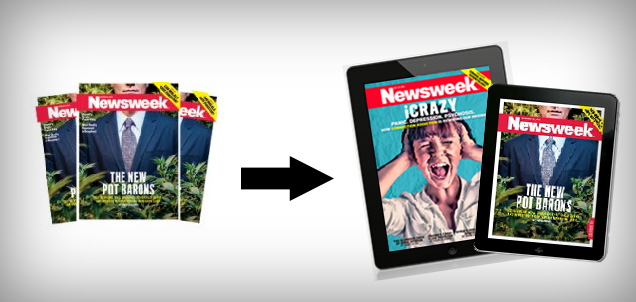
    Newsweek, founded nearly eight decades ago, is moving to a digital-only product from 2013. According to editor-in-chief Tina Brown, it cost $42 million a year to manufacture, print, distribute, and manage the circulation of Newsweek.


    Newsweek is in the best position to go completely digital due to their strong online presence through Daily Beast. But the news has sounded an alarm bell for print magazines all around the world. As news becomes a 24/7 affair and people prefer online access, the readership of news magazines is on decline the world over. It is no wonder then that magazines are reaffirming their presence in the online space too. With Kindle usage on the rise, e-magazines are creating waves.


    Tarun Rai

    Even as Indian print industry continues to see new launches, the readership is on the decline (though a minor slide), as recorded by recent IRS figures. “I am not very surprised at the decision. I believe the issue for Newsweek is the nature of the magazine it is. As a result, the relevance of a weekly ‘news digest’ has diminished. It is not a question of print or digital – it is a question of the nature of some magazines that may not be as relevant today. The same cannot be said for lifestyle and special interest magazines,” opined Tarun Rai, President of the Association of Indian Magazines and CEO, Worldwide Media.


    Suggesting that print media still has a bright future, Paresh Nath, Editor and Publisher, Delhi Press said, “It is more of a failure of a publisher than the sunset of an industry. Printed books and material will continue to be relevant as they were in the last several hundred years.” Agreeing that the digital market for Newsweek may have matured earlier than the publishers expected, Pradeep Gupta, chairman and managing director of CyberMedia, said, “In the market they are operating in, digital is growing very rapidly and therefore Newsweek has moved in that direction.”


    The predicament of the dawn of the digital era has been repeated often in the Indian context.


    “I am happy to say that magazines are already re-inventing themselves for the digital world. Abroad as well as in India. All our magazines are available in their digital versions. We are also aggressively developing various magazines’ apps and will be launching them soon. We see an opportunity in reaching a new younger audience through our digital initiatives,” said Mr Rai.


    Even while most magazines have moved towards digital and print versions simultaneously, the print version remains important for reaching the wider audience of readers and advertisers. Time magazine also has responded with their online version adaptable to any platform and any size, particularly for mobile reading. Varghese Chandy, Chief General Manager, Marketing Advertising Sales at Malayala Manorama said, “Reinventing needs to be done not only for news magazines, but every single product for its survival.”


    According to Anilkumar Sathiraju, AVP & Head, DDB MudraMax – Media, South, revenue will still come from print version since revenues from digital in India are still at a nascent stage, even though digital penetration is increasing rapidly. Going forward, he predicted that revenues will still be higher from offline magazines.


    Magazine have the most engaging format with the deepest touch points according to various international surveys. The growing numbers of tablets reassert the fact that this is the platform that gives the closest magazine-reading experience. Mr Chandy said, “However, monetizing the digital platform will be a greater challenge even for Newsweek.”


    While the industry believes that magazines should be ready for the digital era, Mr Nath holds an interesting view: “Magazines do not need to reinvent themselves due to the digital onslaught. Digital delivery of content is like delivering content in Times Square by shouting when hundreds of voices are simultaneously trying to convey the same or similar things. When crowds assembled in Tahrir Square, Cairo, it was thought that the digital media is a powerful weapon, as sentiments were whipped up not by newspapers but by digital media. What is the end result? Muslim Brotherhood that conveys thoughts through printed material ultimately got into power. Very little original content is created on digital media. It only copies and pastes and does so millions of times over. Magazines or print versions of newspapers do not know how to overcome the shouting match where noise and not seriousness is the basic currency. When the time of reckoning comes, people will have to go to the print version, and magazines and newspapers will remain relevant. Magazines have to find out how to outgrow the noise.”


    Delivery is still an issue – from readers visiting libraries in the past for content consumption, to wanting the content delivered to them. “Print brands have given up the will to fight and are trying to join the digital crowd that has weapons stolen from print itself. Yes, the world of delivery has changed, not consumption of content,” said Mr Nath.


    But with readers wanting immediate access to content, 24×7, digital is only going to grow. It is time that that magazines move faster towards the digital era, according to Mr. Sathiraju.


    The way forward

    “In India, spend on magazines continues to grow because of an increase in literacy, increase in disposal income and lower internet penetration. Therefore, Indian publishers are embracing digital formats. Print advertising is currently 10 times the digital advertising in India. Over the next five years, the penetration of digital will increase. And that is why CyberMedia has reoriented its strategy around creating of a media mesh,” predicted Mr Gupta.


    Mr Nath said that the question of digital versus print comes from the English-educated class in India. He said, “Long ago in India, content used to be created and consumed under the banyan tree. Now it is in front of a screen but the quality of this content is poor, one-way, where hundreds speak and no one listens. In India among the English educated there is a problem as this class cannot enjoy English content (is there any English Indian serials or English Indian movies or English Indian music?) whether in print or on digital media. This class keeps shouting that print is dying as it does not know how to ‘read’ in any language.”


    The view might hold true but the increased consumption of magazines on digital platforms cannot be ignored.


    “It’s anybody’s guess as to when the digital versions of magazines will become bigger than the printed ones. I firmly believe that the lifestyle and special-interest magazines space will continue to grow in both. It is the sunrise sector of Indian media. And both the print as well as the digital versions will grow, allowing our content to reach an even wider audience,” said Mr Rai.


    As Mr Chandy concluded, “The Indian print industry needs to be ready for the future. Currently online penetration is single-digit. This is likely to change in the near future, especially in the metros.” Thus, publishers need to be platform-agnostic and essentially become content managers. Their primary task will be to reach the audience through whichever platform is relevant.


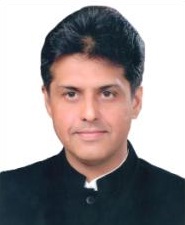
  • Manish Tewari is new I&B minister

    By A Correspondent


    Manish Tewari

    It’s a well-deserved reward for a loyal Congress soldier. Lok Sabha member from Punjab, 45-year-old Manish Tewari, was appointed minister to head the vital Information and Broadcasting Ministry yesterday. Although ranked Minister of State, Mr Tewari gets independent charge.

    He still needs to get the handover notes from predecessor and senior party colleague Ambika Soni, but he’s got some quick decisions to take on the digitization issue. Although his first response to the waiting media was that he would speak to all stakeholders as well as with Ms Soni, unless the High Court in Mumbai intervenes, he will need to take some quick decisions.

    On the issue of curbs, Mr Tewari said “self-regulation is the best regulation”.

    The relationship of the UPA-2 government and the media has been rocky with the government at the receiving end for its conduct. There have also been charges against the media for crossing its line and last week, Congress MP Naveen Jindal went public with allegations against editors of Zee News.

    Earlier, Ms Soni resigned as the I&B minister in order to work for the party in the run-up to the 2014 general elections. While it’s not an uncommon practice for senior ministers to quit to mobilize the party machinery ahead of a general election, the decision was untimely as it came less than a week from when the most critical and gamechanging action of the government for the broadcast sector was to happen on November 1.

    See:

    Manish Tewari Lok Sabha member profile: http://mib.nic.in/ShowContentOne.aspx?id=1&Section=7

    Manish Tewari profile: http://manishtewari.info/Work_Profile.html


    Photograph: I&B ministry website

  • BIG RTL Thrill to launch on Nov 5

    By A Correspondent

    Reliance Broadcast Network (RBNL) and RTL Group, the leading European entertainment network, have announced the launch of their joint venture channel BIG RTL Thrill. To be positioned as an action entertainment channel targeted at male audiences, with the tagline Action ka Baap (Ultimate Action Destination), the channel will launch on November 5 in India.
    Initially, the channel will go on air in Uttar Pradesh, featuring international content dubbed in Hindi. Phased expansion to other Hindi-speaking markets and the SAARC region (South Asian Association for Regional Cooperation which include the countries of Sri Lanka, Bhutan, India, Maldives, Nepal, Pakistan, Bangladesh and Afghanistan) will follow. The channel will cater to a largely untapped market segment, with an entertainment mix developed by detailed sampling of content, focus group research and comprehensive market analysis.

    Thrill will target at male viewers aged 15 to 44  and promises to offer adrenaline rush, ‘edge of the seat’ entertainment with hand-picked content from across the globe including reality shows, action series, wrestling, extreme sports, game shows and movies. Content has been acquired from some of the world’s best production companies such as FremantleMedia, Endemol and Red Bull with key shows including Fear Factor, Cobra 11, Criss Angel, WipeOut and BayWatch. The line-up will also feature a strong library of international action films.

    The channel will complement and provide synergies with RBNL’s 92.7 BIG FM which has six stations in the state, along with its variety entertainment channel BIG Magic. This consolidates Reliance Broadcast Network’s position as a leading media platform in Uttar Pradesh, offering maximum focussed reach to marketers. The channel will be marketed through a holistic multi-media campaign across television, radio, out of home, on ground, print and digital.

    Speaking on the occasion, Tarun Katial, CEO, Reliance Broadcast Network Ltd. said, “BIG RTL Thrill comes as an answer to the Indian males’ quest for action entertainment. The product is world class, served in Hindi, and has been designed to fill a clear void that exists in the market, ensuring high audience engagement. With the launch of this channel, RBNL fortifies its standing in Uttar Pradesh, offering advertisers a robust and unmatched offering in the region, delivering exceptional value for their brands.”

    Andreas Rudas, Executive Vice President Regional Operations & Business Development CEE and Asia of RTL Group, said: “This is an exciting moment for us at RTL Group; it’s our first step into the Indian broadcasting market, which offers very promising growth opportunities. We will contribute our long-term broadcasting and programming expertise to BIG RTL Thrill – with high-quality content targeting a clearly defined audience. The powerful combination with Reliance Broadcast Network will help ensure that BIG RTL Thrill becomes a strong new brand on the Indian market.”

  • New category of advertising for PSUs in Dainik Bhaskar awards

    By A Correspondent


    The Dainik Bhaskar Group has announced the start of the nomination process for the India Pride Awards 2012, which will be given in New Delhi in December. The awards acknowledge and recognize contributions by Indian PSUs and the excellent work done by them in serving the nation.


    This year sees the 4th edition of the India Pride Awards which began in 2009 and is the only awards ceremony in India by a non-government body that acknowledges the efforts of Indian PSUs in nation-building. IPA extended its scope in 2011. In addition to the Central and State PSUs, two new categories, Social Change Agents and Impact Creator – Civil Servants, honouring individuals, were introduced.


    This year will see introduction of another category, ‘Best Media Agency – PSU’. The award will recognize the advertising agency for the most impactful PSU campaign. The awarded campaign is expected to have demonstrated in an impactful way the message on PSU competencies and its impact on the society and economy of the nation. The award is media-neutral and will consider the best work in print / electronic or any other media.


    Speaking on this new category introduction in IPA 2012, Jaideep Dhagat, National Head- Government Business, Dainik Bhaskar group said, “Communication and in that extension advertising plays a vital role in reaching out to the masses; important stakeholders in the PSU eco-system. The category of communication in PSU comes with its own challenges and we believe that lot of good work is being done by advertising agencies for the PSUs. This new category will bring alive these efforts and work towards becoming a benchmark for the category.”


    The last date for receiving nominations is November 10, 2012. Details about the awards and entry / nomination forms are available at www.dbindiaprideawards.com.


    This year “Wital See” is the title sponsor, ICRA is the knowledge partner and CNBC Awaaz is the television partner.


  • MIB contests TSM-MxMIndia study on extent of digitization in 4 metros. TSM & MxM stand by data

    On Friday evening, the Ministry of Information and Broadcasting of the Government of India issued a statement defending the digitization numbers it has put out. The MIB contests the study published by Television Street Maps (TSM) and MxMIndia.com.


    While we are happy to note that the ministry has carefully studied our data, we – TSM and MxMIndia – stand by the data published.


    We will happy to cooperate with the Government and/or the TRAI if it wishes to see any clarifications. These can be addressed to editor@mxmindia.com and we will revert soonest.


    We wish to reiterate that we are eager to see digitization happen. MxMIndia commissioned TSM to conduct the study only because it was felt that the data being put out by the MIB was not reflecting the true on-ground situation.


    We understand the ministry too has undertaken its own study of the market. Records at the MSO headends, sms activations etc have been looked into.


    We now have a new I&B minister in Manish Tewari. It’s a big day for him today – October 29. His first working day as the minister. There is a taskforce meeting scheduled for today. And there’s a Mumbai High Court hearing coming up on the delay in digitization.


    Loads happening. We’ll bring you all the news and analyses.


    – Pradyuman Maheshwari

    Editor-in-Chief, MxMIndia