Category: NEWS

  • Nielsen bags research contract for IRS

    By A Correspondent


    It’s now official. The Nielsen Company has been awarded the coveted contract for the research work for the Indian Readership Survey. On a recommendation of  the Readership Studies Council of India (RSCI), the Media Research Users’ Council has decided in principle to award the contract for the IRS to Nielsen. The formal award of contract will follow a process of legal due diligence.


    The decision was arrived at after a comprehensive nine month process that began in November 2011, with the formation of the RSCI by its sponsors, the MRUC (Media Research Users’ Council), and ABC (Audit Bureau of Circulation). The RSCI was mandated by the industry to oversee the conduct of a unified Indian Readership Study (IRS), billed as the world’s largest continuous readership study.


    The process involved the active participation of 20 senior representatives of advertisers, agencies and publishers who served on the RSCI Managing Committee,  as well some of the sub committees formed to vet every aspect of the submissions – from technical superiority to fieldwork integrity, research cost, organization strength and stability. Another 24 senior industry professionals contributed to the technical deliberations, under the chairmanship of the Technical Committee, Paritosh Joshi.


    “Proposals were received from the most hallowed names in the Media Measurement universe and the quality of submissions was uniformly high. The knowledge and skill on display drew upon the very finest professional capability available globally,” said Mr Joshi. “Developing an RFP award recommendation was an unusually challenging task. The Nielsen Company proposal, that has won the approval of the Council, was exceptional in its methodological rigour, comprehensiveness and future readiness. The design recommendation and resources committed to the project should enable the Indian Readership Survey to reassert its position of preeminence in Indian media measurement,”


    “Our objective through the process was two fold – One, to achieve the construct of a study that would be the gold standard all over the world in readership measurement. And two, to involve all industry stakeholders in the decision making process with a spirit of collaboration and teamwork,” said Lynn de Souza, Chairman of the RSCI.  The months and years ahead will present several challenges as we introduce a first ever data capture system – the Dual Screen CAPI (Computer Aided Personal Interview) – a system that will reduce interview time, respondent fatigue and confusion, and interviewer bias of any kind.


    “The MRUC’s belief in the  innovative techniques and technology proposed for the forthcoming Indian Readership Survey will certainly transform market research in India, improving quality and the effectiveness of gathering and applying consumer insights for businesses and marketers. Nielsen is honoured to have been chosen as its partner in this landmark study that will no doubt shape all future research across India.” said Prashant Singh, MD – Media, Nielsen India.


    Ms de Souza commended the work put in by industry seniors in the selection process. “I am overwhelmed by the seriousness and commitment of the many industry seniors who gave freely of their time on weekends, and holidays as well, to help the RSCI arrive at a decision. Thank you would not be enough. Ravi Kiran, our marketing Chairman, was also very helpful in enabling us to identify new revenue sources given that the new IRS will be captured, stored, disseminated and analysed digitally.”


  • DLF exits IPL lead sponsorship as BCCI ups rate

    By A Correspondent


    After being associated with the Indian Premier League (IP) for five years, real estate major DLF has decided to stop being the league’s lead presenting sponsor. DLF, which had bagged exclusive rights to the IPL in 2008 for over Rs 200 core, feels it is not commercially viable anymore to be associated with the T20 cricket tournament.


    “We have decided not to be the title sponsor for the IPL,” says Rajeev Talwar, group executive director, DLF Ltd. He said the IPL provided a nationwide platform to DLF for brand building for the past five years.


    “But, every decision has to make business sense,” he adds. DLF’s decision to vacate the seat of the title sponsor could open a window of opportunity for several brands and companies.


    According to the Board of Control for Cricket in India (BCCI), a host of sponsors are interested in grabbing the opportunity. “There are a lot of people who are waiting for an opportunity. We will initiate the process in a month,” Ratnakar Shetty, chief administrative officer, BCCI said without commenting on DLF’s position.


    According to a person aware of the matter, the cricket association is looking for a significant increase in sponsorship revenues and has even hiked the amount required to be invested by those who wish to stay associated with the IPL.


    “The BCCI is looking at almost three to four times the price of the original sponsorship deals signed in 2008. For the title presenter, they are eyeing anywhere between Rs 750 crore and Rs 800 crore,” said the person close to the development.


    Meanwhile, the Board has started negotiations with co-sponsors like Vodafone, Karbonn Mobiles and Hero MotoCorp. “It is too early to comment on the matter,” said a Vodafone spokesman. Hero MotoCorp’s long association with cricket – it has sponsored the World Cup and the Champions Trophy in the past – makes it a candidate for the IPL’s title sponsorship, reckons a media planner. The company, however, refused to comment on the matter.


    Without commenting on the future of Karbonn Mobiles and the IPL, Shashin Devsare, executive director, Karbonn Mobiles said: “Negotiations are going on and we have not taken a call on it yet.” Earlier this month, the mobile phone maker had announced a partnership with ESPN Star Sports to become the title sponsor of the Champions League Twenty20 (CLT20) tournament, which will be held in South Africa later this year.


    Source:The Economic Times

    Copyright © 2012, Bennett, Coleman & Co. Ltd. All Rights Reserved


  • Books & mobiles enter IAMAI’s monthly tracker

    By A Correspondent


    The Internet & Mobile Association of India (IAMAI) has released the ‘Internet Economy Watch’ for the month of July 2012. ‘Internet Economy Watch’ the monthly tracker by IAMAI, is based on absolute numbers captured from various relevant sites, encapsulates online usage for E-tailing, Online Travel and Vertical Classifieds.


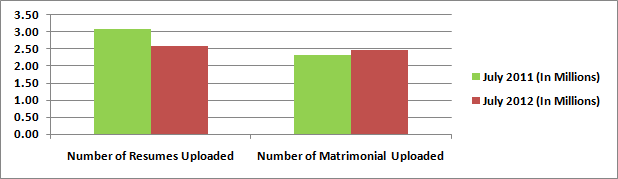
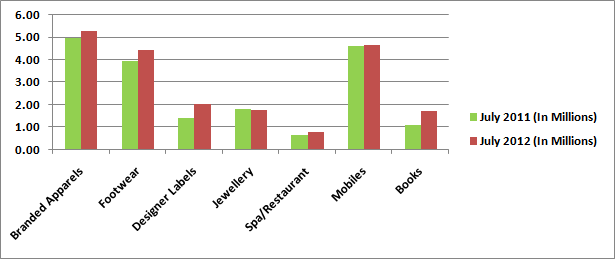
    In the July 2012 report, IAMAI has introduced two new categories – Mobiles and Books. Mobile has infact emerged as the second most popular category among the online consumers i.e. after Branded Apparels. With the exception of Jewellery, all the other e-commerce categories have shown growth in July 2012 as against July 2011. The number of resumes uploaded has continued to decline even in July 2012 as against the previous year whereas the number of matrimonial uploads continued to grow.


    So do these trends indicate that consumers in India are fast adapting to online buying? According to Dr Subho Ray, President, IAMAI, consumers have over the years have become more confident about purchasing online. “Definitely, Indian consumers over a period of time have become more confident about purchasing online. The figures from the Internet Economy Watch report for various that how internet savvy Indians have become and how comfortable and confident they are doing online transactions” he said.


    Speaking on the kind of response IAMAI has been receiving on the ‘Internet Economic Watch’ report, Dr Ray explained, “The Internet Economy Watch report has helped marketers and brands to map the consumer behaviour online and devise their digital strategy accordingly – to be in sync with the online behaviour of consumers. Having said this, we must also keep in mind that the ‘Internet Economy Watch’ report is at a nascent stage and will be of comprehensive use in the months to come.”


    In the months to come IAMAI not only aims to add more categories in the report but, also plans to make the monthly report more comprehensive by giving it a holistic view of usage of internet in India.


    Source: IAMAI/e-Commerce sites


    E-Commerce Sites:

    As per the data captured by the report there has been a significant increase in the online user visit to books and designer label category during July 2012 when compared to the numbers of last year. While 1.74 million hits were registered for the books segment in July 2012 as compared to 1.11 million hits in July 2011, designer label segment registered a y-o-y growth of 45 per cent with 2.04 million user visits in July 2012. It is in comparison to 1.41 million user visits in the corresponding period last year.


    While branded apparel and footwear segment witnessed a marginal rise, y-o-y growth of 6 percent and 12 percent respectively in number of online user visits in July 2012 as compared to July 2011, Jewellery category saw a decline from 1.84 million hits in July 2011 to 1.76 million hits in July 2012.


    Online Travel Portals:

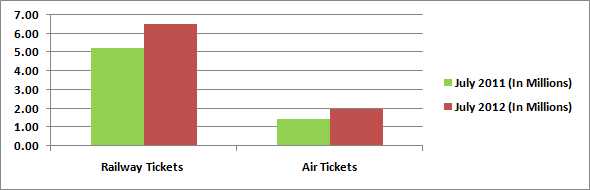
    In e-ticketing segment irctc.com clocked 6.53 million bookings in July 2012 as against 5.23 million in July 2011. The e-ticketing on airlines witnessed a y-o-y growth of 34% with 1.95 million bookings in July 2012 compared to 1.46 million in corresponding month last year.


    Source: IAMAI/ Online Travel Portals


    Verticals Classifieds:

    Data captured from prominent recruitment websites reveals that the number of resume uploads have gone down from 3.09 million in July 2011 to 2.60 million in July 2012. The matrimonial profile uploads has increased from 2.33 million in July 2011 to 2.47 million in July 2012.


    Source: IAMAI/ Vertical Classifieds


    The Internet and Mobile Association of India (IAMAI) is an association which is said to be representing the entire gamut of digital businesses in India. It was established in 2004 by the leading online publishers. IAMAI is also said to be the only professional industry body representing the online and mobile VAS industry in India.


  • WPP moves New York Supreme Court for dismissal of NDTV lawsuit

    By A Correspondent


    Global advertising and marketing services firm WPP has moved the Supreme Court of the State of New York for dismissal of a complaint filed by NDTV alleging TAM India of fudging television viewership and ratings data favouring some TV channels that paid bribes.


    WPP is a shareholder in Kantar Media Research Services, which co-owns TAM India with Nielsen. NDTV had filed a lawsuit against them in late July.


    In a motion filed on Tuesday to dismiss NDTV’s complaint, the company claimed that the “case is nothing more than a desperate attempt by the plaintiff, a television station in New Delhi, India, to drum up media coverage in India to divert attention from the real reasons its programmes have had low audience ratings and its financial performance has been abysmal for five years.


    New Delhi TV has crossed the globe and come to New York State Supreme Court to complain about an Indian company, TAM, and how it measures the ratings of television programmes in India”.


    It also says that the complaint should be dismissed because it was not served properly to the defendants by NDTV. “NDTV’s drafting of the complaint is as careless as its attempt at service.”


    The motion points out that NDTV’s complaint improperly names several of the defendants and that the Supreme Court of the State of New York does not have jurisdiction over Kantar India, which is an Indian company with no presence in the US.


    The lawyers also filed similar motions on behalf of other defendants in the case, including Nielsen, Kantar, TAM India and IMRB.


    The motion will be taken up for hearing on September 13. NDTV declined to comment as the matter is in court. The broadcaster has filed the lawsuit seeking damages of around $1.4 billion for negligence and hundreds of millions more for interference and breach of fiduciary duty on the part of TAM India, and other parties named in the suit.


    NDTV claimed that TAM India has been manipulating television viewership data and ratings to favour some television channels. It also claimed that it had confronted Nielsen with evidence of data manipulation, including taped meetings with TAM India employees, which showed that they were willing to tamper data for bribes.


    Nielsen, according to the news network, admitted in meetings and through emails that its data was indeed being manipulated and that it was willing to address the issue by July 1, 2012, but Nielsen continued to publish these ratings despite repeated demands to stop distribution of TAM TV ratings until the sample size was increased and a proper security mechanism was put in place.


    Source:The Economic Times

    Copyright © 2012, Bennett, Coleman & Co. Ltd. All Rights Reserved


  • IRS will see a technology leap: Prashant Singh, MD-Media, Nielsen India


    By Johnson Napier


    Nine months since RSCI began the process for shortlisting the most bankable partner, it was jubilation time for the team at The Nielsen Company in India, having won the coveted contract of research work for the Indian Readership Survey. The victory is sweeter following as it does the controversies of the past few weeks.

    While the industry is still taking in the news of the appointment, for Nielsen India it is a chance to prove its authority in the print measurement space. And what better metric than IRS. The company plans to centre its focus on newer mediums – with increased dependence on technology – that will help ease data collection and analysis and more importantly bring about consistency in the readership numbers.


    MxMIndia interacted with Prashant Singh, Managing Director – Media, Nielsen India to gather his views on being appointed the new partner by RSCI for IRS. Though it is still early days, Mr Singh dwells on what the future will look like for readership studies in India and how they are geared for the big challenge that’s being watched closely by all concerned. He even had some words of comfort regarding the controversy that it is currently embroiled in thanks to its joint ownership of TAM Media but he assures that it won’t have any impact on how they continue to do business going forward. Excerpts:


    Q: This isn’t the first time the Nielsen Company has done a readership survey in India, though it is after a gap. How have things changed since then (other than the size of the population and hence sample size)?

    Things have changed within the market research industry itself. With the advent of technology there is so much that is available to us to tap into. Today, the scenario is such that any market research can be elevated to a level where one can get a much better read of the market without going through the peeves that are associated with it. For example, Nielsen is actively deploying Computer Aided Personal Interviews (CAPI) instead of the regular pen-and-paper format that was practised for market research. What that does is that while there is an interviewer who goes and interviews the person instead of using pen and paper, the person uses a computer/tablet/palm-device to capture responses. As I said, the entire market research industry has gone through a significant change in the past 5-6 years. With MRUC, we hope to bring significant technological upgrade even on the IRS.


    Q: What is it that you think won you the bid (we know it didn’t go to the lowest quote, because yours was higher)?

    I have no idea. This is something that you should ask MRUC. We are just happy that we bagged this prestigious project.


    Q: Do tell us what you are going to be doing from now to when your part of the study will start? When does work start for you?

    The MRUC and Nielsen teams will sit down and discuss what the plan will look like going forward. The first step for us is to sign the contract and start with those proceedings. Probably MRUC is the right body to talk about future plans, which we will do sometime in the near future.


    Q: For the benefit of the industry, what are a few of the salient differences between the IRS we see now and the IRS that we will see when you’ll be there?

    Multiple innovations in technology features are being brought in. Some of them would be visible to the users while some will be visible to MRUC. But at this point it is not fair for me to talk about the specifics of the proposals. There will be more clarity on what are the things that are coming to the fore in the near future.


    Q: Do you see any challenges cropping up with Nielsen planning to lay increased emphasis on technology?

    Where market research is concerned, with technology we’ve been fairly confident that there are benefits and not challenges. In fact there are challenges in doing market research in India whether it is about how you show inputs to respondents or about how you make sure that the right interviews are happening at the right time and place…and technology actually enables us to do a better job at it. In the last 3-4 years, we have taken multiple steps to embrace technology wherever we can right from data collection to data reporting, etc. So we see technology as an enabler and not a challenge.


    Q: One of the problems that any such vendor contract arrangement is about what do you do when the contract is not renewed? For instance, even after 8 years of working on, Hansa (and Ipsos) lost the contract to Nielsen?

    We do a good job and keep our clients happy; there is no reason that the contract will not be renewed. It is about how you deliver to the promises made. If one doesn’t deliver then obviously the contract could go away from you.


    Q: Will you hire some of the talent from Hansa if rendered redundant due to the loss of contract, later in the year?

    I cannot comment on this.


    Q: Media measurement is a tricky business these days and most often a thankless job. Your take on this?

    Not just media measurement but market research anyway is challenging. In India there are multiple challenges including sociological, geographical… and every market research agency has to understand these challenges and figure out ways to deal with them. Sometimes you can deal with them nicely and sometimes not so nicely. If we are open with our clients and talk to them about the challenges that there are then I think we should be fine.


    Q: One of the frequent peeves we’ve heard from the magazine sector is that IRSes don’t measure niche readership very effectively. How will you correct that?

    Again I cannot comment on that but it is part of the proposal and the RFP and you will hear more about that from us and MRUC together.


    Q: There have been some charges that while Nielsen is a specialist in television measurement, it isn’t with print readership?

    Globally, Nielsen is a specialist in television (measurement)…that’s what I can say. I cannot comment on what  others speculate. Yes, we do specialize in television measurement which does not mean that we do not do other things. People will speculate what we can and what we cannot but I cannot say much on that.


    To give you a higher perspective, Nielsen as a company globally looks at business in two key parts: we measure what people buy and we measure what people watch. Both the businesses are very significant in terms of revenue. So it’s not that Nielsen is just a ‘watch’ business we have a huge portfolio within the ‘buy’ side of the business too. It would suffice to say that we do a lot more than television.


    Q: One last question, and we know the matter is sub-judice: but we heard murmurs that Nielsen shouldn’t bag the contract because its name is stained in the TAM controversy. Also, a hitch with the retail audit earlier this month. Your comments.

    We are happy that the MRUC and RSCI have given due importance to the proposal that we submitted and have awarded the contract to us. We are working towards making sure that we do a great job in delivering IRS. As for the controversy, we have a policy of not commenting on issues that are under litigation and will stick with that. But I can say that it is business as usual for us amidst all that is happening around.


  • Dentsu acquires 51% stake in Taproot, Management (&creative) controls stay with Agnello Dias and Santosh Padhi

    By Ravi Balakrishnan


    Japanese advertising behemoth Dentsu has acquired a 51% stake in Taproot, arguably the most creative among the Indian independent advertising agencies.


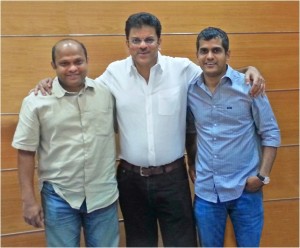
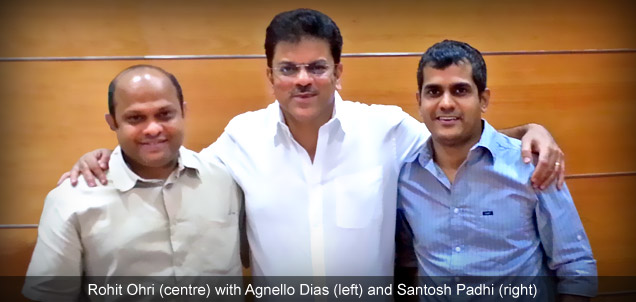
    Taproot's Agnello Dias (left) and Santosh Padhi (right) with Rohit Ohri of Dentsu (centre)

    With several of the most popular recent campaigns like ‘Har Ek Friend Zaroori Hota Hai’ and ‘Joh Tera Hai Woh Mera Hai’ for Airtel and ‘Change the Game’ for Pepsi under its belt, the five year old agency has seen a meteoric rise. It’s also won critical acclaim; the most recent being a Gold Lion at Cannes along with Ramesh Deo Productions for the ‘I Am Mumbai’ film for Mumbai Mirror, a newspaper from the Times Group, which also publishes The Economic Time


    The managements at both Dentsu and Taproot declined to discuss the financial aspects of the arrangement. Industry observers estimate the initial upfront payout at Rs 60 crore with another Rs 80 crore expected in future earn-outs


    In a global deal in July, Dentsu had paid $4.9 billion for British media buying group Aegis, valuing the company at 12 times its earnings before interest, taxes, depreciation & amortisation.


    The Economic Times had reported in June that Dentsu among other agency groups was speaking to Taproot about a possible acquisition. Says Rohit Ohri, executive chairman, Dentsu India group, who has previously worked with one of Taproot’s founders Agnello Dias at JWT: “They (Taproot’s co-founders & chief creative officers, Dias and Santosh Padhi) could have chosen anyone. What convinced them about Dentsu is that we are very entrepreneurial and evolving; and more willing to look at out of the box ways of working.”


    Adds Dias: “We felt it was the right thing to do. Of all the conversations we had, we felt most comfortable with the equation we were sharing with Dentsu. Another reason cited is Dentsu’s global strengths in the digital medium and that it is currently the leading network in Asia.


    Taproot will retain its identity and won’t be rebranded. Although Dentsu is a majority owner, management control of the agency continues to rest with Dias and Padhi. Dias says, “In terms of changes, there’s nothing in the pipeline. I think even Dentsu is saying ‘why should we upset a system that’s doing so well’?”


    What the arrangement brings Taproot is integrated communication, superior execution abilities and a national network. As far as Dentsu is concerned, Taproot, says Ohri, “is really the creative firepower we needed in the group.” However, the firepower is not likely to be immediately applied to any of Dentsu’s current client relationships.


    Both partners believe that Taproot will step in only when needed “on a case by case basis” according to Padhi. Interestingly enough, two of Taproot’s most productive client relationships have been with Airtel and Pepsi, brands that Ohri worked on in a previous stint at JWT. Ohri regards this as “a great bonus”, but he cites the talent of the two principals at Taproot and the chemistry with senior management at Dentsu as the main reasons for the merger.


    Among a spate of recently launched creative-led independent agencies which include Creativeland Asia and Scarecrow Communications, Taproot has arguably been the most successful with several marquee campaigns to its name for Airtel, Pepsi and The Times Group.


    The agency was founded in 2008 when Dias (then national creative director at JWT) decided to join forces with former colleague Santosh Padhi (executive creative director at Leo Burnett at the time). The 33 person strong agency has been particularly successful in wresting business from Dias’ former employer JWT, landing prestigious assignments from Pepsi and Airtel.


    Source:The Economic Times

    Copyright © 2012, Bennett, Coleman & Co. Ltd. All Rights Reserved

  • Disappointed at not winning the Grand Prix: Agnello Dias


    By Anil Thakraney


    Taproot’s Agnello Dias and Santosh Padhi ‘changed the game’ for Pepsi. And they’ve done ditto with the Indian ad world. Their huge, rapid success has prompted many creative directors to sit up and seriously consider starting their own little shops. Some have already branched out.


    Creative hotshops aren’t a new phenomenon in this country. Ravi Gupta, elsie Nanji and Mohammed Khan opened their boutiques many years ago. What’s different with Taproot is that they have been doing stunning work for large clients. Like Pepsi, TOI and Airtel.


    This makes the agency path breaking and special. In just three years they have won more Abbies than the number of people in their office. Including peons.


    I meet Agnello Dias for some steaming Southie fare at King Circle’s Mysore Cafe. As India’s most happening creative director shares his mantras and his plans for the future. Aggie is that rare advertising individual who listens more than he speaks. And that perhaps is one of the key reasons behind his enviable success.


    The last time we met was three years ago. You were running around buying computers and aircons for your new agency which had still to be named. How’s the journey been?

    It’s been like mounting a tiger you can’t get off because things have moved so fast in so many different ways. In terms of the actual structure of the agency and in terms of the actual advertising work.


    Did you expect to scale such heights?

    No. I had an idea where I would be and it was much lower than this. I thought we’d be a little quieter and much less in the spotlight. But things have happened and not in the way I thought they would.


    Runner-up agency at Goafest. That is something you would never have imagined three years ago.

    (Smiles). No! We knew we’d do well, we knew we had a couple of good campaigns. But statistical superiority was something we never expected.


    You must be a proud man.

    (Thinks.) Yeah. It was quite a pleasant surprise. I am proud but it’s also slightly unnerving because I wouldn’t like us to be measured against this every year. Though we are cognizant of the fact that it’s any given Sunday, and that the same jury judging the same work again today may have a different result.


    Disappointed that your ‘Har ek Friend’ work (Airtel) didn’t win the Grand Prix?

    Yes. It would be a lie to say that we weren’t disappointed. Because one was always given to believe that a Grand Prix isn’t just about good work, but also about work that has serious impact. And we felt it did have that impact, but the jury thought otherwise. (Shrugs.)


    Any major improvement needed in the Goafest judging process?

    I think we, as an industry, stretch ourselves too thin to find hundred judges. And so we end up having, to a certain extent, judges who are not yet ready for judging. One way to solve that would be to have two categories entirely judged by one set of judges. That itself would bring down the number of judges to fifty. That way we will have a far more concentrated, mature bunch of judges. I judged at the ‘One Show’ and it is the exact opposite out there. One jury judges everything. It’s a nightmare but it can be done.


    Don’t you at times miss the comfort of a large agency?

    I am not sure comfort is the right word, but definitely the conveniences. Figuring out your own airline tickets, talking to directors and producers about edit commissions, rates, etc because we don’t have a secretary and a films department. But one doesn’t really miss the conveniences because one is so engrossed in what one’s doing.


    Do you have a client servicing team and account planners? Are you following the structural format of traditional agencies?

    We don’t have pure strategic planners. We have servicing guys but the ratio would be the opposite of a large agency. It is 5:1 in favour of creative people. We have a managing partner, his name is Manan Mehta. He’s just about 28 years old and he’s the senior most servicing guy we have.


    Are you looking to expand into other cities?

    The only option we talk about is Delhi. We are looking at it, though it may not happen.


    How many clients do you have?

    Maximum ten.


    Want more or are you happy with that?

    If we have to do more than this we will have to hire more staff.


    When you started out you said to me that you guys don’t want to be a large agency. That the day you feel you aren’t able to give personal attention to clients you’ll shut down. Has that view changed?

    (Thinks.) It may be on the cusp of changing. Because so far we have been giving personal attention and therefore we aren’t taking on more clients. We are putting them on to other agencies. We are currently contemplating within the office on where we want to be. If we take on more people, they will be one step removed from Paddy (Santosh Padhi) and me. But we haven’t decided that as yet.


    What does your own heart say?

    I think one level removed is still fine. But no further than that. We don’t want a large reporting structure.


    Does money spoil?

    Yes, it does.


    Rumours have it that Aggie and Paddy are looking for investors to sell the agency and cash in.

    When the multinational networks come to town, they do meet us. We do meet them and talk about exactly this. But in this industry you can’t just sell and go away because no one will buy that. So even after an equity sale we will have to be around for at least five years.


    But you will still make a killing. Find that tempting?

    Yes, it is tempting. We have been talking to various people but it’s not worked out inside our heads.


    Basically they aren’t making offers you can’t refuse.

    Yeah, possibly.


    Okay, enough corporate talk. Let’s move to more interesting stuff. Like creativity. How do you go about creating an ad? Any mantras up your sleeve?

    The process is the same. But within that process there are a few quirks I personally have. We try to push a little more even after we’ve cracked it. We try not to go home early. It’s good old fashioned hard work.


    One campaign you’ve done at Taproot that you are most proud of.

    The ‘TeachIndia’ campaign (Times ofIndia). It was good creative and it’s also something I identify with.


    With ‘Har ek Friend’ I felt you guys have a good understanding of Young India. Did you hang out with the kids, or was that gut feel work? Do you research before starting out?

    Yes, I do. I try to walk the streets, I walk from Matunga (home) to Mahim (office) many times. I stop at all kinds of shops and observe. I once ordered from the teleshopping network just to see how the packet arrives. And I do these things even when there’s no brief. Also, what’s worked for me is that I get fascinated by people who disagree with me. I like to spend more time with them. I think it’s important for all young people in advertising, or anywhere else, to create a persona where people feel comfortable enough to give them negative feedback.


    When you hire, what is the one thing you look for in a young creative person?

    First, I look for resilience. Creative stamina. Because unless you come back as equally strongly as the last time, you will not have a long, successful career. Another thing is keen observation. People who notice things in a room which others don’t. And they should be good listeners.


    The biggest challenge facing the creative director of today.

    I think most national creative directors in large agencies are good. But the structure has turned on itself in such a horrible manner that they have no choice but to be so thinly spread that they are not able to do justice to a particular brand. And the reason for that is the accumulation of overheads by large agencies. So instead of one, you have to focus on eight other accounts because there are eighty other guys sponging off that account. See the number of designations going around. So the agencies should free their creative directors from having to do so much.


    What will the ad agency look like ten years from now?

    I can’t say ten or fifteen years, but the business will become craft agnostic. For example, there are some people who are creative thinkers or planners. And there are some who are not thinkers but craftsmen. Now these guys, because of their high level of craft, become indispensable. And they are given designations or titles which is actually a function of creative thinking. So good art directors become creative directors and attend research briefings though that’s not their core competency. In the future I see press ad shops, where you can get a press ad made. Or film scripting shops. And the ad agency would be a bunch of free thinkers. I think the unbundling of advertising will move to the unbundling of creative.


    Having said all this, is there one senior creative director you do admire?

    (Thinks for a long time.) I like Rajiv Rao (O&M). I think he has a naturally keen eye for aesthetics. He has the ability to boil complex problems down and come up with simplest solutions. And that’s visible in the Vodafone work.


    Didn’t you admire the way The Hindu hit back at your campaign for TOI, Chennai? even though it’s a rival brand.

    Yes, their response was very good. It’s a good contest. They could have done the crafting a little better, but otherwise it was very good.


    Was there any self-doubt when you started out? During the beginning period?

    Yes, there was a lot of self doubt. In fact, apart from The Times, for some time we had very little business. So we just decided to lie low and consolidate. We were open to the fact that we may have to find jobs again. even now if it doesn’t work out we’ll go and apply for jobs in creative agencies.


    One thing about the ad world you don’t like.

    The irrational level of competitiveness. I think it’s great to want to do better, but I wouldn’t applaud somebody else’s mistakes. For example, take the case of hard boiled sweets. Now every client wants to do wacky work in this category because someone started doing it. That’s great news for the whole category. The same thing is happening with electricals. Because of Havells we can’t do a normal ad anymore. We should applaud the people who started it, those who belled the cat. So what I am talking about is the difference between healthy and ruthless competition. The ruthlessness is what I don’t like. The attitude that ‘I didn’t do better so I will pull the other guy down’.
     

  • @Goafest, Taproot emerges tall. And how!


    By Tuhina Anand (with inputs from Robin Thomas)

    Photographs by Shailesh Mule/Fotocorp


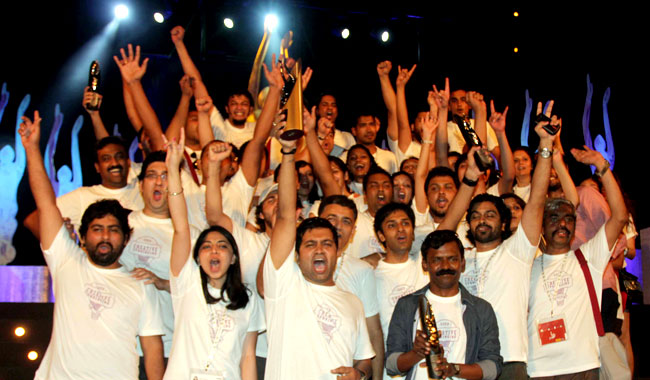
    When Big Dad of Indian advertising Ogilvy pockets 51 metals at Creative Abbys at the Goafest 2012, it is something that one expects, so no surprise here really. But when a three-year-old agency goes on to become the runner-up, leaving behind the much settled Leo Burnett, DDB Mudra, Grey and JWT, it is indeed a proud moment for Indian advertising. It says that all is not lost and what still matters in the advertising business is creativity and if you have the ingredients right then there’s no one to stop you from writing your success story. Taproot India and its founders Agnello Dias and Santosh Padhi have shown the industry the might of small and given hope to many aspirants on the same path.


    Talking about Taproot’s success, Agnello Dias said: “It’s been great, a satisfying feeling, but it is also slightly scary because we have got to do even better than last year as expectations have gone up, but as of now, we are just happy that we have performed well at the awards.”


    On Taproot missing out on the Grand Prix as there were huge expectations from Airtel campaign, Santosh Padhi said: “Yes, a lot of people said that our Airtel or Pepsi campaign would win us a Grand Prix, so I think that itself is a Grand Prix for us. Therefore, we have no grudge and we are happy with the way things have turned out for us. And definitely there were two strong competitors against us for the Grand Prix.”


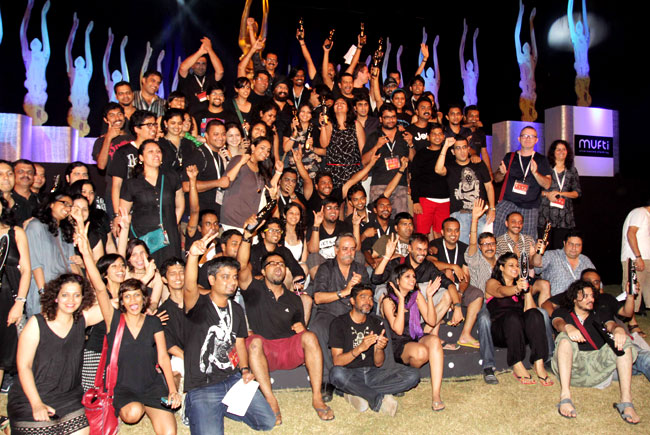
    The victorious Ogilvy team


    The most awarded work at the Goafest was for  brands, including The Times of India, Volkswagen India and Airtel. Even for Ogilvy India, the work that fetched them maximum awards was for Fox Crime. Also the work that got CreativeLand Asia its Grand Prix in the Integrated category was for Audi 8L 3D.


    TOI’s ‘Wake Up Chennai’ (that fetched accolades at Goafest) has been embroiled in controversy as it spoofed its rival, The Hindu. the ad showed how reading the old player (read The Hindu) puts people to sleep and the readers should wake up to something more exciting – The Times of India. The ad was crafted by Taproot which also created Airtel’s Har Friend Zaroori Hai that fetched many awards for the agency across various categories. In fact, Har Friend… can be dubbed among the most popular campaigns of the year.


    A happy Creativeland Asia team


    Ogilvy’s work for Fox Crime titled The Photographs case, made by Good Morning, is in keeping with the genre of the channel and creates a mini thriller for its audience, building anticipation for what to expect on the channel. Talking about the wins, Abhijit Avasthi, NCD, O&M said: “It’s been a great year as always and I think the best part is that we have done well in every category, from design to direct to digital to integrated. Obviously there are some works where one wishes we had got more recognition, like the Cadbury in home campaign, but, overall, we are very happy. I think we have got the best clients who allow us to do really some very interesting work.”


    “It’s very reassuring that we have managed to win the Grand Prix back to back and this year I hold the digital grand prix to a greater importance, simply because it demolishes the myth of lots of clients that digital is something big network agencies cannot do,” he added.


    Volkswagen, which brought awards to DDB Mudra, Grey India and Nomad Films, is a brand that has caught attention because of its innovative use of media since its launch inIndia. While the fraternity may not have lauded all the innovations that Volkswagen did, but it cannot be disputed that the work did catch the attention of the people and fraternity.


    However, if one were to look at the Creative Abbys 2012, it will be remembered for Taproot India, which carved a name for itself among the behemoths, only because of its creative supremacy. More power to all those who want to chart their own path and keep in mind that great ideas zaroori hai and the rest will follow. Right, sirji?


    Click here to view all Goafest 2012 stories


  • The Complete Story: Win-win for Dentsu,Taproot; big loss for WPP (from yesterday)


    By Pradyuman Maheshwari


    So is it bigger win for Dentsu or Aggie and Paddy? Both parties, one would say. It’s not that Dentsu has no creative talent, but the Taproot India of Agnello Dias and Santosh Padhi has by far been the biggest creative story of Indian advertising in the last three years.


    An Ogilvy, Lowe or McCann may be thriving and a Mudra has won some great awards but nothing to beat Taproot, a CxO with an international network told MxMIndia on receiving MxM’s BBM alert at 6.30 am today.


    Agnello Dias

    The news of the announcement was made to the staff on Monday and key clients have also been informed. The nitty gritty of the deal was completed last week and the announcement by Denstu was made on Tuesday morning 10am local time in Japan.


    Although some estimates (and an Economic Times report that MxM carried as part of its syndicate arrangement) say that the deal is valued at Rs 140 crore (with Rs 60 paid immediately and Rs 80 crore in earn-outs), MxMIndia learns that this amount is exaggerated.


    No surprises here
    By Tuhina Anand 

    Taproot India in many ways has rewritten the fate of independents in India. In fact, Taproot would be an excellent example of a successful brand created in such a short span of time. The credit for this goes to its co-founders Agnello Dias and Santosh Padhi who have never looked back since launching the agency in January 2009.Like any new set-up Taproot would have had its ups and downs but the message that came out to the world from the agency was clear that the work they produced were superlative and consistent. The agency has done some memorable work like Airtel’s Har Ek friend zaroori hota hai or Pepsi’s ‘change the game’ which catapulted them in the big league and bigger brands which hitherto were prerogative of bigger agencies.Taproot continued its association with the TOI Group which had managed to win India’s first grand prix at Cannes Lions led by Mr Dias when he was with JWT. At Taproot too this association with TOI got them recognition at international platform like Cannes. It was also recognized as Cannes Lions top 20 independent agencies in the world. So it seems like a simple success mantra where the duo let their work do the talking and in return created a substantial equity for their agency.


    That Taproot decided to sell its stake doesn’t really come as a surprise as the talk was doing rounds that the founders were looking for partners. In their pursuit to get partners what probably helped was that Taproot had proved its mettle in a short span and there were prospects already willing to get a share in the agency. Then their choice of partner-Dentsu Inc- might come as a surprise initially as one would have expected an international hot shop to enter India via Taproot but if one stops to think the association seems perfectly aligned. Dentsu Inc has acquired 51 per cent stake of Taproot India.


    Taproot gets the scale and bandwidth of Dentsu besides the moolah. In fact, the deal is just at the right time for Dentsu Inc when the Japanese major has taken full control from Sandeep Goyal and is trying to get its arithmetic right in India starting with a managerial change where Rohit Ohri, ex-JWT was roped in as the Executive Chairman forDentsu India Group and later Divya Gupta to head its media busienss.


    For the latter, which is not really known for its creative prowess, Taproot is just the right fit as that’s the field where the agency scores highly.


    The fact that Ohri and Dias have worked together at JWT also makes them familiar with each Other’s working style.


    On the association, Rohit Ohri, Executive Chairman, Dentsu India Group, said, “Taproot has, very quickly, become one of the most respected communication agencies in India. In fact, Aggie and Paddy are globally recognized and celebrated creative talents. We are delighted that they have chosen to partner with Dentsu. This alliance will give a significant fillip to our growth plans for India. Our collective vision is not to be the biggest but to be the best in the industry.”


    On how this acquisition impacts Taproot, Mr Ohri added, “Taproot’s everyday operations and management will remain unchanged. We will ensure that Taproot’s independent spirit and fiercely creative culture stays intact. It will just have a lot more firepower added through integrated communication execution capability and an all-India network.”


    Agnello Dias, Co-Founder and Chief Creative Officer, Taproot India said, “While we are doing alright on the creative front, we felt that we needed to add a bit more logistical and service capabilities across markets. With Dentsu as our partner we feel we can scale up several areas of our operations very quickly without losing what has been working for us so far.”


    Santosh Padhi, Co-Founder and Chief Creative Officer, Taproot India added, “Most importantly, we are assured that this alliance will be mutually beneficial to Taproot India and also to each one of its employees going forward, without changing our creative offering or the nature of the relationships we share with all our clients.”


    Taproot India brings to Dentsu 33 full-time employees and a roster of clients that includes PepsiCo, Airtel, The Times of India, Polycab, Marico, Karbonn Mobiles,Myntra.com, Mumbai Mirror, Nirma, DSP BlackRock Mutual Fund, UTV Bindass, and UTV Stars among others.


    A wholly owned subsidiary of Dentsu Inc., Tokyo, the Dentsu India Group comprises three standalone full-service advertising agencies-Dentsu Communications, DentsuMarcom and Dentsu Creative Impact-as well as Dentsu Media and Dentsu Digital.


    However, in this entire celebration one question that really comes up is that for an independent who has bigger ambitions, the only way out is to become a part of a bigger network. In earlier MxM India’s conversation with industry players, some of the successful independents like Raj Kurup of Creative Land Asia and Manish Bhatt have voiced their opinion to remain solo. Mr Bhatt had explained to being open to partnerships but not a sellout. Mr Kurup had clearly stated, “I have started CLA with the prime motive of building it up, selling it definitely not in the plan.” (See: Stay solo or scale up with a biggie? http://www.mxmindia.com/2012/07/ stay-solo-or-scale-up-with-a-biggie/)


    With Taproot’s decision to go with Dentsu, the question of staying solo or scaling up with a biggie becomes much more relevant for the independents.


    The company is not valued above Rs 100 crore, and the amount paid to Messrs Agnello Dias and Santosh Padhi (both of who own equal stake) would be in the region of Rs 40 and 50 crore, we learn.


    Santosh Padhi

    There is an element of earn-out, but this depends entirely on the performance of the agency. So it could Rs 80, 180 or even 40 crore, is how one Dentsu insider told us after the announcement was made.


    Big loss for WPP

    There were many suitors for Taproot. While Publicis and Omnicom (via TBWA) were out of the race early, the choice was between Dentsu and WPP. In fact, MxMIndia learns that it was a decision that had to be taken by Messrs Dias and Padhi.


    WPP sources told MxMIndia that they were taken by surprise that the deal had been inked, as they were still hopeful that Taproot would pick them.


    So why was Dentsu chosen and not WPP, which has a huger presence in India and internationally. Ironically it’s WPP’s ‘bigness’ that’s perhaps one of the biggest reasons. While Dentsu has various arms, it is essentially one company in India, whereas WPP has various separate entities in Ogilvy, JWT, Group M and its new digital, BTL, etc interests.


    What Taproot realised in its journey is summed by Aggie’s statement in a Dentsu release: “While we are doing alright on the creative front, we felt that we needed to add a bit more logistical and service capabilities across markets. With Dentsu as our partner we feel we can scale up several areas of our operations very quickly without losing what has been working for us so far.” And this scale could be provided by Dentsu and not WPP was the thinking. The comfort factor with Dentsu was also greater, given the opportunities to grow.


    The likelihood of Taproot growing in the Dentsu fold is greater than it is with WPP.  There are big agencies like Ogilvy and JWT with WPP and folks like Piyush Pandey, Bobby Pawar etc who would always be centrestage and may try and pull rank given their seniority in the business. Not so with Dentsu, where even though there is talent within the India set-up, Taproot will have a star presence.


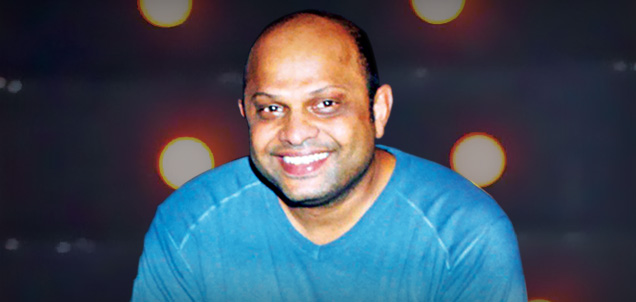
    Rohit Ohri

    Victory for Ohri, Future within Dentsu

    That the acquisition happened is a big feather in the cap for Mr Rohit Ohri, Denstu India’s executive chairman. It is Mr Ohri who is said to have initiated the discussion and gave the comfort factor to the Taproot co-founders.


    Some industry folk may remember there was a minor skirmish between Mr Ohri and Mr Dias when Taproot was awarded a Pepsi campaign and Mr Ohri was still at JWT heading Delhi operations, but all of that is history. In fact one of the main factors that Aggie and Paddy have inked the deal is the relationship with Mr Ohri.


    It may be noted that the stake sale deal has been signed with Dentsu Inc and not Dentsu India, and the reporting is to the Board of Dentsu headquartered in Japan. The other advantage this offers is that the fortunes of Dentsu India and the vagaries of its business will not impact Taproot. So, clearly while Mr Ohri is Dentsu’s face in India, Taproot will not report to him.


    What if?

    There is a three- to five-year lock-in period for most such deals, and the arrangement with Messrs Dias and Padhi is said to be of five years. However, there are various possibilities in the future as Dentsu grows in the scale post the Aegis acquisition and India becomes a bigger play for all advertising networks. The Dentsu insider we spoke to also said one shouldn’t be surprised if either Mr Dias or Mr Padhi or both could be given bigger roles in India or internationally.


    Since the deal helps both Taproot (scale, international network) and Dentsu (grow in India, creative powerhouse in its fold) the chances of a break-up are remote in the short and medium run, but even if there is, there will be no financial implication to monies paid out.


    Meanwhile…

    The papers are signed, the money may well be in the bank. There are no governmental clearances needed. People who do know Aggie and Paddy, as they are known in the industry, are aware that they have an easy, simple lifestyle. So don’t expect a cruise to the Bahamas or Hawaii or some such. The dosh will be well-invested. For the moment, it is getting used to being called Aggie San and Paddy San.


  • KBC to strengthen weekend reality programming for Sony

    By A Correspondent


    After saying adios to Indian Idol, Sony is set to battle it out with competing GECs with its master show. Kaun Banega Crorepati will begin on September 7, and will air Friday to Sunday at 8.30 pm. Produced by Big Synergy Media Ltd, the game show that has created history on Indian television with the iconic Amitabh Bachchan as its host is all set to delight its audiences with a brand new innings this season with ‘Sirf Gyaan Hi Aapko Aapka Haq Dilata Hai’ as the central theme.


    Danish Khan, Senior Vice President and Head of Marketing at Sony Entertainment Television, said, “Weekend slot offers most fertile viewing. The appointment viewing is immense and we have been doing extremely well with our reality shows in this band. Hence, we decided to air the third season of KBC in this slot.” Previously, only the repeat shows of KBC were telecast in this time band.


    KBC has also signed Cadbury as presenting sponsor and Idea as telecom partner, besides signing Axis Bank, Ceat Bike Tyres, Just Dial, Sony Bravia, Aakash Educational Services, and Maruti Suzuki. However, Mr Khan said that in-programming sponsor has not been signed. The show will air on 21 weekends, with 58 episodes that will also comprise of special episodes with unique and distinct themes which will capture a little bit of India in every episode, lined up to ignite the minds and hearts of Indian audiences.


    On the occasion of announcing the show, NP Singh, COO, Multi Screen Media said, “It is a glorious moment for all of us at Sony to bring back another power-packed season of the magnificent game show Kaun Banega Crorepati on our network, This year’s theme ‘Sirf Gyaan Hi Aapko Aapka Haq Dilata Hai’ celebrates knowledge as the greatest leveller in our society and a potent change agent.”


    Siddhartha Basu, CMD, Big Synergy Media Ltd. Said, “We’re back. This time we’ve gone further down the road into the heartlands and hinterlands of India, and come up with a fascinating line-up of ordinary Indians as contestants, extraordinary for their diversity and individuality, each one of them looking for an opportunity to transform their lives through this knowledge game. They’re more knowledgeable than before, better prepared, and hungry for success. They are the unseen faces of an emerging India, thirsting to prove themselves. It promises the viewer quality entertainment, which engages both the heart and the mind.”


    Sneha Rajani, Senior EVP and Business Head, Sony Entertainment Television, said, “We are honoured to have the one and only Mr. Amitabh Bachchan hosting KBC once again. He brings a tremendous amount of charisma and his ability to connect with one and all with his sincerity and humility takes the show to another level. KBC is not just a popular game show, but a powerful platform where people from all across India, cutting across the demographic, geographic and social boundaries converge to celebrate common man’s triumph against all odds. It celebrates knowledge as a powerful tool which can help change his destiny.”


    Will the third season of KBC change the destiny of the channel? Time will tell – soon!


  • Punjabi music channel 9X Tashan turns 1

    By A Correspondent


    9X Tashan, the leading Punjabi music channel from the 9X Media Group, celebrates its first anniversary today. The channel has created a series of special programming to mark 9X Tashan’s super successful association with Punjabi music fans and viewers.


    Speaking on the occasion Sandip Bansal, Managing Director 9X Tashan, said, “We are grateful to our viewers and partners for their love and support towards 9X Tashan in the past one year. We promise to keep delivering on the entertainment quotient offering our viewers with the best of Punjabi Music. We hope our ‘Tashan ki Baadshahat’ continues in the coming year.”


    9X Tashan created television history registering an unprecedented growth of over 100 GRPs in the opening week of its launch across the PHCHP Markets. The channel has achieved many milestones in the past one year. 9X Tashan is also the first regional music channel to have a live streaming facility on the channel’s website – www.9xtashan.in and on various mobile platforms.


    Speaking on the anniversary Punit Pandey, EVP & Business Head – 9X Media Group said, “9X Tashan our first regional offering has received a phenomenal response from the Punjabi music lovers. The channel has not only marked its leadership status in the last one year but has expanded the genre to well over 200 GRPs and that’s an achievement. We intend to keep growing at this pace and ensure to keep our viewers entertained with much more of our action packed programming.”


    Speaking on the programming line-up, Baljinder S. Mahant, Programming Head, 9X Tashan, said, “The first anniversary will be celebrated on 9X Tashan with a two-hour special program called Music De Baadshah showcasing the Best of 9X Tashan music, and a special celebration by the 9X Tashan Gang comprising of Babhi, Bade-Chote, Falli-Balli and Ullu Da Patha, in their own unique way.”


  • FoxyMoron retains French Connection

    By A Correspondent


    Digital solutions agency FoxyMoron has retained the French Connection account after a multi-agency pitch. The creative mandate in the digital space for the brand French Connection has been consolidated by this young agency, which has established itself as a powerhouse in the digital space.


    The pitch was a competitive, multi-agency pitch with esteemed agencies Edelman and Jack in the Box participating.


    Founded in 1972 by Stephen Marks, French Connection – the edgy, attitudinal, high street British fashion brand – set out to create well-designed and fashion-forward clothing with a quirky spin on design. Brand Marketing India (BMI), the exclusive licensee for French Connection in India, introduced the brand to the Indian market in April 2007 and has since opened 26 points of sale across 8 cities.


    BMI has ensured that the brand in India emulates the same global strategy with respect to timely seasonal launches, competitive pricing and the highest standards of in-store service.


    Commenting on the same, Harshil Karia, Online Strategist and Co-Founder at FoxyMoron said, “When you’ve got a brand that’s as irreverent as French Connection, the possibilities are endless. We’re glad that the team at French Connection has liked the ideas and strategy presented for the brand to dominate digital and we’re confident that we can do so.”


    With its key focus on the Autumn-Winter collection, FoxyMoron plans to ensure that there is integration between the brand’s on ground/in-store and online activities.