Category: NEWS

  • Fm y’day: Deepak Lamba quits Bloomberg UTV

    By A Correspondent (updated)


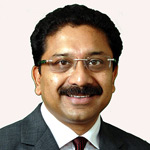
    Bloomberg UTV business head Deepak Lamba has put in his papers. Mr Lamba is reported to be serving notice and he will be at the channel till end-April, sources close to the development informed MxMIndia.


    Mr Lamba, has been business head of the channel since January 2010, and earlier reported to Mr M K Anand and more recently to the Board said to be comprising two representatives from Reliance, one from UTV and a fourth from Bloomberg.


    MxMIndia has learnt that a replacement for Mr Lamba has not been named. Before joining Bloomberg UTV, he was Director – Viacom Brand Solutions and worked with MTV India for five years.


    Mr Lamba is reported to be moving to a larger role in a larger conglomerate, sources tell us.


  • First on MxM! Deepak Lamba joins BCCL as President

    By A Correspondent


    Deepak Lamba who had moved on from Bloomberg UTV as business head in end-April has joined Bennett, Coleman and Company Limited as President.


    Although Mr Lamba was not available for comment and nor has it officially been announced at BCCL, MxMIndia learns that he has joined BCCL today. He is likely to be heading a few new ventures that the group proposes to enter.


    Mr Lamba was business head of Bloomberg UTV from January 2010 to April 2012 and prior to that was Director – Viacom Brand Solutions and worked with MTV India for five years.


  • TAM to cross 10,000 Peoplemeter mark soon

    By Meghna Sharma


    In a country like India with numerous channels on air and where television watching is an obsession, it is vital for broadcasters and advertisers to know how well the channels and the various programmes on them fare. TAM, a joint venture between AC Nielson Research Services (Nielsen Company) & Kantar Market Research, was mandated by the broadcast and advertising industry to do exactly that. Over the last decade-and-a-half, TAM has been optimizing coverage of the growing TV audience across the country by increasing breadth (expanding to cover larger number of new markets) and depth (enable deeper level of analysis in existing data markets).


    By the year end, the TAM Media Research plans to increase its sample size by nearly 2000 households. The present expansion is in alignment with the above thought process and is an attempt to bring insights on audience engagement with TV Content. “The current Indian broadcast landscape is dotted with some very different and complex influencing factors like the need to dive deep into untapped semi-urban/rural markets and the upcoming mandate of digitization,” says LV Krishnan, CEO, TAM Media Research.


    He adds, “With digitization, we are already seeing increase in not only the channels entering the distribution pipe but also audiences trailing more content across newer genre of channels. As the long tail of unique content channels explode in 100% digital markets (Phase I being the Metros), TAM will be enhancing the sample size in these digital markets (Metros) to throw more light into audience consumption of these unique content channels. This enhancement will benefit micro targeting of viewer groups for not only broadcasters with their content but also advertisers interested in specific audience groups for their brand communication.”


    Keeping this in mind, TAM will be taking a few steps. The first initiative being taken is to increase the panel size in Mumbai, Delhi, Kolkata, Chennai, Bengaluru and Hyderabad totalling 650 homes. This will increase the SEC AB sample size in these metros by around 60%. All additional 650 homes will be recruited among C&S SEC AB homes.


    But that’s not all. As part of the initiative, TAM will expand in the less than class I India markets too. In the annual January 2012 establish report, the fastest growth for digital TV platform continued to be from less than Class I towns (with population of less than one lakh) and semi-rural markets in the Hindi belt markets. “This affirmed our hunch of the need to beef up representation in the semi-rural markets. Since 2009, we have been covering Maharashtra in the ‘Less than Class I’ geographic stratum. To this stratum, we are now adding seven more states: Gujarat, Madhya Pradesh, Punjab, Haryana, Himachal Pradesh, Rajasthan and UP. These will be reported as individual states except for Punjab, Haryana, Himachal Pradesh which will, as usual, be reported together as PHCHP,” adds Mr Krishnan. The increasing the sampling across these five new markets will be 1110.


    With this expansion, TAM will practically complete covering the entire urban stratum for the Hindi Speaking Market group. This also means that TAM will now cross the 10,000 Peoplemeter deployment mark and will be add 63 more towns to the existing base number of (162) sample towns with this expansion. Now, it will cover 225 towns.


    However, there are some who feel that an increase of a sample size of 2000 is not enough. “From the current sample size of around 8000, an increase of around 2000 more does brings up the number, but considering the size of the country it’s not an ideal number to know the ‘correct’ pulse of the viewers,” feels Anamika Mehta, COO, Lodestar UM.


    Agreeing with her, Tarun Katial, CEO, Reliance Broadcast Network Ltd., adds, “With the current sample size, it is very difficult to map the evolving choice of consumers. And right now TAM does not represent the digitalized packages. Therefore, until and unless it is done universally it won’t be able to ‘help’ like it should be. I would want TAM to look at their international counterparts to learn from them how they tackle the issues.”


    Even Sunil Lulla, MD and CEO at Times Television Network believes it’s high time that TAM woke up and smelled the coffee. “We are delighted that finally the industry pressure has worked. Many broadcasters, including us, have been telling TAM about various issues which affect our rating process. So, we hope that this increase in sample size, though small but relevant, will benefit and mark a beginning of improvement and swift growth of the system.”


    There are many who feel that the move by the TV audience measuring firm should be welcomed and shouldn’t be criticized. “We should understand what a tedious process it is. And over the years, TAM has been working to help the industry. TAM has been working with the over 8000 sample size for years now, so we should give them credit for increasing it. This move will not only increase the household numbers but also increase the cities which will make the sample more robust,” points out Anilkumar Sathiraju, Mudra Max Media, Head – South. As proposed, TAM has started preparing to implement both the initiatives in the full swing. Both the data cuts are targeted to be made available starting January 2013.


    Mr Sathiraju adds, “However, there is no denying the fact that over 10,000 sample size for a country with over one billion population isn’t correct. And I hope and wish that this will lead to a quicker growth in the next level of the phase. It is a challenge and hopefully won’t take years.”


    Mr Krishnan is of the view that the measures initiated will benefit broadcast. “Over the last three years, in our annual baseline (Establishment) study we conduct and release in Week 1 of January, we are witnessing a tremendous growth of Cable & Satellite TV and Digital TV platform penetration. This growth is fuelled by the growing aspiration to engage in multiple Content – Entertainment & Information, that these platforms are providing on a simple TV screen. In the Jan 2012 report, the fastest growth for Digital TV platform has come from less than Class I towns (with population of less than 100,000) and Semi Rural markets in the Hindi belt markets. Once access and engagement with multiple content happens, it is pertinent to measure the behaviour to help broadcasters, in particular, the regional language broadcasters for aligning content to these audiences. It also satisfies advertisers and nedia agencies needs as their need to target brand communications to consumers in these markets become a reality. Also, these new markets from TAM will give you a closer picture to the Rural India’s TV consumption habits in the Hindi heartland.”


    Meanwhile, with the imminent digitization in the four Metros, Mr Krishnan explains that in a market in Mumbai and  Delhi, with already 25% of the TAM panel and market digitized, his team and he are seeing new patterns of viewing settling in. “More viewers are glued to genres of their choice and landing straight on their favourite stations. Time spent with TV and within specific genres are increasing too. This will mean that there is enough scope for more channels to either get launched within the existing genres or new genres with Unique Content will launched soon in the new 100% digital era (given that creating access to the Content will be easy!). Tier packages will get formed and purchased by the potential viewers, thus sub-segmenting the audiences into more fractions! To capture these new behaviour trends, TAM is increasing the metro samples by almost 60% and in markets like Mumbai and Delhi, TAM is almost doubling the sample!! This will help broadcasters and bdvertisers to not only understand audience content consumption patterns but also target their programming and brand communications very well.”


    So what next? The preparation to implement both the initiatives is in “full swing”. Both data cuts will be made available starting January 2013.Also, with an eye to aid the understanding of the digitization progress, TAM has initiated The TAM DASES (DAS Estimation Study) : A study focused on the Phase 1 markets (as notified by the I&B Ministry for DAS implementation). Wait for it!


  • Paresh Chaudhry joins Madison PR as CEO, Veena Gidwani to retire

    Paresh Chaudhry

    By A Correspondent


    Madison PR has appointed Paresh Chaudhry as its CEO, who will be based in Mumbai. Veena Gidwani, current CEO of Madison PR will retire on June 30, 2012.


    Mr Chaudhry has over 24 years of Brand Communication and Reputation Management experience across industries and key global markets. He has been a business communication professional with Reliance Industries, Hindustan Unilever, Ranbaxy and Wockhardt. His last assignment was as Group President-Corporate Communications, Reliance Industries, reporting to Mukesh Ambani. Prior to Reliance, he was Head of Communications at HUL and Communications Leader, Unilever South Asia.


    Veena Gidwani

    From building the Corporate Brand of Ranbaxy in N America, Europe and India, to aligning regional communication country teams to bring alive “the transition to one Unilever brand” and driving the Corporate name change from “HLL” to “HUL”, to putting together systems and processes for effective global (internal & external) communications at RIL, Mr Chaudhry has experience and expertise in all areas of Corporate Communications.


    An MBA (Marketing) with a Public affairs diploma from Hong Kong University, he is the founder President of the Indian Forum Of Corporate Communicators (IFCC).


    Sam Balsara, Chairman and Managing Director, Madison World, added, “I am delighted to have Paresh join us. His cross client category and cross country experience should help him add great value to our FMCG clients. Veena has done a wonderful job in building Madison PR into a specialist Brand PR consultancy and meeting the professional needs of our over 40 clients in Mumbai, Delhi, Bangalore and Pune and I wish her a very happy and fulfilling life ahead”.


    On his joining Madison, Mr Chaudhry said, “I am delighted with the opportunity to work with Madison PR, that has carved out a distinct and distinguished niche within the industry and is known for its strong values and relationships with some of the best known companies in Corporate India. I look forward to working with Sam and his team of professionals to take Madison PR to the next level.”


  • Mouthshut.com to turn a buyer’sguide

    By Robin Thomas


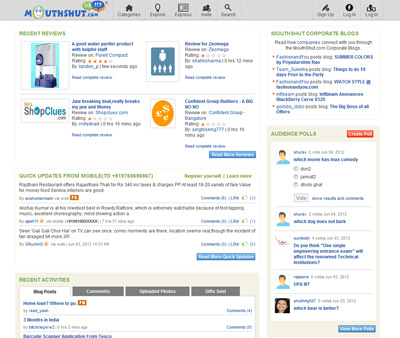
    Popular consumer review website MouthShut.com is set to shift from being a reviews-only site to a buyer’s guide. This transition is scheduled to take place within a fortnight.


    In its new role, MouthShut will position itself as a company that helps consumers decide which product they want to buy from a host of product categories — ranging from cars, bikes, cellphones and so on. Restaurants and hotels will also be part of the buyer’s guide enabling users to know the type of cuisine available, phone numbers and addresses for deliveries and so on. Moreover, MouthShut will constantly add newer categories on its portal after every few weeks.


    Speaking to MxMIndia about the transition to a consumer buying guide, Faisal Farooqui, CEO, Mouthshut.com said, “We realized that a transition from a reviews-only site to buying guide is more important today because the consumer needs are changing fast as they no longer use the internet just for emails and chats but, also for buying. As e-commerce is growing robustly in India, people are getting more comfortable buying products online. Thus we decided that we need to provide consumers not just reviews but also help or guide them buy products.”


    Mouthshut.com will partner car dealers and manufacturers and allow for registering for test drives. In fact it has tied with Maruti and General Motors already.


    The transformation to a users buying guide will also mean revamping the Mouthshut.com website, which will take place along with the roll-out. Also on the anvil is a mobile version of the site.  “The mobile experience will be totally customized for mobile users and while the look-and-feel will be different, the content will of course be the same” said Mr Farooqui.


  • Maatra to be rebranded Gutenberg Networks India

    By Ravi Balakrishnan


    Following close on the heels of shopper marketing specialist TracyLocke and brand consultancy Interbrand, a third specialised offering from the Omnicom group comes to India via DDB Mudra – Gutenberg Networks. Maatra, a company that exists within DDB Mudra will be rebranded Gutenberg Networks India.


    According to Madhukar Kamath, group CEO and managing director, DDB Mudra Group, Maatra is the first attempt by an Indian marketing communications group to hive off the functions usually performed by an in-house studio into a separate successful brand.


    Its offering includes premedia services, translation, website localisation and film adaptation. Maatra’s offerings sync well with those of Gutenberg Networks, which has 1,200 employees globally and counts Philips, Pepsico Tropicana and Volkswagen among its clients.


    Source:The Economic Times

    Copyright © 2012, Bennett, Coleman & Co. Ltd. All Rights Reserved


  • From Cricket to Prime, Neo takes a spin

    By A Correspondent


    It was cricket – in the form of the Indian Premier League – that made the most noise amongst all other sports that were being aired on sports channels in India during April-May. But the tide has now turned and has switched partners in the form of Neo Prime, which may now be leading the viewership race by not airing cricket but three different live action sports in India – Azlan Shah Hockey, French Open and Euro Cup (starting next week). For those unaware, Neo Prime is the rechristened channel from Nimbus which earlier went by the name Neo Cricket.


    While most broadcast networks have been contemplating launching a channel solely for airing cricket, it is surprising to see Neo take a turn on the same. Then of course, there was the ugly episode that saw the channel losing its rights to host India matches. Explaining the rationale, Prasana Krishnan, COO, Neo Sports said, “We were one of the first channels to go in for cricket and are probably the first one to be going away from it. When we had the BCCI rights, it made sense for us to do that as you had a lot of domestic cricket that was available; there were a number of days that were available at our end. So we kept the channel for the volume of the game that was available with us. But then it is also about reacting and responding to the change. Though we have lost the BCCI rights, we will continue to take part in the bidding process for other cricketing properties as and when the opportunity arrives. As of now, we have our hands full with a lot of live actions sports and are the only channel that has so much on its plate currently.”


    In fact the network carried out a vital evaluation exercise months ago before it decided to go in for the change. And it had some interesting facets to throw up apart from just cricket. Explained Mr Krishnan: “The basis for our evaluation was that we have five other sports apart from cricket – tennis, football, golf, badminton and hockey, and what really happens is live sports is played mostly during weekends where you have multiple sports being aired simultaneously. So we were faced with the problem of having more than one event at the same time and therefore airing a certain sport and not being able to relay the others. If you look at the sports being aired right now on our channels, one channel is showing Sultan Azlan Shah Hockey while the other is showing French Open tennis. And next week, we will have French Open and the Euro Cup on at the same time. So the scheduling conflict is a constant problem that arises at our end and our effort has been to maximise and ensure that maximum events are being made available to customers as possible.”


    In fact, according to Mr Krishnan, the same pattern was observed in other networks as well where they had scheduling clashes. “What was happening for us was that we were playing hockey and other sports on the cricket channel, which really didn’t make sense. So in that sense, Neo Prime would be more generic and would be playing different genre sports and not just cricket.”


    In fact there was another motive for the channel to contemplate the move. Explains Mr Krishnan: “What we are also doing is that all the content that is being produced is likely to switch towards HD mode sooner or later. Those are the kind of properties we plan to put on Neo Prime. Over the next few months, once we are comfortable with the working of the content, we will also provide a HD feed of the channel. So it is a HD-ready channel that is focussed and programmed in a manner that it is ready to relay action as it happens.”


    When asked on soft stance taken by the channel to communicate the change, Mr Krishnan said: “It’s not that we are going soft with the new change or anything, it’s just that we got approval from the Ministry for the change only on June 1, 2012. So the action and communication will take place over the next few days. Anyways, it’s not as big a news for us as currently all live sports action is happening on my channel be it French Open, Azlan Shah Hockey or Euro Football starting next week. So the idea was to time it with the best of sports action and combine that with a good campaign.”


    Advertisers have been advised of the change and so far the response has been positive. But the channel is not looking at that and has some big plans up its sleeve for the coming months. And yes, it would do so without banking on popular sport – cricket. Affirmed Mr Krishnan: “The change has been communicated to the advertisers and they have been reacting positively to it. But one must understand that it is the property that the brand gets interested in and if they appeal to them then they will obviously come on board to partner the event. And I am proud to state that in the January to March quarter, our network was ranked second by TAM in terms of viewership and that for the April to June quarter, we would easily be the No 1 network for sports in India going by the amount of live properties that we have on our hand right now.”


    It may just be the perfect start that the network is looking for by making a rousing comeback with its many live events. After all, as the saying goes: the past is well forgotten but the future is what you make of it.


  • Trusts of Baba Ramdev, Art of Living etc emerge as large consumer product makers?

    By Writankar Mukherjee & Sarah Jacob


    Spiritual gurus and ashrams are widening their reach among the populace not just through their teachings but through products as well.


    If Osho slippers are a craze among fashionable youngsters, Baba Ramdev’s Patanjali line of personal care and packaged food products and Art of Living’s body lotions and ayurvedic energizers too are finding takers beyond their followers.


    “These products have the potential to challenge some of the top FMCG brands in the market,” Sanjiv Goenka, chairman of hypermarket chain Spencer’s Retail, says.


    Industry observers say spiritual trusts such as Sri Sri Ravi Shankar’s Art of Living, Baba Ramdev’s Patanjali Ayurved, Aurobindo Ashram, Pujya Bapuji’s Sant Shri Asharamji Ashram, Coimbatore-based Isha Foundation and the organisation that runs Swaminarayan Akshardham are all on the cusp of emerging large consumer product makers.


    Some of them plan to widen distribution of their products-so far largely sold at their ashrams-through kirana stores, supermarkets and online retailing. Some are entering into back-end integration for commodity sourcing and are building distinct brands.


    Spencer’s plans to sell such products at its outlets-there are more than 200 of them-and is open to offer larger shelf space than even some mainstream brands.


    “These organisations have huge brand pull and Ayurveda products always do well. It is a potent pull factor,” says Mr Goenka.


    Advertising veteran R Balki thinks it would take a while before these products compete with the established brands, but says they can create a niche for themselves. “These products have a great base or personality-they tend to connote health, nature and purity,” says Mr Balki, chairman of advertising agency Lowe Lintas & Partners.


    PROFITS FOR CHARITY

    Baba Ramdev started retailing his Patanjali line of FMCG products via through kiranas and modern retail in April. Acharya Balkrishnan, promoter of Patanjali Ayurved Products and a close aide of Ramdev, said this would allow the firm more than quadruple its sales to 2,000 crore this fiscal from 455 crore in 2011-12. If achieved, this would make Patanjali larger than Fair & Handsome and Boroplus-maker Emami and at nipping distance of Colgate-Palmolive. Patanjali Ayurved says it achieved a net profit of 100 crore last fiscal.


    Being not-for-profit organizations, spiritual trusts plough back all their profits to sustain their organisations and charitable work.  If Patanjali has decided that none of the board members will earn from the company’s profits, others too say profits from sales will be used to support their activities.


    “Through the sale of the products, Art of Living funds its various service initiatives like the 185 free schools which it runs in the Naxal and the tribal belts of India,” says Umesh Pradhan, trustee at Sri Sri Ayurveda Trust, the FMCG arm of Art of Living. The trust makes creams, shampoos, body care lotion, scrubs, cleansing milk, soaps, ayurvedic energisers and juices.


    Isha Foundation, which has recently ventured into the FMCG space, says the foray is to support its various activities. Pondicherry-based Aurobindo Ashram, which forayed into FMCG products as vocational development for its inmates, now retails incense sticks, soaps, candles, perfumes and furniture through Khadi Bhandar and even in overseas.


    HOME, AWAY & ONLINE

    Consumer goods companies take years to build a distribution channel and consumer base while devoting large investments into branding. Big ashrams already have a loyal consumer base among their devotees running into millions.


    “Our devotees are our primary consumers,” says Mr Pradhan of Art of Living, which claims it has more than 300 million followers across the world. It sells its products through ‘Divine Shops’ set up at locations where it organises its programmes, as well as through the world’s largest online retailer Amazon.


    Ahmedabad’s Sant Shri Asharamji Ashram sells its products through outlets at ashrams, mobile vans and at devotees’ homes.


    Bochasanwasi Shri Akshar Purushottam Swaminarayan Sanstha (BAPS), the socio-spiritual Hindu organisation that runs Swaminarayan temples and Akshardham in New Delhi and Gandhinagar, retails at 800 temples across India, US and UK. Its chyawanprash, honey, oil, tea, shampoo and dental care products, sold under BAPS Amrut brand, are also retailed online.


    Baba Ramdev, meanwhile, has big-ticket plans for rural India. His Patanjali Ayurved plans to launch swadeshi seva kendras with self-help groups by August.


    “We hope to open around one lakh swadeshi kendras, especially in villages with less than 3,000 people so that they become self-sufficient and empowered,” says Mr Balkrishnan of Patanjali Ayurved.


    BETTING ON HEALTH, CULTURE

    So what ties spirituality with consumer goods? “Once you come into the spiritual path, you understand how it is connected with the body and mind. You tend to become conscious of chemicals being used on your body and prefer more organic food,” says CR Sudarshan, a volunteer at Art of Living’s ayurvedic clinic and its retail chain Divine Shop in Bangalore.


    Sant Shri Asharam ji Ashram’s brochures say its products extend the benefits of “the pristine rishi culture to the masses at lowest cost possible”. Patanjali Ayurved is pitching its products as “swadeshi,” claiming they are at least 30% cheaper than national brands.


    Inputs from Sagar Malviya in Mumbai


    Source:The Economic Times

    Copyright © 2012, Bennett, Coleman & Co. Ltd. All Rights Reserved


  • DDB Mudra wins The Economist’s Battle of Wits quiz

    By A Correspondent


    The DDB Mudra Mumbai comprised Anwesh Bose, Manasa Nayak, Siddharth Srivastava team won The Economist’s Battle of Wits quiz held at Garden of Five Senses in Delhi last Friday.


    The NTPC team comprising Sujit Varkey, KM Prashanth and Chandan Shahi came in second and Zenith Optimedia team, comprising Sudipto B, Ashima Thapliyal and Vikrant Dhawan came in third.


    The quiz was conducted by Firstpost senior editor Anant Rangaswami.


    17 teams from various clients and media organizations participated in the quiz.


    Mahesh Nambiar, ad sales director, The Economist,India, said: “We are delighted at the turnout for the event. We were worried that the searing heat may act as a deterrent but 65 of our friends from media and client organizations turned up.”


  • Hungama Digital to manage Microsoft India’s social media

    By A Correspondent


    Hungama Digital, part of Hungama Digital Media Entertainment Pvt. Ltd., has won the social media mandate for Microsoft India’s corporate brand. Hungama Digital will manage all social media interaction on Facebook, Twitter, YouTube, blogs and other collaborative mediums on digital media.


    Besides the corporate mandate, Hungama Digital will also manage three other businesses for Microsoft India on social media – MSN India, Windows Azure and Microsoft Office.


    Commenting on Hungama Digital’s appointment, Meenu Handa, Director – Corporate Communications, Microsoft Corporation India Pvt. Ltd. said: “Over the last few years, we have invested significantly in social media, and it is today a substantial part of our media mix. To take our social media platforms to the next level of growth, we were looking for a creative and experienced team to support us and have found a passionate and engaged team in Hungama Digital.”


    Speaking on the winning the account, Siddhartha Roy, COO, Hungama Digital Media said: “With the growing number of interactions over digital, especially on social networking sites, this is a great opportunity for the team at Hungama to build Microsoft’s corporate image on the social platform. The team also brings to the table over 13 years of digital marketing experience – over the internet, mobile, and other connected platform, that have resulted in award winning campaigns over the years. We are extremely excited about the business and look forward to a long sustainable relationship with Microsoft India.”


    Currently, Microsoft’s corporate social channels in India include Twitter, Facebook  and YouTube.


  • We want to be in the forefront when new media merges with traditional: Anuj Gandhi


    The writing was on the wall the day Anuj Gandhi joined Network 18 in March this year to oversee the group’s distribution and new business development. And the reason for this was the all-new relationship between Network 18-TV 18 and Reliance Industries forged a few months before his joining.


    Other than the providing of the much-needed funds and the consequent stake in one of India’s largest (and more powerful) media conglomerates, Reliance was also looking at making full use of the content produced and owned by the various Network18 and Television18 arms, especially for the Reliance 4G services.


    Also, in the post-digitization era, distribution becomes a key driver in the revenues of a broadcaster, especially for niche channels. And with various mobile devices becoming popular and wireless technology progressing rapidly from 2G to 4G even in India, the monetization potential for multimedia content leapfrogs.


    Enter IndiaCast, a joint venture of TV18 and Viacom18 to create India’s first multi-platform ‘Content Asset Monetization’ entity.


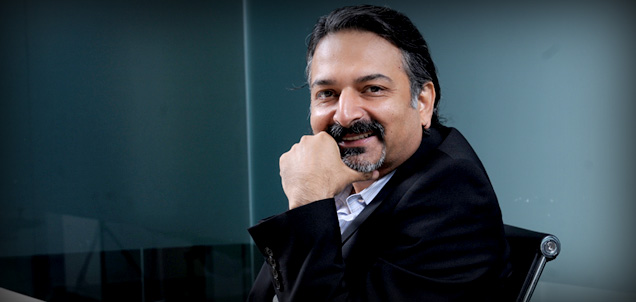
    IndiaCast Group CEO Anuj Gandhi is a veteran in the distribution and the affiliate sales front. An MBA from the SP Jain Insitute of Management, he has worked with Discovery Communications as Director – Affiliate Sales (1997-2002),  as President of SET Discovery (2002-07) and CEO of DEN Networks (2007-2010) and worked as an independent consultant for a little over a year. He has also worked with IndusInd Media in distribution (way back in 1994) and prior to that with Ranbaxy. Clearly, being an early leader in every aspect of the distribution business, Mr Gandhi is well-poised to monetize the wide variety of content that IndiaCast has in its basket.


    Hours after announcing IndiaCast, Anuj Gandhi spoke with MxMIndia, his first and until the time of publishing only detailed interview on the shape of things to come.


    So we see the the birth of a laaarge distribution company…

    IndiaCast is much larger than other traditional distribution companies because it entails monetizing content assets of all the groups – right now TV18 and Viacom18, and post-acquisition of Eenadu, but for all rights. It’s effectively all non ad-sales kind of monetization businesses. It will be online, traditional brick-and-mortar distribution businesses at a global level. So it is pretty huge.


    It’s just the beginning. My sense is that most people will do it because the lines are diffusing between various rights that people use in the market. It has already happened in the international market where a DTH guy blocks Over The Top (OTT) or IPTV rights from you and vice versa. So you will have technologies where OTT rights will sit on a box so the cable guy will come and tell you that I not only want to do cable rights but I also want OTT rights. Thus, with the passage of time, new media will get merged with traditional media and we want to be at the forefront of the revolution which will happen in the next few months/years.



    Any international tie-ups in the offing?

    We already have international updations in the US, UK and Dubai. Colors is being distributed there and going forward, we want to expand our portfolio. We plan to distribute more and more channels internationally. So it’s work-in-progress on that front.


    So what happens to Sun18 now that IndiaCast has been formed?

    Sun18 was an alliance that worked very well and will continue to do well. The deal at Sun18 was that we will distribute Sun and Disney channels in Hindi-Speaking Markets  (HSM) and they will distribute us in the South. So, the only change in the whole alliance is that instead of distributing in the whole of South, they will only do Tamil Nadu now. Otherwise everything stays the same, we still distribute them in the North and also Disney which is part of their network. With this, Sun18 North has kind of folded into IndiaCast.


    Is it a coincidence that IndiaCast happened days before the scheduled digitization in the metros or was it on the cards for a while?

    No it was in the pipeline and we were talking about it for a while now and we knew that we needed to get all our pieces in order.


    Any major challenges you see coming up in the future?

    I think the major challenge would be to get the deal right for digitization. Whether it happens in 25 or 90 days (as digitization in the four metros is likely to get delayed by a few months), this is a chance where the industry needs to correct itself; we all need to work in getting the ARPU situation right in this country. So the challenges are basically at the industry level. Also, on the global front, the challenge is to be able to do more channel launches in international markets and be seen as a serious player. Also, one more challenge will be about how new media unfolds in the country.


    With viewers being able to subscribe to channels a la carte, do you anticipate reach/visibility of channels to take a beating… for instance, what if a person just takes one or two channels a la carte?

    While there will be some percentage of the market that will opt for it because by law you have to offer it. Like when CAS started, everyone talked about a la carte and people taking only one or two channels, but it just doesn’t happen. It doesn’t happen anywhere in the world and it won’t happen inIndiatoo. There may be a few people who would want that but that would be a single-digit percentage for me. So I am not too worried about it. But what will happen is, as they say, the time spent on niche channels will go up with digitization as everybody will be getting the same quality of channels. But if you start picking and chasing packages, some channels will start suffering. Not everybody is going to take all Hindi news channels, for example. So if they are in the same package, then people may pick them but if they are placed differently then it may not be the case. So some impact will happen, but not in the short term.


    We see that IndiaCast will also represent Sun and Disney in HSMs. Any others on the anvil? Since UTV channels are now part of Disney, will they move too?

    Nothing right now, I think we already have too much on our table right now. If something happens tomorrow, we do not know but we are not looking at adding anything new as yet.


    As part of Network 18/Television 18 agreement with the Reliance Industries Ltd’s Independent Media Trust stake, there was also a plan of all Network 18/Television 18 content being syndicated to Reliance 4G? Will it be done via IndiaCast?

    I won’t be able to comment on this but as is known, all content monetization businesses lies with IndiaCast so the same businesses will be done with any 4G networks whether it is from Reliance or any other telco from the business.


    So going back to the earlier discussion, the arrangement with Sun18 stays…

    Yes, we have just changed the definition in terms of the three states in the south. Otherwise it remains where it was. So Sun18 continues to exist and holds up in IndiaCast. It won’t be called Sun18 anymore. There is no shareholding changing – Sun18 North is just folding up into IndiaCast.


    Do you see consolidation gaining prominence as we move ahead?

    I think it will happen for some time. What way and form – will now change as technology is becoming a critical part of our business. The traditional mergers may not happen as much but there has been a lot of M&A happening on the platform side which will also have an impact on broadcasting.


    With digitization happening, do you anticipate the revenue from non-advertising sources will actually be more than what comes from advertising?

    I cannot generalise it and will depend on channel to channel. But will certainly grow; I feel that it could be 50-50 at the network level. So niche channels will benefit more from subscription than ad sales but mass channels will still earn revenues from ad sales.


    So just as it holds true for the sales folk these days, do you see the distribution team also have much say in content in the future?

    I wish my bosses here say that distribution guy must have a say in content (laughs). But it’s not that now. Until now the interaction with the consumer was through various means and the stakeholders were too many in the value chain. Going forward, because it will be a box and be kind of a direct deal – so if I am going to an MSO, he can probably tell me area specific complaints – it will reach back to the content owners much faster and in much clearer terms than what is happening today. That is what is happening in international markets and it will start happening inIndiatoo. But we are a couple of years away from that.


    So we’ll soon have distribution heads becoming CEOs of networks…

    Touche.

     

  • Charlotte Chunawala named CEO of Cohn & Wolfe India

    By A Correspondent


    Cohn & Wolfe have announced that Charlotte Chunawala has joined as CEO, Cohn & Wolfe India, effective immediately. Ms Chunawala will be responsible for all operations in India, providing strategic client counsel, leading new business efforts and ensuring integration with the agency’s offices across the Asia-Pacific region and around the world. Ms Chunawala will report to Donna Imperato, CEO of Cohn & Wolfe, and be supported by Dolly Tayal and Piyal Banerjee, heading Mumbai and Delhi offices respectively.


    Ms Chunawala’s global experience includes over 15 years of agency and consultant work in the UK, Europe and South Asia where she managed high-profile client programs across key verticals including consumer, corporate and financial communications as well as public affairs.


    With offices in Mumbai and Delhi, Cohn & Wolfe India will be supported by former Unilever India communications head Irfan Khan, who will serve as chairman of the board, and Prema Sagar, the pre-eminent PR thought leader inIndia, who will serve in a mentoring role as the agency continues its expansion.


    The opening of Cohn & Wolfe India is the latest of several endeavours by Cohn & Wolfe to build its presence in Asia, including last year’s acquisitions of impactasia and XPR in Chinaand Southeast Asia, respectively. The agency now has eight offices in the Asia-Pacific region.


    “These are dynamic times for development in Indiaand there is tremendous potential for growth in the region,” said Ms Imperato. “I am very grateful to have a partner in Charlottewho brings a deep understanding of these market dynamics, and whose experience will greatly enhance our ability to serve clients who are looking for communications support in one of the fastest growing economies in the world.”


    “I am excited to be heading Cohn and Wolfe’s entry into the Indian market,” said Ms Chunawala. “With clients constantly demanding better brand understanding and brand definition; who better to work with than Cohn and Wolfe, which is recognized internationally as a leader in brand strategy.”