Category: NEWS

  • Ten years on, is radio still an insignificant medium for advertisers? (Text & Video)


    By Robin Thomas (Videos by Insiyah Rangwala)

     

    Radio is said to be a medium that has been re-born. With the FM Phase III rollout anticipated this year, radio is expected to penetrate further into the country, as a result not only will there be an increase in revenues but, also the fact that newer revenue streams will open up. Multiple frequencies, allowing news and current affairs, sports broadcasting will also bring more innovations in radio, new genre radio stations and great amount of differentiation in content.


    Radio’s share of media spends, according to industry estimates, is expected to rise from 4 per cent to 5 per cent in two years. Among categories that advertise on Radio, Real Estate, Telecom, Retail, Education and TV channels are the ones advertise the most.


    What radio players say?

    Harshad Jain
    Joy Chakraborthy
    Joy Chakraborthy
    Apurva Purohit
    B Surender

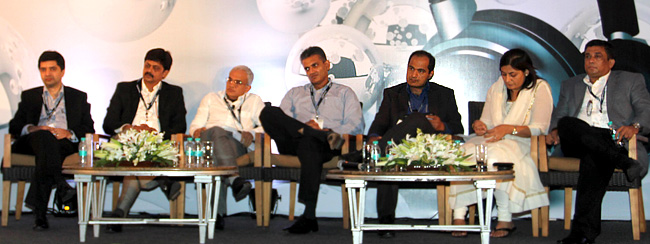
    So, does radio still need to be evangalised? Is radio still insignificant to for advertisers? The India Radio Forum (IRF) 2012 discussed these issues. According to Mr Harshad Jain, Business Head – Radio and Entertainment, HT Media: “From a client standpoint, radio is still an insignificant medium. It all boils down to value addition of the medium – how can radio, as a medium, ensure value addition to its advertisers? The entire orientation has to be more than just vanilla FTCs. Radio is still an under-penetrated medium and has still a long way to go.”


    Mr Joy Chakraborthy, CEO, TV Today Network (which includes Oye! FM) pointed out that the Indian radio industry needs to stand united, not only on issues related to government regulations, but also for business related issues. “There needs to be some amount of unity among the radio fraternity. For the industry to survive we must stand together, not just for regulatory issues but even for businesses. Today radio is the most underpriced medium and unity within the industry will help us drive our sales.”


    Ms Apurva Purohit. CEO, Radio City was of the view that radio is still at an infancy stage and like any other medium, it will also take some time to evolve. She was quick to point out that television took many years to be what it is today. “Today the ad pie of radio is 4 per cent, the geographical coverage of radio is merely 30 per cent but, with Phase III the geographical coverage will see tremendous increase. Every year the number of advertisers on radio has only been growing, what we need to do now is to encourage these advertisers to spend more on radio and reach out to newer advertisers.”


    Mr B Surender, Senior Vice President and National Sales Head, Red FM said: “In the last two years radio saw tremendous growth. With the launch of Phase III also expected soon, the future of radio is certainly bright. Even radio stations outside metros saw tremendous growth, innovations in smaller towns and cities were high and in the next two years radio’s advertising pie is expected to reach 6 to 7 per cent.”


    The client perspective:

    Few years ago, radio was seen as a supplementary medium for advertisers wherein they would spend only the left over media spends on radio. This is said to be changing, slowly and steadily as advertisers are beginning to take radio seriously. There has also been an increase in the number of on-ground activations which has more or less become complementary for radio stations as a value addition to their clients. However, digital media, which was at one point in time an even smaller medium than radio is today, said to have become an even larger and a more powerful medium than radio and a possible reason could be because Internet, unlike radio, is a highly measureable medium.


    Giving a critical view on radio as an effective local medium, Mr Vinay Bhatia, Customer Care Associate and Senior Vice President Marketing and Loyalty said that radio has a very low share of mind and share of value medium to advertisers today. Digital on the other hand, which started off from 2 per cent of advertising share has a much higher share of mind and share of value. “To maximize assets, radio has to deliver business. Radio needs to world closely with clients, it can also look at which area of a city or town works better for clients. It can also partner with retailers to play radio in stores while customers are shopping. Radio is a response medium, therefore it allows a lot of engagement and interaction with listeners. However, there needs to be more innovations for advertisers on radio because clients love innovation and as a result innovation will bring more money for the radio station.”


    Arpita Menon, Head-Media Planning & Buying, Star India Pvt Ltd
    Premjeet Sodhi, COO, Lintas Media Group
    Harshad Jain, Business Head- Radio & Entertainment, HT Media

    Mr Shubhranshu Singh, Marketing Director-India and South Asia, Visa explained: “As far as Visa is concerned, radio has delivered us handsome returns. Radio, I believe, is economical and one can expect higher returns, it is certainly a cost effective medium. However, radio must come to clients as an industry and not as one single radio channel – it should be bolder in its approach towards clients and thus stay on top of mind of clients.”


    Mr Kartik Sharma, Managing Partner, Maxus had a slightly different take on the medium. He was of the view that radio is the oldest form of social media platform, it allows great amount of interactivity and engagement with the listeners. “Radio is in the business of producing great contents and so are the brands, I believe that both radio and digital can depend on each other. Radio is in the business of providing great content, the power of radio is sound and creativity therefore the mindset to learn this medium is very different.”


    Ms Shubha George, COO, MEC noted that in order to maximize radio’s asset and gain share of market spends, it needs to market itself more. She stated that radio today is sold and not marketed, what it needs is more marketing. She also pointed out that the industry must find ways to monetize every single phone calls and SMSes it receives and market them extensively.


    The Indian radio industry still needs a lot of evangelizing or marketing of the medium. Radio needs more nurturing, it needs to probably find newer ways of achieving better ROIs and thus increase greater share of media spends. More innovations in radio will also bring in more money and help it stay on top of advertisers’ minds. Radio needs to partner their clients and find newer ways to generate better ROIs for their clients. Radio needs to vigorously market itself to the advertisers and explain the power of the medium so that it becomes a primary medium for marketers.


    Image: Clipart, Imaging: Rafiq

     

  • No (or low) ads on HD. Anybody complaining?


    By Meghna Sharma


    While there is no denying the importance of advertisements in a world where subscribers are unwilling to pay subscription fee for channels, there exist many viewers who are tired of innumerable ads interrupting their favourite soaps or sporting. The good news for them is that their ordeal has been put to an end through HD channels. At least for the moment


    With various broadcasters launching HD variations of their channels, many upper-end subscribers are shifting to HD set-up boxes or subscribing to an HD channel. However, as there are no free lunches in the world, these channels come at a premium.


    What media planners think?

    Most media planners feel that since HD channels come with a certain cost attached to them, it is but obvious that they cater to a limited audience.  So, most channels are aware of it and their target group.


    Anita Nayyar

    Talking about the HD channels’ reach, Anita Nayyar, director (customer strategy), BCCL, agrees that not many avail of the facility. However, with digitization being made compulsory, especially in the four metros things might change. “Unlike the West, inIndia a broadcasters make most of their money through advertisements, and not distribution. So, if HD channels reach only a certain section, then how will a channel make its revenue?”


    Ms Nayyar added: “Today, one might pay a premium cost to watch an ad-free telecast, but in the near future, if availability doesn’t increase then channels won’t have an option but to make exception to the rule. They will be forced to show advertisements; however, they might charge a higher cost or have a limited time slot.


    On the other hand, Hiren Pandit, managing partner of Group M, felt that broadcasters with HD channels aren’t feeling the pinch, since they want to cater to a different audience: “Apart from the top-notch TG, most broadcasters have non-HD channels as well, so they capitalize through them. And over a certain period of time, they’ll be able to cut losses.”


    Agreeing with Ms Nayyar and Mr Pandit, Janardhan Pandey added: “It’s not just about reach or money, there is another reason which plays an important part in making HD channels a hit and that’s viewers’ psyche.  A person who might be able to afford HD package might still go for cheaper option because he/she might feel why pay more when the same can be watched at a lesser cost. For them, a few advertisements don’t matter.”


    Marketers’ foresight

    A brand reaches its target audience through advertisements and in today’s time one can reach a cross-section of society through television. Hence, most marketers spend their most of their ad-revenue on TV.


    Karthi Marshan

    Karthi Marshan, EVP & Head Group Marketing, Kotak Mahindra Bank said: “Our estimate is that of the 136mn cable and satellite homes in India, 44mn are DTH. Of these, about 8 lakh are currently HD subscribers. That is less than 2% of DTH homes and a tad over 0.5% of all C&S homes. Now whether this affects a marketer or not depends on who is her core TG. For the average brand with SEC A & B as their TG this probably does not matter much, but yes, premium and super premium brands do stand to miss out on what could be core TG due to the fact that some of the HD channels still don’t run advertising.”


    He added: “The next question that marketers will have to contend with is broadcasters expecting to be paid separately or additionally for these audiences. While brands will make the argument that we have bought programs or channel presences and hence our ads should carry seamlessly to HD as well, broadcasters may well have a tenable argument to the effect that they are in the audience delivery business, and a premium audience can and should command a premium for access.”


    Similarly, Ashutosh Tiwary, EVP- Strategic Marketing, Godrej, feels that one needs to observe the situation over a period of time to know what will happen next: “If the ratings and numbers of non-HD channels on which the media deals are based, get affected due to HD feeds, then HD channels will probably will have to air the ads to make up. However, if HD numbers prove to be totally incremental, then the converse might hold true. Overall, if viewer retention and engagement goes up due to higher quality and reduced clutter, HD might require specific treatment.”


    While Simeran Bhasin, marketing head, Fastrack and new brands at Titan said that as a consumer she loves to watch her favourite programmes on ad-free HD channels, but as marketer she’ll have to look for other methods to reach the TG. “HD is here to stay and marketers will have to figure out ways to reach out their consumers. Because with technology available everywhere, one can easily switch-off their TV sets to watch something online which is accessible without any interruptions. So, marketers will have to sooner or later adapt to survive.”


    Vipin Mehra, former sales head, Pidilite, said: “It’s very important for any brand to send constant reminders to its TG about its existence, especially in today’s competitive market. So, brands will prefer a channel which will help them in doing so.”


    Keeping their fingers crossed

    Creative people on the other hand aren’t very happy with HD channels as they affect their work/business, but feel that things will change for good.


    KS Chakravarthy, director, DraftFCB Ulka, felt that though one might want to enjoy an ad-free telecast, it’s just a passing phase because channels have to make revenue which comes from advertisements. KV Sridhar, National Creative Director at Leo Burnett, too agreed with Mr Chakravarthy, adding: “When and as HD channels availability increases, broadcasters might be forced to start showcasing advertisements as well.”


    Who’ll be the ‘real’ beneficiary?

    Advertisements or not advertisements, broadcasters have to follow a business plan and many feel that they’ll have to succumb to it. “One or two networks have begun taking a smattering of ads, and this will only grow, I am guessing,” said Mr Marshan. A business is run on revenue and if it cannot be generated, then changes have to be made. However, for the time being, the viewer can enjoy an ad-free programme.

    One will just have to wait and watch.


  • ICICI Bank ahead of Pepsi, Airtel beats Siemens, Sony in Top 100 Global Brands rankings

    By A Correspondent


    Bharti Airtel has joined an elite club of global brands by making it to this year’s BrandZTop 100 Most Valuable Global Brands list by WPP firm Millward Brown. ICICI is the only other Indian brand in this group.


    With an overall ranking of 63 (brand value: $ 12.7 billion) and 71 (brand value: $11.5 billion) respectively, ICICI and Airtel have been ranked ahead of top global brands such as Citi (82), Sony (86), MTN (88), China Telecom (90) and Volkswagen (96).  ICICI is in fact ahead of even Pepsi which ranks at #67.


    The BrandZ Top 100 Most Valuable Global Brands study is conducted annually by leading global research firm Millward Brown. It is the only brand valuation that takes into account what people think about the brands they buy along with rigorous analysis of financial data, market valuations, analyst reports and risk profiles. The ranking is arrived through a continuous in-depth quantitative research on a category-by-category and a country-by-country basis. The research covers some 2 million consumers and more than 50,000 brands in over 30 countries.


  • Need to monetize radio-social media connect (+Vdo)

    By Robin Thomas (Videos: Insiyah Rangwala)


    Social media has, more or less, become a necessity for every organization today because the consumers are out there and no brand can afford to not be interacting with them. Moreover, social media can also help  brands know their consumers’ thoughts, behaviour, likes and dislikes. It also allows brands to have a two-way communication with their consumers, and thus provides high level of interaction and engagement. And it is not just brands but other media like radio stations which are coming out with innovative ways to connect with their listeners through social media.


    At the sidelines of the India Radio Forum (IRF) 2012 industry veterans from the advertising fraternity discussed the importance of social media for radio.


    Mr Premjeet Sodhi, COO, Lintas Media Group said: “Social media is certainly important for not only the radio industry today, but also for every other medium. In the long run we will see more integration taking place between social media and radio.”


    Mr Raj Nayak, CEO, Colors- Viacom 18 explained: “Social media is growing by the day. Today almost 65 per cent of the people in India are below the age of 35 and 50 per cent are below 25 years of age. I believe this is the fastest growing medium, therefore, it is a very important medium and those that have not got onto social media, must get on before it is too late.”


    Mr Suman Srivastava, Founder and Innovation Artist, Marketing Unplugged said: “Social media is important for radio at two levels. One is to connect with the listeners and therefore, get much larger engagement which might even result in an increase in the reach. On the other hand, it is a fantastic medium for radio channels to build their own brands as well as the brands of their advertisers. In the future, I believe, we will see a lot more advertisers using radio and social media together along with, perhaps, ground activations to create events which could have a multiplier effect for those advertisers.”


    Speaking on the need for radio to partner with clients, Mr Vinay Bhatia, Customer Care Associate and Senior VP- Marketing, Shoppers Stop said: “The real big partnership for radio and their clients is in the digital space. Digital and radio have to come together and ally in such a way that they deliver joint value to the client, and I don’t think any of this is happening today. Radio is an out of home medium and we are increasingly seeing out of home consumption for digital. I think these two medium can go very well together and brands like ours which have large Facebook pages need content, we need engagement and I think radio channels that provide us that.”


    Mr Harshad Jain, Business Head – Radio and Entertainment, HT Media said: “Radio is a medium which is free of cost, it is the cheapest form of entertainment in the country, and if there are issues that can be interlinked with social media, it could call for a good integration. Having said that, it is still early days because radio as a medium still has to catch up big time before it starts integrating with social media.”


    While there are calls for integration between radio and social media, the radio industry must also find ways to monetize the radio-social media connect. Mr Sodhi pointed out that while social media can make radio activations richer, it is vital for radio stations to find newer ways to monetize this activation.


    Agreeing with Mr Sodhi, Mr Raj Nayak said that no business will work if there is no monetization. He added: “One of the biggest disservice broadcasters have done is that they have not woken up to the digital media.”


    So while radio and social media will see more integration in the long run, there is also another school of thought that believes that radio is still at a nascent stage and has a long way to go before it can get into integration with social media. However, monetization is the key for survival of any business and radio stations must find ways to monetize its social media activations.


  • Radio broadcasters thumbs up to Copyright Bill

    By A Correspondent


    The Copyright Amendment Act which was passed recently in Lok Sabha has come as a huge relief, not only for the artists, musicians and content creators, but also for the Indian radio fraternity.


    This bill will allow the Copyright Board to decide the royalty rates for the broadcasters, which until now was decided by the PPL (Phonographic Performance Ltd.). PPL is the copyright society with respect to sound recordings. While the bill is clearly beneficial for the rightful owners of the copyright, how much profitable will it be for the radio broadcasters, will be known only once the copyright board decides on the rates that the broadcasters may have to pay for the copyright owners.


    The Copyright Amendment Act 2012 allows artists, song writers and performers to claim the royalties for content creation. While the bill has also made it mandatory for both radio and television broadcasters pay royalty to the copyright owners each time their content is broadcasted, what it also ensures is that unlike before, the amended Copyright Act will allow broadcasters to pay music royalties on a pro-rata basis. As a result, it will help broadcasters generate more revenues.


    What they say:

    Speaking to MxMIndia, Ms Anurradha Prasad, Chairperson cum Managing Director, B.A.G Network and president of Association of Radio Operators for India (AROI) said: “We welcome the Copyright Amendment Act because it will bring a sea change in the industry. The radio industry has been bleeding because of the huge royalties it has to pay for the music. Therefore, it is a great step forward, and I believe it is a win-win situation for the entire chain because it will bring in more transparency and, as a result, more revenues will be generated.”


    Mr Vipul Pradhan, CEO of PPL said that while he welcomed the amendment that the royalties be given to the rightful owners of the content, what he is not pleased with is the statutory licensing for users as it would take away the monetizing rights of the music companies, nevertheless, PPL will abide by the law. “We welcome the Copyright Amendment Act and we will follow the new law. We welcome the first part of the amendment which allows the rightful owners of content to get their royalties. However, it is the second part of the amendment – the statutory licensing for the users is something that we are not happy about.”


    “The statutory licenses for the users are basically the people who are using our content as business activity which is where I think the statutory license of content for radio or television is something that is not desirable. We will see how the statutory licenses for users will impact the music companies in the long run. So, while we welcome the move to allow artists and content creators to claim their royalties for their work, it is the statutory licensing for users that concerns us because it will take away the monetization rights of the music companies, which in the long run could affect the creation of these rights,” he added.


    Rabe T Iyer, Business Head, Big FM explained: “It is a constructive and beneficial step in truly recognizing the real owners of music and not just the labels who pitch and buy them. It is also a fair distribution of rights which will lead to increasing talent pool, greater accountability of quality and continued effort to innovate. I believe it will provide greater flexibility for radio stations to play music recomposed or readjusted by creators of songs and it will allow more artists, song writers to get their dues.”


    Mr Amitabh Srivastava, Country Manager, Radio Netherlands noted that this move is very much in sync with industry requirements as it would resolve most of the royalty issues faced by the radio industry. Mr Srivastava also said that unlikeIndia, the international model of intellectual property rights is quite rigid as it ensures that the owners of the copyright get their due shares, and that with the passage of this legislation we can expect international standards in copyrights as well. “This bill is more beneficial for content owners than the radio broadcasters. This bill will bring legitimacy in the royalty issues and it will promote more self generating content which is not happening right now. So, it is a welcoming change because when copyright is legitimized, even the broadcasters will be allowed to create their own content which we do not see taking place as of now.”


    Shreyams Kumar, Director Mathrubhumi said: “We don’t mind paying money to the artists, but paying money to the music companies which does not reach the rightful owners is what we don’t approve. Thus the Copyright Amendment Act is a welcome move as it will lead to more transparency in the music and broadcast industry. This amended act will definitely be a cost saver for the radio industry and it will certainly help the radio industry in the long run.”


    Ms Monica Nayyar Patnaik, Joint Managing Director at Eastern Media Ltd and Mr Naval Toshniwal, CEO Tomato FM and Vice President, Pudhari Publications were of the view that this bill is a step in the right direction which will benefit the radio industry and act as a cost saver for the industry.


  • 63% Indian pros maintain a to-do list: LinkedIn

    By A Correspondent


    LinkedIn, the professional network with over 14 million members in India , released data about professionals and their daily to-do lists. The study examined how professionals in different industries tackle tasks planned for a given workday; the differences between men and women’s to-do list habits; and global insights on where professionals keep to-do lists and what gets in the way of completing them.


    LinkedIn surveyed more than 6,500 professionals globally and over 400 in India . The study revealed that among the countries in which the survey was conducted, India ranked sixth in maintaining to-do lists. Out of the India n professionals that were surveyed, 63 per cent reported that they frequently keep a to-do list. This matches the global average, as 63 per cent of all survey respondents reported that they frequently keep a to-do list. Globally, seventy-one per cent of women say they frequently keep to-do lists. Only 60 per cent of men say they frequently keep to-do lists.


    In India , 45 per cent of respondents said that they jot down their to-do lists by hand, while 48 per cent said they create them electronically. Globally however 50 per cent of those who jot down to-do lists do so by hand, while 45 per cent create them electronically. The remaining five per cent reported storing their lists in alternative places, like “In my mind only,” “Piles of files,” or other locations like whiteboards or chalkboards.


    The study showed that the likelihood that a professional will complete their to-do list varied by industry. Globally, professionals in agriculture claim to be the most productive, with 83 per cent of agriculture professionals stating they regularly fulfill most or all of their planned tasks. Professionals in the legal industry had the lowest completion rate on their daily plans, with 66 per cent of respondents accomplishing most or all tasks.


    Art industry professionals (40 per cent) agreed the most with this statement, “I tend to be distracted easily.” Agriculture industry professionals agreed the least with that statement; only 18 per cent of professionals in the agriculture industry are easily distracted.


    When it comes to checking the boxes on their to-do lists, only 11 per cent of professionals globally reported accomplishing all of the tasks they plan to do in a given workday. Survey respondents pointed to unplanned tasks (such as unscheduled phone calls, emails and meetings) as primary cause for not completing all items on their to-do lists. In India , 45 per cent of professionals reported splitting their workday equally between planned and unplanned tasks. At 38 per cent, India had the fourth-highest percentage of survey respondents who spent most of their day on planned tasks.


    “As professionals, we constantly attempt to plan our day at work in the most effective manner. While surprise phone calls, meetings and other unplanned tasks usually make it difficult to adhere to a to-do list, professionals can rely on the intelligence gathered on LinkedIn to work smarter,” said Hari V. Krishnan, Country Manager, LinkedIn India . “Individuals from every industry can benefit from LinkedIn’s simplified solutions to achieve work-goals while being time-efficient. Even while on the move, professionals can use LinkedIn’s mobile applications to strike off tasks from their to-do-lists.”


    Follow these “to-dos” to save time in your workday and cross more tasks off the list:


    1. Make meetings more efficient

    Check out meeting participants’ LinkedIn Profiles ahead of time to get a sense for what they bring to the table. Past experience and specific skills of your meeting cohorts could come in handy to creatively solve a problem — thereby keeping your meeting time to a minimum.


    2. Crowd source your challenge

    Use LinkedIn Answers and LinkedIn Groups to tap into the wisdom of your LinkedIn network or the rest of the 161 million LinkedIn members. By posing questions and starting discussions you’ll be able to assemble solutions in record time.


    3. Get up to speed in an instant

    Rather than visiting various news sources each morning, get your daily news fix in one place via LinkedIn Today. Customize LinkedIn Today so you get news that’s relevant to you and your clients. Access LinkedIn Today from your desk, iPad or phone by downloading LinkedIn Mobile.


  • Hippo’s ‘Indian Food League’ for cricket fans

    By A Correspondent


    The ‘Indian Food League’ is an online activity in which Hippo asks T-20 fans to support their regional teams by supporting their regional dishes. The campaign is conceptualised and implemented by Creativeland Asia.


    The campaign is a crowd-sourced activity that caters to the cricket fan’s love for snacking and eating, while they watch their teams fight it out. The IFL ultimately hopes to tap into every Indian’s latent desire to voice their humorous opinions. Talking cricket online has become engrained in every cricket lover’s match-day rituals. And by bringing food to this already heated and opinionated mix, Hippo has hit on a very successful recipe.


    Commenting on this engaging activity, Nadia Chauhan, Joint Managing Director and CMO Parle Agro said: “With so many people conversing on social sites, Hippo has created the Indian Food League as a medium to interact with and engage its consumers on the social media platform during the cricket season. Today, social media is one of the most influential and emerging channels of communication. Hippo’s previous campaign on Twitter to track inventory was a huge success. This further encouraged Parle Agro to engage interactively with its consumers on the same platform,” she added.


    Commenting on the campaign, Anu Joseph, Executive Creative Director, Creativeland Asia, said, “Hippo is constantly looking for opportunities to talk about food. He, in fact, looks at the world only in terms of hunger and food. So, a ‘Mumbai Vs Bangalore’ match for Hippo is a match between Pav Bhaji and Masala Dosa. So, whoever wins, at the end of the day, hunger loses.”


    The IFL comprises nine regional teams symbolized by the region’s most popular dishes, with Chennai being represented by ‘Idli Sambhar’, Mumbai by ‘Pav Bhaji’ and Delhi by ‘Papdi Chaat’. Other dishes include ‘Kanda Poha’, ‘Aloo Paratha’, ‘Daal Baati’, ‘Masala Dosa’, ‘Roshogolla’, ‘Dum Biryani’, representing the regions Pune, Punjab, Rajasthan, Bangalore, Kolkata and Hyderab adrespectively.


    The home of the activity is www.hippofighthunger.com/ifl, a microsite where Hippo puts up a ‘Today’s Special’ poster daily, giving his unique and quirky take on the day’s food match-up.


    Over the last 40 days, the activity has received a tremendous response. Hippo has chosen a winner for every match and most winners have been already sent their Hippo Bean Bags.


    This is not the first time Hippo and Creativeland are conducting a crowd-sourced campaign on social media. Last year’s inventory tracking campaign, Plan-T has already set a high benchmark for the brand. In fact, the launch of the activity became a trending topic on Twitter and other social networks, nationwide.


  • Cable operators take on I&B at digitization meet

    By Meghna Sharma


    With May coming to an end and only a month left for digitization, the Information & Broadcasting Ministry is trying its level best to get the stakeholders to a mutual consensus. A forum was organized by FICCI and I&B ministry in Mumbai to share some thoughts on ‘ India going Digital’.


    Present at the event, Supriya Sahu, Joint Secretary (Broadband & Policy) and Rajiv Takru, Additional Secretary of Ministry of I&B heard what the cable operators of the city had to say. It is not a hidden fact that cable operators aren’t very happy with the whole process. Deadline date, revenue share and carriage fee were some of the strong points put forward by them.


    Cable operators’ woes

    The operators stood unanimous as they put their issues in front of I&B Ministry. The issues on which they wanted answers to varied from them being given a ‘chor’ tag to why they should collect entertainment tax for the state government.


    Although the topic of revenue share was top of the list, none of the operators agreed with the 45:55 share with the MSOs and wanted the government to do something about it. “How will we survive?” they questioned. The cable operators want a bigger share in the pie; some even suggested of a full 100 per cent share.


    Some operators even went on to tell the government to re-work the deadline and launch a phase-by-phase change, wherein both analog and digitization be allowed hand-in-hand, with only a few channels being converted in the beginning.


    One operator even compared the cable operators with Jesus and said that they’ll be carrying the set-up boxes to their funerals. Availability of the set-up boxes is a major concern as many reminded the ministry representatives that MSOs have not been able to provide them with the boxes even as the deadline looms in. “How does the government expect us to meet the deadline when we haven’t been provided with the set-up boxes. We don’t even know if the demand will be met before the blackout. And how are we going to face the wrath of our customers when their television sets go blank?” questioned one operator.


    Carriage fee was a topic on which all of them agreed upon, stating that they alone shouldn’t be allowed to bear its burden. They also wanted the ministry to intervene and tell the broadcasters to bring out their rate cards as soon as possible so that they can, in turn, inform their customers.


    Ministry’s assurance

    Rajiv Takru, Additional Secretary of Ministry of I&B, confirmed that no matter the issues raised or problems faced, digitization will not be compromised upon. “There is still some confusion and doubts in many cable operators’ minds, but one needs to be very clear that digitization will happen and shouldn’t be taken lightly.”


    He advised the cable operators to start working on it as very little time is left. He added that it is cable operators’ job to go and talk to their customers about digitization becoming a reality soon. “Multi-system operators (MSOs) have been informed to provide cable operators with set-up boxes before the deadline of June 30 and they will have to follow suit. It is the cable operator’s job to convince customers to change before it’s too late to avoid the chaos.”


    He added that the rules of the game have been changed and if anyone is caught evading rules or indulging in any malpractice then according to the Cable Regulation Act, the person will be arrested and made to shut shop as it has now become a cognizable offence.


    The broadcasters have been informed and will bring out rate cards by end of this month, Mr Takru assured: “Broadcasters and MSOs have to go by the rules and have to come out with bouquet as well as a-la-carte channels. One needs to understand that digitization is a win-win situation. The customer will be able to chose and cable operators will be able to provide the best quality service.”


    Direct to Home (DTH) service is seen as the biggest opponent by cable operators and feel that DTH operators don’t want them to reach the deadline, especially with monsoons approaching as they do not get many customers in the season. To this Mr Takru assured cable operators stating that they shouldn’t see DTH as a challenge: “A lot of DTH operators are still waiting in line to get more channels as they don’t have sufficient signals/transponders whereas cable operators will be able to provide 500 channels to their customers.”


    No end to the chaos

    However, no concrete solutions came out of the meeting as the atmosphere at the forum heated up. The cable operators continued demanding the deadline to be pushed back while Mr Takru only said that their point has been noted.


    Furthermore, the cable operators didn’t let the MSOs present at the event speak their side of the problem or issues. The agitation ended when Mr Takru and Ms Sahu walked out of the venue citing shortage of time and the MSOs escaped with them.


  • Lowe & Lifebuoy win India’s first Global Effie

    By A Correspondent


    Lowe Lintas and Partners India’s campaign for ‘Lifebuoy Super-Fast Handwash’ was declared the 2012 Global Effies Bronze winner at New York on Wednesday. Earlier this year, Global Effies had called for entries of globally effective campaigns across the world. Lifebuoy was shortlisted earlier in the month along with brands like Nike, Google and X- box.


    Said Saji Abraham, Global Planning Director, Lifebuoy and Virat Tandon, Global Business Director, Lifebuoy: “Lifebuoy Superfast Hand-wash is a liquid handwash formulation that kills 99.9% germs in 10 seconds. We responded to this fantastic innovation with a simple but insightful and persuasive idea – that children are in a hurry when it comes to hand-washing; and so if your handwash cannot keep pace with them, germs on their hands will just not go. This campaign won because we were bold, competitive and consumer focused at the same time.”


    Joseph George, CEO, Lowe Lintas and Partners, said: “As an agency, we take the Effies seriously. And so winning, not just the Lowe & Partners Worldwide Network’s but also India’s first ever Global Effies is hugely satisfying and encouraging.”


    See also:

    http://www.effie.org/winners/showcase/category/43 Grand Effie winners

    http://www.effie.org/winners/showcase/2012/6695 Information on Lifebuoy ad and credits

    http://www.effie.org/winners/showcase/2012/6695 The Lifebuoy presentation


  • Anindya Banerjee to head Scarecrow Delhi

    Scarecrow Communications has appointed Anindya Banerjee aka Andy as Branch Head, Scarecrow Delhi.


    Mr Banerjee, who is currently serving as Executive Creative Director and Creative Head of the Delhi office, will take over his additional responsibilities starting June 1, 2012.


    Here’s what the Scarecrow founder-directors have to say:

    Mr Raghu Bhat: “Andy’s contribution to the growth of Scarecrow Delhi deserves more than lip service. Andy believes in Scarecrow as much as Scarecrow believes in him. We are merely being sensible by unleashing Andy’s potential through timely empowerment.”


    Mr Manish Bhatt: “Andy is the face of Scarecrow Delhi. Any way, he was playing this role. All we are doing here is recognizing  it and giving it a nomenclature. We are giving him due liberty & power to  the role he was playing by default. And wishing him to attract great brands and great talent. ”


    Mr Arunava (Joy) Sengupta:  “As we move to the next phase of our growth in Delhi, we needed a captain, and to all of us there was no better candidate than Andy. Am sure he will lead us well in our journey in Delhi market.”


    Scarecrow Delhi handles brands such as Eristoff, Pentair, DLF and MVL Mobiles.


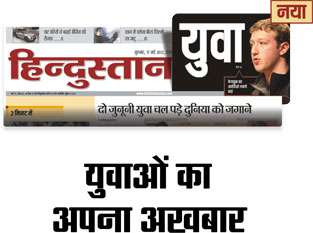
  • Hindustan launches Yuva in Patna

    From the MxMInfodesk


    Leading Hindi daily Hindustan has launched Yuva, a specialised publication targeting the youth in Patna on Thursday.


    The newspaper was planned given the youth has its unique needs, likes, dislikes, aspirations and views on life. Yuva has special two-minute news sections,  vibrant pictures and special navigation panels  in line with reading habits of the youth. It has dedicated sections like Career, Campus news, Patna news, Technology and Entertainment. There are special sections where tweets are featured along with news on Social Networking. Technology, Gadget reviews.  Automobile tips and reviews are featured in dedicated sections on specific days of the week.


    Hindustan has over the last year re-launched with a new positioning and design philosophy. Yuva is a step in that direction to create a young and relevant news brand for the Hindi reading audiences.  The launch in Patna is supported by print, radio spots and outdoor with a aim to establish a strong connect with the youth.


    The news and content published in reports crediting MxMInfodesk are mostly unverified and based on press releases and communiques sent by organizations and/or individuals either directly or through their PR agents.


    However, not all press releases and requests are carried, and we take care to ensure that at least the source of the information recent is authentic.

    Requests for carrying communiques and intimations must be addressed to editor@mxmindia.com.


  • What politicians think of big biz in news media


    By Karuna Madan


    Even as Information and Broadcasting Minister Ambika Soni recently said that the Reliance Industries Limited (RIL) did not hold any direct stake in any news media company in the country, politicians across the party lines feel that the statement does not hold water. Rather, they lament the sorry state of affairs caused due to the unholy and unnatural nexus of business and news in India .


    Vice president of the main opposition, Bharatiya Janata Party (BJP), Karuna Shukla regrets the fact that the mighty corporate and business houses are investing in news media only for the purpose of “twisting” public opinion or government policies in their favour.


    She feels that the news media must, essentially, be free and neutral at all times and circumstances: “You see, the news media is supposed to be free, neutral and free from biases. So much so that even the advertisements shown or published by the media groups defeat the very concept of neutrality. The case of 2G spectrum can be taken as a valid example. These business groups are now moving to all possible avenues of money-making. But news is sacred, it should not be touched. It cannot be sacrificed at the altar of big bucks.”


    “The people we are talking about are smart. They are not only buying stakes in media but have now started their own newspapers. Today it is ‘their money’ which is controlling news media in India . Their money decides how much truth must be revealed and how much be kept hidden. What are they trying to prove by buying stakes in existing media houses or starting their own news businesses? Investment by industrialists in media is no social service. They have no social responsibility. They invest only with the intention to influence public opinion; creating favorable opinion for them and disapproving opinion for their competitors,” Ms Shukla emphasised.


    Ambeth Rajan, Member of Parliament (Rajya Sabha), from Bahujan Samaj Party (BSP) said that the news organisations these days are not only taking money from big business houses of the country, they are also shamelessly taking directions from them and blindly following the diktats.


    “These corporates decide what news must be flashed and what not, and which news item can be used for blackmailing a certain politician or a rival business group. You see a certain kind of news flashing on a particular channel only because it has the potential to harm the interests of the rivals or support the interests of a particular segment of society or a particular political party. All this is orchestrated and staged. Is this what we know and understand as ‘sacred business of news’,” Mr Rajan averred.


    A powerful Congress leader at the Centre, who does not want to be named, told MxM India that “nobody is a saint here. Yahan doodh ka dhula koi nahin hai.”


    Meanwhile, Nilotpal Basu, Member of the Central Secretariat of the Communist Party of India (Marxist), describes it as “very disturbing trend.” “Corporate investment in news media is nothing but marketing, rather aggressive, shameless marketing. The big business houses do not really bother about what repercussions it will have on the state of affairs in the next ten years or so. These big business houses are aware of the power of media and are abusing that. The industrialists in the country exploit the news business, particularly during elections at the state and national level,” said Mr Basu.


    “The corporates are investing and owning media to influence media space and policy directions. We are opposed to unregulated investment of corporate in media. These investments undermine the concept of free media, and media as an avenue for information. This is extremely sad that this trend is going completely unchecked and the government seems just not bothered to rectify the malady,” he added.


    Likewise, Prabhodh Panda, Member of Parliament (Lok Sabha), Communist Party of India (Marxist), feels that the news media was controlled by the corporate sector even earlier by way of paid news, which came to be openly discussed only recently: “We know that the corporate sector is trying to influence public opinion by investing in news media. Even otherwise, the media is mostly publishing or telecasting paid news. It is an unethical practice by media groups, which must be curbed. It can be curbed only if the governments at the state and national level display the political will to do so. Media must maintain high stands of morality and ethics. The government, particularly at the Centre, must initiate steps to ensure that the media is not abused by the industrialists for their petty benefits, sometimes even at the cost of national security. Also the Press Council of India should come out with guidelines on the entry of corporates in the news media business and adopt a firm stand in this regard. What else the Press Council of India , or for that matter Prasar Bharti, are for,” said Mr Panda.


    Interestingly, Debabrata Biswas, General Secretary, All India Forward Bloc, stated that the motive behind corporate investments in news media is an open secret: “It is a well known fact that the multinational companies are completely controlling print and electronic media in India and even outside the country, thus trying to influence international government policies and the state of world economy. Earlier, the character of news media was altogether different. It was more of a catalyst to bring about positive change in the society. It played a major part during the freedom struggle of the country. News essentially meant positive and developmental reportage, free of all kinds of biases and prejudices. It was aptly described as the powerful fourth pillar of democracy. When one talked of media, one talked of an independent and neutral news providing machinery, not of the handmaid of industrialists. These industrialists have now completely taken over the business of news, directly and indirectly. Everyone knows that Birlas, Tatas and Ambanis are now controlling the newspapers and news channels in the country,” said Mr Biswas.


    Amarjit Kaur, National Secretary, Communist Party of India (CPI), feels that the investments by big business houses into the news media is most certainly “not innocent investment.” “The purpose of investments made by the big business barons of India into our news media is only profit, profit and more profit. Industrialists know that they can get their projects cleared within no time if they have a direct or indirect influence or say in any popular newspaper or new channel having a good subscriber base. These news outfits then act as agents of the corporates. But unfortunately, nothing much can be done about this new trend of corporate interest in media, the reason being that the government is pro-corporates and it shows. If the Information and Broadcasting Ministry is turning a blind eye to this malaise, do you think, the common man has any choice. We can only lament the situation which is turning worse by the day due to utter failure and inaction on the part of the government in this regard,” said Ms Kaur.