Over 10,000 visitors visited DNA Wheelocity Auto Expo on May 12 and 13 at theBombayExhibitionCenterto enquire about sedans, hatchbacks, SUVs and bikes, which were being exhibited. From Maruti to the brands like Toyota, Mahindra, Honda, Renault, Hyundai, Ford, Nissan, GM, BMW, Land Rover, Volkswagen were amongst others on display. The expo also saw some vintages on display – a Ford Mustang 1969 model, a Dodge 1954 and Avon SS 1933.
This edition of DNA Wheelocity Auto Expo which showcased cars from the every price level turned out to be a winner as there were interested buyers gathering information on their choice. Gautam Dalal, Vice President Marketing, DNA said: “The ability of a newspaper to deliver over 10,000 footfalls is an absolute testament to the response generating power of DNA. The clients present have ensured that working with DNA was indeed a fruitful relationship. They now want us to commission the next one at the earliest.”
DNA had begun their campaign just 15 days prior grabbing the attention of their 6 lakh readers.
In 6 years, DNA has become India’s 6th largest and the fastest growing English daily. Targeted at a young readership, DNA is the voice and soul of its readers intertwined with honesty. Through news, views, analyses and interactivity, DNA provides readers with a composite unbiased picture of their city and the world. Its interactive platforms seek to bring the reader and surfer at the centre of its news activity.
Xaxis, a GroupM company that is part of the WPP, has announced the opening of its headquarters in Singapore to serve the Asia-Pacific region. With this launch, Xaxis is initiating an aggressive plan in the region with nine market roll-outs planned over the next six months – these new markets will include India, Malaysia, Taiwan, Vietnam, Indonesia and Hong Kong. The existing Xaxis operations in Australia will also come under the umbrella of the new headquarters, which represents the industry’s most comprehensive network of digital endpoints across online, mobile, social and video platforms.
Global digital media executive Michel de Rijk will lead the practice, joining Xaxis as Managing Director, Asia-Pacific. Prior to Xaxis, Mr de Rijk served as a senior executive at digital ad firm EyeWonder, where he was responsible for launching operations in the Asia-Pacific, Benelux and Middle East regions. During his four years with EyeWonder, Mr de Rijk served in several roles throughout each region and introduced the first ad-view-time metric to gain insights into the actual visibility of an ad. Previously, de Rijk worked for Dutch publisher De Telefoongids.
“As the largest audience-buying company in the world, Xaxis has an unmatched understanding of the global digital media-buying space along with local presence and expertise in each market it operates in,” said Mr de Rijk. “This combination allows Xaxis to deliver proven audience solutions that are custom-fit for executing targeted campaigns market by market. From mobile in Indonesia to video in Taiwan, Xaxis offers maximum precision when delivering ads in all markets.”
Xaxis provides audience buying solutions to more than 700 global advertisers, delivering over 300 billion impressions each year. The proprietary Xaxis data management platform (DMP) houses the largest collection of unique anonymous audience portraits. Additionally, as a universal and neutral data management platform, the Xaxis DMP allows advertisers to measure attribution, offline ROI, audience insights and brand impact based on the entire digital plan, not just the Xaxis portion of the plan.
“This commitment to expansion throughout the Asia-Pacific region follows a year of success and growth in North America, Europe and Australia,” noted Brian Lesser, CEO of Xaxis. “Ad spend in the region is expected to reach $170 billion within the next two years with online ad spend making up 31 per cent of the growth. Our clients have asked us to apply our knowledge and experience executing audience campaigns to the region. This launch displays the first step in our commitment to the region and will be followed with an aggressive expansion.”
Mark Patterson, CEO GroupM Asia Pacific, commented: “We have ambitious plans with Xaxis in the region. Our drive for value and improved audience delivery for our clients, as well as ownership of that capability – versus outsourcing as many groups do – will help us deliver on both, securely and rapidly, for our clients across the region and the digital spectrum.”
Through its proprietary platform, Xaxis offers advertisers a single, comprehensive resource from which to reach and engage with global audiences across the universe of digital media. Xaxis, which offers its proprietary platform for Group M media agencies Mindshare, Maxus, MEC and MediaCom.
Indian Premiere League (IPL) was the most-talked about sporting tournament inIndiawhen it started in 2008. From players’ auctions to cheerleaders, the Twenty20 championship caught everyone’s fantasy.
From its inaugural year till today, the tournament has been more than just cricket. It seems that IPL and controversies go hand-in-hand. Slapgate, cheerleaders’ uniforms and Lalit Modi’s case made us wonder if one had seen it all. However, the hand-in-glove relationship the cricket tournament has had with controversies has never stopped. The latest ones – match fixing, SRK-MCA brawl and molestation case – have started everyone talking again, not all of it good. Some even want the IPL to shut down as well.
MxMIndia’s Meghna Sharma spoke to a few media professionals to know if they think brand IPL is losing its value.
Dilip Cherian
Vikram Sakhuja
Josy Paul
Dilip Cherian, image consultant and co-founder Perfect Relations
It’s true that brand IPL has taken a knocking due to current controversies. However, I don’t think it will harm the brand. The recent events just show that the various rules and regulations need to be stricter and implemented well.
As long as crowds go to the stadiums and viewers switch on their television sets to watch the matches, the show will go on. It also brings other brands into people’s mind. Hence, marketers will continue to invest in the tournament. Â So, why will the brand die?
Vikram Sakhuja, CEO – South Asia, GroupM
With so many channels and shows, the eye-ball distribution is obvious. But the tournament, so far, has got more TRPs than last four years. This only proves that the tournament is doing well. IPL is alive and kicking and will continue to do so.
Josy Paul, Chief Creative Officer and Chairman BBDO India
IPL is a bhelpuri of entertainment, and not cricket. The more controversies, the merrier it will be for the tournament. Nothing can shake it; controversies and achievements will only increase its sheen. The brand IPL is about entertainment and it is providing the same to its fans.
Kushal Sanghvi, MD, Spiider Digital Hub
The TRPs of this season is around 3, so it is not doing as well. However, the show is big and helps any brand to position itself well across sections. The marketers get visibility so will continue to get associated with it. No controversy can shake it; it will continue to remain huge.
Kamal Nandi, vice-president (sales and marketing), Godrej & Boyce
The stats have gone down, so it is becoming less lucrative to invest in the IPL. There is no doubt that it is a strong brand and will be so – controversies or no controversies. However, marketers will be a little cautious in investing in the tournament is the returns are lower than the investment.
The Indian Premier League has now been declared responsible for all India’s problems. This has been unequivocally stated on our TV news channels, and is thus now the incontrovertible truth. This cricket tournament has destroyed our sense of morality, taken us down a road of sex, drugs, violence and betting, not to mention completely killed cricket. These evils, so far unknown and unseen in Indian society, will soon become widespread.
Look at what the IPL has done:
Item: Made a film star fight with a security guard (violence).
Item: Made a cricketer molest a woman (sex).
Item: Made two players go to a rave party (drugs).
Item: Made five players work out spot-fixing deals with bookies (betting).
Item: Made players restrict matches to 20 overs a side and then made this version popular with – shudder – cheerleaders (killing cricket).
Against all these charges, the IPL does not stand a chance. It has been clear to the protectors of both cricket and Indian society from year one that the IPL was BAD NEWS. The very fact that so many people were interested was proof enough. And then, all those film stars, starlets, dancing girls, rich people, money, parties – my word, what is the world coming to?
Each year, the IPL, our TV channels have found, has gotten bigger and thus by conclusion it has become worse.
Just look, for instance, what it has done to Shah Rukh Khan: Forced him to fight with a security guard and with Mumbai Cricket Association officials. This is unacceptable behaviour and absolutely no way for film stars to behave. It is one thing to run over people, help gangsters bomb the city or beat up your wife (or even wives). For these crimes, if you’re unlucky, you will get a few newspaper editorials and maybe even go to jail but you will just be seen as a lovable rogue. But fighting with a security guard? That is the end of civilisation as we know it.
It is hard to know what to do to save India after this. No doubt, the TV channels will tell us. A beginning has been made by former cricketers Kirti Azad and Bishen Singh Bedi, who have apparently gone on a hunger strike to save India from the IPL. The TV channels do not appear to have given this hunger strike the 24-hour coverage they granted to Anna Hazare’s hunger strike. But they do assiduously cover the cricket part of the IPL in their sports programmes. Come on, now, the whole country watches the IPL!
* * *
Having made it to the TIME magazine’s list of the world’s 100 most important people, West Bengal chief minister is now planning to top the list and every other list which will ever be made. This is the link to her latest dramatic act – storming out of a CNN-IBN audience meeting in Kolkata, leaving even the formidable Sagorika Ghose, TV anchor and event host, at a loss for words. The CM was furious because the students in the audience were “CPM cadre and Maoists”. That is, they asked questions she didn’t like.
The other link is to the reply written by the erring student.
The IPL’s fifth season is proving to be good news for mobile TV operators. Apalya Technologies, leader in mobile video, has registered 11 million viewers till now for the IPL 2012. This rise in mobile viewership is close to the numbers garnered by YouTube, which is also registering the same number of viewers on its website.
Speaking on the increasing viewers for mobile TV, Vamshi Krishna Reddy, Co-founder & CEO, Apalya Technologies said: “We started the tournament with an aim to catch at least 10 million subscribers before IPL 2012 ended and today after 65 matches, we are proud that Apalya Technologies has already crossed its target and registered 11 million viewers who are watching the matches Live on their mobiles. With another 10 odd matches to go, we are sure that we will be able to write many success stories this IPL.”
He added:Â “Apalya Technologies is exceeding not only TV, but also online viewership numbers, as compared to mobile viewership with the average minutes of usage per customer being between 17 to 20 minutes per day. Out of these viewers that we have registered till now, at least 70 per cent is coming from the Nokia users. The fact that mobile TV viewership is increasing is a proof in itself that the trends are changing and we are adapting to newer ways of watching TV.”
With emerging technologies and growing mobile video viewing habits, India records over 200 million video views a month on mobile devices and Apalya is all set to capitalize the opportunity to tap the interest of the youth, allowing them mobile video viewing for various popular events. During the World Cup season in April 2011, Apalya generated 17 TB of streaming and with close to 50 minutes of usage per user for the 6 matches India played. Currently, Apalya powers mobile TV for all the major telecom service providers in India and has also launched its services with leading operators in Sri Lanka & Indonesia.
The ABP News-Nielsen survey conducted on the eve of the UPA-II third anniversary has revealed that after eight years in power, the Congress-led coalition’s pull seems to be diminishing.
The survey, conducted across 28 cities across the country in April-May 2012, revealed that the BJP would garner 28 per cent of the votes if Lok Sabha elections are held now, while the Congress would manage only 20 per cent.
In fact, the BJP has turned out to be the most favoured party. In an interesting revelation, only 69 per cent of those who voted for Congress during 2009 Lok Sabha elections are still intending to vote for it, if Lok Sabha elections are held now. 31 per cent are moving away from it and 12 per cent now intend to vote for the BJP. Whereas for BJP, 84 per cent will stick with the party and only 2 per cent are switching away from it to Congress.
In 2009 elections, 28 per cent of these respondents voted for Congress, while 27 per cent voted for the BJP. But for the BJP, the dip of 8 per cent in the Congress vote share is not a complete gain. The BJP is gaining only a marginal 1 per cent. The remaining 7 per cent dip in Congress vote share among these respondents is gain for regional parties.
In the 2009 Lok Sabha elections, Congress had won 207 seats while BJP had got 116 seats.
While 32 per cent believed the government’s performance was good or very good, a sizable 35 per cent rated the performance as average.
Significant 21 per cent respondents said it was poor while 11 per cent rated the performance as very poor. The performance of UPA government has been rated slightly below average with a mean score 2.95, which is lower than the mean score of 3.22 last year.
However, Manmohan Singh’s ratings are good with 37 per cent respondents saying his performance was good or very good. Another 33 per cent ranked him average, while 28 per cent believed his performance was poor or very poor.
Around 32 per cent of the respondents felt that performance of UPA government is better or much better than its last term. A dip of 8 per cent is observed in the perception of people from last year survey, where 40 per cent of the respondents felt that the performance of UPA government is better than previous term. 39 per cent rated UPA performance as “about the same” this year, similar score in comparison to last year.
Only 36 per cent of the respondents felt that performance of the PM is better than its last term. A dip of 8 per cent is noted in the perception of people from the last year survey, where 44 per cent of respondents said that the PM performed better than his previous term.
When it comes to best leader in the country, Narendra Modi 17 per cent said he is the best leader over Manmohan Singh at 16 per cent. Modi was preferred at number four during last year’s survey (12 per cent).Manmohan was ranked at number 1 last year (21 per cent). Rahul Gandhi’s scores have dipped from 19 per cent to 13 per cent this year. Sonia Gandhi’s scores are down from 14 per cent to 9 per cent.
The Aditya Birla group investments may help India Today invest in launching editions of its newspaper Mail Today in Mumbai and other metros.
By A Corresdpondent
Kumar Mangalam Birla, chairman of Aditya Birla Group, has bought a 27.5% stake in Aroon Purie-controlled Living Media India, the publisher and owner of India Today magazine and Aaj Tak television channel. Mr Birla will use his personal money to invest in the New Delhi-based group, which straddles the entire media chain, from television to magazines to tabloids.
A statement from the metals-to-retail group said Birla has agreed to join the Living Media group as a financial investor. It did not specify the price for the deal or the valuation.
However, investment bankers close to the transaction said the deal has been finalised for Rs 600-700 crore, valuing the media group at Rs 2,400-2,800 crore. Mumbai-based investment bank Ambit Corp was the advisor to the deal.
This is the second big investment by an industrialist in the media space. In January, affiliates of Reliance Industries agreed to buy a large stake in the companies of Raghav Bahl, the promoter of Network18 and owner of channels such as CNBC-TV18 and CNN-IBN. The investment was worth over Rs 1,500 crore.
TV Today is listed on the stock exchanges, but it is not clear whether Birla’s personal investment companies will now have to make an open offer to buy 26% from public shareholders.
The financial investment also marks the realisation of Kumar Mangalam Birla’s cherished dream of owning a media company. “The media sector is a sunrise sector from an investment point of view. I believe that Living Media India offers one of the best opportunities for growth and value creation,” Birla said in a release.
Birla made an unsuccessful entry into the entertainment space by launching a movie and TV production company, Applause Entertainment, in 2003. The company, which produced the acclaimed movie Black , was closed down in 2009 after the downturn in the entertainment industry sparked off by the global recession.
Living Media will use the cash from the deal to expand its presence in media. It may now look at launching its New Delhi-based tabloid, Mail Today, in other metros, including Mumbai, according to persons close to the company.
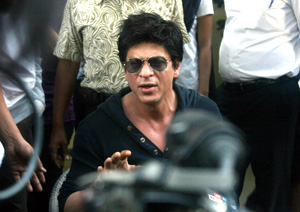
He was, arguably, the biggest Bollywood superstar not long ago but with a few unsuccessful releases, a night club brawl and now a scuffle with officials at a Mumbai cricket stadium to his credit, Shah Rukh Khan’s brand is losing sheen.
In the last couple of years the actor has not signed any big brand endorsement deals, although his portfolio still boasts of more than a dozen brands. People in the endorsement industry say that SRK’s image has suffered in the last couple of years not only due to the controversies that have surrounded him but also because he is an ageing celebrity.
“Controversy does not make for good brand endorsers and any marketer will keep away from a celebrity like that. Besides the controversies that have courted him recently, what is a bigger concern is that he is ageing and that does not bode well for multiple brands in India that want a youth connect,” said Manish Porwal, MD, Alchemist, a talent management agency.
Cola major PepsiCo, for which SRK was a brand ambassador for a long period, dropped him in 2009. In a move that was veering towards the youth, the cola major got on board Ranbir Kapoor. Later, telecom major Airtel did not renew its contract with SRK, although, they have not officially announced their disassociation with him.
LOST IN TRANSITION?
Endorsements: Tag Heuer, Hyundai, Belmonte, V-jon, Navratna, Dabur sona chandi, Lux Cozi, Linc pens
SRK’s endorsement rates haven’t come down though as he charges around Rs 1.5 crore per day. But it’s 50 per cent less than what Aamir Khan commands.
Today, his roster of more than a dozen of brand endorsements include Belmonte, V-jon, Navratna, Dabur sona chandi, Lux Cozi, Linc pens, besides a few marquee names such as Tag Heuer and Hyundai. SRK’s endorsement rates haven’t come down though as he charges around Rs1.5 crore per day.
However, it’s 50 per cent less than what his contemporary Aamir Khan commands, but the latter has largely been off the endorsement market of late, say industry people.
“What you are seeing is something that a lot of stars have gone through. It’s a transitional phase which all celebrities go through; while some bow out gracefully, some do not. It is an inevitable shift of power and it has not been a smooth ride for him,” said Santosh Desai, CEO at Future Brands.
However, some of the brands that he endorses are sticking with him. DTH player Dish TV, which has him as a brand ambassador for over five years, says these incidents have had no rub-off as far as his brand appeal among masses goes. “There is no dent that has been made on Brand SRK, we will continue to have our association with him,” said Salil Kapoor, COO, Dish TV.
This sort of an acquisition is part of a growing trend of ‘corporatization’ of the media where big business houses such as the Aditya Birla Group and the Reliance Industries group are investing into existing media groups. Through this process of consolidation, they are also bailing out these groups.
The Raghav Behl-led Network 18 and Ramoji Rao-led Eenadu are now part of one big conglomerate because Reliance Industries Ltd (RIL) has bailed out both by pumping in a huge amount of money. On paper, it appears as if they are still separate corporate entities, which they are, as per the laws of the land. But the kind of associations they have struck gives an impression that they are now going to work like a conglomerate. Now this is exactly what has happened in the case of Mr Aroon Pourie who heads the India Today group which is also going to be one major conglomerate. So what we are seeing, in that sense, is the ‘cartelization’ of the media. There are cartels being formed, there are oligopolies being formed.
The recession in the west has led to shrinking of advertising expenditures for the media in India and across the world especially after 2008, and this has had a direct impact on the fortunes of media organizations. So this process of consolidation has got expedited. What this means is that the media in India is going to become less plural, it’s going to be dominated by relatively fewer groups. What you are really seeing is, large corporate groups exercising greater dominance on the media. Now there are two implications.
Also read:
AV Birla group buys 27.5% in India Today group
Birla may use personal money for buy, Mail Today may now launch editions in Mumbai, other metros
Why media purists needn’t worry about Kumar Mangalam Birla’s 27.5 % in Living Media
One is, of course, you are finding telecom companies (Mr Aditya Birla also happens to be the head of Idea and Mr Mukesh Ambani’s RIL is a major player in the broadband wireless access space), which are providing you communications, are also now playing an important role in companies that produce content. So the content providers and content distributors are coming together. This, in my opinion, is going to result in a loss of heterogeneity, resulting in a loss of plurality. In a sense, the oligopolies that are going to be formed will also impact the listeners of content, the viewers of content, or the readers of content. The content they get will be less heterogeneous.
The other part of the story is that these companies are also big advertisers. Therefore, the clout of the advertiser will go up. As I said, the telecom service providers are now becoming important stakeholders in companies that are producing content. So the distributors of content are becoming stakeholders in the producers of content. Similarly what you also see at another level, the companies which are big advertisers are also now becoming the owners of the media. So in my opinion, these trends towards ‘cartelization’, or the formation of these giant corporate conglomerates is not going to lead to greater plurality as far as the consumers of content are concerned.
The numbers of TV channels and newspapers and websites often give you a very deceptive kind of a picture and the capital is a classic example of that.Delhiis the only city in the world with 16 English language daily newspapers. This gives you a misleading picture, that readers of English dailies inDelhihave a huge choice. But the fact of the matter is that two newspapers, The Times of India and Hindustan Times would account for well over three-fourths of the total market of all English daily newspapers. And if you add to that Economic Times, then these three publications put together would account for more than 80 per cent of the total circulation of all English newspapers in India. So, in terms of numbers it looks good, but if you look at the structure of the market, you see few dominant players.
In India, unlike in other countries of the world, like US, UK or Australia, there are no cross-media restrictions. In other countries, there are both vertical as well as horizontal restrictions. Vertical restrictions mean that the content producer and the content distributor are different companies/groups. In India, the same guys who are producing content are also distributing the content. You have the DMK controlling the distribution channel and also producing the television channel; you have Zee News producing news and also controlling Dish TV. There are clear conflicts of interest that arise if your distributor and the provider are the same. That’s only one part of the story.
The other is what is called horizontal cross media restrictions. That means, the same company dominates all forms of the media, like print, radio, TV, in the same geographical area. In our country we don’t have any legal restrictions on cross media holdings. As far as the media is concerned, the group concept or the conglomerate concept does not operate in our country. So you have Bennett Coleman Ltd which brings out various print publications, and then you have Times Global Broadcasting which brings out the television content. These two companies happen to be controlled by the same set of people. But because the legal restrictions that exist in India apply to individual entities and not to conglomerates, effectively you have no cross-media restriction.
Speaking of editorial content, editors will not publish or broadcast anything that would go against the interest of the corporate that controls; these would become subtle forms of censorship and control. For instance, Living Media which includes, Aaj Tak, India Today, Headlines Today and Mail Today, these publications or these broadcasters are unlikely to publish anything negative that could affect the business interests of the Aditya Birla Group. So that could be an eminent danger, that degrees of freedom that editors and content providers would enjoy, would get curtailed not just because of the pattern of ownership but also because the owners of major conglomerates are also major advertisers.
Even if on paper, the editors have the autonomy and independence to publish what they like, there could be subtle forms of censorship wherein editors would feel constrained or would think twice before publishing any story that could in any way go against the interest of the promoters of the company that control these media conglomerates.
I am optimistic about the future of media in India but I am also concerned about the fact there is loss of heterogeneity, loss of choices to the consumer.
(As told to Shruti Pushkarna)
Paranjoy Guha Thakurta is a senior journalist, editor and broadcaster based in New Delhi.
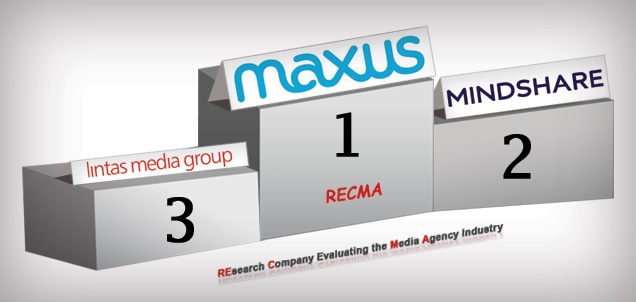
Group M agency Maxus is on tops of the much-respected RECMA qualitative evaluation of Indian media agencies in April 2012. While Maxus has scored 17 points, Mindshare has 15 points, whereas Lintas Media has 13 points. Both Maxus and Mindshare have a ‘Dominant’ profile and LMG has a ‘Good profile’. These are cumulative points across four categories.
In competitive pitches, Maxus and LMG are found to be ‘successful’ and Mindshare is ‘stable’.
The RECMA study is done four times a year. In December 2011, the following were the standings: Maxus: 15 points (Dominant, successful), Lodestar UM 13 points (Good, successful) and Madison Media 13 points (Good variable).
And in December 2010, it was as follows: Maxus 17 (Dominant, successful), LMG 15 (Dominant, successful), Madison 12 (Dominant, stable).
When compared over three periods – April 2012 vs December 2011 vs December 2010 – the Benchmark points for the three leading agencies of April 2012 are: Maxus (0), Mindshare (+4) and and LMG (-2). Maxus has had the same points in December 2010 and April 2012, while Mindshare and LMG have seen a change of +4 and -2 respectively.
Ajit Varghese
“RECMA is an important achievement for our agency as it is the only study that is authentic and is backed by numbers. On a global level, it is the numbers that do the talking and we are happy to have been performing consistently well,” said Ajit Varghese, managing director, Maxus. “It gives us an edge over our competitors and shows that we are not just a flash in the pan; that we are a dominant and successful agency. Yes, competition is pushing us to perform harder but we have been successful each time and this can be seen by our consistent performance at the top.”
“Recma is an important benchmark for us as it is considered seriously by most advertisers around the world, ” said Lynn de Souza, chairman and CEO, Lintas Media Group. “It is based on hard facts and data and not like the other studies that are based on perception. Also, the study cannot be manipulated and is therefore genuine to stand by.”
Lynn de Souza
As many as 19 media agencies were ranked in April 2012 with scores from +17 to -9; following a decreasing classification from ‘Dominant’ to ‘Good profile’, ‘Average profile’ and ‘Low profile’. This ranking is combined with a New Business qualification: ‘successful’, ‘stable’ or ‘underperforming’.
This qualitative evaluation has been processed in 40 countries and gathers 14 criteria in four categories:
1- Competitiveness: mainly measured by pitches results over the last three years (including a 2012 trend).
2- Momentum measured by the activity growth, market shares growth over 3 years, new business activity and changes to the top management.
3- Resources in Digital and Diversified Services (outdoor, branded content, entertainment, sponsoring/events, multi-cultural, retail, econometrics, etc.) as well as geographical coverage.
4- Client Profile: number of big advertisers handled, number of local advertisers, share of the 1st client and the 3 biggest (exposure).
“The factors that have led us to achieve such a ranking include our ability in growing in new segments and our ability to retain big clients. Vodafone, Nokia are a few examples where we have managed to retain them despite they belonging to different agencies worldwide,” Mr Varghese added.
Said Ms de Souza:Â “We are pleased with our current performance at RECMA. We have topped the list of being the most ‘successful’ agency in the criterion of competitiveness,” This was largely due to our aggression in pitching for new clients and our ability to retain most accounts. There was a worry in 2011 when we lost one of our biggest clients in ITC but then we compensated for that loss by aggressively pitching for mid-sized clients and doing that specifically in Tier 2 and 3 towns and cities. Going by our strong performnace , I see ourselves becoming the No 1 or 2 agency at RECMA very soon.”
Mindshare India Leader Ravi Rao was in meetings and not available for comment at the time of writing.
The India Qualitative Evaluation report is the fifth edition, the first one having been released in October 2010. “The key benefit of this study is to provide advertisers a fresh picture of the competition throughout a qualitative assessment of the strengths and weaknesses of each player, ” said Eudes J. Delfaon, the Paris-based RECMA Founder and Director of Research and Michèle Le Bris, RECMA’s Regional Director APAC in Manila.
“Revised and updated on a quarterly basis, the RECMA domestic reports stand as a powerful benchmark essential to all industry professionals in order to get a good and accurate understanding of the media agency landscape and deliver relevant credentials in their presentations,” he added.
This is the time when it’s not just the weather, but even the competition between various channels targeting children that hots up. This year, Disney Channel has raised the bar with a unique offer in association with Jet Airways: 30 kids and their families fly to the Hong Kong Disneyland.
Talking about the campaign called ‘Jet Set Go’, Vijay Subramaniam, Business Head, Walt Disney Television International India said: “This is the first time ever that a plane full of families is flying to Disneyland! And to add to the unique experience, we are also wrapping an entire Jet Airways aircraft with Disney favourite characters Mickey Mouse, Donald Duck, Pluto and Goofy, a one-of-a-kind virtual ‘billboard in the sky’.”
Families will fly to Hong Kong on July 9 for two days where they will stay at the Disney’s Hollywood Hotel. The contest, wherein the kids have to watch Disney Channel closely from April 29 until May 28 and spot a magical plane with their favourite characters- Mickey & Friends on their television screen to win, saw an overwhelming response.
“The campaign stands out because of the record-breaking response that we have seen in just three weeks! We had three lakhs calls on day one, crossed the two million mark in a week and now, we have registered 3.5 million calls from across the country with another 14 days to go. These are at least 50 times the responses the genre has been receiving through other campaigns, so this is clearly unprecedented levels of participation and excitement,” added Mr Subramaniam.
The channel feels the response is the testimony of the strength of the channel’s reach. Almost 50 per cent of the entries came from 5 key circles – Andhra Pradesh, Delhi, Maharashtra, Mumbai & MP + Chhattisgarh. And the entries coming from across the country and the winners selected till date come from both metros and Tier 2 cities – Dehradun, Chandrapur, Kolkata, Vishakapatnam, Pune, Baerelli to name a few.
The channel has been working on various campaigns in its objective of reaching out to its TG. Last year, it had ‘Disney Channel Shooting Stars’, billed as one of the biggest talent hunt platform by a kid’s channel. “Disney Channel is the only kids channel to cross the 200 GRP mark this summer as well as the last and such megashowcases reinforce our position as the leading entertainment brand for kids and families with viewers and advertisers alike,” said Mr Subramaniam.
He added about how and why a kids’ channel should take advantage of summer vacations. “Summer is a time when kids have greater control over the remote and kid’s channels see a 25 per cent increase in viewership. Last year, Disney which houses Disney Channel, Disney XD and Hungama TV, saw an increase of over 30 per cent in viewership.”
This year, along with the ‘Jet Set Go’ initiative, the channel has also planned a strong content push with over 500 hours of fresh programming across the three channels, which will see premieres of 24 series across genres. “Through tent-pole programming and campaigns such as Jet Set Go, our idea is to use summer as a springboard to engage more kids and families throughout the year,” said Mr Subramaniam.
India’s fast-moving consumer goods, or the FMCG sector, has been able to weather the impact of an economic slowdown and rising input costs yet another quarter, as firms led by HUL beat street expectations both on top line and bottom line growth.
A study of the aggregate financial performance of the leading 10 FMCG companies over the past eight quarters shows that the industry has grown at an average 16-21 per cent in the past two years with average operating margins being 22 per cent.
Very few other industries can boast of having such a performance track record. “The consumer sector typically is the last and the least to suffer during a slowdown,” said Manoj Menon, senior analyst at Kotak Institutional Equities.
Most companies are reaping the benefits of the direct distribution expansion mostly in rural India. HUL, for instance, has tripled its rural penetration in the last couple of years. Sales from modern trade have also been a strong growth driver for companies. Marico has posted a growth of over 45 per cent in revenues from its rural and modern trade businesses during FY12.
The quarter to March performance of FMCG companies like HUL, Dabur, Godrej Consumer Products, Marico, Asian Paints, GSK Consumer Healthcare, Procter &Â Gamble Hygiene and Healthcare and Jubilant Foodworks is also a reflection of consumption-driven growth.
Half of HUL’s 20 per cent revenue growth during the March quarter was volume driven. Dabur’s domestic sales rose 19.2 per cent with volumes rising 9.5 per cent. Godrej Consumer Products logged 30 per cent sales in soaps in India – 17 per cent of which was volume-driven. Asian Paints registered 29 per cent growth in its revenues from domestic business, of which 15 per cent was volume growth.
The company had raised prices by close to 12 per cent on its portfolio during the quarter. Jubilant Foodworks, owner of the Dominos Pizza franchise in India, reported 26 per cent same store growth, which was almost entirely volume-driven despite the company raising its menu prices by 10 per cent. Marico has been able to achieve a 17 per cent volume growth for the March quarter from a total revenue growth of 23 per cent for the quarter.
GSK Consumer Healthcare registered 14.5 per cent increase in net sales – 7 per cent of which was driven by volume growth and the rest through higher realisations on account of price increases. Nestle was probably the only company to have a largely value-driven revenue growth of 13 per cent during the March quarter.
Exceptional value growth always carries the risk of hurting volumes. Till now, most FMCG companies have been able to perform well while balancing between volume and value growth. “Over the long run, we see consumer demand being resilient,” Nitin Paranjpe, chief executive officer of HUL, had said at the press conference following the company’s results. According to Mr Paranjpe, the secular trend of consumers is towards uptrading rather than downtrading.
“The demand for consumer goods is relatively inelastic compared to that of other products,” explained Milind Sarwate, group chief financial officer, Marico. An earlier ETIG analysis of the growth in revenues and profits of leading FMCG companies revealed that companies registered a much faster growth in revenues and profits during periods of high inflation (in 1994-98 and again from 2006 till date) compared with periods of low inflation (1999-2005).
“During an inflationary period, there is a likely market share gain for organised players from the unorganised regional players,” Mr Menon explained. Larger firms enjoy economies of scale on account of bulk buying and higher pricing power on their reputed brands.
The ET FMCG Index has a price to earnings multiple of 36 against the Sensex P/E of 16.1. Stocks of Godrej Consumer Products and Asian Paints hit a new high ahead of the companies’ result announcements. Stocks of HUL, Marico, Dabur, Glaxosmithkline Consumer Healthcare and Jubilant Foodworks are hovering near record high levels.
However, their current valuations are still lower than their all-time record levels. In case the broader economy is sluggish, analysts fear that the going may not be good for the sector in the coming quarters. “Moderation is very much on the anvil,” cautioned Mr Menon. For now, FMCG companies continue to live up to their reputation of being a defensive investment play.
 By A Correspondent



 By Samidha Sharma