Category: MxM JOURNALISM REVIEW

  • Gouri Dange: Rules for book launch attendees


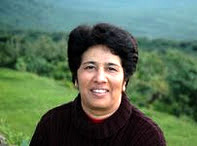
    By Gouri Dange


    Rules of Engagement – a small checklist, mainly for journos attending book launches of the non-page3 kind.


    First, when we send you the invitation, don’t immediately mail back querulously questioning a) the venue that we have chosen/ are stuck with b) the date that we have arrived at after much intricate planning c) the choice of personality who has agreed to read from and release the book. Of course it could have been at a better place, better time, better season, with a celeb you particularly like… and we’re sorry for disappointing you on all scores, but we don’t conjure up book launches by twirling a tinsel wand, we put them together after mental, physical, social and financial contortions of the most fantastic kind.


    We writers, forced to be our own marketers and PR persons, are constantly trying to find the fine line between sending you the invite well in advance (so that you can plan to come or send an underling), but not sending it so early that you will forget about it. So do not expect us to play secretary to you. Do have the grace to mark the day on your own, in your own calendar/similar device.


    Another constant see-saw that we are trying to work is this: We writers-in-launch-mode realise that your Blackberry gags at attachments, so our anxiously designed elaborate e-invitations end up irritating you. This is why we put the gist – place, date, time – in the body copy of the text. Surely that is considerate enough? So desist from writing to us in an offhand way from your wretched devices instructing us to put it all on SMS format for you. Wish we could pander to your every whim about what format you would like the invitation in, but deal with it, whatever format we send you.


    If you really do intend coming to the event, stop groaning about traffic and distances. Keep the address with you – either on your phone or scribbled on your palm (the body part or the device), or on paper or in your head. Do not, and this bears repetition, do not call the writer half an hour before (or five minutes, even) the event itself, and ask for directions. And really, this is just not the time to provide a fresh insight into how the venue and day is all wrong and that parking is such a b***h in your city, and all that jazz. We writers do not personally arrange for your city roads to be so lousy.


    Once the event begins, it would be nice if you would switch off your phone, and also not keep a fake engaged look on your face while you jab SMSes on your keypad. Really, we don’t want just your bodies there, we want your minds, such as they are, present and participating.


    Some of you also tend to ask questions in the interactive part of the reading/launch, that are only a verbal vehicle to tell people who you are and how you’re so good at what you do. Stop. Just stop. Go do it somewhere else.


    Remember, it’s about the book. So questions about finances, advances, and other intricacies of the book business can perhaps be asked of us on our email ids, but certainly not at the book launch. You are more than welcome to ask and tell about what you liked or didn’t like about the book. But asking after the health of my wealth? No.


    When it is time to buy your copy and get it signed from the writer, do not leak out of the door empty-handed. Maybe you don’t want to wait in line for a signed copy and that’s fine. But do buy a copy. Oh well…what am I thinking…you’re the Press, you don’t buy.


    At launches where there are canapés served, please do not eat the nice part and leave the toast behind on the platter. (This is a well-documented occurrence.) This causes the waiters to walk about with just the dry toast pieces on a platter, and less canny guests end up having to eat those; they then become moody and sulky and tend to leave without buying any books.


    And this one is for non-journo attendees: Do not walk up to us writers after the launch and ask things like “But where’s the media? No media?” This may come as a shock to you, but a) journos don’t show up for most launches – their story is usually that ‘evenings are hellish at the office’ b) you may have not read them, but we do have reviews and interviews out there; it’s just that you may not see a real live journalist at our readings/launches c) it really is more important for a book to have actual readers present than the media, whatever anyone tells you.


    Lastly, journos, non-journos, listen up: If you did not attend our reading/launch, do not appear on Gmail chat or SMS two days after the event saying ‘How did your thing go? It was when?’ The answer doesn’t really matter to you, and we both know it. Our fingers can tap out only that many things in one lifetime, and telling you ‘the launch was awesome’ or ‘missed you there’ or some such thing is a waste of taps, which we want to save for our actual writing.


    Naming no Names is the mid-week column where novelist, columnist and counsellor Gouri Dange presents her tongue-in-cheek view of our world.
  • Mediaah!: Oh MiD-Day, my MiD-Day!

    By Pradyuman Maheshwari


    Its paid content strategy is rubbish, but it’s a great newspaper. It’s a Mumbai institution, just as The Times of India is (see disclosure below). Sadly, it flopped miserably in Delhi and Bengaluru (and Pune) in the past and I wasn’t surprised to learn that the paper was shutting shop in the two metros. Pune stays, but it’s serviced totally by Mumbai, save the local reporting talent.


    When Jagran bought Midday Multimedia last year, it was evident that the group was interested in the flagship Mumbai edition, Inquilab and Gujarati Mid-Day. In fact, Inquilab fitted the gameplan perfectly to dominate UP.


    While we mediapersons sermonise endlessly about how corporates should deal with retrenchment, we are awful in handling such situations in our own backyard. The mail from the CEO was very casual and while he may have thought it was cool, there are better ways to do effect a closure.


    Do it face-to-face. Personally visit one of the centres and request your editor who was in Bengaluru to interview the Apple co-founder to stay back and break the bad news.


    Those in power must never forget that the same fate could strike them.


    Now what? The team in Delhi is up in arms. Over social networks they say that they were being asked to voluntarily resign and have heard that bouncers will stop them from entering the office today. I don’t know what’s the state in Bengaluru, but some protestors asked MxMIndia to report on the matter. We haven’t done a story on the issue, because it was too late to get a comment from the Mid-Day bosses.


    From what I know of the Jagran management, the Guptas are cool and considerate. They are open to reason, and I’m sure they’ll correct the wrongs. They are interested in the big picture, and will not want to dirty their image with such petty matters. Mid-Day is just one of the publications in their acquisition plans… there are many more in the pipeline.


    Yes, the Delhi and Bengaluru editions didn’t work. With abysmal readership and a nil score on the IRS Q2/2011 numbers for urban centres like Gurgaon and Noida, even the journos knew that the editions weren’t going anywhere.


    But you’ve got to give the jhatkas with compassion. Jaago, Jagran, jaago.


    * Disclosure: I have spent some of the best years of my professional life working with Mid-Day from 1993 to 2000.


    Hey Minister! Leave the cyberspace alone!

    My heart goes out to our dear central mantrijis. They’ve are subjected to the whims and fancies of all and sundry. The Prime Ministerji, Madamji, Babaji, Betiji, Saaleji, other Mantrijis and Mukhyamantrijis, various MPjis, some friendly Opposition leaderjis too. And the Babus, the secretaries, chaprasis and even the drivers. Not to forget the barber and the occasional masseur.


    But in the mother of all wtf-ness, I was shocked to see the otherwise reasonable Kapil Sibal making a hash of himself (literally, with an idiot prefixed on Twitter) by asking social networks etc to regulate content. Sibal, poor man, is under hajaar fire. 2G, 3G and of course the G family.


    There has been furore on the twitterosphere and for that matter all media. Monsieur Sibal should know that the internetwallahs aren’t divided and won’t sit quiet after a while like broadcasters and newspaperwallahs. Consequence: the issue has got internationalised and India is being compared to China. Which is silly. We aren’t.


    Time for credible awards

    I was at the Time-Out food awards on Tuesday evening, and the creme de la creme of restaurantwallahs were in attendance. Funnily, every other winner had just one thing to say: that being from Time-Out, the awards were credible.


    I think the credit for this goes to editorial head Naresh Fernandez and owner-bosswoman Smriti Ruia Kanodia. I’ve known Naresh for a bit, and must say he can be brutally credible. Which is perhaps why I trust Time-Out thoroughly. If Time-Out says the food at Restaurant X is good, you can be sure it’ll be good. Can’t say that about some other reviewers who love the free stuff, or at least whose publications do not have a policy of serving honest content. Ms Kanodia deserves credit for having survived Naresh and been successful despite his (and the Time-Out parents’ ) insistence that they will not bow to  advertiser diktats. Okay, okay credit also to the business and sales folk for being able to sell despite all these odds.


    Back to the point of awards not being credible. It’s unfortunate that the general perception is that awards instituted by media companies aren’t aboveboard. More on that some other day.


    Who’s the most IMPACT-ful of them all?

    It’s the big night for media professionals. It’s also for the first time I will not be attending an Impact Person of the Year. Guess the promoters there are still peeved that I quit to set up MxMIndia. As a career journalist, I couldn’t have turned to farming after moving on. Yes, I could’ve gone back to mainstream media or set up a Firstpost-like site that I was intending to, but, heck, I think it’s possible to have a good, clean media and marketing portal. With content that’s not got strings attached. Like afaqs and a few others.The market is waiting to grow.


    For the record, none of the ex-e4mers who’ve joined MxM were pulled out of their jobs. They’ve either joined me after quitting, or moved out because they saw a brighter future. The fact is that I did attempt to poach a few, but they didn’t join us.


    Before I digress any further, here’s my take on the nominees. First, I think it’s a great idea to have just eight nominees. Yes, there will be people who’ll be unhappy to have not made it to the List, but that’s fine.


    It’s a tough call… all the people are very, very worthy winners.


    Let’s take a look at the Eight:

    > Agnello Dias, Chairman & Co-founder, TapRoot India
    > Haresh Chawla, outgoing Group CEO, Network18 and Viacom18
    > Madhukar Kamath, MD & CEO, Mudra Group and Chairman, AdAsia
    > Man Jit Singh, CEO, Multi Screen Media
    > Rajiv Verma, CEO, Hindustan Times
    > Ronnie Screwvala, CEO and Founder Chairman, UTV
    > Sandeep Goyal, Non-Executive Founder Chairman, Dentsu India
    > Vineet Jain, Managing Director, Times Group


    I must confess I know who the winner is. So it would be incorrect to be a spoiler. I wish I had written this a week back, but I didn’t get down to it.


    But if I were to do a shortlist from the above and for their spectacular performance this year and also the way the voting works, here’s my shortlist:


    Agnello ‘Aggie’ Dias, Madhukar Kamath, Man Jit Singh, Ronnie Screwvala and Vineet Jain.


    > Aggie for producing some marvellous work in an industry dominated by Ogilvy and JWT.

    > Madhukar for dressing up Mudra beautifully and making it matter in the creative world and finally hawking majority stakes to an international major.

    > Man Jit Singh for finally getting all MSM channels in top gear

    > Ronnie Screwvala because his UTV Stars is doing so very well, the others are on action mode, Bloomberg-UTV is near-sold to Reliance and cementing the deal for 100 per cent stake to Disney.

    > Vineet Jain: well, you know about my reservations about Medianet, but otherwise the company rocks. Editorially, both The Times of India and Times Now set the agenda. The Anna Hazare movement and Commonwealth Games scams gave the government sleepless nights thanks to the belligerence of TOI and TN. Times Internet is doing well, and other brands are also flexing their muscles.


    As for those not in my shortlist: both Rajiv Verma and Haresh Chawla have been running run their empires with entrepreneurial zeal , and as for Sandeep Goyal, the man who sold his stake to Dentsu for Rs 240 crore, this line from ‘3 Idiots’ comes to mind: ‘Ustaad, tussi great ho!”


    Buzz me if you have a story to tell. Confidentiality assured. There are various ways you can reach me: pradyumanm[at]mxmindia.com, 23050B5D, pradyumanm[at]gmail.com, @pmahesh, 98338 76278.


    Disclaimer: Although Pradyuman Maheshwari is CEO of MxMIndia other than being editor-in-chief, he chucks those hats while writing Mediaah! So, the views expressed here are entirely his own and not those of the website and the team that runs it (especially the National Sales Head!).

  • Much admiration for glam add-ons

    By Ranjona Banerji


    Just to entertain myself, I decide to read the glamour supplements of The Times of India and Hindustan Times. Though now I am not sure whether entertainment or aggravation is what I was looking for. Since the arrival of Medianet and its variations in other newspapers, I usually ignore Bombay Times, HT Cafe and the entertainment/celebrity sections of all newspapers. Disclosure: I used to write a restaurant review for DNA After.Hrs but I haven’t seen that either for over a year and many years ago, I edited the Ahmedabad Times and Baroda Times. This takes nothing away from my life as I have minimal interest in Bollywood and tinpot celebs.


    So what have I learnt today? That a supermodel I had never heard of (though they told us her name) has agreed to launch a perfume (which was not named). This unnamed perfume will cost a million dollars and proceeds from sales will go to charity (named). So what do I make of this? That the supermodel paid Bombay Times, while the perfume and charity did not? Or that the editors just take the line of least resistance and do not name whoever had paying potential?


    This then turned into a fun game. Ekta Kapoor made an appearance (some new movie or something) on the front pages of both Bombay Times and HT Cafe. Money paid or not? Time Out has its food awards this week. HT Cafe covered it, Bombay Times did not. Because Bombay Times has its own awards or… By the way, these are the people whose pictures appeared in HT Cafe as guests or presenters at the Time Out awards: Abhay Deol, Malaika Arora Khan, Neha Dhupia, Shahana Goswami, Mahie Gill, Kalki Koechlin and Shruti Shah. Barring Deol and Dhupia (though it could be her large dress), none of the others looked like they’d eaten a meal in two weeks. Two winning chefs got a mention in the accompanying paragraph and no restaurants were mentioned (paid or not…?).


    A story on French producer (called veteran, which means just about anything) Marc Zermati is headlined ‘I’m not interested in Bollywood bulls**t’ is next to the Time Out story which perhaps shows someone in HT Cafe has a great sense of irony or none at all.


    Both Bombay Times and HT Cafe have the same people in the lead: Priyanka Chopra and Hrithik Roshan. Bombay Times says they both get ‘wet and naughty’. (Actually the headline says ‘Hrithik and PC get wet and naughty’ so for a moment I thought it had something to do with Hrithik and computer porn. The pic showed them really close, so give me a break). HT Cafe has Priyanka Chopra saying there is no “lip-lock” in this movie. So don’t get disappointed when you watch it, presumably.


    I was pleased to see that I no longer needed a magnifying glass to read my fortune in Bombay Times but was disappointed to see that it did not say reading “advertorial entertainment promotional features is bad for mental health”.


    Anyway, by this time I was so bored that I had to stop.


    Question for those who make them and those who read them: how do you guys do it? Full admiration!

  • Channels need to develop editing skills

    By Ranjona Banerji


    The fire at the AMRI hospital in Kolkata was one of those tragedies which challenge our skills as journalists. And how did we come out of it? Perhaps some of the visuals on television of mourning relatives were too much to handle as was the fear of having to look at victims of the fire but on the whole, not a bad job.


    TV channels went from covering the news to opinions but perhaps reporters still have to learn that editorialising should be left to those in the studio. Many commended Monideepa Banerjee of NDTV for her clear, concise reporting – experience probably helps (all right, it definitely does).


    Also, TV channels might do well to develop some editing skills. A clearly awe-struck reporter on Times Now was full of admiration for west Bengal chief minister’s efforts to help the situation from the ground when common sense would have told him that she would only have been hindering efforts. It took Saturday’s newspapers to point that out.


    The stories of how the fire spread and the deaths of helpless patients are horrifying in themselves. TV was quick to pick up on culpability and newspapers have gone further by looking at the lacunae in fire safety protocols across the country. (Needless to say they are more honoured in the breach.)


    The Kolkata (or in the case of The Telegraph, Calcutta) newspapers obviously have more details about the incident and were somewhat more scathing. It would be interesting to know just why the patients were locked in by the guards. Also, how much further we will follow this story – how soon, for instance, will all the board members currently arrested be out on bail and get away scot-free?


    **


    The Lokpal draft was released by the Parliamentary committee on Friday but the Kolkata fire seemed to have topped all other news stories – perhaps appropriately. Team Anna as usual started spitting fire and venom and Prashant Bhushan, called for some kind of a revolution against our democratic system – or so it seemed to me.


    No one else appears to have picked it up.


    Personally, I would be interested to know if the India Against Corruption movement also targets non-government corruption. The AMRI fire was evidently a case of private sector fraud. Any takers?


    **


    The Calcutta Club debate aired on Times Now was interesting – the subject was whether the means justify the ends, with reference to the Jan Lokpal movement and Team Anna. Of the six speakers – Salman Kurshid, Sitaram Yechury, Ravi Shankar Prasad, Sudhir K Singh, Arvind Kejriwal and Kiran Bedi – only Kejriwal and Bedi had severe problems understanding the protocol of a formal debate. They seemed to believe this was a normal TV haranguing match. Moderator Arnab Goswami had to work hard to ensure discipline and was tougher than he is on his TV extravaganzas. The politicians were civilised and Sudhir K Singh made the most sense.

  • Remembering Mario Miranda/Dev Nadkarni

    By Dev Nadkarni


    Mario Miranda never really liked to talk about himself or his work. But once during an assignment, when I pressed him on how he went about his meticulously detailed illustrations, he told me in his usual shy manner that he began at one corner of the blank sheet and put his scratchy ink pen nib down only when he had fully filled up the whole sheet.


    The maestro put his nib down one final time yesterday, having finished with the extraordinary canvas of his life. And what an incredibly rich and unforgettable picture he has drawn for all of us in his seven decade long career. His drawings, with their filigree-like detail, are an endless source of joy: you find something new in every illustration no matter how many times you’ve seen it before. That indeed was his genius.


    I knew Mario as a fan, friend, colleague and client – as fan for a lifetime, the rest for more than two decades. My first ever introduction to Goa was through one of his illustrated books, “Goa With Love – by Mario”, a copy of which we still have in our collection nearly half a century later.


    “Goa With Love” is Mario’s finest tribute to his most beloved Goa – it is completely illustrated, no copy except for an odd caption or two. It captures every aspect of Goa – the scenery, the people, the social mores, the cultural diversity, the oddly spelt Hindu names in Portuguese-influenced English, everything except perhaps the smell of feni.


    I have lost count of how many times I must have pored over that book throughout my life. I remember spending hours on each page when I was a child growing up in Panaji – which back then was Panjim. I can still find things to laugh about in the drawings.


    Dev Nadkarni (third from left) with Mario Miranda

    I first shook hands with Mario when I was perhaps all of five in my father’s office in Panaji’s iconic Secretariat Building – my father, Mohan Nadkarni, was the newly formed union territory’s first information officer and was in charge of publicity, publications and PR. “This uncle here drew Goa With Love – his name is Mario,” I remember my father saying. I was excited because I had shaken hands with the man whose book I was so very fond of.


    In later years, I often ran into him in the Times of India building in Mumbai on my errands delivering my father’s music reviews and columns to the newsroom on the third floor (no emails and faxes then). I’d reintroduced myself as his fan from Goa and chatted on some occasions about some of his illustrations from “Goa With Love” and his other work, which appeared regularly in the Khushwant Singh-edited Illustrated Weekly and the Evening News of India.


    Our next significant encounter was at my first real job – as an assistant editor of the popular children’s fortnightly Tinkle at the India Book House. He was illustrating a children’s book, which my colleague Nira Benegal (noted film director Shyam Benegal’s wife) was editing. We settled down for a long chat and at the end of it, he handed two rather tired looking diaries to Nira.


    I noticed Nira put away the diaries carefully in her bottom drawer. After a few days, knowing my respect for Mario and his work and my own ambitions to launch my cartoon strip, she let me have a peek at those diaries. I was amazed as I leafed through them.


    They were diaries from Mario’s childhood. Most of us who kept diaries did so in long hand. Mario simply drew. On one of the pages the only words were something like: “walking back from the market I saw” and there was this amazingly stylised picture of a cow. He must have been 10 or 11 when he drew it – perhaps even younger.


    The picture was greatly detailed. There were the blades of grass, the pebbles, the vegetable vendor, other trappings of the marketplace, a carrera (those small rickety buses – now extinct – with about eight seats that packed in 24 people), the fisherwoman, everything on that A8 sized diary page. It left me dumbfounded. Nira let me borrow the diaries for the weekend and boy, what a weekend that was.


    The Benegals and Mirandas were close friends. Shyam’s Trikaal – based on Goa’s liberation – was shot for the most part in Mario’s splendid colonial Loutolim residence, which is where he breathed his last.


    Mario’s recognition as an illustrator par excellence grew and he was invited for assignments and exhibitions across the globe. The world’s major cities invited him to draw their monuments and main squares. The volume of his published work grew and he was soon awarded both the Padma Shri and the Padma Bhushan, besides many other awards.


    Then Karnataka chief minister Devraj Urs commissioned Dom Moraes and Mario to do a book on the state – and that’s another book in our collection signed by both Dom and Mario.


    By 1987, I had a couple of weekly cartoon strips going. One appeared in the Sunday edition of the Indian Express and the other in the Sunday editions of the Economic Times between 1984 and 1990. The latter, called Doldrumms Ltd, based around office and business situations, was definitely inspired by Mario’s Miss Nimbupani and her cartoon colleagues.


    In the middle of that year, Mario and I were part of a delegation of Indian cartoonists who visited Europe as part of the Festival of India. Our works were exhibited for a week in Sierre in Switzerland. It was there that despite our great differences in age and stature, he took me on as a friend.


    During those long wine filled nights, I got to see his melancholic side, which I had not seen before. On one such evening, I remember, as we were sitting on the deserted platform of the Sierre railway station after a couple of bottles of fine French Beaujolais, he told me the real reason why he left the Times of India – but not before extracting a promise that I’ll keep it only to myself.


    Weeks later we reconnected in downtown London and spent a busy morning drinking some more – this time beer. Celebrated modern dancer Astad Deboo joined us for a while.


    As editor of a publication for India’s first major amusement park Esselworld, I had the pleasure of commissioning some work from Mario. But what I’ll remember most is a one of a kind interview I did with him: we did a four-page cartoon strip interview. He drew the replies to my questions – how cool is that. He later told me how much he had enjoyed doing that.


    Though I visited his home in Colaba, Mumbai, several times, I never really got to know his wife Habiba or his sons. At one time, I remember he had pet turtles clambering up and down the living room. Mario’s close friend and one of India’s finest humorists, Busybee (Behram Contractor), modeled two of the characters of his “Round and About” column – Darryl and Derrick, the two sons of the fabulously rich ‘my friend who lives on the 21st floor’ – on Mario’s two boys.


    There will not be another cartoonist, illustrator or human being like Mario de Brito Miranda. His celebrity came in spite of his self-effacing and humble personality. He will be greatly missed by millions of his fans.


    One of the final pages of “Goa With Love” has an illustration of a Goan funeral. As well as a few weeping relatives around an elderly man’s bier there is also a lot of beer and feni flowing around. The young people are eyeing one another through their tears. There is one young lady by the man’s feet, a tear flying away from her thick eyelashes, as her gaze meets a young man’s standing by the head of the departed gent. Her expression is an inexplicable mix of grief and expectation – there is a definite air of getting on with life once the grieving is over.


    That’s perhaps the best way to lay the great soul to rest – celebrate his life more than grieve his passing.


    RIP Mario Miranda.


    Dev Nadkarni, cartoonist, teacher and editor, drew India’s first cartoon strip – Fekuchand Garibdas – for the Indian Express’s Sunday edition. Around a decade back, Dev shifted base to New Zealand where he edits a newspaper for the Indian diaspora, works closely with the government and international development agencies on a range of initiatives. He is also a columnist with several publications. Email: dev.nadkarni@gmail.com


    Photographs courtesy Dev Nadkarni

  • Hazare rules. Absolutely!

    By Ranjona Banerji


    Such tremendous excitement there was in TV land on Sunday morning. Anna Hazare and his band of merry anti-corruptionists were going to have a public debate on the Lokpal Bill, the perfidy of the Congress and the lies of the government and Hazare was going on a token hunger strike as well.


    From 8.30 am, all other news in India and the world came to a standstill. Not even the tragedy in Kolkata could compete with this momentous event. First, we all went with Hazare to Rajghat, so he could meditate. In the irony-free world that is TV news, it occurred to no one that calling Hazare a ‘Gandhian” is a bit of a misfit. Gandhi, for all that he approved of abstention from alcohol, had never recommended public flogging for drinkers. That is just one example of course.


    As Hazare sat at Rajghat, crowds gathered at various venues in India, to show their solidarity with this anti-corruption movement. Breathless reporters could not contain their exuberance at being part of such a movement. “If my cameraperson can pan the crowd, at least 200 people have shown up”, said the reporter. Elsewhere it was as many as 1200 people (compared to 200 that’s a lot!).


    It took Monday morning’s papers to tell us that the biggest crowd was in Delhi (18,000) and Mumbai managed 4000.One newspaper even had the temerity to report on critics of India Against Corruption, something which TV finds very difficult to do.


    Meanwhile, the rest of the world kept turning but you never would have known it.


    **

    The Times of India in Mumbai has decided to make an impact on Mumbai readers by taking up various issues with a massive first page edit marking its commitment to the city. Hindustan Times meanwhile continues with its own special reports focusing on various aspects of city life. This means that other city newspapers will have to step up their games.


    The AMRI hospital fire may have vanished from TV on Sunday but the newspapers carried on with the stories and examined the shortcomings in hospitals across the country. Hardly surprisingly, the situation is almost universally dismal.


    **


    It was interesting to read about Delhi’s 100th birthday as the capital of India. (Although technically I think that’s 100 years as the capital as decided by the British. Delhi has had capital status in earlier times as well, if my memory serves me right.) Anyway, there has been some interesting writing about the old city, the new growths and migrations, the history, the quirks and the people. Delhi often gets short shrift compared to other Indian cities so this was a welcome change.


    **


    Absolutely: an adverb which means totally, completely, without exception, from absolute which means free from restriction, unadulterated, complete, outright. In which case, what does one make of the following conversation:


    Anchor to reporter: “Give us a sense of what is going on at the assembly/fire/stadium.”


    Reporter: ‘Well, MLAs have thrown chairs/ many people are dead/ India has won the series.”


    Anchor: Absolutely.


    I have nothing further to say on the matter. Absolutely nothing. Absolutely.

  • It’s the economy, stupid

    By Ranjona Banerji


    Perhaps appropriately, the problems of the Indian economy have taken centre-stage. Some newspapers are concentrating on the falling rupee while others are concerned about the falling industrial growth rate. Both seem to be legitimate headlines. The general consensus seems to be lack of governance and the general drift of UPA II. Says The Times of India in its editorial on Wednesday, “If the political class needs a crisis to see that policy gridlock is strangling our economy, then that crisis is upon us… But the onus is also on the opposition to forego bloody-minded politics which makes the government’s job harder.”


    The Indian Express in its editorial concentrates on decline on the Index of Industrial Production and comments, “Unfortunately the slowdown has hit us at a time when real interest rates are negative.” However it cautions the Reserve Bank to wait and watch before “taking action”. It also brings up the valid point of many students coming out of management institutes being unable to find jobs if industrial and services growth on a downward spiral.


    The Deccan Chronicle in its editorial looks at how Indian companies are now looking abroad to invest their money, given the situation in India. “What India and the economy urgently needs to grow at this point is low inflation, low interest rates, immediate implementation of the new manufacturing and procurement policy, and a business-friendly transparent environment to unleash India’s unmatched entrepreneurial strengths.”


    The Economic Times carries a feature on the rupee crisis headlined “India Inc sends an SoS to RBI’. A Subba Rao of the GMR group is quoted as saying, “It’s like a natural calamity, like a tsunami… with the rupee falling so fast and so sharply, there is only so much you can do.”


    A discussion on Times Now on Tuesday had FICCI chairman Rajiv Kumar practically begging politicians to sort our their problems and prevent a further downslide in the economy. His predictions were dire unlike Union Finance Minister Pranab Mukherjee’s somewhat sanguine assurances that things were not so bad.


    **


    Given our current obsession with corruption, two stories in Wednesday’s newspapers deserve attention. The Telegraph, Calcutta, has a story on how the Jyoti Basu government handed the AMRI hospital land in the Dhakuria area of Kolkata between 1994 and 1998 at rates that will remain frozen till at least 2024. Unlike other such deals, there are apparently no provisions for revision of the rental rates. The state government has, according to the report, acquired the land in 1991 to provide affordable healthcare.


    The Indian Express’s flyer story looks at the various irregularities in the Noida farmhouse allotments, from which a key member of the Anna Hazare-Jan Lokpal movement also benefited – Shanti Bhushan and his son Jayant. The Express report provides details of various transgressions and concessions, many of which appear to be inexplicable.


    **


    Even as TV continues to be the chief champion of Anna Hazare and his campaign for his Jan Lokpal Bill, the print media conversely continues to question. The Economic Times in its second editorial on Wednesday says, ‘Anna Hazare has displaced the my-way-or-highway sort of undemocratic attitude reminiscent of authoritarianism and a vigilante-style notion of justice and that is part of the problem.” It cautions against actions which will lead to anarchy.


    eom

  • TV news = Bigg Boss?

    By Ranjona Banerji


    As has happened with newspapers, there are small signs that television will also walk along the same line – the journalistic desire to question the intransigence of Anna Hazare and his insistence on his version of the Lokpal Bill. The political classes appear to be certain that they want more time and will not be harried into passing a bill which may be inadequate. The enormous scope given to members of Anna Hazare’s movement has been considerably reduced on television as other news enters the cycle.


    On Wednesday, for instance, the black money debate in the Lok Sabha got much play on television and led, as usual, to plenty of screaming and shouting on panel discussions later. The tendency of these leaders of society to yell and brawl on TV shows remains appalling and a tremendous indictment of Indian manners. However, it is also fair to say that most people do not behave like this in real life, thankfully and perhaps neither do these habitual TV guests when the cameras are turned off.


    **


    The terrible news of the deaths of more than 100 people in West Bengal from drinking contaminated illegal alcohol dominated Thursday’s TV bulletins, which includes the international channels as well. TV of course is concentrating on the human story so we will get the bigger picture from the newspapers. West Bengal chief minister Mamata Banerjee, already getting flak from a once-enamoured media, now has to do damage control on a number of fronts and this is bound to be further debated.


    **


    James Murdoch, son of media tycoon Rupert, has now admitted that he knew about the phone-hacking practices used by journalists in his newspapers. Earlier this year, James had told a British parliamentary committee investigating phone-hacking that he knew nothing about it. More media scrutiny will – and must – ensue.


    **


    The Indian Olympic Association has decided not to boycott the Olympic Games, as demanded by the sports ministers, some activists and a few sportspersons, in spite of Dow Chemicals’ involvement in the Games. More debate is expected and more TV-inspired pyrotechnics.
    TV news in India is like the Bigg Boss for those with intellectual pretensions.


    eom

  • Turning 50 and other problems!

    By Ranjona Banerji


    I was quite happy to discover that this is my 50th update for Freaking News and am unhappy to find that I was so wrong yesterday. By the evening, it seemed that TV had decided that the shenanigans of Team Anna required as much exposure as possible and that being sensible was just a whole lot of horse feathers, while being unreasonable was so much more fun. So there were members of the core committee of the anti-corruption movement doing their normal threatening and grandstanding all over TV and this morning had an unpleasant photograph of Anna Hazare and Kiran Bedi ominously wagging their fingers at us. Bedi on Times Now was as annoying as she can be, insisting that the Cabinet and Parliament must go no further than the Jan Lokpal Bill.


    But it was later that matters got really appalling on Times Now as Mumbai-based film-maker and activist Ashok Pandit (I did not recognise him because his grey hair has turned black) accused another guest of being a terrorist because she looks like one (a Muslim, she was, of course – Hamida Naeem, a lecturer at Kashmir University). What was even worse was that although Arnab Goswami said “no personal remarks”, he did not stop Pandit and neither did the other guests, Madhu Kishwar and retired general, Shankar Prasad. The issue was the death of a young shopkeeper in Kashmir who was beaten to death because he refused to shut shop. The people who killed him are called “stone-pelters”, a special breed of humans who exist only on TV land. TV wanted to know why the Armed Forces were blamed for all kinds of things but “stone-pelters” are not condemned with the same outrage by hardline separatist groups in Kashmir. The many specious conclusions in this argument need another whole article to deal with them.


    So I was wrong again because I really believed that the deaths of 145 people from drinking adulterated illegal alcohol in West Bengal needed more prominence.


    **


    The end of the American occupation of Iraq got plenty of play on international channels but only minimal on Indian TV, not unnaturally. The newspapers as usual filled in the gaps.


    **


    The Hindu has an interesting editorial on how the BJP loved Union home minister P Chidambaram when he was tough on Naxals and Maoists but are currently gunning for him because he targeting Hindutva-inspired terror groups. Who knows, this may well be true.


    **


    After the Parliamentary debate on black money, newspapers could have given us more figures on the parallel economy in India, its size and reach. The problem is not just about money stashed abroad: it is as much about the money within India which never enters the system and so bypasses not just tax but also quality control and standards laws.


    **


    Incidentally, just for the information of our ultra-jingoistic TV-wallahs, the battle against the Armed Forces Special Protection Act is not limited to Kashmir – the act is also why Irom Sharmila has been on a hunger strike for over 10 years in Manipur. Do we as journalists have the mandate to take sides without adequate information?

  • When Indian TV woke up late

    By Ranjona Banerji


    What is news? What has happened or what you think your viewers/readers want to know about. All the news that’s fit to print is the motto of The New York Tines but does that make any sense to our TV channels? As news broke of the death of North Korean dictator Kim Jong Il – first on Al Jazeera on Monday morning. As BBC and CNN interrupted their regular bulletins, Al Jazeera had already put together a package. In India however news was divided between Anna Hazare’s latest plans, the whereabouts of Pakistani something-or-the-other Veena Malik and something about Rahul Dravid which I did not waste time on. It took at least half an hour for Indian TV to wake up to “breaking news”.


    “Dumbing down” as a concept is most insulting to those it is aimed at – readers and viewers of the news. It implies that they are too stupid to understand events and can only digest a tasty amalgam of entertainment news and whatever can be dramatised and sensationalised. Yet, one would assume that a change of diet with truly “breaking news” should occasionally be alternated with pap, so that the system does not become incapable of dealing with change.


    **


    Meanwhile, Anna Hazare and his antics continue to keep the media busy. As he hops all over the country, the camera follow. We understand that the biggest showdown of all is about to take place in Mumbai on December 27 when more people than were at Ramlila Maidan will apparate themselves in solidarity. Sorry to use Harry Potter jargon, but it sounds a bit like that to me.


    My maths teachers convinced me long ago that I had little understanding of this magical subject and it has largely remained a mystery to me. But even I can extrapolate that 100,000 people is a mere drop in the ocean when compared to India’s population of 1.2 billion. However, TV and newspapers continue to assure us that Anna Hazare represents all the people of India and when we express doubt, they bring on Kiran Bedi who can shout it at us till we retire hurt.


    **


    Time Magazine’s award of the ‘Person of the Year’ to ‘The Protestor’ was a masterful stroke. Indeed it has been, from Tunisia, Egypt, Yeman, Libya and Syria right up to the Occupy Wall Street movement. In a sense, India Against Corruption activists also fall into this category, but CNN-IBN, showing a slight shortfall of imagination, gave their award to Anna Hazare. Is this stating the obvious or acknowledging the Indian propensity to create icons and god-like figures out of thin air? Or even worse, an example of TV’s need to legitimise its own news choices?


    **


    In happier news, Sunday supplements were full of ways to celebrate the party season, what to eat, what to buy and what to gift. Gingerbread houses and other such delights took the mind away from the hurly-burly right to where it matters – the stomach. Or was it the wallet?

  • Curb online voices? No way, Mr Sibal

    By Akash Raha


    Telecom and Information Technology Minister Kapil Sibal stirred up a hornets’ nest when he recommended censorship of online content. Both freedom of expression and the new world of social media came into focus, with several organizations hosting forums on the issue, such as the Foundation for Media Professionals’ panel discussion on December 19 in New Delhi, titled ‘The new puppeteers: Curbing Social Media’.


    The media has come down heavily on Mr Sibal’s suggestion that pre-screening or pre-censorship should be carried out to keep a check on the content of social media platforms. Anuradha Raman, Associate Editor, Outlook said that the government is still following the age-old programme codes set for Doordarshan and All India Radio which were formulated in 1982, and which are constantly used to rattle today’s media. She said that if the government wants to wall up websites and dot.com, why not bring it under a code through legislative sanctions rather than arbitrary discrimination? She said that the current system of censorship of media lacks accountability and there is a need for parliamentary representation to spell out these codes properly.


    Lawrence Liang, a lawyer from Centre for Internet and Society, said it is important that the freedom of speech and expression has to be extended to the terrain of internet rights. The issue of National Security has been brought out repeatedly and it is fine to keep it in mind but not at the cost of free speech and freedom of expression. The government is hereby performing a quasi-judicial role. Moreover, there is lack of transparency in the internet censorship proposal, and today, the work of censorship is being outsourced. He pointed out that the only place where pre-censorship exists is in the case of cinema.


    Saikat Dutta, Delhi Bureau Chief, DNA, said, “In the name of national security the government is increasing its surveillance footprint.” This has led to the growth of what he called the business of surveillance, which is today a multi-billion-dollar industry. The more the government wants to spread its ambit on surveillance, the more companies selling surveillance services will benefit. He went on to say that these days the government is coming down upon several sites and blocking them and if a site is blocked, no one will ever know what happened. There is no information on why something is blocked.


    Narayan Madhavan, a senior columnist from Hindustan Times said, “The right of free speech is a constitutional right and not a government-given one. Freedom should be a rule and not an exception. The government is not the state, it is only an arm of the state temporarily given the right by the people.” He added that National Security has become a more fashionable word to use for censorship and that while it is essential, but it should not be used to curb freedom. In a tweet earlier he had written, “Twitter is the new parliament and Facebook is the new café.” He observed that social media is an interactive media and pre-censorship sounds like an act of desperation or lack of technological knowledge.


    Government has the right to monitor social media just as we can monitor the government by RTI, but there has to be accountability involved. He added that we are culturally an open society and the government cannot put a lid on this. The rights vested by the constitution should not be blocked by a few in the government. This attempted curb should not be seen as a curb only on social media but on media as a whole. It is important to understand when we talk about censorship on social media that the content owners are those who post. Facebook therefore acts as a printer and not as a publisher.


    Sheela Bhatt from Rediff.com noted that there are still a lot of taboos against the digital medium and the online world, which needs to change quickly. The cause is lack of knowledge about the online space. She started off by condemning the censorship which Mr Sibal talks about, and dwelt on the issue of social media, its powers and nuances. She gave the example of the India Against Corruption page on Facebook and how it became a powerful tool to stand against corruption. She said that the government does not appreciate the form of media which is the internet, and such a mindset is regressive and hampers growth.


    Nikhil Pahwa of Medianama said that the censorship that we are discussing is already prevalent. The problem is that we don’t know why a certain site is blocked. National Security is a “nice and easy” way to serve political agendas. He said, “For example, if my site is blocked, I don’t know why it is blocked, who blocked it or how to unblock it… all it says at times is, this site is being blocked on request from DoT… We don’t know who gives the order for blocking and unblocking and there is no transparency.” He said that IT and surveillance rules under the garb of National Security needs to be fought as it threatens democracy.


    Prabir Purkayastha from Delhi Science Forum observed that there are serious problems for any new technology and the same is the case with the internet and social media. “For example, the boundaries of private speech and broadcast are diminishing in the world of social media. What earlier used to be broadcast, now with the internet has become multi-cast. Private censorship is what the government wants right now and it’s not like the one China practices. For China they have a hammer and for them everything else is a nail. But the Indian government is being clever here. It’s like the government is providing safe harbour to those who accept everything that the government is saying and for everyone else, it’s a lost battle. And it’s not social media versus traditional media any more, as what is traditional media is already on social media. The power of surveillance is more pervasive than ever before. The issue is that the government is checking you 24 hours a day, where you are and what you are doing and snooping into your conversations in the name of national security. Today, the new and the old media have to understand that they are not different, and work together to protect themselves.”


    Mishi Choudhary, Executive Director, SFLC.in, observed, “Taking offence on other people’s behalf has never been as fashionable as it is today,” and censorship has become the new name to protect this. The positive aspects of social media are ignored when there was a tsunami and an earthquake. What really bothered the government is the Arab spring and the revolution in Iran and the Anna Hazare movement.”


    Shubham Vij of Kafila.org said that pre-censorship of information is not feasible and possible in the current scheme of things and it is only a matter of time before the government realizes this too.

  • Newswatch by Madan Sabnavis: In media showbiz, real figures take a backseat

    By Madan Sabnavis


    Media is not unlike showbiz. Everybody wants to be a part of the action and the media is the vehicle to fame. Given the intense competition, it is but natural that every newspaper wants to be one up and every television channel would like to be the first to flash breaking news. Suddenly, even a standard release from the government becomes breaking news for the first channel that flashes the story. From politics to economics, it is the same story.


    The economic travails that we are facing today have grabbed headlines as well as eyeballs, thanks to the media, which is a powerful tool for conveying an idea, as we have witnessed in 2011.


    The media’s main focus has been on the policymakers and critics, which added zing to otherwise insipid developments. It is not thatIndiais crawling this year. Growth is reasonable, inflation is high, though not unusual as we have had such patterns in the past and the entire hullabaloo on exchange rate is again not really happening for the first time. But all this has come to the fore due to incessant media attention, and in a way, has gotten exaggerated. How fair has this exposure been?


    The interesting fact here has been the prevalence of the same basic laws of economics – demand and supply of such views in the media industry. TV channels have hours dedicated to business and economy. As every economic indicator is supposed to affect the stock market, it merits fixed hours of discussion. There are time spaces to fill in with views which get in the big names. This has led to constant interactions with government officials, policy makers, bureaucrats, ex-bureaucrats, economists, CEOs, CFOs, journalists, academicians, journalists, and so on.


    More importantly everybody wants the top names in the field, though the rather amusing outcome is that we have the same set of 10-20 experts in each of the fields who circulate the same, standard views.


    There is, in a way, nothing really wrong here, but there may have been a tendency to over-react at times as we have started viewing every economic detail on a realtime basis.


    Today, economic data in India comes with lags. There is a two-week lag for wholesale prices, a month for exports, consumer prices and industrial data. The lag becomes almost a quarter for GDP numbers. To top it all, there are revisions which can be quite horrendous, since the experts look like having contradicted themselves as they comment based on the information provided at that particular point of time. Now the broader question is whether we should believe such data.


    Why do we want to minutely dissect such high frequency data when we know that there will be changes subsequently? This is important because all such data and interpretations invariably affect stock market and investment decisions. If all experts say that interest rates will rise, then individuals will shift to bank deposits, just like how mutual funds may become attractive in case the majority view is that the economy is on track and booming.


    With a tendency for over-exposure and the willingness or over-enthusiasm of experts to come online, there may have been a situation of overstating cases. Generally speaking, theory will say that economies do not function in one week or month, but on a cumulative basis during a year. This being the case, in the past we have been looking only at cumulative numbers.


    But today if one channel looks at month-over-month numbers, all have to do it to stay in the race. This means forcing the speakers to comment or give their forecasts which they have to do once they are on the phone or on camera.


    This has led to a proliferation in the numbers being given on each and every economic indicator by the same person in a short span of time, say one month. When queried on reactions to a dismal number, which is actually a tautological question, the answer has to be that the person is dismayed or surprised or shocked or concerned. But actually, they may not really know why the number turned out to be abysmal.


    The official stance always talks of recoveries in the rest of the year while the corporates will always paint a doomsday picture when interest rates have risen. This, in turn, can drive an opinion.


    Things have hence been magnified throughout the media on account of relatively higher frequency of economic releases which still are subject to revisions.


    Unfortunately there has been a tendency for single numbers to be blown up and the complete picture obfuscated to drive home a point. We have not really had any novel solutions offered in this plethora of debates.


    Let us see some of them: We need to have reforms. But did we not have a good economic picture without these reforms in the past? We need to lower interest rates to help industry. Is industry the only sector driving the economy and is this the only constituency that matters? We should stop predatory competition fromChinawhich affects us. But if the product is an import going into your product, would the stance be the same? There is policy paralysis. But this cannot be a solution when the world is going through a slowdown and everyone has to adjust.


    Surprisingly, we do not hear western critics saying that there is policy paralysis in the Eurozone which is holding back growth – there as it is understood that all crisis situations take time to resolve as there are various constituencies involved.


    How then does one evaluate the performance of the media in bringing to the fore the economic crisis that we are living with? There is a plethora of views, with few interpretations. The viewer or reader has to make a choice and often times, by virtue of selection of the commentators or experts, ends up getting confused.


    As the media invariably represents a single view in a market economy, it has helped to bring to the fore the issues, though admittedly, government action is based on a larger public concerns and hence has remained susceptible to media bashing.


    We have not really had workable solutions coming forth in these discussions. But, nonetheless it has helped to stoke a lot of debate and create awareness of issues which hitherto would have been confined to only a certain section of people. To this extent, it is a job well done. What about the experts who keep giving their views relentlessly on the same lines? To quote Oscar Wilde, to be in it is merely a bore. But to be out of it is simply a tragedy. It’s showbiz after all.


    Madan Sabnavis is Chief Economist, CARE Ratings. The views expressed are personal.